Author: admin

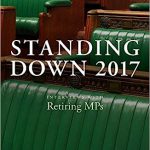
  • BOOK REVIEW : Standing Down 2017 – Interviews with Retiring MPs by Rosa Prince

    BOOK REVIEW : Standing Down 2017 – Interviews with Retiring MPs by Rosa Prince


    This book, published by Biteback Publishing, is a series of interviews with MPs who decided to stand down at the 2017 General Election. 13 MPs from different political parties were interviewed and asked about their experiences in the Commons and the reasons that they had for standing down. The MPs interviewed were Michael Dugher, Peter Lilley, Gisela Stuart, Sir Simon Burns, Dame Angela Watkinson, Douglas Carswell, Sir Edward Garnier, Iain Wright, Sir Eric Pickles, Alan Johnson, Sir Alan Haselhurst, Graham Allen and Pat Glass.

    The first interview in the book is with Michael Dugher, who retired at the relatively young age of just 42, the youngest of the MPs in the book. He mentioned that the 2015 General Election result was “horrific” and he struggled with the subsequent leadership of Jeremy Corbyn and he quit after four months in the Shadow Cabinet. He found great pride in the role of being an MP, but ultimately he wanted to do more with his life with politics.

    The oldest MP in the book was Alan Haselhurst who was 80 when he made the decision to stand down after having served as the Conservative MP for Saffron Walden for 40 years and previously he had been the MP for Middleton and Prestwich for 4 years. He wasn’t keen to leave, but thought his age meant that 2017 was the right time to stand down, with the highlight of his career being the Deputy Speaker for 13 years. All of the MPs had expected to serve until 2020, which is when the Fixed Terms Parliament Act had scheduled the General Election to be, meaning many had to make decisions on whether to stand again in 2017. Haselhurst clearly left the Commons with some reluctance, with his greatest disappointment being that he didn’t get the chance to become the Speaker of the House.

    Pat Glass stood down at the age of 60 and she was one of the few interviewed who didn’t feel quite at home in the Commons, being someone who had never previously intended to be an MP. She accepted that it’s a tough job and one of the reasons that she stood down was the abuse that she received from the Vote Leave campaign, she felt that she didn’t need that sort of negativity and wanted other ways to help her community. She served as Shadow Secretary of State for Education for just three days under Jeremy Corbyn, resigning over his treatment of Hilary Benn, although she did return later on in a more junior Shadow role and enjoyed that more.

    One MP was felt that his job was done was Douglas Carswell, who left the Commons at the age of 46 after representing the constituency of Clacton since 2005. As soon as the Brexit referendum was over he felt that he had achieved what he wanted, having entered the Commons on the subject of the European Union. He had nearly left the House earlier on, he was soon disillusioned by the workings of the Commons and he nearly left on a few previous occasions. He is the only MP interviewed in the book who felt entirely fulfilled about their purpose for entering the House.

    Others explained that their reason for leaving was they didn’t want to over-stay their time in the House, with Sir Edward Garnier retiring at 64 and saying it was best for people to ask why you were leaving rather than asking why you’re still here. He was one of the MPs who found that there were too many emails to deal with, many of which were automated to some degree rather than being personal contacts from constituents. Garnier had controversially been one of the MPs who kept on with his legal career whilst serving in the House, noting that he felt it was long hours staying in the Commons during late night debates and then going to Chambers to “earn his living” the next day.

    Peter Lilley, who was appointed to become the Secretary of State for Social Security by Sir John Major in the 1990s, also comments on the volume of emails, saying that his constituents were “too literate”.

    Eric Pickles remarked that he had joined the Commons because Margaret Thatcher had asked for him to be found a seat, impressed at his work when he was leader of Bradford Council. He had found it difficult in the 1990s, watching a few Conservative MPs enjoying the problems they were causing Sir John Major on Maastricht, and he was angered by their behaviour. He enjoyed his Cabinet role after the 2010 General Election, but noted he stood down from that when David Cameron decided to ask Liz Truss to lead on a housing debate and he commented that she “didn’t know an awful lot about it”.

    The book is an interesting look at why MPs stood down and they were all asked about their highest and lowest points during their career. There is unfortunately no summary from the author to try and bring the interviews together, they are just presented in the book in summary form but that doesn’t overly detract from the quality of the book. It’s intended that there will be a series of these books, with no shortage of MPs available to be interviewed for the next General Election.

  • OBITUARY : Stanley Clinton-Davis (1928-2023)

    OBITUARY : Stanley Clinton-Davis (1928-2023)

    OBITUARY

    Stanley Clinton-Davis, Baron Clinton-Davis, died on 11 June 2023 at the age of 94. He was born on 6 December 1928 and was educated at Hackney Downs School, Mercers’ School and King’s College before training as a solicitor. He became a local councillor, holding the position of the Mayor of Hackney between 1968 and 1969, and married Frances Jane Lucas with whom he had four children.

    Clinton-Davis served as the Labour MP for Hackney Central from 1970 and 1983, holding the Ministerial position of Parliamentary Under-Secretary of State for Trade between 1974 and 1979. He was also the first MP to ask Margaret Thatcher a question at Prime Minister’s Question Time, asking on 22 May 1979:

    “That is very interesting. Will the right hon. Lady take the opportunity today, or at least at an early stage, to explain to pensioners why her Government refuse to link the pension with earnings or prices, whichever is the higher? When will she say something about the electricity discount scheme? In replying to all questions will she please not be too strident?”

    The new Prime Minister replied:

    “As the hon. Gentleman is already aware, we have undertaken to implement the November increases in full. He is already aware that in the previous year his Government had a shortfall on their calculations. That is being made up this November. We announced it and we shall honour it.”

    During his maiden speech in the House of Commons on 6 July 1970 he mentioned the importance of race relations:

    “I want to stress the positive side of race relations. I believe that in my constituency we have a great example to offer to the country. It is so much more rewarding to talk about these things than to emphasise the alleged hopelessness and undesirability of the present situation. We have a long tradition in Hackney of racial tolerance. It is an area in which the fascists, both pre- and post-war, sought to merchandise their filthy wares, and they were met head on and routed. Today we have a cosmopolitan population considerably higher in numbers and proportion than in Wolverhampton, yet the atmosphere is far better.”

    Elevated to the House of Lords in 1990, he became the Minister of State for Trade between 1997 and 1998 as one of the few Labour parliamentarians who had previously served in Ministerial office. He retired from the House of Lords in 2018 and died on 11 June 2023.

    RESOURCES

    1970 Maiden Speech in the House of Commons

  • Stanley Clinton-Davis – 1970 Maiden Speech in the House of Commons

    Stanley Clinton-Davis – 1970 Maiden Speech in the House of Commons

    The maiden speech made by Stanley Clinton-Davis, the then Labour MP for Hackney Central, in the House of Commons on 6 July 1970.

    I understand that it is the custom of the House for a speaker succeeding a maiden speaker to proffer his congratulations. It would be a little presumptuous if I were to do so, because I am about to embark on the same ordeal as that of the hon. and gallant Gentleman the Member for Lichfield and Tamworth (Major-General d’Avigdor-Goldsmid). I do nevertheless congratulate him, but I will leave the felicitations to someone more experienced than I am.

    I should like, first, to pay a tribute to my predecessor, Mr. Herbert Butler, who was a distinguished citizen of Hackney for many years before entering this House in 1945. He served as a Member of Parliament for 25 years. He was in his earlier political life the agent for the late Mr. Herbert Morrison in the early ‘twenties. Throughout his political life he has worked assiduously for the benefit of the people in my constituency. He did not seek the limelight, but what was above all important was that he was always accessible. He always held his weekly surgery, and I know that I shall be able to look to him as a very good friend for guidance in the many difficulties which will undoubtedly beset me here.

    My constituency is situated in the East End of London. It is part of the London Borough of Hackney. My hon. Friends the Members for Shoreditch and Finsbury (Mr. Ronald Brown) and Bethnal Green (Mr. Hilton) have part of the London Borough of Hackney within their constituencies, but my hon. and learned Friend the Member for Stoke Newington and Hackney, North (Mr. Weitzman) and I share the major part of it.

    It is often imagined that the London Borough of Hackney has a firm connection with the hackney carriage. Nothing could be further from the truth, although up to 1968 there were no fewer than six taxi drivers on the borough council, and today there are two.

    I believe that the London Borough of Hackney has become renowned in the world of local government for the new and hold conceptions that it has introduced over the years. Perhaps the most notable example was the Lea Valley Regional Park, an idea which was formulated many years ago by Herbert Morrison but which was acted upon by a present alderman, when mayor, Alderman Sherman. We are now looking forward to the time when that regional park will bring a great deal of joy to many thousands of Londoners. It was my privilege to be chairman of the welfare committee when we introduced the idea, new among local authorities, of Continental holidays for disabled persons. I am very glad that the Conservative Council there has continued with that plan.

    We have always looked outward, and have been keen on twinning with other cities and boroughs in the world. Perhaps the most notable of our twinning arrangements is that with the very great and beautiful city of Haifa. In 1969 I was mayor of the borough, and I was privileged to be invited to Haifa and see that wonderful city and meet its leading citizens. I was able also to have discussions, and to hear for myself the views of many people, ordinary people and the leading citizens, about some of the great problems which beset Israel at that time, and still do.

    I formed an imperishable memory of those views; that there was an overwhelming desire for an enduring peace. The people there desired to live as good neighbours with the Arab States surrounding them. They wanted above all to ensure that Arabs living within Israel enjoyed full democratic rights. They yearned to be able to exploit their technical skills in order to make fertile the deserts of the Middle East. All this is being frustrated by the present difficult situation. It was their desire to ensure that ordinary people throughout the Middle East could participate in the wealth that exists there but is at present denied to them.

    But they made it clear that certain things were not negotiable, and I was able to see for myself how reasonable those views were. For example, it is impossible to conceive that Israel could concede once again the Golan Heights, because from those heights for a period of about 20 years the kibbutzim below were shelled daily, and many lives were lost. That is not negotiable. Equally, it is not negotiable that they should concede the small tract of land some 10 miles from the shore where Natanya stands by the conceding of which Israel could, at one fell swoop in a successful attack be split in half. It is impossible to conceive that to be negotiable either From 1967, for the first time for many years at least, there was freedom of worship in Jerusalem: that is something which is not negotiable either.

    I for one deplore the mischief making of the Soviet Union in that part of the world. I deplore it, because it endangers a great democratic socialist State, and a State whose existence in the Middle East is fundamental to peace. I believe, and I always have believed, that Israel represents an oasis of democracy in a desert of totalitarianism, and I hope that the Government will not deny Israel the support which I believe she will need.

    I want to pass from that subject to the point made by my right hon. Friend the Member for Fulham (Mr. M. Stewart) and others, of the tremendous importance of race relations in the world generally and in our country in particular. The reconciliation of races is above all important, and we have a job to do in Britain because the eyes of the world are upon us, and the way in which we deal with that will have far-reaching effects not only upon our internal policies but on our foreign policies, too. This was stressed by The Times only the other only the other day, when it stated: The most urgent task is to switch attention away from immigration and on to race relations. While I welcome the continuation of the previous Government’s urban aid policies, I hope that the promised new legislation will not undermine the security of Commonwealth immigrants who are here. I hope that they will not feel that they, too, are on probation, so to speak, because of this new system of probation for new arrivals that is to be introduced. I hope that that scheme will not encourage certain people within the community to undertake a policy of harassment of those who are lawfully here in the hope of being able to drive them back under the style of voluntary repatriation. I welcome the assurance given by the Prime Minister the other day in respect of those who are already here. That assurance is in stark contrast to the talk we had heard during the General Election and at other times of “internecine violence” and “alien wedges”. Such talk is negative and dangerous in a sensitive field, and does immense harm to race relations.

    I was reminded of the debate in this House in 1905 on the Aliens Bill, when every blight on society was laid at the door of the then immigrant community seeking asylum here from the most terrible persecution. Smallpox, scarlet fever, and even miner’s worm—precious few of those immigrants were miners—were ascribed to them. They were declared to be a public charge on the country. They were alleged to be increasing the disease and crime in our society. It was alleged that they were depriving Englishmen of the employment to which they were entitled. It was alleged that they overcrowded cities, created insanitary habits and were responsible for a deterioration of the national standard of life. They were described in the most appalling terms—as “refuse”, for example. The proponents of the tough line in those days doubted the statistics which belied their arguments. They made suggestions that the figures were “cooked” in that debate 65 years ago. Sixty-five years ago people in this House were saying “I wonder.” We had the “Wolverhampton Wonderers” then; and they all claimed that they were not racialists.

    I want to stress the positive side of race relations. I believe that in my constituency we have a great example to offer to the country. It is so much more rewarding to talk about these things than to emphasise the alleged hopelessness and undesirability of the present situation. We have a long tradition in Hackney of racial tolerance. It is an area in which the fascists, both pre- and post-war, sought to merchandise their filthy wares, and they were met head on and routed. Today we have a cosmopolitan population considerably higher in numbers and proportion than in Wolverhampton, yet the atmosphere is far better.

    I give credit both to the Conservatives and to our party on the Hackney Council because both have taken positive steps to avoid racial antagonisms and to give encouragement to the Hackney Community Relations Council, which does enormously valuable work. The community relations council has a magazine entitled Harmony, embodying the task of the programme of reconciliation which it seeks to undertake. It has forged a strong link with the local police force, because there are antagonisms which very often develop between immigrants and the police. In that regard it has had the whole-hearted support of the local commander, Commander Brown.

    The community relations council has promoted seminars and meetings on all issues affecting community relations in the broadest sense—immigrants and housing, education in a multi-racial society, and even equality for women—all issues affecting the dignity of all people. Its meetings are very well attended, and they have been provocative meetings. It is all to the good that provocative views should be expressed. The community relations council has promoted play groups and is operating a legal advice service. It has never been afraid of tackling problems wherever they arise and tackling difficulties which exist in a multi-racial community.

    One of the difficulties has been noisy parties. I am referring not to the parties in this House but to music and dancing which sometimes leads to antagonisms and to an explosive situation. The community relations council has been concerned to conciliate in that respect, in the field of employment, and also to take an active part in dealing with landlord and tenant difficulties, where there is so often exploitation of tenants who are ignorant of their rights under the law. This is something to which the Minister of Housing and Local Government referred the other day.

    The community relations council enjoys the good will of most sections of our community—the churches, synagogues, the Council for Christians and Jews, the Salvation Army, which has very deep roots in Hackney, and the Rotary Club, which has embarked upon a study of the work of immigrants within the professional and industrial life of the borough. This all provides a useful example of how to deal with the problem of reconciliation of people of different races. The choice before us, both nationally and internationally, is between chaos and community, as Martin Luther King said.

    I should like to see us making ourselves absolutely committed to racial equality. I want to see us making it absolutely clear that equivocation and procrastination in the quest for racial justice are not to be tolerated. Today, unhappily, bigotry and prejudice are rife in our country. Edmund Burke once said that when evil men combine, good men must unite. I hope that we shall unite to show that all bigotry and prejudice are evil, and that above all bigotry and prejudice that reject a man because of the colour of his skin or because of his religion are the most despicable expressions of man’s inhumanity to man.

  • NEWS FROM 100 YEARS AGO : 20 June 1923

    NEWS FROM 100 YEARS AGO : 20 June 1923

    20 JUNE 1923

    The Finance Bill passed through the Committee in the House of Commons.

    The Education (Scotland) Bill was read in the House of Lords for the second time.

    The eruption of Mount Etna continued with 32,000 people already rendered homeless.

  • NEWS FROM 100 YEARS AGO : 19 June 1923

    NEWS FROM 100 YEARS AGO : 19 June 1923

    19 JUNE 1923

    A number of concessions in the matter of the reassessment of house property for taxation were announced in the House of Commons by the Financial Secretary to the Treasury.

    A Turkish transport carrying a cargo of guns from Thrace was seized by the British destroyer Splendid in the Sea of Marmora.

    A demonstration of the working of the totalisator machine in betting transactions was given before members of the Committee on the Taxation of Betting.

  • NEWS FROM 100 YEARS AGO : 18 June 1923

    NEWS FROM 100 YEARS AGO : 18 June 1923

    18 JUNE 1923

    Stanley Baldwin, the Prime Minister, said in a speech made in Oxford that civilisation was cracking and the whole world was looking at the British Empire and the United States for salvation.

    The situation in Bulgaria looked unstable following a coup which had led to the execution of Aleksandar Stamboliyski, the country’s President. The country of Serbia also looked unstable and there was concern in Romania about the political situation.

  • NEWS FROM 100 YEARS AGO : 16 June 1923

    NEWS FROM 100 YEARS AGO : 16 June 1923

    16 JUNE 1923

    A special committee of the Labour Party which was looking into prohibition said that there was no evidence that the British people would accept such a move.

    The funeral of Princess Christian took place at St. George’s Chapel, Windsor, in the presence of the Royal Family.

    The death of Aleksandar Stamboliyski, the President of Bulgaria forced out in a coup, was announced.

  • NEWS FROM 100 YEARS AGO : 15 June 1923

    NEWS FROM 100 YEARS AGO : 15 June 1923

    15 JUNE 1923

    The Government defended in the House of Commons the decision of the Viceroy to India who had overriden the Indian Legislative Council on the question of the salt tax increase.

    The Belgian Government tendered their resignation to King Albert following a dispute raised in Parliament on the ‘Flamandisation’ of Ghent University. The King accepted their resignation.

    The Caledonian Railway Bill was read for a second time in the House of Lords.

  • NEWS FROM 100 YEARS AGO : 14 June 1923

    NEWS FROM 100 YEARS AGO : 14 June 1923

    14 JUNE 1923

    Earl Birkenhead said in the House of Lords that socialism was growing in strength and raised the matter of Trade Union levies for political purposes.

    Lord Curzon, the Foreign Secretary, wrote in response to the Soviet Note that the Soviet Government has complied with the essential conditions of the British demands.

    A wooden open-air ward at the Ministry of Pensions Hospital at Highbury, Birmingham, was destroyed by fire with two patients losing their lives.

  • NEWS FROM 100 YEARS AGO : 13 June 1923

    NEWS FROM 100 YEARS AGO : 13 June 1923

    13 JUNE 1923

    Henri Jaspar, the Belgian Foreign Minister, said that his Government were in solidarity with France on the subjects of war reparations and the occupation of the Ruhr Valley.

    A party of the British section of the Palestine Gendarmerie was ambushed by brigands. Two men were killed immediately, with another dying later of their wounds.

    The Finance Bill was discussed in Committee of the House of Commons, with an amendment for the repeal of the McKenna duties being rejected by 238 votes to 164 votes.