Author: admin

  • John McDonnell – 2016 Speech to the Local Government Association

    John McDonnell GB Labour MP Hayes and Harlington

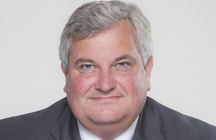
    Below is the text of the speech made by John McDonnell, the Shadow Chancellor of the Exchequer, in Bournemouth on 8 July 2016.

    We are meeting at a time of enormous uncertainty, following the result of the EU referendum just two weeks ago.

    There is the wider political uncertainty about Britain’s role in the world.

    And there is the economic uncertainty introduced by the shock of the Leave vote itself.

    Longstanding trading and financial relationships are at risk of being torn up.

    Perhaps the clearest message from the vote to Leave is that business as usual is no longer an option.

    The shock of the Leave vote has been worsened by the shaky foundations of our economy.

    Productivity growth has stalled since 2007, an unprecedented occurrence in modern peacetime history.

    Partly as a result of low productivity, wage growth remains low and any inflation arising from the falling value of the pound is liable to eat into real earnings.

    The current account deficit remains at near-record levels, whilst borrowing by government and households is also rising.

    The economy is, if anything, more unbalanced than it was before the crash of 2008.

    We argued that George Osborne’s fiscal rule, introduced last autumn, had no sound basis in economics.

    The Chancellor has failed to hit his debt target at this year’s Budget.

    The shock of the Leave vote, and the absence of a plan to deal with that shock, has now forced him to abandon his fiscal surplus target.

    This is absolutely the right course of action, as was abandoning the threatened “Brexit Budget” of swingeing cuts and tax rises.

    Further austerity would be absolutely the wrong course of action to take in an economy buffeted by a shock like Brexit.

    Let me make it clear – Local Government have been bearing much of the brunt of austerity. Councils cannot and should not be the target once again.

    Labour will continue to press for proper funding and resources for our local authorities.

    But we need to also recognise that our economic policy now must be about more than just accepting the status quo.

    We have to do more than try and patch up the damage.

    The Leave vote showed just how decades of underinvestment had left too many people here feeling abandoned by what they, quite understandably, view as a distant Westminster elite.

    We need a break with the old way of doing things.

    I believe that it is local councils that have started to show how a new path for the economy can be created.

    But it has to be matched up by action from central government.

    The challenges are substantial.

    Regional inequality

    Britain today has the worst regional inequality in Europe.

    The gap between our richest regions and our poorest is wider even than that between North and South Italy, or between East and West Germany.

    In London we see the richest places in the whole of the EU, nearly 80% of UK regions earn less than the EU average.

    These are the places that tended towards voting Leave.

    We should not allow a situation to persist where the majority of investment, from both public and private sectors, is concentrated in a few areas, and great swathes of the country are left behind.

    It was important to see the government begin to lay out its vision of the British economy after the Leave vote.

    George Osborne’s commitment, made in the Financial Times earlier this week, that he was seeking to boost the funding made available to regions in the North of England is to be welcomed.

    We have asked him to set out a timetable for delivering this, and some details of the projects to be brought forward.

    Local Government should be vitally important partners in designing and delivering this programme.

    We’re concerned that after the Leave vote, vital EU regional funding that comes to over £10bn a year will be simply lost.

    This has provided a lifeline of funding for some of the poorest regions in the country and is now at risk.

    So we’ll be pressing the Government to address this question urgently. The Government must guarantee this funding is protected.

    Austerity

    The Government’s austerity policies have reinforced the UK’s regional bias.

    It is local authorities that have borne the brunt of the cuts.

    But it is then the local authorities in some of the poorest places that have been hardest hit.

    Overall, local authorities have seen their spending fall by 23% since 2010, allowing for inflation.

    These are huge cuts for local authorities to bear.

    Action by local authorities

    But across the country, councils have responded with determination to their deteriorating circumstances forced on them by austerity.

    Oldham council has looked to develop its own responses to the crisis, working with Oldham Credit Union to reduce the burden of problem debt locally. Its Fair Employment Charter rewards local employers and looks to use local authority procurement to improve working conditions.

    Enfield council in London has developed innovative contracting models with major local employers to support good jobs.

    And Preston, inspired by the example of Cleveland, Ohio, has developed an extensive programme of work. Preston was one of the councils facing the very sharpest cuts to its funding out of any in the country. But they are responding creatively.

    They have got major local employers and buyers – so-called anchor institutions, like the University of Central Lancashire – to drive through a local programme of economic transformation. By changing their procurement policies, these anchor institutions were able to drive up spending locally.

    They’re looking to shift a proportion of the joint council’s £5.5bn pension fund to focus on local businesses, keeping the money circulating in Preston.

    And the council is actively seeking opportunities to create local co-operatives as a part of local business succession, working with the local Chamber of Commerce. The aim is to sustain high quality local employment, by giving the chance for workers to keep a business in local hands.

    These are just a few of the ways in which imaginative local authorities are starting to show a new path for the economy.

    We need to scale up and spread initiatives like these.

    And we have to make devolution a reality where it has not already been achieved.

    That doesn’t mean passing down responsibility for administering cuts to local and regional authorities, particularly in England.

    It means ending the concentration of power and wealth in just a few hands in our capital city, and giving the powers back to those local areas and places that have been excluded for too long.

    We need a government that trusts local authorities to find their own economic solutions for their own areas.

    Labour already has an agreement with our new Mayors to set up a Mayoral Economic Forum, helping to bring together best practices and ideas

    Looking ahead, we need to bring other local authorities on board.

    I think we can develop a consensus on the approach now to be taken, based on the foundation

    Next steps

    Most immediately, there is an urgent need for some clarity and certainty from government.

    The lack of planning for the Leave vote has already been damaging to our economy.

    Economic policy has been pulled together on an ad hoc basis.

    The centerpiece of the Government’s macroeconomic policy, the fiscal surplus target, has been ditched.

    And the Chancellor has now floated the prospect of exceptionally low Corporation Taxes as a solution to low and falling rates of business investment in the UK.

    This is not a view I share. Previous cuts to corporation tax have not resulted in increasing investment, as the Office for Budget Responsibility has found.

    And by whittling away at the tax base, cuts to corporation tax put more of the burden on households and small businesses, whilst increasing the pressure for cuts to local authority spending.

    So we are adamantly opposed to further cuts in the headline rate of corporation tax that threaten to turn this country into little more than a tax haven.

    We need, instead, some clear parameters for the ongoing discussions with the EU and other international partners about Britain’s future role in the world.

    Local Government must be represented in the negotiations and decision making as we remake our relationship with Europe.

    Another red line is preserving free trade. There is no economic case for reimposing tariff barriers with Europe and depriving British businesses of access to the world’s largest single market.

    And we cannot accept any restrictions on the rights of those who work here.

    That includes those from other EU countries who presently live and work in the UK.

    We will not be willing to support any EU deal that reduces the rights available to working people in this country.

    The way forward

    The Brexit vote should act as a wake-up call for all of us.

    It will force major challenges on local and national leaders alike over the coming years.

    Labour wants to work in partnership with local authorities as we begin to put together a new political economy for the country.

    We will seek to ensure Local Government’s voice is heard and listened to in this challenging period ahead.
  • Greg Clark – 2016 Speech on Devolution and the Northern Powerhouse

    gregclark

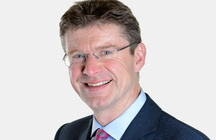
    Below is the text of the speech made by Greg Clark, the Secretary of State for Communities and Local Government, in Salford on 8 July 2016.

    Thank you, it’s a great honour to address this conference in this place.

    The re-empowerment of the North requires both thought and action – and we owe a debt of thanks to ResPublica and to Greater Manchester for breaking new ground.

    It is, of course, impossible for me to give this speech without addressing the events of the last fortnight.

    So let me begin by saying two things:

    The first is that our priority as a government is to safeguard jobs and investment – here in the North and across the United Kingdom.

    The decision of the British electorate is a momentous one – and there’s no mistaking the significance of it.

    But, equally, there should be no doubt about the resolve of this Government to act in the national interest.

    This is a time for cool heads and mutual respect, both at home and as we negotiate a new relationship with our European neighbours.

    In fact, the kind of mutual respect that has characterised the negotiation of Devolution Deals back home.

    In sitting down with city leaders, I can honestly say that our party political differences have never come between us.

    There was some hard bargaining, of course, but on behalf of their communities.

    The Government has put in place special arrangements for the EU negotiations – arrangements which include every part of the United Kingdom.

    I argued strongly – and successfully – for a place at the table for local government leaders in England.

    The interests of every part of this nation: North, East, West and South will be represented.

    I also believe it is important that European structural fund allocations – including those benefiting the North – are honoured in full.

    The second thing I want to say is that devolution is now more important than ever.

    I think that the referendum did not so much create divisions in our country as expose ones that were already there.

    London voting to remain, most of the rest of England for out.

    Some metropolitan cities voting marginally to stay in; smaller industrial towns voting heavily to leave.

    There was a critique that was made of the European Union (whether we think it was accurate or not):

    Too remote. Too unaccountable. Too bureaucratic. Too much uniformity. Run by people that don’t know what it’s like for me, where I am.

    Travelling around, talking to people during the campaign, I sensed that some of those charges were levelled at the way the country is run too.

    So among the answers to the challenge of the referendum result has to be a much bigger role for local leadership in our national life.

    Local leadership that is rooted in communities; that is practical and pragmatic not doctrinaire; that understands the neighbourhoods that comprise an area – and the differences from one place to another.

    We will not be One Nation until every part of the nation regains a sense of empowerment.

    That’s why devolution needs to go deeper – wider too – but especially deeper.

    The process is well underway.

    Since the first City Deals we’ve seen further waves of City Deals, Growth Deals and Devolution Deals.

    Only four years ago when people referred to devolution they invariably meant the transfer of power to Scotland or Wales.

    But now the policy very much includes the whole country – with the North of England having an especially high profile.

    And quite right too – because many of the most important and exciting developments in devolution are taking place here in the North.

    No one should be surprised.

    This is where the modern world was brought into being.

    A well-spring of innovation that changed the course of history.

    Which not even a century of centralisation was enough to exhaust.

    We should also mention the geography of the North.

    Where once it helped create the conditions for the industrial revolution, it is today helping to drive progress on devolution.

    Every part of the country has the potential to benefit from the decentralisation of power, but for cities it is a no-brainer.

    A city and its surrounding communities constitute an organic whole, a natural focus from which to join-up services and allocate investment.

    Though also blessed with beautiful countryside, the North is the most urban part of the country outside London – home to five of England’s eight core cities and to many of its key cities.

    And while these great population centres are close to one another physically, there is more variety in a hundred miles of the North than certain other places manage over the span of a continent.

    The city-regions of the North thus provide fertile ground for devolution.

    A series of connected-but-distinctive, large-but-local economies – with both the ambition and the opportunity to lead the way.

    Many of the most important initiatives on devolution are now coming from local communities themselves.

    The more that power is devolved to them, the more they see what they can do with it.

    The process of devolution is therefore acquiring its own momentum.

    However, momentum needn’t imply a single trajectory or speed of change.

    The diversity of the North is a strength not a weakness – and that includes a variety of approaches to devolution itself.

    With different geographies and different priorities, each area has moved at its own pace and in its own way.

    To those of an excessively tidy frame of mind, this is quite unbearable.

    It’s not that they oppose devolution, it’s just that they want it implement in a uniform, one-speed manner from the top-down.

    To me, that is to miss the point completely.

    Clearly, there are common principles that must be respected – such as democratic accountability and co-operation across local boundaries – but beyond that, I believe that the flexible approach to devolution has been vindicated.

    Certainly, cities like Manchester and Liverpool wouldn’t have been able to blaze their trails without it.

    A uniform process of devolution would mean devolution at the pace of the slowest, most reluctant participant.

    And that would benefit no one.

    The most ambitious communities would be held back and the more cautious communities would have no models to follow or adapt.

    A healthy sense of rivalry has always sharpened the will to succeed in these parts – and not just on the football field or the cricket ground.

    At the same time, however, there’s no denying the common identity and common interests of the North.

    Therefore, I’m thrilled to see devolution taking shape not just within each city-region, but between them.

    A prime example is the formation of Transport for the North – a major step towards the achievement a pan-regional road and rail network fit for the 21st century.

    This, surely, is the way forward: communities choosing to join forces where and when the opportunity arises, in place of the rigid regionalism of the pre-devolution era.

    It’s also great to see co-operation between the North of England and its neighbouring communities.

    For instance, with North Wales whose close links with Cheshire, Merseyside, Manchester and Lancashire can be strengthened to mutual advantage.

    And also with the north Midlands, where Cheshire, Warrington, Stoke and Staffordshire have been working collaboratively over the past year to maximise the growth benefits of HS2.

    At a time when other cross-border institutions aren’t faring so well, it’s encouraging that everybody wants to join the Northern Powerhouse.

    It is two years since the words “Northern Powerhouse” first appeared in a ministerial speech.

    However, that’s not where you left them.

    It’s no longer a phrase just used to label government policy – it’s an identity you’ve made your own and, in fact, always was your own.

    Indeed, it’s a rebuke to those who talk the North down – who emphasise the failures of the 20th century (most often failures of central government) rather than the potential of the 21st.

    A potential that is already being fulfilled.

    In the last two years, foreign direct investment in the Northern Powerhouse has increased by 126%.

    Since 2010, the long-standing north-south gap in private sector job creation has almost disappeared.

    Indeed, we see cities in the North and Midlands at the top of the job creation league.

    The entrepreneurial energies of the region have been released and deserve to be celebrated.

    Recent research by the London Stock Exchange found that almost 80% of the fastest growing stock listed companies in the UK were headquartered outside of London – with Manchester and Leeds among the locations.

    Now more than ever, it is essential that this progress continues.

    For local government leaders, Local Enterprise Partnerships and other stakeholders represented here today that means maintaining the momentum of devolution and the local growth agenda.

    To support and incentivise locally-led investment in transport, housing, skills and other priorities, the next round of Growth Deals will make £4.3 billion of funding available from the Local Growth Fund.

    This money will go to the best schemes, introducing a deliberate element of competition.

    I have always been clear that each deal and each piece of decentralising legislation represents a fresh point of departure not a final destination.

    To change metaphors, the tide of decentralisation has advanced by waves, each building on its predecessor.

    This model of reform has been vital to getting to where we are now, but I believe we are now moving to a new phase:

    To one of continuous devolution, in which the transfer of power isn’t negotiated on a central government timetable or according to a set menu of options, but à la carte and as-and-when communities identify new opportunities.

    If you lift the lid on Whitehall, what you see is an ongoing negotiation between different departments and ministers, an open process of give-and-take, proposal and counter-proposal.

    This is how things work within central government, and I see no reason why it shouldn’t be the same between central government and local government:

    Each with its own role and mandate, but equal partners in the governance of the nation.

    We’re not quite there yet, but, underpinned by the Cities and Devolution Act, the enabling mechanisms are coming together:

    Firstly, combined authorities to provide the heft and coordination that communities need to deal directly with

    Whitehall and take control of major investment decisions.

    Secondly, elected mayors to provide combined authorities with democratic accountability and high profile leadership.

    In May next year we will see metropolitan mayors elected in at least nine parts of the country.

    The third enabling mechanism is fiscal devolution – the financial independence, stability and incentives that communities need to push for local economic growth.

    The shift to 100% local retention of business rates will be a massive step in that direction – and I’m delighted that Greater Manchester and Liverpool City Region will be the first places to implement full business rate retention.

    Whether on fiscal devolution, metropolitan mayors or combined authorities, Devo North is leading the way.

    Before concluding, I’d like to mention a fourth foundation for successful devolution.

    And that is data devolution.

    To make the best investments for local growth… to fully understand the skills and infrastructure requirements of local businesses… to provide public services that respond to local needs… local decision-makers need up-to-date, accurate and meaningful information.

    In an over-centralised country, information is sucked upwards, away from the frontline, and into separate top-down bureaucracies.

    The only place where data can join up again is in distant centres of control – if indeed it joins up at all.

    Furthermore, in such bureaucracies, information is homogenised and aggregated, erasing the fine detail on which the local picture depends.

    But when communities take control of service delivery and investment for growth, then data can be joined-up locally – providing the intelligence that enables effective local decision making.

    At the leading edge, data devolution is about smart communities – the use of advanced technology to gather and process information in real time.

    This is exciting stuff, but perhaps more important is something that relies more on people than machines – and that is the willingness to learn from experience.

    Devolution means different things being tried in different places – and so a concerted effort to share the lessons is immensely worthwhile.

    These should be communicated between communities, not filtered through central government.

    There’s an obvious role here for combined authorities and Local Enterprise Partnerships, but also for independent institutions.

    The flourishing of so many think tanks and research institutions in this area of policy is a real encouragement – not least the very welcome debut of ResPublica North.

    As the Secretary of State for Communities and Local Government I want to boost the prospects of every part of the country.

    And indeed I can point to exciting developments in devolution from one end of England to the other – and elsewhere in Britain too.

    Nevertheless, there can be no denying the particular achievements of this part of the world.

    The Northern Powerhouse is setting the pace and Devo North is breaking new ground.

    Speaking personally, it is a great honour to be working with so many impressive leaders from different communities, different sectors and different political parties.

    At a time when we as a country must overcome our divisions, the willingness of so many different people to work together towards the common good is an inspiration.

    This is a time of great change for our country.

    Not least changes of leadership.

    I would urge of all of you to make your voices heard.

    To not only ask, but to insist, that those chosen to lead work for, and not against, your empowerment.

    You have already demonstrated your ability to take responsibility, show leadership and take control.

    There is no doubt of your capacity to make your own decisions, so don’t settle for anything else.

    In the end, Finding True North means setting your own direction.

    Thank you.

  • Lord Price – 2016 Speech on Chinese Investors

    lordprice

    Below is the text of the speech made by Lord Price, the Minister of State for Trade and Investment, in Shanghai, China on 8 July 2016.

    I’m delighted to be here in Shanghai where I’ve come to meet businesses and investors, in the run up to the G20 trade ministers’ meeting.

    This lunch is about me hearing your views, as business representatives, on the business environment in China and the UK and what the UK government can do to help. I do want to talk about this but I think it’s best if I first put this in the context of the Referendum.

    Referendum

    I want to reassure businesses and investors that there will be no immediate change. For now, the UK is still a full member of the EU, and goods and services will still trade freely across borders.

    Our economy has strong foundations. Over the past 6 years, we’ve worked hard to make Britain one of the best places in the world to start and grow a business.

    The UK is and wants to be the most business friendly, open, dynamic and innovative economy in the world. That remains unchanged.

    I’d like to talk to you about investment, and the positive messages I’ve been receiving from investors across Hong Kong, Beijing and Shanghai. And then I’d like to tell you about why I think, through the new trade deals we now have the power to strike across the globe, the UK has the ability to create a second Elizabethan Golden Age of trade and investment.

    Investment

    But let me focus on investment first and foremost.

    During this visit I’ve met with close to 100 Chinese investors – private and state owned – and the repeated message I’ve heard is one of commitment, enthusiasm and opportunity.

    Forgive the long list, but to demonstrate the strength of continuing Chinese investor support for the UK I’d like to share some of the reassuring messages I’ve been hearing from investors I’ve met with over the past 4 days.

    Fosun, China’s largest conglomerate have told me they are seeing opportunities to increase their investments in UK infrastructure and energy, following the referendum outcome.

    Bailian, China’s largest retail group, is seeking to bring more British brands to China.

    JD.com, one of the largest online shopping platforms in China and the world, is continuing to look at options for investing in China-UK e-commerce.

    The Wanda Group, one of the biggest and most successful companies in China, told me they are now looking for further UK land and property investments.

    The China Insurance Regulatory Commission want to work with us to invest in the UK and help UK insurers gain access to the Chinese market.

    The China National Nuclear Corporation remain fully committed to their reinvestment in UK nuclear new build programmes.

    Bank of China remain enthusiastic about current and new UK investment.

    In addition, Huawei have assured government that they will go ahead with their planned £1.3 billion UK investment, and before coming out to China I had a very positive meeting with the China National Offshore Oil Corporation, who remain committed to continuing offshore oil investment in the UK.

    And it’s easy to see why these investors are still bullish.

    Our corporation tax is one of the lowest in the G20 – set to get even lower – and we can boast capability and expertise right across the UK, not just in London.

    We are the number one destination for foreign direct investment (FDI) in Europe and according to EY, London is the European city most likely to create the next tech giant.

    The current value of sterling not only will give our exporters a helping hand but will attract more investment to the UK.

    We are also, in essence, starting from a blank piece of paper. Freed from Brussels’ more bureaucratic tendencies we will be able to tackle excessive red tape that hinders businesses.

    We can look to make our tax system even more competitive, making us even more attractive to overseas investors.

    In 2014, USD 5.1 billion of Chinese investment, nearly 30% of Europe’s total, came to the UK. Last year Chinese investment created almost 5,000 new jobs.

    I want to keep this momentum going and want your views on how we negotiate the best deal post Brexit so the UK can continue to attract Chinese investment.

    Trade

    Turning to trade, I believe we need, above all, a calm and collaborative approach. The imperative now is to ensure we have a collective and unified view of the Britain we want in the future.

    Firstly we will need to negotiate a new deal with the EU. I want us to maintain as close a relationship as possible on trade with our European partners. We will also look to secure free trade agreements (FTAs) with countries around the world.

    We have and will continue to engage businesses and investors to help draw up the blueprints for what the UK’s future relationship with the EU and the rest of the world looks like. I am eager to hear your views and work together so we can get the best possible deals for the UK.

    We need to avoid knee-jerk reactions. Trade deals aren’t agreed overnight. For some, we will be able to build on existing frameworks; others will have to be negotiated from scratch.

    These negotiations will cover all areas of policy – including sector requirements from agriculture to financial services as well as regulatory issues such as customs, competition, and procurement.

    Some sectors will slot into new deals relatively straightforwardly and others will be more complicated. We will therefore bring together policy experts from across government to ensure that we know what the UK needs.

    Our UK trade team will also need to be resourced appropriately.

    As no negotiations can take place before a new PM is in post and a new Cabinet formed, my job over the next few months is to lay out a set of options for the new PM.

    However, the key thing for all of us here today is to see the opportunity this provides.

    A fresh start gives a unique opportunity to shape a bright future for the UK as a global trading nation and open economy.

    And I will use this week’s G20 trade ministers’ meeting in Shanghai to start building these important relationships with counterparts ahead of our negotiations.

    The key message here is that we have a strong economy: we remain a fantastic place to invest, and have plenty of innovative, successful businesses. I have every confidence we will make this work.

    Government support

    Government is helping. For the first time, we are prioritising around 200 high value export campaigns, which could be worth up to £70 billion a year by 2020.

    In China, for example, we have identified big ticket opportunities in around 17 sectors including in aerospace, healthcare and financial services.

    We will bring together the whole of government, industry and our extensive overseas network to help UK businesses win these deals.

    Conclusion

    I’m optimistic about the future: and I believe we have all the tools now at our disposal to create a second Elizabethan Golden Age. The first Golden Age was based on peace, prosperity, new trading markets and a flourishing of the arts.

    The prize that now awaits us is a continued close trading relationship with Europe, which is based on millennia of trading history – from Neolithic times right up to the modern day integration of our aerospace and automotive sectors. The UK remains a very important destination for European goods.

    There’s also a prospect for striking new deals with Canada, New Zealand, Australia and other nations – forming the beginning of a new commonwealth trading pact.

    Turning to the West, we want to reinforce our historic relationships with both North and South America, which stretch back many centuries.

    And to the opportunities in the East, where for centuries British merchants have traded with China for tea and porcelain – so called ‘white gold’ – as well as with Japan, South Korea and other Asian nations.

    In fact, the Chinese Ministry of Commerce was quoted earlier this week in the China Daily newspaper saying they wanted to do a free trade deal with the UK.

    The exciting prospect of continuing trading relations with Europe and enhancing trading relationships East and West provides the UK with an opportunity to be a super connected trading hub.

    Reinforcing democracy, British rule of law, and tolerance through these enhanced business connections is how we will build trust which in turn leads to peace and prosperity.

    I am optimistic that we can seize this opportunity to create a second Elizabethan Golden Age.

  • Matt Hancock – 2016 Speech at the Public Sector Mutuals Conference

    Matt Hancock
    Matt Hancock

    Below is the text of the speech made by Matt Hancock, the Cabinet Office Minister, in Smith Square, London on 6 July 2016.

    Everyone in this room is a reformer.

    You’ve dared to do things differently for one reason above all: because you want to be the best at what you do.

    And my message to you today is simple: this government is on your side.

    We’re on your side because we believe in giving public servants the freedom to deliver their services in the way that they know best.

    Because it’s better to give people a stake in their own success than a top-down target from on high.

    And because we know you can have public service values and financial discipline: an entrepreneurial drive that’s driven by mission more than money.

    Thanks to your work over the last 6 years, your approach is now grounded in clear evidence.

    Let’s take the first: that if you trust people to innovate then that’s exactly what they do.

    Look at Six Degrees, a Salford-based social enterprise that spun out from the NHS in 2011.

    The team specialise in providing talking therapies for people suffering from depression or anxiety.

    Since spinning out they’ve pioneered a new single point of access service, starting small then winning a commission to expand the service more widely.

    They’ve teamed up with Salford University to develop new ways of improving communication skills for those who care for people with dementia.

    And a senior staff member won the prestigious Mary Seacole Award for her work on improving access to mental health services within BME communities.

    Or look at Realise Futures, a chain of 6 social enterprises, offering employment opportunities to disabled and disadvantaged adults in Suffolk.

    Staff at all levels are encouraged to submit ideas at senior operational meetings.

    One idea that came out of this process was to expand their veg box delivery business. In turn, this has led to more orders and more jobs.

    From school support to adult social care, leisure centres to libraries, behavioural insights to building management, public service mutuals are rewarding innovators and changing lives.

    Let’s take the second point: that the mutual model often means a happier, more engaged workforce.

    We already know that, on average, absenteeism falls by a fifth and staff turnover by 16% following a public sector spin-out.

    Survey data from across the sector show that staff become more likely to recommend their service to friends or family, feel more trusted to do their job, and more likely to feel like they can do their job to the standard they see fit.

    And staff that feel in control in their own destiny are better placed to deliver for the public.

    Take Achieving for Children, a jointly-owned social enterprise run by the Boroughs of Richmond and Kingston.

    The team deliver integrated children’s services across both local authorities, from early years help to fostering to special educational needs.

    Ofsted took the unusual step of moving the service up two grades, from ‘inadequate’ to ‘good’. They say that, since their last inspection, local children’s services have been ‘transformed’ .

    The third advantage of mutuals is that it allows us to combine the best of public and private sectors: hard-hitting social impact and a healthy bottom line.

    RippleZ is a social enterprise providing NHS services to vulnerable teenage parents in Derby.

    Since spinning out they’ve won three NHS contracts, increasing their turnover by £1 million and growing from just 11 staff to 48 in the last 5 years.

    Or look at Community Dental Services, which we expect to grow from £7 to 12 and a half million following recent NHS contract wins.

    It’s very likely to hit £20 million by the next financial year.

    So not only are public service enterprises free to innovate, they’re also free to grow: reinvesting their profits, doubling down on their success, scaling up as far as their ambitions can take them.

    Many of these organisations began life with support from the Cabinet Office Mutuals Support programme, or the NHS Right to Request.

    But this is no longer just a series of programmes, it’s fast becoming a national movement.

    In 2010 the UK was home to just 9 public service mutuals. Six years on it’s 115, employing 35,000 staff, delivering around £1.5 billion in public services.

    And now we want to go further.

    Large parts of the public sector are open to this model, but there are still too many public servants who want to spin out but don’t feel like they can.

    We understand, we are on their side, and we will back their ambitions every step of the way.

    Our manifesto included a ‘right to mutualise’ and we want to work with you on delivering that commitment.

    We’ve backed this up with £4 million in support at the Cabinet Office.

    We’re looking to publish our new mutuals strategy in the Autumn, and we’ll be talking to you over the summer, to get your ideas about what you think should be in it.

    I know you’re clear-eyed about the challenges ahead, about the barriers we need to unblock before we can take this revolution to the next level: sceptical service commissioners who prefer the tried and tested; sceptical lenders, put off by your lack of credit history; and the need for more commercial and technical skills.

    But let’s be clear too about the huge advantages we have too: as a world-leader in the field of social investment, as a pioneer in payment by results, and with a state that has consistently shown itself ready and willing to reinvent itself to better serve the public.

    So in our strategy we expect to look at issues like raising awareness of the opportunity, strengthening the evidence base still further, improving access to finance, and creating a more supportive commissioning environment.

    I’m looking forward to working with you on setting out these vital next steps.

    Of course this agenda is not a silver bullet, and no-one here would claim otherwise.

    Digital transformation, data-driven improvement, user-centric service design. inspiring leadership: these all matter as much as the delivery model.

    But our principle is clear, if public servants believe they can deliver a service better by taking control of that service, we have a duty to let them try.

    This is life-changing work, and I pay tribute to everyone in this room who’s advanced the cause of public service reform.

    Now we must aim higher, innovate faster, and not be afraid to fail first time.

    That’s the means; the end is to help all our fellow citizens succeed.

    That’s our mission.

    You have my support.

    Let’s go out and make it happen.

  • Michael Fallon – 2016 Speech to RUSI Airpower Conference

    michaelfallon

    Below is the text of the speech made by Michael Fallon, the Secretary of State for Defence, in London on 7 July 2016.

    I’d like to begin by paying tribute to CAS since this is his last conference in post.

    I know he’d rather I kept quiet but I want to put on record my appreciation for his immense leadership over the past three years.

    He led the RAF into Shader only 2 years ago – he led calmly, without fuss.

    I want to thank him for his leadership to the Force and service to the State.

    He leaves a proud legacy.

    A RAF stronger, more ready to face the challenges to come.

    THE SOMME

    Last week we commemorated the Somme.

    Besides the contribution of our troops in the trenches, that long drawn out conflict witnessed a revolution in air power, from intelligence gathering to control of the air.

    Back then, the perils of aviation were almost unimaginable.

    Your forebears fought in canvas and wood, carried no parachutes, and had minimal training.

    By contrast, you enjoy the sort of precision, speed and reach they could only dream of.

    Yet you too continue to run risks to protect our freedom.

    SHADER

    And nowhere is this truer than in our fight against Daesh.

    Two years on from Parliament’s vote to authorise airstrikes in Iraq, seven months since the extension of that authorisation to Syria, we now have over 600 air and ground crews in RAF Akrotiri.

    It’s been humbling to meet those men and women on the frontline and to see how effectively they’re getting the job done.

    GETTING THE JOB DONE

    Our aircrew have flown more than 2800 missions in Iraq and Syria.

    They’ve conducted 865 airstrikes in Iraq and, since December, 50 in Syria – more than any other nation except the United States.

    Since December’s vote, the RAF has more than doubled its effort against Daesh.

    Last month saw the greatest number of bombs dropped and missiles fired since January.

    Meanwhile, RAF E-3D Sentry aircraft are co-ordinating Coalition aircraft over the whole operational area.

    Our Voyager tankers are extending our reach and endurance.

    Our intelligence gathering aircraft – such as Airseeker – are providing a significant amount of the Coalition’s ISR.

    Together they’re ensuring our Tornados, Typhoons and Reapers can clear a path for brave Iraqi troops.

    And our planes are making a decisive difference in support of local ground forces.

    Daesh is on the back foot. It is a failing organisation.

    In Iraq it has lost around 40% of the territory it once held.

    Last week saw a significant milestone– the liberation of Fallujah.

    Once more the RAF’s efforts highlight the precision nature of our operation.

    Our fast jets struck more than 100 targets as Iraqi ground forces fought their way into the city.

    It was our jets that destroyed bunkers housing anti-tank guns, weapons factories, ammunition dumps, and artillery.

    They also provided crucial intelligence to identify potential threats even in the demanding circumstances of street-fighting in an urban environment.

    Our efforts, alongside our Coalition partners, helped liberate Fallujah while limiting the long-term damage to the city and saving many brave Iraqi lives.

    The symbolism of this latest success is inescapable since Fallujah was the first city seized by Daesh in Iraq in January 2014.

    The focus is now on stabilisation so people feel safe to return home.

    Meanwhile, in Syria the RAF is making inroads into Daesh’s command, control and targeting their oil infrastructure, a major source of revenue.

    The RAF has not operated at this sustained operational tempo in a single theatre of conflict for a quarter of a century.

    And this tempo and commitment – our precision targeting, our ISR, and our overall support for the coalition – shows no sign of abating.

    GLOBAL REACH

    Operation Shader might be our biggest operational focus but it’s only part of the RAF’s global activity.

    Last year our pilots and aircrew deployed to more than 60 countries.

    They’re in Eastern Europe for the third year running a protecting our NATO allies against Russian aggression.

    Since April 29 they’ve been scrambled on 15 occasions to intercept 32 aircraft.

    Besides targeting Daesh, our people are flying in Afghanistan as part of NATO’s Resolute Support Mission.

    It remains a difficult and dangerous job.

    And I’d like to pay tribute in to the personnel, especially the 2 RAF Puma crewmembers, who tragically lost their lives in Afghanistan in October last year.

    Besides the RAF’s work overseas you continue to be a constant presence in UK as well as the Falklands skies providing Quick Reaction Alert to protect our security.

    Whether at home or abroad, you continue to pull out all the stops.

    The nation is proud of your service.

    Thank you.

    MAINTAINING A HIGH TEMPO

    In the coming year I expect our RAF to continue, as you might say ‘kicking the tyres and lighting the fires’.

    The result of the referendum will not change our global outlook.

    Nor the shared threats we face.

    To counter those international challenges…we must work even harder with our allies and partners, becoming, in the words of our SDSR, international-by-design.

    And while we’ve opted out of one particular union, we take our global responsibilities seriously, as members of NATO, the Organisation for Security and Cooperation in Europe, the Northern Group of European nations, the Five Power Defence Arrangements in the Far East and permanent members of the UN Security Council.

    But the RAF needs no reminding of its global obligations.

    You’ve always been an instinctively international entity.

    SDSR GOOD NEWS

    But your challenge is to stay ahead of the curve.

    Our competitors are striving to close the capability gap.

    Russia is exploiting forward-swept wing technology, North Korea “miniaturising” nuclear weapons, others are making the most of cyber and fifth generation technology.

    In response, our SDSR gives us a RAF that packs a more powerful punch, increasing its capital investment programme to more than £6Bn, so it can spend on our future air fleet.

    For a sign of what’s to come look no further than our fifth generation F-35, which crossed the Atlantic last week, in time for RIAT and Farnborough.

    The F-35 both land and sea-based will be the fulcrum of a new air fleet, including, 2 additional Typhoon squadrons, 9 Maritime Patrol Aircraft, 14 Voyager air-to-air refuelling aircraft by end of year, upgraded helicopter fleets, more than double the number of drones and investments in innovations like the solar-powered Zephyr.

    We’re not just investing in the platforms but the weapons themselves.

    Today I can announce a contract worth approximately £28 million to maintain our state-of-the-art Storm Shadow missile for the next five years.

    This long-range high performance cruise missile is already in service with our Tornados and is being integrated with our Typhoons.

    Last week it was deployed for the first time in western Iraq…destroying Daesh ammunition dumps in a large concrete bunker.

    Collectively, these assets make our future air fleet among the most adaptable and agile in the world.

    Yet, if we’re to seize the opportunities opened up by this new capability, the RAF must adapt in three ways.

    1. INFORMATION

    First, by responding to the growing information challenge.

    What distinguishes the air technology we’re developing today is an increasing ability to absorb information.

    From the images captured by the Tornado’s Raptor pods, to our AWACS, fusing and disseminating data.

    From the continuous surveillance of Reaper, to our F-35.

    Let’s consider F-35 for a moment.

    The most powerful and comprehensive integrated sensor package of any fighter aircraft in history, a core processor that can perform more than 400 billion operations per second and 360-degree access to “real-time” battlefield information.

    It immeasurably improves our situational awareness.

    But to get to grips with all the data it provides our people must learn to sift it, understand it, and exploit it, to deliver a faster truth to the public, and a knock-out blow to our adversaries.

    2. PEOPLE

    This brings me to point two.

    Our people must be able to keep up with the sophistication of our systems.

    That means training our crews to make judgements about the intelligence in front of them.

    It means making our organisation as a whole, more streamlined and more responsive, so that data distilled on the battlefield is interpreted by the analysts back home, all in real time.

    That’s why we’ve brought components of Defence Intelligence community together at Joint Forces Intelligence Group Headquarters alongside the imagery intelligence capability of the Defence Geospatial Intelligence Fusion Centre.

    But we don’t just need to improve our information handling skills.

    As we develop our disruptive capability, whether in artificial intelligence, miniaturisation, or big data, the RAF will require an even more diverse palette of skills.

    Yet today the nation is facing a skills deficit.

    To bridge that gap we’re backing apprenticeships

    The RAF currently has 2700 apprentices on its books – over half in aircraft engineering.

    We’re also collaborating with Primes to create engineering pathways between public and private sector.

    We’ve appointed a Defence Engineering Champion, Air -Marshal Julian Young to develop talent across the Single Services and the Civil Service.

    And we’re opening up a new Air & Defence Career College in Lincoln, so budding engineers or computer scientists can have unrivalled access to the RAF and Air Defence industry.

    3. PUBLIC AWARENESS

    My third point is we have to help the public as well as our people adjust to this new phase in air power.

    With more coverage on our use of UAVs like Reaper and our plans for Protector, with systems such as Zephyr and Taranis in development, there is concern about the level of automation.

    So we must explain clearly the benefits of the capability we’re investing in and the safeguards in place.

    We don’t wish to remove humans from the process but using unmanned systems minimises the danger to operators and aircrew in high threat environments.

    Ultimately, we want to put more power into the hands of our people by giving them better information to make more informed decisions.

    Human beings might lack the computational power of a machine, but they are better than machines at understanding human motivation in all its chaotic and complex unpredictability.

    Our people will always be our greatest disruptive capability.

    And that’s why we have a clear UK policy on automation of weapons systems: the operation of weapons systems will always be under human control.

    We are committed to using remotely piloted systems as an absolute guarantee of oversight and authority for weapons release.

    And our Science and Technology Programme does not fund research into fully autonomous weapon systems.

    Although humans will remain in control of our future weapons systems, new technology is increasing the physical distance between man and machine.

    Take our pilots controlling their RPAS remotely thousands of miles away.

    Yet they remain subject to the moral and psychological burden of combat as well as Rules of Engagement and the Laws of Armed Conflict.

    That means we have to ensure training, tactics, and doctrine meet the needs of the 21st century pilot.

    CONCLUSION

    So we’re preparing our people and the public to face the new dawn of airpower.

    For the next generation, this will be a new age of opportunity.

    Yet to make the most of it, we must make sure future talent keeps coming through the door.

    In a sense. it’s the same appeal as Trenchard once made: “We want the mathematic genius – there is work for him. We want the scientific brain – there is more than enough work for him. We want the man of brains and we want the man of common sense. We want the man of initiative and the man of action”.

    But that was in 1925 in the infancy of air power.

    You can now look back on a century of extraordinary achievement and innovation.

    From the tactical ingenuity on the Somme, to the feats of daring in the Battle of Britain.

    From the breakthrough of the jet engine, to the development of an air-breathing rocket propulsion system that can enter earth’s orbit.

    From the fifth-generation F-35, to the solar power zephyr that can loiter in the upper atmosphere.

    Our people have helped to change this country. They’ve helped keep the world safe too.

    So as we tell this story, as we appeal, let’s take to heart the theme of this conference and inspire the next generation.

    They will be the ones to write the next chapter in the glorious history of our nation.

    A history in which we’ll fly further and higher and longer than ever before, as they protect our country and keep our people safe.

  • Nicky Morgan – 2016 Speech to the Education Britain Summit

    nickymorgan

    Below is the text of the speech made by Nicky Morgan, the Secretary of State for Education, at the Emmanuel Centre, Westminster in London on 6 July 2016.

    It’s a pleasure to be here at the Education Britain Summit today. Thank you to the Education Foundation for organising the summit with its positive focus on ‘celebration, ambition and inspiration’. These are, without doubt, challenging times but in a time of uncertainty the positive ‘can do’ approach of the Education Foundation is exactly what we all need.

    When I accepted the invitation to speak at this event I knew that I’d be standing before you in a post-referendum world. The result is not the one I wanted or campaigned for and we are now living in uncertain times. I know, for many young people, recent events have been unsettling. We all – teachers, leaders, schools and parents – have an important role to play in providing reassurance and support to young people. I want to send a clear message today that:

    – no child should live in fear of racism or bullying

    – we will not stand for intolerance

    – hate crimes of any kind must be stamped out

    Long before this result, the government gave clear direction to schools to teach children and young people about the fundamental British values of democracy, the rule of law, individual liberty, and mutual respect and tolerance of those of different faiths and beliefs.

    This is part of our drive to foster better social cohesion and encourage all young people to celebrate their differences alongside their unifying sense of Britishness.

    Although the referendum result has changed so much about the world we are living in, my ambition remains resolute: to extend opportunity and deliver real social justice for all. Brexit doesn’t change that. We will continue with the ambitious pace of reform that we have begun. Now, more than ever, we owe it to the next generation to equip them with the skills, knowledge and confidence to take on the challenges they will face.

    Celebration

    Having spoken to the team behind today’s summit, I’m struck by their desire to build an ‘Education Nation’ – reforming of our system to meet the challenges of the future, but never forgetting to celebrate the things that are already being done well – rediscovering ‘national education treasures’.

    So in that spirit I’d like to ‘celebrate’ the efforts of everyone here today. Your desire for a conversation and to work together is why I’m here and I’m really looking forward to you sharing your insights and expertise with me.

    And as we approach the end of another school year we should also celebrate the efforts of teachers and leaders in schools throughout the country. Their hard work, commitment and exceptional ability to bring about excellent educational outcomes for young people represent our ‘educational treasures’. It’s thanks to their collective efforts that 1.4 million more children and young people are being taught in ‘good’ or ‘outstanding’ schools since 2010.

    Ambition

    I am ambitious for the education system, and that ambition is clear: educational excellence everywhere. Our white paper builds on the reforms that started in 2010 which focused on making sure that every child gets the best start in life.

    Yesterday, schools received the first set of key stage 2 results, following the introduction of a far more rigorous curriculum in 2014. As a government we made the decision to raise the bar on literacy and numeracy. Because while the old arrangements allowed politicians to celebrate ever improving results, the truth is, expectations were too low.

    We had to bring our primary school curriculum in line with the best in the world, because nothing is more important than ensuring that young people master the basics of reading, writing and mathematics early on.

    If they don’t, they’ll be left playing catch up for the rest of their lives. That’s why as part of this government’s commitment to delivering real social justice, started by Michael Gove my predecessor, we have raised the bar on what counts as a good enough standard in the 3Rs by the end of primary school.

    Nicky Morgan at Education Britain Summit

    Nicky Morgan presents the keynote at the Education Britain Summit
    I want to thank all those involved in the tests this year, including teachers and parents, for supporting pupils through the transition to a more rigorous system. It’s important that all involved see these results for what they are – a reflection of how well children this year have performed against a new curriculum.

    Whilst it is right that we should celebrate success and achievement, there is more we have to do. It cannot be right that in 2016 children’s educational outcomes are, in part, determined by where they live.

    That’s why as a society we must share a common goal: to ensure that all children have an excellent education. We all have a part to play in achieving that goal. Everyone has a role to play. Central to that ambition are schools, their leaders and teachers, and that’s why the white paper has such a strong emphasis on ‘great teachers’ and ‘great leaders’.

    There can be no doubt that high-quality teaching is essential to improving pupil outcomes. Excellent leadership is also key. Ofsted evidence has shown that the overall performance of a school rarely exceeds the quality of its leadership and management. That’s why getting great teachers and leaders where they are most needed is my absolute priority.

    These are challenging times for some schools to get the teachers and leaders they need in order to drive up standards. I recognise that schools find it frustrating if they can’t secure the talent they rightly expect, and we are responding. An economy in growth presents challenges – in a competitive graduate market, the best graduates are in high demand.

    I’m very clear about the role the government has to play, to create an environment in which schools can be ambitious. We’re tackling workload, encouraging recruitment to teaching and promoting higher standards.

    And we’re making progress.

    I’m delighted with the latest recruitment figures to teaching – we’re seeing growth in the number of people training to be teachers across a range of secondary subjects.

    I can also confirm that our reform of QTS will be implemented no earlier than September 2018 – with a formal consultation about our proposals in due course.

    We’re tackling workload so teachers and school leaders will have time to focus on what really matters – focusing on high-quality teaching and delivering excellent educational outcomes.

    We recently published the reports of 3 independent review groups looking at tackling workload related to marking, planning and data management. These reports are a great example of the profession taking charge of their own development and they include clear messages that can empower teachers and school leaders. We urge everybody in education to consider and engage with the messages and recommendations in the reports.

    We’re also focusing on reforms that support children to reach their full potential, like character education and mental health reforms. Equipping schools with the tools to make a real difference to the future success of their students.

    As I said in my opening remarks, in a time of uncertainty, it’s more important than ever that we equip the next generation with the confidence to succeed. Character plays a huge role in that, as I have been told time and time again by experts in character education like Carol Dweck and Angela Drummond, who say that children need and deserve opportunities to learn:

    – how to persevere and respect each other

    – how to bounce back when faced with failure

    – how to collaborate and build strong relationships at work and in their private lives

    That’s why we are investing £6 million to test approaches to character education. We’re also delivering Character Awards to highlight the excellent practice that already exists at schools like Archibald Primary, where character education is at the heart of the school’s ethos and embedded across the curriculum. The school’s motto is “Believe and achieve” and the staff place great emphasis on instilling a belief in pupils that, whatever challenges they face, they can achieve their full potential.

    And the Chancellor has announced that we will invest over £500 million so up to 25% of secondary schools can extend their school day to provide a wider range of activities, including those associated with building character.

    These broader qualities are sought by parents, educators and employers alike.

    Last year I supported the creation of the Careers & Enterprise Company – so that young people and employers can connect much earlier and start having the right conversations about career options and expectations – letting them know which skills and qualifications they need in order to advance their careers. The Careers & Enterprise Company is already doing great things under a fantastic CEO, Claudia Harris, and I know it will go from strength to strength. I would encourage anyone in business, with the capacity to get involved, to do so and start inspiring young people to succeed.

    Employers want young people to have access to the right routes through education, to complement their individual strengths, and so that the economy gains the types of skills it really needs. That’s why the government is publishing its Skills Plan later this week – a strategy to lift the status of the technical route and put employers in the driving seat as the people best placed to know what skills our country needs.

    Inspiration

    The truth is that the government cannot and should not do it alone. We have a role to play but we need to be clear about the roles we need others to play. I hope that if we approach it as conversation rather than confrontation we’ll make the progress we need.

    Many of our key policy interventions have been based on advice from leading heads and teachers, and we welcome their input and wise counsel. We will continue with that approach so that reforms are owned by the educators. But we should be clear that schools and their leaders must step up and play their part.

    We’ve been very clear about the role schools need to play in identifying and developing talented teachers:

    – getting involved in ITT

    – creating a working environment that provides opportunities and reward for teachers and leaders

    – developing and training the next generation of leaders

    The government has created opportunities – schools need to make the most of them. Many already are.

    That’s why I want to inspire, empower and extend the reach of our best leaders, putting them at the heart of the education system where they can drive change and take ownership of the system. If we are to achieve our ambition for educational excellence everywhere, then a supply of high-quality leaders is needed at all levels, from middle and senior leaders to headteachers and system leaders and increasingly at MAT CEOs level.

    We believe that schools are best placed to recognise teachers with the talent, ambition and commitment to become leaders. To support this, we want to ensure schools and prospective leaders themselves can identify and choose to access high-quality leadership development opportunities.

    And I’m very proud of the creation of a ‘Women in Education’ network to further support women’s career progression. We’ll be working with organisations such as ASCL and #WomenEd and with schools to ensure that this provision does not duplicate existing support. We are creating the “leadership coaching pledge”. Our ambition is to have 1,000 pledges so that 1,000 women are supported through coaching by system leaders by March 2017.

    Thank you

    I’m clear that society as a whole – not just government and schools – has a shared responsibility to celebrate the dedication of everyone involved in education, and to recognise the essential contribution they make.

    Thank you for all your hard work in pursuing educational excellence everywhere and the collaborative approach you are taking to achieving it.

  • Alan Johnson – 2016 Speech on the Chilcot Inquiry

    alanjohnson

    Below is the text of the speech made by Alan Johnson, the Labour MP for Kingston upon Hull West and Hessle, in the House of Commons on 6 July 2016.

    The epitaph on Robin Cook’s headstone in the Grange cemetery in Edinburgh reads as follows:

    “I may not have succeeded in halting the war, but I did secure the right of Parliament to decide on war.”

    The Prime Minister is right in saying that, in these circumstances, Parliament cannot be involved in the decision and then simply try to duck responsibility for the ramifications of that decision. Does he agree that the main element in the debate in which Parliament decided, on 13 March 2003, was not the 45-minute claim, which was not mentioned anywhere in those hours of debate, but the fact that Saddam Hussein and his murderous sons had spent 13 years running rings around the United Nations, ignoring 17 UN resolutions, including resolutions calling for all necessary means to stop him? Was that not the main issue in that debate? Has the Prime Minister found any evidence whatever of any lies told to Parliament on that day?

  • Tim Farron – 2016 Speech on the Chilcot Inquiry

    timfarron

    Below is the text of the speech made by Tim Farron, the Leader of the Liberal Democrats, in the House of Commons on 6 July 2016.

    Today, we stand alongside the families of the 179 British servicemen and women and 24 British civilians who died in the Iraq war. We also stand beside the many more who continue to live with injuries sustained while serving their country in Iraq. We are proud of them and we honour them.

    The Chilcot report makes clear the absolute determination of the former Prime Minister Mr Tony Blair to pursue war in Iraq, no matter what the evidence. There is a stark contrast between that single-minded determination to go to war and the reckless and complete absence of any plan for what would come next. What came next was 179 British servicemen and women killed, as well as 100,000, or more, Iraqi civilians. What came next was the fuelling of what is now ISIS-Daesh, which threatens not only Iraq but the middle east and the safety of us all.

    In 2003, the much missed Charles Kennedy said in this House:

    “The big fear that many of us have is that the action will simply breed further generations of suicide bombers.”—[Official Report, 18 March 2003; Vol. 401, c. 786.]

    Will the Prime Minister now take the opportunity on behalf of his party and this House to acknowledge that Charles Kennedy was right all along in leading opposition across the country to a counterproductive war? Should not those who accused Charles Kennedy of appeasement—some of whom are still on these Benches—apologise to him, his family, our servicemen and women, our country, and the people of Iraq?

  • Angus Robertson – 2016 Speech on the Chilcot Inquiry

    angusrobertson

    Below is the text of the speech made by Angus Robertson, the SNP MP for Moray, in the House of Commons on 6 July 2016.

    May I begin by thanking the Prime Minister for advance sight of his statement and for a few short hours this morning to have a look at the millions of words in the report? Today we remember the hundreds of thousands of people who have died in Iraq—Iraqi civilians and, of course, the 179 UK service personnel who have lost their lives. Today is an important and sombre day for their families, and our hearts go out to them.

    The report that we are considering now will be pored over in the days, weeks and months ahead, and it should be the first step in learning the lessons from the UK’s most shameful foreign policy action in decades. Paragraph 409 of the executive summary of the Chilcot report confirms that on 28 July 2002, Tony Blair wrote to President Bush saying:

    “I will be with you, whatever”.

    Frankly, it is remarkable that the Prime Minister did not think that that was noteworthy enough to mention in his statement to the House. My first question to the Prime Minister is why he did not do so, given that much of the debate rests on the rationale of the Prime Minister of the time for signing up to whatever course of action the United States was prepared to pursue?

    On intelligence, the report concludes at paragraph 807:

    “The assessed intelligence had not established beyond doubt either that Saddam Hussein had continued to produce chemical and biological weapons or that efforts to develop nuclear weapons continued.”

    I completely understand why the families of dead and injured UK service personnel, and hundreds of thousands of Iraqis, will feel that they were deceived about the reasons for going to war in Iraq. I completely understand why they also feel let down when it comes to the post-conflict situation, and the Chilcot report catalogues in graphic detail the failures in planning for post-conflict Iraq.

    Paragraph 630 of the executive summary states that

    “when Mr Blair set out the UK’s vision for the future of Iraq in the House of Commons on 18 March 2003, no assessment had been made of whether that vision was achievable, no agreement had been reached with the US on a workable post-conflict plan, UN authorisation had not yet been secured, and there had been no decision on the UN’s role in post-conflict Iraq.”

    The summary goes on to say at paragraph 814:

    “Mr Blair, who recognised the significance of the post-conflict phase, did not press President Bush for definite assurances about US plans, did not consider or seek advice on whether the absence of a satisfactory plan called for reassessment of the terms of the UK’s engagement and did not make agreement on such a plan a condition of UK participation in military action.”

    In fact, the Chilcot report concludes, at paragraph 857:

    “The UK did not achieve its objectives”.

    Lack of planning has been evident since, in relation to Afghanistan, Libya and Syria; most recently there has been absolutely no plan whatever for Brexit. When will UK Governments of Tory or Labour hue actually start learning from the mistakes of the past so that we are not condemned to repeat them? I hope and expect that in the months ahead there will be the opportunity to hold to account those who are associated with and responsible for taking the UK to war in Iraq. It has not only caused hundreds of thousands of deaths; it has undermined people’s faith in Parliament and Government in the UK and left an indelible stain on Britain’s standing in the world.

  • Jeremy Corbyn – 2016 Speech on the Chilcot Inquiry

    jeremycorbyn

    Below is the text of the speech made by Jeremy Corbyn, the Leader of the Opposition, in the House of Commons on 6 July 2016.

    Before addressing the issues raised in the Iraq inquiry report, I would like to remember and honour the 179 British servicemen and women who were killed and the thousands maimed and injured during the Iraq war, and their families, as well as the hundreds of thousands of Iraqis who have died as a result of the invasion and occupation launched by the US and British Governments 13 years ago.

    Yesterday, I had a private meeting with some of the families of the British dead, as I have continued to do over the past dozen years. It is always a humbling experience to witness the resolve and resilience of those families and their unwavering commitment to seek truth and justice for those who they lost in Iraq. They have waited seven years for Sir John Chilcot’s report. It was right that the inquiry heard evidence from such a wide range of people and that the origins, conduct and aftermath of the war were examined in such detail. However, the extraordinary length of time that it has taken for the report to see the light of day is, frankly, clearly a matter of regret.

    I should add that the scale of the report, running to 6,275 pages, to which I was given access only at 8 o’clock this morning, means that today’s response, by all of us, can only be a provisional one.

    The decision to invade and occupy Iraq in March 2003 was the most significant foreign policy decision taken by a British Government in modern times. It divided this House and set the Government of the day against a majority of the British people, as well as against the weight of global opinion. As Sir John Chilcot says, the war was not in any way a “last resort”. Frankly, it was an act of military aggression launched on a false pretext, as the inquiry accepts, and has long been regarded as illegal by the overwhelming weight of international legal opinion. It led to the deaths of hundreds of thousands of people and the displacement of millions of refugees. It devastated Iraq’s infrastructure and society. As the report indicates, the occupation fostered a lethal sectarianism that turned into a civil war. Instead of protecting security at home or abroad, the war fuelled and spread terrorism across the region. Sunday’s suicide bomb attack in Baghdad that killed over 250 people, the deadliest so far, was carried out by a group whose origins lie in the aftermath of the invasion. By any measure, the invasion and occupation of Iraq have been, for many, a catastrophe.

    The decision to invade Iraq in 2003 on the basis of what the Chilcot report calls “flawed intelligence” about weapons of mass destruction has had a far-reaching impact on us all. It has led to a fundamental breakdown in trust in politics and in our institutions of government. The tragedy is that while the governing class got it so horrifically wrong, many of our people actually got it right. On 15 February 2003, 1.5 million people here, spanning the entire political spectrum, and tens of millions of others across the world, marched against the impending war. That was the biggest demonstration in British history.

    It was not that those of us who opposed the war underestimated the brutality or the crimes of Saddam Hussein’s dictatorship. Indeed, many of us campaigned against the Iraqi regime during its most bloody period, when the British Government and the US Administration were supporting that regime, as was confirmed by the 1996 Scott inquiry. But we could see that this state, broken by sanctions and war, posed no military threat, and that the WMD evidence was flimsy and confected. We could see that going to war without United Nations’ authorisation was profoundly dangerous, and that foreign invasion and occupation would be resisted by force, and would set off a series of uncontrollable and destructive events.

    If only this House had been able to listen to the wisdom of many of our own people when it voted on 18 March 2003 against waiting for UN authorisation for a second resolution, the course of events might have been different. All but 16 Members of the official Opposition at that time supported the war, while many in my party voted against it, as did others in other opposition parties. There are Members here today on all Benches, including dozens of my Labour colleagues, who voted against the war. But none of us should take any satisfaction from this report.

    We have to be saddened at what has been revealed, and we must now reflect on it. In addition to all those British servicepeople and Iraqis, civilians and combatants, who lost their lives in the conflict, many members of this House who voted to stop the war have not lived to see themselves vindicated by this report. First and foremost, it would do us well to remember Robin Cook, who stood over there, 13 years ago, and said in a few hundred words, in advance of the tragedy to come, what has been confirmed by this report in more than 2 million words.

    The Chilcot report has rightly dug deep into the litany of failures of planning for the occupation, and the calamitous decision to stand down the Iraqi army and to dissolve the entire Iraqi state as a process of de-Ba’athification. However, the reality is that it was the original decision, to follow the US President into this war in the most volatile region of the world and impose a colonial-style occupation, that led to every other disaster. The Government’s September 2002 dossier, with its claim that Iraq possessed weapons of mass destruction that could be deployed in 45 minutes, was only the most notorious of many deceptions. As Major General Michael Laurie told the inquiry:

    “We knew at the time that the purpose of the dossier was precisely to make a case for war, rather than setting out the available intelligence”.

    Military action in Iraq not only turned a humanitarian crisis into a disaster, but it also convulsed the entire region, just as intervention in Libya in 2011 has sadly left the country in the grip of warring militias and terror groups. The Iraq war increased the threat of terrorism in our own country, as Baroness Manningham-Buller, former head of MI5, made clear to the inquiry.

    There are many lessons that need to be drawn from the Iraq war and the investigation carried out by Sir John Chilcot in his inquiry; lessons for our Government, our country and this Parliament, as well as for my party and every other party. They include the need for a more open and independent relationship with the United States, and for a foreign policy based on upholding international law and the authority of the United Nations, which always seeks peaceful solutions to international disputes. We also need, and the Prime Minister indicated this, much stronger oversight of security and intelligence services. We need the full restoration of proper Cabinet government and to give Parliament the decisive say over any future decisions to go to war—based on objective information, not just through Government discretion but through a war powers Act, which I hope this Parliament will pass. As, in the wake of Iraq, our own Government and other western Governments increasingly resort to hybrid warfare based on the use of drones and special forces, our democracy crucially needs to ensure that their use is subject to proper parliamentary scrutiny.

    There are no more important decisions a Member of Parliament ever gets asked to make than those relating to peace and war. The very least that Members of Parliament and the country should be able to expect is rigorous and objective evidence on which to base their crucial decisions. We now know that the House was misled in the run-up to the war, and the House must now decide how to deal with it 13 years later, just as all those who took the decisions laid bare in the Chilcot report must face up to the consequences of their actions, whatever they may be.

    Later today, I will be meeting a group of families of military servicemen and women who lost loved ones, as well as Iraq war veterans and Iraqi citizens who have lost family members as a result of the war that the US and British Governments launched in 2003. I will be discussing with them, our public and the Iraqi people the decisions taken by our then Government that led the country into war, with terrible consequences.

    Quite bluntly, there are huge lessons for every single one of us here today. We make decisions that have consequences that go on not just for the immediate years, but for decades and decades afterwards. We need to reflect very seriously before we take any decisions again to take military action. We should realise that the consequences of those decisions will live with all of us for many decades to come, and will often be incalculable.