
Author: admin

  • Tim Yeo – 2002 Speech to the Social Market Foundation Conference

    Tim Yeo – 2002 Speech to the Social Market Foundation Conference

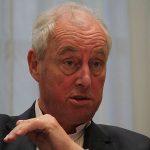
    The speech made by Tim Yeo to the Social Market Foundation Conference on 19 June 2002.

    1. INTRODUCTION

    I am grateful to David Lipsey and the Social Market Foundation for this opportunity to set out my thoughts about the future of broadcasting and public service broadcasting (PSB) in particular.

    Television and radio touch all our lives. Their influence on social, cultural, commercial and political activity is far reaching. Every man, woman and child is a consumer of television and radio.

    Decisions on how they are regulated, on controls over ownership, on digital switchover, on the BBC Charter, and many other matters don’t just concern every family in the land. They affect how Britain exploits the huge economic opportunity which broadcasting represents.

    I’m on the early stages of a journey of exploration which started last September when I took on the DCMS portfolio within the Shadow Cabinet. Today what I want to do is float ideas, share thoughts, not set out Conservative Party policy. I will do that at a later date, after I’ve attended a few more events like this one.

    I start from the position of being on the side of the consumer. I want more progress to higher quality, better value, more control for viewers and listeners. Delivering these aims will open up greater opportunities for broadcasters.

    In charting a course for broadcasting’s future we mustn’t be prisoners of the past. Harnessing new technology for the benefit of consumers as well as suppliers involves new ideas and concepts.

    Trusting consumers doesn’t always come easily to powerful people in either politics or broadcasting. Viewers and listeners weaned on an out of date model of passive consumption of television and radio deserve to be treated better.

    Now is the time to move towards a market in broadcasting where viewers pay for what they choose to watch and not for much else; time to reduce the distorting effects of the BBC licence fee; and to set the BBC itself free to grow in competition with other suppliers.

    Let me, at the outset, salute the industry’s considerable achievements. The BBC has a distinguished history. It set high standards which were rightly and widely admired. ITV opened up new horizons, Channel Four provided an innovative model of a publicly owned television channel and Sky TV enormously enhanced viewer choice. The newcomer, Channel Five, has its own angle on news and arts coverage. As it happens all these success stories have been facilitated by applying Conservative philosophy to a rapidly changing industry.

    2. BACKGROUND

    Broadcasting is and will remain one of the most important industries in the twenty-first century. Fortunately it’s an industry where Britain enjoys advantages – a large pool of entrepreneurial and creative talent, a fine record of public service and other broadcasting, the English language and a country in which people from all over the world like to live and work. British influence on the development of the media industry should be considerable.

    Now viewers and listeners enjoy wider choice decisions about ownership of media companies should be left to the competition authorities. The market will protect consumer interests provided there is competition between suppliers. If unfair, monopolistic or anti-competitive practices creep in the authorities have backstop powers to intervene.

    On matters of taste and decency regulators should concentrate on the prevention of harm rather than offence. This may sometimes involve taking a stronger line than now, for example, over material which may encourage aggressive or violent behaviour.

    The present structure of broadcasting in Britain is a historical accident. Radio, and television, developed as state-owned monopolies funded by the licence fee, a television tax which is highly regressive. Gradually this monopoly evolved into a comfortable duopoly and eventually into today’s multi-channel environment.

    But payment methods haven’t expanded to match the range of channels. Broadcasting companies and programme makers exercise great power over consumers. There’s been an assumption that schedulers know best, that the consumer is a passive creature, content to flop down in front of the screen and accept a diet someone else has chosen.

    Today some viewers are starting to consume television when it suits them, choosing from a bigger menu and exercising more control, maybe accessing one item in a news bulletin and pursuing it in more depth. In future more people will do this and it’s time to throw overboard outdated assumptions about how television should be paid for.

    3. THE FUTURE

    The future is digital. The Government must drive the switchover from analogue to digital more effectively than they have done so far. Without real leadership their target date for switchover won’t be achieved. As a Sky subscriber and a former customer of ITV Digital I know how unreliable the reception of the terrestrial service was, a failing for which Ministers cannot entirely escape responsibility.

    The extra quality, choice and potential for interactivity on digital justifies moving ahead quickly, regardless of any residual value in the analogue spectrum. Britain’s leadership of the digital television revolution must not be thrown away.

    Switchover requires a thriving terrestrial platform, alongside satellite and cable. Without that the exclusion of many homes from cable by geography would mean that satellite exercised a monopoly over much of Britain.

    Ideally all three platforms will offer viewers free to air and pay TV channels, even if in the short term the survival of digital terrestrial television involves a limited period of only free to air. However viewers shouldn’t be encouraged to buy equipment which denies them the chance to upgrade to pay channels at a later date.

    An all digital Britain will widen the range of payment options, for the benefit of both viewers and suppliers. It’ll end licence fee evasion, saving £140 million a year, more than 5 per cent of the BBC’s total income.

    Radio is a very important part of PSB and I’ll speak in more detail about it on another occasion. For today let me just say that Britain enjoys high quality radio. Wider choice and higher standards will be possible as digital radio becomes the norm.

    As far as possible the future of broadcasting should be determined by consumers not politicians. The market is the best guarantor of efficient delivery.

    If the market is to work properly changes are needed. The distorting effect of the television tax must be reduced. Consumers must increasingly pay for what they watch, not for what suppliers choose to sell them.

    4. PAYING FOR BROADCASTING

    No other industry prices its products in the way broadcasting does. All viewers pay the television tax even if they never watch the channels it pays for. Severing the financial relationship between consumers of a product and its suppliers is seldom helpful.

    Buyers of books aren’t forced to pay an entry fee to get into a bookshop before they know what books are on sale. Lovers of music don’t pay a lump sum covering the cost of dozens of compact discs even though they know they will only want to listen to a handful. Theatre tickets aren’t sold in a block which gives entry to certain plays selected by someone else before the theatregoer has been told which they are.

    The structure of the publishing, music and theatre industries isn’t the same as television but there are enough similarities to question why television is sold this way.

    The answer lies in history. To get broadcasting going the television tax (originally a radio tax) was introduced. It may have been right in the early days that this tax funded all broadcasting. Today the situation has changed.

    The television tax affects the behaviour not just of the BBC but other broadcasters too. It limits the power of consumers to determine what they are offered. It’s a crude and undiscriminating way to charge for television. It wouldn’t survive if consumers were used to paying for what they want and nothing else.

    The television tax provides a smokescreen behind which other broadcasters price their products in a similar way. Sky has revolutionised viewer choice, winning a large market share on the back of a bold and well judged strategic gamble. It’s been able to bundle its product, like that of the cable companies, in a way which does not suit all consumers, partly because the market has been conditioned by the television tax.

    Let’s take this a stage further. If the consumer, having paid the television tax, equivalent to the price of entry into the bookshop, is a sports lover, he or she is then asked by pay television suppliers for a further entry fee to get inside the section containing sports books. There is no opportunity to state a preference for, say, tennis and rugby over golf and cricket.

    Pay television subscribers, unlike television taxpayers, do at least buy their product voluntarily. For many people a single comprehensive subscription may be convenient. But now digital makes pay per view (PPV) easy, subscription to a pre-packaged bundle of channels shouldn’t be the only option.

    PPV should be widely available so consumers can access programmes individually. Subscribers to one sports channel, for example, should be allowed to buy individual sports programmes on other channels on PPV in the same way subscribers to The Economist who receive a discount by buying a year’s issues at a time can buy a single issue of the Spectator at the full cover price when they want to.

    The present system restricts choice and insults the viewer’s intelligence. It could be replaced by one which gives viewers and listeners the power that cinema and theatregoers, that readers of books, magazines and newspapers take for granted. PPV isn’t a burdensome addition to charges already levied but an alternative which enhances viewer choice and control out of all recognition with past practice.

    It’s time for boldness and imagination. Why shouldn’t quality programmes be made in a freer market? The free market in book publishing doesn’t mean only trashy books get published. Trashy books do get published but quality books emerge as well.

    At present the sole recipient of the television tax is constantly accused of dumbing down. It’s hardly surprising the BBC is tempted to compete for audience but it cannot be said too often that ratings are a lousy guide to whether the BBC is carrying out its PSB role.

    The success of Hello Magazine hasn’t put The Economist out of business. Suppose, however, both were published by one tax funded organisation and supplied free to all readers. It is a sure bet The Economist would be the one threatened with the chop when a commercially orientated chief executive took charge.

    Promoting a television market where consumers are king requires a fresh approach to the television tax and a rethink of the role of PSB.

    5. PUBLIC SERVICE BROADCASTING

    PSB is a public good on which public money can properly be spent. There’s a debate to be had whether that money should come from a hypothecated television tax or from general taxation, which is how the excellent BBC World Service is funded. However, the constant struggle of the World Service for proper funding isn’t an encouraging precedent for the general taxation option.

    A twenty first century model of PSB may still involve, at its core, an organisation whose main purpose is the delivery of certain specified obligations. But other channels apart from the BBC have an important PSB role and I applaud how they discharge their responsibilities. The public interest in the new century will only be properly served if there continues to be the widest possible choice for consumers, catering for all manner of individual tastes. However this morning I want to focus on the BBC.

    Many attempts have been made to define PSB and it’s often easier to say what it is not rather than what it is. I certainly don’t regard all the BBC’s output as constituting PSB. Plainly many viewers and even some BBC management don’t think so. Gavyn Davies didn’t claim it was in his 1999 Report on Future Funding.

    An important function of PSB is to remedy market failure. Taxpayer’s money can justifiably be used to fund broadcasting to ensure the supply of programmes which serve a public interest but which would not get made if the free market alone determined supply.

    Annex B of the Government’s own document – rather grandly entitled “The Policy” – refers to the General Public service broadcasting Remit whose first provision is “disseminating information, education and entertainment”.

    Back in the days of the BBC monopoly –as it happens anxieties over concentration of ownership weren’t so widely aired then, those concerns have grown louder as ownership has become more, not less diverse – back in those far off days, entertainment deserved inclusion within this definition of PSB.

    Today, however, the duty of a public service broadcaster to entertain is dramatically less now so much entertainment is available on other free to air channels. Market failure no longer applies.

    Information and education have stronger claims for inclusion within PSB, as does news and current affairs. Although Sky News has emerged as a valuable additional news provider alongside BBC and ITN, the regional news coverage of both BBC and ITV fulfils an important PSB function and might not be supplied by the market.

    The same is true of serious current affairs programmes. On The Record may not reach those elusive younger viewers who increasingly don’t vote but does contribute to political discussion. Regular viewing of Channel Four News and Newsnight not only allows time for dinner but also keeps viewers in touch with what’s happening at home and abroad. Neither would necessarily survive without a PSB obligation.

    In assessing where market failure applies there is a distinction between what the market supplies free to air and what it supplies on pay TV. This is more difficult territory. If croquet is covered on a pay channel does a free to air channel need to do so? Is croquet PSB? If it isn’t what difference is there between croquet and cricket, or golf, or rugby, or tennis? Or even, dare I say it, football?

    It’s doubtful if much sport can still be defined as PSB. And one model for the BBC I’ll float in a minute would allow viewers to enjoy the same sports coverage as now without paying more.

    Harder to judge is the extent to which drama, music and the visual and performing arts are PSB. Maintaining a significant British production capacity in these areas is desirable and reliance on the market may not achieve this goal. How these important elements are defined within a PSB remit requires further consideration.

    There is also the question of how the PSB package should be delivered. Should it be divided up into a series of individual components and bids invited from broadcasters able to deliver them? Or should PSB be bundled as a single package and put out to tender?

    This might appeal to free market theorists but it wouldn’t recognise reality. The BBC, despite faults which its detractors are quick to highlight, would deservedly have a head start in bidding to perform the PSB roles. A tender process would be cumbersome and expensive.

    The aim must be to deliver PSB as efficiently as possible. A new approach to BBC funding, overhauling the television tax, can encourage this.

    6. THE FUTURE OF THE TELEVISION TAX

    Much discussion over BBC Charter renewal will concern funding.

    I want the BBC enjoy the potential for a greater increase in its income than the television tax could ever provide. It is, after all, an internationally recognised brand, capable of considerable growth.

    Unlocking this potential depends on reforming the television tax. I hope the Secretary of State’s mind isn’t as closed as her recent FT interview suggested when she was quoted as saying that a significant change to the funding of the BBC lies “somewhere between the improbable and the impossible”.

    The BBC receives approximately £2.1 billion direct from television tax payers and another £390 million paid by the Treasury on behalf of households exempt from the tax, giving a total income of around £2.5 billion.

    Various options exist after the present Charter expires. At one extreme the BBC could be funded from advertising. But advertising revenue, as recent events have shown, is not infinitely expandable. This option would be unpopular with existing advertising funded channels and would not promote consumer choice. I do not support it.

    An alternative would be for the BBC to rely entirely on subscription or PPV. This would reduce its audience and unless those viewers who remained paid a higher subscription than the present television tax, money for programmes would be reduced.

    At the other extreme the television tax could continue, maybe growing in real terms as it has done recently. This alternative enjoys some support but is hard to justify unless everything the BBC does constitutes public service broadcasting.

    Changes to the present funding arrangements are therefore likely and I want to explore another option – shall I call it the Middle Way – because unlike the Secretary of State I want the BBC released from the shackles of the television tax.

    There’s nothing magical about an income figure of £2.5 billion. Could a high quality PSB function be provided for £2 billion? Or £1.5 billion? Perhaps PSB only needs one national television channel, not two?

    Now is the time to examine just how much television taxpayers should have to pay for the BBC’s PSB functions. I suspect that most television taxpayers believe it’s significantly less than £2.5 billion.

    Once a figure is decided the BBC would sign a public service agreement committing them to providing the core public service programmes. Its finances would be subject both to external audit and scrutiny by Parliament through the Public Accounts Committee and the Select Committee.

    But as I said a moment ago, I want the BBC to have more income, not less, so in addition to receiving this slimmed down television tax, it would be given new freedom to offer consumers additional television and radio channels on subscription or PPV.

    Under the Middle Way there’d be no ceiling on the BBC’s income. Its substantial reputation and assets could be exploited at home and overseas, creating new opportunities for programme makers and management. The BBC could grow without artificial constraints, develop new markets and improve services to consumers.

    A whole range of specialist new television channels and radio stations could emerge. All viewers would have more to spend as a result of the lower television tax. The market for pay television is growing. Would consumers not gain from competition, for example, between a subscription funded BBC Sport channel and other sports channels?

    No doubt it will be claimed that EU rules make it hard for the BBC to operate a dual structure of this sort. As Commissioner Reding pointed out recently to the Joint Scrutiny Committee examining the draft Communications Bill, total transparency is needed if a state controlled taxpayer funded body starts to compete in the market place. I hope that regulatory structures will not impede the evolution of the BBC.

    How far the BBC would grow under this model would depend on how successful it was at making programmes which consumers were willing to pay for. If its output is as good as its champions say, it has much to gain from greater exposure to the market. Timing the introduction of this new model would depend in part on the progress towards digital switchover and the start of the new Charter period is probably too soon for such radical changes. In any case they could be introduced gradually. But the time to debate whether they are desirable is now.

    7. CONCLUSION

    In considering the future of broadcasting generally and the renewal of the BBC Charter in particular our aims should be:

    1) to enhance viewer choice and control

    2) to help the BBC exploit its unique assets and reputation at the same time as preserving a properly funded PSB role

    3) to ensure that other broadcasters are free to develop as they wish

    4) to encourage a diversity of payment methods so that viewers increasingly watch what they pay for

    5) to help Britain maintain a leading role in broadcasting.

    Tessa Jowell’s rejection of changes to BBC funding must not be the last word on this important issue. Viewers and listeners deserve better. The ideas floated above are just that – ideas.

    I hope they will stimulate debate, enhance consumer power, widen the influence of the BBC and ensure that British broadcasters are leaders in this century as they were in the last.
  • PRESS RELEASE : Give us more weapons – Andriy Yermak

    PRESS RELEASE : Give us more weapons – Andriy Yermak

    The press release issued by the President of Ukraine on 31 March 2022.

    Ukraine calls on Canada and other partners to supply weapons. This was announced by Head of the President’s Office Andriy Yermak during an online conversation with journalists of the Canadian Global News.

    “We need more weapons. Small arms, demining systems, drones, counter-battery radars, howitzers, body armor… Everything! But first of all, we need to close the sky to protect our cities from missiles,” Andriy Yermak explained.

    The situation in the capital of Ukraine, Kyiv, he noted, is as normal as possible in the current conditions. At the same time, there is no reason to talk about a full-fledged withdrawal of Russian troops from the Kyiv direction.

    “Our people are calm, they are full of dignity and energy. Kyiv is reviving, shops are working, all services are working, public transport is working. Air alarms have already become a certain element of the current life of people in the city,” said the Head of the Office of the President.

    He referred to President Volodymyr Zelenskyy who said in his address that the Ukrainian side has not yet seen the Russians withdraw all their forces from the Kyiv direction. There are some movements, but it is more like a change of position or regrouping.

    Andriy Yermak noted that according to one of the probable scenarios, the Russians will concentrate their forces around Donbas.

    He reminded that the blockade of Mariupol continues and the situation in this city is catastrophic. Ukraine continues negotiations with many foreign leaders to unblock Mariupol as soon as possible.

    Andriy Yermak stressed that the world community should continue to increase pressure on Russia. In particular, a group of Ukrainian and international experts has been set up at the President’s Office, which has already begun analyzing the real impact of sanctions against Russia and developing proposals for new effective measures.

    The Head of the Office of the President also stressed the importance of increasing military assistance to Ukraine, in particular from Canada.

    “Every hour of the war takes the lives of Ukrainians and causes great damage to our country,” he concluded.

  • PRESS RELEASE : Volodymyr Zelenskyy had an hour-long phone conversation with Joseph Biden

    PRESS RELEASE : Volodymyr Zelenskyy had an hour-long phone conversation with Joseph Biden

    The press release issued by the President of Ukraine on 30 March 2022.

    President of Ukraine Volodymyr Zelenskyy had an hour-long phone conversation with US President Joseph Biden.

    Volodymyr Zelenskyy shared his assessment of the situation on the battlefield and the forecast of developments. He spoke about the crimes of the occupiers against the civilian population and the heroic efforts of Ukrainians aimed to protect the independence and territorial integrity of their country.

    The Presidents discussed concrete support that will further strengthen Ukraine’s defense capabilities at sea, on land and in the air.

    “We need peace, and it will be achieved only when we have a strong position on the battlefield. Our morale is firm, there is enough determination, but we need your immediate support,” Volodymyr Zelenskyy said.

    The leaders discussed preparations for the next package of painful sanctions against Russia, as well as the negotiation process and security guarantees for Ukraine.

    Volodymyr Zelenskyy thanked the United States for another $ 1 billion humanitarian aid package and additional $ 500 million in direct budget support.

  • PRESS RELEASE : Mykhailo Podolyak – International multilateral treaty on security guarantees will give Ukraine reliable protection against possible new aggression

    PRESS RELEASE : Mykhailo Podolyak – International multilateral treaty on security guarantees will give Ukraine reliable protection against possible new aggression

    The press release issued by the President of Ukraine on 30 March 2022.

    Ukraine wants to sign an international treaty on security guarantees, which will give it reliable allies and real protection from any new aggression in the future. Adviser to the Head of the President’s Office and member of the Ukrainian negotiating team Mykhailo Podolyak emphasized this during an online briefing at the Ukrainian Media Center.

    Mykhailo Podolyak noted that he had quite optimistic impressions of the face-to-face round of the Ukrainian-Russian talks on ending the war, which took place on March 29 in Istanbul (Turkey).

    “We have reached a very important construction for Ukraine when it will no longer be a fantasy, but a specific treaty on security guarantees, which will be legally fixed. Guarantor countries that undertake international legal obligations will be fixed there,” he said.

    The Adviser to the Head of the President’s Office noted that Ukraine has been fighting one-on-one with the powerful army of the Russian Federation for more than a month. That is why our state wants to have such allies who will stand by when help is needed here and now.

    According to him, in case of signing an international multilateral treaty on security guarantees, our state will finally have not only its own army, which is fighting very hard today, but also an additional security contour due to powerful allies that will stand by Ukraine.

    Mykhailo Podolyak said that a group of international lawyers moderated by Head of the President’s Office Andriy Yermak is consulting with Ukraine’s future security guarantors.

    “He holds preliminary negotiations with the guarantor countries at the level of political advisers, explains our positions, explains the fundamental principles of the treaty on security guarantees. After that, consultations take place at the level of legal groups,” he said.

    Mykhailo Podolyak reminded that Ukraine would like to see the permanent members of the UN Security Council as the main guarantors of its security, as well as Turkey, Germany, Poland and several other countries. In particular, Italy has already expressed interest in participating in such a treaty. The treaty will be open for any country to accede to.

    According to the Adviser to the Head of the President’s Office, many countries during and after this war will realize that the old formats of European or even global security do not work, and will understand that the future will be based on such agreements as Ukraine has proposed.

    Mykhailo Podolyak is convinced that the available developments indicate that preparations for the meeting of the Presidents of Ukraine and Russia can already begin. However, the Russian side has yet to consider Ukraine’s proposals and give a preliminary answer to them. Currently, online working groups are constantly working to ensure the continuity of the negotiation process.

    According to the Adviser to the Head of the President’s Office, intermediate proposals were recorded at the meeting in Istanbul, which the parties have already worked out and discussed. There is a possibility that in a few days it will be possible to agree on the next round of talks.

    At the same time, he stressed that all issues related to the sovereignty and territorial integrity of Ukraine are inviolable for Ukrainian negotiators, which is constantly emphasized by President of Ukraine Volodymyr Zelenskyy.

  • PRESS RELEASE : The Office of the President of Ukraine supported the initiative to establish the Ukrainian Global University

    PRESS RELEASE : The Office of the President of Ukraine supported the initiative to establish the Ukrainian Global University

    The press release issued by the President of Ukraine on 30 March 2022.

    With the support of the Office of the President of Ukraine, the government, educational institutions and non-governmental organizations are creating the Ukrainian Global University (UGU), a network that brings together the world’s best educational institutions to provide Ukrainian students, scholarship holders, researchers and lecturers with access to educational institutions around the world, as well as new scholarships and postdoctoral programs.

    Participants of the UGU initiative will have not only support, but also access to quality education and the opportunity to conduct research abroad, and then will be able to apply the acquired knowledge and skills in their home country.

    In the future, the UGU team plans to launch internships and programs in Ukraine that will allow their participants to quickly reintegrate and contribute to the reconstruction of the country upon their return.

    The initiative stipulates that displaced students, researchers and scholarship holders will not be abandoned.

    The main goal of UGU is to overcome the devastating consequences of Russian aggression in Ukraine and to attract leading world experience to build a new Ukraine as a worthy member of the world community of free and democratic nations.

    “Ukraine’s integration into the world educational space has been and remains one of the key priorities of our state. Now Ukrainian schoolchildren, students, teachers, scientists who have suffered devastating losses as a result of the military aggression of the Russian Federation, need support! Investing in educational potential, we, together with leading universities in the world and Ukraine, are investing in the future. The establishment of the Ukrainian Global University is a call to the entire educational world community to support Ukrainian schoolchildren, students and scientists in obtaining quality education. These people will return to Ukraine to rebuild it after the war with world-class knowledge,” said Olha Budnyk, adviser – commissioner of the President of Ukraine for the Fund of the President of Ukraine for Support of Education, Science and Sports.

    Currently, the UGU team is focused on establishing personal and institutional partnerships with schools, universities and research centers around the world, which will be ready to consider applications for medium- and long-term programs from Ukrainians and sponsor a number of students, scientists and researchers. Details and conditions are agreed with each partner institution separately, but all partners must sign an open memorandum with UGU, which defines common values and principles.

    Partnership applications can be submitted at https://uglobal.university/

    Stanford, Harvard and dozens of other leading universities in the world have already supported the initiative.

    “Stanford realized the importance of creating new educational programs for Ukrainians six years ago when we launched the Ukrainian Emerging Leaders Program. Graduates of this program have already made significant changes to improve Ukraine. I support UGU and call on all other universities in the world to support Ukrainian students and scholars,” said Michael McFaul, a professor of political science at Stanford University and director of the Freeman Spogli Institute for International Studies.

    “The University of Paris 1 Pantheon-Sorbonne has a long tradition of solidarity with scholars and students in exile. It is especially important for us that UGU was founded by Ukrainian scientists who are now fighting not only for the sovereignty of their country, but also for our common European values. We will continue to provide our support after the end of the war, when Ukrainians return to rebuild their country,” said Christine Neau-Leduc, President of the University of Paris 1 Pantheon-Sorbonne.

    To maximize efforts, the initiative team forms a network of volunteers, which can be joined by graduates and representatives of educational institutions from around the world. They will help attract more institutions to the network, UGU is convinced, as they will be its ambassadors in their schools, colleges and universities. Volunteers can also contact the administrations of any institution around the world to initiate the process of establishing their partnership with UGU.

    If Ukrainian students or scholars want to become members of UGU, they can use the simplified application process on the website. They will then have to go through the full or simplified application process at any educational institution listed on the platform to increase their chances of admission. A prerequisite for participation in the program for all students is return home after graduation or research completion to help rebuild Ukraine after the war.

    UGU is also working with DuoLingo, an online language learning program, to allow Ukrainians to take English language tests for free and receive certificates wherever they are.

    Leading domestic educational institutions and organizations, including the Kyiv School of Economics, Ukraine Global Scholars, the Ukrainian Catholic University, the Emerging Leaders Program at Stanford University, the Professional Government Association, the SET University and the Kyiv Academic University, joined the establishment of the Ukrainian Global University (UGU). The initiative was also approved by the Ministry of Education and Science of Ukraine and the Embassy of Ukraine in the United States.

  • PRESS RELEASE : Iryna Vereshchuk announced the approval of three humanitarian corridors in the Zaporizhzhia region

    PRESS RELEASE : Iryna Vereshchuk announced the approval of three humanitarian corridors in the Zaporizhzhia region

    The press release issued by the President of Ukraine on 30 March 2022.

    In Ukraine, as of March 30, three humanitarian corridors have been agreed in the Zaporizhzhia region for the evacuation of Mariupol residents to Berdyansk and for the evacuation of residents of Melitopol and Enerhodar. This was announced by Deputy Prime Minister – Minister for Reintegration of the Temporarily Occupied Territories Iryna Vereshchuk.

    “Three humanitarian corridors have been agreed: for evacuation of Mariupol residents and delivery of humanitarian aid to Berdyansk, delivery of humanitarian aid and evacuation of people from Melitopol, as well as for a convoy of people on their own transport from Enerhodar to Zaporizhzhia,” she said.

    According to Iryna Vereshchuk, the formed convoys of buses and trucks with humanitarian aid have already left the city of Zaporizhzhia.

    The Deputy Prime Minister stressed that the Ukrainian side demands that the occupying forces abide by their commitments and allow humanitarian columns through checkpoints.

    She noted that on the way back to the city of Zaporizhzhia, citizens from Berdyansk and Melitopol will be able to join the humanitarian columns using their own vehicles.

    “Yesterday, during the talks, the Russian delegation received proposals to organize humanitarian corridors to the 97 most affected settlements in the Kharkiv, Kyiv, Kherson, Chernihiv, Sumy, Zaporizhzhia, Donetsk, Luhansk and Mykolaiv regions. Today we will continue to work to get answers to these proposals,” said the Deputy Prime Minister.

    She reminded that on March 29 a detonation of ammunition took place at the warehouse of the Russian Armed Forces in Belgorod, Russia. According to Iryna Vereshchuk, this is an example of the typical Russian neglect of safety and mass use of dangerous ammunition produced during World War II.

    “Only yesterday, the Ukrainian General Staff warned of the threat of self-detonation of ammunition, a huge number of which Russia has piled up near the Chornobyl nuclear power plant. Russia must immediately withdraw its troops from the Chornobyl zone,” said the Deputy Prime Minister.

    According to her, in the context of nuclear security, the irresponsible and unprofessional actions of the Russian military pose a very serious threat not only to Ukraine, but also to hundreds of millions of Europeans.

    “Therefore, we demand that the UN Security Council take immediate measures to demilitarize the Chornobyl Exclusion Zone and establish a special UN mission there to eliminate the risk of a repeat of the Chornobyl nuclear disaster as a result of actions of the Russian occupation forces,” Iryna Vereshchuk said.

  • PRESS RELEASE : President – In “Diia” citizens can already apply for compensation for housing lost as a result of hostilities

    PRESS RELEASE : President – In “Diia” citizens can already apply for compensation for housing lost as a result of hostilities

    The press release issued by the President of Ukraine on 30 March 2022.

    As of today, one can apply for compensation for the loss of housing due to the Russian invasion in the application of public services “Diia”. This was announced by President of Ukraine Volodymyr Zelenskyy in his address.

    “As I promised, the state will compensate for the loss of a house or apartment as a result of hostilities. Every citizen of ours can already submit an application in “Diia”. Applications are already available in the mobile application. You need to update the app to see this new service,” the President noted.

    In a week it will be available to submit an application offline – in the centers of administrative services. All the necessary details will soon be clarified by the government.

    “The main thing is that the state will compensate for every meter of lost real estate,” Volodymyr Zelenskyy emphasized.

    In addition, according to the President, the government has expanded the program of assistance to those institutions that support displaced persons from the areas of hostilities.

  • PRESS RELEASE : Andriy Yermak met with a group of experts who will analyze the impact of sanctions against Russia

    PRESS RELEASE : Andriy Yermak met with a group of experts who will analyze the impact of sanctions against Russia

    The press release issued by the President of Ukraine on 29 March 2022.

    Head of the Office of the President of Ukraine Andriy Yermak held an inaugural online meeting with a group of Ukrainian and international experts who will analyze the real impact of sanctions against Russia.

    “Today, sanctions are issued by our partners almost every week. They are different. Some of them have already started working and are very sensitive to Russia. And some seem to sound like sanctions, but they don’t work at all. As for some Russians, they have already found ways to bypass them. The sanctions mechanism itself is very powerful, and our goal is for the sanctions to work effectively,” he said at the beginning of the meeting.

    Andriy Yermak believes that it is necessary to reach the pace of the weekly increase of sanctions pressure against Russia. According to him, Ukraine’s partners are currently working on the introduction of a new sanctions package against Russia. Critical import chains will be targeted, including export controls and sanctions aimed at suppliers cooperating with the Russian military-industrial complex.

    The Head of the President’s Office also noted that there can be no question of lifting, stopping or changing the sanctions against the aggressor, until the war is stopped, troops are withdrawn from Ukraine, our state receives reparations and compensation for the damage to the Ukrainian state and its citizens.

    Former US Ambassador to Russia and former US National Security Adviser Michael McFaul said it was necessary to review what had been done and ensure that new sanctions were imposed on Russia every week to increase pressure on Russia.

    Daniel Fried, former State Department’s Coordinator for Sanctions Policy, said there was a need to halt Russian oil and gas exports as much as possible and reduce relevant profits. He is also convinced that the dynamics and speed of decision-making are important in the issue of sanctions pressure.

    For his part, Deputy Head of the Office of the President Rostyslav Shurma noted that the issue of oil exports is the most important and sensitive when it comes to effective pressure on Russia, and it is on it that we should focus the most.

    He also stressed the need to recognize Russia as a state sponsoring terrorism.

    “This will automatically lead to bans on many corporations. Not only those related to oil and gas,” said Rostyslav Shurma.

    He also considers sanctions against the entire Russian political elite or people involved in politics important.

    In addition, in his opinion, a halt in the supply of certain chemicals, spare parts and important components for the mechanical engineering, defense and oil refining industries will be critical for Russia.

  • PRESS RELEASE : The new multilateral treaty should make any aggression against Ukraine impossible – Andriy Yermak

    PRESS RELEASE : The new multilateral treaty should make any aggression against Ukraine impossible – Andriy Yermak

    The press release issued by the President of Ukraine on 29 March 2022.

    The new multilateral treaty should make any aggression against Ukraine impossible and become a key element of the new international security system. This was stated by Head of the Office of the President of Ukraine Andriy Yermak commenting on the face-to-face round of Ukrainian-Russian talks, which took place on March 29 in Istanbul.

    “We all and I personally liaise around the clock with our international partners to elaborate a quality and effective multilateral security treaty,” he said.

    According to the Head of the Office of the President, today the relevant work is underway together with the United States, Great Britain, China, Canada, France, Germany, Turkey, Italy, Poland and Israel. The leaders of these states have appointed specific political and security advisers. They are working with the Ukrainian party on a future document on security guarantees.

    “Ukraine needs clearly and qualitatively formulated legally effective and binding international security guarantees. The horrors that the Russians have brought to the Ukrainian people must never be repeated,” Andriy Yermak said.

    He stressed that “Ukraine is primarily concerned about ending the war, withdrawal of Russian troops from our territory and, of course, building a new security structure.”

    The Head of the President’s Office noted that today it is important for Russia to stop the shelling immediately and for the full-fledged humanitarian corridors to all cities where a humanitarian catastrophe already exists or is approaching to be opened as soon as possible. First of all, we are talking about Mariupol, other cities of Donbas and Chernihiv.

    Andriy Yermak thanked the members of the Ukrainian delegation for their important and difficult work.

    “I’m sure everyone understands how difficult it is to negotiate with representatives of Russia today,” said the Head of the President’s Office.

  • PRESS RELEASE : During the negotiations with Russia, the Ukrainian delegation officially outlined its proposals for a new system of security guarantees for our country

    PRESS RELEASE : During the negotiations with Russia, the Ukrainian delegation officially outlined its proposals for a new system of security guarantees for our country

    The press release issued by the President of Ukraine on 29 March 2022.

    During the talks with Russia in Turkey, the Ukrainian party officially outlined its proposals for a new system of security guarantees for Ukraine. This was announced by Head of the Ukrainian delegation, Head of the Servant of the People faction David Arakhamia.

    “Today we came up with an official proposal for a new system of security guarantees for Ukraine. We insist that this must be an international treaty signed by all countries – guarantors of security, which will be ratified, so as not to repeat the mistake that was once in the Budapest Memorandum. We want it to be a working international mechanism of concrete security guarantees for Ukraine,” he said.

    David Arakhamia noted that the representatives of the Ukrainian delegation did not sign any documents – they only voiced Ukraine’s proposals.

    According to him, the future treaty must contain a provision according to which within three days after the start of the war, aggression, military operation, any disguised, hybrid war against Ukraine, the guarantor countries hold consultations, after which they are legally obliged to provide military assistance to our country, in particular in the form of armaments and the closure of the skies.

    It is suggested that the guarantors will be permanent members of the UN Security Council: the United States, Great Britain, France, China and the Russian Federation, but “this should be discussed separately.” Ukraine also wants to see Turkey, Germany, Canada, Italy, Poland and Israel among the guarantors. In addition, it is offered to provide for the free accession of other guarantors to the treaty.

    According to David Arakhamia, this mechanism is even clearer than in Article 5 of the 1949 North Atlantic Treaty founding NATO, which envisages no limits as regards the timing of consultations.

    As for the temporarily occupied territories of the Donetsk and Luhansk regions and the Autonomous Republic of Crimea, since their status is not regulated, international security guarantees will not work temporarily in these territories.

    Ukraine also offers to envisage in the future treaty that all guarantor countries not only do not object to the accession of the Ukrainian state to the European Union, but also should assist in this process.

    Member of the Ukrainian delegation Oleksandr Chalyi who heads the legal group of negotiators added that the key requirement of the Ukrainian party to the future treaty is clear, legally binding security guarantees for Ukraine, which should be analogous in content and form to Article 5 of the North Atlantic Treaty.

    “If we manage to consolidate these key provisions, which are a fundamental requirement for the Ukrainian party, Ukraine will be in a position to actually fix the current status of a non-aligned and non-nuclear state of permanent neutrality. Which has already historically been enshrined in our Declaration of State Sovereignty adopted on July 16, 1990,” he said.

    Accordingly, Ukraine will undertake not to deploy foreign military bases, foreign military contingents on its territory, not to join military-political alliances, and military exercises on the territory of Ukraine will be possible with the consent of the guarantor countries.

    “But it is fundamentally important that nothing in the future treaty will deny Ukraine’s right to join the European Union. And, secondly, the guarantor countries are committed to facilitating this process,” said Oleksandr Chalyi.

    He stressed that negotiations with Russia would continue in the next two weeks. At the same time, Ukraine has already begun consultations with all guarantor countries, and it will soon be possible to invite these countries to participate in multilateral negotiations.

    “Until then, the most fundamental differences must be settled at the highest political level. Then a multilateral conference will be prepared, in which senior officials of the guarantor countries will take part, and this multilateral treaty will be signed,” Oleksandr Chalyi said.

    For his part, Mykhailo Podolyak, Adviser to the Head of the Office of the President of Ukraine, stressed that all the proposals of the Ukrainian delegation will be coordinated with Ukrainian society. According to him, the implementation of decisions on security guarantees will take place through an all-Ukrainian referendum, and after that – the ratification of this document by the Ukrainian parliament and the parliaments of the guarantor countries.

    “That’s the key thing. We need to get the support of society for this agreement to be consolidating for us,” he said.

    Mykhailo Podolyak stressed that the position of Ukraine and Russia on the status of Crimea was offered to be fixed as a separate item.

    “To hold bilateral negotiations on the status of Crimea and Sevastopol separately within 15 years. In a separate paragraph, we offer to the Russian party that Ukraine and Russia will not use military or armed forces to resolve the Crimean issue during this period, while negotiations are underway,” said the Adviser to the Head of the President’s Office.

    According to Mykhailo Podolyak, the issue of the status of certain districts of the Donetsk and Luhansk regions is proposed to be included in a separate item, which will be considered within the negotiations between the Presidents of Ukraine and Russia.

    “All controversial issues have been more or less discussed, our proposals have been made,” said the Adviser to the Head of the President’s Office.