Author: admin

  • Ursula von der Leyen – 2022 Statement Following the Death of HM Queen Elizabeth II

    Ursula von der Leyen – 2022 Statement Following the Death of HM Queen Elizabeth II

    The statement made by Ursula von der Leyen, the President of the European Commission, on 8 September 2022. The statement was sent to King Charles III.

    Your Majesty,

    I was deeply saddened to learn of the passing of Your Majesty’s mother, the late Queen Elizabeth II. Allow me to express to Your Majesty, to the Royal Family, and to the British people my most sincere condolences on behalf of the European Union.

    Her passing leaves a sense of loss in the lives of many in the United Kingdom, in the Commonwealth and throughout the world. Our thoughts and prayers are with all those who mourn and remember her.

    Her courage and devotion to serving her country was a source of great strength to many and an anchor of stability in the hardest times. The Queen’s steadfast dedication to her country, love of family and of her people informed every day of her long reign. Her empathy and ability to connect with every passing generation, while remaining rooted in the traditions that truly mattered to her, was an example of true leadership.

    Her reign defined the history of your nation and our continent. She symbolised the best of the United Kingdom, its people and its values. She meant so much to so many and, on a personal note, has been an inspiration throughout my life.

    Our hearts and minds are with Your Majesty, and we wish Your Majesty and the people of the United Kingdom strength and wisdom in carrying on her work, knowing that we will all continue to find inspiration in the unique legacy she has left us.

    I avail myself of this opportunity to renew to Your Majesty the assurances of my highest consideration.

  • King Charles III – 2022 Statement Following the Death of HM Queen Elizabeth II

    King Charles III – 2022 Statement Following the Death of HM Queen Elizabeth II

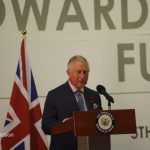
    The statement made by King Charles III on 8 September 2022.

    The death of my beloved Mother, Her Majesty The Queen, is a moment of the greatest sadness for me and all members of my family.

    We mourn profoundly the passing of a cherished sovereign and a much-loved mother.

    I know her loss will be deeply felt throughout the country, the Realms and the Commonwealth and by countless people around the world.

    During this period of mourning and change, my family and I will be comforted and sustained by our knowledge of the respect and deep affection in which the Queen was so widely held.

  • John Major – 2022 Statement Following the Death of HM Queen Elizabeth II

    John Major – 2022 Statement Following the Death of HM Queen Elizabeth II

    The statement made by Sir John Major, the Prime Minister between 1990 and 1997, on 8 September 2022.

    For 70 years Her Majesty The Queen devoted her life to the service of our nation and its wellbeing.

    In her public duties she was selfless and wise, with a wonderful generosity of spirit.  That is how she lived – and how she led.

    For millions of people – across the Commonwealth and the wider world – she embodied the heart and soul of our nation, and was admired and respected around the globe.

    At this moment of deep sadness, I believe we all stand hand in hand with the Royal Family as they grieve the loss of one so loved.

    For we have all lost someone very precious to us and, as we mourn, we should be grateful that we were blessed with such an example of duty and leadership for so very many years.

  • Buckingham Palace – 2022 Statement Announcing the Death of HM Queen Elizabeth II

    Buckingham Palace – 2022 Statement Announcing the Death of HM Queen Elizabeth II

    The statement made by Buckingham Palace on 8 September 2022.

    The Queen died peacefully at Balmoral this afternoon.

    The King and The Queen Consort will remain at Balmoral this evening and will return to London tomorrow.

  • PRESS RELEASE : Search to be launched for new Treasury Permanent Secretary

    PRESS RELEASE : Search to be launched for new Treasury Permanent Secretary

    The press release issued by the Treasury on 8 September 2022.

    The Chancellor has asked the Cabinet Secretary to begin the recruitment process for a new Permanent Secretary to the Treasury to succeed Tom Scholar, who has left his post as Permanent Secretary after 6 years, and will leave the Civil Service after 30 years of dedicated service.

    During his time in the Civil Service, Tom has advised successive Prime Ministers and Chancellors on international and economic issues, served as the UK representative at the International Monetary Fund and the World Bank, played a leading role in dealing with the banking crisis of 2007 to 2009, and led the Treasury through the Covid pandemic.

    Chancellor of the Exchequer, Kwasi Kwarteng, said:

    “Tom has been a dedicated and exceptional civil servant and I thank him for his exemplary service to the Government and the country for the past 30 years.

    “He’s helped steer the Treasury and the Government through many economic challenges, from the financial crisis to the Covid pandemic, and he leaves the Civil Service with the highest distinction.”

    The Cabinet Secretary, Simon Case, said:

    “Both personally, and on behalf of the whole civil service, I would like to thank Tom for his remarkable public service and leadership.

    “Tom has been a steadfast and loyal colleague to so many of us – and we will be forever grateful for his wise advice, generosity, humour and decency.”

    Tom Scholar said:

    “The Chancellor decided it was time for new leadership at the Treasury, and so I will be leaving with immediate effect.

    “It has been the privilege of my career to lead this great institution since 2016. I wish the Treasury all the best for the times ahead, and I will be cheering on from the sidelines.”

    A successor will be appointed shortly. In the interim, Beth Russell (Director General Tax and Welfare) and Cat Little (Director General, Public Spending) will lead the department as Acting Permanent Secretaries.

  • Clive Efford – 2022 Speech on Energy Price Capping

    Clive Efford – 2022 Speech on Energy Price Capping

    The speech made by Clive Efford, the Labour MP for Eltham, in the House of Commons on 8 September 2022.

    Although the solutions to this crisis may sound complicated in this debate, the choice is straightforward for the Government: who pays at the end of the day? Let us be clear what a windfall tax is. It does not tax profits that energy companies had planned for and could have expected in all reason. This windfall has come about, as the Government have said themselves, as a consequence of what is happening in Ukraine and the aggression by Putin. The question that I have and my constituents will have is: how can the Government reasonably come to a conclusion that it is okay for those energy companies to make these huge profits on the back of that aggression by Putin?

    No matter what we do over the windfall tax, there will be a cost to the taxpayer because the Government are under pressure in other areas of expenditure. We only have to look at the newspapers today to see how, yet again, the number of people waiting for operations in the NHS has gone up to 6.8 million; and how the cost of living is forcing teaching assistants to question whether they can commit themselves to supporting children in schools or should move to higher-paid jobs, such as in supermarkets. Everywhere we look, the Government are under pressure over public expenditure on our vital public services. Yet they are prepared to wave aside the potential to pay for these increases through a windfall tax.

    Matt Rodda (Reading East) (Lab)

    I am grateful that my hon. Friend mentions teaching assistants because one contacted me recently. Many low-paid workers and others on moderate incomes be staggered by the Government’s decision to put the interests of energy companies ahead of those of normal families.

    Clive Efford

    Absolutely. My hon. Friend is absolutely right. The Government are morally wrong to turn their back on a windfall tax when they are clearly under financial pressure in other areas of public expenditure.

    In my brief contribution, I want to raise one specific issue relating to my constituency. I have a craft bakery that has survived for 100 years and is about to celebrate its centenary. It has been run by six generations of the same family. It kept feeding people in my constituency—I was not the MP at the time, I hasten to add—during the second world war, so even the Luftwaffe could not shut down this bakery. It employs 20 members of staff, in an industry where energy use is really heavy, and faces cost increases of 300% or 400%, so it is trying to renegotiate its energy contracts. As the statement published by the Government says—I have it here; on such an important crisis, its sheer length is 200 words—there will be assistance for businesses equivalent to that given to individuals, guaranteed “for six months”. The Prime Minister said—I wrote these words down—that businesses would be given some idea of what assistance they will get “within three months”, but they are negotiating now. We had no clarity from the Prime Minister in her statement. It was as though she was making a Queen’s Speech—“My Government will”—but she gave us no detail on what Ministers will be doing.

    One thing I want a guarantee on is that, if we are to get a financial statement from the Government next week or before the conference recess, we will have a proper debate in this Chamber, as we are required to have. Or will the Government avoid scrutiny—as has been a repeated action—yet again?

  • Robin Walker – 2022 Speech on Energy Price Capping

    Robin Walker – 2022 Speech on Energy Price Capping

    The speech made by Robin Walker, the Conservative MP for Worcester, in the House of Commons on 8 September 2022.

    I welcome the Prime Minister and indeed all her colleagues to their places on the Front Bench, and the rapid action that has been announced today. I wanted to see action for consumers in my constituency, but also for businesses, charities and the public sector, and I am delighted to hear all of that included in today’s statement. Over the summer, I have heard from hundreds of constituents about their concerns—people who are vulnerable, the elderly, students and people with illnesses and disabilities—about how they will not be able to turn down their heating in the upcoming winter. The action that has been announced today will be extremely welcome in all of those quarters, and the fact that there is a two-year cap in place is particularly welcome in my constituency.

    I have also been hearing from businesses, and I have been very concerned about some of the costs facing pubs, hospitality businesses and manufacturers in my constituency. Indeed, as long ago as last year, I wrote to the then Business Secretary—now the Chancellor—about high-energy manufacturers such as aluminium extrusion businesses Superform and Aeromet in my constituency and about some of our largest manufacturers such as Worcester Bosch and Mazak in relation to the impact of energy costs on them, so I am delighted that today’s announcement also means help for businesses with energy. Of course, that help for businesses with energy is also, in the long term, help for consumers.

    I look forward to hearing more about the urgent work going on to support the hospitality sector, which is so important in all our constituencies, and even retailers have been affected by these issues. Toys & Games of Worcester, a wonderful independent retailer in my constituency, expects its energy bills to go up by as much as 400% later this year. Following today’s intervention, I hope that will no longer happen and that that business can continue to thrive.

    As a former schools Minister, I am delighted to hear of the help for schools. It is vital that we help them to address the challenges they face with energy pressures. On that front, the intervention is important, as it is for charities. In the last week I have visited my wonderful hospice in Worcester, St Richard’s, and this week I will be visiting the children’s hospice, which were both concerned about the impact of energy bills. We have seen correct interventions in all those spaces.

    There is much to welcome in this statement: the new energy supply taskforce; speeding up the deployment of clean technologies, including, crucially, hydrogen; the reduction in inflation by up to five percentage points, and the new Bank of England scheme to support liquidity in the wholesale market; and the review to ensure that net zero can be met in a way that supports business and is pro-growth, which I am delighted to hear is taking place under my right hon. Friend—and sometime lookalike—the Member for Kingswood (Chris Skidmore). I welcome the statement, and I want to make sure that we go further. In particular, I urge Ministers to consider the opportunities provided by hydrogen in helping to ensure that gas central heating continues to be delivered to our constituents’ homes in a clean, low-cost and energy-efficient way.

  • Ian Blackford – 2022 Speech on Energy Price Capping

    Ian Blackford – 2022 Speech on Energy Price Capping

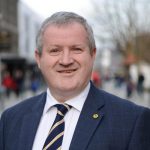
    The speech made by Ian Blackford, the Leader of the SNP at Westminster, in the House of Commons on 8 September 2022.

    It is a pleasure to follow the former Prime Minister, the right hon. Member for Maidenhead (Mrs May). If I may briefly reflect back on the way she behaved when she was Prime Minister, I have to say that she showed courtesy to Opposition leaders, whether it was the then leader of the Labour party or ourselves as the third party. If I may gently say so to the Prime Minister, some of the protocols to make sure that we have advance sight of statements, and indeed are aware of when the Prime Minister will be coming to the Chamber to speak, are important—I do not know whether she was listening to any of that, but it would be helpful if it could be passed on.

    At the start of the year we were faced with an energy crisis. By the summer it was an emergency. Right now, today, we are at the precipice of a humanitarian disaster, because it is no longer a question of whether to heat or eat when many households can no longer afford to do either.

    Patricia Gibson

    Will my right hon. Friend give way?

    Ian Blackford

    Let me make some progress and then I will.

    This cost crisis puts livelihoods and lives at risk. All the while, as this disaster deepened, all summer the Tories spent all their time desperately fighting among themselves, and the public were left desperately waiting for a real cost of living plan. We finally—finally—have a plan today, but I fear that when the public absorb the details, it will fall far short of the help we need.

    We have heard today that the green levies are being scrapped. That is of deep concern to those of us on these Benches, particularly given that the green levies fund the warm home discount scheme and, of course, energy-efficiency measures for low-income households. I ask the Government to make sure that that support will remain in place for those who need it. But the sheer scale of the soaring energy bills meant that there was never any question but that households and businesses would not be able to pay the cost of energy bills. They were, and they are, unaffordable. If these prices were not frozen, the bills simply could not have been paid, so freezing prices was not really a choice. It is the only political option.

    When the current price cap stands at £2,000, with a 54% increase since spring, and when many people are already unable to pay, setting the cap at £2,500 is not an actual freeze. We know, too, that businesses, especially SMEs, are facing even sharper cost increases than households, and an avalanche of insolvencies and redundancies is forecast. Many businesses simply could not have afforded to stay open.

    Jamie Stone (Caithness, Sutherland and Easter Ross) (LD)

    I thank the right hon. Gentleman for giving way. Reids bakery in my constituency, which supplies biscuits to the four corners of the world, is in danger of going bust by Christmas. May I appeal to the Government, in a spirit of inclusivity, to please look at the letter that I have been sent by Reids bakery and see what could be tailored to help a vital business in a remote part of the UK?

    Ian Blackford

    I agree with my hon. Friend and neighbouring MP. Indeed, over the course of the last few weeks I have visited businesses in Ayrshire with my hon. Friend the Member for Kilmarnock and Loudoun (Alan Brown). We visited another bakery, Brownings, and met with the industry body. It is clear that bakers in particular are facing real struggles with the rise of energy and other costs. It is critical that the Government give the details of what they are intending in order to support businesses.

    Steve McCabe (Birmingham, Selly Oak) (Lab) rose—

    Ian Blackford

    I will take one more intervention.

    Steve McCabe

    I am grateful to the right hon. Gentleman. On the question of the cap, the Prime Minister indicated that one of her reviews will be of regulation. Does the right hon. Gentleman think it is time to take a serious look at the operations of Ofgem and how much support it is giving as a regulator to consumers, whether domestic consumers or businesses?

    Ian Blackford

    I think it is fair to say that the current regime is not fit for purpose, which is why we are in this situation today, so an urgent review of that is absolutely required.

    Let me make some progress. Good, profitable businesses seeing a tsunami of cost increases, with energy costs at its core, are quite simply facing a fight for survival. It is clear that today’s plan does not go nearly far enough to mitigate the expected cost increase facing employers. The UK Government need to grasp the scale of this emergency.

    Mr Speaker

    Order. I wish to say something about the announcement that has just been made about Her Majesty. I know that I speak on behalf of the entire House when I say that we send our best wishes to Her Majesty the Queen, and that she and the royal family are in our thoughts and prayers at this moment. I am not going to take any contributions on this now; if there is anything else, we will update the House accordingly.

    Ian Blackford

    Thank you, Mr Speaker. Let me say, I am sure on behalf of all colleagues, that we are saddened to hear the announcement that has been made. The thoughts and prayers of us all will be with Her Majesty the Queen and indeed with the royal family.

    In reality, the one big political question—the real question—was how today’s plan would be paid for and who would pay for it. Ever since the new Prime Minister took office, we have been waiting for these answers, but after all the waiting it could not be any clearer. She set it out very brazenly: the Prime Minister’s plan means that the public pay. She has made the political choice to tax families instead of companies—to put profit over people. Instead of a windfall tax, she has chosen a new Tory tax: the Truss tax—the Truss tax that means that, in the months and years ahead, households and businesses will be punished with higher bills, higher interest rates and higher mortgage costs. A Truss tax means cuts to the vital public services that people rely on and that are used to support the most vulnerable. A Truss tax means a threat to the Scottish budget, which the Scottish Government are using to protect our population and shield workers and public services as best they can.

    Jacob Young

    I am grateful to the right hon. Gentleman for giving way. He seems to be making an argument for a windfall tax on the oil and gas companies. They already pay 65% on their profits. Given that the Leader of the Opposition was not able to answer this question, what would he rather see that tax set at?

    Ian Blackford

    I am grateful for that intervention. If the hon. Member just bears with me, I will come to that specific point, but the issue of who pays is important, because there is no—[Interruption.] Well, actually I will do, and the right hon. and learned Member for North East Hertfordshire (Sir Oliver Heald) might actually show some respect, if he does not mind. At the end of the day, oil and gas producers are making windfall profits. Our constituents, and his constituents, are suffering. It is right that we look at the contribution that those making windfall profits will make, and I will come to that.

    Barry Gardiner rose—

    Chris Law (Dundee West) (SNP) rose—

    Ian Blackford

    I am going to make a little progress, because I am conscious that others want to get in.

    The frightening thing is that the new Prime Minister made that choice on day one in the job. On day one, we saw the pound slip to a low not seen since the Thatcher years, knocked by the UK’s worsening economic outlook. Her first major decision as Prime Minister will prioritise big business profits over family budgets, and we can already predict that the Truss tax, which will be paid for by households for years to come, will be her enduring legacy. It will eat away at household budgets long after she and her party have been voted out of office. If day one was that bad, we cannot blame people for fearing that the worst is yet to come.

    The decision not to bring in an additional windfall tax is the biggest and worst political choice in the plan. Let us look at Shell and BP as an example. I want corporates to be profitable and to be able to invest to create jobs and to finance a green transition, but there is a difference between a fair profit and an excess windfall or excess profit. Shell’s first half profits were up by 177% to $25.2 billion. It made excess profits to such an extent that it bought back shares worth $8.5 billion and declared that it would buy back a further $6 billion of shares between July and September. If we want an example of where excess profit is, it is there. In total, that means that $14.5 billion of excess profits will not be invested in green energy projects—money that has been generated from the high energy prices that our constituents and our businesses have to pay. That is the reality.

    BP’s quarter 2 profits were up from $3.1 billion to $9.2 billion, and there is a share buyback for this quarter of $3.5 billion. It will frankly disgust our constituents that that money is being given back to shareholders when people simply cannot afford to put their heating on. They are global corporates, but we can and should fairly tax their UK activities, so why on earth is the Prime Minister failing to bring in a fair windfall tax? Why will ordinary people across these islands ultimately have to foot these bills? Why does her plan not address that real issue?

    This energy plan is defined not only by the choice to make the public pay, instead of the excess profits of massive corporations, but by its glaring omissions. There is no proper plan to help those who are already struggling. Support needs to be targeted to low-income households and those negatively affected by spiralling costs, such as unpaid carers, larger households and disabled people.

    In Scotland, we are already prioritising support to the most vulnerable. The Scottish Government are doing what they can by freezing rents, banning evictions, freezing train fares and expanding free school meals to primary 6 and primary 7. That is a Government acting with compassion.

    Chris Law

    I thank my right hon. Friend for making the most valid point that for generations to come, working people across these islands will be paying for this borrowing for excess greed. The UN Secretary General has described it as utterly “grotesque” and “immoral” to be making excess profits on the back of fossil fuels. What I have heard from the Government is more of the same. My question is whether the Government have, despite their ideology that profits must be made regardless, put any conditions on those excess profits and on what those companies will do to invest in a rapid transition to save future generations from the climate catastrophe.

    Ian Blackford

    My hon. Friend is absolutely right. In that context, we are doing what we can with the devolved powers that we have.

    I say to the Government that one thing we have done is to introduce the game-changing Scottish child payment, which will increase to £25 a week and lift 50,000 children in Scotland out of poverty.

    Several hon. Members rose—

    Ian Blackford

    I need to make progress.

    We are all too aware, however, that that is nowhere near enough to mitigate the effects of the crisis, because most of the key economic levers lie here in Westminster. If the new Prime Minister is serious about helping everyone through the winter, she should at least lift universal credit by £25 a week. Although I welcome her remarks about those who are off grid, we must be given clarity about support for those across swathes of rural Scotland who rely on oil heating and are not subject to the price cap.

    Clarity is also needed for those who have accepted fixed-term contracts at a higher rate in a bid to weather the storm. They must be allowed to switch to benefit from the support that has been put in place. Crucially, vital support for the most vulnerable must go hand in hand with the UK Government increasing the budgets of the devolved Administrations, or granting them greater powers to borrow, so that they can do more to help all public service workers and the most vulnerable.

    Barry Gardiner

    I am grateful to the right hon. Gentleman, who is making a broad and apposite speech. He was challenged on the rate of tax that he believes is appropriate, but he will know that prior to the introduction of the windfall tax, the UK had the lowest tax rate of any oil and gas producer in the world. He was challenged on 65%, which is actually 6% below the average of all producers in the world. If he were prepared to go to the global average, it would still mean that relief could be given to taxpayers in this country.

    Ian Blackford

    The hon. Gentleman’s intervention makes an awful lot of sense. We should reflect on the fact that oil and gas companies are making additional profits not because they are improving their businesses or investing, but simply because oil and gas prices are higher. It is right in that context that our consumers and businesses are compensated. Why on earth are we sitting back and allowing the oil and gas companies to engage in billions and billions of dollars of share buybacks?

    Several hon. Members rose—

    Ian Blackford

    I will make progress, because I am conscious of time and those who want to speak.

    I will briefly deal with another prominent point in the Prime Minister’s speech. She blames the cost of living crisis on the war in Ukraine and I believe that that is worth expanding on. Of course, there is no doubt that what has happened in Ukraine has played a major role in spiralling wholesale prices, and we have rightly come together across the Chamber in condemnation of Putin’s horrific war and his actions to thwart European energy supplies. I look forward to continuing to work with the new Government in a spirit of consensus on this issue. We all stand together against Putin’s horrible actions and the war in Ukraine.

    As we have rightly helped Ukraine, however, we must also help citizens at home. Indeed, we owe it to them to do so; I hope that the Prime Minister will reach consensus with me on that point. Where we divide is my belief that we must recognise that other countries in Europe, which are far more reliant on Russian gas than the UK, have weathered the economic storm far better than the United Kingdom. We must therefore recognise the UK Government’s role in creating the circumstances for the crisis. Shameful mismanagement by successive Tory Governments, topped by a Tory Brexit, means that the UK has the highest inflation in the G7 and the lowest growth in the G20, and that we are marching headlong into a recession. UK household electricity prices have surged ahead of those of our European peers, and the UK is now in a deeper state of crisis than most, because of the damaging choices that have been made.

    Patricia Gibson

    For my constituents in North Ayrshire and Arran, who live in difficulty, the most important aspect of today’s announcement is that they were waiting to hear of help with their fuel bills, but they were instead told that their fuel bills will rise. They will be bitterly disappointed by that. Nothing has been offered to them today. Does my right hon. Friend agree with their disappointment?

    Ian Blackford

    Yes, I do. We need to reflect that energy bills are rising in an energy-rich Scotland. The damage done by the UK Government’s choices—choices that have been imposed on us—make the choice about Scotland’s future ever clearer. Scotland is energy rich, so we simply should not be facing an energy emergency. It may surprise some in this House, but Scotland produces six times more gas than we consume and almost 100% of our entire electricity production comes from renewables. That is not attention-seeking, I would say to the Prime Minister; these are the facts. Scotland has the energy, but we just simply do not have the powers. We are stuck in a UK market that prices our electricity on the basis of the price of wholesale gas, and the power to change the system lies with Westminster.

    Carol Monaghan

    My right hon. Friend will also know that, although we are producing almost 100% of our energy from renewable sources, the grid connection charge—£7.36 per megawatt-hour compared with 40p per megawatt-hour in England—does not help further investment. We need these grid connection charges to be reduced, because my constituents want to know, when they can see wind turbines outside their windows, why their prices are going up.

    Ian Blackford

    Again, my hon. Friend makes a very important point. We are being ripped off on Scotland’s ability to deliver green renewable energy, but it is even worse than that. For those of us who live in the north of Scotland, because we have a regional distribution market, we pay a premium for the electricity that is sent south and then have to pay the highest prices to get it back. That is the cost to people in Scotland of Westminster’s control of our energy market.

    What is needed—this is most crucial of all, and it is glaringly lacking in this energy plan—is a fundamental overhaul of the energy market to break the link between the cost of gas and the price of renewable and low-carbon electricity. The reality is that an independent and energy-rich Scotland with the normal powers to act in our own interests could have cushioned our economy from this cost of living crisis. Through independence, Scotland could use our energy well for the benefit of our people, so for households and businesses in Scotland the cost of living crisis is literally the cost of living with Westminster. It is a cost we can no longer afford and it is a price we are no longer willing to pay. It is why Scotland’s people will choose independence.


  • PRESS RELEASE : Plans to end the Education Maintenance Allowance (EMA) programme [January 2011]

    PRESS RELEASE : Plans to end the Education Maintenance Allowance (EMA) programme [January 2011]

    The press release issued by the Department for Education on 19 January 2011.

    MPs will today vote on the Government’s plans to end the Education Maintenance Allowance (EMA) for 16- to 18-year-old pupils in education or training. Colleges, schools and training providers will receive an enhanced discretionary learner fund so that they can target pupils most in need of financial support to stay in education post-16.

    A Department spokesperson said:

    Already 96 per cent of 16-year-olds and 94 per cent of 17-year-olds participate in education, employment or training. We are committed to going further still, to full participation for all young people up to the age of 18 by 2015.

    EMA is a hugely expensive programme, costing over £560 million a year with administration costs amounting to £36 million. Pilot evidence and more recent research from the National Foundation for Educational Research found that almost 90 per cent of young people receiving the EMA believed that they would still have participated in the courses they were doing if they had not received it.

    Young people currently receiving the EMA will continue to receive it for the rest of the academic year. However, they will not receive it next academic year.

    Currently £26 million per year is given to schools, colleges and training providers as a discretionary leaner support fund to enable them to make small payments to those young people who are most likely to drop out of education without support. After the EMA is abolished this fund will be significantly increased.

    Who is eligible for EMA and how much does it cost?

    EMA costs £560 million a year in England and is paid to 650,000 young people – 45 per cent of 16- to 18-year-olds in full time education. Around 80 per cent of those receive the highest rate of £30.

    In England there were three income thresholds based on household income as follows:

    • income of up to £20,817 per annum – £30 per week
    • income of £20,818 to £25,521 per annum – £20 per week
    • income of £25,522 to £30,810 per annum – £10 per week.

    Why have you made the decision to scrap the EMA?

    The deeply worrying state of the public finances has meant we have had to make some tough decisions. Having looked at all the facts it was decided at the time of the spending review that the EMA scheme had to be replaced.

    EMA costs over £560 million per year with administration costs amounting to £36 million. The Government believes it must target its resources to those most in need.

    Research commissioned by the last Government shows that almost 90 per cent of young people receiving the EMA said that they would still have participated in the courses they were doing if they had not received it (Barriers to Participation in Education and Training, the Department for Education, published 24 June 2010). It also shows that finance only stops a minority (four per cent) from doing what they want to do after leaving school.

    The same research also showed that the majority of young people (86 per cent) do not face any barriers that stop them from doing what they want to do at the end of Year 11.

    What will you do to support those that are at risk of dropping out of education because they need financial support?

    We are significantly increasing the £26 million learner support fund to help those most in need. This money is properly targeted to those who most need it and is distributed by individual colleges and schools who are on the ground and know the circumstances of their students far better than the Government does.

    How will students on EMA afford transport to and from college or sixth form?

    We recognise that transport costs in some areas can be expensive. Local authorities have a statutory duty to make sure that no young person in their area is prevented from attending education post-16 because of a lack of transport or support for it. If that duty is not being met then young people and families need to raise this with the local authority in the first instance.

    A new root and branch review of all school transport will start shortly and look at all these issues.

  • PRESS RELEASE : New Schools Commissioner announced as government demands action on school improvement [January 2011]

    PRESS RELEASE : New Schools Commissioner announced as government demands action on school improvement [January 2011]

    The press release issued by the Department for Education on 14 January 2011.

    Michael Gove today formally confirmed that Dr Elizabeth Sidwell, the highly respected headteacher and chief executive of the Haberdashers’ Aske’s Federation of schools, will be the new schools commissioner.

    Following this week’s school performance tables there are now 216 secondary schools and 962 primary schools below the floor standard. Michael Gove will now challenge local authorities and schools to build on their current work and produce robust improvement plans to turn around schools which are underperforming. Many will benefit from becoming academies, and Dr Sidwell will engage with schools, local authorities and potential sponsors so that more academies replace schools that are underperforming. Her role will be to:

    • broker academy arrangements between schools that would benefit most from an academy solution and established sponsors with a good track record of performance improvement
    • encourage and recruit more potential academy sponsors
    • enthuse leaders of good schools to go for academy status
    • raise the profile of Free Schools among prospective proposers.

    Welcoming Dr Sidwell to her new post, Education Secretary Michael Gove said:

    There are few people in the education world with the pedigree and quality of Elizabeth Sidwell. She has been at the forefront of education policy for over 20 years, first as head of the brilliantly successful Hatcham College, one of the most popular schools in the country, and more recently taking on underperforming schools through the Academy programme.

    She will be an excellent schools commissioner, using her credibility and knowledge to go round the country, speaking to local authorities, and challenging them and their schools to come up with robust plans for improving.

    I know that Elizabeth will be fair, but not shy away from recommending strong solutions, such as academy status, to those schools who are not making good enough progress.

    There are still too many schools below the floor target, and the Government will not blink when it comes to standing up for the rights of children to get a better education.

    Dr Sidwell said today that:

    It is a tremendous honour to be schools commissioner for England. After 20 years of running schools I am very excited at the prospect of working at a national level to help drive something that all of us want to see – more good schools for all of our pupils, regardless of their background.

    I know how great the challenge is in some areas. I know how dedicated and hardworking teachers are across the country – desperately trying to improve their schools. I want those teachers to know that I’m on their side.

    However, I will not shy away from confronting failure, and I will be honest when I don’t think schools are improving fast enough. My direct experience of transforming a good school to great, turning round a seriously failing school, transforming primaries and setting up a new school means I am not asking anyone to do what I, and others across the country, have not already done.

    The Coalition Government introduced new floor standards for schools in November’s Schools White Paper. These new standards, which are higher but fairer than previous targets, require schools to be above certain attainment levels and also have pupils making at least average progress between Key Stage levels in English and mathematics. For secondary schools the new attainment target is 35 per cent of pupils getting five GCSEs at A* to C including English and mathematics, and in primary schools the requirement is 60 per cent of pupils achieve level 4 in English and mathematics at Key Stage 2.

    The schools commissioner post was created in the 2006 Education and Inspections Act, and was formerly held by Sir Bruce Liddington.

    Notes to editors

    Dr Liz Sidwell is currently chief executive of the Haberdashers’ Aske’s Federation in South London. She was formerly principal of Haberdashers’ Hatcham College in Lewisham, which was rated outstanding by Ofsted. It is also one of the most oversubscribed schools in London, with 12 applications for every place. In 2005 Dr Sidwell led the federation of Hatcham College with the Mallory School, an underperforming school, which became Haberdashers’ Knights Academy. Since becoming part of the federation, results have risen by over 30 percentage points from a start of less than 7 per cent of pupils getting five or more good GCSEs, and Ofsted has said the school is ‘a rapidly improving school that provides a good education for its students’.