Author: admin

  • PRESS RELEASE : Finucane calls on British government to enter talks with EU [September 2022]

    PRESS RELEASE : Finucane calls on British government to enter talks with EU [September 2022]

    The press release issued by Sinn Fein on 30 September 2022.

    Sinn Féin MP John Finucane has said the British government must enter talks in good faith with the EU to find solutions and give certainty to local businesses.

    And the North Belfast MP called on British Prime Minister Liz Truss to prioritise restoring the political institutions and stop pandering to the DUP.

    Speaking after a preliminary meeting between European Commission vice president Maroš Šefčovič and British Foreign Secretary James Cleverly today, John Finucane said:

    “Talks between the EU and British government must resume urgently in good faith to deliver solutions and give certainty to local businesses.

    “For seven months now, the Tories have refused to engage, sabre-rattled with reckless threats and carried out solo runs in clear breach of international law.

    “The Protocol provides huge opportunities for our economy, and it is helping our businesses to create jobs and attract investment. It must be protected.

    “If Liz Truss is serious about restoring the Executive and Assembly, she will stop facilitating the DUP’s destructive and self-serving boycott of government.

    “People are struggling, and they are worried about the weeks ahead. That will only get worse when the new gas and electricity bills land on the mat next week.

    “None of that is helped by the fact the Tories have done nothing to cut ordinary people’s bills and prioritised lining the pockets of the super-rich with their scandalous budget.

    “The refusal of one party to form an Executive is further punishing workers, families and small businesses here, who are struggling to pay their bills and facing a bleak winter.

    “Sinn Féin is ready to form an Executive today and get stuck in to help people who are struggling in every community across the north and invest £1 billion in our health service.”

  • PRESS RELEASE : Mayor appoints industry experts to ensure London markets flourish [September 2022]

    PRESS RELEASE : Mayor appoints industry experts to ensure London markets flourish [September 2022]

    The press release issued by the Mayor of London on 30 September 2022.

    • Mayor announces updated London Markets Board, a team of industry experts and experienced business leaders who will support London markets and help them to thrive 
    • Sadiq makes it easier for traders to book market pitches by streamlining application process
    • Sadiq visits the Blue Market in Bermondsey, which has gained a new lease of life, thanks to £2m from the Mayor’s Good Growth Fund (GGF)

    The Mayor of London, Sadiq Khan, has today announced an updated group of experts that will help support markets across London to flourish as places of entrepreneurship and innovation.

    The group of 19 business leaders, traders and entrepreneurs have all been appointed to the Mayor’s London Markets Board and will advise the Mayor on action to support and promote the capital’s wholesale, street and covered markets and help to deliver a London markets strategy.

    The Mayor also today launched Openmarkets.london – a new website which will make it easier for young people and new traders to access pitches on markets right across London by streamlining the licence application process.

    With more and more Londoners struggling as a result of the cost of living crisis, markets have never been more important in the capital.

    These latest experts will build on the work of the Mayor’s first London Markets Board, which was set up in 2017 to help ensure that markets across London thrive.

    The new board will devise a new action plan to support street markets to realise their full potential. Key priorities for the board include working with the sector to –

      • Showcase and test new ideas
      • Attract new traders and trades to the sector
      • Explore circular economy practices being tested across London
      • Explore tools and data that help markets to demonstrate their impact within local communities, economies and London

    The Mayor announced the new Board members today as he visited the Blue Market, Bermondsey, which has been completely regenerated thanks to £2m of funding from his Good Growth Fund. The Blue Market has a long, rich history in the capital and this funding has built on The Blue Market’s identity as the ‘Larder of London’. While at the market, Sadiq met with local market traders and young people who have participated in the regeneration of the site.

    The Mayor of London, Sadiq Khan said: “I’m delighted to appoint 19 experts to the London Markets Board. They will help ensure that markets like The Blue Market in Bermondsey can continue to thrive and serve the community in the best way possible.

    “Markets in London play a crucial role in the capital. Not only do they enable people to buy goods and services from others in their community, they are also great hubs where people from all backgrounds and ages can socialise and connect.

    “As the cost of living continues to rise I want to ensure that markets remain a key staple in the local community. The new members of the London Markets Board will help to build a better London for everyone – a safe, fairer, greener and more prosperous city for all Londoners.”

    Markets are crucial to London’s economy, providing opportunities for new businesses to set up and grow, and routes into work for Londoners of all backgrounds. They also offer affordable options for Londoners, providing low-cost options for food, clothes and other goods, which is more important than ever in the ongoing cost-of-living crisis.

    The Board will continue to support the sector to raise the profile and value of London’s markets as well as lobby for the resources and tools they need to remain a thriving and vital part of our city.

    During the pandemic the Mayor has supported the recovery of street markets through programmes including his Good Growth Fund and High Streets for All scheme.

    Helen Evans, co-chair of the London Markets Board said: “There has never been a more important time to support and raise the profile of markets in London and that is why I am delighted to co-chair the London Markets Board for its second time. I look forward to working with colleagues from across the sector to ensure that London’s markets continue to bring vibrancy, opportunity and diversity to the capital’s high streets. “

    Cllr Kieron Williams, Leader of Southwark Council, said: “I’m delighted to welcome the Mayor of London to Bermondsey today to see the fantastic work the local community, businesses and council have been doing together to bring the buzz back to The Blue.

    “Thanks to the Mayor’s Good Growth Fund we’ve been able to invest £2m into renewing the heart of Bermondsey’s historic town centre. Providing a real boost for local businesses.

    “With the cost of living soaring, good value, vibrant street markets like this one have a vital role to play in making our borough and city affordable for all.”

    Russell Dryden, local resident and market trader said: “The completion of the ‘Made in Bermondsey’ community led regeneration project represents a turning point in the area’s history and offers a once in a generation opportunity to empower and strengthen the community.

    “We now have a solid foundation to build a more positive perception of the area and drive forward the rebirth of the ‘Blue’ to fulfil the projects long term vision for a modern, cosmopolitan, multicultural, community with a thriving business economy and a vibrant market at its heart.”

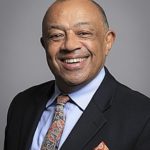
  • Paul Boateng – 2022 Tribute to HM Queen Elizabeth II

    Paul Boateng – 2022 Tribute to HM Queen Elizabeth II

    The tribute made by Paul Boateng, Baron Boateng, in the House of Lords on 10 September 2022.

    My Lords, having heard the moving contributions of colleagues yesterday—and I think particularly of the contribution of the Leader of the House, my noble friend Lady Smith of Basildon and the noble and learned Lord, Lord Judge—my wife Janet and I very much wanted to go down to Buckingham Palace and, like so many others throughout our land, pay a floral tribute to Her late Majesty. The mood and what was said and the make-up of the crowd outside Buckingham Palace said everything that ever needs to be said about Her late Majesty.

    There was a sense of loss and emptiness, and of people somehow feeling that something that was stable, certain and ever-present in their lives was no longer there—something that was of value to them. Then there was also a sense of gratitude for a life well-lived, one of service and dedication to duty, and there was a sense of gratitude to her and to her family, for whom we must feel particularly at this time, in their personal loss. We have lost a sovereign; they have lost a mother, a grandmother and a great-grandmother. But there was also a sense of gratitude for the joyfulness of her reign and for the grace and beauty that she always brought to her duty. As for the make-up of the crowd, it was international—the embodiment of so many nations. I reckon that all the continents of the world were present there, with everyone feeling that she belonged to them. Yes, she was our Queen, but she was actually, genuinely, the Queen of the world.

    I thought particularly, in terms of my own life, of Queen and Commonwealth. I was brought up in the Commonwealth. In the course of her long reign, the Queen made two visits to Ghana, in 1961 and 1999. In 1961, I was a little boy in the dust waving a flag on the side of the road; in 1999, I was one of her Ministers. But it is really the 1961 visit to Ghana about which I just want to say a few words. It was a problematic visit in many ways. There were many, including those on all sides in this House, who said that she should not go, that her life would be in danger and that Ghana was not a place that she should go to or be in. She went regardless. She went because the Commonwealth mattered to her, Ghana mattered to her and Britain’s place in the world mattered to her. She knew that not going would be seen as a snub, would undermine the Commonwealth and would be contrary to Britain’s interest.

    She displayed that courage, perseverance and determination that was so characteristic of her. It is said—and there is no reason to disbelieve it—that she said to her Prime Minister:

    “How silly I should look if I was scared to visit Ghana and then Khrushchev went and had a good reception … I am not a film star. I am the head of the Commonwealth — and I am paid to face any risks that may be involved. Nor do I say this lightly. Do not forget that I have three children.”

    That was her courage.

    She went, and it was an outstanding success. As it happens, my father was Minister of the Interior and worked with Duncan Sandys, of the other place and of this House, to make sure that it was a success in terms of security, because that was their responsibility. It was a success that she herself had brought about. It was a triumph. That, for me, says it all about her political acuity, her courage and her commitment and dedication to the Commonwealth.

    The messages have been flooding in. I am a former chair of the English-Speaking Union and I chair the International Council of the Duke of Edinburgh’s International Award Association. We all have several WhatsApp groups these days, and there have been messages from all over the world of appreciation, respect, gratitude and love. She was loved. She was loved here in this House, in the country and around the world.

    We bumped into a small group outside Buckingham Palace on that visit yesterday. They were called Christians in Entertainment and happened to be laying flowers at the same time. They had come out because of Her Majesty’s support for charities in the entertainment world and the Royal Variety shows, which we all remember and which she graced on so many occasions. Suddenly, as they were there and laying flowers, they began to pray. They prayed, and all those around us and them joined in that prayer. It was a prayer of gratitude to our God for our late Queen. God bless our late Majesty, and God save the King, as he becomes Head of the Commonwealth, for which she gave all her life’s service.

  • Philippa Stroud – 2022 Tribute to HM Queen Elizabeth II (Baroness Stroud)

    Philippa Stroud – 2022 Tribute to HM Queen Elizabeth II (Baroness Stroud)

    The tribute made by Philippa Stroud, Baroness Stroud, in the House of Lords on 9 September 2022.

    My Lords, I did not have the privilege of knowing Her Majesty personally so I have no stories of cushions or tea sets, but the most precious possession I have is the letter of summons to this House, which reads:

    “I give you a seat, a place and a voice”

    in the Parliaments of this land. Therefore, it is a real privilege to be able to give my tribute to Her Majesty too.

    When the Queen was 21 years old, as I am sure many have said today in this House, she delivered a speech that bore the mark of her maturity—that maturity which guided her life. Her words speak louder than anything we can say:

    “If we all go forward together with an unwavering faith, a high courage, and a quiet heart, we shall be able to make of this ancient commonwealth, which we all love so dearly, an even grander thing—more free, more prosperous, more happy and a more powerful influence for good in the world—than it has been in the greatest days of our forefathers. To accomplish that we must give nothing less than the whole of ourselves. There is a motto which has been borne by many of my ancestors—a noble motto, ‘I serve’.”

    And she declared

    “before you all that my whole life whether it be long or short shall be devoted to your service.”

    Today, we think of that unwavering faith, that high courage, that quiet heart, and that beauty which today shines from the ashes. We all feel the baton being passed to the next generation. As it passes, my prayer is that her legacy will be that we walk with that same courage, that same humility, integrity and grace.

    The Queen has been a gift to our nation, binding us together. The second Elizabethan era has been a time when culture and society have changed beyond recognition. In the shaking and polarisation, she has been a constant that has unified us. She has shown leadership through service. A role model, she has shown the same ethos that guides the lives of heroes across society: duty, service and responsibility. They may feel outmoded, but these virtues are the root of our prosperity.

    It is no small thing to have a Head of State who sees their role as being one who serves. Institutional trust, so fundamental to the flourishing of society, relies on leaders of character being held in high honour by the people. Her unique constitutional position could have been a burden, but she walked with unflappable grace and courage for the common good. From the Cold War through to Covid, she led with courage in crisis after crisis. She consistently lifted our vision higher; with public discourse so often concerned with the next crisis or scandal, she sought to stand above the fray.

    As the flame passes on to us, we must remember the core foundational principles that made her such a remarkable woman. She believed that the British nation could be a light among the nations and contribute positively in the world. She consciously and publicly modelled her life on the example of Jesus and saw the future through the lens of hope. May the words she delivered as we began the first Easter of the pandemic—words which reflected her core, driving convictions—carry us in the next season:

    “As dark as death can be—particularly for those suffering with grief—light and life are greater.”

    Today is a day to remember and celebrate the legacy of a woman who has given us so much. Seventy-three years after the speech given at 21 years old, Elizabeth II readied herself for another landmark moment. It was the outset of the pandemic and she set out a vision for how we should approach the coming season of crisis and change. While lockdown may be over, her words still ring true today:

    “I hope in the years to come everyone will be able to take pride in how they responded to this challenge. And those who come after us will say that the Britons of this generation were as strong as any. That the attributes of self-discipline, of quiet good-humoured resolve and of fellow-feeling still characterise this country. The pride in who we are is not a part of our past, it defines our present and our future.”

    May that be so.

  • Jitesh Gadhia – 2022 Tribute to HM Queen Elizabeth II (Baron Gadhia)

    Jitesh Gadhia – 2022 Tribute to HM Queen Elizabeth II (Baron Gadhia)

    The tribute made by Jitesh Gadhia, Baron Gadhia, in the House of Lords on 9 September 2022.

    My Lords, as we gather on this sombre and sad occasion, a huge void is felt not only by the Royal Family and our whole nation but by the entire world. It is difficult to think of a public figure who has ever had such a global impact. We often speak about the United Kingdom’s soft power and of global Britain, but so much of this was embodied in, and personified by, Her late Majesty the Queen.

    The worldwide outpouring of affection is reflective of a lifetime devoted to service and duty, a theme we have heard again and again, and deservedly so. Her Majesty was a constant and unifying figure, rising above the political fray and forces of division, providing a source of stability over seven decades of incredible change. As someone who arrived in this country 50 years ago in traumatic circumstances, during the expulsion of the Asian community from Uganda, I have not experienced anything other than the second Elizabethan age. For all the change and challenges during her long reign, it has also been a remarkable period of progress and human advancement, a period of improving community cohesion and greater diversity, as barriers to those from any and all backgrounds have come down.

    What could be more emblematic of the social mobility of the second Elizabethan age than for someone of Indian origin, displaced from Uganda, to have the opportunity in a single generation to be appointed to this House, taking an oath of allegiance to Her late Majesty? That moment, six years ago this month, was the greatest honour of my life, even more so being a child of the Commonwealth, which occupied such a special status for the Queen. Indeed, as a child of the Commonwealth, I feel like a child of Her late Majesty.

    The last occasion on which I was honoured to meet the Queen was during a reception that she graciously hosted at Buckingham Palace to mark the UK-India year of culture. On that occasion, she kindly placed an item on display from her own personal possessions: a wedding gift from Mahatma Gandhi. It was a piece of cloth, woven from yarn spun by Gandhi himself, including the words “Jai Hind”.

    It was palpable how connected she felt to India and the wider subcontinent, which makes up almost 75% of the 2.5 billion people across the Commonwealth. These sentiments are mirrored in reverse, exemplified by the day of state mourning that has been declared by the Government of India for this coming Sunday, and the three days of mourning declared by Bangladesh. The Indian Prime Minister, Narendra Modi, has lauded the Queen for her dignity and decency in public life, and the Bangladeshi Prime Minister, Sheikh Hasina, has described her as a true guardian.

    As chair of the British Asian Trust, founded by His Majesty King Charles III some 15 years ago, I know that our new monarch shares the same priorities as his mother for the Commonwealth, and maintains a deep and abiding connectivity with all the countries of south Asia, also including Pakistan, Sri Lanka and Nepal. Yes, King Charles has enormous shoes to fill, but he also possesses the strength of character and sense of purpose to pick up the baton from his mother, as our constitutional monarchy requires, and to continue the same dedication to public service and duty without missing a beat. Tonight’s broadcast from His Majesty confirms this commitment and determination. In that mission, and in their grief, we offer our new King, the Queen Consort, and the Royal Family our full and loyal support.

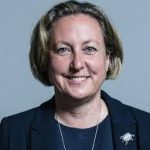
  • Anne-Marie Trevelyan – 2022 Speech at the Atlantic Future Forum

    Anne-Marie Trevelyan – 2022 Speech at the Atlantic Future Forum

    The speech made by Anne-Marie Trevelyan, the Secretary of State for Transport, in New York on 29 September 2022.

    Thank you, and good morning everyone.

    It is a real pleasure to join you today (29 September 2022).

    And what better backdrop for a speech on maritime security than the magnificent HMS Queen Elizabeth.

    Thank you to all her crew for accommodating us this week.

    Yet whatever pride I feel delivering my first speech as Transport Secretary on the largest vessel ever built for the Royal Navy, my emotions are also tinged with sadness.

    Because it was Her Majesty Queen Elizabeth II who performed the naming ceremony for this superb ship just 8 years ago at Rosyth in Scotland.

    Suitably, she didn’t use the traditional bottle of champagne, but a bottle of whisky, to launch the new vessel.

    Her Late Majesty will be profoundly missed, and I would like to thank all those around the world, including many friends here in the United States, who sent condolences. Your support and demonstrations of love and respect helped ensure a fitting farewell to Britain’s longest-reigning monarch.

    Her Late Majesty was a champion of the Royal Navy, and she understood its historic leadership in underwriting prosperity and trade.

    Shipping continues to drive the global economy today, just as it has done for millennia.

    Our seas are by far the most important arteries for global trade, carrying over 95% of all goods.

    But while the maritime industry normally conducts its business beyond the public gaze, recent events have thrust global supply chains into the spotlight… and in particular, the importance of resilient and secure shipping routes.

    In particular, Russia’s illegal invasion of Ukraine has awakened and reminded us all of our need as a global community to protect maritime trade, and support an international order based on rules and principles which are enforced.

    For the Department for Transport, that is about ensuring the security of all networks that move goods, people and information around the world, and that underpin our way of life and our economy.

    We have seen Putin weaponise food by trying to crush the economic and humanitarian criticality of Ukraine’s agricultural economy.

    In blockading of Ukrainian ports, Putin has prevented the export of global grain supplies.

    These actions have had a terrible impact on the world’s poorest people, and driven up food and fertiliser prices.

    We are doing what we can to alleviate the international food security crisis that Putin has created.

    The UK and our allies pushed hard to secure the UN-brokered Black Sea Grain Initiative in July that has allowed over 3 million tonnes of grain to leave Ukrainian ports so far.

    We will continue to enforce the toughest sanctions against Russia to undermine its shipping industry and reduce its export revenue.

    We will continue to work with international partners to implement an oil price cap and ban on maritime insurance for Russian oil later this year.

    And we will continue to stand alongside our Ukrainian friends, strengthening their hand to finish this war on their terms.

    The UK is an island nation with global interests.

    The numerous islands that form the UK, our Crown Dependencies and our Overseas Territories all rely on unimpeded international trade.

    The shipping routes between the UK and our trading partners and allies form some of the busiest trading routes in the world.

    We are highly connected to the rest of the world and will continue to be so in the future.

    Our maxim is to ensure the UK is and remains the most secure and reliable nation to trade with globally.

    In 2021, we published Global Britain in a competitive age: the integrated review of security.

    This document reaffirmed the first duty of government – to protect our people, our homeland, and our democracy.

    That means protecting our ports and airports, and the trade routes vital to our national prosperity.

    In an increasingly uncertain world, we must work harder to safeguard transport networks against a complex variety of security risks and natural hazards.

    That’s why we have published our National strategy for maritime security, setting out 5 strategic objectives to help deliver the objectives of the integrated review.

    • protecting our homeland
    • responding to threats
    • ensuring prosperity
    • championing our values
    • supporting a secure, resilient ocean

    Our strategy acts as a blueprint for maritime security – explaining how we will protect our borders and ports, and address the threats we face.

    We consider how we will comprehensively tackle cyber security, defending the global supply chain at a time of increased automation and evolving cyber technologies.

    An important aspect of this is covered in the UK by the National Security and Investments Act.

    This allows us to scrutinise and potentially intervene if acquisitions of assets linked to the UK may pose national security risks.

    All investment involving our transport sector is subject to thorough analysis. and must satisfy robust legal, regulatory and national security requirements.

    Alongside defensive measures, we are committed to maintaining our reputation for the UK to be one of the best places to invest.

    That is why, the government has established a network of freeports – to act as business hubs for international trade, innovation and commerce, and have just announced last week a next wave of investment zones. These hubs will regenerate communities by attracting investment and jobs to towns and cities up and down the country.

    Beyond investment in security, we have been developing our maritime security structure for several years.

    A significant part of this has been creating the Joint Maritime Security Centre in 2019. This national organisation helps coordinate what we call our ‘whole system response.’

    This brings together all the organisations and teams which work to deter and respond to threats – including high-readiness maritime assets.

    The Joint Maritime Security Centre ensures that government, military, and law enforcement agencies have a closely-coordinated understanding of threats and risks in our own waters, and across the globe.

    We continue to develop these capabilities against current and emerging threats – from terrorism, piracy or hostile states – and also help us understand security concerns for shipping routes as our climate changes and we need to adapt.

    This is particularly important when looking at the Arctic and High North, which will provide faster shipping routes to Asia. There will be new security challenges which we need to anticipate and plan to provide 21st century solutions.

    At home and abroad, we will always protect our interests and those of our international partners. That means understanding how threats could arise along international trade routes or chokepoints, how they can be addressed, and what their impact might be.

    We don’t just consider hard security dangers.

    Threats to our marine environment are also a security issue.

    The fragile marine ecosystem is a precious resource, so we must respond to any dangers early. From destruction of fishing stocks to dumping of illegal waste. Any activities that harm the marine environment and destroy the livelihoods of those living in coastal communities.

    In many countries this loss of income for some of the most impoverished in society can lead to people being exploited by criminal gangs and terrorists.

    So tackling environmental problems early can reduce long term harm and we have a unique window of opportunity to harness technology develop new green solutions.

    We must act now to reduce maritime’s contribution to climate change.

    Maritime transport is currently responsible for almost 3% of global greenhouse gas emissions and if it were a country, it would be the world’s sixth largest emitter.

    We face a massive challenge. However, with concerted global action, the worst impacts can still be averted

    That is why earlier in the year, as part of the UK’s revised National shipbuilding strategy, we announced £206 million for a new UK Shipping Office for Reducing Emissions, to invest in maritime decarbonisation.

    Today, I am delighted to launch the third round of the Clean Maritime Demonstration Competition – as part of this programme of investment.

    This is the largest round to date, with up to £60 million available for technology and system demonstrations in clean maritime solutions.

    So far, these competitions have helped many developers working on new shipping technologies and fuels.

    From hydrogen, ammonia and methanol fuels, to batteries and shore power – and from automated vessels, hybrid engines and green storage facilities at ports to energy from offshore wind infrastructure – we are working hard to pioneer the breakthrough and secure maritime technologies of the future.

    Today, I am also announcing the winners from the second round of the competition, allocating over £12 million to 31 different projects, including 3 green shipping corridors which can help lead decarbonisation solutions.

    This will help to fulfil our commitment under the Clydebank Declaration, which the UK proudly launched at COP26 with 24 signatory states, including the US, to progress 6 innovative zero emission shipping routes by the middle of the decade.

    Of course, the more we collaborate, the faster we progress.

    So we will continue to work closely with US partners and others to raise the level of ambition on climate change at the International Maritime Organisation, which faces a crucial year as it revises its initial strategy on greenhouse gas reduction.

    More broadly, the UK will work with like-minded partners around the world to reduce every sector in transport’s reliance on fossil fuels, and embrace decarbonisation.

    On Tuesday, I was in Montreal speaking at the International Civil Aviation Organisation General Assembly, urging the adoption of long-term emission goals that are consistent with the Paris Agreement.

    We must push every sector to play its part – but maritime will remain critical to our success or failure as a global family.

    Under the leadership of new Prime Minister, Britain will be a relentlessly outward-facing nation.

    The UK will continue to utilise its hard security, economic security and diplomatic heft to build stronger global alliances.

    At a time when the world is recovering from the coronavirus (COVID-19) pandemic, and rebuilding the supply chains that feed the global economy…

    At a time when Russian aggression is disrupting established trade routes…

    It has never been more important for the international community to come together and protect global shipping.

    We will continue to support, defend and uphold the principles of the United Nations Convention on the Law of the Sea and protect freedom of navigation.

    We will safeguard the marine environment, and help lead the transition to green shipping.

    And we will work with all our partners to ensure maritime trade and travel continues to operate safely, securely and sustainably, right around the world.

    Thank you.

  • PRESS RELEASE : A credible and legitimate political process needs to be the foundation of any lasting settlement in DRC [September 2022]

    PRESS RELEASE : A credible and legitimate political process needs to be the foundation of any lasting settlement in DRC [September 2022]

    The press release issued by the Foreign Office on 30 September 2022.

    Statement by Ambassador James Kariuki at the UN Security Council meeting on MONUSCO.

    Thank you Mr President,

    I thank SRSG Keita and Professor Mudinga for their briefings. We commend SRSG Keita and MONUSCO for their continued efforts in what is increasingly challenging and sometimes deadly circumstances. I also thank the Representative of Gabon for his briefing on the behalf of the 1533 Committee and I welcome the participation of the representatives from the DRC, Rwanda and Burundi in this meeting.

    I will focus on the security and humanitarian situation in eastern DRC, regional efforts, and MONUSCO.

    The United Kingdom remains deeply concerned by the security situation in eastern DRC. The redeployment of resources to tackle M23 has undermined the protection of civilians and created a vacuum that armed groups, like the Allied Democratic Forces, have exploited. We again call for the withdrawal of M23 from their current positions.

    Since 2017 UK funding has provided over 2.5 million people with humanitarian assistance in the DRC. We urge all actors to address humanitarian impacts of the violence, ensuring those affected, including the 1.29 million newly displaced this year, receive the assistance they need.

    President, we condemn recent violent protests against MONUSCO, which undermine its ability to implement its mandate, including civilian protection. We call on MONUSCO and the Government of DRC to engage in a structured dialogue which clarifies roles and responsibilities for a responsible, conditions-based drawdown of MONUSCO.

    A military solution alone cannot bring peace. A credible and legitimate political process needs to be the foundation of any lasting settlement. Diplomatic efforts and dialogue through existing regional processes should continue, to help de-escalate tensions and end violence in the East.

    Whilst military pressure has a role, it is important that international and domestic efforts complement, rather than contradict each other. The East African Community Force and DRC Armed Forces must substantively engage with MONUSCO on de-confliction of forces to ensure the protection of civilians, safety of peacekeepers and effectiveness of operations.

    Implementation of the Government of DRC’s Demobilization, Disarmament, Community Reintegration and Stabilization Programme (P-DDRCS) should be accelerated to ensure willing armed groups are disarmed, to protect civilians, and bring stability to the East. We call on MONUSCO to continue supporting P-DDRCS to overcome internal coordination issues and agree appropriate fiduciary arrangements to facilitate donor funding.

    Finally President, as Professor Mudinga has reminded us, the DRC and the Congo Basin are central to tackling climate change. At COP26 in Glasgow, the UK committed £200 million to the Congo Basin Pledge and will become chair of the Central African Forests Initiative in June 2023.

    Thank you.

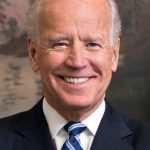
  • Joe Biden – 2022 Statement on Russia’s Attempt to Annex Ukrainian Territory

    Joe Biden – 2022 Statement on Russia’s Attempt to Annex Ukrainian Territory

    The statement made by Joe Biden, the President of the United States, on 30 September 2022.

    The United States condemns Russia’s fraudulent attempt today to annex sovereign Ukrainian territory. Russia is violating international law, trampling on the United Nations Charter, and showing its contempt for peaceful nations everywhere.

    Make no mistake: these actions have no legitimacy. The United States will always honor Ukraine’s internationally recognized borders. We will continue to support Ukraine’s efforts to regain control of its territory by strengthening its hand militarily and diplomatically, including through the $1.1 billion in additional security assistance the United States announced this week.

    In response to Russia’s phony claims of annexation, the United States, together with our Allies and partners, are announcing new sanctions today. These sanctions will impose costs on individuals and entities — inside and outside of Russia — that provide political or economic support to illegal attempts to change the status of Ukrainian territory. We will rally the international community to both denounce these moves and to hold Russia accountable. We will continue to provide Ukraine with the equipment it needs to defend itself, undeterred by Russia’s brazen effort to redraw the borders of its neighbor. And I look forward to signing legislation from Congress that will provide an additional $12 billion to support Ukraine.

    I urge all members of the international community to reject Russia’s illegal attempts at annexation and to stand with the people of Ukraine for as long as it takes.

  • G7 – 2022 Joint Statement on the Illegal Annexation of Sovereign Ukrainian Territory

    G7 – 2022 Joint Statement on the Illegal Annexation of Sovereign Ukrainian Territory

    The joint statement by G7 Foreign Ministers on 30 September 2022.

    We, the G7 Foreign Ministers of Canada, France, Germany, Italy, Japan, the United Kingdom, the United States of America, and the High Representative of the European Union, are united in our condemnation in the strongest possible terms of Russia’s war of aggression against Ukraine and its continued violations of Ukraine’s sovereignty, territorial integrity and independence.

    President Putin’s efforts to incorporate Donetsk, Luhansk, Kherson and Zaporizhzhya regions into the territory of the Russian Federation constitute a new low point in Russia’s blatant flouting of international law, and yet another example of Russia’s unacceptable violations of Ukraine’s sovereignty, the UN Charter, and the commonly agreed principles and commitments of the Helsinki Final Act and the Paris Charter.

    We will never recognise these purported annexations, nor the sham “referenda” conducted at gunpoint.

    We reiterate our call for all countries to condemn unequivocally Russia’s war of aggression and its attempt to acquire territory by force. We call on the broader international community to reject Russia’s brutal expansionism, its efforts to deny Ukraine’s existence as an independent state, and its blatant violation of the international norms that guarantee international peace, security, and the territorial integrity and sovereignty of all states.

    We will impose further economic costs on Russia, and on individuals and entities – inside and outside of Russia – that provide political or economic support to these violations of international law. We are unwavering in our support for Ukraine’s right to defend itself against Russia’s war of aggression and its unquestionable right to reclaim its territory from Russia.

    We reiterate our condemnation of Russia’s irresponsible nuclear rhetoric. It will not distract or dissuade us from supporting Ukraine, for as long as necessary.

    Russia must immediately stop its war of aggression, withdraw all of its troops and military equipment from Ukraine, and respect Ukraine’s independence, sovereignty, and territorial integrity within its internationally recognised borders. We reaffirm that the regions of Donetsk, Luhansk, Kherson and Zaporizhzhya as well as Crimea are integral parts of Ukraine.

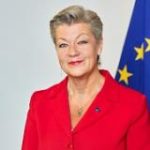
  • Ylva Johansson – 2022 Speech on General Visa Issuance in Relation to Russian Applicants

    Ylva Johansson – 2022 Speech on General Visa Issuance in Relation to Russian Applicants

    The speech made by Ylva Johansson, the EU Commissioner for Home Affairs, on 30 September 2022.

    Firstly I want to say – Putin cannot win, and will not win

    Every step he takes show we cannot trust him, we cannot deal with him or show weakness

    The recent ‘sham referenda’ in occupied Ukrainian and the mobilisation of Russian citizens confirm this.

    Now following the mobilisation order, we can see Russian citizen trying to enter  the EU.

    That is, from certain perspectives, understandable, they don’t want to go to war in another country that has been occupied by their leader.

    This said, avoiding the mobilisation does not necessarily equate to opposing the war as such. In addition, it cannot be excluded that Russian citizens trying to circumvent the mobilisation by getting into the EU, also constitute a threat to public policy, the internal security or the international relations of a Member State or the Union as a whole.

    That’s why, on our external borders we should be very vigilant regarding letting people from Russia in.

    We already abolished the VISA facilitation agreement, we adopted guidelines for Member States  – so already now it is very cumbersome and expensive to enter the EU from Russia as a tourist.

    Now we take one more step.

    We must ensure the security of Europe and its citizens.

    We have to keep in mind – to come to Europe is a privilege, not a fundamental right.

    We should stay open, of course, to dissidents, journalists independent from the Russian government.

    These are bravely and actively opposing the  Putin Regime.

    But we should very carefully scrutinize case by case every application.

    And we must take the geopolitical aspects into account.

    What is new in the Guidance?

    The Guidance we are adopting  today covers both Visas and the management of External Borders

    1. On Visas we have updated our previous guidance
    1. New visas
    • Stricter assessments and security over new visas
      • Schengen visas are issued for short stays of 90 days cannot cannot provide a long-term solution for Russian citizens seeking to avoid mobilisation.
      • For Schengen visas we have restricted our approach for all Russians, including for Russian citizens escaping the military mobilisation order.
      • MS should apply a strict approach assessing the justification of the journey.
      • It should be ascertained whether there are reasonable doubts as to the reliability of the statements made by the applicant or his/her intention to leave the territory of the MS before the expiry of the visa applied for.
      • This is without prejudice to the right of such individuals to seek international protection under the EU asylum laws or the possibility to apply for national long-stay visas or residence permits at EU consulates.
    • Restrictive approach of place of visa application
      • Following President Putin’s military mobilisation order, significant numbers of Russian conscripts have fled to neighbouring and other countries with the aim to avoid the Russian army. There are widespread expectations that many will seek to obtain Schengen visas in view of continuing their journey inside the EU.
      • In our guidance we make it clear that – pursuant to Article 6 of the Visa Code – applications should only be examined by the consulate of the competent MS in whose jurisdiction the applicant legally resides.
      • On this basis Member States should not accept Schengen visa applications from citizens of the Russian Federation that are present in a third country, such as for example  Georgia, Armenia, Kazakhstan, Serbia, Turkey, the United Arab Emirates etc.  for short stay or for purposes of transit.
      • Such applicants should be directed to the consulate competent for their place of residence, normally in the Russian Federation.
      • Exceptions can be made in cases of hardship and for humanitarian reasons (e.g. family visits due to sudden serious illness of a relative residing in the EU, dissidents, human rights defenders).
    • Confirms the humanitarian exceptions and clarifies its individual application
      • The Visa Code contains derogatory provisions allowing for the issuing of short stay  visas on humanitarian grounds, for reasons of national interest or because of international obligations.
      • This is relevant, for instance, in case of visa applications lodged by dissidents, independent journalists, human rights defenders and representatives of civil society organisations and their close family members, that are not controlled by the government of the Russian Federation and their close family members.
      • Member States should apply these derogatory provisions after a thorough assessment. It is therefore up to Member States, based on an individual examination, to assess if applications by Russian citizens can qualify as falling under the category “humanitarian grounds”. There is no unique set of documents that would prove that a person qualifies for a visa on humanitarian grounds, because individual circumstances differ too widely and need a case-by-case assessment.
    1. Revocation and annulment of valid visas
    • Stricter scrutiny of valid visas irrespective of the issuing Member State
      • MS should also adopt a strict approach with respect to reassessing visas already issued to any citizen of the Russian Federation, similarly to the principles applied when assessing new visa applications
      • In case there are grounds for annulment/revocation, such a decision may be taken by the border guard irrespective of the visa issuing MS. The authority should inform the issuing MS accordingly as well as affix the corresponding stamp on the visa sticker and enter the information on the annulment/revocation in the Visa Information System.  
    1. Guidelines on controls of Russian citizens at the external borders (Schengen Border Code)
    1. Coordinated and through checks at the external borders to ensure protection of the Schengen area

    Coordinated strong checks at the EU external borders protect not only security in the MS concerned, but also the integrity of the Schengen area as a whole.

    Coherent and comprehensive checks of Russian citizens

    • Border guards at all the border crossing points at the external borders should assess in a coherent fashion whether a Russian citizen crossing the EU’s external border fulfils the entry conditions into the Schengen area. This is to avoid that an applicant who has been denied entry by a Member State is admitted by another one.
    • In accordance with Article 30 of the Visa Code, the mere possession of a visa does not confer an automatic right of entry into the Schengen area.
    • If the entry of a Russian citizen is refused on the grounds that they are considered to pose a threat to the public policy or internal security of the MS entry should be refused.
    • With a view to carrying out such an individual assessment, border guards should notably conduct a thorough interview with a Russian citizen seeking to enter the Schengen area. In addition to a check on the basis of travel document data, a check using fingerprints in the Schengen Information System should be carried out, to also detect alerts on persons using false or unknown identities.
    • In this context, border guards should also take into account that allowing a Russian citizen to enter the Schengen area at a time when their country of origin is engaging in an illegal military aggression against an EU candidate country, could seriously harm the international relations of any MS with Ukraine, with another MS, or the EU as such. Therefore, the Commission recommends that border guard authorities consider the current geopolitical context when carrying out their case-by-case assessment. In light of the additional workload this reinforced scrutiny will lead to, Member States are encouraged to transfer additional staff to the border guards force located at the external borders concerned.

    However, the heightened scrutiny must not lead to denying entry to persons that have a legitimate interest to leave the Russian and should be performed in a way that preserve the right to seek asylum and prevents risks of non refoulement.

    Carriers Liability

    The carriers are obliged to immediately assume responsibility for third-country nationals who are refused entry into the territory of one of the MS. r.

    It is therefore important that carriers remain vigilant when verifying the presence of travel documents required for entry. The Member States are encouraged to offer practical support to the carriers in this regard.

    Monitoring

    The Commission will closely monitor the implementation of these new guidelines, in particular through the Blueprint Network. We will also discuss their implementation with Member States in the context of IPCR and adapt them in accordance with the evolving reality on the ground.