
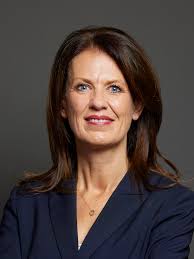
The speech made by Monica Harding, the Liberal Democrat MP for Esher and Walton, in the House of Commons on 24 February 2026.
I want to speak about transparency and accountability in public life and how the system we find ourselves in has been maintained and got us to where we are.
In the early noughties, I was working overseas with the British Council, as I have said. Andrew Mountbatten-Windsor visited us as part of his role as a UK trade envoy. Before his arrival, senior staff in both the embassy and the British Council were rolling their eyes—his reputation preceded him. I was told that it was a “containment” exercise, that overseas missions feared putting him out there in case he said something inappropriate, that he was arrogant and that he was not on top of his brief. Rather than looking forward to his visits as an opportunity to promote Britain, it was instead thought that he would do damage.
Moreover, there were rumours about Andrew Mountbatten-Windsor—that he refused to stay in the ambassador’s residence, that he would only stay in the Four Seasons or similar top-end hotels, and that he took an ironing board with him when he went overseas. That was a euphemism for a massage table. That was all well known among many officials. It even inspired the BBC TV programme “Ambassadors” in 2013, a couple of years after Andrew was forced to relinquish his role as trade envoy.
It seems that this was known about in the diplomatic circles that I experienced way back at the start of the noughties, and yet Andrew Mountbatten-Windsor enjoyed another 10 years as a trade envoy. Yet when I questioned why this was allowed to happen, I was met with a shrug. “Everyone knows,” they said. As I have said, Andrew came to an exhibition I had put on about Dolly the sheep. At the time, it was the pinnacle of British innovation, and we were rightly proud of it as an example of UK scientific excellence. One of my team was a young Japanese woman who worked for the British Government as a member of British Council staff. Her job—we paid her—was to promote the UK. She showed the then prince around with some Japanese dignitaries. “Dolly the sheep,” he sneered, “It’s rubbish. Frankenstein sheep”. My team member was deflated and did not understand why this representative of the British state diminished what she was rightly proud of.
The talk of Andrew and what he was like came to my own dinner table. My late father-in-law, an air vice-marshal in the RAF, was at a dinner with Mountbatten-Windsor on an overseas trip in the 1990s. He said, in front of many foreign military and diplomatic seniors, “No need for a Royal Air Force”. My father-in-law said nothing, and that was the problem. People could not because of his privileged position. My father-in-law raised it with the Chief of the Air Staff and was told it would be raised with the Palace. What happened next? Who knows? Did diplomats raise the concern to their seniors and to the very top from early on? Did the Palace do its own internal investigation? If they did, was it shared with the Department for Business and Trade? Where did these concerns all go? In doing so, did they—the system—unwittingly or wittingly support protection or cover-up, because of “the way things were done” or because of deference? That is the point of this debate. Some officials knew, or the system seemed to know, but the system seemingly failed to do anything about it for 10 years because of privilege and deference.
Mike Martin (Tunbridge Wells) (LD)
On this point about which Departments had which papers, I note that the Humble Address uses the words
“including but not confined to”.
Surely papers in the royal household that relate to this matter should also come under the scope of the Humble Address. Does my hon. Friend agree?
Monica Harding
I agree. There is a systematic and joined-up failure that we need to unravel, and I will come back to that in my speech.
When there was scrutiny after 2011, there was still a failure of oversight. What does that say about our society, how we protect privilege and what we are prepared to accept on behalf of the British state and our representatives? Can rules be broken by some people and not others? Do propriety and ethics belong to all those who represent the British state?
We have a parliamentary monarchy. That means that if the Palace does not open itself to scrutiny and carry out its own inquiry, Parliament must. I have some questions. On what basis was Andrew Mountbatten-Windsor given the role of trade envoy? Who put him forward and was there resistance to it? While he was trade envoy, what concerns were raised and with whom, from what date and how were they actioned? Money was put up by the royal family to protect him. Does Parliament have a right to understand why that money was put up and that public funds were not used in the civil settlement with Virginia Giuffre? Can Parliament find out that not one penny of public money was used in that settlement?
I know you will share with me, Madam Deputy Speaker, the concern about levels of public confidence in all our institutions and the people who represent them. Parliament must assert itself in this regard, and I, along with my colleagues, call for the full publication of all documents related to Mountbatten-Windsor’s appointment as a special envoy and for an end to negative privilege, so that MPs in this place can speak freely about their concerns and disclose information in the House of Commons, even if that individual is a member of the royal family.
I will end, as I must, with thoughts for the victims of the Epstein scandal, which has triggered so much of this debate, and all those who are victims of power, privilege and deference. They are foremost in our minds as this furore continues. It is thanks to their bravery that we know the extent of Epstein’s crimes and the wider implications for our own establishment.
Wendy Chamberlain
I am grateful to my hon. Friend for giving way. I am conscious that she was close to concluding, but her words about the victims are powerful. I co-chair the all-party parliamentary group for the survivors of Fayed and Harrods. We have just started our work, but Members may have heard a powerful interview on the “World at One” a couple of weeks ago, which talked about the lack of acknowledgement of what had taken place and the fact that the police did not properly understand trafficking. The shadow Minister, the hon. Member for Brentwood and Ongar (Alex Burghart), described this as a global enterprise. Does my hon. Friend agree that we need to do much more work around this and that it is not just about the victims of Epstein, but other trafficking victims, too?
Monica Harding
My hon. Friend is quite right. This is about systemic failure, and we are at the very beginning of this, not the end. For the victims of Epstein, we must do everything we can to ensure that this investigation and inquiry continue. On behalf of those victims and those who are suffering right now from the same thing, we must ensure that the wider system cleans itself up, and we must facilitate that.