
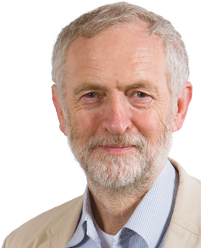
The comments made by Jeremy Corbyn, the Independent MP for Islington North, in the House of Commons on 4 February 2026.
This debate is crucial and seminal, but first and foremost it must be about the victims of the horrible web that Epstein created —the abuse, abduction, raping and secret imprisonment of women, who were apparently flown in and out of major cities around the world for the convenience of rich and powerful men. It is utterly disgusting, depraved and abominable behaviour on every single level, and every Member who has called it out is absolutely right to do so.
Epstein was not revealed yesterday; he was not convicted last week; he was not convicted last year. He was first convicted 18 years ago. It is not as if his record was not extremely well known. It seems that we are debating it now only because of the inclusion of Peter Mandelson in the ghastly, nasty, vile, horrible web that they created.
We have a duty to do something important today, and I for one support the Opposition motion. I hope that we vote on it, rather than coming to some crabby deal between the Government and the Opposition through a manuscript amendment that would kick the whole thing into the long grass, a long way away, on the pretence that we cannot discuss these issues because that might affect security or international relations. Almost anything can affect international relations. It sounds to me like the Government simply trying to get out of things.
The question is fundamentally one for the Prime Minister, and it is a bit odd that he is not here for the debate. It is a bit odd that he has not spoken in the debate and that all he has done is say what he did today at Prime Minister’s Question Time. I cannot believe that, when he was about to appoint Peter Mandelson as the ambassador to Washington, he was not made fully aware of all of Peter Mandelson’s record. The Prime Minister would have known about the number of times that Peter Mandelson was forced to resign, even from the Tony Blair Government, because of his behaviour. He would have known Mandelson’s record as an EU Commissioner, and of his interesting relationship with global dealers in minerals and many other things. He would have known all of that, yet he still went ahead and appointed Mandelson as ambassador to Washington, apparently despite advice from the Foreign Office and others. What a shame, what a disgrace and what an appalling appointment to make. We do not even know whether Mandelson is still being paid by the Foreign Office.
Today, we have to be very stern and clear that there needs to be the fullest possible inquiry into all of this. Parliament is not competent to undertake this inquiry. The Cabinet Secretary and the civil service machine are not competent to do so. They have all been ensnared in this gilded, friendly web of Mandelson and his business, political and social contacts, where favours were done and contracts were apparently awarded. That ghastly company Palantir was trying to get hold of our national health service, apparently at the behest of Mandelson and others.
None of us here are competent to undertake that inquiry, which is why I intervened earlier—I thank the hon. Member for Hazel Grove (Lisa Smart) for giving way—on how it should be conducted. I think it has to be judicially led, independent and, for the most part, in the public eye—rather like when the Government were eventually forced to undertake the Chilcot inquiry into the Iraq war; that is the nearest parallel I can find—because it needs to expose the whole web that Mandelson created, and the power play that he operated within the civil service, the political establishment, the media and so much else.
The hon. Member for Leeds East (Richard Burgon) made a wonderful and very powerful speech. I thank him for his reference to what Mandelson said and did about me when I was Leader of the Opposition and leader of the Labour party. I can confirm to the House that under my leadership, Mandelson had no role, no influence and no part to play, because I do not trust the man or believe him. We need to make that very clear, because his role in British politics has been basically malign, undermining, and a very corrupting influence altogether.
When we look at our politics, we need to look at the role that big money, patronage, and turning a blind eye to crime play in it, because what we end up with is the national embarrassment of Mandelson being the ambassador to Washington, apparently on the basis that it was a risk worth taking in order to please Donald Trump. I do not know whether it succeeded in pleasing Donald Trump, but I did notice that at one of his endless press conferences, he could not remember who Mandelson was, so I am not sure how big the impact on the President was. Today is a day of shame for our politics—shame that we have got into the situation that has now been exposed.
Epstein was very, very powerful and very, very wealthy. Obviously, there needs to be more examination of that. More files have been uncovered than even Julian Assange managed to uncover through Wikileaks, and those files are going to be read and studied for a long time to come. There are lots of people all around the world who were dragged into this ghastly web based on dishonesty, lies, corruption and patronage. It is up to us as MPs to ’fess up to what has happened and to make sure there is a genuinely open, independent inquiry. When it comes to the standards of democracy we have in our society, and the levels of patronage that continue within it, we need to look at ourselves in the mirror.
Graham Stuart
The right hon. Gentleman is making a powerful speech. He referred to the speech on factionalism made by his colleague on the Labour Benches, the hon. Member for Leeds East (Richard Burgon), and made the point that we need an independent inquiry. One of the reasons for that is the number of staff from Labour Together, a factional group within the Labour party, who were appointed to civil service posts directly after the general election, including one—Jess Sargeant—who was appointed to the Cabinet Office’s propriety and constitution group. Labour Front Benchers should not say, “Don’t question the impartiality of the civil service.” They undermined the impartiality of the civil service, and we need an independent inquiry if the public are to know that we will get to the truth.
Jeremy Corbyn
The right hon. Member makes a very fair point. Of course, the role of factions within parties is enormous—we have seen the role that Mandelson, Morgan McSweeney and others have played in sidelining, silencing and getting rid of very good, active people within the Labour party. Ultimately, it is the Labour party that loses as a result. I was extremely grateful for the role that Peter Mandelson played in the last election in Islington North: he came along and canvassed, and we won with 50% of the vote. That is the only useful thing he has done for a very long time that I can remember.
As I say, the right hon. Member’s point is a very fair one. It is right that Ministers and Governments should be able to bring political advisers into government with them. I remember discussing all this with Tony Benn in the 1970s; his view was that the civil service was intrinsically conservative and reactionary, and that there needed to be voices in there who were prepared to speak up for an alternative policy. I understand that point, but there has to be some kind of limit to the role of the political adviser in running the civil service—that is the Rubicon they must not cross. It is reasonable for them to advise the Minister, and they may have a very strong view or a view that is very different to that of the civil service. That is fair enough, but they should not be running the civil service. If we believe in an independent civil service, we must practise what we believe, even though it is probably quite uncomfortable for Ministers at various times.
I conclude by saying to the Government: do not come to some deal today just to get past today. Do not just get through today and think, “Wow, we got through that mess.” Members of the Government should not just put in their diaries, “Horrible day in the Commons, but tomorrow is another day. We’ll move on.” Let us have the open, public inquiry that is necessary. Let us have an understanding that we will turn the page on the era of patronage, and of close relationships between commercial pressure groups and lobbying—in the Lords, here, in the media and in our society. We should strive to build the open, fair, democratic society that we should all believe in. Those who suffered to get us universal suffrage and democracy did not do it so that we could develop a corrupt political system; they did it because they wanted an open, democratic, accountable system that benefited the poorest in society, as well as everybody else. Let us pass the motion today—no deals. We must inquire with real seriousness into the horror show that we have heard about.