
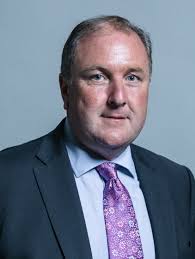
The comments made by Simon Hoare, the Conservative MP for North Dorset, in the House of Commons on 4 February 2026.
It is a pleasure to follow the hon. Member for Forest of Dean (Matt Bishop). I will return in a moment to a point that he was just making.
I have the great privilege of being the father of three wonderful teenage daughters. Any parent or relative will feel their stomach turn and churn at the thought of vulnerable young women being trafficked and used as playthings for the sexual gratification of warped and twisted minds who thought they were above the law, to whom the rules did not apply, and who thought they could get away with it because of who they were.
I suppose the surprise as it relates to Peter Mandelson is that we are surprised. He was a man who seemed magnetised to money like a moth to a flame, and who had caused considerable and significant embarrassment and discomfort to previous leaders of his party. The current Prime Minister decided that, in some way or another, it was only the extent of the relationship that should be the determining factor, whereas the existence of the relationship at all should have precluded Peter Mandelson from an appointment to be our ambassador in Washington.
I want to pick up on a point raised by the hon. Member for Forest of Dean, and to which I believe my hon. Friend the Member for Rutland and Stamford (Alicia Kearns) was also referring. My conscience—I do not say this particularly smugly—is a bit clearer than my hon. Friend’s, if she is referring to the same vote, because there was a vote in this place. Those on the Treasury Bench need to remember this, because there are certain votes and motions in Parliament that become a Thing, with a capital T. They become an event. They set the scene that makes the atmosphere for the coming months and weeks of a Government. I think that this issue, and how the Treasury Bench responds later, is one such Thing.
Owen Paterson was and is a friend of mine, as well as a former parliamentary colleague. We were asked to vote for something which effectively would have got him off a very painful hook. I, along with 12 other Conservative MPs, against a lot of whipping, voted against the then Government amendment to effectively, de facto, exonerate him. It was the most difficult vote I ever cast, as he was a friend both political and personal, but it was a vote that I have never regretted, because it was the right thing to do. When all the party allegiances, the to-ing and fro-ing and the whipping and everything else is over, at the end of the day—I hope this does not sound too folksy, Mr Speaker—we all need to be able to look in the mirror, and at our families, our friends and our constituents, and say, “I always tried to do the right thing. I may not always have done so, but I always tried.”
I think the right thing for the Government to do is to withdraw their amendment. The mood of the House is incredibly clear. We heard wise advice from my right hon. and learned Friend the Member for Kenilworth and Southam (Sir Jeremy Wright), a former Attorney General and a member of the Intelligence and Security Committee; I do not think anyone could refer to him as a partial politician in this place. His integrity speaks for itself—as does that of the Paymaster General and Minister for the Cabinet Office, the right hon. Member for Torfaen (Nick Thomas-Symonds).
Anybody with a partial hearing of political interpretation will have gleaned the mood of the House: while respecting national security and other issues, which is a perfectly legitimate concern of the Government, this House vests in the Intelligence and Security Committee, to be discharged by senior Members of this House and the other place—Privy Counsellors all—the duties that those of us who are not Privy Counsellors or on that Committee cannot do for potential security reasons. We vest our faith and trust in that Committee, and it has never leaked. The Government can therefore follow that path in good faith and with trust. I hope that a manuscript amendment will be both forthcoming and accepted by you, Mr Speaker.
The hon. Member for Forest of Dean mentioned party politicking on this issue, and I am afraid I disagree with him on that; I do not think there has been any. I agree far more with my right hon. Friend the Member for Skipton and Ripon (Sir Julian Smith). Take away the party tags, the labels and the rosettes, and this is something that, for the vast majority of our fellow citizens, speaks to the operation of the state, the effectiveness of this place and the reliance our fellow citizens can put upon us in this place to do the right thing in difficult times, even when it is difficult to do so. Members on the Government Benches should talk to their Whips, use the usual channels and ask the Government to withdraw their amendment.
Andy McDonald (Middlesbrough and Thornaby East) (Lab)
Given what the hon. Gentleman has said, does he agree that the amendment as drawn would, in effect, just throw a cloak over the very issues that many right hon. and hon. Members of this House want to see dealt with, and that the way to resolve those sensitive issues is simply to engage the Intelligence and Security Committee? Is that not the best way forward?
Simon Hoare
The hon. Gentleman is absolutely right. Why else would we have an Intelligence and Security Committee with that remit? It is not as if we are retrospectively trying to establish a Committee of the House to do a specific job. It exists to do this sort of job, among other things. I hope that those on the Treasury Bench have listened.
On Monday, in response to my question on his statement, the Chancellor of the Duchy of Lancaster told the House that it would be much better to deal with the removal of Lord Mandelson’s title via the procedures and Standing Orders of the House of Lords than by legislation. He also told the House—in complete and utter sincerity at the time, I am sure—that it would require a complex hybrid Bill, which was not an analysis I shared. My understanding is that a simple Bill to amend section 1(2) of the Life Peerages Act 1958 to apply a cessation date to the honour of a life peerage would be all that was required. We have passed important legislation for Northern Ireland and other issues in a day’s sitting before when the mood of the House was clear.
I think the Prime Minister indicated today at Prime Minister’s questions that he had tasked his team—his officials—with drafting legislation. There is an appetite for urgency in this place, and allowing this issue to suppurate and drip will not be the answer. I ask the Minister in his summing up—or, if he wishes to intervene on me now—to give us a timetable as to when this House will see the Bill and to confirm that Government time will be found to take it through in a single day. That would be very helpful.
Freddie van Mierlo (Henley and Thame) (LD)
There are many questions on the behaviour of Mandelson that are unanswered and that need to be answered, but I welcome that the Government have promised to remove his peerage. That is right. However, does the hon. Gentleman agree that a Bill should also come before this House to remove Andrew Mountbatten-Windsor from the line of succession?
Simon Hoare
I think, Mr Speaker, that we usually prefer for matters relating to those sorts of things not to be dealt with on the Floor of the House.
Mr Speaker
To help the House, let me say that because this now relates to a person who is not a member of the royal family, the situation is completely different.
Simon Hoare
Thank you, Mr Speaker. My hospital pass has just gone through the shredder. Let me say to the hon. Gentleman, in all candour: yes. The likelihood of Mr Windsor ever putting a crown on his head is so remote as to be unimaginable, but for clarity and probity, I agree with him. I do, however, think we should deal with the matter in hand today.
The Public Administration and Constitutional Affairs Committee has written to Sir Chris Wormald, the Cabinet Secretary, asking him to appear before us. This follows a letter we wrote last October, to which we received a reply on the 30th of that month. The way of vetting a political appointment to be an ambassador was woefully inadequate. I welcome the fact that No. 10 has put in place new procedures, but that is shutting the stable door after the horse has bolted. It is either naivety or, worse, some form of complicity that the legitimate and obvious questions that should have arisen for any political appointee, but particularly Peter Mandelson, were not asked. I think it is extraordinary that the views of the Foreign Secretary were not invited on this appointment. I also find it very strange that vetting is undertaken only after the announcement of an appointment—that is a most bizarre way of dealing with things. I am pleased that the Government have realised that things need to change.
Graham Stuart (Beverley and Holderness) (Con)
My hon. Friend is right to look at the process, but I do not think that it provides any cover for the Prime Minister’s decision. If the story in the New Statesman today is true, the Prime Minister was directly sent a report that
“clearly stated that Mandelson’s relationship with the paedophile continued after his conviction for soliciting a minor for prostitution. It contained links to photographs of Mandelson with the paedophile, and drew particular attention to evidence that Mandelson had stayed at Epstein’s apartment while he was in prison.”
Candour has been talked about a lot today. Does my hon. Friend agree that we should hear from the Minister today whether that report in the New Statesman is true and whether the Prime Minister received that report? That takes away any idea of the extent of the relationship—the extent of the relationship is as laid out in that report.
Simon Hoare
My right hon. Friend is right, but if this motion is passed unamended this afternoon, all those papers will be available either to this place or to the ISC, and then we will know.
We are all aware of these sorts of things. Somebody will set a hare running at some point and we will say that we think this, that and the other. I have heard, for example, that Peter Mandelson was at Labour party headquarters each and every day in the run-up to the general election and that he was intimately involved with the selection of candidates—I can see a couple of Labour Members nodding as if to say, “Yes, I knew exactly what was going to happen”—and that in essence, the ambassadorial position was a thank you present: “Thank you for getting us back into No. 10—here’s your final gift from the public purse. Go and be our ambassador to Washington.”
In the general scheme of things, that is perfectly fine, but I think we deserve to see the paperwork that shows the paper trail. It is not unusual for political appointments to be made in that way, but that is in the abstract. In this specific case, it is unconscionable, and it is surprising given the fact that the Prime Minister flaunts, with some degree of credibility, his previous role as a senior lawyer and his ability to tell right from wrong. And by God, did we not hear that when he was Leader of the Opposition? Whenever a Conservative committed even a minor misdemeanour—if they put something plastic in the paper recycling box—by God it was a hanging offence: “They should all be taken outside, hanged, drawn and quartered” and so on.
Being in government is obviously different, but the reason the appointment of Mandelson befuddles everybody is that the argument that the Prime Minister has deployed is that the full extent of the relationship and friendship with Epstein was not known. The fact that there was any relationship with Epstein post conviction should have precluded Mandelson’s appointment. Why? Because an ambassador is not a representative of the Government. The position is His Majesty’s ambassador to the United States of America, so it brings in the impartiality of the Crown as well. There are therefore serious questions to ask about the operation of No. 10 and about how the Prime Minister exercises his judgment.
Alicia Kearns
There does seem to be amnesia about this. When Mandelson was made ambassador, it was well known that he continued the relationship with the convicted paedophile post his conviction, and there were simpering emails already in the public domain saying things like, “Oh darling one, all should be forgiven.” The suggestion that it only recently became unacceptable for him to be ambassador is wrong. If Labour Members want to suggest that it was not well known, let me tell them that colleagues like me raised it in this Chamber on the day that he was appointed, and I was greeted with jeers and boos from the Labour Benches. No one said, “Absolutely, maybe there are concerns”. Should that amnesia perhaps be reconsidered?
Mr Speaker
Order. It is not me who will say when it is 4 o’clock, but I would gently say that this is Opposition day and the Opposition may want to extend the time available for this debate. I am very bothered that not many people will get in given the rate that we are going at. I leave it to Members to take care of time.
Simon Hoare
Conscious of that, Mr Speaker, let me say that I agree with my hon. Friend, and then conclude with two asks of the Government. First, will they confirm when a Bill will be introduced and that it will be passed speedily in both Houses before the Easter recess; and, secondly, although it is not my job to speak on behalf of those on the Labour Back Benches, I ask the Government to read the Chamber. Allowing the Government Chief Whip and others to press this amendment would, as the hon. Member for Forest of Dean (Matt Bishop) has said, send such a bad message to our constituents and to victims—not just of Epstein and Mandelson but to the wider victim community—that when push comes to shove, officialdom somehow or another circles the wagons and finds a vehicle to filter and to protect.
As the hon. Member for Hazel Grove (Lisa Smart) said, the best thing that we can have is transparency. The best disinfectant is sunlight. We need as much sunlight on these papers as possible, and we can start to make some progress this afternoon. Do not press the amendment and publish the Bill.