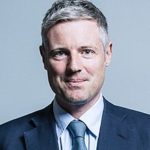
Tag: Zac Goldsmith

  • Zac Goldsmith – 2023 Speech on the Arctic Policy Framework (Lord Goldsmith)

    Zac Goldsmith – 2023 Speech on the Arctic Policy Framework (Lord Goldsmith)

    The speech made by Zac Goldsmith, Lord Goldsmith, on 9 February 2023.

    Good morning and thank for joining us for the launch of ‘Looking North’ – the UK Government’s new Arctic Policy Framework.

    We have drafted it through engagement with our Arctic partners, for which I offer our sincere thanks.

    Thanks also to colleagues across Government from other Departments for their valued contributions.

    Throughout this document we reaffirm our commitment to the Arctic region.

    Of course, the UK is not an Arctic state, but the Arctic is absolutely critical to our interests, because our climate, weather and biodiversity are all inextricably linked.

    The UK Government produced its first Arctic Policy Framework in 2013. And in that, we affirmed ‘Respect, Cooperation and Appropriate Leadership’ as the guiding principles of the approach that the UK takes in the region. And those principles absolutely remain true today.

    In ‘Looking North’, we have adapted our approach in response to the evolving influences on the Arctic.

    The region is at the mercy of ever shifting forces, increasingly buffeted by climate, environmental and also geopolitical headwinds.

    So I am going to briefly talk you through some of the key security, environmental and economic challenges, and how the UK is addressing them through our expertise and partnerships.

    Security

    First of all, security. While it remains our strategic aspiration for the Arctic to be an area of high cooperation and low tension, clearly that vision is at risk.

    Melting sea ice has provided greater accessibility to a wider range of players. And Russia’s invasion of Ukraine has undermined the stability of its entire neighbourhood.

    The UK Government is committed to working to ensure that the Arctic remains secure and peaceful.

    We have strong relationships with almost every one of the Arctic states.

    And through NATO, the Joint Expeditionary Force, the Northern Group, and through the Arctic Security Forces Roundtable, we have intensified work with our partners to preserve stability and security across the region.

    Last year we publicly set out the UK’s Defence Contribution in the High North, in a paper of the same name.

    And we set out our readiness to protect, and where appropriate, assert our rights, against those who wish to challenge the international order, threaten the stability of the region, or restrict freedom of navigation.

    We are the nearest neighbour to the Arctic, and so regional security is central to our own security as well.

    Climate Change and the Environment

    Secondly, climate change.

    Without doubt, climate change poses the clearest and most significant existential threat to the Arctic as we currently know it.

    In 2021, the Arctic Monitoring and Assessment Programme reported that Arctic temperatures are increasing three times faster than the global average.

    A new study last year raised this to four times faster than the global average.

    And we know that warming temperatures have profound implications for the people who live in the Arctic, for biodiversity, and for the whole world.

    Climate change is devastating Arctic ecosystems and communities. Sea ice and the Greenland ice sheet are rapidly melting. Permafrost is thawing.

    And nature is already showing signs of struggling to adapt. Migratory patterns are already shifting.

    And changes to the Arctic will have profound consequences for the UK, for example increasing the frequency of extreme weather, flooding and denigration of our shared and valued biodiversity.

    The UK government has made tackling climate change a key priority. That was reflected in the Integrated Review; it will be reflected in the shake-up of the Integrated Review; it’s been reflected in the International Development Strategy.

    And in Glasgow the year before last, COP26 was a collective acknowledgement of the work required globally to limit global warming to 1.5 degrees.

    We are delivering our pledge to provide up to £11.6bn of International Climate Finance over 5 years, and we are working with partner countries to help them reduce emissions, protect their nature without which we don’t have any prospect of tackling climate change, and helping them to adapt to the unfortunate, inevitable changes associated with climate change.

    So addressing the biodiversity crisis remains a priority issue for me, but also for the wider UK Government.

    The UK played a leading role shaping the Kunming-Montreal Global Biodiversity Framework, adopted in December. We wanted a ‘Paris moment’ for nature, and it is.

    The agreement contains an ambitious package of global goals and targets, and a central mission to halt and reverse biodiversity loss by 2030, to put the natural world on a path to recovery by the end of this decade.

    We have consistently fought for better international regulations to protect the ocean, and we will continue to do so.

    And to support the protection of fragile marine ecosystems, we will seek to join the Central Arctic Ocean Fisheries Agreement as soon as we possibly can.

    People and Prosperity

    Of course – Fishing is extremely important to the Arctic economy, and a reminder that the region is, first and foremost, a home to nearly 4 million people.

    It is a region of vibrant and diverse communities, cultures, languages and traditions.

    The UK Government recognises the diversity of Arctic Indigenous communities, and respects their rights, their views, their interests, their culture and their traditions.

    We have invested £7.6m in a multi-partner research programme to address the impact of environmental change in Inuit Nunangat – their traditional homelands in Canada, putting Indigenous communities at the heart of Arctic science.

    Of course changes in the Arctic do also open up new commercial avenues. And the people of the Arctic should benefit from those opportunities.

    The UK has a lot of expertise to offer, including professional maritime and financial services.

    We have a clear vision for a prosperous Arctic, where economic development is achieved in a way that is safe, responsible and sustainable, and that does not damage the Arctic’s natural and fragile, unique environment.

    Extractive industries in particular, as well as the increasing opportunity for navigation within the Arctic Ocean, must be carefully managed to protect vulnerable marine ecosystems. We’re going to have to think very hard, collectively, not just in the UK but with our friends and allies around the world, about whether or not we want to see deep sea mining in the Arctic Ocean.

    The UK Government is committed to working with partners to ensure that effective governance, and environmental protections, are in place to regulate ships operating in Arctic waters.

    We also participate in the Extractives Industries Transparency Initiative, and the Voluntary Principles on Security and Human Rights in the Extractive Industries, which apply to mines in the Arctic just as they apply to everywhere else.

    And we will continue to encourage all countries to adopt the highest possible standards of environmental and social governance.

    Partnering and Collaborating

    The challenges and opportunities facing the Arctic can only be managed through effective international cooperation.

    The UK Government, and our science and research sector, has strong relationships with Arctic partners, and we will strengthen those ties.

    UK Science has played a key role in building our understanding of the Arctic.

    In terms of published research, UK-based scientists are ranked first among non-Arctic states in the number of published articles.

    And since 2012, UK researchers have received over £56 million in Arctic science funding, on top of investments in their infrastructure and other assets.

    The Government’s Science and Innovation Network has played an important role facilitating collaborative international Arctic research, and empowering Indigenous researchers to play a full part.

    The Arctic Council remains the preeminent intergovernmental forum for cooperation in the Arctic. The UK has been an observer to the Council since its first meeting, and has contributed significant expertise to its work.

    We fully supported last year’s decision to pause the work of the Arctic Council following Russia’s illegal invasion of Ukraine. And we have been grateful to continue contributing to Council projects, where it has been appropriate.

    We look forward to engaging with the incoming Norwegian chair, and will seek further opportunities for UK experts to be a part of the Council’s work.

    Conclusion

    So to conclude: ‘Looking North’ sets out the UK’s approach to being a trusted and active partner on the Arctic.

    We have an enduring interest in the region, and a lot to offer in terms of expertise.

    We have a vision of a cleaner, greener, more secure, safe and prosperous Arctic.

    And we will continue to collaborate with our Arctic partners to realise that vision.

    Thank you so much.

  • Zac Goldsmith – 2016 Parliamentary Question to the Department for Environment, Food and Rural Affairs

    Zac Goldsmith – 2016 Parliamentary Question to the Department for Environment, Food and Rural Affairs

    The below Parliamentary question was asked by Zac Goldsmith on 2016-06-08.

    To ask the Secretary of State for Environment, Food and Rural Affairs, whether she plans to support fishing any stocks at a higher level than the maximum sustainable yield level in the forthcoming negotiations on the multi-annual plan to manage North Sea fish stocks.

    George Eustice

    The objective of the reformed Common Fisheries Policy is that all stocks will be fished at or below their respective Maximum Sustainable Yield by 2020. We expect to see proposals for a North Sea multi-annual plan soon which will provide the regulatory framework for the management of multi-species fisheries in the North Sea.

  • Zac Goldsmith – 2016 Parliamentary Question to the Department for Transport

    Zac Goldsmith – 2016 Parliamentary Question to the Department for Transport

    The below Parliamentary question was asked by Zac Goldsmith on 2016-07-21.

    To ask the Secretary of State for Transport, with reference to page 307 of the Airports Commission Final Report, published in July 2015, what steps his Department is taking to assess options for a legislative process for permanently banning a fourth runway at Heathrow Airport.

    Mr John Hayes

    The Airports Commission shortlisted three airport expansion schemes, two at Heathrow and one at Gatwick. The Government accepted the Commission’s shortlist in December 2015 and is considering all of the evidence very carefully before reaching a view on its preferred scheme. It is vitally important that we get this decision right.

    The Government is not providing a running commentary on this work and it would not be appropriate to opine on the Commission’s scheme-specific recommendations before an announcement on its preference.

  • Zac Goldsmith – 2016 Parliamentary Question to the Department for Environment, Food and Rural Affairs

    Zac Goldsmith – 2016 Parliamentary Question to the Department for Environment, Food and Rural Affairs

    The below Parliamentary question was asked by Zac Goldsmith on 2016-06-08.

    To ask the Secretary of State for Environment, Food and Rural Affairs, what technical assistance her Department has offered to the government of the Pitcairn Islands to help ensure that its draft biosecurity legislation meets best practice.

    Rory Stewart

    The UK Government is committed to assisting our Overseas Territories (OTs) in protecting their biodiversity. Territory Governments are constitutionally responsible for the conservation of their natural environments and we work in partnership with them to provide support, including through access to technical advice, expertise and training and through the Overseas Territories Climate and Environment Programme (Darwin Plus).

    Preventing the establishment of invasive alien species and eradicating or controlling invasive species is one of our priorities in supporting biodiversity conservation in the OTs. Defra has funded various projects on biosecurity, bio-control and the spread of non-native species in the OTs, including an RSPB-led Darwin Plus project which included work to improve Pitcairn’s biosecurity legislation. Defra officials stand ready to consider any requests from Pitcairn’s Government for technical assistance, advice or expertise on biosecurity matters or in respect of Pitcairn’s biosecurity legislation.

  • Zac Goldsmith – 2016 Parliamentary Question to the Department for Transport

    Zac Goldsmith – 2016 Parliamentary Question to the Department for Transport

    The below Parliamentary question was asked by Zac Goldsmith on 2016-07-21.

    To ask the Secretary of State for Transport, if he will make it his policy to require Heathrow Airport to pay for relocation for the Lakeside Energy From Waste Facility in the event of that airport being awarded a third runway.

    Mr John Hayes

    The Government is currently considering the Airports Commission’s comprehensive evidence. Commercial property, such as the Lakeside Energy from Waste facility, is a part of this consideration.

  • Zac Goldsmith – 2016 Parliamentary Question to the Foreign and Commonwealth Office

    Zac Goldsmith – 2016 Parliamentary Question to the Foreign and Commonwealth Office

    The below Parliamentary question was asked by Zac Goldsmith on 2016-06-08.

    To ask the Secretary of State for Foreign and Commonwealth Affairs, what progress his Department has made on supporting the establishment of marine protected areas in the high seas.

    James Duddridge

    The UK led negotiations within the Commission on the Conservation of Antarctic Marine Living Resources which resulted in the establishment of the world’s first high-seas Marine Protected Area (within the Antarctic Treaty area) and supports the establishment of further Marine Protected Areas within the area covered by the Conservation of Antarctic Marine Living Resources. The UK is also a leading member of the OSPAR Commission which has designated seven Marine Protected Areas in the high seas of the North-East Atlantic and works closely with other regional and international organisations to manage these.

    The UK supports, and is fully engaged, in the work at the United Nations seeking an agreement on the conservation and sustainable use of marine biodiversity and the need to establish a mechanism to deliver marine protected areas in areas beyond national jurisdiction.

  • Zac Goldsmith – 2016 Parliamentary Question to the Department for Transport

    Zac Goldsmith – 2016 Parliamentary Question to the Department for Transport

    The below Parliamentary question was asked by Zac Goldsmith on 2016-07-21.

    To ask the Secretary of State for Transport, if his Department will require Heathrow Airport to accept the recommendation of the Civil Aviation Authority that night flights at that airport be banned between 11.00pm and 6.00am before the Government makes a decision on airport expansion.

    Mr John Hayes

    The Airports Commission shortlisted three airport expansion schemes, two at Heathrow and one at Gatwick. The Government accepted the Commission’s shortlist in December 2015, and has since been undertaking a programme of further work, including on mitigation, to support a decision on a preferred scheme. We are carefully considering the evidence in relation to all three schemes, including the Commission’s comprehensive evidence base and recommendations. These recommendations included a ban on night flights between 1130 and 0600 for its preferred scheme, the Heathrow Northwest Runway. We are aware of no such recommendation from the Civil Aviation Authority.

  • Zac Goldsmith – 2016 Parliamentary Question to the Foreign and Commonwealth Office

    Zac Goldsmith – 2016 Parliamentary Question to the Foreign and Commonwealth Office

    The below Parliamentary question was asked by Zac Goldsmith on 2016-06-08.

    To ask the Secretary of State for Foreign and Commonwealth Affairs, which departmental budget is supporting the Government’s blue belt policy to protect marine biodiversity in the UK Overseas Territories.

    James Duddridge

    The delivery of the UK Overseas Territories Blue-Belt policy is a cross-Government initiative and as such will receive cross-departmental funding.

  • Zac Goldsmith – 2016 Parliamentary Question to the Department for Transport

    Zac Goldsmith – 2016 Parliamentary Question to the Department for Transport

    The below Parliamentary question was asked by Zac Goldsmith on 2016-07-21.

    To ask the Secretary of State for Transport, what assessment his Department has made of whether there will be an increase in airport-related traffic at Heathrow Airport in the event of that airport being awarded a third runway.

    Mr John Hayes

    The Airports Commission undertook a range of detailed assessments to support its Final Report published in July 2015. The analysis included a detailed assessment of transport network impacts for each of the Commission’s three short-listed options.

    Copies of the Commission’s Surface Access: Dynamic Modelling Reports, and, Strategic and Local Roads Study for both the Heathrow Northwest Runway and the Heathrow Extended Northern Runway schemes and Gatwick Second Runway; along with a Freight Impacts Study, Resilience Study and a Demand Management Study were published alongside its Final Report, and are available from the Commission website at the following link:

    https://www.gov.uk/government/publications/airports-commission-final-report-surface-access

    The Government will carefully consider all the evidence set out when making a decision on the location of additional runway capacity.

  • Zac Goldsmith – 2016 Parliamentary Question to the Foreign and Commonwealth Office

    Zac Goldsmith – 2016 Parliamentary Question to the Foreign and Commonwealth Office

    The below Parliamentary question was asked by Zac Goldsmith on 2016-06-08.

    To ask the Secretary of State for Foreign and Commonwealth Affairs, when his Department plans to publish a strategy for its blue belt policy to protect marine biodiversity in British Overseas Territories.

    James Duddridge

    The overarching policy framework is currently being developed by Government in consultation with the UK Overseas Territories, with the objective of delivering a demonstrable increase in the protection of marine biodiversity. The UK Overseas Territories are constitutionally responsible for the conservation of their natural environments and as such will develop bespoke solutions, where necessary, to implement this policy.