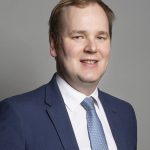
Tag: William Wragg

  • William Wragg – 2016 Parliamentary Question to the Department for International Trade

    William Wragg – 2016 Parliamentary Question to the Department for International Trade

    The below Parliamentary question was asked by William Wragg on 2016-10-07.

    To ask the Secretary of State for International Trade, what recent assessment he has made of the potential effect of the UK withdrawing from the EU on the promotion of UK trade with other Commonwealth countries.

    Greg Hands

    Withdrawing from the EU will give us the opportunity to shape our own international trade and investment opportunities, drive even greater openness with international partners and put Britain firmly at the forefront of global trade and investment.

    We already enjoy excellent trading relationships with Commonwealth partners and we are committed to strengthening these further.

    The UK is co-hosting, with Malta, the inaugural Commonwealth Trade Minister’s meeting in London in March 2017. This will be an excellent opportunity to promote greater trade and investment within the Commonwealth.

  • William Wragg – 2016 Parliamentary Question to the Ministry of Justice

    William Wragg – 2016 Parliamentary Question to the Ministry of Justice

    The below Parliamentary question was asked by William Wragg on 2016-03-24.

    To ask the Secretary of State for Justice, what recent discussions he has had with the Home Secretary on steps to remove foreign national offenders from UK prisons to their home countries.

    Andrew Selous

    The Secretary of State for Justice and the Home Secretary have regular bilateral meetings where they discuss progress on removal of FNOs. As announced in the Prime Minister’s speech on 8 February, MoJ officials have also been working closely with the Home Office to introduce a legal requirement for defendants appearing in court to provide their name, date of birth and nationality. This will enable earlier identification of foreign national offenders and help with the removals process.

  • William Wragg – 2016 Parliamentary Question to the Department of Health

    William Wragg – 2016 Parliamentary Question to the Department of Health

    The below Parliamentary question was asked by William Wragg on 2016-03-24.

    To ask the Secretary of State for Health, what steps he is taking to reduce variations in mental health spending and services between clinical commissioning groups.

    Alistair Burt

    Clinical commissioning groups (CCGs) are responsible for commissioning non-specialised mental health services to meet the needs of their local communities. NHS England has made the requirement of CCGs through the planning guidance document, Delivering the Forward View: NHS Planning Guidance 2016/17 to 2020/21 (December 2015), that they should increase their spending on mental health each year at least in line with the growth in their overall funding allocation.

  • William Wragg – 2016 Parliamentary Question to the Cabinet Office

    William Wragg – 2016 Parliamentary Question to the Cabinet Office

    The below Parliamentary question was asked by William Wragg on 2016-04-27.

    To ask the Minister for the Cabinet Office, how many additional staff have been employed to work on EU-related matters in which Government Departments (a) over the last 12 months and (b) since January 2016.

    John Penrose

    I refer the hon. Member to the answers I gave to the hon. Member for Harwich and North Essex on 11 February to UIN: 26361, and to the hon. Member for Clacton on 18 April to UIN: 33727.

  • William Wragg – 2016 Parliamentary Question to the Northern Ireland Office

    William Wragg – 2016 Parliamentary Question to the Northern Ireland Office

    The below Parliamentary question was asked by William Wragg on 2016-05-26.

    To ask the Secretary of State for Northern Ireland, if she will place in the Library copies of all letters, leaflets and other material from her Department circulated to (a) stakeholders and (b) members of the public on the EU referendum; what the costs of the production and distribution of that material has been since 1 January 2016; and what she estimates the cost of any further production and distribution of such material will be between 6 May 2016 and 23 June 2016.

    Mr Ben Wallace

    I refer the hon Gentleman to the answer given by my hon Friend the Parliamentary Secretary, Cabinet Office (John Penrose) UIN 38825.

  • William Wragg – 2016 Parliamentary Question to the Cabinet Office

    William Wragg – 2016 Parliamentary Question to the Cabinet Office

    The below Parliamentary question was asked by William Wragg on 2016-06-03.

    To ask the Minister for the Cabinet Office, how many migrants from (a) the EU, (b) the EEA and (c) countries outside the EU have settled in the UK since 1 January 2004 in each (i) region and (ii) local authority area where they have settled.

    Mr Rob Wilson

    The information requested falls within the responsibility of the UK Statistics Authority. I have asked the Authority to reply.

  • William Wragg – 2016 Parliamentary Question to the Department of Health

    William Wragg – 2016 Parliamentary Question to the Department of Health

    The below Parliamentary question was asked by William Wragg on 2016-10-07.

    To ask the Secretary of State for Health, what progress his Department has made on reaching a decision on NHS England’s commissioning responsibilities for drugs capable of preventing HIV infection in high-risk groups.

    Nicola Blackwood

    In September the Court of Appeal heard an appeal against an earlier judgement of the High Court, which ruled that NHS England does have powers to commission pre-exposure prophylaxis (PrEP) for people at risk of contracting HIV. Judgement is still awaited. No decisions on commissioning of PrEP have yet been made.

  • William Wragg – 2015 Parliamentary Question to the Foreign and Commonwealth Office

    William Wragg – 2015 Parliamentary Question to the Foreign and Commonwealth Office

    The below Parliamentary question was asked by William Wragg on 2015-10-26.

    To ask the Secretary of State for Foreign and Commonwealth Affairs, pursuant to the Answer of 20 October 2015 to Question 901670, what recent reports he has received on the imprisonment of Karl Andree in Saudi Arabia; what steps he is taking to secure the return to the UK of Mr Andree; and what recent discussions he has had with his Saudi counterpart on improving extradition arrangements with that country.

    Mr Tobias Ellwood

    Ministers and senior officials raised Mr Andree’s case with the Saudi Government repeatedly since he completed his sentence in August 2015.

    I am pleased to be able to say that yesterday morning the Secretary of State for Foreign Affairs, my righ hon. Friend the Member for Runnymede and Weybridge (Mr Hammond) was informed that the public prosecutor is now in the final stages of completing the necessary processes that will lead to Mr Andree’s release and return to the UK. We expect this to be within the next week.

    In regard to extradition arrangements, Home Office Ministers and officials have meetings with a wide variety of international partners, as well as organisations and individuals in the public and private sectors, as part of the process of policy development and delivery.

  • William Wragg – 2015 Parliamentary Question to the Foreign and Commonwealth Office

    William Wragg – 2015 Parliamentary Question to the Foreign and Commonwealth Office

    The below Parliamentary question was asked by William Wragg on 2015-10-14.

    To ask the Secretary of State for Foreign and Commonwealth Affairs, what steps the Government is taking to help British citizens and the families of British citizens imprisoned abroad for minor offences.

    Grant Shapps

    The Foreign and Commonwealth Office offer impartial consular assistance to British nationals imprisoned abroad, irrespective of the offence alleged. We review each prisoner’s case individually and offer a tailored service accordingly; this allows us to use our resources to support those most in need, or held under the most difficult conditions.

  • William Wragg – 2022 Speech on the Government’s “Plan for Growth”

    William Wragg – 2022 Speech on the Government’s “Plan for Growth”

    The speech made by William Wragg, the Conservative MP for Hazel Grove, in the House of Commons on 19 October 2022.

    Thank you very much for calling me so early in the debate, Madam Deputy Speaker. If I may strike a conciliatory tone at the outset of my remarks, I thank everybody in this House who sent me remarkable support in the course of the summer recess. There is nothing unique about my having had issues with my mental health, but what is perhaps more unique than most in the country is that I have the platform and opportunity to highlight that and to speak empathetically, and I am very grateful indeed. In making this speech, there are a number of things in my life that I am struggling with at the moment, but, bizarrely, it seems that making a speech in the House of Commons is not one of them. I am not entirely sure whether that is attuned to my state of mind, and no doubt my hon. Friends on the Front Bench will tell me afterwards.

    I want to speak on this important matter because I have not said a word to my constituents about the events of the last month or so. I watched on from home when the Chancellor gave his so-called mini-Budget, which should have been delivered as a full Budget, with the proper procedures of the House duly followed. As the time passed, I grew increasingly concerned by its nature. I am quite an old-fashioned person and, in respect of this House, I like to look at the wording of the motion. I also believe in speaking one’s mind, and I can only say that today is the exact centenary of a meeting in 1922, during which Conservative Back Benchers met to decide that they would stand on their own ticket in the 1992 general election, thereby depriving David Lloyd George of the opportunity to continue as Prime Minister. As vice-chair of the 1922 Committee—the foundation of which followed the events of that afternoon and evening—I think it is quite important to speak my mind. I realise there are some in my party who lament that state of affairs, but I hope they will indulge me, as I have indulged them over time.

    Many things that have been said by those on the Front Bench are very true. There is an international situation, an illegal invasion of Ukraine and a spike in the international cost of energy. The Government have many things to be proud of—not least the employment record—but there is no escaping the fact that the measures contained within the financial statement directly caused the situation to be made worse. I am quite sure that was not intentional, but I cannot easily forgive the lack of foresight by senior members of the Government. My forgiveness is not what that the Government should seek at all; it should be that of our constituents, who are in a difficult enough situation as it is. To see this as a question of international turbulence inexplicably increasing the mortgage rates and inexplicably necessitating further cuts to public expenditure—I cannot easily forgive that.

    In the course of the summer, I found the trashing of the reputations of independent organisations in this country, such as the Bank of England and the Office for Budget Responsibility, to be near to malice in its nature. Treasury orthodoxy came under attack. I am a Conservative, and I suppose that orthodoxy goes hand in hand with that. That is Conservative orthodoxy. Conservative orthodoxy is sound financial management and a balanced budget—not sticking pamphlets into a test tube, shaking it up and seeing what happens. That is not the way the Conservative party should ever govern.

    Apparently I can be a little difficult to handle, and my hon. Friend the Member for Workington (Mark Jenkinson) must have wondered what he had done in a previous life to find me in his flock as my Whip. I always commiserate with my Whip when they are appointed; indeed, I have been round the block with a number of them, and I end up getting round to them all over again. But there is a serious point to all this: I am personally ashamed of what occurred with the financial statement, because I cannot go and face my constituents, look them in the eye and say that they should support our great party. The polls would seem to bear that out.

    The next debate is apparently a confidence issue. Well, I am not going to fall into that trap. I oppose fracking and thought that we had come to a considered position on it, but there we go. I will vote with the Government Whip.

    Feryal Clark (Enfield North) (Lab)

    Will the hon. Gentleman be lending the Prime Minister his confidence vote in the next debate?

    Mr Wragg

    The hon. Lady is very charitable in giving me a further minute for my peroration, although it seems a shame to extend it too long. The fracking debate that follows has been made a confidence vote. If I voted as I would wish, I would lose the Whip. I would no longer be a vice-chair of the 1922 Committee. I would no longer maintain my position as a Chair of one of the Select Committees of the House. Indeed, because of that, my letter lodged with my hon. Friend the Member for Altrincham and Sale West (Sir Graham Brady) would fall, and I wish to maintain that letter with him.