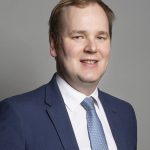
Tag: William Wragg

  • William Wragg – 2023 Speech on the Budget

    William Wragg – 2023 Speech on the Budget

    The speech made by William Wragg, the Conservative MP for Hazel Grove, in the House of Commons on 20 March 2023.

    On the earlier theme, it is important that I declare that I do not have a science degree, but it would impress the shadow Secretary of State, the hon. Member for Manchester Central (Lucy Powell), to know that my degree, being as it is, does indeed come from the University of Manchester.

    I put in to speak in the debate less on the allocated subject matter and more in the forlorn belief that the best time to speak in a Budget debate is after a set of Sunday newspapers, because they often allow the detail to percolate through. To the credit of my right hon. Friend the Chancellor of the Exchequer, very little seems to have come up in them to trip him up.

    We have had all sorts of talk this afternoon of macroeconomic forces, my right hon. Friend the Member for Haltemprice and Howden (Mr Davis) spoke of banking crises across the world, and we have heard a great deal about artificial intelligence—presuming that is what “AI” stands for—but, in the age-old Back-Bench tradition, I want to talk about very parochial matters.

    I know that the House will have noted with great enthusiasm and interest, on page 72 of the magnificent Budget document, the announcement of a new community hub in Stockport—the Marple leisure hub. There was some bashfulness at the talk of swimming pools during the speech by my right hon. Friend the Chancellor of the Exchequer. I am not fussed about swimming pools in Richmond, Yorkshire, or indeed about general donations from the Treasury to keep the pool temperature in different leisure centres toasty warm; what I am concerned about is the success—finally—in securing the Marple leisure hub.

    The hub will be a magnificent boost for Marple and surrounding districts in my constituency. It will deliver a gym, a fitness studio, a new library, a community space and a five-lane swimming pool. When I saw the artist’s plan at an earlier stage, I noted that there were only four lanes, but we have achieved five—a massive 25% productivity increase, delivered overnight by my right hon. Friend the Chancellor of the Exchequer. I am absolutely enthused. The artist’s impression even has an inflatable flamingo. What could go wrong?

    In all seriousness, I am very pleased that that levelling-up bid was successful for my constituency. I should pay credit—those on the Opposition Benches may enjoy this—to the then Labour minority-led Stockport Council, which agreed with me that that was the right bid for the Hazel Grove constituency. It will not surprise the House—I cannot spot any Liberal Democrats in the Chamber—that a few more have claimed credit for it who had, it is fair to say, very little to do with it. I will tone down my language for the sake of Hansard, but success has many parents and failure has fewer—let us put it that way.

    I have been quite cheerful so far—those on the Treasury Bench must think, “What on earth has happened?”—but in the time remaining to me I will speak briefly about something else that lurks in the Budget document: Greater Manchester devolution. I am a contrarian. I can see many colleagues from Greater Manchester on the Opposition Benches. They must rejoice when the Mayor is given further powers and the ability to exercise them—

    Mike Kane (Wythenshawe and Sale East) (Lab)

    Hallelujah!

    Mr Wragg

    Indeed, indeed. Whether he exercises them wisely is a matter for debate—I think even some Opposition Members would concede that point.

    All I ask is that the Government pay attention to those of us who have the great honour to represent parts of Greater Manchester. Having been to a so-called briefing meeting with my right hon. Friend the Secretary of State for the Department for Levelling Up and whatever else it is called these days, I was somewhat perturbed and worried that I was, in the words of his WhatsApp message to the former Health Secretary, my right hon. Friend the Member for West Suffolk (Matt Hancock), simply in a therapy session, whereby our concerns would be heard but no action would be forthcoming.

    In the spirit of cheerfulness, I simply say to the Government that if I and my colleagues from Greater Manchester are simply to be subjected to therapy sessions, then I shall make sure that I turn up at Delegated Legislation Committees in the same cheerful vein to argue against aspects of this so-called deal. I urge the Government to pay attention to Greater Manchester Conservative MPs—indeed, to any Member of Parliament from Greater Manchester—when they bring forward this tranche of powers that have no legitimacy and very little demand.

  • William Wragg – 2016 Parliamentary Question to the Department of Health

    William Wragg – 2016 Parliamentary Question to the Department of Health

    The below Parliamentary question was asked by William Wragg on 2016-03-24.

    To ask the Secretary of State for Health, what steps he is taking to reduce variations in mental health spending and services between clinical commissioning groups.

    Alistair Burt

    Clinical commissioning groups (CCGs) are responsible for commissioning non-specialised mental health services to meet the needs of their local communities. NHS England has made the requirement of CCGs through the planning guidance document, Delivering the Forward View: NHS Planning Guidance 2016/17 to 2020/21 (December 2015), that they should increase their spending on mental health each year at least in line with the growth in their overall funding allocation.

  • William Wragg – 2016 Parliamentary Question to the Department for Education

    William Wragg – 2016 Parliamentary Question to the Department for Education

    The below Parliamentary question was asked by William Wragg on 2016-04-21.

    To ask the Secretary of State for Education, what estimate she has made of the number of children in households whose income is below the threshold for receiving free school meals; and how many such children have at least one parent who is a national from another EEA member state.

    Mr Sam Gyimah

    In January 2015 there were 1,198,494 children known to be eligible for and claiming free school meals. All these children were in households whose income was below the threshold for receiving free school meals.

    We do not hold any information on the nationality of the parents of these children.

  • William Wragg – 2016 Parliamentary Question to the Department of Health

    William Wragg – 2016 Parliamentary Question to the Department of Health

    The below Parliamentary question was asked by William Wragg on 2016-05-26.

    To ask the Secretary of State for Health, on what date in June 2016 the HPV vaccination pilot for men who have sex with men is planned to commence; and if he will make a statement.

    Jane Ellison

    The first sexual health clinics involved in the pilot started offering the human papillomavirus vaccine to men who have sex with men, who are already attending the clinic for an existing appointment, on 6 June 2016.

  • William Wragg – 2016 Parliamentary Question to the Department for Education

    William Wragg – 2016 Parliamentary Question to the Department for Education

    The below Parliamentary question was asked by William Wragg on 2016-06-06.

    To ask the Secretary of State for Education, with reference to the National pupil projections statistics release, published on 22 July 2015, if she will publish updated pupil projection data prior to 23 June 2016.

    Nick Gibb

    The national pupil projections are only produced for the whole of England and do not break down projected pupil numbers by local education authority or region. They are derived from the 2012-based national population projections for England produced by the Office for National Statistics (ONS)[1] who used assumptions which were considered to best reflect demographic patterns at that time.

    The ONS uses assumptions on the levels of future fertility, net migration and life expectancy in the production of their population projections. They use central assumptions for the principal projections and alternative high and low assumptions to produce variant projections.

    New national pupil projections, based on the ONS’s mid-2014 national population projections[2], are scheduled to be published on 14 July 2016. The timing and content of National Statistics releases are a matter for the Head of Profession for statistics. The month of publication was pre-announced in 2015 and the specific date of publication was pre-announced on 26 February 2016.

    [1] Mid-2012 ONS national population projections available at http://www.ons.gov.uk/peoplepopulationandcommunity/populationandmigration/populationprojections/bulletins/nationalpopulationprojections/2013-11-06

    [2] Mid-2014 ONS national population projections available at http://www.ons.gov.uk/peoplepopulationandcommunity/populationandmigration/populationprojections/bulletins/nationalpopulationprojections/2015-10-29

  • William Wragg – 2016 Parliamentary Question to the Department for Education

    William Wragg – 2016 Parliamentary Question to the Department for Education

    The below Parliamentary question was asked by William Wragg on 2016-06-10.

    To ask the Secretary of State for Education, what her policy is on taking account of the effect on demand for school places of immigration (a) in general and (b) from nationals from other EEA countries.

    Edward Timpson

    I refer the Hon. Member to the answers provided for PQs 33106 and 33107 on 18 April 2016.

  • William Wragg – 2016 Parliamentary Question to the Department for Culture, Media and Sport

    William Wragg – 2016 Parliamentary Question to the Department for Culture, Media and Sport

    The below Parliamentary question was asked by William Wragg on 2016-10-07.

    To ask the Secretary of State for Culture, Media and Sport, what steps her Department is taking to encourage corporate sponsorship of the arts at a local level.

    Matt Hancock

    We believe strongly in public investment in culture. As well as core Exchequer and lottery funding, government supports culture through tax breaks and encourages philanthropy and volunteering. The UK arts sector has a unique mixed funding model and it makes good business sense for cultural bodies to continue to look to diversify their revenue streams. There are many cultural organisations outside London who are successfully building long term relationships with corporate donors and sponsors for mutual benefit.

    In the Culture White Paper government committed to talking more about the mutual benefits of such partnerships, and how they make a difference to cultural organisations and to public life. DCMS with Arts Council England recently commissioned work from the Arts Fundraising and Philanthropy Programme with Brunswick Arts to provide insight into how the current corporate sponsorship landscape in England has changed in recent years, including at the local level. The findings will be published later this year.

    Arts Council England have commissioned a new Private Investment in Culture Survey, to explore the current state of private philanthropy, including from corporate sources. This is due for publication later this year. They have also invested in programmes such as the Arts Fundraising and Philanthropy programme and Catalyst Evolve to support skills development across England including corporate engagement and to attract more private giving including through corporate sponsorship.

  • William Wragg – 2016 Parliamentary Question to the Department for International Development

    William Wragg – 2016 Parliamentary Question to the Department for International Development

    The below Parliamentary question was asked by William Wragg on 2016-03-24.

    To ask the Secretary of State for International Development, what steps she is taking ensure that UK overseas aid is spent effectively and transparently.

    Mr Desmond Swayne

    As set out in the aid strategy, UK aid: tackling global challenges in the national interest, the government will ensure that every penny of money spent delivers value for taxpayers, and projects that do not will be cancelled. Departments follow good financial management principles set out in HM Treasury guidance in ‘Managing Public Money’ for all their expenditure. In addition, ODA spend is subject to scrutiny by the Independent Commission for Aid Impact. The UK Aid Strategy also commits all departments to achieving greater levels of transparency in aid spend.

    DFID has robust internal processes such as strong ministerial oversight, mandatory reviews on all programmes, detailed management information for use at all levels of the organisation including on project performance and quality. Other departments will have their own arrangements and DFID will continue to share good practice advice with them.

  • William Wragg – 2016 Parliamentary Question to the Department of Health

    William Wragg – 2016 Parliamentary Question to the Department of Health

    The below Parliamentary question was asked by William Wragg on 2016-04-21.

    To ask the Secretary of State for Health, what assessment he has made of the effect on demand for GP surgery places of immigration (a) in general and (b) from nationals of other EEA countries in each of the last 10 years.

    Alistair Burt

    Since 2013, it is been the responsibility of NHS England to determine the provision of National Health Service primary medical services. NHS England does not collect registration information in relation to immigration, nationality or European Economic Area status.

  • William Wragg – 2016 Parliamentary Question to the Department of Health

    William Wragg – 2016 Parliamentary Question to the Department of Health

    The below Parliamentary question was asked by William Wragg on 2016-05-26.

    To ask the Secretary of State for Health, what assessment he made of the utility of data from the clinic in Brent and Harrow which has been providing men who have sex with men with HPV vaccinations since 2012 when determining that it was necessary to conduct an HPV vaccination pilot before deciding on a national roll-out; and if he will make a statement.

    Jane Ellison

    Experience from the two Brent and Harrow clinics providing human papillomavirus vaccinations to men who have sex with men was shared with Public Health England and has helped to inform the development of the pilot. North West London is unlikely to be representative of England as a whole and the pilot will therefore let us consider provision of this vaccination programme in different geographical areas. It will also consider a wider age range than the service provided in these two clinics. The pilot will cover men up to 45 years of age in line with advice from the Joint Committee on Vaccination and Immunisation (JCVI). The pilot will help resolve a range of implementation issues and determine whether a national programme can be delivered through Genito-Urinary Medicine and HIV clinics at a cost effective price in line with the JCVI’s advice.