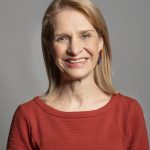
Tag: Wera Hobhouse

  • Wera Hobhouse – 2021 Speech on the Obesity Strategy

    Wera Hobhouse – 2021 Speech on the Obesity Strategy

    The speech made by Wera Hobhouse, the Liberal Democrat MP for Bath, in the House of Commons on 27 May 2021.

    I speak today as the chair of the all-party parliamentary group on eating disorders and I want to highlight the anxiety felt by many of those with an eating disorder about one specific aspect of the obesity strategy: calorie labelling on menus. Obesity causes serious health problems and there is no doubt that far too many people in this country do not have a healthy weight. I add my unequivocal support to the Government’s aim of addressing obesity, but obesity has to be considered as one side of our complex relationship with food. It is a form of disordered eating and therefore cannot be separated from other forms of disordered eating and cannot be dealt with in isolation. Calorie labelling on menus will not only be ineffective in tackling obesity, but will actively damage those with an eating disorder.

    Studies show that there is only a small body of low-quality evidence supporting the suggestion that calorie counts on menus lead to a reduction in calories purchased. While there is limited evidence that calorie labelling will support the public in losing weight, there is convincing evidence that it would harm people with an eating disorder. About 1.25 million people in the UK have an eating disorder, and the 2019 health survey found that 16% of all adults aged 16 or over screened positive for a possible eating disorder. Over the pandemic, the charity Beat has reported a 173% increase in demand for eating disorder support, and research shows that individuals with anorexia and bulimia are more likely to order food with significantly fewer calories when presented with a menu including calorie counts. Those with binge eating disorder are more likely to order food with significantly more calories.

    Many people with eating disorders also live with obesity. Up to 30% of people seeking weight management services would meet the diagnostic criteria for binge eating disorder. Clearly, a reductionist approach to nutrition means that the obesity strategy risks harming some of the very people it is designed to support.

    Mr Harper

    I am sympathetic to the point the hon. Lady is making, and she will know from my intervention that I think the evidence with respect to calories and out-of-home labelling is quite weak. Is labelling on products purchased in supermarkets also a problem for those with eating disorders? I ask that genuinely; I do not know the answer. Can she furnish that information?

    Wera Hobhouse

    I am particularly concerned about calorie labelling in restaurants. People who suffer from eating disorders are isolated and fearful of contact with others because they are thinking continuously about what they are going to eat or drink. Going out to a restaurant gets them through that step, and it is often a significant step towards recovery. As I say, my particular concern is labelling on restaurant menus.

    In response to the survey on calorie labelling conducted by Beat, one respondent said:

    “My eating disorder thrives off calorie counting and knowing all the calories in everything. I would feel compelled to look at calorie labels”

    in restaurants and

    “I would feel embarrassed asking for a different menu. Please don’t do it. Please.”

    The Mental Health Minister has been extremely generous with her time, listening to the all-party parliamentary group’s concerns about the plan to mandate calorie labelling on menus. The APPG is grateful for her interest in improving early access to eating disorder treatment. However, I must repeat my plea to the Government to look again at this element of the obesity strategy.

    Addressing obesity and tackling eating disorders should not be in competition. We must tackle them together. I look forward to working with the Minister to develop an obesity strategy that successfully addresses the obesity epidemic, but does not harm people with other forms of eating disorder.

  • Wera Hobhouse – 2020 Statement on Liberal Democrat Leadership

    Wera Hobhouse – 2020 Statement on Liberal Democrat Leadership

    Below is the text of the statement made by Wera Hobhouse, the Liberal Democrat MP for Bath, on 15 June 2020.

    The Liberal Democrats need a New Direction. This is why I’m standing for leader.

    Ten years ago, we were filled with great optimism for our future as a party. However, we have ended the decade with real disappointment; eleven MPs, the most right-wing government in recent history, and a departure from the EU.

    We Liberal Democrats cannot pass off all responsibility for this outcome. In hindsight, wrong choices were made.

    Those choices were strategic, not merely tactical. The mistake was to see our party in the political centre, standing equally between right and left. Now, the biggest threat to liberalism – not just in Britain – comes from the right.

    Our reasons for entering coalition with the Conservatives in 2010 were well intended, but we ended up undermining our values. We ultimately legitimised the Conservatives’ long-term illiberal, nationalist agenda.

    This has tarnished our reputation for too long. In this election, we need to make a clean break with the coalition.

    During the years after the coalition this equidistant strain in our strategy continued.

    In the most recent election, we trained our fire equally at the Conservatives and Labour, even though Labour backed a People’s Vote, had a plan to address the climate crisis and wanted to invest in public services to deliver a more equal society.

    On a national level, I believe we need to abandon equidistance between Labour and the Tories, and build a winning, progressive alliance with other parties on the centre left to defeat the Tories at the next election. We need to start having those conversations now.

    We need to fight from where our heart beats, the centre left, and be honest about our values.

    That is my outline pitch for leadership of the party. On my website [https://werahobhouse.org.uk/#policyfocus], I will be adding to my six key policy platforms over the coming weeks. I’ve already set out my position on Europe, and on a progressive alliance.

    I’m looking forward to discussing how we reform ourselves as a party, by becoming a nimble, decentralised campaign force, and implementing the recommendations from the Election Review.

    This should be part of our local strategy to win back control of councils that we have lost. We build from the ground up. Door by door, street by street, ward by ward. I’ll be publishing my full plan for this soon.

  • Wera Hobhouse – 2020 Speech on Covid-19

    Wera Hobhouse – 2020 Speech on Covid-19

    Below is the text of the speech made by Wera Hobhouse, the Liberal Democrat MP for Bath, in the House of Commons on 12 May 2020.

    I wish to put on record my warmest thanks to all our doctors, nurses and care workers here in Bath, to the police and emergency services, key workers and council workers, and to everybody else who has helped us keep going during lockdown.

    The covid pandemic has forced us all to change our lives in ways we would not have imagined only a few months ago. In all of the hardship and tragedy of this time, one of the brightest points has been the improvement in our air quality, because many fewer cars are on the road. As we have adjusted to lockdown, many people have commented that they have thought about the benefits of talking a walk or going for a bike ride, because it is much more relaxing and there is more time to reflect. Walking and cycling contribute greatly to our ​wellbeing. We have talked at length about social distancing measures and the space we need to give each other when we are socially distancing. In this country, safety has always been a barrier to cycling, but now, as our towns and cities are less congested, cycling has become a much safer option. Of course, we want to restart the economy as soon as it is safe to do so, but when we do we have a once-in-a-lifetime opportunity to look at our streets with fresh eyes. We need to think about what did and did not work before lockdown, and at what we want to achieve as we put in place the conditions for a new normal.

    For decades we have been overdependent on cars, and that must change. I have also spoken before about the need to tackle emissions from surface transport. We have been having these discussions in my city of Bath, which has suffered from severe air pollution, for many months now. As we slowly emerge from lockdown, we need to look at ways to avoid a dramatic resurgence in car use, particularly as many people may be nervous about using public transport. Other countries are already looking at ways to rebalance the priority given to cars over cyclists and pedestrians in urban areas, through segregated cycle lanes, speed reduction zones or new and widened pavements. I welcome the Transport Secretary’s new guidance to local authorities. Early action will be crucial, in order to embed changes in behaviour. This is a great moment for change, and we must ensure that our economic recovery is focused on the need to get to net zero.

  • Wera Hobhouse – 2017 Speech on Grenfell Tower Fire

    Below is the text of the speech made by Wera Hobhouse, the Liberal Democrat MP for Bath, on 13 July 2017.

    One month on from this tragedy, there is no less pain for the victims and their families, no less fear, and no less anger over the failings of the political system.

    The disaster at Grenfell Tower has left a huge scar, not just in the local community of Kensington, but across Britain. It has moved people deeply, whether they have local connections or not, and that has been reflected in the generosity shown by public donations. It has also exposed deep divisions and inequalities in our society which we have ignored for far too long. This disaster should have been avoided. How is it possible that, in a very wealthy borough like Kensington and Chelsea, dozens of people can burn to death in their own homes?

    We now need to find out from the public inquiry exactly what happened and what mistakes were made, but reports that unsafe building materials were used, that the need to cut costs was put above tenants’ safety, and that concerns raised by the residents were repeatedly ignored paint a picture that goes much deeper than this disaster. It goes to the heart of our political system and its failures. Trust between our local communities and the political system has been seriously eroded, and must be restored.

    Trust is a very precious thing which takes a long time to build. It is an essential part of a healthy democracy and a functioning society. It is vital that, in the work to restore lives affected by the Grenfell Tower fire, everything possible is done to rebuild that trust, which means genuinely listening to victims’ families and the local community, involving residents in the decisions that affect their lives and their future, and taking all possible action to put things right. That action must include an urgent increase in social housing provision throughout our country. The Grenfell Tower disaster was the result of a long-term failure of successive Governments to invest in social housing, in terms of both the quality and the number of homes. Leaving house building to the private sector has utterly failed. It has led to a housing crisis that has driven vast inequality and pushed many families into poverty and homelessness, and until we take radical action that crisis will continue to spiral out of control.

    Furthermore, we need widespread reform of systems and structures. We need an immediate review of the building regulations to ensure that they are up to date and appropriate. We cannot wait for the results of the ​public inquiry. We cannot have a repeat of what happened after the Lakanal House fire, when a review of regulations was promised but never delivered. This time, lessons must be learned and implemented fast.

    Given that the fire started in a fridge, there must also be reform of electrical safety. My colleagues in both Houses have been fighting for a long time for the introduction of compulsory electrical safety checks in rented homes. So far the Government have seen that as an unnecessary regulation, but now it is surely inexcusable not to make a simple change that has the potential to save lives.

    All residents in Britain, whatever type of housing they live in, have the right to live in homes that are safe, warm, and set in well-run, safe, green and clean neighbourhoods. This disaster has exposed huge weaknesses in the housing provision of our country, and has undermined people’s trust. We all have a responsibility to rebuild trust between the public and their elected representatives, but the Government have the power to take radical steps to fix the system, and they must do that now.