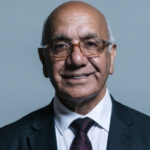
Tag: Virendra Sharma

  • Virendra Sharma – 2016 Parliamentary Question to the Department for Business, Innovation and Skills

    Virendra Sharma – 2016 Parliamentary Question to the Department for Business, Innovation and Skills

    The below Parliamentary question was asked by Virendra Sharma on 2016-02-23.

    To ask the Secretary of State for Business, Innovation and Skills, what his Department’s wellness strategy is.

    Joseph Johnson

    The Department for Business, Innovation and Skills is committed to supporting health and wellbeing by encouraging health promotion and the adoption of healthier lifestyles for all our staff.

    The Department’s wellbeing strategy is based around three key strands:

    Preventing Problems

    The Department runs ‘fit for work’ activities, promoting and supporting health lifestyles, and ‘healthy work’ activities, ensuring wellbeing is not threatened by negative working environments.

    Reacting to Problems

    As an organisation, we take action to help those experiencing poor health or wellbeing, and support them in returning to work as soon as possible.

    Measuring Wellbeing in BIS

    We monitor progress in the Department in improving health and wellbeing, for example through monitoring turnover, and the results from People Surveys.

    The Department provides a number of facilities for staff, including but not limited to childcare vouchers to support parents and guardians, a mediation service to manage stressful situations, and flexible working options.

  • Virendra Sharma – 2016 Parliamentary Question to the Department for Environment, Food and Rural Affairs

    Virendra Sharma – 2016 Parliamentary Question to the Department for Environment, Food and Rural Affairs

    The below Parliamentary question was asked by Virendra Sharma on 2016-02-23.

    To ask the Secretary of State for Environment, Food and Rural Affairs, what the (a) policy and (b) other responsibilities are of each special adviser in her Department.

    George Eustice

    I refer the hon. Member to the reply given by my Rt. Hon. Friend, the Minister for the Cabinet Office and Paymaster General, to PQ UIN 27946 on 29 March.

  • Virendra Sharma – 2016 Parliamentary Question to the Prime Minister

    Virendra Sharma – 2016 Parliamentary Question to the Prime Minister

    The below Parliamentary question was asked by Virendra Sharma on 2016-02-23.

    To ask the Prime Minister, what the (a) policy and (b) other responsibilities are of each special adviser in 10 Downing Street.

    Mr David Cameron

    A list of special advisers, and their pay bands, is published on an annual basis.

  • Virendra Sharma – 2016 Parliamentary Question to the HM Treasury

    Virendra Sharma – 2016 Parliamentary Question to the HM Treasury

    The below Parliamentary question was asked by Virendra Sharma on 2016-02-23.

    To ask Mr Chancellor of the Exchequer, what his Department’s wellness strategy is.

    Harriett Baldwin

    HM Treasury takes the wellness of its staff seriously. Wellness is incorporated within the Treasury’s Health, Safety and Wellbeing policy.

    In 2015/16 the following wellness initiatives were given priority:

    • reducing levels of sickness absence relating to Mental and Behavioural Disorders (including stress, depression, anxiety) and Musculoskeletal Disorders;

    • increasing the usage of the Employee Assistance Programme (EAP); and

      In addition the Treasury has signed up to two key external initiatives:

    • the Public Health Responsibility Deal. Every April the Treasury reports to the Dept of Health on the activities carried out to meet the six pledges signed up to; and

    • the ‘Time to Change’ pledge. Following this a Mental Wellbeing Network was set up and a range of associated activities take place focusing on improving the mental wellbeing of Treasury employees.

      In addition we support and provide reasonable adjustments for a variety of physical and mental conditions and requirements.

  • Virendra Sharma – 2016 Parliamentary Question to the Home Office

    Virendra Sharma – 2016 Parliamentary Question to the Home Office

    The below Parliamentary question was asked by Virendra Sharma on 2016-02-23.

    To ask the Secretary of State for the Home Department, what her Department’s wellness strategy is.

    Karen Bradley

    The Home Office Health and Wellbeing Strategy was launched in February 2015. This sets out three key aims: that every member of staff understands that their health and wellbeing matters; that health and wellbeing is at the centre of change and learning and development programmes and that structural, cultural and demographic factors affecting attendance in the workplace are identified and addressed as appropriate. The strategy is underpinned by a range of modern HR policies and practical advice and services to enhance and promote health and wellbeing such as the employee assistance programme and occupational health services. We also support groups such as ‘Break the Stigma’ and other national mental health campaigns.

  • Virendra Sharma – 2016 Parliamentary Question to the Wales Office

    Virendra Sharma – 2016 Parliamentary Question to the Wales Office

    The below Parliamentary question was asked by Virendra Sharma on 2016-02-23.

    To ask the Secretary of State for Wales, what his Department’s wellness strategy is.

    Alun Cairns

    The Wales Office is not an employer in its own right and staff are subject to Ministry of Justice (MOJ) policies for issues such as wellness.

  • Virendra Sharma – 2016 Parliamentary Question to the Department of Health

    Virendra Sharma – 2016 Parliamentary Question to the Department of Health

    The below Parliamentary question was asked by Virendra Sharma on 2016-05-10.

    To ask the Secretary of State for Health, what the role of his Department is planned to be in implementing the recommendations of the Independent Review on Antimicrobial Resistance.

    Jane Ellison

    The final report of the Review on Antimicrobial Resistance is expected shortly. The Department is leading on the cross-departmental response to the report. A group of senior officials has been meeting regularly to ensure the necessary coordination.

  • Virendra Sharma – 2016 Parliamentary Question to the Department of Health

    Virendra Sharma – 2016 Parliamentary Question to the Department of Health

    The below Parliamentary question was asked by Virendra Sharma on 2016-06-20.

    To ask the Secretary of State for Health, what estimate he has made of his Department’s contribution to the Government’s aim of reducing regulatory burdens on business in (a) 2013-14, (b) 2014-15 and (c) 2015-16; and if he will make an estimate of the financial effect of those reductions on business.

    Jane Ellison

    The Department balances its role in protecting public health with the Government’s aim of reducing regulatory burdens on business. In the period in question this resulted in the following net increases/decreases in annual costs to business.

    Year

    Equivalent Annual Net Direct Cost to Business

    2013-14

    £0

    2014-15

    £-2.8 million (net benefit to business)

    2015-16

    £17.6 million (net cost to business)

    The Department is committed to the use of better regulation to achieve our objectives at the least cost to the economy, thereby promoting economic growth and prosperity. When we do regulate, it is only where it is necessary to protect public health and to ensure we provide safe, effective and compassionate care.

  • Virendra Sharma – 2016 Parliamentary Question to the Department for International Development

    Virendra Sharma – 2016 Parliamentary Question to the Department for International Development

    The below Parliamentary question was asked by Virendra Sharma on 2016-07-18.

    To ask the Secretary of State for International Development, whether her Department employs staff with responsibility for developing best practice on withdrawing bilateral programmes from countries that transition to middle-income status.

    Rory Stewart

    Transition planning and development of best practice is led by the relevant country office, with support from officials in the UK and across regions. Each transition process has been different depending on circumstance. ICAI is currently undertaking a review of DFID’s approach to transition and their report is due to be published towards the end of 2016.

  • Virendra Sharma – 2022 Parliamentary Question on Fairness in the Tax System

    Virendra Sharma – 2022 Parliamentary Question on Fairness in the Tax System

    The parliamentary question asked by Virendra Sharma, the Labour MP for Ealing Southall, in the House of Commons on 20 December 2022.

    Mr Virendra Sharma (Ealing, Southall) (Lab)

    What recent steps he has taken to ensure fairness in the application of the tax system.

    The Financial Secretary to the Treasury (Victoria Atkins)

    Merry Christmas to you, Mr Speaker, to all the House staff, to the Members in the Chamber, and to our parliamentary staff, who do such a good job for us all year round—[Interruption.] And to the Doorkeepers—thank you very much.

    It is right that everyone contributes to sustainable public finances in a fair way. The autumn statement tax reforms mean that those with the broadest shoulders contribute the most. We are also implementing the OECD pillar two reforms so that multinational corporations pay their fair share of tax, and we are introducing measures to address tax avoidance and evasion to ensure that people pay the right amount at the right time.

    Mr Sharma

    Does the Minister think it is fair that landlords and those on high incomes earned through trading stocks and shares pay less tax than those paid a salary?

    Victoria Atkins

    I do hope that the hon. Gentleman noted the announcements by my right hon. Friend the Chancellor in the autumn statement in relation to dividends and corporation tax allowances. We want to ensure, where we can, that unearned income is roughly comparable to earned income. That is precisely why the principle running through the autumn statement was that those with the broadest shoulders should bear the greatest burden.

    Alan Mak (Havant) (Con)

    I welcome the Edinburgh reforms, which help to make our financial services sector more competitive. I urge my hon. Friend to adopt the same approach to R&D tax reliefs and capital allowances, so that our world-class entrepreneurs, start-ups and small and medium-sized enterprises can benefit from the same advantages.

    Victoria Atkins

    We all have campaigns to which we devote a great deal of time and for which we build a reputation. My hon. Friend has had a reputation for campaigning on and highlighting the fourth industrial revolution since he was elected in 2015, so I am not surprised that he asked that question. I am delighted to say that we very much support innovation and the critical work of our entrepreneurs, start-ups and SMEs, which is why we are setting the annual investment allowance permanently at £1 million from 1 April, and reviewing the research and development tax reliefs to ensure that, while we are rebalancing the rates of relief out of fairness to the taxpayer, we are also targeting that relief at the knowledge-intensive and innovation-intensive businesses that we all care so much about.

    Andrew Gwynne (Denton and Reddish) (Lab)

    For a bit of Christmas cheer, I agree with the Minister for once as she says that she wants those with the broadest shoulders to pay the most in the tax system. Why, then, did the Chancellor pick the pockets of hard-working people in the autumn statement through stealth taxes, such as freezing tax allowances, rather than tackling non-doms, which could have brought in £3.2 billion to the Exchequer?

    Victoria Atkins

    I feel a little slighted, because the hon. Gentleman and I agree on an awful lot behind the scenes—I wish him a very merry Christmas. On non-doms, we know that they paid £7.9 billion in UK taxes last year, which is a significant sum of money. The Chancellor has been clear that when we look at those rules, we have to bear in mind that they pay a significant sum of money in their UK taxes that obviously contributes towards the public services that we all care so much about.

    Rachel Maclean (Redditch) (Con)

    The success of our fantastic town deal in Redditch, which is thanks to record-breaking investment from the Government, relies on our amazing SMEs, who tell me that they need to compete against the online giants. What more can the Minister do to ensure that our businesses play a full part in our vision for the future, so that we can continue to unlock Redditch?

    Victoria Atkins

    My hon. Friend has done so much for her constituency through her campaigns, including by securing the investment that her local hospital needs. In relation to her high streets and small businesses, she is right that we are the Government of small business. That is why, although we had to make some difficult decisions in the autumn statement, we were determined to protect our precious high streets and small businesses, particularly in the retail, hospitality and leisure sectors, through the business rates support package, which totalled £13.6 billion.

    Mr Speaker

    We come to the shadow Minister.

    James Murray (Ealing North) (Lab/Co-op)

    I echo the consensus about the importance of a merry Christmas. In the last month, I have asked Treasury Ministers three simple questions: whether the Chancellor has considered abolishing non-dom status; whether the Prime Minister was consulted about doing so; and whether, when the current Prime Minister was Chancellor, he recused himself from discussions on the matter. I have asked those questions four separate times, but four times Treasury Ministers have refused to answer or even acknowledge them. Once might be an oversight and twice might be careless, but three times seems deliberate and four times feels like stonewalling. Will the Minister finally show that they have nothing to hide by answering my questions today?

    Victoria Atkins

    I am pleased that the hon. Gentleman is entering into the spirit of pantomime season with his questions. We have been clear that non-doms paid £7.9 billion in UK taxes last year—a number that he does not seem able to accept—which is a significant sum of money. Although we keep the scheme under review, as I have said many times—perhaps he is choosing not to hear it—we must recognise their contribution in UK taxes, because that £7.9 billion helps to pay for the services that we all care so much about.

    James Murray

    Well, that was the fifth time; I wonder what people will make of that.

    We believe that to be trusted and effective, the tax system must be fair, yet while millions of working people and businesses across Britain are paying the highest tax burden in decades, those who use tax havens are playing by different rules. Those who benefit from tax havens are undercutting responsible businesses, undermining our public services and breaking the basic principle that we must all play by the same rules. Will the Minister agree that creating a fair tax system must involve challenging tax havens and those who avoid paying their fair share?

    Victoria Atkins

    I ought to declare an interest at this point: I used to prosecute tax fraudsters for HMRC before I came to this place. I very much agree with the hon. Gentleman and put my money where my mouth is when it comes to tackling those fraudsters.

    On the income tax take, the top 10% by way of income paid 36% of all tax in 2020-21. We are proud of the fact that our distributional analysis for the autumn statement shows that decisions made at that fiscal event are progressive: the lowest income households will receive the largest benefit in cash terms and as a percentage of income, and will on average be net beneficiaries of decisions made on tax, welfare and amendments to the energy price guarantee.