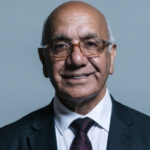
Tag: Virendra Sharma

  • Virendra Sharma – 2015 Parliamentary Question to the Department of Health

    Virendra Sharma – 2015 Parliamentary Question to the Department of Health

    The below Parliamentary question was asked by Virendra Sharma on 2015-12-14.

    To ask the Secretary of State for Health, pursuant to the Answer of 23 November 2015 to Question 16399, whether the Accelerated Access Review team has provided any information on how biosimilar medicines fit into its work stream.

    George Freeman

    In accordance with the terms of reference the Accelerated Access Review is not excluding any particular type or class of medicine, but is creating a framework through which to accelerate access for National Health Service patients to innovative health technologies including biosimilar medicines where appropriate.

  • Virendra Sharma – 2016 Parliamentary Question to the HM Treasury

    Virendra Sharma – 2016 Parliamentary Question to the HM Treasury

    The below Parliamentary question was asked by Virendra Sharma on 2016-02-23.

    To ask Mr Chancellor of the Exchequer, what the (a) policy and (b) other responsibilities are of each member of his Department’s Council of Economic Advisers.

    Harriett Baldwin

    The Code of Conduct for Special Advisers sets out the role of special advisers and describes the range of activities they may undertake. Copies of the Code of Conduct are available in the Libraries of the House and on-line at

    https://www.gov.uk/government/uploads/system/uploads/attachment_data/file/468340/CODE_OF_CONDUCT_FOR_SPECIAL_ADVISERS_-_15_OCTOBER_2015_FINAL.pdf

  • Virendra Sharma – 2016 Parliamentary Question to the Department of Health

    Virendra Sharma – 2016 Parliamentary Question to the Department of Health

    The below Parliamentary question was asked by Virendra Sharma on 2016-02-23.

    To ask the Secretary of State for Health, what the (a) policy and (b) other responsibilities are of each special adviser in his Department.

    Jane Ellison

    The Code of Conduct for Special Advisers sets out the role of special advisers and describes the range of activities they may undertake. Copies of the Code of Conduct are available in the Library and on-line at:

    https://www.gov.uk/government/uploads/system/uploads/attachment_data/file/468340/CODE_OF_CONDUCT_FOR_SPECIAL_ADVISERS_-_15_OCTOBER_2015_FINAL.pdf

  • Virendra Sharma – 2016 Parliamentary Question to the Department for Transport

    Virendra Sharma – 2016 Parliamentary Question to the Department for Transport

    The below Parliamentary question was asked by Virendra Sharma on 2016-02-23.

    To ask the Secretary of State for Transport, what the (a) policy and (b) other responsibilities are of each special adviser in his Department.

    Mr Robert Goodwill

    I refer the Hon Member to the answer given by my Rt Hon Friend, the Minister for the Cabinet Office (Matthew Hancock) on 29 February 2016, UIN 27946 (http://www.parliament.uk/business/publications/written-questions-answers-statements/written-questions-answers/?page=1&max=20&questiontype=AllQuestions&house=commons%2clords&member=1604&dept=53&uin=27946).

  • Virendra Sharma – 2016 Parliamentary Question to the Ministry of Defence

    Virendra Sharma – 2016 Parliamentary Question to the Ministry of Defence

    The below Parliamentary question was asked by Virendra Sharma on 2016-02-23.

    To ask the Secretary of State for Defence, what his Department’s wellness strategy is.

    Mark Lancaster

    A new Health and Wellbeing Strategy for all Ministry of Defence (MOD) employees was published in mid-2015 and is designed to provide guidance to the Chain of Command and civilian line managers on how to manage the health needs of their people.

    The aim is to maximise the number of people fit to work, managing people back to work after a period of sickness, so that they are fit and able to meet the requirements of Defence outputs, including operational effectiveness.

    The strategy applies to all Defence People and not just Service personnel for whom maintaining health, wellbeing and fitness is a major contributor to the moral and physical components of fighting power. Although there are differences in the Terms and Conditions of Service and requirements placed on civilian and military workforces, all people working in Defence have a role to play in contributing to Defence outputs.

    The Health and Wellbeing Strategy has four pillars: Lifestyle, Injury prevention, Preventative health and, Mental health. It is a through-life process that sets the conditions to allow people to Join, Train, Work, Live and Leave well.

  • Virendra Sharma – 2016 Parliamentary Question to the Ministry of Justice

    Virendra Sharma – 2016 Parliamentary Question to the Ministry of Justice

    The below Parliamentary question was asked by Virendra Sharma on 2016-02-23.

    To ask the Secretary of State for Justice, what his Department’s wellness strategy is.

    Mike Penning

    The Ministry of Justices (MoJ) Wellbeing strategy seeks to help foster a culture that promotes physical and mental wellbeing for all staff and to make the management of health and wellbeing part of our daily routine.

  • Virendra Sharma – 2016 Parliamentary Question to the HM Treasury

    Virendra Sharma – 2016 Parliamentary Question to the HM Treasury

    The below Parliamentary question was asked by Virendra Sharma on 2016-02-29.

    To ask Mr Chancellor of the Exchequer, what progress he has made on the formation of the cross-ministerial working group on illicit trade.

    Damian Hinds

    I remain committed to sponsoring work across government to tackle illicit tobacco. This requires a full understanding of cross-government policy on tobacco, tobacco control and efforts to tackle illicit tobacco. This is a complex picture and I have asked officials in HMRC to work with other departments to ensure that we have this context to identify the challenges and opportunities in the UK and internationally and determine a clear agenda for ministerial action. This work is continuing.

  • Virendra Sharma – 2016 Parliamentary Question to the Cabinet Office

    Virendra Sharma – 2016 Parliamentary Question to the Cabinet Office

    The below Parliamentary question was asked by Virendra Sharma on 2016-05-19.

    To ask the Minister for the Cabinet Office, whether the Gracious Speech is printed on vellum.

    Matthew Hancock

    According to long standing practice the copy of the speech printed for the State Opening of Parliament is printed on high quality archival paper.

  • Virendra Sharma – 2016 Parliamentary Question to the Department for International Development

    Virendra Sharma – 2016 Parliamentary Question to the Department for International Development

    The below Parliamentary question was asked by Virendra Sharma on 2016-06-27.

    To ask the Secretary of State for International Development, pursuant to the Answer of 13 June 2016 to Question 39301, what systems are in place for departments and funds spending official development assistance (ODA) to provide accurate and timely information on their ODA spending to her Department.

    Mr Nick Hurd

    All departments or funds spending official development assistance (ODA) are responsible for ensuring they provide accurate and timely information on their ODA to the Department for International Development (DFID). DFID provides on-going support on data collection, and collates the information for in-year monitoring of ODA and the final reporting of UK ODA statistics.

  • Virendra Sharma – 2022 Parliamentary Question on Fairness in the Tax System

    Virendra Sharma – 2022 Parliamentary Question on Fairness in the Tax System

    The parliamentary question asked by Virendra Sharma, the Labour MP for Ealing Southall, in the House of Commons on 20 December 2022.

    Mr Virendra Sharma (Ealing, Southall) (Lab)

    What recent steps he has taken to ensure fairness in the application of the tax system.

    The Financial Secretary to the Treasury (Victoria Atkins)

    Merry Christmas to you, Mr Speaker, to all the House staff, to the Members in the Chamber, and to our parliamentary staff, who do such a good job for us all year round—[Interruption.] And to the Doorkeepers—thank you very much.

    It is right that everyone contributes to sustainable public finances in a fair way. The autumn statement tax reforms mean that those with the broadest shoulders contribute the most. We are also implementing the OECD pillar two reforms so that multinational corporations pay their fair share of tax, and we are introducing measures to address tax avoidance and evasion to ensure that people pay the right amount at the right time.

    Mr Sharma

    Does the Minister think it is fair that landlords and those on high incomes earned through trading stocks and shares pay less tax than those paid a salary?

    Victoria Atkins

    I do hope that the hon. Gentleman noted the announcements by my right hon. Friend the Chancellor in the autumn statement in relation to dividends and corporation tax allowances. We want to ensure, where we can, that unearned income is roughly comparable to earned income. That is precisely why the principle running through the autumn statement was that those with the broadest shoulders should bear the greatest burden.

    Alan Mak (Havant) (Con)

    I welcome the Edinburgh reforms, which help to make our financial services sector more competitive. I urge my hon. Friend to adopt the same approach to R&D tax reliefs and capital allowances, so that our world-class entrepreneurs, start-ups and small and medium-sized enterprises can benefit from the same advantages.

    Victoria Atkins

    We all have campaigns to which we devote a great deal of time and for which we build a reputation. My hon. Friend has had a reputation for campaigning on and highlighting the fourth industrial revolution since he was elected in 2015, so I am not surprised that he asked that question. I am delighted to say that we very much support innovation and the critical work of our entrepreneurs, start-ups and SMEs, which is why we are setting the annual investment allowance permanently at £1 million from 1 April, and reviewing the research and development tax reliefs to ensure that, while we are rebalancing the rates of relief out of fairness to the taxpayer, we are also targeting that relief at the knowledge-intensive and innovation-intensive businesses that we all care so much about.

    Andrew Gwynne (Denton and Reddish) (Lab)

    For a bit of Christmas cheer, I agree with the Minister for once as she says that she wants those with the broadest shoulders to pay the most in the tax system. Why, then, did the Chancellor pick the pockets of hard-working people in the autumn statement through stealth taxes, such as freezing tax allowances, rather than tackling non-doms, which could have brought in £3.2 billion to the Exchequer?

    Victoria Atkins

    I feel a little slighted, because the hon. Gentleman and I agree on an awful lot behind the scenes—I wish him a very merry Christmas. On non-doms, we know that they paid £7.9 billion in UK taxes last year, which is a significant sum of money. The Chancellor has been clear that when we look at those rules, we have to bear in mind that they pay a significant sum of money in their UK taxes that obviously contributes towards the public services that we all care so much about.

    Rachel Maclean (Redditch) (Con)

    The success of our fantastic town deal in Redditch, which is thanks to record-breaking investment from the Government, relies on our amazing SMEs, who tell me that they need to compete against the online giants. What more can the Minister do to ensure that our businesses play a full part in our vision for the future, so that we can continue to unlock Redditch?

    Victoria Atkins

    My hon. Friend has done so much for her constituency through her campaigns, including by securing the investment that her local hospital needs. In relation to her high streets and small businesses, she is right that we are the Government of small business. That is why, although we had to make some difficult decisions in the autumn statement, we were determined to protect our precious high streets and small businesses, particularly in the retail, hospitality and leisure sectors, through the business rates support package, which totalled £13.6 billion.

    Mr Speaker

    We come to the shadow Minister.

    James Murray (Ealing North) (Lab/Co-op)

    I echo the consensus about the importance of a merry Christmas. In the last month, I have asked Treasury Ministers three simple questions: whether the Chancellor has considered abolishing non-dom status; whether the Prime Minister was consulted about doing so; and whether, when the current Prime Minister was Chancellor, he recused himself from discussions on the matter. I have asked those questions four separate times, but four times Treasury Ministers have refused to answer or even acknowledge them. Once might be an oversight and twice might be careless, but three times seems deliberate and four times feels like stonewalling. Will the Minister finally show that they have nothing to hide by answering my questions today?

    Victoria Atkins

    I am pleased that the hon. Gentleman is entering into the spirit of pantomime season with his questions. We have been clear that non-doms paid £7.9 billion in UK taxes last year—a number that he does not seem able to accept—which is a significant sum of money. Although we keep the scheme under review, as I have said many times—perhaps he is choosing not to hear it—we must recognise their contribution in UK taxes, because that £7.9 billion helps to pay for the services that we all care so much about.

    James Murray

    Well, that was the fifth time; I wonder what people will make of that.

    We believe that to be trusted and effective, the tax system must be fair, yet while millions of working people and businesses across Britain are paying the highest tax burden in decades, those who use tax havens are playing by different rules. Those who benefit from tax havens are undercutting responsible businesses, undermining our public services and breaking the basic principle that we must all play by the same rules. Will the Minister agree that creating a fair tax system must involve challenging tax havens and those who avoid paying their fair share?

    Victoria Atkins

    I ought to declare an interest at this point: I used to prosecute tax fraudsters for HMRC before I came to this place. I very much agree with the hon. Gentleman and put my money where my mouth is when it comes to tackling those fraudsters.

    On the income tax take, the top 10% by way of income paid 36% of all tax in 2020-21. We are proud of the fact that our distributional analysis for the autumn statement shows that decisions made at that fiscal event are progressive: the lowest income households will receive the largest benefit in cash terms and as a percentage of income, and will on average be net beneficiaries of decisions made on tax, welfare and amendments to the energy price guarantee.