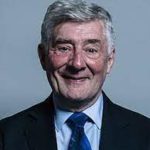
Tag: Tony Lloyd

  • Tony Lloyd – 2022 Speech on the Death of Awaab Ishak and Rochdale Boroughwide Housing

    Tony Lloyd – 2022 Speech on the Death of Awaab Ishak and Rochdale Boroughwide Housing

    The speech made by Tony Lloyd, the Labour MP for Rochdale, in the House of Commons on 24 November 2022.

    I rise to speak in what is probably one of the saddest debates that I have had to take part in. It concerns the death of Awaab Ishak, a young boy whose tragic death was made more tragic by the fact that it should never have happened.

    In a way, it is easy on these occasions to look round for where for where responsibility lies, and I will do that in a few minutes, but I want first to record the dignity of Awaab’s family, who have made it very clear that all they seek is to ensure that this can never happen to another family or another child. I pay enormous respect to the family for precisely that level of dignity, and I stand with them even now, two years on from the death of their child, because of course a child is irreplaceable.

    We now need to ask what went wrong. On many occasions I have risen from these Benches and criticised the Government for funding lapses, but this case is simply not about funding. It is about a housing association that did not do its job. We know that some of the factors that led to the death were things that simply should never have happened.

    Afzal Khan (Manchester, Gorton) (Lab)

    I thank my hon. Friend for securing this important debate and for his tireless efforts. Awaab’s death was an avoidable tragedy, and I am sure that Members from across the House have casework where tenants in both the social and private rental sectors are too often left in terrible conditions similar to those that caused this incident. Will he join me, in thanking the Manchester Evening News for its important campaign with Shelter to bring back regulation on consumer standards for social housing? Does he also agree that we must strengthen the rights of all tenants, regardless of whether they are living in the social or private sector? Finally, does he agree—

    Madam Deputy Speaker (Dame Eleanor Laing)

    Order. I cannot hear what the hon. Gentleman is saying because he is facing away from the Chair. If he spoke to the Chair, we could all hear him.

    Afzal Khan

    I apologise, Madam Deputy Speaker. Finally, does my hon. Friend agree that, in view of this systemic failure, the whole board is in an untenable position and must go?

    Tony Lloyd

    I will deal with my hon. Friend’s initial points a little later, but on the question of the board, I do think that we now have to question the way it has operated. To allow the chief executive to cling on to his job until public pressure made that impossible is an indictment of those who sought to give him that cover.

    Christian Wakeford (Bury South) (Lab)

    Does my hon. Friend agree that, while it is welcome that Rochdale Boroughwide Housing has apologised, that is not good enough in these circumstances? It has admitted to making assumptions about lifestyles and therefore not dealing with the issue, which has cost such a young life and shows an inherent lack of leadership. The law has to be changed to make sure that landlords, both social and private, cannot ignore the health risks of damp and mould.

    Tony Lloyd

    Again, I agree with my hon. Friend. The reality is that blaming lifestyles in a case like this is ridiculous; we know that the things that went wrong go way beyond individual decisions and lifestyles.

    As I was about to say before my hon. Friend intervened, it is ludicrous to say to people that painting over mould is the answer. In my dim and distant youth, I lived in accommodation with mould, and when you walk into a building like that, you can feel it on your lungs. We know that children have much more sensitive lungs, so that combination cannot be blamed on lifestyle. The ventilation in the flat in this case was inadequate, but things could and should have been done about that. We know that the response of the housing association, RBH, was slow—as the hon. Member for Heywood and Middleton (Chris Clarkson) knows, RBH’s responses are customarily slow.

    Chris Clarkson (Heywood and Middleton) (Con)

    I thank the hon. Gentleman for securing this very important debate, and I agree that it is probably one of the more distressing debates that any of us has had to participate in. He has made an extremely important point: tenants repeatedly have to report issues to RBH, and sometimes those issues simply are not logged. In fact, I have an example from just today. Yesterday, I asked two members of my team to visit people who had made complaints about RBH. We wrote to RBH about those specific complaints, and today it acknowledged the complaints—which had been lodged four times by the tenant—and said that it had now opened a case. Does the hon. Gentleman agree that it is absolutely ludicrous that tenants are not being listened to by their housing association, and have to come to their Member of Parliament to get basic, decent housing standards?

    Tony Lloyd

    The hon. Member is absolutely right. Sadly, that kind of response—among other things—is what led to the death of Awaab; that failure to do the basics right is at the heart of what went wrong. I also had a response from RBH this week regarding a constituent, telling me that it had dealt with the mould problem in her property. One would think that at the moment, mould would be so high on Rochdale Boroughwide Housing’s agenda that it would be its No. 1 priority, yet the tenant has come back saying that far from the work having been done, the mould is still there. She has sent photographs to confirm that point.

    When the Ishak family went to a solicitor because they could not get justice directly through the housing association, RBH used a legal block, which automatically put a block on repairs. Most of us would regard a policy like that as ludicrous, but in this case it was more than ludicrous: it was dangerous. We know that many, many things went wrong, but the thing that probably got me most was that a letter from a health visitor was lost through bad IT. The health visitor recommended that the family be rehoused, yet that recommendation was never acted on. That is—well, people can choose their own words as to what it is, but it is pretty devastating.

    We know that many things have gone wrong. I say to the Minister that there needs to be an inquiry into RBH, even though we are two years on, because both the hon. Member for Heywood and Middleton and I are of the view that RBH is simply not up to the job that we expect of it. That is not a criticism of many of the staff there: it is a criticism of the most senior managers, and indeed of the board. We need an investigation; even in recent days, whistleblowers—former employees—have talked about a culture of cost cutting at every turn, of bullying, and of failure to prioritise repairs. There is also the question of whether racism was involved, either institutional or more deliberate. Things like that have to be investigated.

    This is not just a local issue. Mould does not exist just in homes and houses in the Rochdale borough; it is a nationwide problem, and we need nationwide solutions. The Secretary of State told us the other day that he believes that

    “there are at least 2.3 million homes that fail the decent homes standard”—[Official Report, 16 November 2022; Vol. 722, c. 714.]

    We have to do something about that. There are 800,000 homes with damp, of which 400,000 are in the social rented sector and 400,000 are in the private rented sector. It is a problem with social landlords and private landlords, and we have to deal with them both.

    As my hon. Friend the Member for Manchester, Gorton (Afzal Khan) says, we need to look at having an Awaab’s law to say that certain things must be done, including automatically treating mould as a potential health hazard. When mould or damp is reported, that should lead to an immediate response from the landlord. Anything else would be ridiculous. When the duty to repair comes in, there has to be a recognisable timescale. It is basic good housekeeping and we should put it on the statute book, because we know it is not happening. I can tell the House that it will be very popular, because 120,000 people have signed the petition that the Manchester Evening News has launched. I applaud those people and the MEN for taking up the case, and I applaud the fact that now the case has been raised, we are beginning to address the issues that the family want addressed.

    We also need to look beyond the immediate legal framework for housing associations. We have to ensure that if they fail to do the job we ask of them, other mechanisms will come in. Public health authorities, the local authority, the Regulator of Social Housing and other agencies all need to be involved. We have to ensure —this is a matter for the Minister and the Government—that they are properly resourced to do the job of controlling that we ask of them. We must not give them a legal duty and legal capacity unless we also give them the resource to undertake their role.

    One thing is bizarre. Supposedly, the Regulator of Social Housing is there to protect our interests by ensuring not only that housing associations are run with financial prudence, but that they conform to the standards that we expect. However, six months after Awaab died, the regulator did an in-depth assessment of Rochdale Boroughwide Housing. It gave RBH’s governance a G1—the best grade it can give, which is a little surprising —and said:

    “Based on the evidence gained from the IDA, the regulator has assurance that RBH’s governance arrangements enable it to adequately control the organisation and to continue meeting its objectives.”

    My goodness—I am glad that it is not in control of anything that affects me directly this very day.

    The regulator needs to up its own game. I say again to the Minister that we must give regulatory authorities the powers and the duties of the role that we need them to perform if housing associations and private landlords fail, but let us make sure that we give them the capacity as well. That means money, by the way, because without money we cannot employ qualified, competent staff.

    I turn to the role of the Secretary of State, who is in Rochdale today. It will be nice for him to hear this from someone on the Opposition Benches: I applaud the fact that he has been proactive in the days since the coronial inquest report. He has done a number of things that we all agree to be progress in the right direction, but I am a little uncomfortable about one thing, if I may say so.

    When the Secretary of State and I had an exchange in Parliament earlier this week, he spoke about the possibility of fines when housing associations go wrong. He was reported today as saying that he intends to take £1 million off RBH, from the affordable homes programme. It turns out that that may have been misreported, so perhaps it is important to set the record straight. I understand that what he proposes is simply that the money will be there for Rochdale but not for RBH; if so, I would be grateful if the Minister clarified that. Fining housing associations never seems to me to be the brightest way forward, because it penalises tenants. For residents in my constituency, it means repairs are not done and the homes they need are not available.

    Motion made, and Question proposed, That this House do now adjourn.—(Mike Wood.)

    Tony Lloyd

    It is rather nice to hear the chime of the Whips twice.

    The important point I was making is that fines do not do the trick, so I hope the Secretary of State and the Minister will think again, because there are other ways around this. For example, it is right and proper that we look at the role of the controlling mind—the senior officers. Clearly, we can have different responses.

    It is reasonable for the regulator, if properly structured, to be able to bring in disciplinary charges against senior managers. That is probably right because, as we know, the salary of the former chief executive went up to £170,000 a year at a time when the repair budget went down. It might have been sensible to consider cutting the salaries of senior officers on such occasions. When public money is involved, that is not an unreasonable proposition.

    In the end, it may well be that in the most egregious cases the criminal law should be involved, but not for the charge of corporate manslaughter, which is directed only at the organisation, so not properly at the controlling mind. I have always thought that was a weakness in such a proposition, because we need those who are in control and make decisions to concentrate on what needs to be done. Certainly, the investigation into RBH needs to take place. We then need to think about right and proper controls on the controlling mind. In the end, the structure of RBH is simply not up to it. It cannot be in anybody’s interests to have a faceless executive board that has no reference to the wider public.

    Let me share something with this packed Chamber. When I was about to complete my term as Mayor and police and crime commissioner of Greater Manchester, the chief executive of RBH approached me to see if I would think about taking on the role of chair of the board. Contemplate that: the chief executive instigating the appointment of the chair, who is responsible for discipline, pay and, ultimately, the hiring and firing of the chief executive. It is a very circular and dangerous little route, and I think we have to look at that structure, which is simply not fit and proper for the tenants we represent—the people of Rochdale. We must do better.

    There is a good case now for saying that the executive board has had its time and ought to go. Those on the board did not do the job that we expected of them. They did not scrutinise, and after Awaab’s death they did not insist on the kind of change that I would have expected. I have asked them for a timeline and have seen what they did, and frankly, it does not give them any cause for credit. In that context, we need to look at the temporary way in which that important housing association, which serves our community, is structured. In the longer run, the local authority has offered to take back control. That is supported not just by Rochdale Council’s controlling Labour group, but by the Conservative opposition group, and it certainly has to be looked at. In the end, the advantage of a council is that it has elected people, not faceless bureaucrats, and we can challenge and get rid of elected people.

    There has to be something about the tenants’ voice. There has to be something that allows tenants to have a voice that is amplified and heard, so that when things are going wrong, they can be dealt with and taken up.

    Those are a few semi-lengthy remarks. I could go on at greater length, but I will not. I will finish on this point: in the end, a little boy died. That is a little boy who should have been out playing in the streets, the parks or wherever in Rochdale, or wherever the family next move to live. That little boy should never have died. That little boy died because of an inadequate care of detail, and detail in this case really did matter. We must make sure it never happens again. Whether we call the legislation Awaab’s law or not—I hope we might think about doing that—is an open question. What I do know is that the only way we can say to the family that we have really learned the lessons, and not just as the formulaic words “We have learned the lessons”, is to show that we intend to take the actions that will make a permanent change so that this can never happen again.

  • Tony Lloyd – 2022 Parliamentary Question on the Situation in Afghanistan

    Tony Lloyd – 2022 Parliamentary Question on the Situation in Afghanistan

    The parliamentary question asked by Tony Lloyd, the Labour MP for Rochdale, in the House of Commons on 17 November 2022.

    Tony Lloyd (Rochdale) (Lab)

    It is not so many months ago that any international conference such as the G20 would have been seized with the situation in Afghanistan. Afghanistan has now gone off the agenda, but the humanitarian crisis there is moving into absolute tragedy as people are facing starvation. Can the Prime Minister tell us what conversations took place about Afghanistan? In any case, will he now reconvene the kind of donor conference that could make a material difference to starvation in that country?

    The Prime Minister

    The hon. Member is right to highlight that Afghanistan continues to experience one of the world’s worst humanitarian crises. That is why earlier this year we co-hosted a UN pledging summit, together with Germany and Qatar, that helped to raise over $2 billion for Afghanistan, but he is right to put it on the agenda. I will make sure that we continue to do what we can to support the people there.

  • Tony Lloyd – 2022 Speech on the West Balkans and the Council of Europe

    Tony Lloyd – 2022 Speech on the West Balkans and the Council of Europe

    The speech made by Tony Lloyd, the Labour MP for Rochdale, in the House of Commons on 16 November 2022.

    It is a pleasure to serve under your chairmanship, Ms Nokes. I congratulate my hon. Friend the Member for Henley (John Howell) —I use that term advisedly—on opening the debate. His stewardship of the UK delegation to the Parliamentary Assembly of the Council of Europe is exemplary, and I join him in his endorsement of the roles of those who help us here in the UK Parliament.

    If we look at the west Balkans as a region—the hon. Member for Henley is right to say that we need to take a strategic view of the whole region—some things are common. Not everywhere has all of these features, but nevertheless one of the depressing things is to travel anywhere in the western Balkans and talk to young people, most of whom will say that their ambition is to leave. They do not generally want to leave for the UK, by the way; they normally want to go to Germany. The fact that young people have no hope or faith in the future is such a mark of what is going wrong. There are those of us who heard that message not so long ago in Bosnia-Herzegovina, but it is a common view across the region. It matters to us as the UK in narrow, national terms, but it matters to us in any case if we hold the view that a well-ordered world is in the interests of the United Kingdom. There are issues such as combating corruption and ensuring that the rule of law is underpinned by judges who are free of the taint of corruption. Those things matter and it is in our interest to ensure that we are part of a process that brings them together.

    In the relatively short time I have, let me make one central point. At the moment, a battle is taking place that can be defined in national terms, or by groupings of nations. That is whether the Council of Europe and the European Union pull together and challenge the baleful influence of Moscow and, to a lesser extent, the growing presence of China in the western Balkans. Certainly, the influence of Moscow is almost entirely that of disruptor, through their friends in Belgrade as well as directly.

    That matters because a disrupted western Balkans can descend into the kind of events that we have seen in the past. It is very difficult. Nobody would have predicted the violence that took place in the Balkans in the past, not many years before the region was plunged into chaos. I do not want to be overly dramatic, but when Mr Dodik talks about independence or secession for Republika Srpska in Bosnia and Herzegovina we have the basis of a major challenge. An independent Republika Srpska’s armed force could lead to all manner of things, the like of which we should not contemplate. We have an interest, in any case, in the good governance of the region. That catastrophic view would not apply in most other countries of the region, I am glad to say, but we do have to challenge, both intellectually and practically, the role that Moscow and Belgrade seek to play in the region. That is one point I want to establish.

    Many good things are taking place. Going back not that long ago, few people would have predicted that Albania would be a serious candidate for European Union membership, or North Macedonia, yet both those countries should be on a faster track into the European Union. It is always difficult, post Brexit, for UK politicians, even ones like me who were opposed to Brexit, to make the case for the European Union to take action. We need our friends in the EU to recognise that an EU that pretends to have the door open but in practice slams it pretty firmly shut is playing into the hands of the disruptors in the region, and those who already have the kind of despair I described among the younger generation and simply want to leave their countries.

    There are some practical things we need to do. We need to work together, the Council of Europe with the European Union. That must underwrite everything that we do. There is no room for competition between the two bodies; we should be joined in everything that we do. That is fundamental, because it is about providing stability and the practical support that the hon. Member for Henley described. It is also about providing something else: the sense that there is a direction of travel that takes people to a better future.

    In the end, the big prize is to say to the younger generation, which includes some very talented people, that their future is in their own countries in the region, to build that better west Balkans. If we can begin that process with sincerity and practicality, we can make a material difference. I know the region a little from over the years, but there are people in this room who know it a lot better than I do and I want to listen to what they have to say.

    I will say this, though: the western Balkans matters to the United Kingdom. Perhaps it is not our principal area of activity at the moment, but one of the real tragedies of how we all operate is that today’s crisis is Ukraine, yesterday’s was Afghanistan and the day before it was wherever. The western Balkans was once that crisis that we thought was so important, and all our energies were directed there. As a Minister, I lived through the crisis in Kosovo, and we cannot go back to those days. The region is too important for us, so we have to make sure it is on all our agendas, not simply for today, but for the indefinite future. I thank the hon. Member for Henley once again for introducing the debate. It is an important debate that we need to remain fixed on.

  • Tony Lloyd – 2022 Speech on Social Housing Standards

    Tony Lloyd – 2022 Speech on Social Housing Standards

    The speech made by Tony Lloyd, the Labour MP for Rochdale, in the House of Commons on 16 November 2022.

    Tony Lloyd (Rochdale) (Lab)

    There is no doubt that the death of Awaab was tragic, but it was also preventable and unforgivable. I endorse the exchange between the Secretary of State and my hon. Friend the Member for Wigan (Lisa Nandy), in which some very important points were raised. I have limited time today, Madam Deputy Speaker, but perhaps I can make a few points.

    At the national level, the Secretary of State rightly says we need the new definition of decent homes. Does that include classifying mould as a category 1 hazard, for example, because that would be an important step in providing protection? Will he also guarantee this important matter? There is a debate about the funding of local authorities, but there needs to be specific recognition that if we are to prevent this kind of tragedy, we must have enforcement and we must have structures that have the resources to enforce, such as local authority housing ombudsmen.

    At the local level, the Secretary of State made reference to Rochdale Boroughwide Housing. I have to say that I have very little faith in the senior management of that body. There were so many ways in which this tragedy could have been prevented, so it is unforgivable that it has happened. Exemplary fines will not necessarily do the trick, however, because this simply penalises those who pay rents and penalises the taxpayer. There needs to be some personal responsibility in this, and the capacity for those at a senior level to face the consequences either legally, or in any case of losing their job. I would welcome an investigation into Rochdale Boroughwide Housing, and I hope this can now be done, because there are serious issues. I really do think that the chief executive, and perhaps some of those on other executive bodies, need to question their own role and whether they should be there any longer.

    Michael Gove

    I am very grateful to the hon. Member for the points he makes. Again, I express my sympathy to his constituents who have had to deal with some of the defects that Rochdale Boroughwide Housing has exhibited for some years now, and I know that he has consistently questioned the service they have received.

    On the first point about damp and mould, it is already the case under the legislation introduced by the hon. Member for Westminster North (Ms Buck)—the Homes (Fitness for Human Habitation) Act 2018—that damp and mould is a No. 1 concern when it comes to whether a house is fit for human habitation. However, the hon. Member is quite right to say that, when it comes to identifying a category 1 hazard, reviewing that in the context of the decent homes standard is something we do have to do. I think that, under any circumstance or under any standard, the conditions in which Awaab’s family were living were simply not decent and would have failed the decent homes standard, but he is quite right that we need to keep these under constant review.

    The hon. Member is also right to stress that, when it comes to appropriate support for people in all types of tenure, we need to make sure that local authorities are appropriately resourced to ensure that they can be the champions of those whom they are elected to represent.

  • Tony Lloyd – 2022 Speech on the UK Trade Deals with Australia and New Zealand

    Tony Lloyd – 2022 Speech on the UK Trade Deals with Australia and New Zealand

    The speech made by Tony Lloyd, the Labour MP for Rochdale, in the House of Commons on 14 November 2022.

    It is a pleasure to see the newly branded hon. Member for Totnes (Anthony Mangnall) in his place. His language is a degree more restrained than I am used to. Perhaps I can speak a bit for him in making the points about scrutiny. Let us be honest about this: parliamentary scrutiny of these two trade agreements has been woefully inadequate. That is because of a lack of commitment by senior Ministers throughout the process to expose themselves to the Select Committee and, more generally, to scrutiny. That matters enormously. It is also a matter of fact that the process itself is inadequate not simply because of the lack of political commitment, but because there is not the capacity to hold Ministers to account, to hold the Government to account and to hold the negotiators to account.

    The right hon. Member for Camborne and Redruth (George Eustice) made some telling comments. I do not wish to put him in a difficult position but he was forthright in what he said today. He talked about the process and its failure to adequately reflect inter-departmental concerns and the fact that there was some failure in the political process, as proper account was not taken of the multiple needs that a trade agreement should address. That is the source of the concern over how we have operated scrutiny. We know that, post Brexit, the Government were in a hurry to establish that the UK was a nation that could negotiate trade agreements. That is not of itself anything to criticise the Government for. What we can criticise them for is the haste and recklessness with which that process went ahead, and their determination to say, almost irrespective of what trade agreements emerged, that those trade agreements were optimal; clearly, in no sense could anyone put that view forward.

    In introducing the debate, the Minister talked about our being at the forefront of international trade policy. That rings very hollow when we know that the protections that the EU gained in terms of its relationship with New Zealand—the trade agreement and so on—were better for the UK agricultural position than those that we obtained as the UK. The idea that we are at the forefront of trade policy is, therefore, bogus and ridiculous. We have to learn the lessons from that. We have to learn we can do better.

    One thing that Ministers have to take away from this debate is the need for a genuine trade strategy. On the basis of these two trade deals, it is impossible to see what the UK’s trade strategy is all about. I agree with those who said that every trade deal is going to have its own specific characteristics. That is inevitable. Even the New Zealand and Australia trade deals are not the same. It will be very different when we come to the CPTPP negotiations and when we come to negotiate with Mercosur and Brazil—the frameworks within which we operate are bound to be very different.

    However, it is possible for the Government to share their overall strategy with the House. Some of the things such a strategy would address are obvious. Earlier, an hon. Member intervened to make a point about food security. In a world that is changing and where climate change is devastating the capacity to produce the food that the world needs, food security for our nation has to be fundamental, yet that is not written into any trade strategy that the Government have come up with. There is a need to balance the advantages and disadvantages not simply for the nation as a whole, but for different parts of the nation. That has to be fundamental. The agricultural parts of this country have very different needs from, say, the service sector of the City of London. It may be that we make great gains for the City and, objectively, nobody can be against that concept, but we will be concerned about the impact on communities if we see disruption of the employment base and of the capacity of our agricultural areas to operate in the way that we need as a nation.

    Where is the strategy that allows us to see the Government’s ambitions for regional distribution? We know that there is very little reference in these two trade deals to the impact on Northern Ireland. That is such a serious matter when we are debating—whatever our different views are—the validity of the Northern Ireland protocol. How is the protocol going to be affected by these two trade deals? That is a matter of fundamental importance. But it is simply not there—it is not in these two agreements, or even in the way the Government are prepared to discuss trade policy. Across the piece, we need an international trading strategy that allows us to establish what our basic national interests are, and they are not there in either of these trade agreements.

    If we look beyond these agreements, we will hopefully sign over the coming years many different and beneficial trade agreements, but they must be set against the objective standards of how we balance national interests. What is the national interest? Who are the winners and who are the losers? What do we do when there are losers, as there always will be in any deal that changes the terms of trade? On that basis, what do we do to protect the communities that are detrimentally affected by such changes?

    Getting into the specifics of the two agreements, one remarkable thing is how much the Government have been prepared to trade away in a way that we did not see from the European Union. We know that the protections that the EU demanded, particularly for its own agricultural base, were very different from those that the UK obtained. Other hon. Members have already gone through the details of the tonnage that would be allowed, but we have ceded control in ways that the European Union simply did not.

    I do not want to re-run the Brexit argument, but clearly Britain would have been better off within the European Union and with the EU’s negotiating position than with our own. That has to be a fundamental critique of and challenge to the capacity and competence of this Government. A simple conclusion would be, “If we cannot do better, why not?”. Ministers have not answered, or even attempted to answer, that in this debate.

    Across the piece, we have gained relatively minimal benefits. Nobody can be against the concept of trade deals, but the benefits are minimal compared with what we have given away and what we could have negotiated better. My challenge to Ministers in this case is to own up. They have not done the work they should have done; politics and the need to gain political advantage by seeming to come up with rapid agreements have been put ahead of careful and skilful negotiation.

    We need to get back to the fundamentals, because the way these two trade deals have been done cannot possibly be the template for the future. The real challenge is the fact that we need to do so much better in future. If this new grouping in the Department for International Trade are the Ministers we really want there, and are better than their predecessors, the question for them is why they cannot do better, because better they could have done, and better this nation of ours should demand.

  • Tony Lloyd – 2022 Speech in the No Confidence in the Government Motion

    Tony Lloyd – 2022 Speech in the No Confidence in the Government Motion

    The speech made by Tony Lloyd, the Labour MP for Rochdale, in the House of Commons on 18 July 2022.

    I am delighted to follow my right hon. Friend the Member for East Ham (Sir Stephen Timms). Morality and probity in public life matters—it really does—and we need to establish that. I was proud to become a Member of Parliament, and I think we believed that and were right to believe it. During my lifetime there have been 10 Conservative Prime Ministers, the bulk of whom would have found the idea of lying to Parliament anathema. Yet I am afraid we have a Prime Minister who has broken that code, and that matters.

    I have listened to Conservative Members extolling the virtues of the Prime Minister and the Government. There are things that I would agree with the Prime Minister about, such as Ukraine, on which this country now has a proud record. But across the world, we are now a laughing stock. This country, which was once the hallmark for probity, is now a hallmark for lawbreaking. We know there is potential lawbreaking in terms of the Northern Ireland protocol, because the Prime Minister has not got Brexit done. He has betrayed and made a fool of every Conservative Member of Parliament who stood up today, and in the past, and said, “We’ve got Brexit done.” Brexit has not been done.

    There was the attempt to keep Owen Paterson in office, and the overriding of Sir Alex Allan, the Prime Minister’s ethics adviser, who declared that the Home Secretary had broken the ministerial code of conduct. Of course those things are important and matter, but it matters even more that nearly 40% of children in my constituency are living in poverty. In some wards the figure is as high as one in two children. That matters, and the Government are failing abysmally to deal with such things. They should be ashamed. It matters that climate change—the biggest issue our nation faces—hardly got a mention by the Prime Minister or anybody else on the Government Benches. Climate change makes a difference to the futures of children in my constituency, and to children across the planet. The Government are failing on those issues on a day-to-day basis.

    In the end, what is ironic about this debate is that we could almost believe that it was not Conservative MPs who decapitated the Prime Minister. They got rid of him—not us—but one would not think that was the case today, given the way they describe their loyalty to the now outgoing Prime Minister. Of course, Cabinet Ministers did not resign. Only recently, when they saw their own futures at stake, did they make a decision to get rid of a losing Prime Minister. Before that, despite all his incompetence and failures, they stuck with him.

  • Tony Lloyd – 2022 Speech on the Northern Ireland Protocol Bill

    Tony Lloyd – 2022 Speech on the Northern Ireland Protocol Bill

    The speech made by Tony Lloyd, the Labour MP for Rochdale, in the House of Commons on 27 June 2022.

    Anybody in the House who takes legislation seriously ought to start from the presumption that operating tactically is a dangerous process. It is short-sighted and for the short term. However, in the context of Northern Ireland, it is not simply foolish, but very, very dangerous. We know about the forces that have been unleashed in Northern Ireland in recent times. The rhetoric in the election in Northern Ireland only a matter of weeks ago and the rhetoric over weeks and months from the UK Government have heightened tensions in that context. This is dangerous and the House should take that on board.

    I do not want to be alarmist. We have to move towards taking a much more serious, much more rational view. The right hon. Member for Chingford and Woodford Green (Sir Iain Duncan Smith) and a number of others made the point about article 13.8 of the protocol. They are right to say that there is scope for amendment under that article. However, that has to be done through negotiation and agreement, and on the basis of getting back to the negotiating table.

    We know that if we put a shotgun to the heads of any of the parties in this situation, we will get a negative response. That applies to the DUP and other parts of the community in Northern Ireland. We have to take people with us. Frankly, however, it also applies to the bilateral relationship between the United Kingdom and the European Union. If we are not involved in serious negotiation to look for common-sense solutions, we will fail the people of Northern Ireland.

    There is a bigger risk: the situation could be traumatic for people across Northern Ireland. If we enter into a really serious breakdown in our relations with the European Union, things will be dramatically worse for the people of Northern Ireland—as they will be for my constituents and those of every Member of the House—so we need rational politics.

    My right hon. Friend the Member for Leeds Central (Hilary Benn) made some sensible points. It has long been the case—this has been obvious from the beginning—that once we began to move towards Brexit, the solution that guaranteed respect for the Good Friday agreement could be reached in only one way. It could not be done by having a hard border across the island of Ireland and it should not be done by having a hard border down the Irish sea. It has to be done through some form of negotiated solution that respects the fact that the two potentially different systems have to be brought as close together as possible.

    A sanitary and phytosanitary agreement is obvious. We start from the same premise. No Members from the governing or Opposition parties are arguing that we should deteriorate our SPS conditions in Great Britain. We therefore need a negotiated SPS agreement, as was achieved with not only New Zealand, but Switzerland. They are two different models, but a uniquely UK-EU model would be perfectly practical. Let us move on that and look hard at the practical details. If we take the heavy rhetoric away and see these problems as practical ones that can be solved by good will, we can move the situation on.

    There have also been some powerful voices among Government Members about the legality of the Bill. That should worry hon. Members across the Chamber. It is not good enough to compare the Good Friday agreement with the protocol, as though one somehow has to go and the other does not. We have to maintain international law under all circumstances. When I say to people in other countries that we have an expectation of very high standards, I am right to say, “It is because my country also respects those very high standards.” That, actually, is true patriotism. Real patriotism comes from such measures, not simply from jingoistic flag waving. Let us say that it really matters that we are a law-abiding country, because if we are not, frankly, we let ourselves and the world down. We have to confront that serious issue tonight.

    I appeal to right hon. and hon. Members to take this issue very seriously and to my friends in the DUP on the same basis, because it will affect all of us—the people in Northern Ireland and in the rest of Great Britain—if we get this wrong. There are some really difficult issues. They can be solved, but they will not be solved by the Bill, even if we amend it. We need to get back to the negotiating table and deal with the practical issues. That is the sensible way forward.

  • Tony Lloyd – 2022 Loyal Address Speech

    Tony Lloyd – 2022 Loyal Address Speech

    The speech made by Tony Lloyd, the Labour MP for Rochdale, in the House of Commons on 10 May 2022.

    It is a delight to follow the hon. Member for Southend West (Anna Firth) making her maiden speech. Like other Members, I strongly empathise with her remarks about David Amess, who was a friend to many of us. He was absolutely somebody who showed the best of this House of Commons of ours. He will be a tough act to follow, but the hon. Lady’s speech shows why she is now the Member of Parliament to take on David’s many battles. As a northerner I thought for a long time that Leigh-on-Sea was as credible as the Wigan pier, but I empathise with the visions of those mac-wearing people changing on the beach, because that happened in the rather cooler climes of Blackpool and Southport in the north of England. I wish the hon. Lady every success in her role.

    For many of us, the Queen’s Speech was a tale of two countries. The Prime Minister sought to set out a vision of a country going forward, but the reality for many of our constituents is a country that is frankly in reverse gear. Over the course of the election campaign, many of my constituents and those in other areas where I knocked on doors told me that they are frightened: for example, the constituent whose husband had to wait for seven hours for an ambulance or my constituents who are on waiting lists, which seem to grow, not get shorter. They are frightened about their health and even the possibility of early death while they are on those waiting lists.

    My constituents in schools are concerned about their future: the high-quality education that is in the brochure is not delivered on the ground because of underfunding—not lack of good teachers, but not enough teachers and investment in our education.

    At the moment, my constituents are particularly frightened about issues such as housing. My hon. Friend the Member for Hackney South and Shoreditch (Dame Meg Hillier) talked about London. The London housing market is unique, but the lack of social housing and affordable housing is felt right across this country. There is a housing crisis in my constituency, but nothing in this Queen’s Speech touches on that.

    Undoubtedly, the biggest issue in this country is the cost of living crisis. I have not personally had such a large number of emails on an issue. Again, we have a tale of two countries. Companies such as Centrica, BP and Shell are making record profits, much of which goes to their already well-heeled shareholders, and yet my constituents—and those of Members on both sides of this House—have seen a 50% increase in the energy price cap and are likely to see an equivalent increase later this year. Our constituents are frightened about what that will mean. People really are frightened to put on the heating or to use the oven. They simply do not know how they will make it through to the end of the month.

    A woman wrote to me. She is a teacher and a single parent. She has been able to buy her own home, but is frightened that she may have to sell it because she cannot afford the upkeep. She is not among what we think of as the worst off. A professional teacher should simply not be in that position, but she is frightened—frightened for her children and frightened for her budget.

    A wife has told me that, although she is in work, she is concerned that her husband will lose the car that he gets because he is disabled. This car, which gets him around, gives him his own life support mechanism. She is frightened that that will go, and makes the point that his 3.1% benefit increase for his disability is, de facto, a serious decrease in his income, as inflation is likely to hit 10% later this year.

    Pensioners are also concerned about how they will make ends meet. They have seen the Government break their promise on the triple lock. They have seen only a 3.1% increase in their pensions, when they know inflation will hit levels way above that. These people are very concerned about the future of this country and cannot see these glossy brochure visions that the Prime Minister has given us. We must do something about that. We must do something about the fact that it is not just those in the lowest economic groupings in our society who are suffering; people across the piece are worried.

    There are things that the Government can do. Even increasing the national minimum wage by 50p to £10, for which many on the Opposition Benches argue, would yield in the order of £900 a year. Even after tax, that uplift would go some way to paying the increased energy costs. Why did the Chancellor not do that? These are important issues. We could, even now, take those up. We could see a reversal in some of the tax increases that have been introduced for those on average and lower incomes who have been penalised by the Government. That would be the right thing to do in a responsible society. We should send a message to those who are better off in our society—to people such as me who are over retirement age but who pay no national insurance. That must be wrong in our society. Why should I, who get the benefits of working, not be making my contribution? Why should those on higher incomes not be paying national insurance pro rata? Let the strong look after those who are weaker. We say that to our police officers. We say, “You who are strong look after those who are weak.” We say that to those with the brains to run our hospitals. We say, “Those of you who are strong look after the vulnerable.” Why do we not say to the better off, “You help look after those most in need”? That is the mantra of a fair society.

    However, there were other issues that I looked for in the Queen’s Speech. For example, what are we going to do about the climate crisis? This has already been mentioned, but there is nothing in the speech, or even in the Government’s puffing around it, to indicate that there will be investment in home insulation, which is fundamental if we are to tackle the climate crisis. There are many things the Government can do to create jobs and skills. It seems so obvious that a crash emergency programme of home insulation would be part of moving the nation in the right direction, but that is simply not there. It would be good for saving energy costs and great for saving this planet. Let’s do it! But it is not there.

    There are many other things I could cover, but I turn to the situation in Northern Ireland. I say this to my friends from Northern Ireland, both here and elsewhere: Northern Ireland is in a political crisis; we know that. When the Stormont Assembly was not meeting, I spent time talking to many people about the need for a constructive and effective Executive in the north of Ireland. The needs of the people of Northern Ireland are very similar to the needs of people in my constituency. They face an underfunded and badly structured health system and the reality that the cost of living crisis is hurting people, and they have real concerns about investment in education in the north of Ireland. Those concerns are felt across the piece; they do not have tribal identities. I say to the hon. Members here that I understand that the debate about the protocol has to go on, and we will agree and disagree on aspects of it, but having an effective Executive matters.

    The right hon. Member for Lagan Valley (Sir Jeffrey M. Donaldson) talks about “permanent political instability”; that is not a message about the constructive process that devolved government should be about. I believe in devolved government, because I believe it is good for the people of Northern Ireland, but as we see at the moment, we will not have that constructive devolution if we once again have a boycott.

    Ian Paisley (North Antrim) (DUP)

    My party believes in devolution very strongly; indeed, it has done a lot of the heavy lifting to make devolution work—more than many others—but I gently tell the hon. Gentleman that the cost of living crisis is accentuated in Northern Ireland by costs that are in the region of 27% to 34% higher because of the border in the Irish sea. The protocol has to be removed, or that crisis will go on and poison all relationships and the economy.

    Tony Lloyd

    I understand that the hon. Gentleman’s party is committed to devolution and has been part of making that devolution process work over the years. I know that that transformed the situation on the ground in Northern Ireland. The Prime Minister’s protocol is something that must be debated in this Chamber. Members of the Democratic Unionist party are here to debate that in this Chamber, and I hope they take that opportunity. However, reform of the health service, things that could be done about the cost of living crisis and education are issues in the here and now, and I implore DUP Members to think seriously about what stopping reform on those issues would do.

    One thing that all parties in Northern Ireland can unite on—the hon. Member for Strangford (Jim Shannon) made an important comment about this—is the legacy of the troubles. Over time, I have listened to many victims of the troubles and their families, and their common insistence is still that they want justice. I fear that this amnesty proposal, which would block inquests and other processes, will hinder that search for justice. That unites people across the political divide in Northern Ireland.

    Sammy Wilson

    I know the hon. Gentleman does not want his speech dominated by the Northern Ireland issue, but will he accept that the Northern Ireland protocol is not only adding significantly to the cost of living crisis in Northern Ireland and slowing down the Northern Ireland economy’s recovery from covid, but poisoning the very essence of the Belfast agreement, and therefore stopping the working of the institutions? It removes democracy, because not only Unionist Members, but all Members of the Assembly will have no say on 60% of the laws. It also removes the principle of consent, because although not one Unionist Member supports the protocol, it will be the role of those Members in the Northern Ireland Executive to implement the very protocol that the Unionist population are being damaged by, economically and constitutionally.

    Tony Lloyd

    We will, no doubt, continue to debate the protocol and its impact. As hon. Members know, there are those in Northern Ireland who say, “Business wants to get on and make the protocol work.” My central point is that delaying reform of education, important investment and the good governance of Northern Ireland is a very high price to pay for bringing the matter of the protocol before this House.

    I have probably spoken enough, but I want to say two kind things about the Queen’s Speech. The first is that the potential to do something about victims is a major, important step forward. The second is that we are seeing some progress on the governance of football. That may seem peripheral to many people, but football matters. It is our national game. I look forward to seeing the detail on this, because it is important to get it right.

  • Tony Lloyd – 2022 Speech on Support for Ukraine

    Tony Lloyd – 2022 Speech on Support for Ukraine

    The speech made by Tony Lloyd, the Labour MP for Rochdale, in the House of Commons on 2 March 2022.

    Can I begin, as others have done, by expressing my admiration for the role that the Ukrainian armed forces—sometimes irregular, sometimes regular—have played? Most of us have been astonished by the resistance they have been able to put up, and I think that that astonishment applies in Moscow as well. Along with that, I want to add my genuine appreciation for the Defence Secretary and the Defence team, who have been exemplary in the way in which they have operated to ensure that we are supporting the capacity of the Ukrainians to defend their own country. That has been absolutely fundamental, and it is a leading example of how we as a nation ought to behave, so well done there. I wish I could be quite as complimentary about the role of our sanctions regime, because we are playing catch-up there. It is a matter of fact that the EU has sanctioned far more individuals than we have, including two who have major UK interests, Alisher Usmanov and Mikhail Fridman. We have not sanctioned those individuals, and it is astonishing that we are seeing the EU sanctioning those with assets here when we do not.

    Something else that we now have to look at seriously is the way in which our legal system has been acting to defend the interests of those around Putin and the oligarchs who base their moneys here. An example is the ability to prevent journalists from examining the truth. Inquisitive journalism is fundamental to outing the role of dirty money in the City of London, as we must do. That is a matter of national shame, but we are playing catch-up on that as well. I hope that Ministers will take that message on board, because it is now time now to do this. I think there is consensus that we can do it, but it is not just about the dirty money; it is also about those who protect that dirty money in our society. I think there is consensus around that.

    I am also bound to reflect on the potential, even now, for the flow of refugees. We do not know how this situation is going to end. We do not know what will make Mr Putin and those around him pull back from this level of adventurism, and because we do not know that, we have to assume that things will get massively worse and that the flow of refugees will get worse. If the flow of refugees does get worse, and if we are talking about the potential for many millions of refugees, the UK clearly has to be prepared to respond.

  • Tony Lloyd – 1986 Speech on Ownership of the Media

    Below is the text of the speech made by Tony Lloyd, the then Labour MP for Stretford, in the House of Commons on 9 April 1986.

    I beg to move,

    That leave be given to bring in a Bill to restrict the shareholdings of non-United Kingdom individuals and companies in all newspaper, television and radio companies operating in the United Kingdom, and to place controls on the transfer of shareholdings in such companies.

    It is inevitable that recent events at Wapping should have concentrated the public’s mind on the unaccountability and gross unacceptability of the conduct of Rupert Murdoch as a newspaper proprietor. I think that even Conservative Members will freely acknowledge that Rupert Murdoch’s contribution has not raised the standards of British journalism. His main contribution has been to introduce “page three” into our language, so perhaps we should not entrust to him the destiny of the British press.

    Mr. Derek Fatchett (Leeds, Central)

    He has even given gutters a bad name.

    Mr. Lloyd

    As my hon. Friend says, he has even given gutters a bad name. Yet, surprisingly, we are apparently free and happy to allow him to expand his interests throughout not only the press, but the media generally.

    The purpose of the Bill is to examine the problem of concentration in the newspaper industry and, more generally, in radio and television. Our media industry is one of the most concentrated in the world. Eight companies or individuals control virtually the whole of the national daily and Sunday press.

    Fourteen out of 16 independent television companies are individually controlled by 16 or fewer shareholders and, where full details are easily available of the 41 independent local radio contractors, all but one are controlled by fewer than 10 shareholders. There is a massive concentration, even at company level. To make matters worse, many of the shareholders are shareholders of other organisations, so that Rupert Murdoch not only controls News International, but is a significant shareholder in London Weekend Television.

    The Mirror Group of Newspapers, for example, which controls the second largest slice of the British press, is a significant shareholder in Central Television. United Newspapers, the present owners of the Express stable, have significant shareholdings in Tyne-Tees, Yorkshire Television, Harlech Television, and TV-am. To make matters worse, what would seem highly improbable to someone entering Britain for the first time is that we exercise no control over where this ownership comes from. Thus, specifically 54 per cent. of the circulation of the national papers is in the hands of what are ultimately foreign-based companies.

    We all know that recently, as an illustration of great patriotism, Murdoch renounced his Australian citizenship in order to embrace his new love—the United States. Yet at no time has there been any need for Murdoch to offer any allegiance to or care for this country in which he has such significant media holdings. It has been said that the same situation applies to a lesser extent to the Liechtenstein-based company which ultimately owns the Mirror Group of Newspapers.

    Mr. Peter Bruinvels (Leicester, East)

    A Labour Member of Parliament.

    Mr. Lloyd

    The hon. Gentleman seems to be under the impression that the proprietors of the Mirror Group of Newspapers are Labour Members of Parliament. Clearly he is as confused in his knowledge of the press as he is in most other areas.

    Similar problems of concentration of ownership arise in the context of television and radio broadcasting. When the Rank Organisation recently made a well-publicised attempt to take over Granada Television, a statement by Rank at the time claimed that the combination of these two companies would be in the commercial interests of both. Yet at no stage was any mention made of an attempt to maintain journalistic standards or to protect the right of the public to have an acceptable quality of television output.

    Those factors simply did not figure in the reasons why the Rank Organisation launched that attempted takeover. Nor did they figure in Ladbroke’s consideration of a merger with Granada. Fortunately, in the Rank case the Independent Broadcasting Authority decided that the takeover was unacceptable and ruled that it could not go ahead, and it did not go ahead. It may be thought, therefore, that the IBA has the power to stop the predatory activity of organisations in relation to radio and television companies, but that simply is not the case, because the logic that debarred the Rank Organisation from taking over Granada Television did not stop the Granada group of companies from having television broadcasting as a minor part of its activities, so that it accounts for less than 20 per cent. of Granada’s annual turnover. Thus, television is not a significant part of Granada’s corporate plan.

    It is not surprising that the chairman of Rank said that it would be inequitable if action by the IBA was to obstruct Granada shareholders from benefiting from a Rank takeover. I have considerable sympathy for the Rank Organisation, not because the takeover was right but because it seems very peculiar that a takeover by one conglomerate should not be acceptable while another conglomerate can operate in much the same way. Of course, overseas it is common practice for there to be restrictions on the rights of transfer of shareholdings in the press and in television and radio companies. For example, we know that Rupert Murdoch’s motivation in becoming an American citizen was dictated not by any great love of Ronald Reagan—and I sympathise with that—but purely because American laws dictated that he could not be the owner of significant holdings in television companies if he were not a United States citizen. Ironically, because he had to take out American citizenship and renounce his Australian citizenship, Mr. Murdoch has now been forced by Australian laws to give up some holdings in Australian television companies.

    What the Bills seeks to do is simple. It seeks to prevent non-United Kingdom residents from having significant shareholdings in companies which operate press, television or radio organisations and limits the size of individual shareholdings to prevent unacceptable behaviour such as that which we have witnessed from Eddie Shah and Rupert Murdoch, and which we have increasingly witnessed from directors whose only interest is economic and has nothing to do with the maintenance of standards. I am sure that the Bill will commend itself to the House.