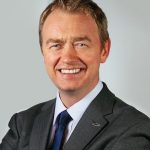
Tag: Tim Farron

  • Tim Farron – 2022 Comments on Government’s Emergency Statement

    Tim Farron – 2022 Comments on Government’s Emergency Statement

    The comments made by Tim Farron, the Liberal Democrat MP for Westmorland and Lonsdale, on 17 October 2022.

    Let’s be clear: this emergency statement is not in response to an external crisis, a war, a pandemic or global energy prices – it’s in response to the ongoing crisis in the Conservative Government.

    It also speaks volume about the Conservatives’ total disregard for rural communities like ours in Cumbria, that one of the only things that hasn’t been axed from the mini budget is the cut in stamp duty – a measure which will fuel excessive second home ownership and the Airbnb boom that is turning our communities into ghost towns and ejecting local families.

    This chaos cannot be allowed to go on for any longer – it’s time for a General Election.

  • Tim Farron – 2022 Tribute to HM Queen Elizabeth II

    Tim Farron – 2022 Tribute to HM Queen Elizabeth II

    The tribute made by Tim Farron, the Liberal Democrat MP for Westmorland and Lonsdale, in the House of Commons on 9 September 2022.

    Cumbria mourns the loss of Her Majesty Queen Elizabeth II. I personally, and all of us in our county, want to express our genuine and deep condolences to the royal family. We have lost our Queen, and it touches every one of us. We can tell from the contributions so far today that this is a personal loss for us, but how much more is it a personal loss for those who have lost a mother, a grandmother and a great grandmother? We grieve with them and we thank her for her service.

    The news reached us yesterday as we were winding down the Westmorland county show. The news was devastating, yet it caught us while we were together and it feels like an honour that that was the case. There had been a tremendous couple of days, with thousands of us being in the same place, in the same muddy fields, enjoying time together, and then that moment of dismal unity came about, but I am glad that it happened when we were all together.

    The landmarks of the Queen’s reign have been the landmarks of each of our lives. Many who are even older than me will remember her acceding to the throne. I remember the silver jubilee, dancing around a maypole at the age of seven in 1977, and the golden jubilee as a father of a new young child. We think of the diamond jubilee and the joy earlier this year of the platinum jubilee. Her life was our life and her history has become our history; they are inseparable and indivisible and we will ever be touched by it.

    Her Majesty’s reign united us; her passing must, too. I believe that it will, and it has already, as we transfer our allegiance to her beloved son, King Charles III. Cumbria, the Lakes and the Dales were loved by Her Majesty the Queen and we loved her in return. Her visits to Cumbria were always massively special to us. Relatively recently, on her visits to Kendal and Windermere, she was presented with Westmorland wild flowers to honour her, Lakeland wool to warm her and Kendal Mint Cake to sustain her.

    The times I spent with the Queen were relatively few, but I recall one occasion in particular. I had been an MP for a very short period of time, and she offered me some advice about what you do when a constituent who has had a letter from you thanks you for it and you do not remember the details. She said that happened to her all the time and that she always said, “It’s the least I could do.” That is a wonderful get-out phrase, and I confessed to a few of my constituents that I had occasionally deployed it.

    As has been said, Her Majesty did not seek her office; she practised it with utter humility. The most famous human being on planet Earth and yet she acted with the grace and humility that none of us here—no offence, please—has ever managed to match. She was a constant to us all, but, as has been said already, the constant in her life was her faith in Jesus Christ. Let us remember this: for many people it may be a perfunctory ceremonial faith, but for her it was not; it was a living, active faith in a living saviour. Let us remember this: we have sung for 70 years “God Save The Queen”. If her faith is accurate—I am certain it was—God has saved the Queen. We now transfer our allegiance to King Charles III, who I am proud and honoured to serve. God save the King.

  • Tim Farron – 2022 Loyal Address Speech

    Tim Farron – 2022 Loyal Address Speech

    The speech made by Tim Farron, the Liberal Democrat MP for Westmorland and Lonsdale, in the House of Commons on 10 May 2022.

    This really does feel like a Queen’s Speech from a Government who have run out of ideas and are not capable of dealing with the very serious times in which they find themselves. It is an awful lot of press releases and no plan. We desperately need a plan.

    I heard reference in the Queen’s Speech to Bills that might be introduced to deal with the cost of living crisis. We do not need parliamentary Bills to drive down people’s household bills. We need action that could be taken today. The Government could decide to use one of the rare Brexit benefits and reduce VAT today. They could decide in the next day or three to do what we have been calling on them to do for some time—bring about the windfall tax on the energy companies that have made profits that are unearned, unnecessary and unexpected, and give that money to people who desperately need it. They could give it to people across my constituency in Cumbria and across the rest of the country who literally cannot afford to put food on the table and pay their rent, their mortgage and their bills. No amount of smart-alec culture war ruses will pay anybody’s children’s food bills. This is what we are seeing from a Government who have lost touch with any idea they ever had of what it is to be serious about governing at a serious time.

    As you might imagine, Mr Deputy Speaker, I want to talk specifically about rural communities and particularly issues of agriculture and housing. There is nothing for us in this Queen’s Speech—nothing that remembers the rural communities of this country, particularly in England, which have so very obviously been neglected and taken for granted by this Government.

    Let us look at farming. I make a plea to all hon. Members in the House who do not represent rural constituencies that rural communities should matter to them, for two principal reasons. First, if they eat, they should be grateful to the farmers who live in my constituency—and indeed yours, Mr Deputy Speaker—and who put the food on our table. No country serious about its own security would be in any way reckless about its lack of food security.

    We should also care because our farmers are on the frontline of tackling climate change and providing environmental restoration. Some 70% of England’s land mass is farmed, so if we care about tackling climate change and the biodiversity crisis, the reality is that the greenest thing that any Government can do is keep Britain’s farmers farming. They are the only people who will make even the greatest plans come to fruition, because the greatest plans in the world will remain just plans in a drawer without farmers to introduce them.

    The Government are making a disastrous mess of the transition from the old farm payment system to the new system. If I had been asked a few years ago to list potential advantages of the UK leaving the European Union, I would have given a very small list, but being outside the common agricultural policy would have been on that list. Yet again, here is a potential benefit that the Government have grasped and are miserably failing on, as they botch the transition from the old basic payment scheme to the new environmental land management schemes.

    In my constituency, every single farmer has lost at least 5% of their basic payments and will lose at least 20% this year. All of the hundreds of farms that I represent are in that position. This year, 13 of the farms that I represent—a tiny proportion, little more than 1%—will be getting anything from the new sustainable farming incentive. The Government’s botched transition to the new scheme is costing farmers thousands of pounds a year, with nothing to replace it. So what will happen? Farmers will either go bust or go backwards. We will lose hundreds and hundreds of small to medium-sized family farms right across our country, many of them tenanted, costing us in biodiversity and food production. If they do not go bust, they will go backwards and give up on doing any environmental work whatever; they will just get more stock, because that is the only way that they can keep food on their own table.

    The Government are making not just accidental mistakes with farm transition, but deliberate ones. Parts of the landscape recovery and local nature recovery schemes give a clear incentive for landowners—and, indeed, investment companies that want to become landowners—to get huge tracts of land, evict tenant farmers and get massive cheques from the Government for doing nothing and letting the valleys go to seed. These are outrageous, state-sponsored lakeland clearances; we must not stand for them. There is nothing in this Queen’s Speech that gives any clue that the Government understand the damage that they are about to do.

    There is nothing for the uplands. Our upland communities in the Lake district, in the dales and in places such as Cornwall and Devon, Northumberland and North Yorkshire have enormous cultural significance, yet nothing in the farm payment scheme recognises that. The tourism economy of the Lake district and Cumbria is worth £3.5 billion a year under normal circumstances, yet there is nothing to compensate the people who create the backdrop that makes so many people come to visit our beautiful part of the world. That is why I am calling for a cultural landscape payment as part of the new farm payment system: to make sure that we value and reward our upland farmers.

    It is absolutely ridiculous that we have a farm payment scheme—a Government agricultural policy—that has a strategic aim of reducing our capacity to feed ourselves and actively taking land out of food production. That is not only stupid when we are trying to protect ourselves in a grave international situation, but immoral, because it means that we will now be fishing in markets where developing countries are seeking their grain and their commodities. We are pushing up the prices for the poorest people in the world because we have a wrong-headed farm payment system that is taking land out of food production. That is stupid and immoral.

    Let me now say something about housing, and the impact of the last two years on the housing crisis in rural communities. This has become a catastrophe. We have too few houses that are lived in permanently, and communities are dying as a consequence. During the pandemic, 80% of house sales in my community have gone to the second-home market, and at the same time there has been a 32% increase in the number of properties that have gone into the holiday-let market. In Devon, this has meant a 70% reduction in the long-term private rented sector.

    What do those two developments mean? First, there is excessive second-home ownership. No one wants to be beastly about second-home owners—we want to be generous and welcoming to people who wish to spend their time in our communities; it is nothing personal—but the fact is that this has a massive impact on the communities that I am privileged to serve in Cumbria. It means that communities are hollowed out of full-time occupation, so they lose the school, they lose the post office, they lose the pub—they lose community itself. Secondly, there is the huge and very speedy transition from long-term lets to vast numbers of holiday lets. What does that mean? It means that people who have lived in an area for years are expelled —evicted through the section 21 notices that the Government said they would abolish and have not. That was not in the Queen’s Speech, and it should have been.

    These people who are being ejected from their communities are people in work and with children at local schools. They have nowhere else to go in a place like the lakes or the dales, so they have to leave altogether, uprooting their kids and leaving their work. That is outrageous. The impact on our communities is devastating, and the Government are doing pretty much nothing about it.

    One proposal in the Queen’s Speech has been floated—for the Government to borrow something of the Welsh Government’s proposals to double council tax on second homes. I thought “great” when I first read about that, but now I have seen the detail, and it is rubbish. What will happen is that council tax will be doubled for a second-home owner who never goes to their home. That is a tiny minority of second-home owners. The proposal takes no account of the fact that, for instance, 90% of second homes bought in my constituency are bought for investment and then let out for 70 days a year. What does that mean? It means that this not a second home; the owner is a small business, and this is a holiday let. It means that the small business will pay no council tax and no business rates either, and that people in Kendal, Penrith, Appleby and Ambleside who are going to food banks are subsidising wealthy people with second, third and fourth homes. The Government, who know that for sure, having undoubtedly listened to their own Back Benchers representing rural communities. have chosen to do nothing meaningful to tackle the outrage.

    Let me finally say something about planning. If we want to tackle the second-home crisis, the holiday-let crisis and the affordable-housing crisis, we should change planning law to make second homes and holiday lets different categories of planning use so that national parks and councils can just put a lid on it. That would be the easiest and most straightforward thing to do. Why have the Government not chosen to do it? We talk about building more houses, but the problem in areas such as mine is that while those who build houses will sell them, we are building for demand and not for need, and it is time to build for need.

    Earlier today, I was talking to some of my local councillors—Jenny Boak, Pete Endsor and Sue Sanderson, who represent Grange & Cartmel. Just outside Cartmel, in Haggs Lane, 39 properties are to be built, only eight of them affordable. Why? Because the Government do not give planning authorities the power to say to developers, “Get knotted unless you are going to build for local people and families and make those places affordable.” So I am angry, not just on behalf of my community but on behalf of communities across rural areas of our great country, that there is so little, if anything at all, for us in this Queen’s Speech.

    It seems to me, looking at it from the inside in Cumbria, that this Conservative Government are doing to rural communities in this decade what a Conservative Government did to urban communities in the north in the 1980s. The difference is that Margaret Thatcher had a plan—I will give her due for that—while this Government, shambolically, through neglect and through taking rural communities for granted, are devastating those communities. They will not be excused for that, and they will not get away with it. We have seen the results of last week’s elections in Cumbria and Somerset, and I hope we will soon see the result of an election in Devon. We will see that rural Britain will not be taken for granted.

  • Tim Farron – 2022 Speech on Sewage Discharges

    Tim Farron – 2022 Speech on Sewage Discharges

    The speech made by Tim Farron, the Liberal Democrat MP for Westmorland and Lonsdale, in the House of Commons on 19 April 2022.

    I beg to move,

    That leave be given to bring in a Bill to provide for mandatory targets and timescales for the ending of sewage discharges into waterways and coastal areas; to make provision about the powers of Ofwat to monitor and enforce compliance with those targets and timescales; to require water companies to publish quarterly reports on the impact of sewage discharges on the natural environment, animal welfare and human health; to require the membership of water company boards to include at least one representative of an environmental group; and for connected purposes.

    It is such a privilege to be in this place to speak for the people of the lakes and dales of Cumbria. Cumbria is one of the most beautiful places on earth. It is also, on occasion, one of the wettest. It needs to be; how else could we keep the lakes, tarns, meres, waters, rivers and becks filled and flowing? Cumbria is home to two national parks and two world heritage sites, yet its waterways are shamefully often polluted by sewage discharges, and those discharges take place legally and without sanction. Our lakes and rivers are our natural treasures, yet water company bosses are degrading those natural treasures to keep a hold of their own treasure. Last year, the water companies made profits of £2.7 billion and paid out £27 million in bonuses. Their chief executives earn seven-figure sums, yet they are free by law to preside over enormous numbers of dangerous discharges that damage our environment and our wildlife, and are a threat to human life, too.

    This Bill aims to stop the water companies putting their personal treasure ahead of our natural treasure. The Government choose to let them get away with it, but this Bill will stop them. In 2021, raw sewage was pumped into the River Lune near Sedbergh in my constituency for 5,351 hours—the equivalent of 222 continuous days. This is not just a problem for me and my constituents; it is a colossal crisis affecting the entire country. Water companies pumped sewage into rivers nationwide 772,000 times in the last two years—more than 1,000 discharges each day. Some of those discharges lasted almost a whole year, and all of them were legal. Sewage discharges happen far too frequently and for far too long for the Government and the water companies to be able to credibly hide behind the excuse that they are caused only by exceptional rainfall. As a result of these discharges, only 14% of England’s rivers now meet the criteria to be defined as ecologically good.

    It is true that our sewerage systems are shamelessly out of date, but the water companies responsible for improving them have little impetus to do so because the Government are barely holding them to account. The British public pay these companies to not just provide us with clean water, but ensure safe and clean processes for waste water and sewage. Too often, it feels as though the companies forget about half of that bargain, and this Government let them. United Utilities, our local water company in the north-west, was the culprit in four of the 10 longest sewage discharges in 2021—the most of any water company in the country. Meanwhile it posted profits of £602 million and dished out £6 million in bonuses—also the most of any water company in the country. Far from being punished or held accountable for the degradation of our waterways, the water bosses, it appears to the public, are being rewarded for it. Those 772,000 discharges were legal. They happened under the Government’s nose while the rest of us had to hold ours.

    The water companies are also guilty of emissions that have broken the law, but they are rarely held to account. That is, of course, something of a theme for this Government. Between 2018 and 2021, only 11 fines were issued to water companies for pumping sewage into our lakes and rivers. Only three of those fines were over £1 million, and four were less than £50,000. The Government make it cheaper for water companies to pay a fine than to take action to stop the discharges. It is no wonder that the companies do not invest enough in cleaning up our lakes and rivers.

    I can confirm that I left the lakes this morning without a coat, because spring is here. The visitors are with us in Cumbria, and summer is around the corner. The UK’s waterways will soon be teeming with swimmers, dippers and paddlers, nowhere more so than in the English lakes and most of all Windermere, at the heart of the most visited part of the UK outside London. Windermere has three designated bathing sites, all of them ranked as being of good standard. It is currently a safe place to visit, but the Government’s weak regulation is putting that at risk.

    United Utilities legally dumped sewage into Windermere on 71 days in 2020. How can that be considered anything other than outrageous? The Government allow such discharges because they are considered to be storm events. Well, Cumbria has more rainfall in a month than many places have in a year. Things that might strike Ministers in London as storm events are actually mild drizzle for those of us in the lakes. By allowing the water companies to hide behind storm events as an excuse to pollute our lakes and rivers, the Government show their ignorance of communities such as ours in Cumbria and allow the water companies to pollute Britain’s wettest places the worst.

    Tourism and hospitality employs 60,000 people in Cumbria. It is by far our biggest employer, being worth £3.5 billion a year to our local economy. I do not want the Government to put that at risk by allowing our lakes to be polluted. I want them to protect the wellbeing of everyone who visits and lives in the lakes.

    As well as the human impact, there is an ecological impact. Maintaining the quality of our rivers, streams and lakes is crucial to protecting biodiversity for centuries to come. The Environmental Audit Committee has reported that

    “rivers in England are in a mess.”

    The population of 39 of the 42 main salmon rivers in England are categorised as at risk or probably at risk. When one part of the complex interconnected life of a river is damaged, the whole ecosystem is hurt, from duckweed and dragonflies to otters and trout.

    We must not be duped into thinking that the Government took action to deal with this in the Environment Act 2021. We remember they had to be dragged kicking and screaming by Members of the other place into moving an amendment, but that amendment is essentially meaningless. It sets no timescales or targets. It is a wish list, not an action plan.

    This Bill would put that right by ensuring that action is taken. It would provide for mandatory targets and timescales for the ending of sewage discharges into waterways and coastal areas. It would also strengthen Ofwat, the Water Services Regulation Authority, to hold water companies accountable. Furthermore, it would take the radical step of placing representatives of local environmental groups on the board of these companies so that executives have nowhere to hide from the impact of their practices on our waterways, on the wildlife that depends on them and on the economies and communities they underpin.

    The Bill would also help to get to the heart of the problem, not just the headlines, by making sure we get the right information. The Government tell us how long discharges happen and how often they happen, but not the volume of sewage discharged into the watercourses. Without that information, we cannot know the scale of the problem. In small rivers and becks, or in the confined space of a lake, volume has a much bigger and more damaging impact on humans, animals and ecology.

    Both the Government and the water companies hide behind asking inadequate questions, and therefore getting inadequate answers. For instance, the Government’s Environment Agency has to test for nutrients and chemicals in the water, but it does not have to test for bacteria, yet bacteria are the greatest health concern. Unless a watercourse is designated as bathing water, and barely any rivers are designated as bathing water, bacteria is tested for only by concerned citizens such as the marvellous people I recently met on the River Kent in Staveley. Testing for bacteria must become compulsory.

    The River Kent in Cumbria is designated as a site of special scientific interest. Among other things, it hosts protected species such as pearl mussels, which are rarer than the giant panda, yet sewage is being legally discharged into this protected river almost every day.

    The House can see why this Bill matters to my community and the whole United Kingdom. The Bill would require water companies to produce accurate and comprehensive quarterly reports on the impact of sewage discharges on animal welfare, human health and the environment. The public have a right to know what our water companies are being allowed to do. With the cleansing impact of public scrutiny, and the literally cleansing effect of water companies spending their money on upgrades rather than bonuses, hopefully the public will soon see encouraging signs to give them faith in our waterways and renewed faith in our political system that the polluters will actually be held to account for dumping sewage into our lakes and rivers, that they will no longer be permitted to do so, no matter how powerful they may be, and that companies making billions in profit will no longer be protected by a Conservative Government who permitted them to discharge sewage 772,000 times in two years.

    What, then, shall we protect: the inflated profits of water companies, or the safety and beauty of our lakes and rivers? It is time for all of us in this House to take action and to pick a side.

  • Tim Farron – 2022 Comments on Boris Johnson and Rishi Sunak Being Fined for Breaking Rules

    Tim Farron – 2022 Comments on Boris Johnson and Rishi Sunak Being Fined for Breaking Rules

    The comments made by Tim Farron, the Liberal Democrat MP for Westmorland and Lonsdale, on 12 April 2022.

    I have just been speaking with a group of local elderly people who spent long lonely months isolated during lockdown. They made huge sacrifices to do the right thing. The PM and Chancellor thought they were above those people and above the law – of course they must resign.

  • Tim Farron – 2021 Speech on the Integrated Rail Plan

    Tim Farron – 2021 Speech on the Integrated Rail Plan

    The speech made by Tim Farron, the Liberal Democrat MP for Westmorland and Lonsdale, in the House of Commons on 8 December 2021.

    It is a pleasure to follow the hon. Member for High Peak (Robert Largan), who made a thoughtful contribution concerning his constituency.

    The integrated rail plan for the north is a real disappointment to many people, not least people from Cumbria, the furthest north-west county in England. When we leaf through the 162 pages of that document, we find not a single mention of the county of Cumbria. That is a reminder that when we talk about the north and levelling up the north, it feels to many of us that the rural north—rural communities generally, but specifically those in the far north-west of England—is not thought of and is very much overlooked.

    The cancellation of part of HS2 is deeply troubling, but of course the more troubling cancellation is that of Northern Powerhouse Rail. If one understands the north of England, one understands that what we really need is not to get to London a bit quicker, but to have greater capacity and to get from east to west more quickly. That has been overlooked by the Government. It is a betrayal of the north, yes, but more than that it is a betrayal of their lack of understanding of the north, which is more telling.

    I want to focus on a couple of things in my community. First, we appreciate that the HS2 line is not going to go further into Lancashire and into Cumbria, but nevertheless the trains will. I am deeply concerned that there are no plans for any of those HS2 trains to stop in the biggest visitor destination in the country apart from London, namely my constituency—the Lake district. That should be put right.

    We have a railway line from the main line at Oxenholme that takes us to Windermere—the Lakes line. It is a very short line, and it would be one of the cheapest electrifications in the country if only it were done. Sadly, the Government have cancelled that. I am, however, encouraged by recent conversations with the Rail Minister about the possibility of a passing loop at Burneside, which would give us the opportunity to effectively dual the line again—that was our Beeching cut back in the ’60s and ’70s. Doing that would double the capacity on the Lakes line and massively increase the number of people who could come to the Lake district and not come by car. That would be a huge positive.

    It is worth bearing in mind that there are many small things that are huge to us. At Staveley, the first station in the Lake district, there are 42 steps to get up to the station. Friends of mine who have disability issues, are elderly or need to use prams simply cannot use their local station, so I call on the Government to consider very carefully funding access to Staveley station.

    We have a world-class visitor destination in the Lake district, with what feels at the moment like a third-class rail connection. That is why I ask, finally, that the Government reconsider the electrification of the line from Oxenholme to Windermere, and of the Furness line from Lancaster to Barrow through my constituency. That would be a positive, carbon-neutral thing to do, and it would be a massive boost to tourism and to local communities. It would be a good, effective use of public money after this disappointment.

  • Tim Farron – 2021 Comments on Food Standards

    Tim Farron – 2021 Comments on Food Standards

    The comments made by Tim Farron, the Liberal Democrat MP for Westmorland and Lonsdale, on 29 April 2021.

    Today Liberal Democrats are launching our new campaign to protect British farmers and maintain our food standards.

    I am deeply concerned that family farming businesses are at risk as the Tories continue to botch our transition away from the EU agricultural system.

    Some farmers even risk losing up to half their entire income as the Government is blundering their way towards a new Environmental Land Management scheme.

    Liberal Democrats support this new scheme, but the Tories are being much to slow – they are stubborn and out of touch with farmers.

    Meanwhile, they’re failing to commit to maintaining our high animal welfare and environmental standards for imported foods.

    This would allow foreign imports to undercut responsible British farmers.

    Farmers are the guardians of our landscape, they are the stewards of our countryside and vital allies in tackling the climate and ecological crises.

    The Liberal Democrats are committed to maintaining the beauty and biodiversity of our countryside which is why we want to ensure public money goes towards public goods like restoring our peat bogs, creating new natural flood protections and managing land to encourage species recovery.

    But the Tories risk forcing our family farmers out of business meaning we lose the very people who need to deliver these public goods.

  • Tim Farron – 2020 Speech on Bus Fare Data

    Tim Farron – 2020 Speech on Bus Fare Data

    Below is the text of the speech made by Tim Farron, the Liberal Democrat MP for Westmorland and Lonsdale, in the House of Commons on 16 June 2020.

    I am very grateful, Madam Deputy Speaker.

    I support the spirit of these regulations. We must have equity of access to public transport across the country, and the collection of data to build an accurate picture of services is an essential part of that. However, I must warn the Minister that she will have a hard task collecting data on bus services in many towns and villages in Cumbria, because on most days there aren’t any, or at least it is so far that it will be a very short job and hardly worth the journey—which, in case I have not already made myself clear, she would not be able to make by bus.

    I acknowledge that the Government have gone some way towards recognising the crisis in bus services, such as by laying these regulations, and indeed earlier this year there was an announcement of additional funding and the unveiling of a national bus strategy, of which I am sure this forms a key part. But the new funding turned out to be peanuts, and while having a strategy is definitely better than not having a strategy, it was still a far cry from the claims of the press release and light years off providing the solutions needed in communities like ours, where we would like these regulations to apply in practice.

    So, to be clear, the whole of Cumbria received a total of £383,887, which, split roughly six ways between six constituencies, means about £65,000 for my constituency. My constituency could contain geographically every single one of the 73 constituencies in Greater London, and London—where these regulations will definitely apply —sees an annual subsidy to its public transport of around £700 million a year. And we must not forget that our £65,000—just less than a thousandth of 1% of the London subsidy—is just a one-off, and a one-off will not do.

    Ministers surely know that research shows that in order for a community to trust a bus service enough to rely on it as part of their regular routines—enough to use it, basically—that service needs to be functioning ​reliably and affordably for two to three years. I am sure that the data collected as a consequence of this regulation will show that and prove it, but we know it already.

    So this short-term puddle of cash does not even wet the feet of the problem. We will find a way of spending it wisely, and we are not ungrateful, but as we dare to hope for a time beyond the covid crisis, people in my communities want to believe that we have not sacrificed so much, endured such hardship and suffered such shattering loss just to go back to how things were beforehand.

    The mission must be to build back better, and that must include a refusal to leave communities behind. Rural, more isolated communities such as ours in Cumbria are at risk. Those communities are also often older, and while the majority of people, even in their 80s and beyond, will make some use of the technology we are talking about here, a higher proportion than in other age groups will not, and they are the people I am most concerned about in terms of the application of these regulations.

    The average age of the population in South Lakeland is 10 years above the national average. It cannot be right that we forget the generation that has borne the brunt of this virus, yet we will do that if we acquiesce over the isolation that so many of them endure. Many I know have found themselves alone and disconnected in their later years, with the loss of bus services leaving them stranded in places that are utterly beautiful but utterly isolated. Many in these towns and villages rely on buses for the basic tasks of daily life—shopping, going to the doctors, making appointments, seeing friends or getting to work. Buses, when they exist, provide those people with the ability to look after themselves, be independent, protect their physical and mental health, and stave off the loneliness that isolation can bring. Technology can help to underpin that, but only if there is a service that it can be underpinned by.

    There is no doubt that more of us have become acquainted with isolation over the last few months, but what is someone who lives in a small village and is unable to drive supposed to do if their one transport link is removed? At the same time, they witness the closure of accessible services as a consequence of the technology that is available in other parts of the economy. With few neighbours and fewer local services, the loss of buses constitutes the loss of connection, which risks leaving many more people even more isolated and vulnerable.

    Building back better must mean that we learn from the improvement in air quality and the reduction in greenhouse gas emissions throughout this time, and public transport is key to preventing a return to pre-covid carbon emissions. Bus services will be central to that, as part of an integrated public transport system. That is why I continue to urge the Minister to double the capacity of the Lakes line by introducing a passing loop, as well as electrifying the line to significantly reduce its carbon footprint.

    Many of us are excited for a time when lockdown has eased and we are able to see friends and family and visit the shops without unnecessary restrictions and caution. But the Government must recognise that the end of the lockdown will not bring that relief to everyone. In fact, for many isolated people in Cumbria, the official lockdown has not looked very different from the growing isolation ​that they have suffered due to a lack of services and transport links. In the 10 years between 2008 and 2018, the north-west lost 888 separate, distinct services, and that does not include the services we have lost in the last couple of years. We have not taken this lying down. We would love those services to be traced by an app and part of a technological solution, but as I say, there is no point having the technological solution if there is no bus service to underpin it.

    It is not only the elderly in our communities who suffer from reduced bus services. Young people’s access to public transport is also under threat. Free school transport is provided for young people up to sixth-form age, but after that, the support is not available. It makes no sense for the Government to demand that young people carry on in education until 18 and then deny them the ability to afford to do so—a generation that clearly is technologically competent and able to make use of the apps we are talking about. In places like Sedbergh and Coniston, it is often impossible to gain access to sixth-form provision at schools or colleges by public transport. That is why, alongside these regulations, there needs to be a statutory responsibility for local authorities to guarantee home-to-school transport for 16 to 18-year-old students, in the same way there is for under-16s.

    There must also be buses available to deliver that transport in the first place. In many of our towns and villages, if the Minister did agree to subsidise sixth-form bus travel alongside this technological innovation, there just are not any services to be subsidised. That has been emphasised during the covid crisis, as many families with free school meal vouchers have not been able to use them because the vouchers are not for the local supermarket in their town—

    Madam Deputy Speaker (Dame Rosie Winterton)

    Order. The hon. Gentleman is going way off the scope of the regulations. If we are discussing regulations, that is what we are discussing. We cannot not have a general speech about everything that is happening in his constituency, as important as that is. This debate is about the regulations, and I urge him to return to them ASAP.

    Tim Farron

    I will do so instantly. I make the point, though, that the whole point of having the technology that is rightly rolled out through this statutory instrument is that it should apply to services that exist, not imaginary ones that we wish existed. My community is suffering under covid like anywhere else, but the hospitality and tourism industry is vital to us. We are the second biggest visitor destination after London, and yet our public transport infrastructure means that this instrument may as well not exist for many of the communities that I represent. While I support the regulations and will not oppose them, I want to send the Government the message that they should ensure that there are sufficient services in rural communities like mine, so that these applications actually have some application in a county like Cumbria.

  • Tim Farron – 2020 Speech on Local Government Finance

    Tim Farron – 2020 Speech on Local Government Finance

    Below is the text of the speech made by Tim Farron, the Liberal Democrat MP for Westmorland and Lonsdale, in the House of Commons on 5 February 2020.

    I will characteristically endeavour to behave, Mr Deputy Speaker. It is a massive honour to follow the hon. Member for Orpington (Mr Bacon). I hope that he is now feeling the relief that he was looking forward to earlier. The combination of Orpington and nerves rings a bell with me. I spent the night in Orpington before Blackburn Rovers won the league in 1995, and I could not sleep. I got the train back home, and the rest is history. I am also, by the way, the sixth-great-nephew, by marriage and adoption, of Charles Darwin, so it is a delight to know that I had a famous relative in the hon. Gentleman’s constituency. It was also a delight and an honour to listen to the maiden speeches of the hon. Members for North Norfolk (Duncan Baker) and for Jarrow (Kate Osborne), and to engage in some ginger solidarity with the hon. Member for Keighley (Robbie Moore). I wish them all the very best for their time in this place.

    Turning to the matter in hand, local authority funding cuts are the easiest for any Government of any colour to make. They make the savings, then someone else gets the blame. It is a transparent tactic, but I am not sure that it is as politically risk-free as Governments tend to think it is. It has certainly caused serious harm to families and communities right across the country. In my time serving in this place since my maiden speech—which I think was recorded on Betamax—our county ​council, our district council and our two national parks, the Lake District and the Yorkshire Dales, have suffered significant cuts. It is worth bearing it in mind that national parks unofficially form part of the local government family, although they have no council tax-raising powers. The Lake District is the national park with the biggest population of any in the country, and it acts as a local authority in relation to some housing, planning and environmental matters for anyone who lives there. With that lack of ability to raise money of its own, those cuts are felt more keenly, to the extent that the Lake District national park is even talking about selling off iconic pieces of land.

    Cuts are not without consequence. Our police service also has to live with the cuts that have effectively been imposed upon it. Our police and crime commissioner has been forced to raise additional council tax just to prevent the Conservatives’ cuts from getting any worse over recent years. Our police are left increasingly vulnerable, with a mere handful of officers—sometimes as few as six at any given time—left to protect my constituency, which covers an area the size of Greater London.

    Owing to the Conservatives taking money away from our councils, most head teachers in South Lakeland have had to lay off staff, reduce teachers’ hours or merge classes. The Conservatives take advantage of the fact that heads want to be professional, disguise their financial hardship and protect children and parents, so those cuts are often safely hidden, but they hurt. They hurt children with special needs the most, but that is apparently okay so long as the Government can find a way to escape the blame and pass it on to local government.

    Like the constituencies of all today’s maiden speakers, my constituency is stunningly beautiful, but it is also vast, and its communities are dispersed. Public transport is vital to keeping people connected, preventing isolation and loneliness, and ensuring that people can get to work, school or college or, indeed, go shopping. Government council cuts mean that Cumbria no longer has any subsidised bus services. We recently successfully fought to protect under-threat services in Arnside, Levens and Cartmel, but we should not have to fight tooth and nail to save every single route. We should have a settlement that underpins a vibrant, affordable and reliable bus service right across the south lakes and Cumbria.

    The Government have even slashed funding in areas where they promised investment. Just over a year ago, having loudly proclaimed their commitment to preventive health care in the NHS long-term plan, the Government then cut public health budgets by £85 million within a matter of weeks. That means that Cumbria’s spending is now set to drop to just £36 per head. That is barely half the national average of £63 per head and ridiculously lower than the £241 per head per year that the City of London receives.

    The impact of that has been tangible. With the loss of school nurses, children have been left vulnerable to slipping into bad mental, dental and physical health, and the Government’s cuts mean that Cumbria now spends only a pathetic 75p per child per year on preventive mental health. We know that proper investment in public health budgets would allow us to place a mental health worker in every school, which is key to young people being resilient and healthy and to ensuring that problems do not become so severe further down the line. ​This is also the Government who promised a specialist one-to-one eating disorder service to the children and young people of south Cumbria, but they have still failed to deliver that service four years on.

    The motion rightly mentions both adult and children’s social care. As we speak, a 96-year-old constituent of mine has been stuck in a care home for more than 10 months because the council has been unable to put a care package together. At his advancing age, he is being denied the ability to live out his time in familiar surroundings with the ones he loves. Social care is now threadbare. A lady who had life-changing injuries, rendering her severely disabled, has sought my help on many occasions when carers have not turned up, leaving her completely unable to access food or water. It is, of course, always the most vulnerable who are hit first and hit hardest by the loss of services. The omission of deprivation from the Government’s calculation of funding seems to be a case of the Conservatives looking at the injuries that they have caused and then choosing to throw insult on top of them.

    According to the usual metric, my constituency is not the most deprived. We have unemployment at less than 1%, although 2,300 children are living in poverty, which is a reminder of the growing number of people in work and in poverty, and other parts of Cumbria, especially in the west, will be hugely hit by the Government’s choice to ignore deprivation. But the Government have made a choice, and it is to be cloth eared to the needs of rural northern communities such as mine. Local government funding is not some dry municipal concern; it is about the people who need care, the children in our schools, and the safety of our communities. That is why fairness matters. The Government must do a U-turn on their cuts to rural northern communities, because Cumbria deserves better than this.

  • Tim Farron – 2020 Speech on a Green Industrial Revolution

    Tim Farron – 2020 Speech on a Green Industrial Revolution

    Below is the text of the speech made by Tim Farron, the Liberal Democrat MP for Westmorland and Lonsdale, in the House of Commons on 15 January 2020.

    It is always a massive joy to follow the hon. Member for Beckenham (Bob Stewart). It is also great to see you back in your place, Mr Deputy Speaker; congratulations on your re-elevation.

    It has been a genuine privilege to sit through the maiden speeches by the hon. Members for Coventry South (Zarah Sultana), for East Surrey (Claire Coutinho) and for Birmingham, Northfield (Gary Sambrook), to whom I pay tribute. I wish to single out my new neighbour, the hon. Member for Barrow and Furness (Simon Fell), who made an excellent maiden speech and referred in particular to the need—I say this in hearing range of the Secretary of State for Transport—to strip Arriva Northern of its franchise, to make sure that we have a local train service that actually runs some trains.

    I remember giving my maiden speech; the terrifying fact is that I have a copy of it on a VCR tape in the garage. That is a reminder that I am indeed an old git, Mr Deputy Speaker.

    The green industrial revolution is nothing if not an ambitious title, and so it needs to be if we are to head off the existential threat of catastrophic climate change. Ambition is indeed what we need, but although we can give something an impressive and ambitious title, it is unlikely to earn a lasting legacy unless it actually delivers. Franklin Delano Roosevelt’s new deal is not still invoked today because of its catchy title, but because of the good it achieved. We marvel at the Victorian expansion of the railways not because the Victorians did good spin, but because the network was actually built. Nations are never built on public relations stunts.

    Members can call me a glass-half-empty person if they like, but my fear for the Government is that they will make two significant mistakes as they decide how they are going to use their new majority. First, in order to mask the damage that the UK’s leaving the world’s biggest market will inevitably do to our economy and public sector, it is likely that the Government will max-out the credit card on revenue spending in a way that makes the recent Labour manifesto look fiscally conservative by comparison. Secondly, they will talk about big infrastructure investment, both the green and the not-so-green varieties, but in reality their fear of big government means they will not deliver anything that will make a true difference. In other words, the Government will show largesse when they should observe restraint, and restraint when they need to be ambitious. I hope I am wrong, because what we need is to be wise on revenue spending and ambitious on capital, particularly when it comes to green infrastructure. We must make the big strategic decisions needed to fight climate change.​

    In South Lakeland, we see nature changing before our very eyes, as climate change takes place with horrific consequences. Our communities are still reeling, four years on, from the devastating floods of Storm Desmond. Indeed, in the past decade or so we have been hit by three floods, each one of them classified as a one-in-200-year event. Storm Desmond flooded 7,500 homes and more than 1,000 businesses. We have to mitigate the impact of climate change on families and businesses while building the infrastructure to prevent a climate catastrophe. That is why Kendal’s flood prevention scheme must be delivered. All three phases of the flood scheme are now fully funded and I am glad that, after much pressure, the biggest concerns about the scheme have now been answered. In the place of every tree that must be removed as part of the scheme, six new ones will be planted in the town, and many of them will be semi-mature at the point of planting.

    I was there the morning after Storm Desmond, and in the weeks after. I saw people’s lives ruined; families left destitute; and businesses wiped out. Even today, there are children who still unable to sleep any time it begins to rain. I could not look people in the eye on Appleby Road, Shap Road, Sandylands, Ann Street or Mintsfeet Road if I did not do everything in my power to deliver them some kind of protection and some kind of peace of mind. After four years of promises—four years of fear whenever it pours; four years of incalculable strain on mental health for the old and young alike—how dare I claim to represent them if I do not see the flood defences delivered? The reality is that we are too late to prevent climate change, but we have perhaps a dozen years to avoid a major climate catastrophe with even more appalling human consequences.

    The main issue that I wish to focus on in the next few moments is the revolution that we need in public transport. Over the past 30 years, Governments of all colours have allowed funding for bus provision to evaporate. Our communities in South Lakeland have done a spectacular job in putting together community bus services to plug some of the gaps caused by this attrition of Government funding, most notably the Dales bus service in Sedbergh and Dent, which does a wonderful job connecting those Dales communities with Kendal and the surrounding communities. We have fought recently to keep the 552 and the 530 bus services. These are great victories. I am immensely proud of them, but they are short-term solutions at best. They are sticking plasters, when what is needed is ambitious change.

    It is utterly ludicrous that bus services in London receive a £722 million annual subsidy, when in Cumbria we receive nothing at all—not a single penny. The lack of subsidy has a catastrophic impact on fares, and the extortionate prices make commuting by bus a massive challenge, especially for lower-paid workers. How is it right, Mr Speaker, that the 5 mile journey from Ambleside to the neighbouring community of Grasmere costs £4.90, while a journey of equivalent length in London costs £1.50? If we are to entertain any hope of revolutionising public transport, the Government need to look beyond the M25—well beyond the M25. Indeed, it may come as a surprise to some in Government that the north does not stop at junction 32 of the M6.

    There is much to recommend the northern powerhouse, with two slight caveats: first, it is not much of a powerhouse; and secondly, it is not very northern. The transport ​spend in the north-west per head of population is still barely half that in London, despite the promises that were made when the northern powerhouse was first established. I will continue—I will have to continue—to fight the cuts to individual bus services. I will continue to stand with, and work with, the community to find alternative solutions, just as we are currently doing for Arnside, Levens, Cartmel, Hincaster and Kendal where we have replaced the 552 and the 530 services, but let us be honest, all that will do is lessen the decline.

    Bus services are essential to life for rural communities such as ours. They are also key to Cumbria’s vibrant tourism industry. No one could or would deny that the Lake District and the surrounding communities are utterly awesome. It is a national treasure and a source of joy to many more than just those of us who are privileged enough to live among those lakes, mountains and dales.

    Cumbria’s Lake District is Britain’s biggest visitor destination outside London. Some 16 million people visited us last year alone, but 83% of tourists travel to us by car. However, we know that, with the right interventions and conditions, our visitors will travel sustainably. Public bus transport is a key component of that, alongside rail, boats, bikes and, of course, walking in the hills. Improved bus services could alleviate pressure on the roads that become clogged with the cars of those visiting.

    The Government keep ignoring the plight of rural communities. A so-called green industrial revolution in London or Manchester simply will not do. We would love it if they stopped ignoring us, and instead commission a truly ambitious and comprehensive rural bus service to exceed anything that we have seen before, even 35 years ago before the deregulation which started to decline. It will be an investment not only that revives rural communities and sees a huge reduction in the use of cars locally, but that boosts our economy and increases access to jobs.

    My proposal today is that the Minister should ensure the direct commissioning through Transport for the North of a comprehensive, affordable, reliable rural bus network in Cumbria—a network that will be a substantial step towards ensuring that the northern powerhouse actually serves the rural north.

    Finally, if our efforts to tackle climate change are going to come anywhere near something that could be classified as a revolution, we need to transform public transport interconnection and that connection between buses and trains. The main public transport route to the Lake District is the Lakes line. Back in 2017, the Government cancelled the planned electrification of the Lakes line on the basis of a massive and flawed overestimation of the project costs. This was and remains a huge let-down for communities around the lakes, and yet electrification of the Lakes line is the easiest electrification project in the country. The 12-mile route carries hundreds of thousands of passengers each year, but it could carry four times as many if we introduced a passing loop at Burneside so that we could run a half-hourly service, and if it were electrified, it would significantly reduce its carbon emissions.

    If the Government are serious about tackling climate change, they need to undo their foolish cuts to the electrification project, and the Lakes line is the perfect place for the Government to begin a green U-turn to reverse their mistakes of recent years. The Lakes line is short, but it is iconic. It carries significant numbers and could carry so many more. I plead with the Government ​to make their actions match their words. They should not just plug the gaps in public transport, but instead revolutionise the system. They should speak not of subsidies, but of investment that multiplies its value in the economy of the rural north. Targets are dangerous if they are simply a fig leaf to cover up a failure to act in the present. The Government must act now, and we will wait to see whether they do.