Tag: Speeches

  • Robert Jenrick – 2021 Statement on Legal Protections for England’s Heritage

    Robert Jenrick – 2021 Statement on Legal Protections for England’s Heritage

    The statement made by Robert Jenrick, the Secretary of State for Housing, Communities and Local Government, on 15 January 2021.

    For hundreds of years, public statues and monuments have been erected across the country to celebrate individuals and great moments in British history.

    They reflected the people’s preferences at the time, not a single, official narrative or doctrine. They are hugely varied, some loved, some reviled, but all part of the weft and weave of our uniquely rich history and built environment.

    We cannot – and should not – now try to edit or censor our past. That’s why I am changing the law to protect historic monuments and ensure we don’t repeat the errors of previous generations, losing our inheritance of the past without proper care.

    What has stood for generations should be considered thoughtfully, not removed on a whim, any removal should require planning permission and local people should have the chance to be properly consulted. Our policy in law will be clear, that we believe in explaining and retaining heritage, not tearing it down.

  • Dominic Raab – 2021 Comments on Alexey Navalny

    Dominic Raab – 2021 Comments on Alexey Navalny

    The comments made by Dominic Raab, the Foreign Secretary, on 18 January 2021.

    It is appalling that Alexey Navalny, the victim of a despicable crime, has been detained by Russian authorities. He must be immediately released. Rather than persecuting Mr Navalny Russia should explain how a chemical weapon came to be used on Russian soil.

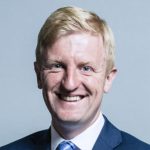
  • Oliver Dowden – 2021 Article on Free Speech

    Oliver Dowden – 2021 Article on Free Speech

    The article written by Oliver Dowden, the Secretary of State for Digital, Culture, Media and Sport on 18 January 2021.

    If the last decade has been defined by anything, it’s the power of social media. Its opening saw the hope of the Arab Spring, whilst its closing witnessed last week’s disgraceful scenes at the US Capitol.

    Both were the product of social media’s unprecedented ability to spread ideas and bring people together, for both good and bad. Put simply, we have a new printing press – but it’s an invention whose implications society and governments are just beginning to grapple with.

    With so many of us now consuming our news and information through social media, a small number of companies wield vast power in shaping how we see the world. To an outsider, it doesn’t always seem this power is wielded transparently or consistently.

    Iran’s Ayatollah has a Twitter account, whilst the elected President of the United States is permanently suspended from holding one. Trump’s supporters have labeled that move censorship; the other half of the country has asked what took so long.

    Norway’s Prime Minister has had posts defending freedom of expression deleted on Facebook because they contained the iconic “Napalm Girl” photo – an unintentional violation of the site’s child nudity policy – whilst in Myanmar, the same platform has been used to whip up hatred towards Rohingya Muslims.

    Those facts alone should make anyone who loves democracy pause for thought. The idea that free speech can be switched off with the click of a button in California is unsettling even for the people with their hands on the mouse.

    Just this week, Twitter’s CEO, Jack Dorsey, said that while he felt that it was right for his platform to ban Trump, leaving platforms to take these decisions “fragments” the public conversation and sets a dangerous precedent.

    So as we enter a new era in our relationship with tech, who should decide its rules?

    We need to be able to define what social media is and isn’t. Given it is now so crucial a part of public discourse, should we compare it to a utility? Or should we see social media companies as publishers, akin to newspapers – and therefore liable for everything they publish?

    In reality, neither the passive “platform” nor the editorialised “publisher” truly hit the mark. Holding companies liable for every piece of content – for 500 hours a minute of uploads on YouTube alone – would break social media.

    But equally, when these companies are curating, editorialising, and in some cases removing users, they can no longer claim to be bystanders with no responsibility whatsoever.

    However we categorise social media, one thing is clear: as with other forms of mass communication, democratically elected governments must play a role in regulating it.

    In the UK, we are leading the world by starting to deal with this dilemma. I have been clear that we are entering a new age of accountability for tech.

    At the end of last year, we outlined plans for a groundbreaking new rulebook for social media companies: one that would make sites like Facebook and Twitter responsible for dealing with harmful content on their platforms, while also holding them answerable for their wider role and impact on democratic debate and free speech.

    We can no longer outsource difficult decisions. There’s now a burning need for democratic societies to find ways to impose consistency, transparency, fairness in the online sphere.

    And it needs to be flexible enough to adapt as social media evolves. There’s always another platform somewhere else on the horizon. No-one had ever used TikTok in the UK before 2018 but now 17 million of us do: almost double the total newspaper circulation in 2019.

    It also means navigating some complex philosophical disputes. How do you resolve the inherent tension, for example, between protecting people from dangerous misinformation in a global pandemic, whilst also protecting their right to express an opinion?

    There are no easy answers. But we are setting out the parameters.

    We need to do everything we can to protect our most vulnerable citizens, and particularly children, from harm. Our upcoming Online Safety Bill holds them as our number one priority.

    The second is the protection of free speech. As Lord Justice Sedley put it in 1999, that definition has to include “not only the inoffensive but the irritating, the contentious, the eccentric, the heretical, the unwelcome and the provocative.” Without the latter, we are making an empty promise.

    So, under our legislation, social media giants will have to enforce their terms and conditions consistently and transparently. This will prevent them from arbitrarily banning any user for expressing an offensive or controversial viewpoint.

    If users feel like they’ve been treated unfairly, they’ll be able to seek redress from the company. Right now, that process is slow, opaque and inconsistent.

    And it’s absolutely vital that internet regulations can’t be used as a tool to silence an opponent or muzzle the free media. So news publishers’ content on their own sites will be exempt.

    The decisions governments around the world take will shape democracies for decades to come. As the UK takes up the G7 Presidency this year, we want to work with our democratic allies to forge a coherent response.

    We are just taking the first steps in this process. But decisions affecting democracy should be made democratically – by governments accountable to parliament, not executives accountable to shareholders.


  • Rebecca Pow – 2021 Comments on the Joint Unit for Waste Crime

    Rebecca Pow – 2021 Comments on the Joint Unit for Waste Crime

    The comments made by Rebecca Pow, the Environment Minister, on 18 January 2021.

    The past year has been a real challenge for our enforcement agencies as they carry out their important work, and I commend the Joint Unit for Waste Crime for its vital efforts in disrupting the criminals and gangs who show complete disregard for our waste industry, local communities and the environment.

    We are absolutely committed to clamping down on waste crime and I look forward to seeing the Joint Unit go from strength to strength over the coming years as it protects the public and the environment from harm and brings waste criminals to justice.

  • Boris Johnson – 2021 Speech on the Build Back Better Council

    Boris Johnson – 2021 Speech on the Build Back Better Council

    The speech made by Boris Johnson, the Prime Minister, on 18 January 2021.

    We know the best way to rebuild our economy is to beat Covid which is why we have invested billions in new vaccines and a national testing operation so that we can reopen the economy safely as soon as possible in the future.

    But despite this we – like many other countries – face a huge economic challenge. And as we recover from this crisis it won’t be enough to just go back to normal – our promise will be to Build Back Better and level up opportunity for people and businesses across the UK.

    This Build Back Better Council will ensure that government and businesses continue to work closely together. It will provide an important forum for frank feedback on our recovery plans and will help ensure the steps we are taking are the right ones.

  • Amanda Solloway – 2021 Comments on App to Spot Loneliness

    Amanda Solloway – 2021 Comments on App to Spot Loneliness

    The comments made by Amanda Solloway, the Science Minister, on 18 January 2021.

    The social restrictions necessitated to tackle coronavirus, while essential, have brought into sharp focus just how much we all rely on face-to-face interaction in our everyday lives.

    Addressing loneliness in our communities is an issue that is particularly close to my heart and this pioneering satellite-enabled app will tap in to the goodwill of our heroic frontline workers and volunteers so that they can identify and help those most in need of support through the pandemic and for years to come.

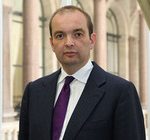
  • James Duddridge – 2021 Statement on Presidential Elections in Uganda

    James Duddridge – 2021 Statement on Presidential Elections in Uganda

    The statement made by James Duddridge, the Minister for Africa, on 16 January 2021.

    The UK Government welcomes the relatively calm passing of the elections in Uganda and notes the re-election of H.E. Yoweri Museveni as President.

    Many in Uganda and beyond have expressed concerns about the overall political climate in the run up to the elections as well as the electoral process. It is important these concerns are raised, investigated and resolved in a peaceful, legal and constitutional manner. We ask that all parties, including the security services, but also all of Uganda’s political movements, act with restraint to ensure the peaceful resolution of disputes.

    We commend the role of the media, observers and civil society throughout the elections. The UK is concerned by the national internet shutdown, which clearly limited the transparency of the elections, and constrained the freedoms that Ugandans are entitled to.

    The UK is a steadfast advocate for Ugandan democracy and we will continue to work to achieve inclusive democratic progress that delivers for future generations. As a longstanding partner, we urge Uganda to continue to strive to meet its own international human rights commitments, including respecting the right to freedom of opinion, freedom of expression and freedom of the media.

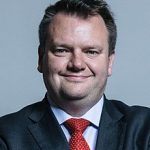
  • Nick Thomas-Symonds – 2021 Letter to Priti Patel Over Home Office Data Loss

    Nick Thomas-Symonds – 2021 Letter to Priti Patel Over Home Office Data Loss

    The letter from Nick Thomas-Symonds, the Shadow Home Secretary, to Priti Patel, the Home Secretary, on 16 January 2021.

    Dear Priti,

    I write in regard to the deeply worrying revelations that 150,000 fingerprint, DNA and arrest history records, held on the Police National Computer, have been deleted.

    This is incredibly serious and it is unacceptable that the news emerged as a result of a media story, rather than a proactive statement from the Government.

    As a result, I expect that you will be making a formal Oral Ministerial Statement to the House of Commons on Monday 18 January 2021.

    There are grave issues posed by this situation. As a result, there are a number of vital questions that must be answered urgently:

    – When were ministers first made aware of this data breach?

    – Have local police forces been informed of potential impacts of their area and ongoing investigations?

    – What mitigating steps are being taken to retrieve lost data?

    – What measures have been put in place to identify the cause of the breach and institute safeguards to ensure such a mistake cannot be repeated?

    – Have conversations been held with policing to assess whether operations or investigations have been undermined, including on counter-terrorism?

    – What guidance has been issued to police and local authority safeguarding teams who often rely on data such as that deleted to manage risk?

    – Has there been an impact on the work of gang units and county lines operations?

    – Is there a breakdown available of the types of records that were deleted, including by crime type and geographical area?

    – Will this breach result in the need for DNA profiles to be regenerated?

    There have also been reports from police sources that warnings have previously been made about problems with PNC systems: can you confirm if this is the case and whether the issues raised related to these failings?

    It is vital that as Home Secretary you show personal responsibility and leadership on an issue as serious as this. Anything less is an abdication of responsibility.

    Public safety has been put at risk yet again by unacceptable incompetence. The reality is that these are not isolated incidents, but rather part of a pattern of deeply worrying mistakes at the Home Office under this Government’s leadership.

    I await your urgent response.

    Yours sincerely,

    Nick Thomas-Symonds MP

    Shadow Home Secretary

  • Anneliese Dodds – 2021 Letter to Rishi Sunak on Flexible Furlough

    Anneliese Dodds – 2021 Letter to Rishi Sunak on Flexible Furlough

    The letter sent from Anneliese Dodds, the Shadow Chancellor of the Exchequer, to Rishi Sunak, the Chancellor of the Exchequer, on 15 January 2021.

    Dear Chancellor of the Exchequer,

    Thank you for your letter of 7 January. I welcome the change that your department has made to the Coronavirus Job Retention Scheme (CJRS) guidance. However, I remain concerned about several remaining issues with the scheme. This follows worrying new evidence that has come to light on the impact that school closures are having on the employment of parents, particularly mothers.

    Yesterday, the Trades Union Congress published results from a survey of working mothers, collected between the 7th and 10th January[1].The survey found that mothers are being particularly badly affected by school closures. A quarter are taking annual leave to manage childcare, nearly one in five have been forced to reduce their working hours and one in 14 are currently on unpaid leave and therefore receiving no income from work.

    Furlough via the CJRS should be an option for the vast majority of these mothers, but 40 per cent are unaware they are eligible and 78 per cent of those mothers affected by school closures have not been offered furlough by their employer. It is particularly concerning that 7 in 10 eligible mothers who asked for furlough had their request refused by their employer. Left to continue, this situation risks forcing many parents out of work altogether.

    On Monday 11th, the Leader of the Opposition argued that there should be a legal and enforceable right for working parents to request paid flexible furlough, with employers expected to grant this request except in exceptional circumstances.

    I am calling on you to adopt this proposal, and to bring forward the cut-off date for furlough eligibility so that the many parents and others who have changed jobs since October 31st can make use of the scheme.

    I am also again calling on you and your department to provide an evidence-led assessment of the impact that employer contributions to National Insurance and pension contributions, which were not part of the original CJRS design, may be having on employers’ uptake of the scheme.

    I hope you consider the above proposals and look forward to receiving your reply.

    Yours sincerely

    Anneliese Dodds

  • Anneliese Dodds – 2021 Comments on Flexible Furlough

    Anneliese Dodds – 2021 Comments on Flexible Furlough

    The comments made by Anneliese Dodds, the Shadow Chancellor of the Exchequer, on 16 January 2021.

    Evidence is mounting that the latest lockdown is putting parents – especially mothers – under severe financial pressure.

    The Chancellor can fix this today by introducing a legal right for working parents to request paid flexible furlough.

    That’s the right thing to do for working parents and the right way to secure the economy by protecting family incomes and supporting businesses through this lockdown.

    No more incompetence and indecision. We need action to secure our economy, protect our NHS and rebuild our country.