Tag: Speeches

  • Keir Starmer – 2021 Speech on a New Chapter for Britain

    Keir Starmer – 2021 Speech on a New Chapter for Britain

    The speech made by Keir Starmer, the Leader of the Opposition, on 18 February 2021.

    When I went to one of our brilliant vaccine centres a few weeks ago I saw something extraordinary.

    People arriving – by the dozen – with anxiety etched across their face.

    Many hadn’t been out of the house for months, but as our brilliant NHS vaccinated them, I saw their anxiety drain away.

    And they left with smiles – broad smiles – on their faces.

    It’s that spirit of hope and optimism that I want to start with today.

    A spirit we’ve seen too little in the last year.

    The dedication of our frontline workers, the skill of our NHS, the brilliance of our scientists and the solidarity of the British people now point the way to a better future for our country and allow us to glimpse how we can thrive again as a nation.

    Covid has shown us the best of Britain, but it’s shown our fragilities too.

    This virus has a deadly ability to find the most vulnerable and to expose deep inequalities and injustices.

    We have to seize this moment to address them.

    I believe there’s a mood in the air which we don’t detect often in Britain.

    It was there in 1945, after the sacrifice of war, and it’s there again now.

    It’s the determination that our collective sacrifice must lead to a better future.

    In a few weeks’ time, we’ll have a Budget that will offer a simple choice:

    A fork in the road.

    We can go back to the same insecure and unequal economy that’s been so cruelly exposed by the virus, or we can seize this moment, and go forward to a future that’s going to look utterly unlike the past.

    That choice will define the Budget

    That choice will define the next election.

    We know what the Conservatives say they want to do to:

    They want to Build Back.

    But I don’t want to go back.

    We can’t return to business as usual.

    And certainly not to an economy rooted in insecurity and inequality.

    I want our country to go forward, to embrace the change that’s coming – in science, technology and work – and be ready to face the future

    Today I want to set out how we can build that future together.

    Covid is not only the worst health crisis in memory, it’s the biggest economic convulsion in 300 years.

    We have the worst death toll in Europe and the worst economic crisis of any major economy.

    I’ve said a lot about the incompetence of the government in handling the pandemic and I make no apology for that.

    They’ve been slow at every stage. They’ve ignored advice. They haven’t learnt from their mistakes.

    Yet a government out of its depth is not even half the story.

    The terrible damage caused by the virus to health and prosperity has been made all the worse because the foundations of our society have been weakened over a decade.

    Ten years ago, at the start of this period of Conservative government, Professor Michael Marmot published a report on the state of England’s health.

    In February of last year he updated it and he’s done so again in the shadow of Covid.

    It shows that even before the pandemic:

    • Life expectancy had stalled – for the first time in a century.

    • Child poverty had shot up to over 4 million

    • And that a child growing up in a deprived area in the North East can expect to live for 5 years less… than a child growing up in a deprived area in London.

    What sort of legacy is that, for a party that’s been in government for a decade?

    That life itself has got cheaper.

    And shorter.

    In his most recent report, Marmot set out the costs of inequality.

    That Covid got into the cracks and crevices of our society and forced them open with tragic consequences.

    During the last year, my thoughts have returned time and again to the wartime generation; those who suffered through the horrors of World War Two; who rebuilt Britain from the rubble of the Blitz; created the NHS and built millions of homes fit for heroes and I contrast that with how so many of them were let down in their time of need – exposed to Covid in underfunded care homes, unable to say goodbye to families and loved ones.

    How can the Prime Minister now look those families in the eye and say: “We did everything we could?”

    When the truth is that the Conservatives promised to fix social care for a decade, but never got round to it.

    The problem is even bigger than the serial failures of this government:

    It’s about an ideology that’s failed.

    An ideology that’s proved incapable of providing security for the long-term, that’s indifferent to the moral and economic necessity of tackling inequality, and that left Britain unprepared when we were tested most.

    Our care homes are perhaps the clearest example of this

    But we see the same tragic story in overstretched hospitals and GP surgeries, in schools with ever-growing class sizes, in our once proud town centres and high streets, in an economy so insecure that millions of people can’t afford to isolate and where the lowest paid have been amongst the most exposed.

    These are the inevitable consequences of a decade of decisions guided by the notion that government can’t interfere with the market.

    That you can strip back public services, ignore inequalities and take money out of the pockets of those who need it most, only to look the other way when the consequences of those choices became clear.

    This pandemic has pulled back the curtain on that way of doing things.

    This must now be a moment to think again about the country that we want to be.

    A call to arms – like the Beveridge Report was in the 1940s.

    A chance to diagnose the condition of Britain… and to start the process of putting it right.

    That’s the path I would take in the March Budget.

    To begin a new chapter in the history of our country – and to equip Britain for the opportunities of the future.

    But I fear that the Conservatives are incapable of seizing this moment.

    That what we get on March 3 will be short-term and it won’t even be a fix.

    Successive Conservative Prime Ministers have used the rhetoric of change: of ‘northern powerhouses’, ‘burning injustices’ or ‘levelling up’

    But all it ever adds up to is a few soundbites and the odd photo opportunity.

    The truth is, whoever their Prime Minister is, the Conservatives simply don’t believe that it’s the role of government to tackle inequality or insecurity.

    They believe a good government is one that gets out of the way, rather than builds the path to a more secure future.

    You can get away with that in the short-term.

    Perhaps even for a few years, but after a decade the results are obvious.

    And so the mistakes the Conservatives are making today are the mistakes they always make.

    They try to pretend this is a different Conservative Party, you could have fooled me

    If you can’t decide whether to plunge hundreds of thousands of children into poverty by cutting Universal Credit, you have no chance of mending our broken system.

    If you vote against children getting free school meals, you’re not going to find the solution to millions of children growing up in poverty

    If you can’t support three million self-employed people, but you can spray billions on contracts that don’t deliver for our NHS, you’re not going to be able to build the economy of the future

    And if you freeze pay for millions of key workers you’re hardly going to build the high wage, high standards Britain that we so desperately need.

    That’s why, despite the scale of the moment, all we can expect from this government is more of the same:

    A roadmap to yesterday.

    Another decade of insecurity and inequality.

    Labour would choose a different path.

    A path that is focused on the long-term.

    That tackles inequality, invests in the future and builds a more secure and prosperous economy.

    That journey starts with the responsible steps that are necessary now to protect family incomes and to support businesses.

    As the OECD, the IMF and the IFS have all indicated, the public finances must be returned to sustainability over the medium to long-term not in the short-term.

    So this is no time for a second wave of austerity.

    And this is no time for tax rises on businesses and families either.

    That would waste the sacrifices of the last year.

    And it would choke off our recovery.

    That’s why a Labour Budget would protect families.

    • We wouldn’t cut the £20 uplift in Universal Credit, benefiting 6 million families by £1,000 a year….
    • We’d provide local councils with the funding they need to prevent huge rises in council tax
    • And we’d end the insult of a pay freeze for our key workers after they’ve given so much.

    A Labour Budget would also back British business.

    • By extending business rate relief and the VAT cut for hospitality and leisure.

    • By easing the burden of debt that weighs down so many businesses.

    • And by extending and updating the furlough scheme so it’s better able to help people back into work.

    We’d also fix the gaping holes in the government’s Kickstart jobs scheme.

    It shows how badly this Government has let down young people that on average 292 young people have become unemployed every day but the government’s flagship scheme only supports 13 jobs a day.

    That’s 1 job supported for every 22 jobs lost by young people.

    We also need to use this Budget to build a more sustainable, secure economy for the long-term.

    The Chancellor is pinning his hopes for recovery on short-term consumer spending.

    But as the Bank of England have said, the vast majority of savings built up during the pandemic won’t be spent.

    That’s understandable. But it won’t help rebuild our country and it won’t do much to help savers.

    There’s an opportunity here to think creatively.

    To build on the spirit of solidarity we’ve seen in the last year.

    And to forge a new contract with the British people:

    The British people invest in rebuilding an economy that’s more secure

    And the government provides financial security for millions of people – many of whom have saved for the first time.

    If I were Prime Minister, I would introduce a new British Recovery Bond.

    This could raise billions to invest in local communities, jobs and businesses.

    It could help build the infrastructure of the future – investing in science, skills, technology and British manufacturing.

    It would also provide security for savers.

    And give millions of people a proper stake in Britain’s future.

    This is bold, it’s innovative.

    And it’s an example of the active, empowering government I believe is needed if we’re to build a more secure economy.

    The March Budget is a pivotal moment.

    But I also want to lift our sights, to talk about the decade to come.

    Under my leadership Labour’s priority will always be financial responsibility.

    I know the value of people’s hard-earned money – I take that incredibly seriously.

    I know that people rightly expect the government to look after it too.

    To invest wisely and not to spend money we can’t afford.

    Those are my guiding principles.

    But I think that Covid has shifted the axis on economic policy.

    Both what is necessary and what is possible have changed.

    The age in which government did little but collect and distribute revenue is over.

    The mistakes of the last decade have made sure of that.

    I believe people are now looking for more from their government – like they were after the Second World War.

    They’re looking for government to help them through difficult times, to provide security, and to build a better future for them and for their families.

    A government that knows the value of public services, not just the price in the market.

    A government that invests in British skills, science, universities and manufacturing, that provides world-class education for all of our children, and whose driving mission is to tackle inequalities from birth.

    A government that can ensure people don’t have to leave their home town to have a chance of getting a good job and won’t leave university with crippling debt.

    That can build a new generation of affordable homes – and not stand idly by while millions are denied the dream of homeownership.

    A government that can work with trade unions and businesses to shape the future of work, and harness the opportunities of new technology.

    A government that will ensure care homes are places of dignity.

    A government that reflects our values on the world stage.

    And that puts tackling the climate emergency at the centre of everything we do.

    That’s what I mean when I talk of a future where Britain can be the best place to grow up in and the best place to grow old in.

    But none of this is possible if you don’t believe in the power of good government.

    And the need to create a new partnership between an active government, enterprising business and the British people.

    The Conservatives are incapable of this:

    They simply don’t believe it’s the duty of government to deliver social justice and equality – that’s why they’ll always fall back on the short-term demands of the market.

    But, if we’re honest, for too long Labour has failed to realise that the only way to deliver social justice and equality is through a strong partnership with business.

    Under my leadership, that mind-set will change.

    I believe in the power of active, enterprising government working alongside British business.

    Not because I believe business is something just to be tolerated or taxed, but because I know that government can’t do this on its own.

    And that a new partnership with British businesses is the only way to build a secure economy, strong families and a prosperous country.

    The vast majority of businesses know this too.

    They know the days of ignoring their social and climate responsibilities are long gone.

    In fact, many businesses are waiting for politicians to catch up.

    A new partnership with business – one where we have high expectations of business and where business can have high expectations of Labour – is pivotal to my leadership.

    And to my vision of the future.

    It’s also personal to me.

    My dad worked on the factory floor his entire life.

    A steady, secure job allowed him to build a better life for his family.

    That’s why, when I think about business I see a source of pride, dignity and prosperity.

    And I know there’s no vision of a future where Britain fulfils its potential in which business does not thrive.

    That’s why, if I was Prime Minister, I’d back a new generation of British entrepreneurs.

    By providing start-up loans for 100,000 new businesses across every region of the UK.

    For too long, businesses have been concentrated in too few parts of our country.

    This doesn’t reflect where our talent lies and it stifles potential.

    This is just a start in addressing that.

    But we can’t afford to ignore it any longer.

    People often ask me why I want this job.

    The answer is simple:

    To change people’s lives.

    Because when I see an injustice, I want to put it right.

    That’s not just about policy choices: it’s an utter determination that pulses through my veins.

    That’s why I went into law It’s why I spent two decades fighting human rights cases.

    It’s why I served as Director of Public Prosecutions – to fight against injustice and to help keep our country safe.

    It’s why I’m so proud to lead the Party I love.

    And why I want to lead the country I love.

    The last decade of failed Conservative ideology and the last year of our collective suffering

    Demand we now create a new, more secure future.

    For me, this isn’t just a political question.

    It’s an economic question too, because if Britain is to succeed in the world if we’re going to be ready to face the challenges of the 2020s and the 2030s.

    We can’t waste anyone’s talents.

    We can’t accept that some regions of our country are being held back.

    We can’t accept that if you’re born into a deprived background, you’ll have worse life chances.

    Or that if you’re from Black, Asian or minority ethnic communities you’ll face structural racism and discrimination at every stage of your life.

    The Britain of the future, the Britain I want to build is going to need the talents of everyone.

    Inequality is not only morally bankrupt, it’s economic stupidity too.

    A fair society will lead to a more prosperous economy.

    It’s not the choice of one or the other, as the Conservatives would have you believe.

    We either have both or we have neither.

    Harold Wilson once said that the Labour party is a moral crusade or it is nothing.

    He was right.

    Our moral crusade now is to address the inequalities and injustices that this crisis has so brutally exposed – and to build a better, more secure future.

    Thank you.

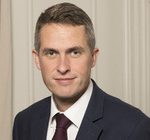
  • Gavin Williamson – 2021 Comments on Provision of Devices to Disadvantaged Children

    Gavin Williamson – 2021 Comments on Provision of Devices to Disadvantaged Children

    The comments made by Gavin Williamson, the Secretary of State for Education, on 16 February 2021.

    I know what a challenging period this has been for pupils, teachers and parents – but it has been nothing short of inspiring to see schools and staff going above and beyond, as they always have done, to give our pupils the very best education possible.

    Online access has been an important part of this work and will continue to be as we help young people catch-up after the disruption caused by the pandemic, which is why the delivery of these one million laptops is so vital. They represent one million children who will not let their education be overcome by this virus.

    I want parents to know that we’ll continue to do everything we can to protect our children’s education at this unprecedented time and ensure they have the tools they need to get on with and make the most of their lives.

  • Dominic Raab – 2021 Comments on Aung San Suu Kyi

    Dominic Raab – 2021 Comments on Aung San Suu Kyi

    The comments made by Dominic Raab, the Foreign Secretary, on 16 February 2021.

    The charges against Aung San Suu Kyi are politically motivated, and the latest example of the Myanmar military undermining democratically elected politicians. Aung San Suu Kyi and all other elected politicians arbitrarily held must be released immediately.

    The UK and likeminded nations will not ignore these violations. We will ensure those responsible are held to account.

  • Alok Sharma – 2021 Comments on Clean Growth

    Alok Sharma – 2021 Comments on Clean Growth

    The comments made by Alok Sharma, the COP26 President, on 16 February 2021.

    Thank you so much.

    Friends, ladies, gentlemen, honourable guests.

    Good afternoon from Nigeria. I’ve been here over the past twenty-four hours and I’ve had a range of productive meetings with the Vice President, other government ministers, and civil society on our shared need to act urgently to tackle climate change.

    And it is an absolute pleasure to be joining you today and a very great thanks to my friend Dr Mathur for inviting me to participate in this very important summit.

    And I’m also very delighted to be speaking alongside Mr Frans Timmermans and Suresh Prabhakar Prabhu, who we know are great champions for climate action.

    May I first start by expressing my deepest condolences for the situation in Uttarakhand.Our thoughts and prayers are for all of those who have been sadly affected by this tragedy.

    As we’ve heard, today marks the conclusion of the 20th annual World Sustainable Development Summit. Over those past two decades, the world has experienced its hottest ten years on record.

    We have seen what the UN calls a “staggering” rise in climate disasters.

    Affecting more than four billion people across the world.

    And causing almost $3 trillion of losses to the global economy.

    It is overwhelmingly clear that the climate crisis is impacting all our lives. And that crisis is unfortunately accelerating.

    And to avoid it getting unimaginably worse, we must act now.

    And we must act together.

    As an international community we have agreed what we need to do.

    In 2015 the world came together and signed up to the Paris Agreement, which established the framework for a clean, resilient global economy.

    But although progress has been made, we are not on track to meet its goals.

    If we do not change course, the climate impacts that we are already experiencing will grow into a tragedy of epic proportions.

    We will end up seeing entire communities destroyed.

    We’ll see many millions more pushed into poverty.

    So, our aim as the COP26 Presidency is to get the world on track to make the Paris Agreement a reality.

    This requires countries to act and to act now.

    By making robust adaptation plans and policies.

    By investing in green recoveries.

    And by committing to net zero.

    And of course, by announcing aligned Nationally Determined Contributions, and policies and plans to get there.

    Plans like Prime Minister Modi’s commitment to generate 450 gigawatts of renewable power by 2030.

    And NDC’s like the UK’s – which puts us on track to meet our 2050 net zero target.

    But we also need action from across society.

    And we need to work together.

    Because making the Paris Agreement a reality requires us all to act in concert.

    The UK COP Presidency aims to unite countries, and groups across society, behind the aims of the Paris Agreement. And, importantly to place inclusivity at the heart COP26.

    We are urging businesses, investors, cities and regions to join the Race to Zero campaign for example, by committing to reach net zero by 2050 at the latest.

    And we’ve seen many companies come forward. Companies like Dalmia Cement and Mahindra group have done so. We’ve seen cities like Delhi and Kolkata have signed up to this too.

    And we are bringing the voices, of civil society, women, young people, Indigenous Peoples, and marginalised groups, into COP26.

    These communities are some of the most affected by climate impacts.

    Their knowledge, leadership, and expertise are absolutely essential to developing effective solutions.

    Over the past two weeks I have met personally with youth and civil society climate activists in Ethiopia, in Gabon in Egypt, and here in Nigeria.

    And I will continue to prioritise these interactions in all my country visits on the road to COP26.

    The UK’s COP26 Presidency has established the Civil Society and Youth Advisory Council to help shape the Summit.

    And this group includes brilliant young climate leaders from countries such as India and Kenya.

    Our Friends of COP Advisory Group includes Indigenous leaders.

    And the UK Government is supporting a mentoring initiative to encourage women from a diverse range of backgrounds to participate in climate negotiations.

    And I also want to welcome and thank the work that has been done by TERI and WSDS to bring the voices of youth and women to the forefront.

    The UK COP Presidency is also working to enhance international collaboration.

    Between countries and across society.

    Bringing together governments, business, civil society and financial institutions around five critical climate issues: finance, adaptation, nature, clean energy and clean transport.

    Because we know that if we all focus on specific challenges and sectors, we can make progress faster.

    By sharing solutions, bringing down costs, and driving innovation.

    Together, we can accelerate the transition to clean growth.

    Creating those jobs and prosperity and spurring development, which we all want to see.

    And I very much recognise India’s leadership in this area. With pioneering initiatives like the International Solar Alliance and the Coalition on Disaster Resilient Infrastructure.

    I look forward to working with both organisations over the coming year. And to showcasing them at COP.

    And we are delighted that India is participating in the new forums for collaboration that the UK COP Presidency has created. Like the Energy Transition Council and Zero Emissions Vehicles Transitions Council.

    With its vision and its flair and its leadership, India will be absolutely vital to the success of COP26.

    As we approach Glasgow, I am pleased to say that the partnership between our two countries on climate change has never been stronger.

    And I very much look forward to visiting in person next week and hearing first-hand about India’s ambitions.

    The UK COP Presidency is committed to working in partnership with those countries most vulnerable to climate change.

    Which for so many years have led the world’s attempts to tackle it.

    We saw this in 2015 when Prime Minister Modi played a decisive role in getting the Paris Agreement over the line. And Small Island Developing States touched the conscience of the world, persuading it to pursue efforts to limit warming to 1.5 degrees.

    And we see this today too.

    As Barbados and the Maldives announce their aim to reach carbon neutrality by 2030.

    And we see countries like India and Bangladesh use early warning systems to save thousands of lives.

    And Ethiopia – where I’ve just been – plans to plant 20 billion trees by 2024.

    The UK COP Presidency wants to amplify the leadership of those countries vulnerable to climate change. And to work together to make progress on critical issues like finance and adaptation.

    So, we’re very pleased to be co-chairing the next meeting of the Coalition for Disaster Resilient Infrastructure in March, alongside our friends and partners in India.

    And, last month, Prime Minister Boris Johnson launched the Adaptation Action Coalition.

    Which the UK has developed with Egypt, Bangladesh, Malawi, the Netherlands, St Lucia, and the UN.

    This Coalition is a chance for developed and developing countries to share knowledge and best practice on adaptation and resilience at every level: local, regional and global.

    And next month the UK COP Presidency will hold a Climate and Development Ministerial.

    This will bring Ministers together to look at four key issues: access to finance; quantity and quality of climate finance; response to impacts; and fiscal space and debt.

    And civil society organisations will be part of this conversation.

    Together, we will look for ways to move forward on these key issues. And plan how we can make progress through events like the G7, the UN General Assembly, and COP26 itself.

    Friends, in conclusion, we all share one precious life-giving but fragile planet.

    And we all have a stake in its future.

    Through partnership, collaboration, and with all of us on board, we can bring the benefits of clean growth and resilient economies to countries around the world.

    And thereby protecting our people and our planet.

    Thank you.

  • Steve Barclay – 2021 Comments on Funding for Covid-19 in Wales

    Steve Barclay – 2021 Comments on Funding for Covid-19 in Wales

    The comments made by Steve Barclay, the Chief Secretary to the Treasury, on 16 February 2021.

    We’re committed to giving the Welsh Government the resources and flexibility it needs to tackle coronavirus and today we’re delivering an extra £650m boost.

    We have worked closely with the Welsh Government in advance of this announcement to ensure they have the certainty they need ahead of finalising their budget on 16 February.

    UK Treasury schemes such as furlough, support for the self-employed and business loans also continue to protect jobs and livelihoods across Wales.

  • James Murray – 2021 Comments on Securing the Recovery

    James Murray – 2021 Comments on Securing the Recovery

    The comments made by James Murray, the Shadow Financial Secretary to the Treasury, on 16 February 2021.

    Labour has set out what should be the priorities for securing our recovery – protecting jobs with a smart extension to the furlough scheme, and helping British businesses back on their feet by extending the business rates holiday and reduced rate of VAT.

    Instead of introducing these urgent measures to protect jobs and business, the Chancellor is hitting households up and down the country with council tax rises, pay freezes, and cuts to Universal Credit, and threatening businesses with a mountain of debt.

    The Chancellor is on the wrong side of the argument when it comes to securing our economy. Sadly, it’s the British people who will be left picking up the pieces from his mistakes.

  • Anneliese Dodds – 2021 Comments on the Penrose Review

    Anneliese Dodds – 2021 Comments on the Penrose Review

    The comments made by Anneliese Dodds, the Shadow Chancellor of the Exchequer, on 16 February 2021.

    This review is a missed opportunity. UK markets are becoming more concentrated, hitting consumers and workers and stopping small businesses in their tracks.

    Labour would re-evaluate the role of the Competition and Markets Authority, ensuring it has the tools it needs to tackle the growing concentration of market power.

    We need more robust competition policy, including action to crack down on tax avoidance and block mergers and acquisitions that either take on unsustainable debt or that aren’t in Britain’s long-term strategic interest.

  • Matt Hancock – 2021 Statement on Dame Fiona Caldicott

    Matt Hancock – 2021 Statement on Dame Fiona Caldicott

    The statement made by Matt Hancock, the Secretary of State for Health and Social Care, on 15 February 2021.

    I would like to pay tribute to Dame Fiona Caldicott whose death has been announced by her family. Dame Fiona spent her entire career serving the NHS and medicine, working as a clinician in the early part of her career and latterly as the National Data Guardian for Health and Social Care.

    In this role she was a phenomenal advocate for the public and was instrumental in making sure that the NHS treats the public’s health data with the respect it deserves. The fact that every NHS organisation in the country now has its own Caldicott Guardian to protect the confidentiality of people’s data is testament to all that Dame Fiona achieved.

    I send my deepest condolences to Dame Fiona’s family, friends and colleagues.

  • Boris Johnson – 2021 Statement on Covid-19

    Boris Johnson – 2021 Statement on Covid-19

    The statement made by Boris Johnson, the Prime Minister, on 15 February 2021.

    Today the national vaccination programme continues to power past the target we set six weeks ago with more than 15 million people vaccinated across the UK.

    And once again I pay tribute to the astonishing efforts of everyone involved – the GPs, the nurses, the volunteers, the army and the pharmacists like Hardik Desai – who rallied local volunteers to vaccinate 3,000 people in his village hall in Ticehurst in Sussex, while keeping his pharmacy open – and of course I thank all of you who have come forward to be vaccinated.

    This is an unprecedented national achievement but it’s no moment to relax and in fact it’s the moment to accelerate because the threat from this virus remains very real.

    Yes, it’s true, we have vaccinated more than 90 per cent of those aged over 70 but don’t forget that 60 per cent of hospital patients with Covid are under 70.

    And although the vaccination programme is going well, we still don’t have enough data about the exact effectiveness of the vaccines in reducing the spread of infection.

    We have some interesting straws in the wind. We have grounds for confidence. But the vaccinations have only been running for a matter of weeks – and while we are learning the whole time – we don’t today have all the hard facts that we need.

    And the level of infection remains very high, with more people still in hospital today than at the peak last April and admissions running at 1,600 a day.

    So we have to keep our foot to the floor. And I can tell you today that the next million letters are landing on people’s mats right now, offering appointments to the over-65s and we are also contacting all those aged between 16 and 64 with underlying health conditions, as well as adult carers.

    And if we can keep this pace up – and if we can keep supply steady – and I hope and believe we can – then we hope to offer a vaccination to everyone in the first nine priority groups – including everyone over 50 – by the end of April.

    And at the same time we will be giving second doses to millions of the most vulnerable within twelve weeks of the first.

    So this moment is a huge step forward but it’s only a first step.

    And while it shows what the country can do we must be both optimistic but also patient.

    And next week I will be setting out a roadmap saying as much as we possibly can about the route to normality even though some things are very uncertain.

    Because we want this lockdown to be the last. And we want progress to be cautious but also irreversible.

    So please continue to stay at home, protect the NHS and save lives.

    Thank you.

  • Kate Green – 2021 Comments on Half-Term Food Support

    Kate Green – 2021 Comments on Half-Term Food Support

    The comments made by Kate Green, the Shadow Secretary of State for Education, on 15 February 2021.

    A decade of Conservative Government had eroded families’ safety nets with poverty rates rising even before the pandemic.

    The last year has shone a light on the impacts of poverty on health, wellbeing and learning. As we rebuild after this pandemic, we must deliver a transformation in support for families, starting with cancelling the planned cut to Universal Credit and guaranteeing provision of free school meals across all school holidays this year.