Tag: Speeches

  • Dominic Raab – 2021 Statement on Libya’s Government of National Unity

    Dominic Raab – 2021 Statement on Libya’s Government of National Unity

    The statement made by Dominic Raab, the Foreign Secretary, in conjunction with the Governments of France, Germany, Italy and the United States, on 11 March 2021.

    France, Germany, Italy, the United Kingdom and the United States of America welcome the vote of confidence by the overwhelming majority of the members of the House of Representatives meeting in Sirte 8-10 March to endorse the cabinet chosen by Prime Minister-designate Abdulhamid Dabaiba for an interim Government of National Unity.

    We applaud the Libyan people for their determination to restore unity to their country. We commend all Libyan actors for constructively participating in and facilitating this vote by a body representing the voices of the Libyan people.

    This outcome is a fundamental step on the path towards the unification of Libyan institutions and a comprehensive political solution to a crisis that has tested Libya and its people. Through the Berlin Process, we will continue to support the Libyan people and the UN efforts jointly with our partners.

    We appreciate the statement issued by Prime Minister Sarraj welcoming the vote of the House of Representatives and expressing readiness to hand over power, and now call upon all current Libyan authorities and actors to show the same responsibility and ensure a smooth and constructive handover of all competences and duties to the interim Government of National Unity. The new interim executive authority will have the primary tasks of organizing free and fair Presidential and Parliamentary elections on 24 December 2021, followed by a transfer of authority to Libya’s democratically chosen leaders; fully implementing the 23 October 2020 ceasefire agreement; commencing a process of national reconciliation; and addressing the basic needs of the Libyan population.

    France, Germany, Italy, the United Kingdom and the United States of America welcome the withdrawal of foreign forces and mercenaries from the area around Ghardabya airport, in order to allow members of the House of Representatives to safely participate in the parliamentary session in Sirte, and praise the work of the Joint Military Commission 5+5 to make this possible. It is important that such a development represent an irreversible step towards the full implementation of the 23 October 2020 ceasefire agreement, including the withdrawal of all foreign fighters and mercenaries from all of Libya.

    We express gratitude to the UN Support Mission in Libya (UNSMIL) and the Special Envoy of the UN Secretary General for Libya, Jan Kubiš, for their tireless efforts to stabilize Libya and ensure stability and prosperity to its people.

  • Dominic Raab – 2021 Statement on Houthi Attacks

    Dominic Raab – 2021 Statement on Houthi Attacks

    The joint statement issued by numerous Governments, including the United Kingdom, on 11 March 2021.

    We, the governments of France, Germany, Italy, the United Kingdom, and the United States of America, condemn the sustained Houthi offensive on the Yemeni city of Ma’rib and the major escalation of attacks the Houthis have conducted and claimed against Saudi Arabia. Their determined attack on Ma’rib is worsening an already dire humanitarian crisis.

    Our renewed diplomatic efforts to end the Yemen conflict, in support of the UN Special Envoy, with the support of Saudi Arabia, Oman, and the international community, offer the best hope for ending this war. We urge the Houthis to seize this opportunity for peace and end the ongoing escalation.

    We reiterate our firm commitment to the security and integrity of Saudi territory, and to restoring stability and calm along the Saudi/Yemeni border. We reaffirm our strong support for a swift resolution of the Yemeni conflict, which will bring much-needed stability to the region and immediate benefit to the people of Yemen.

  • Ellen Murray – 2021 Resignation from LGBT Advisory Panel

    Ellen Murray – 2021 Resignation from LGBT Advisory Panel

    The letter of resignation written by Ellen Murray, a member of the Government’s LGBT Advisory Panel, on 11 March 2021.

    Dear Secretary of State,

    I write to you today to tender my resignation from the UK Government’s LGBT Advisory Panel with immediate effect. I do this with some sadness, but more with frustration at the government’s responses to calls to prohibit conversion therapy, its ongoing treatment of LGBT refugees and its participation in the worsening culture war on trans rights issues in the national press.

    Repeating the concerns of my colleagues who have also resigned, the government’s appallingly poor response to conversion therapy, the abandonment of trans people’s rights to healthcare and recognition before the law, and the continued persecution of refugees fall well below what LGBT people should expect from those claiming to represent us in public office.

    It has become a great surprise to me personally that I can now recognise the Northern Ireland government as more willing to meaningfully progress LGBT people’s rights than the UK Government, a change I did not see coming so soon.

    I fully support my colleagues Jayne Ozanne and James Morton and wish the remaining members of the Panel the best of luck. I urge you and your ministerial colleagues to take them seriously and to recognise their expertise.

    Yours sincerely,

    Ellen Murray

    CC Kemi Badenoch MP, Minister for Equalities

  • Joseph Butterworth – 1821 Speech on Roman Catholics

    Joseph Butterworth – 1821 Speech on Roman Catholics

    The House of Commons Hansard report made following the speech made by Joseph Butterworth, the then MP for Dover, on 12 March 1821.

    Joseph Butterworth presented a Petition against the Claims of the Catholics, from the parish of St. Dunstan’s, London, said, that having been unable to attend the late debates upon this subject, he would briefly mention some of his reasons for concurring with the present petition.

    With all possible respect for the motives of those who supported the resolutions, he conceived them to be grounded on mistaken principles. It was not because Roman Catholics held the doctrines of transubstantiation, the adoration of the Virgin Mary, and the sacrifice of the mass, &c. that our ancestors excluded them from high offices and seats in parliament; but on account of their intolerant spirit in civil and religious affairs, and their dangerous acknowledgment of a foreign supreme jurisdiction over this country. The oaths and declarations were a mere test to ascertain who were Roman Catholics. Although this was not a subject of clamour out of doors, yet it would be much more lastingly felt than the evanescent politics of the day.

    If the bills now before the House should pass into law, they would transfer discontent from Ireland to the Protestant population of this country, as well as afford great dissatisfaction to the Protestants there. He entertained no fear for the stability of the Protestant religion, even if it were separated from the state, because he believed it to be founded upon the principles of eternal truth; but as the Protestant church and the state were in this country united, he should deeply lament if what God, by his providence, had joined together, should, by the adoption of the measures now before parliament, be put asunder. But if Roman Catholics were to change their intolerant principles, and renounce the supremacy of the pope, he, for one, should have no objection to their possessing political power, notwithstanding the peculiar doctrines of their church.

    The spirit of that church was, however, evident, from various documents issued by the present pope. He should only instance one, viz. the instructions of that pontiff to his nuncio at Vienna, in 1805, in which he maintains the pretended right of deposing heretical princes, and deplores the misfortunes of those times, which, as he says, prevent the spouse of Jesus Christ (the church) from putting those holy maxims into practice, and constrain her to suspend the course of her just severities against the enemies of the faith. The petition alluded to the Jesuits’ college established in Lancashire. That order had been revived by the present pope, although it had been found so dangerous to the peace and well-being of society, that it had been put down by the common consent of all the courts of Europe.

    He conceived that Roman Catholics, if they possessed political power, never would consent to pay tithes in support of a Protestant ministry, which they considered as belonging to an heretical church. As tithes were before the Reformation in the hands of the Roman Catholics themselves, and had been looked upon by them as the patrimony of St. Peter, they could not, in their opinion, be alienated by any temporal authority, nor become property of a Protestant church. He, therefore, thought that a general commutation for tithes should at least precede any concession of the Roman Catholic claims; but as a sincere friend to civil and religious liberty, he must confess himself opposed to the admission of Roman Catholics to political power.

  • Andy McDonald – 2021 Comments on Employment Tribunals

    Andy McDonald – 2021 Comments on Employment Tribunals

    The comments made by Andy McDonald, the Shadow Employment Rights and Protections Secretary, on 11 March 2021.

    The Government’s failure to tackle the Employment Tribunal backlog has meant working people are waiting years for justice, leaving them unprotected at a time when they most need protections.

    With almost half a million outstanding claims, many workers could be deterred from making claims and will end up being denied the pay, annual leave and other rights they are entitled to.

    The Government must put forward a real plan to relieve this backlog without watering down rights in order to ensure that workers are not at the mercy of bad employers. Without rapid action, rights in the workplace will not be worth the paper they’re written on.

  • Jack Dromey – 2021 Comments on EU Import Checks Being Delayed

    Jack Dromey – 2021 Comments on EU Import Checks Being Delayed

    The comments made by Jack Dromey, the Shadow Cabinet Office Minister, on 11 March 2021.

    This chopping and changing of rules by the Government smacks of ill-preparedness and incompetence.

    They have had years to prepare for this but can’t stop missing their own deadlines. It is no wonder that the Trade Secretary herself has warned of chaos.

    The Government need to pull their sleeves up, listen to businesses who have been desperately coming forward with practical solutions, and get this sorted.

  • Ed Miliband – 2021 Comments on Cumbrian Coal Mine Plan

    Ed Miliband – 2021 Comments on Cumbrian Coal Mine Plan

    The comments made by Ed Miliband, the Shadow Business Secretary, on 11 March 2021.

    After months of pressure, Ministers have finally been forced to act.

    The truth is that this mine is terrible for our fight against climate change, won’t help our steel industry and won’t create secure jobs.

    The saga of this mine is a symptom of a government that isn’t serious about its climate ambitions and refuses to invest at scale in a green future to provide the jobs that workers have a right to expect.

    The Government must now block the mine and focus instead on real solutions to secure the long-term future of UK steel – and create low-carbon jobs in Cumbria and across the country with a proper green stimulus.

  • Caroline Nokes – 2021 Speech on International Women’s Day

    Caroline Nokes – 2021 Speech on International Women’s Day

    The speech made by Caroline Nokes, the Conservative MP for Romsey and Southampton North, in the House of Commons on 11 March 2021.

    It is a pleasure to follow the right hon. and learned Member for Camberwell and Peckham (Ms Harman), who does so much in this place to champion women.

    Last year in this debate, we were not learning how to run a Parliament remotely, and none of us had ever considered being able to contribute to a debate while admiring the cobwebs on our own light fittings. In the spirit of celebration, I am going to think of uplifting things to start with, such as the sheer fact that this centuries-old institution has learned to flex and change—to adapt to Zoom and remote voting.

    I thank the Chair of the Procedure Committee, my right hon. Friend the Member for Staffordshire Moorlands (Karen Bradley), for having driven that agenda forward. We have seen more women contributing more often in Commons debates—more female voices in our Chamber, whether physically present or not—and that I celebrate. We have seen stunning contributions and campaigns from women right across the House and across Parliament, making desperately needed amendments and improvements to the Domestic Abuse Bill. We have seen women outside Parliament, such as Kate Bingham, who ran the vaccine taskforce determinedly, making sure that we got that roll-out.

    We have heard from the Secretary of State for International Trade and Minister for Women and Equalities, my right hon. Friend the Member for South West Norfolk (Elizabeth Truss), about her support for the normalisation of flexible working. That could mean so much to women, and I look forward to an employment Bill coming forward that champions that.

    But it is impossible for me to turn my contribution today into an unabashed celebration. It is not going brilliantly for all women—not here, not anywhere. The hon. Member for Birmingham, Yardley (Jess Phillips) will speak later, and I know that she will have had to update that hideous, depressing list she is going to read out to add the name of Sarah Everard, so tragically killed while just walking home. Overnight, we saw an outpouring of stories from women about keys, headphones, clothes and sticking to lit streets. We all know the reality is you will probably not be attacked by a stranger, but the fear is there and the fear is real.

    On this International Women’s Day, let us champion all women—gay women, who do not need conversion therapy; trans women, who want to be treated with respect and fairness. Remember, they are the ones most likely to suffer domestic abuse.

    I wish to reference the work of the Women and Equalities Committee and its report on the gendered economic impact of covid. That was reinforced yesterday by the publication from the Office for National Statistics confirming that women have indeed suffered a greater economic impact from the pandemic—more likely to be furloughed than their male colleagues; more likely to be employed on a part-time contract and not entitled to statutory sick pay; less confident that they will not be made redundant.

    We no longer have to look at health policy in the round because of the announcement this week of the women’s health strategy and the call for evidence, but apparently we still have to look at economic policy in the round and cannot accept data from the ONS that women have been harder hit economically. We will not get a female employment strategy, and I do not celebrate that.

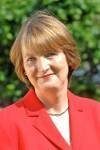
  • Harriet Harman – 2021 Speech on International Women’s Day

    Harriet Harman – 2021 Speech on International Women’s Day

    The speech made by Harriet Harman, the Labour MP for Camberwell and Peckham, in the House of Commons on 11 March 2021.

    I thank the right hon. Member for Basingstoke (Mrs Miller) for securing the debate, and I agree with every single word that she said in her excellent speech.

    This International Women’s Day debate comes in the shadow of the menace of male violence against women. I am sure we all feel the same as the Home Secretary, who said that she is “deeply saddened” by the developments in the Sarah Everard investigation, and we all hope against hope that we will not hear the news that we all dread. But at the same time as the sadness, there is real anger among women at the threat that they face on a daily basis. That is not to spread alarm; it is to spell out the reality.

    Here we are, in the 21st century, in a country where women and men expect to be equal, but we are not. Women, particularly young women, are terrified of the threat of male violence on the streets—men who try to get them to get in their car, who try to get their number, who follow them, who film them, who will not take no for an answer. Every young woman, every day, walks under this threat, so they adopt myriad strategies just to get home from work in the dark—choosing the busiest route, even if it is longer; keeping their keys in their hand; trying to go with someone rather than alone; getting a friend or their partner to map their location on a phone app; phoning on the way home so that they know they are expected.

    Women will find no reassurance at all in the Metropolitan Police Commissioner’s statement that it is

    “incredibly rare for a woman to be abducted from our streets.”

    Women know that abduction and murder is just the worst end of a spectrum of everyday male threat to women. When the police advise women not to go out at night on their own, women ask why they have to be subjected to an informal curfew. It is not women who are the problem here; it is men.

    The criminal justice system fails women and lets men off the hook. Whether it is rape or domestic homicide, women are judged and blamed—“Why was she on a dating app?” “Why was she out late at night?” “Why had she been drinking?” “What are those flirty messages on her phone?”—and men find excuses, raking up her previous sexual history in court to try to tarnish her character and prejudice the jury. Let us hear no more false reassurances; let us have action.

    Next Monday, we will be debating in this House the Police, Crime, Sentencing and Courts Bill. That is the chance for the Government to banish the culture of male excuses from the criminal justice system and, instead of blaming women, start protecting them.

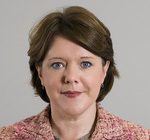
  • Maria Miller – 2021 Speech on International Women’s Day

    Maria Miller – 2021 Speech on International Women’s Day

    The speech made by Maria Miller, the Conservative MP for Basingstoke, in the House of Commons on 11 March 2021.

    I beg to move,

    That this House has considered International Women’s Day.

    It is a privilege to lead this International Women’s Day debate on behalf of members of the all-party parliamentary group on women in Parliament, who put forward the application. I thank the Backbench Business Committee for its continued strong support for this debate as an annual event.

    I want to start by sending my thoughts and prayers to the family and friends of Sarah Everard, who are going through such a painful time. Her abduction has sent shockwaves across the UK. Sarah did everything to avoid danger. Let us be very clear: women are not the problem here. For many women, this news story will bring back memories of threatening situations they found themselves in through no fault of their own, sexually harassed on the streets when walking home from meeting friends, receiving anonymous threats of physical violence on social media, or sexually assaulted in plain sight in rush hour on public transport on the way to work. Many choose not to talk about this and not to report it for fear of not being believed or taken seriously. But the research shows that these sorts of events are part of women’s everyday lives, and that is why what happened to Sarah Everard feels so very close to home.

    The shocking findings of the report published yesterday by the APPG on United Nations women show that virtually all young women have experienced the threat of sexual violence in public spaces and, indeed, that three in four women of all ages have experienced sexual harassment. Although the raw facts may show that it is rare for a woman to be abducted, the experience of young women is that the fear of sexual harassment, or worse, is ever in their mind, whether on a night out at the pub or after threats to their physical safety on social media, while for the one in six women who will be stalked in their lifetime, the fear of attack is very real.

    So rather than telling women not to worry, listen to our experience. Understand why so many women relentlessly campaigned in this Chamber for change to make women feel safer by stopping the harassment and threats of violence in the first place. We should not accept a culture of violence towards women, we should not be complicit in covering it up, and we need to give women effective mechanisms to report what happens in order to expose the scale of the problem, call it out publicly, and punish those who perpetrate this culture of fear.

    Reflecting on the past 12 months women have gone through in terms of their response to the challenges presented by coronavirus, at home women have been prominent in delivering on the frontline of health and social care, with two women professors, Sarah Gilbert and Catherine Green, helping to pioneer a global solution to the pandemic. In the US, Kamala Harris has become the first woman to be elected Vice-President of the United States, shattering another glass ceiling in the political world. Even closer to home, you, Madam Deputy Speaker, became the first woman ever to hold the role of Chairman of Ways and Means, bringing your infinite wit and wisdom to that important role.

    While we acknowledge these significant milestones, the pandemic has brought existing inequalities into sharp focus too. Women have faced pressures in balancing work with home schooling and childcare. Domestic abuse cases have spiralled—up by 83%. When it comes to job losses, women have faced a heavy toll, with those aged 25 to 34 facing the highest unemployment rise. The Government’s mission of levelling up is very relevant to women. To mark International Women’s Day 2021, my message and hope is that a focus on levelling up for women is in place now more than ever before, both here in the UK and across the world.

    We have record numbers of female MPs, yet still men outnumber women two to one in positions of power. A 50:50 Cabinet would help to ensure that women’s voices are heard where they need to be—right at the heart of Government. This week, as part of a whole host of International Women’s Day celebrations, we heard from the parliamentary archivist, Mari Takayanagi, about the remarkable contributions of early women MPs and the huge impact they had on law-making—how they spoke out 100 years ago in this place about the most sensitive of crimes against women, like FGM. These stories of courage can be seen in the work of women elected to this House today—women like my right hon. Friend the Member for Maidenhead (Mrs May), whose courage means that we have world-leading domestic abuse legislation and the Modern Slavery Act 2015, a blueprint for others across the world.

    We need more women aspiring to become Members of Parliament, so I warmly welcome the Women and Equalities Committee’s inquiry looking at the actions taken on gender equality in the House of Commons. I hope that we can conduct a second gender-sensitive audit as soon as possible, with a body identified as being responsible for putting its recommendations into practice.

    Above all, we need 2021 to be the year that we finally grasp the nettle of online abuse, which so badly affects women, particularly those in public life. We need the forthcoming online harms Bill to be more than a set of regulatory guidelines. We need laws that make it clear that online abuse is a crime, particularly with regard to posting intimate images online without consent. A safer, more respectful environment online will also lead to a kinder politics; I really believe that. In the meantime, let us stand up to those who gratuitously abuse women online—particularly women MPs and journalists—to help make sure that more women choose to stand for election and be leaders in our media too.

    Women face barriers here in Westminster, but the same is still true of other sectors—in healthcare, for instance, where women account for more than three quarters of the workforce yet fewer than half have leadership positions. An out-of-date workplace with a presenteeism culture does little to support women, particularly when they have had children, so it was helpful to see the Birmingham Business School conduct research through the pandemic to show that flexible working can improve productivity. We need as a nation to adopt flexible working as standard, as part of levelling up for women and delivering a truly modern British workplace shaped around the whole workforce. We need to look closely at what Parliament should retain from the last 12 months of changed ways of working, so that we can play our part in modernising our workplace too.

    In levelling up, we need to provide pregnant women and new mothers with better protections to stop them being pushed out of work simply for being pregnant. The Institute for Fiscal Studies has shown that one in four pregnant women felt discriminated against in the last year. Outlawing pregnant women from being made redundant, as Germany has done, would help to stop so many women falling out of the labour market into low-paid work when they have children.

    In this mission of levelling up for women, our voice on the global stage will be just as important. The Prime Minister has been a long-time advocate for girls’ education as central to levelling up for women across the globe. As the Foreign, Commonwealth and Development Office considers its new role, including championing international development through open societies, we need to continue to take forward this principled commitment to girls’ education, alongside the UK’s internationally acknowledged role in outlawing the other inequalities and abuses that women face—for example, abuse in conflict zones, forced marriage and the lack of a host of other basic human rights.

    With the UK leading the G7 this year, there is a truly unique opportunity for our country to show leadership on the global stage in promoting gender equality. The UK Government ratifying the International Labour Organisation convention on violence and harassment—the first international labour instrument that recognises the right of everybody to work free from violence and harassment—would be an act of leadership and an appropriate start. Let us celebrate an astonishing year for women and call for a commitment to level up for women across the UK and across the globe, for a fairer society for everybody.