Tag: Speeches

  • Nadhim Zahawi – 2021 Speech on Covid-19

    Nadhim Zahawi – 2021 Speech on Covid-19

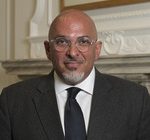
    The speech made by Nadhim Zahawi, the Vaccines Minister, on 23 June 2021.

    Good afternoon and welcome to Downing Street for today’s coronavirus briefing.

    I’m joined to my left by Dr Nikki Kanani, Medical Director for Primary Care at NHS England, and Dr Mary Ramsay, Head of Immunisation at Public Health England (PHE).

    Today I’d like to bring you the latest on our vaccination programme, and our work to get even more people protected from this deadly disease.

    We’ve come a long way since we gave the world’s first clinically authorised vaccine just over 6 months ago.

    Since that very special day, we’ve now given a first dose to 82 per cent of all adults in the UK, and today I can confirm we’ve reached the milestone of 3 in 5 of all adults getting the protection of a second dose.

    Because we’ve been able to move at such pace, any adult in the UK is now able to book their first dose.

    In the 2 days after we opened up our booking system to anyone over the age of 18, there were 6 appointments being booked every second and I’ve been absolutely thrilled to see videos of young people coming forward at some of our major vaccination events last weekend, and I’m sure they will be doing the same this coming weekend.

    The enthusiasm is making a huge difference.

    We’ve already given first doses to almost half of all 25 to 29 year olds in England, and only a week after the programme opened up to all adults on Friday a third of people aged between 18 and 24 have had their first dose.

    To all the young people who’ve stepped up, I want to say a huge thank you. You’ve protected yourself, you’ve protected your families and you’ve protected your communities.

    Because the one thing we know is the vaccines are making a real difference, the vaccines are our way out of this pandemic.

    The latest data show that the vaccination programme has already saved over 14,000 lives, and I can share with you that now it has prevented over 44,500 hospitalisations in England alone – that’s 2,500 hospitalisations prevented in the past 2 weeks.

    And when you look into the make-up of hospital admissions you can clearly see our vaccination programme is working.

    Can I have the slide on screen, please.

    In January, people over 65 made up the vast majority of hospital admissions, that is why we vaccinated them early in the programme. If you look at the most recent data they show that now they make up less than a third.

    So when we look at the protection that the vaccines deliver it is clear from that slide that it is extremely effective, especially with 2 doses, against the Delta variant.

    Recently published data from PHE looked at around 500 hospital admissions with the Delta variant.

    Of these admissions, 324 patients, so over 60%, were unvaccinated; 87 had received only one dose of a vaccine and 40 had received 2 doses.

    So fewer than one in 10 people in hospital with the Delta variant had received 2 doses.

    This really does show the importance of getting the jab, and critically, getting both doses.

    So our mission is now to get as many people protected as we can.

    And protect them as quickly as we can.

    Last week we took the difficult but I think essential decision to pause step 4 in our roadmap for 4 weeks, with a review of the data after 2 weeks. And we will absolutely have that review and share that with the nation.

    We’re going to use these 4 weeks to give our NHS a bit more time so we can get those remaining jabs into the arms of those who need them.

    Let me give you an example of why it is so important.

    Two weeks ago there were over 2 million over 50s in England who’d had a first dose but not their second dose.

    Now 2 weeks’ later it’s under 900,000.

    This pause has saved thousands of lives, and will continue to do so, by allowing us to get more of the second doses into arms of those most vulnerable to COVID before restrictions are eased further.

    We’ve also reduced the interval from first to second jab for over 40s to 8 weeks and I’d urge everyone watching, if you are over 40, come forward and have your second jab early. You can do that by going online through the National Booking Service, or by calling 119.

    We’ve seen phenomenal uptake and enthusiasm for our vaccination programme so far.

    The UK has one of the highest rates of vaccine confidence in the world.

    9 in 10 people say they’ve taken the vaccine, or that they want to take the vaccine

    It’s something we can all be proud of, but it’s no accident.

    We got here because we’ve actively, and Nikki will very much explain how we’ve done it, gone out to really address people’s genuine concerns, and have open two-way conversations about these vaccines – about how safe they are and how important they are in saving lives. And because we’ve worked with local communities on the design of the vaccination programme, so we can deliver it in a way that works for people in a place they trust by people they trust.

    Our vaccination programme has been delivered in the community, by the community, for the community and it’s been brilliant to see vaccinations being given in churches, synagogues, mosques, gurdwaras, and many other pillars of the community all across the whole UK. And to see the determined effort of the brilliant people, real partners on the ground, to reach communities where uptake is lower.

    This concerted community-led effort has truly paid off, and we’re seeing positive results.

    If you look at the latest ONS data, vaccine hesitancy has halved in the past few months among black and black British people since February and it’s halved among Asian and Asian British people too in the same period.

    This is real progress. But we know there’s more to do.

    As we look to tackle and take on those final steps, those hard yards on the road to recovery, we need to make sure as many people are protected as possible.

    So we’re intensifying, doubling down our efforts to get more people to come forward and we are seeing real results in places like Bolton and of course in the North West and elsewhere.

    We’re honing in on areas where uptake is lower, for example in London, where the percentage of first doses is slightly behind other areas of the UK.

    The London team is doing an incredible job and I can confirm today we are supporting them with a London Summit, that will take place on Friday, bringing together senior officials, the NHS in London, the Mayor of London, clinical experts and community leaders from across the capital so we can see what has worked and how we can learn from it and scale it, and focus on how we can boost uptake over these crucial few weeks ahead of the 19 July.

    Thanks to our vaccination programme, our incredible NHS, this country is getting a little bit safer every day.

    Whatever your age, whatever your background, the vaccine will protect you, it will protect your family and all the people you care about.

    So, please, come forward, and get both doses so we can take the final steps on our road to recovery. Thank you.

    Now I’d like to hand over to Dr Ramsay to talk us through the latest data and then we’ll hear from Nikki Kanani.

  • Brandon Lewis – 2021 Comments on Trees For Schools

    Brandon Lewis – 2021 Comments on Trees For Schools

    The comments made by Brandon Lewis, the Secretary of State for Northern Ireland, on 24 June 2021.

    Our Trees for Schools initiative fulfills our promise of building back greener across the United Kingdom and, in addition to marking the Centenary, leaves a positive environmental legacy for the people of Northern Ireland.

    This great opportunity is open to every school in Northern Ireland, and over one thousand trees will be offered to mark this significant year for Northern Ireland and the whole of the UK.

    I would like to thank Craigmore Trees for delivering this important project for the benefit of Northern Ireland’s schoolchildren and generations to come.

  • Gavin Williamson – 2021 Speech at the HEPI Conference

    Gavin Williamson – 2021 Speech at the HEPI Conference

    The speech made by Gavin Williamson, the Secretary of State for Education, on 24 June 2021.

    Hello, it is a such pleasure to be joining you today for this conference and I am honoured to open the debates, which I know are going to give us all a great deal of valuable insight.

    You couldn’t have chosen a more vital theme than learning from the Covid crisis and before I go any further, I want to take this opportunity to thank those of you from our universities and the wider higher education sector for all that you have done.

    The way you have made sure students were able to carry on with their studies, the way you harnessed cutting edge resources and research to tackle the virus. It has been an outstanding effort and is one the entire country is extremely proud of.

    I know this innovation and resilience is not going to be wasted as we prepare to put the worst of the pandemic behind us. It is something that will undoubtedly shape learning for the future.

    And this is what I would like to talk to you about today. How do we future-proof this most vital jewel in our education crown and strengthen our national recovery at the same time. The two, I would suggest, very much go hand in hand.

    An independent panel chaired by Sir Philip Augar made recommendations on the reform of both further and higher education. This has given us an excellent starting point and we have already addressed many of the recommendations that Sir Philip put in his report.

    Despite the uncertainty of the past 18 months, there is much to be cheered by in our higher education sector. We continue to see fierce competition for places on undergraduate courses; our world-leading research, led to that incredible vaccine breakthrough in the battle against Covid.

    Our universities provide the world with Nobel-winning scientists, innovators, engineers and creative artists. All of this is a sign of a sector in great health.

    But we cannot and must not be complacent.

    As the Augar report noted, the post-18 provision has not been delivering enough of the kind of opportunities we need, for the society that we want.

    That society will increasingly expect more flexible ways to learn, including more modular, technical, and part-time learning, just as after the pandemic, it expects more flexible ways to work. This is a challenge that the government and the sector must rise to.

    Last autumn the Prime Minister announced the Lifetime Loan Entitlement as part of the Lifetime Skills Guarantee. This recognises the realities of a fast-moving economy and the changing world of work. People need and want to be able to study and train in different ways and at different times of their lives.

    This will give people a loan entitlement to the equivalent of four years of post-18 education to use over their lifetime and will make it easier for students to access courses more flexibly. It will enable people to study in a modular way or in full years of study, and fit study around work, family and personal commitments, or equally, to retrain and upskill as both their circumstances, but also the economy changes.

    This is an opportunity for colleges and universities to reconsider how they can work much more closely together – to work with employers to create course content that responds to gaps in our labour market, to deliver the technical and academic skills our society so desperately needs.

    I do not believe this can be done just by recycling existing approaches, and it will require a fundamental rethink of how institutions approach further and higher education provision, building on the approach some providers are already offering.

    Delivering this vision is going to need action from both government and the sector to adapt to this new model, but it is a change we must make to bring true flexibility to lifelong learning.

    We have already been rolling out new employer-led apprenticeships and T levels, our new technical qualifications, while our Skills for Jobs White Paper will change the entire landscape of post-16 education. Because we must never forget that the purpose of education is to give people the skills that will lead to a fulfilling working life.

    The Augar report looked at how we can give our employers the skilled workforce they and our economy need and at the same time provide good value for money. As a Government, we have begun to take steps to remove perverse incentives, such as the bizarre circumstances whereby media studies is funded at a higher rate than mathematics.

    The Augar panel was clear about the need for universities to increase the number of courses which are aligned with the economy’s needs. And in this respect, we need universities to go further and to act faster.

    They must support and drive regional growth and productivity, particularly where that is weak. And to do this, they’ll need to change, and we will not be slow to step in if those changes are not happening.

    But so often we see universities around the country doing this, but we need more of you to do this more regularly. It is time for universities to follow the lead of Further Education college and look beyond what has worked in the past.

    Increasingly they will need to offer more higher technical qualifications and apprenticeships. These should be geared to real jobs and the actual skills needs of local employers and the economy.

    I am sure you are all familiar with the Office for Students’ Proceed statistics which were published for the first-time last month. These project the likelihood new students will find some kind of professional employment or take up further study in the year after they graduate.

    And while higher education remains a good investment for most, at 25 higher education institutions, fewer than half the students who begin a degree will go on to graduate employment or further study.

    I want to be clear that this is not an attack on the arts. Many of our arts institutions are world leaders and every subject can be taught well, and so many universities do teach it well, and every subject can lead to good outcomes. But this is not always the case.

    For example, while there are many are many good psychology courses, at one university only 39% of those who enrol in psychology go on to graduate employment or further study. This is not good enough.

    While there are many good bio-science courses, at one university only 38% of those who enrol in bioscience go on to graduate employment or further study. This is not good enough.

    While there are many good computing courses, at one university only 35% of those who enrol in computing go on to graduate employment or further study. Again, this is just not good enough.

    This is clearly not providing the kind of outcomes that students and taxpayers would expect.

    We want every student, particularly the most disadvantaged, to know that when they undertake a higher education course, they can be confident that it has a strong chance of improving their life outcomes.

    As I have said, our universities are already a byword for excellence around the world. Where we lead, others follow, but the challenge for us is to make sure that no one starts overtaking us.

    I welcome the Office for Students’ consultation on regulating quality and standards in higher education which sets out clear foundations for driving up quality. And I expect it to lead to real results.

    I want to be clear that certain practices, such as the lowering of literacy standards in degree assessments, are unacceptable and must come to an end. If a graduate begins a job without basic literacy, this serves no-one – not them, not their peers, not the employer and not the nation. It undermines the value of the British honours degree. High standards are the bedrock on which our universities’ reputation rests, and they must be maintained.

    We owe it to all our students, whatever their background, that at the very least they can expect a minimum standard of excellence that is going to lead to a qualification that will improve their future prospects and help them achieve their life goals.

    We know this can be done because of the sheer number of providers who are already doing it and delivering high-quality courses to students from disadvantaged backgrounds with results that are far above minimum standards.

    But the same cannot be said of all providers and not all students will be able to say at the end of their course that that was time and money that was well spent.

    We continue to work closely with the Office for Students on ensuring that standards remain high.

    I also welcome Lord Storey’s Private Member’s Bill that seeks to put an end to the scourge of essay mills, and we would like to work with Lord Storey to see if we can deliver it.

    We expect the same rigour in admissions as we do in every other aspect of the higher education experience. Is it really in anyone’s interests if entry requirements are relaxed so much that an 18-year-old who has not yet passed their English or maths GCSEs should progress straight to an honours degree?

    We have to make sure that those with an ability can go to university if they have the desire and application to do so, as long as they can prove they are up to it.

    In recent years, we have seen far too many unconditional offers and other practices which undermine the reputation of some of our institutions.

    Which brings me to schools. One way which universities can better support their community is to work with schools, whether that’s by sponsoring schools, or supporting a robust curriculum, or running summer camps.

    Genuine social mobility, the ability to break away from the restrictions of social or geographical disadvantage, doesn’t just begin and end with helping students get the grades they need to get into university, but by inspiring them to want to go in the first place, by inspiring them to achieve so much more for themselves and then by giving them much more support when they’re there.

    I know that some universities already do this, but we want it to become the norm, the default setting for every university.

    We have seen some fantastic initiatives from universities to drive up opportunity, from Cambridge’s new foundation year to Nottingham Trent’s outreach initiative in Mansfield. But there is still a widely held view that our current admissions system is not working as well as it should and could.

    What we need is equality of opportunity, not equality of outcome. As the Chair of the Office for Students said in a recent speech, widening admissions is never an excuse for lowering standards. And I have been clear in the job advert for the new Director for Fair Access and Participation that a key priority for them will be to challenge courses not delivering positive outcomes for students.

    I have spoken about the fact that our universities justifiably have a reputation for excellence around the world. Our academics deliver for us on so many levels, whether that’s in their research, their teaching or their innovation. But I want to make sure that they are not struggling to do all this with one hand tied behind their backs.

    Universities need to constantly question the way they do things, especially if processes are starting to make life more complicated rather than the reverse.

    So, I want you to be ruthless in your housekeeping: let us do away with the monitoring and form filling, the targets, the processes, the endless external schemes, the creeping managerialism.

    Let us free academics to do what they do best – world-class teaching and world class research.

    I’ve made clear to the OfS that I want them to be doing the same thing in their work, and I know that Lord Wharton is absolutely committed to doing so.

    Despite all that, despite all that has happened over the past year, we are as committed as ever to our manifesto pledges and are determined to support and improve an excellent education system to help level up society, right across the country.

    For me universities play such a vital and pivotal role in achieving that aim. We need to be changing what we did before. We need to adapt and to embrace new ways of working. We are going to ensure the global prestige of our universities will continue to shine undimmed throughout the world. You are so important to our nation, to our future, to the delivery of the government aims, and I know that working together we can rise to that challenge. Thank you.

  • Dominic Raab – 2021 Comments During Trip to Singapore

    Dominic Raab – 2021 Comments During Trip to Singapore

    The comments made by Dominic Raab, the Foreign Secretary, on 24 June 2021.

    Singapore is a good friend to the UK. We share the ambition to use tech and innovation to create the jobs of the future, and we’ve both committed to solving global and regional economic challenges – from COVID to climate change.

  • Stephen Barclay – 2021 Comments on Supporting the Union

    Stephen Barclay – 2021 Comments on Supporting the Union

    The comments made by Stephen Barclay, the Chief Secretary to the Treasury, on 24 June 2021.

    The UK government is fully committed to supporting the entirety of the UK throughout the pandemic – with an additional £28 billion for Scotland, Wales and Northern Ireland since the start of the pandemic.

    Over the past year we’ve protected jobs and businesses across the UK with furlough and other support schemes, our vaccine rollout is now helping us unlock the economy, and our Plan for Jobs is levelling up opportunity and helping people back into work.

  • EE – 2021 Statement Confirming Free Roaming in EU to End

    EE – 2021 Statement Confirming Free Roaming in EU to End

    The statement made by EE on 24 June 2021.

    From January next year, EE will introduce a new flat fee of £2 per day for customers wishing to roam in 47 European destinations (excluding ROI which is included in domestic plans), allowing them to be able to use the full data, minutes and SMS allowance of their plan.

    This only applies to new and upgrading customers who join EE from 7th July 2021 and supports investments in our UK based customer service and industry leading network in the UK.

  • Thangam Debbonaire – 2021 Comments on Rob Roberts

    Thangam Debbonaire – 2021 Comments on Rob Roberts

    The comments made by Thangam Debbonaire, the Shadow Leader of the House of Commons, on 24 June 2021.

    Rob Roberts is hiding behind a procedural loophole but his constituents deserve a say in whether he is still fit to represent them.

    To be suspended from the House for six weeks but not automatically be subject to the Recall Act shows the system is not fit for purpose, nor offering adequate protection and support for staff.

    This MP should do the decent thing and resign. But for as long as the Government leave the loophole in place, they are aiding and abetting his evasive strategy. Labour will use every device available to Parliament to close the loophole.

  • Alison McGovern – 2021 Comments on the Events Research Programme Results

    Alison McGovern – 2021 Comments on the Events Research Programme Results

    The comments made by Alison McGovern, the Shadow Culture Minister, on 23 June 2021.

    As requested by the Government, Directors of Public Health, events companies and members of the public put in every effort to test safe ways to go ahead with live music, nightclubs, sports events and other large scale events. And yet now the Government won’t share the data to confirm if it works and allow them to plan.

    Businesses need to be able to plan and the public should know what is possible to make sure the summer is both safe and fun. They all deserve a lot better than this messing about from the Conservatives. Why does Boris Johnson find it so hard to be transparent with us?

  • Lisa Nandy – 2021 Comments on Russian Intervention on Royal Navy Ship

    Lisa Nandy – 2021 Comments on Russian Intervention on Royal Navy Ship

    The comments made by Lisa Nandy, the Shadow Foreign Secretary, on 23 June 2021.

    The Foreign Secretary must urgently come to the House to confirm the validity of these deeply concerning reports and outline what steps the UK is taking to ensure the safety of British forces in the Black Sea.

  • Sadiq Khan – 2021 Comments on Hydrogen Buses

    Sadiq Khan – 2021 Comments on Hydrogen Buses

    The comments made by Sadiq Khan, the Mayor of London, on 23 June 2021.

    We have made real progress in London to clean up our air, but we still have a long way to go because toxic air pollution in our city is still leading to thousands of premature deaths every year and is stunting the growth of children’s lungs. As part of our world-leading ongoing efforts, I’m proud to announce England’s first hydrogen double decker buses, which don’t produce any harmful emissions, will now be put into service.

    Our investment in these hydrogen buses is not only helping us to clean up London’s air, but is supporting jobs and local economics across the UK. This is a great demonstration of how tackling air pollution and the climate crisis and boosting economic growth is about regions working together, investing in the very latest technology.

    I’ve worked hard to ensure TfL’s entire core bus fleet across London now meets the ULEZ standards, and this includes 500 electric buses. Our new investment in hydrogen buses will move us even closer to our ambition of making all London buses zero-emission by 2030.