Tag: Speeches

  • Theresa May – 2021 Speech in the House of Commons on David Amess

    Theresa May – 2021 Speech in the House of Commons on David Amess

    The speech made by Theresa May, the former Prime Minister, in the House of Commons on 18 October 2021.

    Laughter, service, compassion: these are three of the words that spring to my mind when I think of David Amess.

    Laughter, because you could never have a conversation with David without laughter and smiling, whether that was because one of the outrageous stories that he was telling, perhaps about one of his colleagues or somebody else—[Laughter.] It was always smiles, always laughter, always fun around David.

    Service, because he had an extraordinary record of dedicated service to his constituents. I suggest to anybody who wants to be a first-class constituency MP that they look at the example of David Amess. He was deeply embedded in his constituency and, as we all know, championed it on every possible occasion. I do not think that a question or speech from David went by in this House without his constituency being mentioned. But he did not just promote his constituency here in the House. He was a part of it: he understood it, he knew it, he was in the community, he was of the community, and he was respected and loved by the community. His death is tragic and the manner of his death appalling, but isn’t it fitting that his last acts were acts of service to his constituents?

    And then there was David’s compassion, born out of and strengthened by his faith: compassion for the vulnerable; compassion for those in need. But he did not just talk about it; he acted. He changed laws. He went out there and made a difference to people’s lives, because he was also an accomplished parliamentarian and he knew that a Back Bencher who is dedicated and resolute can make a real difference.

    To echo some of the comments that have been made today, first of all, I think it is a wonderful legacy for David that Southend is now a city. But we can also add to the legacy of David Amess by ensuring that in all our political debates and our political discourse we bring to those debates and that discourse the same respect, decency and compassion that were the symbols of his life. Because David Amess made a difference. His compassion made a difference to people outside of this House. His kindness made a difference to people inside this House. Our thoughts and prayers are with Julia and the family. Their loss is devastating. His constituency has lost a much respected and loved Member of Parliament, this House has lost a remarkable and valued parliamentarian, and every Member of this House has lost a friend. May he rest in peace.

  • Ed Davey – 2021 Speech in the House of Commons on David Amess

    Ed Davey – 2021 Speech in the House of Commons on David Amess

    The speech made by Ed Davey, the Leader of the Liberal Democrats, in the House of Commons on 18 October 2021.

    The grief, the sadness and the shock that we are all feeling today on the awful loss of Sir David Amess—this collective sorrow—unites us all today. Like the Leader of the Opposition, I want to reach across the aisle and say to every Conservative colleague who knew David much better than many of us on the Opposition Benches, as has been so evident in the brilliant speeches that we have heard: we feel for you.

    David’s wonderful friendliness and his eclectic mix of campaigns that bridged the political divide were very special. From his campaigns on animal welfare to his championing of the fuel poor, David always spoke with compassion and authority, and often with humour.

    Since Friday, I have spoken to a range of people about David, not least Liberal Democrat councillors from Southend. I have to confess to Government colleagues that not all Liberal Democrat councillors are always complimentary about their sitting Conservative MP, but about David Amess their affection was totally authentic. Carole Mulroney, a councillor in Leigh-on-Sea, told me how appreciative she was of David’s support for the Leigh Society and the local heritage centre that it runs. Local history was clearly a passion of David’s, as shown by his championing of the cause of Endeavour, the only one of Leigh’s little ships to have survived the years since Dunkirk. Endeavour has been brought back to Leigh and restored, and now takes part in Dunkirk ceremonies and local events, not least thanks to David.

    As well as being proud of Southend’s past, David will always be deeply connected to its present and its future, particularly now that we will have the city of Southend. Carole told me how David would proudly boast of walking each road, street, drive, avenue and lane of his constituency, and how supportive he was of every community, not least the local fishing and cockling industry. Every community needs champions like David. The point is that we do not have to agree with each other across our political divides, but we can learn to be kind and warm, even when we disagree; David was.

    Today is not the day for discussing the implications for MPs’ security and so on, but I want to reflect on what happened to one of my close Liberal Democrat colleagues nearly 21 years ago. Yesterday I spoke to Nigel Jones, a former MP for Cheltenham, who, as many will recall and a number have mentioned, was brutally assaulted during his constituency advice surgery. Nigel was saved that day by the bravery of his member of staff, Andrew Pennington. Andrew Pennington was killed. Andrew was a local councillor, who, Nigel told me, used to work seven days a week for local residents. He was Nigel’s right-hand person. As we reflect on the loss of David and on the threat to MPs, let us remember this too: our staff and many in public services face abuse, threats and violence on an alarmingly frequent basis. It is incumbent on us in this House to defend them all. I am sure that that is what David would have wanted.

  • Peter Bottomley – 2021 Speech in the House of Commons on David Amess

    Peter Bottomley – 2021 Speech in the House of Commons on David Amess

    The speech made by Peter Bottomley, the Father of the House, in the House of Commons on 18 October 2021.

    I agree with the right hon. and learned Member for Camberwell and Peckham (Ms Harman) and the right hon. Member for Ross, Skye and Lochaber (Ian Blackford).

    In 2010, David Amess made a speech in which he said it was extraordinary to listen to the then acting leader of the Labour party, now the Mother of the House. He said that she made a splendid speech, and that one of the jokes was fantastic and he was going to use it in the future.

    David’s all-party group on fire safety and rescue worked with the all-party group on leasehold and commonhold reform—we had a number of meetings over the year. Alongside city status for Southend, may I put it to the Prime Minister and the Chancellor that they could make his legacy the finding, fixing and funding of the problems on defective leasehold flats, while chasing those responsible and getting them to pay up? I think he would wish for that.

    If we look around this Chamber, we can see the shields of those who have died—some in active service in the last world war. Ronald Cartland was the first. Other Members went forward knowing the risks. So did Police Constable Keith Palmer.

    Jo Cox and her family are in our hearts, as we have been told, and we remember Andrew Pennington, the Liberal MP’s caseworker who also died in a constituency attack. A few of us were here when Airey Neave’s car was blown up. Robert Bradford and I were together in the Westminster Wobblers, the House of Commons’ football team. Tony Berry was my Whip, and Ian Gow and I canvassed together in Ulster. Gow’s death, I believe, was timed to make us forget the murder of the Sister of Mercy, Catherine Dunne, a few days earlier in July 1990.

    In David’s first speech in January 1984, he said:

    “Charity has been described as that amiable quality that moves us to condone in others the sins and vices to which we ourselves are addicted.”

    When he made that first speech in the Commons, he was able to say that there with him were five people who had previously represented his own constituency, which must be some kind of a parliamentary record.

    David was followed by the right hon. Member for Newcastle upon Tyne East (Mr Brown), who cheerfully said:

    “At the risk of inciting dissent from those behind me, I congratulate the hon. Member for Basildon (Mr. Amess) on his maiden speech. I do not agree with what he said, but it was no worse than the speech of the Minister.”—[Official Report, 17 January 1984; Vol. 71, c. 219-20.]

    That was the line that Douglas Jay used when he congratulated me in 1975, so the response must be in the Labour Whips’ booklet.

    The right hon. Member went on to wish David well in the time that he had in Parliament. That time is well described by Trevor Phillips in The Times today. His leading words talked of

    “the simplicity of a man who served.”

    He said:

    “He knew his constituents well and showed them what the Tory party could be.”

    Mr Speaker, can we thank you and the party leaders for what you have said over the past three days? May I also add John Bercow who, in an interview I heard, represented the feeling of those who have served with David in this House?

    Many of these attacks are done for calculated publicity and public reaction. We should try to make both act against the wishes of perpetrators. The only guarantee is that, when there is a gap, it will be filled. MPs are in the middle of a pack of people at some risk, including ministers of religion, mental health workers, public transport staff, lone shopkeepers, women police officers, journalists, fair employment builders in Northern Ireland and the judiciary, and especially women and girls going home and at home.

    We should defend people in every walk of life, in politics and universities—here I mention mildly the philosopher Professor Kathleen Stock in my county of Sussex. St Margaret’s Church, Parliament Square, where I serve as parliamentary warden, is where we will gather later today and for the Roman Catholic service on Wednesday.

    We have learned to stand with the Irish and the Northern Irish against violence. We stand with Muslims against Islamophobia, with Jews against anti-Semitism and with all the targets of fascists and white supremacists. We do have to be vigilant, but we also have to continue to be diligent in contact with constituents. Of course, we must review security risks, including the insecure location of the national holocaust memorial presently proposed in Victoria Tower Gardens.

    At the opening of the Imperial War Museum’s holocaust galleries last week, I collected posters. David might wish us to remember their words, as if directed to us and to our constituents.

    “Freedom is in peril. Defend it with all your might.”

    Another, which brings his face to my mind, says:

    “Your courage, your cheerfulness, your resolution will bring us victory.”

    I end with the then Prime Minister’s first speech to the House of Commons:

    “Let us go forward together.”—[Official Report, 13 May 1940; Vol. 360, c. 1502.]

  • Ed Miliband – 2021 Comments on Government’s Net Zero Strategy

    Ed Miliband – 2021 Comments on Government’s Net Zero Strategy

    The comments made by Ed Miliband, the Shadow Business Secretary, on 19 October 2021.

    This is a plan torpedoed by the Treasury. Once again, it has failed to recognise that the prudent, responsible choice is to sufficiently invest in a green transition.

    Homeowners are left to face the costs of insulation on their own, industries like steel and hydrogen are left hobbled in the global race without the support they need, and the government cannot even confirm they will meet their climate target for 2035.

    While Labour has a bold climate investment pledge of £28 billion extra each and every year to 2030, the government offers a tiny fraction of that.

    This does not meet our ambitions for British industries to thrive, prosper and lead the world or show the government leadership required to tackle climate breakdown and bring the benefits of a green transition to Britain.

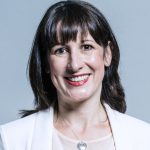
  • Bridget Phillipson – 2021 Comments on Inflation Figures

    Bridget Phillipson – 2021 Comments on Inflation Figures

    The comments made by Bridget Phillipson, the Shadow Chief Secretary to the Treasury, on 20 October 2021.

    The government’s cost of living crisis is sadly not going away.

    The Tories are out of touch, hitting people with a Universal Credit cut and a jobs tax, just at a time when they’re left with less money in their pockets at the end of the month and are feeling the pinch.

    Instead of complacently sitting back and leaving people worse off, Labour would get a grip on the crisis and improve people’s everyday lives. Our plan to buy, make and sell more in Britain is the real route to a higher wage, high productivity economy, backed by a boost to pay and conditions from a £10 minimum wage right now, fair pay agreements and an end to exploitative practices that are lowering standards.

  • Nick Thomas-Symonds – 2021 Comments on Women Spiked with Needles

    Nick Thomas-Symonds – 2021 Comments on Women Spiked with Needles

    The comments made by Nick Thomas-Symonds, the Shadow Home Secretary, on 20 October 2021.

    The reports of this vile act are terrifying – and yet another example of the appalling violence faced by women and girls, day in day out.

    This awful crime needs to be clamped down on without delay. That must involve bringing together the police, venues, universities and – crucially – listening to women who have been attacked. The Home Secretary should deliver action without delay, to help prevent this happening again, bring those responsible justice and ensure they face the full force of the law.

  • Lord Puttnam – 2021 Retirement from House of Lords Speech

    Lord Puttnam – 2021 Retirement from House of Lords Speech

    The speech made by Lord Puttnam at the Shirley Williams Lecture on 15 October 2021.

    Before I begin, I’d like to offer my sincere condolences to the whole of the Amess family – what happened today is not just a tragedy for them but for all of us who believe that democracy must operate free of fear at a constituency level. As with Jo Cox five years ago, our MPs, whilst protected within Westminster, remain vulnerable when doing the vital public facing aspect of their role.

    It’s for these reasons I want to talk this evening about the multiple dangers faced by Democracy – for me today’s shocking events simply strengthen the case for continual vigilance.

    Probably the most overused phrase at a moment like this is: “what an honour it is to be speaking at an event which memorialises – whoever”; but the truth of that sentiment couldn’t be more sincerely felt this evening, nor carry with it more responsibility.

    Shirley was an admired friend and major influence for almost fifty years – there are not half a dozen people in public life who have more accurately reflected the expectations I’ve hoped for myself.

    We shared the privilege of having parents who had risked a great deal and gave up chunks of their life to make the world a better, safer place.

    In her phrase they had “a commitment to the idea and the ideal of public life”.

    In her own life she left us with an almost impossible debt to repay – but this evening I’m going to give it a shot.

    I’ve done a fair bit of reading and revision in preparing for this lecture and, as most members of the House of Lords will acknowledge, it’s a wonderful sense of relief not to constantly have to check a word count to stay within the five, four or even three-minute speaking times that have become commonplace.

    How it’s possible to make a persuasive argument within those restrictions is totally beyond me – I frequently reflect upon the 272 words in the Gettysburg address – and then remember that Lincoln’s speech was essentially an ‘assertion’ not an argument – although history has judged it as both.

    This issue of ’assertions’ is one I’ll be returning to; but I can’t be the only member of the House of Lords who’s become increasingly frustrated by the fact that in Parliament, as elsewhere, we no longer engage in serious ‘debate’ – we simply trade assertions.

    ‘Debate’ as I have always understood it, is ‘persuasion’ based on competing interpretations of evidence; and the ability to form a compelling argument and, where necessary, seek compromise.

    Sadly, that’s been substituted by a ‘dialogue of the deaf, typified by the Government’s refusal to answer serious questions, or offer any well-thought-through arguments in defence of seemingly immutable positions.

    Their view appears to be ‘we are the Government – take it or leave it!’

    To say that I find it disheartening would be an understatement.

    Over the course of the next thirty minutes, at times using Shirley’s own words, I’ll argue that not only does the world in general find itself in a bad place, but I’ll try to set out some of the reasons we find ourselves careening down a path to self-inflicted disaster or, in the case of the UK, irrelevance.

    I was tempted to use a more ambiguous word than ‘disaster’, but that would only be adding to the pile of misinformation in which we’re already drowning.

    A large portion of my life has been spent as a cinematic storyteller.

    But I’d suggest that all thirty of the films I made for film and television tried, with mixed success, to offer something beyond a straightforward narrative – something for the audience to discuss and perhaps even argue about long after they’d left the cinema.

    So was there a particular insight I kept trying to get across – and if so, what might have been its gestation?

    Early on in my career I could only draw from a couple of dozen uneventful, but easily illustrated years growing up in the North London suburbs.

    I was the quintessential beneficiary of the policies of the post-war Labour Government – in health, in social security and, as one who squeezed over the hurdle of the eleven-plus – even in education.

    That “revolution by consent” Shirley used to refer to.

    By my late twenties I’d been responsible for three or four films set against the background of those early experiences, the success of which had given me some limited credibility as a producer.

    So much so that in 1971, together with my partner and friend, Sandy Lieberson, I had the audacity to bid for the rights to a book which had become a huge international best seller.

    That book was ‘Inside the Third Reich’ by Albert Speer.

    We were rank outsiders in pursuit of these rights, but the publisher generously agreed that we might at least travel to Heidelberg and make our case in person.

    Albert Speer, Hitler’s former Architect and Armaments Minister had walked out of Spandau prison five years earlier, having served twenty years for war crimes – he patiently listened for several hours as we took him through our reasons for wanting to make the film and, to our amazement, he agreed that if a movie was to be made, it should be produced by and for a younger generation.

    That was the start of an adventure which took us and our screenwriter Andrew Birkin on numerous occasions back and forth to Heidelberg.

    It was during those conversations with Speer that I came to understand what we now call ‘the fascist play book’ – the way democracy can be corrupted and overturned by a few malevolent but persuasive politicians, those who are prepared to exploit divisions in society with simple populist messages.

    He explained the extent to which we were all vulnerable, and the importance of developing the form of ‘moral vigilance’ required to recognise nascent evil for what it is.

    Having joined the National Socialist Party in 1931 with a view to furthering his career as an Architect, what should have been the moment of truth came seven years later.

    Driving to his office on November 1938 he passed the smouldering ruins of Berlin’s synagogues, the result of the orchestrated riots of the previous night – ‘Kristallnacht’.

    As he puts it in his book, “most of all I was offended by the smashed panes of shop windows which offended my sense of middle-class order” – he goes on: “what I didn’t see was that more was being smashed than glass, that on that night Hitler (actually Germany) had taken a step that irrevocably sealed the fate of his country.”

    He concludes: “did I sense that this outbreak of hoodlumism was changing my own moral substance? I do not know.”

    A more politically astute man would have realised that Rubicon had been crossed five years earlier, in the aftermath of the Reichstag Fire and the subsequent Enabling Decree, which effectively disbanded Parliament and handed absolute power to Hitler.

    The full title of the Act was ‘The Decree for the Protection of the People and the State’.

    It’s an interesting word ‘enabling’, it sounds fairly harmless – as in ‘enabling’ a child or an elderly person to safely cross a road.

    How often do powers accrue to Parliament through a piece of legislation whose intent is the precise opposite of its title?

    Take for example the present Government’s plans to revise the Data Protection regime, their consultation allows for the impression that they’re simply ‘freeing us up from bureaucracy’, when by far the most likely outcome is the privatisation, exploitation and sale of our personal data.

    It might be a good idea to take a long hard look at what else is coming down the track.

    An ‘Elections Bill’ that, contrary to the advice of the Committee for Standards in Public Life, is set on undermining our long established independent ‘Electoral Commission’; a Bill to reform Judicial Review whose principal aim is to reduce the role of the Judiciary; a Police Bill that weakens the right to legal protest; along with a plan to ‘widen the scope of the Official Secrets Act’ with no commitment to add a public interest defence for journalists – even an Education Bill that seeks to reduce traditional academic freedoms in the area of Teacher Training! All of this accompanied by continued mutterings about ‘unelected judges’ in Strasbourg, and ‘reforming’ the UK’s implementation of the European Human Rights Act, potentially forcing us out of the Council of Europe.

    And with every passing month there are more – each of them setting out to chip away at and undermine much of what defines an active liberal democracy: those institutions that might act as checks and balances on a populist government that’s trampling on long held rights and conventions, with the sole purpose of tightening its own grip on power.

    Which is why a free and fearless media is essential to democracy.

    So when the Prime Minister actively – and repeatedly – intervenes to manipulate an ideological ally into the Chairmanship of Ofcom, every alarm bell should start to ring signalling the absolute nonsense that’s being made of the regulator’s independence.

    It’s worth pausing here to remind ourselves that Ofcom’s primary duty, as amended in the Commons, and set out in her speech of Monday 4th July 2003 by my greatly missed friend the then Secretary of State, Tessa Jowell, is as follows:

    “Ofcom shall have a primary duty to citizens and consumers whose interests shall be equal. Furthermore, when the duty to the consumer and the duty to the citizen come into conflict, there will be transparency and accountability.

    Ofcom will publish a reasoned statement as soon as possible after a decision setting out how the duties came into conflict, how Ofcom resolved that conflict, and the reasons behind its decision.”

    Importantly, she concluded:

    “The communications industry is not like any other industry: it is central to the health of our society and the health of our democracy.”

    That is why being Chair of Ofcom is unlike almost any other position of trust, and cannot be safely placed in the hands of anyone with a discordantly ideological turn of mind.

    It will be similarly fascinating to see how the newly installed Secretary of State chooses to interpret her brief to ‘protect a public service ethic that is distinctively British’!

    No government in the world has inherited a more comprehensively tested ecosystem of public service broadcasting. That’s why our formats, ideas, talent, humour and values so effortlessly, and successfully travel around the world. By chipping away at an area of public service the government so clearly loathes, they are in fact undermining precisely that ‘distinctiveness’ they claim to treasure!

    When you add the commercially illiterate and ideologically vindictive proposal to ‘purify by privatisation’ Channel Four, you begin to see how easily our carefully constructed public broadcast system can be smashed to pieces.

    Mention of the DCMS brings me back to that ‘Digital Democracy’ report I mentioned at the outset, and in particular the Government’s draft Online Safety Bill.

    In my view, the Bill in its present form does not go anything like far enough in addressing the issue of personal responsibility, or redress for the profound societal harm caused by tech-enabled misinformation.

    What the principal shareholders of the social media companies know is that the type of adjustments that could be made to their algorithms are likely to adversely impact their ‘reach’, and therefore their revenues.

    The founders of these companies, even the best of them, cannot find it in themselves to confront their shareholders with the consequent reduction in ‘market value’.

    So, despite the fact that they know exactly what they could do to tweak their algorithms, and make them safer, they concoct the same stream of misinformation they facilitate on a daily basis, to protect what is already a dysfunctional business model.

    This is capitalism quite literally eating its young.

    If you want further evidence, and have one minute 40 seconds to spare, go on to YouTube.

    There you can search for and easily find the evidence given before the Congress in 1994 by the US tobacco barons – swearing on oath that nicotine was not harmful, and there was no relationship between nicotine and poisoning. Three years later that issue was settled with a fine-payment of over $200 billion, but no acknowledgement of personal responsibility.

    To me, we are heading down exactly the same road with the social media companies.

    At the time of that congressional hearing every one of those men had, for 15 years, received all the evidence they could possibly need to know that cigarettes were in effect ‘nicotine delivery tubes’, responsible for the death of thousands of people a year.

    As a self-confessed nerd, I also spent a good number of years looking at Road Traffic Acts, and the way the Automobile Industry ignored the issue of safety for almost half a century.

    We have to get a whole lot smarter in looking at the history of these failures – to learn from our mistakes and challenge our seeming complacency. Corporate responsibility and it’s imposition has been evaded for far too long and, even when it is imposed its almost always based on the concept of ‘fines’.

    Fines have never been enough.

    If we are serious about grabbing the attention of Boards towards their ‘duty of care’ then we have to create far clearer lines of accountability.

    I’ve sat on numerous Boards over the past fifty years, and the one certain way to make Directors and senior managers to sit up and take notice is when the ‘risk register’ flags up the issue of personal responsibility.

    There is something deeply flawed in the response of the global tech monoliths to criticism, their instinct is to believe that they can always ride it out.

    They may of course be right, because the truth is only Parliament can bring them under control.

    It’s in Parliament that the buck stops; but on present evidence it’s also where much of the will stops.

    MPs are busy people and tend to react to events rather than get ahead of them, but I’d suggest they should sit up and take particular notice where online harms to young people are concerned.

    Unless a tougher regulatory regime is imposed on the social media companies than presently appears on the face of the draft Bill then I’ll bet a pound to a penny that, over the course of the next Parliament, literally dozens of MPs will find themselves dealing with a ‘Molly Russell’ case in their own constituencies;

    and God help them if they are unable to explain to parents why, when they had the opportunity to strengthen the law and the penalties it carried, they chose not to.

    I don’t think there is further room for cosy compromises; ‘big tech’ can no longer be seen as too big to prosecute, any more than can ‘big energy’ or ‘big finance’. All have to accept their clear ‘duty of care’.

    Much of this was confirmed by Frances Haugen’s recent and remarkable testimony to Congress in respect of Facebook.

    Indeed, were I ever to have made a film about a whistle-blower I’d hope to cast someone who came across with the poise and integrity of Ms. Haugen!

    A read-across from Albert Speer would suggest that her testimony may well be Facebook’s ‘Faustian moment’. This is surely the point at which any right-thinking employee should say to themselves “enough is enough – I need to stop defending the indefensible and reset my moral compass”.

    In raising the issue of harms to young people it seems worth stressing that, as a nation, we’ve been hopelessly lax in developing initiatives to empower vastly improved digital literacy among children and young people. There is an obvious need to invest in projects that will encourage them to think far more critically about the content they consume, most especially online.

    Unacceptable delays have resulted from the buck being passed from department to department, all the time ignoring the fact that Public Service Media has a critical role to play.

    We’ve already witnessed some really useful initiatives from the PSBs – you only have to look at the value children and their parents have extracted from the BBC’s educational output during the pandemic, and the range of resources that are now available via BBC Teach, to see what could be possible.

    Taking a step back for a moment, Dick Newby, in his generous introduction, mentioned my decision to retire from the House of Lords later this month. That was not a decision arrived at lightly and maybe it deserves a little explanation, possibly even some additional justification.

    As I’ve mentioned, for a little over a year, from the Spring of 2019 to the end of June 2020 I had the honour to Chair a Lords Select Committee on the impact of digital technology on our political processes.

    I was fortunate to have around me a cross-party group, along with an exceptional support team, all of whom took our brief incredibly seriously.

    Our final Report, with its forty-five evidence-based recommendations, was published in June of last year under the title ‘Digital Technology and the Resurrection of Trust’.

    It was originally to be: ‘Digital Technology and the Restoration of Trust’, but the evidence – even then – was so damning that in the final draft I substituted the word ‘Resurrection’.

    I believed and continue to believe that the ‘resurrection’ of our capacity to trust each other, and the systems through which we receive information – the same information on which we base many of the most important decisions of our lives – is fundamental to our survival as a coherent society.

    I put it more simply in the Foreword to the Report – “without trust democracy as we know it will simply decline into irrelevance” – fifteen months later I’d add, ‘or worse’!

    The only accurate way to describe the Government’s response to our Report is ‘lamentable’.

    Little attempt was made to address the mountain of evidence, let alone build and improve upon the most thoughtful of our suggestions.

    It came across as if written by a robot – and ‘the computer said no’!

    That was, to put it mildly, disheartening – made worse because throughout the deeply unpleasant Brexit debates I’d been forced to watch Ministers malevolently twist, turn and posture in parading their prejudices, along with their, at times, downright ignorance.

    Let me offer two examples which left me particularly gob smacked:

    In discussions regarding the Republic of Ireland, and the complexity of finding sustainable post-Brexit solutions, I was staggered at the display of pig-ignorance towards the fundamentals of Irish history, let alone sensitivity towards the reality of cross-border relationships.

    Had they really become so disconnected from the ghastly history of what we euphemistically call ‘the Troubles’?

    As someone who lives just across the Ilen River from the site of what is probably the largest and most recent mass famine-grave on these islands, I may well be ultra-sensitive to these issues, but with a few notable exceptions, the level of empathy and understanding on display in both Houses was truly shocking.

    To switch from the personal to the political; to hear from Government Ministers, with a straight face, that it was going to be relatively simple to negotiate a significant trade deal with the United States – all the while remaining blithely ignorant of the immense political sensitivities across the island of Ireland – was either astonishingly stupid or a downright lie.

    To both these issues I tried to inject some contemporary and historical realism; to find all rational discussion utterly ignored.

    If anything, this situation has only deteriorated, made significantly worse by the unprincipled and destructive outbursts of the recently ennobled Lord Frost in Lisbon on Tuesday evening, who seems to exist in a world entirely of his own imagining.

    There is a short speech in the 1987 movie ‘Broadcast News’ that I’ve used a number of times when teaching my communication students.

    At one point the character ‘Aaron’, played by Albert Brooks says:

    “What do you think the devil will look like when he next comes around? Nobody’s going to be taken in if he starts flashing a long red pointy tail.

    No, what he’ll do is just bit by bit lower standards where they’re important. Just coax along flash over substance …. just a tiny bit at a time!”

    Maybe in our case he’ll substitute a long red bus for the long pointy tail; paint a massive lie on the side, and find a group of unprincipled acolytes to defend it!

    Given all of this and more, at eighty I no longer find myself with sufficient patience to treat mendacious political inanity with the appearance of courtesy.

    In 2005 and 2006 I chaired Hansard Commissions looking at ways in which the operations of the House of Lords might better reflect the, then new, century.

    Fifteen years later I’m happy to say that at least some of the reforms we recommended have been implemented; a Chief Executive to work alongside the Clerk of the Parliaments; an accountable and publicly comprehensible set of reporting mechanisms, and a fit for purpose Communications Department.

    A few years later I gave evidence to the Burns Review and recommended that fifteen years of active service and an eighty-year age limit would seem appropriate – I added that in exceptional cases those upper limits be increased to twenty and eighty five.

    I added that my case certainly didn’t qualify as ‘exceptional’!

    Having hit respectively twenty-four years and the age of eighty, it felt time to, as it were, ‘put my money where my mouth had been’.

    Whilst I won’t miss the bi-weekly four-and-a-half-hour commute,

    I’m definitely not leaving the Labour Party, and will greatly miss the collegiality of my colleagues, indeed I’ll miss the friendship and support the very many Peers I respect on all sides of the chamber.

    I’ll certainly miss playing a part in the deliberations of my colleagues on the Environment and Climate Change Committee, and I’ll be equally sorry not to engage with the cut and thrust that will undoubtedly accompany the contentious passage of the Online Safety Bill; but as I suggested at the conclusion of what turned out to be my final speech in the House:

    “With all the force I can muster I beg those many decent Conservative Peers and Members of Another House, those with a concern for the principles of parliamentary democracy, to do what sooner or later they will have to do: muster the courage to say to the Prime Minister and his seemingly supine cabinet ‘in God’s name go’.

    Go before you destroy the last sliver of self-respect that our country can call its own”.

    I’m only too aware of the irony that, having spent almost sixty years seeking cross party support for those things I most believed in, I’m left looking to the Conservative party to offer a lifeline to the concept of an informed plural democracy.

    Since joining the House of Lords all those years ago, and entirely contrary to popular myth, I’ve always seen the Chamber as likely to be the ‘last man standing’ when the fight to sustain a citizen-led democracy reaches its end game.

    Twenty-four years ago, when I went through the ritual of establishing my ‘désignation’ at the College of Heralds I was informed that the name Puttnam (with a variety of spellings) had a Norman antecedence, a crest, and even a motto.

    That motto was ‘To Serve is to Live’ – more than ever in leaving the House as a working Peer I realise what an incredible privilege it’s been to be allowed to serve the country in a variety of areas – through incredibly happy years at the Department of Education, across work with numerous Committees, and most recently through the misunderstood and much maligned role of a Trade and Cultural Envoy to, in my case, South East Asia.

    In her valedictory speech six months prior to the catastrophic EU referendum, having reaffirmed her passionate commitment to the European Union, Shirley Williams presciently said this:

    “We have to contribute to the huge issues that confront us, from climate change through to whether we’ll be able to deal with those multinational companies wishing to take advantage of us.”

    In a period of, as she put it ‘great tension, strain and fragmentation’, Shirley placed an especial emphasis on the linkage between the climate crises and the issue of refugees coming from amongst the most disadvantaged people in the world.

    In my judgement some of us, and certainly our children will live to see the collision of those two realities – the repercussions of climate related disasters will vividly reappear in the form of multitudes (and I don’t believe that will prove to be too strong a word) ‘multitudes’ of refugees seeking salvation wherever they can find it.

    Throughout her career, as a committed internationalist Shirley had great faith in UN institutions such as UNHCR.

    As a proud past-President of UNICEF UK, I only wish I could believe either agency had the resources, along with the required political support to match the scale of the climate driven crisis I see as inevitable.

    The failure of an agreed international response can only lead to each nation developing its own answers – fertile ground, if it were needed, for renewed authoritarian rules – but it’s doubtful they’ll be called ‘Enabling Acts’ – that brand’s already been tarnished!

    So, this is where I return to those early conversations with Albert Speer, who all too late came to understand that the most troubling fault line in human behaviour is the fatal link between ‘Power and Fear’, each feeding the other to create a toxic and combustible brew. One that perfectly serves the policies and purposes of corrupt autocracies, one that can only be faced down by a committed and unflinching adherence to plural Democracy.

    Mirroring the anxieties of many of those angry Brexiteers in 2016, I feel I’ve had my country of birth, and the values I believed it to represent, stolen from me.

    It’s worse than that, I find myself embarrassed by what, on an almost daily basis I see it becoming – my old enemy Rupert Murdoch’s dream made real. He never liked Britain, and he’s kind of won, he’s helped remake it in his own malevolent image.

    It doesn’t have to be that way – politics is important, public service continues to attract utterly decent people knowing that Governments come and go.

    I once heard Douglas Hurd, a man for whom I had great respect, say words to this effect:

    “The duty of Government is to steer the ship of State through waters that are inevitably rough, sometimes even treacherous, and bring it back into a safe harbour for another group of honest men and women to assume the same responsibility.”

    That perfectly conveys my idea of the process of Government which has, and can in the future, be carried out responsibly and well.

    At present I don’t believe that to be the case.

    Which is why I’m leaving the House of Lords with a pretty heavy heart; in the years that are left to me I’ll do what I can to support and celebrate the achievements of the next generation of progressive politicians, whilst offering every form of encouragement to my own wonderful West Cork community, as they face the headwinds of what I’m certain is going to be a very difficult future.

    My recent experience suggests that it’s here in small communities that the concept of trust remains valued and reciprocated – maybe it’s here that the ‘resurrection’ our Select Committee report referred to can begin to have an impact; and who knows the powerful and inter-dependent worlds of politics and the media might begin to sit up and take notice?

    I’m certain Shirley would approve of that!

    Throughout my career I’ve tried to perform the role of an active (sometimes cockeyed!) optimist, so let me end on an encouraging note.

    I’ve already mentioned that I live in West Cork on the River Ilen – a few hundred yards downstream from the Skibbereen Rowing Club.

    When we first arrived thirty years ago the club was beginning to grow a local reputation, and a young Coach emerged from among its members named Dominic Casey.

    Under Dominic’s tutelage this tiny club grew a regional, national, and eventually European wide reputation.

    Five years ago it exploded onto international consciousness when two of its young members won a silver medal in the light-weight double sculls in Rio.

    The post-race interview the two lads gave went ‘viral’ – a whole slew of local youngsters watched it and membership of the club soared.

    This year in Tokyo, young men from the club came home with gold medals and women with bronze.

    This success has given an unimaginable boost to the moral of our community, a sense of pride and achievement that money can’t buy.

    This autumn my wife and I have watched at least two dozen crews and single scullers, in all weathers, training for the next Olympics – fully in belief of what’s possible.

    It can happen, and thanks to people like my neighbour Dominic Casey I’m watching it happen – every day.

    So the fat lady has yet to sing!

    Thank you very much for listening to me.

  • Harriet Harman – 2021 Speech on the Murder of David Amess

    Harriet Harman – 2021 Speech on the Murder of David Amess

    The speech made by Harriet Harman, the Labour MP for Camberwell and Peckham, in the House of Commons on 18 October 2021.

    Beyond the horror that we all feel, Sir David’s family are first and foremost in my thoughts. I want to add my heartfelt sympathy to his wife and children. Their statement, released in their unimaginable shock and grief, shows such extraordinary dignity.

    Sir David was one of the most dedicated but also the most affable of MPs. He looked beyond party differences to work with so many of us on a multitude of issues of common concern. That is why there are tears on all sides of the House this afternoon. To give just one example, most recently he took the lead on a cause that I then took up: the injustice done to young, unmarried mothers whose babies were taken from them in the 1960s and 1970s. We all have examples of when he worked with us. My tribute to him will be to redouble my efforts on that cause and to remember and work in the spirit that he exemplified: commitment to constituency, commitment to Parliament and a belief that he could and did make a difference. Sir David Amess, rest in peace.

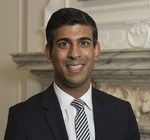
  • Rishi Sunak – 2021 Speech at the Global Investment Summit

    Rishi Sunak – 2021 Speech at the Global Investment Summit

    The speech made by Rishi Sunak, the Chancellor of the Exchequer, at the Guildhall in London on 18 October 2021.

    Lord Mayor, Ladies and Gentlemen,

    I spent this afternoon in the House of Commons listening to the moving tributes to Sir David Amess.

    Tonight, I know our thoughts are with his loved ones.

    A unifying thread through the tributes to Sir David

    …was his unbreakable sense of pride and optimism in this country.

    And I think we honour him by embracing that same theme tonight.

    So, let me begin by asking you to look up.

    To look up at the magnificent ceiling of this ancient hall and imagine the skill and effort it took to carve every stone by hand.

    Building work was completed the same year Gutenberg made the first printing press…

    …at the beginning of that extraordinary flourishing of art, science, culture and commerce – the renaissance.

    I believe that Britain is once again on the cusp of a new age of optimism.

    Our goal is nothing less than for this country to be the most exciting and dynamic place in the world for you to do business.

    This is a bold claim.

    But I’m confident about this country’s future.

    Why?

    Well, I could talk about our world-leading industries – the creative sector, life sciences, or financial services, the engine that powers your businesses.

    I could talk about our competitive corporate tax regime – yes, it’s going up, but still the lowest in the G7 and fourth lowest in the G20.

    I could talk about our super deduction – the biggest tax cut for business investment this country has ever seen…

    …making the UK right now the most generous, tax-advantaged place for you to invest.

    I could talk about our agile regulation which leads the world in balancing the interests of consumers and businesses.

    But I’m not going to talk about any of those things.

    Not least because I know you’re waiting for your starter.

    Instead, I want to give you three reasons to join me in being excited about the UK right now: our people, our ideas, and our transition to net zero.

    Your businesses can’t thrive without talented people.

    The UK has some of the best educated people in the world.

    But one of the areas we’ve fallen behind is skills and education outside of university.

    And we know that 80% of our 2030 workforce are already in work…

    …so we’re doing more to support people throughout their lives to retrain and upskill in the sectors of the future.

    We’re investing record amounts in adult skills and technical training.

    We’re changing our student finance system to better support mid-career and lifelong learning.

    We’re setting up new skills bootcamps, to help people retrain or upskill in high-growth areas…

    …like AI, cybersecurity, and green energy.

    And we’re massively investing in apprenticeships…

    …giving employers greater incentives and a bigger role in how they’re delivered.

    But we don’t have a monopoly on talent in this country.

    So we’re making our visa system for international talent the most competitive in the world.

    If you’re an overseas business who want to transfer staff here – we’re making it easier.

    If you’re an entrepreneur who wants to start a business here – we’re making it simpler.

    And, if you’re a talented student who wants to stay here – we’re making that easier too.

    As well as brilliant people, Britain is also the home of brilliant ideas.

    With less than 1% of the world’s population, we have 4 of the world’s top 20 universities;

    15% of the world’s most impactful research;

    The third highest number of publications worldwide;

    The second most Nobel Laureates of any nation.

    But having ideas isn’t enough.

    We need to turn those ideas into companies, products and services that can change the world.

    And that’s why I’m proud we’ve got more tech unicorns than any country, bar China and the US.

    Proud of having more venture capital here than France and Germany combined – not that I’m in any way competitive.

    So yes, this country is a science and technology superpower – but we need to do more.

    We’re significantly increasing government R&D spending, now the highest level in four decades.

    To better support modern methods of innovation, we’re looking at broadening the scope of our R&D Tax Credits;

    To increase capital flowing to innovative businesses, we’re reforming our listing rules…

    …and co-investing with VCs through our Future Funds;

    And to turbocharge all of your supply chains, our new Help to Grow programme supports SMEs with mini-MBAs…

    …and new software to boost their productivity and their innovation.

    When you’re sitting in your Boardrooms, thinking about investment decisions…

    …those critical first two questions about people and ideas are now matched by a third – Net Zero.

    I know that for all of you, climate change is transforming how you think about your businesses.

    Well, could there be a better place for you than the country that’s decarbonised quicker over the last twenty years than anyone else?

    The first country in the world to legislate for Net Zero by 2050?

    We’ve already established the UK Infrastructure Bank to partner with you on new green projects.

    Just last month, we raised £10bn through the sale of the UK’s first Green Gilt – the largest inaugural issuance of any country to date.

    And, after we became the first country to commit to mandatory climate-risk disclosures…

    …today, we are publishing our Green Finance Roadmap – to make the UK the place for green investment.

    So, people, ideas, Net Zero – three reasons for you to join me in being, confident, optimistic and above all, excited, about this country’s future.

    As we begin this new age of optimism, there’s one central insight driving everything we do.

    We know where ideas come from, where wealth is generated, where jobs are created.

    Not by me. Not by Government.

    By you. All of you.

    Your businesses.

    I want this country to be known around the world as a beacon for free enterprise.

    A hotbed of brilliant international minds coming here to access our culture, our capital, our people, our markets.

    A country where young people with brilliant ideas have the freedom and opportunity to found and grow the most exciting businesses in the world.

    That is the kind of economy we are building;

    That is what we are inviting you to be part of;

    That is why I say…

    …confidently and clearly and without reservation…

    …Britain is open for business.

    Thank you.

  • James Duddridge – 2021 Speech in the House of Commons on David Amess

    James Duddridge – 2021 Speech in the House of Commons on David Amess

    The speech made by James Duddridge, the Conservative MP for Rochford and Southend East, in the House of Commons on 18 October 2021.

    David was a man of faith and convictions—faith in his religion and convictions in his politics. He was, above and beyond everything else, a family man and a very funny man. He would often break all the rules, cutting through pomp and ceremony, and connecting with people. When introducing me, he would always make up a story: I was the “Strictly Come Dancing” winner at his annual party for people over the age of 100; before there was a raffle, he would describe me as a lottery millionaire at a charity fundraiser; and there was my favourite ice breaker, which was, “Meet James, he is my neighbour. He has recently got out of prison.”

    David would hold the audience with his anecdotes and stories, and I would like to share the story of the boiled sweet. David was a regular visitor to the Vatican, given his faith. In the receiving line, people were getting items blessed, and David, perhaps slightly absent-mindedly, being used to these things, reached into his pocket for a boiled sweet—he had a sore throat. David got his timing wrong and the Pope took the sweet, thinking it was a revered object to be blessed, and blessed the revered object—[Laughter.] And David had to put it in his pocket. It was a holy sweet. When David would tell the anecdote, as he would do many a time—I suspect Members have all heard it—he would again reach into his pocket and say, “And this is the sweet that was blessed!” I suspect that many sweets have been passed off as the holy sweet, but there is only one chosen one.

    As the neighbouring Member of Parliament for what we must now say is Southend city—thank you, Prime Minister, as it means a lot to everybody, it really does—colleagues would sidle up to me and say, “You’re David’s neighbour, aren’t you?” A bit tentatively, I would say, “Yes”, but I knew what was coming. It was always an outrageous story of his behaviour at a meeting or, in particular, on an overseas trip, which completely broke the ice. He was indeed a great man. David loved animals, but there will no longer be the infamous “dog of the day” tweets. He will never again dress as a knight in full battle finery, mount a horse and ride across the city of Southend, as he did after receiving a knighthood. That really is unbelievable; it seems as though I am making it up.

    Mr Speaker, thank you for coming on Saturday. To have the Prime Minister, the Leader of the Opposition and yourself there sent a real message to the town—the city—that the nation cared and the nation was mourning with us. The impact of David’s death has been profound on the city. Southend is in shock and I am in shock. I am told that the pathway for the city will be difficult. Having spoken to people around Jo Cox’s family, I know that this is going to be a long process. We do not want to be the city where the MP was murdered; we want to be the city with the longest pleasure pier in the world, with a great airport and with a successful football team—even though David was conflicted on the latter, as a confirmed man of the east end and a West Ham supporter.

    David loved his mum, who lived to 104. In Southend, we all assumed that David would go on forever. The late Eric Forth told me that David would be the Father of the House. I just thought it was going to be thus one day, but it was not so. In gathering my words, I thought of the phrase “cut short in his prime” and then smirked to myself; it seemed ridiculous, as he was aged 69. But he was sprightly, a secret gym goer, with a full head of floppy hair, and I just felt there was more ahead of him than behind him. Sadly, his future was stolen from us all, and Southend and this House are poorer for it. Over the weekend, I kept watching the news, hoping that the ending of the story or news clip would somehow be different from the previous ending.

    At a vigil in Southend there were hundreds of people from all walks of life. Every story was very different, but at the same time every story was the same: David listened, David cared, David delivered—he had a knack of getting things done. Like others have said, I always expected him to turn up late, so I was not surprised when he was not there at the beginning of the vigil, but I really did expect him to be there, because he is always there.

    It is unbelievable that David is not coming back. Members can think of the last meeting they had with him—I think of the last Remembrance Day service and the last Christmas with him dressing up as Santa Claus and going out and giving chocolates to the kids in the Neptune ward in Southend, whether they wanted them or not! I would bring the remainder to my kids, who would stick them to one side, despite all the rules about eating chocolate.

    This is not the last of David: he lives on in us all. I do not think David would have seen himself as a mentor to people in this House—he would not have called himself that—but that is what he was, by demonstration and osmosis. David inspired great loyalty in his staff, and his office was always packed with people, paperwork and, as anyone who has been there would know, fish and birds, despite the House authorities’ ban on the subject. It was part office, part museum of decades of political memorabilia, part pet shop. It was an office like the politician: unique.

    David is survived by a lovely family: Julia, his wife, and his children David jr, Katherine, Sarah, Alex and Florence. It is with sadness that the family comes from all corners to be back together in the city of Southend. We pray for them collectively. Their statement yesterday was poignant. They said:

    “we ask people to set aside their differences and show kindness and love to all.”

    That should not be beyond us all; it is not a bad instruction to this House. Let us take that message back to our constituencies. Let us make some good of this horror. To Julia: Southend thanks your husband for his service. Rest in peace, my good friend. Rest in peace.