Tag: Speeches

  • Owen Paterson – 2010 Statement on the Billy Wright Inquiry

    Owen Paterson – 2010 Statement on the Billy Wright Inquiry

    The statement made by Owen Paterson, the then Secretary of State for Northern Ireland, in the House of Commons on 6 July 2010.

    In anticipation of the publication of the report of the Billy Wright Inquiry, I have today asked a team of officials to commence the checking of the Inquiry’s report in relation to human rights and national security matters, as outlined below. I intend to adopt the same approach as was used for the checking of the report of the Bloody Sunday Inquiry.

    I am responsible for publication of the Inquiry’s report, once it is delivered to me. I am advised that I have a duty, as a public authority under the Human Rights Act, to act in a way that is compatible with the European Convention on Human Rights (ECHR). To fulfil this duty, I need to take steps to satisfy myself that publication of the report will not breach Article 2 of the Convention by putting the lives or safety of individuals at risk. I am advised that these obligations must be met by me personally, in my capacity as Secretary of State for Northern Ireland. Although the Inquiry is also a public authority under the Human Rights Act, I am not entitled to rely on the Inquiry to satisfy my Article 2 obligations and I have a duty to assess this myself. I also have a duty to satisfy myself that publication will not put national security at risk, for example by disclosing details of sources of confidential information.

    During the course of the Inquiry, the Government submitted to the Inquiry Panel some material that was relevant to its work but which was too sensitive to be disclosed publicly, usually because it contained information which had been provided to the security forces by individuals. If those individuals could be identified from the details they provided it would endanger their lives. I understand that the Inquiry Panel does not intend to refer to any material which would constitute a breach of Article 2, or compromise national security, but I have a duty to satisfy myself before publication that none of this material has inadvertently been revealed in the report. The Inquiry Panel also agreed that the identities of a small number of individuals who were engaged on highly sensitive duties should not be disclosed and I need to be assured that these individuals have not been identified.

    I have established a small team of officials and legal advisers to assist me in carrying out this necessary exercise. The team will be led by the Northern Ireland Office’s principal legal adviser, but will need to include members drawn from the Ministry of Defence, Security Service, and PSNI who are familiar with the sensitive material provided to the Inquiry Panel, but they will be granted access to the report under strict terms of confidentiality and for the sole purpose of carrying out the necessary checks, and they will report directly to me alone. Lord MacLean has agreed that this team can carry out the necessary checks on the Inquiry’s premises while the report remains in his custody, before it is submitted to me. I have confirmed to Lord MacLean that I am content with this proposal. I understand that the report will be made available for checking today.

    I believe that these checks are absolutely necessary in order to meet the legal obligations on me. Following the approach used for the checking of the Bloody Sunday Inquiry report, I have sought Lord MacLean’s permission to allow members of the Inquiry legal team to be present during the checking process, to which Lord MacLean has agreed. At all times, members of the Inquiry legal team will be acting as representatives of the Inquiry and not as advisers to me or the checking team.

    I want to publish the report in its entirety. Should any concerns about the safety of any individual arise, my first course of action would be to consider whether these can be addressed through alternative means. Were I to reach the conclusion, on advice, that a redaction to the text might be necessary, I would consult Lord MacLean. In the very unlikely event that any redaction was deemed necessary, my intention would be to make this clear on the face of the report.

    The report must be published first for this House, and I intend to publish the report as soon as possible once the checking process has been completed. However, I acknowledge the importance of this Inquiry’s findings in the lives of a number of individuals. As with the publication of the Bloody Sunday Inquiry report, I intend to consider giving advance sight to those who were designated as Represented Parties by the Inquiry. I intend to discuss this with the Speaker of this House in due course.

  • Owen Paterson – 2010 Comments on the Somme Commemoration

    Owen Paterson – 2010 Comments on the Somme Commemoration

    The comments made by Owen Paterson, the then Secretary of State for Northern Ireland, on 2 July 2010.

    It is a deeply moving experience to remember the tens of thousands of men who died in this battle for their country and to see the war graves so meticulously maintained by the Commonwealth War Graves Commission.

    Today I have the honour to lay wreaths at the memorials on behalf of the UK; it is with particular admiration that I reflect on the connection the people of Northern Ireland have with the Somme.

    I also admire the dedication of organisations such as the Somme Heritage Centre who work tirelessly to ensure future generations learn about the Battle of the Somme and help ensure that what happened here in 1916 is never forgotten.

  • Steve Barclay – 2021 Comments on Government Procurement Rules

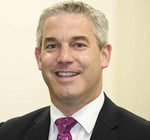
    Steve Barclay – 2021 Comments on Government Procurement Rules

    The comments made by Steve Barclay, the Chancellor of the Duchy of Lancaster, on 6 December 2021.

    Leaving the EU gives us the perfect chance to make our own rules for how the government’s purchasing power can be used to promote strong values.

    While doing so we’re increasing transparency and ensuring that procurement remains fair and open.

    These simpler and more flexible rules will also make it easier for small businesses to win work – placing levelling up at its heart.

  • David Cameron – 2006 Speech on the New Global Economy

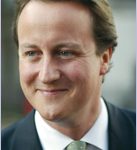
    David Cameron – 2006 Speech on the New Global Economy

    The speech made by David Cameron, the then Leader of the Opposition, to the Euromoney Conference on 22 June 2006.

    I’m grateful for the opportunity to be with you today.

    This is an exceptionally well-informed audience.

    It sounds like you’ve enjoyed two days of very detailed discussion and debate.

    As people who are involved at the sharp end of the financial markets and the global economy, I’m sure you won’t hesitate to challenge me and I’m looking forward to that.

    Today I want to talk about the new global economy…

    .. and the great challenges and opportunities presented by the changes that we’re seeing.

    Above all I want to set out how I believe politicians can prepare their countries to compete in tomorrow’s world…

    Why do we have a new global economy?

    Globalisation isn’t new – we had free trade pre-1914.

    Writing about that period, Keynes said:

    “The inhabitant of London could order by telephone, sipping his morning tea in bed, the various products of the whole earth, in such quantity as he might see fit, and reasonably expect their early delivery upon his doorstep; he could adventure his wealth in the natural resources and new enterprises of any quarter of the world”

    What is new, and unique to our time, is the extent and speed and sheer size of the new global economy.

    Over the past decade, a combination of events has led to a rapid rise in world trade, and rapid growth in prosperity in some of the poorest areas of the world.

    The end of cold war. The victory of capitalism, privatisation and liberalisation within countries. The opening up of trade between countries. And of course, the ICT revolution.

    These events have driven change.

    World economic growth is at its highest level in thirty years – and on some measures the highest ever.

    This is largely driven by a rapid growth in world trade – up by 10% in 2005.

    And the level of world trade is at its highest ever.

    The result is that two billion more people – a third of the world’s population – have left subsistence poverty and are now engaged in the world economy.

    Not only has this changed the volume of trade but it’s also impacted on the way we trade.

    You can see the change clearly in the rapid increase in the global capacity for manufacturing.

    Because the world can now more easily turn raw materials into goods, the price of manufactured goods has fallen compared to the price of raw materials.

    There are many winners in this process.

    In the West, consumers enjoy lower prices for things we import like TVs and shoes.

    In poorer countries there are rapid increases in incomes.

    In nations with natural resources – especially oil – GDP is growing.

    And in this global economy, the new winners – across Asia and among oil exporters – are lending much of their gains back to the developed world, driving a further round of growth.

    But there are losers too.

    Manufacturing firms in the west struggle in the face of this competition.

    Many nations are suffering environmental damage and social instability.

    Nevertheless, I believe that the overall impact is hugely positive.

    In the UK, the price of our imports has fallen relative to the price of our exports, making everyone better off, even if your income is fixed.

    You don’t need me to tell you that.

    Take a walk up any high street.

    The price of a pair of jeans is the same – or lower – than twenty years ago.

    There are real benefits here.

    Recently I visited a large supermarket and talked to its retail director.

    “People ask what our anti-poverty strategy is” he said. “And I show them this.” It was a smart school uniform, on sale for just £13.

    The new global economy is a great challenge

    The great changes taking place pose many challenges.

    We are losing not just low-paid, low value added jobs, but some high value added jobs too.

    The pace of change will accelerate.

    There are more people in China studying English than there are people in England.

    India, China and other countries are investing enormously in education.

    India alone has 1300 engineering colleges.

    Unless we can compete in the knowledge-based new global economy we will lose out in the economy of the future.

    Demand for resources is intensifying.

    China is now the world’s second largest user of oil, after the United States, absorbing 6.6 million barrels per day.

    A quarter of this comes from Africa, where China is investing heavily.

    All of this impacts on us in the developed world.

    At a micro level it has an impact on businesses and patterns of employment.

    And at a macro level rapid change brings uncertainty: we simply can’t guarantee that the beneficial effects of globalisation will continue automatically.

    We can’t guarantee that the price of imports will continue to fall.

    We can’t be sure that the ICT revolution will be sustained at the same pace.

    As Donald Rumsfeld would put it, there are simply too many ‘unknown unknowns’.

    Mervyn King talked last week about the ‘bumpy ride’ ahead as the world manages a transition to higher global interest rates, after a period of low rates around the world.

    Opportunities

    But as well as these challenges, the new global economy also offers great opportunities.

    Those two billion new workers are rapidly becoming two billion new customers too – and you know what, western brands are in high demand.

    But the UK is failing to make the most of those opportunities.

    Our level of new investment in China is sixth in Europe – after Germany, Italy, the Netherlands, France and Sweden.

    Our trade with China is third in Europe

    When President Chirac went to China last year, he took 1000 businessmen with him, and opened doors for them.

    Politicians seeking to understand China shouldn’t think ‘sweatshop’ – they should think ‘silicon’.

    And they should remember how significant Japanese inward investment was to our economies in the 1980s because – as the head of Kingfisher pointed out to me recently – Chinese inward investment in Europe could be much bigger in the future.

    What are the UK’s greatest advantages in the new global economy?

    I am convinced that the UK has many great advantages in the new global economy.

    There are few places anywhere that are as profoundly stable as Britain.

    Our system of government is tried and tested.

    The rule of law is entrenched in a tradition reaching back centuries.

    We have a highly educated workforce with a diverse talent base and, of course, a natural command of the English language.

    We are, by and large, welcoming to foreigners – especially in that most cosmopolitan and tolerant of cities, London.

    But, having said all that, we are eroding our advantages.

    In recent years we have seen more regulation and higher tax.

    Our transport infrastructure and skills base have both been criticised by the OECD.

    Crime – especially violent crime and anti-social behaviour – is a blight on too many communities.

    Any responsible government must fully acknowledge these shortcomings and come up with a credible plan to tackle them.

    The City is a great example of using our advantages

    The City of London is a great UK success story.

    It’s the biggest international financial centre on earth.

    The London foreign exchange market is the largest in the world, with an average daily turnover of $504 billion. That’s more than New York and Tokyo combined.

    There are more than 550 international banks and 170 global securities houses in London.

    By contrast Frankfurt has around 280, Paris, 270 and New York 250.

    The growth of the modern City as we know it was shaped by three critical Conservative decisions.

    First, because of our attractive tax regime, in the 1970s, US bonds were traded in London – the so-called ‘euro-bond’ market.

    Then the big bang of the 1980s removed a huge swathe of regulation that allowed the City to expand and removed restrictive practices.

    And by being open to competition from banks from anywhere in the world, we injected an enterprising spirit into the City.

    The success of the City helps to drive the UK economy and provides huge benefits for our wider society.

    Over a million people are employed in financial services, who last year generated net exports for the country of £19 billion.

    Far from being based on the old school tie, it is supremely meritocratic.

    It is also highly innovative.

    You cannot simply set in stone a tax or regulatory regime for the City as it is today because it’s always changing, adapting and mutating.

    But, again, we must not be complacent.

    London has no God-given right to be the financial Capital of the world.

    If we want to remain ahead, not just of Frankfurt or Paris but of Shanghai and New Delhi in the next 20 years we need to continue to make Britain the best place in the world to do businesses – whether it’s in the financial sector or any other part of the UK economy.

    The lessons from the City are clear. Low tax. Low regulation. Meritocracy. Openness. Innovation. These are the keys to success.

    What do political and economic leaders need to do to compete in the future?

    So what will our political and economic leaders need to do in order to compete in the future?

    There are, I suppose, two responses to the challenges of the new global economy.

    One option is to shut out the threats, close down borders and retreat into protectionism.

    But isolation means closing the door on the opportunities too.

    I reject that path.

    The alternative is to build a flexible economy with low tax , light regulation and open markets.

    To embrace the new global economy and prepare for the inevitable changes that are taking place.

    I welcome the fact that there is now a broad consensus between both major parties in the UK on many fundamentals.

    But we should recognise our differences.

    As Chancellor, Gordon Brown has given us the highest tax burden in Britain’s history…

    Whereas I believe that a low tax regime is a vital part of economic prosperity.

    The government is wedded to the impulse to over-regulate…

    While I see a much greater role for exhortation and leadership.

    Many on the left-of-centre still seek to solve problems through more taxes, more laws and more regulations…

    But we, on the centre-right, prefer to step out of the way of business.

    One of the greatest services that government can give to the economy is to know when to stand clear.

    Clint Eastwood, in his guise as Dirty Harry, says “A good man knows his limitations.”

    I believe that a good government knows its limitations too.

    But that should never mean we are limited in our aspirations of what we can all do together.

    Successful economies also need good infrastructure – not just physically in terms of transport and energy but stable legal systems too…

    And, increasingly, a highly-skilled workforce.

    There’s another factor that is emerging.

    I believe it will grow in importance in the years ahead.

    The companies and key workers of the future will ask of a country: is it an attractive place to do business? Is it a nice place to live?

    There’s a developing quality of life agenda that only the short sighted can ignore.

    Instead of just measuring GDP, we need to think about GWB – general well being.

    People who dismiss this as woolly nonsense are economically short sighted.

    Increasingly, the most creative, productive and innovative people are insisting on working in an environment where they’re not just paid well but where they can stroll down a street in safety and educate their children in a good school.

    Conclusion – the choice

    Understanding the profound forces shaping change.

    Identifying the right response to globalisation.

    Recognising the broader aspirations that people have for a better quality of life in the 21st century.

    These are the keys to our future success.

    This Government doesn’t seem to understand the world of today and tomorrow.

    So it can’t work out the best way forward.

    Just compare the approach of our government to these challenges to the approach taken by our best businesses.

    Look at taxes. While businesses are cutting prices, government is getting more expensive.

    Look at IT. While businesses are decentralising, government still seeks centralised solutions.

    Look at management and openness. While businesses are flatter and more transparent, government is clings to hierarchies and secrecy.

    While businesses are moving towards flexible labour practices, government imposes more employment regulations.

    As I said a fortnight ago, there are things that the private sector can learn from the public sector.

    The strength of vocation. Passion for the job. A belief in the value of service.

    The tragedy of this government is that it is mismanaging the public sector and undermining its ethos through relentless target driven centralisation, while failing to learn lessons from the private sector about the right way to respond to the modern world – all at the same time.

    The challenge – of responding to globalisation with an agenda that combines competitiveness with quality of life – is passing to a new generation.

    As I watch a government that is too top down, too centralised, that doesn’t trust people enough or share responsibility widely enough, I am determined to find a better way.

    It will take hard work, a profound understanding of the changes taking place around us and tough decisions to put our country in the best possible position for success.

    But it is a challenge that I am determined to meet.

  • David Cameron – 2006 Speech on Fighting Global Poverty

    David Cameron – 2006 Speech on Fighting Global Poverty

    The speech made by David Cameron, the then Leader of the Opposition, in Oxford on 29 June 2006.

    For too long, politics in this country treated global poverty as a secondary issue.

    Conservatives used to regard it as a significant, but second-order subject.

    Labour have helped to raise its significance, and we should all acknowledge the personal commitment and leadership of Tony Blair and Gordon Brown in doing so.

    Along with the vital role played by campaigning organisations and the many thousands of individuals who rallied to the banner of Make Poverty History…

    …this has helped create something of which everyone in Britain can be incredibly proud.

    Last year, this country led the way in beginning, finally, to make poverty history.

    We should never forget the international leadership Britain has shown.

    Not just our politicians but our NGOs, large and small, and our anti-poverty campaigners.

    People have often been ahead of the politicians – as we saw with the incredible generosity of the response to the Tsunami.

    Earlier this week, the Prime Minister spoke about where we are, one year on from Gleneagles.

    And today, Bob Geldof and DATA will give us their assessment of how far the promises made have been honoured.

    Clearly we have seen some real progress.

    Britain has taken the lead.

    But where are the other G8 countries?

    The spirit of Gleneagles 2005 was not meant to be British pushing and cajoling other developed nations into line.

    It was supposed to be about a shared commitment to a better world.

    But world trade talks remain deadlocked, in large part because of the short-sighted protectionism by rich countries.

    If you take out money for Iraq and Nigerian debt cancellation, aid from Germany and France actually fell between 2004 and 2005.

    And despite some real progress, too many politicians in Africa continue to put their own interests before those of their people.

    Making Poverty History is a task for which we all must share responsibility.

    Britain is doing a lot; now other governments must meet the challenge.

    We should do justice to the progress made last year by strengthening those early faltering steps.

    By going further, and faster.

    And by resolving that whatever the ups and downs of our domestic politics, Britain will seek always to be in the lead in the great struggle to rid the world of poverty.

    Today I want to explain how.

    To make a Conservative contribution to the debate.

    But first I want to talk about why.

    A MORAL IMPERATIVE

    For my generation, global poverty is one of the central challenges of our time.

    I came into politics to help make our country a better place to live.

    But I don’t believe it is either morally acceptable or politically sensible to limit our ambitions to improving the well-being of our citizens.

    As I learn more and more about the issues that affect our country, our continent and our world, I recognise with increasing clarity the need to take a global view.

    It is why one of the principal aims set out in Built to Last, the Conservative Party’s new statement of aims and values, is to do all we can, alongside the many others who share our aims, to fight global poverty.

    The prominence that we’re giving to the challenge of global poverty is right for our times and right for this time in history.

    In the 19th century, we witnessed the great economic struggle between the rise of industrialisation and the decline of the agrarian society.

    In the twentieth century, we saw that great ideological battle between left and right.

    And the fundamental challenge for the twenty-first century will, I believe, be a moral one: how can we bring the rich world and the poor world closer together?

    I describe it as a moral challenge because that, for me, is first and foremost what it is.

    It is morally unacceptable for billions of people to live in dire and degrading poverty when we now know the secret of wealth creation.

    ENLIGHTENED SELF-INTEREST

    But it’s not just a question of values, rights and morality.

    It is also a question of hard-headed political and economic reality.

    It is, frankly, a question of enlightened self-interest.

    The world is smaller that ever before.

    With the rise in mass migration, the revolution in communications technology, and the transformation in our understanding of the planet’s environment…

    …we are truly one world.

    Every night, hundreds of Africans arrive on Europe’s southern shores.

    They don’t want to leave their homes.

    But when poverty forces mass migration on a scale never seen before, we must recognise that tackling poverty is not just a moral imperative.

    It is a security imperative; an immigration imperative; an imperative we cannot ignore if we want stronger, more cohesive communities in all our countries.

    CONSERVATIVE COMMITMENT

    So for all these reasons, I am passionately committed to producing a comprehensive, ambitious policy programme on international development.

    That is why I established the Globalisation and Global Poverty Policy Group.

    Chaired by Peter Lilley, advised by Bob Geldof, its members include a range of talented, internationally-respected experts like James Rubin and Will Day of the UN.

    I look forward to its report next summer.

    Many of you here today will know Andrew Mitchell, Shadow International Development Secretary, who has immersed himself in these issues over the past year.

    And I also welcome the establishment of the Conservative Human Rights Commission which will focus on regimes that violate the rights of their citizens.

    There is now an emerging cross-party consensus on the importance of issues like fair trade, aid effectiveness, debt relief, conflict resolution and disease prevention.

    This is great news.

    I’ve never believed that politics should be about creating artificial points of difference or fake dividing lines.

    The more that we can work together in politics, the better the outcomes for society – whether at home or abroad.

    But I do believe that my Party can make a distinctive contribution to the poverty debate.

    And I do believe we have a role in questioning and probing the Government on its approach – as we have done on the need for interim targets for AIDS treatment.

    So today I’d like to outline some of the key aspects of that contribution…

    To set out our commitment and our priorities.

    And to put these in the context of a clear vision, based on our instinctive values.

    VISION AND VALUES

    As Conservatives, our values are clear.

    We believe in trusting people – that the more you trust people, the stronger they and society become.

    And we believe in sharing responsibility – that we’re all in this together: government, business, civic society, families and individuals.

    These values teach us that free markets are necessary for the creation of wealth.

    But that’s not the same as the elimination of poverty.

    We used to say that a rising economic tide lifts all boats.

    Well that obviously isn’t true.

    In recent years, the greatest global economic expansion in the history of mankind has lifted billions out of poverty.

    We should celebrate that as a success for open markets and free trade.

    But billions are still left behind.

    To eliminate poverty, economic liberalism – free markets and free trade – are not enough.

    They are necessary, but not sufficient.

    So our modern Conservative vision must combine economic liberalism, to remove the barriers that hold prosperity back…

    …with economic empowerment, to remove the shackles that lock poverty in.

    Economic empowerment means enabling people and countries to move from poverty and dependency to prosperity and sustainability.

    It means fixing the broken rungs on the ladder from poverty to wealth.

    And it means focusing first on the triple tragedies that stand in the way of poor countries getting richer: disease, disaster and conflict.

    DISEASE

    Tackling killer diseases such as HIV/AIDS, malaria, and TB should be our first priority.

    The burden of diseases falls disproportionately upon the poor.

    They are more susceptible to infection.

    And they lack the funds to get treatment.

    As well as ruining individual lives, diseases lower productivity and undermine national development.

    Jeffrey Sachs has estimated that malaria slows economic growth in Africa by up to 1.3% each year.

    Anti-disease interventions can be amazingly cost-effective.

    For relatively small sums, our support can lead to an immediate and profound improvement in millions of lives.

    DISASTER

    It is also the poor who suffer the most, and soonest, from natural disasters.

    Countries like Bangladesh could be catastrophically affected by rising sea levels.

    Desertification can contribute to conflict, as we have seen in Darfur.

    A part of Conservatism is the instinct to conserve.

    Another part is an understanding of our duty to future generations.

    That’s why Conservatives have an instinctive understanding of environmental sustainability.

    We grasp the importance of handing our planet on in a better condition than we found it, and that’s why I have put the environment at the heart of our political strategy.

    And it’s why we see climate change and environmental sustainability as a critical component of international development policy.

    CONFLICT

    Deadly diseases and natural disasters are bad enough, but man’s inhumanity to man is in some ways even worse.

    In Darfur, as Andrew Mitchell and William Hague saw for themselves when they went there recently, there are two million people living in camps, victims of conflict and state-sponsored ethnic cleansing.

    The people of Darfur need a UN force with the mandate and capacity to protect them, and I want to see more effective, targeted sanctions on the Government of Sudan.

    In Northern Uganda we have seen appalling atrocities committed and abject levels of poverty in the displaced peoples’ camps which contain over a million and a half people.

    The British Government, along with the international community, should put pressure on the Ugandan Government to ensure that the International Criminal Court’s arrest warrants for the leaders of the murderous Lord’s Resistance Army are carried out.

    IATT

    Uncontrolled arms sales help to fuel brutal and destabilising conflicts like those in Darfur and Northern Uganda.

    So there is a vital need to ensure that the global arms trade is governed by firm, consistent and fair rules.

    That is why I support the principle of an International Arms Trade Treaty.

    It will take a lot of work to firm up and secure international agreement on the details of such a Treaty.

    But doing so must be a key objective ahead of the UN General Assembly meeting this summer.

    AID

    When we consider the tragedies of disease, disaster and conflict, we must surely see the short-termism of those who argue, still, that aid has no place in international development.

    That we should leave it all to free markets and free trade.

    I believe that effective aid is essential for economic empowerment, and that is why a Conservative government would spend more on aid.

    We will work towards achieving the target of spending 0.7% of national income on aid by 2013.

    And every year between now and then, we should look to see if it is desirable, and possible, to go further and faster.

    We should also be proud of the Department for International Development’s achievements today.

    I want to build on its success, and cement DfID’s reputation as the leading national aid agency.

    My vision is for a strengthened Department for International Development, delivering better results and saving more lives.

    That’s why an incoming Conservative government will keep DfID as an independent department.

    And we will maintain the Government’s approach on tied aid.

    I’m delighted that in 2000 we gave up the misguided policy of tying aid to the use of contractors from the country that is supplying it.

    And I’m dismayed that other governments, such as the Americans and Germans, persist in using aid as a tool for subsidising their domestic industries.

    But I believe we can be more innovative still in our approach.

    One idea we will investigate, based on our belief in trusting people – and our instinctive dislike of top-down solutions – is aid vouchers.

    Aid vouchers, put directly in the hands of poor communities, would be redeemable for development services of any kind with an aid agency or supplier of their choice.

    The vouchers could be converted into cash by the aid agencies.

    For the first time, poor people themselves would be the masters, and aid agencies would have a direct and clear incentive to deliver effective services.

    Such an innovation would help show us what the poor really want – and who is most effective in meeting their needs.

    There has been a growth in aid policy in direct budget support.

    This makes sense in some cases, but our role, in Opposition, is to question and probe how well it is working – and to learn from experience.

    But our goal, of course, is to work towards a situation where countries no longer need aid.

    That’s what we mean by economic empowerment.

    And to achieve it, we need not only to remove the shackles of disease, disaster and conflict that lock poverty in.

    We need to remove the barriers that hold prosperity back.

    TRADE

    Chief amongst these is trade.

    I want us to move beyond the sterile debate about free trade or fair trade.

    Let’s focus on what people in the poorest communities want and need: real trade, that’s both free and fair.

    It’s a simple bargain: we sell to them what they legitimately need and want, and we buy from them what they can produce, on terms that are fair.

    But we cannot hope to persuade poor countries of the benefits of progressively opening their economies if we, the developed countries, are not prepared to open our markets unilaterally to them.

    So the EU should further reform its Common Agricultural Policy, by abolishing all remaining production linked subsidies, scrapping import tariffs and removing all export subsidies.

    And, as I said to the Prime Minister in the House of Commons yesterday, we must recognise that the EU is not moving fast enough – we must be prepared to take the bold first step to unlock vital trade talk

    We should press for inventive measures to encourage trade between poor countries, where tariffs are highest.

    And we should press for the immediate abolition of so-called ‘killer tariffs’ – the shocking tariffs that some governments levy on imports of anti-malarial bednets and vital medicines.

    INSTITUTIONAL CHANGE

    But as well as tearing down the trade barriers that hold developing countries back, we must also help tear down the institutional barriers that stand in the way of progress and development.

    Here too, I believe that Conservatives have something important to add to the debate.

    We believe in trusting people, and in sharing responsibility.

    So we reject the old-fashioned, top-down approaches that impose identikit solutions which go against the grain of local cultures and traditions.

    And we understand that making poverty history is not something that rich countries can just ‘deliver’ for poor countries.

    We’re all in this together, and we all have our part to play.

    So of course it’s right that democratic governments in Africa and elsewhere should be given the policy space to develop in ways that make sense for them.

    But equally, we have a responsibility to share the lessons of our own development.

    Those lessons are clear and we should never be frightened to talk about them.

    FREEDOM

    First, freedom and prosperity go hand in hand.

    As Amartya Sen has shown, democratic countries with a free press are less prone to suffer from major famines.

    It is in closed societies, where leaders are insulated from scrutiny, feedback and criticism, that situations are likely to spiral out of control.

    Countries in the past like China under Mao and the Soviet Union under Stalin…

    …and countries in the present like North Korea, Zimbabwe, and Burma.

    THE RULE OF LAW

    The second lesson is that the rule of law and prosperity go hand in hand.

    Corruption is a scourge that eats away at growth and development.

    As ever, the poor are hardest hit.

    We should be inspired by the heroic example of John Githongo, who had the courage to blow the whistle on corruption in Kenya

    We have many levers at our disposal – not least our aid and our diplomatic influence – to help foster development in the poorer parts of the world.

    I want to encourage states and polities in the developing world which have a vested interest in the development of their countries, rather than in servicing their networks of clients and patrons for private gain.

    So we should champion and reward good governance.

    PROPERTY RIGHTS

    The third lesson, as economists from Adam Smith to Hernando de Soto have taught us, is that property rights and prosperity go hand in hand.

    The poor in developing countries are often denied rights to their land, undermining their ability to use it as collateral to support the investment that drives development.

    In November last year, I proposed establishing a Property Rights Fund to help formalise and entrench property rights in the developing world.

    GOLDEN THREAD

    There is a golden thread that links freedom, good government, the rule of law, property rights and civil society – and helps create the conditions for the economic empowerment of the poor.

    This must be central to our approach.

    It will help make poorer countries attractive to invest in.

    It will help remove the barriers that hold prosperity back.

    And it will help build good societies, as well as rich societies.

    CONCLUSION

    No one should underplay the scale of the challenges we face.

    More than 1.2 billion people – one in every five of the world’s population – still live in extreme poverty.

    Most countries in Africa are off-track to meet the Millennium Development Goals.

    We need to help developing nations alleviate immense human suffering and set the stage for self-sustaining growth.

    But I am convinced that with the right attitude and the right solutions we can win.

    Africa’s economy grew by almost 5% last year.

    The poor are not victims, permanently trapped in poverty.

    They are hard workers, creative entrepreneurs, potential customers and trading partners.

    As C K Prahalad put it, there’s a fortune at the bottom of the pyramid.

    With unprecedented speed, millions have escaped poverty in China and South Asia.

    With mobile phones and other modern technologies, developing countries can leapfrog decades of development.

    They don’t need to re-invent the wheel, computer, or mobile phone.

    They need economic empowerment, to remove the shackles that lock poverty in; and economic liberalism, to remove the barriers that hold prosperity back.

    The seeds of the wealth of nations can – and have – been sown around the world.

    With our help, they can spread yet further.

    This is the challenge for our new politics

    Organisations like Oxfam, with its dedicated staff and volunteers, embody the spirit we need.

    I want us to work together to help achieve our shared objectives.

    It’s a personal priority for me.

    I know it is for you.

    And together we can help make the world a better place.
  • Timothy Kirkhope – 2006 Speech on the Finnish Presidency

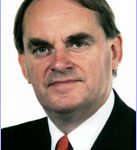
    Timothy Kirkhope – 2006 Speech on the Finnish Presidency

    The speech made by Timothy Kirkhope, the Leader of the Conservatives in the European Parliament, on 5 July 2006.

    President, President-in-Office,

    The new Presidency wants to develop a transparent and effective Union. The issues of transparency and openness are ones British Conservatives have been championing for many years. The opening of Council meetings is a step in the right direction and has been taken despite the crass attempts by the new British Foreign Secretary to preserve secrecy. We will watch carefully to see that the letter and spirit of openness is upheld in the coming months. Equally, the Presidency’s wish to scrutinise the effects of legislation and improving its clarity is something I welcome. But British Conservatives have long argued for proper assessments on whether some legislation is actually required at all. The initial presumption must always be, in my view, against legislating. There shall also be proper impact assessments undertaken before embarking on new laws. I hope that the Presidency will make progress in creating a new culture in the EU which lays emphasis on less legislation and less regulation. This is an essential part of the reform agenda that I want Europe to develop.

    The Presidency also wants to see more effective decision-making in judicial co-operation in criminal matters. I hope the emphasis here will be on better inter-governmental co-operation and not harmonisation. The announcement by Commissioner Frattini last week that he will urge Member States to make use of the passerelle clauses to move to qualified majority voting in the third pillar is unwelcome news. People do want governments to work together more effectively to prevent terrorism, combat human trafficking and fight the scourge of drugs. I do too. But this does not require the ending of the veto in these areas. Harmonisation is a flawed approach. It denies the police and security services the flexibility and adaptability they need to stay one step ahead of the terrorists and the drug traffickers. Giving Parliament and the Court of Justice ‘second guess’ powers will hamper and undermine the work of law enforcement agencies across Europe.

    I am strongly against any proposal that would see national parliaments ceding power over drugs policy, the Serious Fraud Office in the UK ceding power over anti-corruption investigations to Europol and the police ceding powers over criminal investigations to Eurojust and the Court of Justice. These are matters that go to the heart of the powers of the nation state. People elect governments to protect them from internal and external threats to security. If governments give away these powers and deny themselves the flexibility they need to contain threats to security, all in the name of European integration, people will rightly judge this as simply another attempt by Brussels to intervene in their domestic affairs. The case for harmonisation has not been made and the evidence that qualified majority voting will make us safer and more secure is not there. So, I urge the Presidency not to pursue this course.

    I hope the Presidency will work closely with President Barroso on the economic reform agenda. There is no room for complacency here. The drive to make Europe more competitive does not begin and end with Summit conclusions. The need for reform is as urgent as ever and I hope the Presidency will champion the kind of liberalising, reformist economic agenda that I have long urged. The protectionists and those who champion the outdated concept of national champions are still with us – I hope the Prime Minister and his Presidency will resist them.

    I also want the Presidency to sort out the vexed question of the seat of the European Parliament. We have been in the forefront of the campaign to end the Strasbourg sessions. Having two seats is expensive, wasteful and a major burden on taxpayers. Over half a million people have already signed the petition to end Strasbourg, including myself and my British Conservative colleagues. We must have some action on the matter.

  • David Cameron – 2006 Speech on Energy to the LGA Conference

    David Cameron – 2006 Speech on Energy to the LGA Conference

    The speech made by David Cameron, the then Leader of the Opposition, on 6 July 2006.

    “Thank you for inviting me to speak to you today.

    I want to talk about the importance of local democracy and the potential of local government.

    About what Joseph Chamberlain, in 19th century Birmingham, called the “municipal gospel” – the good news of reform, improvement and rebuilding.

    If ever a city needed a gospel, 19th century Birmingham was it.

    I am sorry to say the city was in the grip of rather reactionary civic leaders, called “the Economists”, whose only concern was to keep the rates down.

    They did not believe in “improvement”, especially when it cost money.

    But Chamberlain had a bolder vision for Birmingham.

    Using legislation passed by Disraeli’s government he cleared slums and built Corporation Street in their place.

    The centre of Birmingham became an economic powerhouse, and a place of beautiful urban design.

    Now I wouldn’t want to do everything Chamberlain did.

    I wouldn’t take the gas and water companies into public ownership, for instance.

    But I do want us to recover his spirit.

    The spirit of civic pride.

    For there are great things which local government can do.

    And there is a growing realisation in our country that many decisions that are now made centrally would be better made locally.

    So today, I’d like to set out my vision for empowering local government.

    And I’d like to illustrate that vision with a specific example of how local government can help tackle the great challenges we face.

    That example is climate change, where local government has a huge part to play in meeting our national – indeed our international – ambitions.

    In all our work on local government, I’m extremely fortunate to have the support and advice of an incredibly strong team that really understands the issues.

    People like Caroline Spelman and Eric Pickles.

    Sandy Bruce-Lockhart.

    A growing number of talented and experienced council leaders.

    And I want to make it clear today that we want to work with talented local government leaders across the political spectrum.

    No one party has a monopoly on wisdom, and we should be generous and open-minded in celebrating and learning from success, whatever the party label.

    PAST CONSERVATIVE COMMITMENT TO LOCALISM

    I know that devolution and deregulation have been the buzzwords of this conference.

    Government ministers have stood here this week and promised to hand more power and control back to local government.

    I was as delighted to hear that – as no doubt you were too.

    And I hope that you will approve of the localising vision that I will set out today.

    But first I think a note of humility is in order.

    It’s easy for Westminster politicians to talk about giving up power.

    But in practice, devolving power seems the hardest thing to do.

    This is certainly true of the last Conservative government.

    Despite our deepest Conservative values and instincts…

    …trusting people…

    …sharing responsibility…

    …believing that government should be closer to people, not further way…

    …the last Conservative government introduced a number of measures that centralised, rather than localised power.

    Of course there were some moves in the opposite direction, like local management of schools and the transfer of responsibilities in social care.

    And of course there were strong arguments at the time for the centralising measures that were taken.

    Protecting people from the costs of politically extreme councils.

    Promoting efficiency.

    Helping create jobs and wealth by stopping business from being fleeced.

    TODAY’S CONSERVATIVE COMMITMENT TO LOCALISM

    Well, since then, times have changed.

    Conservative leaders have certainly changed.

    That is, incidentally, one area where I am trying to reduce the rate of change.

    But my Party as a whole is changing.

    So I stand before you today, perhaps not quite a repenting sinner…

    …but at the very least an enthusiastic disciple of the localist creed.

    So what does that mean in practice?

    Today I want to set out four specific commitments that demonstrate our determination to give you more power…

    …empowering you to serve your local communities better.

    FOUR SPECIFIC COMMITMENTS

    First, we will address the democratic deficit caused by regionalisation and regional Assemblies.

    I believe passionately that Regional Assemblies are a costly and unnecessary bureaucratic barrier between local government and local people.

    Our position on Regional Assemblies could not be clearer.

    We will abolish them and return their powers to the local authorities where they belong.

    Secondly, we will address the cost and hassle imposed on councillors by the Standards Board.

    While its intent is positive, its bureaucracy just gets in the way.

    So we will abolish that too.

    Third, we will untie your hands when it comes to spending money.

    You know better than anyone what your local communities need.

    So you should be free to make your own spending priorities.

    We will progressively phase out the ring-fencing of government grant.

    All in all, we need a bonfire of the directives, audit systems, best value regimes, ring-fencing and all of the stark paraphernalia of the Whitehall control-freak regime that tells local authorities what they can and can’t do.

    My fourth commitment is about the structure of local government.

    I don’t think we need another local government reorganisation.

    We want to see stability in local government structures, and so we would scrap the review that David Miliband started. It’s wasting time, it’s setting council against council – and it’s a distraction from the real task of improving services and increasing efficiency.

    We will not hold yet another review of options like the creation of unitary authorities.

    We understand the value of civic pride, the impact of local democracy, and the inspiration that strong local leadership can bring.

    TACKLING CLIMATE CHANGE: A LOCAL GOVERNMENT PRIORITY

    There’s another powerful way of illustrating our commitment to localisation.

    It is to focus on what I believe is one of the greatest challenges for local government.

    Twenty years ago, at the height of the cold war, local councils had a key role in contingency planning for the greatest threat to the survival of mankind.

    Namely, a nuclear exchange between the two superpowers.

    The world has changed dramatically since then.

    Today, in the twenty first century, the greatest long term threat this planet faces is climate change.

    I’ve seen the evidence for myself.

    Earlier this year, I went to the Arctic.

    That’s where temperatures are rising faster, and where the effects of climate change are more pronounced.

    The consequences of those effects – the melting of the ice and the rise in sea levels – are potentially catastrophic for the rest of the world.

    I had the opportunity to interrogate the experts and put the arguments of the sceptics.

    It left a lasting impression, and it left me convinced that we must all rise to this great challenge.

    And in the battle against climate change, here in Britain, local government is in the front line.

    That’s because there is a direct connection between the choices we all make in our daily lives, at a local level, and the future of our planet.

    And I passionately believe that we all have a shared responsibility to rise to the challenge of climate change.

    My responsibility as a national politician is clear.

    To provide leadership.

    To push the issue up the political agenda.

    To champion the innovation and fresh thinking we need.

    And to set tough targets for reducing our carbon emissions.

    Your responsibility as local political leaders is also clear.

    To look at every aspect of local government and ask:

    How can we change the way we do things so we reduce our carbon emissions?

    How can we use less energy?

    How can we help local people and organisations to use less energy?

    How can we change the energy we use?

    THE CLIMATE CHANGE OPPORTUNITY

    I am fundamentally optimistic about our ability to rise to this challenge.

    I know that Britain is today lagging behind many other countries in our response to climate change.

    But it doesn’t always have to be like that.

    We here in Britain can lead the world in a decade if we act decisively today.

    That does mean radical changes in the way we live, work and play.

    But that doesn’t mean putting a brake on progress – far from it.

    When I think about climate change and our response to it, I don’t think of doom and gloom, costs and sacrifice.

    I think of a cleaner, greener world for our children to enjoy and inherit.

    I think of the almost unlimited power of innovation, the new technologies, the new products and services, and the progress they can bring for our planet and all mankind.

    Local government has a critical role to play.

    Think about the impact you have:

    The planning system… housing …

    … the massive purchasing power of local government procurement…

    … and the impact of education in our schools.

    Local councils have a vital part to play in delivering a low carbon future.

    We need to waste less energy; to generate more energy locally, and to generate more energy from renewable sources.

    Local authorities can make it happen, and I want to give you all the encouragement and help you need.

    DECENTRALISED ENERGY

    It will involve a new way of thinking about energy.

    Put simply, we need to move away from the old-fashioned top-down model of energy supply.

    The future of energy is not top-down, it’s bottom-up.

    In a word, the future’s not centralised – it’s decentralised.

    Decentralised energy – electricity generated in smaller, more local units like neighbourhood combined heat and power schemes – could make a huge contribution to reducing carbon emissions and improving energy efficiency.

    Decentralised energy offers an exciting vision of 21st century energy supply, re-engineering the system and opening it up to new, smaller technologies and more local participants.

    But we’ll never realise that vision unless we change our attitude to energy.

    In Britain we are still lumbered with the same backward-looking, central-planning mindset that has dominated thinking on electricity since the first half of the last century.

    There will always be a need for a robust and secure National Grid.

    Energy security is vital, but it is a myth that it can only be provided from remote and inefficient power stations…

    …or that electricity has to travel hundreds of miles to market.

    We live in a fast-changing world of scientific research and innovation.

    We’re on the brink of amazing technological breakthroughs that could transform the effectiveness and affordability of green energy options.

    I want Britain to be at the forefront of the green energy opportunity, and I want local government to be in the forefront of Britain’s environmental progress.

    That in turn requires action from national government.

    We need to spark a new green energy revolution in this country.

    We must remove the barriers that stand in the way of exciting innovation in fields like renewable and decentralised energy.

    BEST PRACTICE

    Already councils up and down the country are taking the lead in pioneering 21st century solutions to the new energy challenge.

    Last month, I presented the Ashden Awards which highlight and reward the successful use of sustainable energy.

    One of the main awards was won by Barnsley Council which has pioneered the most extensive application of biomass heating in the UK, using waste wood to heat community housing and other public buildings.

    They’ve taken out the old coal and gas burners and put in new ones that burn woodchips.

    As a result, the council has saved nearly 3,000 tonnes of carbon dioxide emissions a year.

    And Woking Borough Council isn’t waiting for a global solution to climate change.

    It has pioneered the use of decentralised energy to reduce carbon emissions.

    Combined heat and power; solar power, geothermal power, hydrogen fuel cells.

    All are playing a part in meeting Woking’s energy needs.

    In total Woking has been able to reduce its carbon emissions by a staggering 77% across its municipal estate.

    I want to see these islands of local government innovation become the everyday experience right across Britain.

    ENERGY REVIEW

    This needs vision and leadership from national government to set the right framework and create the right incentives.

    Today, we are publishing the interim findings of our own Energy Review.

    We have consulted widely with industry leaders and relevant experts.

    There is much more detailed policy work to be done.

    And we will study the conclusions of the Government’s own Energy Review carefully.

    But we are clear about our strategic objectives, the key principles that underpin our approach, and the policy direction we are taking.

    Our strategic objectives should be to reduce carbon emissions from the electricity supply industry and to guarantee an affordable and secure electricity supply.

    The policy direction we’re taking is based on two key principles.

    First, that government’s role should be to set the right framework for emissions reductions and energy security.

    Government should not be in the business of specifying a particular mix of electricity generation capacity.

    Our second principle is that industry’s role should be to develop the best and most affordable technology within this framework.

    We think it’s wrong to start with the technology you want to see, and set the framework afterwards.

    These principles, applied to the strategic objectives of carbon reduction and affordable energy security, point towards the three main components of the policy direction we are taking.

    We can guarantee carbon reduction by developing a long-term ‘cap and trade’ regime for carbon emissions.

    That means setting a limit on the overall amount of carbon dioxide that the electricity sector can emit, and allowing generators to buy or sell permits to emit carbon dioxide within the overall cap.

    We can guarantee that there will always be enough electricity generating capacity to keep the lights on by establishing a capacity payment system.

    That means paying generators to have spare capacity on stand-by.

    And we can spark a revolution in green energy by improving the regulatory structure for renewable and decentralised energy.

    That means getting rid of all unreasonable obstacles to investment in renewable and decentralised energy, for example making it easier for local generators to sell any spare electricity they generate back to the National Grid.

    There must be a level playing field for renewable and decentralised energy to compete on equal terms with nuclear power.

    That means, for example, improving and streamlining planning procedures both for nuclear and for green energy.

    ENERGY REVIEW SUMMARY

    So our position is clear.

    Guaranteed carbon reduction to tackle climate change.

    Combined with guaranteed security of energy supply to make sure the lights stay on.

    We want to give green energy a chance.

    That means no special favours or subsidies for nuclear power.

    Where the Government see nuclear power as the first choice…

    Under our framework it would be a last resort.

    Where the Liberal Democrats rule out nuclear power…

    We rule out subsidies and special favours for nuclear power.

    That is the strong and responsible position to take.

    CONCLUSION

    In renewable and decentralised energy, as in so many areas, councillors of all parties can lead a revolution in the way that Britain is run.

    There is an appetite for change.

    A hunger for progress.

    And a thirst for more local democracy and participation.

    I can feel it at this conference and I can feel it everywhere I go.

    Out there are the 21st century Chamberlains, the civic leaders who will be talked about in another hundred years’ time.

    Remembered for their vision.

    Recognised for their achievements.

    Rewarded with the legacy of strong communities and lasting civic pride.

    My job is to give you the power to make it happen.

  • Jeremy Quin – 2021 Comments on Sky Sabre

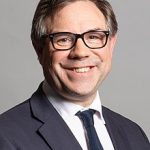
    Jeremy Quin – 2021 Comments on Sky Sabre

    The comments made by Jeremy Quin, the Defence Procurement Minister, on 6 December 2021.

    Sky Sabre’s spearheading technology has significantly upgraded the protection of our forces from threats from the air. This cutting-edge of defence system is a clear demonstration of our warfighting capabilities to those who wish to do us harm.

  • Caroline Lucas – 2021 Comments on Downing Street Christmas Party

    Caroline Lucas – 2021 Comments on Downing Street Christmas Party

    The comments made by Caroline Lucas, the Green Party MP for Brighton Pavilion, on Twitter on 6 December 2021.

    Docile acceptance of No.10 ‘reassurances’ by Kit Malthouse leaves him unable to answer straightforward question on #r4today about No.10 Xmas party. Met police must urgently investigate this question of PM ignoring his own rules as others forced to cancel their Xmas gatherings

  • Kwasi Kwarteng – 2021 Comments on Liquid Hydrogen Aircraft

    Kwasi Kwarteng – 2021 Comments on Liquid Hydrogen Aircraft

    The comments made by Kwasi Kwarteng, the Business Secretary, on 6 December 2021.

    These designs could define the future of aerospace and aviation. By working with industry, we are showing that truly carbon-free flight could be possible with hydrogen a front-runner to replace conventional fossil fuels.

    Fuelling planes sustainably will enable the public to travel as we do now, but in a way that doesn’t damage the planet. It will not only help us to end our contribution to climate change, but also represents a huge industrial opportunity for the UK.