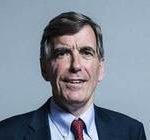
The statement made by Sajid Javid, the Secretary of State for Health and Social Care, in the House of Commons on 14 December 2021.
The covid-19 pandemic has caused upheaval across the world, forcing Governments everywhere to wrestle with how to keep their citizens safe while protecting the liberties that we all hold dear. We have learned a lot from our experience and the experience of others, and of course we are still learning. But we can take huge pride that thanks to the defences that we have built, so much of this year has been a year of recovery. We have enjoyed greater freedom than at any time during the pandemic so far. Thanks to the rapid progress of our vaccination programme, our investment in treatments and our decision to open up during the warmer summer months, we are in a far stronger position than we were last winter.
But even as I stood at this Dispatch Box back in July to announce the major milestone of taking step 4 in our road map, I said that
“we know that the greatest risk to the progress we have made is the possibility of another new variant, especially one that can escape immunity and puncture the protective wall of our vaccination programme”.—[Official Report, 12 July 2021; Vol. 699, c. 22.]
We have always known that variants have the potential to knock us off our course, and we have built the capacity to identify and respond to those that pose a threat.
The vast majority of new variants present no risk whatsoever. Since the summer, there have been hundreds of new variants, but only one of them—omicron—has been designated a variant of concern. For example, just last month, I updated the House from this Dispatch Box on AY.4.2, a new form of the delta variant, which preliminary analysis showed at that time might be more infectious. I said then that we would keep it under review, and that is what we did—and we took no action.
But omicron is a grave threat. We acted early to slow its spread, strengthening our testing regime and placing 11 countries on the travel red list, but despite those swift steps, the data over the past few days has shown more cause for concern. I would like to reinforce to the House today—to all hon. Members—why omicron represents such a risk to the progress that we have all made so far together.
Mr Mark Harper (Forest of Dean) (Con)
I am listening carefully to the Secretary of State’s comments and am grateful that he has brought these measures before the House. I asked him yesterday whether he would give a commitment at the Dispatch Box to recall the House if the Government had to bring further measures in other than those being proposed today, so that we could be involved on behalf of our constituents in making that decision. He kindly agreed to take that matter away and discuss it with the Prime Minister. Is he able now, at the Dispatch Box, to commit that if the Government were to take further measures to deal with omicron during the recess, they would recall the House of Commons so that we are able to have all the evidence and participate in taking those decisions on behalf of the constituents we represent?
Sajid Javid
I of course understand the importance of my right hon. Friend’s question; as he said, he asked it yesterday and, understandably, has asked it again today. I hope he will understand that I am not able to give that commitment alone; it would not be a decision for me and my Department alone, but I know the Government would consider it together seriously.
Dr Andrew Murrison (South West Wiltshire) (Con)
Might the Secretary of State consider going a little further? Since the data is changing all the time—almost by the minute—it is inconceivable that in a week’s time and a week after that we will be in the same place that we are in today. This House needs to consider the information available to it in near real time, so will he go away and consider whether it would be appropriate now to ensure that the House is able to consider these matters for sure next week and the week after that?
Sajid Javid
I will consider that. My right hon. Friend is right to point out that this is a fast-moving situation and it is right that the Government continue to monitor it and respond when necessary, but I hope my right hon. Friend will agree that right here and now the matter being debated and the regulation before the House is the best possible response that can be given by this Parliament today.
Andy McDonald (Middlesbrough) (Lab)
Will the Secretary of State give way?
Sajid Javid
I will, but then I will need to make some progress.
Andy McDonald
I am grateful to the Secretary of State for giving way. If he is going to consider those matters will he also consider the following issue? The virus spreads if people are not able to isolate, so will he think about addressing the issue of statutory sick pay, and in particular spreading the scope of SSP and raising it to a proper rate so that people can isolate and therefore not spread the virus and not end up in our hospitals?
Sajid Javid
The hon. Gentleman will know that some measures are already in place such as the ability to get sick pay from day one and that there are hardship funds, but I understand the hon. Gentleman’s question: he asked us to look at that further and we will do so. All these matters are under review.
Mr Toby Perkins (Chesterfield) (Lab)
Will the Secretary of State give way?
Sajid Javid
No, I will take an intervention from the hon. Gentleman later.
I want to turn now to some of the things we have learned about the new variant. This is a fast-moving situation and in the last week we have been able to determine the following things with a high degree of confidence. First, omicron is more transmissible than the delta variant. We can see that the growth in omicron cases here in the UK is now mirroring the rapid increase in South Africa, and the current observed doubling time is around every two days. Although yesterday we reported that there were 4,713 confirmed cases of omicron in the UK, the UK Health Security Agency estimate for the number of daily infections was 42 times higher at 200,000. Scientists have never seen a covid-19 variant capable of spreading so rapidly, so we have to look at what we can do to slow omicron’s advance.
Several hon. Members rose—
Sajid Javid
I give way first to the hon. Member for Brighton, Pavilion (Caroline Lucas).
Caroline Lucas (Brighton, Pavilion) (Green)
The Secretary of State is making a strong point about exactly why we need to do far more to address the threat of omicron, but does he accept that the Government’s mixed messaging has been incredibly unhelpful? Telling people that a tsunami of omicron is on the way but at the same time saying we can go on partying absolutely undermines that message. Will he have the moral courage to say that we actually do need to reduce our social contacts, and will he make it possible for people to do that both with the sick pay we have already talked about and by ensuring businesses get the financial support they need if fewer people are going into their premises?
Sajid Javid
What I think we need to do are the measures that are in front of the House today, and I hope the House will support them. I think those are the most important measures we can take right now.
Andrew Bridgen (North West Leicestershire) (Con)
But has the Secretary of State seen the statement from Dr Angelique Coetzee, the head of the South African Medical Association, today? She says that the Government’s measures on lockdown may be counterproductive, that omicron is a mild form of covid-19 that will have huge benefits for herd immunity and protection, and that delaying its spread may give time for more virulent and pathogenic variants to take hold and cause more deaths in the UK.
Sajid Javid
First, I think my hon. Friend, if I heard him correctly, talked about the “Government’s measures on lockdown”. I am not sure where he has seen these measures on lockdown, because they are certainly not being presented by this Government here today. On whether the omicron variant is milder, I will come to that issue very shortly.
Alec Shelbrooke (Elmet and Rothwell) (Con)
Building on the point from my hon. Friend the Member for North West Leicestershire (Andrew Bridgen), which my right hon. Friend says he is about to expand on, the question is: when will we know whether omicron gives severe or mild disease? If it is mild, how quickly could the decision be made that this would be an advantage to get rid of delta and to get herd immunity while it does not create strong disease?
Sajid Javid
If my right hon. Friend will allow me, I am about to come to precisely the point he raises.
The second thing about omicron that I want to share is that, although we do not yet have a complete picture of its severity, even if its severity is significantly lower, the much higher transmissibility of omicron means that it still has the potential to overwhelm the NHS. Let us take the current observed doubling time of two years—[Interruption.] Sorry. Let us take the current doubling time of two days. If, for argument’s sake, omicron is only half as severe as delta, after the lag between cases and hospitalisations has taken effect, that would buy us only two days before omicron hospitalisations reach the same level as for delta.
Neale Hanvey (Kirkcaldy and Cowdenbeath) (Alba)
Will the Secretary of State give way?
Sajid Javid
I will do so later.
In England, 10 people are confirmed to have been hospitalised with the omicron variant. I know that some hon. Members have said that, because confirmed hospitalisations from omicron are low, we do not need to act, but it is the fact that omicron hospitalisations are low that means now is the best time to act. We have seen during previous waves—we have already seen this—that the lag between infections and hospitalisations is about two weeks. When infections are rising so quickly, we are likely to see a substantial rise in hospitalisations before any measure starts to have an impact, so there really is no time to lose.
Bob Seely (Isle of Wight) (Con)
I understand the nuanced point that my right hon. Friend is making, but on the forecasts, does he accept that many academics have doubted the previous forecasts, describing them as “hysterical”, “substantially inflated”, “consistently overconfident”, “lurid” and “severely flawed”? We have had a problem with inaccurate forecasts. Does he accept that point?
Sajid Javid
Yes, I absolutely accept that point. With previous variants of covid, we have seen forecasts and estimates—whether from academics, think-tanks or others—that have been completely off the mark, but all I would say, gently, to my hon. Friend and other hon. Members is that, just because several forecasts in the past have been wrong, it does not mean that every estimate or forecast is always wrong. I hope my hon. Friend will note that.
Greg Clark (Tunbridge Wells) (Con)
My right hon. Friend talks about hospitalisations and the danger they may cause to the NHS, but will he reflect on the fact that it is not just hospitalisations but the length of stay in hospitals that determines how many beds are occupied? Evidence from South Africa suggests not only that there are fewer hospitalisations, but that people are in hospital for a much shorter time. Is that reflected in his calculations?
Sajid Javid
Yes, I can confirm that to my right hon. Friend. First, he is absolutely right to make that point. Of course it is not just about individuals entering hospital but about how many days they are likely to stay in hospital. I believe that for the delta variant an individual stays, on average, about nine days in hospital. If that was cut to five or six days, of course it would help with capacity. First, we cannot assume that, because what we are seeing in terms of the impact in South Africa is that hospitalisations there are rising rapidly; there are hundreds of people in intensive care units and on ventilators. It is hard to completely read that across, given that the average age of the South African population is about 27. I hope he would agree that, as with the point I just made on severity, even if the hospital stay is half of what it is at the moment, the rate at which this thing is growing—and if it continues to grow at that rate—means that that benefit could be cancelled out in two days.
Mr Perkins
The Secretary of State is facing a lot of criticism from behind him, but he should be assured that on these Benches we absolutely recognise the dangers of the variant before him. Does he accept, however, that having come in to his post saying that the end of restrictions was “irreversible”, he has created an expectation that he is going to constantly ignore the scientific advice, which is why he is facing so much disappointment from those behind him now?
Sajid Javid
The hon. Gentleman may have heard earlier, when I started my remarks, that I talked about what I said at this Dispatch Box in July and, specifically, about the risk of a vaccine-escape variant. I do want to talk about the vaccines and this variant—
Several hon. Members rose—
Sajid Javid
I will give way one more time for now and then I will come back to other colleagues.
Mr Steve Baker (Wycombe) (Con)
I am grateful, and I think my views on this are pretty well understood. Given the case the Secretary of State is setting out, one thing I am puzzled by is why he is only going as far as he is. Will he explain to us why, in his estimation, the measures he is taking are equal to the situation that he is describing?
Sajid Javid
That is a very fair question, as always from my hon. Friend. In the measures we are setting out, we are taking into account the very best advice we are being given—this includes making sure that we are not just listening to every piece of advice or every forecast we are seeing. He will recall that back in the summer had we listened to some of the advice we were receiving we would not have opened up in the way we did. So we are taking account of the advice, deciding whether it should influence our decision making and then coming to a balanced and proportionate response: the measures I have talked of and, for example, increasing the booster programme, which I will turn to in a moment too.
Several hon. Members rose—
Sajid Javid
I must make some progress, but I will take further interventions in a moment. I wish to talk about the importance of what we have learned about omicron and the vaccines. Vaccines have proven to be highly effective against previous variants, such as the alpha and delta variants. That has weakened the link between cases, and hospitalisations and deaths, and it has allowed us to reopen our country once more. But recent analysis from the UK Health Security Agency has shown that two doses of a vaccine provide much lower levels of protection against symptomatic infection from omicron when compared with the delta variant. More encouragingly, effectiveness rose considerably in the early period after a booster dose, providing about 70% to 75% protection against symptomatic infection. This data starkly shows the importance of booster doses and why we are working so hard to get many more boosters into arms. I will say more about that in just a moment. Our strategy is to take proportionate action now, to come down hard on this virus and strengthen our defences, rather than waiting until it is too late.
Richard Graham (Gloucester) (Con)
Surely the whole point is that we cannot be complacent and assume that this likely huge increase in infections is all going to result in very mild symptoms. What the Government are doing, therefore, is taking modest steps to ensure that if that does not happen, we will be prepared. Will he promise that if this situation does not materialise, he will be able to relax again?
Sajid Javid
We all want to relax. I wish I was more relaxed now than I already am. My hon. Friend is absolutely right on that, and I agree with him.
Rachael Maskell (York Central) (Lab/Co-op)
I appreciate that this is an escalating situation which needs urgent attention, but the fact is that if we are enabling social mixing, that is the very context in which we will see transmission, as we did with delta last December. Will the Secretary of State review these measures, as it seems that the statutory instruments before us today are already out of date?
Sajid Javid
It is of course important that we keep measures under review, but, for the reasons I gave earlier, I will continue to present this set of measures to the House. They strike the right balance and are a proportionate response.
Aaron Bell (Newcastle-under-Lyme) (Con)
My right hon. Friend may be interested to learn that Dr Angelique Coetzee gave evidence to the Science and Technology Committee this morning, and, rather contrary to her piece in the Daily Mail, she actually endorsed what the Government are doing. She said that the boosters were definitely the absolute priority, but she also referred to masks and avoiding mixing. When asked specifically about the covid pass proposals, she said that they sounded like a proportionate response to the requirements of the situation.
Sajid Javid
I thank my hon. Friend for sharing that with the House. I think it is important to hear that support from South African experts too.
Chris Grayling (Epsom and Ewell) (Con)
We are all, of course, concerned to hear that plan C measures are already being discussed, and I should be grateful if my right hon. Friend could lay that to rest. However, I want to raise the question of hospitalisations. There is a difference between people who have been hospitalised with omicron and those who have hospitalised from omicron. Will my right hon. Friend tell us what he knows about those cases? How many people have been admitted to hospital for other reasons, and how many have arrived in hospital because they are seriously ill with omicron?
Sajid Javid
What I can tell my right hon. Friend is that there are approximately 6,000 people in English hospitals who have tested positive for covid, and of those—I have shared information like this with the House before, because I was determined to obtain it when I first became Health Secretary—approximately 80% are there because of covid symptoms, while about a fifth are there for other reasons, but were tested for covid and happened to have it. I hope that that is helpful to my right hon. Friend.
Richard Burgon (Leeds East) (Lab)
I really must press the Secretary of State on this issue, on behalf of workers in my constituency and across the country, particularly low-paid workers. Why are the Government not offering us a vote today on whether to increase sick pay to real living wage levels? We cannot have a situation in which the Government are making the case that this matter is so serious—which it is—while forcing low-paid workers to choose between food on the table and self-isolating to protect the rest of the community.
Sajid Javid
Where I agree with the hon. Gentleman is on the importance of using measures to support people. Support is already there, but I recognise from the way in which he phrased his question that he thinks there should be more support. I understand that we have a difference of view on that, but it is something we keep under review.
When I announced our autumn and winter plan to the House in September, I explained that we would hold measures in reserve in case the NHS was likely to come under unsustainable pressure and stop being able to provide the treatment that we want all our constituents to receive. Yesterday NHS England announced that it would return to its highest level of emergency preparedness, incident level 4, and unfortunately there is now a real risk that the exponential rise in omicron cases will translate into a spike in hospital admissions and threaten to overwhelm the NHS.
We have done so much to boost the capacity of the NHS. Over the past year we have increased the number of doctors by 5,000 and the number of nurses by almost 10,000, and we have expanded the number of beds available, but we have also had to put in place measures for infection control which have limited that capacity, and there are already more than 6,000 covid-19 patients in hospital beds in England.
Despite the progress that we have made, the NHS will never have an unlimited number of beds, or an unlimited number of people to look after people in those beds. If we think that capacity risks being breached, we simply have to step in, because we know what that would mean in practice for both covid and non-covid care. It would mean one of the hon. Gentleman’s constituents, maybe a child, is in a car crash and is in need of emergency care, and the NHS has to make difficult decisions about who deserves treatment and who does not. Now, I know that some hon. Members think that this is merely hypothetical, but it is not. We have seen health services around the world become overwhelmed by covid-19 and we cannot allow that to happen here.
Layla Moran (Oxford West and Abingdon) (LD)
I am extremely grateful to the Health Secretary for mentioning frontline NHS staff. The all-party parliamentary group on coronavirus had a hearing this morning where we heard that staff are suffering moral injury because they are having to make exactly the decisions he outlined. The other thing we heard is that there is a worrying suggestion that omicron may be worse for children than delta. What assessment has he made of that risk? What is his plan for children to protect them against this deadly new wave?
Sajid Javid
First, I very much agree with the hon. Lady about the phenomenal work everyone in the NHS has been doing at all times, but especially over the past two years during this pandemic. They could not have delivered more. On her question about children and omicron, I am afraid we do not have any evidence on that yet that I have seen. We take the impact of omicron very seriously—I hope she can see that—and we will keep that under review.
Several hon. Members rose—
Sajid Javid
I will take some interventions in a moment, but I want to just finish this section.
We are also giving the NHS more time to put boosters in arms. I can assure the House that we will not waste a single second in doing that. We have already given more booster doses than anywhere else in Europe and 44% of the people in this country over the age of 18 have already been boosted. However, the recent data showing the importance of booster doses for our fight against omicron has highlighted the need to go even faster. Yesterday, I set out to the House how we are bringing forward the target we set ourselves, so that everyone who is eligible and aged 18 and over in England will be offered the chance to get their booster dose before the new year. This is a new national mission: a race between the virus and the vaccine to get as many people protected as soon as possible.
Just as we embark on this huge logistical endeavour in the short term, we are also looking at the long term. We have already signed contracts to buy a total of 114 million extra doses of future-proof vaccines that will help our country’s vaccination programme over the next two years. The deals we have struck will give us the earliest access to modified vaccines to combat omicron and future variants of concern should we need them.
Dr Luke Evans (Bosworth) (Con)
The Secretary of State is absolutely right. I am overjoyed that boosters are the key to getting the country out of this issue. I have raised, over the past couple of weeks and last week in PMQs, the issue of the 15-minute wait post-Pfizer. I wonder if the Medicines and Healthcare products Regulatory Agency or the Joint Committee on Vaccination and Immunisation have come to a conclusion on that, because that would free up a huge amount of capacity when it comes to delivering the boosters?
Sajid Javid
My hon. Friend did raise that point yesterday. It is being looked at very urgently. I am sure he will agree that if it is done, it should be done in a safe way that our regulators are happy with. I can confidently say that I expect an urgent update later today as soon as I leave this Chamber.
Alec Shelbrooke
I entirely agree with what my right hon. Friend said about the pressure on the NHS and the difficult problems that will occur if we have unvaccinated people blocking ICU beds. As he said, however, variants come along. He is making the case that, even if symptoms are only mild there will be exponential growth of cases in hospitals. What is the plan going forward? There is a set of measures today to deal with the situation now—fair enough—but if this is going to keep happening, how do we avoid being sat here in three months’ time, five months’ time or six months’ time debating the same thing? What is the plan?
Sajid Javid
That is a very fair question. I will say more about that in a moment, but I point my right hon. Friend to one of the things I have just mentioned, which is better and better vaccines. In the future, we will have poly-variant vaccines. Because of the orders we have already placed, we are at the front of the queue for such vaccines.
Dame Angela Eagle (Wallasey) (Lab)
Has the Secretary of State noticed, as I have, the view that omicron may have originated in Africa in an immunosuppressed sufferer of HIV, where these viruses can mutate much faster than they would under other circumstances? Does he agree that the best way of dealing with this is to get vaccines into as many people in Africa as possible and to ensure that HIV/AIDS sufferers are given access to the proper treatment?
Sajid Javid
There is lots of speculation on how omicron may have originated. I will not add to that speculation now, but I agree with the hon. Lady’s general point, which is a powerful point, about the need to get more vaccines to people in developing countries, whether in Africa, Asia or elsewhere. We can be proud of what the UK has already done—more than 20 million vaccines delivered through COVAX or directly, and almost another 10 million on the way. We are completely committed to meet our target of 100 million vaccine donations by June 2022.
Andrew Bridgen rose—
Madam Deputy Speaker (Dame Rosie Winterton)
Order. Just before the Secretary of State makes further progress, it is absolutely right that he should be taking a lot of interventions—there are a lot of questions to be asked—but people who have already made one intervention should not be making a second or a third intervention and certainly not if they also wish to be called to speak later in the day. I have too many people who wish to speak and there is not going to be enough time for everybody. Be sure—if you keep intervening, you do not get to speak. Let us have a little consideration for others.
Sajid Javid
I shall indulge my hon. Friend the Member for North West Leicestershire (Andrew Bridgen) because he is going to be really short.
Andrew Bridgen
The Secretary of State knows that I have been short all my life. He said earlier that the average age in South Africa was 27.5 years. I fear that he may have mis-spoken or been badly advised. In fact, the median age in South Africa is 27.5 and the comparative median age in the UK is 40.5—not radically different.
Sajid Javid
I am pleased that I took that intervention because I do not want people to think in the way my hon. Friend has suggested. I have to disagree with him. There is a big difference between those two ages, and the last time I looked the median can be described as an average. But I am pleased that he shared that because it highlights my point.
Clive Lewis (Norwich South) (Lab) rose—
Sajid Javid
I do need to plough on, but I will take some interventions a bit later.
For the reasons that I have set out, I believe that the responsible decision is to move to plan B in England, drawing on the measures that we have held in contingency to give more time to get those boosters into arms. These are not steps that we would take lightly. I firmly believe in individual liberty and that curbs should be placed on our freedoms only in the gravest of circumstances. Not only that, but I am, of course, mindful of the costs that restrictions can bring to the nation’s health, to our education and to the economy. So it is vital that we act early and we act in a proportionate way, doing whatever we can to build our defences and to preserve greater freedom for the long term. I am confident that these measures are balanced and proportionate, and that they still leave us with far fewer restrictions than are in place in most countries in Europe. I can assure the House that we will keep reviewing the measures that we have put in place and we will not keep them in place for a day longer than we have to.
Stephen Hammond (Wimbledon) (Con)
Specifically on the regulations, given the regulation on refusal of entry, the small number of venues and the large number of exemptions and the lack of protection for double-vaccinated people, why not make it a necessity for everybody to show a lateral flow test, rather than showing double vaccination?
Sajid Javid
If my hon. Friend allows me, I will come to that point shortly.
I said a moment ago that we will not keep measures in place for a moment longer than we need to. For example, now that there is community transmission of omicron in the UK and that omicron has spread so widely across the world, the travel red list is less effective in slowing the incursion of omicron from abroad, so I can announce today that, while we will maintain our temporary testing measures for international travel, we will be removing all 11 countries from the travel red list, effective from 4 tomorrow morning.
I wish to turn to the details of some of the regulations before the House. Regulation No. 1400 proposes extending the use of face coverings. In October, UKHSA published an updated review of the evidence on the effectiveness of face coverings and concluded that there is good evidence that they can help to reduce the spread of covid-19 when worn in the community. The regulation proposes extending the legal requirement to most indoor settings, including theatres and cinemas. They are not required in places where it would not be practical—for example, in hospitality settings such as cafés, restaurants, pubs, nightclubs or other dance venues, or in exercise facilities such as gyms.
Regulation No. 1416 would mean that anyone over 18 would need to show a negative lateral flow test to get into a limited number of higher-risk settings, unless they were double vaccinated. As I announced to the House yesterday, however, in the light of new data on how vaccines respond to omicron, our intention is that boosters will be required instead of two doses as soon as all adults have had a reasonable chance to get their booster jab.
Clive Lewis
I thank the Secretary of State for being so generous in taking interventions. Does he agree that, if we are to get on the front foot in tackling the pandemic, we have to acknowledge that it is like our house being on fire and dealing with just one room rather than the rest of the house? Surely the TRIPS waiver, which gives other countries across the developing world and beyond the ability to produce the vaccine themselves, to increase the supply at a cost-effective rate and to stop big pharma from excessively profiteering, is the way to get on to the front foot in vaccinating the rest of the world and ensure that new variants do not continue to flourish.
Sajid Javid
As I said in response to an earlier question, in terms of getting vaccines to the developing world, donations through COVAX and bilateral donations are important. I must strongly but respectfully disagree, however, with the hon. Gentleman’s suggestion that waiving intellectual property and patent rights will help. That will not help. That will undermine the world’s ability to deal with the pandemic, because it will remove the incentive for pharmaceutical companies to develop these valuable drugs in the first place.
Several hon. Members rose—
Sajid Javid
I need to make some progress.
As I announced to the House yesterday, in the light of new data on how vaccines respond to omicron, our intention is that boosters will be required instead of two doses as soon as all adults have had a reasonable chance to get their booster jab. I reinforce to hon. Members that the proposal on getting a negative result from a lateral flow test, or not having to do so if you are double vaccinated, is not a vaccine passport.
It is really important to me, as a point of principle, that people have a range of different routes to show how they are eligible, and that is what is before the House today. Those options include showing proof of a negative test for the last 48 hours, proof of vaccination, proof of a medical examination, or evidence of participation in a clinical trial. The regulations cover a small number of settings that present particular risk.
Alexander Stafford (Rother Valley) (Con)
My right hon. Friend knows that I am completely against vaccine passports and mandatory vaccinations. Can he confirm that lateral flow tests will always be used? That would allay my fears and those of my constituents that we are creating a two-tier system with mandatory passports. If lateral flow tests are always used, everyone can have access to all parts of our society.
Sajid Javid
I can give my hon. Friend that confirmation and I am happy to make that really clear. It is vital that there is always an option for a lateral flow test. I would not support a vaccine-only option.
Dr Ben Spencer (Runnymede and Weybridge) (Con)
In terms of providing proof of a negative lateral flow test, is that possible for someone who does not have access to the internet or a phone? What is the evidentiary requirement?
Sajid Javid
Lateral flow tests are available for everyone. The vast majority of people will have access to phones or through other ways. Once people have taken the lateral flow test and registered the result, perhaps with the help of someone in their family or a friend, they can get printed proof of that by using the 119 service. If there are other ways to improve that, of course we will, but we have found that that is available to the vast majority of people, including those who might not be as familiar with technology.
Mr Alistair Carmichael (Orkney and Shetland) (LD)
A vaccine passport with a lateral flow test alternative is still a vaccine passport. We have seen the use of vaccine passports in other parts of the country, in Scotland and in Wales. What difference have they made to the transmission of omicron in those parts of the country?
Sajid Javid
I will come to that specifically in a moment, but again I have to stress that this is not a vaccine passport. If the right hon. Gentleman wants to see a vaccine passport, he can do that in Scotland or he can go to France or some other countries. The measure is an attempt to reduce risk from covid in a high-risk venue. It is sensible and proportionate and provides several options and flexibilities.
Several hon. Members rose—
Sajid Javid
I must make some progress. I will take some interventions later.
The regulations—statutory instrument No. 1416—cover a small number of settings that present a particular risk: venues such as nightclubs, indoor events with 500 or more attendees likely to stand and move around, outdoor events with 4,000 or more attendees likely to stand and move around, and all events with 10,000 or more attendees. Those measures come into force tomorrow. We have given a week’s notice of those changes so that venues have time to put arrangements in place. I am pleased that many venues are already using the measures.
We cannot eliminate the risk of covid-19—that is simply not possible, nor should it be tried—but we can reduce it. The proposals offer a pragmatic way of doing that. Under them, people can either show a negative lateral flow test result, meaning that they are less likely to be infectious, or they can be double jabbed, which means that they are less likely to become severely unwell if they are exposed to covid-19.
Ruth Edwards (Rushcliffe) (Con)
Many of my constituents have contacted me concerned that the measures today are the first step in further restrictions on social gatherings and businesses. Will my right hon. Friend assure them that that is not the case and that, if we can rescind the measures before 26 January, we will?
Sajid Javid
I think that what I am about to say will give my hon. Friend that assurance. The plans will make high-risk environments safer than they would otherwise be, but all the regulations will be reviewed by 5 January and sunset on 26 January. I emphasise in response to her question that they sunset on 26 January and that even if the Government wanted to do something different and change matters in some way, we would have to come back to the House and seek its approval.
Mr Ben Bradshaw (Exeter) (Lab)
The Secretary of State is right that the regulations do not provide for vaccine passports. Conservative Back Benchers and the Liberal Democrats are completely wrong about that. I warmly welcome what he said about abolishing the red list. Will he now release all those people who are currently incarcerated in so-called quarantine hotels in inhumane conditions in this country? Will he also get rid of the other extra restrictions he introduced only two weeks ago to try to keep the omicron variant out when it is already here?
Sajid Javid
The point about managed quarantine and those people who are already in it is important. I am told that the practice in the past was to require them to complete their quarantine period, but I understand the importance of the point. I have asked for urgent advice about what that means. I hope to add to that very soon.
Neale Hanvey
One of the things we know about omicron is the significant genetic mutations and changes that have happened to the spike protein. This morning, at the Science and Technology Committee, Kate Bingham, the Government’s vaccine tsar, said that the Government’s decision to pull the plug on the Valneva contract was mistaken. Will the Secretary of State make a commitment today to revisit that, given the specific technologies that exist with a whole-virus vaccine, which Ms Bingham described as “having the edge” over other vaccines, and which would help the distribution of vaccines to the rest of the world?
Sajid Javid
I think the hon. Gentleman will understand that when the Government make decisions on vaccines they take expert advice, most of which comes from the JCVI. We always listen carefully to that advice to make a final decision, but it is coming on a number of occasions and is constantly kept under review.
Karl MᶜCartney (Lincoln) (Con)
Referring back to the point made by the right hon. Member for Exeter (Mr Bradshaw), it is crazy that people who have been in self-isolation are going to have to remain there due to the 11 countries that have not been removed from the red list. Surely they should not only be released from their incarceration but reimbursed for the astronomical amount of fees they have had to pay.
Sajid Javid
I am very persuaded by what my hon. Friend says. I would love to stand here right now and just say that that is the case, but there are some issues that need to be resolved, and they are urgently being looked at. I hope that we can say something more on this as a Government, even as early as today. I do understand what he said, for exactly the reasons that he said it, including on reimbursement.
As well as the new measures we are proposing, we are restoring freedoms too, drawing on the defences that we have already built. At the end of last month, this House passed regulations requiring all close contacts of a suspected or confirmed omicron case to self-isolate for 10 days, but given the increasing dominance of omicron, this approach no longer makes sense for public health purposes and nor is it sustainable for the economy. So we are drawing on the testing capacity that we have built to create a new system of daily testing for covid contacts that has started today. Instead of close contacts of confirmed cases or suspected cases having to self-isolate, all vaccinated contacts, irrespective of whether the contact was with an omicron case, will be asked to take lateral flow tests every day for seven days. Regulation No. 1415 allows us to put this plan into action by revoking the omicron-specific provisions for self-isolation.
Steve Brine (Winchester) (Con)
The Secretary of State knows that I welcome that. The isolation regs that we passed two weeks ago that I did not support were sinister, and well done to him for getting rid of that. On test and release, though, he will know that many of our constituents—many of mine have contacted me to say this—cannot, for love nor money, get hold of lateral flow tests right now. Could he update the House on whether this problem has been resolved?
Sajid Javid
My hon. Friend will understand that there has been a huge surge in demand for lateral flow tests, perfectly understandably of course. The situation at present is that the warehouses of the UKHSA have plenty of stock, but the distribution channel has been limited, although it has added to that significantly in recent days, including building on the channels it has with Royal Mail, Amazon and other suppliers, and also opening up more access points other than direct ordering online so that people can pick up tests from far more pharmacies, for example, than they currently can. It is being worked on, and whatever the current situation is, it will be improved very, very quickly. I hope that reassures my hon. Friend.
Barbara Keeley (Worsley and Eccles South) (Lab)
The Secretary of State is making some vital points about testing and self-isolation, but yesterday I raised a point with him about PCR testing that I would like to come back to. Although the supply of lateral flow tests is important, so is the PCR testing, which is a more reliable gold standard. Today there was a point when it was reported on social media that there were no PCR testing slots available in any region of England. Yesterday I asked him if he would authorise each director of public health across the country to have a float stock of 500 PCR tests they can use to disrupt covid outbreaks and to slow the transmission of omicron. This is a really important point. Only nine directors of public health have that float stock at the moment. Will he take this vital step and authorise it for all the other directors of public health?
Sajid Javid
We are, as the hon. Lady would imagine, working very closely with directors of public health throughout England, whether on testing or other areas. On PCR testing capacity specifically, capacity is usually roughly 600,000 a day, but it is already being expanded to about 800,000 a day, and it will be further expanded. It is important for hon. Members to know that testing is released at different times of day, so if someone checks the system and a test is not available, it might be available in their local area in the next couple of hours—it is not just a day-by-day process. As the process is surged, tests will become much more easily available. It is also important to remind people whenever one can that a PCR test should be used only if someone has symptoms; otherwise, lateral flow tests should be deployed.
Finally, I turn to measures to help keep the health and care system safe for the long term by making vaccination a condition of deployment for more health and social care settings. Across the UK, the overwhelming majority of us have made the positive choice to accept the offer of a vaccination against covid-19, and 91% of NHS staff have already had two doses, but we need that figure to go even higher. Uptake rates vary among health and care organisations and across the country; despite the incredible effort to boost uptake across the country, approximately 94,000 NHS staff are still unvaccinated. It is critical to patient safety that health and care staff get the jab to protect some of the most vulnerable people who are in their care and keep the NHS workforce strong in the wake of omicron.
We made vaccination against covid-19 a condition of deployment in care homes from 11 November this year. Contrary to what some people feared, we are not aware of any care home closures in which vaccination as a condition of deployment has been the primary cause. The regulations that we are putting before the House today will extend that requirement to health and other social care settings.
Sammy Wilson (East Antrim) (DUP)
The Secretary of State pointed out that the capacity of the health service is important and should not be breached. If 9% of staff to date have decided not to be vaccinated and will presumably stick with that decision, how does he expect that that will not reduce the capacity of the health service in future? Is it not a fact that there are already many people staying in hospital because a care home cannot be facilitated owing to lack of staff?
Sajid Javid
The right hon. Gentleman asks a fair question. I will answer precisely that question in just a moment.
Mr David Davis (Haltemprice and Howden) (Con)
We know that the vaccines are only 33% effective at reducing omicron infection. We know that the reduction of infectiousness falls dramatically—to zero after 12 weeks, in the case of AstraZeneca. What does the Secretary of State view as better for protecting people from infection: daily lateral flow tests or vaccination?
Sajid Javid
I think both have a role to play. In the NHS and in social care, there is very frequent testing—lateral flow testing, in the case of the NHS, and often PCR testing—but I think vaccination has a role to play. At this point in time, many people still have two doses; that is rapidly changing. When they have a third dose or their booster dose, that gives them an even higher degree of protection.
Dr Caroline Johnson (Sleaford and North Hykeham) (Con)
I draw attention to my entry on the Register of Members’ Financial Interests. The Secretary of State is making a very clear argument for the need to do something; he talks about how a very small proportion of a much larger number of cases could overwhelm the NHS in the way that a larger proportion of a much smaller number of cases might not. However, we know that the NHS has a huge backlog of people awaiting diagnostic and operative procedures. What evidence does he have that mandating vaccines for NHS staff will help? Given that we know that vaccination does not particularly reduce transmission, and given what he has said about the importance of choice, why does he not think that it would be reasonable to offer medical staff and nursing staff the option of daily testing instead of vaccination, should they make that choice?
Sajid Javid
In coming to this decision, we held an extensive consultation with thousands of responses. Importantly, we also consulted with the NHS itself; as I shall touch on in a moment, it has weighed up the decision. My hon. Friend is right if she is suggesting that there may be some people who choose to leave the NHS rather than stay and be vaccinated—that is a choice for them to make, but there is also an issue of patient safety. That is also the view of the NHS. As I said in response to my right hon. Friend the Member for Haltemprice and Howden (Mr Davis), testing can be used alongside, but vaccinations help as well.
I want to talk about settings.
Several hon. Members rose—
Madam Deputy Speaker (Dame Eleanor Laing)
Order. Let us allow the Secretary of State to finish his speech. He has some important information to put before the House, and I now want to hear that information.
Sajid Javid
The settings to which this measure would apply include, of course, NHS hospitals, and GP and dental practices, regardless of whether a provider is publicly or privately funded. Anyone working in health or social care activities regulated by the Care Quality Commission will need to be vaccinated against covid-19 if their role will involve direct contact with patients, apart from a few limited exemptions—for example, for medical reasons. The definition of “fully vaccinated” is currently two doses, but we are keeping this under review, and of course I urge everyone who works in the NHS and social care to get their boosters too.
As we have just heard, concerns have been raised about the impact of the measures on the workforce, especially during these winter months, although even before the pandemic workplace policies were in place requiring the hepatitis B vaccine for those who have to perform certain clinical procedures. We are already allowing a 12-week grace period to give people the chance to make the positive choice to get protected, and we are aiming to start enforcing these requirements from 1 April next year—subject, of course, to the will of the House.
John Stevenson (Carlisle) (Con)
If a member of the NHS decides that they do not want to be vaccinated, will they be given a redundancy payment; and if not, why not? But if they are and that is the policy, how much would it cost the NHS, and would that be a good use of taxpayers’ money?
Sajid Javid
I believe that it would not be classed as redundancy because it would not be redundancy; that job would not have become redundant. If an individual chooses not to get vaccinated, that is of course a decision for them to make. The way in which this should be, and no doubt will be, implemented by the NHS is that getting vaccinated should always be a positive choice. The NHS has put in place a number of methods to try to provide the information that people want to share, including through one-to-one consultations and providing more information especially for those who may have received misinformation. The outcome when a similar measure was implemented for care homes was that many staff—when provided with the right, positive information—chose to be vaccinated, rather than to leave their jobs.
Several hon. Members rose—
Sajid Javid
I must make progress. I am sorry.
Madam Deputy Speaker (Dame Eleanor Laing)
Order. The Secretary of State is right; he must make progress, as other people need to speak now. Please let us allow the Secretary of State to conclude his speech.
Sajid Javid
Thank you, Madam Deputy Speaker.
Today, the chief executive of NHS England has written to me, reinforcing the importance of getting the jab in the interests of patient and staff safety. I will be placing a copy of this letter in the Libraries of both Houses today. Despite the concerns that some people have raised, I am pleased to say that we have already seen a net increase of more than 55,000 NHS staff vaccinated with a first dose since we consulted on the policy in September.
Although I firmly believe that these measures are a proportionate way of protecting those at greatest risk, I know that hon. Members have questions about whether we would extend them further. Let me say clearly to the House today—once and for all—that although we have seen plans for universal mandatory vaccination in some countries in Europe, I will never support them in this country. I firmly believe that getting vaccinated should be a positive decision. I assure the House that the Government have no intention of extending the condition of deployment to any other workforces or of introducing mandatory vaccination more widely.
The regulations that we are debating today are not measures that any of us would like to be putting in place, but they are measures that the situation demands, because when the facts change, our response must change too. As we look ahead to a winter with omicron in our midst, the measures before the House today will fortify our national defences and guard the gains that we have all made against this deadly virus. I commend these regulations to the House.