Tag: Speeches

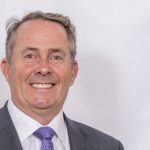
  • Bob Stewart – 2022 Speech on Holocaust Memorial Day

    Bob Stewart – 2022 Speech on Holocaust Memorial Day

    The speech made by Bob Stewart, the Conservative MP for Beckenham, in the House of Commons on 26 January 2022.

    Instances of genocide continue, and, very sadly, I have been witness to them—in particular, in Bosnia during 1992-93, when I commanded the battle group of the 1st Battalion, The Cheshire Regiment. Let me give the House an example.

    On 22 April 1993, I learnt that women and children had been massacred in a village in the Lašva valley. I did not believe it, so I went there, taking about 30 men and about six vehicles. As I approached the village of Ahmići from the south, I was struck by what a beautiful place it was, or had been. The first building I saw was the mosque, which was new, but wrecked. The minaret had been broken by explosions, and it was pointing at the sky like a pencil. Most of the other buildings in the village—it was a linear village, about a mile in length—had been destroyed by fire. Some had not been destroyed; we later discovered that they belonged to Bosnian Croats, not Bosnian Muslims.

    Each building had been destroyed by fire, explosions or shooting. The windows had black marks around them, and the roofs had collapsed. Only later, because we did not see it immediately, we discovered that bodies were underneath the roofs. Outside the houses, the gardens looked kind of normal, except for the detritus of war: downed cables, bricks, burnt-out cars, and dead pets. Everywhere was the disgusting smell which comes from the chemical reactions that accompany death. It was cloying and it was foul.

    I went all the way to the far end of the village, the north end. I deployed my men, and we started looking. We did not see bodies initially—until we came to house number seven. The murderers had failed to disguise what had happened there. At an entrance to the house, there was a man and a boy. They were dead. They looked like they had been burnt. They did not seem to have clothing on them. The little boy, or the teenage boy, had his arm upwards in front of his face, and his fist was balled, and the bones had been burnt through.

    My soldiers said, “Look behind the house, Sir.” I went into a cellar. The cellar had agricultural tools and strings of onions or vegetables on the walls. In the middle, there was this mass—this greyish, blackish mass. I did not really understand what I was looking at—then I did! The first thing that hit me was the disgusting smell, and then I realised I was looking at bodies—at least two adults, several children. One of the women, and they were women, presumably being protected by the men who were killed at the door, had her back so arched back. Her back was bent—she was lying, and her head was back. God! She was burnt. Everything was burnt, except for her eyes. Her eyes were not burnt. I fell back in horror at what I had found. I rushed outside and was violently sick.

    Later, one of my soldiers, and he was a bandsman, because we used the band as stretcher bearers and I asked the band to help clean up, was shovelling the remains—shovelling the remains—of a human being into a bag on a stretcher, and he turned to me and said, “Sir, this is Europe in 1993, not Europe in 1943.” I did not know what to say.

    On the memorial in that village, which I am going to visit shortly—at Easter—there are 116 names of everyone killed, as far as can be ascertained. My men and I dug a mass grave and put, as far as we could tell, over 104 bodies into that mass grave. They were Bosnian Muslims; there was not a Bosnian Croat among them.

    We did not just discover them, but found families lined up—shot down. One little girl was holding a puppy. The puppy was dead, and so was she, killed presumably by the same bullet. We took that family to the local morgue. Next day, we went back and discovered that the bodies had been put back at the house because it was the wrong morgue. We had taken them to a Croat morgue, not a Muslim morgue.

    Within a month, I was in Srebrenica and watched more genocide occurring, this time with Bosnian Serb artillery firing at human beings. There were about 20 people killed around us as we went. Some of my soldiers were slightly wounded, no one killed.

    You see, I consider Holocaust Memorial Day to be so incredibly important not just because of the people who were killed in the second world war in the 1930s and the 1940s. It was not just the second world war: the Germans, or the Nazis—forgive me, I am not talking about the Germans; I am talking about the Nazis—managed to start doing it before the second world war. Then we have had instances since, with Darfur, Bosnia that I have witnessed, Rwanda and Cambodia.

    My mother visited Belsen in 1945. She was in the Special Operations Executive. I did not know that until a few years before she died. I did not know she was a spy. Women are always much better at keeping secrets than men. I said to her, “Why, mum, have you never told me that you went to Belsen in 1945 looking for SOE officers?” She said, “Robert, I was ashamed.” I said, “Why were you ashamed? You did things like learn to parachute when you were 22 and put yourself in danger. You did everything you could.” Colleagues, she said, “I was ashamed because it happened in my generation.”

    The purpose of Holocaust Memorial Day, and the memorial of all those people who died in the second world war and all those who have died in genocides since, is for us to feel collective responsibility for stopping it from happening again. That is why this day, and this memory of all those innocents who have died, is so incredibly important.

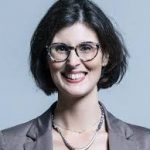
  • Diana Johnson – 2022 Speech on Holocaust Memorial Day

    Diana Johnson – 2022 Speech on Holocaust Memorial Day

    The speech made by Diana Johnson, the Labour MP for Kingston upon Hull North, in the House of Commons on 26 January 2022.

    I start by paying tribute to all those who have secured this debate and those who have already spoken so movingly, thoughtfully and powerfully. I say to the right hon. Member for Newark (Robert Jenrick), who opened the debate, how moved I was by what he disclosed about the comments made to him and his family. I agree with my hon. Friend the Member for West Ham (Ms Brown) that the solidarity of the House is with the right hon. Gentleman and his family. I also pay tribute to my right hon. Friend the Member for Barking (Dame Margaret Hodge) for all her work in this area, over so many years.

    Today marks the 77th anniversary of the liberation of Auschwitz-Birkenau. Today, we remember those 6 million Jewish men, women and children murdered during the holocaust, alongside millions of other people killed under Nazi persecution and in all subsequent genocides. This Holocaust Memorial Day is as important as ever in marking the memory of those terrible events.

    I was reflecting that I visited Auschwitz some years ago with the Holocaust Educational Trust. One of my most striking memories is of the huge piles of luggage, dolls and toys, shoes and other ordinary, mundane items, which were probably those that meant the most to the people who were murdered in that camp. I will always remember that about Auschwitz—the ordinary and mundane alongside the most evil.

    The holocaust is fading from lived memory, with the gradual passing of those who suffered and survived and of those in the greatest generation, who fought the Nazis and liberated the camps and Europe. It is up to all of us to ensure that this history and its lessons are never forgotten. I, like many others, pay tribute to the Holocaust Educational Trust for the brilliant work that it does, and to the Holocaust Memorial Day Trust, as well.

    After the events of recent years with covid, I look forward to once again meeting Hull’s remaining Jewish ex-servicemen and the community in Hull who gather every Remembrance Sunday to mark these events, and the immense contribution of the Jewish community to our country and to our very survival. As a member of the Commonwealth War Graves Commission, I am proud of the work that we do in maintaining the graves of so many Jewish ex-servicemen and women who fell while defending our country.

    As we know, we need to be vigilant as there are those who still seek to deny the facts about the holocaust, a form of fake news spread for decades by antisemites, challenging whether the holocaust actually happened or the magnitude of it, and more recently questioning the internationally agreed definition of antisemitism. Remembering what happened in the holocaust is even more important, as we have seen a rise in antisemitism abroad and here in the United Kingdom. The first half of 2021 saw the highest number of antisemitic incidents in a six-month period recorded by the Community Security Trust. It is important that we note the work that trust does, day in, day out, providing security and keeping the people of the Jewish faith safe.

    We must ask ourselves, why is that trust still required and why have we failed to combat the pernicious hatred of Jews that lingers, particularly online? Online disinformation often parrots long-standing antisemitic tropes that demonise Jewish people as happened in Germany in the 1930s; now they are spread by digital technology. The right hon. Member for Newark set out some shocking statistics about what can be found on social media platforms. This House must do something about that. Other hon. Members have talked about antisemitic messages around the covid anti-vaxxers, which are sadly too prevalent on social media.

    We must be aware of the different forms that antisemitism takes in the United Kingdom. It is no longer just the far right and skinheads trying to sell National Front publications in Brick Lane. Shamefully, in recent years my party allowed the stain of antisemitism to find a home in the party. Under the leadership of the current leader of the Labour party, we are working very hard indeed to combat that.

    The horror of the holocaust has reshaped our understanding of international law, human rights and collective security after 1945. We have a responsibility to people throughout the world to protect them from persecution, but I regret to say that we have too often failed. I chair the all-party parliamentary group on human rights, and we are only too well aware of the growing breaches of human rights around the world. We know that too many genocides have been carried out since the holocaust—in Cambodia, Rwanda, Bosnia and Darfur, to name but a few—and we should also be shamed by the current genocide being carried out against the Uyghurs in China, the plight of Christians in some countries, what happened to the Yazidi women, and what is happening now to the women in Afghanistan. Of course, there is also the stain of Islamophobia, which is still around in our communities and institutions and which needs far more attention. It is the “othering” of groups that we need to be vigilant about and take action to tackle, and we need to recognise where that “othering” can lead.

    The theme of this year’s Holocaust Memorial Day is “One Day”, but we must continue the work to eradicate antisemitism and hatred, in this country and throughout the world. Antisemites, of whatever variety, are invariably the enemies of peace, freedom, democracy and the rule of law. Only by defeating them, and all those who peddle hatred and prejudice, can we live in confidence that we will never see another holocaust.

  • Nicola Richards – 2022 Speech on Holocaust Memorial Day

    Nicola Richards – 2022 Speech on Holocaust Memorial Day

    The speech made by Nicola Richards, the Conservative MP for West Bromwich East, in the House of Commons on 26 January 2022.

    I quote:

    “I have a request of you: this is the real reason why I write, that my doomed life may attain some meaning, that my hellish days and hopeless tomorrows may find a purpose in the future.”

    These chilling words are those of Zalman Gradowski, a Polish Jew deported to Auschwitz-Birkenau and forced to be a cog in a factory of death. Zalman was forced to be a member of the sonderkommando, a group of Jewish prisoners forced to perform a variety of duties in the gas chambers and crematoriums. In October 1944, Zalman led this group in revolt and managed to destroy one of the crematoriums. He was murdered during this revolt. Knowing he would soon be killed, Zalman wrote his first-person account of what he described as the “inferno of death” that he was living in and hid these words in the ashpit of crematorium 3, hoping that one day a citizen of the free world will find them and tell the story of him and his family. Zalman asks in his writings:

    “Can the dead mourn the dead? But you, unknown ‘free’ citizen of the world, I beg you to shed a tear for”

    my family

    “when you have their pictures before your eyes. I dedicate all my writings to them—this is my tear, my lament for my family and people.”

    I wish to now grant Zalman’s wish and list the names of his murdered family members for all to hear, know and remember in this place: his mother, Sarah; his sister, Libe; his sister, Esther Rokhl; his wife, Sonia; his father-in-law, Raphael; and his brother-in-law, Wolf. They were all killed on 8 December 1942, gassed and incinerated. They have no grave. Zalman also mentions his father, Shmuel, his two brothers, Eber and Moyshl, and his sister Feygeleh, who were all taken and never seen again. This was his entire family, and they will never be forgotten.

    An estimated 1.3 million Jewish people were deported to Auschwitz-Birkenau, and 1.1 million were murdered. When allied troops liberated the concentration and death camp 77 years ago today, just 9,000 prisoners were found alive. All in all, an estimated 6 million Jewish men, women and children were murdered in the holocaust.

    The holocaust was not the birth of antisemitism, and sadly neither was it the end. It is the world’s oldest form of hatred and has taken on many forms over the centuries. However, the same themes always seem to prevail: Jews are made scapegoats, forced to answer for the actions of others, and they are depicted as both weak and all powerful.

    Just two weeks ago, a British man walked into a synagogue in Texas and took the rabbi and three congregants as hostages. Why? Because he believed that the Jews of that small congregation had the power to grant his demands. I saw the effect that the incident had on my Jewish friends: they stayed glued to their phones and TVs all night praying for a peaceful outcome; they went to sleep not knowing whether they would wake up to yet another massacre of fellow Jews in their sacred house of worship.

    It is a sad state of affairs when synagogues all over the world are still forced to be guarded by soldiers, police or security and when Jewish schoolkids in this country must still take part in regular terrorist drills and be prepared for the worst in case it happens. I pay tribute to the incredible work of the Community Security Trust and its volunteers, who work tirelessly to keep the UK Jewish community safe.

    The Secretary of State for Education rightly calls antisemitism a virus that continues to mutate. As we know, the best way to deal with a mutating virus is to vaccinate. Education will always be the vaccine against all forms of hatred. For that reason, I commend the work of the amazing charities, organisations and their staff who dedicate their time to ensuring that the next generation are taught about the evils of antisemitism and where that hatred can lead.

    The Holocaust Educational Trust is an amazing charity and one I was proud to work for myself. I am glad that two of my staff members, Alex Moore and Bradley Langer, are ambassadors for the trust; Bradley also works for them. Holocaust Memorial Day might just be one day a year, but the staff of the trust work hard all year round, travelling to schools across the country and teaching about the horrors of the holocaust. They have now taken over 41,000 young people to visit Auschwitz-Birkenau through their Lessons from Auschwitz project, giving them the opportunity to see that historical site for themselves. They campaign tirelessly against those who try to deny or distort the holocaust and they help survivors share their testimony with anyone who will listen.

    I also commend the innovative work of George Salter Academy, in my own constituency, as part of the University College London Beacon School programme—a flagship initiative led by the UCL Centre for Holocaust Education. They are truly leading the way in holocaust education in West Bromwich East.

    I also pay tribute to Freddie Knoller BEM, who very sadly passed away yesterday aged 100. Freddie was an Auschwitz survivor and a resistance fighter, and his work and fight against antisemitism will never be forgotten.

    Sadly, one day in the near future, the holocaust will move from being living history to just history. All of us who have had the honour of hearing a survivor share their testimony are now their witness. It is up to us to carry on their legacy, to say to our children, “I met a Holocaust survivor; I listened to their testimony. It happened to them and their family, and it must never be allowed to happen again.”

    I would like to end this speech on a positive note by also celebrating the incredible Lily Ebert BEM. At age 20, when she was deported to Auschwitz, she made herself the promise that if she survived she would tell everyone the truth of what happened to her and her family. She has made millions of people around the world her witness and continues to jump at every opportunity to share her story. I wish Lily a huge “Mazal tov” on the arrival of her 35th great-grandchild, and I echo her remark that the Nazis did not win.

  • Charlotte Nichols – 2022 Speech on Holocaust Memorial Day

    Charlotte Nichols – 2022 Speech on Holocaust Memorial Day

    The speech made by Charlotte Nichols, the Labour MP for Warrington North, in the House of Commons on 27 January 2022.

    I rise to speak today to commemorate Holocaust Memorial Day, which, on the anniversary of the liberation of Auschwitz-Birkenau, commemorates the 6 million Jews murdered during the holocaust, alongside the millions killed under Nazi persecution of other groups, including Roma and Sinti people, Slavic people, LGBT and disabled people and political and religious minorities. On this day, we also remember the subsequent genocides in Rwanda, Cambodia, Dafur and Bosnia.

    As the holocaust fades from living memory, I want to put on record my gratitude to all of the survivors whose testimonies are at the heart of holocaust education, but which come at huge personal cost. It is impossible to comprehend the abjectness of the horrors that they experienced, the trauma that follows them through their lives, or the sacrifice that bearing witness entails. Marceline Loridan-Ivens said:

    “If you only knew, all of you, how the camp remains permanently within us. It remains in all our minds, and will until we die”

    Similarly, Shlomo Venezia, said:

    “Everything takes me back to the camp. Whatever I do, whatever I see, my mind keeps harking back to the same place. It’s as if the “work” I was forced to do there had never really left my head…Nobody ever really gets out of the Crematorium”.

    Those who survived the camps were greeted with

    “incredulity, indifference, and even hostility”

    upon their return to their communities. Although the allies won the war against Nazism in Europe, antisemitism has never been defeated, and fascism grew rapidly in the UK in the post-war years, contrary to the narrative of triumph over Hitler.

    Jewish soldiers such as Morris Beckman and Jules Kanopinski returned to London to find fascists staging outdoor rallies in the east end,

    “shouting out the same antagonism and the same filth as before the war, and now even worse—they were saying the gas chambers weren’t enough”.

    The anti-fascist 43 Group that they and their comrades established, and the later 62 Group, would be breaking up, on average, 15 fascist meetings a week and engaging in regular physical confrontation with fascists, including in the battle for Ridley Road, which was memorialised this year in a BBC drama. The irony is not lost on me that, in the very week that Ridley Road was released, my synagogue in Manchester, where much of it was filmed, had our Friday night service gate-crashed by the far right. It may be a historical drama, but the hatred in it is very much contemporary.

    I have sat in synagogue while fellow Jews have been slaughtered elsewhere in the world for practising their faith, as I am, and so to proclaim our faith proudly, to stand as proud Jews, is itself an act of defiance. As the partisan vow declares, “Mir veln zey iberlebn”, which means, we will outlive them. From generation to generation, the Jewish spirit endures.

    In Kveller, Rachel Stomel writes:

    “In the context of Jewish law, remembrance is not a reflexive, passive process directed inwards. Our sages teach us that the way we fulfil the Torah’s commandment to remember the Sabbath—’Zachor et Yom HaShabbat le’kodsho’ (remember the sabbath day to keep it holy)—is by active declaration in the performance of the kiddush, the Shabbat blessing over wine. We are commanded to remember the Amelikites brutal massacre of our people—’Zachor et Asher asah lecha Amalek’ (remember what the Amalek did to you)—through intentional, public, verbal affirmation, and by ridding the world of the evil that they represent. Neither of these Torah commandments can be fulfilled by quiet contemplation, memorialisation must manifest through specific action.”

    The theme for this year’s Holocaust Memorial Day is “One Day,” both as a call to action for that one day when we have eradicated the hatred that leads to genocide and because one day, as a snapshot of what happened, can be helpful in seeking to understand and process the enormity of the holocaust. The brutality and the hopelessness of the concentration camps and the lengths to which the Nazis went to extinguish any faint glimmers of hope are summed up in this quote from the survivor Shlomo Venezia, who was forced to work in the Sonderkommando at Auschwitz, emptying the gas chambers of bodies, including those of family members, processing their hair and teeth, and loading them into the ovens for cremation. He said:

    “One day, while I was presenting my testimony at a school, a young girl asked me if anyone had ever emerged from the gas chamber alive. Her schoolmates laughed at her, as if she hadn’t understood a thing. How could anyone survive in those conditions, when the deadly gas used had been carefully developed to kill everyone? It’s impossible. In spite of everything, however absurd her question may seem, it was quite relevant, since it did indeed happen.

    Few people ever saw and can relate this episode, and yet it is true. One day when everyone had started working normally after the arrival of a transport, one of the men involved in removing the bodies from the gas chamber heard a strange noise. It wasn’t so unusual to hear strange noises, since sometimes the victims’ bodies continued to emit gas. But this time he claimed the noise was different. We stopped and pricked up our ears, but nobody could hear anything. We told ourselves that he’d surely been hearing voices. A few minutes later, he again stopped and told us that this time he was certain he’d heard a death rattle. And when we listened closely, we, too, could hear the same noise. It was a sort of wailing. To begin with, the sounds were spaced out, then they came more frequently until they became a continuous crying that we all identified as the crying of a newborn baby. The man who had heard it first went to see where exactly the noise was coming from. Stepping over the bodies, he found the source of those little wailings. It was a baby girl, barely two months old, still clinging to her mother’s breast and vainly trying to suckle. She was crying because she could feel that the milk had stopped flowing. He took the baby and brought it out of the gas chamber. We knew it would be impossible to keep her with us. Impossible to hide her or get her accepted by the Germans. And indeed, as soon as the guard saw the baby, he didn’t seem at all displeased at having a little baby to kill. He fired a shot and that little girl who had miraculously survived the gas was dead. Nobody could survive. Everybody had to die, including us: it was just a matter of time.”

    Elie Wiesel speaks of watching Jewish babies thrown alive into the vast ditches where bodies were burned, confirmed by Telford Taylor at the Nuremberg trials. Lily Ebert testifies of witnessing babies torn from their mothers’ arms and dashed against walls. I have seen the piles of teeth, hair and shoes that represent a tiny fraction of those who passed through Auschwitz-Birkenau, and how small those chambers were, with up to 1,200 people piled into a tiny space so that no poison gas would be wasted. This was not, as we might imagine, a quick process, with it taking up to 12 minutes to be poisoned to death, crushed in among hundreds of panicking people, desperately trying to cling to life, trying to break or claw their way out. Seven hundred Jews were murdered in the gas chambers on the very day before they were set to be liberated and many more died by disease or by suicide in the months following liberation. There are some things that a human just cannot endure.

    These survivors witnessed day in, day out what no human being should ever be condemned to see: the very depths of man’s cruelty and inhumanity towards his fellow man laid bare. The Hasidic mystic, the Baal Shem Tov, said:

    “If a man has beheld evil, he may know that it was shown to him in order that he learn his own guilt and repent; for what is shown to him is also within him.”

    If man can sink to these depths once, to industrialise the brutalisation and murder of their fellow humans, they can and will do so again.

    Indeed, “never again” rings hollow with the genocides that have taken place since the holocaust, and our failure as a nation to learn the lessons of the past as this Government turn away refugees from other parts of the world knowing full well the fate of the refugees from the holocaust denied safe passage to Britain and the US, and returned to their deaths.

    We allow a minority in public life to degrade and debase the memory of the holocaust—to make inappropriate comparisons with modern day events as though there can be any parallel drawn, rhetorical or otherwise, between, for example, those who choose not to be vaccinated, or a particularly poor performance in the football, and the experience of the victims of Nazi persecution. We still see the cancer of antisemitism in our communities, with the threat of hate crime in person and online a daily reality that we should not have to live alongside.

    Today we honour the victims, the survivors, the heroes and the martyrs of the holocaust. We cannot change the past, but by bearing witness we can change the course of the future. Ira Goldfarb said of his father, the survivor Aron Goldfarb, that

    “throughout my father’s life, survival adopted a new meaning. Survival to my father was carrying the nightmares of his childhood and choosing to find joy, humor, and compassion in life every single day. Survival was seeing the worst of humanity and still offering his last piece of bread to someone who needed it more, still building lifelong friendships, and being a devoted husband and father.”

    It is hard not to be moved by photos of a beaming Lily Ebert celebrating her 98th birthday in lockdown with thousands of cards sent by well-wishers, or welcoming the birth of her 35th great-grandchild. I can think of few people more deserving of happiness. May we draw strength from their strength, and courage from their courage, as we build a more decent, respectful and inclusive society where all of us can live in peace, harmony and security.

  • Andrew Percy – 2022 Speech on Holocaust Memorial Day

    Andrew Percy – 2022 Speech on Holocaust Memorial Day

    The speech made by Andrew Percy, the Conservative MP for Brigg and Goole, in the House of Commons on 27 January 2022.

    It is an honour to follow the hon. Member for West Ham (Ms Brown) after her excellent speech and my right hon. Friend the Member for Newark (Robert Jenrick), whom I congratulate on securing this debate. I join everybody in the Chamber in thanking the Holocaust Memorial Day Trust, the Holocaust Educational Trust and everybody else who works in this area. I particularly pay tribute to the Antisemitism Policy Trust and its chief executive, Danny Stone, who does so much in supporting and providing the secretariat for the all-party group against antisemitism, which I and the hon. Member for Newcastle upon Tyne North (Catherine McKinnell) co-chair.

    I will attend the Holocaust Memorial Day ceremony in Brigg in north Lincolnshire this Sunday, which will take place at our new memorial there. It is a town I have spoken about before that has little to zero Jewish population but which, through its town council and particularly Councillor Rob Waltham, decided that it wanted to do its bit and to do more to ensure that the memory of the holocaust is never forgotten. That is why, just a few years ago, following a competition in which local schools took part, a local pupil designed a fantastic new memorial in Brigg, and the town will come together on Sunday to ensure that we never forget.

    I thank Demeter House School in Brigg, a special educational needs school that has been working with the University College London Centre for Holocaust Education to build its confidence in teaching its children about the holocaust. It is one of 165 schools across England taking part in that initiative, and I pay tribute to it for that.

    Why is this debate so important? Sadly, the scourge of antisemitism continues to plague our society and others around the world. As my right hon. Friend the Member for Newark said, we have seen that in the past year with the case of Professor Miller at the University of Bristol, which failed to protect its students swiftly. This was a racist, antisemitic professor targeting Jewish students, accusing them of effectively being in the pay of the state of Israel—a classic antisemitic trope. In calling that out, as we did not so long so ago in an Adjournment debate, members of the all-party parliamentary group were singled out and attacked as being Zionist agents, agents of the state of Israel or in the pay of Israel.

    Why is this debate necessary? As other Members have said, people visiting any social media platform over the past couple of years will have found antisemitic posts linking covid and the development of vaccines to Israel, to Jews, to the classic international conspiracy. We have seen, as has been referenced, the sickening sight of people on anti-lockdown protests wearing yellow stars.

    Christian Wakeford (Bury South) (Lab)

    Will the hon. Gentleman give way?

    Andrew Percy

    Of course I give way to the vice-chair of the APPG.

    Christian Wakeford

    Just last week we saw swastikas on the streets of Bury in protest against covid passes. It is depressing that we even need to say this in this House, but there is no place for antisemitism, these tropes or this hatred on our streets, campuses and society, and it needs a debate such as this to call it out and say, “No more.” [Hon. Members: “Hear, hear.”]

    Andrew Percy

    Absolutely—I could not agree more. Too many people throughout this coronavirus period have casually linked the necessary measures to Nazi Germany. My constituents are largely very sensible people—they have sent me here four times, which proves how sensible they are; and they have done so, I might add, in ever increasing numbers and with a higher percentage of the vote, but I digress—but I am afraid to say that even a small number of my constituents have sent me some of this material. One of them even sent me a photograph of the Nazi health pass, likening it to the vaccine mandate, even though the Nazis and Hitler himself were against vaccine mandates.

    That is absolutely why this debate is necessary. We have this debate every year, and each time we can all trot out a whole range of different experiences and examples from the preceding year, as Members have done today—I will not repeat them—which prove the sad necessity for this debate and for the ongoing work we have to do on antisemitism.

    Bob Blackman (Harrow East) (Con)

    Will my hon. Friend give way?

    Andrew Percy

    I will, but I am conscience of your guidance, Madam Deputy Speaker.

    Bob Blackman

    I will be very brief. My hon. Friend is taking an impassioned view of antisemitism. Is he aware that just yesterday Jewish shopkeepers in Stamford Hill were attacked? There is a video of the incident and a police investigation is taking place, but it is clear that antisemitism is rife in our society today.

    Andrew Percy

    I was not aware of that particular incident, but I am sorry to say that this is happening time and again. Anyone who visits social media or other online platforms, including sales sites such as Amazon, will be able to find books that minimise and question the holocaust. The APPG has raised this many times, in repeated meetings, with the social media platforms and through direct approaches to Amazon and others, but anyone who looks today will be able to find holocaust denial and revisionist material for sale on Amazon.

    In the few minutes I have left, I want to talk, in a more positive sense, about some of those heroes who did so much to help save people in the holocaust. This year I came across a book called “The Bravest Voices”, written by Ida Cook. She was one of two sisters, Ida and Louise Cook, who have been described as plain and dowdy English spinsters in the 1930s. They were huge fans of opera, and they took it upon themselves to rescue Jews and non-Jews from Nazi Germany. They did that by flying out on a Friday evening from Croydon airport, and returning overnight on Sunday via train and boat from the Netherlands, so as to be back at work at their desk jobs in the civil service in London on Monday morning. As I said, they fell into that through their love of opera, and they met people who were trying to get out of Germany. They would go through the border on the way into Germany dressed very plainly, and they would come out dressed in the furs—they often sewed new labels into those—jewels and valuables of the people they were rescuing, which would then be sold in the UK to raise the funds required at the time for the sponsorship of Jews who wanted to get out.

    They did that in a very matter of fact way, and the book written by Ida Cook is wonderful in its modesty. They do not talk about “rescuing”; they talk simply about “getting people out”, “pulling people out”, or “dragging people out”—it is well worth a read. They used their English spinster act. Neither of them ever married. The pen name of Ida Cook was Mary Burchell, who was a famous Mills and Boon author. They enlisted church groups, and others, to facilitate their work, and they assisted countless numbers of people, rescuing them from Nazi Germany. We learn some of the names, and others we know simply by their first name, including a lady referred to simply as “Alice”, who refused to sell a hat to von Ribbentrop’s wife, and who they managed to rescue successfully.

    The case that most struck me was that of a young Polish Jewish boy who they rescued at the very last minute in 1939. He was expelled from Germany in October 1938 for being a Polish Jew, and was one of those caught up at the Polish border because of the refusal to allow people into Poland at that time—that is not a criticism of Poland, as borders were closing to Jews all across the world at that time. The boy spent the winter in the Zbaszyn improvised prison camp on the Polish border. By some means, which the Cook sisters did not know when they wrote their biography in the 1950s and never learned, he contacted them, and they received a letter asking if they could raise a guarantee to get him out. The tribulations over the next few months as they tried to rescue him are an interesting and emotional read. They had trouble getting money to him and getting the necessary permits. He had a permit number that would have put him 500 above the permits that were allowed in at that time, but a friendly civil servant here in London did the necessary work. At last, two weeks before the outbreak of war, the Cook sisters were out in Germany meeting the next group of people who they wanted to rescue, when they got word that, by assisting one of the last children’s transports out of Poland, this young boy was able to get to a boat. As they described, he was literally:

    “The last man to board the last boat that left Gydnia”.

    just a couple of days before the outbreak of war.

    That is a very moving story, as is my last point, which is that the Cook sisters downplayed their own role in all this, and constantly throughout the biography play up the role of others. That includes the consul general at Frankfurt during Kristallnacht, who opened up the British consulate to Jews, day and night, and provided food, since Jews had been banned from purchasing food in the days running up to Kristallnacht. He even went out on the streets giving food to Jews. Ida Cook describes that at the end:

    “It was a piece of Britain”.

    I think that is something we should all reflect on today when we think about other refugee crises, including that we have seen in Afghanistan. It was a piece of Britain, Madam Deputy Speaker, and today when we face other crises we should ask ourselves this: what is the piece of Britain that we want to project around the world?

  • Lyn Brown – 2022 Speech on Holocaust Memorial Day

    Lyn Brown – 2022 Speech on Holocaust Memorial Day

    The speech made by Lyn Brown, the Labour MP for West Ham, in the House of Commons on 26 January 2022.

    I thank the right hon. Member for Newark (Robert Jenrick) for his powerful and moving opening speech. May I say how sorry we were to hear of his family’s recent experiences? He has solidarity on the Opposition Benches against those racists.

    Every day on my Twitter feed, I see the Auschwitz memorial’s images of people murdered. Those that grab me particularly are the faces of the babes in arms, toddlers, children and teens who were murdered in the gas chambers. Every single day, I wonder how those faces could be treated as the enemy, having their very humanity denied. Every single day, I wonder how it is possible that human beings could do this to such innocents. Every single day, I have genuinely no idea how it happened.

    Today, I want to tell the story of Rena Quint, who survived the holocaust at just nine years of age. Rena lived with her mother, father and two brothers. She remembers that across the street was a kiosk that sold ice cream; she remembers her brothers pulling her through the snow on a sledge. She was just three years old when Germany invaded Poland. Her home was in the new ghetto: it took in many sick and hungry strangers, and people died before her eyes.

    Then, one day, there was a round-up. All the women and children were brutally forced into the synagogue. Rena, her mum and her brothers were among them. She describes it as a scene out of hell, but she remembers a man at an outside door who beckoned to her, called her by name and told her to run. She still does not quite understand why she let go of her mum’s and her brothers’ hands, but she ran. Rena says that maybe the hand of God pushed her, because all those women and children were transported to Treblinka, and they were murdered.

    Rena was given a new name. She was dressed as a boy and joined her father’s forced labour group. She has no idea how she was able to pretend for so long, but pretending kept her alive. She had to work at a glass factory at just five or six years of age, carrying heavy loads in extreme heat all day long.

    In 1944, when it was decided that their slave labour was no longer needed in the factory, Rena and her father were packed into freezing cattle cars to Bergen-Belsen. They had no food, no water and no toilets, and they were locked in for three days with the dead and the dying. When they arrived, her father knew that they would be forced to strip for inspection, so they were forced to separate. Rena never saw her father again. She endured the utter horror of the camp for many months, with nothing to eat but sawdust bread and sometimes thin, greasy soup, with cold and disease all around. Rena never cried in response to any of the thousands of deaths that she would have witnessed. Murder was her every day.

    And then, one day, when Rena was sick with typhus, she remembers lying under a tree. She felt that it was impossible to get up and she just wanted to fall asleep forever, but then there was a commotion. British soldiers had arrived and they were liberating the camp. Rena remembers getting some milk and bread and going into a hospital tent and being cared for.

    Rena has lived a long and flourishing life to this day, but she was so young when her birth family were murdered that she no longer remembers their faces. Rena’s account reminds us of the systemic inhumanity that so many millions of Jews were subjected to during the holocaust, and it speaks of how the innocence of children was so completely disregarded and destroyed by the Nazis.

    Rena had to behave as an adult from as young as five years of age while having to deal with things that no adult, still less any child, should experience. We must never forget her story. Her story reminds me of the children growing up today in the Rohingya refugee camps. It makes me think of the children in Bosnia now facing the same rising threat as their parents and grandparents. What are we going to do to stop these young lives being brutalised, too?

    This year’s theme is “One Day”. My hope is that, one day, children will no longer be dehumanised or treated as enemies, targets or soldiers. But even when that day comes, as I pray it does, we must remember Rena’s life and her family’s lives and all the other millions murdered.

  • Robert Jenrick – 2022 Speech on Holocaust Memorial Day

    Robert Jenrick – 2022 Speech on Holocaust Memorial Day

    The speech made by Robert Jenrick, the Conservative MP for Newark, in the House of Commons on 27 January 2022.

    I beg to move,

    That this House has considered Holocaust Memorial Day 2022.

    I would like to thank the right hon. Member for Barking (Dame Margaret Hodge) and the hon. Member for East Renfrewshire (Kirsten Oswald) for co-sponsoring today’s debate. I am only sorry that the right hon. Member for Barking could not be with us because she is recovering from covid. As Margaret is not here, and therefore cannot be embarrassed, I thought I would say a few words about her. She has championed holocaust remembrance throughout her 28 years in the House and has proven to be one of our most courageous warriors against antisemitism and racism of all kinds. I will miss her enormously when she steps down at the next general election, but I feel fortunate to have served alongside her and to be able to do so for some time yet. I am sure we all wish her a speedy recovery.

    Holocaust Memorial Day has been a national day of commemoration for over 20 years and our debates have become a regular fixture in the parliamentary calendar. We use this day to fulfil a solemn obligation, an obligation of remembrance: to never allow the memory of those who died in the holocaust to be forgotten by anyone anywhere in the world.

    This year’s theme, “One Day”, encourages us to put aside our differences for just one day, to come together to understand more about our past, and to resolve to act for a better future. I hope that Members from across the House will join me at 8 pm this evening and light candles in our windows as a mark of remembrance.

    Today, the 77th anniversary of the liberation of Auschwitz-Birkenau, we remember a dark stain on human history, the greatest evil perpetrated by man against man in the long catalogue of human crimes. Today, we mourn with those who mourn, and grieve with those who grieve. We remember the names, the faces and the promise of the 6 million Jews who were murdered. Today, we pay tribute to those who survived and, for all these years, have borne witness to that evil and have served humankind in doing so. Today, we honour and remember the memory of the allied forces, including the 3.3 million British servicemen who left hearth and home, suffered appalling casualties and freed a continent from the grip of tyranny. We pay tribute to the memory of those non-Jewish heroes and heroines who saved countless lives—those people who the people of Israel call the righteous among the nations. In an age of indifference, they acted. In an age of fear, they showed courage and their memory is an example to us all.

    As time passes, the importance of this day grows. In 2020, 147 survivors of the holocaust passed away in this country. In 2021, 134 died. The youngest survivor of the camps is currently 77. As the survivors die, the holocaust is moving from living memory to vital history, which is why we must keep their experiences alive. It is why I pay tribute to the Holocaust Memorial Day Trust, run by the brilliant Olivia Marks-Woldman; the Holocaust Education Trust, led by the indefatigable Karen Pollock; the Wiener Holocaust Library; the Beth Shalom Holocaust Centre, which is in my own constituency in Nottinghamshire; and many other organisations and charities for the work they do to document, record and educate.

    Dr Matthew Offord (Hendon) (Con)

    Will my right hon. Friend join me in congratulating and thanking the Prince of Wales for his initiative in having the portraits of seven holocaust survivors painted? This is one way of ensuring a lasting legacy, and of Holocaust Memorial Day remaining in the public’s consciousness.

    Robert Jenrick

    I will, and I thought the images of those survivors and their families with the Prince of Wales—just yesterday, I believe—seeing the unveiling of their portraits at the Royal Gallery was extremely moving.

    Those are some of the reasons why, as Secretary of State, I worked to gain approval for the National Holocaust Memorial and Learning Centre, so that, when the time when the last living survivors leave us does come, there will be another permanent centre to reflect, honour and remember those who suffered and died, and to educate future generations. I am grateful to Members on all sides of this House who continue to support that initiative.

    Our debate in Parliament also matters. I have come year after year to share my own or my constituents’ experiences of the holocaust. I have talked about my own family, many of whom perished in death camps in what today is Ukraine, but two of whom miraculously survived—my children are their great-grandchildren. Had the right hon. Member for Barking been present, she would have shared with us the experience of her brother-in-law, who is gravely ill.

    Herbert was born in Germany in 1930 into a successful middle-class Jewish family. One of his earliest memories is Kristallnacht in November 1938, when his grandfather was assaulted and had all his teeth knocked out. His father had already lost his job as a judge because he was a Jew. Herbert and his little sister were among the very few children who escaped on the Kindertransport. He still has the passport with the Nazi swastika imprinted on it. He remembers little of the journey he took to Liverpool Street—he was only eight. From London he went to Wales, where the children were joined by their mother, who managed to escape. His father did get to Switzerland, but the family were never reunited. Although a refugee, Herbert served in the RAF and has enjoyed a full and fulfilling life in Britain.

    The right hon. Lady and I both know how powerful it is to have heard these stories from our own family members, to feel their impact and to have had a personal relationship with those who were victims of the holocaust. It is—I think I speak for all of us in this House who have met them—one of the greatest privileges to meet survivors. It was a huge privilege for me to meet Sir Ben Helfgott, Lily Ebert and Susan Pollack in July, when together we marked the granting of planning permission for the memorial in Victoria Gardens. All were very emotional that day. One said to me, as we walked away, that she could die easier knowing that they had contributed to that project and to educating future generations.

    Barry Gardiner (Brent North) (Lab)

    The right hon. Gentleman is making a very important and powerful speech. I had the privilege of meeting Gena Turgel, the bride of Belsen, when she spoke to schoolchildren in my constituency. Does he welcome the work of the trust, which is propagating those memories to the next generation and how important it is that that continuous word-of-mouth is passed on?

    Robert Jenrick

    I certainly do and the hon. Gentleman makes the point very powerfully. The way we remember is changing. For example, Dov, the great-grandson of Lily, whom I met in Victoria Gardens, is now using his 1.3 million TikTok followers to educate the next generation with her stories. I strongly encourage those who have not seen them to do so. The importance of remembrance remains as strong as ever.

    Mr Andrew Mitchell (Sutton Coldfield) (Con)

    My right hon. Friend mentioned Susan Pollack. Some years ago, I stood with other Conservative Members at the memorial in Kigali, which is probably the largest grave in the world, with more than 250,000 people murdered in the Rwandan genocide. Does he acknowledge that one of the most important points of a debate such as this is to look at where we have failed since the holocaust, and where sometimes the very noble sentiments we express in this House have fallen short?

    Robert Jenrick

    Absolutely. My right hon. Friend has a long record, of which he should be proud, of drawing the attention of the House to exactly those issues. That is exactly the point I was turning to.

    Since the holocaust, human civilisation has advanced by virtually every metric. We live today in the most advanced human civilisation in history, yet we are still capable of such evil. To acknowledge that fallibility and where it can lead is the best corrective to these indescribable tragedies. The genocide committed on the Jews, the Roma, the Gypsies and the disabled in Europe in the 1940s was, as my right hon. Friend says, not an aberration in history. There have been subsequent genocides in our living memory: the millions of victims of the Khmer Rouge in Cambodia; the million-plus victims of the Rwandan genocide; and the 8,000 Muslim men and boys who were murdered in Srebrenica.

    Today, atrocities continue in Darfur, and last month the Uyghur Tribunal’s judgment in London found beyond reasonable doubt that the People’s Republic of China is responsible for genocide, crimes against humanity and torture in Xinjiang region. Its findings were supported by this House in the debate led by my hon. Friend the Member for Wealden (Ms Ghani). In each of those cases, we see what happens when the powerless cry for help and the powerful fail to answer.

    On Holocaust Memorial Day, it is appropriate that we reflect on the atrocities of the past to draw connections with those of the present. While Britain is, as I can attest from my own family, one of the most welcoming places for Jews anywhere in the world, antisemitism is on the rise at home. This year, the Community Security Trust found that anti-Jewish hate incidents rose by 49%.

    Shailesh Vara (North West Cambridgeshire) (Con)

    On the issue of rising antisemitism, does my right hon. Friend agree that it is very good that there are opportunities for schoolchildren to visit Auschwitz-Birkenau, to see personally the horrors that were inflicted on those poor people, and that that is something that should be encouraged, to ensure that more people understand the reality of what happened? May I also just compliment him on managing to secure this debate and on his very powerful speech?

    Robert Jenrick

    I thank my hon. Friend, and return to my thanks to and support of the Holocaust Educational Trust, which sends hundreds of thousands of our young people to visit Auschwitz-Birkenau. I hope this Government will continue to support the trust, as previous Governments did, enabling those visits to continue.

    Social media is fuelled with antisemitic hatred, with conspiracy theorists growing their followers daily. According to research published last year by the Antisemitism Policy Trust, there were up to half a million explicitly antisemitic tweets per year made viewable to UK users. During the pandemic, we have seen the use and abuse of holocaust language and imagery, with anti-lockdown protesters carrying signs reading “Vaccine Holocaust” and wearing the Star of David. In May last year, we saw a convoy of vehicles drive through north London with speakers blasting out antisemitic slurs and threats against Jews. In December, the passengers on a bus in Oxford Street, who had been celebrating Hanukkah, were subjected to vile and frightening abuse, with racists banging shoes against the bus.

    Wera Hobhouse (Bath) (LD)

    I think it was in the dying days of the Obama Administration that Obama told students at a university that

    “ignorance is not a virtue.”

    Do we not need to put that across again and again? Ignorance is not a virtue. It is education and knowledge that lead us to understand and not to commit such atrocities against others.

    Robert Jenrick

    The hon. Lady makes her point eloquently, and of course I agree entirely.

    Some of us here have been on the receiving end of antisemitism—I know the right hon. Member for Barking has on many occasions. I recently received a letter telling me to teach my “Jewish Zionist wife” to “put out fires”, as they intended to burn our house down and cremate our children.

    As Communities Secretary, I encouraged universities to adopt and use the International Holocaust Remembrance Alliance definition of antisemitism, a cause taken up strongly by the current Education Secretary, but despite those entreaties some universities have not done so. Only last year the University of Bristol, one of our most respected universities, acted painfully slowly to discipline Professor David Miller, a purveyor of antisemitic conspiracy theories that went well beyond the bounds of free speech. Such incidents are one of the reasons I champion the brilliant Union of Jewish Students.

    I will end my speech today as the right hon. Member for Barking would have done, by quoting a diary extract of her grandfather’s. Old, ill and interned, deemed an enemy alien at the time, in an entry before Christmas, he wrote,

    “Is the present time a blip? Is Hitler only an episode? Are these ideas going to disappear and the better side of humanity re-emerge?”

    We owe it to her grandfather Wilhelm, and all the survivors of genocides, to do all we can to learn from their experiences.

    Today, we remember not simply the liberation of the camps, but the triumph of freedom and the human spirit. We marvel at the strength, the resilience and the faith of those survivors and of Jewish people here in the UK and around the world. We must continue to tell their stories. We must use this day to continue the fight against hatred in all its forms. Then, perhaps, one day we will have a future without genocide.

  • Richard Graham – 2022 Speech on Spiking Drinks

    Richard Graham – 2022 Speech on Spiking Drinks

    The speech made by Richard Graham, the Conservative MP for Gloucester, in the House of Commons on 26 January 2022.

    I beg to move,

    That leave be given to bring in a Bill to create an offence of administering or attempting to administer drugs or alcohol to a person without their consent; and for connected purposes.

    The subject of my Bill today, spiking, is both an old and a new issue, and one that causes considerable anxiety among the young, particularly teenagers, and their parents. Although drinks have been spiked for a long time, and chemicals were first used to poison and kill a soviet dissident in this country almost 50 years ago, the term “spiking” is relatively new, and spiking drinks happens much more frequently than it did. The phenomenon of spiking by injection at social events is both new and still mysterious.

    Let me start with the context, go on to what is known, highlight what is less well known, and then lay out what the Government, Parliament, local police forces and local authorities are already doing and might do. Lastly, I will suggest what more could be done by Government. Our aim in this House is, as always, to protect our young and reassure the public. We can also send a clear message to those who think that spiking is fun. It is not. Spiking has a deeply unpleasant impact on many lives, and it is a crime that should be punishable in its own right.

    For the context, I am grateful to many people: my constituent Rosie Farmer and her daughter Maisy; my own young office; colleagues, especially the former Lord Chancellor, my right hon. and learned Friend the Member for South Swindon (Sir Robert Buckland), and others here today with their own experiences and constituent cases; organisations in Gloucestershire; the Chair of the Home Affairs Committee, the right hon. Member for Kingston upon Hull North (Dame Diana Johnson), who is in her place, and her Committee and team; and Dawn Dines of “Stamp Out Spiking”, who has been on this case for a decade.

    Spiking is not a far-away country of which we know little. It is happening all around us, and even to us. My hon. Friend the Member for Mid Sussex (Mims Davies) was spiked not long ago, as have been several other Members over time. Of course, many of us have children who have also been spiked. One colleague’s daughter was spiked twice in a nightclub. On both occasions, she collapsed and was carried outside by a bouncer and dumped unceremoniously on the pavement. We can all agree that that is not good enough, as would licensed victuallers associations around the country. There is much good practice to recommend, as I will go on to mention, but such incidents highlight both the grisly experience for a young woman and the frustrated feelings of her mother.

    We can all relate to that, too, because where neither colleagues nor anyone in our or their immediate families have been spiked, our mailboxes tell us that our constituents have been. One colleague said:

    “I know from my inbox that people of all ages and areas will be very pleased that this is being highlighted as it’s awful, can be embarrassing and is often very grim”.

    She speaks for us all, as does another colleague, who wrote that

    “speaking to police they find that most cases are young women with an unexpected response to drinks…I really worry about the fear that our young live under, and wonder whether this is another type of control of women.”

    This not just about young women, although what data we have does suggest that in the vast majority of cases those affected are females. The worst spiking offender of all so far is Reynhard Sinaga—I am sorry to say, an Indonesian national—who was sentenced to a minimum of 30 years for using spiked drinks to sexually assault at least 48 males, many of whom did not know they had been assaulted until Mr Sinaga’s videos were discovered by the police. That confirms that there are male victims, and that there may be many more serious incidents, both on men and women, that we do not know about.

    Colleagues from five parties are supporting my Bill today, and I hope the whole House will share my view that this is not a party political but an all-party and all-country issue on which reaching broad consensus inside and outside Parliament is the key to future success. We know already that there have been about 2,600 reported cases over the last five years and we suspect that that is the visible part of the iceberg, which means there is work to be done.

    The last case in Manchester shows that there are laws that can be used to prosecute, and they have been used successfully in some cases. The two most relevant laws are the Offences against the Person Act 1861, which covers the use of noxious substances, and the Sexual Offences Act 2003, which covers spiking for sexual gratification. They are, as it were, the two bookends of the issue, but much in between is not covered, especially where it is not clear or cannot be proved what the purpose of spiking was or where the drug used cannot be identified, including because its effects have already worn off.

    Most importantly, because spiking itself is not a specific crime, no one can be arrested simply for the act of spiking itself, nor is there enough data on spiking for adequate analysis and response, and at the moment it is not mandatory for hospitals automatically to report suspected spiking incidents to the police, as the National Police Chiefs’ Council lead on drugs confirmed to the Home Affairs Committee this morning. He and I, and I suspect all of us, would like that to change.

    That is the context, those are the experiences and that is the gap in the law, which I think will surprise many of our constituents, and that is the main reason for making spiking a crime and therefore for proposing the Bill. As the Chair of the Home Affairs Committee recently said:

    “There is not a specific criminal offence. If a drink is spiked or if an injection takes place, it is rolled into a different criminal offence.”

    We need something more.

    There is a conundrum about spiking to highlight. Spiking by injection is a relatively new phenomenon, but anecdotally, it is growing. Gloucestershire constabulary estimates that its usual historical number of reported spiking incidents of 10 to 12 cases a month rose to 48 in October, of which 10 were spiking by injection. That month coincided with the full reopening of universities, and I believe that is not a coincidence.

    My constituent Maisy Farmer—I hope I will not do long-term damage to her reputation by describing her as a very sensible university student of criminology and policing—was behaving manically and completely out of character when recently returning home with friends from a nightclub in Worcester, and the next morning she found a needle mark on her arm that she suspected was evidence of having been spiked. Her mother, Rosie, contacted both her surgery and the Gloucester Royal Hospital A&E, but was told it was too late for tests. Maisy was signposted to sexual health services, which took some tests, and she received preventive inoculation against hepatitis B and HIV. The police, in turn, were very supportive, but without evidence of any substance in Maisy’s body or any known secondary offence, they could not do more. The point is that all these services reacted as they could and should, but if, as seems likely, spiking by needle had taken place, that is wrong and something must be done. The emotional stress alone is considerable. The question is what should be done.

    If there is no evidence of a needle or substance and nothing on CCTV to follow up, it is difficult to know exactly what is happening. I understand why my hon. Friend the Member for East Worthing and Shoreham (Tim Loughton) said this morning that he is still confused by the prevalence of needle spiking without evidence; so, I believe, is the Policing Minister, who is in his place. However, that does not mean that nothing can be done—in fact, the opposite. Some of this is best done at a local level. The Gloucestershire police and crime commissioner’s recent successful safer streets fund award has partly been used to provide testing kits in nightclubs, which can be used by victims and others.

    Then there is the question of immediate medical help. Gloucester City Council’s innovation of funding street medics means that immediate paramedic help is available. The local police’s Operation Nightingale, including an increased police presence, may be responsible for a sharp drop in incidents in December. Pooling the best local practice of such examples will be part of what the new national gold command incorporates in its recommendations to Ministers. I should mention that a drug often used in drink spiking, GHB, has been reclassified by the Government as a class B drug, meaning possession can result in a maximum five-year sentence. Last, but by no means least, is the work I referred to from the Home Affairs Committee. I hope that, should our constituents have more evidence to share, the Committee will welcome it, because we need all the possible light that we can shine, especially on spiking by needles.

    Spiking is already a considerable issue and is getting worse. Spiking by injection needs more research and investigation. We could send a clear message today in support of the work of all local authorities and answer student groups from St Andrews to Truro, MPs from across the country, “Love Island” contestants and parents everywhere that we want to enlist in a more open partnership with communities by saying that we care and that we will do more. I hope the Bill will have the support of the nation.

    Question put and agreed to.

    Ordered,

    That Richard Graham, Sir Robert Buckland, Siobhan Baillie, Wendy Chamberlain, Wera Hobhouse, Dr Rupa Huq, Cherilyn Mackrory, Mrs Maria Miller, Robbie Moore, Liz Saville Roberts, Jim Shannon and Valerie Vaz present the Bill.

    Richard Graham accordingly presented the Bill.

    Bill read the first time; to be read a second time on Friday 18 March, and to be printed (Bill 238).

  • Grant Shapps – 2022 Statement on International Travel

    Grant Shapps – 2022 Statement on International Travel

    The statement made by Grant Shapps, the Secretary of State for Transport, in the House of Commons on 24 January 2022.

    With permission, Mr Speaker, I wish to make a statement on international travel.

    It is less than two months since the first cases of omicron—the most infectious variant to emerge since the start of the pandemic—were confirmed in the UK. Thanks once again to the nationwide army of medical staff and volunteers and the huge public response to our booster programme, today, with more than 137 million jabs administered, including nearly 37 million boosters, Britain is one of the most vaccinated countries in the world, and omicron is in retreat. Thanks also to the decisions taken by the Prime Minister, we have managed to turn the tide on the virus in remarkable time, while keeping our domestic society one of the most open in the world. Today, I can confirm to the House that our international travel regime will also now be liberalised, as part of our efforts to ensure that 2022 is the year in which restrictions on travel, lockdowns and limits on people’s lives are firmly placed firmly in the past.

    From 4am on 11 February, and in time for the half-term break, eligible, fully vaccinated passengers arriving in the UK will no longer have to take a post-arrival lateral flow test. That means that, after months of pre-departure testing, post-arrival testing, self-isolation and additional expense, all that fully vaccinated people will now have to do when they travel to the UK is to verify their status via a passenger locator form.

    We promised that we would not keep these measures in place a day longer than was necessary. It is obvious to me now that border testing for vaccinated travellers has outlived its usefulness, and we are therefore scrapping all travel tests for vaccinated people, not only making travel much easier, but saving around £100 per family on visits abroad, providing certainty to passengers, carriers and our vital tourism sectors for the spring and summer seasons.

    Let me explain to the House how this will work in practice. For now, we will maintain our current definition of “fully vaccinated” for the purpose of inbound travel to the UK. That means two doses of an approved vaccine, or one dose of a Janssen vaccine. We will go further. The measures for those arriving in the UK who do not qualify as fully vaccinated have not changed since last March, so the time has come to review that position, too. Today, I can announce that passengers who do not qualify as fully vaccinated will no longer be required to do a day 8 test after arrival or to self-isolate. They will still need to fill out a passenger locator form to demonstrate proof of a negative covid test taken two days before they travel, and they must still take a post-arrival PCR test. This is a proportionate system that moves us a step closer to normality while maintaining vital public health protections.

    For kids travelling to the UK, under-18s will continue to be treated as eligible fully vaccinated passengers, which means that they will not face any tests at the UK border. Today I am pleased to confirm that from 3 February, 12 to 15-year-olds in England will be able to prove their vaccination status via the digital NHS pass for international outbound travel. Again, this should help families to plan holidays for February half-term.

    Reconnecting with key markets not only boosts the UK economy but will help the hard-hit aviation sector to take back to the skies, so I can also confirm that from 4 am on 11 February we will recognise, at the UK border, vaccine certificates from 16 further nations, including countries such as China and Mexico, bringing the vaccine recognition total to more than 180 countries and territories worldwide.

    One consequence of covid and of rapidly changing infection patterns across the world has been a border regime that, while necessary, has at times been complex, confusing and very difficult to navigate. That has been a challenge for many people who have been travelling over the past two years, so we will also simplify the passenger locator form, making it quicker and easier to complete, and from the end of February we will also make it more convenient by giving people an extra day to fill it out before they travel. Although the option for a red list of countries will remain in place to provide a first line of defence against future covid variants of concern arriving from other countries, we are looking to replace the managed quarantine system with other contingency measures, including home isolation, provided that we can develop new ways to ensure high levels of compliance. In the meantime, our contingency measures remain available. As the House knows, there are currently no countries on the red list. However, I must make it clear that those contingency measures will be applied only if we are particularly concerned about a variant of concern that poses a substantial risk—one that is even greater than omicron.

    The UK Health Security Agency will continue to monitor threats and will maintain a highly effective surveillance capacity, monitoring covid infections overseas. But I can announce that, over time, we intend to move away from blanket border measures to a more sophisticated and targeted global surveillance system. I also commit us to developing a full toolbox of contingency options to provide more certainty on how we will respond against future variants. The Government will set out our strategy, including how we will deal with any future new strains of the virus, next month. We will continue to work with international partners, including the World Health Organisation, to help all countries to achieve a level of genomic sequencing to monitor variants that is much closer to our own world-leading capacity.

    We are moving into a new phase of the fight against covid. Instead of protecting the UK from a pandemic, our future depends on our living with endemic covid, just as we live with flu, for example. We will set out our strategy for that transition in the spring. But as we navigate our recovery, and as we return to more normal travel next month, our advice to all eligible adults who have not been vaccinated stays the same: please get jabbed as soon as possible, and if you have had two jabs, please get boosted. I have recently been speaking to many of my opposite numbers around the world, and they have made it clear to me that regardless of what we do, they are very likely, by this summer, to require that people have had the booster jab. So my advice to anyone who wishes to travel this year, including during the summer, is: do not leave it too late to get your booster as you are very likely to be required to have had it by the third country that you are flying to.

    We already have one of the most open economies and societies in Europe, with the result that our GDP has outpaced that of other G7 countries. With the changes announced today, we have one of the most open travel sectors in the world. Of course we know that covid can spring surprises, but everybody should now feel confident about booking holidays, business trips, and visits to families and friends abroad. Be in no doubt: it is only because the Government got the big calls right—on vaccination, on boosters and on dealing with omicron—that we can now open up travel and declare that Britain is open for business. Today we are setting Britain free. I commend this statement to the House.

  • Chloe Smith – 2022 Statement on Supporting Terminally Ill Claimants

    Chloe Smith – 2022 Statement on Supporting Terminally Ill Claimants

    The statement made by Chloe Smith, the Minister of State for Work and Pensions, in the House of Commons on 24 January 2022.

    Today the Department for Work and Pensions is introducing an amendment to the Universal Credit Regulations 2013 and the Employment and Support Allowance Regulations 2013 to exempt people who are terminally ill from the requirement to accept a claimant commitment to be eligible for benefits.

    A claimant commitment sets out what an individual agrees to do in return for benefit, including any work search requirements and a duty to report any changes in their circumstances. Anyone claiming benefits under the special rules for terminal illness would already be exempt from work search requirements. However, there is currently no blanket exemption for terminally ill claimants from the requirement to accept a claimant commitment more generally. This means that the requirement to accept a claimant commitment can only be waived on a case by case basis.

    To streamline the process and provide certainty to those approaching the end of their lives, the statutory instrument laid on the 24 January will therefore create a specific exemption from claimant commitments for terminally ill people.

    The regulations will apply in Great Britain and will come into force on 15 February 2022. The Northern Ireland Assembly intends to mirror the regulations and is in the process of putting this into place.

    We are committed to ensuring the benefit system supports people nearing the end of their lives. Further to the changes we are making today, we will be bringing forward regulations shortly to replace the current six-month rule for determining eligibility for the special rules for terminal illness with a 12-month, end of life approach in universal credit and employment and support allowance with changes to personal independence payment, disability living allowance and attendance allowance being made when parliamentary time allows.