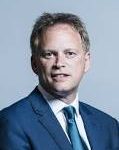
The speech made by Rishi Sunak, the Chancellor of the Exchequer, on 24 February 2022.
Thank you for that warm welcome.
Many of you will have woken up this morning to scenes of explosions in cities across Ukraine. The whole world is rightly appalled at Russia’s unprovoked aggression. The Prime Minister has called this an attack without provocation and without any credible excuse
When the sovereign freedom of one democratic nation is threatened, wherever they may be in the world, democracy everywhere is challenged.
As such, if our commitment to freedom is to mean anything, we must, acting in unison with our allies, apply severe economic cost to these actions.
The Prime Minister will be making a statement in parliament later today, and you can expect significant further sanctions to be brought forward.
I have spoken with the Governor of the Bank of England this morning, and we are closely coordinating across the financial authorities to monitor financial stability .
And we are also keeping a careful watch on energy markets. As a result of Russia’s actions we are already seeing volatility in wholesale gas prices.
We are with Ukraine and its people at this difficult time.
And as I stand here in front of all of you, able to debate ideas, to disagree with one another, but in the knowledge that we will leave as friends and in safety…
…I am reminded that such things are all too easily taken for granted.
And it is all the more important that we never cease to extol the virtue of democracy and the freedom it brings here at home, as well as around the world.
President, Dean, ladies and gentleman let me now turn to todays lecture
As we come out of the Covid crisis, much like almost every other crisis in recent history where government has been forced to act in an extraordinary manner, people are asking whether this level of intervention is the new normal. Some actively argue for it, and claim it is the foundation of a new economic model, where government is a permanently bigger presence in the market and our lives.
I want to use today’s Mais lecture to talk to you about a different vision for our economy, the future economy we must build. An economy where businesses are investing more; where people of all ages are supported to learn; and, most importantly, where ideas and innovation constantly transform our lives.
In short, a future economy built on a new culture of enterprise.
And whilst a culture is made up of many things… one way of understanding it is the collective mass of the millions of decisions made by people and businesses.
I can’t make decisions for people, and nor should I. It is the job of government to create the conditions, not determine the outcome. But I am clear that we need to change.
I am optimistic about the future of this country and people’s desire to do things differently; to be bold and focused.
We must put all our energies into three priorities: Capital. People. Ideas. And if we can do that, then we can rejuvenate our national productivity, restore hope and opportunity as we level up, and have confidence in our future happiness, prosperity and security.
Our new culture of enterprise will take as its starting point a strong belief in a simple, enduring proposition: that the best way to organise our economy is around free market principles.
Adam Smith famously remarked in the Wealth of Nations that “It is not from the benevolence of the butcher, the brewer, or the baker, that we expect our dinner, but from their regard to their own interest. We address ourselves, not to their humanity but to their self-love”. Very few comments in economic history have been as wise, as influential, or as widely misinterpreted as this one.
Wise – because at its heart economic life is about all of us – and should benefit all of us.
The result of human action but not of human design; influential – because systems built around the ideas of an open market economy have proven themselves through the overwhelming might of historical evidence; and yet widely misrepresented – because Adam Smith did not think the underlying driver of the market is greed but the universal and laudable desire to better the condition of ourselves and those we love.
Smiths account of the market economy, is not as some have suggested a values free construct which rationalised social choice. Markets do not operate independently of societies; rather they are reliant on law and norms, to generate the crucial currency of trust. But more than this Adam Smith told us that even in markets peoples choices are not solely born of economic , they are enthused with empathy and the moral imagination.
As he says at the start of his first great work, The Theory of Moral Sentiments:
However selfish soever man may be supposed…
…there are evidently some principles in his nature, which interest him in the fortune of others…
…and render their happiness necessary to him…
…though he derives nothing from it except the pleasure of seeing it.
In his Mais lecture, the late Jonathan Sacks took this idea further…
…arguing not just that the market was a moral force for good…
…but that morality was its very foundation.
Through the freedom to exercise our own wants, desires, and actions.
The dignity of being able to support ourselves through the product of our own labour.
And the moral responsibility that can only come from being exposed to the consequences – whether good or bad – of our own actions.
I believe that a system built around the free exchange of goods and services, the responsibility of the individual, the division of labour – is the morally right way to organise our economy.
And it works.
As a machine for innovation and growth the free market is positively correlated with almost everything we imagine is desirable for humanity: higher living standards, greater wellbeing, longer lives lived in greater leisure, freedom and peace. The arc of human history has taught us that more than any other economic system, the free market provides the best possible route to achieving the most happiness and security for the greatest number of people.
For all that there is a moral and material case for the market, I recognise its limits.
First, because change is inherent in a free market; the “perennial gales” of disruption and dislocation are the price we pay for the promise of a better standard of living. The moral case for the market rests not just on freedom.
It is not enough to say to someone whose job has moved overseas, whose wages aren’t growing, or whose occupation is no longer deemed useful: be grateful for your freedom. Yes, you can have freedom without dignity, but I doubt many of us in this room would choose it or think it a particularly edifying existence.
So it is incumbent on government to support people, especially those unable to support themselves, and through the welfare state, public services and education. Its why we raised the National Living Wage, cut the tax rate in Universal Credit, and are so focused on reducing regional inequality and levelling up.
Second, the free market creates the wealth that allows us to support our families and our communities. But we need to guard against the market reaching too far into these realms, eroding the bonds between us, and turning a market economy into a market society.
And third, the market has limits in dealing with externalities like climate change, and periods of profound disruption like wars, financial crises, or pandemics. Having been part of a government that had to actively shutdown the economy, and introduced interventions like the furlough, I know this as well as anyone.
But the biggest challenge the free market faces today is where new growth will come from. And that’s why we need a new culture of enterprise.
We are caught in what we might call a ‘great slowing down’ across the western world, that began even before the Covid pause. Productivity, living standards, and dynamism are not growing fast enough.
And the impact of these trends on people is being exacerbated by high inflation. This is primarily a global problem, driven by higher energy and goods prices.
The government is dealing with high inflation by helping people with those extra costs, and through the monetary policy framework.
But over the longer-term, the most important thing we can do is rejuvenate our productivity.
Because when the economy and our standard of living are not growing fast enough, consent for the system is undermined. If we cannot accelerate growth, people will begin to lose faith in the moral and material case for free markets.
Alternative sources of economic and political security will become more appealing.
I am confident and optimistic about the future of liberal democracies, but nothing has a right to exist. So it is precisely in order to preserve the freedoms that only come from market economies that political leaders must ensure that they are successful.
So the question we face today is urgent and it is consequential: How do we accelerate growth, and, in doing so, restore people’s faith in the free market?
Now my answer to that question is to foster a new culture of enterprise. But before I explain that, I want to take on two alternative but false ideas about where growth is going to come from.
The first is that the answer to everything is more Government.
The idea that we must spend ever more, regardless of the impact on borrowing and debt, on the assumption that all spending is good and will naturally transform productivity, if only there was more of it.
And hand in hand with those calls for higher spending are calls for more government intervention. We have seen a steady drift away from some of the very principles that make the free market effective.
We can see this in the assumption that government should decide which sectors will be important in the future; should take a view on more and more prices in the economy; and the growing tolerance for businesses to be reliant on taxpayers’ support and never allowed to fail. Corporate welfare and ill-thought through subsidies are unfair to taxpayers, who pick up the bill.
And unfair to other firms – including those not yet created – who could do better.
I have deliberately left party politics almost entirely absent from this speech save for one point I wish to make – and it is actually about Conservative voters.
In my experience, and perhaps contrary to received wisdom, it doesn’t matter whether you’re from the North or the South, live in a village, town or a city, there is a common set of values. They’re as opposed to bigger government in the Tees Valley as they are in the Thames Valley.
What people everywhere want is the opportunity to succeed for themselves.
That is why the Prime Minister is completely right that levelling up cannot be delivered through the public sector alone. Instead, as he said last year: “levelling up can only be achieved with a strong and dynamic wealth-creating economy”.
And that’s why we should always remember the principled truth at the heart of the free market: economic success comes from people and businesses – from individuals given the freedom to pursue their own ideas in their own interest in their own way.
In Harold Wilson’s celebrated 1963 speech about the white heat of technology, he quoted Jonathan Swift: “Whoever could make two ears of corn, or two blades of grass, to grow upon a spot of ground where only one grew before, would deserve better of mankind, and do more essential service to his country, than the whole race of politicians put together”. We’re still learning this lesson 60 years later.
If the first false idea about how to increase growth was that governments should spend more and do more, the second is that the answer is unfunded tax cuts.
I firmly believe in lower taxes. The most powerful case for the dynamic market economy is that it brings economic freedom and prosperity. And the best expression of that freedom is for all of us to be able to make decisions about how to save, invest or use the money we earn. The marginal pound our country produces is far better spent by individuals and businesses than government.
So I am disheartened when I hear the flippant claim that ‘tax cuts always pay for themselves’. They do not. Cutting tax sustainably requires hard work, prioritisation, and the willingness to make difficult and often unpopular arguments elsewhere. And it is hard to cut taxes at a time when demands on the state are growing.
Our society is ageing. I believe that a wealthy and civilised country should offer older people dignity in retirement. But we need to acknowledge that this requires higher public spending on pensions, health, and social care, unless political leaders are prepared to have difficult conversations with the public. Health spending is already growing at three times the rate of education. And the legacy of covid is that annual vaccination programmes, antivirals, and testing, will add annual extra costs in the billions of pounds.
As a Conservative Chancellor, I am often urged to follow Thatcher and Lawson’s legacy. They are sound lodestars to navigate by. But we sometimes only hear a partial account of their approach. Observers are quick to highlight the downward trajectory of the tax burden during the 1980s – which was, clearly, a historic and necessary achievement. But they are perhaps less quick to remember, that only once the deficit was under control, did they begin cutting taxes.
“The notion that tax cuts, without any spending cuts or substitute source of revenue, will so stimulate the economy that the Budget balance will improve, enabling further tax cuts to be made…is a spurious kind of virtuous circle [and] emphatically not part of my thinking”. Not my words – those of Nigel Lawson.
Thatcher herself recalled, in her memoirs, ahead of the 1981 Budget: “I was horrified at the thought of reversing even some of the progress we had made on bringing down Labour’s tax rates”, she said. “Yet I knew in my heart of hearts there was only one right decision, and that it now had to be made”. In that Budget they froze the income tax personal allowance – a decision I also had to take, with equal reluctance, forty years later.
I am going to deliver a lower tax economy but I am going to do so in a responsible way, and in a way that tackles our long term challenges.
The trap of both those ideas – that we can simply grow the economy with public spending, or supposedly self-funding tax cuts – is that they are both highly seductive, easy answers. Neither are serious or credible; neither on their own will transform growth; and because they ignore the trade-offs inherent in economic policy, both are irresponsible.
So how do we accelerate growth and rejuvenate our national productivity? I believe the most important role for government is to create the conditions for the private sector to do things differently – a new culture of enterprise.
In part, that means creating a stable foundation, by reinforcing some of those enduring principles of free market economics: sound money, respect for the rule of law, protections for private property rights, openness and free trade, a stable relationship with allies, regulation that encourages competition and innovation, and, especially at a time of high inflation, an independent central bank with a clear and unambiguous mandate for low and stable inflation.
All of that provides the foundation for growth. But it will not accelerate growth in and of itself. So we will use the tax and regulatory levers at our disposal to foster the new culture of enterprise that will create our future economy.
Everyone listening to this lecture will have their own view about how to do that. There are many good ideas that can make a difference – some incremental, some more significant. The only way we can make a difference to the most stubborn and difficult problems is to focus; to decide where our efforts can have the biggest impact and relentlessly pursue those few chosen goals with all the energy and resources at our disposal. By trying to deliver everything we achieve nothing.
So in accelerating growth, I have three priorities. Priorities that I believe will foster a new culture of enterprise and deliver a higher growth rate. The first is to encourage greater levels of capital investment by our businesses. Second, we need to improve the technical skills of the tens of millions of people already in work. And third, we want to make this the most innovative economy in the world by driving up business investment in research and development.
Capital. People. Ideas. Three priorities to deliver higher productivity, tied with one golden thread: that what government does is far less important than creating the conditions for private businesses and individuals to thrive. Let me take each priority in turn.
During the 19th and 20th centuries, a flood of capital investment drove what Daniel Boorstin called: “countless, little noticed revolutions…that touched [our lives] everywhere and every day.” Capital paid for the railways that transported people and goods more quickly and cheaply. For the cables and pylons that carried electricity into factories and homes, replacing darkness with light. For the machines that freed people from backbreaking manual labour.
In recent decades, here in the UK, that stream of new capital has slowed. Even in the decade before the global financial crisis, capital deepening grew UK productivity by just 0.4ppt per year, less than half the OECD average. And this is a longstanding cause of our productivity weakness internationally: Resolution Foundation and London School of Economics research has shown that lower capital per hour worked is perhaps the single biggest explanation for our productivity gap with France and Germany, accounting for around half.
Why is investment so low? My analysis is clear: the problem is no longer the Government; businesses simply aren’t investing enough. Public sector net investment as a share of GDP is reaching its highest sustained level since the 1970s. Over this Parliament, Government fixed capital formation will increase from 2.75% of GDP to over 3% of GDP – closer to the OECD average and ahead of our peers like Germany. It will take time for that investment to make a difference – but the plans are set, the capital is there and it will happen.
But government investment in capital is much less important than the significantly greater sums of capital invested by private businesses. However, capital investment by UK businesses averages just 10% of GDP, considerably lower than the current OECD average of 14%.
The lower level of capital investment we see by UK businesses is not primarily driven by the sectoral composition of our economy, or by differences in firm size, and is observed across all regions. This is a pervasive economy wide issue, it has been persistent for decades, and we must fix it to improve productivity, growth, and living standards. Indeed, we need the private sector to invest to level up this country.
None of this is to blame firms. I know there has been a cloud of uncertainty hanging over the British economy in recent years. But that cloud is lifting: the form of Brexit is clear, with a comprehensive free trade agreement; we are moving on to living with Covid more quickly than elsewhere; we’ve set out plans for our most capital-intensive ambitions, like Net Zero.
However, in looking for a potential answer to this challenge, it is worth noting one area we do stand out as an outlier relative to our international peers. And that is in the generosity of our tax system towards capital investment.
An analysis of the Net Present Values of different countries’ tax treatment of long-lived capital assets like plant and machinery shows that despite the UK’s highly competitive headline corporation tax rates, the overall tax treatment provided for capital investment is much less generous than the OECD average. It is unclear that cutting the headline corporation tax rate did lead to a step change in business investment; we need our future tax policy to be targeted and strategic.
So as I develop a business tax strategy for the years ahead, it seems likely to me that a priority will be to cut taxes on business investment.
My second priority is to increase the technical skill level of people who are already in work.
Providing our people with a world class education is one of government’s greatest responsibilities. This is a moral imperative. Education is the most powerful weapon we have in our fight to level up. And as new technology expands the skills our workers will need, our training system needs to match it. We need to move decisively from a belief that ‘education’ is a moment that exists at the start of your life, to one where it is a central experience throughout your whole life.
School and university performance has improved dramatically in recent years. Look at the PISA tables – we now perform well compared to other western democracies; the result of significant public service reform, not public spending. And our universities are already world class: the number of people here in Britain with tertiary level qualifications is now at internationally high levels.
But when four in five of our 2030 workforce are already in work, the additional contribution education can make to productivity and growth is through adult skills.
We lag behind international peers in adult technical skills: just 18% of 25-64 year olds hold vocational qualifications, a third lower than the OECD average.
To resolve this, we need to engage and partner with private businesses. Not least because the people we want to support are already working in companies today, not sitting in classrooms. And above all, because the private sector is the best judge of where the jobs and skills of tomorrow lie.
So it should concern us that UK employers spend just half the European average on training their employees. Many employers don’t offer training at all. And less than 10% of the spending on training by UK employers goes to high-quality formal training offered by external providers.
Of course, I know and visit many employers who are shining examples doing a fantastic job in upskilling their workforces, but sadly they are the exception and not the rule.
Clearly, the government has a role to play. Our introduction of the Lifelong Learning Entitlement, Skills Bootcamps, T Levels and improved funding for post 16 education and colleges will all help.
But we need to do more to improve awareness and perception of the quality of our technical qualifications, and link them more closely to good employment outcomes.
So We’ll reform the complexity and confusion in the current system; right now, people have to navigate a menu of around 4,000 qualifications at level 3 and over 3,000 at levels 4 and 5.
And lastly, as I develop the tax strategy for the years ahead, we should examine whether the current system – including the operation of the Apprenticeship Levy – is doing enough to incentivise businesses to invest in the right kinds of training. For a long time, economists thought the dominant factors driving economic growth were capital and people. Economic research shows us, there’s now a third: innovation. For me, if we want to drive up future growth and productivity, then the highest of the three priorities should be to ensure the UK economy is the most innovative in the world.
I studied and worked in California, surrounded by Silicon Valley start-ups, living and breathing that entrepreneurial culture. And one of my Professors at Stanford University was the brilliant and inspiring economist Paul Romer, who won the Nobel Prize for a new growth theory focused on innovation and ideas.
His big insight is worth pausing on: Ideas are what he called non-rivalrous. I still remember him explaining this in a lecture by comparing ideas to recipes. A recipe allows anyone to make something wonderful from a set of ingredients. But critically my using the recipe does not stop you doing the same. And, even better, people can create new recipes, which are cheap and easy to replicate and share. The combination of these qualities means ideas have no diminishing returns – a powerful source of future growth.
One of the biggest debates in economics right now is about whether innovation is still transformative – or whether it’s part of the great slowing down I talked about earlier. Two eminent economists have actually bet each other $400 on this very point.
On one side is Professor Robert Gordon, who argues that innovation is no longer happening across the economy in the same way as it did in the 20th century – instead, its narrowed to the domains of information, communication, and entertainment.
On the other side of the bet is Professor Erik Brynjolfsson, another Stanford economist, whose view hinges on the idea that artificial intelligence is a general-purpose technology, like steam power, electricity and information technologies. AI, in his view, is going to affect almost every industry, in areas as diverse as biotech and medicine, energy, retail, finance, manufacturing and even professional services.
Now I suspect it would be a conflict of interest for the Chancellor to bet on the outcome of economic statistics…but I am an optimist, and I’m with Brynjolfsson. In 1987, another Nobel Prize winner, Professor Robert Solow, remarked that “You see the computer age everywhere but in the productivity statistics.” He was right in 1987 – and the productivity statistics improved almost as soon as he said it. I think that that we are in the same place now: the effect of AI will soon become apparent; it is plausible to believe we are passing the bottom of the productivity J curve.
And this isn’t just about AI. The price of clean energy like offshore wind and solar has fallen dramatically. Electric vehicles are doubling up as batteries to store power for the grid. And Covid has accelerated innovation in many fields, like the adoption of digital technology by firms or mRNA vaccines.
So how do we make sure the UK is well placed to benefit from this new wave of innovation? In order to accelerate growth, this must be our highest priority.
Over the last fifty years, innovation broadly defined as multifactor productivity drove around half of the UK’s productivity growth. But the rate of increase has slowed considerably since the financial crisis, and more so than in other countries. This difference in multi factor productivity explains almost all our productivity gap with the United States.
To address this, we in Government will play our part: Outside the EU, we now have greater freedoms and flexibility than we’ve had in forty years. And we’re going to use those freedoms to ensure our regulatory systems in technology, life sciences, financial services and beyond support innovation.
We’re also improving access to finance through initiatives like British Patient Capital, the Future Fund, tax reliefs for investing in start-ups, reforming Solvency II and the charge cap to unlock pensions and insurance industry capital, and reforming our Listings Rules to make it easier for companies to raise public funding.
Furthermore We recognise the research from the OECD, McKinsey and others that shows we are falling behind our peers when it comes to our small and medium sized businesses adopting digital technology and innovative management practices. So we created and funded our landmark Help to Grow programmes to support SMEs to adopt productivity enhancing software and to get mini-MBAs.
And we recognise that nearly half of our STEM researchers in this country are immigrants and half of our most innovative companies have an immigrant founder. Part of the reason to end free movement of labour was to rebuild public consent in our immigration system. Precisely because we can now decide as a country who comes here, based not on their nationality but on their skill level, I believe we now have the public’s backing to create one of the world’s most attractive visa regimes for entrepreneurs and highly skilled people. We are delivering exactly that – and it will have a significant impact on our levels of innovation. Less “build it and they will come” and more “let them come and they will build it”.
And, of course, we will deliver our pledge to increase public investment in R&D to £22bn a year. As it is, total UK fiscal support for R&D, at 0.9% of GDP, is already in line with the OECD average, but it will increase by 50%], and is forecast to move to the top quartile over this Parliament.
But the target for government investment in R&D is only part of the story. In fact, our overriding challenge is increasing the amount of business investment in R&D. It is this investment that will ultimately drive the jobs, productivity, and growth of the future, and here we are significantly lagging. Self-financed business R&D as a % of GDP is less than half the OECD average. And as Cambridge economist Dr David Connell’s research shows, whilst other nations’ businesses have increased the share of GDP they devote to R&D investment by 50% in recent decades, UK business investment in R&D has stayed flat or even fallen.
So what should we do to support greater private sector investment in R&D? One obvious answer is to look at our tax regime. On the face of it, we have one of the most generous tax regimes for R&D investment anywhere in the world, measured by how much we spend on it compared to other nations. But in spite of spending huge and rapidly growing sums, clearly it is not working as well as it should. In the UK, business spending on R&D amounts to just four times the value of R&D tax relief. The OECD average? 15 times.
So as I deliver the tax strategy for the years ahead, it would be sensible to make sure our tax regime for innovation is globally competitive and so properly incentivises higher business investment in R&D.
Capital. People. Ideas. Three priorities to foster a new culture of enterprise. That’s how we’ll rejuvenate our national productivity; that’s how we’ll build a future economy that restores hope and opportunity.
But in closing, hope and opportunity should not be just the preserve of the citizens of the United Kingdom. As the situation develops in Ukraine, this moment reveals something about the UK’s global role.
The basis of our influence in the world…
…and ability to be a force for good…
…is going to be in large part based on the strength of our economy.
That economic strength gives us the resources to both invest more in defence and come to the aid of countries who need our assistance.
It gives us the ability to increase the security of our energy supply.
It gives us the diplomatic power to shape the rules of the international order and, when countries breach those rules, the weight to impose meaningful sanctions.
No nation has a right to lead. To a seat at the top table. It must be earned.
That’s why I’ve set out today a radically different vision of our future economy, built on a new culture of enterprise.
Not only to deliver prosperity for all our citizens. But also to advance our values on the world stage.
That’s the promise of the free market, and the greater goal of security and human happiness cannot be achieved without it.
That is what I believe.