Tag: Speeches

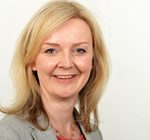
  • Liz Truss – 2022 Statement on Sanctions on Russia

    Liz Truss – 2022 Statement on Sanctions on Russia

    The statement made by Liz Truss, the Foreign Secretary, in the House of Commons on 28 February 2022.

    With permission, Mr Speaker, I wish to update the House on our support for Ukraine in the face of Putin’s premeditated, pre-planned and barbaric invasion. Ukraine has suffered horrific attacks. Missiles and air strikes have torn through apartment blocks. Tanks have rolled into once peaceful cities. Innocent people, including children, have lost their lives.

    The situation is fluid, but as of today, Putin has not taken any major cities. The advance has been slowed by Ukraine’s fierce resistance. Putin’s invasion is not proceeding to plan. He expected to take cities quickly. He expected Ukraine to retreat. And he expected the West to be divided. Instead, his forces were met by the heroism of President Zelensky and the resolute determination of the Ukrainian people. He has been met by a united west, together with our friends around the world, and we have taken decisive action.

    Today, we have acted with the US, the EU, Japan and Canada to cut off Russia’s central bank from our markets. The rouble has fallen by more than 40% as a result. As much as $250 billion has been wiped off the Russian stock market and, today, its stock market is closed. The EU, Germany, Sweden and others are following our lead in providing defensive weapons to Ukraine, and Germany has frozen Nord Stream 2.

    Putin has been confounded by our collective response. That is why he is resorting to more and more extreme rhetoric. But, of course, the situation remains dire. The Government and people of Ukraine are facing a continued onslaught. The days ahead are likely to prove tougher still.

    The UK and our allies will have to undergo some economic hardship as a result of our sanctions, but our hardships are nothing compared to those endured by the people of Ukraine. Casualty numbers are rising, and more than 300,000 people have already been displaced. This is a struggle for Ukraine’s freedom and self-determination, but it is also a struggle for freedom and democracy everywhere and for the survival of a Europe whole and free. We feel a particular responsibility as the UK is a signatory to the 1994 Budapest memorandum, which provided Ukraine with security guarantees.

    This premeditated invasion, in violation of international law and multiple international commitments, cannot succeed. Putin must lose. We are doing everything that we can to stop him and to restore Ukraine’s sovereignty and territorial integrity. We will do this by backing Ukraine against unjustified aggression, by degrading the Russian economy and stopping it from funding Putin’s war machine, and by isolating Putin on the world stage.

    First, we are backing Ukraine with defensive weapons, humanitarian aid and economic support. The UK was the first European nation to send defensive weapons to the country, and those weapons are being used today to halt Russian tanks and defend Ukrainian towns and cities. Our latest consignment of defensive support left Brize Norton over the weekend. We are also leading on humanitarian support. Yesterday, my right hon. Friend the Prime Minister announced a further £40 million of humanitarian aid, which will provide Ukrainians with access to basic necessities and vital medical supplies. We call on Russia to enable humanitarian access and safe passage for civilians to flee the violence. The UK is also supporting Ukraine’s economy, including through £100 million of official development assistance and guarantees of up to $500 million in development bank loans.

    Secondly, we are cutting off funding for Putin’s war machine. We are coming together with the US, the G7 and the EU to take further decisive steps. We have been joined by Australia, Singapore, Switzerland and many more. There is a growing list of countries who are determined that this aggression cannot stand. We have agreed that many Russian banks will be removed from the SWIFT system, kicking them out of international finance. That is the first step towards a total SWIFT ban. Our collective action against Russia’s central bank will prevent it from deploying its international reserves to mitigate the impact of our sanctions.

    We are also launching a joint taskforce to hunt down the assets of oligarchs hit by our sanctions. The UK is proud to lead by example. We have already put in place the largest package of sanctions in our history. We have sanctioned Putin and Lavrov, Russia’s defence industry and a growing list of oligarchs. We have approved asset freezes on several Russian banks and we are banning Russian airlines and private jets from our airspace, but we are determined to go much, much further. We want a situation where they cannot access their funds, their trade cannot flow, their ships cannot dock and their planes cannot land.

    Today, I inform the House that I will be laying two new pieces of sanctions legislation. The first will introduce a set of new powers against Russia’s financial sector, including powers to prevent Russian banks from clearing payments in sterling. With over 50% of Russian trade denominated in dollars or sterling, our co-ordinated action with the United States will damage Russia’s ability to trade with the world, and as soon as this legislation comes into force, we will apply it to Sberbank—Russia’s largest bank.

    I will also be imposing a full asset freeze on three further banks: VEB, Russia’s national development bank; Sovcombank, the third largest privately owned financial institution in Russia; and Otkritie, one of Russia’s largest commercial banks. We will bring in a full asset freeze on all Russian banks in days, looking to co-ordinate with our allies. The same legislation will prevent the Russian state from raising debt here, and will isolate all Russian companies—more than 3 million businesses—from accessing UK capital markets. Global giants such as Gazprom will no longer be able to issue debt or equity in London.

    The second piece of legislation will ban exports to Russia across a range of critical sectors. This includes high-end technological equipment such as microelectronics and marine and navigation equipment. This will blunt Russia’s military-industrial capabilities and act as a drag on Russia’s economy for years to come. I appreciate the consequences of this step for British people and British businesses operating in Russia. The Department for International Trade and the Treasury will offer advice and guidance to affected UK businesses. My consular staff will continue to support British nationals in Russia, as well as those in Ukraine.

    We will keep ratcheting up our response. More legislation will follow in the coming weeks, sanctioning Russian-occupied territories in the Donbas, extending more sanctions to Belarus, and limiting Russian deposits in UK banks. We will continue working through our hit list of oligarchs, focusing on their houses, their yachts, and every aspect of their lives. In addition, we will introduce the economic crime Bill tomorrow; my right hon. Friend the Business Secretary will set out more in the next statement in the House. This is all about flushing out the oligarchs’ dirty money from the United Kingdom. We will continue to work with our G7 allies to cut off the Russian economy and cut the free world’s dependence on Russian gas, depriving Putin of his key source of revenue.

    Finally, we are leading the diplomatic effort to ensure that there is a chorus of condemnation against President Putin. In the Organisation for Security and Co-operation in Europe, a key part of the European security architecture, 45 countries condemned Russia by name. At the UN Security Council on Friday, more than 80 UN members voted for, or co-sponsored, a resolution condemning Russia’s aggression. Russia stood alone in opposing it. Putin is isolated. No one is willing to back his war of choice. In recent days, I have spoken to my counterparts in more than 20 countries around the world. Yesterday, I met G7 Foreign Ministers. We were joined by Ukraine’s brave Foreign Minister, my friend Dmytro Kuleba. Everyone is clear that Putin must lose, and we will carry on increasing the pressure until he does.

    We have all seen Ukraine’s determination to fight. Putin’s war could end up lasting for months and years, so I say to our Ukrainian friends, “We are with you. In Britain, and around the world, we’re prepared to suffer economic sacrifices to support you. However long it takes, we will not rest until Ukraine’s sovereignty is restored.”

    I commend this statement to the House.
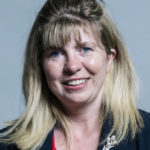
  • Maria Caulfield – 2022 Statement on the Rare Diseases Action Plan

    Maria Caulfield – 2022 Statement on the Rare Diseases Action Plan

    The statement made by Maria Caulfield, the Parliamentary Under-Secretary of State for Health and Social Care, in the House of Commons on 28 February 2022.

    The Government have published the first England Rare Diseases action plan today, on international Rare Disease Day.

    This action plan is part of our continued commitment to improve the lives of those living with rare conditions, such as muscular dystrophies and Huntington’s disease. It follows the UK rare diseases framework, published in January 2021, which set out priorities for all four UK nations to speed up diagnosis, raise awareness of rare diseases among healthcare professionals, provide better co-ordination of care, and improve access to specialist care, treatment and drugs.

    England’s action plan has been developed collaboratively with our delivery partners across the health landscape and in close consultation with members of the rare disease community. Through the action plan we aim to achieve significant breakthroughs for people living with rare diseases, including:

    making it easier for more rare disease patients to access the co-ordinated care of multiple specialists without the need to travel long distances;

    developing world-class new-born screening so diagnoses can be made earlier, and patients can benefit from groundbreaking new therapies as they become available;

    ensuring all healthcare professionals are aware of rare diseases and know where to go to access further information and advice; and

    supporting rapid and affordable access to cutting-edge therapies across all regions of England.

    Building on advances in therapeutics during the covid-19 pandemic, we will also continue investing in the development of nucleic acid therapies, for example, through the world-class gene therapy innovation hubs and the nucleic acid therapy accelerator. These initiatives have the potential to allow rapid development of new therapies, transforming care for millions of patients, including those with rare and life-threatening genetic diseases.

    Under the action plan, the millions of people with rare diseases in England will see more efficient access to care and new treatments introduced. Over the course of the coming year, we will monitor the progress of these actions closely, seeking input from those living with rare diseases to ensure we are measuring the outcomes that matter most.

    Since the UK rare diseases framework runs over five years, implementation will be phased, with this first action plan focused primarily on actions taking place over the coming year. While delivery of this first action plan is underway, we will therefore also continue to explore future directions and develop new actions, informed by the needs of the diverse rare disease community.

    Through this action plan we will take the first steps in England towards achieving our overarching vision: delivering improvements in diagnosis, awareness, treatment and care, and creating lasting positive change for those living with rare diseases.

  • Ursula von der Leyen – 2022 Statement on European Union Funding Weapons for Ukraine

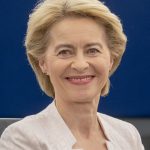
    Ursula von der Leyen – 2022 Statement on European Union Funding Weapons for Ukraine

    The statement made by Ursula von der Leyen, the President of the European Commission, on 27 February 2022.

    As the war in Ukraine rages on, and Ukrainians fight bravely for their country, the European Union steps up once more its support for Ukraine and the sanctions against the aggressor – Putin’s Russia.

    For the first time ever, the European Union will finance the purchase and delivery of weapons and other equipment to a country that is under attack.

    This is a watershed moment.

    HRVP Borrell will present to you the proposal in a few minutes.

    At the same time, we are strengthening once more our sanctions against the Kremlin and its collaborator, Lukashenko’s regime.

    First, we are shutting down the EU airspace for Russians.

    We are proposing a prohibition on all Russian-owned, Russian registered or Russian-controlled aircraft.

    These aircraft will no more be able to land in, take off or overfly the territory of the EU.

    This will apply to any plane owned, chartered or otherwise controlled by a Russian legal or natural person.

    So let me be very clear.

    Our airspace will be closed to every Russian plane – and that includes the private jets of oligarchs.

    Second, in another unprecedented step, we will ban in the EU the Kremlin’s media machine.

    The state-owned Russia Today and Sputnik, as well as their subsidiaries will no longer be able to spread their lies to justify Putin’s war and to sow division in our Union.

    So we are developing tools to ban their toxic and harmful disinformation in Europe.

    Third, we will target the other aggressor in this war – Lukashenko’s regime.

    Lukashenko’s regime is complicit in this vicious attack against Ukraine.

    So we will hit Lukashenko’s regime with a new package of sanctions.

    We will introduce restrictive measures against their most important sectors.

    This will stop their exports of products from mineral fuels to tobacco, wood and timber, cement, iron and steel.

    We will also extend to Belarus the export restrictions we introduced on dual-use goods for Russia.

    This will also avoid any risks of circumvention of our measures against Russia.

    In addition, we will sanction those Belarusians helping the Russian war effort.

    All these measures come on top of the strong package that I presented to you yesterday, agreed by our international partners.

    Under this package, important Russian banks will be excluded from the SWIFT system.

    We will also ban the transactions of Russia’s central bank and freeze all its assets, to prevent it from financing Putin’s war.

    And we will target the assets of Russian oligarchs.

    We continue to coordinate closely with partners around the globe.

    And we remain in close contacts with our Ukrainian friends.

    President Zelensky’s leadership and his bravery and the resilience of the Ukrainian people are outstanding and impressive.

    They are an inspiration to us all.

    We welcome with open arms those Ukrainians who have to flee from Putin’s bombs and I am proud of the warm welcome that Europeans have given them.

    We are mobilising every effort and every euro to support our Eastern Member States – to host and take care of these refugees.

    We will do this in full solidarity.

    With this, I invite HRVP Borrell to present more details.

  • Sadiq Khan – 2022 Comments on Leaseholders Getting Information on Building Safety

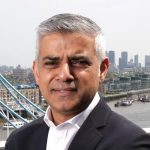
    Sadiq Khan – 2022 Comments on Leaseholders Getting Information on Building Safety

    The comments made by Sadiq Khan, the Mayor of London, on 28 February 2022.

    Nearly five years after the Grenfell Tower fire there are still too many Londoners who don’t feel safe in their homes.

    For too long now Londoners trapped in unsafe flats have faced a drawn out and complicated process to get an EWS1 form. The guidance published today will help leaseholders get this vital information by improving the way landlords and managing agents commission EWS1 forms and share those findings with the leaseholders who need them.

    The building safety crisis is a national crisis and it requires national solutions. While some progress is now belatedly being made by the Government, leaseholders are still facing huge bills for problems they played no part in causing. I’m determined to continue to fight for the rights of leaseholders to feel safe in their homes and to prevent them paying for a building safety crisis that is not of their making. That includes putting pressure on the private sector, the developers, the Government and those who manage these sites to ensure Londoners can feel safe in their homes again.

  • Boris Johnson – Joint Statement on Sanctions Against Russia

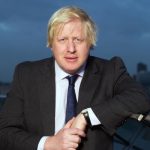
    Boris Johnson – Joint Statement on Sanctions Against Russia

    The joint statement made by Boris Johnson on behalf of the UK, along with the European Commission, France, Germany, Italy, Canada, and the United States, on 26 February 2022.

    We, the leaders of the United Kingdom, the European Commission, France, Germany, Italy, Canada, and the United States condemn Putin’s war of choice and attacks on the sovereign nation and people of Ukraine. We stand with the Ukrainian government and the Ukrainian people in their heroic efforts to resist Russia’s invasion. Russia’s war represents an assault on fundamental international rules and norms that have prevailed since the Second World War, which we are committed to defending. We will hold Russia to account and collectively ensure that this war is a strategic failure for Putin.

    This past week, alongside our diplomatic efforts and collective work to defend our own borders and to assist the Ukrainian government and people in their fight, we, as well as our other allies and partners around the world, imposed severe measures on key Russian institutions and banks, and on the architects of this war, including Russian President Vladimir Putin.

    As Russian forces unleash their assault on Kyiv and other Ukrainian cities, we are resolved to continue imposing costs on Russia that will further isolate Russia from the international financial system and our economies. We will implement these measures within the coming days.

    Specifically, we commit to undertake the following measures:

    First, we commit to ensuring that selected Russian banks are removed from the SWIFT messaging system. This will ensure that these banks are disconnected from the international financial system and harm their ability to operate globally.

    Second, we commit to imposing restrictive measures that will prevent the Russian Central Bank from deploying its international reserves in ways that undermine the impact of our sanctions.

    Third, we commit to acting against the people and entities who facilitate the war in Ukraine and the harmful activities of the Russian government. Specifically, we commit to taking measures to limit the sale of citizenship—so called golden passports—that let wealthy Russians connected to the Russian government become citizens of our countries and gain access to our financial systems.

    Fourth, we commit to launching this coming week a transatlantic task force that will ensure the effective implementation of our financial sanctions by identifying and freezing the assets of sanctioned individuals and companies that exist within our jurisdictions. As a part of this effort we are committed to employing sanctions and other financial and enforcement measures on additional Russian officials and elites close to the Russian government, as well as their families, and their enablers to identify and freeze the assets they hold in our jurisdictions. We will also engage other governments and work to detect and disrupt the movement of ill-gotten gains, and to deny these individuals the ability to hide their assets in jurisdictions across the world.

    Finally, we will step up or coordination against disinformation and other forms of hybrid warfare.

    We stand with the Ukrainian people in this dark hour. Even beyond the measures we are announcing today, we are prepared to take further measures to hold Russia to account for its attack on Ukraine.

  • Boris Johnson – 2022 Comments for the People of Ukraine and Russia

    Boris Johnson – 2022 Comments for the People of Ukraine and Russia

    The comments made by Boris Johnson, the Prime Minister, on 25 February 2022.

    The scenes unfolding in the streets and fields of Ukraine are nothing short of a tragedy.

    Brave young soldiers and innocent civilians are being cut down, tanks are rumbling through towns and cities, missiles raining indiscriminately from the skies.

    It is a generation or more since we witnessed such bloodshed in Europe.

    We hoped we would never have to see such sights again.

    The people of the United Kingdom stand with our Ukrainian brothers and sisters in the face of this unjustifiable assault on your homeland.

    We salute the fierce bravery and patriotism of your government, your military and your people. I am in close contact with President Zelenskyy

    And as Prime Minister I speak for us all in the United Kingdom when I once again say Slava Ukraini.

    This is a tragedy for Ukraine.

    And so too is it a tragedy for Russia.

    Like Ukraine, Russia is a great country with a rich history and a proud people.

    Like Ukraine, Russia’s poets and artists and authors have shaped our culture, and Russia’s soldiers fought so bravely with us in the struggle against fascism.

    But Putin’s actions are leading to complete isolation for Russia.

    Shunned by the rest of the international community

    Hit by immense economic sanctions.

    And facing a needless and bloody war that is already costing countless lives, from innocent Ukrainians to your Russians soldiers who will never see their families again.

    And to my Russian friends:

    [In Russian] I do not believe this war is in your name.

    It does not have to be this way.

    This crisis, this tragedy can and must come to an end.

    [In Ukrainian]

    Because the world needs a free and sovereign Ukraine.

    Slava Ukraini

  • Diane Abbott – 2022 Speech on Housing Disrepair

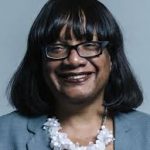
    Diane Abbott – 2022 Speech on Housing Disrepair

    The speech made by Diane Abbott, the Labour MP for Hackney North and Stoke Newington, in the House of Commons on 25 February 2022.

    I will speak this afternoon about the truly terrible housing conditions that have been endured for too long by the residents of Evelyn Court on Amherst Road in my constituency. This block is run and managed by the Industrial Dwellings Society housing association. One can see that it would have once been a very nice estate and a pleasant place to live, but when I visited it several times recently and residents kindly invited me into their flats, I was shocked by what I saw. Let me say straightaway that the tenants of all the flats I visited had made every effort to keep them nicely, which made it even more heartbreaking that their flats were disfigured by chronic disrepair problems that were not in their power to deal with and about which the Industrial Dwellings Society housing association had let them down time after time when it had promised to fix things.

    I saw dreadful mould covering walls, damp, water leaking in and dampness rising from the floor. In addition, tenants told me about blockages in their drainage system and insect infestations. Among the insects that they had had to deal with in large numbers were ants, spiders and slugs. Worst of all were the health problems that the tenants and their children were enduring because of the damp and mould. I was told about nausea, coughs, colds and chronic asthma. The conditions in Evelyn Court are completely unacceptable and the Industrial Dwellings Society should be ashamed of itself for leaving its tenants in that state.

    The Industrial Dwellings Society was set up in 1885 by a group of Jewish philanthropists and businessmen who wanted to relieve overcrowding in the east end of London. If they could see the dreadful conditions that, in 2022, their organisation is housing eastenders in, they would be shocked. Those problems are not confined to Evelyn Court, however: the private sector as a whole has the worst housing disrepair and more than 1.1 million homes in the sector—fully one quarter—do not meet the decent homes standard.

    I also deal with terrible housing disrepair problems elsewhere in the public sector. Among the cases that I am currently dealing with is an L&Q housing association tenant who is suffering from a leaking roof, rising damp, slugs, an infestation of drain flies, continually blocked drains, sewage spilling out into the garden and emerging from the sink, and a shower that has been broken for three years. Another L&Q tenant who I and my staff are trying to help is living in a flat with no working toilet, no gas, a leaking roof and an insect infestation.

    We are also trying to help a Hackney Council tenant who has been without gas and hot water since 15 December and whose bathroom is in a state of disrepair. A further Hackney Council tenant is in a property with severe mould and raw sewage outside her flat from a drain that has been blocked for six months. That is just a sample of the scores of new housing disrepair cases that I deal with every month.

    The Minister must be wondering why housing disrepair is so endemic. There are several reasons. There is a lack of funding from the Government generally and they, quite correctly, put the responsibility for fire safety and net zero carbon emissions on to housing associations. I support those policies and that is the right thing to do, but they fail to fund those issues properly. It would take £15 billion to deal with fire safety issues in London alone.

    Another issue is that housing associations—many of them, such as the Industrial Dwellings Society, set up more than a century ago with every intention of helping local people—no longer have a strong local presence. Tenants who need repairs often have to contact call centres situated far away in cities such as Birmingham and Liverpool. The people in these call centres do not know the estate or the individuals, and they often cannot grasp the problems they are trying to explain.

    The regulators, including the Regulator of Social Housing and the housing ombudsman, are the Government’s responsibility, but they do not have sufficient powers. They can only deal with the process, not individual cases, and they are not able to impose fines big enough to be a real deterrent.

    The Department for Levelling Up, Housing and Communities promised a White Paper on this sector in autumn 2021, and it has still not appeared—it is now promised for 2022. Will the Minister commit the Government to producing the White Paper on this important sector in 2022?

    The Homes (Fitness for Human Habitation) Act 2018 requires private sector landlords to ensure that their properties are fit for human habitation at the beginning of a tenancy and throughout. Bearing in mind that 1.1 million homes in the private sector do not meet the decent homes standard, how many cases have been brought under this Act? How many of those cases have been successful? Finally, how much money has been allocated to local authorities to enforce the decent homes standards?

    I would not like to conclude this speech without applauding the London Renters Union, which has given so much support to the tenants of Evelyn Court. Furthermore, the London Renters Union, across London, has not only helped tenants but empowered them. The tenants of Evelyn Court are not asking for the world. They want the Industrial Dwellings Society to keep its promise of a 24-hour call out, they want it to communicate with them properly and, above all, they want it to do something permanent about the terrible disrepair in Evelyn Court.

    As a Member of Parliament for more than 30 years, one of the biggest parts of my case load is housing and housing disrepair. I cannot stress enough to Ministers the misery, depression and anxiety that long-running housing disrepair causes to tenants. The Government have a role to play in ensuring that tenants have disrepair addressed according to existing legislation and according to the needs of tenants. If the Government cannot meet the needs of tenants in these dreadful conditions, how much do they really care about tenants?

    I ask the Minister to look into the issues I have raised and to take action for the tenants of Evelyn Court.

  • Stewart Malcolm McDonald – 2022 Speech on Ukraine

    Stewart Malcolm McDonald – 2022 Speech on Ukraine

    The speech made by Stewart Malcolm McDonald, the SNP MP for Glasgow South, in the House of Commons on 25 February 2022.

    I am grateful to the Minister, and indeed to his colleague in the Foreign Office, for the work that they are doing and the updates that they have been ensuring Opposition Members have. Like the Minister and other Members, I wish only to heap praise on the Ukrainian armed forces, who ensured that Russia did not get the opening gambit that it thought it would. But, as the Minister says, we are seeing Russian men being sent to die for one man’s hubris—and my goodness, what courage was shown on the streets of Russia last night by people protesting against the aggression from the Kremlin, and we commend them for it.

    The Minister rightly spoke of supporting Ukraine with military equipment, and we back the Government in that. It is obviously, in some cases, easier said than done—it requires training, logistics and all the rest—but the Ukraine Government need it. I am not going to ask the Minister for an assurance that he has already given, but I want to press him in saying that we on these Benches want to see Ukraine get all the equipment it needs. I know that the Minister does not want to go into specific areas of equipment, but satellite phones are badly needed. That issue has arisen quite often during the various conversations that I have had with Government and parliamentary officials in Ukraine, and even came up at the protest outside Downing Street last night.

    May I ask whether consideration has been given by the Government, and by G7 allies, to cyber-support, particularly cyber-offensive support? I can see the expression on the Minister’s face, but would that constitute an article 5 scenario or not? What do the Government understand it to be? May I also ask the Government to ensure that they provide the appropriate level of humanitarian and medical equipment support that the Ukraine Government need?

    Finally—I hope the Minister will forgive me, but I have not heard him mention this yet; it is not necessarily an MOD issue—may I ask for an update on where we are with SWIFT? Members had hoped that progress would have been made with that by now. I know that the Foreign Office has been pressing hard on it, but an update would be useful.

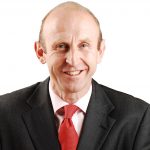
  • John Healey – 2022 Speech on Ukraine

    John Healey – 2022 Speech on Ukraine

    The speech made by John Healey, the Shadow Secretary of State for Defence, in the House of Commons on 25 February 2022.

    The whole House appreciates your willingness to allow this urgent question, Mr Speaker, and the manner in which the Minister is briefing the House and the way in which his colleagues are prepared to keep the House informed during this very rapidly developing crisis.

    Yesterday, President Putin launched a war in Europe. He is invading and killing people in a sovereign country that Russia itself guaranteed to respect. His attack on Ukraine is an attack on democracy and a grave violation of international law and the United Nations charter. Putin will not stop at Ukraine; he wants to divide and weaken the west, and to re-establish Russian control over neighbouring countries. These are the actions of an imperialist and a dictator, and Britain has a long tradition of standing up to such tyrants. We believe in freedom, democracy, the rule of law and the right of a country to decide its own future, and those are the very values that Ukrainians are fighting for now in their country. We must support their brave resistance in any way we can, and our thoughts are with the comrades and families of those on both sides who have been killed in these first hours of fighting.

    On Wednesday, the Prime Minister told the House that the UK would shortly be providing a further package of military support to Ukraine. We understand the Minister’s comments about detail, but has that further military assistance been provided? The Minister knows that he has Labour’s full support for doing so, and he also knows that what was announced and delivered before—the UK’s short-range, hand-held anti-tank missiles—are working well. He knows that the Ukrainians need more of those missiles urgently in order to defend Kyiv and their other cities, so can he confirm that he is willing to go that bit further? The Minister has just said that Russia has failed to take any of its day one objectives. Which are the major objectives that it has failed to meet, and what is the Government’s assessment of why it has failed?

    Finally, NATO leaders meet today. Does Britain support NATO’s response force now being activated in full? What further contribution will the UK make to reinforcing NATO allies on the eastern flank, and when will the 1,000 UK troops on stand-by to help with humanitarian assistance be deployed? The Minister also mentioned the doubling up of British forces in Estonia. When will those be deployed and in place?

    Since the end of the cold war, we have taken peace and security in Europe for granted. We can no longer do so, and I fear that we will be dealing with the consequences of this Russian invasion for years to come.

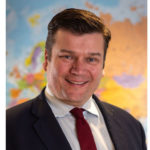
  • James Heappey – 2022 Statement on Ukraine

    James Heappey – 2022 Statement on Ukraine

    The statement made by James Heappey, the Minister for the Armed Forces, in the House of Commons on 25 February 2022.

    Yesterday morning saw the launching of the largest combined arms offensive operations seen in the European theatre since 1945. From land, sea and air, a massive Russian offensive commenced from forward positions in Belarus, all around Ukraine’s northern and eastern borders, from the Crimea and from ships in the Black sea. As leaders around the free world have said, this is an outrage against international law that violates Ukrainian sovereignty and brings a profound change to the security landscape of the Euro-Atlantic.

    The Ukrainian armed forces have stood their ground heroically, forcing fierce fighting around several Ukrainian cities. The Antonov-2 airfield north of Kyiv was taken by Russian airborne forces as part of the initial assault yesterday morning but was reportedly retaken by the Ukrainian forces overnight.

    As the world has now seen, the intelligence available to the British and American Governments over recent weeks has proven to be entirely accurate. That allows us to assess that the Russians have failed to achieve any of their planned objectives for the first day of combat operations. The Ukrainian armed forces claim to have shot down six fixed-wing aircraft and seven helicopters. They report that 137 Ukrainian service personnel have been killed in action as well as 57 civilians; hundreds more have been injured. The Ukrainian Government report that 450 Russian service personnel have been killed in action. As a former soldier with the vivid experience of death on the battlefield seared forever in my mind, I take no satisfaction in reporting those numbers to the House, and nor do I propose that we keep a score every day. These are the lives of innocent civilians and the lives of the bravest and best Russians and Ukrainians.

    As we gorge on the live footage of a peer-on-peer war broadcast from a European capital just two-and-a-half hours’ flying time from London, we should remember that behind those pictures is incredible fear and misery. That is why I pay tribute to those in Moscow, St Petersburg and other Russian cities who protested last night against this pointless loss of Russian life. President Putin and the kleptocrats who surround him have miscalculated badly. Young Russian men and women are needlessly losing their lives. The responsibility sits entirely with the Kremlin.

    Yesterday, British Royal Air Force Typhoon jets took part in NATO air policing from their base in RAF Akrotiri in Cyprus, from which they patrol over the Black sea and south-eastern Europe. HMS Trent is already part of a NATO standing maritime group and further Royal Navy ships are being deployed to other NATO standing groups in both the Baltic and the eastern Mediterranean. In addition to the Royal Tank Regiment battlegroup that has been in place in Estonia for the last six months, the Royal Welsh battlegroup will be arriving in Estonia earlier than planned to double up our force levels. Those doubled-up force levels will remain indefinitely and will be augmented by the headquarters of 12 Mechanised Brigade, meaning that the United Kingdom will have an armoured brigade in Estonia, reassuring one of our closest NATO allies.

    Mr Speaker, as you have heard from the Secretary of State, the Prime Minister and others in recent days, we will explore all that we can do to support the Ukrainians in the next few days. All hon. Members in this House must be clear that British and NATO troops should not—must not—play an active role in Ukraine. We must all be clear what the risks of miscalculation could be and how existential the situation could quickly become if people do miscalculate and things escalate unnecessarily.

    The Government do not feel that they can share with the House the detail of the support that the UK will provide to the Ukrainians at this sensitive point in operations. We apologise for that. We will do our best to give the House as much as we can, but hon. Members will appreciate that the detail is operationally sensitive. I hope that is acceptable to you, Mr Speaker.

    Finally, Mr Speaker, you and Front-Bench spokespeople from across the House have had briefings from Defence Intelligence. We will make sure that continues to happen, so that, on Privy Council terms, briefings can be received by those who need to have them. Colleagues were also given a briefing last night by Defence Intelligence, which I know colleagues from across the House have found useful. We intend to keep up those briefings for as long as we feel there are kinetic combat operations that warrant a daily update. Beyond that, a number of cross-party briefings have been given by the Foreign Secretary and the Defence Secretary, the next of which will take place this afternoon, when I will be joining the Foreign Secretary and a representative of the intelligence community to brief colleagues further.