Tag: Speeches

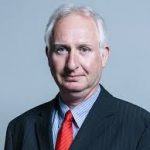
  • Steve Reed – 2024 Statement on Water Sector Reform – First Steps

    Steve Reed – 2024 Statement on Water Sector Reform – First Steps

    The statement made by Steve Reed, the Secretary of State for Environment, Food and Rural Affairs, in the House of Commons on 18 July 2024.

    The new Government will never look the other way while water companies pump record levels of sewage into our rivers, lakes and seas. That is why we have outlined our immediate measures to begin the work to clean up our waterways.

    First steps to clean up our rivers, lakes and seas

    The Government have announced a series of initial steps towards ending the crisis in the water sector.

    The new measures represent a step change to ensure the water industry cuts sewage dumping and attracts major private-sector investment to upgrade infrastructure while prioritising the interests of customers and the environment. The initial measures include:

    Securing agreement from Ofwat that funding for vital infrastructure investment is ringfenced and can only be spent on upgrades benefiting customers and the environment. Ofwat will also ensure that when money for investment is not spent, companies refund customers, with money never allowed to be diverted for bonuses, dividends or salary increases.

    Water companies will place customers and the environment at the heart of their objectives by changing their articles of association—the rules governing each company —to make the interests of customers and the environment a primary objective.

    Consumers will gain new powers to hold water company bosses to account through powerful new customer panels. For the first time in history, customers will have the power to summon board members and hold water executives to account.

    Strengthening protection and compensation for households and businesses when their basic water services are affected. Subject to consultation, the amount of compensation customers are legally entitled to when key standards are not met will more than double. The payments will also be triggered by a wider set of circumstances including boil water notices.

    Water (Special Measures) Bill

    Yesterday, the Government went further in the King’s Speech announcing the intention to introduce a new Bill to put water companies under special measures to strengthen regulation as a first step to clean up our rivers, lakes and seas.

    The Water (Special Measures) Bill will:

    Strengthen regulation to make water company executives criminally liable for severe failure.

    Give the water regulator new powers to ban the payment of bonuses if environmental standards are not met.

    Boost accountability for water executives through a new code of conduct for water companies, so customers can summon board members and hold executives to account.

    Introduce new powers to bring automatic and severe fines.

    Require water companies to install real-time monitors at every sewage outlet with data independently scrutinised by the water regulators.

    These measures will strengthen the enforcement regime and make clear that the new Government will not tolerate poor performance across the water sector.

    The Government will outline further legislation to fundamentally transform and reset our water industry and restore our rivers, lakes and seas to good health.

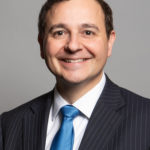
  • Ed Miliband – 2024 Statement on Energy Infrastructure Planning Projects

    Ed Miliband – 2024 Statement on Energy Infrastructure Planning Projects

    The statement made by Ed Miliband, the Secretary of State for Energy Security and Net Zero, in the House of Commons on 18 July 2024.

    This statement confirms that it has been necessary to extend the deadlines for decisions on the following four applications made under the Planning Act 2008:

    The Mallard Pass solar farm development consent order for the construction and operation of a solar farm energy generation development on land in Lincolnshire, South Kesteven and Rutland by Mallard Pass Solar Farm Ltd. The Secretary of State received the examining authority’s report on 16 February 2024, and the previous deadline for a decision was 13 June 2024.

    The Sunnica solar farm development consent order for the construction and operation of a solar farm and battery storage energy generation development on land in Cambridgeshire by Sunnica Ltd. The Secretary of State received the examining authority’s report on 28 June 2023, and the previous deadline for a decision was 20 June 2024.

    The Gate Burton energy park development consent order for the construction and operation of a solar farm and battery storage energy generation development on land in Lincolnshire by Gate Burton Energy Park Ltd. The Secretary of State received the examining authority’s report on 4 April 2024 and the previous deadline for a decision was 4 July 2024.

    The North Lincolnshire green energy park development consent order for the construction and operation of a combined heat and power enabled energy generating development, with an electrical output of up to 95 MWe, incorporating carbon capture, associated district heat and private wire networks, hydrogen production, ash treatment, and other associated developments on land at Flixborough industrial estate, Scunthorpe by North Lincolnshire Green Energy Park Ltd. The Secretary of State received the examining authority’s report on 15 August 2023, and the previous deadline for a decision was 18 July 2024.

    Under section 107(1) of the Planning Act 2008, the Secretary of State must make a decision on an application within three months of the receipt of the examining authority’s report unless exercising the power under section 107(3) of the Act to set a new deadline. Where a new deadline is set, the Secretary of State must make a statement to Parliament to announce it. Prior to taking decisions, the Secretary of State decided to set new deadlines for the applications as follows:

    Mallard Pass solar farm: 22 July 2024.

    Sunnica solar farm: 22 July 2024.

    Gate Burton energy park: 22 July 2024.

    This is due to the general election as no decisions are taken during a pre-election period. This is the first opportunity I have had to update the House on these cases.

    The decisions for those cases extended to 22 July have now been taken. In the case of the North Lincolnshire green energy park, the new deadline is 18 October 2024 to allow for the Department for Environment, Food and Rural Affairs to consider the evidence gathered by its review into the role of waste incineration capacity in the management of residual wastes in England.

    The Department will always endeavour to issue decisions ahead of the deadlines above, wherever possible.

    The decision to set the new deadline for the North Lincolnshire green energy park application is without prejudice to the decision on whether to grant or refuse development consent.

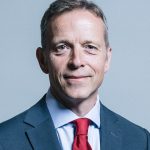
  • Jonathan Reynolds – 2024 Statement on the UK Steel Safeguard Extension

    Jonathan Reynolds – 2024 Statement on the UK Steel Safeguard Extension

    The statement made by Jonathan Reynolds, the Secretary of State for Business and Trade, in the House of Commons on 18 July 2024.

    I would like to make a statement on decisions made by the previous Government in relation to the UK’s steel safeguard measure.

    A successful steel industry is critical to our economic future, and we need the right policy environment to build sustainable growth in the UK and to ensure we respond effectively to unfair overseas trading practices and protectionist measures.

    Trade remedy measures enable Governments to protect their businesses from unfair foreign trade practices. They tackle issues of dumping or of unfair Government subsidies or, as in the case of safeguards, give businesses time to adjust to unforeseen increases in imports.

    The UK has, since 2018, applied a safeguard measure on imports of certain steel products. A safeguard measure imposes a tariff on specified product imports. This provides a level playing field and protects domestic producers from serious injury caused by unforeseen increases in imports giving them the needed time to adjust.

    The UK’s safeguard measure applies on 15 different steel product categories and was set to expire on 30 June 2024 under UK law. The Trade Remedies Authority conducted an investigation to determine whether or not there would be injury or threat of injury to domestic steel producers without the safeguard. They considered evidence from both domestic and international industry and organisations. After careful consideration, the Trade Remedies Authority recommended to the previous Secretary of State for Business and Trade that the measure should be extended on all 15 product categories for a further two years, to 30 June 2026.

    The previous Government considered the evidence in the Trade Remedies Authority’s recommendation and wider matters in the public interest, including the UK’s obligations under the relevant World Trade Organization agreement. They took the decision to extend the measure on all 15 categories for a further two years, to 30 June 2026. The decision to extend the measure on five of the 15 product categories represented a departure from the UK’s obligations under the relevant WTO agreements. The previous Government balanced this against the evidence the TRA found in their investigation and the UK’s public interest. As shadow Business and Trade Secretary, I supported this decision.

    The previous Government also decided to extend the application of the suspension for Ukraine to 30 June 2026. The extension review conducted by the Trade Remedies Authority did not consider the future of the existing suspension for Ukraine as it was beyond the scope of their investigation. The previous Government decided that it was in the UK’s public interest to extend the suspension for Ukraine to 30 June 2026. This decision was taken to ensure that imports of Ukrainian steel will not be subject to the additional safeguard quotas and duty. This is in line with the UK’s commitment to support Ukraine in the war with Russia, which the Prime Minister has reaffirmed to President Zelensky.

    In taking this decision with respect to the Ukraine suspension, UK legislation requires the Secretary of State to lay a statement before the House to explain why such a decision was taken. Now that Parliament has been reconstituted, I am laying this statement to make the House aware of the decision taken by the previous Government.

  • Kirsty McNeill – 2024 Speech on the Adequacy of the Scotland Act 1998

    Kirsty McNeill – 2024 Speech on the Adequacy of the Scotland Act 1998

    The speech made by Kirsty McNeill, the Parliamentary Under-Secretary of State for Scotland, in the House of Commons on 18 July 2024.

    I thank the right hon. Member for warmly welcoming me to the Chamber and, indeed, for the work that we have done together in the past on promoting the values of humanitarianism. He will know not only that this is my first day speaking at the Dispatch Box but that my maiden speech, just a short while ago, was my very first contribution of any kind in this House. I hope that with nearly four decades of dedicated service in this place, he may still recall the trepidation of standing here to speak for the first time.

    Turning to the subject matter of the debate, I begin with a celebration of the Scotland Act 1998. It is 25 years since Her late Majesty Queen Elizabeth II opened the Scottish Parliament and the late, and much-missed, Donald Dewar was sworn in as First Minister. Donald Dewar, the father of devolution, described the Scottish Parliament as “not an end” but a “means to greater ends”—namely, greater social justice in Scotland. That is the driving imperative that still guides Labour, which is why ensuring support for both the Union and the devolved institutions should be seen as a precondition for, and not the sum total of, this Government’s ambitions.

    In the quarter century since the establishment of the Scottish Parliament, we have seen a deepening of devolution through the 2012 and 2016 Scotland Acts. Crucially, those reforms were based on cross-party consensus in Scotland. I am immensely proud that I will now have a role in the ongoing success of those Acts as they continue to deliver for people in Scotland.

    It is right that we continue to hear views from all sides on how constitutional frameworks should evolve. However, I believe that it is through relationships and collaboration that we will drive progress together and deliver for the people we were sent here to serve. As my right hon. Friend the Secretary of State for Scotland has made clear, we all need to work on resetting relationships. Indeed, the Prime Minister has already made this a priority, with his first official engagement being with the First Minister in Scotland. That has been mirrored by early engagement by Ministers throughout the UK Government, and I assure the House that it will continue.

    For my part, I am clear that improved and ongoing co-operation will depend on three main things. The first is the sincerity of our collective commitment to a deep and durable resetting of relationships. Like the 1998 Act itself, collaborative working must endure beyond specific Administrations and Ministers, and be about more than formal structures and machinery. That does not always mean that we will agree, but we must be more mature about those disagreements, and depolarise and detoxify the tone of debate in Scotland. That should be the nature of grown-up politics and it is what the people of Scotland, and of all four nations of the UK, rightly expect from us as their elected representatives.

    Secondly, we need a dynamic understanding of devolution as an ongoing process of redistributing power, which is already evidenced in our commitment to metro mayors in England and to further devolution within England, as set out in the King’s Speech, and in the establishment of the Council of the Nations and Regions. Thirdly, we must commit to a genuine era of people power, with communities, co-operatives, civil society and local government working with the Government at all levels to deliver the change Scotland needs. As I hope my maiden speech made clear, we all need to have an open-hearted approach to working together in the best interests of the people we serve.

    I turn now to the substance of today’s debate. I appreciate the deeply held concern of the right hon. Member. The Government are focused on rebuilding trust in politics across the whole of the UK. In our manifesto, we have been clear that it is not only here in Westminster where more must be done to uphold the standards we expect to see in public life. Scrutiny of the Scottish Government is a matter for the Scottish Parliament, and it could be raised there by the right hon. Member’s colleagues. Nevertheless, we have committed in our manifesto to ensuring that Members of devolved legislatures will have the same free speech protections enjoyed by MPs here at Westminster, to better ensure that elected representatives can hold those in power to account. I hope that the right hon. Member will welcome that commitment. It is important to emphasise that legal proceedings between Mr Salmond and the Scottish Government are ongoing.

    I appreciate that there will be many views on how the Scotland Act 1998 might be improved. That is only right, and I am sure that we will continue to hear those views both here and in the Scottish Parliament, but as I have said, the settlement has been remade over the course of 25 years on the basis of broad consensus. Delivery must now be our focus. As the King’s Speech set out yesterday, this Government are committed to delivering change for Scotland. From making Scotland the home of Great British Energy, which is central to our mission to make the UK a clean energy superpower, to the new national wealth fund and the new deal for working people, we will deliver a better outcome for people in Scotland, particularly those at the sharp end of inequality, which holds back too many people.

    While it is true that co-operation between Governments at a political level has not always been straightforward, nevertheless the Scotland Act has endured. I have often said that while Scots do not have to agree about everything, we do have to find ways to agree about more. Labour is the party of devolution and we will be a Government of collaboration, but above all we are going to deliver for the people of Scotland. There is so much to do. It is time to get started.

  • David Davis – 2024 Speech on the Adequacy of the Scotland Act 1998

    David Davis – 2024 Speech on the Adequacy of the Scotland Act 1998

    The speech made by David Davis, the Conservative MP for Goole and Pocklington, in the House of Commons on 18 July 2024.

    Thank you for calling me, Mr Deputy Speaker. I will hesitate for just a second as the Chamber clears—my normal popularity.

    Three years ago, on 16 March 2021, I presented to the House the implications of the unlawful Scottish Government investigation and contrived criminal charges against Alex Salmond. I recommended empowering the Scottish Parliament to investigate as a Scottish court found that the Government acted illegally and engaged in a process tainted by bias against Mr Salmond. Regrettably, the investigative committee appointed by Holyrood was limited in its powers of investigation, operated without the protection of privilege and was thwarted at every turn by the delay, obfuscation and even threats from the Scottish Government and institutions of state. Three years on, that failure in democratic accountability has not been addressed.

    The investigatory powers of the Scottish Parliament could have been strengthened. Decisions about whether and who to prosecute could have been made entirely independently of Ministers in the Scottish Government. Neither of those things has happened, forcing me to raise the matter again.

    Mr Salmond has been found innocent. He previously succeeded in Scotland’s highest civil court in establishing the illegality of Scottish Government actions. He is currently suing the Scottish Government in a civil action. That has been assisted as some of those involved in constructing the case against Mr Salmond are now themselves under police investigation. I will therefore focus today on the wider failings in this sorry case and what they raise for the state of the rule of law in Scotland.

    In 2017, senior Scottish Government figures set up a procedure for dealing with sexual harassment allegations that effectively targeted Alex Salmond. I believe that, at an early stage, that was done with the knowledge of Nicola Sturgeon’s team, and potentially with their encouragement. The procedure applied retrospectively to former Ministers—Mr Salmond no longer being a Minister—but excluded civil servants. Sue Gray, then head of propriety and ethics at the Cabinet Office, expressed discomfort with the procedure. Despite that, the Scottish Government proceeded. An investigating officer was appointed. They were to have had no prior contact with complainants, yet the officer appointed, Judith Mackinnon, had in fact had extensive prior contact with the complainants.

    It has now also emerged the person deciding the case—former permanent secretary Leslie Evans—also met with complainants during the process. That information was withheld from the Court of Session in one of the many breaches of the Scottish governmental duty of candour in this case.

    Mr Salmond was informed of the complaints against him in March 2018. All were denied, and in April 2018 his legal team immediately raised concerns about the fairness and legality of the new procedure as well as concerns over Mr Salmond’s access to witnesses and documents. He offered mediation and arbitration to bring the illegality of the process into focus; it was repeatedly rejected. Messages between two civil servants in early February 2018 show how Liz Lloyd, Sturgeon’s chief of staff, was directly interfering in discussions with complainers ahead of their complaints being made. Her role—acting, we must assume, with the knowledge of her boss—was central to these events.

    Furthermore, evidence to the Holyrood inquiry from Mr Salmond’s former chief of staff, Geoff Aberdein, stated that Liz Lloyd in early March 2018 informed him that

    “there were two individual complainers”.

    Three other witnesses support that assertion. That directly contradicts her claim that she first became aware of the allegations in April 2018, yet it is a claim she doubtless felt compelled to make in order not to contradict Nicola Sturgeon’s position already given to the Scottish Parliament. Sturgeon misleading the Scottish Parliament would, of course, have led to her resignation. The same untruth was repeated on behalf of the Scottish Government during the judicial review. It is the position of Mr Salmond’s legal team that neither Lloyd nor Sturgeon was telling the truth.

    Very quickly after my previous debate on these matters, the Scottish police visited me, asking where I had got all this information. They got a nice cup of tea and a biscuit. Strangely, they had no interest whatsoever in what appears to be prima facie evidence of perjury by those holding high office. Let me say clearly today that these matters obviously require to be properly investigated by the police.

    In August 2018, ignoring the evident impropriety of the process, the permanent secretary Leslie Evans decided that some complaints against Salmond were well-founded. Salmond was told of Evans’ decision, and that a press release was to be issued at 5 pm. Salmond’s legal team was about to lodge a judicial review of the whole procedure, so it urgently sought—and received—written assurances that no press release would be issued. Despite those assurances, only hours later, the Daily Record published news of the allegations—part of the decision report had been unlawfully leaked. Other than Mr Salmond, only the Scottish Government had that report. However, I have met a witness who has made a statement that he was told by the then political editor of the Daily Record that the story was leaked by Liz Lloyd. The House should know that the prosecutor from the Information Commissioner’s Office investigating the leak concluded:

    “I have sympathy with the hypothesis that the leak came from an employee of the Scottish Government.”

    The Scottish Government fought the judicial review, at huge cost, despite their own legal advisers telling them in no uncertain terms that they would fail. They were warned:

    “it makes little sense to continue to defend the indefensible”

    and that the least worst option was to concede the case. Eventually, both the Scottish Government’s external counsel told the Government that they were in an untenable position and were suffering extreme professional embarrassment because of Government failings. They were also warned—this is important—that civil servants were deliberately misleading both them and the court. Despite these repeated warnings, the Government only conceded the judicial review after their external counsel threatened resignation.

    In January 2019, the Court of Session found that the Scottish Government had acted unlawfully, and that their actions and processes were procedurally unfair and tainted by apparent bias. Commentators often describe the investigation as “botched”. It was that, and more: it was illegal, pure and simple. Yet no one has been held accountable, and millions of pounds of taxpayer money was wasted. That is perhaps unsurprising when looking at the attitude of those at the top of the Scottish civil service.

    The same day that Salmond won his case, the permanent secretary Leslie Evans sent a message to a colleague saying that the battle was lost but not “the war”. That is hardly the language of an impartial civil servant. Senior figures at the top of the Scottish Government appear to have colluded to ensure that Salmond was reported to Police Scotland. There is evidence of contact between figures in the Scottish Government and officers of the Scottish National party. WhatsApp messages reveal that Liz Lloyd was convening a “council of war” WhatsApp group.

    A whistleblower revealed communications from Sue Ruddick, the SNP’s chief operating officer that in their words point to

    “to collusion, perjury, up to criminal conspiracy.”

    In the communications, she and the then chief executive of the SNP Peter Murrell, encouraged and coached complainants into reporting Salmond to the police. Appearing at the Holyrood inquiry in December 2020, Murrell was asked whether he was part of the so-called “council of war” WhatsApp group. Murrell denied even using WhatsApp, yet it emerged that he did have WhatsApp and had used it within weeks of the evidence session. Yet another clear lie.

    The House may wonder what the Scottish Government investigation had to do with the Scottish National party in the first place. The answer is provided by Anne Harvey, a qualified lawyer who was then a senior official for the SNP in this House, who wisely refused to have anything to do with what she characterised as a witch hunt.

    I recommend colleagues read again my debate on 16 March 2021. In that debate, I outlined the actions of senior officers of the SNP Peter Murrell and Sue Ruddick, and their compliance officer Ian McCann, whose interference in an ongoing police inquiry represented nothing less than an attempt to pervert the course of justice. The Police Scotland investigation was triggered by Leslie Evans, who sent the results of this internal inquiry to the Crown Agent, Mr David Harvie. The Crown Agent is responsible for overseeing all prosecutions in Scotland. Despite the subsequent police inquiry and court case, Salmond was acquitted on all charges by a majority female jury in front of a female judge.

    As a result of the Scottish Government’s unlawful handling of the allegations, the Scottish Parliament established a committee to examine how the First Minister, Scottish Government officials and special advisers dealt with complaints against Salmond. Even before the committee’s report was published, the convener said the committee was being undermined by “delay, prevarication and obfuscation” on the part of the SNP Government. When published, the report was damning. It reads:

    “Many documents were, in our view, insufficient to provide a complete picture of the events being considered by the committee and again that has hampered the committee’s work”.

    There would be uproar if a Committee of this House was impeded in such a manner, but the Scottish Government’s attempts to thwart the parliamentary inquiry did not stop there. It ignored two votes in the Scottish Parliament and waited until the very last minute to release legal advice it had received on the judicial review. That advice was only released the day before Sturgeon would give evidence, after the Opposition threatened a no confidence motion against the current First Minister, John Swinney. Even then, when released, it was not the full advice. Crucial parts were only made available after Sturgeon had appeared. Additionally, the Crown Office was threatening MSPs with prosecution due to the proceedings of the committee. Such threats would be treated in Westminster as a contempt of Parliament.

    At the instigation of the Crown Office, Police Scotland opened an investigation after WhatsApp messages given to the inquiry were made public. The messages showed Peter Murrell calling for pressure to be put on the police to investigate Salmond. Throughout this sorry business, the Crown Office has been enthusiastic in its pursuit of those who have published evidence in this case. A journalist has been jailed. Another journalist was prosecuted in a case completely dismissed by the sheriff court. The Crown Office engaged in a legal battle with The Spectator to stop the publication of evidence to the parliamentary committee. What is most troubling is that at the time, the line manager of David Harvie, the Crown Agent who oversees prosecutions in Scotland, was Leslie Evans, the Scottish Government permanent secretary. And Mr Harvie’s legal boss was the former Lord Advocate James Wolffe, who himself was advising the Scottish Government not to concede the judicial review against that same Scottish Government! That set-up is fundamentally wrong. I will outline just one example of why.

    On 2 March 2021, Mr Harvie, the Crown Agent, was at pains to tell the parliamentary committee, under oath, that he had never discussed the case with his line manager, Leslie Evans. Now, that may be true. However, what I can now tell the House is that documents show Mr Harvie had, in fact, discussed the matter with Leslie Evan’s private secretary—her representative on earth, if you like—in the days before he became involved in the case. It is fundamentally unsatisfactory that the then Crown Agent, the senior official in the administration of justice in Scotland, cannot be relied upon to tell a parliamentary committee the whole truth. I find it even more unsatisfactory when the Crown Office shows no interest in investigating these grave matters.

    In giving evidence to the inquiry, Nicola Sturgeon repeatedly failed to answer questions because she “could not recall”. In the end, the committee found, by a vote of five to four, that Nicola Sturgeon had given an “inaccurate” account of her knowledge of the allegations. In one of its clearest findings, the parliamentary committee found, unanimously, that Leslie Evans was personally as well as corporately responsible for failings that cost the Scottish taxpayer millions of pounds and led to the humiliation of the Scottish Government in the highest civil court in Scotland, due to their unlawful behaviour. Has there been any penalty for those failings? Of course not. Instead, Ms Evans’ contract was extended, along with her pension. The damage she has caused, both by her action and inaction, has been left totally unaccounted for. Something must be done to prevent these failures of accountability in public service in future, and I hope that the “duty of candour” legislation in the King’s Speech means that something finally will be done.

    Alongside the Holyrood inquiry, the lawyer James Hamilton was asked to consider whether Nicola Sturgeon had breached the ministerial code during this affair. While Mr Hamilton concluded that Sturgeon did not breach the code, his report was so heavily redacted by the Scottish Government that he, in a highly unusual move, insisted on the publication of a rather stark note along with it. Hamilton said that such redaction

    “presents an incomplete and even at times misleading version of what happened.”

    I have heard evidence that special advisers—not lawyers—appointed by Nicola Sturgeon had been directly involved in the redactions of Mr Hamilton’s report. I have pursued this point with the current permanent secretary, but I have not received a satisfactory or clear reply.

    To obtain further information on the Hamilton report, a freedom of information request was made to the Scottish Government. The Scottish Government refused to publish the requested information, claiming that they did not hold it—despite its being their report. The Information Commissioner rubbished their claim, and ordered that it be published. The Scottish Government attempted to appeal against that decision. I attended the appeal last year in Edinburgh, and noted that the Government case was not just summarily dismissed, but dismissed in a completely humiliating manner. I have brought a number of cases against Governments, and I have never seen quite such an outright humiliating dismissal. Despite these losses, the Scottish Government have still failed to publish the information requested, and now oppose the publication on other grounds.

    When I first brought these matters to the attention of the House, Nicola Sturgeon was still First Minister in all her unchallengeable pomp. She is not any more. We all know what has happened to her and the top management of the SNP since. I cannot and will not go into all that now, but that is the important backdrop to this sorry saga. My purpose today has been to concentrate on matters of fundamental principle, so we can ensure that such unlawful and shameful events cannot be repeated.

    These events have occurred under the devolution settlement secured under the Scotland Act 1998. The Holyrood parliamentary committee suffered because it did not have adequate power to hold the Scottish Government to account, which allowed it to be frustrated by the Government and threatened by the Crown Office. It is simply not appropriate for the Lord Advocate to be both the public prosecutor and the Government’s legal adviser. I put forward that position three years ago, in my Adjournment debate of 16 March 2021, and was supported by the former Member for Edinburgh South West, Joanna Cherry. Ms Cherry presented a private Member’s Bill that had cross-party support. However, despite the case being conceded in principle by the Scottish Government, no legislative action has followed.

    There is also concern about how the SNP’s leadership exerted influence over the rule of law in Scotland, in the Scottish Parliament, the Crown Office and Procurator Fiscal Service, the courts, the police and the media. Nicola Sturgeon is no longer First Minister, but her successors have continued to suppress the truth about their party’s disgraceful attempts to destroy Alex Salmond, and in so doing they have continued to deny him proper redress. However, this is about more than Alex Salmond. To ensure that it never happens again, we must review the consequences for civil servants found to have acted improperly by parliamentary committees, we must strengthen the investigative powers and legal protections offered to Members of the Scottish Parliament, and we must immediately separate the powers of Scottish Law Officers from their roles in administering criminal justice and providing advice to the Scottish Government. It is time to invoke a famous phrase, often invoked in England but just as pertinent in Scotland: fiat justitia—let justice be done.

    Before I sit down, may I—in what is otherwise an incredibly serious debate—apologise to the Minister for the fact that my action today forced her to make her maiden speech at such short notice? If I may say so, she carried that off brilliantly, and deserves double points for it.

  • Anneliese Dodds – 2024 Speech on Foreign Affairs and Defence

    Anneliese Dodds – 2024 Speech on Foreign Affairs and Defence

    The speech made by Anneliese Dodds, the Minister of State at the Foreign Office, on 18 July 2024.

    It is an honour to close such a well informed and at times passionate debate, and I will endeavour to respond to as many points as I can get through in the time available. As my right hon. Friend the Defence Secretary said at the beginning of this debate, the Foreign Secretary is extremely disappointed that he was not able to participate today, and I know that he will want to update the House shortly on his recent international engagement.

    It is an enormous privilege for me to speak in this Chamber for the first time as the Minister of State for Development, as the Minister for Women and Equalities, and as part of a new Government who are proud to serve our country and are working to reconnect Britain with the world. I welcome the hon. Member for South Suffolk (James Cartlidge) to his new place on the Opposition Front Bench, and of course the right hon. Member for Sutton Coldfield (Mr Mitchell), to whom I am personally very grateful for reaching out to me on my appointment. I note that both the previous incumbent in my role and the Defence Secretary said at the very beginning of the debate that this is a time when we need to respect others’ points of view. I think that has largely held, although perhaps we had a slight change of approach in the speech by the hon. Member for South Suffolk.

    Overall, I think we heard throughout this debate a definite determination to focus on bringing people together when we can as part of a national mission of renewal. We heard so many excellent maiden speeches today—really terrific introductions to the House from many new colleagues—but it is particularly pertinent that my new hon. Friend the Member for Midlothian (Kirsty McNeill) made reference to the need to recognise that so often, we have more in common than divides us. We need to bear that approach in mind locally, nationally and globally in these often dangerous times.

    It is clear that the British people have given this new Government a mandate for change in order to deliver our progressive vision for a shared future—a vision rooted in cool-headed realism about the world as it is, and guided by hope for what it can be. As I say, we are already working to reconnect Britain to the world after 14 years during which there has, at times, been disengagement and isolationism. In so doing, we are turbocharging our mission for growth, to bring investment and jobs to every part of our country.

    In these often dangerous and divided times, the UK’s security is our first priority, as my right hon. Friend the Defence Secretary made clear. We will stand up for our interests and for our values. We will create a new relationship with the EU, we will deepen our engagement with the global south, we will reclaim leadership on tackling the climate crisis, and we will champion human rights and international law. We will work in partnership with our friends and allies to reduce global poverty and the drivers of conflict and instability, and we will also empower women and girls. In that connection, I congratulate my new hon. Friend the Member for Doncaster East and the Isle of Axholme (Lee Pitcher) on his heartwarming maiden speech, and particularly his reference to the women in his life. Indeed, many new Members have made reference to their partners and families in their maiden speeches.

    As the Minister for Development and for Women and Equalities, I know that delivering a truly effective and modern approach to development has never been so urgent or so important. On that, I concur with the right hon. Member for Dumfriesshire, Clydesdale and Tweeddale (David Mundell). Partnership, not paternalism, is required to deliver the change that is so desperately needed. Next week, I will go to the G20 development ministerial meeting in Brazil to reconnect with allies and partner countries in the global south. Together, we must reform the international financial system to tackle unsustainable debt, accelerate growth and unlock climate finance. Together, we must enhance our ability to prevent conflict, and together we must restore our development reputation to deliver both for our international partners and for the British people—and it does need restoring.

    The right hon. Member for Sutton Coldfield rightly referred to the critical role for development for the world’s poorest and most vulnerable people, for our stability, for security and for global prosperity. The commitment to development has always been fundamental for my party. So many powerful champions from this House are household names: Barbara Castle, Clare Short, Gordon Brown, and of course my predecessor who held this brief in opposition, my right hon. Friend the Member for Wigan (Lisa Nandy), to whom I pay tribute.

    The shadow Foreign Secretary has often been critical of damage done under Conservative Governments to development and our country’s reputation. He referred to the fact that previous Conservative Governments had “literally removed” food

    “from the plates of starving children.”—[Official Report, 6 July 2022; Vol. 717, c. 922.]

    He also said that previous Conservative Governments had “trashed” our international reputation. I appreciate his honesty, but now is the time for reflection on a fact that he did not mention today: the damage done by the uncontrolled growth in the previous Government’s spending from the development budget on accommodation. That spending was classified as overseas development aid, but it led to cuts in programmes for some of the neediest people in the world. In a spirit of openness, we must surely acknowledge today that that has done tremendous damage to our reputation.

    We are wasting no time in seeking to restore our development reputation by increasing support for those most affected by Hurricane Beryl, and by ensuring that the Foreign Secretary visits our closest allies.

    Mr Mitchell

    I have listened carefully to the Minister. As she knows, not least from what I said today, I have been critical of earlier decisions, but can she tell the House today whether she has yet thought through when we might see the 0.7% return?

    Anneliese Dodds

    That is absolutely something that this Government take incredibly seriously. Under previous Labour Governments, the 0.7% commitment helped to build our reputation across the world. We have been clear that we are determined to get back to 0.7% as fiscal circumstances allow, but we will also be clear about situations in which the percentage of our gross national income that can go to development has been compromised because of uncontrolled costs, such as those incurred under the previous Government. Surely the shadow Foreign Secretary must acknowledge that damage and what has happened to programmes for some of the poorest people around the world under his party’s watch.

    As I stated, we have sought to restore our development reputation by increasing support for those affected by Hurricane Beryl, and by immediately taking action to reconnect with our allies, with the Foreign Secretary visiting Germany, Poland and Sweden in his first 48 hours in his role, and the Defence Secretary, of course, visiting Ukraine. The Defence Secretary was crystal clear: Ukraine and its people have no firmer friend than the UK in their fight against Putin. The Ukrainians are defending our shared security and prosperity, and we stand with them now and always. The right hon. Member for Wetherby and Easingwold (Sir Alec Shelbrooke) rightly referred to their bravery as well as that of the UK’s armed forces, to whom I pay tribute. It was a pleasure to hear from new Members who have services experience, including in the maiden speech of the new hon. Member for Tewkesbury (Cameron Thomas), and the new hon. Member for Dumfries and Galloway (John Cooper) talked about the noble military history of his constituency.

    We are clear that under the new Government, the UK will pledge £3 billion in military aid to Ukraine every year. We are speeding up delivery, including of a new package of military equipment, and will aim to play a leading role in supporting a clear, irreversible road for Ukraine to full NATO membership. That commitment from the UK to ensuring that Ukraine can proceed to NATO is unshakeable. As has been mentioned, we will also set out a clear and credible path to spending 2.5% of UK GDP on defence, as we call on others to step up. I would gently point out to the hon. Member for Broadland and Fakenham (Jerome Mayhew) that there was no credible plan from the previous Government.

    Jerome Mayhew

    Will the Minister give way?

    Anneliese Dodds

    No, I will not; I will make progress. We are undertaking the unglamorous, hard work of putting that plan in place, rather than engaging in the wishful thinking we saw from the previous Conservative Government on this issue and so many others.

    As this debate has indicated, there is deep concern in our country and globally about the death and destruction in Gaza. The Liberal Democrat spokesperson, the hon. Member for Oxford West and Abingdon (Layla Moran), referred to it, as she has often done so powerfully; she has both a professional understanding of the issue and, sadly, personal experience of it. Before the Foreign Secretary’s first fortnight in the job was up, this priority was clear from his application to visit the region. He went to Israel and the Occupied Palestinian Territories to progress diplomatic engagement, as we play our part in efforts towards long-term peace and security in the middle east. It is clear that the situation in Gaza is untenable and intolerable. We need a ceasefire not tomorrow or next week, but today. We need the immediate release of all hostages, unfettered and rapid access to humanitarian aid into Gaza, and action to enable British nationals and their families still trapped there to leave.

    My hon. Friend the Member for Middlesbrough and Thornaby East (Andy McDonald) inquired about the new Government’s position on UNRWA. We recognise the vital role that UNRWA plays in saving lives in Gaza, providing basic services and promoting stability in the west bank and the wider region. We are closely considering funding to UNRWA and will ensure that we keep Parliament informed.

    The Foreign Secretary made the case clearly in the region for an urgent, credible and irreversible pathway towards a two-state solution, an end to illegal Israeli settlements and rising settler violence in the west bank, and a reformed and empowered Palestinian Authority. This Government are clear that the world needs a safe and secure Israel alongside a viable and sovereign Palestinian state.

    Sudan was rightly mentioned by the shadow Foreign Secretary. I was determined to be fully briefed on that situation, as well as the situation in Gaza, on coming into my role. In my first week in office, I announced new lifesaving support for up to 150,000 refugees in Libya who are fleeing escalating violence in Darfur. We must do all we can in this area. The Government are accelerating work on rebuilding that connection with the rest of the world. We are making real the rights that we all hold in common. I was particularly pleased to hear Members, including my hon. Friend the Member for Stockport (Navendu Mishra), referring to the rights of disabled people in this debate, and the new hon. Member for Bristol Central (Carla Denyer) spoke about disabled people in her maiden speech.

    We are also accelerating work on tackling corruption and money laundering, which was rightly referred to by my new hon. Friend the Member for Kensington and Bayswater (Joe Powell), and we are making sure that the voice of working people is heard. I was pleased to hear the new hon. Member for North Antrim (Jim Allister) refer to the importance of the trade union movement, perhaps from a slightly unexpected angle.

    We are taking a strong, consistent and long-term approach to China and convening a new clean power alliance. We are clear that Britain is stronger when we work with others. That point was made by so many speakers, including my new hon. Friend the Member for Ealing Southall (Deirdre Costigan) in her powerful remarks and my hon. Friend the Member for Bradford East (Imran Hussain). Together, we need to turn towards the project for national renewal, and Britain’s enormous potential in the world. Together, as the new hon. Member for North Herefordshire (Ellie Chowns) said, we can achieve and do so much. Together, we can work towards a liveable planet that is free from poverty. The work towards that starts now.

  • James Cartlidge – 2024 Speech on Foreign Affairs and Defence

    James Cartlidge – 2024 Speech on Foreign Affairs and Defence

    The speech made by James Cartlidge, the Conservative MP for South Suffolk, in the House of Commons on 18 July 2024.

    It is a pleasure to follow the hon. Member for Caithness, Sutherland and Easter Ross (Jamie Stone)—although I must say that I have never confused him with Jeremy Thorpe—and to see you in the Chair, Mr Deputy Speaker, as I respond to the Gracious Speech debate.

    I thank all right hon. and hon. Members who have made speeches today, but I pay particular tribute to all those who made maiden speeches. The time limit means that I cannot go through those contributions in as much detail as I would like, but I will briefly congratulate all those hon. Members. The hon. Member for Ealing Southall (Deirdre Costigan) spoke passionately about diversity, and adds to it with her strong Irish heritage. The hon. Member for Doncaster East and the Isle of Axholme (Lee Pitcher) is surely the first ever MP to have worked as a sewer baiter. My twins had their 10th birthday during the election campaign, so I know how the hon. Member for Kensington and Bayswater (Joe Powell) feels. It is painful, but it gets better—don’t worry. I wish him and his family well.

    The hon. Member for Bristol Central (Carla Denyer) made a point of order earlier about energy infrastructure. Pylons have also been proposed in Suffolk, and I agree with her that there are other options; we are saying to the Government that we want to see them. I am grateful for her very passionate maiden speech. The hon. Member for North Antrim (Jim Allister) will, I am sure it is fair to say, be a doughty champion for his constituents.

    It is brilliant to have, in the hon. Member for Tewkesbury (Cameron Thomas), a former member of the Royal Air Force in Parliament, especially in the current context. I was passionate about the global combat air programme when I was Minister for Defence Procurement—it shows the importance of our maintaining combat air competitiveness. I hope that he will contribute to the debate next Wednesday.

    I was grateful to hear the cut and thrust of Scottish colleagues, including the hon. Members for Midlothian (Kirsty McNeill) and for Inverclyde and Renfrewshire West (Martin McCluskey), and, of course, my hon. Friend the Member for Dumfries and Galloway (John Cooper), who certainly punched above his weight in his maiden speech.

    Arguably, we did not hear enough about rural matters in the King’s Speech, but the hon. Member for North Herefordshire (Ellie Chowns) certainly made up for that. She will clearly be a passionate advocate for farming and the environment in her constituency. I am grateful for all those maiden speeches, and I hope that we will hear much more from those colleagues in future.

    Turning to defence matters, may I welcome the new foreign affairs and defence ministerial teams to their positions? As the shadow Foreign Secretary, my right hon. Friend the Member for Sutton Coldfield (Mr Mitchell), said, we will work with them where it is in the national interest—especially on supporting Ukraine for as long as it takes—as they did when they were in opposition. We welcome the cross-party spirit in which the Secretary of State for Defence set out his plans for a strategic defence review. We look forward to working with Lord Robertson, for whom I have the greatest respect, in a constructive and collaborative manner.

    May I thank the Secretary of State for paying tribute to the two previous Secretaries of State, Ben Wallace and Grant Shapps, both of whom I had the privilege to work with as Minister for Defence Procurement? They can both be rightly proud of the enormous contribution that they made in supporting Ukraine, but they had something else in common: they were not afraid to make the unambiguous case for higher defence spending, and most importantly, they were successful. It helped that they had a Prime Minister who, as Chancellor, oversaw the largest spending review increase for defence since the cold war, and ensured that we went into the general election with a credible and fully funded plan to increase our defence budget to 2.5% of GDP by 2030.

    Although I welcome the fact that the Labour Government have said that they are committed to 2.5%, we have nothing but uncertainty over their timetable. Indeed, this morning I was interviewed by Kay Burley of Sky News. She put it to me that the Government’s timetable is to reach 2.5% by the end of the Parliament—so 2028 or 2029. I said that that was not what I understood the public position to be, but she told me that she had been informed privately by the Government that that was the timetable, so I would be grateful if they confirmed now, in Parliament, what exactly the position is on this matter of great sensitivity.

    Let me explain why the timetable for 2.5% really matters. When the previous Prime Minister announced that we would commit to 2.5%, he stated that his top priority was to replenish our munitions. That 2.5% figure enabled us to commit £10 billion of extra funding over 10 years to fund munitions, and it is a fact—I know this—that without a clear pathway to 2.5%, the Ministry of Defence would have had to make substantial cuts or deferments to programmes in order to afford that necessary replenishment of our munitions. That is why it is so significant, and why we need to know exactly what the position is. Is Kay Burley correct that the Government have told Sky News that they have a timetable for reaching 2.5% by 2028 or 2029? If not—if there is no timetable for 2.5%—how is the MOD going to fund its munitions strategy? Will those orders for shells and missiles for the Army, Navy and Air Force actually be placed this year? If not, what will be the impact on our world-leading defence sector, and above all, what will be the impact on our warfighting capability as a nation?

    Without a clear pathway to 2.5%, what will be the immediate impact on the Department’s finances? Will the MOD continue to invest in cutting-edge capability such as directed energy weapons and hypersonics? That 2.5% would also have stabilised our two biggest defence programmes in light of the inflationary funding pressures that followed Putin’s invasion of Ukraine. This is all open and in the public domain—the Public Accounts Committee was talking about it in the lead-up to the general election. I am talking about the nuclear deterrent and the global combat air programme, our absolutely essential sixth-generation fighter programme. I am delighted that we now have consensus between the Government and ourselves on both the nuclear deterrent and GCAP, but can the Government confirm that delaying 2.5% will have no impact on the funding elements of either of those two major programmes? Can the Secretary of State or the Minister responding also confirm that the Secretary of State’s strategic defence review will conclude entirely before the next spending review commences, so that that review is threat-based, rather than forced on to the financial back foot by Treasury considerations?

    Of course, if the Government’s public position is that there is no timetable to 2.5%, they will inevitably point to the old chestnut of the public finances being worse than feared, justifying the inevitable cuts or deferments of programmes that follow. I have the greatest respect for the Secretary of State, but we did hear some of that in his opening remarks. I am afraid that that excuse will not wash, though. Inflation is at 2% and on target; the economy is growing at a healthy rate and ahead of our competitors; wages are rising; unemployment is almost half what it was in 2010, when we took power; and the deficit is forecast to fall to just over 1% of GDP by the end of the current forecast period. [Interruption.] Labour Members chunter. They talk about missions; when we came to power, our mission was to save this country from bankruptcy, because once again, the socialists had run out of other people’s money.

    The forecast deficit in 2010 was heading well north of 10%, so we did the right thing: we had to take difficult decisions, and we restored our public finances. Because of that, when the pandemic struck and the energy support had to be put in place, we could afford that enormous support. We are proud of that—proud of furlough, of saving those jobs and those businesses in every constituency. We did it because of those difficult decisions after the mess Labour left us in 2010. [Interruption.] Labour Members talk about the previous Prime Minister but one, but our strong economic legacy cannot be used to pray in aid a cover for cuts and deferments. [Interruption.] They quibble when we talk about a strong economic legacy. How else can we describe low unemployment, inflation at 2%, a low and falling deficit—half what it was when we took over from them—or the highest growth in the G7? That is a fantastic inheritance. Far from being an excuse for the cuts that the Government will have to come to, those are the features of the very improvement in economic conditions that made our pre-election commitment to 2.5% financially credible and deliverable.

    We strongly welcome the Prime Minister’s staunch support for NATO, as evidenced in Washington, and we want him to succeed on his pledges to strengthen Britain’s defence. That is in our national interest, but it is actions that matter and by which the Government will be judged, and deferring and delaying 2.5% offers nothing but uncertainty to our armed forces at the worst possible time. If the Government have a private timetable to reach 2.5%, they need to share it; if there is not one, I urge the Secretary of State to persuade the Prime Minister and his Treasury colleagues to think again, because in this more dangerous world, higher defence spending is a matter of the utmost urgency for Britain.

  • Jamie Stone – 2024 Speech on Foreign Affairs and Defence

    Jamie Stone – 2024 Speech on Foreign Affairs and Defence

    The speech made by Jamie Stone, the Liberal Democrat MP for Caithness, Sutherland and Easter Ross, in the House of Commons on 18 July 2024.

    Thank you very much, Mr Deputy Speaker. I have sat through this important debate and it has been an absolute pleasure. What a galaxy of maiden speeches we have heard all around us—and that, of course, is democracy. Everyone can take great encouragement from what they have seen today.

    The only problem is that I do not know all these new faces, so can I issue a blanket apology in advance to all those on the Labour Benches if I come up to them and say, “I’m so pleased you are a new Lib Dem MP”? I do not mean anything by it. If I say to Members on the Liberal Democrat Benches, “Well done on getting elected on a Labour ticket”, I am terribly sorry about that. You can take comfort, Mr Deputy Speaker, in the fact that I visited an old folks’ home recently and a lovely old lady thought I was Jeremy Thorpe. At least it was the right party.

    I am on my feet today because my party’s defence spokesperson, my hon. Friend the Member for Honiton and Sidmouth (Richard Foord), is ill with covid. I am sure we all wish him a speedy recovery. However, I did five years as my party’s defence spokesperson. That leads me to my main theme, which I will touch on by simply saying that we will build relationships with those on the Government Front Bench and the shadow Front Bench—that is how we work.

    I will always remember Ben Wallace arranging for me and the present Secretary of State to be helicoptered to Belvoir castle for a meeting of the joint expeditionary force Foreign Ministers. I have never forgotten that, because it was just two days before Putin’s tanks rolled across the border. I remember going in the car from the MOD to board our military helicopter, and the civil servant asking me and the present Secretary of State, “What do you think will happen?” I think we both said, “He’ll probably invade.”

    I also remember Ben Wallace saying, during the dinner with the Foreign Secretaries, “I am doing this because Governments change and it’s as well you are prepared, although you may belong to other parties, and that you know as much as you can about the defence brief.” I want to go on the record as thanking Ben Wallace for his very generous attitude to keeping me briefed on intelligence, and I thank the present Secretary of State for his generous offer to see that my colleague, my party’s defence spokesperson, is similarly briefed. That is very good news indeed.

    I want to congratulate, through reasons of friendship, those on the Government Front Bench on their appointments; it is very good to see them in their places—and indeed, I am bound to say, it is good to see those on the Opposition Front Bench in their places. The shadow Foreign Secretary was quite correct to remind us of what is going on in Sudan. It is not just about Russia and Ukraine or the middle east; there are all sorts of terrible things happening in the world. I liked too the Secretary of State’s saying that Britain is “democracy’s most reliable ally”. We ought to remember that on a day like today, when all these new faces exemplify democracy in its good, healthy, working form.

    I do not have much time, but I want to touch on two points, one of which I think those on both Front Benches know I care passionately about. I served for a short spell of time as a private soldier in the Territorial Army, and one of my children served in the forces until recently. The size of our forces matters an enormous amount to my party, and I think we all understand that we are very far stretched at the moment—hence my intervention earlier in the debate about the present size of the British Army being not exactly helpful to recruitment.

    One other thing that I think is desperately important, based on when we met with the joint expeditionary force Foreign Ministers, is that—as all hon. Members have said—we must work across borders, we must work with the European community, and we must work with friends. Only by co-operation, by standing together, can we take on the Russian bear and see it off. As has quite correctly been said, if Ukraine falls, what is next?

    Finally, in defence debates during my years in this place, I have always thought the atmosphere of consensus across party boundaries very important. I know from my own family that it was encouraging to our servicewomen and servicemen to know that politicians were speaking as one. From what I have heard this afternoon, I have no reason to worry that that will not go on in future. I think that we can work together for the defence of our nation, which we love so well.

  • Jerome Mayhew – 2024 Speech on Foreign Affairs and Defence

    Jerome Mayhew – 2024 Speech on Foreign Affairs and Defence

    The speech made by Jerome Mayhew, the Conservative MP for Broadland and Fakenham, in the House of Commons on 18 July 2024.

    I join many others in congratulating Members on their maiden speeches—they were so much better than my own—but as we are short of time, let me move back to the topic of this debate, which is defence and foreign affairs. While I congratulate the incoming Government on their success, and we wish them well in the spirit of national service, there are serious concerns arising already from the Gracious Speech, and the disconnect between the words of the Government and their actions, particularly in relation to defence and foreign affairs.

    Let us look first at the defence budget. We are told by the Government that the world is more dangerous than it has been in living memory. We are told that there is cast-iron support for increasing the defence budget to 2.5% of GDP, but where are the actions? Stability in terms of the defence budget would be to increase it to 2.5%. That was the decision already communicated by the Conservative Government. That means £75 billion of increased defence spending between now and 2031. Where is the stability, in a more dangerous world, in effectively reducing defence spending between now and 2030—particularly in an environment where defence procurement needs long-term reliability from which to plan? There seems to be a disconnect there.

    The second area is veterans. We are told by the Labour Government that they are focused on the defence family, and that the defence process should be about people. Quite right too, but what about the veterans Minister? Under the last Government, the veterans Minister was a Cabinet member. He had the ability to look right across Government. What was said in the debate down in Plymouth Moor View a few weeks ago between the two gallant candidates? Did Labour stand on a programme that said, “We’re going to reduce the importance of the veterans Minister. We’re going to make them a junior Minister who will be subsumed within the Ministry of Defence”? I doubt that was the message that the residents of Plymouth voted on, but that is what the Government are planning to do. I ask the Government to think again about that.

    Finally, let us look at the overseas development aid budget. Back in the dark days of 2021, when our economy was struggling from the fallout from covid—this massive global pandemic—the Conservative Government took the very difficult decision to reduce ODA from 0.7% of GNI to 0.5%, with an ambition to reverse that as the economic conditions allowed. At the time, Labour was furious and outraged by that, saying that even in the economic situation that existed in 2021 it was the wrong decision. The then shadow Minister for International Development, the hon. Member for Birmingham Edgbaston (Preet Kaur Gill), said:

    “Britain and the world deserve better than a Foreign Secretary who has allowed the aid budget to be slashed, leaving our global reputation lying in tatters”.—[Official Report, 26 November 2020; Vol. 684, c. 1021.]

    The now Secretary of State for Northern Ireland said that

    “to choose to break this promise to the world’s poorest people is unforgivable”.—[Official Report, 26 November 2020; Vol. 684, c. 1028.]

    But what is Labour doing now? The economy has improved significantly since those dark days, yet Labour’s action is to keep the figure at 0.5%.

    Labour tells us that we need to increase trust in politicians, and that trust must be restored. Well, the way to do that is to act in government in the way that they said they would act when in opposition. I intend to hold this new Government to account.

  • Richard Burgon – 2024 Speech on Foreign Affairs and Defence

    Richard Burgon – 2024 Speech on Foreign Affairs and Defence

    The speech made by Richard Burgon, the Labour MP for Leeds East, in the House of Commons on 18 July 2024.

    I congratulate the hon. Member for Dumfries and Galloway (John Cooper) on his maiden speech, as well as every single Member who has made a maiden speech today, particularly my Labour colleagues who join us in government. It is a great pleasure to give this speech on the second day of the King’s Speech debate, welcoming the first King’s Speech under a Labour Government for so long. It makes me reflect on the opportunity we now have to deliver the change that people in our communities not only need but deserve, after 14 years of Conservative misrule.

    We gather in this House after a period of nearly 15 years that ended with more food banks in this country than branches of McDonald’s, record numbers on NHS waiting lists, 4 million children living in poverty in the sixth richest economy on earth, rivers literally full of sewage and real wages lower than they were back in 2008. All that is before we get on to the shameful history of corrupt crony contracts and MPs lining their pockets with second, third, fourth and fifth jobs. I am glad that our Government will make progress on that very shortly, by making an announcement about second jobs for MPs.

    There are 40 Bills in the King’s Speech that could initiate a decade of national renewal. As a former trade union lawyer, I particularly welcome the new deal for working people. For too long, we have seen workers in this country being treated as if they do not matter. We all saw what happened at P&O, when decent, hardworking people were marched off their ferry by trained security guards in balaclavas and treated like dirt by that very wealthy company.

    Then we have the exciting announcements on how we will bring rail back into public ownership and how we will give local councils greater powers to develop their own bus services. Those measures are so important for our communities. If there is one thing that runs through the history of our party it is the fact that we deliver best when we recognise that there are some things in life that are more important than the pursuit of profit, and they are the good of people and the good of public services. That is what helped us to found our national health service—our party’s proudest achievement in government. We need to rise to the challenge now of securing a great future for it under this Labour Government.

    As I have said, I was pleased to see new measures to ban MPs’ second jobs. Indeed, I drafted a Bill in the previous Parliament to do just that. Funnily enough, the Conservative Government rejected that Bill again and again. I do wonder why that was!

    We have a real opportunity now to deliver the change that people need and deserve. I could not have been prouder to have been re-elected to represent my community of Leeds East in this Parliament for the fourth time. I was particularly pleased to welcome into the new enlarged constituency the proud communities of Garforth, Swillington and Little Preston. It is great to be working with people locally to improve public services under a Labour Government and to deliver the change that people need.

    Before I conclude this curtailed speech, I want to raise two other issues. First, I very much welcome the Government’s announcement yesterday of a child poverty taskforce. That is an important step forward. What we need now is a long-term strategy, given that 4 million children are living in poverty in the sixth richest country on earth. However, implementing a strategy does not mean that we cannot take immediate action now. Every child poverty expert says that scrapping the two-child benefit cap is a key measure, and I encourage our Government to get on with that. That is why I support the amendment tabled by my hon. Friend the Member for Liverpool Riverside (Kim Johnson).

    Secondly, I wish to raise respect for international law and the question of arms sales. I was one of the sponsors of the amendment of my hon. Friend the Member for Coventry South (Zarah Sultana). As my hon. Friend the Member for Bradford East (Imran Hussain) mentioned in his speech, he and I went to the International Criminal Court at The Hague and delivered to the team of the chief prosecutor, Karim Khan, evidence of Israeli war crimes that we had gathered through parliamentary meetings. It is so important that we uphold both the integrity and independence of the International Criminal Court and the integrity of the international rules-based order. I regret to say that I believe that the previous Government flouted international law, and I look forward to our Labour Government doing something very different. That is why I backed the amendment to end arms sales to Israel.

    We have talked about the legal case, and of course there is a legal case, but it is the moral case that burns in the hearts of so many people in our country and around the world when they see the horrific scenes from Gaza of the slaughter of men, women and children. We have debated it so many times in this Chamber that we have almost got used to it. People out there want our Government—and I hope that our Government will do this—to take a clear moral stand by, yes, calling for an immediate ceasefire and upholding international law, but also by stopping arms sales to Israel to put pressure on Netanyahu. We do not want to see arms licensed in this country going to maim and kill men, women and children in Gaza. It is completely unconscionable and it must stop, in my opinion.

    I thank my constituents for re-electing me with an increased majority. I will work night and day for you to ensure the best deal under this new Government that you can get, because you deserve change after nearly 15 years of Conservative misrule. You deserve an increase in your living standards. You deserve an end to child poverty. You deserve an NHS that we can be proud of once again.

    Under the last Labour Government, satisfaction levels with our NHS were at record highs. While it was the Welsh trade unionist and socialist Aneurin Bevan, who was briefly expelled from the Labour party and came back in, who created our national health service, the Conservatives voted against the creation of a national health service over 20 times. That is one of the reasons they could not be trusted with the NHS—[Interruption.] Well, history is important, and had the Conservatives learned from history there would not be just a handful of them on the Opposition Benches after getting the worst election result in their history—an election result that I am delighted to say they thoroughly deserved. Let us get on with making the change under a Labour Government that people really need, however much Conservative Members resent it and try to stop it.