Tag: Speeches

  • Volodymyr Zelenskyy – 2022 Statement on the Situation in Ukraine (06/04/2022)

    Volodymyr Zelenskyy – 2022 Statement on the Situation in Ukraine (06/04/2022)

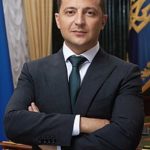
    The statement made by Volodymyr Zelenskyy, the President of Ukraine, on 6 April 2022.

    Ukrainians!

    Today I will not take away much of your attention. The day was very informative. I will only briefly walk through the main points of my work this Tuesday, the 41st day of the invasion of the Russian Federation.

    I continued my active diplomatic work. Addressed the UN Security Council, which convened for a special meeting on Russia’s war crimes in Bucha and in the occupied territories of Ukraine in general. I said what should have been said in this format a long time ago.

    The UN Security Council exists, and security in the world doesn’t. For anyone. This definitely means that the United Nations is currently unable to carry out the functions for which it was created. And only one state is to blame for this – Russia, which discredits the UN and all other international institutions where it still participates.

    Well, not exactly participates… Tries to block everything constructive and use global architecture in order to spread lies and justify the evil it does.

    I’m sure the world sees it. I hope the world will draw conclusions. Otherwise there will be only one institution left in the world to guarantee the security of states. Namely – weapons.

    I offered to the members of the UN Security Council and to all other states that respect international law specific things that could change the situation. In particular, a global conference already in peaceful Kyiv to determine how the world’s architecture can be reformed given all the actions of Russia, which is still occupying the seat of a permanent member of the UN Security Council received from the Soviet Union.

    I also addressed the Parliament and the people of Spain. A state that supports our struggle for freedom and for the preservation of democracy in Europe.

    I also spoke today with President of the French Republic Emmanuel Macron about the humanitarian situation in the temporarily occupied regions of Ukraine. About how we can help people in the blocked Mariupol. We also agreed that France would provide the necessary technical and expert support in the investigation of the crimes of the Russian occupiers in Bucha and other cities of our country.

    We are preparing a new package of powerful sanctions against Russia for everything it has done to our people.

    Now is a crucial moment, especially for Western leaders. And this is no longer about how our people will evaluate the new sanctions and what I will say about them. This is about how decisions on sanctions will be assessed in Western societies themselves. After what the world saw in Bucha, sanctions against Russia must be commensurate with the gravity of the occupiers’ war crimes. If after that Russian banks will still be able to function as usual… If after that the transit of goods to Russia will continue as usual… If after that the EU countries will pay for Russian energy resources as usual… Then the political fate of some leaders will develop not as usual. My advice to everyone: feel now that the moment is really crucial.

    We are preparing to welcome President of the European Commission Ursula von der Leyen and head of European diplomacy Josep Borrell in Kyiv in the near future. Working together in Kyiv is something that will be praised by many nations of the world. And not only in Europe. Because now Kyiv is the capital of global democracy, the capital of the struggle for freedom for all on the European continent.

    And I want to thank all our defenders for making this possible. For the fact that the Armed Forces of Ukraine hold most of the areas where the enemy tried to break into the country.

    The most difficult situation, as in previous days, is in Donbas, in the Kharkiv direction. But we continue to do everything to ensure that our defenders have something to stop the Russian troops with.

    We are aware that the occupiers outnumber us. That they have more equipment. We are aware of the attempts by Russian leaders to recruit new fools all over Russia among cadets of military schools, people with combat experience and conscripts to send them all to slaughter in another offensive.

    But we have no other choice – the fate of our land and our people is being decided. We know what we are fighting for. And we do everything to win.

    Today in the Mariyinsky Palace I presented the Golden Star Orders to the servicemen of the Armed Forces of Ukraine who were awarded the title of Hero of Ukraine, and to the members of families of those who were posthumously awarded this title.

    Now it is in the Mariyinsky Palace, in the White Hall, where we always meet foreign heads of state, that such important ceremonies will take place. We will demonstrate every time that our defenders deserve respect and honor at the highest level.

    And the White Hall of the Mariyinsky Palace will henceforth be called the White Hall of the Heroes of Ukraine. I also handed over the Order of Courage to the family of the deceased documentary photographer Maks Levin who was viciously killed by the occupiers in the Kyiv region. During his life, he made a significant contribution to making us all see and know what is happening in our country.

    Traditionally, before delivering the evening address, I signed decrees awarding our military. 292 servicemen, 57 of them posthumously.

    Eternal memory to all who gave their lives for Ukraine!

    Eternal gratitude to each of our defenders!

    Everything for the victory. Everything for peace. Everything for Ukraine.

    Glory to Ukraine!

  • Volodymyr Zelenskyy – 2022 Speech at the UN Security Council

    Volodymyr Zelenskyy – 2022 Speech at the UN Security Council

    The speech made by Volodymyr Zelenskyy, the President of Ukraine, on 5 April 2022.

    Dear Mrs. President!

    Dear Mr. Secretary General!

    Dear members of the Security Council and other participants of the meeting!

    Thank you for the opportunity.

    I am sure that all the representatives of the UN member states will hear me today.

    Yesterday I returned from our city of Bucha, recently liberated from the troops of the Russian Federation.

    It is difficult to find a war crime that the occupiers have not committed there.

    The Russian military searched for and purposefully killed anyone who served our state.

    They executed women outside the houses when approaching and simply calling someone alive.

    They killed whole families – adults and children. And they tried to burn their bodies.

    I am addressing you on behalf of the people who honor the memory of the deceased everyday. Everyday, in the morning.

    The memory of the killed civilians.

    Who were shot in the back of the head or in the eye after being tortured. Who were shot just on the streets.

    Who were thrown into the well, so that they die there in suffering.

    Who were killed in apartments, houses, blown up by grenades. Who were crushed by tanks in civilian cars in the middle of the road. For fun.

    Whose limbs were cut off, whose throat was cut. Who were raped and killed in front of their own children.

    Their tongues were torn out only because they did not hear from them what they wanted to hear.

    How is this different from what the ISIS terrorists were doing in the occupied territory?

    Except that it is done by a permanent member of the United Nations Security Council.

    It destroys the internal unity of states.

    Destroys state borders.

    Denies the right of more than a dozen peoples on two continents to self-determination and independent state life. Pursues a consistent policy of destroying ethnic and religious diversity.

    Inflames wars and deliberately wages them in such a way as to kill as many ordinary civilians as possible. To destroy as many ordinary peaceful cities as possible. To leave in the country where it sends its troops only ruins and mass graves. You’ve seen it all.

    Promotes hatred at the state level and seeks to export it to other countries through its system of propaganda and political corruption.

    Provokes a global food crisis that could lead to famine in Africa and Asia, and will certainly end in large-scale political chaos in countries where food price stability is a key factor of domestic security.

    So where is the security that the Security Council must guarantee? There is no security. Although there is a Security Council, as if nothing happened.

    So where is the peace that the United Nations was created to guarantee?

    It is obvious that the key institution of the world, which must ensure the coercion of any aggressors to peace, simply cannot work effectively.

    Now the world has seen what the Russian military did in Bucha while keeping our city under occupation. But the world has yet to see what they have done in other occupied cities, in other occupied areas of our country.

    Geography may be different, but cruelty is the same. Crimes are the same.

    And responsibility must be inevitable.

    Ladies and Gentlemen!

    I would like to remind you of the first article of the first chapter of the UN Charter. What is the purpose of our organization? To maintain peace. And to force to peace. Now the UN Charter is being violated literally from the first article. And if so, what is the point of all other articles?

    Today, it is as a result of Russia’s actions on the territory of my state, on the territory of Ukraine, that the most heinous war crimes of all time since the end of World War II are being committed.

    Russian troops are deliberately destroying Ukrainian cities to ashes with artillery and air strikes.

    They are deliberately blocking cities, creating mass starvation in them. They are deliberately shooting at columns of civilians on the roads who are trying to escape from the territory of hostilities.

    They are even deliberately blowing up shelters where civilians are hiding from air strikes. They are deliberately creating conditions in the temporarily occupied territories so that as many civilians as possible are killed there.

    The massacre in our city of Bucha is just one, unfortunately, of many examples of what the occupiers have been doing on our land for 41 days.

    And there are many other such places that the world has yet to find out the full truth of: Mariupol, Kharkiv, Chernihiv, Okhtyrka, Borodyanka and dozens of other Ukrainian communities, each of which is like Bucha.

    I know, and you know very well, what the representatives of Russia will say in response to the accusations of these crimes. They have said this many times. The most illustrative was after the downing of a Malaysian Boeing over Donbas by Russian forces with Russian weapons. Or during the war in Syria.

    They will blame everyone, just to justify themselves. They will say that there are different versions, and which of them is true is allegedly impossible to establish yet. They will even say that the bodies of those killed were allegedly “planted”, and all the videos are staged.

    But. Now is the year 2022. There is conclusive evidence. There are satellite images. It is possible to conduct a full, transparent investigation.

    That is what we are interested in.

    Maximum access of journalists. Maximum cooperation with international institutions. Involvement of the International Criminal Court. Full truth, full responsibility.

    I am sure that every state in the UN system should be interested in this. For what? In order to punish once and for all those who consider themselves privileged, consider themselves unpunished. Hence, to show all other potential war criminals in the world that they will inevitably be punished as well. If the biggest is punished, everyone will be punished.

    Why did Russia come to Ukraine, tell me?

    I will answer. Russia’s leadership feels like colonizers – as in ancient times. They need our wealth and our people. Russia has already deported tens of thousands of our citizens to its territory. Then there will be hundreds. It abducted more than two thousand children. Simply abducted thousands of children. And continues to do so. Russia wants to turn Ukrainians into silent slaves.

    The Russian militaries are openly looting the cities and villages they have captured. This is looting of the highest scale. They steal everything from food to gold earrings they just rip out with blood.

    We are dealing with a state that turns the right of veto in the UN Security Council into a right to kill.

    Which undermines the whole architecture of global security.

    Which allows evil to go unpunished and spread the world. Destroying everything that can work for peace and security.

    If this continues, the finale will be that each state will rely only on the power of arms to ensure its security, not on international law, not on international institutions.

    Then, the UN can simply be dissolved.

    Ladies and Gentlemen!

    Are you ready for the dissolving of the UN? Do you think that the time of international law has passed?

    If your answer is no, you need to act now, act immediately.

    The power of the UN Charter must be restored immediately.

    The UN system must be reformed immediately so that the right of veto is not a right to kill. So that there is a fair representation of all regions of the world in the Security Council.

    The aggressor must be forced to peace immediately. Determination is needed. The chain of mass killings from Syria to Somalia, from Afghanistan to Yemen and Libya should have been stopped a long time ago to be honest.

    If tyranny had ever received such a response to the war it had unleashed that it would have ceased to exist and a fair peace would have been guaranteed after it, the world would have changed for sure.

    And then, perhaps, we would not have a war, a war in my country. Against our nation, the Ukrainian nation. Against people.

    But the world watched and did not want to see the occupation of Crimea, or even before – the war against Georgia, or even earlier – the alienation from Moldova of the entire Transnistrian region. It also didn’t want to see how Russia was preparing the ground for other conflicts and wars near its borders.

    How to stop it?

    Immediately bring the Russian military and those who gave them orders to justice for war crimes in Ukraine.

    Everyone who gave criminal orders and fulfilled them by killing people will face a tribunal similar to the Nuremberg trials.

    I want to remind Russian diplomats that a man like von Ribbentrop has not avoided punishment after World War II.

    And I also want to remind the architects of Russia’s criminal policy that punishment has reached Adolf Eichmann as well.

    None of the culprits will escape. No one.

    But the main thing is that today is the time to transform the system, the core of which is the United Nations. To do this, we propose to convene a global conference. And we ask to do it already in peaceful Kyiv – in order to decide.

    How we will reform the world security system.

    How we will really guarantee the inviolability of universally recognized borders and the integrity of states.

    How we will ensure the rule of international law.

    It is now clear that the goals set in San Francisco in 1945 during the creation of a global international security organization have not been achieved. And it is impossible to achieve them without reforms.

    Therefore, we must do everything in our power to pass on to the next generations an effective UN with the ability to respond preventively to security challenges and thus guarantee peace.

    Prevent aggression and force aggressors to peace. Have the determination and ability to punish if the principles of peace are violated.

    There can be no more exceptions, privileges. Everyone must be equal. All participants in international relations. Regardless of economic strength, geographical area and individual ambitions.

    The power of peace must become dominant. The power of justice and the power of security. As humanity has always dreamed of.

    Ukraine is ready to provide a platform for one of the main offices of the updated security system.

    Just as the Geneva office specializes in human rights, just as the Nairobi office specializes in the field of environmental protection, the Kyiv U-24 Office can specialize in preventive measures to maintain peace.

    I want to remind you of our peaceful mission in Afghanistan. When, at our own expense, we Ukrainians evacuated more than a thousand people from this country. And it was the hottest phase. But people needed help – and Ukraine came. Just like other states.

    We evacuated people of different nationalities, different faiths. Afghans, citizens of European countries, USA, Canada. We did not distinguish who needs help, whether these are our people or not. We saved everyone.

    If every time there was a need everyone in the world was confident that help would come, the world would be definitely safer.

    Therefore, Ukraine has the necessary moral right to propose a reform of the world security system.

    We have proven that we help others not only in good times, but also in dark times.

    And now we need decisions from the Security Council. For peace in Ukraine. If you do not know how to adopt this decision, you can do two things.

    Remove Russia as an aggressor and a source of war from blocking decisions about its own aggression, its own war. And then do everything that can establish peace.

    Or show how you can reformat and really work for peace.

    Or if your current format is unalterable and there is simply no way out, then the only option would be to dissolve yourself altogether.

    I am convinced that you can do without the third option.

    Ukraine needs peace. We need peace. Europe needs peace. The world needs peace.

    And finally, I’m asking you to watch the video. A short one.

    A video of what has come to replace your power because someone alone can abuse his rights.

    This is what impunity leads to.

    If possible – watch this video. Because there is no opportunity for everyone to come to us and see it. So watch it.

    Thank you.

  • Austen Chamberlain – 1922 Speech on the Coalition Government

    Austen Chamberlain – 1922 Speech on the Coalition Government

    The speech made by Austen Chamberlain, the then MP for Birmingham West, in the House of Commons on 5 April 1922.

    If I rise thus early in the Debate, it is because I am anxious that this Resolution having been moved, there should not be given by myself or by any friend or supporter of this Government any occasion for anyone to believe that there was not time for the House to give a decision upon it. Whether the House is being occupied as usefully as it might be, whether the discussion is as edifying as it should be, these may be matters upon which opinion may be divided, but since my hon. Friend the Member for Twickenham (Sir W. Joynson-Hicks) has moved this Motion, by all means let the House divide. A fortnight ago my hon. Friend was the envied of all observers. He had achieved the ambition of the private Member. He had drawn the “gros lot” in the Parliamentary lottery. He had secured first place for a Motion.

    Mr. J. JONES

    Now he is an also-ran.

    Mr. CHAMBERLAIN

    There was a moment of hesitation in his manner. You, Mr. Speaker, called upon him to name the subject which he wished to bring before the House. Any careful observer, as I am of my hon. Friend’s Parliamentary proceedings, could see that he had been taken by surprise. My hon. Friend is not one of those earnest seekers after reform who bring down to the House every day an attaché case full of recipes for a new and better world, nor had he taken the precaution, which I believe is sometimes taken by Members, of procuring from the Whips one of those anodyne Resolutions which soothe the House, even to the point of a count, and give wearied legislators an occasional rest from their labours. No, Sir, you named the hon. Member, and for a moment he stood in hesitation. Then he had a happy thought—to call attention to the position of the Government, and to move a Resolution. My hon. Friend, remembering he was a leader of a party in this House—

    Sir W. JOYNSON-HICKS

    No, no!

    HON. MEMBERS

    Prospective!

    Mr. CHAMBERLAIN

    More than that, actual. He remembered he was the leader—

    Mr. J. JONES

    And the party.

    Mr. CHAMBERLAIN

    and the only leader of our party in the House, since the whole of my 10 colleagues, myself included, have departed from the true faith, and are no longer worthy of support. Accordingly, he gave notice that he would call attention to the position of the Government, and that he would move a Resolution.

    Mr. J. JONES

    He would move anything.

    Mr. CHAMBERLAIN

    Who could say what might and what might not happen from this great determination. The Government might be shaken to its foundations, it might be overthrown, and a new Government might be needed—and a new Prime Minister too! He hoped that one of the small pebbles he had picked up from the brook would slay Goliath, hence forth the path would be clear—

    Mr. J. JONES

    For the London General Omnibus Company. [HON. MEMBERS: “Order!”]

    Mr. CHAMBERLAIN

    —and the highest authority in the land would have no difficulty in determining to what quarter to entrust the formation of a really great and principled Ministry. My hon. Friend must, indeed, have been happy, and none of his old comrades in this House will grudge him the enjoyment of those sweet hours. Then a new dilemma arose. He had not merely to call attention to the position of the Government, but he had undertaken to move a Resolution. What was the Resolution to be? He had not thought about it. He did not know, and 11 days passed before the Resolution could be framed. But I do not doubt that the new Cabinet was in constant and daily session. For 10 or 11 days it was framing—

    Mr. GWYNNE

    How many days did you take to frame the Genoa Resolution? [HON. MEMBERS: “Order, order!”]

    Mr. CHAMBERLAIN

    —was framing the Resolution which was to be the foundation of honest government.

    Mr. DEVLIN

    Say something about this leader, the hon. Member for Alder-shot (Viscount Wolmer).

    Mr. CHAMBERLAIN

    There must be a leader, primus inter pares, if no more, and if I diverged and examined the difference between all the prospective leaders, well, I should prevent that Division which I am anxious to secure. I am a little surprised that it took so long for this new Cabinet to frame their Resolution, for, after all, their task was a simple one. They were not cunning politicians, crafty tacticians, seeking a platform on which they could gain votes. They were not old Parliamentary hands trying to devise a Resolution which would secure support from discordant elements within this House. No, Sir. They were honest, simple citizens—

    Mr. J. JONES

    More simple than honest.

    Mr. CHAMBERLAIN

    —acting under a profound sense of responsibility, an impelling consideration to duty, determined to put before this House and the country a clear, specific definition of principles, which challenged everyone who did not agree with them, in what ever quarter of the House he might sit, on which, if their Motion succeeded, they would form their Government and conduct the business of the country. What was required was not confused criticism of other people’s acts, which is so easy, so simple—we all give any amount of it; what was wanted was a clear statement of their own views, showing exactly where they differed from the present Government, wherein their present leaders had failed, and differentiating sharply between them and those sections of the House from which, I suppose, they are still even further divided, than from those whom they took to be their leaders. What was wanted was a new Athanasian Creed, outside of which there was no political salvation. Their course was perfectly clear. They stood for perfect unity of thought in the councils of the nation, for purity of principle, in which we have been sadly and deplorably deficient—

    Mr. GIDEON MURRAY

    Hear hear!

    Mr. CHAMBERLAIN

    I cannot say how I rejoice when I find that I correctly interpret the opinions and arguments of my critics. I think that particular critic has had a note of warning from the Unionist Association in his own constituency, but my hon. Friend need not think that I attach the less importance to his opinions on that account; I only remark that they have a less representative character. These Gentlemen, a little restive even under my anticipatory criticism, were above all to avoid all entangling alliances, such as I have unfortunately fallen into with the Prime Minister. They were to have a splendid isolation indeed. We could all draw that Resolution. With a little thought, say an hour’s reflection, we could have found a Resolution for them that would have challenged everybody who did not agree with them. The only trouble is that they would not have agreed about it themselves. But, alas! a serpent crept into their paradise.

    Mr. THOMAS

    Who was it?

    Mr. CHAMBERLAIN

    Ah! That I do not know, but look at their Resolution. They stand for purity of political faith. There is to be no alloy. There is to be no corrupt co-operation—not even a chance meeting in the Division Lobby, unless underlain by a real unity of conviction. But what is the Resolution they have drawn? Is there a single principle in it? Is there any definition of their faith? No, Sir. This new Cabinet, after sitting for ten days in constant and anxious consideration, produces a Resolution for which every critic of the Government can vote because it condemns the Government for which every supporter of every alternative Government can vote, because all that it demands is an alternative Government. Was there ever a greater sham? My hon. Friend who moved the Resolution and who thinks my course devious, my hon. Friend the Member for Canterbury (Mr. R. McNeill), who thinks I have no regard for principle—what are they doing? Asserting their own principles? Not a bit. Currying the favour, seeking the support, bidding for the vote—

    Mr. GWYNNE

    Not of murderers!

    Mr. CHAMBERLAIN

    Of anyone whom they can get.

    Mr. J. JONES

    Give them socks!

    Mr. CHAMBERLAIN

    These critics of the Coalition that exists make their first step in condemnation of the Coalition by a Motion deliberately drawn to get into their Lobby the maximum of support from those with whom they have not one thing in common, except dislike of the Prime Minister and contempt for myself. I congratulate them on their first effort to break our party and to establish a new Coalition.

    Lieut.-Colonel ARCHER-SHEE

    The Labour party often vote for you.

    Mr. CHAMBERLAIN

    The Resolution does not help me to an understanding of their principles. No mention is made of their principles, lest principle should interfere with practice. I turn, therefore, to their speeches. I thought I had got a little light—it was not very much—from the speech which I see my hon. Friend addressed to his constituents in Twickenham last night. I read it in the “Morning Post.” It is remarkable, incidentally, that the first observation which the “Morning Post” thought it well to report was that someone in a high position should go to the great manufacturing centres, and tell the workmen that they would have to work harder, and produce more goods.

    “Someone in a high position.”

    To whom did my hon. Friend look for counsel that would really be listened to?

    “Someone in a high position like the Prime Minister.”

    He could not keep the Prime Minister out the moment he wanted to do business. When my hon. Friend forms his Government, I shall be on that bench, but I can clearly see that my right hon. Friend the Prime Minister will be holding some high office and employed in all the most difficult and the most thankless jobs. But really that was not what interested me most, because I was in search of principles. Here is my hon. Friend’s declaration:

    “Though the Die-hards might have their political future at stake, though they might die politically, yet the principles for which 1hey stood would never perish. They were built on a belief in God, King and Empire. Such principles could never die.”

    That was good enough for Twickenham. He did not repeat it in this House to-night, and he did not for obvious reasons. How is he going to define it? How is he going to indicate it to the Whips? Is he going to say to the Whips—I believe there are Whips in that party—”Go down there below the Bar and say, ‘In this Lobby for God, King and Empire,’ and in that Lobby for” What? Oh, what a difference there is between a peroration at Twickenham and the Floor of the House of Commons! No, Sir, he did not repeat that. I have sought to divine what was the crucial issue on which the Government had gone wrong, and, above all, the crucial issue which made my hon. Friend resolve to challenge on the Floor of this House, in the presence of opponents, for whom he has provided a merry holiday—

    Sir W. JOYNSON-HICKS

    You have helped towards it.

    Mr. CHAMBERLAIN

    but the action of every one of the Unionist Members of the Cabinet, from my right hon. Friend the veteran leader of our party, the Lord President, downwards. I am not sure that I have got it right, but I gather that Canadian store cattle have something to do with it. “God, King, and Empire” have disappeared, and Canadian store cattle have taken their place.

    My hon. Friend, I think, committed himself in a moment of surprise, when he was overwhelmed by his unexpected success in the Ballot, into raising a subject and moving a Motion which, in calmer moments, he would have reserved for discussion elsewhere. My hon. Friend has differed from the great bulk of his party before. He has challenged Divisions in this House, or he and his friends have. No hard words have been said; no irrevocable division has been made, and we have looked forward to re-uniting, as has often happened before, the moment a particular subject of difference has disappeared. He has now chosen to make the present difference of opinion between a small fraction of the Unionist party in this House and the great bulk of the Unionist party in this House a subject for public and formal discussion in the presence of those who, whatever be the differences between my hon. Friends and me, are the opponents of us both. He seeks to magnify those differences, while I seek to minimise them.

    Lord HUGH CECIL

    Hear, hear!

    Mr. CHAMBERLAIN

    I knew that would appeal to my Noble Friend, who calls himself a Conservative, but who is anarchistic if he is anything. When my Noble Friend goes into the Lobby with his avowed political opponents he is happy, because he knows that nobody agrees with him. He votes with his political opponents for reasons which are alien to them. He separates from his political friends for reasons which only he himself can understand. The only thing which could distress my Noble Friend is that he should find himself in agreement with anyone, above all with members of the party to which he professes to belong. He is constantly astonishing and surprising us. He always delights us, but he never influences us. But the ironical cheer of the Noble Lord for the moment turned me from my argument. My observation was this; as the man selected by all the members of the party to be their Leader in this House, I have done my best to minimise the differences, and to promote union. I wonder if my hon. Friend really is sensible of what he is doing, and whether he considers he is serving the party to which we belong, and the causes which that party is bound to serve, by such action as he has taken to-night in this Motion.

    Sir W. JOYNSON-HICKS

    Perhaps the right hon. Gentleman will allow me for a moment. I think he is a little unfair. I do not like to mention private conferences, but my right hon. Friend will allow me to say, I am sure, to tell the House that my friends who have been supporting and working with me in this matter had a private conference with the leaders of the party some few weeks ago—with my right hon. Friend himself—and they allowed us to put our case before them, I hope with fairness and courtesy to them. They received us. What happened it is not for me to say; but it is a little unfair to us to say that we have not taken any other course than that of coming before the House.

    Mr. CHAMBERLAIN

    I have not suggested that my hon. Friend did not take any other course. The meeting, it was agreed, should be private, and it became public by an indiscretion which was regretted by those who met us, and by myself. I am not going to refer to what took place. What I was saying was that. I wondered whether he really considered what would be the effect upon the party to which he belonged, and upon the cause which that party is bound to serve, by the action which he has taken and the Motion he has laid before us. My hon. Friend the Member for Canterbury (Mr. E. McNeill) seconded. He and the mover sit in what, I suppose, are under any circumstances safe Conservative seats—at any rate, they were, and I hope they are still. Have they given a thought to the position of their colleagues elsewhere?

    Mr. N. MACLEAN

    Vote catching—selfish!

    Mr. CHAMBERLAIN

    Have they given the slightest thought to opinion elsewhere within our own party? Have they considered what is the opinion of Unionists in St. Rollox, Glasgow? Have they considered the effect on Conservative opinion in Liverpool, or Manchester, or Bristol, or in any of the great industrial centres? My hon. Friends who moved and seconded this Resolution are going counter to the great mass of opinion in the Unionist party throughout the country. They are living in little coteries in their own constituencies and in their own circles in London and they do not realise what is the movement of the world. For the sake of narrow party spirit and old party jealously, they are wrecking the great causes for which we are working. They have been unable either in the country or on the Floor of this House to-night to state the principles of our party to which we have been unfaithful. They have deliberately refrained from putting forward such principles in the Motion as a challenge to the House. What did my hon. Friend the Member for Canterbury say I He talked about how in the old days—I do not quite understand what happened—but he said a Minister resigned because he did something—I am not sure what. In those days what did a Minister do? He would come out if he resigned. A very remarkable observation! I am bound to say it is all the more remarkable because of the kind of speech that resigning Ministers have lately shown us. What are these luckless ex-Ministers to do? They have no alternative principles. What does that mean?

    Mr. R. McNEILL

    I did not say anything of the sort.

    Mr. CHAMBERLAIN

    I beg your pardon, I took it down. “They had no alternative set of principles.” What does that mean? That resignations from the Government have not been on the question of principle—that there is no division on the question of principle. My hon. Friends who were responsible for this Motion have either been unable, or what is worse, they have deliberately refrained from stating, either in speech or Resolution, the principles of Unionist policy to which they allege that I and all my Unionist colleagues have been untrue. There are only two explanations. Either they are unable to find such principles, and we stand justified, or they have deliberately refrained from doing so in order to get a bigger vote in the Lobby, in order to swell the small section of our own party which has split away from us, by a large section of men with whom they have nothing in common. In either case, I say, they stand condemned.

  • Boris Johnson – 2022 Message to the Russian People

    Boris Johnson – 2022 Message to the Russian People

    The message to the Russian people made by Boris Johnson, the Prime Minister, on 5 April 2022.

    The Russian people deserve the truth, you deserve the facts. [Spoken in Russian]

    The atrocities committed by Russian troops in Bucha, Irpin and elsewhere in Ukraine have horrified the world.

    Civilians massacred – shot dead with their hands tied.

    Women raped in front of their young children.

    Bodies crudely burned, dumped in mass graves, or just left lying in the street.

    The reports are so shocking, so sickening, it’s no wonder your government is seeking to hide them from you.

    Your president knows that if you could see what was happening, you would not support his war.

    He knows that these crimes betray the trust of every Russian mother who proudly waves goodbye to her son as he heads off to join the military.

    And he knows they are a stain on the honour of Russia itself.

    A stain that will only grow larger and more indelible every day this war continues.

    But don’t just take my word for it.

    All you need is VPN connection to access independent information from anywhere in the world.

    And when you find the truth, share it.

    Those responsible will be held to account.

    And history will remember who looked the other way.

    Your president stands accused of committing war crimes. [Spoken in Russian]

    But I cannot believe he’s acting in your name. [Spoken in Russian]

  • Dominic Raab – 2022 Comments on No Fault Divorce

    Dominic Raab – 2022 Comments on No Fault Divorce

    The comments made by Dominic Raab, the Deputy Prime Minister, on 6 April 2022.

    The breakdown of a marriage can be agonising for all involved, especially children. We want to reduce the acrimony couples endure and end the anguish that children suffer.

    That’s why we are allowing couples to apply for divorce without having to prove fault, ending the blame game, where a marriage has broken down irretrievably, and enabling couples to move on with their lives without the bitter wrangling of an adversarial divorce process.

  • Greg Hands – 2022 Comments on the Future System Operator

    Greg Hands – 2022 Comments on the Future System Operator

    The comments made by Greg Hands, the Energy Minister, on 6 April 2022.

    Russia’s appalling aggression in Ukraine amid escalating global gas prices has shown the vital importance of strategic change to the UK energy system. We need to boost our energy resilience, reduce our dependence on expensive imports and slash emissions. The FSO will do just that.

  • Paul Scully – 2022 Speech on Long Covid

    Paul Scully – 2022 Speech on Long Covid

    The speech made by Paul Scully, the Parliamentary Under-Secretary of State for Business, Energy and Industrial Strategy, in the House of Commons on 31 March 2022.

    I congratulate the hon. Member for Oxford West and Abingdon (Layla Moran) on opening the debate so incredibly well, and I congratulate her, the hon. Member for Oldham East and Saddleworth (Debbie Abrahams) and my hon. Friend the Member for Central Suffolk and North Ipswich (Dr Poulter)—unfortunately he could not be here—on securing this important debate on the impact of long covid in the workplace. I thank the Backbench Business Committee and all those who have taken part in the debate for their thoughtful and insightful comments.

    We heard about the ONS estimate that, in the four-week period ending 31 January 2022, 1.5 million people in the UK reported experiencing ongoing symptoms following covid. Of them, nearly 300,000 reported that their ability to undertake day-to-day activities had been significantly limited. It is therefore clear, as we have heard, that long covid presents a growing challenge for the workplace and more widely. The emergence of a completely new condition such as long covid is a real rarity and, much like our experience of the covid-19 pandemic itself, we must be and are constantly developing our understanding.

    We have put support in place for those suffering from the condition. NHS England has invested £224 million to date to provide care for people with long covid. It has established 90 long covid assessment services across England, which are assessing and diagnosing people experiencing long-term health effects as a result of covid-19 infection, whether they have had a positive test or are likely to have long covid based on their clinical symptoms, regardless of whether they were admitted to hospital during their covid-19 illness. The services offer physical, cognitive and psychological assessment and, where appropriate, refer patients to existing services for treatment and rehabilitation. The hon. Member for Oxford West and Abingdon talked about the $1 billion in the States. Not all of that has been allocated yet, while the UK is already ploughing ahead, and we are quite far ahead of other countries, including the States, in our research in the area. Of course, there is always more that we can do.

    It is clearly essential to get the right healthcare and treatment in place for individuals, for employers and for the wider economy. However, the theme of the debate is the impact of long covid in the workplace. People can suffer from many long-term health and other conditions that may affect their work. We have heard about ME, and we could talk about fibromyalgia, Guillain-Barré, Miller Fisher all those things. Indeed, there are other conditions that are not necessarily post-viral.

    Earlier this month, I gave evidence to the Women and Equalities Committee on the impact of the menopause in the workplace, and in February I responded for the Government to a Westminster Hall debate on supporting people with endometriosis in the workplace. Those are different conditions, but, none the less, they are long lasting and we need to ensure that we can get people the right treatments and adjustments. Indeed, in the case of the hon. Member for Denton and Reddish (Andrew Gwynne), a simple, natural adjustment made his working life so much easier, and for so many of these other conditions there are examples of small things that employers can do to keep people in the workplace. They do not have to be complicated, and they certainly do not have to be expensive.

    We believe that employers should play a significant role in supporting people with long-term health conditions to access and remain in work. That can certainly benefit individuals as well as bringing real bottom-line benefits to employers through, for example, avoiding recruitment costs and not unnecessarily losing experienced and valued members of staff.

    However, it is not sustainable for every condition to get different or special treatment. For employers, that could lead to confusion and complexity; likewise for employees. That is why the Government’s starting position is that, specifically in the workplace and in the overall framework for providing health support to employees, long covid should be treated the same as any other long-term health condition. Let me set out that framework, which, as hon. Members would expect, is a cross-departmental effort.

    The Government’s response to the “Health is everyone’s business” consultation, led by the Department for Work and Pensions, was published in July 2021. It sets out some of the measures that we will take to protect and maintain the progress made to reduce ill health-related job loss and see 1 million more disabled people in work from 2017 through to 2027.

    Debbie Abrahams

    I am listening keenly to the Minister, but the issue is that this is an infectious disease that is contracted partly as a result of exposure, and there is clear evidence that exposure happens in the workplace. It is therefore not the same as existing progressive or fluctuating illnesses; it is very much an infectious disease contracted in the workplace. That is the basis for our recommendations.

    Paul Scully

    I understand the hon. Member’s point. I am trying to set out the framework for managing long-term illness, but clearly, we still have support in the workplace for those with infectious diseases. I cited ME, fibromyalgia, Guillain-Barré syndrome and Miller Fisher syndrome, which are all post-viral infections—an infection beforehand typically leads to those other long-lasting conditions. That is why I am compartmentalising the framework, but none the less, I take the hon. Member’s point about the infections happening in the first place.

    “Health is everyone’s business” did not consult on long covid, or any other specific health condition for that matter; it looked at system-level measures to support employers and employees to manage any health condition or disability in the workplace. The measures that we are taking forward include providing greater clarity on employer and employee rights and responsibilities by developing a national digital information and advice service; working with the Health and Safety Executive to develop a set of clear and simple principles that employers would be expected to apply to support disabled people and those with long-term health conditions in the work environment; and increasing access to occupational health services, particularly for small and medium-sized enterprises, which, as we know, are currently underserved.

    As I said, although those measures are not long covid-specific, they are key steps in our effort to change the workplace culture around health and sickness management. That will benefit those suffering from long covid in the same way as those suffering from other longer-term health issues or disability.

    As the hon. Member for Motherwell and Wishaw (Marion Fellows) said, we are also responsible for flexible working. We know that that policy can be incredibly helpful to those suffering from many long-term health conditions, including long covid, as they seek to manage the symptoms, some of which we have heard about today, such as extreme tiredness, insomnia, depression and anxiety. Although flexible working does not provide the whole answer, it can be an important tool for employers and employees as they have discussions about how better to balance the demands of work and life, particularly for those managing long-term health conditions.

    The consultation on flexible working introduced plans for a future call for evidence on ad hoc flexible working; we want to explore how non-contractual flexibility works in practice. I discussed that with the Flexible Working Taskforce in February. We will ensure that the role of ad hoc flexible working to support those with long covid and other health conditions—such as the menopause and endometriosis, which I have mentioned—is part of its considerations.

    Marion Fellows

    Is the Minister looking at cutting the time before someone can apply for flexible working? At the moment, they have to have been in work for quite a long while before they can do so.

    Paul Scully

    Our manifesto committed to consult on this issue. Within that consultation, we looked at a day one right to request flexible working. That is key, because it will attract people to and keep them in a good workplace. We might as well start as we are set to carry on.

    Another significant part of the cross-departmental framework is the Government Equalities Office, which is responsible for the Equality Act 2010. That is an important part of the matrix, because it may protect those with long-term health conditions from discrimination. That Act ensures that any person with a condition that meets the definition of a disability is protected, so it should not be stigmatised. The Act describes disability as

    “a physical or mental impairment”

    that

    “has a substantial and long-term adverse effect”

    on a person’s

    “ability to carry out normal day-to-day activities”.

    We heard about that not least from the hon. Member for Denton and Reddish and during the incredibly passionate speech of the hon. Member for City of Chester (Christian Matheson), who cited the example of his family member. By the way, I know how difficult it is for an hon. Member to describe a family member who is suffering from something that we are debating, and I thank him for his personalised experience, which has informed the House and positively contributed so much to the debate.

    As I said, the disability should not be stigmatised, though some may do so. This is simply about the impairment, as we have heard loud and clear. “Long-term” is defined having lasted, or being likely to last for, at least 12 months. “Substantial” is defined as more than minor or trivial, as we have heard strongly in Members’ examples today.

    The Act makes it clear that it is not necessary for the cause of the impairment to be established, nor does the impairment have to be the result of an illness. A disability can therefore arise from a wide range of impairments. That means that any person who falls within that definition will already be protected as having a disability. That can therefore encompass some of the emerging effects of long covid, but every case will be different and should be considered on its merits.

    As well as paying tribute to the hon. Member for City of Chester, I thank the hon. Member for Oxford West and Abingdon and ask her to pass on our regards to Andrew, Nell and Rebecca. We also heard about Julie Wells and her daughter and the caring responsibilities involved. The examples that we have had really add colour and inform the debate.

    The hon. Member for Motherwell and Wishaw talked about statutory sick pay. We have discussed the fact that we need to look at statutory sick pay, but this is not the time to do so, particularly while we are in the middle of the pandemic. However, we also need to look at statutory sick pay in the round. She mentioned people earning under £120 a week, but many in that situation are already in receipt of other benefits. That is what I mean about not just concentrating on one issue; we need to look at the whole person and their whole personal finance.

    In summary, we are supporting people with long-term health conditions, including long covid, by working hard on the general approach to work and health, through our response to the “Health is everyone’s business consultation”, and taking steps to make some of our employment rights work a little harder to support those balancing work with other issues and challenges. All that is underpinned by the protections against discrimination provided by the Equality Act. We must also showcase the good employers, as was mentioned by the hon. Member for City of Chester.

    Layla Moran

    If I understand this correctly, the consultation is happening and guidance will be provided more comprehensively for all longer-term illnesses. The issue particularly with long covid is that it is so new that many employers do not have a clue what it is. Will he consider suggesting a public health information campaign particularly targeted at businesses so that they know that it exists and where they can go for such guidance?

    Paul Scully

    I often talk about ACAS guidance, which, obviously, is available in this area. The hon. Lady mentioned what she saw as shortfalls in that guidance. We will always look at that to make sure that guidance is up to date, especially with an evolving condition such as long covid. I keep citing the example of ME, which, like fibromyalgia, is one of those diseases that is very poorly understood by so many people in the workplace and even, frankly, by health professionals. It will evolve and I am sure that we will able to push that information out to employers.

    I hope that hon. Members would agree that there is a wide-ranging set of actions to address long-term health issues in the workplace, whatever those health conditions are. We want to encourage a better culture around work and health, including for those suffering from long covid. I firmly believe that it is an important principle to have a single, consistent and clear approach to managing health in the workplace. It is unsustainable to have a number of different approaches for different conditions. I close by thanking everyone once again for this helpful and informative debate.

  • Andrew Gwynne – 2022 Speech on Long Covid

    Andrew Gwynne – 2022 Speech on Long Covid

    The speech made by Andrew Gwynne, the Labour MP for Denton and Reddish, in the House of Commons on 31 March 2022.

    I sincerely thank the hon. Member for Oxford West and Abingdon (Layla Moran) for all the work she has done on this issue, and for the way she opened this debate. I also thank the Backbench Business Committee for granting it and the Members who have taken part. I thank in particular my hon. Friend the Member for Oldham East and Saddleworth (Debbie Abrahams), and I sincerely thank my hon. Friend the Member for City of Chester (Christian Matheson) for his kind words. It is nice to know that my experiences have helped somebody else with theirs, and I wish his family member well for the future. I also thank the hon. Member for North East Fife (Wendy Chamberlain), and my hon. Friend the Member for Putney (Fleur Anderson), who is absolutely right to draw parallels with ME both in some of the symptoms and in how that community has been treated over a number of years. I thank my hon. Friend the Member for Strangford (Jim Shannon)—because he is my friend—for his kind words, too.

    As colleagues will know, not least because it has been mentioned in this debate, long covid is an issue very close to my heart. Back in March 2020, I first caught covid. That was 107 weeks and four days ago, and I am still struggling with some of the symptoms of long covid all these weeks and days later. Back then, I felt rough with covid, but to my relief I avoided a lot of the more serious symptoms we were seeing on the news and hearing from friends and colleagues at that time. It was not great, but the fact that I was not hospitalised was a blessing.

    However, when my self-isolation period ended and in theory I should have been fine to return to work, I found that I could not. I found that I was perpetually exhausted, and I could not catch my breath. I would be talking to my wife, and suddenly the words would vanish. I would try to pick them out, but I could not find the right ones. I would forget things and lose track of why I had come into a room. I would sweat as though I had run the London marathon just doing routine day-to-day things such as making a cup of tea. I felt completely terrified. My symptoms were not going anywhere, but instead evolving into something different and seemingly something permanent.

    In May 2020, Elisa Perego coined the term “long covid” to describe these persistent and wide-ranging symptoms, and I felt like a bright light had been shone on what I had been going through. We now know that over 1.5 million people suffer with long covid in the United Kingdom, and that the majority of these—989,000—say it affects their daily activities. It certainly affected mine. I am very fortunate to have a brilliant team across Westminster and in my constituency of Denton and Reddish, and they stepped up on my worst days, when getting out of bed felt like running a marathon. They made sure that my constituents were still well represented, and that I was given sufficient time to rest when needed. Listening to my body was a hard lesson, too.

    However, millions of people in this country are not as fortunate as I was. We have some of the worst sick pay provision in the OECD, and we are in an age of precarious work. In that context, long covid becomes an economic as well as a health emergency. The fact of the matter is that there has been an acute failure on the part of Government to take long covid as seriously as perhaps they should, because it is not just a health issue, but an employment and a DWP issue. The Government could and, I believe, should be doing more to encourage workplaces to better support those suffering from long covid and to enable employers to understand precisely what long covid means for their workforce.

    For December 2021 to January 2022, the most recent period we have access to, it has been shown that, of the 1.5 million people currently suffering from long covid, only 2,869 had attempted to access the post-covid assessment service. Of that tiny number, 34% had been waiting for longer than 15 weeks. Something is going very wrong. Almost 1 million people are reporting long covid symptoms that are adversely affecting their day-to-day lives, yet just a fraction are attempting to access care and only a fraction of those are actually getting it. I would be grateful if, in his response, the Minister set out what conversations he has had with colleagues in the Department of Health and Social Care about these figures, and what action the Government will be taking to ensure that those who have long covid can actually access the care they desperately need.

    This is actually quite crucial because, with the right rehabilitation package, work can become viable again for a proportion of those people. I want to share with the Minister some data I have received from Nuffield Health. Operating a free 12-week programme, it has so far helped over 1,900 people from across the UK to recover from the prolonged effects of covid-19, including breathlessness, anxiety and fatigue, and I am one of the 1,900 who have taken part in that free programme. Its results to date show that for 64% of people the programme improved mental wellbeing, for 39% it improved their functional capacity and for 39% it improved their breathlessness, while 35% saw an improvement in fitness and 30%—not an insubstantial number—were absent from work but felt they could return. This is not a silver bullet for all, because those are still minority figures, but I think that 30% being able to return to work with the right rehabilitation programme is quite encouraging.

    As has been pointed out on numerous occasions, 4% of the UK workforce currently have long covid. That is an extraordinarily high number of people, and it will no doubt be having an impact both on workplace productivity and on wider employment outcomes. The Chartered Institute of Personnel and Development has found that a quarter of UK employers cited long covid as one of the main causes of long-term sickness among their staff, yet those living with long covid have had very little in the way of workplace protection.

    In my capacity as shadow Minister for public health, I have been inundated with stories of employees facing an uphill battle to have reasonable adjustments implemented in their workplaces. I have heard from doctors unable to return to work and NHS staff who have been sacked or had contracts terminated because of long covid symptoms. They are the people who carried us through the pandemic—we stood on our doorsteps for them and applauded them. We can do much better than that.

    I turn to the help that I had in returning to work. I pay tribute to Mr Speaker and the staff in the Speaker’s Office, because I am lucky enough to work in an environment where reasonable adjustments were made. When I first returned to the House in person after the summer recess, I found that I could not bob in the Chamber without becoming incredibly fatigued, and that would trigger my brain fog. After almost collapsing during a ministerial statement on Afghanistan—I had been bobbing for almost an hour—I arranged for a meeting with Mr Speaker on the basis that I could not do my job and, if I could not do a simple task like bobbing up and down, I might as well pack up and leave. Mr Speaker and his brilliant staff advised me that instead of rising on each occasion, I could simply hold up my Order Paper. That simple solution made a huge difference to my health and wellbeing. I sincerely thank Mr Speaker, and indeed you, Madam Deputy Speaker, and the staff in the Speaker’s Office for being so understanding.

    However, reasonable adjustments should not just be made for Members of Parliament. The Government need to do much more to empower employees to approach their bosses and have these conversations. The problem is that, with practically zero workplace protections in place for long covid, they become incredibly difficult to have.

    The Opposition recognise the threat that long covid poses both to the health of this nation and to the British workforce. That is why we would end the postcode lottery of long covid care provision, fix the shameful state of sick pay and engage with employers to support those living with long covid. Covid has not gone anywhere, and it is profoundly irresponsible to stick fingers in ears and pretend that 1.5 million people are not still struggling. Free lateral flow testing will end tomorrow and, as a result, covid cases will rise. It will make it much harder to track the level of covid in the UK and, by extension, the number of people who may go on to develop and live with long covid.

    Layla Moran

    I am glad that the hon. Member has brought up that point. He will have heard about the difficulties that people have in accessing benefits and proving that they have long covid. People get long covid from covid, but, if they cannot get a test, how do they know if they have had covid? That makes it so much more difficult for people to prove long covid down the line and access the benefits that they deserve.

    Andrew Gwynne

    The hon. Lady is absolutely right. That is a real concern of mine, not least because I have experienced it. I was in the first wave of covid, having caught it in the weeks when the Government said, “If you develop symptoms, you no longer need to test; just go into self-isolation.” I knew that I had covid, and I know that that led to long covid, but to this day I cannot prove it because there was no routine testing available to show it. That is a real issue.

    I am incredibly worried that getting rid of free testing is a short-term decision that will have major financial and public health implications for the foreseeable future. The Government cannot turn a blind eye to a problem that is having a devastating impact on the people of this country. One of the defining lessons of the pandemic is that we do not have the luxury of dithering and delay when it comes to public health. We urgently need a cross-departmental long covid strategy. I would support that, work on it and gladly give my experience and advice to Ministers to help develop it. We need a long covid strategy, we need proper sick pay, and we need the Government to understand that they have an important role in working with business and industry to ensure that reasonable adjustments and support in the workplace become a thing for all, not just for me.

  • Fleur Anderson – 2022 Speech on Long Covid

    Fleur Anderson – 2022 Speech on Long Covid

    The speech made by Fleur Anderson, the Labour MP for Putney, in the House of Commons on 31 March 2022.

    I am grateful to the hon. Member for Oxford West and Abingdon (Layla Moran) for securing this debate, and I reiterate what has been said by many: we understand that so many people are suffering from long covid, and it must be taken seriously by the Government. We understand the impact it is having not only on those individuals and their daily lives, but the workforce. This economic issue will continue to have a serious impact, and it needs to be addressed. I reiterate the main ask that we have and that the all-party parliamentary group on coronavirus has in its very helpful report on long covid, which is for employer guidelines so that people are not at the whim and the mercy of different employers regarding understanding and support for their continuing in or returning to the workforce.

    I have come to this debate for two groups of people. One is all those suffering from long covid across the country—an estimated 1.5 million people, or 4.4% of the workforce. The other is those constituents who have been suffering from ME, who have learned many lessons from that and think they are relevant to working with those with long covid. They have been underestimated, not believed and not supported. When they have gone to their GP, they have been told the wrong advice—advice that makes their ME worse—and they have not been understood in schools, whether by young people or teachers, or by their employers, and they do not want anyone with long covid to go through the same. I have been disturbed to hear some of the evidence given to the APPG about workforce practices that are not conducive to helping people come back to the workforce and not the best for those individuals and our economy.

    A couple of my constituents have written to me. One said:

    “I have now had long covid for two years…We desperately need more investment in potential treatments. It is clear that the illness impacts the blood, autoimmune system, organs, brain and central nervous system. None of these mechanisms are being treated by the NHS so far. Treatments are being trialled in other countries.”

    There are questions being asked about the trials being conducted in other countries and what more could be done here.

    Another constituent said:

    “I contracted covid-19 at the very end of September. Like many people, I suffered mild symptoms…2 weeks on from my initial infection I was suddenly hit with a wave of long covid symptoms and was truly horrified at what was happening to my brain and body. I felt drained and broken, and…I felt as though a foreign body was inside my head—I could no longer hold even a conversation, yet alone work. For the last 7 months I have been unable to function in any sort of capacity.”

    Finally, my cousin has had long covid for a long time. He sent me a list of his symptoms: fatigue, concentration impairment, memory problems, cognitive loss, internal pain, chills and sweats, sleeplessness, sore throat, dizziness, shaking, anxiety, faintness and muscle aches. All these symptoms and impacts of long covid need to be understood by employers, by teachers and education settings, and by general practitioners and all medical workers, as recommended by the report of the APPG on coronavirus.

    I underline those recommendations and ask specifically for the urgent production of clear employer guidelines, otherwise there will continue to be an employer lottery in the treatment of people with long covid as they return to work. I ask for guidance to education settings, because many students with ME found it difficult to get understanding in order to continue with their education. We cannot have the same happen for those with long covid. And I ask for clear guidance to medical practitioners on children and adults with long covid so that everyone gets the proper care, support and understanding they need so that they have hope and do not add being misunderstood to their long list of symptoms, only increasing their anxiety.

    I welcome this debate, and I hope to hear some good news from the Minister about the key recommendations of this report being taken up to create a good situation for everyone with long covid.

  • Christian Matheson – 2022 Speech on Long Covid

    Christian Matheson – 2022 Speech on Long Covid

    The speech made by Christian Matheson, the Labour MP for the City of Chester, in the House of Commons on 31 March 2022.

    A couple of weeks ago, I attended with constituents the service at St Paul’s Cathedral that was organised by the cathedral, Sir Lloyd Dorfman and others to remember those who have died from coronavirus. Indeed, earlier today in business questions we heard from my hon. Friend the Member for Vauxhall (Florence Eshalomi) about the very striking memorial wall in her constituency along the banks of the Thames by St Thomas’s Hospital.

    I am really grateful to the Backbench Business Committee and the hon. Member for Oxford West and Abingdon (Layla Moran) for enabling us to remind ourselves of all the other victims of covid who are, in a sense, the lucky ones who have survived but who still need our attention. I declare an interest in that a member of my immediate family suffers from long covid. If the House will bear with me, I will not actually identify who it is. For 18 months, that member of my family has not really been able to get out of bed. In terms of work, they were doing well. They are young. Their career was progressing. They were being extremely well rated at work. Almost overnight, that came to a crashing halt.

    At first, when you suffer from covid, as I did at the same time as my family member, you hope and believe that although it is going to be awful and unpleasant, if you get through it, life will carry on. Then long covid starts to emerge and you do not get any better. I got better and my family member did not. It involved all the symptoms that my hon. Friend the Member for Oldham East and Saddleworth (Debbie Abrahams) described—huge tiredness, brain fog and aching limbs. At the time, the best source of advice that was available, and the best source of support, was my hon. Friend the Member for Denton and Reddish (Andrew Gwynne). There was nothing really available. People had not come to terms with the condition and with identifying what its causes were. I pay tribute to and thank him for his work and his support to my family.

    The employers of my family member were excellent, and still are. They have not been able to continue paying, but as far as they are concerned my family member is still on their books. They value the contribution that my family member has made—again, I am sorry to talk vaguely but I do not want to identify the person—and have said, “When you’re ready to come back, we’re ready to have you.” That is the kind of employment practice that we are looking for.

    To echo my hon. Friend the Member for North Tyneside (Mary Glindon), another member of my family has had to give up their job in order to be the carer. What we are looking for is some kind of hope—something to cling on to and to demonstrate progress. There has been progress. I welcome the Government’s investment of £18 million and the growing recognition of the post-viral chronic fatigue syndrome caused by coronavirus. Whenever there is a new light on this, even in scientific papers that I would not normally understand, we devour them to try to find an explanation, a cause, a hope of a cure or a treatment that will get us and my family member through this. Is it caused by scarring on the lungs? Is it caused by microclots? Is it caused by activating postural orthostatic tachycardia syndrome, which also bears some kind of relation to what is going on? The truth is that it could be any one of those in any number of individuals, but the absolute fatigue is the same.

    I remember my hon. Friend the Member for Denton and Reddish advising me, “If you’re feeling good, don’t do too much—don’t exert yourself.” I passed that advice on. It is also about the mental effect. When you are having a good day, you do not want to exert yourself because then you might be knocked out for the next three days, so that forces you to withdraw into yourself and not want to go out. You cannot even walk down to the shops or to the park because you are so terrified that you might then not make it through the next three days. It is about the hope and desire and almost desperation that when you have a good day and it is followed by another good day and then perhaps another, is this the beginning of the end, or even the end of the beginning? For so many, including my family member, it has not been that.

    I would ask for the same consideration that has been given to my family member to be given to others—for employers to recognise that the Government have recognised this as an issue and the medical establishment has recognised it as an issue. Employers need to treat their employees who have this illness as also being victims of the pandemic, because nobody has chosen to have it. My message to those, including constituents, who still persist in saying that covid-19 is nothing—that it is just like a cold or the flu—would be something along the lines of, “Get stuffed.” There are 140,000 names on the wall outside St Thomas’s, and there are maybe a couple of hundred thousand others who are still suffering today and are desperate to get over this terrible long-term affliction and have some hope of a better life to come. I am most grateful for this debate, and most grateful, again, to my hon. Friend the Member for Denton and Reddish for the support he has given to my family.