Tag: Speeches

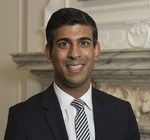
  • Rishi Sunak – 2024 Speech on NATO and European Political Community Meetings

    Rishi Sunak – 2024 Speech on NATO and European Political Community Meetings

    The speech made by Rishi Sunak, the Leader of the Opposition, in the House of Commons on 22 July 2024.

    I thank the Prime Minister for advance sight of his statement and join him in praising President Biden for his long career of public service both at home and abroad. Working together, we took our AUKUS partnership to the next level, supported Israel after the terrible events of 7 October, defended our countries from the Houthi threat and led global efforts to support Ukraine as it resisted Russia’s assault. On a personal level, it was a pleasure to work with him to strengthen the partnership between our two countries, and I wish him well.

    As the Prime Minister indicated, the world is increasingly uncertain—the most dangerous it has been since the end of the cold war. Russia continues its illegal and brutal invasion of Ukraine. Iran continues with its regionally destabilising behaviour. Both Iran and North Korea are supplying Russian forces in Ukraine as we speak, and China is adopting a more aggressive stance in the South China sea and the Taiwan strait. Together, that axis of authoritarian states is increasingly working together to undermine democracies and reshape the world order.

    In those circumstances, our alliances take on ever-greater importance. I commend the Prime Minister on his work with our closest allies at both the NATO summit in Washington and the European Political Community meeting at Blenheim. Across this House we built a strong consensus on foreign policy in the last Parliament, which has stood our country in good stead in this transition. Our allies, particularly Ukraine, know that although our Government have changed, Britain remains an active, involved and reliable partner.

    I am glad that the Prime Minister also shares our view of the value of the EPC community as a forum. I am pleased by and welcome the fact that he used the summit to discuss illegal migration, because it is one of the most pressing problems facing our entire continent. When it comes to illegal migration, we all face the same fundamental question: how to deal with people who come to our countries illegally while respecting our international obligations.

    Of course, it is not feasible or right to return Afghans to the Taliban, Syrians to Assad or Iranians to the ayatollahs, but nor can our country accommodate everyone who would like to leave Afghanistan, Syria or Iran and come here. I was pleased to hear the Prime Minister say that he was a pragmatist and that he would look at what works when it comes to squaring that circle. I urge him, in his conversations with other European leaders, to keep the option of further third-country migration partnerships on the table, as other countries have been discussing.

    I know the Prime Minister is also interested in pursuing a security and defence co-operation pact with the European Union, and here I just urge him to be alert to the trade- offs involved. I hope he can reassure the House that any closer co-operation with the EU will not adversely affect the technological and procurement aspects of our other alliances such as AUKUS. Of course we are a pillar of European security, as our leadership on Ukraine has shown, but we also have alliances and interests that extend beyond the European continent.

    Turning to the NATO summit, it was good to see the alliance reaffirming its commitment to Ukraine, with the UK at the heart of that leadership. I hope the Prime Minister will keep the House updated on how the new unit to co-ordinate our collective support to Ukraine will indeed lead to an increase in vital support. I urge the Prime Minister to continue stressing to our allies that now is the moment to increase, not to pare down, our backing for Ukraine, as the UK has continued to lead in doing.

    In the 75 years of its existence, NATO has established itself as the most successful defensive alliance in history. The best way to strengthen the alliance is for its non-American members to do more, to show that we do not expect the Americans to bear every burden, and I welcome the Prime Minister’s indication that the Chancellor will soon set out a clear path to investing 2.5% of GDP in our armed forces—I hope by 2030. That would both show the Americans that the other members of the alliance are serious about boosting our own capabilities, and show President Putin and our adversaries that we are serious about defending our borders and allies from Russian or any other aggression.

    The Prime Minister also spoke about the situation in the middle east. We all want to see progress towards a two-state solution where Israelis and Palestinians can live side by side in peace, prosperity and security. However, as we make progress towards that goal, our friend and ally Israel must have the right to defend itself against the threat that it is facing—a threat demonstrated by the drone strike on Tel Aviv at the end of last week by the Iranian-aligned Houthi rebels.

    In conclusion, I thank the Prime Minister for coming to update the House today. I can assure him that we on the Opposition Benches will work with him on these questions of foreign policy and national security. We will ask questions, probe and push for answers—that is our duty as the official Opposition—but we will always act in the national interest and work constructively with him to ensure the security of our country.

    The Prime Minister

    I thank the Leader of the Opposition for his welcome comments in relation to President Biden, which I am sure will be well received, and for what he said about the consensus on foreign policy in relation to NATO and the EPC. That is important, and I am glad that we have managed to get that consensus over recent years, because we are in a more volatile world, and the world is looking in to see unity in the United Kingdom, particularly in relation to Ukraine. I have commended the role of the previous Government in relation to Ukraine, and I do so again. I took the deliberate decision when I was Leader of the Opposition not to depart on Ukraine, because I took, and continue to take, the view that the only winner in that circumstance is Putin, who wants to see division. It is very important for Ukraine to see that continued unity across this House.

    We will of course work with others. In relation to the point made by the Prime Minister—[Interruption.] Old habits die hard. On the point made by the Leader of the Opposition about security and co-operation with our EU allies, I do believe that is to our mutual benefit, but I can assure him and the House that it does not cut across, or come at the cost of, other alliances. We are fully committed to AUKUS—as I made clear in opposition, and I take this early opportunity to affirm it in government—because it is an area on which there is an important consistency across the House.

    In relation to the conflict in Gaza, the more that we in this House can be united, the better. It is an issue of great complexity, but the approach that has been shown is the right one, and we take it forward in that spirit.

    Liam Byrne (Birmingham Hodge Hill and Solihull North) (Lab)

    I congratulate the Prime Minister on his flying start on the world stage, and on his determination to build not simply a rules-based order, but a rights-based order rooted in what Churchill called the great charter and we call the European convention on human rights. We want its freedoms and liberties to be enjoyed by the people of Ukraine, but that will take victory over Russia. It will need more than courage; it will need resources. Did he discuss with international colleagues the need not simply to freeze Russian assets, but to seize and put them to work in defeating once and for all the tyranny of President Putin?

    The Prime Minister

    I thank my right hon. Friend for that question on the centrality of the Ukraine issue. Yes, of course, that requires resource and more pressure in relation to sanctions, but it also requires resolve. A key issue coming out of the NATO council in Washington was the real sense, particularly in relation to Ukraine, of a bigger NATO—with more countries than ever at the council—a stronger NATO, and a unity of resolve in standing up to Russian aggression, particularly in Ukraine. Resources and sanctions were central to the agenda there.
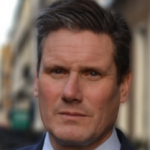
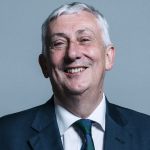
  • Keir Starmer – 2024 Statement on NATO and European Political Community Meetings

    Keir Starmer – 2024 Statement on NATO and European Political Community Meetings

    The statement made by Keir Starmer, the Prime Minister, on 22 July 2024.

    Before I start my statement, I would like to pay a short tribute to President Biden, a man who, during five decades of service, never lost touch with the concerns of working people and always put his country first. A true friend of the Labour movement, his presidency will leave a legacy that extends far beyond America, to freedom and security on this continent—most of all, of course, in our steadfast resolve to stand by the people of Ukraine. He leaves the NATO alliance stronger than it has been for decades.

    With permission, Mr Speaker, I would like to update the House on my recent discussions with leaders around the world, including at the NATO summit and at the meeting of the European Political Community last week at Blenheim Palace, the biggest European summit in the UK since the war.

    Mr Speaker, the House knows the significance of Blenheim Palace, the birthplace of Winston Churchill—the man who steered the march of European history towards democracy and the rule of law. It was a shared sacrifice for freedom—the blood bond of 1945. At both summits, we reaffirmed our commitment to that bond of security and freedom, as I am sure we do in this House today. NATO is the guarantor of those values, and that is more important than ever, because, today in Europe, innocent lives are once again being torn apart. Two weeks ago today there was an attack on a children’s hospital in Kyiv—children with cancer the target of Russian brutality.

    Russia’s malign activity is not confined to Ukraine. In the Western Balkans, in Moldova and in Georgia, it is sowing instability. And let us not forget that it has targeted people on our streets and attempted to undermine our democracy. In the first days of this Government, I have taken a message to our friends and allies of enduring and unwavering commitment to the NATO alliance, to Ukraine and to the collective security of our country, our continent and our allies around the world. That message was just as relevant at the EPC last week. May I take this opportunity to thank the Leader of the Opposition, who brought that event to our shores in the first place?

    At these meetings, I took a practical view of how the UK can meet this moment, driven not by ideology but by what is best for our country. That includes resetting our relationship with the European Union, because on these Benches we believe that the UK and the EU, working together as sovereign partners, are a powerful force for good across our continent. That has been my message throughout the many conversations that I have had with leaders in recent days, because countries want to work with Britain—of course they do. They welcome renewed British leadership on security, on illegal migration and on global challenges such as climate change. Our voice belongs in the room, centre stage, fighting for the national interest.

    My conversations have focused on issues on which the British people want action, so I would like to update the House on my discussions in three specific areas. The first is European security. In Washington, I told NATO allies that the generational threat from Russia demands a generational response. That is why my right hon. Friend the Chancellor of the Exchequer will set out a clear path to spending 2.5% of our GDP on defence. It is also why I launched a strategic defence review, led by the former NATO Secretary-General Lord Robertson, to strengthen our armed forces and keep our nation safe.

    I also took the opportunity at the NATO summit to confirm that we will deliver £3 billion-worth of military aid to Ukraine each year for as long as it takes. And together we confirmed Ukraine’s irreversible path to full NATO membership, because it is clear to me that NATO will be stronger with Ukraine as a member—something I reiterated to President Zelensky in person in Downing Street on Friday.

    Secondly, I want to turn to the middle east, because that region is at a moment of grave danger and fragility. I have spoken to leaders in the region and allies around the world about our collective response. How can we deal with the malign influence of Iran, address its nuclear programme, manage the threat from the Houthis, ease tensions on Israel’s northern border, and work with all partners to uphold regional security?

    Fundamental to that, of course, is the conflict in Gaza. I have spoken to the leaders of Israel and the Palestinian Authority. I have been clear that I fully support Israel’s right to security and the desperate need to see the hostages returned. I have also been clear that the situation in Gaza is intolerable, and that the world will not look away as innocent civilians, including women and children, continue to face death, disease and displacement. Mr Speaker, it cannot go on. We need an immediate ceasefire. Hostages out, aid in; a huge scale-up of humanitarian assistance. That is the policy of this Government, and an immediate ceasefire is the only way to achieve it, so we will do all we can in pursuit of these goals. That is why, as one of the first actions taken by this Government, we have restarted British funding to the UN Relief and Works Agency, to deliver that crucial humanitarian support.

    We received the International Court of Justice opinion on Friday and will consider it carefully before responding, but let me say that we have always been opposed to the expansion of illegal settlements and we call on all sides to recommit to stability, peace, normalisation and the two-state solution: a recognised Palestinian state—the right of the Palestinian people—alongside a safe and secure Israel.

    Thirdly, I want to turn to illegal migration. This issue has now become a crisis, and in order to tackle it we must reach out a hand to our European friends. We started that work at the EPC, agreeing new arrangements with Slovenia and Slovakia, deepening co-operation across Europe for our new border security command, and increasing the UK presence at Europol in The Hague, to play our full part in the European Migrant Smuggling Centre. The crisis we face is the fault of gangs—no question—but to stop illegal migration we must also recognise the root causes: conflict, climate change and extreme poverty. So I have announced £84 million of new funding for projects across Africa and the middle east, to provide humanitarian and health support, skills training, and access to education, because the decisions that people take to leave their homes cannot be separated from these wider issues.

    We will work with our partners to stamp out this vile trade wherever it exists and focus on the hard yards of law enforcement with solutions that will actually deliver results. I have seen that in action, tackling counter-terrorism as Director of Public Prosecutions, and we can do the same on illegal migration. But let me be clear: there is no need to withdraw from the European convention on human rights. That is not consistent with the values of that blood bond, so we will not withdraw—not now, not ever.

    The basic fact is that the priorities of the British people do require us to work across borders with our partners, and a Government of service at home requires a Government of strength abroad. That is our role. It has always been our role. Britain belongs on the world stage. I commend this statement to the House.

  • Lindsay Hoyle – 2024 Statement on Language in the Chamber

    Lindsay Hoyle – 2024 Statement on Language in the Chamber

    The statement made by Lindsay Hoyle, the Speaker of the House of Commons, in the House on 22 July 2024.

    Before we begin today’s proceedings, I would like to remind hon. Members of what I said last week following the King’s Speech. The language we use in the Chamber, and the way we behave towards each other, should reflect the principle that good temper and moderation are the hallmarks of parliamentary language and behaviour.

    I am determined that Members in all parts of the House should be treated with courtesy and respect in this Chamber. I remind the House that it is entirely at the discretion of the hon. Member who has the Floor to choose whether to give way. And once it is clear that the Member does not wish to give way, colleagues should not persist in asking them to do so.

    I should also like to remind Members about the church service tomorrow to mark the start of the new Parliament. You will all have received information about it and I look forward to seeing those of you who are able to attend.

  • Bridget Phillipson – 2024 Speech on Schools and Teaching

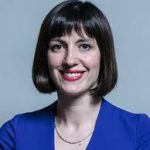
    Bridget Phillipson – 2024 Speech on Schools and Teaching

    The speech made by Bridget Phillipson, the Secretary of State for Education, on 19 July 2024.

    I am today announcing the launch of an independent expert-led curriculum and assessment review. The review will consider the existing national curriculum and statutory assessment system, and pathways for learners in 16-to-19 education, to drive high and rising standards for every young person. The review will be chaired by Professor Becky Francis CBE, an expert in education policy, including curriculum and education inequality.

    The review will contribute to the Government’s missions to break down the barriers to opportunity for every child and young person at every stage, and to kick-start economic growth.

    The review will build on the Government’s commitment to high standards in the curriculum in England, while ensuring greater attention to breadth and flexibility and that no child or young person is left behind. The review will seek to address the key problems and hard barriers to achievement in the curriculum and assessment system from key stage 1 to key stage 5.

    Specifically, the review will seek to deliver:

    An excellent foundation in core subjects of reading, writing and maths.

    A broader curriculum, so that children and young people do not miss out on subjects such as music, art, sport and drama, as well as vocational subjects.

    A curriculum that ensures children and young people leave compulsory education ready for life and ready for work, building the knowledge, skills and attributes young people need to thrive. This includes embedding digital, oracy and life skills in their learning.

    A curriculum that reflects the issues and diversities of our society, ensuring all children and young people are represented.

    An assessment system that captures the strengths of every child and young person and the breadth of the curriculum, with the right balance of assessment methods, while maintaining the important role of examinations.

    The review will be rigorously evidence-driven and will look closely at the barriers which hold children and young people back, particularly those who are from socioeconomically disadvantaged backgrounds, have a special educational need or disability and/or are otherwise vulnerable.

    The review will seek evolution not revolution, build on the existing relative strengths of a system with finite resources, and not add unnecessary burdens by seeking to fix things that are not broken.

    The review will build on the hard work of teachers and staff across the system, and will be undertaken in close consultation with education professionals and other experts; parents; children and young people; and stakeholders such as employers, colleges, universities and trade unions.

    The review will start this autumn with a call for evidence. The call for evidence will set out the areas where the review group would particularly welcome evidence and input from the sector and stakeholders, and will direct the focus of the engagement with the sector over the autumn term. The review group will publish an interim report in the new year setting out its interim findings and confirming the key areas for further work. We plan to publish the final review with recommendations in autumn 2025.

    Alongside the review, the Department for Education will make legislative changes so that all state schools, including academies, will be required to teach the national curriculum. This will support the Government’s ambition for every child to receive a rich and broad curriculum taught by excellent teachers, wherever they are in the country, to set them up with the knowledge and skills to thrive in the future.

    The review marks the Government’s first step towards an education system where background is no barrier and every young person leaves school or college with the best life chances.

  • Steve Reed – 2024 Speech on Planning, the Green Belt and Rural Affairs

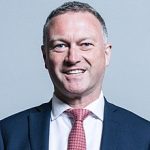
    Steve Reed – 2024 Speech on Planning, the Green Belt and Rural Affairs

    The speech made by Steve Reed, the Secretary of State for Environment, Food and Rural Affairs on 19 July 2024.

    It is a huge honour, on my first opportunity to speak from the Dispatch Box as the Secretary of State, to close today’s debate on His Majesty’s Gracious Speech. I welcome my predecessor, now the shadow Secretary of State, to his place and thank him for the way he has worked constructively with me. I look forward to that continuing, although I prefer it this way around.

    It has been an honour to be present for maiden speeches from across the House. Unfortunately, I do not have the time to go through their excellent comments in much detail, but I would like to mention my hon. Friends the Members for Bishop Auckland (Sam Rushworth), for Edinburgh South West (Dr Arthur), for Cramlington and Killingworth (Emma Foody), for Middlesbrough South and East Cleveland (Luke Myer), for Hexham (Joe Morris), for Heywood and Middleton North (Mrs Blundell) and for Bury St Edmunds and Stowmarket (Peter Prinsley). Many of them represent rural constituencies, and they all showed what great assets they will be to this House and to the communities they represent.

    I cannot respond to everyone who has spoken—I am sorry about that—but I will do my best to cover what I can in the limited time available. I will start with the subject of planning. This Government were elected on a mandate to get Britain building again. As the Deputy Prime Minister said, reforming the planning system is the key to unlocking our country’s economic growth. The existing planning system is too restrictive, slow and uncertain, which undermines investor confidence and means that the homes that we desperately need do not get built. We will overhaul the planning system to tackle the chronic shortage of homes and power up the economy.

    Alongside that, we were elected on a platform to deliver for nature, and will take urgent action to meet the Environment Act targets that the previous Government missed. We will protect, create and improve spaces that increase climate resilience and promote nature’s recovery on land and at sea, recognising that ensuring a positive outcome for nature is fundamental to unlocking the housing and infrastructure that this country so urgently needs.

    We must take tough action to tackle the housing emergency and build the 1.5 million homes that we need over this Parliament, but we remain committed to preserving the green belt. Our brownfield-first approach means that that authorities should prioritise brownfield sites. However, brownfield development alone will not be enough, so we will also transform lower-quality grey belt land, such as wasteland or old car parks, into housing, including affordable homes for those most in need.

    Mr Holden rose—

    Steve Reed

    I am sorry, there is not enough time for me to give way. [Interruption.] Members should have spoken for less time.

    Rural communities have been severely undermined by the previous Conservative Government. For a party that once claimed to be the party of the countryside, their track record is one of abject and absolute neglect. Voters in the countryside rejected their failure and embraced Labour’s positive vision. That is evident from the huge increase in Labour MPs representing rural constituencies, and the collapse in rural support for the Conservatives. Thanks to the Conservative party, transport links in many rural areas are now close to non-existent; there are more potholes in England’s roads than craters on the moon; schools cannot recruit enough teachers; GP surgeries are full; families cannot find an NHS dentist; thousands of rural businesses have collapsed; and rural crime goes unpunished. This is an abandonment of the countryside on a historic scale.

    If we solve the problem of social care, we will not need to build ever bigger hospitals.

    But I am optimistic for our NHS. Britain leads the world in scientific advances. Right in my own region of East Anglia we have world-beating biomedical science and leading universities.

    Recently, we celebrated 75 years of the NHS. My father—who, if he were alive and here today, would be astonished—was an RAF medic who joined the RAF in 1948. My son is an A&E doctor right here in London. My sister is a nurse. My family has served the NHS continuously since it began.

    When the great Nye Bevan invented the NHS, a painful hip was treated with a walking stick, and a cataract with a thick pair of glasses. Now the miracles of joint replacement and cataract surgery are no longer regarded as the surgical miracles they are, but as an entitlement. Nye would have been amazed.

    I am sure we will see in our own time scientific and medical advances beyond our imagination. Already we are at last seeing effective treatments for dementia and neurological disorders, and genetic cures for haemophilia and other inherited problems. We will also have cancer vaccines and other marvels that we cannot yet imagine.

    I urge all my honourable colleagues in this brand-new Parliament to do whatever we can to support research and innovation with all our heart and all our soul, for as the great poet Seamus Heaney wrote,

    “once in a lifetime

    The longed-for tidal wave

    Of justice can rise up,

    And hope and history rhyme.”

    I commend this King’s Speech to the House.

  • Steve Barclay – 2024 Speech on Planning, the Green Belt and Rural Affairs

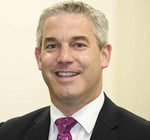
    Steve Barclay – 2024 Speech on Planning, the Green Belt and Rural Affairs

    The speech made by Steve Barclay, the Conservative MP for North East Cambridgeshire, in the House of Commons on 19 July 2024.

    I begin by congratulating the Secretary of State and the ministerial team on their appointments and wishing them well. I also pay tribute to the hon. Members for Chesterfield (Mr Perkins) and for Newport West and Islwyn (Ruth Jones), who did a lot of the hard yards in opposition and missed out on ministerial roles this time.

    I pay tribute to the excellent maiden speeches we have heard on both sides of the House today. We started with the hon. Member for Bishop Auckland (Sam Rushworth), who I was delighted to hear has significant rural areas in his constituency and has an interest in this sector. We heard from the hon. Member for Edinburgh South West (Dr Arthur), who gave the House an informed tour of his constituency. We had a fantastic speech from my hon. Friend the Member for Gordon and Buchan (Harriet Cross), who brings real practical and professional experience to rural affairs and rightly focused on the need to tailor policies to the needs of rural communities.

    We heard from the new hon. Member for Middlesbrough South and East Cleveland (Luke Myer), who was very generous in his tribute to his much-respected predecessor. We had a brilliant speech from my hon. Friend the Member for Bognor Regis and Littlehampton (Alison Griffiths), who highlighted the importance of the rural economy and water quality—what an asset she will be in the House. We also heard from the hon. Member for Hexham (Joe Morris), who talked about farming as the beating heart of his constituency, while the hon. Member for Heywood and Middleton North (Mrs Blundell) spoke about the radicalism of a former figure from Middleton—I hope that will inform her relationship with the Government Whips Office moving forward.

    We had two outstanding closing speeches. My hon. Friend the Member for Broxbourne (Lewis Cocking) spoke about the importance of infrastructure in the rural economy, and focused particularly on planning. We also witnessed the huge experience, which is respected across the House, that the hon. Member for Bury St Edmunds and Stowmarket (Peter Prinsley) brings as a surgeon. I know he will be an important voice in health debates, among others. I am delighted that all those new Members chose to make their maiden speeches on the issue of rural affairs in the King’s Speech.

    Labour campaigned on a slogan of change, but they are offering only uncertainty to farming and fishing communities. It is no surprise that, just last night, the president of the National Farmers Union said that farmers are facing a “cliff edge” and are

    “being kept up at night”

    by the uncertainty. That uncertainty is not because the Labour Government have not had time to prepare their policies for farming and fishing; it is because the issue is not a priority for a Labour Government. That is why the Labour manifesto had just 87 words on farming and nothing at all on fishing. It is why this King’s Speech has nothing for the farming and fishing communities. It is why the Government have not even given any dates for when this uncertainty will end. We should be clear in this House that that is an active choice. It is a point that the Government have chosen to prioritise, in contrast to the prioritisation we were willing to make with the additional funding that we committed.

    Is it not all the more ironic that just a few years ago, the now Prime Minister went to the NFU and admitted that farming and rural affairs had for too long been an afterthought for the Labour party and promised to change that? That is an early example of promised change that is not then delivered. We can see that uncertainty in the farming budget. The Government have made no commitment to what the budget will be, or whether they are continuing it or increasing it. We were willing to make decisions to prioritise £1 billion of additional funding over this Parliament. There is nothing from Labour on that, leaving farmers uncertain. Can the Secretary of State confirm what his budget will be? Does he even know? Has the Chancellor told him? Can he even tell the House when he might know? We do not even know when the spending review will be. He is probably as much in the dark as the rest of us.

    What about the uncertainty on food security? We made commitments with the food security index, the annual farm to fork summit, the food security duty, the biggest ever grants payment, and the additional funding to deal with the wet weather that farmers had recently faced. What is the commitment from the Labour Government on food security? There is nothing in the King’s Speech about legislating for that. Can the Secretary of State confirm whether they intend to legislate and it was just an omission that they did not get around to, or is it something that he is now ruling out?

    What about the uncertainty about just how much farmland will be lost as a result of this Government? We know what their 2030 environmental targets are—to triple solar, to increase onshore wind and to increase the pylons connecting to offshore wind—so can the Secretary of State confirm to the House that he will publish before the summer recess an impact assessment on how much farmland will be lost as a result of delivering his 2030 environmental targets? Does he even know?

    Mr Holden

    One cornerstone of the Conservative manifesto was for an underground-first approach to new electricity pylons. That is an important matter for my constituents in Basildon and Billericay. Will my right hon. Friend also highlight to the Government exactly how important that is and try to seek an answer on what their proposals are in this space?

    Steve Barclay

    My right hon. Friend gets to the nub of the issue, because if a Government are promising change, they need to be able to say what the timelines are. They need to say what the budget is and what legislation they will pass to deliver that. On all those things, there is silence in this King’s Speech.

    The Labour manifesto has lots of high-sounding things that are hard to disagree with. Labour wants more food security, and says that food security is national security, and we on the Opposition Benches agree. Labour says it wants to raise animal welfare, and we have done a huge amount to do so. That is fine. However, if the Government say they want to end the badger cull, when will they do that? There is nothing in the King’s Speech on that, so what are the timelines? Dairy farmers would like to know. Will the Secretary of State publish the analysis from the chief veterinary officer on what the impact of ending the cull would be on the trajectory? We know that the current approach has seen TB cases come down in England from 34,500 in 2018 to below 20,000. Certainly the advice that I had was that vaccinations would not be ready for some time. Will he publish the trajectory and tell us when the cull will end?

    The Minister of State, Department for Environment, Food and Rural Affairs (Daniel Zeichner)

    You need to respect the science.

    Steve Barclay

    Of course we respect the science. The hon. Gentleman chunters from a sedentary position, but I presume he will get the same science brief—in a way, he makes my point—that I got from the chief vet, which was that the vaccinations were not ready and the cull was being effective. In fact, we only need to look at Labour’s policy in Wales, where the opposite is happening, to see that. I hope that, as he represents Cambridge, he will follow the science, because the Government made a commitment that does not. Perhaps that is the sort of change they mean—a change from what they committed to in the manifesto. It did not take long.

    Speaking of things at a high level that no one can disagree with, the Government talk about making more use of public sector procurement. Again, the Conservatives not only agree with that, but we have helped the Government with it. The former Member for Colchester did a fantastic review, the Quince review, looking at how that will be done, but the Government are silent on the funding for that. Will it be funded out of the budget of the Department for Health and Social Care, the Department for Education, the Ministry of Defence, local government—or will it come out of the Secretary of State’s budget? It is difficult for him to say, because he does not even know what his budget will be.

    The reality is that we have empty slogans from a party that does not care about the rural economy. The Government are not giving clarity to farming and fishing; they barely mentioned farming in their manifesto, and they did not even mention fishing. This King’s Speech does nothing for the farming and fishing communities. The decisions that we have seen so far take vast amounts of farmland out of food production in order to prioritise the eco-zealotry that we have heard so often in this House. I hope the Secretary of State will give the clarity that is sadly lacking in the King’s Speech on what the Government will do—and when—on the budget, on food procurement, and on dairy farmers and the badger cull, and will end the uncertainty that the president of the NFU and so many others in the farming and fishing community currently face.

  • Stephanie Peacock – 2024 Speech at the Football Supporters’ Association AGM

    Stephanie Peacock – 2024 Speech at the Football Supporters’ Association AGM

    The speech made by Stephanie Peacock, the Minister for Sport, on 20 July 2024.

    I’m delighted to be here today to speak to members of the FSA, the Football Supporters’ Association, as Minister for Sport, at the home of English football – Wembley Stadium.

    It’s a privilege to join you at this AGM which is of course Malcolm Clarke’s last as chair, after a mere 22 years. I know the huge impact he has had, and I wish you well.

    You are all meeting here today to discuss how fans can be given a greater voice and ensure your concerns are addressed by the game.

    Fans are the heart and soul of the game and I want to set out how this government will support you.

    The inclusion of the Football Governance Bill in the King’s Speech on Wednesday is the first step in delivering that support – by introducing a new regulator for football in law.

    The FSA is one of our key partners, ensuring that the voice of fans is represented as we develop these proposals. I want to continue to work with you to deliver this commitment which will ensure a more sustainable future for our football clubs and to ensure fans’ voices are heard. Having worked with you closely over the last few months, I know firsthand the impact you have had.

    Every football fan deserves the opportunity to follow the team that they love without having to fight back against unsuitable owners; battle to keep their club’s name, colours and badge; see their club try to join a closed league of select clubs syphoned off from the rest of the English football pyramid; or even risk their club disappearing altogether.

    Our football fans are the best in the world – which is why we are committed to repaying that dedication – by making this country the best place in the world to be a football fan.

    We’ll do this by giving fans a greater say in the way their club is run and ensure the financial sustainability of football clubs, protecting them for generations to come.

    This will include ensuring that clubs regularly consult a representative group of fans on strategic matters and other issues of interest to supporters. This means that a wide range of fans, regardless of background, will have the opportunity to have their voices heard.

    Too often we’ve seen how the financial mismanagement of beloved clubs like Bury has a devastating impact on loyal fans and local communities. Indeed, the Secretary of State’s first visit was to Gigg Lane. Irresponsible owners, unsustainable financial models and inadequate regulation have cast a shadow over too many of our community clubs.

    Their experiences highlight the frailties of current football governance systems in place to help protect clubs. Governance systems that have led to excessive and reckless risk-taking, something that the new regulatory regime will address.

    But while we work to address those issues, I also want to recognise the fantastic global success story that is English football. It is one of our greatest cultural exports, attracting more viewers and higher revenues than any of its international rivals.

    That’s why we need to ensure that the Regulator’s approach is proportionate, risk-based and targeted, while keeping fans at its heart. I’m confident that providing this stable regulatory environment will attract investors that will improve the experience for you, the fans. This is a view which is also shared by a number of clubs across the footballing pyramid.

    I know that the risks clubs face are real and current. So we will act as quickly as the parliamentary timetable will allow to get the Regulator in place.

    I want to finish by thanking the FSA for inviting me to speak at this year’s AGM.

    And to take the opportunity to congratulate Kevin Miles on the award of an OBE in the King’s Birthday Honours List in recognition for his services to football.

    This honour acknowledges the dedication which Kevin has given over so many years to ensuring that the interests of football fans are championed and that local communities have a staunch ally in protecting their local football clubs.

    These local clubs are an essential part of the social fabric of Britain.

    They are vital community assets that bring together people from all backgrounds, which is why we need to protect and nourish them in the interests of fans and the local communities they serve.

    I look forward to our continued working partnership as we move forward to reform football for the better.

  • Peter Prinsley – 2024 Maiden Speech on Planning, the Green Belt and Rural Affairs

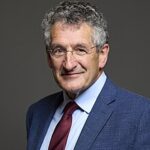
    Peter Prinsley – 2024 Maiden Speech on Planning, the Green Belt and Rural Affairs

    The maiden speech made by Peter Prinsley, the Labour MP for Bury St Edmunds and Stowmarket, in the House of Commons on 19 July 2024.

    I am a surgeon from East Anglia, and it is an honour beyond my imagining to have been elected to Parliament to serve the people of Bury St Edmunds and Stowmarket in the most beautiful county of Suffolk. I thank its voters for putting their faith in me and in Labour, and for giving us the chance to change Britain. I am the first ever Labour Member of Parliament for Bury St Edmunds and Stowmarket, which has been a Conservative seat for nigh on 150 years.

    I must thank my predecessor, Jo Churchill, most sincerely for her long service to her constituents. I am the first ear, nose and throat surgeon ever elected to Parliament. I am not, however, the first member of my family to be an MP. I recall my uncle, George Jeger, from when I was a small boy in the 1960s—he was the Member for Goole, in the East Riding of Yorkshire.

    I thank my teachers at Guisborough grammar school in Cleveland. As a descendant of Jewish refugees, what a pleasure it was to hear my hon. Friend the Member for Middlesbrough South and East Cleveland (Luke Myer) deliver his maiden speech. I went to medical school in Sheffield, and I thank the many surgeons who trained me in the NHS. I thank the thousands of patients whom I have treated during my career, and who put their faith in me and are my lasting inspiration. Indeed, one of the first people I met as I walked into Parliament was one of my patients, Paul from Great Yarmouth, who works here in this place to keep us all safe. I thank my family and in particular my wife, Marian, the former sheriff of Norwich, who has been my greatest supporter and who first encouraged me in politics.

    My constituency of Bury St Edmunds and Stowmarket is a wonderful part of the world, with a rich tradition of agriculture and food production. We are home to Greene King and, according to the records in the House of Commons Library, one of my distinguished predecessors urged the House bars to stock the delicious beer created from Suffolk barley. I see that the present Greene King brew in the Strangers’ Bar is called Level Head—something we are all going to need in the years to come as we begin to rebuild Britain. We are also home to Silver Spoon, and the enormous Suffolk sugar beet production is key to the local economy. In Stowmarket, we have a brilliant food museum to showcase that most essential of national services, farming.

    I was delighted to see our new Government’s proposals to sort out our buses. Let us think of them as the crucial services they are and support them. There are villages in my constituency that have two buses a day during the school term and no buses at all in the school holidays. How does anyone without a car get to the GP surgery or to the pharmacy in the nearby town?

    Very few surgeons are ever elected to Parliament and I will bring my experience of 42 years as an NHS doctor to this place to do something to help mend a service that my right hon. Friend the Secretary of State for Health and Social Care has described as broken. Many of our hospitals are indeed in poor repair and we have seen very little progress on the 40 new hospitals famously promised by the last Government. In Bury St Edmunds, we urgently need to confirm the capital funding to progress the replacement of the West Suffolk hospital which, like my own James Paget university hospital in Great Yarmouth and our sister hospital in King’s Lynn, is supported by thousands of scaffolding poles and is literally falling down. Last week, it was reported that bird droppings had fallen through the roof on to sterile surgical instruments. My predecessor was a strong advocate for the replacement of our hospital, and I will aim to continue her work.

    Our brilliant new Government have much to do. Let us use our huge mandate wisely. Let us look after the staff who look after us, end the outrage of food banks for the nurses in many of our hospitals, and sort out the pay and conditions of all who work in our most precious of public services. Let us make the biggest employer in the land the very best employer in the land.

    There are things to do to sort out social care and to end the financial lottery at the end of life, which many families fear. The answers are political, and we can do this. Our hospitals are full of patients with a non-medical condition called bed block, because they cannot be discharged safely in many cases. I cannot begin to tell the House how many of my operating lists have been cancelled because of that problem. Whole surgical teams are waiting around for hours and operating theatres are lying empty. If we solve the problem of social care, we will not need to build ever bigger hospitals.

    But I am optimistic for our NHS. Britain leads the world in scientific advances. Right in my own region of East Anglia we have world-beating biomedical science and leading universities.

    Recently, we celebrated 75 years of the NHS. My father—who, if he were alive and here today, would be astonished—was an RAF medic who joined the RAF in 1948. My son is an A&E doctor right here in London. My sister is a nurse. My family has served the NHS continuously since it began.

    When the great Nye Bevan invented the NHS, a painful hip was treated with a walking stick, and a cataract with a thick pair of glasses. Now the miracles of joint replacement and cataract surgery are no longer regarded as the surgical miracles they are, but as an entitlement. Nye would have been amazed.

    I am sure we will see in our own time scientific and medical advances beyond our imagination. Already we are at last seeing effective treatments for dementia and neurological disorders, and genetic cures for haemophilia and other inherited problems. We will also have cancer vaccines and other marvels that we cannot yet imagine.

    I urge all my honourable colleagues in this brand-new Parliament to do whatever we can to support research and innovation with all our heart and all our soul, for as the great poet Seamus Heaney wrote,

    “once in a lifetime

    The longed-for tidal wave

    Of justice can rise up,

    And hope and history rhyme.”

    I commend this King’s Speech to the House.

  • Lewis Cocking – 2024 Maiden Speech on Planning, the Green Belt and Rural Affairs

    Lewis Cocking – 2024 Maiden Speech on Planning, the Green Belt and Rural Affairs

    The maiden speech made by Lewis Cocking, the Conservative MP for Broxbourne, in the House of Commons on 19 July 2024.

    I congratulate all Members who have made their maiden speeches today. I am a geographer by background, so it is an absolute privilege to sit here and learn about all the different parts of our lovely United Kingdom.

    It is truly the greatest honour of my life to stand here as the Member of Parliament for Broxbourne. I am under no illusion about the responsibility of representing the place where I was raised, where my family lives and that I call home. I am hugely grateful to the residents of Broxbourne, who put their faith in me and elected one of their own. They will be keeping me on my toes—not least my nan, who will not hesitate to badger me if she thinks I need to get things sorted.

    We are straight-talkers in Broxbourne, and chief among us was my predecessor, Sir Charles Walker. He certainly was not afraid to speak his mind in this Chamber. More than a decade ago, I was lucky enough to do some work experience in Sir Charles’s office here in Parliament. I simply would not be here today without the opportunities and wisdom that he offered over the years. Sir Charles had a number of triumphs in Broxbourne, and I was grateful to join him and our community in our efforts to save Cheshunt urgent care centre in 2011 and to stop the energy-from-waste facility in Hoddesdon in 2017.

    I joined Sir Charles on many occasions out on the doorstep. The December 2019 general election campaign in particular sticks in the mind. Despite the darkness and the cold, the ever-enthusiastic Sir Charles ploughed on. On one occasion, it was just the two of us, and all of a sudden, Charles slipped and fell. I gasped and said, “Charles, please don’t injure yourself when you’re just with me, or they’ll be saying I did it to get the seat.”

    Sir Charles served Broxbourne for 19 years, and although I knew him well, it is only in the short time since my election that I have come to understand just how much of an impact he had on this House. As Chair of the Procedure Committee and, later, the Administration Committee, Sir Charles championed the institution of Parliament and the individuals who make it. That has been made clear to me from the reactions of House staff when they discover that I represent Broxbourne. I will do my utmost to follow him in taking my responsibilities of scrutiny and representation seriously.

    As I have said, Broxbourne is my home and the place I love. The constituency is characterised by its closeness to both London and the countryside, with the Lee Valley regional park on our doorstep. In 2012, Broxbourne became an Olympic borough: we hosted the canoe events at our world-class Lee Valley white water rafting centre, and we have a gold post box in Cheshunt thanks to our very own Laura Kenny’s success in the cycling. There are a number of Team GB athletes with connections to Broxbourne heading to the summer Olympics, and I wish them all the best.

    The area has many small independent businesses, particularly around our towns of Waltham Cross, Cheshunt and Hoddesdon. They are the backbone of Broxbourne’s local economy, and I will do all I can to support entrepreneurship at every level. I am also proud of the international investment coming to the constituency over the next few years. I am pleased to say that Hollywood is coming to Broxbourne: a £700 million project is well under way to build a film studio complex, which will have the capacity to produce four blockbusters at the same time.

    At this election, the constituency of Broxbourne took on the villages of Stanstead Abbotts, St Margarets, Hertford Heath, Great Amwell and Brickendon. These villages are all known for their tight-knit communities and natural beauty, which brings me on to the topic of this debate. While preparing for this speech, I noticed that both of the former MPs for Broxbourne referred to the unspoiled green belt that we are lucky to have in our area. Broxbourne has a local plan and has built hundreds of new homes—too many in a short space of time, some of my constituents would argue, and too many in total. I tend to agree. As many Members who are councillors will have seen if they have sat on a planning committee, developers use outline planning permission to promise the world. I have seen houses in outline that look absolutely amazing: the development has schools, new roads, a local centre and healthcare facilities. However, once outline planning permission has been granted, the developers come forward for full planning permission, and nine times out of 10 the application looks incredibly different, with bad design and no infrastructure. And developers wonder why residents get up in arms!

    We need to better link the NHS to new developments. On several occasions, getting local NHS providers to tell us what they need, or even getting them around the table so that we can plan new services for my constituents, has been a real struggle. I have a real issue in Goffs Oak and the wider west Cheshunt area, which has seen a lot of new housing but no new healthcare facilities. It is obvious to everyone living there that those facilities are desperately needed.

    We must ensure that developments are acceptable—not development anywhere, but appropriate development in the right places. Infrastructure must come first, with new schools, GP surgeries and section 106 moneys up front, or as close to day one as possible. Above all else, we must ensure that local people have a say over development in their area, so I hope the Government will listen to local people. On this and other issues, I assure my constituents that I will be their voice in this place, and I hope I can begin to repay their trust as my hard work starts now.

  • Mary Glindon – 2024 Speech on Planning, the Green Belt and Rural Affairs

    Mary Glindon – 2024 Speech on Planning, the Green Belt and Rural Affairs

    The speech made by Mary Glindon, the Labour MP for Newcastle upon Tyne East and Wallsend, on 19 July 2024.

    It is a great honour to be in the Chamber to hear so many wonderful maiden speeches, especially those of my north-east colleagues. They have made me very proud today, and I think they are going to be fantastic representatives of all their constituents.

    This is my fifth election to Westminster, but my constituency has changed, with only four wards from my former North Tyneside constituency and six wards added from the former Newcastle upon Tyne East constituency. I thank the people of my former constituency for giving me the honour of serving them for the past 14 years, and I thank the people of the new constituency for placing their trust in me at the general election. I will work hard to honour that trust.

    Voters in the former Newcastle upon Tyne East constituency were fortunate to be represented for 41 years by the right hon. Nick Brown, who commanded great respect in this House. Constituents hold him in high regard for all his work and achievements, both in the constituency and as a Minister in the last Labour Government. He has earned his well-deserved retirement, but personally I am grateful to Nick for all his help and friendship.

    Across my new constituency, people face the same challenges—the cost of living crisis, a shortage of good social housing, hikes in mortgages and diminished public services—and they have all taken a toll on people’s everyday lives. My constituency is crying out for this Labour Government’s shared mission of renewal. I share the view of our new North East Mayor, Kim McGuinness, in fully supporting the English devolution Bill. Kim believes that her office will be the delivery arm of the Labour mission in the north-east, and she is keen to start that work at pace. Although I know it will not be easy, I have great hope that the announcements made in the King’s Speech will start to turn the tide and make life better for everyone in this country.

    I was a North Tyneside ward councillor for 15 years before I entered the House, so I have a self-confessed bias for North Tyneside council. The council’s planning committee has not voted against offers or recommendations on any medium or large house building site for over a decade. It has an up-to-date local plan and ambitious housing targets of its own, yet it still has sites stuck in the planning system. Although National Highways agreed in the local plan that strategic sites should proceed and be accommodated in road infrastructure, when it came to planning applications being submitted, National Highways placed a holding objection on the sites, leading to 5,000 new homes being stuck in the system. Alongside dealing with other planning reform issues, I ask Ministers to look at the impact of statutory consultees on delays in the planning system, to help authorities such as North Tyneside.

    The Health Equals campaign coalition, which is made up of 27 organisations, has launched its visually though-provoking campaign, “Make Health Equal”, to highlight the fact that levels of poverty and deprivation lead to people in parts of my constituency and other such areas living 16 years less than people in more affluent parts of the country. The coalition acknowledges that the King’s Speech will start to repair some of the building blocks of health, such as decent and secure housing, good work opportunities and clean transport. It looks to the Government to assess the impact of the King’s Speech on health inequalities, and, in the spirit of unity, to work with such groups to deliver the mission in my constituency and across the country.

    I also make a plea on behalf of the offshore energy industries. Although the Great British Energy Bill is welcome, we must not lose sight of the fact that oil and gas play a massive part in our economy, and will continue to do so. On the tobacco and vapes Bill, I hope that the Government will, unlike the previous Government, take into account the views of the industry.

    I look forward to supporting the King’s Speech in the voting Lobby, along with my 411 colleagues and, hopefully, Members of the Opposition. In so doing, we will vote for an agenda fixed on making the lives of everyone in this country far better.