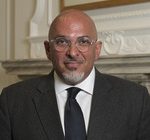
The statement made by Nadhim Zahawi, the Secretary of State for Education, in the House of Commons on 16 May 2022.
It is a great honour for me to open this debate on the Loyal Address. In Her Majesty’s jubilee year, I want to thank her for her dedication and service to our country, the Commonwealth and all its people. That includes young immigrants arriving on these shores, who feel her warmth and generosity; of course, some of them end up as her Ministers. I also thank Prince Charles and Prince William, the Duke of Cambridge, for opening Parliament on her behalf.
During Her Majesty’s 70-year reign, this country has been the best place in the world to grow up and grow old, yet during these seven decades the British people have overcome major challenges, time and time again. We have just lived through what I am sure you will agree has been an incredibly difficult period, Madam Deputy Speaker. After years of sacrifice by people up and down the country, this Queen’s Speech focuses our attention exactly where it should be—on the future.
The future, full of promise, will not be without its challenges, both at home and overseas. Our country needed a Queen’s Speech that rises to the scale of the challenge we face, and we have delivered it. Our communities needed a Queen’s Speech that keeps them safe, secure and prosperous, and we will deliver it. Our constituents needed a Queen’s Speech that shows them that the door of opportunity is always open to them, and we will deliver it. Our relentless focus is on delivery, delivery, delivery.
Before I outline how our legislative programme will make sure that this country remains the best place to grow up and grow old, I reaffirm this Government’s solidarity with the people of Ukraine. I am pleased to say that all Ukrainian children and young people arriving in the United Kingdom have the right to access state education while in the UK. With memories of my own childhood, leaving Saddam Hussein’s Iraq and building a new life here, I know how important education is to helping young people integrate into their new communities.
Jim Shannon (Strangford) (DUP)
The Secretary of State is absolutely right to say that there is no better place in the world to live than this great United Kingdom of Great Britain and Northern Ireland—always better together. Can he confirm that through the Government’s policies and this Queen’s Speech, every step will be taken to ensure that every child in this United Kingdom of Great Britain and Northern Ireland achieves academic success; to improve the health system for every person who is on the waiting list; and to help every elderly person who depends on a better income for energy, food and heat?
Nadhim Zahawi
I think the hon. Gentleman speaks for the whole of Northern Ireland when he says that the focus has to be on the education, healthcare and public services that the people of Northern Ireland so badly need.
Not only do we need to make sure that Ukrainian refugees are well integrated, but we need to give them the same skills that we are giving our children, so that they can take on the challenges of the future.
Not only do we need to make sure that Ukrainian refugees are well integrated, but we need to give them the same skills that we are giving our children, so that they can take on the challenges of the future. I want to take this opportunity to commend schools and local authorities across England for rising to the challenge of welcoming and supporting children arriving from Ukraine, and offering thousands of them a school place, in the same schools that are at the heart of our plans to level up. One of the first Bills introduced this Session, in the other place, is the Schools Bill, which will deliver a stronger schools system that works for every child, no matter where they were born or live in our country. It will work alongside close to £5 billion of investment in our ambitious multi-year educational recovery plan, investing in what we know works: teacher training; tutoring; and extra educational opportunities, including of course extra hours for those who have the least time left in education—the 16 to 19-year-old students.
The evidence is clear that our plan is working and the recovery is happening, with primary pupils recovering about 0.1 months in reading and 0.9 months in maths since the summer. Combined with our £7 billion cash increase in the total core schools budget by 2024-25—this is compared not with 10 years ago but with 2021-22—this means we are giving schools the resources they need to focus on student outcomes. It is money that will help schools increase teachers’ pay, including by delivering on our manifesto pledge of a £30,000 starting salary. This is money that will help schools deliver resources for students and meet inflationary pressures in these uncertain times.
However, there is more to do, because too many children leave primary school unable to meet the expected standards in reading, writing and mathematics, despite the remarkable progress in the past decade. Through our Bill, 90% of primary school children will achieve the expected standard in reading, writing and maths by 2030, and the percentage of children meeting the expected standard in the worst performing areas, which need the most help, will have increased by more than a third. To meet our ambitious targets, the Schools Bill will go further, taking steps to make children safe and addressing standards in attendance, with this all underpinned by a fairer and stronger schools system. Because our best multi-academy trusts—those families of schools—are delivering improvement in schools and in areas where poor performance had become entrenched, by 2030 we want all schools either to be in a strong multi-academy trust or to have plans to join or form one.
Sir David Evennett (Bexleyheath and Crayford) (Con)
The Secretary of State is making a powerful point. Is he aware that in my area the strong Odyssey Trust for Education, which runs the successful Townley Grammar School for girls, is already ahead of the game on this one and has taken over the failing Erith School and made it King Henry School, and is determined to make it a great success?
Nadhim Zahawi
I certainly am aware of the Odyssey Trust for Education, and indeed it is exactly that passion for transforming young people’s lives that we need on this journey; I know that that school and many other grammar schools—I believe it is 90 of the 165 grammar schools—have already joined those families of schools and will do the same.
Our ambitions are for all children, including those with special educational needs and disabilities, who may need additional support, to reach their potential. The SEND and alternative provision Green Paper, published in March, sets out our ambitions for children and young people with SEND. Our proposals will build a more inclusive and financially sustainable system that delivers the right support in the right place at the right time for every child and young person. We want to establish a new single national SEND and alternative provision system and are investing now to secure future sustainability for that system. We have also set out clear roles and responsibilities, and of course accountability measures, for everybody working in the SEND and alternative provision sector. That includes the new national and local inclusion dashboards to give a timely, transparent picture of how the system is performing across education, health and care, which is what parents have asked us to do.
Children and young people are the future of our country, but they cannot succeed if they are not safe and secure at home. That is why under my stewardship the Department for Education has been laser-focused on families. With strong families, we can make a fairer society, one in which children can escape the quicksand of disadvantage. With strong families, we can help to ensure that every child can grow up happy and of course with that vital opportunity. We are taking steps to strengthen families. We are funding 75 local authorities—half of England’s local authorities—with the highest levels of child deprivation to create family hubs and transform that support for families. Our investment includes a focus on babies, children and families in the early years, with funding for breastfeeding, parenting and parent-infant mental health services. Where families need more help, we have expanded the supporting families programme so that up to 300,000 families with more complex needs can work with a key worker to help to resolve problems.
Mary Robinson (Cheadle) (Con)
Safety is at the heart of what so many parents think of when they send their child into these settings, and I welcome the family help. Last week a child died in a nursery in my constituency, and I send my heartfelt condolences to the family. It must be a heartbreaking time. Ten years ago two other constituents lost their child, Millie, in a nursery. Dan and Joanne Thompson set up Millie’s Trust in her name, and now Millie’s Mark accredits staff in nurseries who have paediatric first aid training. Does my right hon. Friend agree that safety in nurseries and other childcare settings is vital and that paediatric first aid is vital so that members of staff know how to deal with these emergencies? Would he join me in—
Madam Deputy Speaker (Dame Rosie Winterton)
Order. A lot of speakers are trying to get into this debate, so interventions need to be very brief.
Nadhim Zahawi
I absolutely agree with my hon. Friend on Millie’s Mark, and of course child safety in nurseries is vital and non-negotiable. I am grateful to her for bringing that accreditation to the House’s attention.
As I was saying, where families need additional help we have expanded the Supporting Families programme so that those 300,000 families with more complex needs can work with a key worker to help to resolve problems.
Rachael Maskell (York Central) (Lab/Co-op)
Will the Secretary of State give way?
Nadhim Zahawi
I will just make a bit more headway, then I will take the hon. Lady’s intervention with pleasure.
To improve the lives and outcomes of children with a social worker, we need to make fundamental changes to the current system. I look forward to seeing the recommendations from the independent review of children’s social care—the MacAlister review—which will be published in the coming weeks. It is a once-in-a-generation opportunity to improve outcomes for children and families. This Government are acutely aware of how important childcare is to both children and their mums and dads. In each of the past three years we have spent in excess of £3.5 billion a year on our early education entitlements, and we will continue to support families with their childcare costs. At the spending review last October we announced additional funding for early years entitlements worth £160 million in 2022-23, £180 million in 2023-24 and £170 million in 2024-25 compared with the 2021-22 financial year.
Providing quality childcare is vital for children to develop from the earliest opportunity, but there is another point to all this. We know that women are the most likely to shoulder high childcare costs. The aim of the Government’s universal credit childcare offer is to support parents for whom paid childcare is a barrier to work to overcome that barrier. This works alongside tax-free childcare, helping parents return to work and making sure it pays to work. For every £8 that parents pay into their childcare account, we add £2, up to a maximum of £2,000, in top-up per year for each child up to the age of 11, and up to £4,000 per disabled child until they are 17. Overall, the Government have spent more than £4 billion on childcare each year for the past five years in the United Kingdom through childcare offers led by the Department for Education, tax-free childcare and employer-supported childcare. Addressing the issue means that women can, if they wish, go back to their careers. That is fair to them and it is good for business and the economy.
Our long-term economic success will turn on our ability to nurture and utilise talent, including that of new mothers. Human potential—human capital—is the most important resource on earth. To steal a phrase from my right hon. Friend the Member for Harlow (Robert Halfon), the Chair of the Education Committee, we are determined to build a skills-rich economy. We are committed to delivering those skills through massive investment in and reforms to skills and further education provision.
We have already embarked on revolutionising the post-16 education sector, transforming apprenticeships, driving up quality and better meeting the skills needs of employers through more flexible training models. We have launched T-levels, boosting access to high-quality technical education for thousands of young people, and, of course, creating our skilled workforce of the future. I pledge to the House that I will make T-levels as famous as A-levels—watch this space. In the previous parliamentary Session, we successfully passed the Skills and Post-16 Education Act 2022 to do just that. That Act, alongside our wider reforms, including an additional £3.8 billion investment in skills over this Parliament, rightly places employers at the heart of the skills system, supporting our ambition for everyone to be able to access the training that they need to move into highly skilled jobs. There is, of course, a crucial role for our universities in making sure that our country remains the best place in which to grow up and, given the link to future earnings and opportunities, to grow old.
We will bring forward further legislation through a higher education reform Bill to ensure that our post-18 education system promotes real social mobility, is financially sustainable and will support people to get the skills they need to meet their career aspirations and help grow the economy.
Ruth Cadbury (Brentford and Isleworth) (Lab)
I thank the Secretary of State for what he is saying, but will the Bill address the injustice that Muslim students face? At the moment, they cannot access student loans. Suitable loans were promised by David Cameron in 2014, and they are still waiting. Will he address that?
Nadhim Zahawi
I made that pledge to the Education Committee a few weeks ago. We are looking at how we deliver on that.
As I was saying, we will introduce further legislation through the higher education reform Bill to ensure that our post-18 education system promotes real social mobility and, as the hon. Lady has just said, is financially sustainable.
Alongside that, we are meeting our manifesto commitment to challenge any restriction of lawful speech and academic freedom. The Higher Education (Freedom of Speech) Bill will strengthen existing freedom of speech duties and will directly address gaps within the law, including the lack of a clear enforcement mechanism.
For both universities and technical education, one of the most important policies that we are implementing as part of the Skills and Post-16 Education Act is the paradigm shifting lifelong loan entitlement. A new and flexible skills system, it will provide people with an entitlement equivalent to four years of post-18 education, to be used over their lifetime in modules or as a whole, and is worth £37,000 in today’s money. We are writing a new chapter—no, we are writing a new book in skills education. The entitlement will give people the ability to train, retrain and upskill in response to changes in skills needs and employment patterns. In a dynamic economy in which sectors can be crushed and reborn in double time, that has to be our priority.
The world is different now from how it was when I entered the world of work and business. It is different now compared with when I became an MP 12 years ago. We must not only keep up with a changing world but lead the change, and the Queen’s Speech lays out how we will do that. As I said at the start of my speech, we are focused on delivering against the ambitious targets that we have set ourselves across skills, schools and families, and on holding ourselves to account against them. The sharing of our plans and performance data is a key lever to drive rapid improvement through the complex systems we oversee.
Tim Farron (Westmorland and Lonsdale) (LD)
The Secretary of State talks about skills, which are so important. Does he recognise the real crisis we face with skills in the health service, and particularly the number of people we lack as regards the prevention and treatment of cancer? Will he and his friend the Secretary of State for Health and Social Care, who is sat next to him, consider the amendment on the Order Paper in my name, which calls for a strategy to tackle the cancer backlog? More than a third of my constituents with cancer are waiting more than two months for their first treatment.
Nadhim Zahawi
I am grateful for the hon. Gentleman’s intervention and have a couple of things to say in response. First, the Secretary of State for Health and Social Care will address this, but I know that his priority—his laser-like focus—is on dealing with the backlog. There is also investment in Cumbria and the University of Cumbria for clinical training and the needs of the hon. Gentleman’s constituents.
As I said at the start of my speech, I am focused on delivery. I am passionate in my belief that performance data is a key lever to drive rapid improvement through complex systems, whether in education or in health. On transparency, as we did with the vaccine we will do the same again with education and health. I have committed to publishing a delivery plan setting out what we will achieve and a performance dashboard showing progress so that the House and the country can hold us to account. I have already written to all schools stating that we will publish data on the uptake of the national tutoring programme this summer. Many schools have helpfully given us access to their attendance data, and I am conducting a trial over the coming weeks to share that data back in a way that prompts helpful actions in schools and local authorities.
The spirit with which our education sector responded to the pandemic demonstrated why this is the best country to grow up in.
Rachael Maskell
The Secretary of State is talking about the best place for young people to grow up; will he explain why not a single placement of special provision for children at risk is available throughout the country, as my constituent is experiencing right now?
Nadhim Zahawi
The hon. Lady raises an important point. That is partly why the MacAlister review of children’s social care is so important. I shall say more on that in the coming weeks.
Let me return to praising the incredible spirit of our education frontline: those brilliant teachers, school leaders and, of course, support staff—we must never forget the support staff—demonstrated why this is the best country to grow up in. We see that spirit across our public and private sector, including, of course, in the work of the national health service with our great vaccine companies, which has led the way in protecting lives and livelihoods in the battle against covid. Thanks to the astonishing roll-out of the vaccine and booster programmes, we were the first European nation to protect half our population with at least one dose and, thanks to my right hon. Friend the Secretary of State for Health and Social Care, the first major European nation to boost half our population, too.
Following the unprecedented challenges placed on the NHS by covid, we will spend more than £8 billion from 2022-23 to 2024-25, supported by the revenue from the health and social care levy, to clear the covid elective backlogs. But we must be honest: our NHS faces long-term challenges too, including an ageing population and people increasing living with multiple long-term conditions. At this critical moment, we must seize the opportunity to put our healthcare system on a more sustainable path for the future, while meeting the immediate urgent recovery challenges. The Health and Care Act 2022 has created the structures for that sustainable future.
At the same time, as my right hon. Friend the Health Secretary will outline later, we will publish draft legislation to reform the Mental Health Act so that patients suffering from mental health conditions have greater control over their treatment and receive the dignity and respect that they deserve. I know that the NHS is an institution that makes people proud to be British. I and this entire Government share that sentiment, which is why we are safeguarding its sustainable future.
In closing, this was a Queen’s Speech filled with substantial policies, not least those that give young people the education they need to succeed in life; policies that will provide more rungs on the ladder of opportunity, and opportunity for older people who want a chance to learn and retrain; policies that put skills at the heart of our economy to unleash its potential; policies that back our public services so that they can deliver what our country needs; policies that sustain the truth that this is the best place in the world to grow up and grow old.