Tag: Speeches

  • Scott Arthur – 2024 Maiden Speech on Planning, the Green Belt and Rural Affairs

    Scott Arthur – 2024 Maiden Speech on Planning, the Green Belt and Rural Affairs

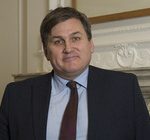
    The maiden speech made by Scott Arthur, the Labour MP for Edinburgh South West, in the House of Commons on 19 July 2024.

    I am obliged to you, Mr Deputy Speaker, for giving me the opportunity to make my maiden speech. I would like to start by thanking the hon. Member for Brigg and Immingham (Martin Vickers) for a fantastic speech, but I fear that he has made my job only a little more difficult. I have to say that it is a delight to give my maiden speech in a debate led by our fantastic Deputy Prime Minister.

    It is an honour and a privilege to stand before this House as the representative for Edinburgh South West. I am deeply grateful to my constituents for placing their trust in me and also to my church for praying for me, although I know that they prayed more after I won the election than before it. I am committed to serving them all with dedication and integrity.

    Before I address the subject matter of the King’s Speech, I would like to pay tribute to my immediate predecessor, Joanna Cherry KC, who represented the constituency for nine years. I had many dealings with her office in my role as a councillor, and I always found her team to be utterly professional. I wish them all well. Joanna Cherry herself was a formidable parliamentarian. Members will recall that, during the Brexit crisis, she worked hard to ensure that Government decision making remained transparent and subject to parliamentary scrutiny. We all owe her a huge debt for that. I must also say that, although I disagree with her on many issues, I am happy to stand in complete solidarity with her in the face of the threats that she has faced. It pains me that, since coming here, so many others have spoken about threats and intimidation as well. This is an issue that we must take seriously. I must, however, tell the House that the campaign for Edinburgh South West between Joanna Cherry and myself was conducted entirely on the issues that matter to local people there, which is perhaps why I am so proud to be here to address the House today.

    I must also pay tribute to my predecessor’s predecessor. Alistair Darling was one of the greatest public servants of my lifetime. He sat here from 1987 to 2015. Like me, he was a councillor in Edinburgh, and convener of the city’s transport committee before he went on to serve as MP for Edinburgh South West. The similarities may end there. Indeed, we must all hope that I am never called on, as he was, to save the Bank of England. I know that Alistair is still much missed and I am proud to follow in his footsteps—indeed, without his help I doubt that I would have been elected as a councillor in 2017.

    Before I address myself to the debate, I would like to take the opportunity to pay tribute to my constituency, its institutions and its people. At this point, Members may need a map. Edinburgh South West is the best part of the greatest city in the world. It stretches from the west end of Princes Street to the East Cairn hill, some 18 km to the south-west. Along its length, the constituency moves from dense urban communities—places such as Gorgie, the home of Hearts football club, Dalry, Parkhead, Wester Hailes, Sighthill and Oxgangs—to suburban settlements such as Colinton, Craiglockhart, Swanston and Baberton Mains, and to the semi-rural Water of Leith villages of Currie, Juniper Green and Balerno.

    Of all those, Oxgangs is perhaps the place I know and love most. Many people there struggle in temporary and overcrowded accommodation; that is why it has been so important today to hear about the Deputy Prime Minister’s ambition to build affordable homes. In Edinburgh, we have worked with the whole city and set aside land for 37,000 new homes. The land is there and the planning is there, but the barrier to building those new homes is the lack of funding from the Scottish Government. I hope that they can now follow what we are doing here, and show more ambition on affordable housing in Scotland.

    When it comes to natural beauty, the Pentland hills and the Water of Leith dominate my constituency, and the habitats along the Union canal should not be forgotten. But of course it is the people who make my constituency so special, such as those who volunteer at the Water of Leith Conservation Trust or who converted a disused railway tunnel into Scotland’s largest historical mural—the Colinton tunnel; please google it later. I must also mention Tiphereth, a unique charity that delivers residential and day services for people with learning difficulties. It really is unique.

    The Edinburgh campus of Heriot-Watt University is perhaps the biggest employer in my constituency. It supported and developed me every day from when I started working there in 1996 until I was elected to this place. I shall miss my civil engineering colleagues and the many students it welcomes to Scotland from around the world. I hope to use some of my time here to support higher education, particularly the wellbeing of students. Mental health support in Scotland is failing its young people and acting as a barrier to many of them reaching their full potential. I will work with anyone and everyone to address that and the many other challenges facing students across the UK.

    Other large employers in my constituency include Lothian Buses, a bus company owned by the people of Edinburgh that defines the city just as much as the castle. I should stress that the castle is not in my constituency. If some Members question municipal ownership of public transport, or the importance of collaborative working between trade unions and management, they should speak to some of the 2 million passengers that Lothian Buses carries every week without any subsidy. Big businesses are also important in my constituency, but it is the small ones that define it. They are at the heart of many of the neighbourhoods. Many have high hopes that the UK and Scottish Governments will now work together to support them more.

    I am also proud to say that there are two infantry barracks in my constituency: Dreghorn and Redford. Both are valued by local residents as real assets, and they never caused me a problem as a councillor. The proposal in the King’s Speech for an armed forces commissioner will be supported by many in my constituency, particularly if it helps improve the living quarters for our service personnel and supports spouses at the point of relationship breakdown, particularly when domestic abuse has been an issue.

    Elections are a reminder that we are all equal in this country, but it pained me that many constituents felt that they were less equal than others during the election campaign. That is why local groups in my constituency such as Soul Food Oxgangs, Best Bib n Tucker and Whale Arts must be mentioned in my speech, as they all work hard to ensure that people feel included and valued. That is our job too, of course—indeed, all of us here have a duty to keep on listening to voters now that the election is over. The first-past-the-post system means that I was elected on just 40.9% of the vote—I still cannot believe it, to be honest—and I know that some of those voters still want to be reassured that they did the right thing. I am here only because I promised to work with other parties where possible, and to listen to everybody in my constituency, no matter their sex, gender, background, faith, age or birthplace. I will keep listening to people, even if they voted for my opponents or did not vote at all.

    We know, of course, that the people who need our help most did not vote for us. Among them are the 3,000 children in my constituency who are living in poverty. That number has grown across the whole UK since Labour last sat on the Government Benches, and that should shame us all. I know the costed measures in the King’s Speech are our best chance of changing those lives.

    Measures such as GB Energy, building more homes, a new deal for working people and our plans for sustainable economic growth will not just get our country back on track and help us to meet our climate targets, but give parents hope again of a better future for their children. The child poverty taskforce is an opportunity to maximise the benefits of those policies by integrating their delivery. That is the change our country needs and voted for, and we must now work together across this Chamber to deliver it.

  • Martin Vickers – 2024 Speech on Planning, the Green Belt and Rural Affairs

    Martin Vickers – 2024 Speech on Planning, the Green Belt and Rural Affairs

    The speech made by Martin Vickers, the Conservative MP for Brigg and Immingham, in the House of Commons on 19 July 2024.

    I congratulate the hon. Member for Bishop Auckland (Sam Rushworth) on his maiden speech. We are all much more knowledgeable about his constituency now than we were a few minutes ago, so well done for that.

    I acknowledge that the planning system is in need of reform. We cannot have a process that takes months—in many cases, years—for major projects, crucial to economic growth and associated jobs, to grind through an endless system. In my constituency, most such projects are located in an area that is, and has been for many years, mainly industrial. Although we should not trample on local opinion, we have to get those projects through the system more quickly than we do at the moment.

    The Gracious Speech included this:

    “My Government believes that greater devolution of decision making is at the heart of a modern dynamic economy and is a key driver of economic growth and my Ministers will introduce an English Devolution Bill. Legislation will be introduced to give new powers to metro mayors and combined authorities. This will support local growth plans that bring economic benefit to communities.”—[Official Report, 17 July 2024; Vol. 752, c. 39.]

    Of course we need to increase the supply of housing, but how do Ministers square devolving decision making with strengthening central direction of the planning process and tying the hands of planning authorities? The Labour manifesto said that the Government would

    “make full use of intervention powers”.

    That does not sound like good news for local democracy.

    Experience from my constituency shows that local communities will, in most cases, accept more housing developments, but they make the justifiable complaint that recent developments in all parts of my constituency, from Humberston, through New Waltham, Waltham, Scartho, Laceby, Wootton and Barton, to name just a few, mean that the already stretched highway infrastructure and public services, such as school places, GPs and the like, are now stretched beyond what is acceptable. What assurances can Ministers give that they will ensure new build will run in parallel to the provision of infrastructure and public services?

    Another aspect of the planning process that angers people is that many appeals are determined by planning inspectors who frequently overrule council decisions that have been made after careful consideration of local circumstances. In some cases, such decisions have even overturned the local plan. That is not acceptable. Local plans go through various stages of consultation, including public hearings, all of which passes by the overwhelming majority of the public, until an application is lodged that could change the whole character of the neighbourhood. Clearly, the process needs to be reviewed, as I have previously argued, including in a ten-minute rule Bill I introduced some years ago.

    If devolution and local decision making is to mean anything, planning issues should be determined at a local level, wherever possible. The shadow Secretary of State mentioned that there are current Ministers who lodged objections to planning applications for developments in their own areas. That went under the radar to some extent while they were in opposition, but now there is no hiding place for them. Every Labour Member who votes for proposed planning changes to some village or some part of the town will have to justify not supporting their constituents when they are up in arms about the application.

    As someone who spent their childhood and early adulthood in a council house on a Grimsby estate, I have always supported the ability of local authorities to build council houses where that is appropriate. The ones that I lived in were built in the early 1950s when a Conservative Government were in power. They were of high quality and have stood the test of time. Sadly, that is not the case for much of the social housing that is imposed on new developments. I certainly would support the Government if they had a programme to encourage and support councils in house building, but I would be interested to know how they would finance it.

    One proposal that is causing considerable concern, not just in my Brigg and Immingham constituency, but in many other constituencies along the east coast of Lincolnshire and through into East Anglia, is the National Grid upgrade on the Grimsby to Walpole route. These proposals could result in a network of 50-metre-high pylons running through some of the country’s most beautiful countryside, including impacting on the Lincolnshire Wolds area of outstanding natural beauty. I secured the final Adjournment debate on this matter before the election and the then Minister said that he was minded to order a review of the scheme. I urge the Government to honour that commitment and follow through with that review.

    Finally, let me return to devolution and the policy to create more combined authorities. The proposals for the Greater Lincolnshire Authority have already passed through all stages of consultation, and a statutory instrument has been prepared, but, unfortunately, the election intervened. I say to the Deputy Prime Minister that this is an opportunity for an early win in her wish to create combined authorities. If she were to put forward that SI, I think most of the Lincolnshire MPs would give her some support.

  • Sam Rushworth – 2024 Maiden Speech on Planning, the Green Belt and Rural Affairs

    Sam Rushworth – 2024 Maiden Speech on Planning, the Green Belt and Rural Affairs

    The maiden speech made by Sam Rushworth, the Labour MP for Bishop Auckland, in the House of Commons on 19 July 2024.

    Thank you, Mr Deputy Speaker, for allowing me this opportunity to make my maiden speech during the King’s Speech debate. I thank my hon. Friend the Member for Southgate and Wood Green (Bambos Charalambous) for his excellent contribution, as well as the hon. Member for North Shropshire (Helen Morgan). Like her, I represent a rural constituency, and I recognise many of the issues she raised in my own community.

    I also want to thank my predecessor, Dehenna Davison, for her service. In her maiden speech, she described Bishop Auckland as England’s “most beautiful constituency,” and on that point we agree. She is a formidable campaigner who did important work to raise awareness of migraines, lobular cancer and the danger of one-punch assaults. Although she already has the accolade of being the first ever Conservative MP for Bishop Auckland, I hope that, in decades to come, her legacy will be even more impressive as the only ever Conservative MP for Bishop Auckland.

    If the House will indulge me for a moment, I would like to say a little about the place I call home, the people who live there and what makes them so special. Getting my priorities in order, I will start by talking about football. I had been looking forward to singing “one general election and one European cup” this summer, but that was not to be. I am gutted that our England team did not quite make it, but football did come home in 1909, when West Auckland became the first football team to win the world cup. That is true, and you can look it up.

    Another important footballing moment came in 1958, when Bishop Auckland’s amateur football club famously provided players to help Manchester United fulfil their fixtures following the Munich air disaster.

    I was really touched when I met Barry, who volunteers at the local Bishops football museum. I listened to his passion as he shared how a gentleman with dementia came in and recognised himself in an old black and white photograph. They developed a friendship as he used football memorabilia to help that gentleman reminisce and reconnect with his past. I am similarly grateful to others in my constituency who give up their time to run sports clubs, whether it is football, rugby, cricket or boxing, providing opportunities for young people to exercise, connect and enjoy themselves.

    Secondly, I have to mention railways. It was in Shildon, in the south-east of my constituency, where Stephenson invented the Rocket locomotive, making Stockton to Darlington the world’s first commercial railway line 200 years ago next year. It is inspiring to see the commitment of local volunteers who work together to preserve this heritage, caring for parts of the line and organising bicentenary events. Likewise, it was inspiring to see those who worked to save the Shildon Railway Institute, which was set up by working people nearly two centuries ago, with a library and school rooms to upskill the local workforce for the new industrial age.

    Thirdly, we are blessed with fabulous arts and culture in Bishop Auckland, which is the home of Stanley Jefferson, of Laurel and Hardy fame. It is also believed to be where Elgar first played the anthem “Land of Hope and Glory.” And how grateful I am to the volunteers who give their time to enable participation in the arts: Daisy Arts, Jack Drum, the Teesdale operatic society, the Weardale Warblers and “Kynren,” England’s most spectacular outdoor theatre production. The work they do is not only developing talent but building the character and confidence of the rising generation.

    Fourthly, we have magnificent countryside. Under the new boundaries, the constituency brings together two Durham dales—Weardale and Teesdale—around the market town of Barnard Castle, which is not only a handy place to test your eyesight but is also an idyllic place to stroll along the river with your family on a sunny Easter bank holiday, surrounded as it is by hill sheep farms and moorlands that are home to rare wildflowers and endangered ground nesting birds. I am full of admiration for those who work on the land and put in the graft to keep this place so lovely and to provide us with food. Without wishing to disappoint the right hon. Member for North West Essex (Kemi Badenoch), when I recently met local farmers they were delighted to see that Labour is bringing in planning reforms and lifting the ban on onshore wind.

    Finally, Bishop Auckland has a long connection with the Church. Auckland castle served for centuries as home to the Prince Bishops, while the seventh-century Escomb Saxon church is one of the oldest in England and stands as a monument to the devotion of the men and women who built it more than a millennium ago. What I find equally inspiring is the work done by churches in our community today, such as Woodhouse Close church and community centre and Shildon Alive, which recently received the King’s award for voluntary service.

    What makes Bishop Auckland so special to me are the people I live among. People who have stood together in hard times, people who take pride in their neighbourhoods and people who serve without thought for themselves.

    If I might make a slightly more political point as I draw to a close, we have just accepted the decline of northern heartlands like Bishop Auckland for too long. I live in the town centre, where one in three shops is boarded up. Our local businesses are excited to see the powers that this Government will devolve to local authorities to compulsorily purchase some of those buildings. We will hand them over to businesses and we will get our town centres booming again.

    Finally, I am proud to be a Member of the most representative Parliament in our history, with the highest percentage of women, minorities and state-educated Members. There are also, on all Benches, some exceedingly talented people. It is already clear to me that while I will be bold in speaking up for my constituents, there will always be someone more gifted in oratory or more learned. However, I hope that if I can excel in anything, it will be in showing kindness and respect to my fellow Members, to the incredible staff who have done so much to make me feel welcome in this rather strange place, and to my constituents who I hope will always know, whatever our disagreements, that I love and care about them.

  • Helen Morgan – 2024 Speech on Planning, the Green Belt and Rural Affairs

    Helen Morgan – 2024 Speech on Planning, the Green Belt and Rural Affairs

    The speech made by Helen Morgan, the Liberal Democrat MP for North Shropshire, in the House of Commons on 19 July 2024.

    I congratulate the Deputy Prime Minister and welcome her to her place, and I welcome the shadow Secretary of State as well. Because we are talking about local government today, I declare my interest as a vice-president of the Local Government Association.

    The topic of today’s debate is planning, the greenbelt and rural affairs. We need to talk about planning and housing, and I will certainly do so, but we also need to talk about rural affairs, and I am slightly confused about why none of the speeches by Front Benchers has done that. I welcome the Government’s focus on house building and the reintroduction of housing targets. In England, the number of people left languishing on the social housing waiting list has reached 1.2 million, and there are 8.5 million people in this country with some form of unmet housing need. Last year, under the Conservative Government, 29,000 social homes were sold or demolished, and fewer than 7,000 were built, so we all know that we have an unprecedented need for new housing, particularly social housing.

    The Liberal Democrats’ ambitious commitment on social housing would be to build 150,000 social homes a year by the end of this Parliament—

    Mr Louie French (Old Bexley and Sidcup) (Con)

    Just not in your seat.

    Helen Morgan

    The hon. Gentleman is muttering from a sedentary position. He may wish to know that my grandparents lived in social housing, and I have no particular prejudices against it whatsoever.

    We are committed not only to building the homes that are so important to easing the crisis throughout the housing market, but to ensuring that those new homes are of a high standard, that they are zero carbon and that they are built alongside proper infrastructure that provides communities with the services and amenities they need. Integrating public service delivery has to be part of the planning process, so in principle we welcome the Government’s plans to streamline the delivery of critical infrastructure, including in the housing sector, in the forthcoming planning and infrastructure Bill, but we need to be clear that the current system has benefited developers rather than communities. The Bill must take that into account.

    Crude targets alone have led to many developments being given permission, only for affordable and social housing elements to be watered down on the basis of viability once permission is granted. That must change. We know that local authorities are best placed to make the decisions about housing in their areas, so I urge the Government to ensure that their mandatory housing targets are built from the bottom up—by determining the type of housing and infrastructure communities need, and empowering local government to build social homes where they are most needed. We need the necessary infrastructure, including GPs, schools, bus stops and bus routes, while also ensuring that there is appropriate green space and access to the countryside, which is important for health and wellbeing. Our experience is that residents support good plans with good infrastructure.

    Now, I imagine that we will use the term “nimby” in this debate, and it has already been used about the Liberal Democrats, but it is not appropriate to approve housing in areas that are unsuitable—for example, where there is a high risk of flooding. It is not being a nimby to oppose poor planning; it is common sense. Local authorities are under enormous pressure and we know that their planning departments are overstretched. I welcome the Deputy Prime Minister’s comments on that point. They need proper funding to ensure that they make good and consistent decisions, and that their councillors are well advised.

    Alicia Kearns (Rutland and Stamford) (Con)

    The hon. Member is talking about infrastructure and about decisions being made in the best interests of our communities, so can I ask why Liberal Democrat-run Rutland county council this week turned down an application for a new day care centre for people with special educational needs without even taking it to the planning committee, meaning that we now have to rely on the council’s service, rather than providing choice to ensure that anyone with learning disabilities or other disabilities in our community gets the support they need?

    Helen Morgan

    I do not know the details of that individual case, but we need to ensure that planning departments are properly funded so that the decisions made by planning officers are appropriate. Without knowing the details, I do now know whether it is a good development or a poor one, but those departments need to be empowered to make decisions correctly.

    Some proposals for development are inappropriate and some are downright dangerous—we mentioned the building of houses on floodplains earlier. The only insurer to re-insure houses on floodplains is due to close its operations in 15 years’ time. We cannot build houses on floodplains. It will not be possible for them to be insured or sold; homeowners will be trapped.

    We should also not be building housing developments without additional schools or GP surgeries. Most importantly, we should not be building housing developments where the developers do not prepare the roads and green spaces to an acceptable standard and do not allow them to be adopted by the local authority, but set up a shared management company and leave the homeowners fleeced for the rest of their home ownership experience. I encourage the Deputy Prime Minister to consider that in the forthcoming legislation.

    Good councillors approve planning for good developments. That is why, on the days when the Conservatives are not accusing us of being nimbys, they are telling people that we are going to concrete over their countryside.

    Planning is not just about housing. We have many demands on our countryside: housing, renewable energy, nature restoration and, importantly, the growing of food. We need to simplify planning so that all those things can happen. Housing, renewable energy and job creation are incredibly important, but I urge the Government to ensure that when they go ahead, it is not at the expense of food production. The Liberal Democrats have called for the development of a land use strategy so that these important and competing demands can be balanced, and so that we use land in the optimal way, protecting the highest grade arable land for food production and putting the infrastructure of renewable energy and housing in less prime places. I therefore hope that the Government will consider a land use strategy as part of their planning reform.

    That brings me to another important area of the countryside: our waterways and our beaches. It is a scandal that raw sewage has been allowed to be dumped into our rivers and on to our beaches, while water company executives have taken home huge bonuses and their—often overseas—shareholders have taken huge dividends. The Liberal Democrats are proud to have led the campaign to end the sewage crisis. We welcome the water (special measures) Bill and will be watching closely to ensure that the water regulator is given the powers it needs to finally end this sewage outrage.

    I will move on to rural affairs. There was no mention in the King’s Speech of rural communities or priorities for the countryside, which I hope means that the new Government will be ensuring that every policy is rural-proofed and that the demands of delivering public services in rural areas, where the population is spread over a large area, are being considered.

    I also want to mention the English devolution bill. The Liberal Democrats are the proud voices of local communities and community-led politics, and we absolutely welcome steps to devolve power away from Westminster, but I ask the Secretary of State to confirm what that will look like for those councils without a devo deal, a metro mayor or a combined authority mayor. It is important that all local councils have the powers and funding to deliver for their communities. That funding must reflect the cost of delivering services in rural areas. Rural councils have been taken for granted for far too long. We need to ensure that people who live in rural areas, who also see increases in their council tax, are getting the public services that they deserve.

    Rurality affects the delivery of all types of services, but I want to touch on just a few key areas. Health is an important issue in my North Shropshire constituency, where we have seen huge problems with GP and dentistry access and a crisis in our A&E service. While I welcome the Government’s plans to tackle the crisis in mental health service provision, which is also a big problem in rural areas, we really want to see rural-focused policy to deal with the recruitment crisis in rural areas and the cost of delivering health services over large distances, and to ensure that people who live a long way from a hospital or diagnostic centre can travel to it more easily.

    That brings me to public transport, which is quite problematic in Shropshire. We have lost 63% of our bus miles since 2015, which makes it difficult for anybody to access work opportunities, social opportunities, educational opportunities and, indeed, health services. I am really pleased that the Government will allow local authorities to franchise their own bus services—the Liberal Democrats have long called for that—but I would like to see the detail of how that will work and how we will get the funding to kick-start those routes and get labour moving properly around our countryside.

    Mr Deputy Speaker (Sir Edward Leigh)

    Order. Can the hon. Lady bring her remarks to a close, please?

    Helen Morgan

    Of course.

    I was briefly going to mention mobile signal, but I will rush over that because I have talked about it a reasonable amount in the House. I want to talk about farming and the rural economy, because that is the backbone of our economy and food production is extremely important. Farmers have faced a crisis over the last few years, with the botched introduction of the environmental land management scheme, the input costs they face and the fact that vast tracts of farmland are underwater and have been for the last 18 months. I must encourage the Government to look at trade deals to ensure that farmers are working on a level playing field, and to ensure that the sustainable farming incentive deals with the consistent problem of flooding following prolonged rainfall, given how our farmers are storing an enormous amount of water upstream.

    I will draw my remarks to a close because I am keen to hear the maiden speeches of all these new Members, who I welcome to this place. To reinforce the points I have made, community-led planning is so important, and we would love to see a land use strategy. We need to ensure that the cost of delivering public services in rural areas is properly considered and funded, and the infrastructure needs to be there. Finally, please do not forget about food security, which is so important to national renewal.

  • Bambos Charalambous – 2024 Speech on Planning, the Green Belt and Rural Affairs

    Bambos Charalambous – 2024 Speech on Planning, the Green Belt and Rural Affairs

    The speech made by Bambos Charalambous, the Labour MP for Southgate and Wood Green, in the House of Commons on 19 July 2024.

    It is a pleasure to see my right hon. Friend the Member for Ashton-under-Lyne (Angela Rayner) in her rightful place as Deputy Prime Minister. It is also a pleasure to speak in this first King’s Speech under a focused and mission-led Labour Government. I wish to record my thanks to the constituents of Southgate and Wood Green for putting their faith in me to represent them as the first Member of Parliament for this newly configured constituency.

    The legislative programme in the King’s Speech shows that the Government are determined to get cracking with the legislation needed for a long-term national renewal, and nowhere more so than in housing. The shortage of both private and social housing is a huge problem across the country. Families and children often wait for years in temporary accommodation that may no longer be suitable, and many young people are unable to afford a deposit on a new home whose price has far outstripped earnings in recent years. They are forced either to stay at home with their parents, or to live in precarious shared accommodation. Another scandal is the high level of no-fault evictions, which is adding to the pressures on local authorities to house homeless people. It is for those reasons that I welcome the proposed renters reform Bill, which will abolish section 21 no-fault evictions and strengthen tenants’ protections and rights to challenge rent increases, among other things.

    I also welcome the proposed planning and infrastructure Bill, as we need to get on with house building so that people do not have their lives put on hold because of unaffordability. We need to build more houses in the right places, and ensure that there is no adverse impact on local services and that the design and specification are to a high standard. The types of houses built should conform with the needs of the local community, with more family-sized houses needed urgently. We also need more council houses. I applaud the efforts of Enfield and Haringey councils in building more council houses in my constituency, but more needs to be done. I encourage the Government to support councils in any way they can so that more council houses are built. To build more houses, we need a highly skilled local workforce, which is why I welcome the measures in the proposed Skills England Bill, which will identify national and local skills needs and ensure that they are being met.

    I turn now to other elements of the King’s Speech. We all need to ensure that our communities are safe, which is why I welcome the measures in the proposed crime and policing Bill, which will give the police and law enforcement new powers to tackle antisocial behaviour and retail crime, focusing on attacks on shop workers and low-level shoplifting. Small and medium-sized local businesses, which are the lifeblood of our local high streets, are now seriously impacted by even low-level crime, so we need to make sure that they are supported and that law enforcement takes seriously all reported retail crime.

    Knife crime has a terrible, devastating effect on the lives of victims’ families and friends, and I find it shocking and sad that the perpetrators are often the same age as the victims. That is why I am pleased to see that tougher sanctions will be introduced to ban ninja swords and other lethal blades, while tackling the gangs who exploit children for criminal purposes. It is also good to see that there will be support for teenagers at risk of being drawn into crime.

    On a personal level, I am delighted to see that the tobacco and vapes Bill will be reintroduced in this Parliament. I had the privilege of serving on the Bill Committee earlier this year, and there is cross-party support and unity on progressively banning the sale of tobacco products forever. It was a joy to see the UK become a world leader in this area of public health, and I put on record my thanks to my hon. Friend the Member for Birmingham Edgbaston (Preet Kaur Gill) and Dame Andrea Leadsom for the excellent bipartisan work that they did to progress the Bill before it fell as a result of the general election being called. I sincerely hope that it progresses to Royal Assent this time.

    The final Bill I wish to comment on is the draft equality (race and disability) Bill, which will enshrine in law the full right to equal pay for ethnic minorities and disabled people, and introduce mandatory ethnicity and disability pay reporting for larger companies. I sincerely hope that where there is any disparity, employers take the appropriate action to address their failings and close the gap.

    The King’s Speech is an exciting beginning for the Labour Government, who are keen to make a real difference to people’s lives, including those of my constituents in Southgate and Wood Green. The starting gun for national renewal has been fired, and we have got off to a flying start. I hope that the pace of change continues and that we see positive, long-lasting benefits in housing, community safety, health and equality for all.

  • Kemi Badenoch – 2024 Speech on Planning, the Green Belt and Rural Affairs

    Kemi Badenoch – 2024 Speech on Planning, the Green Belt and Rural Affairs

    The speech made by Kemi Badenoch, the Conservative MP for North West Essex, in the House of Commons on 19 July 2024.

    It is a delight to be back at the Dispatch Box, and I have been looking forward to speaking opposite the right hon. Lady for a very long time. She and I have never really met, and certainly never spoken to each other, despite being in this House together for seven years. We have some things in common, although not much. We were both born in 1980, although I am older and wiser than she is. People often think we are both much younger than we really are, because we have got such great skin and good hair, and we are both known as being quite feisty. I am really pleased to be able to congratulate her on her elevation to Secretary of State and Deputy Prime Minister. This is a phenomenal achievement.

    She will be a great inspiration to young people, particularly young women, in many communities across the country. That is a wonderful thing. That is the sort of Britain we are: where people from all walks of life can grow up and reach the top. It is an extraordinary story, dare I say it, of Conservative success. Because unlike me, the right hon. Lady grew up under a Conservative Government, with a welfare state that provided a safety net, a strong economy and opportunity. I mostly grew up in Nigeria, under a socialist military Government, who used a lot of the rhetoric that I heard her promote when she was sitting on the Opposition Benches. She may not credit the Conservatives for what she has achieved, but we will take some of the credit anyway.

    I would like to extend a very warm welcome to the right hon. Lady on her first outing as a Minister in the Chamber, because it will only be downhill from here. The thing is, I have been a Secretary of State, and after five years as a Minister one learns a thing or two about government that cannot be learned in Opposition. I have been there and done it, and I can tell the right hon. Lady that she has been stitched up. It is quite clear that the Bills and policies from the King’s Speech that she just referenced were written not by her, but by the Chancellor and her advisers. We all know that because we watched the Chancellor announce them in far more detail in her speech last week.

    All the stuff that the Secretary of State worked on in Opposition, such as her new deal for workers, has been taken off her and given to the Business Secretary. I am sorry to tell the right hon. Lady that her colleagues—the Prime Minister, the Chancellor and their many advisers—have written a manifesto and made promises that are not deliverable, and they have hung them around her neck and said, “Ange, you go out there and you sell it.” I am sad to see many of her shadow team not sitting beside her as Ministers. They worked for free, grinding in opposition for years, only to watch the children of the chosen ones get the ministerial cars and salaries before their maiden speeches were written. Wow. Sue Gray was a lot nicer to me when she worked in my Department.

    I think we know who is in charge, and it is not the right hon. Lady. She has been stitched up—her colleagues have made her the fall guy. The Government have promised 1.5 million houses by the end of this Parliament—over 800 houses per day—and we are already two weeks in. As she goes on, day after day, she will realise that a backlog is building, and there is no way out. I want her to know that I am here for her. I will be here to hold her hand and walk her through what is likely to be a very difficult time. I may even give her some tips because, having worked in that Department, I know what needs to be done. I know what we should have done but did not do, and I know that the Labour Government will make the same mistakes.

    It is not that 1.5 million homes by the end of this Parliament is unachievable, but it will require the sort of systemic change that Labour Members are not ready for. I know that because of how they voted in the last Parliament and how they campaigned in their own constituencies. I will not read out the long list of all the Cabinet members who have been opposing planning in their backyard, including the Housing Minister. Many of them thought that they would get into government and concrete over lots of Tory constituencies. Three weeks ago, just 15% of the green belt was in Labour constituencies. Now it is 50%. They are not Tory constituencies now—they are Labour. [Hon. Members: “Hear, hear!”] Yes, they are Labour. I say to Labour Members, “They are now your voters and your electorate, and you’re going to have to tell them that you’re going to do something that many of you promised locally that you would never do, not that long ago.”

    However, mostly it will not be the problem of the Cabinet, who will look after themselves. It will be the Back Benchers—all those bright, shiny faces I see sitting behind the right hon. Lady, who are really excited to be here. They have not started getting those angry emails that we have been replying to for 14 years. Many of those voters, on whom their narrow, slim majorities now rely, will be writing to them.

    In the spirit of sisterly support, I will let the right hon. Lady know what will happen over the next few weeks and months. Labour Members are looking so nervous right now. The right hon. Lady will have a consultation period, which will take this long. Then, she will have to respond to that consultation, which will take that long. Assuming that nothing goes wrong with either of those processes, we reach December or January. Six months will have passed—10% of the Parliament—and the Government will not have built any extra homes. At this point, she will be running 500 homes behind the target every single day and they would not have started building properly. [Interruption.] The Minister of State in the Ministry of Housing, Communities and Local Government, the hon. Member for Greenwich and Woolwich (Matthew Pennycook), is chuntering from a sedentary position, “You wait and see.” We have seen. We have been there. We know; you don’t.

    And as it becomes clear to their voters what is happening in their new Labour constituencies—for which, congratulations—in the green belt, those MPs are going to receive a lot more emails. I mean, a lot more. They are going to want a lot of public meetings, because they will know that the decisions she announced are now being taken out of local hands and made by central Government. And the only way that they can register their concern is by appealing to their local MPs, who will all be appealing to her.

    Well, this is what being in power is. Government is about making difficult decisions. Opposition is easy—we have been watching Labour do it for 14 years, and it has spent all that time telling the people of this country that they will do better. So here is the record that they are going to have to beat: we built 1 million new homes in the course of the last Parliament, while safeguarding the green belt; and 2.5 million since 2010, despite covid. We delivered nearly 700,000 new affordable homes and over 172,000 of those were for social rent. We put in place the £11.5 billion affordable homes programme. Does the right hon. Lady even know yet if the Chancellor will give her up to £11.5 billion? She is going to need a lot more than that if she is going to beat our record.

    And let us not forget what Labour did just last year. We had a majority in this House, but not in the other place, where they whipped Labour Lords to vote against an amendment on nutrient neutrality, using new Brexit powers to unlock 160,000 homes. Many new Members did not see that happening. They are going to find it shocking. We legislated for that and they blocked it—destructive opposition. Are they going to reverse that decision? I have a feeling they will not. And that is why I am worried about the right hon. Lady. Is she going to be able to face down her Back Benchers? Or will Labour carry on not doing the things that have to be done in order to build homes?

    Let us look at Labour’s record. The right hon. Lady talked about what happened after the last world war. In the year to June 2009, when everybody here was alive and they were last in government, they only built 75,000 new homes—the lowest level of housebuilding since the 1920s. And what are they doing where they currently are in government? In London, Sadiq Khan has failed to hit his own targets, beginning just 21,000 new homes in 2022, despite us giving him pots and pots of money. We were forced to intervene on his housebuilding failures. Why has he not built on all those car parks that she was talking about in her speech? In Wales, the Labour Administration promised to deliver 20,000 new homes for social rent by 2026. They have barely delivered a quarter. The right hon. Lady may pretend that building homes is easy, but Labour know it is not easy because they failed in London and they failed in Wales, and they are already making new mistakes.

    We all know that immigration increases housing demand. Just this week, we heard that they are going to be fast-tracking 90,000 illegal immigrants who already landed here. If they are permitted to stay, they will require permanent housing. We put the Rwanda scheme in place to limit illegal immigration. They have scrapped it. With no plans whatsoever to tackle the problem, has she got 90,000 homes ready for the people the Home Secretary is going to be fast-tracking through? If not, she is already 90,000 homes down on the target the Prime Minister has set for her.

    So that is why I am feeling very generous towards the right hon. Lady, because she has been stitched up. She is going to need some friends, and I want her to know that we are all here for her. [Laughter.] Some people think opposition is about throwing mud across the Chamber or calling your opponents scum, but often it is about saying, “I told you so.” I want to reassure the right hon. Lady that I will be here to say, “I told you so” when these targets are missed.

    We, of course, will be a constructive Opposition. We want to see homes built in the right places with the right infrastructure. We are here to help. I doubt the same can be said of the biggest local nimbys in the country, the Liberal Democrats. There are many more of them now—you wouldn’t know it, but there are—usually elected on promises not to build anything anywhere in their communities. In the last Parliament, I watched them oppose planning reforms on permitted development; reforms that would have allowed us to build on land that was already in use. It will be very interesting to see how they square their nimby tendencies with their manifesto promises—but then again, saying one thing and doing another has never bothered the Liberal Democrats. The right hon. Lady will not get any help from them, but we are here for her.

    I have heard some of Labour’s plans. Introducing mandatory targets while introducing new regulatory costs will not work. Without taxpayer funding, Labour’s affordable housing targets are unviable. Where is that money going to come from? The mandate that Labour wants to enforce implies a consequence for missing the target. What will that consequence be for local councils? Is Labour going to scrap the neighbourhood plans that communities have put together to deliver more homes? What will those councils say when they are forced to do things that they promised they would not do just eight weeks ago?

    We have heard from Labour Members that they will introduce mechanisms for overriding local decision making to identify the land for development. That is fine, but identifying land does not mean that homes or infrastructure will be built. I look forward to the Second Reading of the right hon. Lady’s Bill, when she will have to explain the plans that the Chancellor and her spads have written up for her, and she can tell us in great technical detail how they will be delivered—although I suspect that she will leave the tricky stuff to her junior Ministers. We Conservatives may not be as many as we used to be, but we still know all the stuff that we learned over 14 years as we delivered 2.5 million homes. We know where the difficulties are, and we know the technicalities; the right hon. Lady is just learning. We will be ready and waiting to show that she and her party have made promises that they cannot keep, and in many cases have no idea what they are doing.

    The Labour Government have a tough act to follow—[Laughter.] They do! However, imitation is the sincerest form of flattery, and I am pleased to see that they have been copying and pasting many of the policies that we had in government. We introduced metro mayors with substantial powers; now they are announcing that they are going to do more. We put billions of levelling-up funding into communities, backing metro mayors such as Ben Houchen; let us see whether Labour will follow that for all its new mayors. In the last local government finance settlement we made £64.7 billion pounds available to local authorities, a 7.5% increase in cash terms. Let us see whether Labour tops that, rather than just moving money from one part of the country to another.

    We would like to see the Labour Government get the Holocaust Memorial Bill—which we initiated—on to the statute book, as the Prime Minister promised, and we will support them in that. We must do right by our Jewish communities, and we provided record levels of funding to protect them from harm and extremism. We took decisive action to tackle growing sectarianism, so we were disappointed not to see any mention in the King’s Speech of how Labour would continue that. In the election we saw independent MPs win seats from Labour on the back of sectarianism and integration failures, a problem whose existence Labour continually denies even as we are watching riots in Leeds.

    It is time to put away the childish displays and fake outrage that Labour has been showing. The right hon. Lady will need to get very serious very quickly, and where she has the right ambition, we will do what we can to support her in facing down those members sitting behind her who still do not get it.

  • Angela Rayner – 2024 Speech on Planning, the Green Belt and Rural Affairs

    Angela Rayner – 2024 Speech on Planning, the Green Belt and Rural Affairs

    The speech made by Angela Rayner, the Deputy Prime Minister, in the House of Commons on 19 July 2024.

    It is an honour to open today’s King’s Speech debate on behalf of His Majesty’s Government, and it is the honour of my life to address the House for the first time as the Deputy Prime Minister.

    We have been given a mandate by the British people to turn the page on 14 years of chaos and start the new chapter that they deserve. That began with this week’s King’s Speech, but it is not the words that we offer; it is the action. I know at first hand how Government can change lives for the better. I say that not as a politician, but as someone whose life was changed for the better by the last Labour Government, and I am determined to do the same for others. That is why we have set out a bold vision to smash the class ceiling, to get Britain building, and to improve the quality and standard of life for everyone everywhere across our country.

    Let me give a huge welcome to all the new Members on the Government Benches, who are crucial in delivering that programme of national renewal. I also extend a welcome to new Opposition Members. We will disagree on much, I am sure, but we all share the honour and privilege of representing those who sent us here, so I wish the very best to all hon. Members making their maiden speech today.

    Just over nine years ago, when I made my maiden speech on behalf of the people of Ashton-under-Lyne, I pledged that I would always tell it as it is, and I think that is one promise I have kept. Now I intend to fulfil another, because we promise the people of this country that we will serve their interests and not ours. That starts with us having the honesty to say that we will not be able to put right the mess of the past 14 years immediately. But after just two weeks, we have already made a difference by creating a national wealth fund to grow our economy; scrapping the failed Rwanda plan; lifting the near-decade-long ban on onshore wind; starting work on the 40,000 extra NHS appointments that people need each week, and on getting the 700,000 urgent dental appointments up and running; and resuming and expanding teacher recruitment. In my Department, newly renamed the Ministry of Housing, Communities and Local Government, we will replace slogans with substance.

    We are getting back to the real work of governing in the national interest. We have already taken early steps to unblock our planning system, creating a new taskforce to accelerate progress on stalled housing sites in our country, beginning with four that alone could deliver more than 14,000 of the homes that Britain so desperately needs. The housing crisis is holding Britain back. Too many families face soaring mortgage payments, or sky-high rents for damp, unsafe homes, and there are leaseholders who are trapped, facing eye-watering charges with no way out. All this has been fuelled by the chronic housing shortage, after the last Government failed to meet their housing targets every single year. Housing completions are now set to hit their lowest level since world war two.

    We know we have a mountain to climb. That is why we are already taking the first steps, starting with an overhaul of our planning system—a reform that will help us build the homes we need and speed up provision of the infrastructure to support them. We are committed not just to an ambitious target for overall housing building, but to building the biggest wave of social and affordable housing for a generation. That is a promise that we will bring back with meaningful housing targets.

    It is right that local people have a say on what kind of houses are built and where, because our aim is not to build big, but to build well. We will work with local government to plan new housing in the best possible places, with the infrastructure, public services and green spaces they need. Social housing must be there when people need it, and affordable housing to own should be there when they want it.

    Mike Wood (Kingswinford and South Staffordshire) (Con)

    I congratulate the Deputy Prime Minister on her new role. My local councils in South Staffordshire and Dudley have worked hard to prepare local plans that provide the housing they have assessed that the local community needs, while also protecting key green belt. Will the right hon. Lady really tear up plans that have been adopted, or that are in the formal process of being adopted, if her bureaucrats feel that their assessment is better than the local council’s?

    Angela Rayner

    I welcome the hon. Gentleman’s comments, and I congratulate the local authorities that have those local plans. If those plans are adopted, that is exactly what we want to see; we want to see more local plans, and more engagement with local leaders, so that we can build the houses that people want in their areas, working together with them. The hon. Gentleman talked about the green belt, but we have been very clear on the grey belt as well. We will not get the housing we need just from brownfield sites, although brownfield will be first. We will work with local leaders, because the mandate the British people gave us at this election was to get the housing that Britain needs. I am afraid that the last Tory Government did not take this issue on but failed people, and we have a chronic housing shortage. Everyone should have a place to call home, and we will legislate to make that happen.

    Our renters’ rights Bill will give protection and security to tenants, as well as responsible landlords, levelling the playing field. We will plug the gaps left by the last Government’s Leasehold and Freehold Reform Act 2024, tackling unregulated and unaffordable ground rents and strengthening leaseholders’ rights. Our planning and infrastructure Bill will provide the extra homes we need, unblock stalled development sites and unveil the next generation of new towns.

    Dr Ben Spencer (Runnymede and Weybridge) (Con)

    My constituency has vast swathes of high-risk flood area—zones 2 and 3—and we see flooding every year; we saw it most notably in 2014, but also in January. Will the right hon. Lady’s planning reforms protect areas at high risk of flooding, so that they are not built on, making our flooding worse?

    Mr Deputy Speaker (Sir Edward Leigh)

    Order. We have a lot of speakers to get through, including some maiden speakers, so I urge Front Benchers to make shorter speeches and take fewer interventions. Otherwise, we are not going to get through these maiden speakers.

    Angela Rayner

    Thank you, Mr Deputy Speaker. I will take your advice, and I apologise to Members for the fact that I will not take more interventions.

    We have to grapple with these issues and work with those in these areas. Obviously, flooding has been a major issue, and the Government will look at it. It is devastating to people when their homes are flooded, and we have to look at these things in the round when looking at planning.

    We will unveil the next generation of new towns, and we will learn the lessons of the past to create safe and beautiful homes and the sustainable green communities of the future. This Government are fully committed to the 13 targets set under the Environment Act 2021, and we will work closely with my right hon. Friend the Environment Secretary to ensure that we protect the environment and nature. We will work with local leaders to ensure that these towns meet our gold standard of having 40% genuinely affordable housing, with homes for social rent a priority. In some places, we will extend urban areas and regenerate them so that everyone benefits from better public transport and extra public services. We are building not just homes but communities.

    Our first port of call will be brownfield land. Previously used land will be developed first wherever possible and those sites will be fast-tracked, but brownfield development alone will not meet the country’s increasing urgent need. The green belt was designed for England in the middle of the 20th century. It is right to keep that principle but make it relevant for today. That is why we will release lower-quality grey-belt sites, disused car parks and garages, and ugly wasteland to meet the needs of 2024. Our golden rules will require developers to enhance local nature and public access to green spaces and provide the local services for communities’ everyday needs, such as schools and GP surgeries.

    We will also reverse the damaging changes that the previous Government made last December. While they backtracked in the face of vested interests and scrapped mandatory housing targets, Labour will govern in the national interest and take the tough choices to get Britain building. We will do so under an updated national planning policy framework, which we will have by the end of this month, because the current system just is not working, either for housing at a local level or for projects at a national level. These are projects such as data centres, labs and research sites, which should unleash a modern economy, not to mention large-scale projects that help improve the environment.

    Onshore wind is the cheapest form of electricity going, but planning policy has effectively banned it for nearly a decade. We are starting it up again, and we will go further. As part of our plan for cheaper household bills and achieving net zero, we are taking the brakes off the planning system. In the first three months of this year, just a fifth of major applications were determined within the 13-week period. As for nationally significant infrastructure, the average time for consent is now more than four years, compared to two and a half years as recently as 2021.

    Our Bill will speed up and streamline the process from start to finish. It will modernise planning committees and increase the capacity of our local planning authorities. By reforming compulsory purchase, it will support land assembly for development in the public interest. We will unblock new grid connections, roads, railways and reservoirs—game-changing reforms for national renewal.

    The leaders of our communities are best placed to take forward that mission, and I was delighted to invite our mayors to Downing Street with the Prime Minister, days into a Labour Government. They represent our biggest cities and our most beautiful countryside, and I know only too well the diverse challenges that our people need to overcome. There are now so many Labour mayors that I have lost count of how many we have. I also noted the positive words from Ben Houchen about the constructive engagement that local leaders have already experienced under this new Government. Along with their local citizens, we will give them a bigger say on how to transform their neighbourhoods and high streets. We will hand them the powers to transform their regions, so that they become the best places for people to live, work and enjoy.

    We are under no illusion about the hard yards needed to repair the economic and social damage that the last Government left behind. As my right hon. Friend the Chancellor has said, we have the worst inheritance since the second world war. Back then, it was Labour that rebuilt Britain from the rubble of war, creating the NHS, the welfare state and council homes for our returning heroes. It will be a Labour Government who now rebuild Britain once again.

  • Layla Moran – 2024 Speech on Israel and Gaza

    Layla Moran – 2024 Speech on Israel and Gaza

    The speech made by Layla Moran, the Liberal Democrat MP for Oxford West and Abingdon, in the House of Commons on 19 July 2024.

    I welcome the Foreign Secretary to his place.

    The situation in Gaza is, frankly, soul shattering. It has been nearly 300 days, and the death toll stands at 38,000, with the vast majority of those killed being women and children. Only three days ago, 22 people lost their lives in a strike on a UN-run school—the fifth attack on or near a school in the last eight days. Those who survive the bombings are at severe risk of disease and malnutrition, against the backdrop of a medical system that has been completely decimated. I warmly welcome the restoration of funding to UNRWA as a backbone of Gazan society, but the number of deaths will only increase exponentially now that polio has been found—The Lancet estimates that the number might reach 186,000.

    This has to end now. We need an immediate ceasefire, but we also need the hostages out and the aid in. It is also right that we should start thinking about not just the next day, but how we stop this ever happening again. There is only one viable answer, which is a two-state solution. That is our north star, and it is the keystone to stability in the region.

    I have to express disappointment that the Foreign Secretary refuses to pull the lever that would best signify our commitment to a two-state solution, which is to recognise the Palestinian state on 1967 borders. Ireland, Spain and Norway did it in May. Will he consider it? If not, why not? Prime Minister Netanyahu of Israel actively rejects a Palestinian state, and we know that the fact a Palestinian state does not exist is Hamas’s rallying cry. We must prove them wrong, so what is the Foreign Secretary doing to ensure that it happens?

    The ICC has issued arrest warrants for Netanyahu, Gallant and Hamas leaders, but there is confusion about the Foreign Secretary’s position on the block. Will he clarify that for the House today? Finally, will he consider meeting me so that we can work together across the House to advance the cause of an immediate ceasefire and, most importantly, an enduring peace and a two-state solution?

    Mr Lammy

    I am grateful to the hon. Lady not just for her remarks, but for how she took up these issues in the last Parliament, which I am sure she will continue in this Parliament. We are all reminded of her family’s plight in Gaza, particularly in those early months. I welcome her support for restoring funding to UNRWA. Many of our allies made that decision months ago, back in April and May, and I am sorry that it has taken a change of Government to look at it clearly and reach this point. She is absolutely right to raise the huge concern about polio now taking hold in Gaza, alongside the tremendous growth in respiratory disease and diarrhoea, which can both lead to death if untreated.

    There is no confusion on this party’s position on Palestinian recognition. We are committed to Palestinian recognition. We hope to work with partners to achieve that, when the circumstances are right. I say to the hon. Lady that it is my sincere hope that the Biden plan is adopted in the coming weeks, and that we get the immediate ceasefire that this party has been calling for—it is now a good almost eight months since we have been calling for an immediate ceasefire. Under those circumstances we can work with others, because Palestinian recognition is not the end, in and of itself; it is actually a two-state solution that is the end that we want to achieve.

    The hon. Lady is right that the chief prosecutor at the ICC has made his intention clear in relation to arrest warrants, but she will know that there are further hearings to determine whether they will actually be issued. We have been two weeks in office. It is right that I allow Treasury solicitors, lawyers and the Attorney General to assist me in any judgments that we have to make in relation to that. I said in my statement that there is a process; it is a quasi-legal process that must be followed with all integrity, and I intend to do that.

  • Alicia Kearns – 2024 Speech on Israel and Gaza

    Alicia Kearns – 2024 Speech on Israel and Gaza

    The speech made by Alicia Kearns, the Conservative MP for Rutland and Stamford, in the House of Commons on 19 July 2024.

    May I start by welcoming the Secretary of State and his team to their places? They take up their roles in one of the greatest offices of state, which is committed to shaping the future and the safety of our country. That is, after all, the foremost duty of our Government.

    I take this opportunity to put on record my thanks to Lord Cameron, Lord Ahmad and, of course, the shadow Foreign Secretary, my right hon. Friend the Member for Sutton Coldfield (Mr Mitchell), for their steadfast determination to end this conflict, and for the humanity that they displayed when faced with a situation of untold horror. I also thank them for keeping me—in my previous role as Chair of the Foreign Affairs Committee —and both Opposition Front Benches fully updated. I am sure that the current Government will continue with that collaborative approach.

    I thank the Secretary of State for advance sight of his statement, although I cannot say that it prepared me fully to find myself on the Front Bench on a Friday morning. He will know the extensive work that we undertook while in government, following the horrific terrorist attack suffered by Israel on 7 October and the crimes against humanity suffered by her people. I welcome his visit to the region. Israel did suffer an appalling terrorist attack—the deadliest in its history. As we said from the outset, Israel has the right to defend itself in accordance with international humanitarian law, and we must remove Hamas’s capacity to launch attacks against Israel.

    As the right hon. Gentleman rightly set out, the situation in Gaza is desperate. Too many Palestinian civilians have been killed. We continue to see strikes on humanitarian infrastructure and the humanitarian situation is unforgivable. The index on famine states that Gaza is now in just that: full famine. I saw this when I went on my own visit to the Egyptian border with Gaza and met families who had had to be evacuated due to the severity of the harm caused to them. We need an immediate end to the fighting and to secure the release of the hostages, whose families continue to suffer unbearable torment on a daily basis, so will the right hon. Gentleman please provide an update to the House on reassurances he has received on the safety of the hostages?

    On aid, in his meetings has the Foreign Secretary secured any reassurances to increase the number of trucks going into Gaza? Seventy-odd a day is just not enough. In government, we did everything we could to urge Israel to let more humanitarian aid into Gaza and open more crossings, including through Rafah, and we trebled our own aid commitment within the last financial year, doing everything we could to get aid there by land, sea or air. We had success in getting the Ashdod port open, as well as Kerem Shalom, and helped get 11 airdrops into Gaza. The field hospital provided by UK aid funding to UK-Med has treated thousands of patients. We also supported and helped to set up a maritime aid corridor to Gaza. The right hon. Gentleman announced today the return of funding to UNRWA. Can he please advise the House on the timeline for that, and provide assurances that taxpayers’ funding will be directed with due regard?

    Only an end to the fighting will enable a significant scaling up of humanitarian aid. The right hon. Gentleman rightly stated that Biden set forward a proposal backed by Israel and the UN Security Council to end the hostilities. What action is he taking to move that proposal forward? Can he also provide us with any reassurances he has secured in his meetings with Netanyahu? He rightly raised the case of extremist settlers; we were one of the first Governments to put in place sanctions against some of them. Can he assure us that he raised this issue with the Israeli Government, and whether more sanctions will be forthcoming?

    The risk of escalation remains high, particularly with Hezbollah in Lebanon, so can I please ask whether his Department assesses any change in Iranian intent, activities or funding following the sham election of the Iranian President? When they sat on the Opposition Benches, both the right hon. Gentleman and the now Home Secretary were crystal clear that, were they in government, they would proscribe the Islamic Revolutionary Guard Corps, so can we please now have the timing for this proscription?

    We all want to see an end to this devastating situation, which threatens the stability and security of so many. As His Majesty’s loyal Opposition, our priority will be to work with the Government, but also to challenge and scrutinise them as needed. Ultimately, we can assure the Government that we will always work in the national interest because it is foreign policy that keeps our people safe at home, and that is our foremost duty.

    Mr Lammy

    I am grateful to the hon. Member for her remarks and for her work previously on the Foreign Affairs Committee, in which she was a stalwart champion for international humanitarian law. She raised these issues frequently in the House, challenging both sides on the issues she thought were important, and I am pleased to see her elevated to this position. I am grateful for the work that I was able to do with the former Foreign Secretary, Lord Cameron, and the way in which he kept us—in opposition, in those days—up to date with what was happening in our national interests. I also thank the shadow Foreign Secretary, the right hon. Member for Sutton Coldfield (Mr Mitchell), for all his work when he was in office, particularly on the issue of development.

    The hon. Member asked me about the safety of the hostages. That is of primary concern. Of course, we were engaged in detailed conversation with Prime Minister Netanyahu on what support we can offer to assist in the business of getting those hostages out. I met hostage families—many of them UK hostage families—to discuss the plight of those hostages. They remain paramount in the Government’s mind as we head, I hope, towards the ceasefire that we all want.

    The hon. Member was right to centre her remarks on the question of aid. Seventy trucks a day, when we know there should be 500, is not enough. The whole House recognises the word “flood”, and we were told in April that Gaza would be flooded with aid. Seventy trucks is nowhere near enough. As a consequence, we hear stories of disease—now including polio—setting in, which is horrific and troubles us all deeply.

    Let me reassure the hon. Member that we allocated an extra £5.5 million to support UK-Med in Gaza because those field sites are so important against a backdrop in which hospitals and medical facilities have been pummelled and bombed into the ground. She is right to focus on the Biden plan, which we would like to see adopted in the next few days. The plan dominated discussion with G7 Foreign Ministers in Washington DC last week and the conversations I have had with Arab partners, and all of us want to see the deal done. I sincerely hope that we get to that point by the end of the month.

    There is a sticking point with prisoner release as well as with hostage release: what happens on the day after? Israel’s security is paramount. Hamas cannot remain in charge of Gaza. But equally, the Israel Defence Forces cannot remain situated in Gaza. There has to be a new paradigm. It will involve, I suspect, Arab partners and others who can give security guarantees to Israel. It is a complicated picture. We have to work at pace on what comes afterwards.

    The hon. Member is right to raise the terrible situation on the west bank. It was important for me to meet the new Prime Minister on the west bank to discuss the finances that have been withdrawn and the febrile situation we saw against a backdrop of an unbelievable expansion, which breaches international law that the House stands by. I press the Israeli Prime Minister on that issue greatly. We are of course looking closely at those issues.

    On the role that Iran plays in sponsoring Hamas, sponsoring Hezbollah and engaging in malign activity, we keep a close eye. I stand by what I said at the Dispatch Box when I was Opposition spokesman on these matters, and I will work over the coming months to review the context of terrorist activity and state threats with the Home Secretary.

  • David Lammy – 2024 Statement on Israel and Gaza

    David Lammy – 2024 Statement on Israel and Gaza

    The statement made by David Lammy, the Foreign Secretary, in the House of Commons on 19 July 2024.

    With permission, Mr Speaker, I shall make a statement on the middle east. I was very disappointed to miss yesterday’s foreign affairs debate due to the European Political Community summit, and I welcome this early opportunity to come to the House.

    Last weekend, I visited Israel and the Occupied Palestinian Territories, meeting leaders on both sides. My right hon. Friend the Prime Minister has also spoken to both Prime Minister Netanyahu and President Abbas, and I have discussed the issue with colleagues from the G7 and, of course, the region. This has been a priority from day one because of the desperate situation in Gaza, and the serious risk of escalation in Lebanon in particular. I must be frank: Britain wants an immediate ceasefire. The fighting must stop. The hostages must be released. Much, much more aid must enter Gaza—Israel promised a “flood of aid” back in April, but imposes impossible and unacceptable restrictions—and there must be de-escalation on the Israeli-Lebanese border. I sincerely hope the parties will agree a ceasefire as a matter of urgency.

    I have been discussing with partners the need for planning for what follows, on reconstruction, governance and security, and for reforming and empowering the Palestinian Authority, but President Biden presented his proposals nearly two months ago, so we in this new Government have not sought to cloak our position in qualifications or conditions. This horror must end now.

    My visit brought home the conflict’s appalling impact. I met the families of those murdered and taken hostage so cruelly by Hamas, now separated from their loved ones for so long. I told them that the UK would continue to push for the immediate release of all hostages. I also met Palestinians displaced by settlers. Settlement expansion and settler violence have reached record levels. The Israeli Government have seized more of the west bank in 2024 than in the past 20 years. That is completely unacceptable. This Government will challenge those who undermine a two-state solution.

    Finally, I met aid workers from the United Nations agencies operating in Gaza. More aid workers have been killed in Gaza than in every other conflict globally combined this year. Those who risk their life to save others are heroes. With journalists banned from entering, aid agencies are a vital source of information from the Gaza strip, and their reports are devastating: almost 40,000 killed, mothers so malnourished that they cannot produce milk for their babies, rivers of sewage in the streets, a surge in disease among children—with 40 times the normal rate of diarrhoea, and with polio now detected—and looting; one aid truck driver was killed only yesterday. I announced on my visit new funding for field hospitals run by UK-Med, which has treated more than 60,000 Gazans since the conflict began.

    Humanitarian aid is a moral necessity in the face of such a catastrophe, and it is aid agencies that ensure that UK support reaches civilians on the ground. UNRWA is absolutely central to those efforts; no other agency can deliver aid on the scale needed. It is already feeding over half of Gaza’s population. It will be vital for future reconstruction, and it provides critical services to Palestinian refugees in the region. I was appalled by the allegations that UNRWA staff were involved in the 7 October attacks, but the UN took those allegations seriously. I have spoken to UN Secretary-General Guterres and Commissioner-General Lazzarini. Following Catherine Colonna’s independent review, we are reassured that UNRWA is ensuring that it meets the highest standards of neutrality and is strengthening its procedures, including on vetting.

    UNRWA has acted. Partners such as Japan, the European Union and Norway have also now acted, and this Government will act too. I can confirm to the House that we are overturning the suspension of UNRWA funding. Britain will provide £21 million in new funds, with some directed at supporting the management reforms recommended by the Colonna review. UNRWA supports more than 5.5 million Palestinians, and almost 200 of its staff have died in this conflict. I thank the agency for its lifesaving work.

    As we look for a pathway out of the wider crisis, I am conscious of this conflict’s complexities and am determined to listen to all sides. I approach every decision I must take carefully. Our overarching goal is clear: a viable and sovereign Palestinian state, alongside a safe and secure Israel. There is no way out of this crisis without a route to both Palestinians and Israelis enjoying security, justice and opportunity in lands that they can call their own. We are committed to playing a full diplomatic role in a renewed peace process, and to contributing to that process by recognising a Palestinian state at a time determined by us, not anyone else.

    I know that other aspects of this crisis are of great interest to the House, including the Government’s assessment of Israel’s compliance with international humanitarian law in Gaza, the investigation by the International Criminal Court, and what further measures might help to deter malign activity by the Iranian regime. Let me reassure the House that I take those issues extremely seriously. Our commitment to international law is clear, and we are following the necessary processes. As soon as I took office, I tasked officials with a comprehensive review of Israel’s compliance with international humanitarian law, and that process is now under way. I will update the House again once the process is complete.

    Twenty-four years ago, just weeks after I first joined the House, President Clinton hosted the Camp David summit—a reminder that this tragedy has lasted far too long. There are those in this House who, like me, represent constituents who are convinced that the world does not understand Israel’s predicament. To them I say that Israel is in a tough neighbourhood and is threatened by those who want it annihilated. There is no equivalence between Israel’s democratic Government and Hamas, a terrorist organisation responsible for an act of barbarism on 7 October that sought to kill countless Israelis and provoke wider conflict with Palestinians. I fully supported the UK’s role in defending Israel when Iran launched its unprecedented attack, and I utterly condemn the Houthi attack on Tel Aviv overnight.

    There are also those who, like me, represent constituents who are convinced that the world does not understand the depth of Palestinian suffering. To them I say that civilians in Gaza are trapped in hell on earth. The Palestinian people have been in purgatory for decades, and have been denied the state that is their inalienable right.

    As Foreign Secretary, I understand both those perspectives. I recognise the pain and anguish felt on all sides. It makes me only more determined to do all I can in this office to advance the cause of peace. I commend this statement to the House.