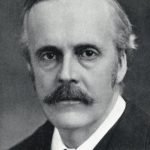
The speech made by David Willetts, the then Conservative MP for Havant, in the House of Commons on 2 July 2002.
I beg to move,
That this House agrees with the Government’s stated aim of increasing from 40 per cent. to 60 per cent. the proportion of pensioners’ incomes that comes from the private sector, but condemns the Government for failing to pursue policies which would achieve this objective and instead imposing a massive £5 billion annual tax on pension funds, and for presiding over the lowest savings ratio since records began; notes that fewer than four in ten final salary schemes are now open to new members and is shocked by the Government’s complacency in the face of widespread concern about the future of funded pensions: and therefore calls on the Government to cut the burden of regulation on pension funds, reverse the spread of means testing among pensioners, reform annuities and provide better incentives for people to save, so that they can enjoy a prosperous retirement.
I declare my interests, which appear in the Register of Members’ Interests.
I welcome the Secretary of State for Work and Pensions to his first debate in his new post. I approach his appointment in a spirit of optimism, and hope that he will use this afternoon’s debate as an opportunity to signal a radical shift in the Government’s approach to the crisis facing funded pensions.
The time has come for the Government to abandon their complacent denial of a problem. For too long, Ministers have had their heads in the sand: now is the time for the new Secretary of State to admit that there is a problem. I am sure that he has now been made aware of the evidence, which is compelling. The latest figures from the Association of Consulting Actuaries show that fewer than four in 10 final salary pension schemes are still open to new members, and that half of those are contemplating closure.
A wide range of well-known companies have closed their final salary schemes to new members—Barclays, British Airways, British Telecom, ICI, Lloyds TSB, Marks and Spencer, and Sainsbury. We know from the Government’s own statistics that 59 per cent. of recently retired pensioners now have an income from an occupational pension, against 67 per cent. of recently retired pensioners when Labour came into office. Fewer pensioners are now retiring with an income from an occupational pension. The number of employees without a funded pension arrangement has grown from 40 per cent. to 44 per cent in the past two years alone. No wonder the latest policy document from the Trades Union Congress on the subject begins with a stark statement:
“The UK’s pension system is in crisis.”
Ministers used to ignore that evidence by citing statistics that purported to show how much we were saving. I hope that after his salutary experience in the past 24 hours the Secretary of State will not make that mistake this afternoon. I welcome his announcement that he will review the Government’s statistics on pensions contributions, but I hope that he will give the House a full account of what has gone wrong in his Department, not once, but twice. First, it got the assets in our pensions funds wrong, and more recently it got the annual flow of savings into our pension funds wrong as well. One mistake might be regarded as a misfortune, but two from the same Department on the same subject looks like carelessness.
Mr. John Greenway (Ryedale)
Is my hon. Friend aware that the Association of British Insurers informed the all-party group on insurance and financial services this morning that it calculates that the savings gap is now £27 billion, most of which relates to pensions? Will he look carefully at proposals to encourage employers to operate better schemes?
Mr. Willetts
I am grateful to my hon. Friend for that intervention. He is correct about the scale of the savings gap that we face.
I wish to press the Secretary of State for more information on the two serious errors made by his Department in the past few months. The first mistake was in respect of the assets in our pension funds. Originally, the Government said that at the end of 1999 we had £784 billion in our pension funds—quite a lot of money. Then, without any explanation or prior notice, they produced a revised set of figures that showed that at the same date—at the end of 1999—they had reduced their estimate of the assets in our pension funds to £679 billion. That is a reduction of £104 billion—probably the biggest single change in the history of British economic statistics.
The sum that the Government managed to lose is equivalent to the entire national output of Portugal, but, fortunately, three and a half months later we discovered that the money had only been mislaid, and it popped up again. The Government put out a new set of figures, announcing that they had discovered, after all, that in 1999 our pension fund assets were worth £812 billion. So the figure for the value of the assets at one date in time had moved around by £150 billion. Then the Government carried forward the series, to show that having been £812 billion in 1999, the figure was down to £765 billion in 2000 and, on the latest estimates from UBS in the City, £684 billion in 2001.
That would mean that the assets in our pension funds peaked in 1999 and have been in decline ever since. It might be that 1999 was the peak year of our funded pension assets, not to be seen again. That was the first mistake: the Department revealed a £104 billion reduction in the value of the assets in our pension funds, with no explanation whatsoever. That surely should have set the alarm bells ringing about how unreliable the Government’s statistics were, but no.
We investigated the figures that the Government were producing for the annual flows into our pension funds. Ministers were saying, “Don’t worry. Everybody else might say that there is a crisis in our funded pensions, but we know that everything is all right, because we are saving £86 billion a year in our pension funds.” If that figure were true, if the Government had stood back and thought about it for a moment, it would have meant that almost 9 per cent. of the entire national output of our country was going in savings in our pension funds—enough to buy for every worker in Britain a two thirds final salary pension, index-linked with inflation. The Government were saying, “Don’t worry, £86 billion a year is being saved.”
We warned the Government, and we were not alone, that those figures were not credible. Let me quote from the chairman of the Association of Consulting Actuaries, who said:
“We are extremely worried that the impact of the changes that are taking place in terms of future pensioner incomes is being under-estimated by the Government and, as a result, there has been an inadequate policy response.”
The Secretary of State was quoted in the papers this morning as saying that within 72 hours of being told that there was a mistake in the statistics, he acted. Let me tell the Secretary of State that I wrote to his predecessor on 8 March 2002, telling him about the mistake and setting out in considerable detail exactly how I believed the mistake had arisen. It is not the case that the Department acted within 72 hours; it took 72 days for it to address the fundamental points that I made in the letter to the right hon. Gentleman’s predecessor.
There is now an unseemly row going on between the Secretary of State and his own officials. The Secretary of State, in a way that is all too typical of Ministers nowadays, is happy to blame everybody but himself. Referring to statistics on pension contributions, he said yesterday in the House:
“We have now been informed by the Office for National Statistics that there are problems with the series from which they have been estimated in the past”.
He was blaming the Office for National Statistics, but in this morning’s Financial Times the Office for National Statistics states:
“The national statistician is not known for his apologies, and there won’t be one here.”
The ONS is busy briefing that it is Ministers’ fault and telling the press that it warned Ministers that the information was unreliable, but that they nevertheless kept on producing the figures.
I hope that the Secretary of State will today give us an end to that briefing and counter-briefing between him and his officials and a clear explanation of when they were first warned by the ONS about the mistakes in the figures, what steps they took to correct them as soon as they heard about them and what advice he was given by the ONS when the Department received my letter of 8 March.
Mr. Patrick McLoughlin (West Derbyshire)
My hon. Friend referred to the letter that he sent on 8 March. Presumably, a letter sent by the shadow Secretary of State for Work and Pensions containing such serious accusations would have had an immediate reply from the Secretary of State. Can he tell me when he received the reply and what it said?
Mr. Willetts
I received a reply that was prompt, but brief and uninformative—exactly the sort of reply with which we are all too familiar.
Of course, this is not just a matter of whether Ministers have confidence in the advice of their statisticians and whether statisticians have confidence that Ministers will take heed of their warnings. It ranges beyond that, as it also raises the question whether the structure of pensions in our country is right. Many Ministers were trotting out amazing statistics showing how much we were saving in our pension funds and cited them as evidence that the “structure of pensions” in Britain is “right”. If the evidence is wrong, is the conclusion that they drew from that false evidence wrong as well? I hope that the Secretary of State will also refer to that issue.
Mr. Douglas Hogg (Sleaford and North Hykeham)
My hon. Friend is coming to the question of the structure of pensions. Will he confirm that a pensioner would have to accumulate a fund of about £100,000 to be better off than he or she would be having saved nothing at all? That is the case because of the deprivation of top-up payments on the basis of the fund.
Mr. Willetts
My right hon. and learned Friend makes a very important point on which we have regularly pressed Ministers. The least that people who are considering taking out a stakeholder pension, for example, are entitled to expect is information from Ministers about how much they believe that they need to build up in that pension during their working lives to float them off means-tested benefits. That is the $64,000 question; indeed, the answer might be $64,000, but we have never had any answer from Ministers. The level could be £100,000, but they have never been willing to address the important point that he makes. Again, I hope that we will hear about that from the Secretary of State.
The real question is not just misleading statistics—something with which we are all too familiar from this Government—but what is going on with the pension funds and pension savings of the people of this country. That is the central question that the House is debating. Before the Secretary of State points it out, I accept that there are many reasons for the decline of final salary pension schemes in this country. I understand that there is a range of factors, some of which are not in the Government’s control. We are seeing improvements in longevity, and I am sure that hon. Members in all parts of the House will welcome that as good news. The fact that people are living longer is a success that we can celebrate. There have also been changes in the labour market that will change the pattern of pension provision.
We understand that not everything can be controlled by Ministers, but that very fact makes it even more important that the things that they do control are got right; and that, in so far as the Government control the environment in which people plan for their retirement, they get that right. Our central criticism of the Government is that Ministers have got the things that they control—above all, the burden of tax on occupational pensions—catastrophically wrong.
Mr. Michael Connarty (Falkirk, East)
While the hon. Gentleman was recounting some of the things that might have had an effect and which Ministers controlled, did he not think that the Conservative Government’s decision to encourage and allow withdrawal of contributions and the taking of holidays by pension fundholders might have caused the massive deficit in the pension funds on which people are now looking to draw for their retirement?
Mr. Willetts
I undertake to cover that point later in my speech, but I want to set it in the context of the other changes. If the hon. Gentleman then thinks that I have still not addressed his question, he can come back to me.
I want to set out the background to the tax decisions that the Chancellor has taken. At the time of the 1997 Budget, when he introduced his notorious stealth tax on our pension funds, he said:
“Many pension funds are in substantial surplus and at present many companies are enjoying pension holidays,”—
he was celebrating the very thing that the hon. Member for Falkirk, East (Mr. Connarty) just mentioned—
“so this is the right time to undertake a long-needed reform.”—[Official Report, 2 July 1997; Vol. 297, c. 306.]
The Chancellor explicitly linked the tax imposition on pension funds to the fact that those funds were in surplus.
Last year, when the Prime Minister was challenged on this matter, he told the House of Commons:
“The value of pension funds has gone up dramatically as a result of the success of the economy. The abolition of payable tax credits was done for the reasons that we stated at the time. It is the right reform, and as a result of the buoyancy of the stock market the value of people’s pension funds has gone up.”—[Official Report, 7 March 2001; Vol. 364, c. 285.]
The Government justify their tax increase by saying, “Don’t worry, the stock market is going up and share prices are rising; it’s all okay.” But the value of the stock market has now fallen below the level that it was at when the Chancellor originally made that tax announcement in 1997; it has fallen almost to the level that it was at at the 1997 election. Since the justification for the tax has gone, will the Secretary of State tell us what possible reason he can have for imposing this tax on our pension funds?
Mr. Steve Webb (Northavon)
The hon. Gentleman has criticised the £5 billion tax on pension funds. Will he tell us how much of that £5 billion would have been put back under the manifesto on which he stood at the last election?
Mr. Willetts
Our manifesto made it clear that we wanted to encourage people to save for their retirement. [HON. MEMBERS: “Aah!”] I would very much like to be able to reverse the tax, but the fact is that that money is now being spent. That is why we cannot pledge to reverse it.
Mr. Chris Pond (Gravesham)
Conservative Members continually repeat the figure of £5 billion. Will the hon. Gentleman confirm that the Conservative Government took £10 billion out of the state pension scheme while they were in office?
Mr. Willetts
I am coming to this important point: we are not talking about a one-off £5 billion. It is £5 billion a year—year after year, ad infinitum. The figure is now £25 billion and rising every year. That is the point.
Mr. Frank Field (Birkenhead)
Will the hon. Gentleman give way?
Mr. Willetts
I will give way to the right hon. Gentleman because I greatly respect his expertise in this area, but then I would like to make some progress.
Mr. Field
Given that the country is worried about its future pension provision, may I make a plea that, once the hon. Gentleman has made these points, he quickly moves on to what the Opposition will contribute to the evolving debate? It is understandable that he will point out the effect of changes in advance corporation tax on the prosperity of occupational pension funds, but does he agree that that was the second blow, and that the first blow was delivered when the Conservative Government changed the tax laws so that funds that were in surplus had to run their surpluses down to 105 per cent. of their liabilities or face penal rates of tax for not doing so?
Mr. Willetts
The fact is that all the other changes that have affected pension funds are dwarfed by the scale of the tax increase that the Chancellor imposed in 1997.
Mr. Field rose—
Mr. Willetts
I would like to make some progress now.
Mr. Field rose—
Mr. Willetts
I will give way to the right hon. Gentleman in a moment, but I want to give him one more figure. I respect his expertise and, as he knows, I am very happy to contribute in a constructive spirit to debates on his own imaginative ideas on pension reform.
I want to make two points. First, it is incorrect to compare the capital value of the loss of the value of shares—the capital effect—which may be hundreds of billions of pounds, with the flow of £5 billion as a tax hit. We have to realise that this is not just a one-off tax hit; it is £5 billion a year. That is why it is so significant. If we calculate the current cost of a £5 billion-a-year tax, we get a very large sum indeed.
My second point is that Labour Members regularly mention enormous figures for the total fall in the value of the stock exchange. They now seem keen to tell us how much value shares have lost under their management—that is the point that they like to make. They talk as if those shares all belong to pension funds. Pension funds own only about 18 per cent. of British equities, so it is not correct to compare the £5 billion, which is merely the annual effect of the tax, with the £450 billion, which is the total loss in value of all shares, of which only a small proportion are held by pension funds. That is why the tax impact was so great.
Mr. Field rose—
Mr. Willetts
I shall give way to the right hon. Gentleman one more time, then I shall make some progress.
Mr. Field
I am doubly grateful to the hon. Gentleman. Is not it true that ACT has had the effect that it has because the Conservative Government forced pension funds to run down their surpluses? Had they not been forced so to do, many more funds would have had greater buoyancy to enable them to withstand the ACT changes. The running down of surpluses pushed more pensions nearer to the precipice. Most people would say that both sides have made mistakes, but the country wants to hear what constructive proposals the Opposition have.
Mr. Willetts
I should now like to make some progress, during which I hope to answer the right hon. Gentleman’s specific question about what proposals we would make.
I shall move from abstract statistics to something vivid and direct. I cite a Member of the other place, who is well known to Labour Members because he is a Labour supporter, a Labour donor and a Labour peer: Lord Paul of Caparo Industries. I shall quote what he said about the decisions that his steel company is making in its attempt to close its final salary pension scheme. When asked why he was closing his final salary scheme, he said:
“You see the main reason is we had this so-called final salary scheme…but in view of the tax on dividends”—
that is the first point he mentions—
“and also the stock market going all over the place there is no way one can really guarantee a final salary scheme”.
At the end of his list, he refers to
“government action like the dividend tax”.
That is what a Labour peer who runs a business says. He is trying to use a Labour tax to close a final salary pension scheme, and instead put his workers into the Government’s pet pension scheme, the stakeholder pension. He wants them to have one of the Government’s stakeholder pensions.
What do members of the Labour-supporting steelworkers’ union do in response to a Labour peer trying to impose a Labour pensions policy as a result of a Labour tax? The Labour-supporting trade union goes out on strike. That is what its members are threatening to do as a result of the measures that the Government have taken.
That is not the end of the story, because there is another stealth tax, perhaps even stealthier than the £5 billion a year tax on dividends, and that is the miserly uprating of the contracted-out rebates that was announced in April. The actuaries William Mercer estimates that those rebates are now about 15 per cent. below the level necessary to provide the contracted-out benefits that companies are obliged to provide as a condition for contracting out.
With rebates for pensions running at about £11 billion a year, the actuaries are saying that the contracted-out rebate is £1.5 billion a year short. It is not just the £5 billion a year tax on its own, but the £5 billion a year tax plus another £1.5 billion, because the value of the contracted-out rebate does not match the cost of providing the pension that has to be provided in return.
The Government have taken the two main forms of financial support that Governments have historically given to occupational pensions—the tax relief and the contracted-out rebates—and imposed an extra £6.5 billion a year burden on our pension funds.
I can now answer the question put by the hon. Member for Falkirk, East. The entire value of the contribution holidays taken by companies between 1987 and 2000, which has exercised Labour Members, works out at £1.4 billion a year. That has a far smaller impact on the value of company pension schemes than the tax and rebate changes made by the Government. I hope that the hon. Gentleman therefore accepts that it is no good turning to employers and blaming them for the effect of their contribution holidays.
Mr. Connarty
As an economist, I know that £1.4 billion invested in 1979 would be worth a lot of money now. Because it was not earning money, it is not in the fund. I have just done a little calculation. Some £81 billion has been lost in the value of pension funds if they hold 18 per cent. of the shares that have lost £450 billion in value, as the hon. Gentleman just told us.
Mr. Willetts
The hon. Gentleman is in a hole, and he should stop digging. I am comparing a £6.5 billion imposition by the Government with the £1.4 billion a year impact that is the maximum that can be calculated to be the effect of pension contribution holidays.
Several hon. Members rose—
Mr. Willetts
No, I shall not give way. I want to make progress, because many hon. Members wish to speak.
The effect of the changes—the tax increases and the reduction in the value of contracting-out rebates—is to drive pensioners, now and in future, on to means-tested benefits. That is where they will end up; there will be lower pension saving and more dependency on welfare. In the early 1990s, the Chancellor famously told the Labour party conference:
“I want the next Labour Government to achieve what in 50 years of the Welfare State has never been achieved. The end of the means test for our elderly people”.
Well, that is not what the Government are doing. In fact, they will have more than half the entire pensioner population dependent on means-tested benefits. Our vision is very different—it is of a country in which more and more people build up funded savings so that they can enjoy a prosperous retirement that is not dependent on state benefits or means testing, but a source of pride in that they have built up their own savings during their lifetimes
That is what we believe in, and that is what is being damaged and destroyed by the Government—although the Prime Minister pledged, in one of their first documents after coming into office, that his aim was to change the balance of pensioners’ dependence on benefits and funded pensions. He said that he wanted to reverse the situation whereby pensioners get 40 per cent. of their income from funded savings and 60 per cent. from the state, so that they get 40 per cent. of their income from state benefits and 60 per cent. from funded pension savings. That is an objective that we completely endorse. However, typically of this Prime Minister, despite having that grandiose objective, he has done absolutely nothing to implement it. If one asked him to do the washing up, he would announce that he had a 20-year plan for a cleaner kitchen on which he would undertake widespread consultation—but a pile of dirty crockery would be left at the end of the day. That is what he is like. He has a grandiose objective and no means of implementing it.
Conservative Members, by contrast, know how that vision should be delivered. We are committed to the reform of annuities. My right hon. Friend the Member for Skipton and Ripon (Mr. Curry) has introduced a private Member’s Bill that would do so. We have voted for such a provision time and again, but the Government tried to stop it every time. We have called for reform of the accounting standard FRS17. I was pleased to hear about today’s announcement whereby, in line with our requests, there will be a delay in implementing it until we know what the European standard will be.
We have called for less means-testing of pensioners. We worked with the right hon. Member for Birkenhead (Mr. Field) and with the Liberal Democrats to propose an alternative to the pension credit, suggesting that that money could instead have been put into a higher pension for older pensioners, who tend to he poorer, to offer more help to poorer pensioners without more means testing.
Mr. Barry Gardiner (Brent, North)
Will the hon. Gentleman give way?
Mr. Willetts
No, I want to make more progress in dealing with the perfectly reasonable challenge issued by the right hon. Member for Birkenhead as to what our policies are.
Another policy is based on our view that the burden of regulation on pension funds is too high and needs to be radically cut back. We strongly support the Pickering review, which I am sure that the Secretary of State will talk about in his speech. However, since the announcement of the Pickering review, which was supposed to reduce the burden of regulation on pension funds, we have had, in the past nine months, another 251 pages of regulations, including 67 pages of statutory instruments and 81 pages from the Inland Revenue. Those have been churned out while the Government have boasted of their review to cut the burden of red tape on pension funds. That is the reality of what they do, despite their claims.
Over the past five years, the Government have, in a display of hyperactivity, comprehensively messed up the provision of funded pensions in our country. The Government have taxed them more heavily, cut the value of the contracted-out rebates to which they are entitled and abolished SERPS. The Government have brought in more means-testing and introduced a stakeholder pension whose take up by the eligible target group has been pitiful.
We now face a Labour environment for pension provision, which means less saving, low funded pensions and a poorer retirement for millions of British people. Labour Members should be ashamed of themselves.