Tag: Speeches

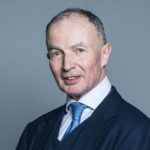
  • Jitesh Gadhia – 2022 Tribute to HM Queen Elizabeth II (Baron Gadhia)

    Jitesh Gadhia – 2022 Tribute to HM Queen Elizabeth II (Baron Gadhia)

    The tribute made by Jitesh Gadhia, Baron Gadhia, in the House of Lords on 9 September 2022.

    My Lords, as we gather on this sombre and sad occasion, a huge void is felt not only by the Royal Family and our whole nation but by the entire world. It is difficult to think of a public figure who has ever had such a global impact. We often speak about the United Kingdom’s soft power and of global Britain, but so much of this was embodied in, and personified by, Her late Majesty the Queen.

    The worldwide outpouring of affection is reflective of a lifetime devoted to service and duty, a theme we have heard again and again, and deservedly so. Her Majesty was a constant and unifying figure, rising above the political fray and forces of division, providing a source of stability over seven decades of incredible change. As someone who arrived in this country 50 years ago in traumatic circumstances, during the expulsion of the Asian community from Uganda, I have not experienced anything other than the second Elizabethan age. For all the change and challenges during her long reign, it has also been a remarkable period of progress and human advancement, a period of improving community cohesion and greater diversity, as barriers to those from any and all backgrounds have come down.

    What could be more emblematic of the social mobility of the second Elizabethan age than for someone of Indian origin, displaced from Uganda, to have the opportunity in a single generation to be appointed to this House, taking an oath of allegiance to Her late Majesty? That moment, six years ago this month, was the greatest honour of my life, even more so being a child of the Commonwealth, which occupied such a special status for the Queen. Indeed, as a child of the Commonwealth, I feel like a child of Her late Majesty.

    The last occasion on which I was honoured to meet the Queen was during a reception that she graciously hosted at Buckingham Palace to mark the UK-India year of culture. On that occasion, she kindly placed an item on display from her own personal possessions: a wedding gift from Mahatma Gandhi. It was a piece of cloth, woven from yarn spun by Gandhi himself, including the words “Jai Hind”.

    It was palpable how connected she felt to India and the wider subcontinent, which makes up almost 75% of the 2.5 billion people across the Commonwealth. These sentiments are mirrored in reverse, exemplified by the day of state mourning that has been declared by the Government of India for this coming Sunday, and the three days of mourning declared by Bangladesh. The Indian Prime Minister, Narendra Modi, has lauded the Queen for her dignity and decency in public life, and the Bangladeshi Prime Minister, Sheikh Hasina, has described her as a true guardian.

    As chair of the British Asian Trust, founded by His Majesty King Charles III some 15 years ago, I know that our new monarch shares the same priorities as his mother for the Commonwealth, and maintains a deep and abiding connectivity with all the countries of south Asia, also including Pakistan, Sri Lanka and Nepal. Yes, King Charles has enormous shoes to fill, but he also possesses the strength of character and sense of purpose to pick up the baton from his mother, as our constitutional monarchy requires, and to continue the same dedication to public service and duty without missing a beat. Tonight’s broadcast from His Majesty confirms this commitment and determination. In that mission, and in their grief, we offer our new King, the Queen Consort, and the Royal Family our full and loyal support.

  • Anne-Marie Trevelyan – 2022 Speech at the Atlantic Future Forum

    Anne-Marie Trevelyan – 2022 Speech at the Atlantic Future Forum

    The speech made by Anne-Marie Trevelyan, the Secretary of State for Transport, in New York on 29 September 2022.

    Thank you, and good morning everyone.

    It is a real pleasure to join you today (29 September 2022).

    And what better backdrop for a speech on maritime security than the magnificent HMS Queen Elizabeth.

    Thank you to all her crew for accommodating us this week.

    Yet whatever pride I feel delivering my first speech as Transport Secretary on the largest vessel ever built for the Royal Navy, my emotions are also tinged with sadness.

    Because it was Her Majesty Queen Elizabeth II who performed the naming ceremony for this superb ship just 8 years ago at Rosyth in Scotland.

    Suitably, she didn’t use the traditional bottle of champagne, but a bottle of whisky, to launch the new vessel.

    Her Late Majesty will be profoundly missed, and I would like to thank all those around the world, including many friends here in the United States, who sent condolences. Your support and demonstrations of love and respect helped ensure a fitting farewell to Britain’s longest-reigning monarch.

    Her Late Majesty was a champion of the Royal Navy, and she understood its historic leadership in underwriting prosperity and trade.

    Shipping continues to drive the global economy today, just as it has done for millennia.

    Our seas are by far the most important arteries for global trade, carrying over 95% of all goods.

    But while the maritime industry normally conducts its business beyond the public gaze, recent events have thrust global supply chains into the spotlight… and in particular, the importance of resilient and secure shipping routes.

    In particular, Russia’s illegal invasion of Ukraine has awakened and reminded us all of our need as a global community to protect maritime trade, and support an international order based on rules and principles which are enforced.

    For the Department for Transport, that is about ensuring the security of all networks that move goods, people and information around the world, and that underpin our way of life and our economy.

    We have seen Putin weaponise food by trying to crush the economic and humanitarian criticality of Ukraine’s agricultural economy.

    In blockading of Ukrainian ports, Putin has prevented the export of global grain supplies.

    These actions have had a terrible impact on the world’s poorest people, and driven up food and fertiliser prices.

    We are doing what we can to alleviate the international food security crisis that Putin has created.

    The UK and our allies pushed hard to secure the UN-brokered Black Sea Grain Initiative in July that has allowed over 3 million tonnes of grain to leave Ukrainian ports so far.

    We will continue to enforce the toughest sanctions against Russia to undermine its shipping industry and reduce its export revenue.

    We will continue to work with international partners to implement an oil price cap and ban on maritime insurance for Russian oil later this year.

    And we will continue to stand alongside our Ukrainian friends, strengthening their hand to finish this war on their terms.

    The UK is an island nation with global interests.

    The numerous islands that form the UK, our Crown Dependencies and our Overseas Territories all rely on unimpeded international trade.

    The shipping routes between the UK and our trading partners and allies form some of the busiest trading routes in the world.

    We are highly connected to the rest of the world and will continue to be so in the future.

    Our maxim is to ensure the UK is and remains the most secure and reliable nation to trade with globally.

    In 2021, we published Global Britain in a competitive age: the integrated review of security.

    This document reaffirmed the first duty of government – to protect our people, our homeland, and our democracy.

    That means protecting our ports and airports, and the trade routes vital to our national prosperity.

    In an increasingly uncertain world, we must work harder to safeguard transport networks against a complex variety of security risks and natural hazards.

    That’s why we have published our National strategy for maritime security, setting out 5 strategic objectives to help deliver the objectives of the integrated review.

    • protecting our homeland
    • responding to threats
    • ensuring prosperity
    • championing our values
    • supporting a secure, resilient ocean

    Our strategy acts as a blueprint for maritime security – explaining how we will protect our borders and ports, and address the threats we face.

    We consider how we will comprehensively tackle cyber security, defending the global supply chain at a time of increased automation and evolving cyber technologies.

    An important aspect of this is covered in the UK by the National Security and Investments Act.

    This allows us to scrutinise and potentially intervene if acquisitions of assets linked to the UK may pose national security risks.

    All investment involving our transport sector is subject to thorough analysis. and must satisfy robust legal, regulatory and national security requirements.

    Alongside defensive measures, we are committed to maintaining our reputation for the UK to be one of the best places to invest.

    That is why, the government has established a network of freeports – to act as business hubs for international trade, innovation and commerce, and have just announced last week a next wave of investment zones. These hubs will regenerate communities by attracting investment and jobs to towns and cities up and down the country.

    Beyond investment in security, we have been developing our maritime security structure for several years.

    A significant part of this has been creating the Joint Maritime Security Centre in 2019. This national organisation helps coordinate what we call our ‘whole system response.’

    This brings together all the organisations and teams which work to deter and respond to threats – including high-readiness maritime assets.

    The Joint Maritime Security Centre ensures that government, military, and law enforcement agencies have a closely-coordinated understanding of threats and risks in our own waters, and across the globe.

    We continue to develop these capabilities against current and emerging threats – from terrorism, piracy or hostile states – and also help us understand security concerns for shipping routes as our climate changes and we need to adapt.

    This is particularly important when looking at the Arctic and High North, which will provide faster shipping routes to Asia. There will be new security challenges which we need to anticipate and plan to provide 21st century solutions.

    At home and abroad, we will always protect our interests and those of our international partners. That means understanding how threats could arise along international trade routes or chokepoints, how they can be addressed, and what their impact might be.

    We don’t just consider hard security dangers.

    Threats to our marine environment are also a security issue.

    The fragile marine ecosystem is a precious resource, so we must respond to any dangers early. From destruction of fishing stocks to dumping of illegal waste. Any activities that harm the marine environment and destroy the livelihoods of those living in coastal communities.

    In many countries this loss of income for some of the most impoverished in society can lead to people being exploited by criminal gangs and terrorists.

    So tackling environmental problems early can reduce long term harm and we have a unique window of opportunity to harness technology develop new green solutions.

    We must act now to reduce maritime’s contribution to climate change.

    Maritime transport is currently responsible for almost 3% of global greenhouse gas emissions and if it were a country, it would be the world’s sixth largest emitter.

    We face a massive challenge. However, with concerted global action, the worst impacts can still be averted

    That is why earlier in the year, as part of the UK’s revised National shipbuilding strategy, we announced £206 million for a new UK Shipping Office for Reducing Emissions, to invest in maritime decarbonisation.

    Today, I am delighted to launch the third round of the Clean Maritime Demonstration Competition – as part of this programme of investment.

    This is the largest round to date, with up to £60 million available for technology and system demonstrations in clean maritime solutions.

    So far, these competitions have helped many developers working on new shipping technologies and fuels.

    From hydrogen, ammonia and methanol fuels, to batteries and shore power – and from automated vessels, hybrid engines and green storage facilities at ports to energy from offshore wind infrastructure – we are working hard to pioneer the breakthrough and secure maritime technologies of the future.

    Today, I am also announcing the winners from the second round of the competition, allocating over £12 million to 31 different projects, including 3 green shipping corridors which can help lead decarbonisation solutions.

    This will help to fulfil our commitment under the Clydebank Declaration, which the UK proudly launched at COP26 with 24 signatory states, including the US, to progress 6 innovative zero emission shipping routes by the middle of the decade.

    Of course, the more we collaborate, the faster we progress.

    So we will continue to work closely with US partners and others to raise the level of ambition on climate change at the International Maritime Organisation, which faces a crucial year as it revises its initial strategy on greenhouse gas reduction.

    More broadly, the UK will work with like-minded partners around the world to reduce every sector in transport’s reliance on fossil fuels, and embrace decarbonisation.

    On Tuesday, I was in Montreal speaking at the International Civil Aviation Organisation General Assembly, urging the adoption of long-term emission goals that are consistent with the Paris Agreement.

    We must push every sector to play its part – but maritime will remain critical to our success or failure as a global family.

    Under the leadership of new Prime Minister, Britain will be a relentlessly outward-facing nation.

    The UK will continue to utilise its hard security, economic security and diplomatic heft to build stronger global alliances.

    At a time when the world is recovering from the coronavirus (COVID-19) pandemic, and rebuilding the supply chains that feed the global economy…

    At a time when Russian aggression is disrupting established trade routes…

    It has never been more important for the international community to come together and protect global shipping.

    We will continue to support, defend and uphold the principles of the United Nations Convention on the Law of the Sea and protect freedom of navigation.

    We will safeguard the marine environment, and help lead the transition to green shipping.

    And we will work with all our partners to ensure maritime trade and travel continues to operate safely, securely and sustainably, right around the world.

    Thank you.
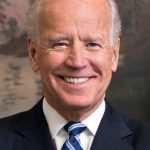
  • Joe Biden – 2022 Statement on Russia’s Attempt to Annex Ukrainian Territory

    Joe Biden – 2022 Statement on Russia’s Attempt to Annex Ukrainian Territory

    The statement made by Joe Biden, the President of the United States, on 30 September 2022.

    The United States condemns Russia’s fraudulent attempt today to annex sovereign Ukrainian territory. Russia is violating international law, trampling on the United Nations Charter, and showing its contempt for peaceful nations everywhere.

    Make no mistake: these actions have no legitimacy. The United States will always honor Ukraine’s internationally recognized borders. We will continue to support Ukraine’s efforts to regain control of its territory by strengthening its hand militarily and diplomatically, including through the $1.1 billion in additional security assistance the United States announced this week.

    In response to Russia’s phony claims of annexation, the United States, together with our Allies and partners, are announcing new sanctions today. These sanctions will impose costs on individuals and entities — inside and outside of Russia — that provide political or economic support to illegal attempts to change the status of Ukrainian territory. We will rally the international community to both denounce these moves and to hold Russia accountable. We will continue to provide Ukraine with the equipment it needs to defend itself, undeterred by Russia’s brazen effort to redraw the borders of its neighbor. And I look forward to signing legislation from Congress that will provide an additional $12 billion to support Ukraine.

    I urge all members of the international community to reject Russia’s illegal attempts at annexation and to stand with the people of Ukraine for as long as it takes.

  • G7 – 2022 Joint Statement on the Illegal Annexation of Sovereign Ukrainian Territory

    G7 – 2022 Joint Statement on the Illegal Annexation of Sovereign Ukrainian Territory

    The joint statement by G7 Foreign Ministers on 30 September 2022.

    We, the G7 Foreign Ministers of Canada, France, Germany, Italy, Japan, the United Kingdom, the United States of America, and the High Representative of the European Union, are united in our condemnation in the strongest possible terms of Russia’s war of aggression against Ukraine and its continued violations of Ukraine’s sovereignty, territorial integrity and independence.

    President Putin’s efforts to incorporate Donetsk, Luhansk, Kherson and Zaporizhzhya regions into the territory of the Russian Federation constitute a new low point in Russia’s blatant flouting of international law, and yet another example of Russia’s unacceptable violations of Ukraine’s sovereignty, the UN Charter, and the commonly agreed principles and commitments of the Helsinki Final Act and the Paris Charter.

    We will never recognise these purported annexations, nor the sham “referenda” conducted at gunpoint.

    We reiterate our call for all countries to condemn unequivocally Russia’s war of aggression and its attempt to acquire territory by force. We call on the broader international community to reject Russia’s brutal expansionism, its efforts to deny Ukraine’s existence as an independent state, and its blatant violation of the international norms that guarantee international peace, security, and the territorial integrity and sovereignty of all states.

    We will impose further economic costs on Russia, and on individuals and entities – inside and outside of Russia – that provide political or economic support to these violations of international law. We are unwavering in our support for Ukraine’s right to defend itself against Russia’s war of aggression and its unquestionable right to reclaim its territory from Russia.

    We reiterate our condemnation of Russia’s irresponsible nuclear rhetoric. It will not distract or dissuade us from supporting Ukraine, for as long as necessary.

    Russia must immediately stop its war of aggression, withdraw all of its troops and military equipment from Ukraine, and respect Ukraine’s independence, sovereignty, and territorial integrity within its internationally recognised borders. We reaffirm that the regions of Donetsk, Luhansk, Kherson and Zaporizhzhya as well as Crimea are integral parts of Ukraine.

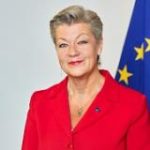
  • Ylva Johansson – 2022 Speech on General Visa Issuance in Relation to Russian Applicants

    Ylva Johansson – 2022 Speech on General Visa Issuance in Relation to Russian Applicants

    The speech made by Ylva Johansson, the EU Commissioner for Home Affairs, on 30 September 2022.

    Firstly I want to say – Putin cannot win, and will not win

    Every step he takes show we cannot trust him, we cannot deal with him or show weakness

    The recent ‘sham referenda’ in occupied Ukrainian and the mobilisation of Russian citizens confirm this.

    Now following the mobilisation order, we can see Russian citizen trying to enter  the EU.

    That is, from certain perspectives, understandable, they don’t want to go to war in another country that has been occupied by their leader.

    This said, avoiding the mobilisation does not necessarily equate to opposing the war as such. In addition, it cannot be excluded that Russian citizens trying to circumvent the mobilisation by getting into the EU, also constitute a threat to public policy, the internal security or the international relations of a Member State or the Union as a whole.

    That’s why, on our external borders we should be very vigilant regarding letting people from Russia in.

    We already abolished the VISA facilitation agreement, we adopted guidelines for Member States  – so already now it is very cumbersome and expensive to enter the EU from Russia as a tourist.

    Now we take one more step.

    We must ensure the security of Europe and its citizens.

    We have to keep in mind – to come to Europe is a privilege, not a fundamental right.

    We should stay open, of course, to dissidents, journalists independent from the Russian government.

    These are bravely and actively opposing the  Putin Regime.

    But we should very carefully scrutinize case by case every application.

    And we must take the geopolitical aspects into account.

    What is new in the Guidance?

    The Guidance we are adopting  today covers both Visas and the management of External Borders

    1. On Visas we have updated our previous guidance
    1. New visas
    • Stricter assessments and security over new visas
      • Schengen visas are issued for short stays of 90 days cannot cannot provide a long-term solution for Russian citizens seeking to avoid mobilisation.
      • For Schengen visas we have restricted our approach for all Russians, including for Russian citizens escaping the military mobilisation order.
      • MS should apply a strict approach assessing the justification of the journey.
      • It should be ascertained whether there are reasonable doubts as to the reliability of the statements made by the applicant or his/her intention to leave the territory of the MS before the expiry of the visa applied for.
      • This is without prejudice to the right of such individuals to seek international protection under the EU asylum laws or the possibility to apply for national long-stay visas or residence permits at EU consulates.
    • Restrictive approach of place of visa application
      • Following President Putin’s military mobilisation order, significant numbers of Russian conscripts have fled to neighbouring and other countries with the aim to avoid the Russian army. There are widespread expectations that many will seek to obtain Schengen visas in view of continuing their journey inside the EU.
      • In our guidance we make it clear that – pursuant to Article 6 of the Visa Code – applications should only be examined by the consulate of the competent MS in whose jurisdiction the applicant legally resides.
      • On this basis Member States should not accept Schengen visa applications from citizens of the Russian Federation that are present in a third country, such as for example  Georgia, Armenia, Kazakhstan, Serbia, Turkey, the United Arab Emirates etc.  for short stay or for purposes of transit.
      • Such applicants should be directed to the consulate competent for their place of residence, normally in the Russian Federation.
      • Exceptions can be made in cases of hardship and for humanitarian reasons (e.g. family visits due to sudden serious illness of a relative residing in the EU, dissidents, human rights defenders).
    • Confirms the humanitarian exceptions and clarifies its individual application
      • The Visa Code contains derogatory provisions allowing for the issuing of short stay  visas on humanitarian grounds, for reasons of national interest or because of international obligations.
      • This is relevant, for instance, in case of visa applications lodged by dissidents, independent journalists, human rights defenders and representatives of civil society organisations and their close family members, that are not controlled by the government of the Russian Federation and their close family members.
      • Member States should apply these derogatory provisions after a thorough assessment. It is therefore up to Member States, based on an individual examination, to assess if applications by Russian citizens can qualify as falling under the category “humanitarian grounds”. There is no unique set of documents that would prove that a person qualifies for a visa on humanitarian grounds, because individual circumstances differ too widely and need a case-by-case assessment.
    1. Revocation and annulment of valid visas
    • Stricter scrutiny of valid visas irrespective of the issuing Member State
      • MS should also adopt a strict approach with respect to reassessing visas already issued to any citizen of the Russian Federation, similarly to the principles applied when assessing new visa applications
      • In case there are grounds for annulment/revocation, such a decision may be taken by the border guard irrespective of the visa issuing MS. The authority should inform the issuing MS accordingly as well as affix the corresponding stamp on the visa sticker and enter the information on the annulment/revocation in the Visa Information System.  
    1. Guidelines on controls of Russian citizens at the external borders (Schengen Border Code)
    1. Coordinated and through checks at the external borders to ensure protection of the Schengen area

    Coordinated strong checks at the EU external borders protect not only security in the MS concerned, but also the integrity of the Schengen area as a whole.

    Coherent and comprehensive checks of Russian citizens

    • Border guards at all the border crossing points at the external borders should assess in a coherent fashion whether a Russian citizen crossing the EU’s external border fulfils the entry conditions into the Schengen area. This is to avoid that an applicant who has been denied entry by a Member State is admitted by another one.
    • In accordance with Article 30 of the Visa Code, the mere possession of a visa does not confer an automatic right of entry into the Schengen area.
    • If the entry of a Russian citizen is refused on the grounds that they are considered to pose a threat to the public policy or internal security of the MS entry should be refused.
    • With a view to carrying out such an individual assessment, border guards should notably conduct a thorough interview with a Russian citizen seeking to enter the Schengen area. In addition to a check on the basis of travel document data, a check using fingerprints in the Schengen Information System should be carried out, to also detect alerts on persons using false or unknown identities.
    • In this context, border guards should also take into account that allowing a Russian citizen to enter the Schengen area at a time when their country of origin is engaging in an illegal military aggression against an EU candidate country, could seriously harm the international relations of any MS with Ukraine, with another MS, or the EU as such. Therefore, the Commission recommends that border guard authorities consider the current geopolitical context when carrying out their case-by-case assessment. In light of the additional workload this reinforced scrutiny will lead to, Member States are encouraged to transfer additional staff to the border guards force located at the external borders concerned.

    However, the heightened scrutiny must not lead to denying entry to persons that have a legitimate interest to leave the Russian and should be performed in a way that preserve the right to seek asylum and prevents risks of non refoulement.

    Carriers Liability

    The carriers are obliged to immediately assume responsibility for third-country nationals who are refused entry into the territory of one of the MS. r.

    It is therefore important that carriers remain vigilant when verifying the presence of travel documents required for entry. The Member States are encouraged to offer practical support to the carriers in this regard.

    Monitoring

    The Commission will closely monitor the implementation of these new guidelines, in particular through the Blueprint Network. We will also discuss their implementation with Member States in the context of IPCR and adapt them in accordance with the evolving reality on the ground.

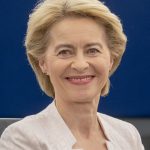
  • Ursula von der Leyen – 2022 Statement on New Sanctions Against Russia

    Ursula von der Leyen – 2022 Statement on New Sanctions Against Russia

    The statement made by Ursula von der Leyen, the President of the European Commission, on 28 September 2022.

    We wanted to present together the eighth package of sanctions. Last week, Russia has escalated the invasion of Ukraine to a new level. The sham referenda organised in the territories that Russia occupied are an illegal attempt to grab land and to change international borders by force. The mobilisation and Putin’s threat to use nuclear weapons are further steps on the escalation path.

    We do not accept the sham referenda nor any kind of annexation in Ukraine. And we are determined to make the Kremlin pay for this further escalation. So today, we are together proposing a new package of biting sanctions against Russia.

    The first part concerns the listing of individuals and entities that will be presented by the HR/VP, Josep Borrell, in a moment.

    I want to focus on the second part of these sanctions that will further restrict trade. By that, we isolate and hit Russia’s economy even more. So we propose sweeping new import bans on Russian products. This will keep Russian products out of the European market and deprive Russia of an additional EUR 7 billion in revenues. We are also proposing to extend the list of products that cannot be exported to Russia anymore. The aim is here to deprive the Kremlin’s military complex of key technologies. For example, this includes additional aviation items, or electronic components and specific chemical substances. These new export bans will additionally weaken Russia’s economic base and will weaken its capacity to modernise. We will also propose additional bans on providing European services to Russia, and a prohibition for EU nationals to sit on governing bodies of Russian state-owned enterprises. Russia should not benefit from European knowledge and expertise.

    The third complex is concerning Russian oil. As you know, Russia is using the profits from the sale of fossil fuels to finance its war. Concerning Russian oil, you might recall that we have already agreed to ban seaborne Russian crude oil in the European Union as of 5 December. But we also know that certain developing countries still need some Russian oil supplies, but at low prices. Thus, the G7 has agreed in principle to introduce a price cap on Russian oil for third countries. This oil price cap will help reduce Russia’s revenues on the one hand and it will keep global energy markets stable on the other hand. Today, in this package, here, we are laying the legal basis for this oil price cap.

    And my last point that I want to focus on is: We are stepping up our efforts to crack down on circumvention of sanctions. Here, we are adding a new category. In this category, we will be able to list individuals if they circumvent our sanctions. So for example, if they buy goods in the European Union, bring them to third countries and then to Russia, this would be a circumvention of our sanctions, and those individuals could be listed. I think this will have a major deterring effect. Our sanctions have hit Putin’s system hard. They have made it more difficult for him to sustain the war. And we are increasing our efforts here and moving forward.

  • David Hope – 2022 Tribute to HM Queen Elizabeth II (Baron Hope of Craighead)

    David Hope – 2022 Tribute to HM Queen Elizabeth II (Baron Hope of Craighead)

    The tribute made by David Hope, Baron Hope of Craighead, in the House of Lords on 9 September 2022.

    My Lords, much has been rightly made of Her Majesty’s deep religious conviction. At the other end of the huge breadth of her character are her corgis and wonderful sense of humour. I draw from my own experience of her commitment to the Church of Scotland and her love of ponies, particularly the highland pony.

    When she was at Balmoral, Crathie was her parish church and she worshipped there every Sunday. When she was at Holyrood, in Edinburgh, she worshipped at the parish church of Canongate Kirk. It was not just the routine of worship that inspired her feelings about the Church of Scotland; it was a deep interest in what the Church of Scotland was all about.

    That was brought to my attention when I served for two years, at her request, as the Lord High Commissioner to the General Assembly of the Church of Scotland. My function was to represent Her Majesty at the beginning and end of a week when the Church met to discuss its affairs, and to attend the assembly every day for prayers as the week went on. I had the huge privilege of living in Holyrood Palace, effectively with the status of one below the Queen. I was known as “Your Grace” and, as soon as I went outside the door, the full national anthem was played—and no doubt there were some archers there as well.

    It was a very demanding week, but even more demanding was the request, two or three weeks later, to report to Her Majesty in an audience of half an hour what the Church had been discussing in its General Assembly. It was a formidable undertaking, but it was suggested to me that the atmosphere would be lightened a bit if I could offer Her Majesty a present. But this raised the question: what present can you possibly give a Queen that she has never received before? Among the many charities she supported is the Highland Pony Society, of which she was patron. We have seen on many occasions her love of ponies as well as horses—particularly the Highland pony, which she bred at Balmoral with great success. My wife, who has ponies, suggested that we might make a cushion on which we would embroider the portrait of a pony—and that is what we did.

    The next question is: how do you present the Queen with a cushion? I asked one of the people masterminding the audience how to do this. I asked him, “Will you hand the cushion to Her Majesty for me?” He said, “No, not at all, you must take it in yourself”. So I walked into the audience clutching a cushion under my arm, took the three steps forward, bowed and—I am afraid to say—blurted out, “Your Majesty, I have a present for you”. It was remarkable to see a lovely smile spread across her face, particularly when she saw what was on the cushion. “Ah, I must take this to Balmoral”, she said. So I felt that I had scored some success there.

    However, the second year, I had to do the same again—give her a full report on what the Church had been doing—and we wondered what we should present this time. My wife said, “Well, last time it was a cushion with the pony facing one way, and it is always known that horses become very uneasy if they are on their own. Why don’t we give her a cushion with a horse facing the other way?” So that is what we did. For the second time, I went into the audience, stepped forward three times, bowed with the cushion and handed it forward. Again, a wonderful smile spread across her face. I suspect that we spent rather more time talking about ponies than we did about the Church of Scotland—but that is another matter. This time, she thanked me for it. Later on, it was reported to me that, at the end of the day’s business, she went into lunch clutching the cushion and said to everybody around the luncheon table, “Look what I’ve got”. It was typical of her that she entered into the fun of it. From the very beginning of the presentation of the cushion, there was this huge sense of fun and enjoyment that we had this little private engagement together about ponies and cushions.

    I look back with enormous gratitude to these flashes of her sense of humour and her generous nature—which not many people are given at all, although some of us in this House have encountered it many times. I owe a particular thanks to her for appointing me to that office and for the way in which she received me when it was my turn to report on my duties. Of course we mourn her loss deeply, and we wish His Majesty King Charles III every success in the demanding life that he will now lead. I conclude my speech with the same words that have been mentioned earlier, His Majesty’s own words: “Simply, thank you”.

  • Alexander Scrymgeour – 2022 Tribute to HM Queen Elizabeth II (12th Earl of Dundee)

    Alexander Scrymgeour – 2022 Tribute to HM Queen Elizabeth II (12th Earl of Dundee)

    The tribute made by Alexander Scrymgeour, the 12th Earl of Dundee, in the House of Lords on 9 September 2022.

    My Lords, I pay tribute as Her Majesty’s hereditary banner-bearer for Scotland. Along with your Lordships, I send condolences to the Royal Family.

    As has been said, the Queen’s passing yesterday is already noted everywhere to have caused shock, uncertainty and even fear. Yet the corollary of that is the healing strength of what she achieved.

    Whether here in the United Kingdom, in the Commonwealth or elsewhere abroad, there are her priorities for how things should be.

    These may perhaps be summarised by her comments in London in 1969, at the 20th anniversary of Europe’s human rights institution, of which the United Kingdom remains a key member:

    “The Council of Europe provides us with a means to dismantle the barriers to communication, understanding and common effort between the European peoples. For the sake of future generations and for the peace and prosperity of our continent, we should grasp this opportunity with both hands.”

    The Queen’s humour, warm personality, astuteness and concern for others are well known across the world. The noble Baroness, Lady Finlay, referred to her corgis and love of animals—an attribute shared with St Francis. Certainly at all times, her wishes were to encourage the prescriptions of harmony within the famous prayer of St Francis.

    I join your Lordships in recognising the enormous benefits that her long reign brought to all of us, both nationally and internationally, with huge thanks; and with appreciation for her remarkable legacy that will endure.

  • Michael Farmer – 2022 Tribute to HM Queen Elizabeth II (Baron Farmer)

    Michael Farmer – 2022 Tribute to HM Queen Elizabeth II (Baron Farmer)

    The tribute made by Michael Farmer, Baron Farmer, in the House of Lords on 9 September 2022.

    My Lords, the noble and learned Lord, Lord Judge, is getting up and walking out, but I want to pick up on a point that he made in his speech earlier on, which struck a note with me. It was the point about constitutional monarchy, as we have heard from time to time during the speeches today, and how apt this place in particular is to make tributes to Her Majesty. This place, the House of Lords, is where Her Majesty sits on the Throne at the State Opening and calls in the Commons so that they can hear the Queen’s Speech. Here is the place where the constitutional monarchy is on display at its most effective, if you like, at the beginning of every parliamentary year. It struck me very much what the noble and learned Lord, Lord Judge, said, and it is certainly, for me, an honour and a privilege to be able to stand here and say what a wonderful Queen we have had.

    I want to start at the end, in a way, where many other Peers have started, with the photo, this week, leaning forwards and slightly stooped to shake the other Liz’s hand: a little old lady in a cardigan. The new Prime Minister’s dark suit was the epitome of power dressing and her height was accentuated in the foreground of the shot. Yet, despite the optics—and without any disrespect to our Prime Minister—I think, when we looked at the picture, we all knew where the real power lay in that handshake. I actually passed the photograph around our office and said, “Where is the real power?” And it was obvious.

    Soft power, which we have heard about today, was a phrase that could have been coined for the Queen—the ability to co-opt rather than coerce. She would say herself that it came primarily not from her constitutional position but from her utter dependence on God, his son Jesus Christ and the Holy Spirit, who so clearly worked through her. Interestingly, I hear that President Biden has today ordered all American flags worldwide to be flown at half-mast until after the funeral. What a display of power—for one British individual to have the American flag flying at half-mast for such a length of time.

    The Queen was a unique expression of God’s grace. In the final words of her last Christmas message, she described Jesus as

    “a man whose teachings have been handed down from generation to generation, and have been the bedrock of my faith.”

    Throughout her reign, in her Christmas messages in particular, she referred to him as her rock. In his Letter to the Galatians, St Paul lists the fruit of the Holy Spirit—a list of the essence of the character of God—as love, joy, peace, goodness, kindness, gentleness, patience, faithfulness and self-control.

    Let us think of those words. We have mentioned love today: love for her family, the people she served and the nation. We have heard anecdotes in every single speech in which she was so thoughtful and caring to those around her. As for joy, we have heard about her sense of humour—its infectiousness, her smile and her zest for life. As for peace, we have heard also of her work, her shaking that hand in Ireland. We have heard about the peaceful overtures we have seen her make publicly in her family difficulties.

    Then we have the kindness, goodness and gentleness that pervaded her. I will come back to faithfulness. As for patience and self-control, I often remember sitting in the middle of these Benches at State Opening, when the Table was removed. We were all waiting patiently; the Queen had come in and was sitting on the Throne as Black Rod had gone down to bang on the door. We were all looking at the Queen, as she looked over our heads down the Corridor, and you could hear shambling, laughing and casual chatting slowly ambling up towards us. As I looked at her, I thought “There is patience but also self-control.” There was a steeliness in her eyes which I think she was controlling.

    With all humility, coming back to faithfulness, I have made a recommendation that she should have the designation “Elizabeth the Faithful”. We have had Kings in the past, and there have been many Kings of other countries, who have had an adjective following their name to define them. This would be an epigram of her constancy, faithfulness and outworked sense of duty to God and man since she made those promises when she was so young, to make the uniqueness of her reign stand out in the sweep of history to come for future generations and in future centuries.

    Coming back to the present, I mentioned Biden earlier. Apparently Vladimir Putin has acknowledged:

    “For many decades Elizabeth II rightfully enjoyed her subjects’ love and respect as well as authority on the world stage.”

    Even those who rule in a contrary spirit recognise and respect the miracle that she was to us. Light has a habit of overcoming darkness. She is a miracle of the modern age.

    I should like to finish by talking about prayer. Noble Lords pray here at the start of every day. You could say we pray by rote, but we pray for our monarch—that God will direct and bless them, and give them wisdom, happiness and health. One must not forget all the congregations and church assemblies, in the villages and towns, that pray for the monarch. In all sorts of gatherings there are people praying for the monarch.

    I say to all who have been praying over the years that your prayers have been answered. Do believe in the power of prayer; it is heard and it does work. Look at the Queen’s life, which I have just described as a miracle. Where can the strength have come from to do what she did?

    I finish with the encouragement to carry on praying and to pray that our new King has a long and glorious life of service. As I say without any doubt, God hears and answers these prayers. We all know it would please her for us to say that we will now lift up those prayers for our gracious monarch King Charles III. May he be blessed bountifully in his reign. We will continue to be faithful in doing that.

  • Jesse Norman – 2022 Speech at the Atlantic Future Forum

    Jesse Norman – 2022 Speech at the Atlantic Future Forum

    The speech made by Jesse Norman, the Minister of State at the Foreign Office, in New York on 29 September 2022.

    National and Economic Security Policy in a Geopolitical Age: the UK’s approach

    Thank you very much indeed, Samira, who can follow that extraordinary exchange we had just had between Eric Schmidt and General Sir Patrick Sanders. What an education that was in itself and what a delight it is to listen to and speak to you on this fascinating topic.

    I am responsible in the British government for the diplomatic interface with the technology of the kind we are talking about, it could be defence and security, or it could be other kinds and I will touch upon them a little bit later in my talk. Ladies and gentlemen, as you have heard and know this is not a world or a time for a grand strategy. We face a strained international order, characterised by state competition and mounting security threats as well as the kinds of non-state actors we have seen in recent years. As societies and economies have become more complex and more interconnected, new vulnerabilities have emerged and been exploited and they in turn damage the integrity of the open economic system which has underpinned our prosperity since the 1990s. We should think not in terms of two geographies, Europe and the Far East but also a third in the Middle East and that it going to impose new stresses and strains on that system.

    Russia’s invasion of Ukraine has brought that reality into the sharpest relief as we have just been hearing. This weaponisation of connectivity – whether grain or gas – has driven soaring global energy prices and plunged millions of the world’s most vulnerable into hunger and famine. Many miles from the theatre of war potentially into hunger and famine . As Eric said this is the first broadband war, this is not just in technologies but in mind-set and leadership. Technology has been central to the response. But this comes in both directions, but the unity and resolve in Great Britain and United States, European Allies and others in responding to such an act of aggression has been very striking. We have imposed major macro-economic cost on President Putin, frustrated his war machine and strengthened Ukrainian leverage and power. And we know it caught Russia off-guard: our sanctions have already seen Russia facing its first external debt default potentially for a century. Above all, it demonstrated that the ‘political west’ has the economic weight to defend global stability and promote the values we cherish – openness, sovereignty and freedom.

    Now this systematic competition that we have described is intensifying, and is growing in complexity. The geopolitical order is being superseded or placed within a wider new global order of opinion and connectivity and narrative. Our mission on economic security is clear and crystallising – at home and with partners, and I propose to touch on three aspects of that mission.

    The first is learning from our Russia/Ukraine experience in order to do more to resist aggression and coercion. That means for us focusing on deepening co-operation with G7 allies to build a new economic security mechanism; what the Prime Minster has called an ‘Economic NATO’ that will improve our collective ability to assess, deter, and respond to threats from aggressive powers, including economic coercion. In the simplest terms if the economy of one partner is being targeted by an aggressive regime we should be prepared and we will be prepared through this new mechanism to support them.
    Having such defensive economic measures alongside traditional measures of resistance in a state of readiness builds credible asymmetric deterrence to aggression including threats of military force. It underscores our commitment to a world in which respect for international rules and sovereignty is the bedrock of good relations, good business and healthy society.

    Secondly, we must build our own resilience to shocks – this has been a big theme of the last 24 hours – whether they are organic or come from outside. The most urgent part of this task is to build redundancies and to end our dependence on authoritarian states who would weaponise our very openness and integration and connectivity to hurt us. We have shown unprecedented resolve in this respect – divesting away from Russian energy supply is a signal of upmost importance in showing our willingness to bear short term economic costs in defending a sovereign free state from unprovoked aggression.

    We are also getting ahead in other possible areas of strategic dependence. Whether it is vital new technologies or the critical minerals that will power those technologies and support then. We are working to strengthen trusted supply chains that can be relied on whatever the geopolitical weather. Supply chains that can operate on a cost basis that allows them to be effective, wide spread and support our wider aims. That will mean helping allies pursue and consolidate strategic advantage – a practice of “friend shoring” across key sectors. And as we think to our friends, there is no closer or more trusted bond than that between our two countries the United Kingdom and United States of America. It is often said that democracies are slower to respond to threats but more resilient over time. We must change that, we must be quicker to respond and more resilient. We must be highly rapid in our response in a highly changing environment as Eric Schmit has pointed out.

    Finally, we must learn in this new world to “play offence” even better than we are at the moment. That means not to abandon but to practice and exemplify the values we are defending. That is to promote the liberal international trading order, whose transformative benefits we have seen for many decades across the world. And to be a dynamic, reliable and a trustworthy partner. This applies to the terms of trade. We are at a globally high standard. The free trade agreements we are developing are of the highest quality when it comes to transparency and trust. And our new independent trade policy allows us to do more for emerging economies including through the Developing Countries Trading Scheme – a scheme that will offer 65 developing countries greater opportunities from exporting to the UK.

    It also means extending our collective economic offer to the world – in the sectors that matter most to them, and without the strings of coercion we have seen our adversaries use. At the highest level, the G7 Partnership for Infrastructure and Investment (PGII) is an important leap forward. PGII will mobilise $600bn of reliable finance for infrastructure investment in low and middle-income countries over the next five years. What it shows is that combating future adversaries is not just liberties as a value itself but it is something we must turn our strength to and our capacity to innovate in support for the global good – in a whole range of sectors from vaccines to the next generation of energy production and many others. And these are sectors I will be focusing my team on within government in the coming months.

    Ladies and gentlemen, the war of the future is the war of hearts and minds as well as weapons. If it was ever thus, it is more so now than it ever before. But we need to build and maintain that trust. And we will. Thank you very much indeed.