Tag: Speeches

  • Anneliese Dodds – 2025 Speech on New partnerships for Growth at the LSE

    Anneliese Dodds – 2025 Speech on New partnerships for Growth at the LSE

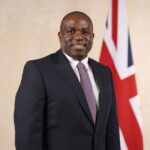
    The speech made by Anneliese Dodds, the Minister for Development, at the LSE on 3 February 2025.

    Thank you so much, Julia [Dame Julia Hoggett, CEO of the London Stock Exchange], and a very good morning to all of you.

    Thank you so much for joining us today, I really appreciate it.

    It was an absolute thrill to see the market open this morning.

    I am very keen to hear from as many of you as possible, so I’m not going to speak for too long.

    I want to leave plenty of time for questions.

    But I do want to share a few reflections with you this morning.

    This is, as Dame Julia kindly said, the second time I had the privilege of opening the London Stock Exchange.

    I had the privilege of speaking in this room almost two years ago, and it was then as now a very moving moment, because sat in the front row were some of the first women, in fact the first women, and others who set foot on the London Stock Exchange because they had not been allowed to do so until then.

    What a privilege to have been there for that moment, as for this moment.

    Two years ago, when I was here, I spoke about my own family background – with my dad having worked in financial services.

    And I want again to place on record, my respect for the work that goes on in this building, and across the country.

    Businesses in the financial sector power jobs and growth across the UK, and indeed often around the world as we’ve just heard.

    Well, of course, a lot has changed in the last two years, since I was last here.

    I am addressing you, not as a shadow minister – but now as the Minister for Development, and for Women and Equalities.

    We have a new government focused on growth and restoring our reputation on the world stage.

    And the Prime Minister and the Chancellor have set us all a guiding mission to grow our economy, and bring opportunity to people across our country.

    They have been clear that supporting growth and development around the globe is not just the right thing to do.

    It is an essential part of how we unlock growth, jobs, trade, investment, and pride in our economy here at home as well.

    Indeed, as the Foreign Secretary said in a major speech at the start of the new year, in today’s contested, competitive world, what we need now is a whole new level of global engagement – drawing on our greatest strengths.

    That absolutely includes the expertise, experience, and dynamism in this room.

    Clearly, the City of London and wider UK financial sector must be at the heart of how we meet the opportunities and challenges of our time.

    Twenty years ago, people marched and campaigned to Make Poverty History.

    That call was heeded and huge progress was made.

    Debt was cancelled, and development assistance was ramped up.

    Lives were saved and lives were changed.

    Today, the challenges we face are growing and becoming increasingly complex – not least because our world is so deeply interconnected.

    We have all seen how shocks can indeed reverberate across the globe.

    A vicious cycle of conflicts.

    The pandemic.

    The climate and nature crisis, and others.

    We have seen supply chains disrupted, and investor confidence shaken – harming our economy, here at home.

    Yet we have all seen the power of harnessing this interconnectedness as well.

    By working together – we can get ahead of global shocks, mitigate their impact, and unlock new opportunities for growth.

    For outward investment by UK businesses.

    To build future markets for UK exports.

    To support low-and-middle-income countries to grow their economies as well.

    As the UK’s Minister for Development, and for Women and Equalities, I am determined to build genuine partnerships across the Global South, based on genuine respect, and in service of our mutual interests.

    Indeed, in all of the visits I’ve undertaken over the last 6 months, from Indonesia to Malawi, to the major global gatherings of the UN General Assembly, the World Bank Annual Meetings, and the climate summit at COP29 – I heard loud and clear that our drive for growth is an ambition our partners all share.

    They want respectful, modern partnerships that benefit us all, too.

    They want to tap into your expertise and the innovative financial solutions you are pioneering – to harness the power of private finance.

    They want to work with us to build resilience to shocks.

    To escape the trap of unsustainable debt.

    To break down the barriers to private investment.

    And they want to work with us to champion much-needed reform of the global financial system, so we unlock more opportunities for everyone – from millions of women and girls around the world whose game-changing potential has yet to be unleashed, to investors right here in the City of London.

    Your hard work is at the heart of these partnerships.

    Already, 115 African companies are listed here.

    London is the world’s number one hub as I said before for green finance.

    All of this puts the UK in pole position to be the leading source of investment for emerging markets – and to build on the reputation you have worked so hard to develop.

    So today, I want to focus on four key areas, where the government and the City can make the most of the important roles we have to play – to support stable, resilient long-term growth, here at home, and around the world.

    Mobilising private capital – to help us maximise the impact of public and private finance.

    Reforming international financial institutions – to make sure they are bigger, better, and fit for the future.

    Tackling unsustainable debt – to achieve the fast, orderly restructuring that helps countries avoid default and supports stability.

    And scaling up insurance – to get more finance in place before disasters strike, to protect and promote growth across the world.

    First – mobilising private capital.

    Together, we can maximise the impact of billions of dollars of public money – and unlock many billions more.

    Consider that globally, there are some $121 trillion of assets under management.

    Currently, Africa accounts for less than 1% of the overseas portfolio allocation of UK pension funds.

    Yet Africa’s GDP growth – and I know I don’t need to tell many in this room of this – is projected to outpace the global average – and almost 70% of UK savers say they want their investments to consider impact on people and the planet.

    It is time to lean in.

    So, I was delighted to hear the Chancellor announce her plans – to consolidate the UK’s fragmented £1.3 trillion pension fund landscape, and create larger, more agile funds, capable of investing in high-growth emerging and developing markets.

    This is exactly the kind of opportunity we need to embrace.

    And I’m delighted that today, a new report from leading UK-based institutional investors sets out how the UK can continue to be the climate finance hub for the world.

    The report makes it clear that investing in other countries to accelerate the transition to clean energy is critical – to growing our economy at home, and to building financial stability long-term, in the UK, and right around the world.

    The Energy Secretary is rightly championing this through the new Global Clean Power Alliance, that the Prime Minister launched at the G20 in Rio.

    Well, today I am pleased to announce that alongside the Economic Secretary to the Treasury, I am convening an Investor Taskforce – to increase UK private investment for climate and development, in markets around the world.

    We are building partnerships with public markets like the London Stock Exchange to pursue this.

    In just four years, our flagship MOBILIST initiative has mobilised almost $250 million for listed products focussed on climate and development globally – including recent investments, like the infrastructure securitisation through Bayfront.

    This method of structuring bank infrastructure loans makes it possible for institutional investors to purchase them through investment-grade listed instruments.

    MOBLIST also helped achieve a $100 million first close for the Green Guarantee Company that will provide up to $1 billion of guarantees – for institutional investors buying green bonds, including those listed on the London Stock Exchange, and green loans issued in the private credit market.

    Today, I am pleased to announce up to £100 million of additional funding for MOBILIST – so we can build on this innovative work pioneering public market investment in emerging markets.

    This will allow MOBILIST to provide a platform for even more partners to draw on UK financial expertise – unlocking opportunities for investments in green growth, and helping more businesses to access new and affordable sources of capital across Asia, Africa, and Latin America.

    MOBILIST is not the only way that we are doing this.

    When I visited the London-based Private Infrastructure Development Group, funded by the UK and others – I saw how they are developing and de-risking infrastructure projects across Africa and Asia.

    The UK financial sector has been a key partner for them.

    For example, one arm of the group – GuarantCo – has guaranteed bonds and loans, to unlock $5.7 billion of private investment in infrastructure, benefitting over 44 million people.

    And – breaking news – I am delighted that a new $50 million deal with Standard Chartered Bank – signed today – will allow them to expand further.

    As another example, take British International Investment, or BII – the world’s oldest Development Finance Institution, at the forefront for 75 years.

    The BII teams were full of ambition when I visited their HQ in November.

    I am always proud to tell our partners that 25% of BII’s new investment commitments already meet the 2X Challenge standard – to increase investment in women.

    By making this a priority, BII is funding everything from affordable housing led by women in India, to making lines of credit accessible to small-scale retailers run by women in Nigeria – supporting jobs and growth.

    And when I sat down with key African investors alongside partners from the City in the autumn, I was able to highlight that over half of BII’s portfolio is invested in Africa, and at least 30% of BII’s investments are in climate finance.

    So today, I want to encourage you to engage with their live call for proposals that is open right now.

    BII are looking for innovative pilots to be funded through a new facility announced by the PM at UNGA in New York – that we expect to mobilise over $500 million of institutional investment.

    We are supporting public markets to mobilise finance in other ways as well.

    UK support has been instrumental in helping Ethiopia to launch its first public stock exchange just a few weeks ago, with support from the UK government through Financial Sector Deepening Africa – or ‘FSD Africa’ for short.

    This exchange brings transparency and international-standard accounting to listed companies – and the diverse ownership that should improve accountability, and broaden both the gains from growth, and the buy-in.

    We are sharing UK expertise on financial regulation with our partners as well.

    Through a partnership with the Foreign, Commonwealth, and Development Office, the Bank of England is now supporting more than 10 countries to improve monetary policy and strengthen financial stability – from Nigeria to South Africa, and from Bangladesh to Indonesia.

    And in the last few days we have signed a new partnership with the Financial Conduct Authority, that will lead to them sharing knowledge with partner countries – to ensure that markets are competitive and fair.

    That is good for our partners – and it is good for us as well.

    Last year, Tanzania’s NMB Bank cross-listed East Africa’s first sustainability bond on the London Stock Exchange and the Dar es Salaam Stock Exchange – again, with support from FSD Africa, and an anchor investment from BII.

    The $73 million raised through this ‘Jamii’ Bond will support renewable energy, food security, jobs, and growth.

    In fact, thanks in no small part to your hard work, these sorts of listing are becoming a trend on the London Stock Exchange.

    Last year, the Brazilian Government dual-listed its first $2 billion sovereign sustainable bond on the London Stock Exchange.

    That was followed by a full listing of its second $2 billion sustainable bond, a few weeks later.

    All of this was enabled by UK support that helped Brazil develop a Sovereign Sustainable Bonds framework.

    Now, as we heard earlier, just a few weeks ago, the first $500 million Climate Investment Funds Capital Markets Mechanism bond was issued on the London Stock Exchange.

    It generated considerable investor interest.

    As has already been mentioned of course, it was over-subscribed six times over.

    Further issuances could raise up to $7.5 billion over ten years, for new investments in clean energy in developing countries – leveraging UK government contributions, and those from our international partners.

    So, I could not have been more delighted to open the market this morning – and to congratulate the Climate Investment Funds and World Bank Treasury on issuing this promising new bond today.

    Now, of course, no one in this room is going to invest in developing economies, or provide climate finance – simply because it is a nice thing to do.

    You are making those investments and building those partnerships because they represent a remarkable opportunity – to marry investment in the economies and technologies of the future, with the experience and expertise of the City of London.

    Let us keep up the momentum – so the London Stock Exchange continues to be the preferred choice.

    My second point is about reforming international financial institutions.

    We are asking a lot of all of you – but of course, there are certain things that only governments can do.

    And reforming the multilateral development banks or MDBs is one of the biggest ways that we are holding up our end of the bargain.

    Every year, the World Bank Group and various regional development banks multiply every pound the UK government and other shareholders put in.

    Last year alone, they raised around £30 billion from bond issuances in London.

    Together with finance raised on other markets around the world, this allowed them to deploy over $170 billion to low-and-middle-income countries.

    This finance is on much more affordable terms than many of our partners could access directly – thanks to the banks’ triple-A credit ratings.

    They use this to invest in high-impact public and private projects.

    Green infrastructure, healthcare, education, women and girls – all underpinning the foundations for growth around the world, and here in the UK.

    So clearly, pursuing reforms that make the MDBs bigger, better, and fit for the future is key.

    As the Prime Minister set out at the UN General Assembly last year –that is exactly what we are using the UK’s influence to do, in partnership with the Global South.

    Indeed, when I travelled to Washington D.C in October, as the UK Governor of the World Bank Group, I made it my priority to agree changes to its risk appetite, that will unlock an additional $30 billion over ten years.

    This builds on UK government guarantees that have made it possible for the World Bank and other MDBs to lend an additional $6 billion, across Africa, Asia, and the Pacific.

    Ahead of the next big ‘Financing for Development’ summit in Seville this summer – we must do more.

    To make sure the MDBs can shoulder more risk.

    To create more opportunities for private companies to invest in emerging markets.

    And to empower the women and girls who have the power to lift up whole families, communities, countries, and economies.

    Thirdly – we have to tackle the unsustainable debt that is dampening global growth.

    As we take the next steps now, we need the City to be at the forefront of expertise and solutions, to make sure that countries facing unsustainable debt burdens can restructure it effectively.

    Clearly, fast, orderly restructuring can help countries avoid default, and support stability.

    This is squarely in the interest of lenders, such as bondholders and commercial lenders here in the City.

    Obviously, it is squarely in the interests of borrowers too.

    I heard that loud and clear from the governments of Malawi and Zambia during my visit at the end of last year.

    With some 95% of African bonds issued under English Law, the UK has a key role to play.   We need to leverage this.

    Half of the lowest income countries are now in debt distress, or at high risk of it.

    Some 3.3 billion people are living in countries that are spending more on servicing their debt, than on the health and education services that underpin long-term, global growth.

    So, I want us to build on the successes of Collective Action Clauses that featured in over 90% of new bond issuances.

    These have been rolled out widely since their introduction in 2004.

    They have played an important role in ensuring a smooth process and strong private sector participation, in recent debt restructuring negotiations in Ghana and Zambia – avoiding situations where one or two bondholders can hold up a deal.

    This is a great example of what market-friendly innovation can achieve.

    My challenge to the commercial banks now is to introduce the equivalent clauses for syndicated lending – that the UK government has worked with the International Capital Markets Association, legal and financial advisors based in the City, and international partners to develop.

    No lender has implemented them – yet.

    So today, I am announcing that the UK government will offer support for the first ten transactions that put ‘majority voting provisions’ into existing or new lending to low-or-middle-income countries.

    Together, we can speed up debt restructuring negotiations with syndicated lenders – and get growth recovering more quickly in cases where debt has become unmanageable.

    We can do more on Climate Resilient Debt Clauses as well.

    The UK government was the first bilateral creditor to offer these clauses.

    Several other lenders have followed since.

    The difference they can make is significant.

    They allow repayments to be paused when a shock hits.

    This frees up fiscal space for countries responding to a crisis.

    Helps avoid default.

    Supports stability.

    And safeguards growth.

    Just look at Grenada.

    At the end of last year, following Hurricane Beryl – these clauses were triggered on government-issued bonds

    The result was $30 million of interest payments being suspended over the following year – thanks to the bondholders who pioneered these clauses.

    Already, we are going further.

    In October, I announced that the UK will support small states to take up Climate Resilient Debt Clauses in their World Bank loans, by covering the fees.

    In the long run these should be offered at no cost – improving sustainability, and offering benefits both to borrowers and lenders.

    All of this builds on the leadership of countries like Grenada and Barbados who championed these clauses.

    Today, I am reiterating our call on all creditors to offer these clauses in their sovereign lending, by the end of this year – including private sector lenders here in the City.

    I want to see greater transparency on debt as well.

    This improves investors’ understanding – and reduces the hidden debt that poses substantial risks for creditors here in the City.

    It lowers the cost of borrowing for our partners.

    And it allows citizens across the world to hold their governments to account for borrowing and using resources.

    Already, the UK government publishes all its new lending quarterly, on a loan-by-loan basis.

    Now, we want to see other public and private creditors meeting the same standards of transparency in their lending – especially to low-income countries.

    The UK will keep under review if further action is needed – working together with the private sector, to combat high levels of indebtedness.

    Fourth and finally, we need to get insurance and other contingent finance in place before disasters strike, so we protect and promote growth around the world.

    Extreme weather events are on the rise, as we all know.

    Millions of the world’s poorest and most vulnerable people are bearing the brunt of repeated shocks.

    Yet currently, less than 2% of crisis finance is of the ‘pre-arranged’ variety – that makes sure every pound spent yields three or four times its worth in benefits.

    Changing that is so important – to help countries receive the rapid payments they need to avoid losses.

    To reduce the need for humanitarian support.

    And to protect growth and jobs.

    Once again, the City is well-placed to meet the needs of this growing, and largely untapped market – as a global leader in innovative insurance and managing risk.

    In Africa, the Caribbean, South-East Asia and the Pacific, the FCDO has helped to establish regional insurance schemes – helping countries get cheaper prices by buying insurance from the private sector as a group, pooling their risk.

    London reinsurers underwrote a quarter of the first eight pools that have allowed Africa to transfer over $1 billion of risk, through the UK-funded African Risk Capacity.

    On a visit at the end of last year, I saw first-hand the difference that payouts from the African Risk Capacity are making to people in Zambia and Malawi, as they respond to a devastating recent drought.

    I was proud to tell them that this was made possible by UK government subsidies for insurance premiums – for countries that otherwise wouldn’t have been able to afford them.

    Now, I want us all to engage with the ground-breaking report published by a high-level industry panel, that I helped to launch last week – on how we can strengthen the provision of insurance and other contingent finance, and scale up the use of pre-arranged finance.

    Improving modelling, and the way we price risk.

    Championing innovative parametric insurance.

    De-risking investments upfront.

    This work is so important for giving investors confidence, expanding markets in development economies, improving returns, and strengthening the UK’s role as a leading global financial hub.

    Cultivating a virtuous cycle of global resilience and growth is in all our best interests.

    Your expertise, innovation, and investment are critical.

    So, my pledge to you is that I will make it a priority to build stronger partnerships between the Foreign, Commonwealth, and Development Office and the City.

    So we face up to unprecedented challenges.

    Embrace new opportunities.

    And reinvigorate hope for our shared future – and for sustained and sustainable economic growth here and overseas – by working towards it together, in the months and years ahead.

    Thank you.

  • John Healey – 2025 Speech at the ADS Annual Dinner

    John Healey – 2025 Speech at the ADS Annual Dinner

    The speech made by John Healey, the Secretary of State for Defence, on 28 January 2025.

    Good evening. Let me begin by thanking Kevin and his team at ADS for hosting this splendid event and for their work in promoting an industry that is the foundation for our way of life.

    ADS is going from strength to strength, with a double digit increase in your membership last year.

    You represent a commitment to innovation and excellence that are hallmarks of the British business spirit.

    Yours is an industry which proves that we are still – at heart – a nation of makers and inventors. I know recent times haven’t been easy. And as Defence Secretary, I am grateful to you all.

    This event brings us together from across the UK, across the industry and across the political divide.

    I welcome this because defence policy and procurement commitments reach beyond political cycles.

    I believe I’m the first Defence Secretary who’s spoken at this dinner, and tonight, you have two for the price of one with me as the warmup act for Penny Mourdant’s after dinner speech.

    Penny is someone with a lifelong connection and commitment to our armed forces, who rose to become the first woman ever to hold the role of Defence Secretary.

    I’ve had the privilege of six months in the role, part of a government taking on profound challenges in our economy, our public finances and our national security.

    Yet, as a new government, we’ve already:

    • Stepped up and speeded up support for Ukraine…
    • Increased defence spending by nearly £3 billion…
    • Launched a first of its kind Strategic Defence Review…
    • Given service personnel the largest pay rise in over 20 years… and still dealt with a multi-billion in-year deficit…
    • Signed the landmark Trinity House Agreement with Germany…
    • Secured a huge deal to buy back over 36,000 military homes to improve forces housing and save taxpayers billions…
    • Set new targets to tackle the recruitment crisis…
    • Begun a transformational MOD reform programme…
    • And got the Armed Forces Commissioner Bill through the House of Commons to improve service life.

    The point I want to make is that this is a new government that is delivering for defence.

    Something which I was able to underline last Friday at Rolls Royce, announcing a major new contract over 8 years, which will boost British jobs, business and national security.

    There’s incredible work being done there in Derby, by an incredible team, some of whom are here this evening.

    It’s a big investment, but behind the numbers are 200 apprentices a year who now feel they have a future.

    And suppliers – 92 per cent of which are British based – who now feel like have certainty.

    What really struck me – and it happens every time I visit a defence site – is the deep sense of pride and purpose.

    Defence workers are right to feel that way. Their efforts keep us all safe.

    And as an industry, you also invest huge sums in research and development. One of the great strengths of the defence industry is that you force us to reach for the future.

    Down the years, you’ve been responsible for some of the most significant innovations in history. Designed for times of war but which often produce lasting benefits for wider society well beyond the battlefield.

    As a nation, we’re good – and rightly so – at taking pride in the professionalism of our soldiers, sailors and aviators.

    But we know that that they are only as effective as the industry which equips them.

    We must be better at celebrating the role of the coders, programmers, scientists and engineers who provide our forces with the tools they need to protect us.

    It’s why I want us to not only change the way we work with the defence industry, but also change the way we see the defence industry.

    On the way we work with industry, I hope the last few months serve as a glimpse of type of partnership we want to forge.

    From industry involvement – for the first time ever – in our war gaming, to the creation of the new Defence Industrial Joint Council.

    And on the way we see industry, we know we have much to do.

    Right now, there’s growing security concerns for defence firms at university careers, you attend to offer young people a route to a better life.

    You’re facing harassment and intimidation, forced to cancel events on campus. This is wrong.

    This attitude takes for granted the privileged position we enjoy in Britain – to live in freedom and security… security our defence industry guarantees.

    So, today – alongside the Business and Education Secretaries – I’ve written to Universities UK for assurances about your safety on campuses.

    We’re also seeing defence firms ranked alongside tobacco and gambling in Environmental, Social and Governance audits. And pension funds divest from you.

    I have no doubt the intentions are well-meaning. But they’re fundamentally flawed.

    We don’t stop wars by boycotting our defence industry.

    We stop wars by backing it.

    Let’s not forget that national security is a pre-condition for economic security, investor confidence and social stability.

    I will always be a fierce advocate for you in the Department, to wider government, to the City, to the British public and to whoever needs to hear it.

    My challenge to you – as an industry – is to be louder and confident about your role.

    As my friend – Jonny Reynolds– said to the President’s Reception earlier:

    “You are exceptional in your importance… in helping to safeguard our national security and our way of life.

    “But you are also exceptional in your contribution to our economy. Nearly half a million well paid jobs are directly owed to aerospace, defence, security and space sectors.”

    To meet the challenges of this new era of threats, you’ve seen the direction we want to take with our Defence Industrial Strategy Statement of Intent.

    And let me thank everyone who’s shared their insights so far in submissions to both our industrial strategy, and SDR consultations.

    I know – for some – our Statement of Intent may have been met with a degree of scepticism. You’ve been here before… I get that…

    New government, new ideas.

    But old habits die hard and entrenched interests dig in.

    Previous industrial strategies have produced policies – many of them good – but there wasn’t the plan, the structures and the relentless attention to reform needed to make change happen.

    So, why will this be different?

    First, it has to be different.

    The war in Ukraine confronts us with the deep truth that when a country faces conflict or is forced to fight, its armed forces are only as strong as the industry which stands behind them…

    That innovation and production capacity is a major part of our nation’s – and our alliance’s – deterrence.

    And that industry’s constant purpose is to give the nation’s war fighters the advantage over our adversaries.

    The last Defence Industrial Strategy was published in 2021, a year before Putin shattered the peace in Europe.

    Ours will hardwire in these lessons and so too will the Strategic Defence Review.

    Second, I’m driving deep reform to defence.

    It doesn’t make news headlines, but it’s an essential foundation for implementing both the SDR and Defence Industrial Strategy.

    For industry, it means you’ll be brought in earlier to the conversation on how we should fight…

    We’ll ask you how you can help solve our problems rather than giving you a requirement to deliver.

    You’ll also see the creation of a new role, the National Armaments Director, soon-to-be one of the most senior roles in UK Defence, sitting alongside the Chief of the Defence Staff and Permanent Secretary.

    Their responsibilities will include:

    • Repairing a broken procurement system…
    • Ensuring our armed forces have what they need to fulfil their duty of protecting our nation…
    • And championing your industry at home and abroad.

    Third, defence is part of our bigger British drive for growth – the government’s number one mission.

    The Chancellor is speaking tomorrow about how we are going to meet this challenge.

    But the message I want to reinforce is that defence is an engine for driving economic growth.

    Fourth, we’ve proved we can do it by supporting Ukraine through Taskforce KINDRED and HIRST.

    From the onset, when it took 287 days after Putin invaded to sign contracts for new NLAWs…

    … to today, when we’ve created industrial bases for new capabilities – virtually from scratch…

    Supplying – at scale – one of the most effective drone systems in Ukraine.

    Restarted artillery barrel manufacturing in the UK to deliver hundreds to the front line.

    Enhancing our own capabilities through Stormer and Starstreak…while Gravehawk, Snapper and Wasp have all been developed with breathtaking speed.

    I don’t just want this to be the government’s new Defence Industrial Strategy, it needs to be a national endeavour… private and public… SMEs and primes… innovators and educators… trade associations and trade unions…

    All creating a defence industry which is better and more integrated…

    One that can keep our armed forces equipped… and innovating at wartime pace, ahead of our adversaries.

    The Shadow Defence Secretary is familiar with the challenges.

    I know he will play his part in holding us to account.

    And I trust he – and his Party – will play their part in backing reforms that strengthen our country’s defence and its defence industry.

    This is new era of threats, demands a new era for defence.

    Change is essential, not optional.

    Our success rests on a new partnership with innovators, investors and industry.

    Our government is determined to meet the challenge, determined to deliver for defence.

    Together, we will make Britain secure at home and strong abroad.

    Thank you – enjoy your evening and I look forward to working with you over the coming years.

  • Rachel Reeves – 2025 Speech on Kickstarting Growth

    Rachel Reeves – 2025 Speech on Kickstarting Growth

    The speech made by Rachel Reeves, the Chancellor of the Exchequer, on 29 January 2025.

    Thank you everyone.

    It’s fantastic to be here at Siemens at this amazing facility.

    Today, I want to talk about economic growth.

    Why it matters.

    How we achieve it.

    And what we are going to do further and faster to deliver it.

    Before we came into office…

    … the Prime Minister and I have said loud and clear:

    Economic growth is the number one mission of this government.

    Without growth, we cannot cut hospital waiting lists or put more police on the streets.

    Without growth, we cannot meet our climate goals…

    … or give the next generation the opportunities that they need to thrive.

    But most of all…

    … without economic growth…

    … we cannot improve the lives of ordinary working people.

    Because growth isn’t simply about lines on a graph.

    It’s about the pounds in people’s pockets.

    The vibrancy of our high streets.

    And the thriving businesses that create wealth, jobs and new opportunities for us, for our children, and grandchildren.

    We will have succeeded in our mission when working people are better off.

    I know that the cost of living crisis is still very real for many families across Britain.

    The sky high inflation and interest rates of the past few years have left a deep mark…

    … with too many people still making sacrifices to pay the bills and to pay their mortgages.

    But we have begun to turn this around.

    Everything I see as I travel around the country gives me more belief in Britain.

    And more optimism about our future.

    Because we as a country have huge potential.

    A country of strong communities, with small and local businesses at their heart.

    We are at the forefront of some of the most exciting developments in the world…

    … like artificial intelligence and life sciences…

    … with great companies like DeepMind, AstraZeneca, Rolls Royce… and of course Siemens…

    … delivering jobs and investment across Britain.

    We have fundamental strengths – in our history, in our language, and in our legal system – to compete in a global economy.

    But for too long, that potential has been held back.

    For too long, we have accepted low expectations and accepted decline.

    We no longer have to do that.

    We can do so much better.

    Low growth is not our destiny.

    But growth will not come without a fight.

    Without a government willing to take the right decisions now to change our country’s future for the better.

    That’s what our Plan for Change is all about.

    That is what drives me as Chancellor.

    In my Mais lecture in March last year, I set out my approach to achieving economic growth…

    … and identified the fundamental barriers to realising our full potential.

    The productive capacity of the UK economy has become far too weak.

    Productivity, the driver of living standards…

    …has grown more slowly here than in countries like Germany and the US.

    The supply side of our economy has suffered due to chronic underinvestment…

    … and stifling and unpredictable regulation…

    … not helped by the shocks we have faced in recent years.

    The strategy that I have consistently set out…

    … is to grow the supply-side of our economy…

    … recognising that first and foremost…

    … it is businesses, investors and entrepreneurs who drive economic growth…

    … a government that systematically removes the barriers that they face – one by one and has their back

    This strategy has three essential elements:

    First, stability in our politics, our public finances and our economy – the basic condition for secure economic growth.

    Second, reform – reform which makes it easier for businesses to trade, to raise finance and to build.

    And third, investment, the lifeblood of economic growth.

    Let me explain each of those in turn.

    Stability – the first line of our manifesto was a promise to bring stability to the public finances.

    It is the rock upon which everything else is built.

    And it is the essential foundation of our Plan for Change.

    Because economic stability is the precondition for economic growth.

    That’s why the first piece of legislation that we passed as a government was the Budget Responsibility Act…

    … so never again will we see our independent forecaster sidelined.

    At my first Budget in October…

    … it was my duty as Chancellor…

    … to fix the foundations of our economy, and repair the public finances that we inherited.

    To restore stability and create the conditions for growth and investment.

    I set out new fiscal rules which are non-negotiable, and will always be met.

    We began to rebuild our NHS and our schools – the start of a programme of public service reform.

    I capped the rate of corporation tax – and I extended our generous capital allowances for the duration of this parliament – as the CBI and the BCC have long called for.

    And I protected working people after a cost of living crisis…

    … by freezing fuel duty…

    … and with no increases in their National Insurance, Income Tax or VAT.

    But taking the right decisions and the responsible decisions does not always mean taking the easy decisions.

    The increase in Employers’ National Insurance contributions has consequences on business and beyond.

    I said that up front in my Budget speech.

    I accept that there are costs to responsibility.

    But the costs of irresponsibility would have been far higher.

    Those who oppose my Budget know that too.

    That is why, since October, I have seen no alternative put forward.

    No alternatives to deal with the challenges we face.

    No alternatives to restoring economic stability…

    … and therefore no plan for driving economic growth.

    Alongside stability, we need to drive forward the reform which makes investment more likely…

    … by removing the constraints on the supply side of our economy…

    … making it easier for businesses to trade…

    … to raise finance…

    … and to build.

    Let me first address our approach to trade.

    We stand at a moment of global change.

    In that context, we should be guided by one clear principle above all.

    To act in the national interest…

    … for our economy…

    … for our businesses…

    … and for the British people.

    That means building on our special relationship with the United States under President Trump.

    The Prime Minister discussed the vital importance of growth with the President last weekend…

    … and I look forward to working with the new Treasury Secretary, Scott Bessent…

    … to deepen our economic relationship in the months and the years ahead.

    Acting in our national interest also means resetting our relationship with the EU – our nearest and our largest trading partner – to drive growth and support business.

    We are pragmatic about the challenges that we have inherited from the last government’s failed Brexit deal.

    But we are also ambitious in our goals.

    … we will prioritise proposals that are consistent with our manifesto commitments…

    … and which contribute to British growth and British prosperity…

    … because that is what the national interest demands.

    Our approach to trade also means building stronger relationships with fast-growing economies all around the world.

    That is why I led a delegation to China for the first Economic and Financial Dialogue since 2019…

    … alongside world-leading financial service businesses, including HSBC, Standard Chartered and Schroders…

    … unlocking £600 million of tangible benefits for the UK economy.

    And I am pleased to confirm that the Business and Trade Secretary will shortly visit India …

    … to restart talks on the free trade agreement and bilateral investment treaty.

    Our businesses can only realise these opportunities if they can recruit the skilled staff that they need.

    So we are reforming our employment system to create a national jobs and careers service.

    We have created Skills England to meet the skills of the next decade in sectors like construction and engineering.

    And we will deliver fundamental reform of our welfare system.

    That includes looking at areas that have been ducked for too long…

    … like the rising cost of health and disability benefits…

    … and the Secretary of State for Work and Pensions will set out our plans to address this ahead of the Spring Statement.

    Next, the Immigration White Paper, that will bring forward concrete proposals to bring the overall levels of net migration down.

    But we know that the UK is in an international competition for talent in vital growth sectors.

    That is why last week, I set out plans for attracting global talent.

    We will look at the visa routes for very highly skilled people…

    … so the best people in the world choose the UK to live, work and create wealth…

    … bringing jobs and investment to Britain.

    To help businesses access the finance and support they need to grow…

    … we have delivered significant reforms to provide greater flexibility for firms and founders to raise finance on UK capital markets, by rewriting the UK’s listing rules.

    In my Mansion House speech, I announced a series of reforms to our pensions system…

    … including the creation of larger, consolidated funds…

    … which have much greater capacity to invest in high growth British companies at the scale that we need them to.

    The consultation on these reforms is already complete and the final report will be published in the Spring.

    Yesterday we confirmed that we have plans to go further, whilst always protecting the important role that pension funds play in the gilt market.

    We will introduce new flexibilities for well-funded Defined Benefit schemes…

    … to release surplus funds where it is safe to do so…

    … generating even more investment into some of our fastest growing industries.

    I know too that businesses are held back by a complex and unpredictable regulatory system…

    … and that is a drag on investment and innovation.

    We have already provided new growth-focused remits to our financial services regulators…

    … we have announced a new interim Chair of the Competition and Markets Authority…

    … and we have established the Regulatory Innovation Office, with an initial focus on synthetic biology, space, AI, and connected and autonomous vehicles.

    But we need to go further and we need to go faster.

    So earlier this month, I met the Heads of some of our largest regulators.

    They have already provided a range of options to drive growth in their sectors…

    … and proposals for how they can be more agile and responsive to businesses…

    … and we will publish that final action plan in March to make regulation work much better for our economy.

    To get Britain building again…

    … we have delivered the most significant reforms to our planning system in a generation.

    I have been genuinely shocked about how slow our planning system is.

    By how long it takes to get things done.

    Take the decision to build a solar farm in Cambridgeshire – a decision the Energy Secretary took only a few weeks into the job in July…

    The Deputy Prime Minister has already driven significant progress across government in addressing these issues.

    My colleagues have determined 13 major planning decisions in just six months…

    … including for airports, data centres and major housing developments.

    We have significantly raised housing targets across our country and made them mandatory, so that we can build one-and-a-half million homes in this parliament.

    We have reformed decades-old “green belt” policies, making it easier to build on the “grey belt” land around our major cities.

    And we have opened up our planning system to build new infrastructure – like onshore wind farms or data centres driving the AI revolution.

    Having listened closely to calls from business groups like the Institute of Directors…

    … and businesses across our economy about the need to speed up infrastructure delivery…

    … including Mace, Skanska and Arup who are here today…

    … and members of our British Infrastructure Taskforce like Lloyds, Blackrock and Phoenix…

    … we have now set out plans to go even further.

    Last week we confirmed our priorities for the Planning and Infrastructure Bill …

    … to rapidly streamline the process for determining applications…

    … to make the consultation process far less burdensome…

    … and to fundamentally reform our approach to environmental regulation.

    The problems in our economy…

    … the lack of bold reform that we have seen over decades…

    … can be summed up by a £100 million bat tunnel built for HS2…

    … the type of decision that has made delivering major infrastructure in our country far too expensive and far too slow.

    So we are reducing the environmental requirements placed on developers when they pay into the nature restoration fund that we have created…

    …so they can focus on getting things built, and stop worrying about bats and newts.

    And to build our new infrastructure like nuclear power plants, trainlines and windfarms more quickly…

    … we are changing the rules to stop blockers getting in the way of development…

    … through excessive use of Judicial Review.

    This Bill, the Planning and Infrastructure Bill, is a priority for this government.

    It will be introduced in the Spring…

    … and we will work tirelessly in parliament to ensure its smooth, and speedy and rapid delivery.

    By providing a foundation of economic stability…

    … and by delivering the reforms needed to make it easier for businesses to succeed and grow…

    … we will create the right conditions to increase investment in our economy – the final key element of our strategy.

    Investment and innovation go hand in hand.

    I want to see the sounds and the sights of the future arriving.

    Delivered by amazing businesses like Wayve and Oxford Nanopore.

    They are the future.

    And Britain should be the best place in the world to be an entrepreneur.

    That is why we protected funding for research and development…

    … and it is why one of the first decisions I made as Chancellor…

    … was to extend the Enterprise Investment Scheme and the Venture Capital Trust schemes for a further 10 years…

    … to get more investment into new companies, driving their innovation and growth.

    I am determined to make Britain the best place in the world to invest.

    That was my message in Davos last week.

    That ambition demands action.

    The International Investment Summit that we hosted in October delivered £63 billion of investment right across our country…

    … from Iberdrola doubling its investment in clean energy in places like Suffolk…

    … Blackstone investing £10 billion in a data centre in Northumberland…

    … and Eren Holdings investing £1 billion in advanced manufacturing in North Wales.

    While the lifeblood of growth is business investment, a strategic state has a crucial role to play.

    That is why we established the National Wealth Fund…

    … to create that partnership between business, private investors and government to invest in the industries of the future…

    … like clean energy.

    Today I can announce two further investments by the National Wealth Fund.

    First, a £65 million investment for Connected Kerb, to expand their electric vehicle charging network across the UK.

    And second, a £28 million equity investment in Cornish Metals…

    … providing the raw materials to be used in solar panels, wind turbines and electric vehicles…

    … supporting growth and jobs in the South-West of England.

    There is no trade-off between economic growth and net zero.

    Quite the opposite.

    Net zero is the industrial opportunity of the 21st century, and Britain must lead the way.

    That is why we will publish a refreshed Carbon Budget Delivery Plan later this year, which alongside the Spending Review, will set out our plans to deliver Carbon Budget 6.

    Today, I can also announce that we are removing barriers to deliver 16 gigawatts of offshore wind…

    … by designating new Marine Protected Areas to enable the development of this technology in areas like East Anglia and Yorkshire…

    … crowding in up to £30 billion of investment in homegrown clean power.

    And there’s more.

    Our industrial and manufacturing base, brilliantly represented by Make UK, have been banging their heads against the wall for years at the lack of a proper industrial strategy from government.

    That is why we have launched our modern industrial strategy…

    … to drive investment into the industries that will define our success in the years ahead.

    We have already provided funding to unlock investment in sectors like aerospace, automotives and life sciences…

    … and we have set out reforms to boost financial services, the AI sector and creative industries.

    We are not wasting any time, and we will move forward with the next stages of the Industrial Strategy ahead of its publication in the Spring.

    We will work with the private sector to deliver the infrastructure that our country desperately needs.

    This includes the Lower Thames Crossing, which will improve connectivity at Port of Tilbury and Dover, London Gateway and Medway…

    … alleviating severe congestion…

    … as goods destined for export come from the North, and the Midlands and across the country to markets overseas.

    To drive growth and deliver value for money for taxpayers, we are exploring options to privately finance this important project.

    And we have changed course on public investment, too…

    … with a new Investment Rule to ensure that we don’t just count the costs of investment – we count the benefits too.

    We are now investing 2.6% of GDP on average over the next five years, compared to 1.9% planned by the previous government..

    … delivering an additional £100 billion of growth-enhancing capital spending…

    … which catalyses private sector investment…

    … in more housing…

    … better transport links…

    … and clean energy.

    These are significant steps in just six months…

    … and we are seeing some encouraging signs in the British economy.

    The IMF have upgraded our growth prospects for 2025…

    … the only G7 country outside the US to see this happen.

    This gives us the fastest growth of any major European economy this year.

    And a global survey of CEOs by PWC, has shown Britain is now the second most attractive country in the world for businesses looking to invest.

    The first time the UK has been in that position for 28 years.

    This is all welcome news.

    But there is still more that we can and will do.

    I am not satisfied with the position we are in.

    While we have huge amounts of potential, the structural problems in our economy run deep.

    And the low growth of the last 14 years cannot just be turned around overnight.

    This has to be our focus for the duration of the parliament.

    Because the situation demands us to do more.

    And today I will go further and faster in kickstarting economic growth.

    Our mission to grow our economy is about raising living standards in every single part of the United Kingdom.

    Manchester is home to the UK’s fastest growing tech sector.

    Leeds is one of the largest financial services centres outside of London.

    These great northern cities have so much potential and promise…

    …which our brilliant metro mayors, Andy Burnham and Tracy Brabin, are working hard to realise…

    … just like our other metro mayors are doing to deliver new opportunities in their areas.

    And there is so much more that government can do to support our city regions.

    To achieve this requires greater focus on two key areas: infrastructure and investment.

    If we can improve connectivity between towns and cities across the North of England, we can unlock their true growth potential…

    … by making it easier for people to live, travel and work across the area.

    At the Budget, I set out funding for the Transpennine Route Upgrade…

    … a multi-billion-pound programme of improvements that will connect towns and cities from Manchester to York via Stalybridge, Leeds and Huddersfield.

    We are delivering railway schemes to improve journeys for people across the North…

    … including upgrades at Bradford Forster Square and by electrifying the Wigan-Bolton line.

    We have committed to supporting the delivery of a new mass transit system in West Yorkshire.

    And in Spring, we will publish the Spending Review and a 10-Year Infrastructure Strategy…

    … which will set out further detail of our plans for infrastructure right across the UK.

    New transport infrastructure can also act as a catalyst for new housing.

    We have already seen the benefits that unlocking untapped land around stations can deliver in places like Stockport…

    … where joint work spearheaded by Andy Burnham and council leaders has delivered new housing and wider commercial opportunities.

    We will introduce a new approach to planning decisions on land around stations, changing the default answer to yes.

    We are working with the devolved governments to ensure the benefits of growth can be felt across Scotland, Wales and Northern Ireland…

    … including by partnering with them on the Industrial Strategy to support their considerable sectoral strengths.

    And in December, I met with Metro Mayors from across England.

    They told me that more opportunities for investment are vital if their local economies are to grow in the years ahead.

    We are listening closely to them.

    As the Metro Mayor of Liverpool, Steve Rotherham, has called for…

    … we will review the Green Book and how it is being used to provide objective, transparent advice on public investment across the country, including outside London and the Southeast.

    This means that investment in all regions is given a fair hearing by the Treasury that I lead.

    The Office for Investment is going to be working hand in hand with local areas…

    … to develop a commercially attractive pipeline of investment opportunities for a global audience…

    … starting with the Liverpool City Region and the North East Combined Authority, led by Kim McGuinness.

    The National Wealth Fund is establishing strategic partnerships to provide deeper, more focused support for city regions, starting in Glasgow, West Yorkshire, the West Midlands, and Greater Manchester.

    We are supporting key investment opportunities across the UK.

    The government is backing Andy Burnham’s plans for the redevelopment of Old Trafford, which promises to create new housing and commercial development around a new stadium…

    … to drive regeneration and growth in the area.

    We are moving forward with the Wrexham and Flintshire Investment Zone…

    … focusing on the area’s strengths in advanced manufacturing…

    … backed by major businesses like Airbus and JCB…

    … to leverage £1 billion of private investment in the next ten years…

    … creating up to 6,000 jobs.

    So I can announce today that we will work with Doncaster Council and the Mayor of South Yorkshire, Oliver Coppard…

    … to support their efforts to recreate South Yorkshire Airport City as a thriving regional airport.

    And finally, I am pleased to announce a partnership between Prologis and Manchester Airport Group in the East Midlands, where the Metro Mayor Claire Ward is doing an excellent job growing the local economy there.

    Prologis and MAG will work together to build a new advanced manufacturing and logistics park at East Midlands Airport …

    … unlocking up to £1 billion of investment and 2,000 jobs at the site…

    … a major investment from a global business into our country…

    … representing a huge vote of confidence in the East Midlands and in the UK.

    This is just the start of our work to get more investment into every nation and region of Britain.

    Next, I want to set out further detail for plans for the area we are in today.

    Oxford and Cambridge offer huge potential for our nation’s growth prospects.

    Only 66 miles apart…

    … these cities are home to two of the best universities in the world…

    … and the area is a hub for globally renowned science and technology firms.

    This area has the potential to be Europe’s Silicon Valley.

    To make that a reality, we need a systematic approach to attract businesses to come here and to grow here.

    At the moment, it takes over two and a half hours to travel between Oxford and Cambridge by train.

    There is no way to commute directly by rail from places like Bedford and Milton Keynes to Cambridge.

    And there is a lack of affordable housing right across the region.

    In other words, the demand is there…

    … but there are far too many supply side constraints on economic growth here.

    We are going to fix that.

    The Ox Cam arc was initially launched in 2003 – over 20 years ago.

    We are not prepared to miss out on the opportunities here any longer.

    So working with the Deputy Prime Minister…

    … who is already driving forward vital work in the region…

    … we are going further and faster to unlock the potential of the Oxford-Cambridge Growth Corridor.

    First, we are funding the transport links needed to make the Oxford Cambridge growth corridor a success…

    … including East-West Rail, with new services between Oxford and Milton Keynes starting this year…

    … and road upgrades to reduce journey times between Milton Keynes and Cambridge.

    East West Rail will also support vibrant new and expanded communities along the route.

    We have already received proposals for New Towns along the new railway…

    … with 18 submissions for sizeable new developments.

    At Tempsford – the nexus of the East Coast Mainline, the A1 and East West Rail…

    …we will move quicker to deliver a mainline station, meaning journey times to London of under an hour…

    … and to Cambridge in under 30 minutes when East West Rail is operational.

    Second, we are ensuring that the area has the right infrastructure and public services in place to support the growth corridor as it expands.

    A new Cambridge Cancer Research Hospital is being prioritised for investment as part of wave 1 of the New Hospital Programme.

    Water infrastructure has also been a major hindrance to development.

    So we have now agreed water resources management plans, unlocking £7.9 billion of investment in the next 5 years…

    …including plans for the new Fens Reservoir serving Cambridge and the South East Strategic Reservoir near Oxford.

    And I can confirm today that the Environment Agency have now lifted their objections to new development in Cambridge, following this government’s intervention to address water scarcity…

    … which means 4,500 additional homes, new schools, and new office, retail and laboratory space can be built.

    Third, I am delighted that Cambridge University have come forward with plans for a new flagship innovation hub at the centre of Cambridge…

    … to attract global investment and foster a community that catalyses innovation, as other cities around the world like Boston and Paris have done.

    Just yesterday, Moderna completed the build for their new vaccine production and R&D site in Harwell, right here in Oxfordshire, alongside a commitment to invest a further £1 billion in the UK.

    And we are creating a new AI Growth Zone in Culham to speed up planning approvals for the rapid build-out of data centres.

    And finally, to take this project forward at real pace…

    … and catalyse private sector investment into the region…

    … I am pleased to announce that the Deputy Prime Minister and I have asked Lord Patrick Vallance to be the champion for the Oxford Cambridge Growth Corridor.

    Lord Vallance has extensive experience across the sciences, academia, and government.

    He will work with local leaders and with the Housing and Planning Minister to deliver this exciting project…

    … including with Peter Freeman, who is already doing excellent work in Cambridge…

    … and a new Growth Commission for Oxford, which will help to accelerate growth in the city and its surrounding area.

    This is the government’s modern Industrial Strategy in action.

    With central government, local leaders and business working together…

    … the Oxford and Cambridge Growth Corridor could add up to £78 billion to the UK economy by 2035 …

    … driving investment, innovation and growth.

    Finally, I come to the decision that perhaps more than any other…

    … has been delayed…

    … has been avoided…

    … has been ducked.

    The question of whether to give Heathrow …

    … our only hub airport…

    … a third runway…

    … has run on for decades.

    The last full length runway in Britain was built in the 1940s.

    No progress in eighty years.

    Why is this so damaging?

    It’s because Heathrow is at the heart of the UK’s openness as a country.

    It connects us to emerging markets all over the world, opening up new opportunities for growth.

    Around three-quarters of all long-haul flights in the UK go from Heathrow.

    Over 60% of UK air freight comes through Heathrow.

    And about 15 million business travellers used Heathrow in 2023.

    But for decades, its growth has been constrained.

    Successive studies have shown that this really matters for our economy.

    According to the most recent study from Frontier Economics, a third runway could increase potential GDP by 0.43% by 2050.

    Over half – 60% of that boost, would go to areas outside London and the South-East.

    … increasing trade opportunities for products like Scotch whiskey and Scottish salmon – already two of the biggest British exports out of Heathrow.

    And a third runway could create over 100,000 jobs.

    For international investors, persistent delays have cast doubt about our seriousness towards improving our economic prospects.

    Business groups, like the CBI, the Federation of Small Businesses and the Chambers of Commerce right across the UK…

    …as well trade unions like GMB and Unite are clear…

    … a third runway is badly needed.

    In 2018, the previous government steered its Airports National Policy Statement through parliament.

    But no action was taken.

    It simply sat on the shelf.

    We are taking a totally different approach to airport expansion.

    This Government has already given its support to expansion at City Airport and at Stansted.

    And there are two live decisions on Luton and Gatwick which will be made by the Transport Secretary shortly.

    But as our only hub airport, Heathrow is in a unique position – and we cannot duck the decision any longer.

    I have always been clear that a third runway at Heathrow would unlock further growth…

    … boost investment…

    … increase exports…

    … and make the UK more open and more connected.

    And now, the case is stronger than ever…

    … because our reforms to the economy…

    … like speeding up the planning system…

    … and our plans for modernised UK airspace…

    … mean the delivery of this project is set up for success.

    So I can confirm today that this Government supports a third runway at Heathrow…

    … and is inviting proposals to be brought forward by the summer.

    We will then take forward a full assessment through the Airport National Policy Statement.

    That will ensure that the project is value for money – and our clear expectation is that any associated surface transport costs will be financed through private funding.

    And it will ensure that a third runway is delivered in line with our legal, environmental and climate obligations.

    Heathrow themselves are clear that their proposal for expansion will meet strict rules on noise, air quality and carbon emissions.

    And we are already making great strides in transitioning to cleaner and greener aviation.

    Sustainable Aviation Fuel reduces CO2 emissions compared to fossil fuel by around 70%.

    At the start of this month, the Sustainable Aviation Fuel mandate became law.

    And today I can announce that we are investing £63 million into the Advanced Fuels Fund over the next year…

    … and we have today set out the details of how we will deliver a Revenue Certainty Mechanism to encourage investment into this growing industry.

    These measures will encourage more investors to back production in the UK, bringing good, high-skilled jobs to areas like Teesside…

    … demonstrating that investment in the right technology can help us deliver both our growth and our clean energy missions.

    Now is the moment to grasp the opportunity in front of us.

    By backing a third runway at Heathrow, we can make Britain the world’s best connected place to do business.

    That is what it takes to make bold decisions in the national interest.

    That is what I mean by going further and faster to kickstart economic growth.

    The work of change has begun.

    We have already made great progress.

    But I am not satisfied.

    And I know that there is more to be done.

    We must go further and faster if we are to build a brighter future.

    The prize on offer is immense.

    The next generation with more opportunities than the last.

    An engineer in Teesside, working in some of the most exciting industries of the future – from carbon capture to sustainable aviation fuel.

    A scientist in Milton Keynes or Bedford, working in our life sciences industry to solve some of the most important medical challenges in the world.

    A small business owner in Scotland, knowing that they can expand and export to new markets right across the globe.

    Wealth created, and wealth shared, in every part of Britain.

    This is a Government on the side of working people.

    Taking the right decisions to secure their future, to secure our future.

    Stepping up to the challenges we face.

    Ending the era of low expectations.

    Putting Britain on a different path.

    Delivering for the British people.

    And I am determined, this Government is determined, to do just that.

    Thank you.

  • Keir Starmer – 2025 Speech on Holocaust Memorial Day

    Keir Starmer – 2025 Speech on Holocaust Memorial Day

    The speech made by Keir Starmer, the Prime Minister, at the Guildhall in London on 27 January 2025.

    Earlier this month, my wife and I were in Block 27 of Auschwitz searching for members of her family in the Book of Names. It was harrowing.

    We turned page after page after page just to find the first letter of a name. It gave me an overwhelming sense of the sheer scale of this industrialised murder.

    And every one of those names, like the names we were looking for – was an individual person. Someone’s mother, father, brother, sister brutally murdered, simply because they were Jewish.

    Last week I met Renee Salt and Arek Hersh who somehow survived but whose loved ones were among those victims. I was humbled by their courage to speak of being in that place. I felt waves of revulsion at the depravity they described, at the cynicism.

    People told to bring their belongings like the piles of pots and pans I saw myself. The commandant living next door bringing up his family, the normalisation of murder, like it was just another day’s work.

    In Auschwitz, I saw photographs of Nazi guards standing with Jewish prisoners staring at the camera – completely indifferent – and in one case, even smiling. It showed more powerfully than ever how the Holocaust was a collective endeavour by thousands of ordinary individuals utterly consumed by the hatred of difference.

    And that is the hatred we stand against today, and it is a collective endeavour for all of us to defeat it.

    We start by remembering the six million Jewish victims and by defending the truth against anyone who would deny it. So we will have a National Holocaust Memorial and Learning Centre to speak this truth for eternity.

    But as we remember, we must also act. Because we say never again, but where was never again in Cambodia, Rwanda, Bosnia, Darfur, or the acts of genocide against Yazidi.

    Today, we have to make those words mean more. So we will make Holocaust education a truly national endeavour.

    We will ensure all schools teach it and seek to give every young person the opportunity to hear a recorded survivor testimony. Because by learning from survivors like Renee and Arek we can develop that empathy for others and that appreciation of our common humanity, which is the ultimate way to defeat the hatred of difference.

    As I left Block 27, I saw the words of Primo Levi. It happened, it can happen again: that is the warning of the Holocaust to all of us.

    And it’s why it is a duty for all of us to make “never again” finally mean what it says: Never again.

  • David Lammy – 2025 Comments on Donald Trump’s Statement that Palestinians Must Leave Gaza

    David Lammy – 2025 Comments on Donald Trump’s Statement that Palestinians Must Leave Gaza

    The comments made by David Lammy, the Foreign Secretary, in Ukraine on 5 February 2025.

    Donald Trump is right. Looking at those scenes, Palestinians who have been horrendously displaced over so many months of war, it is clear that Gaza is lying in rubble. We have always been clear in our view that we must see two states and we must see Palestinians able to live and prosper in their homelands in Gaza, in the West Bank. That is what we want to get to.

    That is why it’s important we move out of phase one of this hostage deal, to stage two and then to phase three and reconstruct Gaza. We will play our part in that support for reconstruction, working alongside the Palestinian authority and Gulf and Arab partners. That’s the guarantee to ensure that there is a future for Palestinians in their home.

  • David Lammy – 2025 Speech on Holocaust Memorial Day

    David Lammy – 2025 Speech on Holocaust Memorial Day

    The speech made by David Lammy, the Foreign Secretary, on 27 January 2025.

    Thank you, Ambassador, for organising this event with us, and I want to echo Hazel’s thanks to Janine Webber.

    I hugely admire the willingness of her and other survivors to continue sharing their stories with the world.

    Many of you will have seen Prime Minister Keir Starmer visiting Auschwitz recently.

    I can distinctly remember my own visit there some years ago, and the many stories on display.

    The raw emotion of seeing a site of such evil. Such suffering. Such loss.

    80 years on from the liberation, we must face up to the reality described so eloquently by Auschwitz survivor, Primo Levi:

    Everyone needs to know that Auschwitz existed…

    Auschwitz is outside of us, but it is all around us, in the air. The plague has died away, but the infection still lingers and it would be foolish to deny it.

    Foolish, indeed.

    As a black man descended from the Windrush generation, as MP for the most diverse constituency in Britain – including, I am proud to say, a thriving Jewish community. And now, as Foreign Secretary, I see all too many signs of that lingering infection.

    Auschwitz did not start in its gas chambers. Genocide does not start with genocide. It starts with denial of rights. With attacks on the rule of law. With a festering resentment of the other.

    And so, as Levi and so many other survivors rightly insisted, it is a duty for us all to reflect on what had happened. ‘Never again’ is a solemn promise which we owe to the victims, but also which we must uphold for our own sake, and for the sake of future generations.

    We need Holocaust remembrance. Holocaust education. Action against antisemitism – it is how we build a better future for us all together.

    That is why it was a great honour to make my first visit as Foreign Secretary to Yad Vashem last July. Why I am proud to host you all in the Foreign, Commonwealth and Development Office on Holocaust Memorial Day and why I have been so glad to come into this job as the UK holds the Presidency of the International Holocaust Remembrance Alliance.

    I want to thank all those involved in running our Presidency, in particular Lord Eric Pickles, whose work as Envoy only reinforces the cross-party nature of our country’s commitment to Holocaust remembrance.

    One of the projects we have been sponsoring during our Presidency has been 80 Objects – 80 Lives. curated by the Association of Jewish Refugees and the UK Holocaust Memorial Foundation, this exhibition connects the testimonies of 80 survivors with 80 objects from before.

    Wedding rings. The pages of a prayer book. A doll. A suitcase. Everyday objects, connecting the courageous survivors to the communities, the families, the lives they have lost forever.   I like this project as well because it charts a path for this work in the years ahead. 80 years on from the defeat of Nazism, the number of survivors still with us is inevitably dwindling.

    The world of the 1930s and ‘40s can feel ever more distant from our high-tech world of today. The next generation risks being distracted, clickbait making it all too easy not to grasp the full horror of the Holocaust.

    We therefore need to find new ways to tell the story.

    To capture people’s imagination – young people’s most of all, and prompt real reflection.

    We need them to understand what a catastrophic moral failure for humanity Auschwitz was, and how the seeds of such a catastrophe are still around us.

    Another Auschwitz survivor, Viktor Frankl, wrote that one lesson he drew was how everything can be taken from human beings. But not our ability to “choose one’s own way”.

    Today, for all the great challenges we face, we are fortunate to live in a very different moment. But it is still up to each of us to choose our own way.

    For this year’s Holocaust Memorial Day, my hope is that people here in Britain, people all over the world, choose to heed the Auschwitz story.

    And I am choosing once again to work with all who share this hope to try to make sure they do.

    Thank you.

  • Keir Starmer – 2025 Statement on Southport

    Keir Starmer – 2025 Statement on Southport

    The statement made by Keir Starmer, the Prime Minister, on 20 January 2025.

    Our thoughts are with the families of Bebe King, Elsie Dot Stancombe and Alice da Silva Aguiar – and the families of everyone affected – who will be saved the ordeal of a protracted trial.

    The news that the vile and sick Southport killer will be convicted is welcome.

    It is also a moment of trauma for the nation and there are grave questions to answer as to how the state failed in its ultimate duty to protect these young girls.

    Britain will rightly demand answers. And we will leave no stone unturned in that pursuit.

    At the centre of this horrific event, there is still a family and community grief that is raw; a pain that not even justice can ever truly heal.

    Although no words today can ever truly convey the depths of that pain, I want the families to know that our thoughts are with them and everyone in Southport affected by this barbaric crime. The whole nation grieves with them.

  • Keir Starmer – 2025 Statement Ahead of President Trump’s Inauguration

    Keir Starmer – 2025 Statement Ahead of President Trump’s Inauguration

    The statement made by Keir Starmer, the Prime Minister, on 19 January 2025.

    On behalf of His Majesty’s Government and the United Kingdom, I would like to send my warmest congratulations to President Donald Trump on his inauguration as the forty-seventh President of the United States.

    For centuries, the relationship between our two nations has been one of collaboration, cooperation and enduring partnership. It is a uniquely close bond. Together, we have defended the world from tyranny and worked towards our mutual security and prosperity.

    With President Trump’s longstanding affection and historical ties to the United Kingdom, I know that depth of friendship will continue. The United Kingdom and United States will work together to ensure the success of both our countries and deliver for people on both sides of the Atlantic.

    Since our first meeting in September, the President and I have spoken about the need to deepen and invest in the transatlantic relationship. We will continue to build upon the unshakeable foundations of our historic alliance as we tackle together the global challenges we face and take our partnership to the next level focused on shared opportunities ahead for growth.

    I look forward to our next meeting as we continue our shared mission to ensure the peace, prosperity and security of our two great nations. The special relationship between the United Kingdom and United States will continue to flourish for years to come.

  • David Lammy – 2025 Statement on the Release of Three Hostages in Gaza

    David Lammy – 2025 Statement on the Release of Three Hostages in Gaza

    The statement made by David Lammy, the Foreign Secretary, on 19 January 2025.

    We welcome the release of three hostages in Gaza, including British national Emily Damari, and thank Qatar, Egypt and the US for their support in bringing these individuals’ and their families’ horrific ordeal to an end.

    Our thoughts are also with those still waiting to be reunited with their loved ones, including the families of UK linked hostages Eli Sharabi, Oded Lifshitz and Avinatan Or.

    We are clear the deal must be implemented in full; all hostages be returned and aid be allowed to flow into Gaza now.

    This ceasefire must lead to a credible pathway towards a two-state solution in which Israelis and Palestinians can live side by side in peace.

  • Keir Starmer – 2025 Statement on the Release of Three Hostages in Gaza

    Keir Starmer – 2025 Statement on the Release of Three Hostages in Gaza

    The statement made by Keir Starmer, the Prime Minister, on 19 January 2025.

    The release of three hostages today is wonderful and long-overdue news after months of agony for them and their families. Among them is British citizen Emily Damari, who will now be reunited with her family, including her mother Amanda who has never stopped her tireless fight to bring her daughter home.

    I wish them all the very best as they begin the road to recovery after the intolerable trauma they have experienced. We stand ready to offer assistance and support.

    However, today also represents another day of suffering for those who haven’t made it home yet – so while this ceasefire deal should be welcomed, we must not forget about those who remain in captivity under Hamas.

    We must now see the remaining phases of the ceasefire deal implemented in full and on schedule, including the release of those remaining hostages and a surge of humanitarian aid into Gaza. The UK stands ready to do everything it can to support a permanent and peaceful solution.