Tag: Speeches

  • Sarah Ludford – 2022 Tribute to HM Queen Elizabeth II (Baroness Ludford)

    Sarah Ludford – 2022 Tribute to HM Queen Elizabeth II (Baroness Ludford)

    The tribute made by Sarah Ludford, Baroness Ludford, in the House of Lords on 10 September 2022.

    My Lords, I hope that I will not make the Chief Whip cross. I want to share four reflections on Her late Majesty.

    First, what a trouper—I hope that is not too irreverent a description of Her late Majesty’s work ethic. The column by journalist Janice Turner in today’s Times on the almost coincident death of the Queen and her own mother highlights the fortitude and stoicism as well as frugality and recycling reflex of that generation. I strongly recognise that in my own late mother, who died in 2015. The fact is that the Queen’s enduring values and habits are now coming back into fashion.

    Secondly, what a sport. We had long known, of course, about how the young Princess Elizabeth joined the VE night crowds on the streets of London. Perhaps it is only in recent years, though, that we have appreciated how this evidenced a high-spirited sense of fun. On the unforgettable sketch of the James Bond Olympic parachute—before she turned around, I said to my late husband, “It can’t possibly be her, can it?” It was. This year, the Paddington Bear marmalade sandwich sketch has given us all great memories at which to grin through our tears. It shows that duty and a sense of humour are not mutually exclusive.

    My third reflection is that you did not need to be a royalist to mourn the Queen. I have to admit that I hesitated 25 years ago when I was introduced in this House over whether to affirm or to swear allegiance. I chose the latter, out of respect for her and for tradition, but I did have to think about it. So, while I expected to feel sad and grateful for her service when she died, I was caught totally unawares by my own spontaneous tears. I think they were a reaction to the loss of stability and continuity that she represented as well as sheer appreciation of her as a person.

    I never had the privilege of meeting Her Majesty, but my rather republican-leaning late husband met her at least twice in his capacity as a council leader—as well as now Queen Consort Camilla, in the course of charitable work. Whenever I suggested that I might try for tickets for a Buckingham Palace garden party he was rather cool but, when he got the chance to go, to represent the health trust he then chaired, I was dispatched immediately to buy a hat. Such was the personal power of Her Majesty.

    My last point is to note the astonishing wave of international and European support and appreciation, not just from Presidents and Prime Ministers but from a football stadium in Italy and a town band in Nice. She was, as others have said, a great diplomat. Noting, of course, what a great friend she was to France and her excellent French, President Macron said:

    “To you, she was your Queen. To us, she was The Queen.”

  • Liz Truss – 2022 Statement on Energy

    Liz Truss – 2022 Statement on Energy

    The statement made by Liz Truss, the Prime Minister, on Twitter on 7 October 2022.

    We have taken decisive action to support households and businesses with their energy costs – and we’re working to make sure the United Kingdom is never in this position again by tackling the root cause of the energy crisis.

    That means producing more energy here at home.

    To secure our long-term energy supply and reduce reliance on authoritarian regimes, we’re accelerating our domestic energy production, including launching a new North Sea Oil & Gas licensing round.

    We’re also speeding up deployment of renewables including hydrogen, solar & wind.

    Yesterday I held discussions with our allies on progressing Sizewell C and building more nuclear power stations.

    We’re also working to get better prices for people now – our Energy Supply Taskforce is negotiating new long-term agreements with gas suppliers.

    Together, we will get through this winter, grow our economy and secure our energy independence for the future.

  • Conor Burns – 2022 Statement After Dismissal as Government Minister

    Conor Burns – 2022 Statement After Dismissal as Government Minister

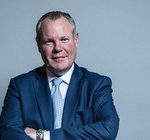
    The statement made by Conor Burns, the Conservative MP for Bournemouth West, on Twitter on 7 October 2022.

    Earlier I received a call from the Chief Whip Wendy Morton. Ms Morton informed me that a complaint had been received about me and she had passed it to Conservative Campaign Headquarters to investigate. I was not given any information about the complaint nor was I asked to provide any information. On the basis of this complaint Ms Morton told me that the Whip was being withdrawn and that I was standing down as Trade Minister. I will fully cooperate with the Party’s enquiry and look forward to clearing my name. I hope the party will be as quick to conduct their enquiry as they were to rush to judgement.

  • Michelle Donelan – 2022 Statement on the UK-US New Comprehensive Dialogue on Technology and Data and Progress on Data Adequacy

    Michelle Donelan – 2022 Statement on the UK-US New Comprehensive Dialogue on Technology and Data and Progress on Data Adequacy

    The statement made by Michelle Donelan, the Secretary of State for Digital, Culture, Media and Sport on 7 October 2022.

    Today, and on behalf of the UK and US Governments, the UK Secretary of State for Digital, Culture, Media and Sport, The Rt Hon Michelle Donelan MP, and the US Secretary of Commerce, Gina M. Raimondo issued the following statement on the launch of a UK-US Comprehensive Dialogue on Technology and Data building on our 2021 commitment to develop a landmark bilateral Technology Partnership, and on significant progress made on UK-US data adequacy.

    0.1 U.S.-UK Technology Partnership

    The United Kingdom and the United States recognise the strategic advantage of technology as crucial for securing our prosperity and security, and for ensuring our shared democratic values are protected and promoted globally. We enjoy many strengths through our joint research, innovation, and investment, and we also face common threats to our safety and security enabled by technology. Only by working together, and with other partners and stakeholders, can we fully realise the advantages of technological advancement aligned with our values.

    To this end, former Prime Minister Johnson and President Biden committed at Carbis Bay in June 2021 to develop a new landmark bilateral Technology Partnership (“the Partnership”) between our countries, to enable a new era of strategic cooperation and protect our technology advantage. Over the past year, important progress has been made across a number of shared priorities under the Partnership, including on:

    • Promotion of bilateral and globally-interoperable frameworks for cross-border data flows, and support for data innovation, including through the launch of prize challenges for privacy-enhancing technologies.
    • A deepening of collaboration on semiconductors, particularly on addressing supply chain vulnerabilities
    • Deeper cooperation on telecommunications supply chain diversification through a UK-US Telecommunications Supplier Diversity Working Group, which ensures regular information sharing and finding opportunities for further collaboration, including joint research and development initiatives
    • Work to address the risks posed by AI and deliver on the AI Research and Development Cooperation Declaration
    • Setting out plans, in a joint statement, for closer working in quantum information sciences and technology.

    Today, building on this strong foundation and the continuing close collaboration between UK and US officials, we are pleased to announce the launch of a new senior-level Comprehensive Dialogue on Technology and Data to further our joint efforts. An annual meeting led by the Director General for Digital and Media at the UK Department of Digital, Culture, Media and Sport and Director of Technology and Analysis and Senior Responsible Owner for Technology Partnerships at the Foreign, Commonwealth and Development Office; and the Assistant Secretary of Industry and Analysis at the US Department of Commerce and the Ambassador at Large for Cyberspace and Digital Policy at the Department of State will set ambitions on a yearly basis to ensure progress under the Partnership. The programme for the coming year will focus on three work strands: Data; Critical and Emerging Technologies; and Secure and Resilient Digital Infrastructure, agreeing and delivering initiatives that support tangible and impactful outcomes.

    0.2 Cross-Border Data Flows

    Data is the key enabler of technology. Access to accurate and secure data internationally drives advances in technology, allowing us to share crucial information, such as life-saving research and cutting-edge technological innovation across our borders. In turn, trust in the use of data fuels our respective economies, societies, shared values, and in realising a more peaceful and prosperous future. Since committing to deepening UK-US dialogue on data flows last December, both countries have accelerated and broadened their discussions on ways in which the benefits of improved bilateral and globally-interoperable cross-border data flows can be promoted and realised.

    In this context, we are also pleased to announce today significant progress on UK-US data adequacy discussions.  The UK welcomes the release of the Executive Order “Enhancing Safeguards for United States Signals Intelligence Activities” and intends to work expediently to conclude its assessment, with the aim of issuing an adequacy decision that will restore a stable and reliable mechanism for UK-US data flows. The US intends to work to designate the UK as a qualifying state under the EO, assuming the conditions for such designation can be satisfied, which would enable UK individuals who submit qualifying complaints to access the redress mechanism established under the EO.

    This is a significant step forward in our work on bilateral cross-border data flows, which will facilitate the free and secure flow of personal data from the UK to the US. We are working together to ensure that a deal on UK-US data adequacy upholds the rights of data subjects, facilitates responsible innovation, gives individuals in both countries access to the services that suit them, reduces burdens on businesses and delivers better outcomes for people. Building on our strong bilateral relationship, we will continue to work collaboratively on multilateral initiatives to facilitate trusted global data flows, such as the future of the Global Cross-Border Privacy Rules Forum where we seek to remove barriers to commercial cross-border data flows and the OECD’s work on Trusted Government Access to Data, increasing trust in the lawful government access to data for law enforcement and national security purposes; and to counter the influence of authoritarian and protectionist approaches to cross-border data flows.

  • Volodymyr Zelenskyy – 2022 Speech at the European Council Meeting

    Volodymyr Zelenskyy – 2022 Speech at the European Council Meeting

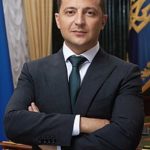
    The speech made by Volodymyr Zelenskyy, the President of Ukraine, on 7 October 2022.

    Dear friends! Dear colleagues!

    First of all, I want to thank you, Charles, and I also want to thank the Czech Presidency for this opportunity and Prime Minister Fiala personally for the invitation to participate in this event. Ukraine – as it should be – together with all Europeans.

    This is a familiar thing for everyone now – and at our level, when we regularly meet and work together in various European formats. Also it is familiar for people in our countries – because for most Europeans, Ukraine is an integral part of the European space.

    The space of freedom, democracy, social development and fundamental values that unite us all.

    It makes Europe so attractive to many people from other parts of the world.

    But let’s look back for a moment – to the very recent past. Just a few generations before us the European space that we have today could have been nothing more than a dream.

    And such a bold dream that it was very difficult to believe that it could be realized.

    Europe was a continent of discord, warlike ambitions, clannishness, lack of freedom, inequality, and poverty. And Europeans had to flee to other parts of the world just to survive and develop their potential.

    So it was. Europe has done a lot to overcome this.

    And even Russia will not be able to push our common continent into such a past. Although Russia openly seeks this, it spends a lot of energy, a lot of money, resources on it, fights for this and provokes anti-European crises, the impact of which is felt by everyone in Europe – from Portugal to Finland.

    But what gives confidence that the European path is irreversible?

    There is only one answer – unity. And it is the unity of not only leaders and states. Not only in the legal space. Not only in our institutions – EU institutions and others, it is not only in their work.

    It is very important that the unity of our perception of Europe as a task remains.

    Yesterday, Mr. Fiala, Prime Minister of the Czech Republic, while addressing the European leaders gathered in Prague for the inaugural meeting of the new format of cooperation on our continent, recalled this image that was proposed by Václav Havel.

    Europe as a task.

    Today, at the meeting of the European Council, I would like to emphasize once again exactly this image. Because this is the source of our strength.

    Europe will remain exactly as it is now, as long as Europeans perceive what they have, how they live, what they received from previous generations, not as a givenness, but as a task.

    Peace in Europe is not a state, but a task.

    Our values, their popularity and strength are not a givenness, but a task.

    And democracy is not something that can always be, because it already exists now, it is also the task.

    Social development, the pursuit of equality in diversity, which distinguishes Europe from other parts of the world, is also not something that we can simply get from our parents or simply pass on to our children, it is the task.

    And security… Security is also not a state, not a givenness, not an inheritance that can be received or transferred, but the task.

    It is a constantly renewing task that can never be abandoned and that constantly needs new thoughts, steps and solutions to preserve all that you and I value so much and that is so familiar to us.

    And especially now – at a time when Europe is being so brutally attacked at many levels by the most anti-European state of the modern world – Russia.

    Russia brought war to our land – to the Ukrainian part of Europe. And only thanks to the fact that the Ukrainian people stopped this invasion of Russia, Russia cannot yet bring the same war to other parts of Europe, in particular, the Baltic countries, Poland, and Moldova.

    The whole of Europe is placed in the conditions of a severe price crisis, when through the manipulation of the energy market Russia achieves unprecedented pressure on the standard of living of the absolute majority of Europeans.

    And all of us are on the brink of a nuclear disaster due to the capture of the Zaporizhzhia nuclear plant by Russian troops.

    These are terrible conditions. But we are all together, we defend ourselves vigorously, we have not abandoned our task.

    We have established and should only increase our cooperation in the security and defense areas.

    Increase the supply of weapons and ammunition to defend against the Russian pressure.

    Increase the manufacture of weapons and ammunition in Europe to be always ready to defend our common space.

    Indeed, I understand, and all of us would rather spend the money we spend on armaments on completely different goals – peaceful goals, social needs. But who and what will be able to protect such goals and such needs?

    We have to be especially careful about the protection of our critical infrastructure – and especially after the sabotage that happened at gas pipelines in the Baltic Sea.

    Never before has our continent faced such a threat – the threat of destroying underwater pipelines, cables, and tunnels. But now you can expect this from Russia.

    At the same time, we must strengthen our cooperation to help each other, provide all Europeans with adequate energy guarantees. Russia must not succeed in its effort to force Europeans into energy poverty or even a complete lack of energy.

    The key challenge is in Ukraine.

    The first is the physical protection of energy facilities from Russian strikes. We need enough air defense systems to prevent Russia from leaving people without heat and electricity in the winter.

    The second is the Zaporizhzhia nuclear power plant. We must finally force Russia to immediately comply with the demands of the IAEA and all normal people of the world and demilitarize the plant. And this is not only about Russian military equipment, but also about the removal of all troops from the plants. Right now there are 500 Russian terrorists at the Zaporizhzhia plant. And there is no place for them there!

    This is essential for nuclear safety. This is absolutely essential for Ukraine to have the necessary volume of electricity for export. For export, which is fundamentally important for our neighbors in the EU this winter.

    The third is reconstruction. Fast restoration of facilities destroyed by Russia during hostilities.

    I am grateful to those countries that have already started working under our Fast Recovery Plan. And we expect a substantive discussion on this during the Conference in Germany on October 25.

    We have already created and must constantly strengthen the system of sanction pressure on the aggressor.

    I thank you very much for the adoption of the eighth package of EU sanctions, which includes, in particular, Russian oil. We must continue moving in this direction – the direction of pressure on the Russian energy sector, on this main source of income of the aggressor state.

    And we must maintain political leadership. This is especially important right now – when Russian forces have finally arrived on the battlefield, and our heroes are liberating Ukrainian land every day – village after village, city after city.

    To stop the liberation of Ukraine, Russia began to manipulate the topic of negotiations, and allegedly mentioned the dialogue, which it rejected, starting this war against Ukraine and against all of you, against all of Europe.

    It is obvious that Russia does not want any real negotiations. Because if it wanted to, it would have responded to dozens of our proposals and efforts. Russia just wants to save time. Wants to regroup forces. And accumulate resources. To strike again. We have to stop it from doing that.

    Like everything else in Europe, security is not something you can get by giving up something or signing a treaty. Security is a task. The task of expelling the occupier from the territory occupied by it. The task of holding murderers and executioners to account. The task of restoring the validity of the fundamental standards and conventions approved by the international community for all states without exception.

    We must be strong – until our common victory to preserve all that we value so much. We must never stop defending freedom and democracy so that our children and grandchildren can enjoy at least the same amount of rights and freedoms that we have.

    And we must invest now in our defense, in our security, in our cooperation as much as possible, so that anyone in the world, who might even have a thought to start an anti-European path, will forever be aware that the strength of European unity is insuperable.

    I thank you for your attention! I thank you for your support!

    Long live united Europe! United also as a task. A task for us and you. Equal leaders of European countries – countries of the European Union. All de facto, but not all de jure yet. And this is also a task for you and me – a task for the sake of our Europe. The space of freedom, democracy, social development and fundamental values that unite us all.

    Thank you! Thank you, Charles!

    Glory to Ukraine!

  • Volodymyr Zelenskyy – 2022 Speech to the Meeting of the Leaders of the European Political Community

    Volodymyr Zelenskyy – 2022 Speech to the Meeting of the Leaders of the European Political Community

    The speech made by Volodymyr Zelenskyy, the President of Ukraine, on 6 October 2022.

    Ladies and Gentlemen!

    Dear hosts of our meeting and inspirators of the idea of our meeting!

    Dear Prime Minister Fiala!

    Dear President Michel!

    Dear Mr. President Macron!

    Dear leaders of Europe!

    At this first meeting of ours in this format, I would like to congratulate you on the establishment of our new political initiative.

    I would like to congratulate you on the fact that, thanks to this initiative, we have received not just another format of cooperation in Europe, but an extremely powerful opportunity to restore peace in Europe.

    This gathering, the European Political Community, has a real possibility of becoming a European Community of Peace.

    Peace! That Ukraine needs so much. That absolutely every country presented here today needs.

    Currently, representatives of all existing formats of cooperation in Europe based on our common values are participating in this meeting.

    Here with us are those who joined the EU and those who are preparing to join.

    Here with us are those who are part of NATO, and those who are building cooperation with the Alliance as candidate countries or partners of NATO.

    Here with us are representatives of various regional associations of Europeans.

    And there are no representatives of Russia with us here – a state that geographically seems to belong to Europe, but from the point of view of its values and behavior is the most anti-European state in the world.

    We are now in a strong position to direct all possible powers of Europe to end the war and guarantee long-term peace – for Ukraine, for Europe, for the world.

    Ukraine never wanted this war. Ukraine did nothing to provoke it. Ukraine has always been a leader in peaceful settlement.

    And all of you are well informed about how much Ukraine has done to try to convince Russia to live without war.

    Many of you personally participated in these efforts and helped us.

    Helped us in almost a hundred rounds of negotiations of various levels, at which peace was offered to Russia. I thank each and every one of you for this effort.

    But we must admit the obvious: we are forced to deal with a state that does not want peace. Which responds to all proposals for real peace with missile strikes, provocation of artificial crises and ridicule.

    Russia subordinated its entire policy to only one task, namely, waging war. War against Ukraine, against Europe, against the world.

    Ladies and Gentlemen! Colleagues!

    Peace is needed! Russia kills. It kills on the battlefield in Ukraine, in our peaceful cities… And on the streets of your cities.

    Russian killers made attempts on people in various European countries. And organized sabotage in Europe – against warehouses with weapons, against factories, and now against gas pipelines.

    Russia intimidates and blackmails for the world to stop helping those it kills. It uses everything from the food crisis to radiation blackmail, from destabilizing energy markets to nuclear blackmail. All in order to break the unity of allies and partners, to intimidate nations, to make millions of people afraid and on the basis of this fear – to give in.

    Give up values, first of all. Our common values of freedom, democracy and the right of nations to live freely.

    Russia is trying to fix every danger and every manifestation of instability that it has already created. This is exactly what it calls negotiations, this is exactly how it perceives any agreements.

    Russia wants to redraw the borders – to once again divide the world into zones of influence, destroying our common space of cooperation and development.

    Russia corrupts. It corrupts with the billions it earns from trading in energy resources.

    This is the Russian formula for war: kill, intimidate, fix threats to free states and their losses, destroy borders and corrupt.

    And each of these elements is anti-European. All of them are directed against Europe.

    Ukraine is only the first battlefield this state has entered. And it is in Ukraine that it is necessary to defeat it.

    We must implement our peace formula. I presented it in my speech at the UN General Assembly. It must be fully implemented.

    The items of our peace formula neutralize everything that Russia does to fight.

    The first is to punish the aggressor. Increase sanctions against Russia. Stop any cooperation with Russia and its companies. Exclude it from all international organizations or at least suspend its membership, its ability to distort the activities of international institutions – first of all, the UN.

    Russia is making the United Nations a gathering of 192 who are simply forced to put up with one state lying and mocking and vetoing when it wants to block the UN’s real ability to restore peace.

    Of course, in order to punish the aggressor, we need a Special Tribunal for the crime of aggression by Russia against Ukraine and an international compensation mechanism that will force Russia to compensate for the damages they caused.

    The second is aid to Ukraine. By helping us, each of your states is helping itself.

    Look at the battlefield in Ukraine now – it is such an intense war that the absolute majority of states simply would not be able to wage it. And that is why this war must be won now – in Ukraine.

    So that the Russian fleet cannot block other ports in the Black Sea, the Mediterranean Sea or any other sea. So that Russian tanks do not advance on Warsaw or again on Prague. So that Russian artillery does not fire at the Baltic states. So that Russian missiles do not hit the territory of Finland or any other country.

    Such a threat exists. We reduce such a threat every day when we destroy the occupiers in Ukraine.

    The third point of our peace formula is the restoration of security and territorial integrity.

    We do it. We do it together with you. With your help.

    The fourth point is security guarantees. We need security guarantees before we join NATO. And on this path. And we will do it. We will also do it together with you. Our proposals for security guarantees are presented to partners.

    The fifth is determination.

    In 225 days of full-scale war, we have all already shown that Europe can influence the issues of war and peace. But now – all together – we must ensure that the formula for war is completely blocked and the formula for peace is fully implemented.

    Today, Russia launched another airstrike on Ukrainian cities.

    It used Iranian drones again. By the way, they are used every day, and so far Iran says every day that there are allegedly no such drones here.

    And again hit with rockets.

    Unfortunately, there are victims again – dead and wounded people, burnt houses.

    In Zaporizhzhia, after the first missile strike today, when people came to clear the debris, Russia launched a second missile strike…

    Absolute meanness. Absolute evil. There have already been thousands of manifestations of such evil. Unfortunately, there may be thousands more.

    But the day will come when Russian evil will lose.

    This will be the very day when our peace formula will prevail. When we will fully use all the possibilities of our unity.

    Here and now, I urge you to make a basic decision. A decision about purpose for this community of ours. For this format of ours.

    We, the leaders of Europe, can become the leaders of peace. Our European political community can become a European community of peace.

    So, let’s do it! And let today be the starting point. The point from which Europe and the entire free world will move to guaranteed peace for all of us. It is possible.

    Thank you for your attention!

    Thank you all for your support!

    Glory to Ukraine!

  • Volodymyr Zelenskyy – 2022 Speech to the Australian Lowy Institute

    Volodymyr Zelenskyy – 2022 Speech to the Australian Lowy Institute

    The speech made by Volodymyr Zelenskyy, the President of Ukraine, on 6 October 2022.

    Thank you very much, dear Mr. Lowy! Dear Mr. Fullilove!

    Ladies and Gentlemen!

    Thank you for this opportunity to address you today and answer the most pressing questions of our time. A time that has such a strong connection with the past.

    Almost 8 years ago, in November 2014, here in Sydney, at the Lowy Institute, you had a speech by Angela Merkel, then Federal Chancellor of Germany.

    She in particular touched upon the topic of the Russian war against Ukraine – the criminal annexation of our Crimea, hostilities in Donbas and destruction of the Malaysian Boeing in the sky over Ukraine. Mrs. Merkel then noted that “the Ukrainian crisis is really more than a regional crisis, it affects all of us.”

    Let me remind you once again – these words were said almost 8 years ago, i.e. 8 years before Russia was able to turn a hybrid war against Ukraine – a war, not a crisis after all – into a full-scale invasion, the likes of which Europe has not seen since World War II.

    Why was this possible? Why, despite the understanding already in 2014 that Russian aggression is not something local, but really a global threat, Russia still had the possibility of such an escalation, which began on February 24 of this year?

    This question reveals the connection between our time with even more ancient history.

    With a history that still hasn’t really become history. It is still with us – in the present.

    On September 30 of this year, the head of Russia announced the purported annexation of part of the territory of Ukraine. Four of our regions, from which the Russian occupation contingent has not yet been ousted.

    This new attempt by Russia to grab someone else’s property is an obvious attempt to repeat 2014 – to repeat Crimea. And not just annexation as such.

    Russia is trying to put the international community in such conditions now that the reaction to yet another Russian crime against international law does not correspond to its severity in the same way as it did then – with Crimea.

    In 2014, we did not see, for example, really tough sanctions against Russia. It was not punished for this crime. At that time, there was a very strong desire among many in the world to turn a blind eye to the annexation, to consider the war simply a “crisis” and to continue relations with Russia.

    Although they said then that the threat was global, they acted as if it was something purely local…

    And to say that this increased the aggressor’s sense of impunity is an understatement.

    But this always happens: when a criminal does not receive an adequate punishment for a crime he has committed, he perceives it as permission for further criminal acts. “They are weak,” is how the aggressor reacts when he feels no response.

    Will he feel it now?

    Knowingly or not, the Russian leader chose a very symbolic date to start this attempt to annex our territory. September 30. This day takes us back 84 years in the history of Europe and the world.

    It was on this day that another aggressor – yet so similar to this one – succeeded in signing the Munich Agreement. Also to annex someone else’s land.

    Now we remember that agreement more often under the name of the “Munich conspiracy” and consider it an example of political cynicism and a fatal mistake. A mistake that cost humanity tens of millions of lives.

    But after the signing of “Munich”, such evaluations sounded different. They even said that the agreement would give peace to the generation at that time…

    In different countries and with different voices, the thesis that it is possible to simply agree that the aggressor has seized something is heard again. That it is possible to draw some kind of conditional line somewhere that will satisfy Russia’s appetite, and supposedly after that the war will die down. And that one should not react toughly to this annexation attempt, which Russia started on September 30.

    But this thesis sounds nothing but the year 2014 – the mistakes of the then leaders. It sounds like 1938. It only says that the criminal can go unpunished. And so, with the temptation to continue.

    Be sure – the head of Russia is now carefully analyzing the world’s reaction to the sham referenda he organized on Ukrainian soil and to the announcement of the annexation of our territory. What exactly is he interested in?

    It’s simple: he is interested in whether he still has the potential for escalation.

    If the world’s reaction is weak now, Russia will come up with some new escalation.

    You can see that the range of criminal actions of this state is very wide – missile terror, mass murders, criminal deportations, radiation blackmail at, for example, our captured Zaporizhzhia nuclear power plant, food crisis, energy crisis, etc.

    The recent sabotage with gas pipelines in the Baltic Sea was also very eloquent. These are actions that can destabilize life on the entire continent. This is a real energy weapon of mass destruction. Absolutely every country in the world depends on underwater cables and pipelines, which can be destroyed by an aggressor in the same way as gas pipelines in the Baltic Sea.

    Therefore, the world must now show strength.

    Strength is needed to finally put an end to aggression – to the aggressor’s ability to escalate.

    On international platforms, a clear and principled condemnation of Russia for this attempt to annex Ukrainian territory is needed, for it to be utterly different from what happened in 2014.

    At the level of states and unions of states, new and tough sanctions against Russia are needed so that the situation is also dramatically different from 2014.

    At the level of cooperation with Ukraine, regular and demonstrative support packages are needed, primarily defensive and financial, so that the aggressor sees that his criminal actions only complicate the situation for him.

    Now, at a time that has such a strong connection with the past, we have a historic opportunity to set a precedent that will make the history of aggression truly history and that will teach any aggressor that no crime against international law will ever again remain unpunished.

    Next week, a resolution on non-recognition and condemnation of Russia’s new attempt to annex our territories will be submitted to the UN General Assembly. We and Australia have long had a principled and effective cooperation at all international platforms, and in particular at the UN. And we must now direct our joint capabilities in such a way as to make the vote at the General Assembly for this resolution as unequivocal as possible. I am asking you, I am asking Australia to use all its influence to persuade as many countries as possible not to remain neutral and to vote for – for international law and against Russian annexation.

    Ukraine has a very meaningful defense cooperation with Australia as well.

    Even after my first address to the Parliament and people of Australia in March, your Government decided to provide Ukraine with bushmasters. I’m deeply grateful. These vehicles have proven themselves in real combat.

    The more weapons and ammunition we receive, in particular, artillery, drones, anti-aircraft defense, anti-tank and anti-ship weapons, the more tangible the responsibility for violation of international law will be for Russia and the less the aggressor will feel that he supposedly has room for escalation.

    The third element is sanctions.

    I thank Australia for participating in the global effort to impose sanctions on the aggressor for the war. But this pressure makes sense when it is constantly growing and when the aggressor does not have time to adapt to sanctions, does not have time to find ways to circumvent them.

    Now is the time to increase this pressure. Just now.

    Right after Russia staged this farce with sham referenda and this annexation.

    The price of such actions must be tangible, the consequences – devastating. The aggressor should have no illusions that 2014 can still happen again.

    And the last one.

    The world has seen many wars. It has seen how wars somewhere in one part of the world affect everyone in the world.

    It should be considered not only from the point of view of the direct negative impact of the war. But also from the point of view of the impact of its result.

    If the aggressor does gain a result for himself, if the aggressive ambition is satisfied, then such a result affects everyone in the world even more and even longer than the war itself.

    Affects by cynicism. Affects by the inevitable destruction of international law, the weakening of the truth.

    That is why the criminal war must end with the just defeat of the one who started it. The aggressor must lose. This is what gives peace to generations. Not any conspiracies with the aggressor, not appeasement of the aggressor, but his defeat. And therefore, the restoration of peace. And therefore, Ukraine must win.

    This is not just something about our state. This is about all of us in the world. This is also about Australia.

    About your freedom. About your security. About our common values. About our common peace. Which our victory can historically strengthen.

    I thank you for your attention! I thank you for the support, Australia!

    Glory to Ukraine!

  • Volodymyr Zelenskyy – 2022 Speech to the General Assembly of the Organization of American States

    Volodymyr Zelenskyy – 2022 Speech to the General Assembly of the Organization of American States

    The speech made by Volodymyr Zelenskyy, the President of Ukraine, on 6 October 2022.

    Dear Secretary-General!

    Dear representatives of the free nations of America!

    Dear friends!

    I am grateful for the opportunity to address you at this particular time when we have entered a defining phase of our war for independence – when our heroes drive the occupying army out of our land.

    Russia sent this army to our country to turn us into their colony. As it was, unfortunately, before – in the time of empires.

    But millions of Ukrainians stood up to defend our freedom and our country and will definitely not allow Russia to bring back that old unfair time.

    We have no doubts about winning this war and our ability to protect the independence of Ukraine. Daily victories at the front and dozens of liberated Ukrainian cities and villages prove it.

    There is only one question for us right now – how many of our people Russia will manage to kill before it admits a defeat. How much more will Russia manage to steal from Ukraine – grain; resources; industrial enterprises, which the occupiers simply disassemble and take out to Russia; as well as people. They are stealing people.

    More than one million and six hundred thousands of Ukrainians were forcibly deported to Russia. They are dispersed across the territory of this state, scattered throughout remote Russian regions.

    Many of them had their documents taken away, and many of them passed through terrible Russia’s filtration camps, where they were abused and intimidated.

    These are people. But for Russia, it is also a resource.

    We are doing everything to free our land as soon as possible, to save all our people from this invasion as fast as we can. We are doing everything to put an end to the long list of Ukrainian victims that Russia is creating.

    This is the reason I am addressing you.

    We need your support to bring back peace faster for our people.

    I will be honest – I know that in some member countries of your Organization, unfortunately, the Russian view of this war is dominant. And this is a false view.

    It is possible in your part of the world simply due to the fact that Russia spends billions of dollars annually on its propaganda media and other projects that create an illusory impression about it.

    But there are facts on the side of Ukraine. And I am asking you just to look at these facts.

    Look – from your point of view. In terms of what your great American continent has been through. From the point of view of the struggle for independence that your people led. In terms of simple human justice, which means so much to your countries and people. And in terms of what your national heroes fought for.

    I am turning to the pages of the history of the American continent and asking:

    On whose side would Simon Bolivar be in such a war that Russia unleashed against Ukraine? Who would Jose de San Martin support? Who would Miguel Hidalgo sympathize with?

    I think they would not help someone who is just looting a smaller country as a typical colonizer. I think they would not support someone who constantly lies and does not even call a war a war, hiding behind the definition of “special military operation”.

    I think they would not sympathize with someone who deliberately puts different countries on the brink of starvation – through an artificial food crisis. Who drives people into poverty – through price and energy crisis, both artificial. And who is so mean that he makes war against civilians, destroying all the foundations of normal social life using rockets and artillery against residential buildings, hospitals, schools, churches.

    I thank those of you who have already strongly supported Ukraine and condemned Russian war against our freedom and independence. I thank your Organization for suspending Russia’s observer status.

    But we need more for the sake of peace and for the Russian army to leave all captured Ukrainian land.

    So I am asking you to support us on several levels.

    The first level – international organizations, particularly the UN General Assembly. Please support us in voting to condemn Russia’s aggressive policy.

    It is of our common interest – so that no one in the world can start wars of aggression like the Russian war against Ukraine. And so that no one in the world thinks that he has right to illegally annex lands of other nations, as Russia thinks.

    The second level is national. We need integrity from your states.

    Do not allow your economies to be used to finance criminal war and war crimes. Do not associate yourself with those who will inevitably be condemned by the international community.

    The crime of Russia’s aggression against our country, the mass murders of civilians on Ukrainian soil, forced deportations, numerous cases of torture and rape – all this will certainly receive its verdicts.

    Please avoid your companies and countries to be connected with those individuals and legal entities in Russia through which it carries out its terror against Ukraine. Support sanctions against Russia. Limit your trade operations with Russia. Protect yourself from the risk of tarnishing your reputation with ties to a terrorist state and its companies, and limit its opportunities to continue this war of aggression against Ukraine.

    And the third level of support we need – is the level of ordinary people.

    I’m not asking for much. Just spread the truth about this war and the casualties caused by the Russian aggression. Just talk about it. Let your people know what evil Russia has brought to the absolutely peaceful Ukrainian people. A nation that has never started any wars of aggression.

    The greater the support for those who fight for freedom and independence – the stronger freedom will be in general in the world and the faster we will go all the way to freeing our land from the Russian invaders.

    I thank you for your attention! 

    Long live freedom! ¡Viva la Libertad!

    Слава Україні!

  • Janet Royall – 2022 Tribute to HM Queen Elizabeth II (Baroness Royall of Blaisdon)

    Janet Royall – 2022 Tribute to HM Queen Elizabeth II (Baroness Royall of Blaisdon)

    The tribute made by Janet Royall, Baroness Royall of Blaisdon, in the House of Lords on 10 September 2022.

    My Lords, I guess I am about two-thirds of the way between the most reverend Primate’s granddaughter and the right reverend Prelate’s mother, but I too wept. It was such a moment to hear that our wonderful Queen had died. The right reverend Prelate mentioned peace and reconciliation. Our country and our world are in great need of those now, and I have no doubt that they will be firmly on the agenda of our new King.

    I am proud to join in this celebration of the life of Her Majesty the Queen—an inspirational life, a life truly well lived and a life for which we are grateful. She was a remarkable woman, and the tributes made in your Lordships’ House both yesterday and today have also been remarkable. The tributes we have seen in the media have been quite exceptional, and I hope that continues with our new King.

    It is impossible to say anything new, but repetition does not detract from the fact that Queen Elizabeth was an extraordinary woman whose dedication to our country and its people was second to none. Hers was a life of service and steadfastness, leadership and love, dignity and integrity—a reassuring constant in a turbulent world. It is difficult to comprehend the breadth of the economic, social, political and technological changes that took place during the second Elizabethan age. She was the continuity Queen who embodied our nation. Hers was a life to be celebrated throughout the world.

    I was in Mumbai when news of the Queen’s death was announced. So many people came up to me late that evening and the following morning to give their condolences on the loss for our country and to express their sadness and respect. I did not know these people but clearly, I look like a Brit and therefore was somebody who should be concerned, as I was.

    I was privileged to be Lord President of the Council, Chancellor of the Duchy of Lancaster and Captain of the Gentlemen-at-Arms, and in those tasks I met the Queen quite often. I was certainly not the first woman captain, but it seemed to give the Queen pleasure to introduce a female captain—although together we lamented the fact that the women captains did not have the gorgeous uniforms of the men. We talked about that quite often.

    Much has been said about the Queen’s sense of humour. Once, when I was lunching at Windsor Castle with the Queen and Duke of Edinburgh, there was a conversation about the intrusion of mobile phones. We lamented the fact that people did not turn them off at mealtimes. Suddenly there was a loud ring beneath the table. Yes, it came from my handbag. I was mortified; they thought it was hilarious.

    Last year my college, Somerville, was privileged to receive a wonderful visit from the King, the then Prince of Wales. Delving into our history in preparation for the visit, I learned that the Queen visited Somerville in 1968, when we were a women’s college. We have a glorious photo of the beautiful young Queen and the heads of all five women’s colleges. Happily for me, all the heads had studied at Somerville. I have no doubt that that point was proudly made to the Queen. On that visit the Queen signed a birthday book given to the college by Ruskin. It was also signed by her grandmother, Queen Mary, and latterly by her son, King Charles.

    In our fragile world, we are embarking on a new era. The Queen will be greatly missed, but I know that the King, supported by the Queen Consort and his family, will also give extraordinary service to the country and the Commonwealth as we meet the great challenges of our time. Through all the work the King has done as the Prince of Wales, he is more aware of those challenges than many in our world.

  • Christopher Cocksworth – 2022 Tribute to HM Queen Elizabeth II (Bishop of Coventry)

    Christopher Cocksworth – 2022 Tribute to HM Queen Elizabeth II (Bishop of Coventry)

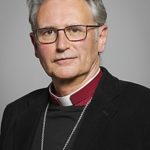
    The tribute made by Christopher Cocksworth, Bishop of Coventry, in the House of Lords on 10 September 2022.

    My Lords, it is a great honour to follow the noble Lord, Lord Triesman. I will offer some words of tribute on behalf of the people of Coventry and Warwickshire, especially to express our great thanks for the Queen’s part in the renewal of Coventry after its wartime destruction and its discovery of a new identity, aspiring to be a city of peace and reconciliation.

    A few days after the worst of the bombing of Coventry, the Queen’s father stood in the ruins of the cathedral and wept. In 1956 the young Queen laid the foundation stone of the new cathedral—a new cathedral for a new Queen, in an ancient city now being rebuilt for a modern age, in a nation finding its place on the international stage in a new Europe and a new world. In 1962, 60 years ago this year, the Queen—herself a consecrated monarch, of course—returned to Coventry for the consecration of the new cathedral. There was hope in the air, and Coventry became a national symbol of the traumas of war, with all its suffering still evident in the ruins, and the possibilities of peace built on reconciliation rising from the ashes of the past into the simple grandeur of the new cathedral. What better person than Queen Elizabeth to lay the foundation stone of a new future and to see a building, a people, a nation consecrated to serve the ways of peace?

    Serving the cause of reconciliation for which Coventry Cathedral and its city have become known was remarkably demonstrated through the Queen’s service to the nation and the world, as we have heard in many ways. The Queen helped the nation to celebrate its past and carry forward its great traditions and noblest values while, at the same time, reaching out to the future, accepting its challenges, welcoming its opportunities and easing its coming. Whether steering the nation from imperial power to shaper and sharer in a Commonwealth of Nations, or facing head-on the harm that peoples have inflicted on themselves in families, in communities and between nations, and showing them how we may live better together, the Queen well used the strength of her character and the powers of her office to create new conditions for co-operation.

    Among the many examples on the world stage, I pay particular tribute to the Queen’s part in Coventry’s and the country’s reconciliation with Dresden, that symbol of the brutality of war and its challenge to face our own past. Her visit in 1992 with one of my predecessors was a brave act and not without cost to her. It exposed emotions that were still raw in that city, but I know from my own many visits and close relationships that it was deeply healing, transformative even, on the long road to reconciliation.

    As we have heard powerfully from the noble Baroness, Lady Coussins, and the noble Lord, Lord Alderdice, the Queen’s words and gestures—the way she used the combination of her status and credibility of character to serve the good of the future—were breathtaking in their effect during her state visit to the Republic of Ireland in 2011 and then Belfast in 2012. Again, we saw something, as we have heard, of the risk and cost that walking the road of reconciliation involves. There are many other examples, of course, in her long years of service, as indeed there are in the untiring, unstinting work of her son, our King, in his now former life.

    As has been acknowledged, the Queen’s own foundation, the rock on which she built her life, is well known. The cause for which she felt and knew that she was consecrated—God’s kingdom, peace, justice and mercy—served her well. We know that it will also serve our King well. It makes me wonder whether all our foundations and all the causes to which we give ourselves will be as secure and enduring as hers.

    The most reverend Primate the Archbishop of York referred to his granddaughter crying when she heard the news. I cannot resist saying the same about my mother. She is 93 and frail. She wept for the Queen and, I think, all that great generation that is passing. She said, “She was always there”—we all feel that—but she also said something that got it for me: “The Queen had such a beautiful face. It was her smile.” That has been referred to already. I was blessed by that smile in the encounters I had with Her Majesty our late Queen. Genuine life-giving smiles can restore relationships that once looked irreparably damaged. Our world is a better place because of the smile of that gracious lady.