Tag: Speeches

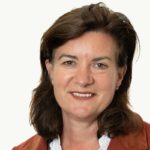
  • Fiona Bruce – 2022 Speech on Blasphemy Laws and Allegations in Commonwealth Countries

    Fiona Bruce – 2022 Speech on Blasphemy Laws and Allegations in Commonwealth Countries

    The speech made by Fiona Bruce, the Conservative MP for Congleton, in Westminster Hall on 11 October 2022.

    First, I congratulate the Minister on her appointment. I know that her interest in such subjects is profound, and I am pleased to see her in her place, as I am pleased to see the shadow Minister, the hon. Member for Leeds North East (Fabian Hamilton)—my hon. Friend, as we call each other. I thank the hon. Member for Strangford (Jim Shannon) for continually shining a spotlight on freedom of religion or belief, for securing the debate and for his excellent and detailed speech.

    It is deeply concerning that in the 21st century the rights to freedom of religion, belief and expression are still severely limited in many Commonwealth countries, and that all too often blasphemy laws are used to silence people who hold minority views. I intend to focus on the use of death penalty policy in the Commonwealth. In doing so, I will be assisted by research and work undertaken recently by the International Religious Freedom or Belief Alliance, which I have the privilege of chairing. The alliance has grown to 42 countries, members and friends, and we will shortly issue a statement on blasphemy and related offences. Later this month, we will call for action across the world.

    Research in Australia by Monash University examined 12 countries identified as having retained the death penalty as a lawful possibility for offences against religion. Apart from Nigeria and Pakistan, which are the two most concerning Commonwealth examples and on which I want to focus my remarks, those countries include Afghanistan, Brunei, Iran, the Maldives, Mauritania, Qatar, Saudi Arabia, Somalia, the United Arab Emirates and Yemen. It is worth mentioning that of those 12 countries, 11 have established Islam as a state religion. The 12th country, Nigeria, has no state religion, but the 12 Nigerian states in which blasphemy is punishable by death operate a sharia law system in parallel with secular courts. In all 12 countries, sharia is cited as the basis on which the death penalty is prescribed for offences against religion, regardless of whether that penalty has been subsequently codified. We therefore have an issue, but it is one of policy and legislation as well as one of religion. That requires advocacy at different levels, including within Islam.

    I will give a few short examples from Nigeria. Yahaya Sharif-Aminu was a Sufi Islamic gospel musician from Kano state who was accused of blasphemy for sending audio messages on WhatsApp in 2020. His house was burned down, and he was arrested and sentenced to death by hanging. His conviction was overturned, but he is still in danger of being convicted. As recently as August 2022, a court of appeal upheld the constitutionality of the blasphemy law in his case. His lawyer will soon appeal to the Supreme Court to call for the blasphemy law to be ruled unconstitutional.

    There is a particularly disturbing case for me as a mother, although so many are. In 2020, 13-year-old Omar Farouq was sentenced to 10 years in prison for blasphemy after comments were made to a friend. Thankfully, his conviction was eventually overturned, although only on procedural irregularities.

    As we have heard, the impact of blasphemy laws goes beyond the courtroom and into the community—dreadfully and fatally so in the case of Deborah Samuel Yakubu, a young teenage girl who was burned to death in Sokoto after an allegation of blasphemy in 2021. She had been accused of insulting the Prophet Mohammed in a WhatsApp classroom discussion group, although apparently she had merely thanked Jesus for helping her in an exam. All of this is happening under the watch of the constitution of Nigeria, which prohibits the adoption of any religion as a state religion. The reality, though, is that the state endorses numerous anti-secular and theocratic policies. Islam is often regarded as the de facto state religion in nine of the northern states, where the majority of the population is Muslim. Blasphemy laws in those sharia states allow the death penalty, which has affected Christians, atheists, Shi’a Muslims, artists, converts and those expressing beliefs that local leaders find offensive.

    I turn now to Pakistan, which actually ratified the international covenant on freedom of religion or belief—the international covenant on civil and political rights—in 2010. However, it is ranked No. 8 in the Open Doors 2022 world watch list, and a main source of persecution comes from the strict blasphemy laws. Even though freedom of speech is guaranteed under the Pakistani constitution, it is limited by law and considerations of national security, and also by

    “the interest of the glory of Islam”.

    Pakistan’s strict blasphemy laws have been in place in their present form since 1986, punishing blasphemy with death or life imprisonment for

    “deliberately or maliciously outraging the religious feelings of any class or the citizens of Pakistan—either spoken or written.”

    Over the past 30 years, nearly 2,000 people have been accused under the blasphemy laws, yet Amnesty estimates that most examples are based on false premises and lack evidence. Although the most severe punishment of execution has not been used in Pakistan to the knowledge of the international community, it is acknowledged that the laws have been used to sentence people to death and to incite harassment and violence against those accused under the law. In a judgment released by the Pakistani Supreme Court recently, the judges noted that

    “many a time false allegations are levelled to settle personal scores and cases are also registered for mischievous purposes or on account of ulterior motives.”

    I will not go into too much detail about some of the more high-profile cases; suffice to say that I was deeply saddened last year to hear of the case of Shagufta and Shafqat, a couple who were on death row for seven years for sending allegedly blasphemous text messages. Eventually their sentence was overturned in June last year, when it was found that neither of them could read or write. Stephen Masih spent three years in jail after being accused of blasphemy by his neighbour during an argument over a pigeon.

    Jim Shannon

    Surely the cases that the hon. Lady has outlined show a failing in the police investigations. For the two people who were accused of blasphemy but could neither read nor write, why did it take so long for that to be sorted out? Surely the police investigation would have sorted it out right away.

    Fiona Bruce

    One of the problems is that many countries sign up to international covenants and rights, including of freedom of religion or belief, in their constitutions, and yet the court systems and the police investigation systems often do not apply the principles in practice. That does need to be looked at.

    The social implications of Pakistan maintaining blasphemy laws cannot be underestimated in terms of mob violence, the burning of villages and the public parading of blasphemers, which are all too common. Two politicians who have advocated against blasphemy laws have been assassinated within the last 10 years. One defendant died from a gun wound after he was shot in court, when on trial in 2020.

    What can be done to better respect and protect freedom of religion or belief? One of the outcomes of our London ministerial conference on FORB in July this year—I am delighted to report that no less than 88 Governments sent delegates—is to provide funding for lawyers via an organisation called Role UK, Rule of Law Expertise, to work in countries such as Nigeria to support law reform. That is exactly the kind of issue that the hon. Member for Strangford referred to.

    We need to use the respect and expertise of UK lawyers in the Commonwealth to modify or repeal blasphemy, defamation of religion and other speech laws that allow for the persecution of individuals. Frequent concerns that have been expressed, such as the vague wording of such laws, lack of due process and arbitrary enforcement, need to be addressed. I am pleased to confirm that one of the “next steps” set of actions, which is being led by the International Religious Freedom or Belief Alliance with the aid of our experts, is to look at how legal systems can be strengthened to better reflect FORB in practice. UK Ministers should use every opportunity, including on in-country visits, to raise FORB concerns with their counterparts, including those raised in the debate today. What assurance can the Minister give me on that?

    We should appeal to countries such as Nigeria and Pakistan to enact strong safeguards to ensure that individuals who take sharia blasphemy laws into their own hands are punished under law. This is a human rights issue. Sunni schools agree that only the ruler of a state should sentence people to death and that vigilantism on the basis of alleged apostasy should be punished, meaning no individual Muslim without state authority could execute an apostate. That is of relevance to Pakistan, where there is widespread violence at community level. There is a need for careful advocacy, supporting the position of many contemporary Islamic scholars, as articulated by the retired chief justice of Pakistan, S.A. Rahman:

    “The position that emerges, after a survey of the relevant verses of the Qur’an, may be summed up by saying that not only is there no punishment for apostasy provided in the Book, but that the Word of God clearly envisages the natural death of the apostate…He will be punished only in the Hereafter.”

    We need to urge Commonwealth countries to uphold and fiercely protect the rights of individuals to a fair trial and to ensure due process. Often the emotion of a crowd of accusers has expedited trials to the detriment of a court firmly establishing the facts. Again, careful advocacy locally led with the support of international non-governmental organisations can make an impact. We should thank organisations such as ADF, Christian Solidarity Worldwide, Open Doors, CAN and Amnesty for their tireless advocacy. We should join with these NGOs in calling for the release of individuals facing the death penalty, and with the report of the UN Secretary-General on the 13 August 2020 in calling for a moratorium on the application of the death penalty for non-violent conduct such as apostasy and blasphemy, in line with the agreement of the international covenant on civil and political rights, which so many countries have signed up to, including Nigeria and Pakistan. I look forward to the Minister’s response.

  • Jim Shannon – 2022 Speech on Blasphemy Laws and Allegations in Commonwealth Countries

    Jim Shannon – 2022 Speech on Blasphemy Laws and Allegations in Commonwealth Countries

    The speech made by Jim Shannon, the DUP MP for Strangford, in Westminster Hall on 11 October 2022.

    I beg to move,

    That this House has considered blasphemy laws and allegations in Commonwealth Countries.

    I would first like to express an interest, as chair of the all-party parliamentary group for international freedom of religion or belief and as chair of the APPG for the Pakistani minorities. These issues are close to my heart, and it is a privilege to speak about them and to try to outline where we wish to be. I therefore thank the Backbench Business Committee for giving us the opportunity to discuss this timely and important topic. As always, I am pleased to see my dear friend the shadow Minister, the hon. Member for Leeds North East (Fabian Hamilton), in his place. It is also a pleasure to see the Minister, and I thank her for all that she does for persecuted ethnic groups across the world.

    Blasphemy laws may sound like an archaic and outdated issue, but they are far from a thing of the past. I thought long and hard about this debate, and I wanted to bring the issue forward for discussion in a positive fashion. As of 2019, 79 countries had laws or policies banning blasphemy, which included speech or actions deemed to be insulting, contemptuous or showing lack of reverence for a God or something sacred. Unfortunately, despite the Commonwealth’s values—which we adhere to—of promoting democracy, human rights and individual liberty, its members are some of the worst offenders. Of the 79 countries that prohibit blasphemy, 26 are Commonwealth states, which equates to 46% of Commonwealth members.

    Yesterday was World Day Against the Death Penalty. A higher share of countries inside the Commonwealth than outside it have prison sentences for blasphemy and other legal restrictions. Regrettably, the Commonwealth also has a higher share of countries with the death penalty for blasphemy. Five Commonwealth countries have the death penalty for blasphemy or apostasy, and many more have seen people murdered for them. A clear goal to work towards would be the abolishment of the death penalty for any blasphemy-related charges. While progress would still need to be made to ensure that people are not unjustly imprisoned on blasphemy charges, it would be a big step forward to know that the death penalty was not on the table.

    Blasphemy laws are not always in and of themselves an issue—I want to make that clear. They can often be little more than legislation that is never utilised or that lies dormant, with no impact on a country’s people. For instance, Saint Lucia and other Caribbean states have blasphemy laws, but they are not enforced and have every likelihood of never being enforced. However, the fact that they are in place means that, sometime, they could be enacted and enforced and could become a stringent part of the law. Therefore, it is the abuse and misuse of blasphemy laws that is the issue; indeed, it is social attitudes towards blasphemy and the lack of the tolerance for other faiths and beliefs, not blasphemy laws on their own, that leads to violations of freedom of religion or belief.

    I recall a visit that the APPG organised to Pakistan in 2018. It was around the time that Asia Bibi had been charged with blasphemy and given the death penalty. That deputation consisted of my colleague, the hon. Member for St Helens South and Whiston (Ms Rimmer), and Lord Alton, from the other place. We decided that if we were going to do something about Asia Bibi it was probably better not to go in with all guns blazing and say, “Blasphemy is wrong, and your constitution is wrong,” because we would get nothing. Instead, we showed how the blasphemy laws in Pakistan at that time were being used in an erroneous, vindictive and malicious way. They were also being used in an untrue and dishonest way, because the allegations were never factually or evidentially proven to be true.

    We met two of the three judges—at this stage, I am not breaking any confidences, because the thing is past and over—who told us that they did not see an evidential base for the allegations that were made and were therefore of a mind to free Asia Bibi. We never said that when we came home—I talked to the then Minister and assured him that we did not intend to say anything—because we thought it was more important to have Asia Bibi released. Eventually, she was released to her family and now lives in Canada.

    However, there may be other Asia Bibis in Pakistan and across the world in a similar situation, and I will refer to a couple of them. I know that the shadow Minister, the hon. Member for Argyll and Bute, who speaks for the Scottish National party, will also speak about some of them, because we have been on many deputations together, including one to Nigeria recently—I will refer to one case in Nigeria and I know he will do the same.

    However, before highlighting cases where blasphemy laws pose a serious threat to ordinary people’s lives and are weaponised as tools for persecution, I would like to bring to Members’ attention the fact that a blanket repeal of blasphemy laws would be ill advised and that I am not seeking one. In some circumstances, calls for a blanket repeal would have the unintended consequence of removing certain protections, such as prohibiting the vandalism of places of worship. Far from advancing the fight for freedom of religion or belief, such consequences would simply create new challenges. Instead, it is vital to stress the problems with blasphemy laws and how to counter those challenges. Therefore, a blanket repeal is not the solution, but something must be done, and I hope to make some suggestions during the debate.

    Unfortunately, misuse of blasphemy laws or accusations of blasphemy are one of the tools most commonly used to target religious or belief minorities around the world. They are often used as a pretext for land seizures, extrajudicial violence or discriminatory legislation. Blasphemy allegations can make a mockery of a justice system and can often fuel mob violence. They can also be utilised to settle personal vendettas, and they can be invoked more generally to target and drive out religious or belief minorities in a given country or region. There are many examples of such activities, and I have referred to some of them. The susceptibility of some blasphemy laws to such abuses is a grave challenge to freedom of religion or belief for all, with those of many different religions or belief backgrounds falling victim to the misuse of blasphemy laws, particularly in certain states of the Commonwealth.

    In recent months, there have been a number of high-profile blasphemy cases, with blasphemy charges filed against Imran Khan, Pakistan’s former Prime Minister, and the murder of Deborah Samuel, a student in Nigeria. I was in Nigeria in May—the hon. Member for Argyll and Bute and others were on that trip—and we had a chance to discuss many issues, and the case of that young Christian girl, who I will refer to again later, was one of those we looked at. Such cases illustrate how blasphemy laws are used to restrict freedom of speech, discredit political opponents and attack religious minorities, and they also draw attention to the rule of mob violence in blasphemy allegations and how that determines the legal frameworks that are in place.

    A report by the United States Commission on International Religious Freedom on the use of blasphemy laws found that extrajudicial violence was particularly prevalent in Pakistan, with more than half of the recorded cases of such violence happening in that country. The other significant contributor from the Commonwealth was Nigeria, which we visited just a few months ago, and I will touch on that later, as will the hon. Member for Argyll and Bute. The USCIRF report noted that extrajudicial violence is more likely to happen when persons accused of blasphemy are acquitted through the legal system or police choose not to file charges. That shows that a solution cannot be found through legislation alone but by changing attitudes in a country. I think we have to do that as well, but it has to be done in a gentle way, and I hope that we may just do that very thing through this debate.

    Given the high levels of extrajudicial violence, many victims and their families receive death threats and must live in hiding, in fear of their lives, even if they are found innocent—I have referred to one such case already. In these cases, victims are unable to access asylum pathways, as they are stuck in their country of origin and cannot make a claim until they leave. One case that illustrates that scenario and sheds light on Pakistan’s blasphemy laws more broadly is that of Sawan Masih. I have raised this case in the past, as have other colleagues present today, but it is worthy of renewed attention, given that last week marked two years since Sawan’s acquittal but there has been little improvement in the situation. The Minister is always responsive to us—we all appreciate that—and I ask her to give us an update on the case today if she can. If not, I am happy for us to be notified afterwards.

    Sawan Masih was a Christian street sweeper, a father of three from the city of Lahore in Pakistan. He was imprisoned in March 2013 and sentenced to death for blasphemy in March 2014. Sawan’s appeal hearing was adjourned at least 16 times, but on 5 October 2020 he was finally acquitted in Lahore High Court. He was released 10 days later, with the delay due to security concerns for his life. His father lived to hear news of the acquittal, but died before Sawan could see him. Sadly, earlier this year, his mother also passed away without seeing her son. Sawan and his family now live in a secret location, as they would most likely be murdered if their location was known.

    Sawan Masih’s arrest happened only after mob violence—it was not the rule of law that led to his dire circumstances, but the abuse of the law. Local factory workers went on strike for Sawan’s arrest. More than 3,000 Muslims attacked his home village, torching 180 Christian homes, 75 shops and two churches. Sawan believes that the charge against him was part of a plot by local businessmen to seize land previously held by Christians. The fact that blasphemy laws can be manipulated in such a way is at the heart of this debate. Spurious accusations should not be a vehicle for settling personal disputes or targeting minorities who have little recourse to justice.

    Sawan’s life has been irreversibly damaged by the malicious levelling of blasphemy allegations. Pakistan’s justice system has been undermined by mob rule provoked by malicious and vindictive allegations. Our asylum process has also been shown to be further flawed, owing to the fact that Sawan is still in hiding, with an ever-diminishing hope of a safe and full future for himself, his wife and his family. Regrettably, Sawan is just one of many people in Pakistan who faces such a situation. According to the National Commission for Justice and Peace, 84 individuals were charged with blasphemy in 2021, and many others remain imprisoned or on death row.

    How do we prevent cases such as that of Sawan Masih? One solution, which is key to this debate, is for blasphemy laws to be amended to include reference to intentionality. In essence, blasphemy laws that stress intentionality would mean that intention to cause insult would need to be established before someone was convicted for this offence. The absence of a reference to intent in article 295C of Pakistan’s blasphemy law means that the prosecutor does not carry the burden of proving that the accused had the intention of blasphemy. Such a problem is not unique to Pakistan, but Pakistan’s more active enforcement of blasphemy laws makes an amendment ever more relevant. Moreover, a general promotion of amending laws to introduce an intentionality clause in countries where blasphemy laws are misused could dramatically improve the situation for religious and belief groups, not to mention the vigour of the law as a whole. Given that the UK is a significant giver of aid to Pakistan, the UK Government should not be backwards at coming forwards—that is a bit of an Irishism—in recommending such a change in the law, laying the groundwork for other members of the Commonwealth to do similarly. There should be no toleration of low standards of evidence for convicting somebody of blasphemy in any country, let alone one with which the UK has such close ties.

    My final point about Pakistan, which is also relevant to other countries, is that cyber-laws, for example, should not be used as a back door for blasphemy laws. In November 2020, Pakistan enacted an amendment to the Prevention of Electronic Crimes Act 2016 that empowered the Pakistan Telecommunications Authority to block or remove online content if it considers it necessary

    “in the interest of the glory of Islam or the integrity, security or defence of Pakistan”

    or public order, decency or morality. Unfortunately, such a law enables the targeting of minorities for blasphemy-related charges. Since its enactment, six Ahmadi Muslims have been arrested owing to those laws, and 17 named in police reports.

    We have made overtures to Pakistan in the past about the Ahmadi, and we will do it again. The Ahmadis are a small Muslim sect who are persecuted by other Muslims in Pakistan. Such digital persecution exacerbates the difficulties for Ahmadis and other religious groups in Pakistan, with even the online sphere no longer being a forum where they can speak or learn about their faith. With the rise in digital persecution globally, our policymakers must not be ignorant of the challenges that cyber poses and how it compounds human rights challenges around the world, particularly pertaining to freedom of religious belief.

    Another country I would like to draw attention to is Nigeria. As I said, I was in Nigeria with the hon. Member for Argyll and Bute and others. It was a chance for us to seek answers on freedom of religious belief and to highlight cases, and I want to highlight one in particular. Nigeria’s legal system arguably allows for some of the most punitive sentences in any Commonwealth member state for blasphemy allegations, if cases even reach the courts to start with.

    Horrifically, in May this year, a student called Deborah Samuel was stoned to death. This young Christian girl was set on fire by a mob over an alleged blasphemous comment in a WhatsApp group. Just a few weeks later, Ahmad Usman was burned to death by a mob of 200 people after he was accused of making a blasphemous comment against a cleric. Undeniably, it is not even the misuse of blasphemy laws that leads to persecution in such cases, but the devastating hostility towards those of other religious beliefs—it is mob rule and mob violence, irrespective of the issue, with allegations mostly unproven and with no evidential base whatever. Neglectful law enforcement and a culture of impunity permit such murderous acts to prevail, and only two people have been arrested so far in connection with Deborah Samuel’s murder, despite the prevalence of social media footage depicting it.

    Apparently, young Deborah Samuel’s crime was to express frustration with members of the group chat for posting religious articles and to ask them to focus on the coursework at hand. Those are very gentle words, and not confrontational or difficult in any way. Some reports indicate that Deborah Samuel had rejected the advances of a Muslim student and that he made the allegations against her in retaliation. Undeniably, in such a case, it is not even about the misuse of laws, but the devastating hostility.

    There should be no place for mob rule in any country. When such unlawful behaviour emerges, it should be met with repercussions. Yet, neglectful law enforcement and a culture of impunity permit such murderous acts to prevail and let mob rule and violence take prominence. Only two people have been arrested so far in connection with Deborah Samuel’s murder, despite the prevalence of social media footage. There is an abundant evidential base depicting her brutal murder.

    Worse still, the two students who were arrested were charged only with criminal conspiracy and disturbing the peace—both bailable offences—rather than facing the more fitting charge of culpable homicide, which is what it should have been and what the evidential base proves. They are receiving legal representation from a team of 34 lawyers led by a professor of law. While a fair trial is a necessity—I am always for fair trials—one cannot help but wish that such legal support was provided to those falsely accused of blasphemy and facing trial in sharia courts.

    While we were in Nigeria, we were very aware of how sharia law seems on many occasions to supersede the law of the land. Although the sentence stipulated for blasphemy under Nigeria’s criminal code is two years, Nigeria’s dual legal system of customary and sharia law enables sharia courts to trump federal law and impose extreme sentences for blasphemy. Rather than two years, sharia law permits the death penalty.

    The religious make-up of Nigeria is split down the middle. I understand—I hope the hon. Member for Argyll and Bute will back me up—that Christians are 50% of the population of Nigeria and Muslims are 50%. It is very much a 50:50 split, so it is important that people get on with their neighbours and embrace what they say.

    The sharia law penal codes in those states, coupled with the retention of blasphemy punishments in the criminal code, have served to embolden religious extremists to take matters into their own hands and misuse blasphemy laws to serve selfish and manipulative ends. One of the highest profile cases of a recent blasphemy allegation reaching the courts in Nigeria is that of Mubarak Bala, which the hon. Gentleman will refer to. We met the Nigerian Humanist Association and had discussions with the Minister responsible, and we were quite encouraged by their response. Mubarak Bala was sentenced to 24 years in prison following accusations that he insulted the Prophet Mohammed in a Facebook post. He was penalised under sections 114 and 210 of Kano state’s penal code, which aims to implement parts of sharia legislation into the civil code and merge the penal codes of other sharia states. It is very important that the law of the land is not used detrimentally, as it has been in this case. The hon. Gentleman will refer more to that.

    The fact that sharia law can take precedence over the criminal code should give cause for concern, but it has not. Hon. Members and others outside this Chamber have not realised that they need to focus on that issue. Whether we agree with the person’s views or comments, I hope we all agree that 24 years in prison for a Facebook post is disproportionate, no matter who is alleged to have been insulted.

    The implementation of sharia-based blasphemy laws curtails the liberty of all in Nigeria. Everyone is subject to an interpretation of the law—not necessarily the law of the land—that stands in stark contradiction to Nigeria’s constitution, which protects freedom of religion or belief and states:

    “The Government of the Federation or of a State shall not adopt any religion as State Religion.”

    Well, that is what it says, but the reality is different. That concerns us greatly, and more so since our deputation to Nigeria. Sharia-based blasphemy laws are contrary to that statement and affect those of other minority religious beliefs—Christians, other small ethic minority religious groups and humanists, in particular. Reasserting a rule of law that is not sharia-based should be one of the Government’s key priorities when working with Nigeria so that freedom of religion or belief can become a reality for all. What discussions have the Minister and our Government had with the Nigerian Government on that case? Have we had an update yet?

    The Nigerian people are lovely, and we were welcomed royally when we were there back in May. We found them to be incredibly helpful, and we cherish and wish to hold on to our relationship with Nigeria, but as friends we also have to highlight issues that concern us, and this is one.

    I want to draw out the importance of focusing on blasphemy allegations and the misuse of blasphemy laws in Commonwealth countries. Although the scale of the abuse can in some countries be significant, our role as the UK is vital. As a friend and ally, we should encourage higher standards and greater accord with human rights, with freedom of religion or belief serving as a cornerstone human right. When such states attempt to justify their blasphemy laws by pointing to dead-letter laws in the west, they are being intellectually dishonest, as the differences in the enforcement of those laws could not be further apart.

    I am glad that the Commonwealth Heads of Government meeting in 2018 affirmed that freedom of religion or belief is

    “essential for democracy and sustainable development”,

    and that our Government and the Minister adhered to that. It would be lovely if they did more than just talk about it and instead acted as though they actually believed in it. I remind the Minister that when we trade with those countries, or give them aid, we should bear in mind that commitment and that principle, which are welcome, and repeatedly focus on human rights conditions on the ground and the true equal treatment of all religions and beliefs before the law.

    I am mindful of the good work that many Commonwealth states do to promote freedom of religion or belief for all, and there is no denying the leading work done by countries such as Canada, New Zealand and others with respect to blasphemy laws, as well as their encouragement of other states to implement fair law. I believe that by working together we can make freedom of religion or belief a reality. That starts with working with those countries with which we have well-established links and a reciprocal honest relationship.

    I would like to share the words of the apostle Paul, which I often use on such occasions, and which are close to my beliefs. The words from Ephesians are very clear that we should act

    “with all humility and gentleness, with patience, bearing with one another in love”.

    We live in a diverse and culturally vibrant world, and it is good to have that. While it brings many joys, as it does, it sometimes means that we do not always see eye to eye, but by heeding words of patience and humility, and translating those guiding principles into law, we can grow our tolerance for one another and deepen our respect for difference. That is what the debate is all about: how we can look at the blasphemy laws and focus on those words of patience and humility, and on translating those guiding principles into law. With that comes the tolerance we have for others, and others have for us.
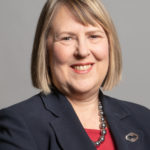
  • Eluned Morgan – 2022 Statement on Emergency Care Services for Winter in Wales

    Eluned Morgan – 2022 Statement on Emergency Care Services for Winter in Wales

    The statement made by Eluned Morgan, the Minister for Health and Social Services, on 11 October 2022.

    I am pleased to update Members on our planning approach to support resilient urgent and emergency care services this winter.

    It is likely the winter period will present additional challenges to an already stretched urgent and emergency care system if there are increases in prevalence of both COVID-19 and influenza, and within the context of the cost of living and energy crises. Members will know there are plans in progress focusing on COVID-19 and influenza vaccination, and additional support for vulnerable people most likely to feel the impact of rising costs this winter.

    Planning for seasonal peaks in pressure is a year-round exercise and development of interventions that will enable additional resilience commenced many months ago. Additionally, a winter planning framework has been issued to NHS Wales organisations and Regional Partnership Boards to support them to plan and deliver resilient urgent and emergency care services this winter.

    Since Spring 2022, Health Boards have been working with partners to develop local urgent and emergency care plans focused on a small number of priorities set by the Welsh Government that will support people to access the right care, in the right place, first time. To support consistency and harness momentum, the winter planning framework sets out expectations for Health Boards to work with partners to build on these priorities and develop enhanced interventions for the winter period. These priorities include:

      • A national communications campaign to raise awareness of NHS 111 Wales, encouraging the public to use the 111 service as a first port of call for free, trusted health information to help ensure they access the right service, first time;
      • Optimising the role of third sector services to improve experience and outcomes for vulnerable people who access care in Emergency Departments or hospitals;
      • Increasing opportunities for people with urgent care complaints to be assessed and treated away from the Emergency Department and within Urgent Primary Care Centres;
      • £3m for the recruitment of 100 new ambulance clinicians expected to be operational by the end of December;
      • Increasing emergency ambulance response capacity through implementation of new staff rosters to deliver efficiency equivalent to around 70 whole time equivalents;
      • Reducing long ambulance patient handover delays to improve experience and unlock ambulance capacity;
      • A further £2m has been made available for health boards to improve their emergency department environments, to enhance patient experiences this winter; and
      • Extending same day emergency care services to seven-day accessibility to help people who may have ordinarily been admitted to hospital to return home to sleep in their own bed.

    In addition, Health Boards and Local Authorities have developed plans to increase community bed or bed equivalent capacity ahead of the winter period. These plans will aim to deliver additional step down to recover provision and community responses through a shared endeavour amongst partners.

    This additional capacity will be delivered alongside additional measures to boost the community care workforce, and is a key element of our enhanced winter planning approach. It will support people to return home or to their local communities when ready and as a consequence it should improve timeliness of care in other parts of the urgent and emergency care system.

    I expect Health Boards to work collaboratively with partners through Regional Partnership Boards to refine plans, drawing on learning from the previous winter and the ongoing challenges of the pandemic, with a focus on patient safety and wellbeing.

    Health Boards will be expected to submit winter resilience plans to their respective Boards for approval, and a review of each Health Board’s plan will form part of Welsh Government Integrated Quality Planning and Delivery meetings in October.

    I will provide Members with further updates throughout the winter period.

  • Jane Hutt – 2022 Statement on National Hate Crime Awareness Week

    Jane Hutt – 2022 Statement on National Hate Crime Awareness Week

    The statement made by Jane Hutt, the Welsh Minister for Social Justice, on 10 October 2022.

    National Hate Crime Awareness Week is an annual campaign of action to raise awareness of hate crime, highlight the importance of reporting incidents, and signpost people to the support available.

    This year, our Wales Hate Support Centre provider, Victim Support Cymru, has helped to co-ordinate a range of activities across Wales to mark the week, collaborating with police, local authorities, and the third sector. These activities have been developed under the theme, Wales Together, which underlines the importance of communities uniting against hate in all its forms. Victim Support Cymru has also co-produced a partner pack with resources to help stakeholders to deliver themed messaging throughout the week, with each day focusing on a different strand of hate crime.

    On 11 October 2022, I will be speaking at the Young People and Hate in Modern Wales event hosted by Victim Support Cymru. The event will explore the harmful and isolating impact of hate crime on the lives of children and young people and provide a forum to highlight best practice in supporting those who have experienced hate.

    It has been another important year of progress in Wales. We have embedded action to tackle hate crime in both the forthcoming Anti-Racist Wales Action Plan and the LGBTQ+ Action Plan, demonstrating a strategic approach to this issue. Our plans have been shaped by the views of the people of Wales, and it is clear from their input that tackling hate crime is a priority. The Welsh Government is committed to creating an anti-racist nation by 2030, where everyone is valued for who they are and the contribution they make. Tackling hate crime is a pivotal to this vision, and the actions contained in the plan are driving us forward towards this goal.

    These action plans have fed into the work plan of the Welsh Government ‘s Hate and Community Tension Board Cymru. Through this board, we are working alongside the four Police forces in Wales, British Transport Police, Crown Prosecution Service Cymru-Wales, the Offices of the Police and Crime Commissioners, and Victim Support Cymru to take the work plan forward.

    A fundamental part of our work to tackle hate crime is the Wales Hate Support Centre. In April, the Welsh Government launched this new support service, run by Victim Support Cymru, to provide an independent and high-quality support and advocacy service which promotes victim-centred choices for all victims of hate crime across Wales. The Centre is using innovative outreach and engagement methods to ensure it is reaching socially and geographically excluded communities and is focused on inclusiveness and intersectionality. The service is free and available 24 hours a day, every day of the year.

    As part of this new service, the Wales Hate Support Centre is providing support to children and young people. Last year, the Welsh Government commissioned research into their experiences and their awareness of hate crime. The research highlighted gaps in knowledge and support for children and young people who experience hate, and a clear requirement for a service which better suited their needs. In response, this service will provide tailored and appropriate support and advocacy together with awareness-raising and engagement work with children and young people and the professionals that support them. This is part of a wider training and engagement programme delivered by the Centre to diverse audiences from all sectors across Wales.

    To coincide with National Hate Crime Awareness Week, the Welsh Government is delivering a short burst of its anti-hate campaign, Hate Hurts Wales. This will include television and online advertising, running across ITV, S4C, Facebook, and Instagram. The aim is to supplement the awareness-raising activities happening across Wales and to encourage people to report. We are currently in the process of procuring the contract to deliver the next phase of Hate Hurts Wales, which will run until at least March 2024.

    The Hate Crime in Schools Project ended in March 2022, with 145 schools across Wales receiving hate crime awareness raising training and critical thinking sessions. The Welsh Local Government Association delivered the project on behalf of Welsh Government and has produced an evaluation report. We are now considering how best to take forward the recommendations and learning from the project.

    We have recently agreed to fund the Holocaust Memorial Day Trust to employ a support worker to encourage communities in Wales to commemorate Holocaust Memorial Day 2023 through community events and activities. The Trust’s mission to highlight the dangers of allowing hate to go unchallenged is as important as ever and strongly links with our wider work to make Wales an anti-racist nation.

    The National Hate Crime Statistics for England and Wales 2021/2022 were published by the Home Office on 6 October. The statistics show a 35% increase in recorded hate crimes across Wales compared to 2020/2021. There were 6,295 recorded hate crimes across the four Welsh Police Force Areas of which:

    3,888 (62%) were race hate crimes;
    1,329 (21%) were sexual orientation hate crimes;
    227 (4%) were religion hate crimes;
    864 (14%) were disability hate crimes; and
    247 (4%) were transgender hate crimes.
    It is uncertain to what degree the increase in police recorded hate crime is due to continued recording improvements, alongside the range of work to encourage victims to report incidents. For example, our Hate Hurts Wales campaign ran during half of 2021/2022 (October 2021 to March 2022) with digital communications, targeted outdoor advertising, and television advertising all aimed at increasing the confidence of victims to come forward and report. Nevertheless, any increase in hate crime is concerning and an indication of why our continued work in this area is required.

    We are still waiting a response from the UK Government to the recommendations of the Law Commission’s Final Report on Hate Crime Laws, published in December 2021. I wrote to the UK Government this year to ask that it accept with immediate effect the recommendation that the aggravated offences which currently exist for race and religion should be extended to all other existing characteristics within the hate crime legislative regime, including sexual orientation and transgender identity. This would send out a clear message that hate crime motivated by sexual orientation, transgender identity, and disability is unacceptable and there are serious consequences for those perpetrating these hateful actions, but no action has been taken yet by the UK Government.

    We want a Wales where everyone thrives and feels valued. The National Survey for Wales 2021 to 2022 showed that 84% of adults agreed that people from different backgrounds get on well together, while 82% agreed that people treat each other with respect and consideration. This is a positive indicator that we have connected communities with shared values in Wales, and a solid platform to work together to eliminate hate and prejudice from society.

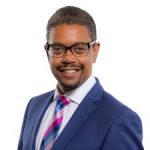
  • Vaughan Gething – 2022 Statement on the Arfor 2 Programme

    Vaughan Gething – 2022 Statement on the Arfor 2 Programme

    The statement made by Vaughan Gething, the Welsh Minister for the Economy, on 10 October 2022.

    I am pleased to inform Members that as part of the Co-operation Agreement with Plaid Cymru, I have agreed proposals for an Arfor 2 programme.

    A budget of £11m is being made available over the 3-year period 2022/23 – 2024/24 to support the programme which will, alongside our wider support package, deliver a range of economic interventions aimed at promoting entrepreneurship, business growth, community resilience and the Welsh language.

    We have been working with Cefin Campbell MS, the Designated Member and local authority partners in the spirit of co-production to develop proposals which build on the learning from the original 2-year Arfor programme (2019/20 – 20/21) which sought to pilot a number of activities.  The findings of the independent evaluation of that programme have also been key to help shape this new programme.

    The Arfor 2 programme, which is to be delivered by the local authorities, will be operational in Gwynedd, Anglesey, Ceredigion and Carmarthenshire. It will support a number of strategic interventions, including a focus on opportunities for young people and families to enable them to stay or return to their home communities – and to fulfil their aspirations locally.

    This programme will make an important contribution to the Welsh Government’s wider Welsh language strategy – Cymraeg 2050 which aims to reach a million Welsh speakers by 2050 and aims to complement existing or planned activity which is of relevance for example Business Wales, Big Ideas, SMART innovation, Welsh Language Communities Housing Plan and other programmes.

    The Arfor 2 programme will seek:

    • To create opportunities for young people and families (under 35 years old) to stay in or return to their home communities – supporting them to succeed locally by engaging in enterprise or developing a career.
    • To create enterprising communities within Welsh-speaking areas – by supporting commercial and community enterprises that aim to preserve and increase local wealth by taking advantage of the identity and unique qualities of their areas.
    • To maximise the benefit of activity through collaboration– to ensure that good practice and lessons learnt are shared and that there is on-going monitoring to ensure continuous improvement.
    • Strengthen the identity of communities with a high density of Welsh speakers – by supporting the use and visibility of the Welsh language, encouraging a sense of place.

    The Arfor 2 programme will also look to promote the learning and sharing of good practice and to broaden our understanding of the links between economy and language, and where relevant housing, and identify those interventions which can make a difference.

    Work will now continue on the detail of the proposed interventions, and I will update Members as the programme progresses.

  • Julie James – 2022 Statement on Building Safety in Wales

    Julie James – 2022 Statement on Building Safety in Wales

    The statement made by Julie James, the Welsh Minister for Climate Change, on 7 October 2022.

    I have always made it clear that I do not expect leaseholders to bear the cost of repairing fire safety issues that are not of their making and that I expect developers to step up to their responsibilities.

    I am very pleased that following our roundtable meeting in July a number of major developers have acknowledged their responsibility by signing up to the Welsh Government’s Developers Pact.  This confirms their intention to address fire safety issues in buildings of 11 metres and over in height that they have developed over the last 30 years.  These developers are Persimmon, Taylor Wimpey, Lovell, McCarthy and Stone, Countryside, Vistry, Redrow, Crest Nicholson and Barratt.

    I met with these developers yesterday to confirm next steps, and their plans and timescales for remediation.  I wish to commend them for their engagement to date and look forward to a productive relationship in the future.  In some cases, developers have started their remediation works, and are making the repairs necessary.  I look forward to this work continuing at pace.

    I remain disappointed that three developers are yet to provide me with assurances that they do not have any medium or high-rise developments in Wales or, if they do, are prepared to meet their responsibilities in respect of these developments.

    The three developers yet to reply are: Laing O’Rourke, Westmark, and Kier (now Tilia).

    I am urging these developers to contact my officials immediately to confirm their position.  I want to make clear I am exploring all options, including legislation, to ensure that those developers will face consequences for their unwillingness to accept their responsibilities.

    I am proud of the commitment we have made in Wales that a holistic approach is necessary to effectively address fire safety issues.  This means that both internal and external factors are considered, rather than a focus on cladding alone.

    I have made £375 million available to tackle building safety and have taken steps to ensure all appropriate routes are being explored to make sure that all medium and high-rise buildings in Wales are as safe as they can be from fire.

    To deliver on this commitment, it is essential that we understand the needs of individual buildings and design bespoke solutions to best address their fire risk.  A comprehensive survey provides this information, and the Welsh Building Safety Fund, which is still open for expressions of interest from responsible persons, is supporting this aim.

    Both the digital and intrusive survey work is paid for by the Welsh Government. By funding and commissioning the surveys, Welsh Government will gain a clear, consistent and comprehensive picture of building safety issues across Wales.

    Where buildings are found to be low risk, our consultants will provide an EWS1 certificate. This will help to reassure leaseholders and remove barriers to them accessing financial products such as mortgages.

    To date, the digital surveys have identified 163 buildings across Wales that require intrusive surveys.  All responsible persons have been contacted to advise them of the need for intrusive surveys, and to arrange for permission to access the building to undertake this work.

    In some cases, our consultants have faced restricted access to buildings, which has delayed our programme of surveys.  I would urge responsible persons to do all they can to facilitate access, so that our surveyors can continue this important work.  I have written to responsible persons / managing agents to press this message.

    I have been made aware that in a number of cases, survey work was undertaken prior to the launch of the Welsh Building Safety Fund, funded by residents, building owners or managing agents.  Where this has happened, and subject to certain eligibility criteria being met, surveys costs will be reimbursed by Welsh Government.  If responsible persons / managing agents are in this position, please contact my officials at buildingsafety@gov.wales.

    While it is right that developers are accountable, building owners and Managing Agents also have accountabilities when it comes to ensuring the safety of buildings and it is important that effective maintenance programmes are in place.   I would encourage all residents to assure themselves that maintenance on their buildings is being carried out in accordance with their lease agreements.

    I am also aware that in some cases, leaseholders are in severe financial difficulties as a result of fire safety issues and to address this I launched the Leaseholder Support Scheme in June.

    As I committed when I launched the scheme, I have instructed officials to review the criteria to ensure that those in greatest need are receiving support.  This review is underway, and I will announce any further changes to the scheme and eligibility criteria shortly.

    Building Safety in Wales must both address our present situation and undertake fundamental reform of the building safety regime to ensure the problems we face now cannot arise again in future.  Alongside investment over the next three years for building safety work, plans are underway for a significant programme of legislative and cultural reform to establish a fit for purpose building safety regime in Wales. Reforming the current system of building safety is a key commitment for this Government and also forms an important part of our Co-operation Agreement with Plaid Cymru. In addition to this, a number of provisions that apply in relation to Wales were included within the UK Building Safety Act 2022.

    The Act received Royal Assent in April 2022. The provisions that apply in relation to Wales focus primarily on the reform of the building control system (Part 3 of the Act) but do extend to other areas, including several provisions intended to add further protection for leaseholders.

    Some of the key provisions which have been commenced include:

    •         Amendment of the Building (Approved Inspectors etc.) Regulations 2010 to make the approved inspector sector more resilient and flexible in the face of insurance market fluctuations, and to create alignment on insurance requirements between approved inspectors and other professions

    •     The extension of the Defective Premises Act 1972 time periods and provision to deal with the lack of redress availability where a development company no longer exists.

    We have completed our design and construction phase transition plan which enables us over the next three years to make the legislative changes necessary to ensure that the problems identified with the current building control regimes are rectified.

    The first of the public consultations on this work was published in September. This consultation is focused on the rules and standards we will expect Building Control Bodies both in the public and private sector to comply with.

    This can be found on the Welsh Government Consultation pages.

    https://gov.wales/operational-standards-rules

    A full understanding of the impacts of any proposed changes is integral to this new regime, as is providing all stakeholders the opportunity to shape future policy.  To this end expect to see further related consultations over the coming months.

    We will be publishing more detail of our transition plan on our webpages shortly.

  • G7 – 2022 Joint Statement on Ukraine

    G7 – 2022 Joint Statement on Ukraine

    The joint statement issued by G7 leaders on 11 October 2022.

    G7 Statement on Ukraine, 11 October 2022

    1. We, the leaders of the Group of Seven (G7), convened today with Ukraine’s President Volodymyr Zelenskyy. Our meeting took place against the backdrop of the most recent missile attacks against civilian infrastructure and cities across Ukraine, leading to the death of innocent civilians. We condemn these attacks in the strongest possible terms and recall that indiscriminate attacks on innocent civilian populations constitute a war crime. We will hold President Putin and those responsible to account.
    2. The G7 firmly condemn and unequivocally reject the illegal attempted annexation by Russia of Ukraine’s Donetsk, Luhansk, Zaporizhzhya and Kherson regions in addition to the Autonomous Republic of Crimea and the City of Sevastopol. We solemnly reiterate that we will never recognise this illegal annexation or the sham referenda that Russia uses to justify it.
    3. Russia has blatantly violated the principles enshrined in the UN Charter. They cannot and do not give Russia a legitimate basis to change Ukraine’s borders. We call upon all countries to unequivocally reject these violations of international law and demand that Russia cease all hostilities and immediately, completely and unconditionally withdraw all of its troops and military equipment from Ukraine.
    4. We have imposed and will continue to impose further economic costs on Russia, including on individuals and entities – inside and outside of Russia – providing political or economic support for Russia’s illegal attempts to change the status of Ukrainian territory.
    5. We deplore deliberate Russian escalatory steps, including the partial mobilisation of reservists and irresponsible nuclear rhetoric, which is putting global peace and security at risk. We reaffirm that any use of chemical, biological or nuclear weapons by Russia would be met with severe consequences.
    6. We condemn Russia’s actions at Ukraine’s Zaporizhzhya Nuclear Power Plant and the pressure exerted on the personnel of the facility. This is a further irresponsible escalation and we will hold Russia responsible for any incident caused by their actions. The safety, security and safeguards of the nuclear facility are paramount and we support the International Atomic Energy Agency’s efforts in this regard.
    7. We reiterate our call on the Belarusian authorities to stop enabling the Russian war of aggression by permitting Russian armed forces to use Belarusian territory and by providing support to the Russian military. The announcement of a joint military group with Russia constitutes the most recent example of the Belarusian regime’s complicity with Russia. We renew our call on the Lukashenko regime to fully abide by its obligations under international law.
    8. We reaffirm our full support to Ukraine’s independence, territorial integrity and sovereignty in its internationally recognised borders. In line with international law, in particular the UN Charter, Ukraine has the legitimate right to defend itself against Russian aggression and to regain full control of its territory within its internationally recognised borders.
    9. We reassured President Zelenskyy that we are undeterred and steadfast in our commitment to providing the support Ukraine needs to uphold its sovereignty and territorial integrity. We will continue to provide financial, humanitarian, military, diplomatic and legal support and will stand firmly with Ukraine for as long as it takes. We are committed to supporting Ukraine in meeting its winter preparedness needs.
    10. With a view to a viable post-war peace settlement, we remain ready to reach arrangements together with interested countries and institutions and Ukraine on sustained security and other commitments to help Ukraine defend itself, secure its free and democratic future, and deter future Russian aggression. We will continue to coordinate efforts to meet Ukraine’s urgent requirements for military and defense equipment. We look forward to the outcomes of the International Expert Conference on the Recovery, Reconstruction and Modernisation of Ukraine on October 25.
    11. No country wants peace more than Ukraine, whose people have suffered death, displacement and countless atrocities as the result of Russian aggression. In solidarity with Ukraine, the G7 Leaders welcome President Zelenskyy’s readiness for a just peace. This should include the following elements: respecting the UN Charter’s protection of territorial integrity and sovereignty; safeguarding Ukraine’s ability to defend itself in the future; ensuring Ukraine’s recovery and reconstruction, including exploring avenues to do so with funds from Russia; pursuing accountability for Russian crimes committed during the war.
    12. We are deeply troubled by the deliberate damage to the Nordstream pipelines in international waters in the Baltic Sea and strongly condemn any deliberate disruption of critical infrastructure. We welcome ongoing investigations.
    13. We will act in solidarity and close coordination to address the negative impact of Russia’s aggression for global economic stability, including by continuing to cooperate to ensure energy security and affordability across the G7 and beyond.
  • Lynne Neagle – 2022 Speech on the Minimum Unit Price for Alcohol

    Lynne Neagle – 2022 Speech on the Minimum Unit Price for Alcohol

    The speech made by Lynne Neagle, the Welsh Deputy Minister for Mental Health and Wellbeing, on 6 October 2022.

    On 2 March 2020, a minimum unit price of 50p was introduced for alcohol sold in Wales to help tackle alcohol-related harm by reducing the amount of alcohol drunk by hazardous and harmful drinkers.

    We undertook to carry out a review of the minimum price for alcohol legislation after two years. This statement sets out how this will take place.

    It will help us understand the current impact of the legislation, including the implications from the pandemic. It will also help us to understand whether the current pricing structure of 50p per unit is appropriate and is having the desired effects of reducing alcohol related harms.

    We commissioned an independent evaluation of the Public Health (Minimum Price for Alcohol) (Wales) Act 2018, which will take the form of a contribution analysis. This has four distinct parts (lots).

    Lot 1: Contribution analysis

    The contribution analysis is a theory-based evaluation method, appropriate to the review of complex, multi-level programmes of work where direct causal attributions are not possible[1].  This approach is appropriate for evaluating the impact of minimum pricing as an MUP will not be the only factor which may impact on alcohol consumption and alcohol-related harm.

    The evaluation approach will take account of this and assess the contribution the policy has made to any observed changes in outcomes.

    The contribution analysis will look at the wider context of alcohol policy and bring together the relevant datasets and the findings from the individual studies in Wales and evaluation work undertaken in Scotland to inform the assessment of the contribution that the introduction of minimum pricing has made to the policy objectives.

    The report from this component of the evaluation can only be produced when the reports from the other three studies have been produced, as this brings all the elements together into the overall assessment.

    Lot 2: Research into the impact on retailers

    This element will assess the experience and impact of the implementation of the Act on retailers.

    A baseline report from this element of the evaluation was published on 30 November 2021. It presents the first set of findings from longitudinal qualitative research with Welsh alcohol retailers undertaken before the introduction of the minimum price for alcohol in Wales.

    The research explores retailers’ understanding and views of the minimum pricing policy prior to its introduction and their expectations for the effects of the policy. Interviews were conducted with 30 retailers from across five Welsh regions. The sample included independents and chains, large and small retailers, and a mix of alcohol licence types (on-trade, off-trade, and both). This baseline research will be followed by two further waves of interviews with retailers.

    The report also incorporates the quantitative analysis plan, providing details on the methods to be used for evaluating the impact of the minimum price for alcohol on retailers, using Kantar data to make a quantitative assessment of the impact.

    Lot 3: Work with services and service users

    The aim of this qualitative research is to assess both the experience and impact of minimum pricing on services and service users (including exploring the extent to which switching between substances may have been a consequence of the legislation). An initial piece of work exploring this was commissioned to inform implementation of the Act. The report from this baseline work was published on 24 October 2019.

    Data will be gathered though an online survey with service users and service providers. Interviews with both groups are also undertaken to explore findings in more detail.

    Lot 4: Assessment of the impact of introducing minimum price for alcohol on wider population of drinkers.

    The aim of this final component is to explore the impact of the minimum price for alcohol legislation on the wider population, including moderate, hazardous and harmful drinkers. A baseline report was published on 8 July 2021. The report focuses on data collected prior to the implementation of the policy in March 2020. The main aim of the study was to examine the potential impact of the new legislation on drinkers in Wales and to gather baseline information that can be used to monitor the impact of minimum pricing over the five-year study period.

    Data were collected through online survey questionnaires which were completed by 179 drinkers recruited through social media advertisements and announcements on two Welsh university intranet websites. Interviews were conducted with 41 drinkers recruited through the National Survey for Wales, two universities, third sector organisations and the online survey.

    A further report was published on 24 March 2022, presenting the results from a second wave of qualitative interviews from the longitudinal sample. The aim of this additional wave of interviews was to undertake a detailed qualitative study of the impact of the pandemic on the drinking behaviour of the longitudinal sample to provide context for future interpretation of the data.

    Each of the four parts of the evaluation is undertaking fieldwork for an interim assessment of the implementation of the legislation. The findings from each of the four lots will be published during the autumn – the interim report from the contribution analysis is due in February 2023.

    The findings of these evaluation lots will make up the two-year review. I will make a further written statement which will set out the key findings once the last of the evaluation reports has been published.

    A further round of fieldwork will be undertaken for each component of the evaluation during autumn and winter 2023. These findings will contribute towards the final evaluation reports, which will be available during summer of 2024 and will inform the report on the operation and effect of the legislation, which Welsh Ministers are required to prepare under section 21 of the 2018 Act.

    [1] Mayne, J. (2008) Contribution analysis: An approach to exploring cause and effect. The Institutional Learning and Change (ILAC) Initiative.

  • Jane Hutt – 2022 Statement on Funding for Tackling Food Poverty

    Jane Hutt – 2022 Statement on Funding for Tackling Food Poverty

    The statement made by Jane Hutt, the Welsh Minister for Social Justice, on 4 October 2022.

    As energy prices continue to rise and people struggle with the impact of rising inflation on their household income, local authorities, food banks and community support groups across Wales are reporting a rise in the number of people accessing food banks and other community food provision. In some areas, organisations have experienced more than 100% increase in demand for emergency food. At the same time, as a result of the cost of living crisis, organisations have experienced a drop in donations.

    As part of our commitment to prioritise support for people affected by the cost of living crisis, today I am announcing a further £1 million for tackling food poverty.  This additional funding builds on the £3.9 million allocated already this financial year by the Welsh Government to help alleviate food poverty and tackle the root causes of food poverty.

    The funding will support community food organisations to overcome barriers to accessing sufficient supplies. It will enable them to purchase food, baby products such as milk and other essential goods such as period products and cleaning products which will help facilitate and maintain well-being, healthy diets and personal dignity.

    The funding can also be used to support initiatives such as baby banks, clothes banks and uniform banks. It can also be used to purchase and distribute warms goods packs and equipment which will help keep vulnerable people warm this winter.

    The funding can support initiatives which will help families save money on food by building their food knowledge and skills, for example, through the delivery of cooking sessions where households are provided with food and recipes as well as cooking equipment such as slow cookers or pressure cookers.

    The funding can also be used to support action to maximise income and increase the uptake of benefits such as Healthy Start vouchers and initiatives which support households to pay essential bills such as our Welsh Government Fuel Support Scheme and our Fuel Voucher and Heat Fund Scheme.

    The additional £1m will be distributed through local authorities in Wales in the coming weeks. Organisations that might wish to benefit from this support should contact their local authority to discuss.

  • Jane Hutt – 2022 Statement on the Welsh Government and the Pakistan Floods Appeal

    Jane Hutt – 2022 Statement on the Welsh Government and the Pakistan Floods Appeal

    The statement made by Jane Hutt, the Welsh Minister for Social Justice, on 3 October 2022.

    Following the devastating flooding that recently hit Pakistan, the Welsh Government has made a £100K donation to the Disasters Emergency Committee (DEC) Pakistan Floods Appeal.

    The torrential floods submerged vast areas of land, leaving over 6 million people in need of urgent help. According to the government of Pakistan, a third of the country – equivalent to an area the size of the UK – is underwater, in what the UN Secretary General Antonio Guterres has called a “climate catastrophe”. Whole villages have been cut off, with rescuers struggling to reach them. At least 1,400 people have been killed and approximately 13,000 injured.

    Huge areas of agricultural land have been affected, with crops swept away and three quarters of a million livestock killed, which will mean many people going hungry in the longer term. There is also a high risk from water-borne diseases spreading in affected areas.

    The Welsh Government funds the Disasters Emergency Committee Cymru to help coordinate fundraising efforts in Wales and the Pakistan Floods Appeal was launched in September.  The Disasters Emergency Committee brings together leading organisations in the UK to raise funds for overseas emergencies, coordinating an effective humanitarian response, getting aid quickly to people who need it in the most cost effective manner possible.

    Mobile teams have been deployed to screen children for malnutrition and provide treatment. Cash grants are helping people buy stoves and a three-month supply of firewood and agencies are supplying winter clothing for families to stay warm. This £100K donation from the Welsh Government will support that activity.