Tag: Speeches

  • Michael Gove – 2012 Speech to the Independent Academies Association (IAA)

    Michael Gove – 2012 Speech to the Independent Academies Association (IAA)

    The speech made by Michael Gove, the then Secretary of State for Education, on 14 November 2012.

    Stanley Baldwin, the Conservative Prime Minister who won more elections than any other in history, was once asked what was the most significant thing that he had ever learned about politics.

    He paused, a faraway look entered his eyes, and he began to tell a story.

    It was, he confessed, not in Westminster, but in Cambridge, that he had learned the most significant single thing about political life.

    Baldwin had been walking along the backs, the verdant gardens which border the river Cam and link different Cambridge colleges, with the distinguished father of jurisprudence Sir Henry Maine.

    “At the end of the walk,” he explained, “Sir Henry turned to me – and he explained that the most important thing in the development of modern politics had been the move from status to contract.”

    And then Baldwin paused,

    “Or was it the other way around? D’you know, I can never remember”.

    Baldwin’s artful absent-mindedness is proof in its way of political genius.

    The British have never trusted intellectuals, and certainly not with power. So any thoughtful politician with ambitions for a long stretch at the top would do well to disguise any intellectual or academic leanings. From Arthur Wellesley to Willie Whitelaw, Ernest Bevin to John Prescott, a certain anti-intellectualism is seen as proof of trustworthiness in political leaders. We prefer to be led by practical men of affairs who have won their honours in battle rather than

    those who have grown pale as the midnight oil has burnt out in the lamp-lit library.

    This anti-intellectual strain in British life, and thinking, may have protected us from following the sort of ideological fashions that captured continental minds over the last century. As has been pointed out before, both fascism and Marxism were ideas so foolish only an intellectual could have believed in them. But I fear the anti-intellectual bias in our way of life has, at times, become a bias against knowledge and a suspicion of education as a good in itself.

    The bias against knowledge was displayed when MPs argued against raising the school leaving age, when trade unions argued against demanding higher qualifications for teachers and when teachers demanded that texts in literature classes be relevant rather than revelatory for their readers.

    This bias against knowledge manifested itself most recently when the otherwise saintly inventor Sir James Dyson had a crack at people who want to go to university to learn French lesbian poetry rather than applying themselves to matters technical.

    Having devoted as much of my department’s discretionary budget as possible to attracting more teachers into maths and science subjects, including computer science I am certainly no enemy of equipping people with the skills required to master technology.

    But I am certainly an enemy of those who would deprecate the study of French lesbian poetry.

    Because the casual dismissal of poetry as though it were a useless luxury and its study a self-indulgence is a display of prejudice. It is another example of the bias against knowledge.

    As was the recent argument mounted by the Leader of the Opposition that 50 per cent of the population would never make it to university.

    He was, effectively, saying that we should ration access to knowledge.

    We should believe our society capable of ensuring many more than half our young people are capable of going to university.

    He was effectively saying we should ration access to knowledge. I disagree.

    When there are still so many schools which are simply not educating children well enough, and where students still aren’t stretched properly, there are clearly many more children capable of enjoying what university has to offer, if only they were all properly taught.

    I was recently in Poland – where 73 per cent of young people go on to university. In South Korea, Norway, the Netherlands, Finland, Australia, Ireland and New Zealand, 60 per cent, 55 per cent, 55 per cent, 51 per cent, 51 per cent, 50 per cent and 41 per cent of the population go on to university. [The equivalent figure for the UK is 37%].

    There are schools in our own country – many of them represented here – where many more than 50 per cent of students will go on to higher education even though many more than 50 per cent of the students arrived at or below the national level of expectation in reading, writing and arithmetic.

    The fatalistic assumption that we cannot ensure all schools are that good is another example of our failure properly to value the transformative power of education. As Andrew Adonis says in his superb new book Education, Education, Education: “How many good schools do you have to see to be convinced of the educability of every child?”

    We should demand every school is a good school because of the potential of education to power economic growth, advance social mobility and make opportunity more equal.

    But it is also important to emphasise that education is a good in itself – beyond – indeed above – any economic, social or political use to which it might be put.

    Because education properly understood – a liberal education which includes the disciplines of language, literature and mathematics, science, geography and history, music, art and design – introduces children to the habits of thought and bodies of knowledge which are the highest expressions of human thought and creativity.

    Education – properly understood – allows children to become citizens – capable of sifting good arguments from bad, the bogus from the truthful, the contingent from the universal.

    These intellectual capacities are vital if we are to keep democracy healthy, social relations civilised, economic behaviour honest and cultural life enriching. But these abilities can only come from the initial submission of the student’s mind to the body of knowledge contained within specific subjects. And these traditional subjects are the best route to encouraging the techniques of thinking which mark out the educated mind.

    And even apparently frivolous exercises – like the study of French lesbian poetry – can develop the mind in a way every bit as rigorous and useful as any other study.

    Not, of course, if the study of these tests are faddish exercises in rehearsing sexual politics. But if the study of poetry occurs within the discipline of proper literary criticism, with an understanding of metre and rhythm, an appreciation of the difference between sonnet and villanelle and a knowledge of the canon so we know where influences arose and how influences spread then there are few nobler pursuits.

    And the study of what great and original minds have thought, expressed in forms designed to capture the sublime, the beautiful and the original can awaken sympathies and encourage reflection in a way which nothing else can. It can ensure we live lives more full and see human existence in all its multi-coloured richness.

    So – having come out – through the medium of French lesbian poetry – as an unapologetically romantic believer in liberal learning – education for its own sake – let me now explain why the best way to advance this liberating doctrine is through… regular, demanding, rigorous examinations.

    Now some people will say that if I believe in the adventure of learning and the joy of discovery, how can I possibly be a fan of testing and examining? It’s like professing a love of cookery – hymning the beauty of perfectly baked souffles or rhapsodising over richly unguent risottos – and then saying the most important thing about food is checking the calorie count in every mouthful. Isn’t an obsession with measurement the enemy of enjoyment, the desire to assess and examine the death of learning for its own sake?

    I understand the argument.

    There is – always will be – something forbidding about the examination hall. The stern invigilator, the merciless march of the clock hand as the seconds tick away, the series of escalatingly difficult questions some unknown figure has designed with the specific aim of judging us – these are not what we would normally think of as agents of liberation.

    But they are, just as much, if not more so, than any aspect of education.

    Firstly, exams matter because motivation matters. Humans are hard-wired to seek out challenges. And our self-belief grows as we clear challenges we once thought beyond us. If we know tests are rigorous, and they require application to pass, then the experience of clearing a hurdle we once considered too high spurs us on to further endeavours and deeper learning.

    One of the biggest influences on my thinking about education reform has been the American cognitive scientist Daniel T. Willingham who has published the definitive guide to weighing evidence, especially scientific evidence, in the debates around education reform.

    In his quite brilliant book “Why Don’t Students Like School”, he explains that students are more motivated to learn if they enjoy what he calls “the pleasurable rush that comes from successful thought”. And that is what exam success provides.

    Second, exams matter because the happiness I have described sustains future progress. We know that happiness comes from earned success. There is no feeling of satisfaction as deep, or sustained, as knowing we have succeeded through hard work at a task which as the upper end, or just beyond, our normal or expected level of competence. The craftsman’s contentment in an artefact fashioned more elegantly than he could ever have hoped, the singer’s joy when she has completed an aria which stretches the very limits of her range, the athlete’s joy at his personal best, all of these are examples of the deepest human happiness which any of us can achieve for ourselves.

    Third, exams help those who need support to do better to know what support they need. Exams show those who have not mastered certain skills or absorbed specific knowledge what more they need to practice and which areas they need to work on.

    For all these reasons exams pitched at a level which all can easily pass are worse than no exams at all. Unless there is stretch in the specification, and application is required to succeed, there will be no motivation, no satisfaction and no support for those who need it.

    The fourth reason exams matter is that they ensure there is a solid understanding of foundations before further learning starts. And it is important that we appreciate that exams cannot simply be exercises in displaying skills or techniques divorced from mastery of a body of knowledge. Subjects are nothing if they are not coherent traditional bodies of knowledge, with understanding and appreciation of basic facts and simple concepts laying the ground for understanding of more complex propositions, laws, correlations and processes.

    Daniel Willingham again makes the point powerfully in his work when he points out that, “research from cognitive science has shown that the sort of skills that teachers want for students – such as the ability to analyze and think critically – require extensive factual knowledge”.

    I can think of no better development of this argument than the case made by Professor Lindsay Paterson to the Scottish Secondary Teachers Association in 2010.

    “Why,” he asked, “do we test students on their knowledge of quadratic equations? It’s not because they are like a sort of Sudoku puzzle, sufficient in itself and pointing to nothing beyond itself. It’s because quadratics relate in several ways to more general principles; to the properties of all the higher order polynomials, to the properties of graphs, to the workings of calculus. And these, in turn, lead to the highest reaches of the mathematical discipline, to measure spaces and topology and functional analysis.”

    “In other words,” Professor Paterson goes on to say, “quadratic equations are propaedeutic, a way of starting on important paths that have no intrinsic limit even if most students will choose not to go very far along them. Worthwhile assessment of a student’s knowledge of quadratics will therefore have to make sure that these principles are laid down.”

    Professor Paterson is right in my view that assessment must not be seen as an end in itself – it must prepare the way for future learning – and that is why it is so important that the assessment we conduct at the beginning of primary schools prepares students for the rest of their time in primary, why the assessment at the end of primary schools must be credible in the eyes of teachers in secondary schools why the assessment at the end of secondary will depend for its success on the approval of those engaged in higher or further education and why the success of any technical or vocational assessment depends on satisfying the requirements to practice trade or profession.

    That is why we need to ensure that students at the end of year one in primary are able to decode fluently so they can read for pleasure – and the phonics test provides that guarantee.

    It is also why we need to ensure that students at the end of primary are numerate and secure in the basics of English. Which is why my colleague Liz Truss rightly removed calculators from Key Stage 2 maths tests to ensure facility in arithmetic and why we must have a test of spelling, punctuation and grammar in Key Stage 2 English tests to guarantee basic literacy. Otherwise progress in the next stage of education will be fitful and fragile

    And the same principle applies to any replacement for GCSEs and for reformed A levels. Both need the involvement of those subject experts, learned societies and university academics who understand and appreciate what is required to make progress in any subject area.

    And of course the same principle applies to vocational and technical courses – which is why Doug Richard’s forthcoming review of apprenticeships will emphasise the vital importance of an external assessment of competence in a practical field.

    And that takes me to the fifth reason exams matter – they signal to those who might admit an individual to a position of responsibility that the individual is ready to take on that responsibility. Whether it’s the driving test that allows an adult to take to the road or a completed apprenticeship which allows an electrician to rewire a building or the pre-U examination that confirms a candidate is ready for the rigours of a physics degree, the examination is a guarantee of competence.

    Now I’m aware that some will argue that the problem with exams as a preparation for deep thought and rounded study is that exam preparation involves dull memorisation, stress and an excessive concentration of mental effort and at the end we forget everything we learned the moment the test is over.

    But the precise opposite is the case.

    Which brings me to my sixth reason to support exams. They facilitate proper learning and support great teaching.

    As Daniel Willingham demonstrates brilliantly in his book, memorisation is a necessary pre-condition of understanding – only when facts and concepts are committed securely to the memory – so that it is no effort to recall them and no effort is required to work things out from first principles – do we really have a secure hold on knowledge. Memorising scales, or times tables, or verse, so that we can play, recall or recite automatically gives us this mental equipment to perform more advanced functions and display greater creativity.

    And the best way to build memory, as Willingham explains, is by the investment of thought and effort – such as the thought and effort we require for exam preparation and testing.

    Because tests require students to show they have absorbed and retained knowledge – and can deploy it effectively – they require teachers to develop the techniques which hold students’ attention and fix concepts in their minds. That will mean deploying entertaining narratives in history, striking practical work in science and unveiling hidden patterns in maths. Tests drive creativity at every level.

    And more than that – they drive equality. The seventh reason we need exams is to ensure our society is ordered on the basis of fairness. And merit.

    Whether or not Stanley Baldwin was paying attention, Sir Henry Maine was right. The most important political development in modern times – indeed the hinge point at which a society becomes modern – is the move from status to contract.

    In pre-modern societies power, and access to power, depended on status. Rank was a matter of birth. Patronage was dispensed via clan or feudal ties. Offices, administrative responsibilities, even university positions, were handed out on the basis of who you knew not what you knew. Before our great period of domestic social reform in the reign of Queen Victoria, army commissions were bought and sold between men of wealth and connections, English universities were clerical closed shops which allowed noblemen to indulge in dissipation and dons in politicking but contributed almost nothing to learning while public administration was an exercise in dividing spoils between clans and clients.

    But in the 19th century the importance of status gave way to the primacy of contract. That meant power and patronage were dispensed on the basis of due process and the rule of law. And that meant a basic contract between the state and individuals was established – access to positions of influence depends on objective measurement of merit.

    Thanks to army and university reforms, and indeed to the Northcote-Trevelyan reforms of the civil service, entry to positions of responsibility became dependent on ability. Indeed on tests. To this day promotion in the army and entry to the civil service depend on examinations – and that is why we still have the best officer corps and the best civil servants in the world.

    Examinations are, we can see, a key weapon of progressives everywhere. In place of privilege they supply talent, rather than office being dispensed by arbitrary and unfair means, it is distributed to those who show application and merit.

    In the case of universities, entry by competitive examination dissolves the power of patronage networks and establishment connections.

    In America the use of scholastic aptitude tests opened up access to colleges which had in the past arbitrarily blocked minority students. The academic test was a tool of the civil rights struggle.

    Colleges which had uses quotas to limit, say, the number of Jewish students or placed undue reliance on lineage and connections in allocating places had to accept students on the basis of test scores and real ability.

    And in this country, over the last few years, tests have also helped overcome prejudice and advance equality.

    Many people would accept that – in broad terms – assessment can achieve all the things I’ve listed – it can motivate, convey a sense of accomplishment, identify weaknesses that need support, lay the foundations for future study, guarantee competence in a field and acknowledge application and real merit.

    But some will say that continuous assessment, teacher assessment, internal assessment, controlled assessment can and do provide all the benefits I seek without any of the demoralising, depressing and distorting effects of external examination, let alone the further problems generated by league tables.

    I am as it happens a huge fan of teacher assessment – properly designed and administered – but teacher assessment alone cannot bring the benefits proper external testing can secure.

    We know that external tests are integral to balanced assessment.

    The evidence shows that in teacher assessment of English achievement there is a tendency for ethnic minority children to be under-marked and students from non-minority backgrounds to be more generously marked. With external testing there is no opportunity for such bias – the soft bigotry of low expectations – and tests show ethnic minority students performing better. So external tests are not only a way of levelling the playing field for children of all backgrounds they are a solvent of prejudice.

    We also know that the sorting of test results into league tables is another progressive development in education.

    In the past, before the clarifying honesty of league tables, schools were judged on hearsay and prejudice. Schools with challenging intakes in disadvantaged communities were written off as sink schools. But many of them were performing well – better than other schools with more privileged intakes which were coasting. But their success – particularly at primary level – could not be effectively established. Now, thanks to Key Stage Two league tables, we can see that there are many primaries – Durand Academy in Lambeth, Cuckoo Hall in Enfield, Conway Primary in Birmingham, Hope Primary in Knowsley – which have very challenging intakes but which outperform most other schools. The children in those schools – and the teachers too – are now recognised as huge and unambiguous successes thanks to league tables. Testing has overcome prejudice.

    And testing and league tables don’t just help us to overcome prejudice – they actively advance equality. League tables enable us to identify high-performing schools and the factors that generate their success. They allow us to capture and then disseminate innovation and good practice. They allow us to identify those schools which are falling behind and failing their pupils – as we have this week – and provide them with the support they need to do better. More often than not that support is coming from those schools we have identified – through testing and league tables – as successes. Without tests and league tables we would have no effective means of helping poor students succeed – we would be grappling in the dark for tools whose design we could not replicate to solve problems we could not identify for students we did not know how to locate.

    Now, I know that league tables can be corrupted. Too much reliance on one measure as a target – however well-designed that single target may be – will mean gaming can occur.

    But we can limit – if not entirely eliminate – gaming by reforming our exams and accountability system.

    Which is what we are doing.

    We’ve already diversified the ways in which schools can be judged, by publishing more and more data allowing new league tables to be constructed so all schools can be ranked on their performance in – say – art, music, drama and dance.

    We’ve developed our own measure in the DfE – the English Baccalaureate – which has helped counteract the temptation schools faced simply to offer the easiest subjects available to maximise the number of students getting five good GCSEs. It has created a parallel incentive to offer students those subjects which facilitate progress on to higher and further education.

    But there are still nevertheless problems with the concentration all these measures generate on the C/D borderline. Which is why we will be consulting soon on what a future – more intelligent – accountability system would look like. And I would welcome as many views as possible as to how that might develop.

    But I would say that – in my experience so far – intelligent accountability – and good teaching – are not served by over-reliance on modular assessment, coursework and controlled assessment. All are subject to gaming and all take time away from teaching and learning. Teachers tell me that controlled assessment can take up to six weeks out of GCSE English teaching – to no-one’s benefit.

    If we develop a more intelligent approach towards accountability – and exam design – then I think we can reap all the many benefits that exams can bring.

    And I know – of course – that there is more – much more – to education than the academic learning that can be assessed in examination.

    I am passionate about music, endlessly interested in the visual and dramatic arts, convinced of the power of sport to transform lives, an unapologetic fan of dance – classical and modern – as well as an advocate for greater involvement in social action by young people.

    But there is no evidence that those schools which excel academically – and get good exam results – neglect any of these activities. Quite the opposite. The more impressive any school’s academic results the more certain I will be when I visit it that it will have a great choir, orchestra or band, a superb arts department, successful sports teams, a wealth of after school clubs, regular student productions and an impressive commitment to the broader community.

    Critics sometimes talk about certain schools as exam factories – dull Gradgrindian institutions which churn out great GCSE and A level passes but which are otherwise joyless prison houses of the soul where the cultivation of whole child is neglected if not actively scorned.

    But I have to say I have never encountered such a school – either in visits or Ofsted reports. Because they don’t exist. Schools which are academically successful are invariably successful in non-academic areas. Whereas the converse – sadly – is not always true.

    And that brings me to my final argument. Schools that take tests seriously take students seriously. Schools that want exam success want their students to succeed. And schools that pursue academic excellence give their students the potential to beat the world.

     

  • John Eatwell – 2022 Speech on the Growth Plan (Baron Eatwell)

    John Eatwell – 2022 Speech on the Growth Plan (Baron Eatwell)

    The speech made by John Eatwell, Baron Eatwell, in the House of Lords on 10 October 2022.

    My Lords, it was encouraging to hear the Prime Minister echo Keir Starmer’s conference speech, putting growth at the heart of the political agenda, but terribly discouraging that her policy for growth embodies the libertarian philosophy that she has soaked up at America’s libertarian think tanks.

    Her libertarian economics has already been tried. Donald Trump’s Tax Cuts and Jobs Act 2017 cut taxes—notably for the better off—and funded the cuts by borrowing in excess of $2 trillion, arguing that these measures would increase investment, growth and incomes, so that tax cuts could pay for themselves. Well, it did not work. Investment increased temporarily but then declined. Lower taxes produced a barely perceptible increase in growth of 0.1 of 1%, and there was no increase in incomes to pay for tax cuts. The American experience confirms that libertarian economics is bad for business. Consider the most commercially successful innovation of modern times: the iPhone. Every significant technical innovation with the iPhone was made in the public sector, from the touch screen to internal electronics.

    Growth demands innovation. Because returns are an unknowable future, innovative investment in new, untried technologies, or new products, accessing new markets, is always risky. That is why the state has such an important role to play, funding the risk-taking that markets cannot handle. When public bodies created the iPhone technologies, they were taking risks that the market would not.

    There remains Britain’s perennial problem of transforming invention into innovation into commercially viable products. Imitating best commercial practice in Europe and the US will help, but more is needed. We need to leapfrog our competitors by building a new financial and industrial system that faces up to competition today and beats the competition tomorrow. That is why Keir Starmer’s commitment to turn the UK into a green-growth superpower is so important. Britain has the science to produce green energy and to create the new technologies that will allow us to adapt to climate change. This is a challenge that cannot be met by shrinking the state. It requires a new entrepreneurial state underpinning the risks involved in providing the new goods and services that an overheating world will need.

    The Prime Minister’s diagnosis of the need for growth is correct but, instead of tackling the problem with modern economic medicine, she plans to bleed the patient. I understand that the Prime Minister read politics, philosophy and economics—PPE—at Oxford. It is evident that she read too many Ps and not enough E.

  • Michael Forsyth – 2022 Speech on the Growth Plan (Lord Forsyth of Drumlean)

    Michael Forsyth – 2022 Speech on the Growth Plan (Lord Forsyth of Drumlean)

    The speech made by Michael Forsyth, Lord Forsyth of Drumlean, in the House of Lords on 10 October 2022.

    My Lords, I must say, I agree with almost every word that the noble Lord said. Now that we have put Brexit behind us, I think we could form a good partnership.

    What a great Budget Statement it was in terms of content. IR35 was an all-party recommendation from the House of Lords Economic Affairs Committee. The energy cost programme is an open-ended cheque for two years to save people from stress and worry in their homes and businesses. It goes far further than anything that the Labour Party proposed—its meagre proposal was for six months—yet we hear little about it. The other day, Laura Kuenssberg moved a Minister on because he had mentioned it before. It is a huge commitment on the Government’s part. To argue that the proposal to cut the top rate of tax, which would have cost £2 billion, crashed the economy is grossly irresponsible.

    The noble Lord, Lord Bilimoria, is absolutely right that the presentation of the mini-Budget was perhaps not ideal—it certainly created a reaction—but it was the spark that lit the tinder box, the tinder box being the fact that we have been living on printed money for far too long. In 2020, through QE, we increased the government bonds owned by the Bank of England by £450 billion. That is how Rishi Sunak was able to fund all those Covid measures, from Eat Out to Help Out to the furlough scheme and all the rest.

    The truth of the matter—both opposition parties need to recognise this—is that the era of cheap money is over. In the United States, Jay Powell is absolutely determined to drive down inflation, and rightly so. He is doing it by putting interest rates up. Those people who think that the mini-Budget caused the collapse of the pound—that is, the reduction in the value of the pound versus that of the dollar—need to recognise that the Bank of England put interest rates up by 0.5% when the market was expecting 0.75%. When the Americans are committed to a severe programme of interest rate increases, any economics undergraduate will tell you that the exchange rate is determined by the relative interest rates. So the campaign being pushed by the Labour Party to try to present the Government as having created an economic crisis is stuff and nonsense. The duty on all of us—[Interruption.] No, I will not give way; I have only four minutes.

    Noble Lords

    Oh!

    Lord Forsyth of Drumlean (Con)

    Fine, I will give way.

    Lord Liddle (Lab)

    How does the noble Lord explain away the fact that the Government introduced the largest set of tax cuts and the biggest increase in the budget deficit since the time of Anthony Barber in 1972?

    Lord Forsyth of Drumlean (Con)

    How does the noble Lord explain away the fact that his Front Bench supported all of it, including the reductions in national insurance and the basic rate of income tax? They did not support the corporation tax cut but that is presumably because they do not recognise the importance of having investment in our country. Where does investment come from? It comes from retained profits after tax; that is how I would explain it. It is actually to the credit of the Opposition that they supported the populist things. But they concentrated on the cut to the top rate of tax, which the Government have since decided not to go ahead with.

    Inflation is the enemy. Jim Callaghan, a great Labour Prime Minister, warned us that

    “inflation is the father and mother of unemployment”.

    That is why the Government are determined to try to get growth, and why we need to recognise that continuing with QE on the present scale will result in inflation and a disaster for both unemployment and our country’s prosperity. The era of free money is over. We need to concentrate on wealth creation, not wealth consumption. We need to save every penny; we could start with our own front door in this place, which is costing £2.5 million. Use the candle ends. Look at programmes and decide on priorities. Personally, I think that increasing universal credit should be a priority. However, if that is to be funded, people must recognise that it will mean cuts elsewhere.

    So I say this: all support to the Prime Minister. Stop the personal attacks and look at the reality, because if we get this wrong people’s mortgages and costs will go through the roof—and they will not be able to blame the Government.

  • Karan Bilimoria – 2022 Speech on the Growth Plan (Baron Bilimoria)

    Karan Bilimoria – 2022 Speech on the Growth Plan (Baron Bilimoria)

    The speech made by Karan Bilimoria, Baron Bilimoria, in the House of Lords on 10 October 2022.

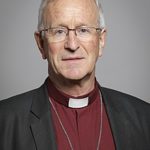
    My Lords, as the chancellor of the University of Birmingham, I had the privilege to know the right reverend Prelate, David Urquhart, the ninth Bishop of Birmingham. In 2006, when he took office—taking over, of course, from John Sentamu, who went on to become Archbishop of York and now sits with us on the Cross Benches as the noble and right reverend Lord, Lord Sentamu—in his first sermon, he took out a mallet hidden under his cloak and smashed a clay jar in front of the whole congregation. His message was to demonstrate the fragility of human life in the world as a gift from God.

    He has worked for the homeless. He has worked tirelessly for interfaith harmony. He has worked for the chamber of commerce, as somebody from a business background and with a business degree. He has been here in the House of Lords since 2010, and has been convenor since 2015. Note the word “convenor”. We on the Cross Benches do not have a leader, we have a convener, and the same goes for the Bishops. What a time, with the changes of Government and all the challenges. He is a knight of the Order of St Michael and St George.

    Seventy is far too young an age to retire: you have just reached the middle of middle age. The right reverend Prelate always signed off as David Birmingham. Well, David Birmingham, the University of Birmingham, the city of Birmingham and this House will miss you enormously. Thank you for all you have done for all of us, and we wish you every success in your continued great work.

    In February 2021, I said to the Chancellor at the time, Rishi Sunak, when I was president of the CBI, “Do not increase taxes. Increasing taxes will hamper the recovery and hamper growth.” What did he do? He kept putting taxes up, up and up, to the extent that they are the highest in 70 years.

    Before the financial crisis in 2008-09, we in this country had a growth rate of 2.5%. Since then, we have had a decade of no growth, low productivity and low inflation. What a state to be in. We had austerity. That achieved nothing. So the Government are absolutely right to target a growth rate of 2.5%. They are absolutely right to reverse the 2.5%—1.25% and 1.25%—national insurance: it is a tax on jobs. Even the Labour Party said it would not have done that. The Government are absolutely right not to increase corporation tax from 19% to 25%. They are absolutely right with investment zones. They are absolutely right with the reform to IR35.

    But—and there are “buts”—what about speeding up the move to alternative energy, such as small modular reactors? That is not being spoken about. What about investment: replacing the super-deduction of 130% that will go in April with a 100% write-off to encourage businesses to invest? What about labour shortages? We kept saying to the Government, “Activate the shortage occupation list.” Now the Government say they are going to do it. I ask the Government to confirm in their response that this will actually happen.

    Then there was 23 September. It is a great lesson in life that it is not just what you do but how you do it. As the former Chancellor, now the noble and learned Lord, Lord Clarke, said, it is the first time a budget has caused a crisis. So much of what was intended was right. To go back to 40% as the top rate of tax is absolutely the right thing to do in the long run, but perhaps not now. As we have heard time and again, not having an OBR report to back it up was not a good thing; I am glad it is happening on the 31st.

    People do not talk about the thresholds. The thresholds were frozen by Rishi Sunak and remain. That is the biggest tax increase happening in front of us now. Do the Government agree with it?

    I am sorry that I am overrunning, because of paying the wonderful tribute that I was privileged to pay, but I have two more points. First, I have made the point time and again that we as business are grateful for the £400 billion of support that the Government gave through the pandemic that saved our businesses, our economy and our citizens, but you cannot stop there. If you play a tennis stroke and hit the ball—the £400 billion—to get the ball over the net you must follow through, and the Government must be prepared to follow through. Our debt-to-GDP ratio is not that high; it is the second lowest in the G7. Japan’s is at 250%; America’s is at almost 150%. We need to invest in skills and education, we need to reform the apprenticeship levy.

    My final point is this. If the Government do not help now, SMEs, in particular, will not survive. They need help with business rates, with delaying their taxes and with cash flow. Hospitality needs a VAT reduction. If these measures are not taken, we will see businesses going bust. Defence expenditure needs to go up to 3% of GDP right now. On a positive note, when the Ukraine war ends, we will have boom time.

  • David Urquhart – 2022 Valedictory Speech in the House of Lords (Lord Bishop of Birmingham)

    David Urquhart – 2022 Valedictory Speech in the House of Lords (Lord Bishop of Birmingham)

    The speech made by David Urquhart, the Lord Bishop of Birmingham, in the House of Lords on 10 October 2022.

    My Lords, I have been immensely grateful for the stimulation and companionship I have found in your Lordships’ House as a Member for the last 12 years, not least in the last three or four speeches this afternoon on this immensely complex subject. It is worth turning up, if only to feel the embarrassment of my colleagues when one of their number is called “mature” and “sensible”—where better to hear it than here, in public and on the record?—and to be with the Minister, the noble Baroness, Lady Neville-Rolfe, with whom I share a long business background, although not necessarily in the same sector. I am particularly grateful to have been Convenor of this Bench for some years and to have been able to relate to the usual channels in the House informally. I am very grateful to those here who have accepted my presence at certain moments, whether they were to do with Brexit, the pandemic and the hybrid House, or even the late Queen’s funeral.

    This is an opportunity just to say thank you to the officers of the House for the remarkable support that we received from them—in recent weeks, as it happened, day and night. I wish my successor as convenor of these Benches, my right reverend friend the Lord Bishop of St Albans, every success and the same wonderful co-operation and fulfilment.

    For me the context of this deliberation on the economy and of many other debates in this House has been the vibrant and exciting life of the West Midlands, especially Birmingham, where we have recently enjoyed a financially as well as a socially and culturally successful Commonwealth Games. The first of my asks today is to ask the Government to be generous in supporting the legacy of this remarkable effort, and to do so much quicker than was mentioned earlier in this Chamber in response to a Question on the Olympic Games.

    None the less, the numbers provided by economic science, checked, as they should be, by the Office for Budget Responsibility, the Institute for Fiscal Studies and, if you like, a charitable organisation called Full Fact, are either swinging out of control—consumer prices have already been mentioned in detail—or simply depressing: the fact of the depression of real earnings.

    The theoretical or political points that arise—they will be made many times this afternoon—are puzzling and confusing to people in the regions who run their own economic life, I dare to say, with intelligence and wisdom, if not always rationally, but knowing the cost of food, housing, heating, clothing and holidays and how much money they have available to bring them into their charge.

    I was glad to see the governing party described by the Prime Minister, after the Chancellor’s Statement, as one of “aspiration, enterprise and growth”. I like that phrase because it describes exactly what I have been trying to do in the Church for the last 40 years. The Prime Minister is quoted as saying:

    “We believe in making it easier for our wealth creators, doers and makers to get things done”

    to reset the economy and not manage decline. Again, those are very agreeable aims for the Church. However, will the Government answer the difficult questions faced by all of us: wealth created for whom, in an unequal society, doers with what skills in a competitive world market, and makers of what that people will buy at the right price?

    I hope that Ministers in the years ahead, as well as in the months and even weeks ahead, will think clearly about how to articulate the principles behind these numbers and behind the very important points which have been made already this afternoon—clear principles in a complex scene. This is my last chance to mention two or three that matter to me: transparent measurements of success and failure, because we are allowed to fail but need to measure them transparently; a bigger picture of worldwide interdependence—we have mentioned the war but I mean the whole oikumene of the world—and longer-term cycles to achieve real change. These can be framed in a way to strengthen and be supported by local households, businesses and local authorities: discipline, development, distribution and devolution.

    I see that I have overrun my time but I will finish by saying that this last point, devolution of power and influence, is very close to my heart. The new investment zones are welcome, as are the infrastructure projects listed, which in our own region are led by Andy Street, the West Midlands mayor. We will do well, but I ask the Government to go further and to make local influence part of an equal partnership, putting responsibility and resources where they belong in the local regions.

    As a former Member of this House, Rabbi Jonathan Sacks, would remind us, to make a better world for all we need both market and state, but neither of those can provide the values on which they are to be built. Perhaps we should return to the prophet Micah as we continue this debate and remember that we are all called to do justice, love kindness and walk humbly with our God.

  • Nicholas Macpherson – 2022 Speech on the Growth Plan (Baron Macpherson of Earl’s Court)

    Nicholas Macpherson – 2022 Speech on the Growth Plan (Baron Macpherson of Earl’s Court)

    The speech made by Nicholas Macpherson, Baron Macpherson of Earl’s Court, in the House of Lords on 10 October 2022.

    My Lords, there are some sensible policies in the Government’s growth plan. A better functioning supply side will enable higher growth of the economy—although I have a word of warning. Every Chancellor I served as Permanent Secretary announced reforms to the planning system—some announced them once a year. Announcing reforms is the easy part; making them stick is much harder.

    I also congratulate the Chancellor on the senior team he announced today. I worked with James Bowler and Beth Russell over many years and under different Administrations. They are very able and represent all that is good in the Civil Service. Their appointment will be good for the Treasury’s credibility—and not before time, because credibility is hard won and easily lost, as the Chancellor has discovered in recent weeks.

    Sacking a respected Permanent Secretary on day one can just about be dismissed as a little local difficulty, but choosing to announce the biggest giveaway since Anthony Barber’s in 1972 without involving the Office for Budget Responsibility was an elementary error. We now know that the OBR offered to produce a fiscal forecast, but the Chancellor declined. Investors want to understand the consequences for the public finances of major announcements and the OBR has provided considerable reassurance since George Osborne set it up in 2010. Perhaps if the Chancellor had engaged with the OBR he might have had second thoughts about the scale of his tax cuts, because injecting £45 billion into an economy facing chronic labour shortages and the highest inflation rate in 30 years is a risky strategy.

    The Government are right to point out that the markets are fragile, but surely that is a time to move carefully. Bond yields had been rising since early summer but, as the markets began to digest the incoming Prime Minister’s programme, gilt yields rose faster in the UK than in the US and Europe. Again, that should have been a warning sign, but the Government chose to ignore it. The result is that the long-term cost of borrowing now stands at 4.7%—when I started writing these notes this morning, it stood at 4.3%. So the long-term yield is 210 basis points higher than at the beginning of August and, if sustained, will add over £40 billion to public spending in the long term.

    Moreover, as the Bank of England Deputy Governor, Sir Jon Cunliffe, set out in a letter to the chairman of the Treasury Committee last week, yields rose considerably in the days following the Chancellor’s statement and, as we now know, the Bank of England had to intervene to calm the markets. When it comes to future meetings of the MPC, the Bank will have little choice but to raise interest rates more than it otherwise would, not least to protect the value of sterling. This is already putting pressure on mortgage rates and risks more than offsetting any growth effect of the mini-Budget.

    It is not too late to put things right. I welcome the Chancellor’s announcement that he is bringing forward his Fiscal Statement to 31 October. This needs to include a credible plan to stabilise and then bring down debt as a share of the nation’s income. It needs to include credible public expenditure proposals. History suggests that writing in ever-bigger cuts to the benefits of poor people is simply not deliverable. If the Government cannot show how they will cut spending, they will need to revisit their tax proposals. This may be embarrassing but, unless the Government can restore economic credibility, the market response in the weeks ahead could be a whole lot worse than we have seen so far.

  • Sam Tarry – 2022 Statement on Deselection

    Sam Tarry – 2022 Statement on Deselection

    The statement made by Sam Tarry, the Labour MP for Ilford South, on 11 October 2022.

    I am utterly crestfallen by the result in the Ilford South selection last night. Not for myself, but for the good people of Ilford who deserve better than to have been at the centre of a manufactured political circus.

    I am extremely concerned about the result, which does not reflect the feeling my campaigners met on the ground talking day in day out to members, or the extensive meticulous data we gathered on the campaign.

    I am taking some time to consider what’s next, but in order to be assured of the integrity of the result I am asking the party to share with me the full information of who cast electronic votes, by what method, and when they were cast, which I understand is available in the ‘anonyvoter’ system.

    In the meantime, I will continue to represent the people of Ilford South the way I have done for the past three years – with integrity, generosity and inclusivity. Thank you to my amazing team of volunteers on the ground who are the best of Ilford.

    Sam.

  • Volodymyr Zelenskyy – 2022 Statement on the Situation in Ukraine (12/10/2022)

    Volodymyr Zelenskyy – 2022 Statement on the Situation in Ukraine (12/10/2022)

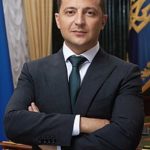
    The statement made by Volodymyr Zelenskyy, the President of Ukraine, on 12 October 2022.

    Ukrainians!

    The enemy launched a second wave of terrorist attacks against our country.

    As of this morning, there were 28 missiles, of which 20 were shot down. More than 15 drones, almost all of them are Iranian combat drones. Most were shot down.

    I am thankful to all our warriors of the Air Forces, Ground Forces and Intelligence involved in defense against these Russian strikes!

    And, by the way, at the request of the military command, I want to celebrate soldier Dmytro Shumskyi (anti-aircraft missile platoon of the 57th separate radio engineering battalion, Chernihiv direction) for yesterday.

    On October 10, Dmytro Shumskyi showed excellent skills and reaction and shot down two terrorists’ cruise missiles with the help of Stinger MANPADS.

    One person saved dozens of lives. Thank you for that!

    Restoration works are taking place quite quickly and efficiently throughout the country.

    If it wasn’t for today’s strikes, we would have already restored the energy supply, water supply and communications that the terrorists damaged yesterday. And today, Russia will achieve only one additional thing: it will delay our recovery a little.

    Where there was destruction, the infrastructure will be renewed everywhere. Where there were losses, there is already or will be construction. Where there were any hopes of the enemy, there will be ruins of Russian statehood.

    And I thank everyone who, at their level, provides recovery after terrorist attacks.

    I am grateful to the rescuers – more than a thousand employees of the State Emergency Service, who immediately arrived on calls and began neutralizing the consequences of terrorist attacks.

    At the suggestion of the Minister of Internal Affairs, I would like to especially note the selfless and determined actions of senior ensign Borys Shapovalov, commander of the department in the Zaporizhzhia region; sergeant Oleksandr Smiyan, firefighter-rescuer, Zaporizhzhia region; ensign Yuriy Lozynskyi and junior sergeant Oleksiy Biletskyi, respirator workers of the mining and rescue department, Kyiv city.

    I am grateful to all the doctors who helped the wounded and injured!

    I am grateful to all energy workers and utility workers for their high-quality response and quick work.

    I am grateful to the local government workers, heads of local government and government officials who worked together, truly in unity and excellently.

    Now most of the cities and villages that the terrorists wanted to leave without electricity and communication are already with electricity and communication.

    In some cities and districts, work is still ongoing. In some cities and districts, energy workers apply temporary restrictions on energy supply according to the schedule – this is necessary solely in order to maintain the stability of the energy system.

    The government controls all this – we are trying to restore normal conditions as quickly as possible.

    I would also like to thank all Ukrainians who listened yesterday and limited their own electricity consumption during peak hours – from 17:00 to 22:00.

    Thanks to our conscientiousness, we managed to save a tenth of the energy on average in the country, which allowed the system to work more stably. And our goal should be to save a quarter of electricity precisely during these peak hours.

    It should be done today and in the near future.

    Please postpone the energy consumption of appliances that require a lot of electricity to other hours of the day. It is not difficult for an individual, and it gives a great result within the scale of our entire country.

    I took part today in the extraordinary summit of the Group of Seven, which was convened by the German presidency on our initiative.

    We discussed the response of the most powerful democracies to this new Russian escalation.

    For such a new wave of terror there must be a new wave of responsibility for Russia. New sanctions, new forms of political pressure and new forms of support for Ukraine.

    Tomorrow, the defense support for Ukraine will be discussed in the “Ramstein” format. I expect progress from our partners on the issue of air and anti-missile defense, agreements on new supplies of other weapons and ammunition we need.

    The terrorist state must be deprived of even the thought that any wave of terror can bring it anything.

    A separate task for intelligence is to establish all those involved in these missile attacks against Ukraine, in schemes with Iranian drones.

    The individual responsibility of terrorists should be the same as the responsibility of the terrorist state. We work for this.

    Today I had separate conversations with the Prime Minister of Italy and the Prime Minister of Australia. I heard absolutely clear support, absolutely clear condemnation of all manifestations of Russian aggression against Ukraine and international law.

    We also have a detailed statement from the Group of Seven, in particular, that all those responsible for terror against Ukraine will be brought to justice. Starting with the current political leadership of Russia and ending with everyone who serves these terrorist interests.

    Mankind and humanity are stronger than any terrorists. I am thankful to everyone who fights and works for our victory!

    And one more thing. Today, 32 of our warriors were freed from Russian captivity. We do everything for Ukraine – possible and impossible. Gratitude to everyone who worked for this result!

    Glory to our beautiful people! We will restore everything that was destroyed!

    Glory to Ukraine!

  • Volodymyr Zelenskyy – 2022 Speech to the UNESCO Executive Board

    Volodymyr Zelenskyy – 2022 Speech to the UNESCO Executive Board

    The speech made by Volodymyr Zelenskyy, the President of Ukraine, on 11 October 2022.

    Ladies and Gentlemen!

    Dear defenders of the educational, scientific and cultural heritage of mankind!

    Today, Ukraine is going through the 230th day of a full-scale war.

    How was your morning today? I will tell you what ours was like. At eight o’clock in the morning, most of the territory of Ukraine was already in a state of air alert.

    Russia launched cruise missiles from the Caspian Sea and the Black Sea.

    Today, children in Ukraine didn’t go to kindergartens, schools, or universities again. Online learning is introduced everywhere.

    In this war, we cannot know who and what will be targeted by Russian missiles.

    Children or adults… An educational facility or a cultural object… A critical infrastructure facility or, for example, a memorial to the victims of the Holocaust.

    All of these are equal targets for Russia.

    This night, a Russian missile hit the premises of the Khortytsia Academy in the Zaporizhzhia region. For what? This is their tactic. The tactic of terrorists.

    More than 2,600 educational facilities have already been destroyed or damaged by such terrorist attacks by Russia.

    Yesterday in Kyiv, our capital, a Russian missile hit the crossroads in the central part of the city. People died – literally burned in cars.

    And it was 700 meters from the bell tower of St. Sophia’s Cathedral, a UNESCO World Heritage Site.

    At the same crossroads are the buildings of Shevchenko University, one of the most important universities in Eastern Europe. It was affected by this strike. The Institute of Philology is damaged.

    Russia can award itself the special title of winner of universities, institutes, academies and schools. How many cruise missiles do educational institutions have? Zero. And Russia has hundreds of missiles.

    This is what its victory is like.

    Another Russian missile hit Tereshchenkivska Street in Kyiv yesterday. The premises of the Khanenko Museum were damaged, masterpieces by Velázquez, Canova, and Cellini are stored there. The premises of the Shevchenko Museum. One of the most renowned Kyiv publishing houses.

    Can you imagine a missile attack on Babyn Yar in Kyiv, the burial place of a hundred thousand victims of Nazi executions? And this strike took place.

    Can you imagine the shelling of the Menorah in Drobytsky Yar, Kharkiv region, where 20,000 Nazi victims are buried? And this shelling also took place.

    540 is the total number of objects of cultural heritage, cultural institutions and religious buildings damaged by Russian strikes in Ukraine during the full-scale war since February 24. Almost 200 destroyed or damaged temples!

    And it is possible – while I am addressing you now – that one of the Russian strikes damaged other cultural or educational objects, other memorials or temples.

    Ladies and Gentlemen!

    Dear defenders of the educational, scientific and cultural heritage of mankind!

    Please tell me why the representatives of Russia are still among you? What are they doing at UNESCO?

    How can there be representatives of a terrorist state in UNESCO, which is proud of the destruction it causes in another country?

    I am grateful to UNESCO for supporting Ukraine at this time and for all the principled statements that were made to protect Ukraine and culture from Russian aggression. But still, new steps are needed – steps that Russia will feel.

    A terrorist state definitely has no right to chair one of the key bodies for the protection of cultural and natural heritage – the UNESCO World Heritage Committee. Such a Russian presidency devalues the institution itself – its significance, its reputation.

    It is inadmissible to let Russia destroy the authority of UNESCO.

    The terrorist state must be excluded from all UNESCO bodies and from the Organization itself.

    Let it be a historical example for everyone in the world that no one will tolerate an enemy of culture, an enemy of history, an enemy of education, an enemy of science.

    Unfortunately, this is Russia’s choice – to oppose everything that matters to humanity.

    This is its deliberate choice.

    The second thing that is needed now is the expansion of our joint efforts to protect cultural heritage in Ukraine. Just now! Given daily threats of Russian strikes.

    We must provide a clear signal that the world will not turn a blind eye to the destruction of our common history, our common culture, our common heritage.

    One of the steps for this should be the preservation of the historical center of Odesa – a beautiful city, an important port of the Black Sea and a source of culture for millions of people in different countries.

    Together with our partners, we prepared the nomination file of Odesa for inclusion in the World Heritage List. We are passing this on to UNESCO.

    And I am asking you to initiate an extraordinary session of the UNESCO World Heritage Committee to resolve this issue for Odesa.

    And please, it cannot be delayed, it cannot be postponed.

    Odesa, like all other cities of Ukraine, is a target for Russian strikes. Please support Odesa! Show at the level of UNESCO precisely that Russian terror must end.

    Colleagues! Ukraine has been a conscientious member of the United Nations Educational, Scientific and Cultural Organization since May 12, 1954. Our state always invests only in the preservation of our common heritage and never in destruction!

    Now we need your support. Support in the preservation and protection of education, science and culture.

    I would like to express my gratitude to UNESCO and its partners for their willingness to provide 50,000 computers for Ukrainian teachers to ensure online education. But we need more.

    We already offer partners – both at the state level, and at the level of international and non-governmental organizations, businesses – to join the reconstruction of Ukraine after hostilities.

    Some partners have joined. Now I am addressing those who have not yet decided to support Ukrainian recovery. This project will definitely become the largest economic and infrastructure project in Europe over the last 50 years. And this is a historic opportunity for each of you – to be participants in this project, to be historically significant defenders of education, culture and science – our joint heritage.

    I believe that our common strength will be enough so that terror can never win.

    I thank you for your attention! Thank you for this opportunity to address you!

    Glory to Ukraine!

  • Richard Newby – 2022 Speech on the Growth Plan (Baron Newby)

    Richard Newby – 2022 Speech on the Growth Plan (Baron Newby)

    The speech made by Richard Newby, Baron Newby, in the House of Lords on 10 October 2022.

    My Lords, when Liz Truss was elected as Conservative Party leader a mere five weeks ago, she and her new Government faced two separate economic challenges. The first was how to respond to the dramatic impending rise in gas prices, due on 1 October. The second was how to put the country on a path to sustainable growth. The Government’s response to these challenges was to introduce the measures announced by the Chancellor on 23 September, which attempted to deal with them both in one fell swoop.

    On the first, dealing with the impending energy price rises, the Government have introduced an extensive package covering both individual households and businesses. In our view, it still suffers from a number of flaws. For example, we believe that the freeze should have been applied to April rather than October prices. The business support lasts only six months, leaving companies unsure what happens after that. Most importantly, it is not accompanied by a windfall tax on the energy producers, which could have helped mitigate the very substantial costs. However, at least the measures are timely, offer real relief and will protect the vast majority of people and businesses from at least some of these otherwise unbearable costs.

    All the remaining measures announced on 23 September seek to deal with the second challenge of promoting growth. Sadly, far from doing so, they have already precipitated an economic crisis, will leave many people worse off and will fail in their fundamental purpose. For a start, there was literally no reason to introduce these changes so precipitately, with no attempt to quantify their consequences and no explanation of how they were to be funded. As a result, the markets were alarmed, the Bank of England had to step in to prevent a pension fund collapse and interest rates, including mortgage rates, rose. Before looking at the broader consequences for the economy and the Government’s reputation, let us look at the individual measures announced on 23 September and see how they might help achieve the Government’s aim of promoting growth.

    I start with the £18 billion cut in corporation tax. In reality, this will do little or nothing to promote growth. If you look at corporation tax rates across the developed world, there is no correlation between them and long-term economic growth. Many of our European competitors have higher corporation tax rates and higher long-term growth. The business community itself has not been making the case that lower corporation tax rates in themselves mean higher investment and therefore growth.

    The best argument for the cuts to income tax and national insurance—other than a purely populist political one—is that they might help stave off the worst of a recession because they will help prop up consumer spending in the short term. That may be true, but it has nothing to do with promoting underlying growth. The reason is that, with almost full employment and in the absence of larger-scale immigration, the only way in which growth can be increased over the medium and long term is by improving productivity. Achieving this requires sustained increases in investment in people and equipment. Cuts in income tax and national insurance will simply not achieve this.

    As for the cut in stamp duty, this may mitigate the costs of buying a house, but it pales into insignificance compared to the increased mortgage costs which the Government’s actions have brought about. These so-far unfunded tax cuts will do absolutely nothing to resolve the UK’s problem with long-term growth.

    But what about the supply-side measures which the Government plan to introduce? As with the ill-fated proposed 45% tax rate cut, some simply appear to benefit those who need help least—for example, the proposal to end the cap on bankers’ bonuses. Some, such as the proposed investment zones, are highly unlikely to increase aggregate investment in the economy as a whole. Some, such as the intention to speed up planning and infrastructure projects, are so vague that they are, frankly, meaningless. Some, such as the proposals to curb the right to strike and to strengthen universal credit sanctions, simply look mean and vindictive. Whatever they are, they will not lead to a spurt in growth.

    So, if the Government’s package of tax and supply side measures look doomed to fail the growth test, what about their other consequences? Three in particular stand out. First, the manner in which they have been announced has completely spooked the markets, particularly the mortgage market. The number of mortgage products fell by over 40% because mortgage providers lost any sense of the future trajectory of interest rates. Those mortgages which are still available now cost on average about 1% more than before the Chancellor’s announcement. This is entirely down to the Government’s own Budget, before any further increases in interest rates by the Bank of England.

    Secondly, it is now clear that the Government plan to cut public expenditure to pay for their tax cuts. We do not yet know where these cuts will fall, but we do know that the impact of inflation on departments’ budgets already means that they will struggle to maintain services while providing fair wage increases. The idea which the hapless Chief Secretary seems to believe, that there is substantial fat to be cut, is laughably false. We wait with trepidation for a Halloween horror story to see where the cuts are going to fall.

    Thirdly, and most damaging to the Government, they have lost within days of their formation any shred of a reputation for economic competence. They are pursuing fiscal policies completely at odds with the monetary policy that the Bank of England is legally bound to pursue. They have bet the farm on a pro-growth strategy which no respectable economist believes will work, and they have already been forced into U-turns caused by a lack of support for their policies, even among their own MPs.

    Against all this, the Prime Minister simply labels all her critics as “anti-growth”. This is risibly untrue, so let me suggest as a starter a five-point plan which might actually do something to improve Britain’s growth prospects. First, given that the Government are in a big, big hole, they should stop digging—stop pushing ideological policies which will not promote growth but will undermine their credibility as a serious Government. There are many to choose from, but I suggest that they should stop their attacks on the healthier food agenda. Supporting buy-one-get-one-free offers clearly makes the Prime Minister feel better but will do serious damage to the fight against obesity, and the illness and therefore lack of productivity that ensue. The Government should think again.

    Secondly, the Government should start rebuilding economic ties to the EU. We know that Brexit will reduce GDP consistently unless things change. They should start by sorting out the Northern Ireland protocol but then move towards aligning with the single market. This will do more for growth than any number of third-order supply-side gimmicks.

    Thirdly, instead of prioritising fracking and North Sea oil permits, the Government should put their weight behind a green industrial revolution, including a massive programme of housing insulation. This will create jobs and growth and help mitigate the high energy costs now facing millions of households.

    Fourthly, the Government should invest in skills. Having a more productive workforce is the only way we can increase productivity and therefore growth, and spending more on apprenticeships, FE and lifetime learning is the only way we can achieve this.

    Fifthly, the Government should create a climate which encourages business investment. Investment in the UK has lagged that of France, Germany and the US for years. This is why they are much more productive and why household incomes there are now so much higher than here in the UK. Stability and consistency would improve the investment climate, but so too would a new industrial strategy which recognised where Britain’s economic strengths are and showed how the Government planned to support them.

    Setting the UK on a path to sustainable growth will not be easy, but it is possible. What is not possible is to do so with a Government who are driven by a simplistic, failed ideology, who have failed even the most basic tests of competence, and who the British people rightly think have to go.