Tag: Speeches

  • Roger Liddle – 2022 Speech on the Growth Plan (Baron Liddle)

    Roger Liddle – 2022 Speech on the Growth Plan (Baron Liddle)

    The speech made by Roger Liddle, Baron Liddle, in the House of Lords on 11 October 2022.

    I join the noble Lord, Lord Lamont, in welcoming the noble Baroness, Lady Neville-Rolfe, back to the ministerial Bench. There is much in the speech made by the noble Lord, Lord Lamont, with which I agree. We all want growth, and it is a realistic ambition to try to turn Britain back to the 2.5% growth figure that we enjoyed until the financial crisis. The question is how to do it in a way—I think this is an important point—where the whole of society benefits. The fact is that the growth we have seen since the financial crisis has not trickled down. People on median wages and below have not seen any increase in their standard of living. This is an important thing that future government policy has to address.

    As for the details of the plan for growth, there are some things in it with which I agree, but it is limited in its vision. If the Government had paid attention to business, business would have put skills at the top of the list and said that what is needed is more apprenticeships and more people with higher technical qualifications. On pages 19 and 20, which talk about getting more people into work with the right skills, there is not a single mention of that agenda and what the Government are prepared to do about it.

    On housing, there is the cut in stamp duty but no clarity on how planning law is to be changed. We know that Conservative MPs in the Commons hate this. There is no mention of any need for social housing.

    On infrastructure, there is a sort of half-acknowledgement of guilt that it was the Conservative Back-Benchers, again, who stopped onshore wind—one of the most positive things we could have done to cut energy bills. Let us see whether the objections to onshore wind can now be overcome.

    Things such as Northern Powerhouse Rail, which we have been talking about for a decade or more, are on the list of things that the Government might do, but what credibility is there that they will actually do them? Investment zones are an interesting idea, but I have read the academic evidence and it is not very positive on whether they produce results.

    There is a point that I think is original. A lot of the Johnson levelling-up agenda was about how we reinvigorated our town centres. Lots of government money is being funnelled into that. These investment zones will be on brownfield sites outside town centres; this seems to be a fundamental contradiction. If I were to encourage investment in my home town of Carlisle, I would want to see it in the centre and on the fringes of the centre, not on some site outside.

    The fundamental thing about this Government’s policy is that they have lost the reputation for macroeconomic stability that is fundamental to encouraging business to invest. It was the most irresponsible and reckless Budget since Barber’s in 1972. It caused turmoil in the markets, which threatened the future of people’s pensions. It will lead to spiralling mortgage costs. As the noble Lord, Lord Macpherson, pointed out, there are risks here of a contradiction with monetary policy.

    On the fiscal plan that the Government are committed to coming up with, I do not believe the numbers can be made to add up by public spending cuts, which would be both counterproductive in their impact on growth and politically undeliverable. I agree with the noble Lord, Lord Macpherson, that some of the announced tax cuts should be cancelled.

    This is not a plan for growth. It is an economic disaster.

  • Norman Lamont – 2022 Speech on the Growth Plan (Baron Lamont of Lerwick)

    Norman Lamont – 2022 Speech on the Growth Plan (Baron Lamont of Lerwick)

    The speech made by Norman Lamont, Baron Lamont of Lerwick, in the House of Lords on 11 October 2022.

    My Lords, it is a personal pleasure to follow the noble Lord, Lord Burns, who always gave me very wise advice in the Treasury, just as he has to the House today. I also welcome my noble friend Lady Neville-Rolfe back to her position on the Front Bench. We have lost a doughty Back-Bencher but regained a formidable Minister.

    I welcome many of the measures in the Government’s growth plan, particularly the radical deregulatory ones—IR35, the pensions cap and the planning reforms. Provided they can be delivered they are the sorts of measures that will make a real difference to our growth rate. I also welcome the energy price guarantee. It is a major intervention but, as the Minister said, one that, because of the death of the Queen, was not widely recognised and is still not widely known among the public. The package is very important not only for the relief it gives to hard-pressed consumers but economically, because of the 5% it knocks off the rate of inflation. This by itself could help to stave off a deep recession, as high energy prices can be both inflationary and deflationary.

    However, it has to be recognised that the energy price guarantee is potentially a massive commitment and adds huge uncertainty to the borrowing figures. The Government’s support to consumers as a percentage of GDP, according to the Goethe Institut and Conservative Central Office, dwarfs that of other countries. It is, potentially, more than double that of Germany, which funded its package out of taxation. It was the hugeness of the money at stake, together with the absence of the OBR assessment of the cost of tax cuts, that produced the market reaction that it did. The Government also made something of a rod for their own back with some of the rhetoric that was carried forward from the leadership election about rejecting orthodoxy and the attacks on “bean counters” and people peddling “abacus economics”. I am sure it was not intended to, but it sounded very like a Conservative belief in the magic money tree. Since then, the Chancellor has emphasised that he believes in fiscal discipline and in a declining debt-to-GDP ratio.

    Going for growth is a certainly laudable objective, but it has to be recognised that there can be a conflict between going for growth and getting inflation down. A stimulus to growth from unfunded tax cuts may mean that inflation stays higher for longer, and that could mean higher interest rates holding back growth. If fiscal and monetary policy point in opposite directions, the result is again likely to be higher interest rates and thus slower growth. So the stage is set for something of a battle between the Treasury and the Bank of England as the Government push for growth and the Bank raises interest rates to tame inflation.

    This dilemma could of course be resolved if tax cuts always paid for themselves. That would be wonderful—we would never have to discuss taxation again—but as the noble Lord, Lord Burns, said, they do not always pay for themselves. It depends on whether the rates are set at confiscatory levels or, technically put, where precisely the rate is on the Laffer curve. Ronald Reagan’s tax cuts resulted in increased debt, a fact that he later acknowledged and regretted.

    Fiscal responsibility is not the enemy of growth. It produces the stability that is essential for it. I welcome the fact that the Chancellor is drawing up a debt reduction plan and plans to bring forward the OBR assessment of that plan. It is very important that the plan set out is credible and does not consist of just easing the present fiscal rules or back-ending all the pain that is going to be necessary. If we do not face reality, reality is going to face us. Fortunately, the Chancellor has, I believe, the resolve and determination to face these challenges, and I wish him well.

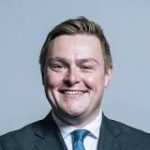
  • Will Quince – 2022 Speech on the Dental Training College

    Will Quince – 2022 Speech on the Dental Training College

    The speech made by Will Quince, the Minister of State at the Department of Health and Social Care, in the House of Commons on 11 October 2022.

    I congratulate my hon. Friend the Member for Broadland (Jerome Mayhew) on securing this debate on the potential merits of establishing a dental training college in East Anglia. It is clear that he has support from his neighbouring MPs—I know that one of them cannot be here this evening, but very much supports this endeavour—and from colleagues further afield and across East Anglia. I also thank him for raising the issue of access to dentistry in rural and coastal areas, particularly the challenges of seeing a dentist in Norfolk.

    As the new Minister for dentistry, I understand that areas across our country, as my hon. Friend has highlighted, have faced difficulties with recruitment and retention, including in his constituency of Broadland and in the east of England more widely. Those challenges have a significant impact on the provision of NHS dentistry and on patients’ ability to receive NHS care. My hon. Friend is right that we cannot ignore the problem, which I can assure him is a priority for me and for the Secretary of State. I hope that it will not have escaped my hon. Friend’s notice that dentists are a key element of the Secretary of State’s ABCD approach and of “Our plan for patients”.

    I am aware that my hon. Friend, alongside my hon. Friend the Member for North Norfolk (Duncan Baker), attended meetings with my predecessor, and I think even with my predecessor’s predecessor, to discuss the construction of a dental school in Norfolk. It is a testament to the character of my hon. Friend the Member for Broadland that he brought the issue to my attention just days after my appointment as a Minister in the Department of Health and Social Care. If I may say so, his constituents are fortunate to have such a passionate and persistent advocate in their corner.

    My hon. Friend set out in his speech to make a positive case for doing something about a long-term problem, and I think everyone in the Chamber this evening will agree that he has done so. He makes the case for a new dental school in Norfolk—a case that I know has the backing of my hon. Friend the Member for North Norfolk, who cannot be here this evening. On the face of it, it is a compelling case and is worth further exploration.

    I think that my hon. Friend the Member for Broadland knows me well enough to know that I am not someone who likes saying no to parliamentary colleagues, although sadly that is a responsibility that all too often comes with the job. On this occasion, it is a no, but it is “No for now, and let’s very much keep talking.” Let me explain why.

    Establishing a new dental school takes several years and would not influence service provision in the short term, as my hon. Friend rightly identified. Notwithstanding the strong case that he makes, it also would not guarantee the ongoing sustained retention of dentists or support staff in the area. Our focus is not just on training more dentists, important as that is, but on the better use of the full dental team and the progression and retention of all dental care professionals in the NHS. There is, of course, an argument about the medium to long term, which is why I suggest that we keep talking, and of course I would be delighted to meet my hon. Friend, as he requests, to further discuss his ideas and plans.

    My hon. Friends the Members for Broadland, for Waveney (Peter Aldous) and for Ipswich (Tom Hunt) all mentioned centres for dental development, the alternative training model identified by Health Education England in its 2021 “Advancing Dental Care” review report—that is a mouthful! The centres for dental development model would specifically benefit localities in which there is a shortage in provision and there are no nearby dental schools—as is the case in East Anglia, as my hon. Friend the Member for Broadland rightly pointed out.

    The premise is that the centres would build on any existing dental infrastructure in the area, bringing together training and the resultant provision of NHS treatment to patients in a co-ordinated way. Things like postgraduate training opportunities are more likely to be compatible than early undergraduate placements, as they would increase access to the more complex and specialist care that we know is often most lacking in certain areas of the country, otherwise known as dental deserts. This would work towards the aim, specified in the “Advancing Dental Care” report, to produce the skilled “multi-professional oral healthcare workforce” that could best support patient and population needs within the NHS. A further advantage of the centres for dental development model is that they would be tailored to suit the local workforce requirements, in addition to the education and training needs of the area, contributing to stronger, multi-disciplinary dental teams and local area workforce retention.

    Given that the centres would focus on postgraduate training or the later stages of undergraduate training, they could provide support in transitions from undergraduate to dental foundation training and more specialised training beyond those, all of which involve—as my hon. Friend mentioned—important decision-making moments in terms of career development and where dentists are likely to base their careers and practices. We believe that a broader range of placements across the country and in different clinical environments would enhance the student experience. The centres could offer a constructive alternative to dental schools, while acknowledging and addressing recruitment, retention and training gaps. I am sure my hon. Friend will be pleased to learn that Health Education England has now moved into its four-year implementation stage through its dental education reform programme—another mouthful!—following the “Advancing Dental Care” report and its recommendations.

    My hon. Friend rightly raised the subject of collaboration. With regard to establishing a centre for dental development in East Anglia—this has been mentioned by my hon. Friend and others—the University of Suffolk and the NHS Suffolk and North East Essex integrated care board have announced plans for a centre in Ipswich. I am informed—this also covers my area, so I have an interest in it as well—that the initial plans include proposals to offer postgraduate educational opportunities as well as wider training opportunities for newly qualified dentists, alongside the training of the dental therapists, hygienists and dental technicians who form a vital part of the dental workforce. I pay tribute to my hon. Friends the Members for Waveney and for Ipswich for the work that they have done in pushing so strongly for that development, along with the integrated care board, which is a trail-blazer in this regard. It would be wrong, at this juncture, for me not also to pay tribute to my hon. Friend the Member for Bury St Edmunds (Jo Churchill). She has pushed strongly for this as well, and, moreover, is—dare I say—a much-missed Minister at the Department of Health and Social Care. She has a passion for dentistry, and, within the Department, she really put it on the map. That is a legacy that I intend to continue.

    I strongly encourage my hon. Friend to meet the NHS and HEE regional teams for his areas, as centres for dental development are very much a local solution, tailored to the existing infrastructure and needs of an area. I, and those in my office, would be delighted to help facilitate such a meeting.

    I have mentioned integrated care systems and integrated care boards. As we make the transition to integrated care systems—this point was made by my hon. Friend the Member for Waveney—commissioning roles for dentistry will be delegated. This will ensure that dentistry decisions are considered at a local level, and that, for example, local workforce as well as local population health requirements are taken into account. I therefore encourage my hon. Friend to meet the integrated care board—I am sure he has already done so, but I think an ongoing dialogue would make sense—to discuss its plans further, and to talk about how they will affect Broadland and the rest of East Anglia.

    My hon. Friend touched on recruitment and retention, which I know is a particular issue in his constituency and more broadly. I have referred to the changes that we have made nationally through system reform, but NHS England in the East of England region has been working closely with the organisations that train dentists to improve the recruitment and retention of NHS dentists in East Anglia, and will continue to help those training organisations to develop the dental workforce. I am pleased to say that, in 2021-22, there was an increase of 539 dentists performing NHS dentistry compared with the previous year. In the East of England, there was a 3.5% increase, with an additional 105 dentists. However, as my hon. Friend pointed out, that is not enough: we need more dentists, and we need more dentists on NHS contracts.

    More broadly, I know that my hon. Friend will want to know what improvements are being made now which will improve access to dentistry for his constituents. He rightly focused on the medium to long term, but I know from my postbag that the pressing concern is often the here and now. We plan for the dental system improvements announced on 19 July as part of “Our plan for patients” to begin to take effect by the end of this year, and some of the improvements in the package have already taken effect and are beginning to bear fruit. The Secretary of State and I are looking at a number of further measures that we can take to aid recruitment and retention—I know that that is one of the key concerns of my hon. Friend and others, and I think my hon. Friend touched on one of the ideas that we are considering—and, in turn, improve access for constituents. As I have said, this is a priority for me, and I hope to share more details with my hon. Friend and the House in due course.

    I am committed to playing my part to improve access to NHS dentistry, particularly for those most in need of dental care, and I know that recruitment and the dental workforce will play a pivotal role in that. I hope my hon. Friend has been reassured that action is being taken to address the challenges in recruitment and retention across the country, and particularly in his constituency. I look forward to working with him as we develop our ambitious plans, and I know he will continue to be a champion for his constituents and hold the Government’s metaphorical feet to the fire as we deliver the improvements in dentistry access that we all want to see.

  • Jerome Mayhew – 2022 Speech on the Dental Training College

    Jerome Mayhew – 2022 Speech on the Dental Training College

    The speech made by Jerome Mayhew, the Conservative MP for Broadland, in the House of Commons on 11 October 2022.

    It would be all too easy to focus any speech on dentistry on a call for the renegotiation of the NHS—[Interruption.]

    Madam Deputy Speaker (Dame Rosie Winterton)

    Order. Could colleagues leave quietly? Otherwise we will not be able to hear what the hon. Gentleman is saying.

    Jerome Mayhew

    As I was saying, it would be all too easy to focus any speech on dentistry on a call for the renegotiation of the NHS dental contract. Every Member of Parliament will know from their postbag the suffering that ordinary people are experiencing every day because they are simply unable to see a dentist.

    The pandemic has caused the loss of 40 million dental appointments—more than an entire year’s worth of standard pre-covid treatment—but covid is not the cause of our problems. Ever since Labour imposed its NHS dental contract on the profession back in 2006, trouble has been brewing. Dentists have been voting with their feet, moving in their thousands away from NHS treatment into private work.

    That trend has only accelerated through covid. Between the start of the pandemic and May 2022, 3,000 dentists have stopped doing any NHS work. Three quarters of those who are left say that they are likely to reduce their coverage further over the next year, so we simply cannot ignore the problem any longer. The pain and suffering are too great. Labour may have created this bad system, which fails to pay for the cost of complex work, but our job is to fix it, and the sooner the better.

    The purpose of this debate, however, is not to moan about the state of NHS dental provision, but to put forward a positive case for solving the long-term problems in Norfolk and the east. Put simply, we have a desperate shortage of dentists of any description. Too few dentists and too few dental technicians—whether NHS or private—are choosing to work in East Anglia.

    Nationally, the General Dental Council says that we have more dentists than ever before, with a national average of 43 for every 100,000 of the population, but in Norfolk and Waveney, that figure is just 38. That is the fifth lowest ratio of the 106 clinical commissioning groups around the country. Dental practices are crying out for new staff, but they simply cannot get them.

    In the town of Fakenham in my constituency, I lobbied successfully for the NHS to award a brand-new NHS dental contract to increase local NHS provision. That was the Government being prepared to pour new money into increasing NHS provision. However, when that contract was advertised, not a single company bid for the work. There simply was not the staff to supply the need.

    That is not just an NHS issue. In the same town, a private dental practice has been advertising for a private dentist for two years, but without success. In the constituency of my hon. Friend the Member for North Norfolk (Duncan Baker), there is a dentist in Sheringham who operates practices both in London and Norfolk. He has not had a newly qualified dentist come to work in his Sheringham practice for 10 years. Job vacancies in London are snapped up, but he simply cannot get them to take the jobs in Norfolk.

    Why can we not produce dentists in East Anglia? The answer is that there is nowhere for them to train. If someone who lives in East Anglia wants to become a dentist, the nearest place they can train is Birmingham or London. None of the 10 training facilities around England is in the east of England.

    That has to change. We know from our experience with the University of East Anglia that graduates tend to stay and build their lives close to where they have studied. Each year, the UEA does a survey of its graduates to see where they go to accept their first employment. If we look at that survey for doctors coming through the medical school of the University of East Anglia, we see that more than 40% end up taking jobs locally every year. That is great for us in relation to doctors and particularly for the Norfolk and Norwich University Hospital, which is based in Norwich. Unfortunately, however, the same problem is true in dentistry.

    Let us look at the number of dentists working near existing dental training schools. As I said, Norfolk has 38 dentists per 100,000 of the population. Devon is a broadly similar county—it is largely rural, with coastal communities and one major conurbation, Plymouth—but there is a big difference: Plymouth has a dental school, which was installed in 2005, and Devon’s ratio of dentists per 100,000 of the population is not 38, but 49.6. If we look at the north-east, where there is a school in Newcastle, we see that its ratio of dentists to the general public is 56 per 100,000 of the population. In Cheshire and Merseyside, there is a school in Liverpool, so the whole area benefits from 58 dentists per 100,000 of the population. We can see from the hard data that people tend to settle down where they have trained.

    So if that is the data, surely the solution to East Anglia’s problems is obvious: first, we need to open a dental school in East Anglia. I raised that need directly with the University of East Anglia some months ago and I have been enormously encouraged and impressed by their response, strongly supported by the NNUH, the region’s training hospital. The University of East Anglia has developed an innovative solution to our dental training problems that would minimise cost and get students out into the workplace from the start of their training, helping with capacity in the short term and dealing with the training deficit in the long run.

    Tom Hunt (Ipswich) (Con)

    As a Suffolk MP, I welcome the idea of an East Anglian training centre. I also want the University of Suffolk to play a role. It recently outlined its plans for a Suffolk centre for dental development. Does my hon. Friend agree that, actually, a dental training college in Norwich could work hand in glove with the new centre in Ipswich to make sure that people are trained locally but, when needed, they are pooled to provide services on the NHS for our constituents?

    Jerome Mayhew

    I am grateful to my hon. Friend for that intervention, and I agree entirely. There can be collaboration between the university in Norwich and the University of Suffolk, which is based in Ipswich. People can start training in Norwich and, once they are qualified, have career and professional development taken care of by the proposed unit in Ipswich. I will come on to that in further detail.

    To return to the plans of the University of East Anglia, its idea is that students would work in the community for at least one day a week throughout their five-year training course. In that way, dental students will increase the capacity of associated NHS practices right from the get-go. Too often, it is suggested that a dental training school is too long term to solve the problems now. In a sense, it is, of course, but under this plan, we would have increased capacity right from the first year of the students’ five-year course.

    There are more benefits, too: students would not only increase the capacity, but develop employment relationships locally, increasing their stickiness, and provide training income to stretched NHS practices. For that reason, MPs from North Norfolk, North West Norfolk, Mid Norfolk, South Norfolk and Norwich North all support the proposal. If there were an East Norfolk constituency, I am sure that that Member would support it as well.

    Peter Aldous (Waveney) (Con)

    I speak as an MP with a foot in both camps: I am a Suffolk MP but I also represent the Norfolk and Waveney integrated care system area. Does my hon. Friend agree, as my hon. Friend the Member for Ipswich (Tom Hunt) said, that it is very important that the two proposals being put together by the University of Suffolk and the University of East Anglia are collaborative and worked on together, so that they come through with a solution for the whole of East Anglia?

    Jerome Mayhew

    I am grateful to my hon. Friend. The only phrase that I would pick him up on is that he has “a foot in both camps”. I do not think there should be two camps. This is an East Anglian solution, whereby the proposals are complementary and, in time, they should both be implemented.

    George Freeman (Mid Norfolk) (Con)

    I commend my hon. Friend and constituency neighbour for raising this issue and highlighting the huge pressures that the dental service in his area and mine is experiencing on the ground. Many of our constituents are struggling and this proposal would not only make our region a leader in the science and technology of dentistry, but help to meet that demand and need on the ground. With new housing, the pressure will only get more acute in the next few years.

    Jerome Mayhew

    My hon. Friend is entirely right. There is a further point to be made about the collaboration between the University of East Anglia and the Norfolk and Norwich University Hospital, because they also have the Norwich research park co-located. I am thinking particularly of the Quadram Institute, the sole focus of which is world-leading research on the gut microbiota. I cannot pretend to know exactly what the gut microbiota are, but I know that they start with the mouth. There is huge capacity for proper, hard research in the area, and it could be assisted by a dental training school in Norwich. That is the first solution.

    The second solution, which is also needed, is for the dental school in Norwich to complement the University of Suffolk’s plans to build a centre for dental development in Ipswich to support further career development in the region, attracting and retaining newly qualified dentists. My hon. Friends the Members for Bury St Edmunds (Jo Churchill), for Waveney (Peter Aldous) and for Ipswich (Tom Hunt) and others have all pushed for that.

    The truth is that we need both to attract qualified dentists in the short term and to find a long-term solution to the wider training problem. It may be that an assessment is made nationally that there is no need for additional dental training seats, but people are human. We have to look beyond the empirical analysis and recognise that training needs to be offered in a location of real shortage. That location is East Anglia, and Norfolk in particular.

    As a Conservative, I believe that people should have power over their own lives and that communities should not be dictated to by national Government. Rather, they should be empowered to come up with their own solutions to their local needs. We know what the problem is, and we have a solution to fix it locally; we just need the Government to trust the people to let us get on and do it.

    We simply need more dentists and dental technicians in East Anglia. We recognise that budgets are tight and that timings may have to be stretched. We accept that short-term fixes are sometimes more powerful arguments in politics than long-term solutions. We simply ask the Minister to agree to meet the University of East Anglia team to learn at first hand how we can make East Anglian dentistry better, and to be inspired by their practical vision.

    Peter Aldous rose—

    Madam Deputy Speaker (Dame Eleanor Laing)

    I cannot quite tell whether the hon. Gentleman wishes to contribute.

    Peter Aldous (Waveney) (Con)

    I will contribute very quickly, Madam Deputy Speaker, if you will give me the opportunity.

    My hon. Friend the Member for Broadland (Jerome Mayhew) has set out a great vision of a future in which East Anglia, Norfolk and Suffolk have high-quality dentistry schools. That is great, but we need a bridge to get to that future, because two dentistry schools will take some time to set up. Does he agree that we need to look at other strands to address the crisis in NHS dentistry in East Anglia, including recruitment and retention in the short term, making it easier for people from overseas to come and work in local dentistry; contract reform, which I think my hon. Friend referred to; a fair, long-term funding settlement; a focus on prevention; and improved local accountability through the fledgling integrated care systems?

    Jerome Mayhew

    I am grateful—

    Madam Deputy Speaker

    Order. Perhaps I am confused, but I thought that the hon. Member for Broadland (Jerome Mayhew) had finished. [Interruption.] Ah, so now he is intervening on the hon. Member for Waveney (Peter Aldous). That is absolutely fine.

    Jerome Mayhew

    Thank you for that clarification, Madam Deputy Speaker.

    Does my hon. Friend agree that all those aspects are very important, but that perhaps there is another proposed solution that he has not mentioned? As we have learned today, there are inducement payments for teachers in special areas that are struggling to recruit. Perhaps we could apply the same approach to dentists in special areas that are struggling to recruit.

    Peter Aldous

    I thank my hon. Friend for that intervention and apologise for hijacking his debate. Yes, I agree wholeheartedly. This is a multifaceted challenge; there is no one solution and no one golden bullet. We need to address all the points, and he is right to raise that one.

    George Freeman (Mid Norfolk) (Con)

    As a former Minister for life science and for science and research, I rise very briefly to highlight the point that my hon. Friend the Member for Broadland (Jerome Mayhew) made about the microbiome and the mouth—the buccal cavity—as a primary diagnostic for our understanding of the role of the biome and of gut flora and fauna, not only in good health but in diseases such as cancer. As a diagnostic tool, it could make our region a leader in the diagnostics of the digestive system and the gut biome, which would have a whole bunch of other important secondary health benefits. For that reason, I commend my hon. Friend’s case to Ministers on the Front Bench.

  • Alison McGovern – 2022 Speech on the Health and Social Care Levy (Repeal) Bill

    Alison McGovern – 2022 Speech on the Health and Social Care Levy (Repeal) Bill

    The speech made by Alison McGovern, the Labour MP for Wirral South, in the House of Commons on 11 October 2022.

    Before I get into the Bill, I want to note some of the remarks made by the Government on their energy package and the speed with which that was brought forward. Given that this is the first opportunity we have to discuss these financial matters, I want to record that it felt during recess as though almost every day in August people were begging the Government to act, and they did not. We waited and waited, while they had an internal debate when they could have acted. For 12 years, in fact, it has seemed that the British economy has had both deep-rooted problems and significant shocks. Given the situation before us and the chaos we face, would not any Government want to act?

    That brings us to today’s Bill, which is essentially a U-turn. As colleagues have said, the Government are showing here that they can U-turn, but what we need now is much more significant action. We can say with certainty that the Chancellor has already made a considerable impression on the economy. He inherited a cost of living crisis and for good measure added a cost of borrowing crisis, an interest rate crisis, a mortgage crisis, a sterling crisis, a Government bond crisis and a pension funds crisis.

    Inflation was already at its highest rate in 40 years, devouring household wages and savings; Shell, ExxonMobil and Chevron recorded their highest ever profits and household energy bills doubled within a year. Thanks to this Government, the pound has slumped to its lowest value against the dollar since Britain went decimal in 1971, and the Bank of England has been forced to launch an emergency £65 billion bond-buying scheme that, as we saw yesterday, has barely stopped the chaos.

    Thanks to this Government, in the blink of an eye the average homeowner now faces a monthly mortgage payment that is £500 more expensive and food bank use has soared to such an extent—[Interruption.] Do not say it is global. The food bank increase is not global; it is a feature of the UK economy, and it has soared to such an extent that volunteers will need either to turn people away or to reduce the size of emergency rations. That is the situation we face, and that is why this Bill must not represent the last U-turn from this Government.

    We have heard from various Conservative Members that they are the party of tradition, so let me commend the Government on respecting a long-standing Conservative tradition in their conduct relating to our economy. Just like on 16 September 1992, Conservative Governments always end up sacrificing family finances to pay for their chaos.

    This Chancellor, in his airy disregard for experts, produced a Budget so complacent, so unfunded and so unconvincing to the markets that the cost of our long-term borrowing soared. His doubters are now not just the members of the Labour party; they include bond traders, the currency markets, the civil service, the OBR, the Bank of England, the IMF and the British public.

    The Conservatives have pierced a hole in the British economy, and the effects are widespread and severe. Pension funds were brought to the edge of collapse and, before the Bank of England intervened, we risked falling into a self-perpetuating spiral,

    “threatening severe disruption of core funding markets and consequent widespread financial instability.”

    To be so ignorant, so high-handed and so willing to risk impoverishing people is unforgivable.

    It is some small comfort that today the Tories are reversing their own rise in national insurance. U-turn follows U-turn and we return to square one. However, this zig-zagging incoherence is not just a waste of parliamentary time and energy, but damaging to our stability and our credibility. No matter whether they raise taxes or lower them, high-quality public services and economic growth will continue to elude the Conservatives. That is because, as has been said so often, economic strength does not come just from the top; it starts in the everyday lives of working people right across our great country. The hon. Member for South Suffolk (James Cartlidge) explained well what is happening right now for people trying to work. Thanks to the Conservatives, record waiting lists see acute conditions becoming chronic and more and more people having to leave the labour market. Do not crow about unemployment being at historically low levels when inactivity—people simply unable to work—is shooting up again, as we found today.

    James Cartlidge

    Just to clarify, what I said was that it was due to the pandemic—not entirely, but everything the Labour party says now is airbrushing out of history the greatest post-war trauma that the country faced, when there was an enormous surge in borrowing, which we all supported, to fund the support for businesses and people in our constituencies. At some point, will Labour recognise the impact that had and the action we had to take, which has led to decisions such as these tax increases?

    Alison McGovern

    The impact of the pandemic on our labour market and our health service has been profound. It should inspire us to see the capabilities of the people within our health service, and it should show us the undeniable truth that there will be no economic health in this country without securing the health of the people of this country. That is what the pandemic shows us. I simply ask that the party in government today, the Conservative party, learns that lesson.

    If we look at what is going on with our labour market, we see that part of the growth plan must be to secure our health service, get waiting lists down and get people back to good health. We have heard that funding for health and social care services will be untouched, so let me assure the Government—already so elastic with their commitments—that their promise on the health service will be under heightened surveillance in months to come.

    The Government say that they have a growth plan to end their cycle of stagnation and to radically overhaul what has been dragging us down, but that plan simply has no credibility. It is delayed and delayed. Until we see what they truly believe can help this country grow, all we see is the cost of borrowing growing, inflation growing, mortgage payments growing, food bank use growing and child poverty growing, while the true opportunities that this country has—its people and their talents—are left wasted.

    Who asked for this? Who nodded happily at higher mortgage repayments? Who wanted public services to be slashed or spiralling inequality? There is no consent for this, as we have seen—not even consent on the Tory Back Benches. The resulting damage to our economy is immediate and sharp, but there is another danger that emerges slower but is just as great: the risk to our relationship with the British people.

    I worry that we have short memories in this place. Only three months ago, more than 60 Ministers fled the Government of the right hon. Member for Uxbridge and South Ruislip (Boris Johnson). For some time, that Government were viewed with real anger by the public, who overcame the pandemic through shared sacrifice, only to feel cheated, insulted and taken for fools by their Government. Well, the British people are not fools, Madam Deputy Speaker. They understand that this winter, whether it is due to soaring energy bills, surging inflation or the war in Ukraine, shared sacrifice is needed again. In return, they are owed compassionate, responsible leadership and a Government who can look them in the eye.

    This is not a time for economic hobbyism—for testing pet theories like schoolboys in the common room—and ignoring the country. Not even two people in every 1,000 voted for the Prime Minister or her Chancellor. Britain did not choose to be experimented on in this way. When the Chancellor delivered his crazy Budget on 23 September, everyone in this country was united in experiencing that act of economic vandalism. When children are hungry, pensioners colder and families fearful, the Chancellor avoided the profits of energy giants and signed off unfunded tax giveaways for millionaires. In waving through bigger bonuses for bankers, he took a torch to our social contract. Instead of shared sacrifice, this gang of fanatics on the Treasury Bench turned to casino economics and gambled away public trust.

    It is an old, old saying that you can judge a person by what they choose to do with power. After 12 years of the Tories in power, the veneer has worn off, revealing the same old ideas that have been tested to destruction in this country: run the country on the cheap, leave public services crumbling and make working people pay the price. The big society—remember that?—has been and gone, one nation conservatism is a painted shell, and the façade of levelling up has been abandoned, as they cut taxes for millionaires and look set to cut benefits for the poor. It does not matter whether it is this Prime Minister or whoever soon replaces her—this is the Conservative project and it has been there all along.

    It is the single greatest privilege in this country to sit on the Treasury Bench. Instead of living up to that honour, the Conservative party is hopeless, reckless, callous and weak. There is no consent for this Government’s ideas, and they should be driven out of office. If they really are such a confident group of free thinkers, surely they have nothing to fear from taking their pitch to the country.

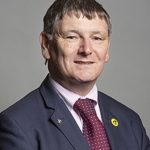
  • Peter Grant – 2022 Speech on the Health and Social Care Levy (Repeal) Bill

    Peter Grant – 2022 Speech on the Health and Social Care Levy (Repeal) Bill

    The speech made by Peter Grant, the SNP MP for Glenrothes, in the House of Commons on 11 October 2022.

    I do not often say this, but I welcome the decision that the Government have taken, which is to U-turn on their increase in national insurance contributions, although I utterly reject any suggestion that it should be coupled with any watering down of the previous commitments on funding for health and social care services.

    I do not think that national insurance is the right name for this tax. It is an income tax—a jobs tax—and we should be honest about what it is doing. It is a jobs tax because if a person has a job, they pay tax on the money that they get paid for doing their job— unless they are earning way below the minimum full-time wage. If they are an employer, they pay tax on the wages that they pay someone for doing the job for them. It is only if a person is lucky enough to be able to make most of their money from owning shares or property that they can earn significant amounts of money without paying national insurance on that income. I have to say that not many of my constituents who are struggling on a minimum wage and part-time jobs are that impressed by the fact that they can get national insurance-free income from their share portfolios, because they cannot afford to buy them in the first place.

    This is a form of income tax—a jobs tax—specifically targeted at working people. It is not even an insurance as such. I pay insurance on my car. If I am involved in an accident, I have a guarantee that the insurance company will pay its share of the costs. People do not get that guarantee just because they have been paying national insurance contributions all their life. Just ask the WASPI women—of the Women Against State Pension Inequality Campaign—how much of an insurance scheme guarantee they actually get from national insurance.

    The legislation that we are being asked to repeal today—and it looks like it will be repealed today without a Division—introduced a form of hypothecated tax, which is not something that I would generally support. Nobody has really mentioned that in this debate, and it did not get much coverage in the debate last year. Other than for very time-limited and precisely defined purposes, hypothecated taxes do not really work. Filling in a small part of the decades-long underfunding in some of our most important public services is neither time limited nor specific.

    Whatever we are going to do to change the tax system to get adequate funding for these services, a single, specific hypothecated tax is never going to be it. I have been consistent on this. I find it interesting that nobody who has spoken in this debate in favour of repealing the levy has explained why they voted for it in the first place last year. I note that sometimes people are allowed to change their minds regularly, whereas at other times people are not allowed to change their minds from eight years ago.

    Our health and social care services are among our most precious public services. Universal healthcare—including free prescriptions—free at the point of delivery, based only on clinical need rather than the ability to pay, is surely an essential part of any civilised society. I would say the same about social care. I am proud that in Scotland we have free personal care for those who need it, regardless of whether they can afford to pay for it. I welcome the steps that the Scottish Government have taken to reduce the financial burden on those who need other forms of social care as well. All of these services are available to everybody and they should be paid for by everybody according to our means through general taxation. I am not ashamed to say that if I had to pay a wee bit extra tax that I could easily afford in order to provide a civilised society for my people to live in, I would do so willingly.

    Those principles are now under direct attack, even more so than they were under the previous Prime Minister, and even more so than they were in the dark days of Margaret Thatcher. We now have a Prime Minister who has chosen to surround herself with people whose links to the NHS privatisation lobby are not hard to find. It does not need to be direct privatisation; it is very easy to privatise the health service by stealth, simply by strangling it of funds so that the waiting list becomes so long that people choose to pay for a health service that they have already paid for through their taxes.

    That is why it is essential that we get a commitment from this Government that not only will there not be a reduction in cash terms in health service funding or in social care funding, but that those budgets will increase by enough to cover the cost of inflation as it hits those services. Historically, inflation in the health service has usually been higher than the headline rate of inflation. The headline rate of inflation is savage enough just now. It is likely that the true cost of inflation to the health service is even higher. I asked the Chancellor about this directly a few weeks ago when he issued his mini-Budget. Scandalously, he refused to give a commitment that funding in the health service will even keep pace with inflation, never mind increasing to meet what we can all see is an unmet demand.

    Part of the reason that the NHS is coming under unprecedented pressure is that the policies and deliberate choices of this Government and their predecessors have forced people into poverty and destitution, and that has an impact on people’s health, which creates additional demand on the NHS. As others have pointed out, having people on health service waiting lists unable to work damages the economy. If the economy is damaged in such a way that it affects the funding of the health service—if, for example, people are given lower wages, are put under financial stress and are unable to afford the cost of living—that in turn damages our health, and to an extent that we perhaps have not properly realised until recently.

    A recent study by the University of Glasgow and the Glasgow Centre for Population Health found nearly 335,000 excess deaths in the UK in the past seven years that were caused by austerity. Deliberate policy choices by this and previous Tory Governments since 2012 have killed more people than the covid pandemic. That is a scandalous thing to happen in any country that claims to be civilised. That is why we cannot fully consider the provisions of this Bill, or the provisions of the Act of Parliament that it seeks to repeal, in isolation from the wider policies of a Government who seem hellbent on plunging even more people into poverty, while lining the pockets of their own billionaire supporters and donors.

    To give just one example, the Chief Secretary to the Treasury was delighted to tell us earlier that the combination of not increasing the national insurance levy and the previously announced changes to income tax thresholds will amount to a whopping £500 per year back in the pockets of my lowest-earning constituents. They are paying between £1,200 and £1,500 a year more just for the heat in their homes compared with last year, so the generous £500 a year that the Government are putting back into their pockets is less than half of what my constituents need just to stand still for electricity and gas prices. That is before they start to pay their increased costs of food, rent and mortgages for those able to buy their own homes.

    That should not be inevitable. My constituents live in a country in which 85% of energy does not come from gas, so why do they see their bills doubling when there is a gas shortage? My constituents live in a country that supplies more energy than it needs and has a commodity that is in short supply, so why are they so much worse off when the value of the commodity that we have in surplus increases on the global market? Those are not questions that Treasury Ministers or other Ministers in this place do not know the answers to; they are questions that they are scared to face up to the answers to.

    Repealing this legislation when the ink is hardly dry on the paper serves to illustrate yet again the total chaos that this Government are in. That chaos has spread to the whole of these islands, and they seem quite happy to inflict it on the financial markets, despite the impact they know it will have on people’s standard of living now and the pensions they will be able to rely on in the future.

    The Government’s persistent refusal to provide a costed plan to ensure sufficient and sustainable funding for those vital services, directly through funding in England and indirectly through Barnett consequentials on the devolved nations, and their persistent refusal to put health and social care services on a proper and sustainable funding basis demonstrate clearly that our national health service can never be safe in the hands of this or any other Westminster Government.

  • Kim Johnson – 2022 Speech on the Health and Social Care Levy (Repeal) Bill

    Kim Johnson – 2022 Speech on the Health and Social Care Levy (Repeal) Bill

    The speech made by Kim Johnson, the Labour MP for Liverpool Riverside, in the House of Commons on 11 October 2022.

    I welcome this decision to repeal the regressive hikes to national insurance, which would have seen those least able to pay with the heaviest proportional tax burden to tackle the crisis in social care. This is the right thing to do, but it should never have happened in the first place. Tax rises on the poorest, especially during a cost of living crisis, are cruel and unnecessary.

    We now need urgent reassurances from the Minister that new funding for adult social care will come from progressive taxation and the pockets of those who can most afford it. We must be clear that a U-turn is not a plan; it is the absence of one. We still have no answers from the Government about how they plan to tackle the crisis in adult social care or where the funding will come from, other than to wait until 31 October for the medium-term fiscal plan.

    Twelve years of Tory austerity have already seen £8 billion taken out of the social care system. Now we are facing a winter of hardship driven by the rampant cost of living crisis. Instead of bringing forward measures that will help the poorest and those most in need, the Government are prioritising tax cuts for the rich and public service cuts for the rest of us. They have removed the triple-lock protections on pensions and are refusing to commit to raising benefits in line with inflation. They have made disastrous economic decisions that have crashed the economy and made the cost of living crisis one of the worst among comparable countries.

    Local governments are being forced to make further crippling cuts, as well as find extra money for energy costs and inflation to maintain their public services. We know that adult social care provision will suffer. Liverpool has lost £465 million of our budget since the start of austerity, which is more than two thirds of our overall budget since 2010. Liverpool, like other cities, has a growing elderly population with increasing complex needs, including dementia.

    We urgently need a big injection of funding to councils’ care budgets alongside a social care workforce strategy to meet rising demands. We are facing unprecedented staff shortages in the health and social care sectors, with more than 165,000 vacancies and a massive staff turnover of 30% a year. In Liverpool, 15% of our social care workers are employed on zero-hours contracts and we have a vacancy rate of over 10%. Without action, the consequences will be devastating. We must be absolutely clear: a shortage of staff costs lives. It is as simple as that.

    We are about to face a second round of Tory austerity, with £43 billion to be slashed from public services that have already been decimated during 12 years of Tory Government. Instead of more cuts, we need a serious injection of cash into adult social care and a plan to bring those services back in-house to end the rampant profiteering of companies backed by private equity funds, which sucks public money out of the system and out of services and straight into tax havens in the Cayman Islands to be hoarded by the super-rich. Decent pay, terms and conditions for undervalued employees must take centre stage of any serious plans to tackle the deep-rooted structural issues in the social care sector along with a long-term workforce strategy and improved quality and standards of care.

    The Secretary of State for Health and Social Care has committed to maintaining the same levels of funding on health and social care despite today’s cancellation of the levy. However, the Prime Minister and the Chancellor are crowing about this reversal to national insurance contributions as a key victory in their tax-cutting agenda, which will see £43 billion slashed from public services. Will the Minister confirm whether the Government will commit to spending the same planned £12.4 billion a year over the next three years that would have been raised by this levy? A simple yes or no answer would be great, thank you.

  • Sarah Olney – 2022 Speech on the Health and Social Care Levy (Repeal) Bill

    Sarah Olney – 2022 Speech on the Health and Social Care Levy (Repeal) Bill

    The speech made by Sarah Olney, the Liberal Democrat MP for Richmond Park, in the House of Commons on 11 October 2022.

    The Liberal Democrats were opposed to this tax to start with. We opposed the national insurance levy when it was introduced last year. Our argument at the time was that it would disproportionately impact lower earners and hit working families at precisely the time when they were struggling to pay their bills and prices were starting to increase in shops. We are really pleased that it is being reversed, and we support this Bill.

    We must not ignore the fact, however, that a great deal of damage has been done in the past six months, during which employees, the self-employed and employers have been charged with this levy. During that time, employees and the self-employed will have paid about £2.5 billion, and businesses about £3.8 billion. One of the main disruptions is that it has been incredibly disruptive to businesses. I speak with some feeling as an accountant who in a previous life spent many hours working on payrolls and forecasting employee costs. I can only imagine what it must have been like for businesses over the past three years. In 2019, a Conservative Government came in promising not to increase any business taxes, but in 2021 they increased national insurance, and now here they are in 2022 reversing that increase. That is an awful lot of change for businesses to have to deal with, and that is quite apart from the increased costs that they will have borne over the past six months.

    Let us think about the impact that that cost will have had on businesses. They will have been thinking, “Which employees can we have? If we want to grow our business, how many employees can we afford to take on?” They will have revised those assumptions in the light of the increased cost of national insurance, so we can only assume that the six-month increase will have stunted the very growth that the Conservatives say that they want to see, and that it will have contributed in part to the economic slowdown, not least because the impact on employees will have decreased their take-home pay, and that, of course, will have decreased their consumption.

    What businesses need above all is certainty and stability, but that has been continually undermined by this Government and their constant chopping and changing of national insurance. This, of course, is happening at a time of a huge increase not just in inflation but, as has been mentioned several times, in energy costs, primarily as a result of Putin’s illegal invasion of Ukraine. That is also having a massive impact on businesses in this country, and the chopping and changing of the costs of employing staff will not have helped.

    It has always been our argument that tax could have been more productively raised by an expanded windfall tax, which we have been calling for since last autumn. We are very pleased that the Government took on board some of our suggestions, but both Shell and BP have said that the Government could have gone further. Potentially up to an extra £60 billion of taxes could have been levied on oil and gas firms, which would have negated the need not just for the national insurance increase but for many of the other unfunded borrowing commitments that the Government made on 23 September.

    Now that we are repealing the health and social care levy, it is important to remember—the hon. Member for South Suffolk (James Cartlidge) made this point very well—that we still have to deal with a crisis in health and social care. The Government must immediately set out their plans. We all anticipate the much-awaited fiscal event on 31 October with a huge amount of excitement but, more than anything, we need to hear from the Government their plans for health and social care, because there is no doubt that the backlog in NHS hospitals is in itself having an impact on growth. I saw figures today that suggested that the number of people suffering from a long-term sickness that prevents them from working is at a record high. We can all see how that has come about from the events of the past few years, but these are people who cannot be available for work and who cannot contribute to the Government’s “growth, growth, growth” agenda; they are not able to take up posts in what we know now is a record number of vacancies simply because they are waiting for treatment. We welcome this reversal, but the Government must state, and soon, what they plan to do to address the backlog.

    Of course, this is not just about health; it is also about social care. There are 130,000 vacancies across our social care sector, and we know that that is caused by chronic underfunding. It cannot offer the kinds of salaries that care workers can find in other sectors. The shortage of care workers and of places in care homes is having a knock-on impact on our hospitals. I was at Kingston Hospital recently and was told that the reason it has problems, and one of the big contributors to its backlog, is that it cannot discharge patients because there is no care package for them to be looked after in their homes. The issue of social care, health and the backlog needs to be addressed urgently. It was not being addressed when the legislation to increase national insurance was first brought in, and it is not being addressed now. We urgently need to hear more from the Government on that.

    I say to the Government that we would support an increase in the windfall tax and that we oppose their plans to reverse the planned increase in corporation tax, which I believe is what is creating the biggest need for the additional borrowing announced on 23 September. The Government urgently need to look at that again and at all the plans announced by the Chancellor on 23 September, and I for one am very keen to see what they come up with on 31 October.

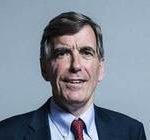
  • David Rutley – 2022 Speech on the Health and Social Care Levy (Repeal) Bill

    David Rutley – 2022 Speech on the Health and Social Care Levy (Repeal) Bill

    The speech made by David Rutley, the Conservative MP for Macclesfield, in the House of Commons on 11 October 2022.

    I am grateful for the chance to speak on Second Reading and to follow considered speeches by right hon. and hon. Members. I am particularly pleased to see the Economic Secretary to the Treasury, my hon. Friend the Member for North East Bedfordshire (Richard Fuller), in his place. I knew him for many years before coming to this place and he brings real expertise to the Front Bench, notwithstanding the fact that he has very big shoes to fill—that’s for sure.

    The repeal of the health and social care levy is part of the Government’s growth plan. The key elements of the plan to address cost of living challenges, caused largely by President Putin’s savage attacks on Ukraine, are most welcome. The energy price guarantee helps to limit the price of fuel bills for households across the country for two years, while the energy bill relief scheme provides similar support for businesses right across the country. Those steps are particularly welcome to the small and medium-sized businesses, both in Macclesfield and across the country, which have felt particularly exposed to the sharp increases in energy costs.

    I understand the desire for greater growth and for reducing the tax burden. I recognise that many businesses and working people will be pleased to see the health and social care levy being reversed. They will be able to keep more of what they earn and decide how best to use the saving for their own business or household. I acknowledge that many business owners will welcome another element of the growth plan: the planned rise in corporation tax will not go ahead either. That said, I believe it is important to see the removal of the health and social care levy, and other proposed tax reductions, in the context of the wider economy and our public finances.

    Financial markets have shown concerns about the cumulative effects of the policies set out in the growth plan, as was eloquently set out by my hon. Friend the Member for Salisbury (John Glen) earlier, and the lack of an associated OBR forecast to help set out an independent view has been unsettling. The forecast will help provide an independent view of the plan’s impact on our public finances and on the levels of the Government’s borrowing and debt. That is why I was pleased to learn that the Chancellor will bring forward to 31 October his statement on the medium-term fiscal strategy, and that Treasury Ministers and officials will, as is necessary, work closely with the OBR over the weeks ahead. It is vital that the Chancellor sets out his fiscal strategy soon, to help explain how the measures in the growth plan, including the impact of reversing the levy, will be funded and what they will mean for the Government’s spending plans, such as the funding for NHS backlogs and social care that the levy sought to address, as highlighted very well by my hon. Friends the Members for Winchester (Steve Brine) and for South Suffolk (James Cartlidge).

    The latest timing also means that documents will be available before the next meeting of the Bank of England’s Monetary Policy Committee on 3 November. They will help provide additional, much-needed information for the markets, to colleagues here in Parliament and, of course, to our constituents. As the Prime Minister has said, in hindsight more could have been done to roll the pitch and communicate the growth plan before the Chancellor’s statement on 23 September.

    In addition to the steps to lower taxes, such as the reversal of the levy, and to tackle energy cost challenges, the growth plan includes several innovative plans, such as the investment zones to help drive growth. In Cheshire East, our vibrant life science sector and industrial hubs would represent an exciting opportunity for such a zone to drive sustainable economic growth. That is just an idea, of course, for the Chief Secretary.

    I wish that we could spend more time talking about such opportunities, but we have to accept that we cannot wish away market concerns. We have to recognise where we are, and the Treasury needs to take the time to communicate and explain its plans in more detail and in the context of the wider economy. With that in mind, I am pleased that the Chancellor earlier agreed with the Chair of the Treasury Committee on the need to further engage with and counsel colleagues in this House over the weeks ahead.

    To conclude, this Bill will see the health and social care levy reversed. That policy and the implementation and phasing of other measures in the growth plan aim to help lift growth and will have wider economic consequences, so let us take the time to understand them more fully. Like many colleagues, I am a strong supporter of free enterprise. I recognise that lower taxes have a role to play in driving growth. As is often said, there is a time to every purpose, and at heart I am a fiscal conservative.

  • Richard Thomson – 2022 Speech on the Health and Social Care Levy (Repeal) Bill

    Richard Thomson – 2022 Speech on the Health and Social Care Levy (Repeal) Bill

    The speech made by Richard Thomson, the SNP’s economic spokesperson, in the House of Commons on 11 October 2022.

    It was a little over a year ago that the then Chief Secretary to the Treasury told the House that this health and social care levy

    “will enable the Government to tackle the backlog in the NHS. It will provide a new permanent way to pay for the Government’s reforms”.—[Official Report, 14 September 2021; Vol. 700, c. 845.]

    That was quite a spectacular U-turn on the Conservative party’s 2019 manifesto. Page 2, signed by the then Prime Minister, made a solemn pledge:

    “We will not raise the rate of income tax, VAT or National Insurance.”

    To be back here, just over a year later, seeing a reversal is really quite something. Describing it as a U-turn does not do it justice. An antisocial driver doing donuts in the car park of the local supermarket is the best analogy for how out of control this approach seems to be.

    The UK Government published a health and social care levy policy paper when the levy was introduced, and I distinctly remember this quote:

    “This levy provides a UK-wide approach which enables us to pool and share risks and resources across the UK”.

    It was therefore highly enjoyable to listen to the current Chief Secretary to the Treasury claiming that, now the levy is being repealed, the reverse also happens to be true, in terms of the UK-wide approach to pooling and sharing.

    I spoke in the debate when the levy was introduced, and I recall that there was a sparsity of Back Benchers prepared to provide political cover for their Government’s change of heart. Quite clearly, an awful lot has changed since then. We have a new Prime Minister, who makes much of the fact that she is prepared to be unpopular, which is probably just as well in the light of recent events. She also tells us, and the Chief Secretary repeated it today, that there is apparently a sinister grouping at work outside this place—the anti-growth coalition. I will not go through all the groups that supposedly comprise this coalition, but it seems to be anyone who has the temerity or the audacity to disagree with the Prime Minister, so it probably includes about half the Cabinet and most Conservative Back Benchers.

    Hywel Williams

    I am grateful to the hon. Gentleman for raising the Government’s assault with such frivolity. Does he know how one joins this anti-growth coalition? When does it meet? Does it provide lunch? Does one have to apply through the currently absent Minister? Is there a form on the internet, as there is for everything else?

    Richard Thomson

    I am sorry to disappoint the hon. Gentleman, but I do not have any answers. From a Marxist perspective—a Groucho Marxist perspective—I would not want to be part of any club that would have me as a member. I am sure the T-shirts are being printed and will be available very soon.

    The Government Benches were rather sparse in our previous debate on the levy. Judging by some of the contributions and the exceptionally well-targeted friendly fire, the Government clearly have some way to go to persuade their Members on not only the sincerity of their commitments on health and social care, but their broader approach to managing the economy.

    Scottish National party Members had concerns about the levy at the time as a means of achieving the policy objectives outlined. In our view, it was unclear what the additional resource would be used for, other than in the broadest of terms. The near £13 billion levy seemed to us to be an arbitrary amount, unconnected to any clear plan for how the funds might be used to tackle the pressures in the NHS—far less for how that resource, and how much of it, would end up being passported through to meet the challenges in the care sector. We also remarked that there was no sign of the accompanying reforms that would be necessary to get better outcomes on integrating health and social care services in England, as has been done in Scotland and as will be built on through the establishment of a national care service by the end of the current Scottish parliamentary term. The levy was also introduced, and is now being withdrawn, without our having had any indication from the OBR—although we believe the work has been done—of the impact not just of this but all the other fiscal choices that now sit around it.

    To say that the UK Government are in complete disarray in their approach not just to health and social care but to managing the economy, would be a kindness and an understatement. They are abandoning the national insurance rise in favour of increased borrowing, just as the Chancellor’s limited fiscal event has resulted in borrowing growing considerably more expensive. They are introducing tax cuts, which are intended to be funded in part by cuts to public expenditure, and those will inevitably feed through to pressures on the health and social care sectors that the levy was supposed to be bolstering. With the rampant inflation we now see in our economy, any resource that makes it through to the health and social care sectors will not travel as far as it would have done—those pounds will buy less. The huge post-pandemic health and social care problems that we face in common across these islands have also been made that much worse by the botched nature of the mini-Budget.

    John Appleby, the director of research and chief economist at the health think tank the Nuffield Trust, is surely correct when he warns that the funding ball is now back in the Government’s court, saying:

    “They will have to fund the commitment through some combination of borrowing and deprioritising other public spending”.

    Let us be realistic about this: that is a far more likely set of outcomes than seeing the commitment being met through ambitions for growth, no matter how loudly and repeatedly they are stated.

    To be clear, SNP Members never believed that a levy on national insurance was the way to achieve the objectives of meeting those challenges. It is tempting to go back to what was said on 24 March, when Paul Johnson, the director of the Institute for Fiscal Studies, called the Government to account in The Times newspaper, saying:

    “Why promise to spend billions cutting the basic rate of income tax whilst going ahead with an increase in NI rates? That will make the tax system both less equitable and less efficient. It will increase the wedge between higher taxes on earnings and lower taxes on pensions and unearned incomes. And wouldn’t that money have been better spent sooner helping those most in need?”

    That was an excellent question then and it remains so today.

    Let us be clear that the funding challenge goes beyond the challenges of the economy, to meeting the parallel challenge presented by the growing and complex demands of an ageing population. In meeting that challenge, it is important that we are able to meet the demands and needs of patients, service users and staff with dignity and compassion, while making sure that the responsibility for contributing towards that financially is a burden shared fairly and equitably.

    In financial terms, that is going to be met through a combination of revenue spend and capital spend. The way in which that cost is shared will come down to political choices over how much is to be borrowed and how the tax system is to be balanced over the longer term. We certainly wait with a mixture of bated breath and nervousness as to what the Chancellor will finally bring forward later this month. I make no apology for repeating this point: it must be fairer, as a general principle, to spread the burden by increasing income taxes across the board on both earned and unearned income, as well as to look again at areas such as inheritance taxes and capital gains, so that the totality of the wealth right across the nations of these islands can be taken into consideration when sharing that burden.

    Instead, we seem to have a piecemeal and incoherent approach to reform from this Government, allied to an equally piecemeal and incoherent approach to taxation and the wider economy. It is often said of a person’s character that, when someone shows you who they are, you should believe them. My goodness, haven’t we in the past three weeks seen exactly what the essential character of this Government is when it comes to their priorities? We have seen that instinct revealed in the decision to unapologetically lift the cap on bankers’ bonuses. We see it in the attempts to cut taxes for the richest, to give least to those who need it most and to hack back on the public services that enable people to live the best lives they possibly can, irrespective of their personal circumstances. We see it in the resulting economic chaos and the fiction that out of that chaos growth will emerge, which somehow makes all of this additional borrowing affordable.

    In some kind of conclusion, it is clear that the problems that led to this levy being identified as a solution in health and social care have not disappeared, even if the levy itself is about to. The Chief Secretary repeated the Prime Minister’s lamentable jibe about the “anti-growth coalition”. As the chaos that has emerged from the mini-Budget shows, the solutions to the myriad problems we face are not going to be found among the dangerous, disruptive ideologues who cause mayhem by supergluing themselves to the policy prescriptions of the Institute of Economic Affairs. They can be found only by building long-term value in the economy and making sure that the burden for doing so is shared equitably among all people and all businesses that can make the contribution that they need to.