Tag: Speeches

  • Catherine West – 2022 Speech on an Early General Election

    Catherine West – 2022 Speech on an Early General Election

    The speech made by Catherine West, the Labour MP for Hornsey and Wood Green, in Westminster Hall, the House of Commons, on 17 October 2022.

    Thank you for calling me to speak, Mr Mundell. It is a pleasure to contribute to this debate under your chairmanship.

    This is a Tory crisis, made in Downing Street but paid for by working people, as my hon. Friend the Member for Newport West (Ruth Jones) has said. Changing the Chancellor over the weekend or making a partial U-turn does not undo the damage that has been done by the Prime Minister and the Conservative party, who selfishly used the whole summer for their infighting, rather than focusing on the needs of working families, such as their energy bills. Now look where they have landed us; they have undermined our institutions and trashed our standing on the world stage, damaging the country’s credibility as a place to invest. They need to get on with reversing this Budget in order to reassure the markets. However, the statement that is being delivered in the main Chamber as we speak here in Westminster Hall does not give me much cause for pleasure, because I believe that it will lead to more hardship for working people. Basically, it is balancing the books on the backs of working people, who have played no role in crashing the economy.

    The problem is the philosophy of trickle-down economics, which the Prime Minister seemed to promote when she was first elected to the post by Tory party members. However, the confusing thing—for members of the public, the markets and for us as MPs—is that the new Chancellor appears to have turned all that on its head.

    The Conservatives crashed the economy for unfunded tax cuts for the wealthiest, causing mortgages to skyrocket and making people worried sick about their pensions. When the Prime Minister was asked to come to Parliament to explain, somehow she sent someone else and was not even able to turn up to apologise for what she had done to wreck our standing in the world and to wreck the economy.

    I would be very happy with a general election. I hope that some fresh faces might improve the situation somewhat. The important thing is that, as a representative from Tesco said yesterday on the BBC, the Labour party has a plan. It has the confidence of large groups such as Tesco and others. When Tesco, or another large company like it, agrees with the trade unions that the Government have wrecked the economy, we know it is time for some fresh faces.

    We are ready. We have been watching for 12 years. We have been watching as child poverty has skyrocketed. We have been watching as the promise of levelling up—which was a good Tory pledge and a good idea—has utterly failed. We will see that as the Chancellor now announces the cutting back of capital and revenue spend in the poorest corners of the UK.

    With the Office for Budget Responsibility not having laid out its view, it is difficult for us to say exactly, in pounds and pennies, what Labour would do. However, we have enough of an outline; we have something that is much more convincing than what the Government will take to the general election. It may not come today and it may not come tomorrow, but we all know that the general election is not far off.

    Let us talk briefly about the mortgage situation. We will need a plan for people’s mortgages. The eye-watering mortgage increases will cause homeowners across the country sleepless nights. In the area I represent, where there are very expensive mortgages because the cost of housing is so high in London, those who can buy their own homes are very stretched indeed. One mum told me that she had sleepless nights, saying, “How am I going to come up with £800 as of next spring? I don’t know where that’s going to come from.” Her job is quite well paid, but it does not pay another £800 a month. Those are the sorts of conversations that families are having up and down the country. Mortgage increases will lead to more families breaking up, too. It is a fact that the more financial worries people have, the more that families tend to break up under their weight.

    Another thing that is very much on our minds as Labour MPs is the question of benefits, and what will happen to the poorest in our society. The events that we are most often invited to attend in our constituencies are food bank openings. I have been involved in both local and national politics since 2001, and I have never gone to so many food banks. Bounds Green food bank tells me that it used to open at 10 in the morning and close at 1 pm, but it now closes at 11 am, because in one hour all the food is gone, and there are fewer and fewer people who are able to donate. This crisis is doubly unfair on those who need to use food banks.

    Working parents, disabled people and the poorest pensioners must have the knowledge that, when we get in, our Government will ensure that they can pay for the cost of living. In fact, once we get in, and there are fresh faces and fresh energy, I believe that the economy will improve a bit—just on the basis that we have more energy and some ideas. In a democracy, any Government tend to run out of ideas. After 12 years, this is a genuine fact: the Government have run out of ideas. We saw that in the summer, when Tory candidates said some nonsensical things and were completely out of touch with what the average person is deeply worried about.

    I have another couple of points to make. I am very worried about the treatment of the civil service during the last month. It was not just the fact that the Office for Budget Responsibility was not permitted to give an outline to MPs, journalists, markets and citizens; pushing out the head of the civil service and the Treasury on day one sent a very bad message to all those parties. Over the years, civil servants in our system have held up a non-partisan approach to what the right thing is for the country. That is not to say that there cannot be conflicts or debates between a politician and a civil servant, but sacking the most senior civil servant in the Treasury was one of the most troubling things I have seen since being in this House.

    The OBR was not allowed to make its statement, institutions such as think-tanks and the Institute for Fiscal Studies were publicly trashed over the summer, and very negative language was used about the Governor of the Bank of England, when his job is to provide financial stability for the country. Time and again during the leadership election there were subliminal and quite outspoken criticisms of the Governor. The scene was being set for trashing the institutions that basically, through a gentleman’s agreement, hold together our standing domestically and internationally. That was completely detonated when the current incumbent in Downing Street—I assume she is still there—got into power. The judgment of that individual has come into our sight.

    Something else has been really bothering me in the last couple of weeks. As we have a couple of minutes up our sleeve, may I be indulged, Mr Mundell, in mentioning that I read in The Guardian that when the Prime Minister moved into Downing Street she moved out of the former Prime Minister’s office—Mr Johnson’s office—and allowed her assistant, Mr Mark Fullbrook, to move into it? Mr Fullbrook is based in Mr Johnson’s office, and apparently the current Prime Minister uses the Cabinet room for her discussions. Fair enough, but it worries me deeply that this individual has a very questionable record on two counts. First, there is a question over who he has advised in a Libyan set-up, and whether he has advised correct people there. Secondly, there is the question of his advice in a gubernatorial race in the USA. Money came into his company so that he could work on somebody else’s campaign, and the FBI has been looking at whether the funding has been correctly transferred from one party to another.

    To have somebody who is being investigated by the FBI sitting in Mr Johnson’s former office chills me to the bone, but that is the sort of Government who have finally got into power in this country. Regardless of how many days this Government have left, we urgently need an independent ethics adviser to be appointed. Other Members may be able to clarify this, but my understanding is that the Prime Minister said that that was not urgent, and not particularly necessary. I think it is urgent, but only a new Government can clean up the mess that this Government have got themselves into.

    I will talk briefly about constituents who have written to me about the cost of living crisis. They are not necessarily going to food banks currently, but they are finding life very difficult indeed. They have told me how much food in the supermarket has gone up by—real basics, such as milk, butter and chicken. People should be able to put those basics on the table to feed their families. Energy costs and the cost of petrol to go into someone’s car have been soaring; yet what we have been discussing in the House of Commons often does not reflect the pain that many people are going through. We want to see workers getting decent pay, being respected, and having their rights at work respected—not a Government who seek to roll back further the rights of trade unions, or of people who want to protest against what the Government are doing. We are seeing increasing authoritarianism, which seems to go hand in hand with the financial mistakes that the Government have made.

    We want the question of the national grid and energy shortages to be addressed with some sincerity and honesty. Last week and the week before, when National Grid warned that there would be blackouts, no one really believed the Government when they said, “We’ll be fine”. We have been told that before and then we have had a crisis. It is deeply distressing to see the lack of honesty. We need the Government to be honest and say, “There could well be blackouts, and if there are, this is what you do: one, two, three.” They should not let people live in fear that that will happen without the correct advice on what to do if it does.

    On clean power, which links to the national grid question, the next Labour Government will launch an urgent mission for a fossil fuel-free electricity system by 2030, making the UK a clean energy superpower that will export clean power to the rest of the world. Gas futures price projections show that that would save UK households £93 billion over the rest of this decade, or an average saving of £475 per household every year until 2030. This world-leading commitment would support the creation of more than 200,000 direct jobs and 260,000 to 300,000 indirect jobs.

    That kind of vision, plan and investment in skills and the future, with a proper plan for our regions, is giving the likes of the Tesco boss who said that Labour had a plan confidence that we do. The UK would be the first major economy to make that world-leading commitment, alongside smaller European countries such as Austria, Portugal, Denmark and the Netherlands. It complements Labour’s plans to increase energy efficiency, including through our warm homes plan to insulate 19 million cold, draughty homes over a decade.

    A number of Members have been on local councils. When I was a borough leader in 2010 we had a very good programme for giving away boilers to the private rented sector, and a plan to retrofit draughty Victorian properties. After 2010, it was disappointing to see Mr Osborne decide to trash all spending to councils, including for all the important green programmes to insulate homes. We would have had 30% more warm homes in my constituency if that small amount of funding had been allowed to continue. I am sure that if that had been replicated across the UK, we would spend so much less as a nation on fuel and energy.

    Martin Lewis has made his most recent projection of what our fuel bills will look like next year. I am pleased that we will not be opposing the energy price guarantee legislation this evening, but for goodness’ sake, get the money off the companies. Do not put it on to debt, because that will make the markets go crazy again. The Government must listen to the Opposition and accept that we have sometimes come up with some good ideas.

    Thank you for your patience, Mr Mundell, as I have been on a circuitous route around the question of a general election. I have laid out some of our good ideas. We will have an energy policy for the future. We will have a plan for working people. We will have a vision for no more food banks, for the building of more affordable homes for our residents, and for enhancing our role in the world. I hope we will look at eliminating our huge trade deficit, which is another area that worries many of us on the Labour Benches. I hope that with some fresh faces and energy through the upcoming general election, which I am sure will come, we will end up with a wonderful team of committed Labour Cabinet members and a Labour team that will restore us as the best country in the world.

  • Ruth Jones – 2022 Speech on an Early General Election

    Ruth Jones – 2022 Speech on an Early General Election

    The speech made by Ruth Jones, the Labour MP for Newport West, in Westminster Hall, the House of Commons on 17 October 2022.

    It is a pleasure to serve under your chairmanship this afternoon, Mr Mundell. I am grateful for the opportunity to speak in today’s important debate on e-petition 619781. I pay tribute to my hon. Friend the Member for Newcastle upon Tyne North (Catherine McKinnell) for speaking so well and giving voice to so many concerns felt by me and an increasing number of my Newport West constituents.

    The state of our nation is far from strong, and it is important that we recognise that the challenges and obstacles faced by the people of our United Kingdom have been caused by the Conservative party and our Prime Minister. This is a Tory crisis, made in Downing Street, and being paid for by working people in Newport West and across the country. This 12-year-old Conservative Government have crashed the economy through enormous unfunded tax cuts; they have left people worried as they face higher mortgages and soaring costs, and have done nothing to show they understand how serious the situation is.

    On Friday, the right hon. Member for Spelthorne (Kwasi Kwarteng) was fired by the Prime Minister, who is his ideological bedfellow. They were in lockstep over every key element of Government policy announced since 6 September 2022. We do not simply need a change of Chancellor; we need a change of Government and a general election.

    Of course, Government Members, if they were here, would say that His Majesty’s Opposition have to call for an election—it is what we do; that is our job—but we are beyond simply saying it for the sake of it. Indeed, The Sunday Times editorial yesterday called for a change of Prime Minister and a general election, and I quite agree. I feel sure that the Leader of the Opposition, my right hon. and learned Friend the Member for Holborn and St Pancras (Keir Starmer), stands ready to lead.

    Our nation is in peril. Our people, from Scotland to Wales and from England to Northern Ireland, are having to decide between heating and eating. Now, with rising mortgages, people across the nation face losing their homes. We are in a disgraceful situation, and not one word from any Minister in this Government reassures me that they understand the challenge before them. They also do not understand the scale of the change required, or the fact that if we do not stabilise the markets through sensible policy decisions we will push our people not just to the edge, but over the cliff.

    I was not elected to this place by the people of Newport West to stand by and let this reckless, out of touch and inward looking Tory Government get away with destroying the lives of tens of millions of people. That is the situation we are in, and, as my hon. Friend the Member for Newcastle upon Tyne North made clear, that is why we need a general election. The petition we are considering today has more than half a million signatures; indeed, as my hon. Friend said, there are 630,000 signatures and the number is still increasing. As parliamentarians, we have a responsibility to give voice to people’s fears, worries, concerns and demands.

    I asked one of my constituents, Amanda Bayliss, who lives in Caerleon, for a quote for this debate and she said:

    “Dear Ruth, I am appalled and devastated by the actions of this current government. I’m genuinely worried and afraid for my future and that of my children and grandchildren.”

    She went on to say that this

    “government must be stopped at all costs before there is nothing left of this country, and we reach a point of no return.”

    It is not just Amanda in Caerleon; across Newport West, I am accosted by people in the supermarket or on the street, and yesterday even in church, who say, “For goodness’ sake, Ruth, get rid of this Government”. I have to tell them that I do not have the power to do so.

    This petition shows the strength of feeling across the United Kingdom. Our United Kingdom is living through a moment of profound change. It needs a Government who can deliver an economy that works for everyone, delivering the jobs and growth of the future. In recent days, we have been reminded of how working people have been left counting the cost of 12 years of Tory Government. The Conservative party’s failure to grow the economy has resulted in stagnant wages and broken public services.

    The Labour party has a serious plan for growth and wants to see all our nations and regions benefit from and contribute to the growth and jobs of the future as we deliver net zero. The Chancellor of the Exchequer, the right hon. Member for South West Surrey (Jeremy Hunt), is now the de facto Prime Minister, without a single vote being cast by a single person.

    We know now that the Prime Minister believes in the failed trickle-down ideology of the past, which has locked Britain out of growth and which will never deliver for working people. My party will deliver for working people, as it is already doing in Wales; Labour, under First Minister Mark Drakeford, is delivering for the people of Newport West and for people across Wales.

    Here and in Wales, the Tories are the party of vested interest and their time to go has come. That is why we need a general election, and when it comes Labour will deliver the fairer, greener future that this country deserves.

  • Alex Davies-Jones – 2022 Speech on an Early General Election

    Alex Davies-Jones – 2022 Speech on an Early General Election

    The speech made by Alex Davies-Jones, the Labour MP for Pontypridd, in the House of Commons on 17 October 2022.

    It is an honour to speak with you in the Chair, Mr Mundell. I believe that I was the first Member to call for a general election this side of the summer, in the Chamber during Prime Minister’s questions on 7 September. It is therefore a great privilege to build on that premonition by contributing to today’s debate and fully outlining the reasons why a general election is now the only possible way forward.

    Almost 1,000 of my constituents have signed this petition calling for change. Although it was originally set up before the new Prime Minister was even in post, the astonishing scenes this afternoon, with the Chancellor’s stunning reversal of virtually all the Prime Minister’s economic policies, make the wording of the petition more relevant than ever. It rightly notes:

    “The chaos engulfing the UK government is unprecedented.”

    I don’t know about you, Mr Mundell, but I am sick of living in unprecedented times.

    The petition was written before the disastrous events of the Prime Minister’s mini-Budget had even taken place. Make no mistake: the Government are now in even deeper chaos. We are not yet six weeks into the new leadership and a new Cabinet, and collective responsibility has all but disintegrated. Cabinet members are openly briefing against their own leader’s policies in newspaper op-eds, and today, in perhaps the final nail in the coffin, her new Chancellor has completely demolished the ideology of her economic project. Her flagship cut to the basic rate of income tax—gone. Cuts to the dividend tax—abandoned. VAT-free shopping—scrapped. Shamefully, the Government have also chosen to water down their hugely important scheme to cap skyrocketing energy costs for families, which may have actually done some good for constituents, including mine in Pontypridd.

    The Government are divided and fractured, and talk of changing to a third Tory Prime Minister in a single year would make a laughing stock of our democracy. The damage is already done. All of us in this place know the truth. The British people know the truth. It is only the Government who are turning a blind eye while the economy continues to spiral out of control. Overnight, people’s pension funds vanished, mortgages skyrocketed and our country was pushed even further into an economic and political crisis of the Government’s own making. This is unprecedented Government incompetence.

    Countless residents in Pontypridd and Taff Ely have contacted me to say that they are genuinely worried about surviving the winter because they simply cannot afford to turn on the heating. That is the reality of this crisis: lives are at risk this winter. Is that not a disgraceful indictment of the Government’s failings? It is because of the astonishing fiscal incompetence that I called for a general election during PMQs in September. We need a general election because changing the figurehead at the top of the party is just not enough. As I said in September, I know that residents in my area will never forget that the Prime Minister played a key role in a Government that failed millions.

    The governing party in this country is at absolute war with itself and has lost the respect of the British public. For the new Tory Chancellor—the fourth in as many months—to feel compelled to urgently address this House to fully overhaul the Prime Minister’s disastrous mini-Budget shows just how panicked the Tory party is. The Tories have completely destroyed their own credibility, and they know it.

    However, it is about not just the incompetence we have seen during the energy crisis, but 12 years of failed Tory rule. The historic failure of this Government to invest sufficiently in renewables and nuclear has exacerbated the energy crisis; the historic failure of this Government to wean our financial systems off of Russian oligarch money has left us internationally exposed to Putin’s posturing as he tries to weaken the west’s resolve; the historic failure of this Government to stimulate any kind of real economic growth in the past 12 years has left our economy weaker and more vulnerable than ever before. Make no mistake: the Tory party is currently the biggest threat to the financial security of thousands of families in my constituency and across the whole United Kingdom.

    As the approval ratings of this doomed Prime Minister reach new depths every single day—or hour—I do not think that we have ever had a Government who have failed so spectacularly to command the confidence of their own party, let alone the country. Even worse, the UK Government seem to have forgotten that the decisions made in Westminster have a real impact on local communities across the country. I have genuine concerns that local authorities across the UK, which provide vital services to residents, are feeling the impact of every single U-turn by this Government.

    In my constituency, Rhondda Cynon Taf County Borough Council is doing as much as it can with extremely limited resources, but more devastating tax cuts and shamefully low levels of investment are putting councils like mine under more pressure than ever before. Shamefully, it is our communities’ most vulnerable residents who depend on those services and will suffer the most when the Tories refuse to act. It is not just about their fiscal incompetence; across the board, sectors that have been crying out for Government action for years have been completely disregarded by a Government who have clearly lost interest in governing. Where is the desperately needed gambling review, which we were promised all the way back in December 2020? Where is the long-awaited and long-overdue Online Safety Bill, which this House needs to change lives for the better? Finally, do not get me started on the Government’s complete disregard for the safety of all people in the UK.

    It is clear to me—and increasingly to the Government’s own MPs—that the only way out of this mess is through a general election. Bring it on. Let us have this general election and turn the page on Tory incompetence for good; let the people decide.

  • Catherine McKinnell – 2022 Speech on an Early General Election

    Catherine McKinnell – 2022 Speech on an Early General Election

    The speech made by Catherine McKinnell, the Labour MP for Newcastle upon Tyne North, in Westminster Hall, the House of Commons on 17 October 2022.

    I beg to move,

    That this House has considered e-petition 619781, relating to an early general election.

    The petition calls for an immediate general election to end the chaos of the current Government. It is an honour to serve under your chairmanship, Mr Mundell.

    As we gather in Westminster Hall this afternoon, the drama of the current Government is once again playing out in the Chamber and on the news channels. Many Members are keen to question the Prime Minister, who has failed to come to Parliament to account for events, and a Chancellor who was appointed by the Prime Minister just last week to try to sort out the utter chaos. I am sure many more Members would be here to speak if there were not such an important clash with business in the House.

    I am particularly disappointed that there are no Government Members here to speak for the petitioners, who would like to hear not only Opposition views on the petition but Government Members’ views. It is no wonder that the petition, which is still open, has been signed by more than 632,000 petitioners—the number is going up as we speak, by about 1,000 signatures an hour. The numbers make this one of the most popular petitions considered by the Petitions Committee to date. As its Chair, I am pleased to have the opportunity to speak on behalf of the petitioners and pretty much anyone I have spoken to in the last few days, weeks and months about the state of the country.

    The petition is clear in its demand. It states:

    “Call an immediate general election to end the chaos of the current government…so that the people can decide who should lead us through the unprecedented crises threatening the UK.”

    It goes on to explain:

    “The chaos engulfing the UK government is unprecedented. Over 40 ministers resigned leaving departments without leadership during cost of living, energy and climate crises. War rages in Ukraine; the Northern Ireland Protocol has further damaged our relationship with Europe; recession looms; the UK itself may cease to exist as Scotland seeks independence. This is the greatest set of challenges we have seen in our lifetimes. Let the people decide who leads us through this turmoil.”

    I pay tribute to Darrin Charlesworth, who set up the petition. Little did he know, I suspect, that the chaos that led him to start the petition would develop further into the mini-Budget U-turns, the market turmoil, the sacking of the now ex-Chancellor and the extraordinary scenes we saw this morning of the new Chancellor reversing the entire platform that the Prime Minister stood on. Perhaps he had the foresight to see how much worse it could get. There were plenty of warnings and, sadly, it is not over.

    The scenario facing us when the petition was started was the horror of Russia’s illegal invasion of Ukraine, inflation reaching a 40-year high, unaffordable fuel bills, record backlogs in our NHS and a looming winter of struggle ahead. Unfortunately, weeks on, with a new Prime Minister and now a second Chancellor, things have only got worse.

    Those who signed the petition were expressing their frustration at a governing party spending a summer focused inwards, choosing themselves a new leader, rather than dealing with these multiple crises. Rather than speaking to and engaging with the country and setting out a vision of what they should expect from a new Prime Minister, those of us outside the Conservative party—99.7% of us—were left looking on, with no input into the process and precious little scrutiny, as planned televised interviews on the BBC and Channel 4 were cancelled. It was far removed from the scrutiny of an agenda for government that would happen in a general election campaign. After recent events, particularly this morning, we can see why such scrutiny matters.

    We live in a parliamentary democracy. It is not the first time that a Prime Minister has changed during an election cycle, but we are now on to the fourth Conservative Prime Minister in little over six years. The last three were replaced not by the electorate, but by Conservative MPs and members. That is frustrating for the public, who have no say in who their Prime Minister is or in their programme for government.

    The real boost to the number of signatories to the petition came once the new Prime Minister had been chosen. Concern was heightened by the fact that she received the backing of only 31% of her own MPs in the final ballot. By comparison, in 2019, the right hon. Member for Uxbridge and South Ruislip (Boris Johnson) received 51% of votes in the final ballot, and in 2016, the right hon. Member for Maidenhead (Mrs May) received 60%. It did not end well for them, so is a Prime Minister with less support among her parliamentary party destined to fare any better? In the light of recent events, clearly not.

    Most of the policy proposals that were set out in the Prime Minister’s leadership campaign and hastily enacted in the disastrous mini-Budget had no mandate whatsoever. The 632,000-plus people who signed the petition represent nearly eight times the number who voted for our current Prime Minister. Some may ask, “Why does that matter? The Prime Minister won under rules set by the Conservative party, which is currently the largest party in Parliament.”

    This is not without precedent: in 1976, when Harold Wilson announced his resignation at Prime Minister’s questions, the then Leader of the Opposition asked if there would be an election. She said:

    “In spite of the political battles, we wish the Prime Minister well, personally, in his retirement. His decision has come at a time of great financial difficulty and of unprecedented parliamentary events. Is he aware that the best way to resolve the uncertainty and to give the new Prime Minister the authority re-required would be to put the matter to the people for their vote?”—[Official Report, 16 March 1976; Vol. 907, c. 1123.]

    I do not often find myself agreeing with the late Margaret Thatcher, but on that point I—and the petitioners—do. Lady Thatcher was not wrong about lack of authority; we are seeing its consequences unfolding before our eyes. Weeks into office, any semblance of authority that our Prime Minister may have had has been shattered, along with confidence in her and in this Government’s ability to govern. Over the weekend, one of the Government’s own MPs described her as being like “the chairman” while her new Chancellor would act as “the chief executive”—they were not even trying to hide the fact that she is in office but not in power.

    Then, there is the mini-Budget. The then Chancellor, the right hon. Member for Spelthorne (Kwasi Kwarteng), proclaimed that he wanted to “bet big” on the British economy. We have seen just how reckless that was. The question remains: who gave the then Chancellor and the Prime Minister permission to gamble in such a way with our public finances, bypassing the checks and balances that go with such a fiscal event, including the growth forecasts and spending commitments calculated by the independent Office for Budget Responsibility? How on earth was that allowed to happen? Not even the 81,326 Conservative party members who voted for the Prime Minister gave their permission for it.

    The Institute for Fiscal Studies warned that the mini-Budget contained:

    “the biggest package of tax cuts in 50 years without even a semblance of an effort to make the public finance numbers add up.”

    The National Institute of Economic and Social Research said that the uncertainty caused by the fiscal event was directly pushing up longer-term borrowing costs. The Government lacked the mandate to make those disastrous changes, and they still lack the mandate to try to clean them up. Although the package has now been scrapped, the damage to the UK will be long lasting: higher borrowing costs, higher mortgage rates and damage to our reputation for years to come. This will never be forgotten.

    Many are rightly asking, “What is the point of this Government now that their showpiece policies—all rainbows and unicorns—which they spent the summer waxing lyrical about, landed calamitously and were swiftly withdrawn the moment they met reality?”. When Downing Street cannot govern, it is incapable of stepping up to the significant and pressing challenges our country faces. We desperately need a Government who can.

    What is left of the Government’s programme? Although the Budget has been reversed, we still have fracking. Despite the Conservatives’ own 2019 manifesto pledge that they

    “will not support fracking unless the science shows categorically that it can be done safely”

    and the fact it is a policy that few can support, the Government are seemingly still intent on lifting the ban on fracking licences without any consultation, assurances on safety or local planning considerations.

    Then there is the current debate around benefits uprating. The right hon. Member for Richmond (Yorks) (Rishi Sunak)—three Chancellors ago, remarkably—promised that benefits would be uprated in line with inflation, but the current Prime Minister has not confirmed whether that will be the case. Concerns have been heightened by commitments made on pensions but not on the uprating of benefits. Working parents, disabled people and the poorest pensioners are already being hit by the skyrocketing cost of living. The Government have no mandate for inflicting unconscionable misery on the poorest in our society. I know that many Government Members feel the same.

    Without a mandate, Government MPs will find it even harder to justify the lifting of the cap on bankers’ bonuses at the same time as the poorest are set to be punished. Indeed, the lifting of that cap is one of the only other measures in the mini-Budget that is left.

    Today marks the United Nations International Day for the Eradication of Poverty and the start of Challenge Poverty Week. Some 41% of babies, children and young people are growing up in households in receipt of universal credit or legacy benefits; that figure is 52% in my region of the north-east. The failure to uprate benefits with inflation will have a devastating impact on those households, compounding the already shocking levels of child poverty in the UK.

    Where is the mandate from the public for this Government to preside over the poorest in our country being made poorer and increasing numbers of children growing up in poverty? Where is the democratic accountability for a Government that have no mandate for the policies they seek to pursue? Why should anyone trust this Government to clean up the mess they have made in the past few weeks? Would we ask a person who started a fire in our house to be responsible for putting it out? Of course not.

    Far from a fresh Administration buzzing with new ideas, we have a tired, worn-out and weak Administration, going round in circles and damaging our reputation at home and abroad. The spectacle of our great country being led by Government MPs desperately clinging to power and trying to distance themselves from the past 12 years is embarrassing to watch.

    The petitioners have very clear asks: for there to be an end to the chaos engulfing the Government and our country, and for the people to have the chance to decide who should lead us going forward. Will the Minister say how the public can have confidence in the competence of a Government that just days into office took such a reckless, irresponsible gamble with the public finances? After being forced to abandon her entire policy platform just weeks into office and sack her Chancellor, what authority does the Prime Minister now have? When will people on the lowest incomes have confirmation that benefits will be uprated with inflation, as promised by the Government only weeks ago? How can the country have faith in anything the Government say when, over the past few weeks, they have backtracked on most of their promises and appear set to do so again, after warning of “difficult choices” to be made? Most importantly, when will the public have their say on how they want this country to be governed?

    It is in the Government’s gift to call an election. Failing that, Government Members can join with Opposition Members to put things right. Whatever Government are elected, they will at least have the support of the British people.

    It is not just the 632,000 petitioners who believe that the public deserve a say. In January, the current Business Secretary, the right hon. Member for North East Somerset (Mr Rees-Mogg), stated that

    “the mandate is personal rather than entirely party and…any prime minister would be very well advised to seek a fresh mandate.”

    Earlier this month, the former Culture Secretary, the right hon. Member for Mid Bedfordshire (Ms Dorries), tweeted that

    “No one asked for this”,

    and that if the Prime Minister

    “wants a whole new mandate, she must take to the country.”

    The hon. Member for Wyre Forest (Mark Garnier) has stated that there should be an election soon because

    “we can’t expect people to put up with the psychodrama of the Conservative party indefinitely.”

    I could not agree more, but those Members need to put their money where their mouths are on this matter.

    Darrin Charlesworth, the petition’s creator, said that the Prime Minister has “torn up” the manifesto that saw the Government elected, and the

    “major change in direction and policy requires a general election, regardless of which party happens to be in power.”

    He feels that the current situation is a

    “dangerous distraction from the business of running the country”

    and believes

    “it needs to come to a decisive end with a general election immediately.”

    Aside from the over 632,000 petitioners who agree with Darrin, a poll out today from “Good Morning Britain” found that an astonishing 93% of respondents want a general election. Similarly, Channel 4 found that only 8% believe that the Prime Minister should remain. The situation is completely unacceptable and unsustainable.

    Since 2010, our country has faced monumental changes: a coalition Government, a referendum in Scotland, Brexit, parliamentary gridlock, the illegal proroguing of Parliament and a pandemic. The previous Prime Minister oversaw the complete erosion of standards in public life, before being forced from office as scandal caught up with him. Those seismic changes and the ensuing chaos have tested our constitution—and our patience with the Government—to the limit. After their 12 years in office, the country deserves a chance to have its say on this Government and their programme. Today, as with most days, we all woke up to another chaotic day in politics. It is damaging and exhausting, but it does not have to be this way.

    This is not about party politics. Many who signed the petition will have voted Conservative at the last election and may do so again. What nobody voted for was this chaos, which is caused by the lack of the clear mandate that any Government would need to have the authority to face up to the challenges ahead. MPs have a duty to the public to govern in the national interest. The petition calls on the Government to do the right thing and put an end to the uncertainty and lack of authority by giving the people their say. If the Government have any hope of rebuilding trust with the electorate, they should do exactly that—today.

  • Rachel Reeves – 2022 Speech in Response to Jeremy Hunt’s Emergency Financial Statement

    Rachel Reeves – 2022 Speech in Response to Jeremy Hunt’s Emergency Financial Statement

    The speech made by Rachel Reeves, the Shadow Chancellor of the Exchequer, in the House of Commons on 17 October 2022.

    As I regularly say now, I welcome the new Chancellor to his place. He is the fourth in four months of chaos and fiasco as this Conservative Government spiral down the political plughole. But the damage has been done: this is a Tory crisis made in Downing Street, but ordinary working people are paying the price. All that is left, after these humiliating U-turns, are higher mortgages for working people and higher bonuses for bankers. The Government’s climbdown on energy support begs the question yet again why they will not extend the windfall tax on energy producers to help to foot the bill.

    It is good to finally see the Prime Minister in her place and not, as the Leader of the House had to assure us earlier, under a desk. But what is she left with? She has no authority, no credibility and no plan for growth. It is clear to see that the people who caused the chaos cannot be the people to fix the chaos. They are out of ideas, out of touch and out of time.

    The Prime Minister should have spoken to the House today, but we know that she could not do that with a shred of credibility, given that the survival of this Government now depends on smashing to smithereens everything that she stands for. Now she is attempting to reverse everything that she campaigned on—it is not just impossible; it is absurd. The Prime Minister is barely in office and she is certainly not in power. Only five days ago, the Prime Minister said at Prime Minister’s questions that there would be “absolutely” no public spending reductions, but after what we heard from the Chancellor today, every single public service is again at risk from the Conservatives—from our NHS nurses to our schools and our servicemen and women—with the country paying the price for the Conservatives’ incompetence.

    The Prime Minister said that she had an energy package for two years. Now that is being withdrawn on the very day it is supposed to be legislated for. She insisted that her Conservative mini-Budget would lead the country to the promised land. Instead it has led to the highest mortgages in 15 years and emergency interventions by the Bank of England to protect pensions. Then on Friday, there was the unedifying spectacle of the then Chancellor being dragged back from the IMF before he could do any more damage to our economy. So she has turned to a new Chancellor, who finished eighth out of eight in the Tory leadership contest, winning just 18 votes from MPs. The Tories have run out of credibility and now they are running out of Chancellors.

    The latest office holder has been in the Cabinet for nine of the past 12 years, at the centre of a Government responsible for low growth and weakened public services, with him responsible for helping run the NHS into the ground. He was a big part of austerity season 1, and now he says the cure is austerity season 2. What was the Chancellor’s flagship policy in his own short-lived leadership contest? It was to reduce corporation tax in a totally unfunded manner, and not from 25% to 19%. The right hon. Gentleman called for it to be lowered to 15%, with not a single explanation of how it was to be paid for. The truth is that had he won the contest and implemented these policies, we would be in an even worse place than we are now. There is no mandate and no authority for any of this.

    The Conservatives have put a lasting premium on people’s mortgages. Uncosted borrowing has sent interest rates spiralling. Millions of people’s mortgage deals will be coming to an end in the next few months, leaving many families forking out £500 more a month. People will be paying a Tory mortgage premium for years to come, so how does the Chancellor think ordinary people can possibly afford any more of this Conservative Government? We have heard no answers today. The Chancellor has said that growth requires “confidence and stability”. I agree, but where does he think the lack of confidence and stability has come from? It did not come from the sky; it came from the mini-Budget three weeks ago.

    What does it say about our country that we are watching borrowing costs hour by hour? That is not the sign of a strong G7 economy; it is the exact opposite. Businesses are now saying that things are so unstable they are pausing investment here in Britain. The former deputy governor of the Bank of England Charles Bean has outlined the extraordinary damage that the Conservatives have done to our standing. In his words,

    “we’ve moved from looking not too dissimilar from the US or Germany…to looking more like Italy and Greece.”

    What a mess.

    Where is the Office for Budget Responsibility forecast? Have this Government learnt nothing? Does the Chancellor really expect the country to take everything from him at face value? Last week, the Business Secretary was busy undermining the Office for Budget Responsibility. Today, we have received another massive fiscal statement with no forecast. What have this Government got to hide? They should publish the numbers so that we know the true state of the public finances after 40 days of this Prime Minister and after 12 years of Conservative Governments.

    Today, the Chancellor has scaled back help with energy bills for families and pensioners. It prompts the question yet again: why will the Government not bring in a proper windfall tax on energy producers to help foot the bill for consumers, and when will the current Chancellor publish in full the Government’s estimates of the windfall profits of the energy giants over the next two years?

    No one was talking about spending cuts until the Tories crashed the economy with their mini-Budget, so I ask the Chancellor: why should the British people pay the economic price for the Tories’ mistakes, and what spending cuts do the Government plan to make? We believe that the Government must honour their commitments to uprate benefits and pensions in line with inflation. Will the Chancellor make it clear today that is what he intends to do? What a contrast that cuts to benefits are still on the table, but the one thing the Chancellor could not bring himself to reverse today was lifting the cap on bankers’ bonuses. Why is this the last policy standing in this disastrous mini-Budget?

    Let me come to credibility. Does the Chancellor accept that once credibility and trust have been destroyed, they cannot simply be regained by a series of zig-zagging, chaotic U-turns? Will he and the Prime Minister apologise for the costs and anxieties laid on families? Can he admit once and for all that the market turmoil we are in was directly caused by the disastrous decisions of his predecessor and of the Prime Minister? Can he guarantee that the Bank of England will not have to intervene again to save the Government, and what guarantee can he give people about their pensions, their mortgages and their household bills?

    The Chancellor said today that everything is now on the table, but is that really the case? We know that abolishing the non-dom tax status will raise £3 billion a year, yet there was no mention of that. How can it be right that some of the richest individuals in society are allowed to buy their way out of paying the tax that should be paid here Britain? This would not be an eye-wateringly difficult decision, so why do not the Government just do it?

    There is lasting damage which these policy U-turns will not change. They have set fire to everything; now they insist it is all fine. The truth is that an arsonist is still an arsonist even if he runs back into a burning building with a bucket of water. Because they cannot be trusted; the Tories are clinging on for themselves, regardless of the cost to the country.

    Trickle-down economics will always fail; what drives forward our economy are the talents and efforts of millions of working people and thousands of ordinary businesses. The Government’s economic credibility has been destroyed. They have harmed our economic institutions, people are paying higher mortgages; the same set of people doing U-turns is not going to fix it. The only way to change this is a real change of Government.

  • Penny Mordaunt – 2022 Comments on Prime Minister Not Hiding Under a Desk

    Penny Mordaunt – 2022 Comments on Prime Minister Not Hiding Under a Desk

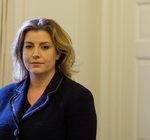
    The comments made by Penny Mordaunt, the Leader of the House of Commons, on 17 October 2022.

    The Prime Minister is not under a desk, as the hon. Lady suggests. I can assure the House that, with regret, she is not here for a very good reason. Neither has she taken this decision to win the hon. Lady’s gratitude; she has done it out of a sense of duty, because she knows what is in the national interest.

  • Keir Starmer – 2022 Speech on the Replacement of the Chancellor of the Exchequer

    Keir Starmer – 2022 Speech on the Replacement of the Chancellor of the Exchequer

    The speech made by Keir Starmer, the Leader of the Opposition, in the House of Commons on 17 October 2022.

    I thank the right hon. Lady for answering the question put to the Prime Minister; I guess that under this Tory Government everybody gets to be Prime Minister for 15 minutes.

    The country is in an economic crisis made in Downing Street. Because they have lost all credibility, Government borrowing costs have soared, mortgage rates have ballooned, markets need reassuring, and there is long-term damage that cannot be undone. Once you have crashed the car at 100 mph, you have damaged it for good and will be paying much more on your insurance for years to come. It is working people who will pay, left wondering if they can afford to stay in their homes—if their hopes of owning a home have not already been crushed.

    Now, it is time for leaders to lead, but where is the Prime Minister? She is hiding away, dodging questions, scared of her own shadow; the lady’s not for turning—ha! Now, it is time to be honest about the mistakes they have made, but what does the Prime Minister say? She says, “My vision is right, my mission remains, I sacked my Chancellor but I can’t tell you why.” Now is a time for consistent messaging. But what do we get? A Prime Minister saying, “Absolutely no spending reductions,” a Chancellor saying that there will be cuts, a Prime Minister saying that she is in charge, and a Chancellor who thinks that he is the chief executive officer and the Prime Minister is just the chair. How can Britain get the stability it needs when all the Government offers is grotesque chaos? How can Britain get the stability it needs when instead of leadership we have this utter vacuum? How can Britain get the stability it needs when the Prime Minister has no mandate from her party and no mandate from the country?

    Penny Mordaunt

    Let me start by saying that I am quietly confident that the Leader of the Opposition will not have his 15 minutes of fame. With regard to questions raised on economic policy, I will defer to the Chancellor. Hon. Members will want time to question him fully and hear the detail, and I do not wish to eat into that time. Our constituents will want to hear about the issues facing them—their bills, mortgages and benefits, and their businesses—so I had wondered what else the Leader of the Opposition wished to discuss in an urgent question that would delay such an important statement.

    In his urgent question, the Leader of the Opposition paints a contrast, so let me paint one, too. The decision taken by our Prime Minister would have been a very tough one politically and personally, yet she took it, and she did so because it was manifestly in the national interest that she did. She did not hesitate to do so because her focus is on the wellbeing of every one of our citizens. It was the right thing to do, and whether you agree with it or not, it took courage to do it.

    In contrast, what the right hon. and learned Gentleman has done today, at this most serious moment, took no courage or judgment or regard to the national interest. Three years ago, when this Parliament was paralysed by Brexit, a general election would have been in the national interest, and he blocked one. Today, when the country needs some stability and urgent legislation to put through cost-of-living measures, and while we are in the middle of an economic war levelled at every school and hospital in the country, he calls for one and for weeks of disruption and delay.

    We will take no lectures from the right hon. and learned Gentleman on working in the national interest. I could point to his frustration of our leaving the EU and his campaigning for a second referendum. I could point to his support for the right hon. Member for Islington North (Jeremy Corbyn) and his positions on NATO, his arguments against our leaving lockdown, or his support for our involvement with the EU vaccines agency, all of which were against the national interest. Nor will we take any lectures on consistency of policy or messaging. He has abandoned every single one of his pledges made during the Labour leadership contest—[Interruption.]

    Mr Speaker

    Order. I think the country wants to hear what is being said and, if I cannot hear, they cannot hear. Can we please listen to the Leader of the House? I am sure that she is coming to the end now.

    Penny Mordaunt

    I am, Mr Speaker.

    Mr Toby Perkins (Chesterfield) (Lab)

    Are you coming to the subject now?

    Mr Speaker

    Order. Mr Perkins, if you want to go and get a cup of tea, I am more than happy to pay for it.

    Penny Mordaunt

    That is why, even on our toughest and most disappointing days, I will always be proud to sit on the Government side of the House. We will put the national interest first. Now, let us get on and hear from the Chancellor.

  • Penny Mordaunt – 2022 Statement on the Replacement of the Chancellor of the Exchequer

    Penny Mordaunt – 2022 Statement on the Replacement of the Chancellor of the Exchequer

    The statement made by Penny Mordaunt, the Leader of the House of Commons, in the House on 17 October 2022 following a urgent Parliamentary question from Keir Starmer, the Leader of the Opposition.

    Keir Starmer (Holborn and St Pancras) (Lab)

    (Urgent Question): To ask the Prime Minister to make a statement on the replacement of the Chancellor of the Exchequer during the current economic situation.

    The Leader of the House of Commons (Penny Mordaunt)

    With apologies to the Leader of the Opposition and the House, the Prime Minister is detained on urgent business—[Interruption.]—and they will have to make do—[Interruption.]

    Mr Speaker

    Order. I must hear the answer to why the Prime Minister is not here.

    Penny Mordaunt

    I afraid you will have to make do with me, Mr Speaker.

    The Prime Minister has taken the decision to appoint my right hon. Friend the Member for South West Surrey (Jeremy Hunt), one of the longest serving and most experienced parliamentarians, as her Chancellor. Their overriding priority is to restore financial stability in the face of volatile global conditions. We will take whatever tough decisions are necessary, and have made changes to the growth plan, which the Chancellor is waiting to update the House on as soon as this urgent question finishes.

  • Jeremy Hunt – 2022 Emergency Finance Budget Statement

    Jeremy Hunt – 2022 Emergency Finance Budget Statement

    The statement made by Jeremy Hunt, the Chancellor of the Exchequer, in the House of Commons on 17 October 2022.

    Mr Speaker,

    The central responsibility of any government is to do what is necessary for economic stability.

    Behind the decisions we take and the issues on which we vote are jobs families depend on, mortgages that have to be paid, savings for pensioners, and businesses investing for the future.

    We are a country that funds our promises and pays our debts.

    And when that is questioned, as it has been, this government will take the difficult decisions necessary to ensure there is trust and confidence in our national finances.

    That means decisions of eye-watering difficulty.

    But I give the House and the public this assurance: every single one of those decisions…

    …whether reductions in spending or increases in tax, will prioritise the needs of the most vulnerable.

    That is why I pay tribute to my predecessors for the Energy Price Guarantee, for the furlough scheme…

    …and indeed for even earlier decisions to protect the NHS budget in a period when other budgets were being cut.

    Mr Speaker, I want to be completely frank about the scale of the economic challenges we face.

    We have had short term difficulties caused by the lack of an OBR forecast alongside the mini-budget…

    …but there are also inflationary and interest pressures around the world.

    Russia’s unforgivable invasion of Ukraine has caused energy and food prices to spike.

    We cannot control what is happening in the rest of the world, but when the interests of economic stability mean the government needs to change course, we will do so – and that is what I have come to the House to announce today.

    In my first few days in this job, I’ve held extensive discussions with the Prime Minister, Cabinet colleagues, the Governor of the Bank of England, the OBR, the head of the Debt Management Office, Treasury officials, and many others.

    The conclusion I have drawn from those conversations is that we need to do more, more quickly, to give certainty to the markets about our fiscal plans.

    And show through action, not just words, that the United Kingdom can and always will pay our way in the world.

    We have therefore decided to make further changes to the mini budget immediately, rather than waiting until the Medium-Term Fiscal Plan in two weeks’ time, in order to reduce unhelpful speculation about those plans.

    Mr Speaker I am very grateful for your agreement on the need to give the markets an early, brief summary this morning, but I welcome the opportunity to give the House details of the decisions now.

    We have decided on the following changes to support confidence and stability.

    Firstly, the Prime Minister and I agreed yesterday to reverse almost all the tax measures announced in the Growth Plan three weeks ago that have not been legislated for in Parliament.

    So we will continue with the abolition of the Health and Social Care Levy, changes to Stamp Duty, the increase in the Annual Investment Allowance to £1 million, and the wider reforms to investment taxes.

    But we will no longer be proceeding with:

    The cut to dividend tax rates, saving around £1 billion a year.

    The reversal of the off-payroll working reforms introduced in 2017 and 2021, saving around £2 billion a year.

    The new VAT-free shopping scheme for non-UK visitors, saving a further £2 billion a year.

    Or the freeze to alcohol duty rates, saving around £600 million a year.

    I will provide further details on how those rates will be uprated, shortly.

    Second, the Government is currently committed to cutting the basic rate of income tax to 19% in April of 2023.

    This government believes that people should keep more of the money they earn, which is why we have continued with the abolition of the Health and Social Care Levy.

    But at a time when markets are asking serious questions about our commitment to sound public finances, we cannot afford a permanent, discretionary increase in borrowing worth £6 billion a year.

    So I have decided that the basic rate of income tax will remain at 20% – and it will do so indefinitely, until economic circumstances allow for it to be cut.

    Taken together with the decision not to cut Corporation Tax, and restoring the top rate of income tax, the measures I’ve announced today will raise around £32 billion every year.

    The third step I’m taking today, Mr Speaker, is to review the Energy Price Guarantee.

    This was the biggest single expense in the Growth Plan and one of the most generous schemes in the world.

    It is a landmark policy for which I pay tribute to my predecessor.

    It will support millions of people through a difficult winter and will reduce inflation by up to 5%.

    So I confirm today that the support we are providing between now and April next year will not change.

    But beyond next April, the Prime Minister and I have agreed it would not be responsible to continue exposing the public finances to unlimited volatility in international gas prices.

    So I am announcing today a Treasury-led review into how we support energy bills beyond April next year.

    The review’s objective is to design a new approach that will cost the taxpayer significantly less than planned whilst ensuring enough support for those in need.

    Any support for businesses will be targeted to those most affected. And the new approach will better incentivise energy efficiency.

    There remain many difficult decisions to be announced in the Medium-Term Fiscal Plan on October 31st…

    …when I confirm that we will publish a credible, transparent, fully costed plan to get debt falling as a share of the economy over the medium term…

    …based on the judgement and economic forecasts of the independent Office for Budget Responsibility.

    I would like to thank the OBR, whose director Richard Hughes I met this morning, and the Bank of England whose Governor Andrew Bailey I have now met twice.

    I fully support the vital, independent roles both institutions play, which give markets, the public, and the world confidence that our economic plans are credible, and rightly hold us to account for delivering them.

    But I want some more independent, expert advice as I start my journey as Chancellor.

    So I am announcing today the formation of a new Economic Advisory Council to do just that.

    The Council will advise the government on economic policy with the first four names announced today:

    Rupert Harrison, former Chief of Staff to the Chancellor of the Exchequer,

    Gertjan Vlieghe, Element Capital

    Sushil Wadhwani, Wadhwani Asset Management

    Karen Ward, J. P. Morgan

    Mr Speaker,

    We remain completely committed to our mission to go for growth, but growth requires confidence and stability – which is why we are taking many difficult decisions, starting today.

    But while we do need realism about the challenges ahead, we must never fall into the trap of pessimism.

    Despite all the adversity and challenge we face, there is enormous potential in this country.

    We have some of the most talented people in the world.

    Three of the world’s top ten best universities.

    The most tech unicorns in Europe.

    One of the world’s great financial centres.

    Incredible strengths in the creative industries…

    …in science, research, engineering, manufacturing, and innovation.

    All that gives me genuine optimism about our long-term prospects for growth.

    But to achieve that, it’s vital that we act now to create the stability on which future generations can build.

    The reason the United Kingdom has always succeeded is because at big and difficult moments we have taken tough and difficult decisions in the long-term interests of the country. That is what will we now do.

    And I commend this statement to the House.


  • Volodymyr Zelenskyy – 2022 Statement on the Situation in Ukraine (17/10/2022)

    Volodymyr Zelenskyy – 2022 Statement on the Situation in Ukraine (17/10/2022)

    The statement made by Volodymyr Zelenskyy, the President of Ukraine, on 17 October 2022.

    Good health to you, fellow Ukrainians!

    World Food Day is celebrated on October 16. This day is established in memory of the establishment of the UN special structure dealing with poverty and famine – FAO. This is the Food and Agriculture Organization of the United Nations.

    For decades, the world has worked to solve the problem of famine. And it is unlikely that any of the founders of the UN could have thought at the time that in the XXI century all of us in the world will again be forced to fight the threat of mass famine, moreover artificial famine!

    A famine for which only one country in the world is responsible – Russia – and its terrorist war against the free world.

    When Russia blocked our Ukrainian ports and disrupted normal food supply chains, it returned the world to a situation as if these decades of work for international food security had never existed.

    Fortunately, Ukrainian ports started working again for the export of agricultural products. Since July, we have been supplying exactly the amount of food that restores stability to the world market. And precisely to those segments of the food market that ensure the consumption of some of the most fragile countries in Africa and Asia.

    And although our export capabilities are still far from complete, we managed to export almost 8 million tons of food by sea – that’s more than 300 ships. 60% of this volume was directed to Africa and Asia. This is the global mission of our country: and thanks to Ukrainian supplies, entire regions of the world maintain social and political security.

    And I want to thank everyone who ensures this: first of all our farmers, our transporters, port workers, our diplomats and government officials. Of course, our defenders, who hold the south and restore safety to the sea. And I want to thank our partners who managed to help with this initiative. In particular, UN Secretary-General Guterres and President of Türkiye Erdoğan.

    We must do everything so that Ukrainian grain exports only expand. These are jobs for our people and export income. Plus funds to ensure a sowing campaign next year. And for the whole world this is one of the key guarantees of stability.

    The way Ukraine helps maintain normal life in the world only strengthens the reputation of our state and makes it easier for us to establish new ties in different regions. This upcoming week, I expect new international results for our state.

    And for the past week, it is worth noting the strengthening of contacts with Saudi Arabia. There are significant agreements. Among other things, this is the decision of the partners to provide a package of humanitarian support in the amount of 400 million dollars. It is very important. Right now we have the most meaningful relations with Saudi Arabia in 30 years.

    The situation on the frontline has not undergone significant changes over the past day. The key hotspots in Donbas are Soledar and Bakhmut, where extremely heavy fighting continues. The occupiers threw everyone they could against our forces, including 2,000 “prisoners” – they are among the mercenaries right there.

    And these are “convicts” with long sentences for serious crimes. They are kept at the front not only with money, but also with the promise of amnesty.

    This is how the Russian state sponsors terror – it looks for murderers in prisons and promises them freedom if they kill again. Does anyone in the world still doubt whether Russia should be officially designated as a terrorist state? I don’t think so.

    I thank all our warriors who are heroically holding their positions near Bakhmut, near Soledar and in all other directions where military clashes are currently ongoing – in the east, in the south of the country.

    Today, in the Southern direction, I especially want to celebrate the 60th Inhulets Infantry Brigade, the 17th Separate Kryvyi Rih Tank Brigade named after Kostiantyn Pestushko, the 128th Separate Mountain Assault Zakarpattia Brigade and the 59th Separate Motorized Infantry Brigade named after Yakov Handziuk for coordinated actions in the Kherson direction and effective destruction of enemy equipment. I thank you, warriors!

    I also thank the Kherson anti-aircraft missile brigade for successfully protecting our skies from Iranian drones and Russian aircraft.

    Separately, I would like to note today those units that provided us with the result of replenishment of the exchange fund. This is extremely important – everyone who captures the Russian military provides us with the opportunity to release our heroes.

    I thank the 54th Separate Reconnaissance Battalion named after Mykhailo Tysha, the 80th Separate Airborne Assault Brigade and the 92nd Separate Mechanized Brigade, which during the offensive significantly increased our ability to return Ukrainians home.

    We remember our people detained in Russia. We must liberate them, and we must liberate them all, leaving none to the enemy. But for this we need to capture the occupiers – as many as possible.

    And one more thing worth talking about today.

    Due to the Russian missile terror in some cities and regions of Ukraine, energy workers have to limit the supply of electricity so that the entire system works stably. But it will be possible to avoid such stabilization blackouts if all of us in Ukraine consciously treat our consumption during peak hours. This is a small thing for every person’s life – but extremely tangible within the entire energy system. For example, this Saturday residents of the Chernihiv region limited their electricity consumption by 20 percent. I am very grateful to you. And in general in the country on average – by 10 percent. Kyiv and the region – only by 7 percent. Please do more – if you have the opportunity. From 17:00 to 23:00 we must reduce our electricity consumption. This is a step that, along with others, will ensure the failure of Russian terrorist plans.

    I am grateful to everyone who defends Ukraine!

    I am grateful to everyone who fights, works and helps for our victory! Unity and joint actions are our strength, the strength of Ukraine!

    Glory to Ukraine!