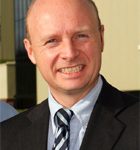
The speech made by Liam Byrne, the Labour MP for Birmingham Hodge Hill and Solihull North, in the House of Commons on 22 May 2025.
I rise to speak to the House today on behalf of the Business and Trade Committee on our sixth report—a road map for the EU reset. I hope you will forgive me, Madam Deputy Speaker, for using this moment to share my profound thanks to the members of the Committee, who are both diligent and hard-working.
From our earliest days together as a Committee, it was clear to us all that our relationship with the European Union had been trapped in the logic of the past, and that although not all of that past was bitter, the present was clearly unsatisfactory, and the future could be richer if we collectively chose to reset that relationship with more ambition. That, we sensed, was also the analysis of His Majesty’s Government. We asked ourselves what could be done to move this relationship forward—not distracted by fantasy, but informed with a real, hard-headed and pragmatic focus.
We travelled to Brussels, Belfast and Geneva. We listened to businesses, trade unions, diplomats and officials in the European Commission. We looked at border posts, trade barriers and, I am afraid to say, an awful lot of lost opportunities. We asked one simple question: how can we make these arrangements better? We sought not to reopen old wounds, but to open new doors.
What surprised us was that it was not difficult to find 21 different ways in which our relationship with the European Union could be reset in a manner that would make our country richer—with steps that would support our security, deepen our energy ties, and cut the red tape that is throttling trade with the EU. These were not abstract aspirations. They were grounded, practical and deliverable, and they were supported by an overwhelming coalition of business groups that we met. In short, the proposals we presented were backed by business, because they were good for business and therefore good for our country.
We divided the work into three ambitions: first, to defend our prosperity; secondly, to defend and advance energy co-operation; and, thirdly, to cut the red tape strangling trade at the border.
On security, we proposed a bold new partnership: a joint defence industrial policy, a framework for protecting critical national infrastructure and stronger co-ordination to tackle economic crime. We called for closer co-operation at the World Trade Organisation, including UK participation in the new dispute resolution procedures, because a rules-based order is not just idealism; for us it is insurance. On energy, we saw something extraordinary: an opportunity to unlock the potential of the North sea as the world’s biggest green energy power station. That vision demanded that we come together with the EU to create a single carbon border adjustment mechanism and to connect, again, electricity trading and emissions trading. That could add up to a faster and cheaper path to net zero for both us and our European neighbours.
On trade, we welcomed the Government’s ambition for a deep sanitary and phytosanitary agreement and, indeed, a fair fisheries deal, but we pressed for some specifics: mutual recognition of alternative economic operator schemes; bilateral waivers for safety and security declarations; co-operation around roll-on, roll-off ferries; rejoining the Pan-Euro-Mediterranean convention; mutual recognition of conformity assessments; and a long-term road map for compatible regulation.
On services, we urged His Majesty’s Government to strike a new data adequacy agreement, pursue deeper co-operation on financial services, ensure UK access to Horizon Europe framework programme 10, sort out a new road map for mutual recognition of professional qualifications, reduce the barriers for touring artists, and implement a visa-based, number-capped, age-capped youth experience scheme.
We published our draft report to test it. The response was overwhelming, with support levels of between 80% and 90% for the measures that we proposed. Businesses said, “This is what we need, because it will unlock growth, create jobs and raise wages.”
On Monday, we saw some signs that the Government had listened. We were glad to see progress on security, defence, electricity trading and emissions alignment. There was a new security and defence pact. There was useful language on critical national infrastructure. There was a welcome step towards joining electricity and carbon markets together. There was, however, also much left in the to-do pile. There was no iron-clad commitment to a shared defence industrial policy and there was too little progress on law enforcement co-operation. There was silence on WTO co-operation, although I acknowledge that may come in the trade strategy when it is published. We also thought that there could have been more on financial services co-operation, data adequacy and mutual recognition of conformity assessments.
This is a deal without a date—a handshake, but not yet a contract. None the less, it was an important start. After years of drift and division, this was the first time since Brexit that, collectively, we had the chance to stop digging ditches of grievance and start rebuilding some bridges of co-operation. This was a step forward, but it was only a step. What comes next must be really clear. We must now have a timetable for drawing up, finalising and implementing these agreements. There should be action to take forward the unfinished business, which we have set out in this report. Crucially, we think there should be a bigger role for Parliament, because Parliament should not be a bystander while our future is forged.
Let us not retreat into nostalgia. Let us work pragmatically together in the national interest, because that is how futures are built. We are at our best in this Parliament when we choose to lead, and that is exactly what this relationship now needs. I commend to the House this report and its call to action.
Sonia Kumar (Dudley) (Lab)
Does my right hon. Friend agree that consistency and clarity are exactly what businesses require to grow and thrive? That is why the Government should consider the report’s recommendation to consult with industry on rejoining the pan-Euro-Mediterranean convention. PEM membership could support tariff-free trade, simplify rules of origin and reduce trade barriers for key sectors such as automotive, manufacturing, chemicals and food production. By joining PEM, British business would expand its preferential market access to 25 countries, thereby strengthening supply chains and boosting the competitiveness of British exports.
Liam Byrne
My hon. Friend made that point repeatedly during the Committee’s deliberations. What has been especially welcome is how she consistently brings the perspective of local businesses in her Dudley constituency —the home of the industrial revolution, as we all know. She is right that, subject to consultation, in particular around the implications for the electric vehicle industry, rejoining the PEM convention could deliver us some rules of origin that would radically cut red tape for many businesses in her constituency and across our country. Frankly, it would also lower costs at a time when that is much needed.
Dame Harriett Baldwin (West Worcestershire) (Con)
I thank the right hon. Gentleman and his Committee for their extensive piece of work and for the report he has presented today. He mentions the wide range of different asks that the UK Government had and that he recommended that they pursue. Does he agree that it is disappointing that out of the areas that the UK wanted to achieve agreement on, movement for touring artists and participation in EU defence spending are left unagreed, while the UK Government seem to have agreed on and traded one of our most valuable areas in the negotiation: access to our fishing grounds?
Liam Byrne
The hon. Lady will know, as I do, that although fisheries and the fishing industry constitutes quite a small part of our economy—about 0.04% of GDP—for many coastal communities it is a vital industry. Nevertheless, we felt—I certainly did—that the prize of an SPS agreement, which could be worth a huge boost of up to £3 billion to £4 billion a year according to Aston University and that allows for shellfish exports to the European market, was potentially a prize was worth having.
However, the hon. Lady is right to say that the biggest concern that we should have had was defence industrial co-operation. We cannot defend Europe in the way that we should, and we cannot spend the increases in our defence spending in the way that we should, unless we reorganise Europe’s fragmented defence industrial base. We cannot be stronger together unless we build that shared defence base together. I very much hope that we will hear of progress on that in the strategic defence review and the national security review when those strategies are presented to Parliament before the summer recess.
Gregor Poynton (Livingston) (Lab)
Our Committee’s report covered how we can help agrifood businesses export to the EU, and I was delighted to see Salmon Scotland and the National Farmers Union Scotland come out in support of the deal this week. Does my right hon. Friend agree that it was baffling to see the SNP stand with Reform and the Tories in opposition to the deal?
Liam Byrne
The consensus when we published the draft of our report was overwhelming, and the measures we proposed were backed by an enormous majority of business groups across the country, including groups across Scotland. What business saw was a practical, hard-headed, common-sense set of recommendations that should be supported by not only the Government but those in public life across our country.
Charlie Maynard (Witney) (LD)
I thank the right hon. Member for his leadership and hard work on the Committee. I welcome the move this week, and the set of aspirational statements of intent that go in the right direction. That is great, but does he agree that we should focus on the big stuff? Proportionately, the deal with India will get us 0.1% of GDP growth by 2040 and the American pact takes us to a position that is worse than where we were six months ago, so Europe is where it is at. Europe represents 45% of our trade versus 12% with the US, but of the beneficial 21 recommendations that the Committee set out, maybe five or six have been hit. The key thing is to go for the big stuff, such as being back inside the customs union. That would make a big difference.
Liam Byrne
The report could not have been as well written or as strong and robust in its recommendations without the hon. Member’s input. We are grateful for the hard work he put into getting the report right. As he knows, a bespoke customs union was not a proposal we made, perhaps because it would not necessarily have swept up the Committee in unanimity. What is striking is that the measures set out in the report would have been significant enough to offset the economic damage we will suffer because of the tariffs introduced by President Trump. The hon. Member is right that in economic matters it is always wise to focus on the big numbers, and the big numbers in trade come from a better, closer, stronger relationship with the European Union.
Chris Bloore (Redditch) (Lab)
I congratulate my right hon. Friend on his report and his stewardship of the Committee. My inbox was full of emails from local businesses in Redditch, relieved that after years of hesitation and no progress we are finally in a dialogue with the EU about improving access for businesses. Does he agree that, as the report states, by continuously speaking to the EU we can finally start getting rid of the red tape, as was promised to businesses by many on the pro-Brexit side, and get proper access to the markets that world-leading companies in Redditch really should be able to access freely?
Liam Byrne
My hon. Friend has consistently been a strong voice for the business community in Redditch since he joined us in the House. He is right that what has been lacking for a long time in the relationship with the European Union is the kinetic energy required to drive any bureaucracy forward.
A number of working groups were set up because of the trade and co-operation agreement. In a cross-party spirit, I should say it is important to note that the mood in Brussels changed significantly under the last Prime Minister, with the progress made in the Windsor framework. However, unless significant amounts of political attention and energy are invested, things will not move forward, and there is still a long way to go. The Committee has set out in the report where some of that progress still needs to happen, but ultimately politics is what changes things. I hope that the political energy that went into Monday can be sustained for the future.
John Cooper (Dumfries and Galloway) (Con)
I thank the right hon. Gentleman, whose tremendously adroit chairmanship of the Committee has allowed a lot of cross-party working, which has been really refreshing and very good. This is a moment of regret: the Committee did flag up how fragile coastal communities could be damaged badly by a multi-year deal on fishing, and the 12-year deal is beyond anything anybody imagined. It will hammer fragile communities right across Britain, and particularly in Scotland; that is unfortunate. Does he agree that achieving an SPS deal must be balanced with the deals with India, America and so forth that are coming down the tracks—I am sure the Committee will look at this—and that we must have due care for ensuring that the Brexit freedoms that allow us to strike those deals are not damaged?
Liam Byrne
The hon. Gentleman is right. As we were composing the report for the House over the last few weeks, he consistently underlined the risks that coastal communities would confront if the deal were to go the wrong way. We are all incredibly grateful to him for the voice he provided
We must ensure that we enshrine certain standards that allow us to draw closer to Europe without compromising the alliances already coming into place and those that we still need to strike in order to restore our role as the great free trading nation on this planet. The way in which the Government seek to tessellate the agreement with the trade deal with the United States, with our leadership of the comprehensive and progressive agreement for trans-Pacific partnership, with the deal with India and with the deals that are still to come with the Gulf Co-operation Council, Korea and Switzerland needs to be very carefully balanced. It looks like the Government have just about got it right. However, I know that the hon. Gentleman, like me, will want our Committee to keep an extremely close eye on that as the trade talks proceed.
James Naish (Rushcliffe) (Lab)
I thank my right hon. Friend for this excellent report that is rooted in pragmatism and practical steps, which I know my constituents welcome. He has highlighted a gap—as he sees it, it is a first step —and there is a lot more to do. Will his Committee undertake to monitor the gap between what the Government have committed to and where he would like the Government to be, and will he and his Committee continue to make recommendations to the Government?
Liam Byrne
My hon. Friend is right to point that out. The good news for the Minister is that he now has the scrutiny framework in front of him that the Committee will use to judge the progress that he makes over the course of this Parliament. There is a moment that is still to come for this Parliament, however. At some point—we are not quite sure when—scrubbed treaties will need to be laid in this House. This House will then enjoy the grand total of 21 days during the Constitutional Reform and Governance Act 2010 process in which to scrutinise them. That is not very long. The Committee has therefore decided this week that we will open inquiries on the EU, India and United States deals. We will seek to hold hearings on each of those trade deals before the summer so that the House can be as well informed as possible when the CRaG process begins, and we can zero in on the issues that are at stake for our constituents.
Richard Foord (Honiton and Sidmouth) (LD)
I am grateful to the Chair of the Business and Trade Committee for this thorough set of proposals, and especially for the call for a greater role for Parliament. The Committee red, amber and green-rated its 20 proposals and marked as green the UK-EU security pact. Yet the Prime Minister’s spokesman admitted:
“This is a first step towards UK participation in Europe’s defence investment progression”
and went on to say that it merely
“opens the door towards joint procurement.”
Will the Committee Chair acknowledge how much more there is to do before this amounts to a shared defence industrial base?
Liam Byrne
The hon. Member is absolutely right. He knows, because of the extraordinary record of service that he brings to this House, that there is an immense amount of work that we still need to do to conquer the inefficiencies and fragmentation of the European defence industrial base. We cannot spend the money that we propose to spend on defence wisely unless we change the way that we procure military equipment. On the one hand, that will provide greater certainty and long-term contracts to defence suppliers and, on the other, it will help ensure that we are building an innovative ecosystem of funding to help smaller, innovative, nimble and agile suppliers of weaponry to come forward in the way that they can to ensure that the lessons that we have learned on the battlefields of Ukraine inform our military strategy in future.
If there is one lesson that we have learned, it is that any warfighting capability depends on the strength of our defence industrial base. Quite obviously, today’s defence industrial base in Europe is not in the right place, and together with our partners we have to work hard on that. I hope that the strategic defence review will set out some practical steps for how we will do that together with our allies in Europe.
Dr Andrew Murrison (South West Wiltshire) (Con)
I congratulate the right hon. Gentleman on his statement and on the work of his Committee. Clearly, renewable energy is an important part of our relationship with the European Union. What opportunity did his Committee have to examine that and the trade of energy between the UK and the European Union, particularly in the light of the possibility in the near future of an interconnector between Morocco and the UK by way of the UK-Morocco Power Project, or Xlinks? He may know that if the UK does not greenlight that in the near future, other European countries certainly will.
Liam Byrne
The right hon. Member is absolutely right to say that Morocco is a country that we should work more closely with. Xlinks is an exciting proposal. As a stable, long-term partner to Europe, Morocco is a country with which we have a shared interest in the future.
The perspective that we brought to the question was on how we can ensure a faster, cheaper and less risky path to net zero for us and for Europe. We heard striking evidence from many in the electricity and energy sectors about almost the thoughtless way that we had been disconnected from electricity trading schemes. What really worried us in the near term was that, given different carbon prices in the UK and Europe, if Europe introduced a carbon border adjustment mechanism, and we did a little later on, almost a tariff wall would be created.
We think the Government have done well in seizing that win-win, but that is not to take anything away from the logic and force of the hon. Member’s remarks. Ultimately, we will need several big infrastructure initiatives if we are to do what we all know needs to be done in this country: to drive down industrial electricity prices.