Tag: Speeches

  • Jacqui Smith – 2024 Speech to the Holex Network Conference

    Jacqui Smith – 2024 Speech to the Holex Network Conference

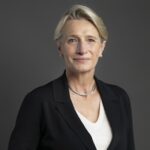
    The speech made by Jacqui Smith, the Skills Minister, on 9 December 2024.

    I’m delighted to be joining you today, so I’d like to begin by thanking Holex for inviting me for that kind introduction.

    As you are probably aware, the theme of today’s conference is Quality, Qualifications and Progression.

    These are all ambitions that this new, mission-led government shares wholeheartedly.

    This government is determined to break down barriers to opportunity, to build a society where your ability to achieve and thrive is not determined by your background.

    We’re determined to drive opportunity and growth, which relies on people having the skills needed to thrive in life and work.

    And I strongly believe that learning should be something we can return to throughout our lives.  I’m extremely proud to have returned as a Minister in the DfE, 25 years after I first started my ministerial career and after a 14 years break from frontline political life.  I’m proof of the importance of second chances and lifelong learning.

    I’d just like to focus on one of your chosen themes for a moment, because it’s something your organisations do superbly well…

    And that’s progression…

    You are all engines of opportunity for adults.

    So I’d like to thank you for all you’re doing to enable people to achieve their goals and enable them to work towards the employment and the opportunities in life that they want whatever age they happen to be.

    But I am well aware that you face real challenges in doing this….

    Obstacles to progress

    Over seven million people lack the essential digital skills they need for work.

    We’ve got around 600,000 people who can’t work because of a long-term health problem, but would if they could.

    A skills system that is confusing for learners and employers.

    Too little employer investment, and too many learning programmes.

    And where because of the difficult fiscal position we find ourselves in, there are financial constraints which you will understand only too well.

    This has a real impact. Skills shortages doubled between 2017 and 2022, with a staggering 36% of all job vacancies caused by skills shortages.

    Analysis shows that around 70% of all jobs that are expected to exist in 2035 will be filled by someone who is already in work.

    That is why it is crucial that education is a lifelong journey for all.

    A journey that doesn’t begin and end at set times and where it doesn’t matter what your background is.

    Unfortunately, at the moment it too often does matter.

    Education and training should be excellent and accessible, providing people throughout their lives with skills needed to take them where they want to go.

    But, in spite of your dedication, commitment and considerable success too many learners in the skills system often feel sidelined.

    We must fix this.

    Adult learners who need support

    We need a more inclusive approach. One that supports those furthest from learning. Who perhaps had a miserable time at school and then lost heart.

    That supports those adults that might have caring responsibilities, physical or mental health struggles or just feel it’s too late for them to catch up.

    That supports adults that have special educational needs and disabilities.That supports adults who are looking for new skills to progress in their current job or change to a new career path.

    All of these learners rely on you to help get them where they want to be in life.

    All of these learners need encouragement and support and because you understand the barriers they face you know how to do that better than anyone.

    Because everyone has a part to play.

    Positive value of adult education to skills growth

    We need a whole cultural shift in our approach, where we recognise skills are part of a much wider ecosystem.

    Where skills not only support people to take up careers in health and social care, or to join green energy companies, but where learning can lead to wider outcomes such as a healthier population.

    Your work with adults can help tackle economic inactivity.

    Which not only contributes to the growth mission by getting people back into work, but also improves their lives.

    This is how I define progress… that momentum shift we need to achieve real social and economic change.

    So what more can we do to help you deliver this?

    A culture of lifelong learning

    I’d like to take you back to a promise we made in our manifesto that we would bring forward a comprehensive strategy for post-16 education and skills.

    We want to develop a culture of lifelong learning, where learning does not stop at 18 or 21.

    The Prime Minister has talked of how he wants skills to be respected and valued.

    For education to be for everyone, no matter at what age or what stage.

    Those principles will run throughout our government.

    The education you and all your organisations deliver is essential for that purpose and we will back you and the work you do to provide adults with the skills they need.

    Qualifications open doors for people.

    None of us is going to argue against that.

    But not everyone wants or needs a qualification.

    One of your great strengths is that you offer learners that bridge, so that they can take incremental steps to the next level when they’re ready…

    For example, you might work to improve someone’s digital skills so they can start accessing the things most of us take for granted like shopping or banking online, or keeping in touch with friends and families.

    From there the next step is more sophisticated skills, that can translate to a workplace.

    You are often the first port of call for adults wanting to return to learning, to upskill or to reskill. Or providing the support needed to enable integration into life in the UK.

    Maths, English and digital skills are vital in their own right, and also gateway skills that unlock opportunities to progress to further learning.

    I want to take this opportunity to thank you for your enthusiastic support for adults to improve their numeracy skills via the Multiply programme.

    Multiply has reminded us that we need to think creatively about how to encourage adults to take part.

    We will build on that learning.

    In this way you can give people the means to thrive in life and in work throughout their lives.

    Vision for change

    We have a vision for the skills system, made up of three key changes.

    Firstly, one where everyone is supported to progress, rather than the many who feel sidelined or left behind by the system.

    Second, where we move from a fragmented system with a confused and overlapping landscape of qualifications and courses, to one where education and training pathways are coherent and lead to progression and employment outcomes.

    And third, a system that moves away from unproductive competition, to one where partners in the system coordinate their efforts to meet skills needs, brought together by Skills England.

    These three key areas of change underpin our entire approach to the post-16 skills system.

    Our blueprint for a new era of skills

    We have already taken some important steps.

    We have published the Get Britain Working white paper, explaining our ambition for an 80 per cent employment rate.

    As part of this, we aim to rejuvenate the entire careers system by creating a new jobs and careers service that will enable everyone to access good, meaningful work, and give them the support they need to progress in that work once they’ve got there.

    We’ve launched Skills England to consider the skills system as a whole, and to work with providers, policy makers and combined authorities as part of a coordinated approach to addressing skills need.

    We’re introducing a new more flexible Growth and Skills Offer that will provide funding to provision that meets skills needs.

    And we’re bringing coherence to education and training pathways, so that there is always a clear link to progression or employment outcomes.

    What we are working towards is a societal change… one where businesses, trade unions, local authorities, providers, and learners, all come together to look at skills holistically and reimagine how we deliver them.

    A great example of this is Tailored Learning, and I’d like to take a moment to thank you for the work you’ve done with the department in recent years to design and implement Tailored Learning.

    Tailored Learning supports those learners who most need our support.

    For example Jane, who took a digital skills class and is now able to use her iPad to buy train tickets to visit her friends and book theatre tickets.

    Or Abdalazeez, who took an employability skills course and learned how to grow his confidence for interviews, which led to him securing a job and now intends to study further in order to become a nurse.

    Now these are just two examples I picked up from the recent WEA impact report, but I know you will all have many similar stories.

    I want to continue that partnership between providers and the department.

    And I want you all to be part of the conversation about the future of the skills system.

    Concluding words

    I began by congratulating you for the work you do in helping people to take control of their lives by giving them the skills to thrive in life, and skills that will mean that jobs they have perhaps only ever dreamed of are now within reach.

    But I want to end by reassuring you that you are no longer acting alone. You are part of a bigger endeavour.

    We are all pushing in the same direction and I am proud to be your minister in government.

    We are all working towards a skills system that delivers growth for the economy and above all that breaks down barriers to opportunity for everyone.

    So that the least advantaged learners aren’t sidelined, but supported.

    So that our fragmented skills system becomes a clear and coherent one.

    I want to start a national conversation on skills, in which everyone will have their say… and for you to feel this is being done with you, not to you.

    We all have a role to play – in development, as well as implementation.

    We have a long way to go to reverse 14 years of decline.

    But I have seen the difference good government can make.

    Together I know we can do it.

    Thank You.

  • Barack Obama – 2024 Statement Following the Death of Jimmy Carter

    Barack Obama – 2024 Statement Following the Death of Jimmy Carter

    The statement made by Barack Obama on 29 December 2024.

    For decades, you could walk into Maranatha Baptist Church in Plains, Georgia on some Sunday mornings and see hundreds of tourists from around the world crammed into the pews. And standing in front of them, asking with a wink if there were any visitors that morning, would be President Jimmy Carter – preparing to teach Sunday school, just like he had done for most of his adult life.

    Some who came to hear him speak were undoubtedly there because of what President Carter accomplished in his four years in the White House – the Camp David Accords he brokered that reshaped the Middle East; the work he did to diversify the federal judiciary, including nominating a pioneering women’s rights activist and lawyer named Ruth Bader Ginsburg to the federal bench; the environmental reforms he put in place, becoming one of the first leaders in the world to recognize the problem of climate change.

    Others were likely there because of what President Carter accomplished in the longest, and most impactful, post-presidency in American history – monitoring more than 100 elections around the world; helping virtually eliminate Guinea worm disease, an infection that had haunted Africa for centuries; becoming the only former president to earn a Nobel Peace Prize; and building or repairing thousands of homes in more than a dozen countries with his beloved Rosalynn as part of Habitat for Humanity.

    But I’m willing to bet that many people in that church on Sunday morning were there, at least in part, because of something more fundamental: President Carter’s decency.

    Elected in the shadow of Watergate, Jimmy Carter promised voters that he would always tell the truth. And he did – advocating for the public good, consequences be damned. He believed some things were more important than reelection – things like integrity, respect, and compassion. Because Jimmy Carter believed, as deeply as he believed anything, that we are all created in God’s image.

    Whenever I had a chance to spend time with President Carter, it was clear that he didn’t just profess these values. He embodied them. And in doing so, he taught all of us what it means to live a life of grace, dignity, justice, and service. In his Nobel acceptance speech, President Carter said, “God gives us the capacity for choice. We can choose to alleviate suffering. We can choose to work together for peace.” He made that choice again and again over the course of his 100 years, and the world is better for it.

    Maranatha Baptist Church will be a little quieter on Sundays, but President Carter will never be far away – buried alongside Rosalynn next to a willow tree down the road, his memory calling all of us to heed our better angels.

    Michelle and I send our thoughts and prayers to the Carter family, and everyone who loved and learned from this remarkable man.

  • Chris Bryant – 2024 Speech at the Tourism Alliance Conference

    Chris Bryant – 2024 Speech at the Tourism Alliance Conference

    The speech made by Chris Bryant, the Tourism Minister, on 26 November 2024.

    I’m delighted to be the Tourism Minister.

    Mark Twain wrote in 1904 that “travel is fatal to prejudice, bigotry and narrow-mindedness, and many of our people need it sorely on these accounts”.

    I’m not actually sure about that. Most people are probably looking for something rather less highfalutin than having their prejudices and bigotries removed. A fortnight in the sun perhaps. A chance to chill out.

    But I have to confess I owe a great deal to travel. One of my father’s first jobs was working in a hotel in Salou on the Costa Brava in the 1950s – which is where he met my mother, when she was, as a BBC makeup artist, on holiday. So, quite literally, I reckon I owe my existence to the tourism industry.

    That’s just one of the many reasons that I am delighted to be the Tourism Minister. And I can already state that the tourism industry has broadened my mind. Just a day at the World Travel Market was enough to impress upon me the breadth and depth of this industry in the UK and around the world, and how much the tourism industry is respected.

    I know the transformational effect it can have on people’s lives. I’m passionate about how tourism supports other sectors in my portfolio and vice versa. People may come here for the heritage but then stay to immerse themselves in our creative industries. Or they might come here expressly for a concert, a gig or a show. Or to see a major art exhibition.

    Tourism can also promote opportunity for people – give them a chance to get on in life and make something for themselves. And it can create or rebuild a sense of pride in a place.

    Last week I responded to two debates in Parliament on the respective merits of Bedfordshire and Northumberland for the tourism industry.

    Local MPs queued up to list their local tourist attractions including castles, stately homes, canals, seaside resorts, museums and natural beauty spots. And we all know how important our own local attractions are to our local identity.

    Equally importantly, tourism is a key driver of economic growth, not only in the traditional hotspots but across the whole of the UK.

    The UK has always been a great destination for tourism. Canterbury was one of the greatest attractions for pilgrims who wanted to visit the site of the murder of Thomas Becket in the Middle Ages, as was the tomb of Edward the Confessor in Westminster Abbey. As we know from the poet Chaucer, pilgrims were not necessarily saints, but they certainly had money to spend.

    Modern pilgrimages include King’s Cross station for Harry Potter’s Platform 9¾, or Highclere Castle – the setting for Downton Abbey, or Framlingham Castle for Ed Sheeran’s Castle on the Hill, or Paddington for… Paddington.

    We need to make far more of these connections. Of course we want to boast of our great heritage. But we can’t rest on our laurels. Because the danger is that foreign visitors who have the world to choose from could all too easily say: “The UK never changes. It’ll still be there next year. Let’s go somewhere else this time.”

    But we want people to think the UK’s the place to go this year, today, now. And when they get here we want them to have such a fabulous time that they come again and again.

    However, we have to be honest about the challenges we face. Covid and Brexit have had significant effects on the sector, some of them predictable and some of them completely unpredictable. Staffing and skills shortages make growth a challenge. And inbound tourism is still not back at 2019 levels.

    Lots of us make day trips but don’t stay the night either because finances are tight or because they just can’t find the right kind of accommodation. Equally worrying is the fact that UK holidaymakers spend more overseas than at home.

    I know from speaking to the sector that the costs of running a business remain high and have risen sharply in recent years – especially when it comes to staffing and materials.

    I am proud that we managed to prevent the cliff edge on business rates relief that people had feared was coming in April by introducing the 40% rate in the Budget, but I recognise that costs are still high, margins are phenomenally tight and many are concerned about National Insurance Contributions.

    I am also conscious that skills and vacancies remain a challenge and that tourism jobs are sometimes viewed as something you have to do rather than a career you can have pride in.

    I want to support balanced careers and good wages to attract talent into the sector – and I will say more about that later on.

    It will take time to solve some of those issues. But that is no reason to shy away from having ambition for the sector.

    But here’s the thing. Our new government is determined to grow the UK economy. It’s our central mission. Everything else depends on it. So we must bring tourism back to the top table.

    After all, few sectors can compete with it. Listen to this: the global travel and tourism sector represented more than 9% of the world’s economy in 2023, and is forecast to grow 5.5% year on year for the next decade.

    I want the UK to be far more ambitious for growth. That means we in government need to do everything in our power to help the tourism industry grow and the industry, working with us, needs to do far more to attract overseas and domestic visitors with visits and holidays that are really best in class for value-for-money, for high-quality service, for end-to-end and wall-to wall-enjoyment.

    I am passionate about making the UK a top visitor destination that truly rivals our European counterparts.

    We are one of the most visited countries in the world – I want us to stay that way. We had 41 million visitors before the pandemic, 38 million last year – I want to reach 50 million by 2030.

    But we can only do that if we work together. We need a true partnership between the government and the sector to deliver such growth.

    Too many of my predecessors have seen tourism as a nice thing to have and not a priority. I don’t. I see it as an essential part of our economy, worth £74 billion and 4% of GVA with a huge potential for growth.  We are good at this in the UK and can be even better if we work together.

    I want us to have a holistic approach to tourism where we look at every element from a visitor’s arrival at the airport to buying a ticket for a music gig or finding a restaurant or catching a train to say York or Newcastle.

    Two points here. First, I defy anyone arriving at Gatwick Airport to work out which is the right train to catch to get swiftly to central London. It’s impossible. I’ve tried many times. Let alone do it with the right ticket before the train leaves the platform. Let’s get that sorted, so that people’s first experience of the UK isn’t a sense of chaotic confusion.

    And secondly, why on earth is it so difficult to get to Stratford upon Avon? Shakespeare is one of our icons. His birthplace and Anne Hathaway’s house are magnets for tourists, as is the Shakespeare Memorial Theatre. Yet the train service to Stratford is shockingly terrible. That’s something we need to put right.

    There’s a specific reason why the UK should make far more of tourism. We have a lot to offer.

    We are one of only two countries in the world who are net exporters of music and our bands are known around the world. I recently met the French Tourism Minister at the World Travel Market, who told me that her favourite band is The Cure and she really wanted to see them live in the UK. Is there any way I could help?

    My Italian counterpart wanted tickets for Oasis and when I spoke to my Saudi counterpart he was looking forward to a classical concert at the Wigmore Hall.

    Of course, lots of people come to Liverpool specifically to see the home of the Beatles or to sample some of the great new music coming out of the city. But the same is true of our film and TV sets.

    We also do theatre better than anyone. The variety of what’s on offer every single night is extraordinary. There’s something for every taste. In London this month you can see David Tennant and Cush Jumbo in Macbeth, Sigourney Weaver in The Tempest, or John Simm in A Christmas Carol. Or at least two dozen musicals, if not more.

    It’s not just London. Reverberation is at the Bristol Old Vic and The Little Mermaid is coming. Leeds has & Juliet. Manchester has Wicked and Tina. And often it’s much better value here in the UK than on Broadway or anywhere else in the world.

    The same is true of our phenomenal museums and galleries. Only in the UK can you see a collection that includes works by Titian, Raphael, Monet, Van Gogh and Goya entirely for free. Or see the greatest collection of major ancient Roman, Assyrian and Egyptian artefacts entirely for free at the British Museum.

    And then there’s the stately homes. Blenheim, Chatsworth, Petworth, Burleigh. And the castles, varying from Alnwick to Caerphilly, the one dripping in antiquities, the other shrouded in mist. We have more stately homes per square mile than any other country in the world.

    Which is to say nothing of the Lake District, the Cairngorms or the Jurassic Coastline.

    And let’s talk about food. Some of the world’s greatest chefs are British. British wines are winning prizes. But all too often we are a bit hesitant about our culinary offer.

    But answer me this. What other country in the world has the variety of puddings that we do? Sticky toffee pudding, Eton mess, treacle tart, Sussex pond pudding, Eve’s pudding, rhubarb crumble, Queen of puddings, summer pudding, Bakewell tart, jam roly-poly and, of course, spotted dick. I mean, the USA hasn’t even discovered that apple pie is ten times better with the introduction of the humble blackberry.

    And I would gently suggest that British cheeses beat every other country in the world including the French.

    The truth is that when it comes to tourism, we’ve got it all – and we’ve got it now.

    So my ambition is to get far more people to visit us and to spend more when they’re here.

    We can only do that if we enable or encourage visitors beyond London and the South East.

    We all know that London is great – one of the best cities in the world. If not the greatest city, as recently voted for the tenth year in a row.

    But too many visitors only go to London – in fact when asked by VisitBritain, 57% of visitors could not imagine what there was in the UK outside of London. Some might make it to Oxford or Bath, maybe Edinburgh.

    I want Manchester to rival LA. Both cities have incredible sports, media and creative sectors, and although the weather might be slightly more temperate in Los Angeles, Manchester definitely saw the best of David Beckham.

    I want Newcastle to be a place where you can see world-class art, dine in a top restaurant, and explore the beautiful surrounding countryside of Northumberland.

    We need to complement London and Edinburgh with stronger regional destinations – where people visit in their own right and stay and spend money because they know about the full range of attractions at those destinations. Yes, the heritage, but also the arts, the music, the pubs and the restaurants.

    I made this point in a debate last week but I will say it again: Framlingham Castle is now more famous for being the ‘Castle on the Hill’ in the Ed Sheeran song than it is for being the place that Queen Mary discovered she was about to be queen. I would argue less aspic, more spice.

    The Local Visitor Economy Partnerships have been doing some great work and I’d like to roll them out further. We can build on the Destination Development Pilots too.

    But we also need to make sure local people feel the benefits of tourism too, which is why we will be implementing a registration scheme for short-term lets as soon as possible, so that at least we know what is out there, and on how we could use data from the scheme to best effect to try to get the benefits of tourism without the downsides.

    We also need to up our skills and career structure in tourism and hospitality. We need to become a nation that really values its hospitality industry, that respects those who work in it and who boast of it around the world.

    Because for far too long we have thought of a job serving in a bar or restaurant or working in a hotel as a bit of a dead end – the kind of job you do when you’re just filling in.

    Other countries see this completely differently. They see a career in hospitality as fulfilling and immensely respectable. They have colleges, academies and universities that are devoted to the industry. They aspire to be the best in the world. That’s what I want us to do.

    That requires a mindset change. We have to enable the industry to work with the government to develop more career pathways. I want tourism to be more prominent in the Industrial Strategy that we are developing.

    We also have to reform the apprenticeship levy so that it works for small businesses and the creative industries in general. We are determined to do that.

    I want to work with the new organisation Skills England to address skills and vacancy challenges and change perceptions of tourism careers.

    I want us to showcase opportunities for young people, part-time workers, and those who are economically inactive.

    For example, you might remember the story of Maryna, a single mother who fled the war in Ukraine and found a job working in an Ibis hotel in Edinburgh, all because of an industry training programme.

    Or another example is an excellent project that DWP are doing in Plymouth, working with the Local Visitor Economy Partnership to match the economically inactive with the tourism sector, with excellent results for both sides.

    I am proud of these successes in the sector but completely acknowledge more work needs to be done to make tourism a respected, lifelong career.

    As I said earlier, lots of Britons go abroad for their holiday. It’s great that people are able to immerse themselves in the culture and heritage of other countries, but not only that, the outbound sector is worth a lot to our economy here in the UK.

    According to ABTA, the outbound industry has a direct contribution of £15.9 billion to the UK economy annually, and outbound tourism directly sustains 221,000 jobs in the UK.

    My predecessors perhaps often overlooked outbound tourism, and the end-to-end experience for travellers has suffered a bit in recent years.

    Brexit has meant longer waiting times for UK nationals at passport queues. There are some further challenges on the horizon with the rollout of the EU’s Entry-Exit system, their new electronic travel authorisation system ETIAS, and the ongoing problems we have in accessing eGates in overseas airports.

    I want to do something about that, as well as recognising the considerable footprint UK nationals leave on certain destinations. I want to work hand in glove with my European counterparts to make things work more smoothly, and to support them in managing the number of tourists they get.

    It is early days in the new government, but I am particularly happy that we have secured a permanent business rates relief at 40% for many businesses in the tourism sector.

    We are also working at pace on introducing a registration scheme for short-term lets, crucial for high-quality stays across the country but also to flexibly meet increased demand for accommodation during events like the Commonwealth Games.

    We will continue to support business events, a crucial part of the sector – less seasonal than leisure travellers and more dispersed outside London and the South East. That too contributed £33.6 billion in 2023 to the UK economy, with visitors spending more than double per night compared to leisure tourists.

    And the North East Destination Development Partnership aims to double the regional visitor economy through regenerative tourism. I want to see this replicated across the whole of the UK.

    The government cannot do this alone. We need collaboration to make this vision happen, hence the new Visitor Economy Advisory Council we are setting up.

    Today I am delighted to announce the launch of that new Visitor Economy Advisory Council, co-designing and delivering a growth strategy.

    I want the new council to have an inclusive membership to represent the whole visitor economy and visitor journey while also keeping it outcomes-focused. I’m less interested in endless meetings and more interested in immediate results.

    As part of the Visitor Economy Advisorry Council I want there to be a series of working groups with clear deliverables, and annual collective planning to keep us accountable and to respond to the evolving needs of the sector.

    This is a shared journey, and we can only achieve success by working together. I want to encourage collaboration across the sector to achieve our ambitious goals.

    I want to focus on continued partnership and support in the journey ahead. Thank you for your commitment to this industry, and thank you for being here today.

    I know these have been tough years over the last few years, and we want to make sure economic growth comes to this industry.

    And finally, I want to express my gratitude to all of you for your dedication. I am brimming with optimism for the future of the UK’s visitor economy and the positive changes on the horizon. Thank you.

  • David Lammy – 2024 Statement on the Ceasefire between Israel and Lebanese Hizballah

    David Lammy – 2024 Statement on the Ceasefire between Israel and Lebanese Hizballah

    The statement made by David Lammy, the Foreign Secretary, on 26 November 2024.

    For more than a year, over a million Lebanese and Israeli civilians have been displaced from their homes, with many living under relentless rocket attacks. The announcement of a ceasefire agreement to end hostilities between Israel and Lebanese Hizballah offers hope.

    The UK was the first G7 country to call for an immediate ceasefire between Israel and Lebanese Hizballah in September and we have worked relentlessly since with our allies and partners to apply pressure to end this conflict since. We strongly urge all parties to use this agreement to open a pathway to a lasting peace.

    A long-term political settlement, consistent with UN Security Council resolution 1701, is the only way to restore security and stability for the Lebanese and Israeli people. The UK will continue to support UNIFIL’s essential role in maintaining peace along the Blue Line and the Lebanese Armed Forces, as the only legitimate military force in Lebanon.

    The devastation from this conflict is appalling and the human suffering must be addressed. The UK has played a leading role in addressing the humanitarian situation in Lebanon, announcing £15m in humanitarian support in autumn to provide essential medical supplies, emergency cash assistance, shelter and access to clean water. We will continue to play our part to support those in need.

    We must seize this moment. It must be a turning point that builds momentum towards a lasting peace across the Middle East. In Gaza, we need an immediate ceasefire, the release of all the hostages and an end to Israeli restrictions on aid. The intolerable suffering must end.

  • Catherine West – 2024 Speech to the International Institute for Strategic Studies

    Catherine West – 2024 Speech to the International Institute for Strategic Studies

    The speech made by Catherine West, the FCDO Indo-Pacific Minister, at India House in London on 25 November 2024.

    We know that the Indo-Pacific is crucial for the UK, for three reasons.

    Firstly, boosting economic growth, secondly, tackling climate change, and thirdly strengthening national and global security.

    And these are shared challenges, where progress is in our mutual interest.

    When we won the general election in July this year, we faced a simple choice: how do we demonstrate our long-term commitment to the region?

    And we knew there was only one credible answer, and that is to back our words up with action.

    Since then, I’ve visited the region four times, covering 10 countries, and the Foreign Secretary travelled to the region in his first three weeks. Of course since then, last week at the G20, [the Prime Minister was] enhancing the relationships and having a deep conversation with Mr Modi.

    We have also had ministerial visits to the UK, not least President Prabowo just last week, and indeed David Lammy, the Foreign Secretary, was at the inauguration of President Prabowo.

    For us, this is a generational mission, a long-term strategic posture, not just a short-term shift for the sake of soundbites.

    We want a free and open Indo-Pacific underpinned by the rules-based international system. Because rules matter.

    They matter for trade and growth. They matter for good governance, and they matter for our collective security, which also explains why our engagements are guided by four key principles.

    To promote peace and security in the Indo-Pacific, to support growth and create economic opportunities for all, to seize opportunities for clean energy transition, and to achieve the Sustainable Development Goals while building more resilient economies.

    Now, let me give you some concrete examples to show how this approach is making a difference. Let’s start with ASEAN, and it’s wonderful to see so many ASEAN partners here. And could I say thank you to the lovely community which regularly invites the relevant minister to attend the ASEAN committees, graciously hosted by the Singapore High Commission. Thank you for that.

    So the [ASEAN] bloc is ahead of the UK as the world’s fifth-largest economy, and our trading relationship is worth almost £50 billion, the UK being ASEAN’s third-largest partner in financial services. But we can and must go further.

    As a dialogue partner, we respect ASEAN centrality and we are working in partnership with ASEAN to support the work and priorities of it, whether that’s economic integration, climate and energy, or education, health and women’s peace and security.

    I was delighted to be in the Philippines not long ago, speaking about the region of Bangsamoro and the important work that the FCDO is doing there, to be in partnership with others, and really to promote the role of women in security. And I can see this conference is slightly better than others, having a few women dotted here and there.

    We support ASEAN’s Outlook on the Indo-Pacific as a positive blueprint for cooperation and progress. We are taking steps to deepen our partnership, with exciting programmes underway on science and technology, creative industries and much more. But working with ASEAN also means collaborating on the difficult issues.

    Such as the escalating conflict in Myanmar, where over 18 million people desperately need humanitarian assistance. This poses serious spillover risks in the region. And during a recent visit to Bangladesh, I was able to have in-depth conversations about the desperate need in Cox’s Bazar.

    The UK has provided over £150 million in life-saving assistance since the coup in 2021, and we must continue to work together closely to support a more peaceful and stable Myanmar.

    Next, let’s look at Japan, and I do welcome our new representative to London, here this morning. Our Global Strategic Partnership is one of the most consequential in the Indo-Pacific.

    As the founding member of the CPTPP free trade area, Japan encouraged us to join, and we knew it was in our strategic interests to do so.

    Put simply, this partnership established high-quality trade rules and Indonesia’s recent decision to apply for membership is further proof of its significance.

    Our Global Strategic Partnership with the Republic of Korea marks a decisive new chapter in our economic and technology relations, and has brought us closer on security.

    Despite the distance, the security and prosperity of the Indo-Pacific and Europe-Atlantic are inseparable, a point that has been brought into sharp relief by North Korea’s support for Russia’s illegal war against Ukraine.

    This will directly raise tensions on the Korean Peninsula and undermine regional security in the Indo Pacific. And then of course there’s China, with which this government is taking a strategic approach to co-operate where it is possible to do so, compete where we need to, and challenge strongly where we must.

    We will co-operate where we can as fellow permanent members of the UN Security Council, because we cannot address shared global challenges like global net zero, health and growing trade without China.

    And we will challenge where we must, to protect our national security and values.

    We will improve the UK’s capability to understand and respond to the challenges and opportunities China poses, through an audit of our partnership as a bilateral and global actor.

    Ultimately, we want UK businesses to make the most of the opportunities the second-largest economy in the world offers.

    But at the same time, we must be open-eyed about the risks.

    The Foreign Secretary was in China last month and I am just back from Hong Kong.

    My visit was an opportunity to build on our long-standing friendship, economic and societal links.

    Hong Kong’s continued role as an international financial centre presents clear opportunities for UK businesses.

    At the same time, imposing the National Security Law did in effect crack down and erode rights and freedoms, and is a breach of the commitments China made in the Sino-British Joint Declaration, and unfortunately has damaged a sense of vibrancy in Hong Kong.

    So we will pursue our economic interests with China and Hong Kong while continuing to speak out when people’s rights and freedoms are under threat.

    I did that in my recent statement on the sentencing of 45 pro-democracy activists and former politicians for exercising their fundamental rights.

    And I also did it during my visit when I raised detailed concerns about detained British National Jimmy Lai, whose family now reside just a mile away from here.

    My key message is that I would like to see a more stable, mature relationship with Hong Kong. And our ambitions should remain bold.

    The Prime Minister met with President Xi Jinping at the G20 to deepen our partnership on a range of issues including trade, investment, health, education and other areas of mutual interest.

    He reiterated that his approach would always be rooted in the national interests of the UK, but that we would be a predictable and pragmatic partner on our side of the relationship.

    In all these engagements we have raised opportunities for collaboration while pushing robustly on areas where we disagree.

    Now, let me turn to the key opportunities for collaboration in the region.

    We know that we live in a rapidly changing world where the more closely we work, the stronger we are.

    This is a world where listening to each other and understanding mutual concerns is what matters most.

    So it is in that spirit that we want to collaborate with and learn from countries across this region. But for today let me focus on the three organisers of this event – Singapore, India and Australia.

    Firstly, Singapore. Last year, we launched a new Strategic Partnership and earlier this year I visited Singapore. I was delighted to see high ambition matching high potential, building on already high levels of cooperation across sectors – whether that’s economic, defence, climate, or indeed research, technology, and public sector cooperation.

    Our Green Economy Framework, which was the first of its kind for the UK, will promote mutual decarbonisation and sustainable investments across the region.

    And just this month, the UK and Singapore renewed our Memorandum of Understanding which builds on our longstanding cooperation on security issues. We also signed a Memorandum of Cooperation between our AI Safety Institutes to boost collaboration on global safety standards.

    And our defence ties, including through the important and unique Five Power Defence Arrangements, are going from strength to strength.

    It was a pleasure to host the Singapore Minister for Defence in London last month and I look forward to working in partnership in an ongoing way to deliver flagship events in the New Year, such as the planned port visit of our Carrier Strike Group.

    Turning now to India, the fastest growing G20 economy, and the fastest-growing to my heart, following my visit last week.

    When they met in Rio, the two Prime Ministers agreed to restart FTA negotiations as soon as possible.

    We have consistently said that we see an FTA as the floor and not the ceiling of our ambitions.

    When I visited India last week, everyone shared this enthusiasm for mutual collaboration and tackling global problems together.

    From exciting higher education opportunities, to cooperation on clean power and climate change. And can I just say how excited I am about Southampton University, the first university to have its own full campus, fully regulated within all of the guidelines, setting up in Delhi, which is the most vibrant and fantastic city.

    As the world’s most populous country India has a unique opportunity to help shift the dial and lead progress on climate and sustainable development.

    I was delighted to visit Delhi for two days last week to talk about climate, tech, health, education and development, all on the agenda.

    My visit also coincided, of course, as people will have read in the papers, with the season where [with] Delhi’s air quality [it] is somewhat difficult to see others in front of you. But having come from a city in London where we have also have had similar problems, there are lots of things we can do together to share best practice and move towards a cleaner climate.

    Ultimately, we both share a deep and enduring commitment to a free and open Indo-Pacific. The UK is pleased to be co-leading the Maritime Security Pillar of India’s Indo-Pacific Oceans Initiative.

    And our naval interactions, following visits by Royal Navy ships and INS Tabar have established a firm basis for joint work in the region. There is significant potential for much closer defence collaboration over the coming years.

    And now to Australia, my place of birth. Our partnership is both historic and modern.

    It is a unique and enduring bond built on friendship and shared values. A bond underpinned by strong security, prosperity and warmth among our people.

    It is more relevant now than ever, as we work together to advance common interests and tackle global challenges. We are close partners on the international stage, sharing a commitment to protecting and promoting the rules-based international order, with AUKUS being a true testament to the strength of our partnership. And I know my colleague Maria Eagle has had in-depth conversations with you about our next steps on AUKUS.

    And Australia, like us, and many others, care deeply about the Pacific. We are working together to support our Pacific partners to shape their future through their 2050 Strategy for the Blue Pacific Continent. And we have been supporting them at COP29 in Australia’s request to call for action now against global warming.

    I was glad to be at the Pacific Island Forum in Tonga in August. And I congratulate Samoa on hosting such a wonderful CHOGM event – it was so brilliant to see that.

    As you may be aware, today happens to be the International Day to Eliminate Violence Against Women and Girls, so I am particularly pleased that our shared commitments on gender equality mean that we can invest in women and girls. Getting more women working, enabling more women, should they choose to, to go up the career ladder within our economies. Estimates show that closing the gender gap could boost the global economy by as much as seven trillion dollars.

    The same goes for climate and nature investments where women, indigenous peoples and excluded groups serve as potential benefit multipliers.

    Finally, we are also aligning our approach to the Indo-Pacific with close partners to ensure that our offers complement the region’s priorities.

    Of course this includes the USA and other G7 members including Canada, France, Germany and the European Union.

    The Foreign Secretary agreed with his EU counterparts that working together in the Indo-Pacific should be one of our top priorities for early joint action.

    I will be discussing next steps in more detail with European External Action Service Secretary-General Stefano Sannino later this month.

    So in conclusion, the UK remains fully committed to the Indo-Pacific.

    The region is vital to global growth and security, and we will build and deliver on our reputation as a trusted partner in the long term.

    And we will do that through sustained engagements like this, working together on our shared challenges in the spirit of genuine partnership, and I look forward so much to hearing the next steps in this conference. Thank you.

  • Keir Starmer – 2024 Comments at the Launch of the Global Alliance against Hunger and Poverty

    Keir Starmer – 2024 Comments at the Launch of the Global Alliance against Hunger and Poverty

    The comments made by Keir Starmer, the Prime Minister, on 18 November 2024.

    Thank you, President Lula – you know, I’m a great admirer of Brazil…

    It’s not just the football…

    It’s also your culture and your commitment to working people.

    More than just their right to be free from exploitation…

    But their right to be lifted up, to enjoy greater opportunities, and to enjoy life.

    We share that passion.

    It fuels our politics.

    And it is a great pleasure to be here with you.

    This is my first G20.

    So I want to take the opportunity to say that under my leadership…

    The UK will always be at the table…

    Listening, upholding our values, ready to work with you…

    As a responsible global partner.

    I want work together on the huge challenges before us…

    Like conflict and climate change…

    Because these forces work against everything we want to achieve.

    They destroy economic growth, undermine security and opportunity, and generate migration at a level that we can’t sustain.

    But if we can find solutions to these problems…

    Then there are also real opportunities here…

    For growth and for investment…

    To cut the cost of living at home and improve the lives of those we are here to represent.

    So I want to build the partnerships we need to support progress.

    And that includes in the fight against hunger and poverty…

    I want to thank President Lula for putting this on the agenda.

    We look back on a lost decade in the fight against poverty…

    Due to Covid, climate change, and rising levels of conflict.

    It can’t go on.

    We need renewed, resolute global leadership to tackle poverty and hunger.

    President Lula’s Global Alliance will help us to meet that challenge.

    And I am pleased that the UK is playing its part.

    We’re not just joining the Alliance….

    We’re joining its Board of Champions to help steer this work.

    And we’re delivering practical support for communities to keep food on the table…

    Helping to build climate resilience and protect harvests…

    In countries across Africa and Asia.

    We’re also launching a new partnership to combat child wasting…

    With UNICEF, the World Food Programme and the WHO.

    And we are doubling our support for those displaced by the war in Sudan.

    The suffering from that conflict is horrendous.

    And it highlights a crucial point…

    That famine is man made.

    The greatest step in the fight against hunger today would come from resolving conflicts.

    And so we call again for an immediate ceasefire in Gaza.

    For the hostages to be released.

    We are deeply concerned about the plight of Palestinian civilians…

    Facing catastrophic hunger and starvation – particularly in northern Gaza.

    In defending itself, Israel must act in compliance with international humanitarian law…

    And do much more to protect civilians and aid workers.

    The UK has provided £100 million of humanitarian aid…

    But we also need to see a massive increase in the amount of aid reaching civilians in Gaza…

    UNRWA must be able to carry out its mandate…

    Particularly at the onset of winter.

    Finally, it is important in this room that we address Russia’s illegal war in Ukraine.

    Tomorrow marks the 1,000th day of their invasion of a peaceful, sovereign state.

    And they have inflicted damage on the wider world, including on food and energy security.

    So we call, again, for a just and durable peace, consistent with the UN Charter.

    Thank you, Chair.

  • David Lammy – 2024 Speech on Israeli Restrictions on Humanitarian Aid

    David Lammy – 2024 Speech on Israeli Restrictions on Humanitarian Aid

    The speech made by David Lammy, the Foreign Secretary, on 18 November 2024.

    The situation is devastating and frankly beyond comprehension.

    And is getting worse, not better.

    Winter is here.

    Famine is imminent.

    And 400 days into this war, it is totally unacceptable that it’s harder than ever to get aid into Gaza.

    In October, just 37 humanitarian trucks entered the Strip each day.

    It’s the lowest average in the last year.

    The situation in northern Gaza is a nightmare of disease, destruction and despair.

    Over three hundred aid workers have now been killed.

    It’s the highest number in UN history.

    Amongst them were three British nationals, whose families yearn for justice.

    More children have been killed than in any recent conflict anywhere in the world.

    And meanwhile, Hamas still cruelly holds onto the hostages, including British national Emily Damari, extending their families’ torment even further.

    In the West Bank, an environment of impunity exists for extremist settlers.

    And since October 7th, conflict has spread, engulfing of course, Lebanon.

    We must bring this multi-front conflict to an end.

    There is no excuse for Hamas’ hostage taking.

    They need to be set free.

    There is no excuse for Israeli restrictions on humanitarian aid.

    They need to be lifted.

    And there is no excuse for violations of international humanitarian law.

    It needs to be respected – by all sides.

    No excuse for malign Iranian activity, destabilising the region.

    It needs to stop.

    The world has failed to bring about the ceasefires so desperately needed in Gaza and Lebanon.

    Failed to break the cycles of violence.

    But the UK will not give up.

    Not when there is so much, frankly, at stake for civilians in the region, who suffer so greatly.

    But also for us all.

    On and since October 7th, the nationals of at least thirty-one UN members have been killed or kidnapped in the region.

    Merchant shipping, of course, has been disrupted in the Red Sea, and the entire region has been pulled to the brink of an even more devastating war.

    Despite this bleak picture, we cannot let experience turn us into pessimists.

    It is never too late for peace.

    We need a huge huge rise in aid.

    We need to respect aid workers once again.

    Proper protection for civilians.

    The UK has restarted our funding to UNRWA, to help those saving lives, and deliver the Colonna report.

    And we’ve been consistent in our support for international law.

    We’re working hard every day to bring this horrendous war to an end.

    The longer fighting continues, the deeper the depths of pain, of anger, which corrode the bonds of common humanity on which a lasting peace must necessarily be built.

    When the opening comes, we must be ready to seize it.

    We need detailed plans for turning an immediate ceasefire into a lasting solution.

    A strengthened and reformed Palestinian Authority should be at the centre of Gaza’s future recovery, security and governance.

    And we’ve got to give the people of the West Bank and Gaza a political horizon, a credible, irreversible pathway to a Palestinian state.

    In 1947, the United Nations adopted Resolution 181.

    Ever since, the Palestinian people have been waiting, waiting for seventy-seven years for a land that they can call their own.

    That wait must end.

    And the Israeli people, who are still threatened by groups dedicated to their destruction, have waited too long for the peace and security promised when their nation was born.

    We must not give up our pursuit of a future where all people of the region can live side by side in peaceful co-existence, including Israelis and Palestinians.

    Ending the war.

    Securing a lasting peace, with a two-state solution at its core.

    This is what the region needs.

    And this is what the world wants.

    And this is what we will keep striving to achieve.

  • David Lammy – 2024 Speech on the Rape and Starvation in Sudan’s Brutal Civil War

    David Lammy – 2024 Speech on the Rape and Starvation in Sudan’s Brutal Civil War

    The speech made by David Lammy, the Foreign Secretary, on 18 November 2024.

    For over eighteen months, Sudanese civilians have endured unimaginable violence.

    We have seen and heard the testimony.

    Atrocities driven by ethnic hatred.

    Sexual violence, including mass rape.

    Children abducted and recruited as soldiers in this horror.

    Aid workers attacked.

    Essential supplies blocked.

    Homes, schools, hospitals destroyed and looted.

    This suffering is a scar on the collective conscience.

    On a scale that is frankly hard to comprehend.

    In the face of this horror, the UK and Sierra Leone – working in partnership – sought to bring this Council together to address this humanitarian emergency and catastrophe.

    To protect civilians.

    To ensure aid access.

    To call for a ceasefire.

    One country stood in the way of the Council speaking with one voice.

    One country is the blocker.

    One country is the enemy of peace.

    This Russian veto is a disgrace.

    And it shows to the world yet again Russia’s true colours.

    Shame on Putin for waging a war of aggression in Ukraine.

    Shame on Putin for using his mercenaries to spread conflict and violence across the African continent.

    And shame on Putin for pretending to be a partner of the Global South.

    While condemning Black Africans to further killing, further rape, further starvation in a brutal civil war.

    I ask the Russian representative in all conscience sitting there on his phone.

    How many more Sudanese have to be killed?

    How many more women have to be raped?

    How many more children have to go without food?

    Before Russia will act?

    Russia will have to explain itself to the entire United Nations membership now.

    While Britain doubles aid.

    Russia blocks aid access.

    While Britain works with our African partners.

    Russia vetoes their will.

    We tabled this resolution to show the Sudanese people and the world that they are not forgotten.

    This text would have called on parties to agree humanitarian pauses.

    To ensure the safe passage and get aid to where it is needed.

    It would have galvanised support to local groups, who are taking unimaginable risks to protect their communities.

    And it would have increased pressure on the warring parties to agree a ceasefire by supporting mediation efforts.

    Mean, nasty and cynical, Russia’s veto today sends a message to the warring parties that they can act with impunity.

    That they can ignore their commitments and responsibilities to protect their own people.

    Let me be clear.

    I will not stop calling for more action to protect the people of Sudan.

    I will not stop calling more aid.

    I will not stop working with our partners in Africa and around the world to help

    The UK will not forget Sudan.

  • Priti Patel – 2024 Speech on Bangladesh and Attacks on Hindu Community

    Priti Patel – 2024 Speech on Bangladesh and Attacks on Hindu Community

    The speech made by Priti Patel, the Conservative MP for Witham, in the House of Commons on 2 December 2024.

    First of all, I thank the hon. Member for Brent West (Barry Gardiner) for his urgent question on this important subject. He also raised the arrest of the ISKCON leader, and I too am familiar with the place of worship near the hon. Gentleman’s constituency.

    There are deep and long-standing ties between our two countries. The Minister visited Bangladesh recently. She is right to point out that, as the hon. Member for Brent West said, the degree of escalation in the violence is deeply, deeply concerning. What we are witnessing now is uncontrolled violence in many quarters. We are watching with horror and shock as further violence spreads in Bangladesh. The thoughts of all of us in the House are with the diaspora community here and those affected in Bangladesh. These are deeply disturbing reports. The Minister also mentioned the deadly attacks and the violence that took place during what is an auspicious period, the Durga Puja festival, in 2021.

    Given the current instability in Bangladesh and the departure of the former Prime Minister in August, this is a moment of deep concern. Many Governments are condemning the violence and calling for peace, and law and order to be restored. I welcome the Minister’s comments, but I emphasise that all efforts must now be taken. A religious leader has been arrested and we need to know what is being done, due process in particular, to secure his release.

    Will the Minister give details of the Government’s engagement with the Bangladesh Government on that particular matter? What discussions have taken place? Have we been robust in pursuing: the right to protect life; the prevention of violence and persecution; and, importantly, tolerance for religious belief? What efforts have the Government undertaken to build on the previous Government’s work to promote freedom of religion and belief in Bangladesh? Can the Minister say what discussions are taking place with other international partners to help restore the stability we desperately need to see in Bangladesh?

    Catherine West

    The protests following the student-led events in June, July and August were deeply troubling and led to the fall of the Government of Bangladesh. The Opposition spokesperson is quite correct to emphasise the nature of these worrying protests. Our constituents are concerned, which is why my hon. Friend the Member for Brent West brought this important question here today. They include reported cases of retaliatory attacks against allies of the former regime, including the Hindu minority. Some of the attacks are allegedly politically motivated and are of concern. That is why I had it at the top of my agenda when I met Professor Dr Yunus and why the effort was made to set up the policing unit. Our high commission is active—more than any other that I could see when I was there—in guiding, helping and supporting a peaceful transition to a new Government, elections eventually and a harmonious future. Anywhere in the world where freedom of religion or belief is at risk, there we will be standing up for the rights of minority groups.

  • Catherine West – 2024 Statement on Bangladesh and Attacks on Hindu Community

    Catherine West – 2024 Statement on Bangladesh and Attacks on Hindu Community

    The statement made by Catherine West, Parliamentary Under-Secretary of State for Foreign, Commonwealth and Development Affairs, on 2 December 2024.

    The UK has a long-standing commitment to the protection of human rights. The UK champions freedom of religion or belief for all; no one should live in fear because of what they do or do not believe in. We are working to uphold the right to freedom of religion or belief through our position at the UN, G7 and at other multilateral fora, and in our important bilateral work.

    Just last month, as my hon. Friend the Member for Brent West (Barry Gardiner) is aware, I visited Bangladesh, where, as part of our programme, I met Chief Adviser Professor Yunus and Foreign Affairs Adviser Touhid Hossain. At the meeting with Chief Adviser Yunus, I discussed the full range of bilateral issues, including the importance of protecting religious minorities in Bangladesh. The UK Government support freedom of religion or belief and freedom of expression in Bangladesh through both our political advocacy and development programme funding, providing up to £27 million from March 2023 to February 2028 under the Bangladesh collaborative, accountable and peaceful politics programme for protecting civic and political space.

    On the Hindu community in Bangladesh specifically, I was given assurances by the interim Government in Bangladesh that support was available for minority communities in Bangladesh in the lead up to Durga Puja —a national festival. We were pleased to see the establishment of a special policing unit, which was active in protecting mandaps—the Hindu worship sites—as I am sure my hon. Friend is aware.

    The UK Government will continue to monitor the situation, including making representations from this House, and will engage with the interim Government in Bangladesh on the importance of freedom of religion or belief specifically as it affects the Hindu community.

    Barry Gardiner

    Thank you for allowing this urgent question, Mr Speaker.

    Since the fall of the previous Government in August, Bangladesh has seen more than 2,000 incidents of violence, most of which have been targeted against the minority Hindu community. Hindus make up less than 10% of the population of Bangladesh. As my hon. Friend will be aware, anti-Hindu violence has been a recurrent event in Bangladesh. Indeed, earlier this year, the Jamaat-e-Islami party was banned after riots in which 200 people were killed.

    While Bangladesh no longer has the secular constitution of 1971 and became an Islamic state in 1988, there are none the less supposed to be protections for minority religions under the constitution, including articles 28 and 39. However, these appear not to be being enforced. There are reports of police and army standing by, as more than 20 places of minority Hindu and Sufi worship were vandalised and their worshippers attacked. This came to a head on Friday, when extremist groups from the Jamaat-e-Islami party attacked two Hindu temples in Chittagong and conducted a campaign of orchestrated violence against the Hindu population.

    A leading Hindu monk, Chinmoy Krishna Das, a former leader of the International Society for Krishna Consciousness has been arrested. ISKCON is a worldwide branch of modern Hinduism with its UK headquarters at Bhaktivedanta Manor in Bushey, many of whose worshippers live in my constituency of Brent West and the surrounding areas of north-west London. People are concerned that while he was engaged in exclusively peaceful protest, he has been denied due process, charged with sedition and refused bail, yet none of the individuals who attacked the temples has been apprehended or charged. On Saturday, senior Bangladeshi journalist Munni Saha was taken into police custody following an attack on her car by a large mob in Dhaka, and released only under the provisions of the criminal code.

    The situation is clearly on a knife edge. With such large diaspora populations in the UK and large Hindu communities with strong links to the community in Bangladesh, I ask my hon. Friend what more she can do to have discussions with the Bangladeshi Government and other partners in the region to ensure that tensions are lowered, the rule of law put into effect, and calm and order restored.

    Catherine West

    My hon. Friend is right to raise these concerns. Our high commission, based in Dhaka, is in detailed discussions with the interim Government of Bangladesh on how to verify and record the number of incidents or attacks against communities, and indeed small businesses, where there have been reports of such attacks, as well as taking remedial action and indeed working on prevention.

    That is why, in the week we visited, we were pleased to hear that the special policing unit had been set up. We stand ready to offer advice on law and order, but know that that is part of the road map towards a more stable Bangladesh. We are aware of the statement of concern from the Indian Government following the arrest of Chinmoy Krishna Das, a well-known Hindu leader, on sedition charges. The UK Foreign, Commonwealth and Development Office desk is closely monitoring those developments.