Tag: Speeches

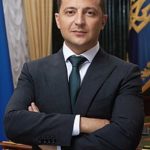
  • Volodymyr Zelenskyy – 2022 Speech at G20 Digital Transformation Panel

    Volodymyr Zelenskyy – 2022 Speech at G20 Digital Transformation Panel

    The speech made by Volodymyr Zelenskyy, the President of Ukraine, on 16 November 2022.

    Thank you very much, Mr. President Widodo.

    Dear colleagues!

    Yesterday at our summit, everyone talked about how to end the Russian war. The Russian representative even made some comments…

    And after that, almost 100 Russian missiles hit Ukraine. Burnt residential buildings. Destroyed power plants again. Hundreds of cities were left without electricity, water and heat. Internet traffic has fallen by two-thirds – imagine the scale.

    Unfortunately, there are human casualties. And not only in Ukraine! Russian missiles hit the territory of neighboring Poland yesterday. There should be a quick response.

    This missile attack is Russia’s real performance at G20. So when I say G19, I’m not wrong. Because Russia is a terrorist, and we protect ourselves from it. Such is the reality.

    And I urge you to look at today’s panel of our Digital Transformation Summit from a security perspective. This will be a timely view.

    Dear leaders, you now clearly see what modern war is. Today, it is impossible to imagine life without computer networks, high-speed communication, the Internet, and even more so – without electricity. But your enemies may try to deprive you of just that.

    My good advice to you is to take Ukrainian defense experience in order to guarantee the safety of your people.

    We have created an IT army that prevails in cyberspace. The best specialists and companies of the country have united to protect the state.

    We repelled more than 1,300 cyberattacks during the 8 months of the Russian war. In the first week of the invasion, Russia destroyed a key data center of our country, and the response solution is the “clouds” into which we moved part of the information systems.

    We have built the protection of public registers. We have preserved the digital resilience of banks. Thanks to digitization, we can quickly organize social payments to those affected by hostilities.

    Millions of Ukrainians use our Diia state service every day. These are more than 100 public services without contact with officials. A digital passport, opening accounts, paying fines and taxes, receiving state aid, raising funds to support the army… All this is Ukrainian “Diia”.

    If you or your allies and partners do not already have such a system and such digital protection, we will be happy to help you build them!

    Cyber defense is about cooperation. The stability of institutions is cooperation. Reliable communication, including satellite communication, is also about cooperation.

    What we all need is to put aside disputes and develop collective efforts for global peace. The G19 can be very successful in this!

    Ukraine is willing to help. Our security experience is your security experience.

    And please remember that everything must now be considered from the point of view of security.

    Thank you Mr. President Widodo for a very meaningful summit! Thank you all for your support!

    Let there be peace!

    Glory to Ukraine!

  • Peter Bottomley – 2022 Speech on Jeremy Hunt’s Financial Statement

    Peter Bottomley – 2022 Speech on Jeremy Hunt’s Financial Statement

    The speech made by Peter Bottomley, the Conservative MP for Worthing West and the Father of the House, in the House of Commons on 17 November 2022.

    Sir Peter Bottomley (Worthing West) (Con)

    The Chancellor will have noticed that Labour Members laughed when he talked about stability, growth and public services. Those who are watching our proceedings will have noticed, as will he, that when he was making his announcements about how we will ease the burden on the poorest and give opportunities to those who most need them, those Members were silenced. People around the country will give backing to his approach. We may have arguments about details, but the key point is to get stability and growth, and to defend public services.

    Jeremy Hunt

    I thank my hon. Friend the Father of the House. He is right. What I have discovered in the short time that I have been doing this job is that although one might arrive thinking that decisions about money are about numbers and spreadsheets, they are actually about values. Today, I have tried to express our values not just as a Conservative party but as a country. That means protecting the most vulnerable.

  • Alison Thewliss – 2022 Speech on Jeremy Hunt’s Financial Statement

    Alison Thewliss – 2022 Speech on Jeremy Hunt’s Financial Statement

    The speech made by Alison Thewliss, the SNP MP for Glasgow Central and Westminster spokesperson for the party on economic matters, in the House of Commons on 17 November 2022.

    The current Chancellor comes here today as the seventh Chancellor in seven years, and a mere 55 days after the last Chancellor came to this House to present his chaotic mini-Budget. His predecessor managed to crash the economy in 26 minutes; this Chancellor has spent the past 53 minutes trying to patch up those mistakes. The reality is that we will all be living with the disastrous consequences of Trussonomics for some time to come.

    The Chancellor has brought forward new targets because he is failing to meet the old ones. His difficult choices are of nothing compared with what many of our constituents face. The Tories spent the summer squabbling in a leadership contest when they should have been preparing for the difficult winter ahead. Now the UK is £30 billion worse off because of the incompetence of the Conservative party. Scotland is paying a heavy price indeed for being in this Union.

    The Tories are attempting to cut their way out of a recession. It will not work. Public sector workers deserve a proper pay rise to face the cost of living crisis that the Tories have created, and the Scottish Government do not have the same flexibility as this Chancellor to borrow or make changes in-year. Their existing budgets have already been squeezed and reprioritised and there is nothing left to cut.

    The Chancellor says Scotland will get £1.5 billion in Barnett consequentials, yet the Scottish Government’s budget is worth £1.7 billion less than when it was introduced last December. Scotland is being short-changed yet again. Will he listen carefully to what John Swinney has asked for and provide the funding Scotland deserves?

    The Chancellor is proposing fiscal tightening on a scale not seen since George Osborne—and we are still living with the real consequences of those poverty-inducing policies: the two-child limit, the rape clause, the brutal benefits sanctions. The Glasgow Centre for Population Health has been clear that the previous round of Tory austerity caused 330,000 excess deaths. More of the same from this Chancellor is a price society cannot afford.

    Restoring the triple lock and uprating benefits by inflation is not some victory to be celebrated. Barnardo’s has described it as a “minimum first step”. The rate of inflation announced by the Chancellor is not the actual rate of inflation now—nor, perhaps, will it be the rate of inflation by the time the measure comes into force. Again, the Government are not keeping step with the cost of living. Any compassionate Government with an ounce of humanity would not have to be dragged to make such a decision.

    The Chancellor talks about uprating the benefit cap—he should scrap the benefit cap. In Scotland, we have introduced the groundbreaking Scottish child payment and increased it to £25 per child per week, now up to the age of 16. There is no two-child limit in Scotland, because we value every child and want them all to have the best future. Will he commit to the same?

    The Chancellor mentioned nothing in his statement for those struggling on no recourse to public funds, and nothing either for asylum seekers trying to survive on just 40 quid a week. Will he increase that support or, better yet, allow them to work and to contribute, as so many want to do?

    Inflation is running at 11.1%, a 41-year high. For those in lower-income households, the Resolution Foundation says it runs at 12.5%, as more of their income goes on the essentials. The price of food is up 16.4% in a year, with basics such as bread, milk and pasta all increasing and squeezing household budgets. Combining that with the soaring cost of energy, households are finding it impossible to make ends meet.

    Cornwall Insight has estimated that the energy price cap next year may come in at an eye-watering £3,702. I appreciate what the Chancellor has said about energy support, but his energy support package must be wider and deeper. It must lift those who are stuck on prepayment meters and make sure they can turn the heating on. Will he listen to National Energy Action, which is calling for a targeted energy price guarantee, similar to a social tariff, set at £1,500 annually until October 2024?

    National Energy Action says that should be for all households on means-tested benefits and disability benefits, those in receipt of attendance allowance and carers allowance and those who are living on less than two thirds of the median household income, and it should be targeted to people living in areas of multiple deprivation. We all know that energy bills will not be reducing any time soon. The Chancellor must ensure that people get the help they need to stay safe and warm.

    Insulation schemes should have happened already. The UK Government cut back dramatically on schemes while the Scottish Government invested. More than 100,000 homes in Scotland have been made more energy efficient, while the UK Government have ignored the problem. Now they say, “Wait until 2025.” It is not even jam tomorrow; it is, “Huddle under a blanket for three years until we get to you.” It is absolutely ludicrous.

    Will the Chancellor consider not a rent cap, but a rent freeze to help renters, as the Scottish Government have done? For those struggling with their mortgages, will he do all he can to encourage banks to support their customers, and will he fix and expand the restrictive support for mortgage interest scheme, to make it more accessible to those who need it?

    There is little in this statement to give hope to businesses. Many that managed to survive the pandemic are now struggling to keep going. Increased labour and energy costs, supply chain difficulties and the crash in the pound have all made a difficult situation so much worse.

    I have raised many times in this place the impossibly high contracts that companies are having to sign for their energy bills right now, and the Chancellor was not at all clear how he expects them to keep going once the reprieve finishes in the spring. Companies cannot wait any longer for answers, because for too many it will be too much. We know insolvencies are already on the rise, and with companies going bust, rising unemployment will inevitably follow.

    We know that recession has a bigger impact on younger workers. When we look at the Chancellor’s statement, the minimum wage rates are still lagging behind for younger workers. They are being discriminated against on the basis of their age, and that continues to be unacceptable.

    There was also nothing in the Chancellor’s statement about carbon capture and storage in the north-east of Scotland. Why not? There was a 45% hike on electricity generators—more than on oil and gas—which will hammer Scotland’s renewables sector.

    I will give the Chancellor some opportunities to bring some cash into the UK Government’s coffers. The London School of Economics says that ending the non-dom status could bring in £3.2 billion of additional tax. Taxing dividends at the same rate as income from work would stand to raise more than £6 billion a year.

    For some time now, big companies have been engaging in significant share buybacks. Oil and gas, financial services and other companies are using share buybacks because their mega-profits are more than they know what to do with. Those profits are not being invested in new development; they are simply being creamed off. It is estimated that FTSE 100 firms are now due to return £55.5 billion to their shareholders via share buybacks this year.

    The Institute for Public Policy Research estimates that a one-off 25% windfall tax on share buybacks of FTSE-listed companies could raise £11 billion in a single year. Even if companies were discouraged from buying back shares under the scheme, it would lead to higher reinvestment in development rather than profits. Why would the Chancellor pass up such an economic opportunity?

    The Chancellor should also grow the tax base by increasing immigration and improving the lot of those who have already done us the significant honour of coming to live, work and study in our communities. We should thank them, not tell them they are not welcome. It is beyond time that the UK had a sensible, grown-up conversation about immigration. We on the SNP Benches are clear that immigration is an economic good. The OBR forecasts that higher net migration reduces pressures on Government debt over time. The Chancellor should consider that.

    Finally, I come to the policy that unites all the Unionist parties in this House: Brexit. The Tories, Labour, the Lib Dems—all Brexiteers now, fully committed to this futile project of deliberate self-destruction. Dr Swati Dhingra of the Bank of England’s Monetary Policy Committee told the Treasury Committee yesterday:

    “It’s undeniable now that we’re seeing a much bigger slowdown in trade in the UK”

    than in the rest of the world. Wages are lower, business investment is lower, and the UK is underperforming in both imports and exports. That political choice has brought us here today, to the Chancellor’s decisions, which will affect us all but will hit the least well off the very hardest.

    The economist Michael Saunders said this week:

    “If we hadn’t had Brexit, we probably wouldn’t be talking about an austerity budget”.

    Put that on the side of a bus.

    Scotland did not vote for this. We did not choose austerity and we did not choose Brexit. The OBR says that living standards are to fall by 7% over the next two years. It ought to be of no surprise to anybody that just shy of half of Scots think the UK will not exist in its current form in the next five years. This is a UK so weak that no one would wish to join it. Scotland cannot be forced to stay in broke, broken Brexit Britain.

  • IPSA – Statement on Taxpayer Funded Christmas Parties

    IPSA – Statement on Taxpayer Funded Christmas Parties

    The statement made by IPSA on 22 November 2022.

    We are aware of concerns regarding the rules for MPs’ festive and celebratory claims. Our rules have not changed. MPs employ, on average, five members of staff in their local constituencies to deal with casework from members of the public. These cases are often distressing for the constituent and staff member alike and working in that environment day in and day out is very challenging.

    As employers, it is entirely appropriate that MPs should, if they see fit, reward their staff with a modest gathering at Christmas. We are clear that alcohol is not included, that any event must represent value for money, is subject to publication for transparency and must not be party political in nature. It must be funded within existing budgets.

    To suggest that there is anything inappropriate in this is simply incorrect. We are disappointed with the interpretation of this normal employment practice at a time when MPs are receiving large amounts of abuse, particularly on social media.

  • Keir Starmer – 2022 Speech at the CBI Conference

    Keir Starmer – 2022 Speech at the CBI Conference

    The speech made by Keir Starmer, the Leader of the Opposition, at the CBI Conference in Birmingham on 22 November 2022.

    Thank you Brian, and thank you, conference.

    It’s a privilege to be here in Birmingham to address you at such a pivotal moment for our country.

    And here at the Vox, in the NEC, a place where so many greats of music and theatre have played.

    Bob Dylan, David Bowie, Justin Bieber – he’s coming here soon – and who could forget in 2019 the all-time favourite of the CBI – Peppa Pig. Yes, she played here too.

    But look – I’m here today to talk about Labour’s plan for Britain.

    How together, we can build a fairer, greener, more dynamic country.

    A nation where working people succeed, where aspiration is rewarded. A Britain with its confidence, its hope and its future – back.

    I come with a simple message: Labour is ready.

    Ready to give Britain the clear economic leadership it needs. Ready to work with you to drive our country forward.

    Not just a pro-business party but a party that is proud of being pro-business. That respects the contribution profit makes to jobs, growth and our tax base, that gets that working people want success as well as support, understands that backing private enterprise is the only way Britain pays its way in the world.

    Mark my words: this is a matter of conviction for me and I’ve united my party behind it.

    Anyone who came to our conference in the summer, anyone I’ve met since being leader, more than a hundred CEOs in the last six months alone, knows this already.

    This is a different Labour Party and there is no going back. We’re ready for partnership.

    And let’s be frank – because we need to be.

    Partnership is not a “nice to have”, it’s now an economic imperative.

    I don’t want to waste too much time today talking about the Government but the economic damage they’ve done to our country is immense.

    They’ve put our public finances in a perilous position, wasted the chance to transform our potential in an era of low interest rates, created an economy with weak foundations.

    This isn’t about global shocks – that’s just an excuse.

    Nobody criticises the Government for not anticipating the war in Ukraine or denies the war was the spark for the cost-of-living crisis.

    But the war didn’t ban onshore wind, the war didn’t scrap home insulation, and the war didn’t stall British nuclear energy.

    And when it comes to economic growth the verdict of the former chancellor is right – they’ve created a “vicious cycle of stagnation” and that’s why every crisis hits Britain harder than our competitors.

    The only country in the G7 still poorer than it was before the pandemic.

    Disposable income back to 2013 levels.

    The worst decade for growth in two centuries.

    That’s why we need a new partnership.

    Economic growth is the oxygen for our ambitions – the lifeblood of a strong society and a dynamic economy.

    But we have to confront the reality of our position.

    The lessons of the past twelve years can’t be ignored.

    I mean – just stop for a moment and think what working people have been through.

    How they were told “we’re all in it together” – then they paid for a mess made by banks.

    They cried out for economic change in a referendum, but saw their calls go unanswered.

    And they united to defeat a deadly virus, only to see the Government break the rules that they respected.

    And now – a winter like no other.

    The biggest hit to living standards in British history.

    Where millions, the length and breadth of our country, will go without food or heating.

    Once again asked to pay the price.

    Don’t get me wrong – I know people in this room are struggling too.

    Your borrowing rates – through the roof, energy costs – astronomical, more small businesses going under now than at any time since records began.

    And I know that every single one is a personal tragedy – an ambition, a dream, an investment in a better future – gone.

    No mistake – it’s tough and it will be tough for a while.

    But that’s why we need to answer the burning question – what will we do differently?

    How will we help restore the contract that says:

    “Work hard and Britain will give you a fair chance”.

    Because let me tell you that’s not how working people feel about our country right now – not this winter.

    So this has to be a turning point. Britain needs a new business model and that will be hard.

    Changing a business model is hard – you all know that.

    Nonetheless, it’s time for all of us – government, business, trade unions – to get behind the idea, both basic and radical, that our country can grow in a way that serves working people, that higher productivity can come from unlocking their potential, that we can work together to put their interests first.

    This has to be the common goal of our partnership.

    And it must set a new direction on growth, a new way of governing that at times will challenge our instincts.

    No more trickle-down experiments – that idea has been tested to destruction.

    But equally – if the South East races ahead, “redistribution” can’t be our one-word plan for the rest of Britain.

    You can still grow an economy that way – of course you can. But it’s not enough.

    Working people want growth from the grassroots – jobs that are well paid and secure, communities standing on their own feet, public services strong enough to help them succeed.

    So I promise you now, my Labour Government will care – must care – as much about raising productivity everywhere, as we have done in the past about redistribution.

    We’re going to throw everything at growing our collective contribution – our productive capacity – in every community.

    And that takes us inevitably to the supply-side of the economy.

    That’s why our first priority on tax has always been to scrap business rates.

    We will level the playing field for our high streets.

    And, with help from Lord Jim O’Neil, we’ll make Britain the best place in the world to start a new business.

    But we also need to look at the supply-side differently – it’s not just about tax and enterprise.

    Take the current state of our labour market.

    So much of this comes back to public services.

    Yes, there are other factors but you can’t tell me the number of older people falling out of work has nothing to do with the millions stuck on NHS waiting lists, or that the growing number of people suffering with mental health isn’t a drag on our productivity.

    No – the state of our public services is an economic crisis just as much as a social crisis.

    So we will launch the biggest training programme since the creation of the NHS – increase capacity with more doctors, more nurses, more health visitors, reform the employment service to get more people back to work, give everyone who needs it access to mental health treatment within four weeks, and build a modern childcare system that supports parents – especially women – to flourish.

    This is what the US Treasury Secretary Janet Yellen calls: “modern supply-side economics”.

    And that’s the philosophy that will drive us to do the hard yards on growth.

    But we’ll also need to be pragmatic on the basic lack of people.

    We won’t ignore the need for workers to come to this country. We can’t have a situation, as we did with HGV drivers, where temporary shortages threaten to cripple entire sectors of our economy. That would be anti-growth and anti-business.

    But I want to be clear here – with my Labour Government, any movement in our points-based migration system – whether via the skilled worker route, or the shortage occupations list – will come alongside new conditions for business.

    We will expect you to bring forward a clear plan to boost skills and more training, for better pay and conditions, for investment in new technology.

    We can talk about how this is done – dialogue is at the heart of partnership but negotiation with trade unions will be part of it.

    I said at the TUC conference: my Labour Party is unashamedly pro-business and I say here today – that trade unions must be a crucial part of our partnership.

    But our common goal must be to help the British economy off its immigration dependency to start investing more in training workers who are already here.

    Migration is part of our national story – always has been, always will be and the Labour Party will never diminish the contribution it makes to our economy, to public services, to your businesses and our communities.

    But let me tell you – the days when low pay and cheap labour are part of the British way on growth must end.

    This isn’t about Brexit.

    All around the world, business is waking up to the fact we live in a new era for labour.

    And while they’re adapting, our low-wage model is holding us back.

    It’s why we’ve set out a New Deal for Working People that will deliver higher pay, stronger rights and better work – not just for social justice, but also for the new reality on growth.

    Let me give you an example – technology.

    Britain has fewer industrial robots than almost every comparable countries.

    We’re behind Germany, France, Spain, Slovenia, Slovakia, Belgium – it’s a long list.

    And in terms of competition over the long run, one that borders on a disaster.

    Now, I know most businesses get this.

    I’ve seen for myself how you invest in your people and their productivity.

    At Vaillant in Derbyshire, I met the apprentices using their skills in conjunction with the new technologies of heat pumps.

    That technology will continue to adapt and those apprentices will be at the forefront of that change. Working today, training for the opportunities of the future.

    But when we look at the economy as a whole it can seem like we’re more comfortable hiring people to work in low paid, insecure, sometimes exploitative contracts, than we are investing in the new technology that delivers for workers, productivity and our country.

    And we can’t compete like that.

    Britain’s low pay model has to go.

    It doesn’t serve working people.

    It’s not compatible with grassroots growth.

    So let me tell you what is. The three big priorities for my Labour Government, the principles our partnership must deliver to drive Britain forward.

    They are:

    One – economic stability.

    Two – higher skills.

    Three – green growth.

    Let me take them one by one, starting with economic stability.

    Because, as you know, stability is the bedrock – everything else depends on it.

    If we’ve learnt nothing else these past 12 years, it’s that chaos has a cost.

    That’s why every policy my Labour Party announces will always be fully costed.

    We’re determined to reduce debt as a share of our economy – sound money in our public finances must come first.

    And we accept what this means – accept that we won’t be able to do things – good Labour things – as quickly as we might like.

    The lesson of the last few months is stark – lose control of the economy and its businesses and working people who pick up the bill.

    And I won’t let that happen again.

    But real economic stability has to be about much more than public finances.

    It has to be about providing the right conditions to plan and invest, to think about long-term strategy, not just short-term fixes, to create confidence through certainty.

    That’s the argument for partnership – it’s why we’re so committed to a modern industrial strategy.

    It’s not about the size of the state – it’s about what the state does, how it supports businesses to innovate and grow.

    Brings in the creative brilliance of our scientists and universities.

    Applies them to creating the industries of the future and uses whatever tool the job requires.

    Procurement, R&D investment, patient finance, a strategic plan for infrastructure and supply chains, led by an institution – a new Industrial Strategy Council – that sits outside the political cycle.

    I know this isn’t the sort of stuff that sets Westminster pulses racing – not a bit of it.

    But I tell you this – in every one of our competitors, it’s the bread and butter of responsible economic management.

    Yesterday, I went on the gov.uk website in search of the Government’s Industrial Strategy. This is what I found:

    “The aim of the Industrial Strategy was to boost productivity by backing businesses to create good jobs”.

    “Was”!

    And scratched across the top is one word: ‘ARCHIVED’

    Doesn’t that just tell you everything? This Government has archived Britain’s growth.

    That’s why situations like British Volt keep happening.

    Why the CEO of Johnson Matthey says we’re falling behind in the race for clean Hydrogen.

    Why electric car manufacturers are leaving Britain in droves.

    Our aversion to proper, long-term industrial strategy is costing us billions already but even worse – it’s costing us the foundations of a more prosperous future.

    And conference – so will the status quo on skills.

    Any serious plan for growth must accept the need to transform how our country trains people for work.

    That’s why we’re committed to changing the way government supports businesses to get the skills that you need.

    At this conference last year, I announced that Lord Blunkett would lead our Council of Skills Advisors.

    And this year, I’m pleased to announce that he’s delivered that report and we are going to deliver on skills.

    The Apprenticeship Levy is not flexible enough.

    Don’t get me wrong – apprenticeships are a gold standard qualification.

    Their record in tackling the cultural snobbery associated with vocational learning is second to none.

    But alongside them, we also need to fund the training that works for you.

    The need for technology short courses that train coders in weeks, that help younger workers get promoted, the training that supports older workers to flourish, or re-train as something new.

    And let me tell you from personal experience – there’s nothing wrong with changing career in your fifties.

    But the bottom line is this.

    You need more control over what training your levy can buy, with Labour that’s exactly what you’ll get.

    And we’ll devolve the power and money on adult skills budgets as well.

    Decisions that drive growth in communities should be made by people with skin in the game.

    I profoundly believe that the people and businesses of Birmingham, know what training the economy of Birmingham needs.

    And the same is true in Wolverhampton and Wrexham, Peterborough and Portsmouth.

    The next Labour government will spread economic power to the grassroots.

    And our central industrial mission – clean power by 2030 – will help us do it.

    Climate change is the defining social challenge of our times – there’s no question about that.

    I’m sure it scores highly on the risk register of every company in this room.

    But if you only take one thing from today, let it be this.

    I don’t see climate change as a risk, I see it as an opportunity.

    The biggest chance we’ve had in a generation to make our economy work for working people.

    That’s what our Green Prosperity Plan is all about.

    A plan to make Britain a green growth superpower – to invest in wind, solar, nuclear, hydrogen, green steel and carbon capture; new opportunities for plumbers, electricians, engineers, software designers, technicians, builders; insulation for 19 million homes; and Great British Energy – a new national champion that will take advantage of the opportunities in clean British power and turn them into good, secure, well-paid British jobs.

    You can never say it enough – Clean British power is cheaper than imported fossil fuels. Nine times cheaper.

    If we have more of it, businesses and working people get cheaper bills, the country enjoys independence from tyrants like Putin and we give every community a shot at the green jobs of the future.

    Clean hydrogen in South Yorkshire, Merseyside, the East of England, offshore wind in Scotland, Teesside, East and North Yorkshire, solar power growing rural communities in the South East, South West and – yes – here in the Midlands.

    It won’t be easy – we know that.

    On planning, on Ofgem’s remit, on getting ahead of demand issues with the grid, we not only see the battles ahead. We’ll run towards them.

    Because nothing reeks of decline more than the idea Britain no longer knows how to build things – I won’t accept that.

    And with real partnership, we’ll win.

    The same is true on finance.

    Big ambitions require public investment and we will provide it.

    But we know that the real game-changer is private investment.

    And that this is a perennial challenge for British productivity.

    That’s why we’ll also set up a National Sovereign Wealth Fund, and use it to manage risk on the critical investments we need to become a green growth superpower.

    But also – to create spill-over opportunities for businesses and supply chains right across the country in manufacturing and services.

    That is what industrial strategy and partnership must deliver – in a nutshell.

    A new way of managing our economy, a fresh start for Britain and it’s a divide with the Government.

    Last week, you saw the sum total of their offer on growth.

    Stagnation dressed up in the clothes of stability, decline paraded as tough decisions.

    ‘Tough decisions’ would be challenging their party on planning, on onshore wind, on industrial strategy, but they don’t have it in them.

    Don’t understand that to be a careful steward of the economy in a volatile world, you need to be proactive.

    Need to intervene to secure stability and growth.

    I’ll put it simply: every business in this room has a strategy for growth, a nation needs one too.

    Because the headwinds we face – climate change, artificial intelligence, caring for an ageing society, mean that a hands-off approach just isn’t fit for purpose anymore.

    And I’m not going to give up on growth that easily.

    I believe in our country, I believe in our businesses and I believe in our people.

    Britain deserves better.

    A new partnership for prosperity.

    The path to a greener, fairer, more dynamic country.

    To higher wages, higher skills, higher productivity.

    To leading the world on the greatest challenge facing our planet.

    To giving working people a sense of hope, aspiration and possibility once again.
  • Ian Blackford – 2022 Speech on the G20 Summit in Indonesia

    Ian Blackford – 2022 Speech on the G20 Summit in Indonesia

    The speech made by Ian Blackford, the SNP Leader at Westminster, in the House of Commons on 17 November 2022.

    I thank the Prime Minister for advance sight of his statement.

    With the Russian military continuing to fire deadly missiles at civilians right across Ukraine, I sincerely hope that Putin’s Foreign Minister was made to feel the justified anger and disgust by those attending the G20. With that in mind, may I ask the Prime Minister what progress has been made at the summits to further isolate Putin’s regime on the international stage? The whole world must stand together on Russian sanctions, and we must make sure that those responsible for crimes against humanity face justice. What progress has been made to ensure that there is no weakening in the international resolve to stand with Ukraine until it secures victory for its people?

    Let me turn to the G20 discussions on the economy. The Prime Minister and the Chancellor keep referring to the global factors to blame for the financial crisis facing families across these islands—it is the excuse they are using to impose austerity 2.0 in today’s financial statement—but if this is really all to do with global factors, will the Prime Minister explain why the UK is the only G7 economy that is smaller today than it was before the pandemic? Why is the UK the only G7 country enacting austerity 2.0? The reality is that this is a political choice.

    Finally, on the proposed Indo-Pacific trade deal—the latest Brexit fire sale that threatens to sell out our farmers and crofters—the evidence continues to mount that the Brexit effect is reducing our economy by 4%, a factor that is driving Tory austerity. This week, we heard from the former Secretary of State for Environment, Food and Rural Affairs, the right hon. Member for Camborne and Redruth (George Eustice), who retrospectively ripped apart the trade deal with Australia and the damaging impact that it will have on our agrifood sector. I remind Government Members that that deal was endorsed by every single Conservative MP. Can the Prime Minister explain to Scotland’s food and farming industries why he is so committed to pursuing yet another Brexit deal that will deliver a hammer blow to their businesses?

    The Prime Minister

    I welcome the right hon. Gentleman’s comments about Russia and Ukraine, and I thank him for them. He should be reassured that in Putin’s absence the Russian Foreign Minister felt the full assault, from allies including the United Kingdom, of the absolute outrage that the international community feels about what is happening. That will continue when Russia attends these fora.

    The Government are an absolute champion of British farming and farmers. That will remain the case. We will continue to find opportunities to put great British produce on the tables of many more families around the world.

    I will just briefly address the right hon. Gentleman’s comments about the economy. He had a few different stats, but it is worth bearing in mind that we have just come from a G20 summit at which two thirds of the G20 members sitting around the table are experiencing inflation rates north of 7%. The International Monetary Fund predicts that a third of the world’s economy is already or will shortly be in recession.

    If the right hon. Gentleman takes the time to read the G20 communiqué, he will see that actually the global picture is very clear: countries around the world are grappling with high energy prices, high food prices and rising interest rates. Indeed, many countries around the world, like us, have committed, as does the international community, to ensuring fiscal sustainability as a path to improving those matters. That is absolutely the challenge that we confront, and it is absolutely the challenge that the Chancellor will meet head on. We will make those decisions with fairness and with compassion.

  • Keir Starmer – 2022 Speech on the G20 Summit in Indonesia

    Keir Starmer – 2022 Speech on the G20 Summit in Indonesia

    The speech made by Sir Keir Starmer, the Leader of the Opposition, in the House of Commons on 17 November 2022.

    I thank the Prime Minister for an advance copy of his statement.

    What should have been a summit focused on global economic recovery and delivering clear commitments on climate change was sadly overshadowed by the unjustifiable actions of Russia and its illegal war in Ukraine. Civilian infrastructure was targeted across Ukraine and a war of aggression rumbled on as world leaders tried to reach agreement.

    Whatever the outcome of the investigation into the missile incident in Poland, it is a stark reminder of the danger that Russia’s unjustifiable war has brought to the border of our NATO allies. We must remain vigilant and united in our opposition to this pointless and brutal conflict. As I have said many times from this Dispatch Box and to the Prime Minister personally, whatever other differences we may have across the House—and there are many—when it comes to the defence of Ukraine, we stand as one.

    On behalf of Members across the House, I send our condolences to those killed in Poland. Poland’s measured reaction to the incident and the calm heads that have prevailed over the past two days are welcome. I listened carefully to what the Prime Minister said about that and I agree with him that no country can be blamed for defending itself. We need to get to the bottom of this. Obviously, the investigation is ongoing, but when does the Prime Minister expect those investigations to be finalised?

    Russia is losing this war, so I welcome the G20’s communiqué, which set out:

    “Most members strongly condemned the war in Ukraine”.

    Has further support for Ukraine been discussed among western allies? What efforts are taking place to open a diplomatic road map to rid Ukraine of Russian troops and bring an end to the conflict?

    It is crucial that we work to find international unity to further isolate Putin. That will include working with China. We do not underestimate the challenges that China poses to global security and we must defend the human rights of the Uyghur and democracy in Hong Kong, but our approach must be measured, and it is in our interest to work with China on the climate crisis, trade and, most importantly, isolating Putin. I was glad to see constructive dialogue on those issues between President Biden and President Xi. Does the Prime Minister believe that the summit marks a change in west and China relations, and are his Government now taking a different approach from his predecessor to British-China relations?

    After a decade of low growth in this country, it is crucial that we open new trade opportunities. The Prime Minister said that he had met Prime Minister Modi, when a future UK-India trade deal was discussed. That deal has previously been put in doubt by his Home Secretary, who indicated that she would not support it. Labour does support a trade deal with India, which we believe can bring new opportunities to promote and create new jobs here in Britain. Will the Prime Minister tell us when he now expects the deal to be completed, and whether measures on visas will be included in the overall deal? If so, can he guarantee that his whole Cabinet will actually support it? Will he also tell us whether in his meeting with President Biden, the UK-US trade deal was discussed—or can we assume that this deal now has no prospect of being delivered any time soon?

    Lastly, may I ask the Prime Minister whether the Northern Ireland protocol was raised by either US or EU colleagues? Failure to make progress is hurting British research, development and trade, all at a time when we need to remove barriers for British business. Fixing this issue could lead to a better relationship with our biggest trading partners, an opportunity for our scientists and exporters, and an end to the past two years of unnecessary fights and division; so when is the Prime Minister going to deliver?

    Our international alliances have never been so crucial, for global stability and our own stability. We on the Opposition side of the House know that standing up to Russia’s aggression will require further sacrifices, but we must make those sacrifices because taking no action is not an option. The message from all of us must be clear: Ukraine will win and Putin will lose. Democracy and liberty will defeat imperialism again.

    The Prime Minister

    Let me start by thanking the right hon. and learned Gentleman for his words about the situation in Ukraine and Russia, and for his condemnation of the Russian aggression and steadfast support for the position of the Government and, indeed, the whole House on Ukraine.

    The right hon. and learned Gentleman was right to ask about the further support that we will be providing. He will know that we have provided £1.5 billion in economic and humanitarian support for Ukraine, alongside, obviously, the military assistance. We are hosting a reconstruction conference in the UK next year, and there is an ongoing dialogue about what further support the Ukrainian Government need from us and others. In the short term, we are in the process of providing 25,000 pieces of winter equipment for the brave Ukrainian soldiers, but also funds to help restore some of the damage done to Ukraine’s energy infrastructure, which I know have been warmly welcomed by President Zelensky.

    Let me briefly turn to some of the right hon. and learned Gentleman’s other questions. On China, I very much supported President Biden in his meeting with President Xi. President Biden and I discussed that meeting at length. I believe that our approach is entirely aligned with that of the United States, and indeed our other allies such as Canada and Australia. Of course China poses significant challenges to our values, our interests and indeed our economic security. It is right that we take the necessary steps to defend ourselves against those challenges, but it is also right to engage in dialogue when that can make a difference in solving some of the pressing global challenges that we all collectively face.

    The right hon. and learned Gentleman asked about Northern Ireland. I have discussed this issue with my European counterparts and, indeed, with the President at various meetings, not just at the G20. I remain committed to finding a solution to the challenges posed by the protocol. It is clearly having an impact on families and businesses on the ground in Northern Ireland. The people of Northern Ireland deserve to have a functioning Executive, particularly at a time like this, and that is something that I will devote my energies to bringing about. So far I have had very constructive relationships and discussions about this issue with both the President and our European counterparts, including the Taoiseach last week.

    On trade, the broad, overarching comment I would make to the right hon. and learned Gentleman is that when it comes to trade deals, whoever they may be with, what I will not do is sacrifice quality for speed. I think it is important that we take the time to get trade deals right. Of course this Government believe wholeheartedly in the power and the benefits of free trade, which is something that we will champion around the world.

    I discussed the free trade agreement with India, and both the Prime Minister of India and I committed our teams to working as quickly as possible to see if we can bring a successful conclusion to the negotiations.

    The priorities of the US are in a lot of different areas, but with regard to trade—the President and I discussed this—we are deepening our economic relationship. The United States is already our single largest trading partner. We are doing more with individual states to broaden our trade relationships, and we have seen recent action on tariffs with regard to steel, aluminium and agricultural exports. All of that is good for the UK economy.

    Of course, we are in the process of some exciting conversations about joining the comprehensive and progressive agreement for trans-Pacific partnership. That is real evidence of our country’s commitment to the Indo-Pacific region, and is supported by the Prime Ministers of Canada, Australia and Japan. I hope that we can bring those negotiations to a conclusion in the near future.

    Lastly, my reflections on the summit and on attending COP are that the United Kingdom is at its best when we are an engaged and active member of the global community —when we are standing up for our values, defending our interests, spreading prosperity, and alleviating poverty and suffering. I am pleased to have had conversations with so many leaders over the past couple of days that confirmed to me that they very much welcome the UK’s support in achieving all those objectives, and that is what this Government will set about doing.

  • Rishi Sunak – 2022 Statement on the G20 Summit in Indonesia

    Rishi Sunak – 2022 Statement on the G20 Summit in Indonesia

    The statement made by Rishi Sunak, the Prime Minister, in the House of Commons on 17 November 2022.

    With permission Mr Speaker, I would like to make a brief statement on the G20 summit in Indonesia, but first I want to address Russia’s missile attacks on Ukraine this week.

    On the very day that I and others confronted the Russian Foreign Minister across the G20 summit table with the brutality of his country’s actions, and on the very day that President Zelensky addressed the G20 with a plan to stop the war, Russia launched over 80 separate missile strikes on Ukraine. The targets were innocent people and civilian infrastructure; the aim, to cast the population into darkness and cold. Once again, Russia has shown its barbarity and given the lie to any claim that it is interested in peace.

    During the bombardment of Ukraine on Tuesday, an explosion took place in eastern Poland. The investigation into this incident is ongoing and it has our full support. As we have heard the Polish and American Presidents say, it is possible that the explosion was caused by a Ukrainian munition which was deployed in self-defence. Whether or not this proves to be the case, no blame can be placed on a country trying to defend itself against such a barrage. [Hon. Members: “Hear, hear.”] The blame belongs solely to Russia.

    I spoke to President Duda yesterday to express my sympathy and pledge our solidarity. I also spoke to President Zelensky on a joint call with Prime Minister Trudeau to express our continued support, and I met my G7 and NATO counterparts at the sidelines of the G20. We will help our Polish allies to conclude their investigation and we will continue to stand with Ukraine in the face of Russia’s criminal aggression.

    The Bali summit took place amidst the worst economic crisis since 2008. The G20 was created to grip challenges like this, but today’s crisis is different, because it is being driven by a G20 member. By turning off the gas taps and choking off the Ukrainian grain supply, Russia has severely disrupted global food and energy markets. The economic shockwaves will ripple around the world for years to come. So, together with the other responsible members of the G20, we are delivering a decisive response.

    Almost all G20 members joined me in calling out Russia’s actions, declaring that

    “today’s era must not be one of war.”

    We will work together to uphold international law and the United Nations charter, and we will act to protect our collective economic security. The G20 agreed to use all available tools to support the global economy and ensure financial stability. That means international financial institutions mobilising more resources to support developing countries, it means continuing to call out those who exploit their lending power to create debt traps for emerging economies, and it means tackling the causes of rising inflation head on, including by delivering fiscal sustainability.

    We pledged our support for the UN-brokered deal to keep grain shipments moving in the Black sea. I am pleased to say that that deal has now been renewed. Two thirds of Ukraine’s wheat goes to developing countries. With famine looming, it is desperately needed and Russia must uphold its part of the deal.

    We agreed action to improve energy security by accelerating the transition to clean energy. We launched a new just energy transition partnership with Indonesia, which will unlock billions in private finance for new green energy infrastructure. Finally, we committed to maintain free markets and free trade and to reform the World Trade Organisation.

    Yesterday, I held my first meeting with President Biden. We pledged to redouble our support for Ukraine and to continue deepening our co-operation, including on energy security and managing the challenges posed by China. I met Prime Minister Modi, when we reviewed progress on our forthcoming free trade agreement. I discussed our accession to the comprehensive and progressive agreement for trans-Pacific partnership with the Prime Ministers of Japan, Canada and Australia, and I met almost every other leader at the summit, with the exception of Russia.

    In each of those discussions, there was a shared determination to restore stability, deliver long-term growth and drive a better future—one where no single country has the power to hold us back. In just a few moments, my right hon. Friend the Chancellor will build on those international foundations when he sets out the autumn statement, putting our economy back on to a positive trajectory and restoring our fiscal sustainability.

    By being strong abroad, we strengthen our resilience at home. We will continue to support Ukraine, we will continue to stand up for the rule of law and the fundamental principles of sovereignty and self-determination, and we will build a global economy that is more secure, more stable and more resilient, because that is what the gravity of the moment demands and that is how we will ensure that our country emerges from this crisis stronger than it was before. I commend this statement to the House.

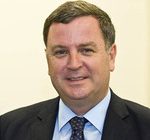
  • Mel Stride – 2022 Statement on State Pension and Benefits Rates

    Mel Stride – 2022 Statement on State Pension and Benefits Rates

    The statement made by Mel Stride, the Secretary of State for Work and Pensions, in the House of Commons on 17 November 2022.

    The Social Security Administration Act 1992 places an annual statutory duty on the Secretary of State to review the rates of state pensions and benefits after consideration of trends in price and earnings growth in the preceding year. I have now concluded this review for the tax year 2023-24.

    I have decided that state pension and benefit rates should increase in line with the consumer prices index (CPI) for the year to September 2022. This means that they will increase by 10.1% from 10 April 2023.

    I will deposit the full list of the new rates in the Libraries of both Houses in due course, but I am pleased to announce here the increases to some of the largest benefits. The full rate of the new state pension will increase from £185.15 to £203.85 a week. The basic state pension will increase from £141.85 to £156.20 a week. The standard minimum guarantee for a couple in pension credit will increase from £278.70 to £306.85 a week. The enhanced rate of the daily living component of personal independence payment will increase from £92.40 to £101.75 a week. The universal credit standard allowance for a couple where one or both are over 25 will increase from £525.72 to £578.82 a month; the limited capability for work and work-related activity amount will increase from £354.28 to £390.06 a month; and the child element for those born on or after 6 April 2017 will increase from £244.58 to £269.58 a month.

    This decision will increase expenditure on state pensions and pensioner benefits by £13 billion in 2023-24 compared to no change in these rates for the same period. It will meet the Government’s manifesto commitment to apply the triple lock to the new and basic state pensions. It will also extend CPI protection to those who rely on the standard minimum guarantee in pension credit at a cost of £700 million above the statutory minimum requirement.

    The decision will also increase expenditure on reserved non-pensioner benefits by £9 billion in 2023-24 compared to no change in these rates for the same period. This includes benefits for those with additional disability or care needs and increases to universal credit which provides essential support to people on the lowest incomes while they seek work, seek progression in work, or are unable to work.

    In view of the exceptional situation that currently pertains with respect to fuel costs, I have also decided to freeze the standard fuel cost deductions in housing benefit, rather than increase them in line with the normal convention of the fuel element of CPI.

    I can also confirm that the local housing allowance rates for 2023-24 will be maintained in cash terms at the elevated rates agreed for 2020-21.

    I have also completed my periodic statutory review of the levels of the benefit cap which, since 24 March 2022 and under Section 96A of the Welfare Reform Act 2012, I am obliged to undertake at least once every five years. I have concluded that each of the four benefit cap levels should be increased in line with CPI for the year to September 2022. This means that they will increase by 10.1% from April 2023. The annual benefit cap levels will therefore increase as follows:

    to £25,323 for couples and lone parents in London and £22,020 for the rest of Great Britain

    to £16,967 for single people without children in London and £14,753 for the rest of Great Britain.

    Social security is a transferred matter in Northern Ireland.

  • Chloe Smith – 2022 Statement on Standing Down at Next General Election

    Chloe Smith – 2022 Statement on Standing Down at Next General Election

    The statement made by Chloe Smith, the Conservative MP for Norwich North, on 22 November 2022.

    I have been honoured to be Norwich North’s MP. It’s a fantastic job for a fantastic place, and it’s a particular privilege to be able to represent Norwich and Norfolk where I come from.

    I am grateful to the thousands of Norwich citizens who placed their trust in me so many times. I would also like to thank my team of volunteers who work so hard alongside me to help the community, and who have been so supportive, including during tough personal times.

    I hope I’ve been able to make a difference, locally and nationally. In 2024, after 15 years of service, it will be the right time to step back, for me and my young family.