Tag: Speeches

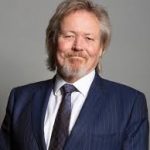
  • Jeremy Hunt – 2022 Financial Statement in the House of Commons

    Jeremy Hunt – 2022 Financial Statement in the House of Commons

    The financial statement made by Jeremy Hunt, the Chancellor of the Exchequer, in the House of Commons on 16 November 2022.

    Introduction

    Mr Speaker,

    In the face of unprecedented global headwinds, families, pensioners, businesses, teachers, nurses and many others are worried about the future.

    So today we deliver a plan to tackle the cost-of-living crisis and rebuild our economy.

    Our priorities are stability, growth, and public services.

    We also protect the vulnerable because to be British is to be compassionate and this is a compassionate government.

    We are not alone facing these problems but today our plan reflects British values as we respond to an international crisis.

    We are honest about the challenges and fair in our solutions.

    Yes, we take difficult decisions to tackle inflation and keep mortgage rises down.

    But our plan also leads to a shallower downturn; lower energy bills; higher long-term growth; and a stronger NHS and education system.

    Stability

    Three priorities then today: stability, growth and public services.

    I start with stability.

    High inflation is the enemy of stability.

    It means higher mortgage rates, more expensive food and fuel bills, businesses failing and unemployment rising.

    It erodes savings, causes industrial unrest, and cuts funding for public services.

    It hurts the poorest the most and eats away at the trust upon which a strong society is built.

    The Office for Budget Responsibility confirms global factors are the primary cause of current inflation.

    Most countries are still dealing with the fallout from a once-in-a-century pandemic.

    The furlough scheme, the vaccine rollout, and the response of the NHS did our country proud – but they all have to be paid for.

    The lasting impact on supply chains has made goods more expensive and fueled inflation.

    This has been worsened by a Made in Russia energy crisis.

    Putin’s war in Ukraine has caused wholesale gas and electricity prices to rise to eight times their historic average.

    Inflation is high here – but higher in Germany, the Netherlands, and Italy.

    Interest rates have risen here – but faster in the US, Canada and New Zealand.

    Growth forecasts have fallen here – but fallen further in Germany.

    The International Monetary Fund expect one third of the world’s economy will be in recession this year or next.

    So the Bank of England, which has done an outstanding job since its independence, now has my wholehearted support in its mission to defeat inflation and I today confirm we will not change its remit.

    But we need fiscal and monetary policy to work together – and that means the government and the Bank working in lockstep.

    It means, in particular, giving the world confidence in our ability to pay our debts.

    British families make sacrifices every day to live within their means and so too must their government because the United Kingdom will always pay its way.

    I understand the motivation of my predecessor’s mini-budget and he was correct to identify growth as a priority.

    But unfunded tax cuts are as risky as unfunded spending which is why we reversed the planned measures quickly.

    As a result, government borrowing has fallen.

    The pound has strengthened.

    And the OBR says today that the lower interest rates generated by the government’s actions are already benefitting our economy and sound public finances.

    But credibility cannot be taken for granted and yesterday’s inflation figures show we must continue a relentless fight to bring it down, including a rock solid commitment to rebuild the public finances.

    Richard Hughes and his team at the OBR today lay out starkly the impact of global headwinds on the UK economy and I am enormously grateful to him and his team for their thorough work.

    The OBR forecast the UK’s inflation rate to be 9.1% this year and 7.4% next year.

    They confirm that our actions today help inflation to fall sharply from the middle of next year.

    They also judge that the UK, like other countries, is now in recession.

    Overall this year, the economy is still forecast to grow by 4.2%.

    GDP then falls in 2023 by 1.4%, before rising by 1.3%, 2.6%, and 2.7% in the following three years.

    The OBR says higher energy prices explain the majority of the downward revision in cumulative growth since March.

    They also expect a rise in unemployment from 3.6% today to 4.9% in 2024 before falling to 4.1%.

    Today’s decisions mean that over the next five years, borrowing is more than halved.

    This year, we are forecast to borrow 7.1% of GDP or £177 billion; next year, 5.5% of GDP or £140 billion; then by 2027-28, it falls to 2.4% of GDP or £69 billion.

    As a result, underlying debt as a percentage of GDP starts to fall from a peak of 97.6% of GDP in 2025-26 to 97.3% in 2027-28.

    I also confirm two new fiscal rules: the first is that underlying debt must fall as a percentage of GDP by the fifth year of a rolling five-year period.

    The second, that public sector borrowing, over the same period, must be below 3% of GDP.

    The plan I’m announcing today meets both rules.

    Today’s statement delivers a consolidation of £55 billion and means inflation and interest rates end up significantly lower.

    We achieve this in a balanced way.

    In the short term, as growth slows and unemployment rises, we will use fiscal policy to support the economy.

    The OBR confirm that because of our plans, the recession is shallower, and inflation is reduced. Unemployment is also lower with about 70,000 jobs protected as a result of our decisions today.

    Then, once growth returns, we increase the pace of consolidation to get debt falling.

    This further reduces the pressure on the Bank to raise interest rates because as Conservatives we do not leave our debts to the next generation.

    So, Mr Speaker, this is a balanced path to stability: tackling the inflation to reduce the cost of living and protect pensioner savings whilst supporting the economy on a path to sustainable growth.

    But it means taking difficult decisions.

    Anyone who says there are easy answers is not being straight with the British people: some argue for spending cuts, but that would not be compatible with high quality public services.

    Others say savings should be found by increasing taxes but Conservatives know that high tax economies damage enterprise and erode freedom.

    We want low taxes and sound money. But sound money has to come first because inflation eats away at the pound in people’s pockets even more insidiously than taxes.

    So, with just under half of the £55 billion consolidation coming from tax, and just over half from spending, this is a balanced plan for stability.

    Tax

    I turn first to our decisions on tax. I have tried to be fair by following two broad principles: firstly, we ask those with more to contribute more; and secondly, we avoid the tax rises that most damage growth.

    Although my decisions today do lead to a substantial tax increase, we have not raised headline rates of taxation, and tax as a percentage of GDP will increase by just 1% over the next five years.

    I start with personal taxes.

    Asking more from those who have more means that the first difficult decision I take on tax is to reduce the threshold at which the 45p rate becomes payable from £150,000 to £125,140.

    Those earning £150,000 or more will pay just over £1200 more in tax every year.

    We are also taking difficult decisions on tax-free allowances.

    I am maintaining at current levels the income tax personal allowance, higher rate threshold, main national insurance thresholds and the inheritance tax thresholds for a further two years taking us to April 2028.

    Even after that, we will still have the most generous set of tax-free allowances of any G7 country.

    I am also reforming allowances on unearned income.

    The dividend allowance will be cut from £2,000 to £1,000 next year and then to £500 from April 2024.

    The Annual Exempt Amount for capital gains tax will be cut from £12,300 to £6,000 next year and then to £3,000 from April 2024.

    These changes still leave us with more generous allowances overall than countries like Germany, Ireland, France, and Canada.

    And, because the OBR forecasts half of all new vehicles will be electric by 2025…

    …to make our motoring tax system fairer I have decided that from April 2025 electric vehicles will no longer be exempt from Vehicle Excise Duty.

    Company car tax rates will remain lower for electric vehicles and I have listened to industry bodies and will limit rate increases to 1ppt a year for three years from 2025.

    The OBR expects housing activity to slow over the next two years, so the stamp duty cuts announced in the mini-budget will remain in place but only until 31st March 2025.

    After that, I will sunset the measure, creating an incentive to support the housing market…

    …and all the jobs associated with it…

    …by boosting transactions during the period the economy most needs it.

    I now turn to business taxes.

    While I have decided to freeze the Employers NICs threshold until April 2028, we will retain the Employment Allowance at its new, higher level of £5,000. 40% of all businesses will still pay no NICs at all.

    The VAT registration threshold is already more than twice as high as the EU and OECD averages. I will maintain it at that level until March 2026.

    My RHF the PM successfully negotiated a landmark international tax deal to make sure multinational corporations – including big tech companies – pay the right tax in the countries where they operate.

    I will implement these reforms, making sure the UK gets our fair share.

    Alongside further measures to tackle tax avoidance and evasion, this will raise an additional £2.8 billion by 2027-28.

    I have also heard concerning reports of abuse and fraud in R&D tax relief for SMEs.

    So I have decided today to cut the deduction rate for the SME scheme to 86% and the credit rate to 10% but increase the rate of the separate R&D expenditure credit from 13% to 20%.

    Despite raising revenue, the OBR have confirmed that these measures have no detrimental impact on the level of R&D investment in the economy.

    Ahead of the next Budget, we will work with industry to understand what further support R&D intensive SMEs may require.

    Next, windfall taxes. I have no objection to windfall taxes if they are genuinely about windfall profits caused by unexpected increases in energy prices.

    But any such tax should be temporary, not deter investment and recognise the cyclical nature of energy businesses.

    Taking account of this, I have decided that from January 1st until March 2028 we will increase the Energy Profits Levy from 25% to 35%.

    The structure of our energy market also creates windfall profits for low-carbon electricity generation so, from January 1st, we have also decided to introduce a new, temporary 45% levy on electricity generators.

    Together these taxes raise £14 billion next year.

    Finally, I turn to business rates.

    It is an important principle that bills should accurately reflect market values so we will proceed with the revaluation of business properties from April 2023.

    But I will soften the blow on businesses with a nearly £14 billion tax cut over the next five years. Nearly two thirds of properties will not pay a penny more next year and thousands of pubs, restaurants and small high street shops will benefit.

    This will include a new government funded Transitional Relief scheme as called for by the CBI, the British Retail Consortium, the Federation of Small Businesses, and others, benefitting around 700,000 businesses.

    Our plan for the cost of living delivers lower inflation, lower mortgage rates, a shallower downturn, and lower unemployment.

    But it also involves public spending discipline, so I turn next to how we protect public services through a challenging period.

    Public Spending

    The Prime Minister’s vision for this country has at its heart a strong NHS and world-class education.

    We know that a strong economy depends on strong public services so will protect them as much as we can as we deliver our plan for stability and growth.

    We have to take difficult decisions on the public finances.

    So we are going to grow public spending – but we’re going to grow it more slowly than the growth of the economy.

    For the remaining two years of this Spending Review, we will protect the increases in departmental budgets we have already set out in cash terms.

    And we will then grow resource spending at 1% a year in real terms, in the three years that follow.

    Although departments will have to make efficiencies to deal with inflationary pressures in the next two years, this decision means overall spending in public services will continue to rise, in real terms, for the next five years.

    Before I turn to our plans for schools and the NHS, I start with two other areas of spending.

    DWP

    The Department for Work and Pensions has a critical role in supporting people into work.

    I am proud to live in a country with one of the most comprehensive safety nets anywhere in the world…

    …but also concerned that we have seen a sharp increase in economically inactive working age adults of 630,000 since the start of the pandemic.

    Employment levels have yet to return to pre-pandemic levels which is bad for businesses who cannot fill vacancies and bad for people missing out on the opportunity to do well for themselves and their families.

    So the PM has asked the Work and Pensions Secretary to thoroughly review issues holding back workforce participation due to conclude early in the new year.

    Alongside this, I am also committed to helping people already in-work to raise their incomes, progress in work, and become financially independent.

    That is why we will ask over 600,000 more people on Universal Credit to meet with a work coach so that they can get the support they need to increase their hours or earnings.

    I have also decided to move back the managed transition of people from Employment and Support Allowance onto Universal Credit to 2028…

    …and will invest an extra £280m in DWP to crack down on benefit fraud and error over the next two years.

    The Government’s review of the state pension age will be published in early 2023.

    Defence and international commitments

    Our security at home depends on our security overseas, so I turn next to defence and other international commitments.

    The privilege of being this country’s Foreign Secretary showed me first hand the enormous respect in which this country is held because the United Kingdom is and has always been a force for good in the world.

    Nothing sums that up more than the courage of our armed forces, men and women who risk their lives every day in defence of our territory and our belief in freedom.

    Alongside them, I salute the citizens of another country right on the frontline of that fight – the brave people of Ukraine.

    The United Kingdom has given them military support worth £2.3 billion since the start of Putin’s invasion…

    …the second highest contribution in the world after the United States…

    …which demonstrates that our commitment to democracy and open societies remains steadfast.

    In that context, the Prime Minister and I both recognise the need to increase defence spending.

    But before we make that commitment it is necessary to revise and update the Integrated Review, written as it was before the Ukraine invasion.

    I have asked for that vital work to be completed ahead of the next budget and today confirm we will continue to maintain the defence budget at least 2% of GDP to be consistent with our NATO commitment.

    Another important international commitment is to overseas aid.

    The OBR’s forecasts show a significant shock to public finances so it will not be possible to return to the 0.7% target until the fiscal situation allows.

    We remain fully committed to the target and the plans I have set out today assume that ODA spending will remain around 0.5% for the forecast period.

    As a percentage of GNI, we were the third highest donor in the G7 last year and I am proud that our aid commitment has saved thousands of lives around the world.

    I look forward to working closely with my RHF the Member for Sutton Coldfield, now rightly back in his place in Cabinet, to make sure we continue to play a leadership role in tackling global poverty.

    The United Kingdom has also been a global leader on climate change, cutting emissions by more than any other G20 country.

    But with the existential vulnerability we face now would be the wrong time to step back from our international climate responsibilities…

    …so I can confirm that despite the economic pressures we face, we remain fully committed to the historic Glasgow Climate Pact agreed at COP26 including a 68% reduction in our emissions by 2030.

    Education

    I turn to education. Being pro-education is being pro-growth.

    But providing our children with a good education is not just an economic mission, it’s a moral mission – one to which my RHF the Prime Minister has always been deeply committed.

    Thanks to the efforts of successive education ministers, particularly my RHFs from Surrey Heath and Bognor Regis, we have risen 9 places in the global league tables for maths and reading since 2015.

    I still, however, have concerns that not all school leavers get the skills they need for a modern economy.

    Our current Education Secretary left school at 16 to become an apprentice, and knows first hand why good skills matter.

    There are many important initiatives in place but as Chancellor I want to know the answer to one simple question: will every young person leave the education system with the skills they would get in Japan, Germany or Switzerland?

    So I have appointed Sir Michael Barber to advise me and my RHF the Education Secretary on the implementation of our skills reforms programme.

    But as we raise the skill levels of our school leavers, I want to ensure that even in an economic crisis, the improvement in school standards continues to accelerate.

    Some have suggested putting VAT on independent school fees as a way of increasing core funding for schools, which would raise around £1.7 billion.

    But according to certain estimates this would result in up to 90,000 children from the independent sector switching to state schools, giving with one hand and taking away with another.

    So instead of being ideological I am going to be practical.

    Because this government wants school standards continue to rise for every single child, we’re going to do more than protect the schools budget – we’re going to increase it.

    I can announce today that next year and the year after, we will invest an extra £2.3 billion per year in our schools.

    Our message to heads and teachers and classroom assistants today is thank you for your brilliant work, we need it to continue…

    …and in difficult economic circumstances, we are investing more in the public service that defines all of our futures.

    Health and Social care

    Mr Speaker, the service we depend on more than any other is the NHS.

    As a former Health Secretary, I know how hard people are working on the frontline and how much they are struggling after the pandemic.

    The biggest issues are workforce shortages and pressures in the social care sector so today I address them both.

    On staff shortages, the former Chair of the Health and Social Care Select Committee put forward the case for a long-term workforce plan.

    I have listened carefully to his proposals and believe they have merit.

    So the Department of Health and Social Care and the NHS will publish…

    …an independently-verified plan for the number of doctors, nurses and other professionals we will need in 5, 10 and 15 years’ time…

    …taking full account of the need for better retention and productivity improvements.

    I have also listened to extensive representations about the challenges facing the social care sector.

    It did a heroic job looking after children, disabled adults, and older people during the pandemic.

    Its 1.6 million employees work incredibly hard. But even outside the pandemic, the increasing number of over 80s is putting massive pressure on their services.

    I also heard the very real concerns from local authorities about their ability to deliver the Dilnot reforms immediately…

    …so will delay the implementation of this important reform for two years, allocating the funding to allow local authorities to provide more care packages.

    I also want the social care system to help free up some of the 13,500 hospital beds that are occupied by those who should be at home.

    I have therefore decided to allocate for adult social care additional grant funding of £1 billion next year and £1.7 billion the year after.

    Combined with the savings from the delayed Dilnot reforms and more council tax flexibilities, this means an increase in funding available for the social care sector of up to £2.8 billion next year and £4.7 billion the year after.

    How we look after our most vulnerable citizens is not just a practical issue but speaks to our values as a society…

    …so today’s increase in funding will allow the social care system to help deliver an estimated 200,000 more care packages over the next two years…

    …the biggest increase under any government of any colour in history.

    The NHS budget has been increased to record levels to deal with the pandemic and today I am asking it to join all public services in tackling waste and inefficiency.

    We want Scandinavian quality alongside Singaporean efficiency, both better outcomes for citizens and better value for taxpayers.

    That does not mean asking people on the frontline, often exhausted and burned out, to work harder, which would not be fair.

    But it does mean asking challenging questions about how to reform all our public services for the better.

    With respect to the NHS I have asked former Health Secretary and Chair of the Norfolk and Waveney Integrated Care System Patricia Hewitt…

    …to help me and the Health Secretary achieve that by advising us on how to make sure the new Integrated Care Boards operates efficiently with appropriate autonomy and accountability.

    I have also had discussions with NHS England about the inflationary pressures on their budget.

    I recognize that efficiency savings alone will not be enough to deliver the services we all need.

    So because of difficult decisions taken elsewhere today I will increase the NHS budget, in each of the next two years, by an extra £3.3 billion.

    The Chief Executive of the NHS, Amanda Pritchard, has said this should provide sufficient funding for the NHS to fulfil its key priorities and shows the government is serious about its commitment to prioritise the NHS.

    That is why today we commit to a record £8 billion package for our health and social care system – a government putting the NHS first.

    And, Mr Speaker, the NHS and schools in Scotland, Wales and Northern Ireland face equivalent pressures so the Barnett consequentials of today’s decisions mean…

    …an extra £1.5 billion for the Scottish Government; £1.2 billion for the Welsh Government, and £650m for the Northern Ireland Executive.

    Mr Speaker, our support for public services means that despite needing to find £55 billion in savings and tax rises, we are protecting the amount going into public services in real terms over the five-year period.

    But if we are going to sustain our public services and avoid a doom loop of ever higher taxes and ever lower dynamism, we need economic growth.

    So today I also outline our three priorities for growth.

    Growth

    Mr Speaker,

    You cannot borrow your way to growth. Sound money is the rock on which long term prosperity rests – but it is not enough on its own.

    Our plan is designed to build a high wage, high skill economy that leads to long-term prosperity. In his Mais lecture, My RHF friend the Prime Minister identified the keys to doing this – people, capital and ideas.

    Today’s increase in the education budget demonstrates our commitment to people and skills and I now outline three further growth priorities – energy, infrastructure and innovation.

    Energy

    Cheap, low carbon, reliable energy must sit at the heart of any modern economy.

    But Putin’s weaponisation of international gas prices has helped drive the cost of our national energy consumption right up.

    This year we will be spending an extra £150 billion on energy compared to pre-pandemic levels, equivalent to paying for an entire second NHS through our energy bills.

    In 2019, a third of global emissions came from the energy supply so unless we radically change our approach we will both bankrupt our economy and harm our planet.

    Over the long term, there is only one way to stop ourselves being at the mercy of international gas prices: energy independence combined with energy efficiency.

    Energy independence, so neither Putin or anyone else can use energy to blackmail us; and energy efficiency to reduce demand and climate impact as much as possible.

    Britain is a global leader in renewable energy.

    Last year nearly 40% of our electricity came from offshore wind, solar and other renewable sources.

    Since 2010, our renewable energy production grew faster than any other large country in Europe.

    We need to go further, with a major acceleration of home-grown technologies like offshore wind, carbon capture and storage, and, above all, nuclear.

    This will deliver new jobs, industries and export opportunities and secure the clean, affordable energy we need to power our future economy and reach Net Zero..

    So I can today announce that the government will proceed with the new plant at Sizewell C.

    Subject to final government approvals, the contracts for the initial investment will be signed with relevant parties, including EDF, in the coming weeks.

    This will create 10,000 highly skilled jobs and provide reliable, low-carbon, power to the equivalent of 6 million homes for over 50 years.

    Our £700 million investment is the first state backing for a nuclear project in over 30 years and represents the biggest step in our journey to energy independence.

    But energy efficiency is just as important.

    So today, we set our country a new ambition: by 2030, we want to reduce energy consumption from buildings and industry by 15%.

    Reducing demand by this much means, in today’s prices, a £28 billion saving from our national energy bill or £450 off the average household bill.

    This must be a shared mission with families and businesses playing their part – but so will the government.

    In this Parliament, we’re already planning to invest, in energy efficiency, a total of £6.6 billion.

    Today, I’m announcing new funding, from 2025, of a further £6 billion – doubling our annual investment to deliver this new national ambition.

    Our commitment to the British people is, over time, to remove this single biggest driver of inflation and volatility facing British businesses and consumers.

    My RHF the Business and Energy Secretary will publish further details on our energy independence plans and launch a new Energy Efficiency Taskforce shortly.

    Infrastructure

    Mr Speaker,

    If a modern economy needs secure, clean and affordable energy – it also needs good roads, rail, broadband and 5G infrastructure.

    Such connections allow wealth and opportunity to spread which is why infrastructure is our second growth priority.

    Thanks to decisions by this government, right now workers right across the country are building or maintaining thousands of miles of roads and railways; installing mobile masts and broadband cables to connect the remotest parts of rural Britain; building and repairing hospitals; and constructing new wind turbines in the North Sea.

    When looking for cuts, capital is sometimes seen as an easy option.

    But doing so limits not our budgets but our future.

    So today I can announce that I am not cutting a penny from our capital budgets in the next two years and maintaining them at that level in cash terms for the following three years.

    This means that although we are not growing our capital budget as planned, it will still increase from £63 billion four years ago to £114 billion next year and £115 billion the year after – and remain at that level..

    Smart countries build on their long-term commitments rather than discard them.

    So today I confirm that because of this decision, alongside Sizewell C, we will deliver the core Northern Powerhouse Rail. HS2 to Manchester. East West Rail. The new hospitals programme. And gigabit broadband rollout.

    All these and more will be funded as promised, with over £600 billion of investment over the next five years to connect our country and grow our economy.

    Our national mission is to level up economic opportunity across the country.

    And that too, needs investment in infrastructure.

    So I will proceed with round 2 of the levelling up fund, at least matching the £1.7 billion value of Round One.

    We will also drive growth across the UK by working with the Scottish Government on the feasibility study for the A75, supporting the Advanced Technology Research Centre in Wales, and funding a trade and investment event in Northern Ireland next year.

    But to unlock growth right across the country, we need to make it easier for local leaders to make things happen without banging on a Whitehall door.

    Our brilliant mayors have shown the power of civic entrepreneurship.

    But we need more of this inspirational local leadership.

    So today I can announce a new devolution deal that will bring an elected Mayor to Suffolk, and deals to bring Mayors to Cornwall, Norfolk and an area in the North-East to follow shortly.

    We are making progress towards trailblazer devolution deals with the Greater Manchester Combined Authority and West Midlands Combined Authority, and soon over half of England will be covered by devolution deals.

    Taken together, that £600 billion investment over the next five years means the largest investment in public works for forty years.

    Our children and grandchildren can be confident that this Conservative government is investing in their future.

    Innovation

    Energy and infrastructure…and now our third growth priority – innovation.

    We have a national genius for innovation.

    Britain is the land of Newton, Darwin, Fleming, Faraday, Franklin, Gilbert and Berners Lee.

    The home of three of the world’s top 10 universities.

    The country with the largest life sciences largest technology sectors in Europe.

    Thanks to successive Conservative governments, we remain a science superpower and I salute the work of former Chancellor George Osborne, my RHF from Tunbridge Wells and my HF the Science Minister and Member for Mid Norfolk for laying the vital foundations to make this possible.

    21st century economies will be defined by new developments in artificial intelligence, quantum technologies and robotics.

    But we need to be better at turning world class innovation into world class companies.

    So as a former entrepreneur, I had to get it in somewhere… I want to combine our technology and science brilliance with our formidable financial services to turn Britain into the world’s next Silicon Valley.

    We learned from the success of Nigel Lawson’s Big Bang in 1986 that smart regulatory reform can spur investment from all over the world.

    So today, using our Brexit freedoms, I confirm the next step in our supply side transformation.

    By the end of next year, we will decide and announce changes to EU regulations in our five growth industries: digital technology, life sciences, green industries, financial services and advanced manufacturing.

    And I have asked the Chief Scientific Adviser Sir Patrick Vallance who did such a brilliant job in the pandemic, to lead new work on how we should change regulation to better support safe and fast introduction of new emerging technologies.

    The second lesson of Nigel Lawson’s Big Bang is that the most important driver of global success is not tax subsidies but competition.

    So we will legislate to give the Digital Markets Unit new powers to challenge monopolies and increase the competitive pressure to innovate.

    To further spur competition, I have listened to requests from businesses and today I’m removing import tariffs on over 100 goods used by UK businesses in their production processes, from car seat parts to bicycle frames.

    I will also change our approach to investment zones which will now focus on leveraging our research strengths, to help build clusters for our new growth industries.

    My RHF the Levelling Up Secretary will work with Mayors, Devolved Administrations and local partners to achieve that with the first decisions announced ahead of the Spring budget.

    I have also heard some speculation that we might cut the research and development budget today.

    I believe that would be a profound mistake.

    In 2017, we announced a target to invest 2.4% of our GDP in R & D and the latest ONS data suggests the UK is close to meeting that target.

    I want to go further, so today I protect our entire research budget and confirm that we will increase public funding for R&D to £20 billion by 2024-5 as part of our mission to make the United Kingdom a science superpower.

    And finally Nigel Lawson’s Big Bang inspires us today – but nearly 40 years on we must stay true to its mission to make the UK the world’s most innovative and competitive global financial centre.

    So to further support investment across our economy, I can also announce we are publishing our decision on Solvency II, which will unlock tens of billions of pounds of investment for our growth-enhancing industries.

    Three priorities for growth, then. Energy security, investment in infrastructure and a plan to turn the United Kingdom into the world’s next Silicon Valley.

    Transforming British intellectual genius into British commercial success.

    But alongside British genius we must also remember another great national quality, British compassion.

    The final part of our plan protects the most vulnerable. It is to that I now turn.

    Protecting the Most Vulnerable

    Strong public finances are not just to make accountants happy.

    It is because we took difficult decisions in 2010 that we could afford record funding increases for the NHS, the landmark furlough scheme, and now the Energy Price Guarantee.

    Today the discipline we have shown means we can provide targeted support to help our most vulnerable citizens with the cost of living.

    Energy Support

    One of the biggest worries for families is energy bills, and I pay credit to my predecessor the Rt Hon Member for Spelthorne and the former Prime Minister the Rt Hon Member for South West Norfolk for their leadership in this area.

    This winter, we will stick with the plan to spend £55 billion to help households and businesses with their energy bills – one of the largest support plans in Europe.

    From April, we will continue the Energy Price Guarantee for a further 12 months at a higher level of £3000 per year for the average household.

    With prices forecast to remain elevated through next year, this will still mean an average of £500 support for every household in the country.

    At the same time, for the most vulnerable we will introduce additional cost of living payments next year, of £900 to households on means-tested benefits; £300 to pensioner households; and £150 for individuals on disability benefit.

    We will also provide an additional £1 billion of funding to enable a further twelve-month extension to the Household Support Fund, helping Local Authorities to assist those who might otherwise fall through the cracks.

    And for those households who use alternative fuels such as heating oil and LPG to heat their homes, I am today doubling the amount of support from £100 to £200, which will be delivered as soon as possible this winter.

    Before the end of this year, we will also bring forward a new targeted approach to support businesses from next April.

    Vulnerable people and pensioners

    I want to go further to support people most exposed to high inflation.

    Around four million families live in the social rented sector – almost one fifth of households in England.

    Their rents are set at one per cent above the September inflation rate which means that on current plans they are set to see rent hikes next year of up to 11%.

    For many, that would clearly be unaffordable so today I can announce that this government will cap the increase in social rents at a maximum of 7% in 2023-24.

    Compared to current plans, that is a saving for the average tenant of £200 next year.

    This government introduced the National Living Wage which has been a giant step to eliminating low pay.

    So today I am accepting the recommendation of the Low Pay Commission to increase it next year by 9.7%.

    That means, from April 2023, the hourly rate will be £10.42 which represents an annual pay rise worth over £1600 to a full-time worker.

    It is expected to benefit over two million of the lowest paid workers in the country and keeps us on track for our target to reach two thirds of median earnings by 2024.

    And it is the largest cash increase in the UK’s National Living Wage ever.

    Mr Speaker, there have also been some representations to keep the uplift to working age and disability benefits below the level of inflation given the financial constraints we face.

    But that would not be consistent with our commitment to protect the most vulnerable so today I also commit to uprate such benefits by inflation with an increase of 10.1%.

    That is an expensive commitment costing £11 billion.

    But it means 10 million working age families will see a much-needed increase next year.

    On average, a family on Universal Credit will benefit next year by around £600.

    And to increase the number of households who can benefit from this decision I will also exceptionally increase the benefit cap with inflation next year.

    Finally, Mr Speaker, I have talked a lot today about British values – of compassion, hard work, dignity, fairness.

    There is no more British value than our commitment to protect and honour those who built the country we live in.

    To support the poorest pensioners, I have decided to increase pension credit by 10.1% which is worth up to £1470 for a couple and £960 for a single pensioner in our most vulnerable households.

    But the cost of living crisis is harming not just poor pensioners but all pensioners so because we have taken difficult decisions elsewhere in this statement, I can today announce that we will fulfil our pledge to the country to protect the pensions Triple Lock.

    So, in April, the state pension will increase in line with inflation, an £870 increase which represents the biggest ever cash increase in the state pension.

    To the millions of pensioners who will benefit from this measure I say – now and always, this government is on your side.

    Conclusion

    Mr Speaker,

    There is a global energy crisis, a global inflation crisis and a global economic crisis.

    But the British people are tough, inventive and resourceful.

    We have risen to bigger challenges before.

    We aren’t immune to these headwinds but with this plan for stability, growth and public services, we will face into the storm.

    There may be a recession Made in Russia but there is a recovery Made in Britain.

    And we commitment to our plan today with British resilience and British compassion.

    Because of the difficult decisions we take in our plan…

    We strengthen our public finances…

    …bring down inflation.

    …and protect jobs.

    We build the first state backed nuclear power station for 30 years.

    And continue the biggest programme of capital investment for 40 years.

    We protect standards in schools.

    ….cut NHS waiting times.

    …fund social care.

    …cap energy bills.

    …support those on benefits.

    We protect workers with the biggest ever increase in the National Living Wage…

    …and our pensioners on the triple lock with the biggest ever increase in the state pension.

    It is a balanced plan for stability, a plan for growth and a plan for public services.

    It shows that you don’t need to choose either a strong economy or good public services…

    … I commend this statement to the House.

  • Therese Coffey – 2022 Statement on COP27 Biodiversity Day: UK Action to Support Nature and Climate

    Therese Coffey – 2022 Statement on COP27 Biodiversity Day: UK Action to Support Nature and Climate

    The statement made by Therese Coffey, the Secretary of State for Environment, Food and Rural Affairs, in the House of Commons on 16 November 2022.

    Today, I am making a number of announcements on biodiversity day at COP27. This builds on the leadership the UK has shown throughout our COP26 presidency. We brought nature to the heart of COP for the first time in Glasgow—with more than 140 world leaders, representing 91% of the world’s forests, committing to halt and reverse forest loss and land degradation by 2030. The UK Government are continuing to demonstrate international leadership on nature and climate by:

    Committing £30 million of seed finance into the Big Nature Impact fund, a new public-private fund for nature in the UK which will unlock significant private investment into nature projects;

    Pledging an additional £12 million to the Ocean Risk and Resilience Action Alliance to mobilise investment in coastal and ocean natural capital;

    Committing a further £6 million to provide capacity building support to developing countries to increase commitments to nature and nature-based solutions;

    Announcing a new UK climate finance contribution of £5 million toward the Inter-American Development Bank’s (IDB) multi-donor trust fund for the Amazon to help tackle deforestation through community-led projects, while providing sustainable business opportunities to indigenous people whose livelihoods depend on them;

    Spotlighting the vital importance of mangroves and their role in coastal resilience by endorsing the Mangrove Breakthrough led by the UNFCCC high-level champions and the Global Mangrove Alliance;

    Highlighting the climate benefits of blue carbon through continued support for the new Global Ocean Decade Programme for Blue Carbon (GO-BC), which has now launched a new global graduate scheme for early career blue carbon researchers.

    Global momentum is now behind plans to halt nature’s decline. I will be urging countries to build on progress at COP27 to renew action on nature and come together to agree a robust global plan for tackling nature loss at next month’s meeting of the United Nations convention on biological diversity (CBD) in Montreal.

  • Ben Wallace – 2022 Update on Shipbuilding

    Ben Wallace – 2022 Update on Shipbuilding

    The statement made by Ben Wallace, the Secretary of State for Defence, in the House of Commons on 16 November 2022.

    Today I am providing an update on our plans for the next stage of the fleet solid support ship programme.

    I am pleased to announce that Team Resolute has been selected as the preferred bidder to provide three solid support ships for the Royal Navy. This appointment follows on from the award to BAE Systems in Glasgow of the £4 billion contract for five Type 26 frigates earlier this week. Both are good news for UK shipyards and the skill base.

    Team Resolute, comprising Harland & Wolff, BMT and Navantia UK will, subject to final approvals from Ministers and HM Treasury, be awarded a contract worth £1.6 billion, before inflation, to manufacture the crucial vessels providing munitions, stores and provisions to the Royal Navy’s aircraft carriers, destroyers and frigates deployed at sea. The contract will deliver more than 1,000 UK shipyard jobs, generate hundreds of graduate and apprentice opportunities across the UK and a significant number of further jobs throughout the supply chain. Team Resolute has pledged to invest £77 million in shipyard infrastructure to support the UK shipbuilding sector.

    Blocks and modules for the ships will be constructed at Harland & Wolff’s facilities in Belfast and Appledore, and this work will also support a significant UK-based supply chain. Some build work will also take place at Navantia’s shipyard in Cadiz in Spain, in a collaboration allowing for key skills and technology transfer to the UK from a world-leading shipbuilder.

    The entire final assembly will be completed at Harland & Wolffs shipyard in Belfast, to Bath-based BMT’s British design.

    The awarding of the contract will see jobs created and work delivered in Appledore, Devon, Harland & Wolff Belfast and within the supply chain up and down the country. This announcement is good news for the UK shipbuilding industry. It will strengthen and secure the UK shipbuilding enterprise as set out in the national shipbuilding strategy.

  • Jeremy Hunt – 2022 Autumn Financial Statement

    Jeremy Hunt – 2022 Autumn Financial Statement

    The full economic statement issued by HM Treasury on 17 November 2022.

    Autumn Statement (in .pdf format)

  • Jens Stoltenberg – 2022 Statement on the Attack on Poland

    Jens Stoltenberg – 2022 Statement on the Attack on Poland

    The statement made by Jens Stoltenberg, the NATO Secretary General, on 16 November 2022.

    Good afternoon.
    We have just finished a meeting of the North Atlantic Council.
    We addressed yesterday’s explosion in the east of Poland, on the border with Ukraine.

    Our top military commander General Cavoli briefed Allies.
    And the Polish ambassador updated us on the incident, and the ongoing investigation.

    Yesterday’s explosion took place as Russia launched a massive wave of rocket attacks across Ukraine.
    Since the start of Russia’s illegal war in Ukraine, NATO has increased vigilance across our eastern flank.
    And we are monitoring the situation on a continuous basis.

    An investigation into this incident is ongoing, and we need to await its outcome.
    But we have no indication that this was the result of a deliberate attack.
    And we have no indication that Russia is preparing offensive military actions against NATO.

    Our preliminary analysis suggests that the incident was likely caused by a Ukrainian air defence missile fired to defend Ukrainian territory against Russian cruise missile attacks.

    But let me be clear.
    This is not Ukraine’s fault.
    Russia bears ultimate responsibility, as it continues its illegal war against Ukraine.

    In the meeting today, NATO Allies offered their deepest condolences on the tragic loss of life.
    They expressed their strong solidarity with our valued Ally Poland.
    And made clear that we will continue to support Ukraine in its right to self-defence.

    Russia must stop this senseless war.

    Last night, I spoke with the Polish President Andrzej Duda and with US President Joe Biden.
    We agreed that we need to stay vigilant, calm and closely coordinated.

    We will continue to consult.
    And monitor the situation very closely.

    NATO stands united.
    And we will always do what is necessary to protect and defend all Allies.


    NATO Secretary General Jens Stoltenberg:
    And with that I’m ready to take your questions.

    NATO Spokesperson Oana Lungescu: Polish radio [indaudible]

    Polish Radio:
    Thank you. Polish radio public broadcaster [inaudible]. Secretary General what could be the outcome, concrete, in concrete terms of today’s meeting? Can we expect enhancing the Europe’s air defence; especially in the countries bordering Ukraine because as long as the war continues there will be Russian rockets striking Ukrainian citizen. There is a risk that such situation can happen again, thank you very much.

    NATO Secretary General Jens Stoltenberg:
    In the meeting today, NATO Allies expressed their strong support and solidarity with our Ally, Poland. They also expressed their deepest condolences for the tragic loss of life. And NATO has significantly increased its presence in the eastern part of the Alliance, in particular since the invasion of Ukraine in February. With more troops on land, ground troops, but also with significant substantial air and naval power. And this has of course, both increased our air defence capabilities, but also our capabilities to monitor, to have a full picture of what’s going on, on the border between NATO Allies like Poland and Ukraine, and we are constantly assessing what more we need to do. We also have made important decisions at our Summit in Madrid to further strengthen our presence in the eastern part of the Alliance.

    NATO Spokesperson: BBC.

    BBC:
    Thank you, Jessica Parker for BBC News. I just wanted to ask, given the incident that happened last night, do you think this was perhaps the most tense moment for NATO? In this conflict so far? Thank you.

    NATO Secretary General:
    I’m always careful to rank different incidents and situations. It demonstrates that the war in Ukraine, which is President Putin’s responsibility, continues to create dangerous situations. At the same time you have to remember that this happened at the same time as Russia launched a wave of new indiscriminate missile and air attacks on Ukrainian cities. Attacking critical civilian infrastructure, hitting civilian targets. Then it’s nothing strange, then, of course, that is in itself a very dangerous situation. And then, that we then also see that there may be also consequences on NATO territory is a consequence of the war that Russia wages against Ukraine
    NATO Spokesperson: Then we go to the Ukrainian News Agency in the middle.

    Ukrainian News Agency:
    Thank you for the floor, [inaudible] national News Agency of Ukraine. I just want to mention that Ukrainians do understand the pain now of the Polish people and have the greatest sympathy with them. My question is how that incident will be reflected on the assistance that Allies provided for Ukraine in air defence. Where will be some kind of new systems to cover the Ukrainian sky? Thanks.

    NATO Secretary General:
    There will be a meeting today in the Contact Group for Ukraine to coordinate the support that NATO Allies and partners and others are providing to Ukraine. And the main focus of all our efforts over the last month has been on air defence. Especially since Russia started to launch these indiscriminate attacks on Ukrainian cities a few weeks ago. And I welcome that more and more Allies and partners are providing advanced air defence systems to Ukraine. NASAMS, HAWK batteries from Spain and others and I also know that Sweden has made the new announcement of additional support also with air defences to Ukraine. So we are mobilising additional support, especially when it comes to different types of air defences. NATO is also providing counter drones systems. We need many different systems to protect against cruise missiles, ballistic missiles, but also drones. We need a layered defence of Ukraine. That’s exactly what Allies are providing in different ways.

    NATO Spokesperson: Bloomberg.

    Bloomberg:
    Does this incident, will this for more air defence for Allies on the eastern border, I mean you said, there has been a step up since beginning of the war, but does more need to be done? Thank you.

    NATO Secretary General:
    We’re constantly assessing our presence in the eastern part of the Alliance. We have significantly increased our presence on land, at sea and in the air, and that has significantly increased our air defence capabilities, especially in the eastern part of the Alliance. At the same time, we have no indication that this incident was a result of a deliberate attack on NATO territory. And we have no indications that Russia is planning offensive military actions against NATO Allies. I think this demonstrates the dangers connected to the ongoing war in Ukraine. But it hasn’t changed our fundamental assessment of the threat against that NATO Allies. It shows the importance of monitoring, of being vigilant, of the presence, and we made decisions for long term adaptation or NATO’s deterrence and defence at the Summit in Madrid in June, and that includes partly more presence in the east, partly more pre-positioned equipment, in particular in the eastern part of the Alliance and partly earmarked forces, so we can quickly scale up the battle groups we have in the eastern part of the Alliance. And of course all of this will also further strengthen our air defence capabilities. Then air defence is partly land based but air defence is also very often air-based, also aircraft and naval-based, based on our ships, and of course, Air Forces and Naval Forces is something we very quickly move in. SACEUR, Supreme Allied Commander in Europe has already authorities to move in additional forces, including air and naval forces to augment our air defences quickly if needed.

    NATO Spokesperson: Frankfurter Allgemeine.

    FAZ:
    Secretary General, a few factual questions if I may. First of all, the debris found near the border of Poland and Ukraine. Is this debris only from an Ukrainian rocket launched to intercept Russian missile? Or is there also debris of a Russian missile? Secondly, what is what was the likely trajectory of the Russian missile that was meant to intercept by Ukraine? And thirdly, did NATO forces present at the eastern flank, activate their air defence systems yesterday? Because they saw an incoming, potentially incoming, missile? Thank you.

    NATO Secretary General:
    We have air defence systems in place, that are active 24/7, all the time. We have AWACS planes, we have aircraft, we have land based systems and we have naval-based systems. So we have air defences, which operate constantly throughout the Alliance. Then of course, we have a significant focus and in particular increased our presence in the eastern part of the Alliance and this also includes Poland. Then on the details of the findings and the ongoing investigation, it will not be right if I go into those details, but as I said, our preliminary findings are that this is likely caused by a Ukrainian air defence missile, and we have no indication that it wasn’t a deliberate attack on NATO.

    NATO Spokesperson: Politico.
    Thank you very much. Just a brief question. Has there been any communication between NATO and the Russian authorities, even on a technical level over the past 24 hours regarding Russian activity close to NATO’s border? Thank you.

    NATO Secretary General:
    We have major lines of communication, so we’re able to communicate with Russia in different ways as NATO and as Allies, but I cannot go into the details of exactly what kind of a contact there has been over the last 24 hours.

    NATO Spokesperson: Deutsche Welle.

    Deutsche Welle:
    I thank you. Does the fact that the Polish government, even after hours of assessing what had happened was still ready as of this morning, as I understand it, to possibly ask for Article 4 consultations. Does that indicate to you that they do not feel reassured despite all of these measures that have already been taken? And you said that you’re constantly assessing and you’ve got things on tap. Are military planners making any additional plans at this very moment? To send more to Poland to reassure them? Because obviously this is a credible scenario since they had an article four teed up, even after investigations were underway. Thanks.
    NATO Secretary General:
    So I spoke to President Duda last night, we agreed on the importance of waiting the outcome of the investigation. We don’t have the final outcome of the ongoing investigation, but all Allies agree on the assessment I just shared, That we have no indication that this was a deliberate attack and of course that has consequences for what kind of responses that we need to take. Since we have no indication of this was a deliberate attack or that Russia is planning any offensive military actions against NATO Allies. But we’ve also agreed that Russia bears the ultimate responsibility. They are responsible for the war in Ukraine that has caused this situation. And if it hadn’t been for the war, of course, we wouldn’t have been in this situation with the two casualties and the incident we saw in Poland yesterday, But Allies agree on the approach. There’s been no call for an Article 4 meeting. That’s based on the findings, based on the analysis and based on the results so far of the ongoing investigation.
    NATO Spokesperson: Ok, Spiegel.

    Der Spiegel:
    Secretary General, as you said that everything would be done to protect the allies. Now, the village where the missile hit yesterday was very close to the Ukrainian border. So in order to effectively protect Poland, from incidents like these in the future, would it not be conceivable or make sense from your point of view to extend the NATO air defense umbrella into Ukrainian territory in order to intercept missiles, which might be headed to potential targets near the Ukrainian-Poland border.

    NATO Secretary General:
    NATO allies are not part to the conflict in Ukraine. NATO and NATO Allies provide support to Ukraine. We help Ukraine to uphold the rights for self defense. That is a right, which is enshrined in the UN Charter. And of course, Ukraine has the right to defend itself against Russia’s illegal war of aggression against Ukraine. And our main priority now, or one of the top priority now is to provide more air defense systems for Ukraine. Our air defense systems are set up to defend against attacks around the clock. But we have no indication this was the result of a deliberate attack and this incident does not have the characteristics of an attack. And that also explains why the reactions were as they were last night because this was not a deliberate attack and didn’t have the characteristics of a deliberate attack against NATO territory.

    NATO Spokesperson: ARD

    ARD:
    [inaudible] Two questions if I may. The first one is a more personal one. Everybody was very scared. I think yesterday evening everybody understood that could be potentially a very dangerous situation. How was your personal reaction when you first heard about it? And the second one is about, you said that debris that was found is probably from a Ukrainian air defense missile. The Ukrainian foreign minister said this is a Russian conspiracy theory and it’s not true. How do you judge that, that he made this judgement on the origin? Thank you.

    NATO Secretary General:
    Last question?

    ARD:
    Kuleba said is it is the Russian conspiracy theory that it is Ukrainian air defense missile, but your preliminary findings are apparently very different. Thank you.

    NATO Secretary General:
    Well, the investigations are not finally concluded. But based on what is so far now, this is most likely Ukrainian air defense systems or missiles. But again, this is not Ukraine’s fault. Russia bears responsibility for what happened in Poland yesterday because this is a direct result of the ongoing war and the wave of attacks from Russia against Ukraine yesterday. And of course Ukraine has the right to shoot down those missiles that are targeting Ukrainian citizens and critical Ukrainian infrastructure. NATO is prepared for situations like this. We are exercising, we are preparing, for instance for accidents like this to first and foremost to prevent them from happening. But if they happen, to ensure that they don’t spiral out of control. So yes, of course we were concerned when we got reports yesterday, and especially, we were saddened by the fact that there were two casualties but at the same time, we are monitoring we are following very closely. And therefore we are prepared to handle situations like this in a firm, calm, resolute way, but also in a way that prevent further escalation.

    NATO Spokesperson: Agence France-Presse

    AFP:
    Thank you very much. Secretary General, you’ve said repeatedly that NATO has all the capabilities along the eastern front and that you’re ready for these sorts of incidents at any moment. So what’s this a failure of NATO’s defenses that this missile was able to hit Polish territory?

    NATO Secretary General:
    Well the air defense systems, they are set up to defend us against attacks and attack missiles, cruise missiles, ballistic missiles, they have special characteristics, which we then follow up and we monitor and then we make a judgement whether it’s an attack or whether it is something else. As I said this was most likely a Ukrainian air defense missile [inaudible] and of course, that missile doesn’t have the characteristics of an attack. And therefore that explains also why the actions were as they were. And that doesn’t say anything about our ability to defend against deliberate attacks against the NATO territory.

    NATO Spokesperson: Wall Street Journal

    Wall Street Journal:
    Dan Michaels, Wall Street Journal. Just a couple more factual questions, if possible, if the analysis yet shows this. Do you know if there was a Russian missile in the immediate area that the Ukrainians were specifically trying to target? And do you know, if the Ukrainian missile exploded on the ground, if it exploded potentially in the air and in contact with the Russian missile and if what was on the ground was just shrapnel or debris from that? Thank you very much.

    NATO Secretary General:
    Although there are relevant questions, I will not go into details, partly because there is an ongoing investigation. And, we had to decide later on how many details we can reveal. But anyway, there are ongoing investigations. So it’s an ongoing investigation that will look into those issues.

    NATO Spokesperson: TV2, lady over there.

    TV2 Norway:
    [inaudible] from TV2 Norway. Mr. Secretary General, the France president, Emmanuel Macron, he urged China to play a greater mediation role during this conflict. Do you see a greater role for you for China? And second question, do you see any possibilities for peace negotiations in the near future?

    NATO Secretary General:
    First and foremost, I believe that China should clearly condemn the invasion of Ukraine, which is a blatant violation of international law and the sovereignty and territorial integrity of Ukraine and, for instance, in the different votes in the UN, China has not voted in favor of those resolutions clearly condemning the invasion. Actually, China is also sharing much of the Russian narrative about the war and that’s a narrative which is not correct. It is Russia and President Putin that are responsible for the war and they can also end the war. We have to remember this is this is a war of aggression, where one country, Russia, invades another country and tried to control and take territory from that country. And of course, Ukraine has right to defend itself against the invasion, against the Russian aggression. If President Zelensky and Ukrainians stop the fight, of course, then then then Russia will win and they will achieve their military goals. So the reality is that if President Putin and Russia stops fighting, then we will have peace. But if President Zelensky and Ukrainians stop fighting then Ukraine will cease to exist as an independent sovereign nation. They have the right to defend themselves as an independent nation. Most likely this war, whether that’s on stage and at the negotiating table. At the same time, we know that the outcome of those negotiations is closely and fundamentally linked to the strength on the battlefield. So the best way we can ensure, maximize, the likelihood for a peaceful negotiated solution is to support Ukrainians on the battlefield, because that will maximize the probability for them achieving an acceptable negotiated solution on the negotiating table. So yes, we all want peace. We all want this war to end. That’s the best way we can contribute to a peace which ensures that Ukraine remains a independent sovereign nation, is deployed the military support Ukraine, so there can be an acceptable negotiated solution at the end of this war.

    NATO Spokesperson: Ok one final question, TVN24 Poland.

    TVN24 Poland:
    Thank you, Secretary General, as you said, it’s too early to assess whether it was an accident or not. But for sure it was a stress test for the whole NATO. Could you assess that and the first reaction of the Polish government the channel of communications, and the reaction of the NATO. Any room for improvement and any lesson learned for future?

    NATO Secretary General:
    NATO allies and Poland reacted in a calm and measured and well-coordinated way. We coordinate our responses. So we, we spoke together of course, during the evening yesterday, and also our military commanders informed. I spoke with the Supreme Allied Commander, both yesterday and this morning. And he also came to NATO Allies to the North Atlantic Council here in the NATO Headquarters this morning and briefed the Allies. So the coordination, the exchange of information, and then measured responses and also the message that we need to establish the facts before we draw any final conclusions on the incident in Poland, that shows that NATO Allies reacted in a prudent and responsible way. I think we have to understand that to manage this kind of incidence is partly about being firm and reacting quickly. But it’s also about being calm and preventing unnecessary escalation. And we always need to find that balance. Therefore it’s also important to have the best possible picture of actually what happened. Therefore, we actually said yesterday that we need some time to look into the incident. We did that over the course of the night. And then we have a clearer picture today. A picture that also stated that we have no indication that this was a deliberate attack and no indication that this was something that was targeted on NATO territory, and no indication that Russia is planning any aggressive military actions… but what we do know is that is that the whole incident is caused by Russia’s brutal war in Ukraine. So the best way of preventing anything like this from happening again, is for Russia to stop this war.

  • Steve Barclay – 2022 Letter to the NHS Pay Review Body

    Steve Barclay – 2022 Letter to the NHS Pay Review Body

    The letter sent by Steve Barclay, the Secretary of State for Health and Social Care, on 16 November 2022.

    Dear Ms Hird,

    I would firstly like to offer my thanks to the NHS Pay Review Body (NHSPRB) for their work over the past year on the 2022 report. The government appreciates the independent, expert advice and valuable contribution that the NHSPRB makes.

    I write to you now to formally commence the 2023 to 2024 pay round and ask NHSPRB for recommendations for the Agenda for Change workforce from April 2023. This includes all non-medical staff groups in the NHS – nurses and health visitors, midwives, ambulance staff, scientific therapeutic and technical staff, support to all clinical staff, central functions, hotel, property and estates, managers and senior managers.

    As described during last year’s pay round, the NHS budget has already been set until 2024 to 2025. Pay awards must strike a careful balance – recognising the vital importance of public sector workers while delivering value for the taxpayer, considering private sector pay levels, not increasing the country’s debt further, and being careful not to drive prices even higher in the future.

    In the current economic context, it is particularly important that you also have regard to the government’s inflation target when forming recommendations.

    The evidence that my department, HM Treasury and NHS England will provide in the coming months, will support you in your consideration of these factors, for example via the provision of details on recruitment and retention.

    As always, while your remit covers the whole of the United Kingdom, it is for each administration to make its own decisions on its approach to this year’s pay round and to communicate this to you directly.

    It is important that we make progress towards bringing the timetable of the pay review body round back to normal. We are hoping to expediate the process as much as possible this year and would welcome your report in April 2023, subject to ongoing conversations with the Office of Manpower Economics.

    I would like to thank you again for your and the review body’s invaluable contribution to the pay round, and look forward to receiving your 2023 report in due course.

    Yours ever,

    Steve Barclay, Secretary of State for Health and Social Care

  • Ben Spencer – 2022 Speech on the Situation in Ukraine

    Ben Spencer – 2022 Speech on the Situation in Ukraine

    The speech made by Ben Spencer, the Conservative MP for Runnymede and Weybridge, in the House of Commons on 14 November 2022.

    It is always a great pleasure to follow the hon. Member for Rotherham (Sarah Champion), and I want to develop some of the points that she made so powerfully about the humanitarian response. I want to talk about the local response and about support for refugees.

    It is hard to believe that, for almost the entire year, we have watched the horrors unfolding in Ukraine, unleashed by Putin, and have witnessed an absolutely awful war and senseless bloodshed and violence. We have seen an incredible response from constituents across the country, and I have seen that particularly in my community, where we have opened our hearts and our homes to refugees in their plight. That is something quite special. There is no more personal response than the support that so many people are giving in opening up their homes to refugees from Ukraine, and I think we should be very proud of that.

    Alongside the “big stuff”—the amazing international leadership we have shown in terms of sanctions and the forming of a coalition to support the Ukrainians with military technology, kit and training—there is the domestic “small stuff”. In fact, I think that some of the most powerful support we have given is the opening up of our homes to refugees. I want to send a huge thank you to everyone in my constituency who has done that. I am sure many other Members across the country have thanked their constituents as well.

    Dean Russell (Watford) (Con)

    May I echo my hon. Friend’s comments? In Watford, we have seen an incredible burst of love and care for Ukrainian people who are over here. Yesterday in St Mary’s church, as part of the remembrance ceremony—supported by Luther Blissett, the Watford football legend, and his partner Lauren—a lady in the group read a beautiful Ukrainian poem from the pulpit. It was an incredible moment, bringing home to us the loss of her family back in Ukraine since she has been here, but also the incredible strength that these people are showing by being here and giving support from afar.

    Dr Spencer

    I thank my hon. Friend for his intervention. It builds on a point I was about to make about paying tribute to particular individuals and groups. It is always invidious to do this because there are so many people to single out and so many groups to thank for what they are doing, but I want to raise four areas in my constituency that deserve special attention, in among the work that so many individuals and community groups are doing. One is the Revive café in Chertsey, which has a coffee morning for refugees. One of the key players there is a lady called Lizzie Wayland, who is a member of the Beacon Church, which hosts the cafe. It gives incredible support to people locally.

    I also want to draw the House’s attention to Lesia Scholey and Councillor Charu Sood, who have set up Weybridge Friends of Ukraine. They have been pivotal in leading support in Weybridge, alongside Elmbridge CAN and the Weybridge community hub. We also have a lady called Olena Melnyk, a refugee from Ukraine who now works in Runnymede Borough Council helping with translation for Ukrainian refugees. I would also like to thank my team in my office who have been incredible in supporting people going through the visa application process and in working on many pieces of casework supporting refugees once they have moved into my constituency.

    Building on that spirit, I would like to give my thanks to the Right Rev. Kenneth Nowakowski, the bishop of the Ukrainian Catholic Eparchy of the Holy Family in London, who came to speak to community groups in my constituency last week. I do not know whether Members have heard him speak, but he is incredible. Without doubt it was one of the best community speech events I have ever been to. He has been central to the refugee response from the start and he spoke about the support he has set up and the lessons learned, and gave a cautious commentary on what he sees for the future. He made two points in his speech that I hope he will not mind me mentioning. One of them really sent a chill through me. When he visited Ukraine recently, he went to a school and a little boy came up to him, very excited to see him. He said, “Come, come—you have to see our bomb shelter. It’s really cool.” That sent a chill, but in a sense it is also quite sweet, because it shows the resilience of children and the excitement of how life changes and we have to adjust in the context of conflict.

    The other thing the bishop reflected on in his talk was when people can start thinking about forgiveness. Given where we are now, that is very difficult to contemplate, but of course every war ends and things move on. One of the important things that we are talking about today is the rebuilding of Ukraine and what peace will look like. I say this cautiously to the House, because it is a difficult statement to make right now, given where we are and the pain that everyone is suffering, but perhaps these could be the early stages of thinking about the future that we want to have and the future that we can start hoping for as this awful conflict comes to an end.

    I would like to thank all the people who came to the event in my constituency: the community groups, the elected representatives and the people who have supported refugees across my constituency. Our communities are precious, and my communities in Runnymede and Weybridge are without doubt the things that make my constituency the best place, in my view—I am sure my colleagues would say similar things about their constituencies—and we need to support them. We need to recognise the incredible work that they do.

    Andy Carter (Warrington South) (Con)

    I was not intending to intervene in this debate, but my hon. Friend is making some excellent points. I attended a meeting of Ukrainian family sponsors in my constituency two weeks ago, and the thing I took away from it was the message that we need to encourage the Government to do more to support our fabulous sponsors and encourage them to continue to provide that service. In many cases, they are coming to the end of the six-month initial term, and in parts of Warrington we have high levels of Ukrainian families who are thinking about where they can live next. The sponsors have given up six months and they are thinking about what they do next as well. Does my hon. Friend agree that the Government could take a more active lead in supporting and encouraging sponsor families to continue?

    Dr Spencer

    I thank my hon. Friend for his intervention. It is almost as if he had foresight of my speech—which I know he did not—because I am going to go on to talk about the challenges when sponsor-refugee relationships break down. I will come on to that in a moment.

    We must all cherish our communities and the support that they are giving. There is something very special about that, and if we do not fight to protect, cherish and thank them, it will be too late and we will lose them. I am sure that that is something that we all share. For a few months now, sadly, we have been hearing in my constituency about breakdowns in the relationships between sponsors and refugees. This is getting more concerning as we approach Christmas. A lot of people, when they generously offered to take part in the scheme, saw it as only a six-month commitment. It is important to recognise that if some can continue after six months that is fantastic, but for those who cannot, it is fantastic that they have helped out. There should be no animus if people feel that they cannot continue beyond the initial six months.

    I have had many conversations with the leader of Runnymede Borough Council, Councillor Tom Gracey, and its chief executive officer regarding concerns about the matching process. Some refugees are not able to be rematched, and Runnymede is going to give them homelessness support. It will help to rehouse refugees locally if they cannot be rematched. The concern is that this will put an additional burden on to the local authorities. I know that the Government have been very generous in their support to local authorities, but this will nevertheless be a challenge, especially in constituencies such as mine where the availability of affordable housing and affordable rents is very much at a premium.

    I have a question for the Minister about cases in which a refugee’s sponsorship has broken down and they cannot be rematched, and the state effectively takes on the role of sponsoring them through homelessness provision. Under the Homes for Ukraine scheme as it currently stands, the sponsor gets a monthly payment of about 350 quid, so when the Government effectively take over in a state sponsorship role, could the Minister look at the possibility of local authorities getting that sponsorship payment in lieu of the sponsor getting it? That would seem to be a cost-neutral provision—those are at a premium at the moment—to support local authorities when those relationships have broken down so that the homelessness provision does not put them under undue pressure.

    Sarah Champion

    I am glad that the hon. Member has raised that point, because it is key. Is he also aware that the Home Office currently seems to be funding schemes such as these from official development assistance—foreign aid money—but it is able to attribute that only for the first year? I am very concerned that, come February, all the support that we are able to give to Ukrainian refugees here will come to an end. I am interested to see if the Minister has any information about whether the Treasury will step up and fund those people from that point forward.

    Dr Spencer

    I thank the hon. Member for her intervention. Looking back at the past year and the incredible support given to Ukrainians at all levels, I am absolutely confident that the Government will ensure that they are doing their part, but equally I too would be interested to know what the specific plans are. Unfortunately, given where we are at the moment, it seems that this is going to be a long war that will displace people for a long period of time, so it will be interesting to hear about the medium-term and long-term transition plans.

  • Sarah Champion – 2022 Speech on the Situation in Ukraine

    Sarah Champion – 2022 Speech on the Situation in Ukraine

    The speech made by Sarah Champion, the Labour MP for Rotherham, in the House of Commons on 14 November 2022.

    Let me begin by thanking the hon. Member for Isle of Wight (Bob Seely), who always speaks in a measured and informative tone. I always learn from listening to him.

    We have seen horrors taking place in Ukraine throughout this year, but, sadly, there has been humanitarian need in the region for much longer. In 2014, Russia’s annexation of Crimea heavily affected the east of Ukraine. Since Putin’s illegal war began in February, it has led to an explosion in humanitarian need and to Ukraine enduring mass human rights violations. The United Nations Office for the Coordination of Humanitarian Affairs estimates that there are a staggering 17.7 million people in need of humanitarian assistance and an estimated 6.24 million people internally displaced within Ukraine. The United Nations Human Rights Monitoring Mission in Ukraine estimates that there have been at least 16,150 civilian casualties, with the majority in the east, but emphasises that the true figure is likely to be much higher.

    Evident violations of international humanitarian law have taken place, with Russian forces clearly targeting civilian infrastructure, as we have seen with the bombing of children’s playgrounds and supermarkets. Russian forces have hidden landmines across the country, restricting refugees’ ability to leave through humanitarian corridors and complicating access for aid workers. In March, the Chair of the Defence Committee, the former Chair of the Foreign Affairs Committee, the right hon. Member for Tonbridge and Malling (Tom Tugendhat), and I wrote jointly to the former Prime Minister, the right hon. Member for Uxbridge and South Ruislip (Boris Johnson), to highlight these issues, and I continue to urge the current Prime Minister to ensure that organisations such as the HALO Trust and the Mines Advisory Group receive the funds that they need to clear mines on the ground.

    The current picture is extremely bleak, but with winter fast approaching, it is more crucial than ever that aid reaches people who desperately need it. In December, the daytime temperature rarely reaches above zero degrees in Kyiv, so generators, blankets and warm clothes are essential. Women and girls are being disproportionately affected by the conflict, with the UN reporting that girls are at increased risk of child marriage and being forced to leave school as a result of their families’ simply trying to survive. The UK has pledged £220 million in humanitarian assistance to Ukraine since the conflict began, but I continue to express my concern that this aid is not being disbursed quickly enough. In his response to the debate, can the Minister guarantee that aid is reaching local charities and is being distributed in the most effective ways possible?

    The conflict has been marked by mass human rights violations by Russian forces, including the widespread, despicable use of sexual violence as a weapon of war. In October, the UN Independent International Commission of Inquiry on Ukraine published damning evidence of war crimes, with Russian forces responsible for the vast majority of those crimes. They included the executions of civilians, torture and ill treatment, of which there were consistent accounts, and the use of sexual violence against women and children. The commission concluded that those violations continue to have a devastating effect on victims and survivors, who emphasised the essential role of justice and accountability.

    Of the many human rights abuses, notable examples include the massacre in Bucha, during which civilians were rounded up by Russian troops for execution, and the siege of Mariupol, when Russian forces encircled the city, preventing humanitarian supplies from being accessible and bombing a maternity hospital. There have also been reports of rape and torture during the Russian occupation of lzyum. Those responsible for countless and horrifying crimes must be held accountable, and there must be zero impunity for war crimes committed during the conflict.

    The events in Ukraine have pulled the importance of a rigorous approach to atrocity prevention into sharp focus. We cannot allow such violations of human rights to occur on this scale, both within and outside conflict. My Committee, the International Development Committee, recently published a report on preventing future mass atrocities around the world, highlighting the need for the UK to develop an atrocity prevention strategy. I urge the Minister to heed our report, and to take urgent action to prevent further atrocities.

    We cannot underestimate the value of a strong position taken by the international community on war crimes, with those who have committed crimes being sufficiently held to account. Victims and survivors deserve our support in securing justice and ensuring that these contemptible crimes cannot go on any longer. The UK’s support in Ukraine has been crucial since the invasion, but the Government must ensure that we provide joined-up responses to the humanitarian situation in Ukraine, and prioritise assistance for local charities wherever possible. We cannot step away.

  • Bob Seely – 2022 Speech on the Situation in Ukraine

    Bob Seely – 2022 Speech on the Situation in Ukraine

    The speech made by Bob Seely, the Conservative MP for the Isle of Wight, in the House of Commons on 14 November 2022.

    I will not try the House’s patience for too long; I just want to make some general points.

    The Minister was completely right when he said that the Kherson victory was enormously important, regardless of whether it was significant in military terms or symbolically. He made the point that it is difficult for someone to invade a country if they are going backwards, as we can all agree. Although it is symbolically dreadful, I would say that it is not yet a military game changer.

    To build on my question to the Minister, the current Russian strategy seems to be two-pronged. First, Surovikin, with his Syrian experience, has said to the Russian Ministry of Defence, “Give me a line that I can hold.” Because Kherson is on the western bank of the Dnipro, it was simply not holdable: it was a death trap and a disaster waiting for the Russian military. By pulling out of Kherson city and going over to the eastern bank of the Dnipro, Surovikin has effectively put the Dnipro river between himself and the Ukrainians.

    I lived in Ukraine from 1990 to 1995. For those who do not know the geography of Ukraine, the Dnipro river from south of Kherson all the way up to Zaporizhzhia is 0.5 km at its thinnest. If we add the waterbanks, the Konka river, the marshland and the open grassland, it is a minimum of 3 km wide. Up at Zaporizhzhia, where the nuclear power plant is, it is more of a lake; it is 10 km to 12 km wide. By moving his forces to the eastern bank of the Dnipro, Surovikin has effectively made the Dnipro a considerable buffer between himself and the Ukrainian forces.

    Realistically, a Ukrainian advance is not going to happen south of Zaporizhzhia, simply because of the geography—one might as well try to cross the channel. It cannot be done without phenomenal resources. It involves going across significant open territory. The casualty rate, even against forces as disorganised and demoralised as Russia’s, would simply not be acceptable. It would fail, and it would be a significant counter to the Ukrainians. By getting the Dnipro on the right side of him, Surovikin now has a defensible line all the way up to Zaporizhzhia.

    The second thing that Surovikin has done is to prioritise the destruction of civilian morale. Sadly, those of us who followed him in Syria know that that is par for the course. One of the really awful and depressing things in Syria was that the Syrians and their backers from Russia, which is one of the five permanent members of the Security Council, prioritised the destruction of civilian targets. Most importantly and most tragically—I have talked to many Syrian doctors about this—the Russians targeted hospitals for destruction. Destroying the hospitals first destroyed popular morale. Men would fight as long as their women and their families stayed, but for that to happen they needed some kind of food supply and they needed hospitals. Destroying hospitals meant that women and children fled. Without the women and children, men were effectively pulled back as well. Destroying civilian infrastructure destroyed morale.

    There was another thing that the Syrians and their Russian backers did. For four years Aleppo had been bombed, and for four years it had survived: civilian life, in bizarre and horrendous circumstances, continued. Then the Syrians and their Russian backers used chemical weapons for 17 days and cleared the city. There were four years of bombardment and there were attacks on hospitals, which took a few months to clear civilian populations, but what cleared the city pretty much overnight was the use of chemical weapons.

    I raise that point because the Russians are still making accusations against the Ukrainians and the Americans about bioterrorism, and we know that they are still talking about nuclear. The Russians are still holding out the option of using chemical and nuclear weapons. We should not simply dismiss that as bluff. It may well be bluff, but we do not know that—we cannot tell.

    Those are the two prongs of the Russians’ strategy: getting a line that they think is defensible, and destroying civilian infrastructure. The current phase of the war started back in September, when I was in Ukraine with several hon. Members present; it is good to see them in the Chamber today. We saw Zelensky on the Sunday, and the Ukrainians were overjoyed because of the collapse of the Kharkiv positions. We were there as it was happening. That was the beginning of the new phase, in which the Russians realised that they could not win. That was the weekend when the Ukrainians thought, “Actually, we can win this war.” It was a very important moment.

    By having a defensible line and attacking civilian infrastructure, the Russians bought some time—they probably bought themselves a few months. The next phase of the war will probably take place in the spring, when Russian positions come under significant pressure. If my understanding is correct, they will come under pressure in the south between Zaporizhzhia and Donetsk or in the east around the Luhansk area. The Ukrainians may try a feint to the south while attacking Donbas, because that is where their best armour is. Either way, when the new phase happens, with a spring offensive or potentially a late winter offensive, what we will witness—if we do witness it—will be the collapse of Russian positions.

    The critical point for the strategy in the war is not necessarily securing a defeat in Donbas, which would be great for the Ukrainians, but the collapse of the land corridor between Crimea and Donetsk. If that happened, it would be the beginning of the end for the Russians. They could continue to hold the area of Donbas that they seized in 2014, and it would not make much difference; they could keep hold of Crimea, which I think will be last to go; but the destruction of the land corridor will mean the final defeat, or entering the endgame. It will be the beginning of the end for the Russian forces if that land corridor goes.

    At that point, Putin will face a series of very important decision points, to use a military term. Does he go nuclear? Does he not? Does he use chemicals? Does he not? Does he blow up the Zaporizhzhia nuclear power station? Does he not? Those questions will become critical, because Russian military defeat in war often signals the collapse of a regime. People like the KGB or the FSB—whatever they are calling themselves now—do not distinguish between collapse of the state and collapse of the regime. Collapse of the regime and collapse of the state are not identical, but they are much closer than they would be in our country.

    Of the wars that the Russians have fought in the past 200 years, they won the Napoleonic war and world war two, but pretty much every other war they have lost, resulting in the collapse or significant reform of the Russian state. The Crimean war resulted in the end of serfdom. The Russian-Japanese war resulted in the 1905 revolution. The horrors of world war one resulted in the appalling disasters of the Bolshevik revolution. The Finnish war could have gone very badly wrong in 1940. The Afghan war heralded the end of the Soviet Union.

    When this war is lost by the Russian state, we will have to start asking ourselves how desperate Putin will be and what will happen internally to Russia. On Wednesday morning, for those who are interested, Navalny’s chief of staff Leonid Volkov will be talking to the all-party parliamentary group on Russia about the potential for the collapse of the Russian state.

    There are clearly some significant decisions to be made. Internally, Putin has arrested, murdered, killed off and imprisoned many of his opponents—most noticeably Navalny, whose health may or may not be slowly worsening in the penal colony where he is doing nine years. Putin does not face pressure from the democratic bloc, but he does face pressure from two groups and it is worth paying attention to them both.

    One group is the nationalist-fascist military blogger community. These are people who have been very vocal; importantly, the state allows them to be vocal because they were significant supporters of the war. We know from reading sites such as Telegram, where they have half a million followers, that they are now despairing and calling for firmer, tougher action. Some public figures, such as Prigozhin, who runs the Wagner mercenary group, and the Chechen head, whose name I have temporarily forgotten, are also outliers in attacking bits of the military, various generals who displease them or the Russian Ministry of Defence. There is a problem building up in the nationalist-fascist community within Russia.

    There is also a problem building up with the wives, mothers and partners of soldiers killed and injured. I have met on many occasions the mothers of soldiers in the Afghan war—a wonderful group of people. They fought very movingly for the memory of their kids; it was really sad to see. The number of Russians dead or seriously injured is probably pushing 100,000, which means 100,000 wives, partners, girlfriends, occasionally boyfriends, and mums and dads. That is a significant potential audience. The new soldiers’ mums and soldiers’ wives have not made common cause with the democratic faction, which is pretty much non-existent in Russia, and they have not yet made common cause with the nationalist-fascist blogger group, which I think would be difficult. Those are the two groups that I think Putin will be looking most nervously at.

    Thank you for letting me speak for so long, Mr Deputy Speaker. Let me now sum up the position. We have to start thinking about the endgame, because it will probably begin in the spring. Then we will have to start thinking about what will happen with nuclear decision points, and then we will have to start thinking about, potentially, the failure of Russia and what the disaster of a chaotic nuclear-powered Russia looks like—so there is much to do. I congratulate the Government on almost all they have done. I would just say that I think a bit more integration across Government Departments is always needed and we still do not have that.

    When it comes to diplomacy—I asked the Foreign Secretary about this earlier—the United States and the United Kingdom have the best diplomatic networks in the developing world, while Ukraine has very few such networks and they are modest, certainly by comparison with ours. There is much more that the US and the UK can do systemically across Asia and Africa to make sure that we partner with the Ukrainians so that they can make their case. Those are the nations that are receiving grain from the Ukrainians and they want to know where it is. We must ensure that they know it is the Russians who are the problem in that regard and not the Ukrainians, but those are also the people who are most neutral to what the Russians are doing. We have to start to get them onside and get that community built.

    On Wednesday evening this week, the Magnitsky awards will be presented, in memory of Sergei Magnitsky, beaten to death 13 years ago on Wednesday by agents of the Russian state because he was exposed while trying to investigate a $250 million Russian fraud. We remember people like Magnitsky, but we also remember many of those human rights activists. It would be great to see more non-aligned and neutral countries, and countries in Asia and Africa, bringing in their own Magnitsky laws so that they can start prosecuting these bad people, whether they are in Russia, in Iran or, indeed, in China—but that is a discussion for another day.

  • Martin Docherty-Hughes – 2022 Speech on the Situation in Ukraine

    Martin Docherty-Hughes – 2022 Speech on the Situation in Ukraine

    The speech made by Martin Docherty-Hughes, the SNP’s defence spokesperson at Westminster, in the House of Commons on 14 November 2022.

    First, let me associate myself both with the Minister’s words about the armed forces supporting the training of the men and women of the Ukrainian armed forces, and with the words of the shadow Minister, the hon. Member for Plymouth, Sutton and Devonport (Luke Pollard), about Remembrance Sunday. I am very mindful that my brother, who is a veteran of Iraq and Afghanistan, attended the Cenotaph in Whitehall for the first time at the weekend with former comrades.

    It is welcome to be standing here following the statement about the liberation of Kherson. Like so many people, it has been a joy to watch the videos and accounts of the liberation over the weekend. Unfortunately, there is a pattern in this conflict of the elation after the liberation of towns and villages being followed by revulsion and anger as we discover the litany of crimes committed by the Russian armed forces and administrators during their occupation. I shudder to think of what happened to those who were brave enough to resist the invasion during the early days of February, as was so memorably caught on camera for the world to see.

    None the less, forcing the invading force off the west bank of the Dnieper should be celebrated for the triumph that it is, along with the liberation of the last remaining regional capital under renewed occupation. The decision of the retreating forces to blow bridges and mine the lines of the withdrawal demonstrates the direction in which they believe the conflict to be moving. We must hope, however, that it can move as quickly as possible in that direction to avoid Kherson facing the same sort of retribution that Russia has visited on the likes of Kharkiv and Mykolaiv.

    The fact that the targeting and destroying of civilian infrastructure has become such a feature of the Russian military handbook again demonstrates the weakness of its position and its repeated inability to abide by, as I think the whole House will agree, the key tenets of the Geneva convention—namely, its failure to avoid unnecessary suffering and to distinguish between civilians and combatants. That is as damning an indictment of its “Russkiy mir”, which it claims to be defending, as we are ever likely to see. I am sure that the Minister and others across the House will join me in beseeching the Russian Federation to withdraw from the rest of the country that it has illegally occupied since 2014, so that the suffering does not continue.

    The liberation of such a large port also brings into focus, as the Minister touched on, the global consequences of continuing this unnecessary conflict, not only because Kherson’s famous watermelons can now be exported, but because that applies to a whole host of other agricultural products of Ukraine’s famous black soil. Those grains and vegetable oils have effectively been held hostage by the Kremlin, by Vladimir Putin, as part of a strategy of resource terrorism that seeks to punish some of the poorest people in the world as a way of putting pressure on those who would support Ukraine. As the G20 summit comes to a close, overshadowed by this coercive diplomacy, I am sure we all hope that we will not face the same issue come the next summit.

    As we talk about exports, we must also think about the health of the Ukrainian economy as a whole. Let us not forget the importance of providing, as the Minister mentioned, long-term economic guarantees to Ukraine to ensure that it can rebuild when the end of the conflict comes, as it must. The incredible potential that it has hitherto been unable to fully realise can be released only with a generous range of measures and with full integration into western economic networks—as Ukraine would wish—including the European Union.

    Regardless of the military and economic support that we give Ukraine and its people, we cannot forget the human element in all this and the fact that those people are fighting for so much more than economic growth or European security; they are fighting simply for the right to exist—that is, the right to exist not only as Ukrainians, but as who they are as people.

    I am glad to have the opportunity to acknowledge the contribution made by the LGBTQ+ Ukrainians in this conflict. Their struggle is emblematic of what it is at stake, and not only because Putin and other Kremlin talking heads have specifically made their increasing prominence in that society a major plank of their spurious rationale for invasion. We know very well in this country that the realities of a wartime society can bring about large-scale social change, as previously under-represented groups come forward to demonstrate the role that they can play in society. It is through this conflict that we have seen how LGBTQ+ Ukrainians—known as the Pride brigade—have come forward to serve in their droves at every level.

    I am very grateful for the work done by people such as Maksym Eristavi, who has documented the contribution that those Ukrainians have made to the defence of their common homeland. There is evidence that that is changing Ukrainian society for the better. Thanks to Maksym, I found out this summer that almost 60% of Ukrainians now have more positive attitudes to their LGBTQ+ siblings, a massive increase since 2016 when they were last asked the question. These people know what it is that they are fighting for: the possibility to live in a country where they are free from the dystopian control and coercion that we see too often in Putin’s Russia.

    Let me bring my remarks to an end by thanking Ministers and the Government for ensuring that Ukraine can continue to push the invaders out of their country. They can be assured of the support from everyone on the SNP Benches, and essentially everyone across the House, in making sure that that continues to be the case. Here is hoping we will be marking the liberation of Ukraine sooner rather than later.