Tag: Speeches

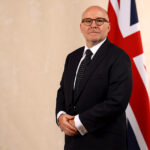
  • Andrew Rosindell – 2025 Speech on Gaza and Sudan

    Andrew Rosindell – 2025 Speech on Gaza and Sudan

    The speech made by Andrew Rosindell, the Shadow Foreign Affairs spokesperson, in the House of Commons on 18 November 2025.

    I thank the Foreign Secretary for advance sight of her statement. His Majesty’s Opposition welcome the passing of the US-drafted resolution at the United Nations Security Council yesterday. The US has shown consistent leadership on the middle east, and for that we are grateful. Hamas must now release the final three deceased hostages. We keep their loved ones, and the families of all the deceased hostages, in the forefront of our thoughts. We cannot even begin to imagine what trauma they have endured.

    Key to yesterday’s resolution was a mandate for the International Stabilisation Force, but can the Foreign Secretary set out exactly what Britain’s contribution will be to that force? The Government speak about the need for the force to be deployed quickly, to avoid a potential power vacuum being filled by Hamas. What is Britain’s contribution? Are we looking at technical assistance, the sharing of expertise or intelligence, funding, action on the ground, or all of the above? It is important that the Foreign Secretary is clear and precise about those details. Will she also update the House on which countries are expected to participate, and say what their contributions will be?

    Of course, the removal of Hamas from power and their full disarmament are vital if we are to turn this ceasefire into a sustainable end to the conflict and the cycles of violence. Following yesterday’s vote, what practical contribution will the UK make to those efforts? The Foreign Secretary will be aware that there are several points in the US President’s plan specifically on that, so where does the UK dock into those initiatives? Has she identified which areas the UK will focus on as a contribution to the broader transitional day-after plan? Can she at least confirm that a fundamental curriculum and education overhaul in Gaza, and indeed the west bank, will be a key focus? We have seen huge strides elsewhere in the middle east in that domain, and this must now be a moment of reckoning for the curricula in the Occupied Palestinian Territories—that is vital if we are to build a sustainable peace.

    On the immediate humanitarian crisis in Gaza, what practical actions is the Foreign Secretary undertaking with the Government of Israel to achieve the surge in aid for innocent civilians that we all want to see? Specifically, which crossings does she believe will need attention? What is the quantum of designated British aid that is not getting over the border into Gaza? Have specific proposals and solutions been conveyed by the British side to Israeli Government counterparts on how to address the bottlenecks that we all want to see resolved?

    Turning to the situation in Sudan, in El Fasher and elsewhere we continue to witness atrocities, suffering and human misery beyond words, all in plain sight of a watching world. Accountability must be administered. In the immediate term, the UK should be trying to spearhead a step change in the level of pressure on the warring parties to agree a comprehensive ceasefire. As my right hon. Friend the shadow Foreign Secretary has argued, we need heavy new sanctions on key operators, and action to deter entities, individuals and businesses whose support continues to sustain the conflict. Will that be forthcoming, and what discussions is the Foreign Secretary having on that with counterparts in the US, the EU, the Sudan quad and others? Will she also update the House on the Government’s response to US efforts to bring about a humanitarian ceasefire, and say what role Britain is playing in that?

    On the dire humanitarian conditions, it was confirmed at the Dispatch Box earlier this month that the shifting of frontiers in the conflict is affecting aid delivery. How has the situation evolved in the past two weeks, and what levers can be pulled to try and smash through obstacles to aid delivery? Finally, on day-after planning, will the Foreign Secretary update the House on efforts to build up the capacity and capabilities of organic civilian political groups, to give Sudan the best chance of moving to stable civilian government after a ceasefire? We have seen what the US has achieved through the UN Security Council on Gaza this week, and I hope that similar initiatives will be possible with regards to Sudan. As penholder, the UK Government have a special responsibility, so will the Foreign Secretary confirm her next steps on the UNSC? As the conflict moves from bad to worse, we must shift gear.

    Yvette Cooper

    I thank the hon. Gentleman for his response to the issues relating to Gaza and Sudan, and I will take his points in turn. We do not expect the UK to contribute troops to the international stabilisation force, but we are already providing military and civilian deployment into the civil-military co-ordination committee that is led by the US. It is drawing up practical arrangements for implementing the 20-point plan. On the nature of the role that we expect to continue to play, we already provide training for Palestinian police, for example, and I have met US military forces who are involved in that training. I met them in Jordan, and other countries are also offering to provide such training for Palestinian police, which will be critical to maintaining security and safety. We have also offered expertise on decommissioning. That is an area where, through the Northern Ireland experience, we have experience and expertise, mostly immediately around de-mining capabilities in terms of both funding and expertise.

    The hon. Gentleman raised the issue of curriculum reform, which I agree needs to take place. That is a crucial part of the Palestinian Authority reforms, and I have discussed that directly with President Abbas. The importance of maintaining the commitments that the Palestinian Authority has made to curriculum reform must be central in both the west bank and in Gaza. On practical issues about the opening of crossings, we want to see all the crossings opened and restrictions lifted. The co-ordination committee, which has a UK presence, is working directly with the Israeli Government to seek to improve access and monitoring, and to improve arrangements to get more aid through. I continue to urge swifter action to get that desperately needed aid in place.

    On Sudan, I welcome the hon. Gentleman’s support for sanctions. I have had personal direct discussions with all members of the quad, including most recently the US Secretary of State Marco Rubio last week, and I know how strongly he feels about the terrible, horrendous atrocities that are taking place in Sudan. We will continue to offer our support to that process.

    On aid delivery, based on what the UN and Tom Fletcher have been saying, it looks as though some of the routes into the region are currently completely inadequate, so security and infrastructure need to be provided to get the desperately needed scale of aid into the area. We will need to look at air routes as well as truck routes. He is right to point to the need for the organic support for Sudanese civilian organisations. It is crucial that ultimately we have a transition to a civilian Administration in Sudan and an end to the horrendous fighting, abuse and sexual violence that we have seen, with reports on all sides of those sorts of atrocities taking place.

    Finally, US leadership has been incredibly important in achieving the ceasefire agreement and the peace process so far in Gaza, but it has also depended on the international community coming in alongside the US and working together to deliver the progress so far. We need that same international commitment for Sudan and we need the whole international community to pull together to deliver progress in the same way.

  • Yvette Cooper – 2025 Statement on Gaza and Sudan

    Yvette Cooper – 2025 Statement on Gaza and Sudan

    The statement made by Yvette Cooper, the Foreign Secretary, in the House of Commons on 18 November 2025.

    I want to update the House on two of the world’s gravest conflicts—in Gaza and in Sudan—following recent resolutions in the UN and discussions at the G7, and on the action that the UK Government are taking to pursue peace.

    First, I turn to Gaza. After two years of the most horrendous suffering, the ceasefire agreement led by President Trump with the support of Qatar, Egypt and Türkiye has been in place for six weeks. Twenty hostages are now home with their loved ones, and the remains of 25 more have been returned so their families can grieve. More aid trucks are entering Gaza. But the ceasefire is highly fragile, and there is still a long journey ahead to implement the commitments made at Sharm el-Sheikh and to get to a lasting peace.

    Last night, the UN Security Council passed resolution 2803. The UK voted for this important resolution, which authorises the establishment of an international stabilisation force for Gaza, and transitional arrangements including the board of peace and a Palestinian committee. It underscores the essential need for humanitarian aid and reconstruction, and points the way to a path to Palestinian self-determination and statehood. Crucially, it is supported by the Palestinian Authority, and Arab and Muslim partners in the region and beyond. The resolution is a critical staging post that sustains the unity around President Trump’s 20-point plan.

    Momentum must now be maintained. It is essential that an international stabilisation force and trained Palestinian police can be deployed quickly to support the ceasefire and to avoid a vacuum being left that Hamas can exploit. We will also need the urgent formation of a Palestinian committee alongside the board of peace. As we made clear at the UN last night, these transitional arrangements must be implemented in accordance with international law, and respecting Palestinian sovereignty and self- determination. They should strengthen the unity of Gaza and the west bank, and empower Palestinian institutions to enable a reformed Palestinian Authority to resume governance in Gaza, because Palestine must be run by Palestinians.

    The work to implement the first phase of the ceasefire agreement must continue. That means work so that Hamas releases the bodies of the remaining three hostages taken in the terrorist attack on 7 October, so that their families can properly grieve. We urgently need a major increase in humanitarian aid, because aid into Gaza is still a trickle rather than a flood. Two weeks ago, I visited warehouses in Jordan holding UK aid for Gaza, including one run by the World Food Programme with enough wheat to feed 700,000 people for a month; yet it still sits there because the Jordanian route into Gaza is still closed. People there told me that there were 30 more warehouses nearby, with food, shelter kits, tents and medical supplies—less than 100 miles from Gaza but still not getting in.

    I welcome the very recent improvements in aid flows, and that one more border crossing, Zikim, is now partially open. But it is not nearly enough. We need all land crossings open—including the Rafah border with Egypt— with longer and consistent hours, and urgent work is needed immediately in all parts of Gaza to rebuild basic public services and to provide shelter as winter draws in. Medical staff must be allowed to enter and leave Gaza freely, and international non-governmental organisations need certainty that they can continue to operate. I spoke to the King of Jordan and to doctors in Amman about a maternity and neonatal field hospital unit that stands ready to be moved into Gaza—but, again, they cannot yet get it in. The Israeli Government can and must remove the restrictions and uncertainty now.

    As well as working with the US and others, we are drawing on distinct UK strengths to support a lasting peace. We are providing expertise on weapons decommissioning and ceasefire monitoring, based on the Northern Ireland experience. We are supporting on demining and unexploded ordnance, including with £4 million of new UK funding for the United Nations Mine Action Service, and we are funding to surge in experts, including from British organisations such as the HALO Trust and Mines Advisory Group, whose impressive work I recently saw at first hand. On civil-military co-ordination, we have UK deployments into a dedicated US-led hub for Gaza stabilisation efforts.

    Beyond Gaza, stability in the west bank is essential to any sustainable peace, and I am concerned that the PA faces an economic crisis induced by Israeli restrictions that are strangling the Palestinian economy. The Netanyahu Government should be extending, not threatening to end, the arrangements between Israeli and Palestinian banks—arrangements that are crucial to the everyday economy for Palestinians. This is crucial for stability, which is in Israel’s interests too.

    The pace of illegal settlement building continues. We have seen further appalling incidents of settler violence during the olive harvest. While I welcome Israeli President Herzog’s expression of concern, the response of the Israeli authorities is still completely insufficient—practically and legally. Tackling settlement expansion and settler violence is vital to protecting a two-state solution, in line with the UK’s historic decision to recognise the state of Palestine.

    Let me turn now to Sudan, where the worst humanitarian crisis in the 21st century is still unfolding, right now. The UN humanitarian chief, Tom Fletcher, who has just visited the area, has described it as:

    “the epicentre of suffering in the world”

    and he is right. Over 30 million people need lifesaving aid. Twelve million have been forced from their homes. Famine is spreading. Cholera and preventable disease are rampant. In El Fasher, following advances by the Rapid Support Forces, there are horrifying scenes of atrocities, with mass executions, starvation, and the systematic use of rape as a weapon of war—horrors so appalling they can be seen from space.

    As the United Nations Office for the Co-ordination of Humanitarian Affairs has put it, El Fasher is a crime scene. Satellite pictures show discolouration of sand consistent with pools of blood, multiple clusters of objects consistent with piles of human bodies, and the apparent burning of bodies and operations to dispose of bodies in mass graves. Further horrors will yet unfold unless greater action is taken.

    A year ago, Britain tabled a resolution at the UN Security Council demanding humanitarian access and civilian protection, but it was shamefully vetoed by Russia. Six months ago, at our London-Sudan conference, the UK brought together international partners and secured £800 million in funding, but the situation continues to deteriorate, including with North Kordofan now under threat and fighting moving to El Obeid.

    We need a complete step change in efforts to alleviate the suffering and bring about peace. That means more aid to those in need. The UK has committed over £125 million this year alone, delivering lifesaving support to over 650,000 people—treating children with severe malnutrition, providing water and medicine, and supporting survivors of rape—but the challenge is still access.

    The RSF still refuses safe passage to aid organisations around El Fasher. The Sudanese armed forces are bringing in new restrictions that stand to hinder aid. Both sides must allow unhindered passage for humanitarian workers, supplies and trapped civilians. We are urgently pressing for a three-month humanitarian truce to open routes for lifesaving supplies, but aid will not resolve a conflict wilfully driven by the warring parties, so we desperately need a lasting ceasefire underpinned by a serious political process.

    At the Manama dialogue conference in Bahrain two weeks ago, I called for the same intense international efforts to address the crisis in Sudan as we have seen around Gaza. At Niagara last week, I joined our G7 partners in calling for an immediate and permanent ceasefire, for the unimpeded access of humanitarian aid, and for external actors to contribute to the restoration of peace and security. We are engaging intensively with the Quad countries—the United Arab Emirates, Saudi Arabia, Egypt and the United States—which have now together called for an immediate humanitarian truce, and an end to external support and arms that are fuelling conflict. I strongly support Secretary Rubio’s latest comments regarding the need to end the weapons and support that the RSF is getting from outside Sudan.

    Last Friday, the UK called a special session of the United Nations Human Rights Council, in which a UK-drafted resolution was passed, securing international consensus for an urgent UN inquiry into alleged crimes in El Fasher, because impunity cannot be the outcome of these horrifying events. We need to ensure that teams can get in to investigate those atrocities and hold the perpetrators to account, and I have instructed my officials to bring forward potential sanctions relating to human rights violations and abuses in Sudan.

    The UK will play its full part to ensure that it is the Sudanese people, not any warring party, that determines Sudan’s future. Wars that rage unresolved do not just cause untold harm to civilians; they radiate instability, undermine the security of neighbouring states, and lead migrants to embark on dangerous journeys. We are striving to meet those urgent humanitarian needs, and striving to secure not just the absence of conflict, but the presence of lasting peace. From Gaza to Sudan that can only be done through international co-operation, and through countries coming together for peace. I commend this statement to the House.

  • Kemi Badenoch – 2025 Speech on the Government’s Asylum Policy

    Kemi Badenoch – 2025 Speech on the Government’s Asylum Policy

    The speech made by Kemi Badenoch, the Leader of the Opposition, in the House of Commons on 17 November 2025.

    I thank the Home Secretary for advance sight of her statement, most of which I read in The Sunday Telegraph. I am pleased that she is bringing forward measures to crack down on illegal immigration. It is not enough but it is a start, and a change from her previous position in opposition of a general amnesty for illegal migrants.

    I praise the new Home Secretary. She is bringing fresh energy and a clearer focus to this problem, and she has got more done in 70 days in the job than her predecessor did in a year. She seems to get what many on the Labour Benches refuse to accept, and she is right to say that if we fail to deal with the crisis, we will draw more people to a path that starts with anger and ends in hatred. We will also allow our English channel to operate as an open route into this country for anyone who is prepared to risk their life and pay criminal gangs. That is not fair on British citizens, it is not fair on those who come here legally, and it is not fair on those in genuine need who are pushed to the back of the queue because the system is overwhelmed.

    Anyone who cannot see by now that simply tinkering with the current system will not fix this problem is either living in la-la land or being wilfully obstructive. It is a shame that it has taken Labour a year in office to realise there is a borders crisis—[Interruption.] I don’t know why Labour Members are chuntering. What was their first act in government? The first act of the Home Secretary’s predecessor was to scrap the Rwanda plan, which was already—[Interruption.] Yes, they are cheering. It was already starting to act as a deterrent before it even got off the ground, and before it started, Labour Members threw away all our hard work and taxpayers’ money—they are the ones who have wasted that money, not us.

    The statement is an admission that the Border Security, Asylum and Immigration Bill of the Home Secretary’s predecessor will not work, but I am glad to see Labour Members now changing course. The powers they are using in the Bill are ones they all voted down when we were in government, and they would not be able to do that if we had not got those measures through. None of them know the work that was done; they are just cheering nonsensically, but we know what has happened since Labour came to office. The Home Secretary will know that 10,000 people have crossed the channel in the 70 days she has been in office, and we have seen record levels of asylum claims in the last year. The problem has got worse since Labour came into office, and it is getting worse by the day.

    I am afraid that what the Home Secretary is announcing will not work on its own, and some of these measures will take us backwards. I say that to her with no ill will, and I hope she believes me when I say that I genuinely want her to succeed. Conservative Members are speaking from experience: we know how difficult this is— [Interruption.] We do, and we will not take any lectures from the people who voted down every single measure to control immigration. Some of the measures that the Home Secretary is announcing today are undoubtedly positive steps—baby steps, but positive none the less. We welcome making refugee status temporary, and we welcome removing the last Labour Government’s legislation that created a duty to support asylum seekers—she is right to do that. However, some of what she is announcing simply does not go far enough.

    Conservative Members believe that anyone who arrives illegally, especially from safe countries, should be deported and banned from claiming asylum. Does the Home Secretary agree that anyone who comes to this country illegally should be deported? I would like to know, and I think the country would like to know, because this announcement means that some people who arrive will be allowed to stay—they just need to wait 20 years before getting permanent settlement. That does not remove the pull factor. The main problem is that for as long as the UK is in the European convention on human rights, illegal immigrants and those exploiting our system will use human rights laws to block anything she does to solve this. I know that because I saw it happen again and again over the last four years, and I know she has seen it too. We even saw it this year with the Prime Minister’s one in, one out scheme, which has seen people return to France and come back on small boats yet again.

    I guarantee that the Home Secretary’s plan to reinterpret article 8 will not work. We tried that already, and Strasbourg and UK case law will prevail. I agree with her that the definition of “degrading treatment” is over-interpreted, but renegotiating article 3 internationally will take years—years we do not have if it were even possible, but the fact is that it is not. We know that because a small group of EU countries tried that earlier, and they were dismissed by the Secretary General of the Council of Europe. Her Government did nothing to support them, so I am not convinced it is the Prime Minister’s negotiating skills that will sort out that problem.

    We have looked at this issue from every possible direction, and any plan that does not include leaving the ECHR as a necessary step is wasting time we do not have. Just like the Government’s plan to “smash the gangs”, or the one in, one out policy, it is timewasting, and it is doomed to fail because of lawfare. We have seen this all before. The tough measures will be challenged in the courts and blocked, the new legal routes that the Home Secretary is talking about will be exploited, and the numbers arriving on our shores and disappearing into the black economy will keep on rising. If the Home Secretary is serious about reducing these numbers—I do believe that she is—she must be bolder. She must take steps to deter illegal immigrants from coming to Britain, and deport them as soon as they arrive. Our borders plan does just that, and I know that she has studied it in detail. I have seen the looks, and I know that she knows that we would leave the ECHR and the European convention on action against trafficking to stop the Strasbourg courts from frustrating deportations, and establish a new removals force to ensure that all illegal arrivals are deported. We would end the use of immigration tribunals, judicial review and legal aid in immigration cases, as those are the things that are slowing us down, and we would sign returns agreements that are backed by visa sanctions to ensure that we send illegal arrivals back to their place of origin. I welcome what she says about Angola and Namibia, but we all know that those countries are not the ones that are creating the biggest problems.

    We need to be bold, serious and unafraid to do what the British people demand: secure our borders. That is what is in our borders plan, so I urge the Home Secretary to take me up on my offer to work together, not just because we have some ideas that she might find useful, but because judging by the reaction of her own Back Benchers today, she may find our votes come in handy. Earlier this year, we saw what happened when the Government tried to make changes through the welfare Bill: the Prime Minister was defeated by his own Back Benchers and ended up passing legislation guaranteeing that more money would be spent on welfare. It does not appear that his grip on the party has improved since then, so we can be sure that Labour Back Benchers are already plotting to block any serious changes that she tries to make, so we can help her with that—[Interruption.] Why are Labour Members shaking their heads? We have seen them do that time and again.

    Our offer to work together is a genuine one and in the national interest. We will not play the same game that Labour Members did by voting things down for no reason. However, the Home Secretary must be clear with the House on these questions: how many people will be able to take advantage of the new work and study visa routes? What will be the level of the cap? Will it be 10,000 people or 100,000 people?

    The Government have separately confirmed that they will allow Gazan students to bring dependants. We oppose that, but can she clarify how the Government will ensure that people brought to the UK from a territory under Hamas control are not a risk to our security? If she finds that the Human Rights Act 1998 and the ECHR prevent her from enacting those proposals, will she use primary legislation to resolve that? Has Lord Hermer agreed? By her own admission three weeks ago, the Home Office is not yet fit for purpose, so why are we creating a new legal route for the Home Office to run?

    Will she take me up on my serious, genuine offer to meet and to discuss how we can work together to resolve the asylum crisis—yes or no? I urge her to put party politics aside, meet me and my shadow Home Secretary, so that we can find a way to work together—

    Madam Deputy Speaker (Caroline Nokes)

    Order. I was very generous with the time I allowed the Leader of the Opposition. I call the Home Secretary.

    Shabana Mahmood

    I thank the Leader of the Opposition for her response to the statement. I see that the shadow Home Secretary has been subbed out after his performance at Home Office oral questions, but whether it is the shadow Home Secretary or the Leader of the Opposition herself, I am very happy to take on the Conservative party any day of the week.

    Let me start by saying that we will not take any lessons from the Opposition on how to run an effective migration or asylum system. As the Leader of the Opposition knows, when the Conservatives were in Government, they gave up on governing altogether. They gave up on making asylum decisions, creating the huge backlog that this Government were left to start to deal with. In our first 18 months in office, removals are up 23% compared with the last 18 months that the Conservatives were in office, so I will take no lessons from anyone on the Conservative Benches on anything to do with our asylum system. They simply gave up and went for an expensive gimmick that cost £700 million to return four volunteers and was doomed to failure from the start.

    The Leader of the Opposition had a lot to say about the European convention on human rights, but I do not recall the Conservatives ever bringing forward any legislation to deal with the application of article 8, the qualified right to a private life. A Bill that sought to clarify the way that article 8 should apply in our domestic legislation or in our immigration rules was never introduced, so I am not going to take any lessons from the people who never bothered to do that in the first place. This Government are rolling up our sleeves, dealing with the detailed, substantive issues that we face, and thinking of proper, workable solutions to those matters.

    The position on article 3 has changed across Europe. In my previous role as Lord Chancellor, I was at the Council of Europe just before the summer recess earlier this year, and I was struck by the sheer range of European partners who want to have this conversation. It is important that the British Government lean into that conversation and seek to work in collaboration with our European partners. The one thing that will not work is simply saying that we are going to come out of the European convention altogether. That is not and will never be the policy of this Government because we believe that reform can be pursued and that this is an important convention, not least because it underpins some of our own returns agreements, including the one with France. The right hon. Lady talked about how many years it would take for us to think about reform of the convention, but as she well knows, it would take just as many years to start renegotiating lots of international agreements that would be affected by us coming out of the convention, so I am afraid that, once again, her solution will not work.

    I am always up for working in the national interest because nothing matters more to me than holding our country together and uniting it, but if the Conservatives really wanted to work together in the national interest, they could have started by voting for the Border Security, Asylum and Immigration Bill, currently going through the House, that they have voted against at every opportunity. Forgive me if I do not take this newfound conversion to working together in the national interest with much seriousness, but the Conservative party’s track record suggests that it should not be taken seriously.

    To not be taken seriously sums up the position of the Conservatives: these are the people that left this Government an abject mess to clear up. They gave up on governing, they gave up on running an effective asylum system, and now they turn up without so much as an apology to the British public, thinking that they have got anything to say that anyone wants to hear.

  • Shabana Mahmood – 2025 Statement on the Government’s Asylum Policy

    Shabana Mahmood – 2025 Statement on the Government’s Asylum Policy

    The statement made by Shabana Mahmood, the Home Secretary, in the House of Commons on 17 November 2025.

    With permission, Madam Deputy Speaker, I will make a statement about how we restore order and control to our borders. I do so as this Government publish the most significant reform to our migration system in modern times.

    This country will always offer sanctuary to those fleeing danger, but we must also acknowledge that the world has changed and our asylum system has not changed with it. Our world is a more volatile and more mobile place. Huge numbers are on the move. While some are refugees, others are economic migrants seeking to use and abuse our asylum system. Even genuine refugees are passing through other safe countries, searching for the most attractive place to seek refuge.

    The burden that has fallen on this country has been heavy: 400,000 have sought asylum here in the past four years. Over 100,000 people now live in asylum accommodation, and over half of refugees remain on benefits eight years after they have arrived. To the British public, who foot the bill, the system feels out of control and unfair. It feels that way because it is. The pace and scale of change have destabilised communities. It is making our country a more divided place. There will never be a justification for the violence and racism of a minority, but if we fail to deal with this crisis, we will draw more people down a path that starts with anger and ends in hatred.

    I have no doubt about who we really are in this country: we are open, tolerant and generous. But the public rightly expect that we can determine who enters this country and who must leave. To maintain the generosity that allows us to provide sanctuary, we must restore order and control.

    Rather than deal substantively with this problem, the last Conservative Government wasted precious years and £700 million on their failed Rwanda plan, with the lamentable result of just four volunteers removed from the country. As a result, they left us with the grotesque chaos of asylum seekers housed in hotels and shuttled around in taxis, with the taxpayer footing the bill.Toggle showing location ofColumn 510

    My predecessor as Home Secretary picked up this dreadful inheritance and rebuilt the foundations of a collapsed asylum system. Decision making has been restored, with a backlog now 18% lower than when we entered office. Removals have increased, reaching nearly 50,000 under this Government. Immigration enforcement has hit record levels, with over 8,000 arrests in the last year. The Border Security Bill is progressing through Parliament, and my predecessor struck an historic agreement with the French so that small boat arrivals can now be sent back to France.

    Those are vital steps, but we must go further. Today, we have published “Restoring Order and Control”, a new statement on our asylum policy. Its goals are twofold: first, to reduce illegal arrivals into this country, and secondly, to increase removals of those with no right to be here. It starts by accepting an uncomfortable truth: while asylum claims fall across Europe, they are rising here, and that is because of the comparative generosity of our asylum offer compared with many of our European neighbours. That generosity is a factor that draws people to these shores, on a path that runs through other safe countries. Nearly 40% come on small boats and over perilous channel crossings, but a roughly equal proportion come legally, via visitor, work or study visas, and then go on to claim asylum. They do so because refugee status is the most generous route into this country. An initial grant lasts five years and is then converted, almost automatically, into permanent settled status.

    In other European countries, things are done differently. In Denmark, refugee status is temporary, and they provide safety and sanctuary until it is possible for a refugee to return home. In recent years, asylum claims in Denmark have hit a 40-year low, and now countries across Europe are tightening their systems in similar ways. We must act too. We will do so by making refugee status temporary, not permanent. A grant of refugee status will last for two and a half years, not five years. It will be renewed only if it is impossible for a refugee to return home. Permanent settlement will now come at 20 years, not five years.

    I know that this country welcomes people who contribute. For those who want to stay, and who are willing and able to, we will create a new work and study visa route solely for refugees, with a quicker path to permanent settlement. To encourage refugees into work, we will also consult on removing benefits for those who are able to work but choose not to. Outside the most exceptional circumstances, family reunion will not be possible, with a refugee able to bring family over only if they have joined a work and study route, and if qualifying tests are met.

    Although over 50,000 claimants have been granted refugee status in the past year, more than 100,000 claimants and failed asylum seekers remain in taxpayer-funded accommodation. We know that criminal gangs use the prospect of free bed and board to promote their small boat crossings. We have already announced that we will empty asylum hotels by the end of this Parliament, and we are exploring a number of large military sites as an alternative. We will now also remove the 2005 legislation that created a duty to support asylum seekers, reverting to a legal power to do so instead. We will continue to support those who play by the rules, but those who do not—be that through criminality or antisocial behaviour—can have their support removed.Toggle showing location ofColumn 511

    We will also remove our duty to support those who have a right to work. It is right that those who receive support pay for it if they can, so those with income or assets will have to contribute to the cost of their stay. That will end the absurdity that we currently experience, in which an asylum seeker receiving £800 each month from his family, and who had recently acquired an Audi, was receiving free housing at the taxpayer’s expense, and the courts judged that we could do nothing about it.

    The measures are designed to tackle the pull factors that draw people to this country, but reducing the number of arrivals is just half of the story. We must also enforce our rules and remove those who have no right to be here. That will mean restarting removals to countries where they have been paused. In recent months, we have begun the voluntary removal of failed asylum seekers to Syria once again. However, many failed asylum seekers from Syria are still here, most of whom fled a regime that has since been toppled. Other countries are planning to enforce removals, and we will follow suit. Where a failed asylum seeker cannot be returned home, we will also continue to explore the possibility of return hubs, with negotiations ongoing.

    We must remove those who have failed asylum claims, regardless of who they are. Today, we are not removing family groups, even when we know that their home country is perfectly safe. There are, for instance, around 700 Albanian families living in taxpayer-funded accommodation having failed their asylum claims—despite an existing returns agreement, and Albania being a signatory to the European convention on human rights. So we will now begin the removal of families. Where possible, we will encourage a voluntary return, but where an enforced return is necessary, that is what we will do.

    Where the barrier to a return is not the individual, nor the UK Government, but the receiving country, we will take action. I can announce that we have told Angola, the Democratic Republic of the Congo, and Namibia that if they do not comply with international rules and norms, we will impose visa penalties on them. I am sending a wider message here: unless other countries heed this lesson, further sanctions will follow.

    Much of the delay in our removals, however, comes from the sclerotic nature of our own system. In March of this year, the appeals backlog stood at 51,000 cases. This Government have already increased judicial sitting days, but reform is required, so we will create a new appeals body, staffed by professional independent adjudicators, and we will ensure that early legal representation is available to advise claimants and ensure their issues are properly considered. Cases with a low chance of success will be fast-tracked, and claimants will have just one opportunity to claim and one to appeal, ending the merry-go-round of claims and appeals that frustrate so many removals.

    While some barriers to removal are the result of process, others are substantive issues related to the law itself. There is no doubt that the expanded interpretation of parts of the European convention on human rights has contributed. This is particularly true of article 8: the right to a family life. The courts have adopted an ever-expanding interpretation of that right. As a result, many people have been allowed to come to this country when they would otherwise have had no right to, and we have been unable to remove others when the case for doing so seems overwhelming. That includes cases like an arsonist, sentenced to five years in prison, whose deportation was blocked on the grounds that his relationship with his sibling may suffer. More than half of those detained are now delaying or blocking their removal by raising a last-minute rights claim.

    Article 8 is a qualified right, which means we are not prevented from removing individuals or refusing an application to move to the UK if it is in the public interest. To narrow article 8 rights, we will therefore make three important changes, in both domestic law and to our immigration rules. First, we will define what, exactly, a family is—narrowing it down to parents and their children. Secondly, we will define the public interest test so that the default becomes a removal or refusal, with article 8 rights only permissible in the most exceptional circumstances. Thirdly, we will tighten where article 8 claims can be heard, ensuring only those who are living in the UK can lodge a claim, rather than their family members overseas, and that all claims are heard first by the Home Office and not in a courtroom.

    We will also pursue international reform of a second element of the convention: the application of article 3, and the prohibition on torture and inhuman, degrading treatment or punishment. We will never return anyone to be tortured in their home country, but the definition of “degrading treatment” has expanded into the realm of the ridiculous. Today we have criminals who we seek to deport, but we discover we cannot because the prisons in their home country have cells that are deemed too small, or even mental health provision that is not as good as our own. As article 3 is an absolute right, a public interest test cannot be applied. For that reason, we are seeking reform at the Council of Europe, and we do so alongside international partners who have raised similar concerns.

    It is not just international law that binds us. According to data from 2022, over 40% of those detained for removal claimed that they were modern-day slaves. That well-intentioned law is being abused by those who seek to frustrate a legitimate removal, so I will bring forward legislation that tightens the modern slavery system, to ensure that it protects those it was designed for, and not those who seek to abuse it. Taken together, these are significant reforms. They are designed to ensure that our asylum system is fit for the modern world, and that we retain public consent for the very idea of providing refuge.

    We will always be a country that offers protection to those fleeing peril, just as we did in recent years when Ukraine was invaded, when Afghanistan was evacuated, and when we repatriated Hongkongers. For that reason, as order and control are restored, we will open new, capped, safe and legal routes into this country. These will make sponsorship the primary means by which we resettle refugees, with voluntary and community organisations given greater involvement to both receive refugees and support them, working within caps set by Government. We will also create a new route for displaced students to study in the UK, and another for skilled refugees to work here. Of course, we will always remain flexible to new crises across the world, as they happen.

    I know that the British people do not want to close the doors, but until we restore order and control, those who seek to divide us will grow stronger. It is our job as a Labour Government to unite where there is division, so we must now build an asylum system for the world as it is—one that restores order and control, that opens safe and legal routes to those fleeing danger across the world, and that sustains our commitment to providing refuge for this generation, and those to come. I know the country we are. We are open, tolerant, and generous. We are the greater Britain that those on this side of the House believe in, not the littler England that some wish we would become. These reforms are designed to bring unity where others seek to divide, and I commend this statement to the House.

  • Lindsay Hoyle – 2025 Statement on Budget Leaks

    Lindsay Hoyle – 2025 Statement on Budget Leaks

    The statement made by Lindsay Hoyle, the Speaker of the House of Commons, in the Commons on 17 November 2025.

    Minister, it is not normal for a Budget to have been put in the press. This is the hokey-cokey Budget: one minute something is in, the next minute it is out. I am very worried. The previous Government also had to be reprimanded for leaking. It is not good policy. At one time, a Minister would have resigned if anything was released. This House should be sacrosanct, and all decisions should be heard here first. Please do pass on the message.

  • Wes Streeting – 2025 Speech to the NHS Providers Conference

    Wes Streeting – 2025 Speech to the NHS Providers Conference

    The speech made by Wes Streeting, the Secretary of State for Health and Social Care, in Manchester on 12 November 2025.

    Thanks so much for that introduction, and thanks to all of you for being here.  

    I’m delighted to be here given the, or to give, the announcement that everyone’s been talking about in the news today. That is the government’s reforms to NHS system architecture.  

    And I’m really grateful, Daniel, for the leadership for you and NHS Providers is showing at such a challenging time, but before I get into the challenges, let me just start with the positives. Because right now, we’re achieving things in the NHS. We’ve not seen for a long, long time and I know it’s not been easy. I’ve made considerable demands on you. And will continue to do so. But you’ve shown over the last year, or so, that while the NHS was broken, it wasn’t beaten. 

    You provided 5 million more elective appointments, 135,000 more cancer, diagnoses within the 28-day target, and cut waiting lists by over 200,000. Ambulance response times and 12-hour waits in A&E are down. There are two and a half thousand more GPs. In fact, we now have the highest number of GPs on record. 

    You’ve opened over a hundred Community Diagnostic Centres at evenings and weekends. New surgical hubs to bust the backlog. The extra doctors, nurses and mental health staff we need to treat patients on time and together, we built the 10-year plan for health to create the truly modern health service that we’re all crying out for. 

    These are the green shoots of recovery that are beginning to renew confidence and restore faith in our National Health Service for both patients and for our staff, our investment and modernisation are paying off. And with it, ambition and optimism are returning. It’s why I can come here today and say, with credibility, that we can still cut waiting times to 18 weeks, by the end of this Parliament. 

    Something few thought possible when we made the commitment in opposition. And while we can do it, and we can do it while delivering year-on-year improvements to Urgent and Emergency Care, we can get back to seeing people within four hours and while rebuilding general practice, so that patients can get an appointment with their doctor when they need one. 

    So, I want to begin by saying to all of you genuinely. Thank you. There’s sometimes a perception out there that I’m going to have to really battle this system and all of you to modernise and it’s such a misrepresentation of the leaders I work with. NHS leaders and frontline staff are not only chomping at the bit for change. You’re the ones showing the world that it can be delivered.

    There’s a real can-do culture back in the NHS, but and it’s a big but – there is also a great deal of jeopardy, out there from economic constraints, winter pressures, industrial action. And the political forces willing us all to fail. 

    So there’s a lot of pressure on our shoulders, because we all know how important the NHS is to our country. How central it is to the lives of every family in this land. And how strongly we believe in the values that have underpinned it since 1948, values that are becoming increasingly contested. 

    So, it’s important, I think for us to keep in mind, the consequences, if we get this wrong. Millions are counting on us and there’s much much more to do, so this isn’t the moment to ease off the gas. This is the moment to push our foot harder on the accelerator. 

    One reason why we see renewed confidence is the rigid focus you’ve brought to reducing waste and increasing productivity while improving services at the same time. In fact, reducing waste and increasing productivity are essential to improving patient services and staff experience.  

    This government is investing an extra £26 billion in the NHS this year. 

    We continue to be relative winners of Budgets and Spending Reviews. Although you and I know what the word relative means which is why I’m always relatively happy at how we do at Budget time. And we owe it to patients, to staff and to taxpayers to make sure that every penny that’s going into this service is money well spent. 

    That’s why I’m really proud that for the first time in years, the NHS is in balance, seven months into the financial year. It’s not going to be easy to stay on track for the rest of this year, especially with the double whammy of strikes and winter to come. 

    But breaking even is a huge shift from the £6.6 billion deficit we were looking at.

    There are people out there saying that universal health care, free at the point of need is no longer affordable or possible. And everyone in this room and beyond is proving them wrong.  

    So, this isn’t just a technocratic accounting triumph. It is the foundation of everything else because it’s ultimately what will allow us to invest again in staff technology and services, all of which add up to better patient experience. It also gives me, but all of us, credibility with the Chancellor. The government inherited public finances with a £22 billion black hole. 

    And it won’t have escape your notice that the public finances and the wider economy are still under serious strain. So, there is no money to waste and I think that it’s really important that we accept with some humility that one of the reasons the Chancellor is having to make some unpopular choices is to protect investment in the NHS. 

    This government will always put our public services and our NHS first. But the investment this government is making in the NHS also comes with a moral duty for us as NHS leaders, because every penny that goes into treating the sickness in our society is a penny that could have been spent on tackling the wider social determinants of health, much of which sits outside the NHS. 

    On prevention rather than cure. Of course when I say savings, it sounds very benign. In reality, I do want to take this opportunity to acknowledge that this has been particularly hard for ICBs.  

    I’ve asked a lot of you this year, last year, I said that ICBs will have a more focused purpose, as strategic Commissioners. They’re the drivers of the transformation from a National Health Service to a Neighbourhood Health Service and a preventative health service. 

    Given that focus brief, we’re asking ICBs to downsize significantly.  

    Having seen redundancies in organisations I’ve worked in previously, I want you to know. I do not take this lightly. I know this will have been weighing heavily on all of you and the people who work for you and I certainly don’t want ICB leaders to take the flag for decisions and timetables on head count that are ultimately my responsibility. 

    I’m very alive to the uncertainty that’s hung over staff for far too long. And I don’t mind saying, it’s made me uncomfortable, as it should. Because I know we’re not just talking about jobs, we’re talking about people’s livelihoods. And again that is my responsibility. Not yours. I want to be honest with you and through you to your staff that I have not resolved this quickly enough. 

    But this is worth doing and we can now bring certainty to people. From today I’m giving ICBs the go ahead and the funding for the voluntary redundancy programs that staff have been waiting for. This will see overall head count cut by 50 percent which will particularly, not exclusively, but particularly, affect roles in corporate services, communications and administration. 

    Alongside this, we’re moving ahead with the abolition of NHS England and we’ll complete it to the timetable the Prime Minister announced in March. Head count across my Department and NHS England will also be halved, returning to the size we had in 2010, when the NHS delivered the shortest waiting times and highest patient satisfaction in history. This move will free up more than a billion pounds a year, which will be reinvested in frontline care. 

    To, anyone listening at home. And who knows? Someone might be listening at home. I want to reassure you that our investment is not simply pouring more water into a leaky bucket. We’re plugging the holes cutting out the waste, and rebuilding our National Health Service. And to those of you here today, and hopefully you’re listening. 

    We aren’t simply changing staff numbers. We are ending the constant assurance, ad hoc demands and micromanagement that you’ve been subjected to. The centre will instead enable you to focus on improving services for patients. A new department that empowers rather than suffocates NHS leaders and frontline staff. And I have to say, the way in which leaders across the service are responding to the scale of the challenge I’ve placed on you has been extremely and genuinely impressive.  

    We’ve seen an uptick in flu jabs, among staff and the public, we’ve stress tested plans much earlier, we’re investing in new ambulances, building new urgent treatment centres and introducing new mental health crisis centres. 

    Online access to GP practices should stem the tide of the 4 million patients who go to A&E each year because they can’t get through to their local surgery. So thank you to all of those GPs who have successfully introduced this new system. You’ll be crucial in unclogging emergency departments, freeing up beds and saving lives this winter.  

    And on the social care side, we’re working more closely with local authorities to ensure people get the care and support they need at home rather than languishing in hospital beds. But we know that the NHS is already running hot. A&E and ambulance demand is already higher than it was in 2024. 

    Flu is coming earlier and there is a particularly nasty strain this season. Those are the challenges we have to rise to for many patients, who come through our doors. This winter, it will be the one time in the entire year when they experience the NHS. What impression do we want them to leave with? 

    Do you want to be just about managing? That can’t be our benchmark. We can’t accept the winter crisis as an annual event like the John Lewis Christmas ad. We have to improve year on year. And of course, with all these challenges, the last thing patients need this winter is strike action by the BMA. 

    I was really proud of the way that NHS leaders and frontline staff pulled together to get through the last round of resident doctor strikes.  

    We saw an additional 11,000 procedures going ahead compared with the June 2024 war count. We managed to keep the costs of industrial action, down to the tune of a hundred million pounds less than the previous round. 

    And despite the busiest July on record for A&E, this was the highest proportion of patients seen within four hours in four years. I think that is a considerable achievement. And I want all of you to know that it wasn’t lost on me how hard you all worked to keep the show on the road. 

    But the truth is that strikes do have unavoidable and serious consequences, particularly when they’re called during winter. That is why I made a comprehensive offer to the BMA last week in a final attempt to prevent strike action. Coming on top of a 28.9 percent pay rise which they have already received from this government. 

    I would have thought that the offer to go even further with extra jobs prioritisation and money back in their pockets would have demonstrated how serious this government is about improving resident doctors lives and career prospects. Yet the BMA rejected the offer out of hand, refusing to even put it to their members. 

    If strikes do go ahead, this will cost around £240 million and we will not be able to afford the same offer again, so my message to BMA is simple: postpone the strikes, trust your members and give resident doctors a say. Patients, doctors and the wider NHS staff all lose if strikes go ahead. And there is still time for everyone to win.

    That brings me to a broader point about choices and trade-offs. When we pull together, and when we mobilise behind the ideas in the 10 Year Health Plan, we can deliver year-on-year improvement, change and transformation that gets the NHS back on its feet and fit for the future. Where parts of our team fail to recognise that we can’t solve everything, for everyone, everywhere, all at once, that’s when we run into difficulties.  

    That’s what makes our collective job, much harder. And I know I’m preaching to the choir in this room because as leaders, there are choices and trade-offs that you face every day and it’s really important that we continue to work together to face those choices and trade-offs in an honest way. 

    Because the progress of the last 18 months, tells a bigger story, one of a service beginning to believe in itself again. That’s quite something. Given the horrendous state of neglect the NHS was in after 14 years of under investment and mismanagement. And we have to be honest that some of what we’re doing has never been tried before. Success won’t happen overnight.  

    We, I, will make some mistakes along the way. That is all part of learning and improving. But together we’ve begun restoring confidence, we’ve built strong foundations for real improvements. We’ve moved from barely scraping by to having real hope and big ambitions. 

    I said there’d be fewer targets and less bureaucracy and there are. I said there’d be no more short-termism and we now have multi-year funding settlements to give you the certainty you need. I said the centre would be smaller and it will be. I said the power would be handed back to patients professionals and providers and it is being. All of this is why we’re here today in a position to declare that the NHS is on the road to recovery. 

    And at the heart of that revival is our 10-year plan for health. It sets out how we’ll transform the service of today into an NHS fit for the future. Our three big shifts will create a new model of care that not only catches up with the rest of the pack, but leads the world. 

    The plan breaks with the fiction that you can run a health service, one and a half million staff who deliver 600 million patient interactions every single day, from an office building in Whitehall. The new care model is backed by a new operating model, anchored in clear and consistent principles, power and resources should flow to local providers, frontline staff, and ultimately be placed in the hands of patients.  

    Autonomy should be earned by meeting public expectations delivering, high quality care with excellent financial oversight through world-class leadership. Good performance should be incentivised and rewarded. Poor performance should be held rigorously to account. And transparency and choice are essential, not nice to have. That’s what lay behind our decision to publish new NHS League tables. 

    I know there was a concern when I announced them last year that this would be about naming and shaming and good, old-fashioned, manager bashing. I hope you can see now that this is actually about confronting the challenges we all face with grown-up honesty.  

    I was delighted for example, with the way the Queen Elizabeth Hospital in Kings Lynn, a hospital which is literally being propped up on stilts, responded to being bottom of the table.  

    Let me just share with you what the executive managing director, Chris Bown said. He said, and I quote, the issues about our waiting times in our emergency department being too long, our waiting times for cancer care, and elective care being too long, and our financial situation, are not attributed directly to the state of the building. There are things we must do within this building to improve the experience of patients and staff.  

    Now, the reason I highlight that as an example is, he could easily have said it’s all because my hospital’s falling down. 

    And I know he could have said that because I recall offering that defence myself on BBC local radio, in his part of the world earlier that day. And in contrast to what I said, what Chris did was offer the warts and all honesty that is the first step on the road to recovery, not making excuses and covering backsides, but actually taking responsibility and showing a determination to improve. 

    Even when factors are stacked against you, that is how we turn the NHS around. But even as we let go of the top-down approach of the past, we’re not abandoning trusts to their fate. Those at the bottom of the tables will receive more support. At the other end, good performance will be incentivised and rewarded. 

    This new culture of openness drives change and builds confidence that the NHS can learn and improve, which is crucial to restoring people’s faith in the NHS itself.  

    And today I want to talk about the next steps we’re taking on our new operating model. The first step is a real empowerment of primary care and general practice. Already, the hard work and innovation of GPs across the country are helping to renew public confidence in the NHS as the reversal of a decade of declining patient satisfaction shows.  

    And I know it’s not easy. The demands of a 21st century population, the demands of ageing and rising health need have led to unsustainable workloads. We’ve already halved the number of targets in the GP contract and are investing an extra £1.1 billion. But the bright future that general practice deserves will only come through fundamental modernisation. 

    That’s why we’re introducing two new neighbourhood contracts. A single neighbourhood provider contract for the delivery of enhanced services, for patients, through expert, multi-disciplinary teams and a multi-neighbourhood provider contract to lead the Neighbourhood Health Service at scale.

    This is taking the best of the NHS to the rest of the NHS. Learning from some of the trailblazing GP Federations already doing this. Pooling resources and expertise will deliver better services over larger areas, like frailty or end-of-life care, and deliver a more efficient back office so more of GPs time is spent with patients. And as Neighbourhood Health Services reduce demand on acutes, new, financial flows will see savings return to them, helping to accelerate the left shift.  

    I should say at this point, just for the avoidance of doubt, because there might be more media attention on this speech than usual, our second step – reinvent the NHS Foundation Trust model for modern times. Today, we’re launching a new generation of Foundation Trusts called Advanced Foundation Trusts. They will be the front runners towards a more autonomous accountable and integrated NHS. 

    And I can announce that eight trusts are in the running for this new status. They come from across the country from Dorset to Northumbria and they are a mix of acute mental health, and community Trusts. They represent both the best of our NHS and the diversity of NHS. Those who are successful will have demonstrated that they’re delivering on the public’s priorities. High quality care for patients, value for money and progress on the left shift. 

    They’ll be the kind of providers who don’t need the sense of breathing down their neck or trying to micromanage their finances.  

    And they will benefit from real and immediate freedoms, including the ability to reinvest surpluses accumulated last year in future capital projects, more operational, autonomy and fewer ad hoc requests from the centre. 

    We’ll continue to open new freedoms and deliver greater autonomy for Advanced Foundation Trusts in the coming years. And in 10 years time, we want every Trust to have achieved that status. 

    Our third step is the creation of Integrated Healthcare Organisations, or IHOs. Advanced Foundation Trusts will be among the first to take on IHO contracts and hold the whole health budget for a defined population. 

    I’ve heard from so many leaders about how hard it can be to invest in prevention because the savings fall in another part of the system. IHOs will reverse this disincentive, if it makes sense to invest in community care to prevent unnecessary hospital admissions, they’ll be rewarded for doing just that. Any trust can become one, not just the big acutes.
    And so there is no reason, by the way, they couldn’t be led by Primary Care professionals.

    In fact, one of the two trusts currently under consideration for IHO status is a Community Trust. And that diversity will continue. If a nurse is best placed to lead a community service, a GP best place to lead a hospital or an acute Trust best place to lead Neighbourhood Health Services, well then that’s what they’ll do.  

    Because what matters is what delivers for patients. None of this is simply a renaming exercise. However, technocratic it might sometimes appear or even feel. Good system architecture is how we bring to life the vision and ambition in the 10-year plan. 

    I’m offering that as a reminder to myself as much as anyone else. We’re breaking the NHS out of its short-term cycles, annual plans of emergency, bundles of rolling crises, complex rules, unnecessary targets. Instead, our approach is, and will be, if you deliver for patients, if you manage your finances well, if you innovate, then you will have the space to lead.  

    Because plans don’t deliver change people do, and this conference is a reminder that confidence comes from good leadership and that good leadership in the NHS has never mattered more. Great NHS leaders, listen to staff and patients and turn that listening into action. 

    They don’t wait for permission to do the right thing. They don’t require a diktat from NHS, England, their attitude says we can do better, and we will. The difference now is that the system will support you to unleash your entrepreneurialism, creativity and innovation. All this adds up to a very different kind of NHS. 

    It marks a fundamental shift from command and control to collaboration and confidence. And when people feel they are part of a system that learns listens and leads. Confidence returns and confidence is everything. The NHS was built on it, the confidence of a nation that believed in universal healthcare, free at the point of use. The confidence of staff, who knew they were part of something bigger than themselves. What we’re doing together is restoring that confidence. The coming years won’t be a walk in the park. There are no magic wands. No silver bullets. Keeping up momentum will require all of the energy and grit and initiative that’s got us heading in the right direction. 

    We need to up our elective activity, to hit the ambitious targets the Prime Minister set us. To get people seen as quickly as possible in urgent and emergency care and to keep improving access to GPs, and we need to maintain our firm grip on the finances.  

    But for the first time in years, the NHS can look forward with confidence rather than back in frustration, because we’ve got a plan, that’s not just ambitious and realistic. We’ve got a plan that is working and that is why the NHS is on the road to recovery. Thank you very much.

  • Heidi Alexander – 2025 Comment on Driving Lesson Backlog

    Heidi Alexander – 2025 Comment on Driving Lesson Backlog

    The comments made by Heidi Alexander, the Secretary of State for Transport, on 12 November 2025.

    We inherited an enormous backlog of learners ready to ditch their L-Plates, who have been sadly forced to endure record waiting times for their tests. Every learner should have an equal and fair opportunity to take a test.

    We’re taking decisive action and these new measures will deliver thousands of extra tests over the next year, helping learners get on the road sooner. This will ease pressure on the system, removing barriers to opportunity and supporting economic growth as part of our Plan for Change.

  • Stephanie Peacock – 2025 Speech at the G20 Culture Ministerial Meeting

    Stephanie Peacock – 2025 Speech at the G20 Culture Ministerial Meeting

    The speech made by Stephanie Peacock, the Minister for Sport, Tourism, Civil Society and Youth, on 29 October 2025.

    It is an honour to represent the United Kingdom here today, and it has been a privilege to experience the diversity and dynamism of South African culture first hand over the past few days, since I arrived here on Sunday.

    It was a pleasure to accompany you, Honourable Minister McKenzie, to the powerful performance of ‘This Is Who I Am’ in Johannesburg earlier this week – an extraordinary example of international cultural collaboration in action, supported by the British High Commission.

    The UK is committed to effective and ambitious multilateralism, and we are grateful to you for convening us to discuss pressing matters affecting the cultural and creative sectors, as well as the great opportunities.

    I would like to thank the South African Presidency, on behalf of the United Kingdom, for your leadership, ambition, and wonderful hospitality throughout this year’s G20 Culture Track.

    The musical and artistic performances we have all enjoyed here highlight culture’s power to unite and connect communities. 

    In the UK, we, too, see how the huge diversity of cultural heritage contributes to our national story. Which is why we are pleased to have ratified the 2003 UNESCO Convention for the Safeguarding of the Intangible Cultural Heritage last year and warmly welcome our hosts, South Africa, who joined this year.

    The British Library’s Endangered Archives Programme alone has undertaken 130 projects across Africa and we commend South Africa for shining a light on the role of museums and cultural institutions as custodians of heritage in this declaration. 

    Honourable Minister, you have rightly placed a strong emphasis in the declaration from this meeting on the creative economy. 

    In the UK we also recognise the importance of these sectors and we have launched a dedicated plan to tackle barriers to growth and maximise opportunities across the creative industries. 

    Improving cultural access is another key priority for the UK Government. We strongly believe that arts and culture should reach everyone, everywhere.

    This includes supporting our creative and cultural professionals to operate and tour internationally.

    We recognise that the arts and cultural sectors, and creative industries can be critical drivers of innovation, not simply consumers of it.

    The use of digital technologies in these areas offers extraordinary opportunities to expand access, participation and inclusion.

    But we must acknowledge that digital transition and Artificial Intelligence are reshaping how culture is created, shared and valued.

    This is why the UK is committed to international partnership to shape a digital ecosystem for culture that is inclusive, resilient and sustainable – whether through the G20, UNESCO, bilateral agreements, or the work of the British Council.

    The UK is working to safeguard cultural heritage at risk, while advancing innovative, culture-based solutions to the climate crisis at home and around the world through our international programmes.

    Our International Cultural Heritage Protection programme operates globally, in cooperation with the British Council.

    One recent project – delivered in partnership with organisations across Egypt, Uganda, Tanzania, Ethiopia and Jordan – has  protected six historically important sites impacted by climate change and enabled them to be safeguarded for future generations.

    As G20 members, we individually and collectively recognise our responsibility to use our influence and voices to champion culture’s role in driving climate action.

    The Declaration we will shortly adopt is testament to the immense value we place on culture, cultural heritage and creativity and its important role in driving sustainable development.

    I would like to thank all members of the working group for all their exceptionally hard work on the text. 

    The Declaration sends a powerful message to the world about the role culture can play in transforming all our lives – for the better. The UK is proud to endorse it.

    Thank you.

  • Keir Starmer – 2025 Comments on Stabbings on Train

    Keir Starmer – 2025 Comments on Stabbings on Train

    The comments made by Keir Starmer, the Prime Minister on 1 November 2025.

    The appalling incident on a train near Huntingdon is deeply concerning.

    My thoughts are with all those affected, and my thanks go to the emergency services for their response.

    Anyone in the area should follow the advice of the police.