Tag: Speeches

  • Keir Starmer – 2025 Statement on the Death of Pope Francis

    Keir Starmer – 2025 Statement on the Death of Pope Francis

    The statement made by Keir Starmer, the Prime Minister, on 21 April 2025.

    I join millions around the world in grieving the death of His Holiness Pope Francis.

    His leadership in a complex and challenging time for the world and the church was courageous, yet always came from a place of deep humility.

    Pope Francis was a pope for the poor, the downtrodden and the forgotten. He was close to the realities of human fragility, meeting Christians around the world facing war, famine, persecution and poverty. Yet he never lost hope of a better world.

    That hope was as the heart of his papacy. His determination to visibly live out his faith inspired people across the world to see afresh the church’s teachings of mercy and charity.

    With his death, we are reminded once more of his call to care for one another across different faiths, backgrounds, nations and beliefs.

    My thoughts are with Catholics across the world, and the Roman Catholic church. May His Holiness Rest in Peace.

  • Keir Starmer – 2025 Easter Message

    Keir Starmer – 2025 Easter Message

    The Easter message made by Keir Starmer, the Prime Minister, on 17 April 2025.

    As Lent comes to an end and we move into the Easter weekend, I want to wish Christians everywhere remembering the death and celebrating the resurrection of Jesus Christ a very happy Easter. The story of Easter is central to the Christian faith: it is a story of hope, redemption and renewal.

    This Easter, as churches hold special services across the UK, and gather to celebrate with friends and family, we remember those Christians facing hardship, persecution or conflict around the world who cannot celebrate freely.

    I also want to thank you for the ways in which you follow Christ’s example of love and compassion in serving your communities. Whether through night shelters, youth clubs, toddler groups, family support, care for the elderly or chaplaincy support, and in a multitude of other ways, you demonstrate steadfast commitment and care.

    We can all take inspiration from the message of Easter and continue to work together for the flourishing and renewal of our country.

  • Hilary Benn – 2025 Comments on the Memorandum of Understanding (MoU) between the Omagh Bombing Inquiry and Government of Ireland

    Hilary Benn – 2025 Comments on the Memorandum of Understanding (MoU) between the Omagh Bombing Inquiry and Government of Ireland

    The comments made by Hilary Benn, the Secretary of State for Northern Ireland, on 15 April 2025.

    I welcome the Irish Government’s commitment to co-operate with the Omagh Bombing Inquiry through this memorandum of understanding.

    This is a very positive step that will help enable the independent Inquiry to do its job and provide answers for families.

    The Omagh bombing was a heinous atrocity committed by the Real IRA at a time when communities in Northern Ireland were looking forward to peace and stability.

    It caused immense pain and suffering to the many families who lost loved ones and to those who were injured. They will always be in our thoughts.

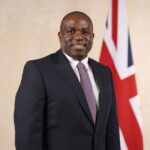
  • David Lammy – 2025 Speech at London Sudan Conference

    David Lammy – 2025 Speech at London Sudan Conference

    The speech made by David Lammy, the Foreign Secretary, in London on 15 April 2025.

    Two years on from this war starting, with frontlines shifting again, I fear many onlookers feel a sense of déjà vu. The country’s fraught history also means that some conclude that further conflict is effectively inevitable.

    Many have given up on Sudan. That is wrong. It’s morally wrong when we see so many civilians beheaded, infants as young as one subjected to sexual violence, more people facing famine than anywhere else in the world.

    We simply cannot look away. And as I speak, civilians and aid workers in El Fasher and Zamzam IDP camp are facing unimaginable violence.

    With over four million refugees having fled the country, and instability spreading far beyond Sudan’s border, it’s also strategically wrong to forget Sudan. And that’s why, as Foreign Secretary, I refused to turn away. I felt a duty to confront this war’s horrors head on.

    I have been to the Sudanese border and met with survivors. I have called out attacks on civilians and humanitarian workers in the United Nations.

    And I have doubled our aid to Sudan, and today I am announcing a further £120 million worth of support. But the biggest obstacle is not a lack of funding or texts at the United Nations, it’s lack of political will.

    Very simply, we have got to persuade the warring parties to protect civilians, to let aid in and across the country and to put peace first.

    And so we do need patient diplomacy. Bringing together this group today, focusing of course on the areas where we agree and building out from there is very very important today, indeed. Today’s goal is then to do just that. We all want to see Sudan’s sovereignty and territorial integrity upheld.

    We all want to see a united state, with functioning institutions. We all want to see Sudan’s civilians protected, and the millions of displaced people able to return to their homes.

    This is a strong basis to agree the steps needed then to relieve suffering and to end this awful war. I hope across our three sessions, we can agree a set of principles for our future diplomatic engagement.

    When I met with Sudanese refugees in Chad I was frankly humbled by their resilience. In the face of unimaginable trauma, they had not given up on their country or the communities around them.

    For their sake, we cannot resign ourselves to inevitable conflict. We cannot be back here one year from now, having the same discussion. So today, let’s show them and the world we have not given up on them. We have not given up on Sudan.

    I am hugely grateful for the support from the African Union, and to my colleagues from France, Germany and the EU in supporting the shared endeavour.

  • Keir Starmer – 2025 Statement on British Steel

    Keir Starmer – 2025 Statement on British Steel

    The statement made by Keir Starmer, the Prime Minister, on 12 April 2025.

    Today, my government has stepped in to save British Steel. We are acting to protect the jobs of thousands of workers, and all options are on the table to secure the future of the industry. Delivering security and renewal for working people is at the heart of my Plan for Change.

    This government is turning the page on a decade of decline, where our manufacturing heartlands were hollowed out by the previous government.

    In recent weeks alone, we have announced the expansion of Heathrow airport and the building of the biggest theme park in Europe in Bedford. We are reforming our planning rules to build 1.5 million homes, and the infrastructure the nation desperately needs. New roads, railways, schools, hospitals, grids and reservoirs. British steel will be the backbone as we get Britain building once more.

    This is a government of industry. That’s why we’ve secured a better deal for the workers of Port Talbot. It’s why we fought to secure the future of Harland & Wolff. It’s why we’ve pledged £200 million to Grangemouth. Our industry is the pride of our history – and I want it to be our future too.

    A secure future. A Britain rebuilt with British steel, in the national interest.

  • Jonathan Reynolds – 2025 Commons Statement on British Steel

    Jonathan Reynolds – 2025 Commons Statement on British Steel

    The statement made by Jonathan Reynolds, the Secretary of State for Business and Trade, in the House of Commons on 12 April 2025.

    Mr Speaker we meet under exceptional circumstances to take exceptional action in what are exceptional times.

    Our request to recall Parliament was not one we have made lightly. And I am grateful, genuinely grateful, to Honourable members on all sides of this House for their cooperation and for being here today as we seek to pass emergency legislation that is unequivocally in our national interest.

    I would also like to particularly thank the staff here in Parliament for facilitating today.

    I would like to thank the Prime Minister, the Chancellor and the Home Secretary for their support.

    Indeed, the only reason we can take this action today is because of the restoration of economic stability and the dedicated resources for steel in the last Budget.

    I would like to recognise my honourable friend for Scunthorpe and the honourable member for Brigg and Immingham and for all my honourable friends from Teesside for their advocacy and engagement on behalf of their constituents throughout this matter.

    As honourable members will know, since taking office this government has been negotiating in good faith with British Steel’s owners, Jingye.

    We have worked tirelessly to find a way forward, making a generous offer of support to British Steel that included sensible, common sense conditions to protect the workforce, to protect taxpayers’ money, and create a commercially viable company for the future.

    Despite our offer to Jingye being substantial, they wanted much more, frankly, an excessive amount.

    We did, however, remain committed to negotiation. But over the last few days, it became clear that the intention of Jingye was to refuse to purchase sufficient raw materials to keep the blast furnaces running.

    In fact, their intention was to cancel and refuse to pay for existing orders.

    The company would therefore have irrevocably and unilaterally closed down primary steel making at British Steel.

    Now I want to make absolutely clear that separate to any conversation about a possible deal to co-invest in new facilities, the British Government offered to purchase raw materials in a way that would have ensured no losses whatsoever for Jingye in maintaining the blast furnaces for a period of time.

    A counter offer was instead made by Jingye for us to transfer hundreds of millions of pounds to them without any conditions to stop that money, and potentially other assets, being immediately transferred to China.

    They also refused a condition to keep the blast furnaces maintained and in good working order.

    Now even if I had agreed to these terms, I could not guarantee that further requests for money would not then be made.

    In this situation, with the clock being run down, doing nothing was not an option.

    We could not, will not, and never will, stand idly by while heat seeps from the UK’s remaining blast furnaces without any planning, any due process, or any respect for the consequences.

    And that is why I needed colleagues here today.

  • Stephen Doughty – 2025 Speech at the Antalya Diplomacy Forum

    Stephen Doughty – 2025 Speech at the Antalya Diplomacy Forum

    The speech made by Stephen Doughty, the Minister for Europe, in Antalya on 12 April 2025.

    The principles are fundamental, and they are what is at stake here. And as Andrea said, this is not just a situation where we see a complete violation of those principles that were in the Helsinki Final Act, that we all stood by, and we have stood by for those 50 years. But it’s also the UN Charter that is fundamentally under threat by Russia’s aggression.

    And of course, this isn’t just the aggression we’ve seen against Ukraine. It’s the other hybrid and destabilizing activities that they prosecute across our continents against our democracies more generally, and whether that’s disruptions, attempted disruptions, in the Western Balkans or in Moldova or elsewhere.

    This has consequences for all of us, and this matters for everybody in this room. It matters for everybody in the room if those principles of territorial integrity and sovereignty are not abided by, and it matters deeply for all of our people. Most importantly for the people of Ukraine at the moment, but for all of us.

    I was in Kyiv just a few weeks ago, and I could hear in the background the alarm going off there. For Ukrainians in the room, this would probably be the air raid alarm on their on their phones, because Ukraine is seeing that escalation every night, civilians being attacked and killed.

    I was in Bucha, which saw some of the worst, appalling atrocities that we’ve seen since the start of this conflict, and seeing those mass graves and others, but also hearing about how just the night before, how drones have come and killed civilians, and how children and others have been taken away and still no idea where those where those young people and those civilians are. That is a brutal attack on the values that all of us in this room stand for. So I think we must absolutely recognize what’s at stake here.

    That’s why we as the UK are 100% ironclad in our support behind Ukraine, not just for now, but for 100 years into the future. It’s why we’re working with our NATO partners and allies here. And it’s a genuine pleasure to be with friends – it’s a genuine pleasure to be here in Antalya and to be hosted by our Turkish allies and friends. And it’s why we must double down, not only on the support for Ukraine, but also for European, Euro-Atlantic security more generally – that’s what we’re doing.

    That’s the leadership the Prime Minister and President Macron are showing, working with President Trump on that secure and sustainable peace for Ukraine. Which Ukraine again has come forward from, and yet we do not see that same response from Moscow. And President Erdoğan very clearly set out yesterday the importance that that peace has to be sustainable. And that’s going to come through those of us who are willing to get in there, to put boots on the ground, to get the support to ensure that Ukrainian forces are able to defend, deter against future aggression. But also that we as NATO partners are stepping up, particularly European partners here, for our own defence.

    That is what we’re doing with our spending. That’s what we’re doing with our commitments. But this matters not just for us. It matters for the globe. It matters for us in this room, because these are fundamental principles that have been attacked here by Moscow.

  • Heidi Alexander – 2025 Speech at the National Railway Museum

    Heidi Alexander – 2025 Speech at the National Railway Museum

    The speech made by Heidi Alexander, the Secretary of State for Transport, in the National Railway Museum in York on 10 April 2025.

    Thank you, David, for that introduction.

    Good evening, everyone, and welcome to the National Railway Museum in York.

    I’m tempted to say we’re in the country’s finest transport museum, but as a Swindon MP and a former Deputy Mayor for Transport in London, I feel I should tread carefully.

    So welcome to ONE of the VERY BEST transport museums in the country!

    It feels fitting for me to do my first big transport speech here.

    The history of our transport network — the stories of the men and women who designed it, built it, operated and used it — are woven into the fabric of our communities in 21st century Britain.

    And it’s you — the people in THIS room — who are adding to that rich tapestry every day.

    You keep life moving.

    You get children to school, commuters to work, and families to their holidays.

    You move the goods that stock our shelves, fuel our industries, and keep businesses thriving.

    You don’t just connect places — you connect people with the things that they need to get on in life.

    And it’s in the spirit of connection that I’d like to tell you a story.

    I hope you won’t be disappointed to learn that I haven’t invited you here for a big policy announcement or news headline, but rather to share a little bit about who I am and what I believe.

    I want to tell you a story about the people and places who have shaped my thinking.

    I grew up in Swindon.

    A proud railway town on the M4 corridor – a place with much to be proud of.

    It’s also a humble football town – and I can tell you, that as a Swindon Town supporter, I have learnt the lessons of humility all too well.

    By fate and circumstance, that’s where my journey began.

    Outside our semi detached house, I remember my dad’s first van parked up — ‘Malcolm Alexander Electrical Services’.

    I remember the first bike I was given – blue with a basket on the front — a bit like the blue crate I’ve got on my bike now.

    And I remember learning to drive around the town’s infamous Magic Roundabout.

    And the car factories that punctuate the town’s history – Rover, Honda and now, BMW.

    It’s fair to say that in 1980s Swindon, the car was king.

    It still is.

    The proliferation of out of town shopping centres, urban expansions and a minimal public transport network shaped the transport destiny of my town.

    Now, I won’t pretend that urban planning preoccupied my teenage mind too much.

    Back then, I was much more concerned about whether Wham! were going to make it to Number 1.

    But when I moved away and got my first job, I began to see the bigger picture…

    … that a poor transport network will limit choices.

    … that it can block the aspirations of young people.

    And, most important of all, a good transport network can do precisely the opposite.

    I was the first person in my family to go to university.

    And like so many, I found work and opportunities in the capital.

    And so it was, at the age of 29, I walked into Lewisham Town Hall as a newly elected councillor – becoming the cabinet member for regeneration just two years later.

    I loved that job, and I fell in love with transport.

    Now, I’ll admit …

    It wasn’t the language of highways management that enthralled me: “There’s no such thing as a speed hump Cllr Alexander, only speed tables and speed cushions.”

    But it was the extension of the East London Line, the creation of new brownfield sites around major railway stations, the improvements to walking and cycling links that really got me hooked.

    I learnt quickly that transport shapes a lot more than roads and railways.

    And equally important, I learnt that it takes a lot of people to shape transport itself.

    At Lewisham, I saw first-hand how transport investment could make a dramatic difference to people’s lives.

    Take Brockley Railway Station.

    For years, it was an uninspiring, inaccessible place.

    Uninviting, a bit run down.

    Not somewhere you’d instinctively love as you rocked up for your morning commute.

    But working with local campaigners, we delivered step-free access, a stunning landscaped ramp and better connectivity along the London Overground.

    Today, Brockley is thriving.

    It’s a place where the old and the new coexist.

    The Wetherspoons on the corner and fried chicken shops sit side-by-side with bakeries, breweries and a pedestrianised square.

    It was a transport scheme that built a stronger, more connected community.

    And, it was transport that made the difference down the road in Lewisham too.

    We transformed it — relocating and improving a bus station, moving a roundabout, redesigning the roads, creating land for new homes, new public spaces and new opportunity.

    And when I say “we”, I mean the hundreds of people from different organisations who made it happen — people like you.

    When a few years later I became the Member of Parliament for Lewisham East, transport was always right at the top of the list of my constituents’ concerns.

    The longer train station platforms that were worse than useless without the longer trains to stop at them.

    The toxic air being pumped into homes around the South Circular.

    And when I later became Deputy Mayor for Transport in London, I had the privilege of working on those concerns more closely than I had ever done before.

    Look, London is big.

    So yes, naturally, I’m proud of the big stuff:

    Straining to keep the capital moving through Covid.

    Working on the Elizabeth line to deliver the jewel in the crown of the UK’s rail network.

    Sticking to my guns on the Silvertown Tunnel, a new river crossing that enables London’s red double-deckers to go under the Thames to the east of Tower Bridge for the first time.

    But honestly, big doesn’t always mean beautiful.

    Transport isn’t just about the price tag on the project.

    It’s about delivering a better everyday experience – buses that come on time, accessible stations, well managed road works.

    I’m just as proud of the smaller projects that made a big difference — many delivered in London by my good friend and then colleague Will Norman — segregated cycle lanes on Jamaica Road and Evelyn St, more secure cycle parking, slower speeds on roads with high KSIs, a direct vision scheme to improve visibility from the cabs of HGVs.

    These were transport interventions which ultimately delivered better public health, as well as better public realm.

    So when I moved back to Swindon a couple of years ago, I wasn’t just carrying a dream about becoming the MP for my home town.

    I arrived with baggage — determined to deliver for Swindon in a similar way to London.

    Not the same solutions — as every place is different, but to give people options and opportunity.

    There isn’t something in the water that makes Swindonians love their cars more than Londoners.

    Just a reality that public transport is better in London.

    And I think it’s a failure of imagination, as much as a failure of policy, that young people in Swindon don’t have better options than I had decades ago.

    Because change is possible.

    Across the country — from Swindon to Shrewsbury,  Rotherham to Peterborough — we have underused transport assets.

    Unloved railway buildings — land surplus to requirements or land that could be made so.

    Neglected stations, like Brockley.

    Potential that shouldn’t go to waste, but we know that, too often, it does.

    And with vision, funding and collaboration, these could become hubs of regeneration, places that don’t just usher people through — but bring people together.

    We talk about delivering “London style” transport to other places.

    But I think we should talk more about “Swindon style” transport for Swindon, or “York style” transport for York.

    And I want to support the capability and capacity within councils and combined authorities to deliver regeneration, investment and tangible improvements.

    We have great mayors.

    We have great local leaders.

    We have great organisations working nationally and regionally.

    We have a lot of talent in this room and beyond.

    So, the question for me, is how do we best harness that?

    Obviously, this is a question that has vexed me particularly since I took a call from the Prime Minister at the tail end of November, asking me to serve as his Transport Secretary.

    And as someone who has skin in the game as a local MP and a passion to build on the work started by the force of nature, Lou Haigh, I naturally said yes.

    And here I am.

    Full-circle in some ways, and trying to shape a new path in another.

    And the task is to build a better decade for transport.

    Towards a better railway…

    Laying the foundations for reform — establishing Shadow Great British Railways and launching a consultation on the upcoming Railways Bill to unify track and train.

    Towards public ownership…

    Passing the Passenger Railway Services Act, with the first operators — Southwestern and c2c — moving into public hands in the coming months.

    Towards better buses…

    Introducing the Bus Services Bill, giving local authorities greater control over routes, timetables, and fares — backed by over £1 billion in investment to improve reliability and frequency.

    Towards better roads…

    Investing £1.6 billion in local highways, an uplift of £500 million on last year — enough to fill an extra 7 million potholes.

    Towards fairer work…

    Enshrining greater protections for seafarers in law.

    Towards cleaner skies…

    Introducing the Sustainable Aviation Fuel mandate and launching a consultation on the revenue certainty mechanism.

    Towards a fossil-free future…

    Supporting the installation of thousands of new EV charge points—helping to drive record electric car sales, with 31% of new cars sold in December last year being electric.

    And towards a transport system that supports the aspirations of everyone in this country…

    It’s why I am so proud to work with the ministerial team at the Department for Transport.

    Like me — and like all of us — they’ve seen the difference that good services make…

    …Whether it’s the tap-and-go trams and buses in Mike Kane’s patch, with fares capped at £2 on Greater Manchester’s Bee Network.

    …Or in Simon Lightwood’s patch, where the mass transit system will improve integrated travel options in West Yorkshire, improving access to opportunities for people in Leeds and Bradford.

    …Or, in Nottingham, where one of the local bus operators, Nottingham City Transport, has been voted UK operator of the year a record six times, with passenger satisfaction amongst the highest in the country. I hear Lilian Greenwood is a pretty good local MP too …

    And as for Peter Hendy, who is his own walking museum of transport knowledge, he has a phrase that I would like to steal.

    He talks about transport needing to be “boringly reliable”.

    And he’s right.

    If public transport options are boringly reliable, then it means day-to-day life is easier for everyone.

    So, by 2035, I want public transport to play a greater role in national life, becoming the easiest, most attractive choice… brilliantly and boringly reliable.

    Enrique Peñalosa, a former mayor of Bogotá, once said:

    “An advanced city is not one where the poor have to own a car, but one where the rich choose to use public transport.”

    That’s a vision I believe in.

    But I can picture the headlines now — so let me counter the column inches before they emerge: there is no such thing as a war on motorists.

    I drive. I own a car and I love it — a racing green Mini Cooper convertible.

    I walk. I cycle.

    I take buses, trains, and taxis.

    And I’ll bet most of you do too.

    No serious person is proposing to ask people like my dad, a self employed electrician, to swap their van for a bus, forcing them to lug all their kit around — I certainly am not.

    Through his career, my dad was a professional problem solver, and I hope I’ll carry the torch for that family tradition.

    But I’ll be focussing on solving the real problems, not wasting time on the invented ones.

    Because I’m sure everybody in this room would agree that where you live shouldn’t determine what you can achieve…

    …that your hometown, no matter how big or how small, should provide the transport options to meet your aspirations…

    … and that — if transport doesn’t nurture young people with the opportunities they deserve, then our entire economy misses out on the talent it needs to grow.

    That’s why we’re here today.

    To have the conversations that bring us closer together.

    I want to harness your talents, your expertise and your drive to solve real problems.

    Because, no matter where people are travelling to, they should be proud of where they’re coming from.

    Thank you, and have a lovely evening.

  • Keir Starmer – 2025 Statement on British Steel

    Keir Starmer – 2025 Statement on British Steel

    The statement made by Sir Keir Starmer, the Prime Minister, on 11 April 2025.

    As Prime Minister, I will always act in the national interest.

    …to protect British jobs and British workers.

    This afternoon, the future of British steel hangs in the balance.

    Jobs. Investment. Growth.

    Our economic and national security…

    …are all on the line.

    I’ve been to Scunthorpe.

    I’ve met the steel workers.

    I know how important steel is…

    …not just to the region, but to the whole country.

    It’s part of our national story.

    Part of the pride and heritage of this nation.

    And I’ll tell you this – it is essential for our future.

    Our Plan for Change means we need more steel not less.

    So we will act with urgency.

    Now, we should be clear –

    This situation – and our response – is unique.

    While it is true that we are facing a new era of global instability…

    Our concerns about this plant…

    And negotiations to protect it…

    Have been running for years.

    This moment could have happened at any time.

    But it has happened now.

    And I will not stand by.

    There is no time to waste.

    So we are recalling Parliament tomorrow

    For a Saturday sitting.

    We will pass emergency legislation

    In one day

    To give the Business Secretary the powers

    To do everything possible to stop the closure of these blast furnaces.

    And as I have said, we will keep all options on the table.

    Our future is in our hands.

    This government will not sit back and just hope.

    We will act to secure Britain’s future…

    With British steel: made in Britain, in the national interest.

  • Wes Streeting – 2025 Speech at Unison’s Annual Conference

    Wes Streeting – 2025 Speech at Unison’s Annual Conference

    The speech made by Wes Streeting, the Secretary of State for Health and Social Care, in Liverpool on 9 April 2025.

    Good morning conference.

    Let’s start on a point of agreement.

    The killing of 15 health and rescue workers in Gaza was an appalling and intolerable tragedy.

    Healthcare workers in any context, in any part of the world, should never be a target.

    The international community, or indeed any actors in any conflict, all have a responsibility to protect health and humanitarian aid workers and also to protect innocent civilians.

    And it’s clear that in Gaza, as well as in other conflict zones around the world at the moment, the international community is failing and failing badly.

    So I want to say, as a Unison member, I strongly support the sentiments expressed by our Healthcare Executive.

    But on behalf of our government, we want to see a return to an immediate ceasefire.

    We want to see aid in, people out of harm’s way, an end to this bloody conflict and a state of Palestine alongside a state of Israel, and the just and lasting peace that Israelis and Palestinians deserve.

    I also have to say, having been to the West Bank with Medical Aid for Palestinians and seen first hand the work that they do supporting the health needs of Palestinians across the occupied Palestinian territories, they do brilliant work.

    And I would fully endorse the sentiment of the motion in supporting them, and each of us putting our hands in our pockets to do that.

    I’m proud to be here today as the first Health and Social Care Secretary to address a UNISON conference since Andy Burnham did 15 years ago—and proud to do so as a UNISON member.

    My first ever parliamentary debate in 2015 was with UNISON, opposing the abolition of the NHS bursary. Since then, I’ve spoken on countless UNISON platforms across my time as Shadow Schools Minister, Shadow Child Poverty Minister, and Shadow Health & Social Care Secretary.

    But today is different. This is the first time I speak to UNISON not as someone discussing what a Labour government should do, but what we are doing—delivering real change to transform society and improve working people’s lives.

    Last July was historic. Labour returned to power with a thumping majority—only the fourth time in our history. It was a result made possible by UNISON’s support for Keir Starmer: helping to change the party, change the government, and now change the country. That victory brought 74 new UNISON MPs into Parliament, including Katrina Murray, Melanie Onn, Mark Ferguson, and my own PPS, Deirdre Costigan. Three UNISON MPs are now in the Department of Health and Social Care: Stephen Kinnock, Karin Smyth, and me.

    We’re delivering the change people voted for. It’s not easy—and I know you’ll have questions and challenges. But we’re ready to engage. UNISON has always been a critical friend to Labour. The “critical” part is just as important as the “friend” part.

    In the past nine months, nothing has shaken my conviction that we will get the NHS back on its feet and build a National Care Service worthy of the name.

    Take Southport, for example. On July 29th, a senseless, mindless attack left children and adults bleeding, some dying, in a community centre. NHS staff responded with extraordinary courage—from paramedics and porters to receptionists and surgeons. But what happened next filled me with rage. Racist thugs attacked Filipino nurses, a Nigerian care worker’s car was torched, and GP surgeries had to close. These are people who came here to care for us. They represent the best of Britain.

    Violence against NHS staff must end. One in seven NHS workers have suffered abuse. That shames us all. So today, I’m announcing mandatory national recording of incidents, data analysis to protect the most at-risk, and requirements for NHS trust boards to report on progress. Zero tolerance. Campaigned for by UNISON. Denied by the Tories. Delivered by Labour.

    Too often, NHS staff are trained at great public expense, only to be driven out by poor treatment. Some end up working in Canada or Australia. We must retain talent and respect staff—through training, flexible working, and fair pay. That’s why we’re implementing a new digital system to fairly apply the Job Evaluation Scheme. A fair day’s work for a fair day’s pay. Campaigned for by UNISON. Denied by the Tories. Delivered by Labour.

    I owe my life to NHS staff who treated me for kidney cancer. I’ll never be able to repay that debt, but I’ll try. You were there for me—I’ll be there for you.

    We have a ten-year plan. The Conservatives left us with record waiting times and low satisfaction. Our mission: get the NHS treating patients on time, and reform it for the future.

    We’ve engaged more than a million people in the biggest NHS consultation ever, including 3,000 staff meetings. The result, to be published this spring, will outline three goals:

    • Shift care out of hospitals and into the community;

    • Modernise the NHS with digital tools and technology;

    • Build a preventative health service to tackle major killers.

    This isn’t the staff’s fault. But we can’t fix it without you. I know how hard it is to fight a broken system. But help is coming. My message: stay and help us rescue it. We’re turning it around.

    In nine months, we’ve already:

    • Given NHS staff an above-inflation pay rise;

    • Ended the resident doctors’ strikes;

    • Invested £26 billion in health and care;

    • Made the largest investment in hospices in a generation;

    • Agreed the GP contract with £889 million in new funding;

    • Reversed a decade of pharmacy cuts;

    • Delivered 2 million extra appointments—seven months early;

    • Diagnosed 80,000 suspected cancer cases early;

    • Cut waiting lists for five months in a row.

    On social care, we’ve delivered the biggest-ever increase to carers allowance—£2,300 extra a year—and introduced fair pay agreements as part of Labour’s Employment Rights Bill. That’s the first step in building a National Care Service.

    And today, I can announce the first universal career structure in adult social care: four new job roles and millions in training investment.

    Keir Starmer said his ambition is for his sister, a care worker, to be treated with the same respect as her brother, the Prime Minister. With Labour, she will be.

    But we carry a huge responsibility—not just to NHS users, but to prove that the NHS can still deliver. On its 75th anniversary, most Britons were proud of the NHS. But 70% thought “free at the point of use” won’t survive the next decade.

    Right-wing figures like Kemi Badenoch and Nigel Farage want to change that. Farage wants insurance-based models and to charge patients. Over my dead body.

    We will always defend the NHS as a public service—free when you need it, no matter who you are.

    Tories and Reform are willing us to fail. But the future of our party and our health service are bound together. The stakes are high. But the prize is huge: an NHS where workers are respected and patients get the care they deserve.

    We can look back one day and say: we were the generation that rescued the NHS from its worst crisis and made it fit for the future.

    Change has begun—and the best is still to come.