Tag: Speeches

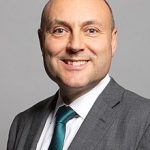
  • Ben Spencer – 2022 Speech on the Expansion of the Ultra Low Emission Zone

    Ben Spencer – 2022 Speech on the Expansion of the Ultra Low Emission Zone

    The speech made by Ben Spencer, the Conservative MP for Runnymede and Weybridge, in the House of Commons on 20 December 2022.

    I thank my hon. Friend the Member for Dartford (Gareth Johnson) for securing this important debate. Conservative Members have been campaigning assiduously on this issue, in particular my hon. Friend the Member for Orpington (Gareth Bacon), who has been leading on it for some time. The ULEZ will have a profoundly negative impact on many of our constituents. Hon. Members should be under no illusion: the ULEZ is about revenue generation on the back of poor financial management. This is a London tax, put forward by the Labour Mayor of London, and it hits the poorest, who cannot afford to update their vehicles. In Runnymede and Weybridge, families and businesses will suffer the most.

    I put out a local petition, and there was an overwhelming response against the ULEZ. That is interesting in itself, but what perhaps gives more power to the arguments against it is the individual comments that people made in response to the petition. People explained that they cannot afford to update their car, because they do not have enough money. Public sector workers, who need to go into London to work, said that the ULEZ will have a serious impact on their ability to continue to do that sort of job. Businesses felt that it would make them go under. People living with disabilities need to use their cars to travel around, and that is a particularly substantial issue at the moment because, yet again, the lift at Weybridge station is broken—sadly, I have had to campaign too often to get it repaired. People are therefore forced into using cars to get to and from London.

    Sadiq Khan says that the ULEZ is about air quality. If it really was about air quality, why does he use such a blunt tool to deal with the issue, as opposed to focusing on the areas with the most acute air quality problems, which are along trunk roads? Why the blanket approach rather than a targeted approach? If he really wants to improve air quality, why does he not push even faster car scrappage? Why does he not invest more in the bus fleet conversion to electricity and hydrogen vehicles? Why does he not listen to industry?

    Earlier this year, I was at an event hosted by Octopus Electric Vehicles in Weybridge, which was looking at the transition to electric vehicles. There were lots of representatives from all sorts of businesses and innovators, and they said that the key policy to drive forward the uptake of electric vehicles is the zero emission vehicle mandate. They welcomed the Government’s incredible position in terms of bringing it forward, but they said that if we want to really push things, we need a more ambitious ZEV mandate. Why is Sadiq Khan not talking about practical, proper solutions to air quality, rather than pressing his attack on, in essence, the poorest?

    I will finish with this: the ULEZ is a London tax to prop up a failing administration. My constituents should not have to pay the price for Sadiq Khan’s failings.

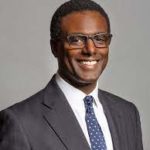
  • Geraint Davies – 2022 Speech on the Expansion of the Ultra Low Emission Zone

    Geraint Davies – 2022 Speech on the Expansion of the Ultra Low Emission Zone

    The speech made by Geraint Davies, the Labour MP for Swansea West, in Westminster Hall, the House of Commons, on 20 December 2022.

    I rise as chair of the all-party parliamentary group on air pollution —I am of course the Member of Parliament for Swansea West, but I was formerly the leader of Croydon Council and an MP for Croydon—to support the ultra low emission zone. I am horrified to see so many outer London Conservatives gambling with people’s lives for their own political survival. We are 70 years on from the great London smog, yet 4,000 people in London are dying prematurely, 11 every day, from air pollution. As leader of Croydon Council, I introduced the Tramlink, 26 km of light rail. When I was in Croydon, I had to regularly take my oldest daughter to Mayday Hospital with asthma attacks because of air pollution. Now, in Swansea, my children have not had to go to hospital.

    Gareth Bacon (Orpington) (Con)

    Is the hon. Gentleman familiar with the report produced by Jacobs entitled “ULEZ Scheme Integrated Impact Assessment”? If he is, how does he square his comments about Conservative Members from outer London not caring about people dying of air pollution with statements in that report such as this?

    “The Proposed Scheme is estimated to have a minor (NO2) to negligible (PM2.5) beneficial impact on exposure to air pollution and achieving WHO Interim Targets across Greater London.”

    Geraint Davies

    I am glad the hon. Gentleman mentioned that, because the expectation is that the expansion of the ULEZ will reduce PM2.5 in outer London by 16%. He should know, but I am sure he does not, that studies at Harvard University and a Max Planck Institute found that covid deaths increased by between 8% and 12% when there was a marginal increase in air pollution from PM2.5—an increase much less significant than the fall that I mentioned. That is particularly relevant to poorer, more polluted areas and more diverse communities. We are talking here about life and death.

    We know from studies done that there will be a massive reduction in PM2.5 and Nox as a result of the expansion. Indeed, there will be a major contribution towards mitigating climate change. The scheme already reduces carbon dioxide emissions by 12,300 tonnes; an expanded one will reduce it by 27,000 tonnes. We will be saving lives and saving the planet. The truth is that if we do not act, we will end up with 550,000 more people unnecessarily getting pollution-related diseases in the next 30 years, at an estimated cost of £10.4 billion. We should move forward on this. People who are neutral, such as the chief medical officer Chris Whitty, who has just released a report on air pollution, very much commend what Sadiq Khan is doing to save lives, as does the United Nations.

    As a result of the ULEZ, there are 21,000 fewer vehicles in inner London and 67,000 fewer non-compliant ones—the latter figure is three times the former—so there are fewer vehicles overall. The scheme affects only 15% of vehicles—the most polluting—and £110 million has been set aside for scrappage schemes to enable conversion. The other thing to bear in mind is that the Government a year ago passed the Environment Act 2021. I wanted them to use COP26 to enforce World Health Organisation air quality standards, but instead, a year on, the Government are saying, “Why do we not try to get PM2.5 at 10 micrograms per cubic metre by 2040?”, as opposed to 2030, which was the previous deadline. The limit prescribed by the World Health Organisation is 5 micrograms, which Europe will achieve by 2030. We could achieve that here—this is a condition of doing so—with ultra low emission zones. Instead, the Conservative position is, “No, we will not bother with that. We will play politics with this, and continue to have 3,600 children every year in London going into hospital with asthma”, as my daughter did. That is unnecessary—and despicable, because it is avoidable.

    Paul Scully

    The hon. Gentleman talks about playing politics, but it is the Mayor who has gone against his consultation. He says that Londoners are in favour of the ULEZ because they talk about air quality. Every Londoner would be concerned about air quality, but this is about the consultation that he refused to accept. The hon. Gentleman talked about trams in Croydon. It would be far better to pay for the tram extension in Sutton; that would be cheaper than what the Mayor is doing, and it would improve air quality by ensuring that people made fewer car journeys—and he would be taking residents with him.

    Geraint Davies

    I am pleased to hear that the hon. Gentleman supports trams. I very much agree that we should move forward with trams across London and elsewhere. As an aside, the tram system cost us £200 million at the time. It was a public-private scheme with £100 million of private money and £100 million of public. We could get 1,000 of those schemes and integrated transport across Britain for the cost of HS2, but that is controversial and off the point.

    We should certainly take people with us; the YouGov poll shows that people support the extension of the ULEZ by a ratio of 2:1. It is very easy to go round knocking on people’s doors and saying, “Do you agree with Sadiq Khan’s attempt to tax you more in this despicable way?”, but if we do a neutral, objective study through YouGov, we find that people support it by 2:1.

    Gareth Bacon

    Will the hon. Gentleman give way?

    Geraint Davies

    Yes, I will. The hon. Gentleman can carry on with more of his science.

    Gareth Bacon

    Is the hon. Gentleman aware that the figures quoted by Conservative Members come from the Mayor’s own consultation, in which 66% of people said, “No, don’t do this”? That was despite being asked a load of leading questions about air quality. Despite that, it delivered a two-thirds opposition. That was not people knocking on doors; that was the Mayor’s own consultation.

    Geraint Davies

    So that we are clear about how these consultations work, the Mayor, a devolved Administration or whatever puts out a consultation that says, “Tell us what you think”, and then groups of people campaign around it. They put in their submission and await the outcome. YouGov takes a representative sample; it found that people are in favour by 2:1. That is the answer. The hon. Gentleman should read up on how these things work, rather than spouting off about how they do not.

    In a nutshell, we are talking about ensuring better public health, and ensuring that we reach World Health Organisation standards in time. This is a critical part of moving forward, because London is a sort of death spot in terms of pollution. If we do not get London right, we cannot move together as a nation. We will end up with these ridiculously unambitious targets of 10 micrograms by 2040, instead of 5 micrograms by 2030. I very much agree with what the Mayor has done; best of luck to him.

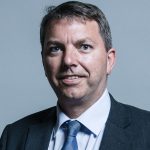
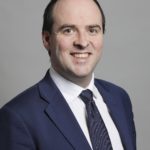
  • Gareth Johnson – 2022 Speech on the Expansion of the Ultra Low Emission Zone

    Gareth Johnson – 2022 Speech on the Expansion of the Ultra Low Emission Zone

    The speech made by Gareth Johnson, the Conservative MP for Dartford, in Westminster Hall, the House of Commons, on 20 December 2022.

    I beg to move,

    That this House has considered the expansion of the Ultra Low Emission Zone.

    I am pleased to have secured this debate on one of the biggest issues affecting my constituency right now. It affects not just Dartford, but areas right across London and the neighbouring counties. It is, of course, Sadiq Khan’s extension of the ultra low emission zone. The decision by the Labour Mayor of London to extend that scheme to cover the whole of London will be catastrophic for my constituency, which neighbours London. The border is not neat; it straddles roads such as Maiden Lane and sits at the end of roads such as The Coppice, Bowmans Road and Stonehill Woods Park. Although their residents are in Kent, they have to enter London just to get out of their road—just to live. They have no choice but to enter London.

    Currently, the border with London is fairly frictionless. Thousands of times a day, people drive across that border, often without even knowing it. That is good for London, and good for Kent and other counties bordering London, but now Sadiq Khan is building a financial wall between London and the rest of the country. A small business, particularly in outer London, that relies on customers travelling to it will be crucified by this form of taxation. The line that has been used by those desperately trying to defend the Mayor is that the scheme will not affect many people, but one in seven cars is already affected. Given that the Mayor ignored his own consultation on this scheme and did not include the expansion in his manifesto, as sure as night follows day, he will increase the number of vehicles that will have to pay—all to sort out the financial mess he has got his administration into.

    Paul Scully (Sutton and Cheam) (Con)

    The Mayor’s own consultation shows that 28,000 vehicles will be affected in the London Borough of Sutton alone. As my hon. Friend rightly says, it is small business people—those who can least afford to replace their car—who will be affected.

    Gareth Johnson

    My hon. Friend makes a pertinent point. I think I am right in saying that almost two thirds of the respondents to that consultation, and an even higher proportion of those who responded from outer London and the home counties, opposed the expansion. That consultation, frankly, was a sham; the Mayor’s decision does not reflect what people have told him.

    As I say, this is all about trying to sort out Sadiq Khan’s financial mess. Well, Dartfordians should not have to pick up the bill for his financial incompetence. Everyone will be impacted by the expansion of ULEZ, whether directly as a motorist or business, or indirectly by the damaging impact that scheme will have on the local economy.

    Dr Lisa Cameron (East Kilbride, Strathaven and Lesmahagow) (SNP)

    I thank the hon. Member for bringing this important debate to the House. As chair of the all-party parliamentary group for disability, I have been contacted by a number of people who have mobility cars who do not have to pay, but also by those who do have to pay. They are extremely concerned about the financial impact of this decision, given the cost of living crisis. Does he agree that there should be some kind of overall exemption for people who have disabilities, and who require mobility cars to access the public services that we all should be able to access?

    Gareth Johnson

    The hon. Lady makes an incredibly important and good point. Of course, people rely on their motor vehicles; some have no choice whatsoever. If public transport does not go the way that they are going, they have to use their motor vehicle, and she is absolutely right to highlight the impact that this decision will have on disabled people.

    As far as exemptions are concerned, I would argue that everybody should be exempt. I do not think anybody should have to pay this charge, because of its nature and the impact it will have on so many people—on everybody around London. It is not just those who own vehicles that breach the ULEZ guidelines who will be affected; it is everybody.

    Seema Malhotra (Feltham and Heston) (Lab/Co-op)

    I thank the hon. Member for securing the debate. I have also had representations, and heard my constituents’ concerns, about costs and the transition to green vehicles, but there is another side to this. I am sure he will agree that this is also about air quality, which we need to tackle in London. Has he read that the Mayor has decided to introduce two new temporary exemptions, from January 2023 to October 2027? Those grace periods will apply for those on disabled benefits and with wheelchair-accessible vehicles. Any way we move forward must be inclusive. There are still questions to be answered, including from my constituents.

    Gareth Johnson

    The hon. Lady raises an important point about the impact on disabled people. I would reiterate what I said to the SNP spokesperson, the hon. Member for East Kilbride, Strathaven and Lesmahagow (Dr Cameron).

    I believe that the constituency of the hon. Member for Feltham and Heston (Seema Malhotra) covers Heathrow airport. This will have a big impact on her constituency; it will stop people accessing that airport and make them go to other airports instead, so I would argue that the expansion has a big impact, and has unintended consequences for many people and businesses.

    The Mayor is relying on not just the £12.50 per day charge, but the penalty charges for non-compliance, which make him even more money. The RAC believes that in the first eight months after the expansion of the ULEZ to the south circular, 1.6 million penalty notices were issued. This expansion will be to the whole of London; I shudder to think how many penalty notices will be issued.

    We can see why the expansion is so financially and politically attractive to the Mayor of London. Those who must pay his seven-days-a-week charge to enter London cannot and do not vote for him. We are not Londoners in Kent; this is quite literally taxation without representation or accountability. The two areas hit hardest by the expansion are the counties bordering London, which cannot vote for the Mayor, and outer London, which the Mayor does not care about because it is not where the bulk of his votes come from.

    The Mayor says that he will bring in a scrappage scheme for the poorest people, so that they can change their car. He is not doing that for those living in Dartford or anywhere else outside London, so the poorest will be hit the hardest. They will be unable to change their car or enter London to go to work, shop or pick up the kids from school. How will key workers get to London to support the health service, the police or other emergency workers there? Many of those key workers own cars that will be charged if they enter London, yet they keep vital services in London going. The supermarket ASDA has contacted me because it is concerned about the impact that the extension would have on its depot workers. It estimates that over half of those workers have vehicles that would be subject to the charge.

    The scheme currently goes out to the south circular. We already see people parking just outside the ULEZ before continuing their journey using another form of transport. That is an understandable way of avoiding the charge, yet this practice could turn large parts of west Dartford and Joyden’s Wood—and areas all around London—into a car park. What justification does the Mayor give for his decision? He says that it is to reduce pollution. If he really wanted to reduce pollution in London he would ban the vehicles, but he does not want to ban them; he wants to make money out of them.

    The expansion of the ULEZ has nothing to do with pollution. The worst pollution in London is in central London, not outer London. Of course, the expansion could not take place without the Mayor changing his transport strategy. He has changed it—with the votes of the Labour and Liberal Democrat Assembly members, and with only the Conservatives opposing. He held a consultation, which we have spoken about, on the ULEZ expansion and more than 60% of respondents opposed the idea, so what did he do? He just ignored them. What was the point of that consultation exercise?

    His Majesty’s Government have stated on numerous occasions that they do not have the power to stop this expansion. Can my hon. Friend the Minister confirm, when he responds to this debate, whether that is the case? What advice has he sought on it? It seems that outer London boroughs can refuse to allow their land to be used for the camera infrastructure needed. Can he give his view on whether councils can refuse to allow their land to be used in that way, as it seems to me that that may be possible?

    The ULEZ expansion will have a significant impact on the poorest in society. It will price people out of going to work, going shopping or otherwise going about their daily life. It will place a financial wall around London and take away people’s freedom of movement. It is aimed at those who cannot vote the Mayor out of office and those who do not vote for him. It is the most debilitating, unfair, undemocratic form of taxation this country has ever seen, and it is a window on the soul of the Mayor of London.

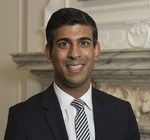
  • Rishi Sunak – 2022 Statement on the UK Delegation to the Parliamentary Assembly of the Council of Europe – Appointments

    Rishi Sunak – 2022 Statement on the UK Delegation to the Parliamentary Assembly of the Council of Europe – Appointments

    The statement made by Rishi Sunak, the Prime Minister, in the House of Commons on 20 December 2022.

    My hon. Friend the Member for Stoke-on-Trent Central (Jo Gideon) has been appointed as a full member of the United Kingdom delegation to the Parliamentary Assembly of the Council of Europe in place of my hon. Friend the Member for South West Hertfordshire (Gagan Mohindra).

    My hon. Friend the Member for Hastings and Rye (Sally-Ann Hart) has been appointed as a full member in place of my right hon. Friend the Member for Gainsborough (Sir Edward Leigh), who has been appointed as a substitute member in place of my hon. Friend the Member for Meriden (Saqib Bhatti).

    My hon. Friend the Member for Morecambe and Lunesdale (David Morris) has been appointed as a full member in place of my hon. Friend the Member for Sedgefield (Paul Howell).

    My hon. Friend the Member for Hartlepool (Jill Mortimer) has been appointed as a full member in place of my hon. Friend the Member for Broadland (Jerome Mayhew).

    My hon. Friend the Member for Mid Derbyshire (Mrs Pauline Latham) has been appointed as a substitute member in place of my hon. Friend the Member for Truro and Falmouth (Cherilyn Mackrory).

    My hon. Friend the Member for South East Cornwall (Mrs Sheryll Murray) has been appointed as a substitute member in place of my hon. Friend the Member for Bolsover (Mark Fletcher).

    My hon. Friend the Member for West Worcestershire (Harriett Baldwin) has been appointed as a substitute member in place of my hon. Friend the Member for North West Durham (Richard Holden).

    My hon. Friend the Member for Cities of London and Westminster (Nickie Aiken) has been appointed as a substitute member in place of my hon. Friend the Member for Beaconsfield (Joy Morrissey).

  • Kemi Badenoch – 2022 Statement on the Canada and Gulf Cooperation Council

    Kemi Badenoch – 2022 Statement on the Canada and Gulf Cooperation Council

    The statement made by Kemi Badenoch, the Secretary of State for International Trade, in the House of Commons on 20 December 2022.

    The Department for International Trade has made progress on two key trade negotiations. This statement provides Parliament with an update on the United Kingdom’s trade negotiations with Canada and the Gulf Cooperation Council.

    UK-Canada trade negotiations

    The fourth round of the UK-Canada free trade agreement negotiations commenced on 28 November and concluded on 2 December. The negotiations were hosted in Ottawa and conducted in a hybrid format, with technical discussions held across 32 policy areas over 73 separate sessions.

    This round saw the first full chapter agreed in principle, Transparency, and we provisionally identified candidates for closure in the next rounds. We continued to make steady progress and agree text where there was clear alignment, including in innovation, small and medium-sized enterprises, technical barriers to trade, anti-corruption and financial services.

    Discussions were largely constructive, but key differences remain and there is more work to be done towards acceptable landing zones in important areas such as services, investment and procurement. Both negotiation teams took actions to consider each other’s priorities and identify opportunities to move closer together ahead of the next round.

    As always, we closely monitored the interdependencies between the bilateral and comprehensive and progressive trans-Pacific partnership negotiations, particularly considering that CPTPP members were meeting in London the following week.

    We expect to hold the fifth round of negotiations in London in March 2023.

    UK-Gulf Cooperation Council trade negotiations

    The second round of negotiations for an FTA between the UK and the GCC took place between 5 and 9 December.

    The second round was hosted in London and held in a hybrid fashion. More than 100 GCC officials travelled to London for in-person discussions, with others attending virtually. Technical discussions were held across 29 policy areas over 36 sessions. In total, more than 100 UK negotiators from across Government took part in this round of negotiations.

    During the round, the UK set out its policy positions having exchanged draft chapter text with the GCC across most policy areas before the round. A key objective at this stage was to continue to build a firm understanding of the GCC’s policy positions and priorities. Both negotiation teams took actions to further consider each other’s positions and identify opportunities to move closer together ahead of round 3.

    Both sides remain committed to securing an ambitious, comprehensive and modern agreement fit for the 21st century.

    An FTA will be a substantial economic opportunity, and a significant moment in the UK-GCC relationship. Government analysis shows that, in the long run, a deal with the GCC is expected to increase trade by at least 16%, add at least £1.6 billion a year to the UK economy and contribute an additional £600 million or more to UK workers’ annual wages.

    We expect the third round of negotiations to take place in Riyadh next year.

    His Majesty’s Government remain clear that any deal we sign will be in the best interests of the British people and the United Kingdom economy. We will not compromise on our high environmental, public health, animal welfare and food standards, and we will maintain our right to regulate in the public interest. We are also clear that during these negotiations the national health service and the services it provides are not on the table.

    His Majesty’s Government will keep Parliament updated as these negotiations progress.

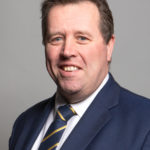
  • Mark Spencer – 2022 Statement on Annual Negotiations for 2023 Fishing Opportunities

    Mark Spencer – 2022 Statement on Annual Negotiations for 2023 Fishing Opportunities

    The statement made by Mark Spencer, the Minister for Food, Farming and Fisheries, in the House of Commons on 20 December 2022.

    Each year, the UK negotiates with the EU, Norway and other coastal states in the north-east Atlantic, and via regional fisheries management organisations, to agree catch opportunities and sustainable management measures for shared stocks, including in international waters.

    Successful annual negotiations for 2023 fishing opportunities

    The UK has now concluded these negotiations and reached agreement with the EU, Norway and other coastal states in the north-east Atlantic on catch opportunities for 2023. Across these negotiations, the UK has secured agreement on 86 TACs—total allowable catches—providing £750 million of potential fishing opportunities.

    The UK has also concluded an agreement with Norway for continued access to each other’s waters for 2023, as well an exchange of fishing quota.

    The UK Government have worked closely with the Scottish Government, the Welsh Government and the Northern Ireland Executive, and the outcomes secured will enable us to improve the sustainable management of our fish stocks and support the whole of the UK fishing industry.

    UK-EU agreement

    As a result of quota share uplifts agreed in the trade and co-operation agreement, the UK has around 30,000 tonnes more quota from these negotiations than it would have received with its previous shares as an EU member state. The UK has agreed 69 TACs and arrangements for non-quota stocks with the EU for 2023, providing fishing opportunities of more than 140,000 tonnes. In total, this is worth around £282 million, based on historical landing prices.

    An initial estimate suggests that the number of TACs that align with scientific advice from ICES—the International Council for the Exploration of the Sea—has increased by 13% compared with last year. This is the largest increase since 2020, when the UK first started using this metric. The Government will publish shortly a full assessment of the number of TACs set consistent with ICES advice across all annual negotiations.

    For 2023, we have also agreed access arrangements on albacore tuna and spurdog in the North sea for the first time through the UK-EU written record.

    For NQS—non-quota stocks—we agreed a roll-over of access arrangements for 2023 to ensure continued access for the UK fleet to fish NQS worth around £25 million per year in EU waters. This is alongside further flexibility for seabass management measures within the ICES advice.

    UK-EU-Norway trilateral negotiations

    The UK has also reached agreement with Norway and the EU on catch limits for 2023 for six stocks, worth over £202 million to the UK fishing industry in the North sea and a further £11 million in other waters around the UK, based on historical landing prices.

    The parties have agreed increases in TACs for five of the six stocks, including North sea cod. They have agreed to a cut in North sea herring. All TACs are at or below the level advised by ICES. For two stocks—haddock and whiting—the parties have agreed to take a more precautionary approach than the scientific advice to avoid risks to the recovery of North sea cod, given the close interactions between the stocks, and set a 30% increase on each.

    The parties renewed their commitment to deliver long-term management plans for their shared stocks, and have agreed to develop new and more effective management measures for the North sea herring fishery, focusing on stability for industry and sustainability.

    The parties have also agreed to continue building on the work undertaken this year on monitoring, control and surveillance of their shared stocks.

    UK-Norway bilateral negotiations

    The UK has agreed with Norway on continuing to allow vessels to access our respective waters for demersal fisheries, as well as exchanges of quota worth around £5 million to the UK fleet. UK vessels will be able to fish their North sea whitefish quotas, such as hake and cod, in Norwegian waters, up to a total of 30,000 tonnes. We have also agreed to reciprocal access for herring, up to 20,000 tonnes. On exchanges, we secured around £3 million worth of North sea quota from Norway—including valuable stocks such as monkfish—together with around £2 million-worth of stocks in Arctic waters. This complements over 5,200 tonnes of cod in waters around Svalbard, worth an estimated £10 million, that Norway has allocated to the UK under a separate arrangement.

    The mutual access will also allow respective fleets more flexibility to target the stocks in the best condition throughout the fishing year, supporting a more sustainable and economically viable fishing industry.

    Multilateral “coastal state” negotiations

    The UK has agreed TACs at the level advised by ICES on the three stocks we share with other coastal states in the north-east Atlantic: mackerel, blue whiting and Atlanto-Scandian herring—ASH. The opportunities will be worth over £250 million to the UK fleet in 2023.

    The UK has also chaired negotiations throughout 2022 on a new quota-sharing arrangement for mackerel. These negotiations are making steady progress, and the UK remains committed to securing a fair, sustainable and comprehensive sharing arrangement. Negotiations will resume in early 2023, with an aim of concluding them by 31 March, alongside parallel discussions to agree new quota-sharing arrangements for blue whiting and ASH.

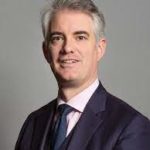
  • James Cartlidge – 2022 Statement on UK Electricity Generators and Tax on Extraordinary Returns

    James Cartlidge – 2022 Statement on UK Electricity Generators and Tax on Extraordinary Returns

    The statement made by James Cartlidge, the Exchequer Secretary to the Treasury, in the House of Commons on 20 December 2022.

    Along with resurgent demand for energy following the pandemic, Russia’s invasion of Ukraine and weaponisation of gas supplies has driven UK wholesale gas prices to record highs. Due to the composition and structure of the UK electricity market, higher wholesale gas prices are in turn driving higher wholesale electricity prices and leading to exceptional returns arising to some electricity generators in the UK.

    Consistent with action taken in other countries, from 1 January 2023 the Government are introducing a temporary 45% tax on extraordinary returns made by some UK electricity generators. HM Treasury will today publish on www.gov.uk draft legislation, along with an updated technical note explaining the policy in detail. The levy will be applied to a measure of extraordinary revenues, defined as revenues from selling periodic output at an average price above £75/MWh. That is approximately 1.5 times the average price of electricity over the last decade. It will apply to revenues from electricity generation in the UK from renewable—including biomass—nuclear, and energy from waste sources and will be focused on the largest generators through a generation threshold of 50GWH of annual output and a £10 million allowance.

    This temporary measure is not designed to penalise electricity generators. It is instead a response to the fact that, as a result of exceptional and unforeseen geopolitical events, some electricity generators are realising extraordinary returns from higher electricity prices—higher prices that have imposed substantial costs on households and business energy users and necessitated the Government to take unprecedented action with £55 billion to directly help households and businesses with their energy bills. The Government have previously considered a price cap in response to the current crisis. We have instead adopted this levy as a more proportionate approach. It leaves generators—whose continued investment in the industry is vital to our long-term energy security—with a share of the upside they receive at times of high wholesale prices.

    The levy will end on 31 March 2028. This reflects the possibility that wholesale electricity prices remain elevated for a number of years and the need for businesses to have certainty around the measures the UK is taking in response. However, should the crisis abate and prices fall below the benchmark price, the revenue forecast from the levy will not materialise and consideration would be given to the tax’s ongoing application.

    Furthermore, responding to concerns that have been raised around the tax’s duration and its impact on investment, the £75/MWh the benchmark price will be indexed to CPI inflation from April 2024, and relief will be provided for certain exceptional costs that are reducing the degree to which generators are benefiting from higher electricity prices.

    Support for investment in renewables

    The Government are committed to decarbonising power systems by 2035 and reaching net zero emissions by 2050. Britain is a global leader in renewable energy. Last year, nearly 40% of our electricity came from offshore wind, solar and other renewables. Since 2010, our renewable energy production has grown faster than any other large country in Europe. We are committed to ensuring that the UK remains one of the best places in the world to invest in clean energy and have set stretching deployment ambitions, including up to 50GW of offshore wind by 2030 and a fivefold increase in solar by 2035. As we move towards these ambitious goals, the Government will seize the opportunities for growth through the transition, creating the right framework to crowd-in billions of pounds of new investment into the UK’s economy. That includes:

    Our highly successful Contracts for Difference scheme continues to bring more and more generation online, with our most recent auction delivering a record capacity of almost 11 GW. A consultation for the sixth Contracts for Difference round was published last week.

    The Offshore Co-ordination Support Scheme, which will provide up to £100 million of grants to energy projects to develop co-ordinated options for offshore transmission infrastructure, was launched earlier this month.

    Government also continue to work with the Offshore Wind Acceleration Taskforce and other developers to identify and address barriers to deployment. This includes reforming the planning system, where Government are acting to ensure that consents are secured faster, and the risk of delays are reduced.

    We have heard calls for the tax system to provide strengthened incentives for—long-term—investment in the low-carbon electricity generation sector, including investment in new capacity as well as investment needed to maintain and upgrade existing capacity. The Government continue to recognise the value of capital allowances for supporting investment within a sustainable fiscal strategy, and any further changes will be set out at a future fiscal event in the usual way.

    Government are undertaking the Review of Electricity Market Arrangements (REMA) which will assess how our power markets can best deliver a low-cost, low-carbon and secure electricity system, whilst reducing our exposure to international oil and gas prices.

  • Andrew Griffith – 2022 Statement on the Mortgage Guarantee Scheme Extension

    Andrew Griffith – 2022 Statement on the Mortgage Guarantee Scheme Extension

    The statement made by Andrew Griffith, the Economic Secretary to the Treasury, in the House of Commons on 20 December 2022.

    Today I can inform the House that the mortgage guarantee scheme will be extended by an additional year to continue to support homebuyers and movers with smaller deposits. The scheme will now close to new accounts on 31 December 2023.

    HM Treasury launched the mortgage guarantee scheme in April 2021, which provides a guarantee to participating lenders across the UK who offer mortgages to first-time buyers and existing homeowners with a deposit as small as 5% on homes with a value of up to £600,000. Since its launch last year, the scheme has successfully restored the availability of 91 to 95% loan-to-value mortgage products, directly supporting over 24,000 households to buy their homes—85% of which were by first-time buyers. Since 2010, more than 687,000 households have been helped into home ownership through Government schemes.

    While the mortgage guarantee scheme was originally planned to close to new mortgage applications on 31 December 2022, HM Treasury has decided to extend the scheme by an additional year to continue to provide lenders with the confidence to offer low-deposit mortgages to consumers.

    Guarantees issued under the scheme are valid for up to seven years after the mortgage is originated. Participating lenders pay HM Treasury a fee for each mortgage entered into the scheme. This is set so that expected claims against the guarantee should be covered by revenue from the fee.

    In order to ensure products remain available, HM Treasury will therefore be extending the duration of the Government’s contingent liability for an additional year beyond its planned closing date of 31 December 2022. The Department is also reducing the maximum contingent liability cap from £3.9 billion to £3.2 billion, which remains set at a level so as not to constrain the ability of lenders to access the scheme. This liability would only materialise if the sum of commercial fees paid by lenders would not be sufficient to cover calls on the guarantee.

    Authority for any expenditure required under this liability will be sought through the normal procedure. HM Treasury has approved this proposal.

  • Darren Henry – 2022 Speech on Shared Parental Leave and Pay (Bereavement)

    Darren Henry – 2022 Speech on Shared Parental Leave and Pay (Bereavement)

    The speech made by Darren Henry, the Conservative MP for Broxtowe, in the House of Commons on 20 December 2022.

    I beg to move,

    That leave be given to bring in a Bill to make provision about shared parental leave and pay in certain cases where one or both of a child’s parents has died; and for connected purposes.

    I want to start by telling the House Aaron’s story. I was visited at a constituency surgery in February by my constituent Aaron Horsey, who is in the Gallery today with his family. Aaron had his three-week-old son Tim in his arms. His wife Bernadette had sadly passed away in childbirth. Bernadette would no doubt have been the most loving, dedicated mother, and had ambitious plans for continuing a long career in the NHS. She is missed tremendously by her loved ones.

    While grieving the passing of his wife and looking after his new-born son Tim, Aaron discovered that he was not entitled to shared parental leave. That put the plan that Aaron had put in place with his wife Bernadette into jeopardy. Luckily, in Aaron’s case, he worked for an incredibly understanding employer, which gave him the leave he needed to look after Tim, but others are not so lucky. This Bill attempts to ensure that there is a right to leave and pay for individuals such as Aaron in the case of a spouse passing away. That right would be there regardless of the length of time that a person had been with their employer. This Bill would help not only employees in such circumstances but businesses that wish to give leave.

    During the process of securing this ten-minute rule Bill, I have been contacted by other individuals around the UK with similar stories to Aaron. It is my belief that we must work to close the gap and ensure that leave and pay are made available for those in circumstances such as Aaron’s. It is important to state that this issue does not affect thousands of people across the country, but for those it does affect, the consequences are huge. Changing the law to ensure that leave and pay are available to those who find themselves in situations such as Aaron’s will ensure that no parent is faced with the devastating position of raising a child and grieving in the shadow of avoidable job insecurity.

    Parental leave in the UK is something we should be proud of. Since the Employment Rights Act 1996 and the Maternity and Parental Leave Regulations 1999, entitlement and access to maternity leave and pay have been very straightforward. On a similar note, entitlement and access to paternity leave or shared parental leave, although more limited, are also fairly straightforward. When shared parental leave was introduced in 2015, the Government stated that they wished to

    “move away from the current old-fashioned and inflexible arrangements and create a new, more equal system which allows both parents to keep a strong link to their workplace.”

    Shared parental leave was established to allow parents access to their workplace and their family. That is precisely what is being prevented in cases such as Aaron’s. It seems that in such cases the people whom shared parental leave was created to help are often the ones missing out. When faced with this life-altering set of circumstances, Aaron was confronted with having to cope with the challenges of being a new parent and the prospect of new job insecurity, all while in the midst of extraordinary grief. That is more than many of us could handle.

    This Bill is not contentious. It simply seeks to allow individuals the right, under circumstances beyond their control, to take leave and be with their child. As I have mentioned, it would affect not a vast amount of our population, but a small number in our society who need the help of the Government and their employers.

    Aaron brought it to my attention that there are circumstances, in the event of the death of a child’s parent during childbirth, in which the surviving partner is not entitled to parental leave. To be eligible for shared parental leave and statutory shared parental pay, both parents must share responsibility for the child at birth and meet work and pay criteria. As the law stands, for the mother’s partner to take shared parental leave and shared parental pay, the mother must have been working for at least 26 weeks of the 66 weeks before the baby is due, and must have earned at least £390 in total across any 30 of the 66 weeks. The mother’s partner must have been employed continuously by the same employer for at least 26 weeks by the end of the 15th week before the due date. They must also stay with the same employer until they start their shared parental leave.

    Practically speaking, a surviving partner could be entitled to take shared parental leave but they would not meet the criteria I have just mentioned. Aaron did not. That means that, under this requirement, many will not qualify for shared parental leave and pay. This Bill seeks to correct that. It seeks a day-one right for a parent to access both leave and pay. It seeks to ensure that employees who have to raise a child following the death of their partner will not be left without support. As a father, I know that being a parent to a newborn is a huge undertaking at the best of times. I cannot imagine being in that position while facing the fact your partner has died during birth. I want to ensure that people such as Aaron are never in the position of being without support.

    I now come to why this Bill is needed. I truly hope that no one finds themself in the position that Aaron found himself in, unable to share the beginning of Tim’s life with his loving wife. The aim of this Bill is to ensure that people facing that situation do not find themselves without the law behind them.

    I thank all hon. Members who have supported the Bill. I have received overwhelming cross-party support on the issue. The Bill is not party political; it seeks to make a real impact to those in our society who find themselves in tragic circumstances through no fault of their own. As well as receiving support from colleagues, I have received a statement of concern from the Prime Minister. I have also had meetings with the Department for Business, Energy and Industrial Strategy, including with the Under-Secretary of State—my hon. Friend the Member for Thirsk and Malton (Kevin Hollinrake), who is in his place on the Front Bench—to discuss these much-needed changes.

    My last thanks go to Aaron. While he was dealing with all the hardship that I have set out, he was thinking not about himself, but about how to ensure that no one else finds themselves in his position. He is a truly selfless individual. I put on record my awe at the bravery and resilience that he has shown and continues to show.

    There is a gap in our law that means that parents and guardians face impossible circumstances. That gap must be closed. It is the responsibility of all of us to ensure that the tragic circumstances of losing a loved one and raising a child alone are made that tiny bit easier, and that employment is one thing that need not cause further turmoil. I ask, with much hope, that due consideration be given to passing the Bill. The change it would make may seem small, but its impact on the life of an individual could be incalculable.

    Question put and agreed to.

    Ordered,

    That Darren Henry, Jim Shannon, Tracey Crouch, Sally-Ann Hart, Brendan Clarke-Smith, Philip Dunne, Wera Hobhouse, Mrs Pauline Latham, Tom Randall, Stella Creasy, Dr Philippa Whitford and Sarah Champion present the Bill.

    Darren Henry accordingly presented the Bill.

  • Richard Holden – 2022 Speech on Bus Route Consultation

    Richard Holden – 2022 Speech on Bus Route Consultation

    The speech made by Richard Holden, the Parliamentary Under-Secretary of State for Transport, in the House of Commons on 20 December 2022.

    It is a pleasure to take the last Adjournment debate before Christmas. In addition to thanking my hon. Friend the Member for Watford (Dean Russell), I would like to thank the hon. Members for Strangford (Jim Shannon) and for East Kilbride, Strathaven and Lesmahagow (Dr Cameron), my hon. Friend the Member for Warrington South (Andy Carter) and my right hon. Friend the Member for Beckenham (Bob Stewart) for their contributions today. I congratulate my hon. Friend the Member for Watford on securing another opportunity to speak on the behalf of his constituents in Watford. I know he works relentlessly to champion the issues that matter to them, and local bus services are part of the suite of issues that he regularly brings to the House and to Ministers.

    I was fortunate enough to be able to visit Hertfordshire a couple of weeks ago, when I met Councillor Phil Bibby, the executive member for highways and transport, and experienced at first hand some of the great work that is going on within the county to improve bus services. I was delighted to see Arriva’s new depot in Stevenage, which will house its new zero-emission bus fleet just up the road, and to learn more about the HertsLynx demand-responsive transport service, providing vital connectivity for rural villages in the north of the county, although those are admittedly not so close to my hon. Friend’s constituency. These are things that could make a huge and positive difference in Hertfordshire and elsewhere.

    The Government are clear that bus services are vital to ensuring that people can access work and education, as well as crucial services such as healthcare, as my hon. Friend said. We also recognise the fundamental importance of ensuring that people can stay connected to their local communities. I would like to address one of the issues around late cancellations and poor communications from bus companies. I am supportive of the general public being better informed about changes to local bus services, and my Department is working with local authorities and operators to seek improvements in that area. We recognise that the sector is facing challenges at the moment, but we expect operators to provide the services that they have advertised. It is unacceptable when they do not do so, especially when they do not give proper notice of those changes. That is one reason why I am so keen to welcome this debate. Ensuring that passengers who rely solely on local bus services are easily able to provide their views to bus operators and local transport authorities when changes to services are due to be made is a key aspect of the reforms to bus services in England that we set out in the national bus strategy, one of a plethora of measures we are bringing forward.

    Crucially, we want local authorities to have greater oversight of bus service provision so that they can work more closely with bus operators to ensure the provision of bus networks that meet the needs of local people. That includes having an element of flexibility in respect of bus service plans. When things change, we need the operators to be able to change with them.

    My Department is ready and willing to work with local transport authorities and operators as they work together as part of their bus service improvement plans. I know that Hertfordshire County Council is looking forward to establishing an enhanced partnership with local operators. I am pleased that my hon. Friend the Member for Watford mentioned the £29.7 million that has already been allocated to the council.

    The issue of consultation is particularly important. I really do hope that through the enhanced partnership we will see the operators working more closely with the service providers. That will really help provision. I urge my hon. Friend to keep pressing the council and his local operators on that.

    In its guidance on enhanced partnerships and BSIPs, the Department has highlighted the importance of councils and operators working with bus-user groups and local groups when they consider how to improve services and make sure that passengers are well informed about changes to local bus routes. There will always be changes and, hopefully, improvements—that is what the plans are there to deliver.

    We have provided a capacity support grant to all local transport authorities to develop and deliver their enhanced partnerships. In addition, we are providing capacity funding to those areas that did not receive funding through the BSIP process, to ensure that they have better enhanced partnerships. Whether or not they have received the full large grant or have that working relationship, we are there for them in my hon. Friend’s constituency and in the constituencies of other Members. The Department will also provide guidance and training for teams through the planned new bus centre of excellence.

    The national bus strategy sets out a requirement for local transport authorities to create a new passenger charter—I think my hon. Friend will be interested in this —as part of developing their BSIPs. The charters are intended to give bus users the rights to receive certain standards of service, including in respect of punctuality, the proportion of services operated, information and, crucially, redress, an issue that many Members from all parties have raised with me since I took over this brief. I hope that other councils, as well as my hon. Friend’s, hear the call for better communication.

    One of the issues we face is the recovery from covid. In August, we confirmed that we would continue providing funding under the bus services recovery grant to help to protect bus services until the end of March 2023. We have also taken additional steps to prevent significant reductions to bus services. As a condition of receiving funding, bus operators are required to maintain a minimum service floor of 80% compared with pre-covid service levels. We are also working to get services and, crucially, ridership back up to provide the longer-term stability that people need.

    We know that driver shortages have been a major issue and we are working with transport industry bodies such as the Confederation of Passenger Transport. We recently held a summit on the issue that I was delighted to attend. Things like that are important. We must work to really drive home things such as the “Thank You Driver” campaign. We must encourage people to take up really important opportunities. I am really keen to continue to support such work. My hon. Friend mentioned the DVSA; I have already prioritised tests for bus drivers to help to speed up the process and provide us with valuable assistance in tackling some of the serious issues around driver shortages. I continue to ensure that that is prioritised, even as we face difficulties and strike action.

    I know that in Hertfordshire more broadly the enhanced partnership process is slightly different. The council has responsibility for the registration of bus services rather than the Office of the Traffic Commissioner. However, the statutory 42-day notice period is particularly important. I hope that those involved can look into more enhanced ways to communicate with local people.

    In closing, I congratulate my hon. Friend again. The BSIP is a major step forward, as is the £2 single fare that we are set to introduce throughout the country before the House returns in January. I look forward to that. There are undoubtedly challenges facing the sector, but we are committed to working with it to address them. I look forward to engaging with colleagues from all parties going forward.

    Finally, ahead of the Christmas break I thank my team in the Department, my team in Parliament, my team in North West Durham, the House staff, Members from all sides and you, Mr Deputy Speaker. I wish all Members a very merry Christmas and a happy new year.