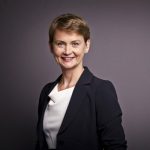
The statement made by Rachel Reeves, the Chancellor of the Exchequer, in the House of Commons on 26 November 2025.
It is my understanding that the Office for Budget Responsibility’s “Economic and fiscal outlook” was released on its website before this statement. This is deeply disappointing and a serious error on its part. It has already made a statement taking full responsibility for its breach.
We are rebuilding our economy. Over the last 16 months, we have overhauled our planning system to get Britain building; forged new trade deals with the United States, India and the European Union; reformed our visa system to bring the brightest and the best to Britain; changed the fiscal rules that we inherited from the Conservatives; and raised public investment to its highest level in four decades. In last year’s Budget, I raised taxes on business and the wealthiest to close the £22 billion black hole in the public finances left by the Conservative party. We used that money to fund the biggest ever settlement for our national health service.
Those were the fair and necessary choices. We faced opposition to them—from opponents to planning reform who will always demand that the future is built somewhere else, not in their backyard; opponents to trade who want to take us down the path of isolation and division; opponents to investment who believe that the only good thing a Government can do is get out of the way; opponents who insist that the only way to balance the books is to cut public spending; and opponents who say that we do not need to balance the books at all. But we made these choices for a reason: because after 14 years of Conservative Government, working people demanded—and deserved—change, with investment, not cuts, to our public services; stability for our public finances, which is the single most important factor in getting the cost of living down; and economic growth, which is the best means of improving wages, creating jobs and supporting public services. That is what our plan, this Government and our Prime Minister are all about.
Today’s Budget builds on the choices that we have made since July last year to cut NHS waiting lists, to cut the cost of living, and to cut debt and borrowing. No doubt, we will face opposition again, but I have yet to see a credible or a fairer alternative plan for working people. [Interruption.] These are my choices: the right choices for a fairer, a stronger and a more secure Britain.
Madam Deputy Speaker
(Ms Nusrat Ghani)
Order. There is far too much noise. I expected so much better from you, Dr Luke Evans; you are meant to be a leader in your community. Simmer down.
Rachel Reeves
I am happy for them to shout as much as they like, Madam Deputy Speaker, as long as they do it from the Opposition Benches, where they cannot cause any more damage.
I said that there would be no return to austerity, and I meant it. This Budget will maintain investment in our economy and in our national health service. I said that I would cut the cost of living, and I meant it. This Budget will bring down inflation and provide immediate relief for families. I said that I would cut debt and borrowing, and I meant it. Because of this Budget, borrowing will fall as a share of GDP in every year of this forecast. Our net financial debt will be lower at the end of the forecast than it is today, and I will more than double the headroom against our stability rule to £21.7 billion, meeting our stability rule, and meeting it a year early. These are my choices—not austerity, not borrowing, not turning a blind eye to unfairness. My choices are a Budget for fair taxes, strong public services and a stable economy. That is the Labour choice.
Growth is the engine that carries every one of our ambitions forward, through stability, investment and reform. It is the platform from which British ambition can finally get moving again. Growth does not just appear out of thin air; it is built, patiently and stubbornly, by people who take risks; by founders who bet their savings on an idea; by firms breaking into new markets, developing new technologies and creating new jobs and new opportunities; and by the men and the women who work hard every day, in all parts of our country. Our job is not to watch from the sidelines, but to partner with them, backing them every step of the way, and to match private enterprise with public ambition.
I thank my team of officials at the Treasury for their hard work in preparing this Budget. In the spring, the Office for Budget Responsibility forecast that our economy would grow by 1% this year. I said then that Britain would defy the forecasts, and defy them we have. The OBR has upgraded Britain’s growth for this year from 1% to 1.5%, reaching the same conclusions as the International Monetary Fund, the OECD and the Bank of England, which have already upgraded their forecasts.
Today, the OBR has published the result of its review of the supply side of the economy. It is clear that this is not about the last 14 months; it is about the previous 14 years, the legacy of Brexit and the pandemic, and the damaging decisions by the Conservative party, which cut public spending, leaving communities and entire regions behind, starved our economy of investment, and weakened our public services.
As a result of its review, the OBR is reducing its expectations for productivity growth by 0.3 percentage points to 1% by the end of the forecast. It says today:
“Real GDP is forecast to grow by 1.5% on average over the forecast period…due to lower underlying productivity growth.”
There is an impact on our public finances too. The OBR says that its productivity forecast will mean £16 billion less in tax receipts by 2030. Those forecasts are the Tories’ legacy, not Britain’s destiny. [Interruption.]
Madam Deputy Speaker
(Ms Nusrat Ghani)
Order. It is very hard to hear the Chancellor over all the shouting. Mr Holmes, you promised me yesterday that you would be on your top behaviour in the first few minutes. I call the Chancellor.
Rachel Reeves
We beat the forecasts this year, and we will beat them again by boosting trade, not blocking it; by increasing investment, not cutting it; by championing innovation, not stifling it; and by backing working people, not making them poorer. Brick by brick, we have been building our economy—building roads, building homes, and getting spades in the ground and cranes in the sky.
Growth begins with a spark from an entrepreneur. Half of new jobs in Britain are created by scale-up businesses, and we want those jobs created here, not somewhere else. Our job is to make Britain the best place in the world to start up, to scale up and to stay. We are widening eligibility for our enterprise incentives, so that scale-ups can attract the talent and capital that they need; expanding the enterprise management incentive, so that more companies can offer tax-relieved share options; re-engineering our enterprise investment and venture capital trust schemes, so that they do not just back early-stage ideas, but stay with companies as they grow; and introducing UK listings relief, with a three-year exemption from stamp duty reserve tax for companies that choose to list here in Britain.
To continue this work, I am launching a call for evidence on how our tax system can better back entrepreneurs, and a targeted review with founders and investors at its heart, to make the UK an even more attractive place to grow a business. We are sending a simple message to the world: “If you build here, Britain will back you.”
Our retail investment system should do the same. The UK has some of the lowest levels of retail investment in the G7, and that is not only bad for businesses, which need that investment to grow; it is bad for savers, too. Someone who had invested £1,000 a year in an average stocks and shares individual savings account every year since 1999 would be £50,000 better off today than if they had put the same money into a cash ISA. So from April 2027, I will reform our ISA system, keeping the full £20,000 allowance while designating £8,000 of it exclusively for investment, with over-65s retaining the full cash allowance. Thanks to our changes to financial advice and guidance, banks will be able to guide savers to better choices for their hard-earned money. Over 50% of the ISA market, including Hargreaves Lansdown, HSBC, Lloyds, Vanguard and Barclays, have signed up to launch new online hubs to help people invest here in Britain.
At this Budget, consistent with the commitments in our corporate tax road map, I will retain our competitive corporation tax rate, the lowest in the G7, and retain our generous full expensing offer for business investment. I will also introduce a new 40% first year allowance, so that businesses can write off more of the cost of their investment up front, while reducing main rate writing-down allowances in line with fiscal constraints.
Private investment is the lifeblood of economic growth, but growth needs public investment too. When faced with challenges, previous Chancellors have chosen to decrease, delay or cancel capital spending, but low investment is the cause of our productivity problems, not the solution. So my choice is not cuts, not stagnation, but to maintain the additional £120 billion of investment that I provided at the spending review: in transport to link our towns and cities; in energy infrastructure to power our businesses; and in housing, so that people can live near good jobs and growing businesses that pay decent wages. That is the Labour choice.
I am grateful to the Financial Secretary to the Treasury for his work in driving our growth agenda forward. As we allocate investment for the infrastructure that is the backbone of economic growth across our country, today I will commit investment for the lower Thames crossing, and we are continuing to drive investment in city region transport, in the midlands rail hub and the trans-Pennine route upgrade, along with our commitment to the northern growth corridor, including Northern Powerhouse Rail.
It this Labour Government that have overhauled our planning system, and I will today provide further funding to increase planning capacity through a new skills offer, as has been called for by the British Chambers of Commerce and the Confederation of British Industry. It is this Labour Government that have invested in nuclear power: in Sizewell C and in Culham. We are taking forward our commitment to slash electricity prices for thousands of manufacturing businesses, as Make UK and many others have called for. Today, I am pleased to welcome John Fingleton’s report—an ambitious plan to cut the red tape that has tied our nuclear industry in knots for decades—and within three months we will set out our plan for delivering his recommendations.
We are proud of our industrial heritage and we are determined to build the industry of the future so that we buy, make and sell more here in Britain. That is why, as we increase defence spending, we are investing in Portsmouth, in Barrow and in Plymouth, and I am pleased to be supporting Team Derby, an initiative to drive growth in one of our defence industry hubs. It is why we stepped in to save British Steel in Scunthorpe and invested in Sheffield Forgemasters. It is why we have changed Government procurement so we can buy British when it is crucial to our national security. For steel, for shipbuilding and today for AI, we are driving innovation and building that great industry here in Britain.
But it is not just what we invest in that matters; it is how we invest—putting money and power back in the hands of local and regional leaders. Today, we are devolving £13 billion of flexible funding for seven mayors to invest in skills, business support and infrastructure. I am extending the business rates retention pilots in the west of England, Liverpool city region and Cornwall until 2029, and providing £30 million for the Kernow industrial growth fund for sectors like critical minerals and marine innovation. I am establishing the Leeds city fund, a long-term agreement to retain business rates to fund local regeneration projects like the development of Leeds south bank, and I am allocating £20 million for the new Peterborough sports quarter and £16 million for a science centre in Darlington from the growth mission fund.
The benefits of investment and growth must be built and felt in every part of our United Kingdom, so we are providing an additional £370 million for the Northern Ireland Executive, £505 million for the Welsh Government and £820 million for the Scottish Government over the spending review period through the Barnett formula. Sorry, I didn’t quite catch that from the SNP. Did they not show up? Perhaps they didn’t hear us: £820 million for the Scottish Government over the spending review period because Anas Sarwar asked us to. I am making targeted investments in our industrial strategy sectors across the UK.
In Northern Ireland, I am providing £17 million to support businesses and strengthen the UK internal market, and backing advanced manufacturing through the Northern Ireland enhanced investment zone. Wales will be the host for two AI growth zones, creating more than 8,000 jobs supported by a £10 million investment in the semiconductors critical for that industry. We are building the UK’s first small modular nuclear reactors with Rolls-Royce at Wylfa in Anglesey—two Labour Governments working together in Wales to deliver for the people of Wales.
In Scotland, I am committing over £14 million for low-carbon technologies in Grangemouth, £20 million to renew infrastructure at Inchgreen in Inverclyde and £20 million to redevelop Kirkcaldy town centre and seafront with construction starting next year. That is on top of the UK’s biggest ever warship export deal with the Norwegian Government to build frigates in Glasgow, supporting 4,000 jobs. Investment opposed by the SNP, jobs opposed by the SNP, defence opposed by the SNP, but secured by this Labour Government.
A growing economy needs strong foundations of economic stability, with borrowing and inflation down and investment up. That is good for business, and it is good for working people so they have more money in their pockets. Economic stability, safeguarded by iron-clad fiscal rules, is our best defence against rising prices and the best way to improve living standards.
We have all seen the alternative. Three years ago, in their clamour to cut taxes for the richest, the Tories under Liz Truss crashed the economy, sent mortgage rates spiralling and brought pensions to the brink. [Interruption.] They are being so loud, and yet I can’t even hear them now. I know that the leader of the Green party is a keen hypnotherapist, and believes that he can achieve remarkable things using only the power of his mind. Unfortunately, the only things getting bigger under his approach would be the deficit and the rate of inflation.
For all the damage that the Conservative cuts did to our schools and hospitals, they also doubled the national debt. Our net financial debt this year will be £2.6 trillion, 83% of GDP, meaning that today £1 in every £10 the Government spend is on debt interest—not on paying down that debt, but just on paying the interest on the debt we inherited from the Conservatives.
My fiscal rules will get borrowing down while supporting investment: the stability rule—that day-to-day expenditure must be met through tax receipts—and the investment rule, which allows me to increase investment while getting debt on a downward path. Those fiscal rules are non-negotiable. I met them at the Budget last year, I met them in the spring and I have met them today.
While the current Budget balance is in deficit by £28.8 billion in ’26-27 and £4.6 billion in ’27-28, it moves into a surplus of £3.9 billion in ’28-29, £21.7 billion in ’29-30 and £24.6 billion in ’30-31—more than doubling our headroom against the stability rule and meeting that rule a year early, too. Our net financial debt is 83.3% in ’26-27, 83.6% in ’27-28, 83.7% in ’28-29, falling to 83.0% in ’29-30 and 82.2% in ’30-31. I said we would cut the debt and we are, with debt down by the end of the forecast. Going forward, to support our commitment to a single fiscal event and to further strengthen our economic stability, I will follow the recommendations of the International Monetary Fund by assessing the fiscal rules just once a year at the Budget.
Despite the challenges we face on productivity, the path of our deficit reduction remains broadly the same as in the spring. Public sector net borrowing is due to be £112.1 billion or 3.5% of GDP in ’26-27, 3.0% in ’27-28, 2.6% in ’28-29, 1.9% in ’29-30 and 1.9% in ’30-31, ending at £67.2 billion, translating into an increase in the net cash requirement next year of £4.2 billion, taking the total to £133.3 billion. According to the IMF, we are due to reduce borrowing more over the rest of this Parliament than any other G7 economy.
The Conservatives crashed the economy; we are protecting it. The Conservatives lost control of debt; we are getting debt down. The Conservatives let inflation and interest rates go through the roof, but since Labour took office the Bank of England has cut interest rates five times. I have made my choices: not reckless borrowing, not dangerous cuts, but stability for our economy, security for our public finances and security for family finances, too. Those are the Labour choices.
Tory austerity left classrooms crumbling and waiting lists sky high, weakened our productivity and choked our economic growth, and now the Conservatives propose a further £47 billion of cuts to our public services. That is the equivalent of cutting every police officer in our country twice over. Then there is Reform, which promises more than £100 billion of cuts with no detail on where those cuts will come from or who will pay for them—a recipe for devastating damage to our public services.
People voted for Labour because they want roads that are not full of potholes, police on our streets, and an NHS that is there when they need it. We are delivering that. Waiting lists are down by 230,000, and we have already delivered not just the 2 million additional appointments that we promised, but an additional 5.2 million appointments since the general election.
I joined the Labour party almost 30 years ago because I could see that the Conservative Government I grew up under did not care much about schools like mine. Textbooks were rationed—[Interruption.] I know that many of you were not at schools like mine. [Interruption.]
Madam Deputy Speaker
(Ms Nusrat Ghani)
Order. There is far too much noise, far too much excitement. People need to calm down a little.
Rachel Reeves
The Tories do not want to hear what they did to schools like mine, but I will tell them. Textbooks were rationed, libraries closed and kids herded into portacabins in the playground. I came into politics to change that. The money that I allocated at the spending review will fix the crumbling classrooms that the Conservatives left behind, and build the schools they promised but never delivered.
Today, thanks to representations from my hon. Friends the Members for Wolverhampton North East (Mrs Brackenridge) and for Leeds South West and Morley (Mark Sewards), I will provide £5 million for libraries in secondary schools, building on the £10 million commitment to ensure that every primary school has a school library within this Parliament. Thanks to representations from my hon. Friends the Members for Bournemouth East (Tom Hayes) and for Luton North (Sarah Owen), I am providing £18 million to improve and upgrade playgrounds across England. Let there be no doubt that this Government are on the side of our kids and will back their potential.
I will not allow the legacies of Conservative neglect to stain our society. Last year, I made changes to the Mineworkers’ Pension Scheme to ensure that its members receive the fair pensions that they are owed. This year, with thanks to the Minister for Pensions for all his work on this subject, I can go further. I have heard representations from Labour coalfield MPs, including my hon. Friends the Members for Bassetlaw (Jo White), for Blyth and Ashington (Ian Lavery), for Barnsley South (Stephanie Peacock), for Mansfield (Steve Yemm) and for Llanelli (Dame Nia Griffith), and I can today announce that I will transfer the investment reserve fund of the British Coal staff superannuation scheme to its members, so that the men and women who worked in our coal industry get a fair deal in their retirement, too. And there is more. Having heard representations from my hon. Friends the Members for Banbury (Sean Woodcock) and for Edinburgh South West (Dr Arthur), I will index for inflation on pensions accrued before 1997 in the pension protection fund and the financial assurance scheme, so that people whose pension schemes became insolvent—no fault of their own—no longer lose out as a result of inflation.
Last year, I also provided funding to compensate the victims of the infected blood scandal, after the previous Government failed to budget for the costs of compensation. This year, I have listened to representations from my hon. Friends the Members for Eltham and Chislehurst (Clive Efford) and for Edinburgh South West. I thank the Minister for Employment for her representations over many years on this subject. As a result, I will exempt all payments from the infected blood scheme from inheritance tax, regardless of the circumstances in which those payments are passed down. That is how we should be spending taxpayers’ money: on dealing with injustices and building strong public services, not on waste and inefficiency.
At the spending review, I set out an ambitious target for £14 billion of efficiencies per year by 2029. I am grateful to the Chief Secretary to the Treasury for driving that work forward, realising savings through artificial intelligence and automation, and by scrapping NHS England and reducing back-office staff by 18,000. At this Budget, I will find a further £4.9 billion of efficiencies by 2031, by getting rid of police and crime commissioners, cutting the cost of politics and local government, and selling Government assets that we no longer have any use for.
These savings will be required across Government, but for our national health service, I will invest all those savings back into the care that people rely on—more nurses, more GPs and more appointments, restoring the services that faltered under years of Conservative decline and investing in the future of our national health service. Today, I am announcing £300 million of investment in technology to improve patient service, and 250 new neighbourhood health centres, expanding more services into communities so that people can receive treatment outside hospitals and get better, faster care where they live. More than 100 of those centres will be delivered by 2030, including in Birmingham, Truro and Southall. The Labour party founded our national health service, and we will renew our national health service.
I will take the same approach for defence spending that I take for NHS spending, reinvesting savings back into our national security. In our age of insecurity, Britain will continue to stand with our allies, working in collaboration to secure a sustainable ceasefire for Ukraine, and maintaining our commitment to NATO, with the UK set to spend 2.6% of GDP on defence by April 2027.
The public rightly expects that we stamp out fraud, error and waste, and put that money to good use in our schools, hospitals and other frontline services. My right hon. Friend the Home Secretary has already announced that she will claw back excess profits from the use of hotels to house asylum seekers, as we phase out the use of those hotels entirely. And we will consult on reforms to indefinite leave to remain and access to taxpayer-funded benefits.
The introduction of digital ID will break the link between illegal migration and illegal working, and His Majesty’s Revenue and Customs and the fair work agency will crack down on the illicit businesses that blight our high streets and undercut legitimate firms, enforcing the minimum wage, investigating dodgy businesses and increasing scrutiny of the gig economy, as well as tracking down fraudulent business owners who vanish without paying their taxes. I thank my hon. Friends the Members for Great Grimsby and Cleethorpes (Melanie Onn), for Leigh and Atherton (Jo Platt) and for Kensington and Bayswater (Joe Powell) for their representations on this subject. I will take further steps to prevent and track down unpaid tax. Together, these reforms will raise nearly £10 billion a year by 2030, including through new powers for HMRC to pursue the promoters of tax avoidance schemes.
I am building on our successful use of targeted checks on welfare claims to root out fraud and error and to prevent public money from being paid to people who are not entitled to it. I thank Tom Hayhoe, the covid corruption commissioner, for his work in helping to chase down nearly £400 million from dodgy pandemic spending and contracts. Tory contracts handed out by Tory Ministers to Tory peers and Tory friends—[Interruption.] That money belongs in our schools, in our hospitals—[Interruption.]
Madam Deputy Speaker
(Ms Nusrat Ghani)
Order. It is so noisy in here we can barely hear the Chancellor. Everybody needs to calm down.
Rachel Reeves
I would not want any hon. Member to miss this. We are chasing down that money and have almost £400 million back from dodgy pandemic spending and contracts. Tory contracts handed out by Tory Ministers to Tory peers and Tory donors. That money belongs in our schools and in our hospitals, and we are getting it back.
Finally, we are ramping up sanctions on Russia and freezing known Russian assets. Let me be clear, I do not mean the hon. Member for Clacton (Nigel Farage). Under the Conservatives —[Interruption.]
Madam Deputy Speaker
Order. We do not need commentary from the Back Benches. Mr Dewhirst, you are so loud; it is remarkable how far your voice carries.
Rachel Reeves
Under the Conservatives, the cost of our welfare system increased by nearly 1 percentage point of GDP—equivalent to £88 billion in just five years. The broken welfare system that we inherited wrote off millions of people as too sick to work. We will reform that system, so that it is a system that does not count the cost of failure, but rather one that protects people who cannot work and empowers those who can.
We have brought back face-to-face assessments for disability benefits—those are the face-to-face assessments that the shadow Chancellor, the right hon. Member for Central Devon (Sir Mel Stride), got rid of when he was Work and Pensions Secretary. Our changes to universal credit will get 15,000 people back into work—a figure confirmed today.
The former Heath Secretary, Alan Milburn, will review the causes of rising youth inactivity, and we are already taking action. I am grateful to the Federation of Small Businesses and Small Business Britain for their representations on apprenticeships, and today I am announcing funding to make the training for under-25 apprenticeships completely free for small and medium-sized enterprises. I am funding our new youth guarantee, providing £820 million over the next three years to give the young people who were let down by the Conservatives the support and opportunity they deserve, guaranteeing every young person a place in college, an apprenticeship or personalised job support. After 18 months, 18 to 21-year-olds will be offered paid work, not benefits.
The Motability scheme was set up to protect the most vulnerable, not to subsidise the lease on a Mercedes-Benz, and so I am making reforms that will reduce generous taxpayer subsidies. Motability have confirmed that it will remove luxury vehicles from the scheme, getting the scheme back to its original purpose of offering cost-effective leases to disabled people.
Taxpayers’ money should not be spent on pensions for people abroad who only lived here for a couple of years and may never have paid a penny of tax. The Conservatives allowed thousands of people living abroad to buy their way into the state pension for as little as £3.50 a week, debasing the purpose of our pension system. I will abolish access to class 2 voluntary national insurance contributions for people living abroad, increasing the time that someone has to live or work in Britain to 10 years, and increasing the contributions they must pay. These reforms improve our welfare system: they support our young people; protect those who need it most; and put an end to Conservative waste and unfairness.
To break the cycle of austerity we need a fair and sustainable tax system, one that generates revenues to fund the public services we all use, and supports investment to grow our economy. That does mean that today I am asking everyone to make a contribution. The previous Conservative Government froze personal tax thresholds from 2021 until 2028. Today, I will maintain all income tax and equivalent national insurance thresholds at their current level for three further years from 2028—[Interruption.]
Madam Deputy Speaker
(Ms Nusrat Ghani)
Order. The noise is far too high.
Rachel Reeves
The Leader of the Opposition supported these freezes when her party made them; she might want to forget about that, but the British people never will.
At the same time, we are ensuring that people only in receipt of the basic or new state pension do not have to pay small amounts of tax through simple assessment from April 2027. I will also keep the plan 2 student loan repayments threshold at its 2026-27 level for three years.
I know that maintaining the thresholds is a decision that will affect working people. I said that last year and I will not pretend otherwise now. I am asking everyone to make a contribution, but I can keep that contribution as low as possible because I will make further reforms to our tax system today to make it fairer, and to ensure the wealthiest contribute the most.
The Conservatives knew that our tax system did not work. Time and time again, they ducked the necessary reforms, leaving a system unfit for a changing economy, with unfairness that they refused to address. Currently, a landlord with an income of £25,000 will pay nearly £1,200 less in tax than their tenant with the same salary, because no national insurance is charged on property, dividend or savings income. It is not fair that the tax system treats different types of income so differently, and so I will increase the basic and higher rate of tax on property, savings and dividend income by 2 percentage points, and the additional rate of tax on property and savings income by 2 percentage points. Even after these reforms, 90% of taxpayers will still pay no tax at all on their savings.
I also believe that, as well as narrowing the gap between the tax on income from assets and income from work, a fair society is one where the wealthiest pay their fair share. The reforms I made last year will raise an additional £8 billion a year by 2030 from wealth. I increased taxes last year on private equity, private schools and private jets, and I abolished the non-dom tax regime. This year I will make two changes to cap trust charges and prevent avoidance. I reformed inheritance tax on agricultural and business assets and this year—[Interruption.] This year I am aligning those reforms with wider inheritance tax rules by allowing the transfer of the 100% relief allowance between spouses, balancing the taxation of these valuable assets with the realities of family life.
In this Budget, I will take further steps to deal with a long-standing source of wealth inequality in our country. A band D home in Darlington or Blackpool pays just under £2,400 in council tax, nearly £300 more than a £10 million mansion in Mayfair, and so from 2028, I am introducing the high value council tax surcharge in England, an annual £2,500 charge for properties worth more than £2 million, rising to £7,500 for properties worth more than £5 million. This will be collected alongside council tax, levied on owners, and we will consult on options for support or deferral. This new surcharge will raise over £400 million by 2031 and will be charged on less than the top 1% of properties.
Reliefs in our tax system cost the taxpayer billions of pounds a year, but many of them no longer serve their original purpose. The Government rightly provides generous tax relief for people paying into a pension, relieving income tax on all contributions and on the investment itself, as well as national insurance relief on employer contributions, at a cost of over £70 billion a year to the Exchequer. This Budget makes no changes to those reliefs or to the tax-free lump sum.
However, salary sacrifice for pensions, which was intended to be a small part of our pensions system, is forecast almost to treble in cost to other taxpayers, from £2.8 billion in 2017 to £8 billion by 2030, with the greatest benefit going to the highest earners, or to those in the financial services sector putting their bonuses into pensions tax-free, while those on the minimum wage or whose employers do not offer salary sacrifice do not benefit at all. That is not sustainable for our public finances, putting pressure on the tax that everyone else pays.
I am therefore introducing a £2,000 cap on salary sacrifice into a pension, with contributions above that taxed in the same way as other employee pension contributions. It is a pragmatic step so that people, especially on low and middle incomes, can continue to use salary sacrifice for their pension without paying any more tax than they do now.
To give individuals and employers time to adjust to these new arrangements, these changes will come into effect in 2029.
The coalition Government introduced 100% relief from capital gains tax on business sales made to employee ownership trusts, creating a route for gains to go completely untaxed when businesses are sold. I will reduce that relief to 50%, retaining a strong incentive for employee-owned companies. As we work towards doubling the size of the co-operative economy, the Department for Business and Trade will launch a call for evidence on how we can better support co-ops to grow. As a result of the changes that I have made to capital gains tax this year and last year, receipts are forecast to increase from £14 billion this year to £30 billion by 2030.
To support our high streets, I am announcing a package of regulatory changes, as called for by UKHospitality and the British Retail Consortium. I will support the great British pub through our new national licensing framework, encouraging councils to back our pubs and to back late-night venues with greater freedoms. For business rates, I will introduce permanently lower tax rates for over 750,000 retail, hospitality and leisure properties—the lowest rates since 1991, paid for through higher rates on properties worth more than £500,000, such as the warehouses used by online giants. Alongside this, I will introduce a package of support worth over £4.3 billion over the next three years for a property of any size seeing a large increase in their bill. To support a level playing field in retail, I will stop online firms from undercutting our high street businesses, by ensuring that customs duty applies on parcels of any value.
I will reform our motoring taxes, exempting search and rescue vehicles from vehicle excise duty, as called for by my hon. Friends the Members for Na h-Eileanan an Iar (Torcuil Crichton) and for Whitehaven and Workington (Josh MacAlister). All cars contribute to wear and tear on our roads, so I will ensure that drivers are taxed according to how much they drive, not just by the type of car they own, by introducing the electric vehicle excise duty on electric cars. That will be payable each year alongside vehicle excise duty at 3p per mile for electric cars, and 1.5p for plug-in hybrids, helping us to double road maintenance funding in England over the course of this Parliament.
Alongside that, I am providing support to boost our British car industry: increasing the threshold for the expensive car supplement on electric vehicles to £50,000, saving over a million motorists £440 a year; providing £1.3 billion additional funding for the electric car grant, extending it to 2030, taking total funding to £2 billion; and delaying changes to the employee car ownership scheme. In addition, we are investing a further £200 million to accelerate the roll-out of EV charging, as well as 100% business rates relief for EV charge points for the next decade, with thanks to my hon. Friend the Member for Camborne and Redruth (Perran Moon) for his representations on that policy.
I will improve competition in our taxi industry by ending ride-hailing companies’ use of a discount scheme intended for coach tours, as called for by Steve McNamara, general secretary of the Licensed Taxi Drivers Association: legislating to restrict access so that everyone pays fairly, and protecting £700 million of tax revenue each year.
I am responding to our consultation on landfill tax, and listening to representations particularly from our house building industry. I will not converge towards a single rate, but I will prevent the gap between the two rates from widening, to balance the need to address tax avoidance in the current structure. I will today publish Ray McCann’s report into the loan charge, along with the Government’s response, setting out a new settlement opportunity that will finally allow people to finalise their position and draw a line under this long-standing issue. I thank my hon. Friend the Member for Milton Keynes Central (Emily Darlington) for her representations on this subject.
I will continue with the planned uprating for tobacco duties that I set out last year, and uprate alcohol duties by inflation, alongside our plans to introduce a vaping products duty in 2026, and the changes to the soft drinks industry levy announced by my right hon. Friend the Health Secretary yesterday. I thank the Exchequer Secretary to the Treasury for his work on all the tax measures in this Budget.
I will also reform gambling taxes in response to the rise in online gambling. Remote gaming is associated with the highest levels of harm, and so I am increasing remote gaming duty from 21% to 40%, with duty on online betting increasing from 15% to 25%. I am making no change to the taxes on in-person gambling or on horseracing, and I am abolishing bingo duty entirely from April next year. Taken together, my reforms to gambling tax will raise over £1 billion per year by 2031.
As a result of the tax reforms I have made today, I can confirm that I will not be increasing national insurance, the basic, higher or additional rates of income tax, or VAT. I have kept everyone’s contribution as low as possible, through reforms to make our tax system stronger, closing loopholes, ensuring that the wealthiest pay their share, and building a tax system that is fairer for the future as our economy changes.
On the day I became Chancellor, I said that I would judge my time in office a success if I knew that ordinary children from working-class backgrounds were living more fulfilling lives—their horizons expanded; their potential realised. I joined the Labour party, I came into politics, because I believe that every child has equal worth and deserves an equal chance to achieve their promise. The biggest barrier to equal opportunity is child poverty, because for every child that grows up in poverty, our society pays a triple cost.
The first and heaviest is to the child: going to school hungry; waking up in a cold home, or in another B&B. While other children enjoy the advantages of parents with time to help with homework, or a quiet space at home to work in, too many go without. There is also the cost of supporting a family in poverty, which ends up in the lap of overstretched councils that can do no more than shunt them into temporary accommodation, at huge cost to local taxpayers. Then there is the future cost to our economy and our society, of wasted talent, and a welfare system that bears the cost of failure for decades to come: young people with so much to contribute, but whose potential is suffocated early by limited life chances and missed opportunities, struggling to make their way in a society that did not look out for them.
I do not intend to preside over a status quo that punishes children for the circumstances of their birth and demands that we all pay three times over for it. Since last July, we have rolled out free breakfast clubs in schools, and we are expanding free school meals to half a million more kids, lifting 100,000 children out of poverty as we do it. We have passed the Renters’ Rights Act 2025, and we have extended the childcare offer.
I am proud of all that, but it is not enough, because there is one policy that pushes kids into poverty more than any other. It was introduced by the Conservatives. They said it would save money, and that it would bring about “behavioural change”, disincentivising poorer families from having more children. Even on its own terms the policy failed: the welfare bill has continued to rise, and there has been no difference in the size of families. What it has done since it was introduced is push hundreds of thousands of children into poverty. They said they were punishing parents’ choices, but it is the kids who have paid the price.
They have paid the price for the policies of a party that opted for cynical gimmicks over real savings in our welfare system.
I understand that many families are finding times hard, and that many have had to make difficult choices when it comes to having kids. There are many reasons why people choose to have children and then find themselves in difficult times: the death of a partner, separation, ill health, a lost job. I do not believe that children should have to bear the brunt of that.
And neither can I in good conscience leave in place the vile policy known as the rape clause, which requires women to prove their child has been conceived non-consensually, to receive support. I am proud to be Britain’s first female Chancellor of the Exchequer and I take the responsibilities that come with that seriously. I will not tolerate the grotesque indignity to women of the rape clause any longer. It is dehumanising, it is cruel and I will remove it from the statute book.
So because I am tackling fraud and error in our welfare system, cracking down on tax avoidance and reforming gambling taxation, I can announce today, fully costed and fully funded, the removal of the two-child limit in full from April. [Interruption.] It is amazing what people get so angry about. We have seen the Conservatives’ true colours today—the thing they get angry about is lifting children out of poverty—[Interruption.]
Madam Deputy Speaker
(Ms Nusrat Ghani)
Order. Our constituents want to hear the Chancellor.
Rachel Reeves
I think our constituents have heard all they need to from Conservative Members today. We on the Labour Benches do not believe that the solution to a broken welfare system is to punish the most vulnerable. We are lifting 450,000 children out of poverty with the end of the two-child limit. Combined with other actions that we are taking, this Labour Government are achieving the biggest reduction in child poverty over a Parliament since records began. That is the difference that this Labour Government are making.
I know how worried families are about the cost of everything. They are worried that their money will not stretch to the end of the month—
Nigel Huddleston
(Droitwich and Evesham) (Con)
Just increase tax.
Rachel Reeves
I think if you have a house that is worth £5 million, then you can probably afford it, but Conservative Members get more exercised about reducing child poverty than they do about the richest paying more.
Under this Government, wages have risen by more since we were elected than in 10 years under the last Government, with lower interest rates already saving families £1,200 a year off a typical new mortgage. Compare that to when Liz Truss was Prime Minister. But I know that people still face pressure on their budgets, day to day and week to week, and where there is more we can do to provide relief, we are doing it: extending the bus fare cap, cracking down on rip-off price hikes, freezing prescription charges and freezing rail fares for the first time in 30 years.
I am increasing the basic and new state pension by 4.8%, an increase of £440 per year for the basic state pension and an increase of £575 per year for the new state pension, in line with our commitment to the triple lock. At the election, we promised a genuine living wage and we are delivering it. At the Budget last year, I increased the national minimum wage and the national living wage, and I am doing the same this year too. I am accepting the recommendations of the Low Pay Commission in full and increasing the minimum wage for 18 to 20-year-olds from £10 to £10.85 per hour, and increasing the living wage from £12.21 to £12.71 per hour.
Under current plans, the temporary 5p cut to fuel duty that was introduced during the pandemic will come to an end in April and fuel duty will be uprated in line with inflation. But I know that the cost of travelling to and from work is still too expensive, so I am extending the 5p cut until September 2026. Because I know that changes in wholesale prices are not always passed on to motorists, I am bringing in new rules to mandate petrol forecourts to share real-time prices through a new fuel finder, empowering drivers to find the cheapest fuel, calling out rip-offs and strengthening competition, saving the average household £40 a year.
One of the greatest drivers of the rising cost of living is energy prices. The cause of high energy bills must be tackled at source, and so we are investing in energy security—in nuclear and renewable energy—and in insulation through the warm homes plan, but that is not enough when people are struggling with energy bills today. The Conservatives’ energy company obligation scheme was presented as a plan to tackle fuel poverty. It costs households £1.7 billion a year on their bills, and for 97% of families in fuel poverty, the scheme—get this—has cost them more than it has saved. It is a failed scheme, and so I am scrapping it, along with taking other legacy costs off bills.
As a result, I can tell the House today that for every family we are keeping our promise to get energy bills and the cost of living down, with £150 cut from the average household bill from April next year—money off bills and in the pockets of working people. That is my choice, not to neglect Britain’s energy security, like the Tories did, and not to leave working families to bear the brunt of high prices, like the Tories did, but to get energy costs down now and in the future. That is the Labour choice.
And, Madam Deputy Speaker, one more thing: because of our action on bills and on prices, as a direct result of this Budget, the Office for Budget Responsibility confirmed today that inflation is coming down faster and will be a full 0.4 percentage points lower next year. That is the benefit of a Labour Government cutting the cost of living.
This Labour Government are changing our country. In the face of challenges on our productivity, I will grow our economy through stability, investment and reform. I have met my fiscal rules and built our economic resilience for the future. I have asked everyone to contribute—yes—for the security of our country and the brightness of its future, but I have kept that contribution as low as possible by reforming our tax system, making it fairer and stronger for the future.
I have protected our NHS, maintaining public investment and driving efficiency in government spending. I have taken action on our broken welfare system, rooting out waste and lifting children out of poverty. And I have cut the cost of living, with money off bills and prices frozen, all while keeping every single one of our manifesto commitments—[Interruption.]
Madam Deputy Speaker
(Ms Nusrat Ghani)
Order. Mr Rankin and Ms Morton, your voices carry right across the Chamber—try to take a breath every so often.
Rachel Reeves
Those are my choices, not austerity and not reckless borrowing, but cutting the debt, cutting waiting lists and cutting the cost of living. Those are Labour choices, promised and delivered by this Budget—promised and delivered by this Labour Government. I commend this statement to the House.
Provisional collection of taxes
Motion made, and Question put forthwith (Standing Order No. 51(2)),
That, pursuant to section 5 of the Provisional Collection of Taxes Act 1968, provisional statutory effect shall be given to the following motions:—
(a) Stamp duty reserve tax (UK listing relief) (motion no. 60);
(b) Rates of tobacco products duty (motion no. 65).—(Rachel Reeves.)
Question agreed to.