Tag: Speeches

  • Nicola Richards – 2023 Speech on Holocaust Memorial Day

    Nicola Richards – 2023 Speech on Holocaust Memorial Day

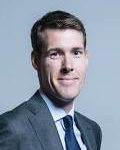
    The speech made by Nicola Richards, the Conservative MP for West Bromwich East, in the House of Commons on 26 January 2023.

    I thank my right hon. Friend the Member for Bromsgrove (Sajid Javid) for securing this debate.

    Nobel laureate and holocaust survivor Elie Wiesel famously said

    “whoever listens to a witness becomes a witness”.

    Seventy-eight years on from the liberation of the former Nazi extermination and concentrations camp at Auschwitz-Birkenau, as we gather here today to mark Holocaust Memorial Day, those words could not be more important.

    As a society, we have taken the incredible work of organisations such as the Holocaust Educational Trust for granted. The trust and its incredible staff have worked day in and day out for the past 30 years to ensure that as many people as possible have the honour of being able to sit in awe and listen to a holocaust survivor tell their testimony. Today, through the Holocaust Educational Trust’s annual webcast, tens of thousands of schoolchildren from across the country logged on to hear the testimony of holocaust survivor Ruth Posner BEM.

    It is sad but true that we are the last generations who will know the holocaust not as a historical period but as something that happened to someone we met or knew. With holocaust survivors now in their 80s and 90s, we, the people who have heard their testimony, have become their witness. We must now carry the mantle of continuing their legacy.

    If holocaust denial and distortion can thrive when there are survivors as proof, what will happen when there are none? If antisemitism and hatred can thrive even while survivors warn where it can lead, what will happen when there are none? And when individuals say that Jewish people should not have their own homeland, when survivors are still retelling how no other country would accept them, what will happen when there are none?

    In the past month, we have seen the release of two shocking reports. First, two weeks ago, the Tuck report on antisemitism in the National Union of Students found that it was a hostile environment for Jewish students. I have heard stories from my Jewish staffer of what he and his friends experienced at NUS conferences, and it is truly shocking. Secondly, just last week, we received the campus antisemitism report from the Community Security Trust, which found that antisemitism at UK universities has risen by 22% to its highest recorded total. Put simply, Jewish students on UK campuses are receiving death threats and abuse while the National Union of Students, their supposed representative, invites an accused antisemitic rapper to its conferences. How can the Jewish community hope for a better future when this is what its children are having to put up with?

    I pause to recognise the amazing work of the Community Security Trust and the Union of Jewish Students, which are on the ground at universities to protect and represent Jewish students. I also thank the Antisemitism Policy Trust and declare an interest as the co-chair of the APPG against antisemitism. Sadly, the work they do only becomes more important as time goes on.

    I was recently at the United States Holocaust Memorial Museum and saw a Nazi-era antisemitic book that is currently on sale online. Just last year, we were reminded again that antisemitism is alive and kicking thanks to Kanye West, the now disgraced rapper turned Hitler fan. There is nothing cool, and certainly nothing acceptable, about that. I live in hope that, one day, he might realise that. He has more followers on social media than there are Jews in the world, which puts this debate starkly into context.

    The theme of this year’s Holocaust Memorial Day is ordinary people. It is strange to use the word “ordinary” in the same sentence as the word “holocaust.” There is nothing ordinary about the unprecedented attempt to murder all European Jews and to extinguish their culture, history and traditions. This cannot be ordinary, yet the holocaust was only possible because ordinary people did not speak up when hatred was taking over.

    It was ordinary people who met at the Wannsee conference to discuss the need for the final solution, which is the term given to the extermination of the Jewish population. It was ordinary people who rounded up the Jews of Europe and forced them into ghettos. It was ordinary people who drove the trains on their journey to the camps. It was ordinary people who thought of their work at death camps as just that—nothing more than work. They would finish their shift and go home to their families and children, who often lived just a few hundred metres away from the camp perimeter. Most importantly, it was ordinary Jewish people who had their humanity stripped away for the crime of being Jewish.

    As the late Rabbi Lord Sacks said:

    “Jews were hated in Germany because they were rich and because they were poor, because they were capitalists and because they were communists, because they kept to themselves and because they infiltrated everywhere, because they believed in a primitive faith and because they were rootless cosmopolitans who believed nothing. Hitler believed that Jews were controlling both the United States and the Soviet Union. How could they be doing both? Because they were Jews.”

    I end this speech by paying tribute to Zigi Shipper BEM, who sadly passed away last week. I am proud to be, as Elie Wiesel put it, his “witness.” I had the pleasure of meeting Zigi many times and I will never forget his charisma, strength and big smile, which he always had on display. I witnessed the eruption of applause when he finished delivering his testimony, having transported students in a school in London through time, painting a picture of the fragile child who was lucky to survive this all, not least the death march where he developed typhus. When he finished speaking, he was a legend, a mensch. He was one of the many capable of condensing the pain of those involved into a service to better the world. At the end, he was treated like a celebrity and he loved it. He high-fived all the students down the aisle of the hall on his way out, and those students will never forget it. I echo the words of his grandson, Darren Richman, who wrote:

    “Shaping minds—in a very real sense—changing the world, and I have no doubt the world was a better place for having had Zigi in it.”

    May his memory be a blessing.

  • Jim Shannon – 2023 Speech on Holocaust Memorial Day

    Jim Shannon – 2023 Speech on Holocaust Memorial Day

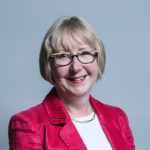
    The speech made by Jim Shannon, the DUP MP for Strangford, in the House of Commons on 26 January 2023.

    Thank you, Mr Deputy Speaker, for calling me to speak in this debate on Holocaust Memorial Day. Let me start by commending the right hon. Member for Bromsgrove (Sajid Javid) for introducing it—he set the scene very well and succinctly, with a focus on the issues—and all the right hon. and hon. Members who have made contributions straight from the heart. I have been moved by many of them.

    I commend the hon. Member for Stretford and Urmston (Andrew Western) for his maiden speech. His words were well chosen, and they were the words of someone who will make good contributions in this House. I look forward to his speeches on housing or whatever it may be; I am quite sure that he will add much to our debates. I wish him well and we are very pleased that he is here.

    I have always been a supporter and a friend of Israel —that is no secret. I was before I came here, when I was in the Northern Ireland Assembly, and now that I am here I am a supporter of the Friends of Israel. I unashamedly put that on the record.

    I also commend the right hon. Member for Beckenham (Bob Stewart). His words, as always in this type of debate, were very pertinent. I understand why his soldiers followed him and why he could lead as he did. If I had been one of his soldiers, I would have followed him as well—I suspect we all would. I commend him for all that he does and for the service that he gave us in Northern Ireland. We recognise that he and others, gallant Members that they are, contributed much to the peace that we have in Northern Ireland. I thank him for that on the record.

    The right hon. Member for Bromsgrove referred to how we are made in God’s image. I believe that with all my heart. Whenever I speak as chair of the APPG for international freedom of religion or belief, I speak equally for those with Christian faith, those with other faiths and those with no faith. That is what it is about, and that is what the right hon. Gentleman and others—including the hon. and gallant Member for Beckenham—referred to. It is really important that we recognise where we are.

    I want to speak about ordinary people, which is the theme of this year’s Holocaust Memorial Day. I think that is touching and very fitting. I want to illustrate it with a story from the youngest member of my staff, who just last weekend came to London with her boyfriend for a birthday present. They did a tour of Westminster through the tours office here and then they spent some four hours in the Imperial War Museum in Lambeth. The Imperial War Museum is not often mentioned, but it should be, and I want to try to illustrate that today.

    The weekend with her boyfriend was, of course, always going to be something special for my young member of staff. I would not have been particularly aware of the Imperial War Museum—perhaps because, as I have said, it is not highlighted as often as it should be—but when she regaled us with what she did during that weekend away, she became fixated on the museum. She told us that while her boyfriend had been enamoured of the guns and tanks, as boys are, almost three hours of her time was spent in the section that commemorated the holocaust. Describing it to us in the office, which she did very eloquently and in great detail, she said that she had gone in expecting to see a focus on Anne Frank, but instead was struck by the mountains of, in her words, “ordinary people”. She took the time to read every single post, and to look up on her phone the accounts for which she wanted more background. She studied history at school, but she said that looking at these “ordinary people’s stories” had a greater impact on her than her history GCSE course.

    What is most notable is the fact that visits to the Imperial War Museum are free, and so is the information that is so vital to our young people, in giving them a sense of the despicable nature of what history books cannot tell us in words alone. They are able to take in so many displays, each one telling vital individual stories that drive home, or give a glimpse of, the horror that was suffered by so many. For me, that has reinforced the importance of taking children to museums and showing them displays of this kind, to allow them to feel the repulsion and the revulsion and to understand exactly what the figure of 6 million—the 6 million who were murdered—means in an individual setting.

    Earlier, I said to the hon. Member for Rutherglen and Hamilton West (Margaret Ferrier) that to get an idea of what that figure means, she could imagine walking from Stranraer to Orkney without meeting anyone. The population of Scotland is 5.6 million. It is like walking across Northern Ireland three times and a bit without seeing a single person. That encapsulates what it means to have 6 million people no longer here. It really hits home.

    We must also underline the importance of those who said nothing and understand the role that compliance plays. Our young people need to understand that no man is an island, and that we all bear a responsibility to stand up for what is right against what is morally wrong.

    In her succinct and powerful speech, the right hon. Member for Chipping Barnet (Theresa Villiers) referred to the war in Ukraine. When I heard the girls in the office discussing it, some of them were a bit gung ho about us sending troops, while others said that we were doing what was right. One of them, however, said that she could not really take in the idea of her 17-year-old nephew having a gun in his hands. However, that is the reality of war. Good people must stand up and do the right thing, and for us ordinary people to do nothing can never be an option.

    Many of my constituents, like those of other Members, have visited Auschwitz and come back incredibly moved and perhaps even a bit traumatised by what they have seen, but they have received the message of Auschwitz, which is, “It can never happen again.” One of my sons went there with his friends, and that was the visit that made the difference for them, as it did for my constituents who took the time to do the same.

    When we think of films like “Schindler’s List” and other blockbusters, the human impact is clear to us, but some young people do not watch war films. We need to ensure that every child is educated, not just in the facts and figures, but in the individual stories that touch people’s hearts and change their outlook. I have said this before, but it bears repeating: we must continue to fund educational visits to Auschwitz, and also arrange visits to the Imperial War Museum here in London. It holds some treasures, but it also has a focus on history and on what we must make sure never happens again. There, people can see and touch the atrocity, and build the determination that it will never be repeated.

    I have that determination, as, I think, has every other Member who has spoken today, but do our children have it? Do our grandchildren? If they do not, are we prepared as a Parliament to put our money where our mouth is and fund educational awareness for this world, and, in particular, this great nation of the United Kingdom of Great Britain and Northern Ireland?

  • Theresa Villiers – 2023 Speech on Holocaust Memorial Day

    Theresa Villiers – 2023 Speech on Holocaust Memorial Day

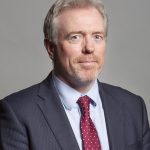
    The speech made by Theresa Villiers, the Conservative MP for Chipping Barnet, in the House of Commons on 26 January 2023.

    I feel immensely privileged to be called to take part in what has been an outstanding debate this afternoon that has shown this House at its best. I particularly commend the contribution of my right hon. Friend the Member for Beckenham (Bob Stewart).

    Before turning to the appalling events of the holocaust, I want to speak about another European genocide that took place in Europe in the 20th century: the holodomor. Ninety years ago, during the winter of 1932-33, the confiscation of crops led to the death of millions in the Soviet Union, mainly Ukrainian peasant farmers. It is hard to say how many Ukrainians died, but it was probably at least 7 million. The almost universal view of historians is that the famine was man-made, inflicted as a deliberate policy by Stalin to force Ukrainian farmers into collectivism. His regime wanted to break the resistance of Ukrainian identity and culture, which it viewed as a threat to Russian Soviet rule.

    Entirely unrealistic quotas for agricultural production were set. When not achieved, all produce was confiscated, and mass starvation followed. At the height of the crisis, around 25,000 were dying every day. Bodies piled up at the roadside and at railway stations as people tried desperately to flee but never made it. With the return of Russian aggression towards Ukraine, surely now is the time for us to formally recognise the holodomor for what it was: an attempt at genocide directed against the Ukrainian people.

    Turning to the holocaust, I want to talk about my constituent, Mala Tribich. She was born in 1930 in Poland. In 1939, her family were forced into a ghetto, but she and her cousin Idzia were taken in by a Christian family in another town. They lived in dangerous and vulnerable circumstances, constantly at risk of discovery. Idzia was moved to live with another family and was never seen again. Her death remains a mystery to this day. Back in the ghetto, Mala’s family were living in increasingly appalling conditions, crammed in the corner of a room with many other families. Her mother and sister were taken away and imprisoned in a synagogue. They were brutalised, starved, shot at, and then taken away and murdered in nearby woods.

    By this time, Mala was in the ghetto with her father and brother and had become caregiver to her five-year-old cousin, Hania. When the ghetto was liquidated in July 1943, the two children were put in line to board lorries going to concentration camps. Mala bravely asked one of the SS guards if she could return to the ghetto. Incredibly, he said yes, but as she turned to go back she was told that the permission to re-enter applied only to her, not to little Hania. Mala was faced with the agonising choice of either leaving this vulnerable little girl behind to certain death or staying with her, losing her family forever, and potentially losing her own life. In the end the guard relented, and they were both allowed back. The Nazis inflicted these appalling choices on millions of people during the holocaust.

    Mala and Hania were in the ghetto for another year, until November 1944, when they were put into cattle trucks with no food or water and transported first to Ravensbrück concentration camp and then to Bergen-Belsen. They arrived to scenes of unspeakable horror, with bodies strewn around the camp and thousands dying of starvation and disease. Somehow, those two little girls survived and were liberated from Bergen-Belsen on 15 April 1945. Having gone through all that, Mala was still just 14 years old.

    I feel that I just do not have the words to do justice to that story, but I wanted to tell it to the House today because I believe that one of the reasons the personal testimony of survivors such as Mala has so much power is that it reminds us of the individual people behind the horrific statistics—the ordinary people who, before the rise of the Nazis, were living such ordinary lives, just like us, with the same hopes and aspirations, no doubt the same anxieties and irritations, and the same strengths and weaknesses.

    My 92-year-old constituent told her story to a gathering in Woodside Park synagogue at the weekend, as she has in hundreds of other settings over many years. She told it with incredible poise, dignity, courage and resilience. The gathering was hosted by the shul in partnership with the Barnet Multi Faith Forum, and people of all faiths and backgrounds were there to remember the holocaust and its victims, and to pledge to root out anti-Jewish racism wherever it emerges. That is a commitment I repeat to the House today, because we must never, ever let this appalling history repeat itself.

  • Margaret Ferrier – 2023 Speech on Holocaust Memorial Day

    Margaret Ferrier – 2023 Speech on Holocaust Memorial Day

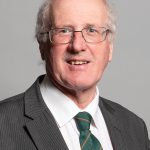
    The speech made by Margaret Ferrier, the Independent MP for Rutherglen and Hamilton West, in the House of Commons on 26 January 2023.

    I thank the right hon. Member for Bromsgrove (Sajid Javid) for securing and opening today’s debate. I congratulate the hon. Member for Stretford and Urmston (Andrew Western) on his fantastic maiden speech and look forward to hearing more of his contributions in the Chamber.

    It is a great privilege to speak in this debate marking Holocaust Memorial Day 2023. It is an opportunity for all of us to reflect on the part that we play as parliamentarians in upholding democracy. I would like to place on record my thanks to the Holocaust Educational Trust for the important work it does in educating the public on the horrors of the holocaust and other genocides, and to the Holocaust Memorial Day Trust. I have signed the book of commitment again this year on behalf of my constituents, as have many Members. I would also like to pay tribute to holocaust survivor Zigi Shipper, who recently passed away, sadly, on his 93rd birthday. I would like to express my condolences to his family.

    Each year’s theme gives us pause for thought, and perhaps none more so than this year’s theme of ordinary people. It was ordinary people who stood by and allowed the holocaust and other genocides to happen, taken in by propaganda or too frightened to speak up. They share some degree of responsibility. It is ordinary people who grow up to become authoritarian leaders or parts of the machine that perpetrates these massacres. It was ordinary people who fought back at great risk to their own lives, who provided shelter to the persecuted Jews, Roma, disabled and LGBT people, who resisted the regime in Nazi Germany and occupied Europe. It is ordinary people who have overturned corrupt regimes, fought for change for themselves and others. It is ordinary people who are the victims of genocide and who are the survivors. Nothing sets victims apart from survivors other than some chanceful set of unique circumstances that allowed them to survive or unfortunately put them directly in harm’s way.

    Too many stories and names are lost to the passage of time, but all the seemingly small personal stories from those who experienced persecution or tried to resist, make one larger picture when they are pieced together. Those small pieces are meaningful—the stories of lives that were lived or stolen. They are just as important as the whole, and the whole is what we look to when we remind ourselves why we cannot be complacent and cannot allow history to repeat itself.

    It is some of the lesser-known stories of ordinary people that I want to speak to today: two women who ended up in Rutherglen, in my constituency, at some point in their lives. Dorrith Sim, who passed in 2012, was born Dorrith Oppenheim in Kassel, Germany in 1931. Her early childhood was happy, comfortable and carefree. It was Kristallnacht, or night of the broken glass, in Kassel that marked the beginning of a difficult road for the young girl. Dorrith was seven and a half when she boarded the Kindertransport and made her way to a new life in Scotland, having to leave her parents Hans and Trude behind. The only English she knew was “I have a handkerchief in my pocket.”

    Hans and Trude were deported to Auschwitz in October of 1944. They were never reunited with their daughter. She stayed in Edinburgh with her foster parents, until she married Andrew at 21. The couple lived in Rutherglen in their early marriage, as well as Dundee and Prestwick later. Dorrith wrote a book in later life, titled “Handkerchief in my Pocket”. It was very important to her that future generations of children understood what she, and so many children like her, had been through.

    Rita Strassmann, later McNeill, was another Rutherglen resident who arrived in Scotland with the Kindertransport. She was born in 1930 in Hanover and was just nine when she was arrested by Nazis, alongside her mother. She was able to escape, with the help of her aunt, but unfortunately her mother was left behind. It was the last time Rita saw her. Years later she was given a small booklet—she forgets from where—that informed her of her mother’s fate. She was shot as she was marched, with other victims, to Riga from the concentration camp she had been taken to. Rita said she did not do well at school. No doubt the trauma of leaving her mother behind, en route to a concentration camp, deeply affected her. She worked in a bank after school, and later as a receptionist for her husband’s medical practice.

    Rita and Dorrith were friends. As adults, they both would go to meetings to connect with others who had come to Scotland on the Kindertransport. They both described feeling Scottish, but Rita said, “Still German blood in my veins, Jewish German blood in my veins.” It is clear that those early traumatic experiences shaped them and can never be erased. They were two ordinary women who had experienced something so unthinkable and out of the ordinary to us here today.

    I am sure many of us have ordinary men and women in our constituencies with a deeply personal connection to the holocaust or other campaigns of persecution. The men and women who fought for today’s freedoms, while inspirational and brave, were ordinary people. As ordinary people too, we must continue to uphold those values. We cannot allow the seeds of hatred to spread and grow. There will always be those who perpetrate hatred. Each one of us must take seriously our responsibility to call hatred out wherever we see it and show that we will not tolerate it.

  • Bob Blackman – 2023 Speech on Holocaust Memorial Day

    Bob Blackman – 2023 Speech on Holocaust Memorial Day

    The speech made by Bob Blackman, the Conservative MP for Harrow East, in the House of Commons on 26 January 2023.

    It is a pleasure to follow the speech of the hon. Member for Putney (Fleur Anderson). I pass on my congratulations to the new hon. Member for Stretford and Urmston (Andrew Western) on his maiden speech. He will remember it forever, because we all do. We all do it once, and he will remember it forever. He is clearly going to be an asset to this House as well as to his party, and I look forward to debating housing issues with him over the time he is here. I wish his team every success tomorrow night.

    I thank my right hon. Friend the Member for Bromsgrove (Sajid Javid) for securing this debate, as we remember the 78 years since the end of the holocaust. For me and for most of us, it is incredible to think of 6 million people being murdered because they were people, and it is important to remember that the holocaust was not an isolated event. It was systematic state-sponsored persecution by the Nazi party and its affiliates. It began in 1933, when the Nazis came to power in Germany, and went all the way through to 1945, when the second world war concluded. I hope to take a bit of a different tack during this speech, because if we ask how we can understand how ordinary people could do such atrocities to ordinary people, we need to understand what led to it in the first place.

    Antisemitism is not new, and it was not new in the 1930s. Jewish people have been subjected to antisemitism throughout Europe since the middle ages. The hatred escalated significantly after the great war, when the reparations on Germany and its allies were extreme, and we had the Wall Street crash and the depression, which led to rampant inflation in Germany and the collapse of the Weimar republic. This led to the rise of Hitler and the Nazi party as he assumed control of Germany.

    It is unclear to me what was behind Hitler’s hatred towards Jews. Why did this man decide that he hated Jews? However, it is quite clear that Hitler held the Jewish community responsible for the defeat of Germany in world war one. Why? It is because someone had to be to blame. That was clearly what we now call fake news —vicious propaganda, enabling the national feeling to be against the Jewish population of Germany and beyond. It was completely wrong, given that Jews were fighting on the side of Germany in defence of their country during world war one, including Otto Frank, who fought at the battle of the Somme.

    After Hitler came to power, he wasted no time in using the Government to target and exclude Jews from German society, claiming they were inferior. Any book that contained ideas threatening to the Nazis was banned, and a concentration camp was immediately created for political prisoners, initially holding 200 communists. By 1935, the anti-Jewish movement had gained momentum. Jewish newspapers could no longer be sold, and Jews were stripped of their citizenship and other basic rights. In September 1935, the Nuremberg laws were passed by the German Parliament, which meant that many of the Nazis’ radical theories were institutionalised, and legal grounds were created to justify the prosecution and persecution of the Jewish community.

    It is unimaginable in this day and age how the vast majority of Germans were coaxed into believing that Nazi ideology, but members of the general public were clearly unaware of the growing indoctrination until it was too late. They had adopted a strong stance against the entire Jewish community, and therefore could justify Hitler’s actions. Despite the shocking morals, Hitler was a calculated and systematic man, carefully thinking through his long-term plan before enacting it. He was able to persuade the German people by providing free radios that played only antisemitic programmes, ensuring that all children’s books depicted the villain as a Jewish character, showing posters blaming the Jews for every evil, and introducing strong censorship on all anti-Nazi media.

    On 9 November, Kristallnacht, or the “night of broken glass”, took place. That was the terrorisation of Jews throughout Germany and Austria, which had recently been annexed by the Nazis. Hundreds of synagogues were destroyed and thousands of Jewish-owned businesses ransacked. The deaths of nearly 100 Jews took place on that dreadful night, which is often seen as the turning point in the persecution of German Jewry. The aftermath of Kristallnacht saw dozens of further discriminative restrictions. Jews now had to carry ID cards at all times and have the segregating “J” stamped on their passports. They could longer head or own businesses, and they could not attend concerts or theatres. They had their driver’s licences removed, and all Jewish children had to be taken out of their schools to attend “Jewish-only” institutions. They had to be in certain places at certain times—all dictated by the Führer. Furthermore, more than 30,000 Jews were arrested on that night.

    The whole House will be aware that in 1939 world war two was declared, as Germany took over Czechoslovakia and began the invasion of Poland. Simultaneously, the Jewish restrictions became even more constraining and discriminatory. By 1940, the Nazis had begun deporting German Jews to Poland, where they were forced into ghettos and concentration camps. They were brutally tortured and their human rights completely violated. Devastatingly, 1940 saw the first of an onslaught of mass murders of Jewish people.

    The situation became graver and graver, and in 1942, the Nazis’ discussions were centred around their “final solution”, a despicable plot to kill every European Jew. At that point, Jews were not allowed to own pets, leave the house without police consent, buy newspapers and eggs or attend school, among all sorts of further restrictions. Once Hitler took control of Hungary, a year before the end of world war two, he began deporting 12,000 Jews to Auschwitz every day to be killed. That continued until 1945, when Auschwitz-Birkenau was liberated. Sadly, 6 million Jewish people—two thirds of European Jews—had lost their lives. That shattered communities, and provided the few who outlived the war with experiences that scarred their lives for ever.

    But before we get too comfortable, we should remember what was going on in this country. The British Union of Fascists was around before world war two, led by Oswald Mosley, an MP in this House, and he modelled it on Nazi Germany. The BUF was fuelled by antisemitism, inspired by the Nazis, and Mosley held huge rallies in this country, pushing a strong nationalist and fascist agenda. Unemployment was very high, poverty widespread, and homelessness rising. Someone had to be to blame, and Mosley blamed the Jews. It could have happened here. Sensible action took place by the Home Secretary, and once war broke out the BUF was banned and its members became enemies of the state. But we must never be too comfortable that this could not happen again, even in this country. I will end with one line from Zigi Shipper, who made this important point: do not hate.

  • Fleur Anderson – 2023 Speech on Holocaust Memorial Day

    Fleur Anderson – 2023 Speech on Holocaust Memorial Day

    The speech made by Fleur Anderson, the Labour MP for Putney, in the House of Commons on 26 January 2023.

    I congratulate my right hon. Friend the Member for Barking (Dame Margaret Hodge) and the right hon. Member for Bromsgrove (Sajid Javid) on securing this Backbench Business debate. I thank the right hon. Member for Bromsgrove for his powerful speech.

    I thank the Aegis Trust, the Holocaust Memorial Day Trust and the Holocaust Educational Trust for their constant work to ensure that we always remember the holocaust and all those who died and that we bring that memory into action for what is currently going on around the world. I thank Digby Stuart College at Roehampton University in my constituency for all the work it does on education about the holocaust, and I look forward to its commemoration event in May. I thank all the members of Wimbledon Synagogue for their warm welcome of me whenever I visit for events. I am sad that they have to have security outside the synagogue all the time. It is a reminder to me every time I visit of the growing antisemitism in our country, which has been highlighted by Members and is the reason for us holding this debate here and now.

    I also congratulate my hon. Friend the Member for Stretford and Urmston (Andrew Western) on an assured and excellent maiden speech; I look forward to hearing from him many times in future.

    I declare an interest as chair of the all-party parliamentary group on prevention of genocide and crimes against humanity, vice-chair of the all-party parliamentary group on Bosnia and Herzegovina, and vice-chair of the all-party parliamentary group on Ukraine.

    My experience of working in Bosnia during the war and speaking to the relatives of those who died in Srebrenica drove my work with refugees before I became a Member of the House and drives my work now on the prevention of genocide, to ensure that when we say, “Never again”, we mean never again. We are also ordinary people but we have extraordinary power to make legislation to put that into action. This year is the 75th anniversary of the convention on the prevention and punishment of the crime of genocide, about which there will be lots of soul-searching during the year. I hope that all hon. Members will be part of that, as I am sure I will be: what legislation do we need to ensure that “Never again” means never again?

    I join hon. Members in remembering the 8 million people killed during the holocaust and all the survivors, especially those we have lost recently, including Zigi Shipper, who we lost last week on his 93rd birthday. He was a survivor of the Łódź ghetto and the Auschwitz and Stutthof concentration camps. He arrived in the UK in 1947 and spent many decades sharing his testimony in schools across the country. He was awarded the British Empire Medal in 2016 for his work with the Holocaust Educational Trust.

    I also pay tribute to all the ordinary people who shared their stories and who I read about growing up, because they had such an influence on me—people such as Anne Frank, Corrie ten Boom and Primo Levi. Their work educated me, shocked me, chilled me, connected me and inspired me. Indifference is all it takes for the spirit of the Third Reich to be resurrected. As holocaust survivor Elie Wiesel once said:

    “Indifference, to me, is the epitome of evil.”

    How can we ensure that we are not indifferent?

    Last year, I visited the Srebrenica memorial with a cross-party group of MPs, including the right hon. Member for Beckenham (Bob Stewart). Some 8,000 people, mainly young men, were herded together, taken for a long walk and murdered. Their shoes and clothes were left and are displayed at the memorial, which is a chilling memory of each of them. I saw the video footage of the young men leaving on that walk—they looked like a group of young people going off with bags on their shoulders to walk through the forest for a picnic, not knowing where it would lead them. We met the grieving relatives—the mothers who will never forget and whose whole lives have been blighted by the terror. The row upon row of graves is a shocking sight.

    Last September, I visited Kyiv where, on 29 September 1941, the 33,800 Jewish residents of Kyiv were gathered together near a train station and told that they would be taken to safety by train. Instead, they were taken to the edge of the Babi Yar ravine and shot. It was the largest massacre in the history of the holocaust up to then—33,771 people were killed and only 29 survived. Last year, I also visited the memorial to the holodomor, which was another horrific crime of state murder that aimed intentionally to wipe out the Ukrainian people. Some 7 million Ukrainians were starved over just 18 months from 1932 to 1933 on the most fertile lands in Europe. A third of all children in Ukraine perished as a result. In all those cases, the laws were passed by ordinary people and enforced by ordinary people, and led to the deaths of ordinary people.

    Every year, we rightly stand here and say, “Never again,” but right now, around the world, atrocities are being committed in Ukraine, against the Rohingya people, against the Uyghur people, and in Tigray. There are several ways to take action to ensure that we mean never again. First, we can create a new pathway outside the UN Security Council to recognise potential and actual genocide. As the International Development Committee and the UK Government have pointed out, the Security Council is failing to act in response to mass atrocities, because Russia and China continue to use their veto to block declarations of genocide and referrals to the International Criminal Court. One way to do that would be to allow time on Report for the Genocide Determination Bill.

    Secondly, the Government should take very seriously the recommendations of the “From Srebrenica to a safer tomorrow: Preventing future mass atrocities around the world” report from the International Development Committee. That is a very welcome piece of work by parliamentarians, with strong recommendations about how we can support and strengthen the work of our UK missions. I welcome the new office for conflict, stabilisation and mediation and the mass atrocities prevention hub. These are great moves, but we need to go further to provide early warning and effective reaction to the risk of genocide in areas around the world.

    There is always more to be done. My time working in Bosnia during and after the war taught me that we can never take peace for granted. We need to build peace every day. There are words in the playground or on the bus, there is discrimination in the workplace and there is antisemitism online. These must always be challenged and opposed. Holocaust Memorial Day is not just about speeches and gestures. It is about honouring the 6 million victims with our actions, not just our words. I would welcome all Members joining the all-party parliamentary group on prevention of genocide and crimes against humanity, and I look forward to working together to ensure that we, ordinary people though we are, can take extraordinary steps as legislators in the years to come.

  • Saqib Bhatti – 2023 Speech on Holocaust Memorial Day

    Saqib Bhatti – 2023 Speech on Holocaust Memorial Day

    The speech made by Saqib Bhatti, the Conservative MP for Meriden, in the House of Commons on 26 January 2023.

    I associate myself with the sentiment of the hon. Member for Stockport (Navendu Mishra) on social media companies doing more. They simply do not do enough, but they have the resources to do so. I pay tribute to my right hon. Friend the Member for Beckenham (Bob Stewart) for his moving speech. Every time I hear him speak about his experiences, there is never a dry eye. I congratulate the hon. Member for Stretford and Urmston (Andrew Western) on his maiden speech. He was doing so well up until the fifth minute—as a Manchester United fan, I am sure that we will have many sparring sessions inside and outside the Chamber, but I wish him well.

    I thank my right hon. Friend the Member for Bromsgrove (Sajid Javid), the right hon. Member for Barking (Dame Margaret Hodge) and all Members who have contributed to ensuring that we have this really important debate. I pay tribute to the Holocaust Educational Trust for all its work, the Holocaust Memorial Day Trust and the Community Security Trust. I also visited a school in north London and got to see at first hand the sad situation of our children—and they are our children—who are struggling to be educated without fear. I wish we did not have to live in a society where that is the case. I am sure that we will all work together to make that so.

    I thank Solihull Council, which had its civic reception this morning as part of its holocaust remembrance events. I urge all Members to spend some time going through the Holocaust Memorial Day Trust website, to read the stories of those who survived and those who perished—the mothers, fathers, sons, daughters, brothers and sisters.

    “Never again.” So many times we have heard that phrase, and when speaking not only of the holocaust but, sadly, of subsequent genocides, such as those in Rwanda, Cambodia and Srebrenica, as my right hon. Friend the Member for Bromsgrove said. I am a patron of Remembering Srebrenica. In the week that the doomsday clock moved 10 seconds closer to midnight, and when incidents of mass murder and atrocities are unveiled with too much regularity—whether in Ukraine, Xinjiang or in the stories of harrowing abuse suffered by the Rohingya communities—this debate seems particularly poignant. Sadly, that list was not exhaustive. One thing is clear: we cannot be complacent. We cannot assume that it will never happen again. We cannot forget.

    The theme today is ordinary people. I want to speak about the extraordinary Paul Oppenheimer, who settled in my constituency after the war, in the village of Marston Green. He was born in Berlin in 1928 and lived in my constituency after the war for over 40 years. In 1940 his family moved to Amsterdam and, within six months of the German invasion, the persecution of the Jewish communities in Holland had started. He was only able to complete one term in the local grammar school before the Nazis banned Jewish children from attending non-Jewish schools. In January 1942, it was decreed that Jews could only reside in Amsterdam, and from April 1942 it was decreed that Jews must wear a Jewish star. The Nazis then went block by block, clearing Jewish families and taking them by train to the Westerbork transit camp, before they were sent on to other camps such as Auschwitz, Sobibor and Bergen-Belsen.

    The Oppenheimers were exempt from wearing the yellow star by virtue of a small piece of fortune. In 1936, Paul Oppenheimer visited England with his parents. During their visit, his sister, Eve, was born, and therefore she had entitlement to recognition as a British subject. It was due to Paul’s father’s foresight in registering Eve as a British citizen that the whole family were treated differently, with blue exemption cards. They were kept in the slightly—slightly—better star camp, where they did not have to shave their heads, could wear civilian clothes and would often be protected from the random beatings and shootings, by virtue of that citizenship.

    But they were not safe from the unsanitary conditions, and disease was rife. Paul lost his mother and father to disease in 1945, but he and his brother and sister eventually survived and found their way to England. Later in life, Paul checked to see what happened to those who were sent on transit trains to camps from Westerbork. Of the 34,143 people who left Westerbork for Sobibor camp, only 19 survived. Of the 58,380 who left for Auschwitz, 854 survived.

    The thing about this story is that, in line with the theme of Holocaust Memorial Day this year, you would never have known it about Paul. He started as an engineering apprentice in Marston Green in my constituency and ended up working in an automotive company on braking systems for passenger cars. In fact, he was so good that his work on anti-locking brakes, which are standard in cars today, earned him an MBE in 1990. It was only when he got that award and journalists started asking him about his life that the horrors he had seen and his story became clear. Paul was the ordinary neighbour. He was the ordinary co-worker. He was the one who ploughed his efforts into rebuilding his life here in Britain. Paul settled in my constituency of Meriden. He brought up his children just streets away from where I live. That is when it hits us how the extraordinary evil of the holocaust touched the lives of so many ordinary people.

    As I conclude, I wonder about all the Pauls who did not survive and all the Oppenheimers who did not make it to a place of safety, all the engineers who did not make it, all the doctors, intellectuals and artists, and all the great contributions that could have been made. They were not just a loss to their families; they were a loss to humanity, at the hands of a warped and evil ideology. Whether it is Xinjiang, the Rohingya community or Ukraine, one thing is clear: we must all come together and work with our international partners as a coalition of free, democratic countries and make sure that “never again” is not just something we say but something we live by.

  • Navendu Mishra – 2023 Speech on Holocaust Memorial Day

    Navendu Mishra – 2023 Speech on Holocaust Memorial Day

    The speech made by Navendu Mishra, the Labour MP for Stockport, in the House of Commons on 26 January 2023.

    I am grateful to the Backbench Business Committee for allocating time for this important debate. I also thank the right hon. Member for Bromsgrove (Sajid Javid) and my right hon. Friend the Member for Barking (Dame Margaret Hodge) for jointly sponsoring the application, among other MPs. As a fellow Greater Manchester MP, I was particularly pleased by the maiden speech from my hon. Friend the Member for Stretford and Urmston (Andrew Western). I am keen to associate myself with his remarks about cricket, because he and I are known to enjoy a match or two at Lancashire county cricket club, although I should declare an interest as a member of that club.

    Before I go into the main segment of my speech, I pay tribute to the Jewish Representative Council of Greater Manchester and Region, as well as the Jewish Leadership Council, and in particular Marc Levy, for all the work they do in celebrating the Jewish community in our city region and shedding light on antisemitism for the vile racism it is. There are also such organisations as the Jewish Labour Movement, which has done a lot of work within my party, and I am grateful to it. Several Members on both sides of the House have mentioned the Holocaust Memorial Day Trust, and I have noticed that many, including you, Madam Deputy Speaker, are wearing a badge from the trust. The Holocaust Educational Trust is well known for all the work it does in educational establishments across the country.

    We have come a long way since the horrors of the holocaust, but it is important to remember and reflect on the atrocities and the lives taken. I had the privilege of listening to the testimony of Ike Alterman at the Yom Hashoah commemoration at Bridgewater Hall in Manchester last year. His story of surviving in four concentration camps was remarkable. Although tragically his family did not survive, as one of the Windermere children he was able to build a life here in Britain from almost nothing.

    At a local level in my constituency, I am grateful to Councillor Dena Ryness and Stockport Council for organising the civic event in my town for Holocaust Memorial Day, where we come together to remember all those people whose lives were tragically taken from them. I will be attending the event in my constituency tomorrow.

    My constituency of Stockport is in Greater Manchester. The region has the second largest Jewish community in Britain. In Greater Manchester the Jewish community is thriving and outward-facing but, like Jewish communities in the rest of the country, it has to deal with appalling hate crimes, both in person and online. The hate has sadly persisted, and there was a report last year on the rise in crimes against the Jewish community in Greater Manchester, which was covered by local and national media and must be tackled.

    In the Online Safety Bill, work has been done to clamp down on online racial harassment and bigotry, but it is clear that social media companies and tech giants must go further and do a lot more to ensure that this issue is controlled. Bigotry is still bigotry, even if it is typed. I had the privilege of being on the Bill Committee. Lots of organisations got in touch with us. In particular, I highlight the contribution of Mr Danny Stone MBE, the chief executive of the Antisemitism Policy Trust. He was quite helpful to me and other Committee members on both sides of the House.

    I recently visited the site of Europe’s most recent genocide in Bosnia-Herzegovina, as part of the International Development Committee delegation. I heard at first hand real and growing fears that the renewed weaponisation of hate speech and polarisation will lead to even more violence. We must all reflect. It is clear that Governments across the world must do more.

    Last year the International Development Committee produced the report “From Srebrenica to a safer tomorrow: Preventing future mass atrocities around the world”. The report provides a concrete and practical road map for how Britain can show global leadership in preventing genocide and crimes against humanity. That includes establishing a national strategy on the prevention of mass atrocities and ensuring that all embassies, high commissions and diplomatic posts receive atrocity prevention training, with priority countries receiving specialist support and training and adequate resources.

    Last week I signed the book of remembrance in Westminster Hall on behalf of the people of my constituency. Like everyone in this House, my message was “never again.” In order for us to do good on our promise of never again, we must commit to more than just words.

  • David Mundell – 2023 Speech on Holocaust Memorial Day

    David Mundell – 2023 Speech on Holocaust Memorial Day

    The speech made by David Mundell, the Conservative MP for Dumfriesshire, Clydesdale and Tweeddale, in the House of Commons on 26 January 2023.

    My thanks to my right hon. Friend the Member for Bromsgrove (Sajid Javid) for bringing forward the debate and my commendations to the new hon. Member for Stretford and Urmston (Andrew Western) on an excellent maiden speech.

    I want to tell the House the story of an ordinary person who became extraordinary through her love and courage, who did not look the other way and who eventually laid down her life for her commitment. When Jane Haining was arrested by the Gestapo at the school where she worked in Budapest one morning in April 1944, she told the children in her care:

    “Don’t worry. I’ll be back by lunch.”

    She did not come back. Instead, from one of Budapest’s police stations, Jane was taken to Auschwitz-Birkenau.

    Unlike the 12,000 Hungarian Jews who were arriving daily to the horror of Auschwitz, Jane’s journey started not on the cobbled streets or Budapest or the Someşul Mic side town of Cluj but in the rolling farmland of my native Dumfriesshire. Her so-called crime, unlike the Hungarian Jews she arrived with, was not her ethnicity but her faith and courage. Like almost all who arrived at the camp at that time, Jane died within a few weeks—at just 47—in conditions that few can comprehend. She was the only Scot to die in the holocaust.

    Jane had, in a very literal sense, given her whole life to others. As a young girl in Dunscore in eastern Dumfriesshire, she had given it to her younger sisters for whom she had become the carer on the death of her mother. After her graduation from Dumfries Academy, where she had excelled in languages, she worked as a secretary in Paisley and Glasgow before finally finding her calling as a missionary in the Church of Scotland.

    From June 1932, Jane was the matron of the Scottish Mission School in Budapest, a boarding house for Jewish and Christian girls. Life and work at the school was overtly Christian, but Jewish parents were keen to see their daughters attend the school not only because of the quality of the education but because of how the girls were accepted. As one commentator noted:

    “Jewish girls who came here were not seen as second-class pupils. They were just welcome.”

    That must have felt precious to the pupils and their parents as the persecution of the 1930s become more prevalent and pernicious.

    Even before the start of world war two, the Church of Scotland had repeatedly advised Jane to leave Budapest, but she refused. After her final visit to her home in Scotland in 1939, she wrote

    “if these children need me in days of sunshine, how much more do they need me now”?

    It is a testament to Jane and a reminder of our capacity for good that her concern was always the children’s needs, not her own safety. Her courage and selflessness, though, cost Jane her life.

    When the Nazis swept into Budapest in March 1944, Jane was arrested within a month. Her crimes, according to the Gestapo, included that “she had wept” when, as prescribed by law, she had sewn yellow stars on to the pupils’ clothes. Her sympathies for the Jewish people had been revealed to Nazi authorities by the son-in-law of the cook at her school, whom she had scolded for eating food intended for the girls in her care.

    Jane was rightly recognised in 1997 by Yad Vashem as one of the righteous among the nations. She is also recognised as a national hero in Hungary. It was there in 2019 that I, as Secretary of State for Scotland, had the privilege of leading thousands of people through the streets of Budapest on the march of the living, an annual event to mark Hungary’s Holocaust Memorial Day, which movingly that year was dedicated to Jane and started in a street named after her.

    Here in the UK, Jane is remembered with a cairn outside Dunscore parish church, and an informative exhibition within it. For those wishing to know more about her life, I encourage them to look to Mary Miller’s book on Jane’s life, “A Life of Love and Courage”, to find out more. While her life, like all those taken in the holocaust, cannot be restored, it can and must be remembered, and I would certainly like to see it remembered more fully and more widely.

    As the holocaust and its victims move further into memory, it is right that we do more to ensure that current and future generations comprehend the scale of the horror, but also the impact of each individual loss, and through Jane’s example—the example of an ordinary person—remember that for all the evil in the world, if we do not compromise or look away then, like Jane, there is always something that each individual can do to combat it. As Rev. Aaron Stevens of St Columba’s Church of Scotland in Budapest eulogised:

    “Jane Haining’s service and sacrifice shows that caring for people from different backgrounds in no way compromises our faith. In fact, it just might be the fullest expression of it.”

    May God bless Jane Haining. She was truly a light in the darkness, and may her light shine even brighter in the future.

  • Lyn Brown – 2023 Speech on Holocaust Memorial Day

    Lyn Brown – 2023 Speech on Holocaust Memorial Day

    The speech made by Lyn Brown, the Labour MP for West Ham, in the House of Commons on 26 January 2023.

    It is an absolute honour to follow the right hon. and gallant Member for Beckenham (Bob Stewart) and to hear again his powerful testimony about what he witnessed. He is right that we simply must never forget. His speech is one of many excellent speeches in this debate.

    I will speak about the 1943 uprising at Treblinka, where very ordinary people with very little hope rose to destroy the machinery of death and to escape. Treblinka, as we know, was created for the sole purpose of exterminating the Jewish people. It was not capable of holding many people for long periods. There were no forced labour factories. In little more than a year, an estimated 925,000 people were murdered.

    The people who fought back had personally seen tens or even hundreds of thousands of innocent people being murdered. They had been forced to cut off the hair of their fellow victims just before they entered the gas chambers and sort through the clothes of the newly dead. They had to pick through the ashes from every day’s thousands of corpses to remove fragments of bone, which were crushed and burned again so that no evidence of this enormous evil would be left. They had been forced to do all that, to endure all that, and still they had the strength to plan, to work together, and to fight for their right to live.

    I believe it is important that we understand just how difficult and extraordinary any form of resistance was within the camps, because we know that the control by the guards was almost absolute. All the prisoners knew of the immediate brutality that would be inflicted upon resisters if they were caught. But it was more than that. The Nazi regime sought to break the very spirit of the prisoners—not only their hope, but their solidarity among themselves. Chil Rajchman, who survived Treblinka after taking part in the uprising, said that the victims

    “were so abused, victimised…that they wanted to die… Our vision was overcast. We did not know what was happening to us… The whole world forgot about us. Our lives were worthless.”

    Despite the devastating impact of years of unceasing trauma, courage and solidarity remained and could not be broken. In the summer of 1943, news came to the camp of the Warsaw ghetto uprising a few months earlier, so against enormous odds, plans for an uprising to destroy Treblinka began. The guards had built an armoury and selected a Jewish locksmith to work on the lock. He was able to make an extra copy of the key and pass it to the organisers. Others were brought into the conspiracy, including the Jewish boys of just 12 or 13 years of age who had been given the weekly task of cleaning up after the camp guards. The uprising began on 2 August 1943. Those brave, brave young boys smuggled guns out from the armoury underneath the rubbish in their carts. The barracks were set alight, and the main gate was attacked, but the towers could not be captured and the guards fought to maintain their brutal control. All that could be done was to run and hide.

    Of the 840 people in the camp that day, only 200 fully escaped the pursuit, and just 100 survived the rest of the war. Let us remember that those who rose up in Treblinka were ordinary people willing to die that day so that others would have a chance to live. They were not bound together by training or ideology, but were thrown together in the midst of utter horror. Their desire to survive and resist came from within and from each other. We must remember them. As a country, we must try to match just a fraction of their resilience as we stand against atrocities in our own time, because—as we know and as we have heard—people in this world are still systematically murdered because of their identities.

    This year marks the 20th anniversary of the start of acts of genocide in Darfur—horrific crimes against humanity that have happened on our watch. In Darfur, hundreds of thousands of people have been killed, rape has been used as a weapon on a massive scale, and millions still endure forced displacement. Every year on Holocaust Memorial Day, we say, “Never again”, but I genuinely believe that saying and believing that requires us to act. Atrocities continue regularly in Darfur, and the people accused of those crimes against humanity have faced no justice. We need to recognise that, instead of being put on trial, some of those implicated in Darfur have built careers on the murder and destruction that they planned and organised. Many remain in positions of power and prosperity in Sudan today.

    I absolutely welcome the Government’s statement at the UN Security Council yesterday calling on the authorities in Sudan to act. I hope that justice for the atrocities in Darfur is a primary UK objective as we continue to support the movement of Sudanese people who wish only for peace and democracy. We must always remember the victims of the holocaust, and we can never rest content until justice is done for the victims in Darfur and those everywhere else in our world where genocide again threatens our humanity.