Tag: Speeches

  • Greg Hands – 2005 Maiden Speech in the House of Commons

    Greg Hands – 2005 Maiden Speech in the House of Commons

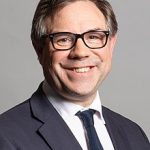
    The maiden speech made by Greg Hands, the then Conservative MP for Hammersmith and Fulham, in the House of Commons on 26 May 2005.

    I want to speak about the threat to our local hospital in Hammersmith and Fulham: the Charing Cross. First, however, I congratulate my hon. Friends who have made their maiden speeches during this debate: my hon. Friends the Members for Broxbourne (Mr. Walker), for Welwyn Hatfield (Grant Shapps) and for The Wrekin (Mark Pritchard). I am also known as something of a polyglot, so I shall try to offer my congratulations to the hon. Members for Na h-Eileanan an Iar (Mr. MacNeil) and for Taunton (Jeremy Browne).

    I want to say a few words about my predecessor as Member of Parliament for Hammersmith and Fulham, Iain Coleman. It would be fair to say that Mr. Coleman made most of his impact in the constituency. In fact, his surgeries became something of a legend locally as he seemed to spend his entire time in an almost perpetual surgery at all times and for all hours—except during Arsenal games. Mr. Coleman has not been well for a year and I am sure that hon. Members on both sides of the House will join me in wishing him a full recovery and a return to politics as soon as possible. His predecessor as MP for the Fulham part of the constituency was Matthew Carrington, who was a popular, respected and effective MP for 10 years. He was enormously supportive and helpful in my efforts to win back the seat on 5 May.

    It was rather more difficult to find out about the previous Conservative MP for Hammersmith, as distinct from Fulham, because I am the first Conservative MP for Hammersmith since 1964. Probably the most famous previous Hammersmith MP was one William Bull. Mr. Bull represented the area for 37 years between 1892 and 1929. He had the unusual and tragic misfortune to lose his wife to pneumonia after she had been out canvassing for him. For someone who died of pneumonia, Mrs. Bull is ironically commemorated with a sundial in Ravenscourt park in my constituency.

    Mr. Bull won his first election by only 19 votes. While he was an MP he became a senior partner of his law firm. That is an impressive sounding achievement, until one discovers that the firm was called Bull and Bull. He was a man ahead of his time as he was in favour of votes for women and the Channel tunnel, although these days I expect that the latter is more controversial than the former. Most bizarrely, my predecessor was ordered out of the House by Mr. Speaker’s predecessor for calling the then Prime Minister a traitor—which these days is perhaps more in tune with east London than west London politics.

    In truth, the constituency of Hammersmith and Fulham is more famous for its elections than its MPs. I cite the East Fulham by-election of 1933, the battles of Barons Court of the 1960s and the Fulham by-election of 1986. All those have the common characteristic of being won by the Labour party. However, I believe that one of the most significant Hammersmith and Fulham election results was the one just a couple of weeks ago on 5 May. The recorded swing of almost 7.5 per cent. was one of the highest in the UK. The seat was the Conservatives’ No. 1 inner-city target, and a new 5,000 majority has been created. Together with the impressive results achieved in London by my hon. Friends the Members for Enfield, Southgate (Mr. Burrowes), for Wimbledon (Stephen Hammond), for Putney (Justine Greening), for Bexleyheath and Crayford (Mr. Evennett), for Croydon, Central (Mr. Pelling), for Hornchurch (James Brokenshire) and for Ilford, North (Mr. Scott), my result shows that we as a party are making great progress in London again.

    The Labour party barely got started in the campaign. It was barely seen, barely heard and had little positive to say about its eight years in government. Meanwhile, the Lib Dems ran a candidate from Tunbridge Wells under the slogan, “Give Peace a Chance.” Perhaps they were more the surreal alternative.

    Hammersmith and Fulham is one of the smallest constituencies in Britain, but it is none the less one of the most diverse. It is also one of the closest to Parliament. As my hon. Friend the Member for Welwyn Hatfield mentioned, it is quite possible to get back to Hammersmith and Fulham from the House at the end of each evening. In fact, I am probably one of the few Members with a direct door-to-door bus route from just outside Big Ben to just outside his house. That sounds fantastic, until one considers that given traffic in London, it can take up to two hours to complete the journey.

    Prior to 5 May, some newspapers made great play of the fact that no premiership football ground was located in a Conservative seat. Some claimed that that showed that the Conservative party was not represented in the inner cities. All that has now changed, for I represent a constituency in which not just one, but two premiership clubs are located: Fulham and Chelsea. Notwithstanding the heroic events in Istanbul last night, I was delighted to see the streets of my constituency decked out in blue last Sunday to welcome their new champion. I refer of course to Chelsea football club, but “blue is the colour” is surely the future there politically as well, even if I say that as a Fulham fan.

    Hammersmith and Fulham is also distinctive for having more tube users than any other borough in Britain and the greatest number of single women compared with single men in the United Kingdom. It is also the home of the Olympia exhibition centre and part of Earls Court. Its largest employer is the BBC, and it is the home of what is reputed to be Europe’s busiest road interchange at Hammersmith Broadway. It is also the London home to dozens of hon. Members, which can make canvassing in certain streets straightforward. Many hon. Members from both major parties have cut their teeth in local Hammersmith and Fulham politics.

    The election in Hammersmith and Fulham was all about the dreaded congestion charge extension, the fact that eight out of nine muggers in my constituency go unpunished, the fact that a quarter of the borough’s secondary schools are on special measures, the appalling state of the District line and high council tax.

    Perhaps the greatest concern, however, and why I wanted to speak in the debate, is the threat to the Charing Cross hospital. On the very day that the election was supposed to be called—a good day to bury bad news, one might say—on 4 April 2005, an announcement was made at a meeting with the chief executive of the NHS hospitals trust that the world famous Charing Cross hospital would either be demolished or possibly have its specialised services moved to the Hammersmith hospital on the Wormwood Scrubs site. That would be a crazy move, and it is one that I have been elected in part to prevent.

    Charing Cross is a marvellous facility—the centrepiece of a three star-rated hospital trust. It is a global leader in cancer care, vascular surgery, neurosurgery, plastic surgery and much else. It is the trauma centre for the whole of west London and is ideally situated just off the A4 for any major incident at Heathrow. Most of all, it is also a local hospital, serving the needs not only of Hammersmith and Fulham, but of other parts of west London, and is easily accessible by tube, bus or car, which Hammersmith hospital is not.

    The proposal suits nobody other than the management of the trust, who are in turn driven only by meeting Government targets, which have led to huge deficits in both the local primary care trust and the hospitals trust. In classic new Labour fashion, spin doctors were deployed to deny the initial press reports in The Observer that the Charing Cross site would be sold off. Interestingly, however, there was no denial of the plans to move all or most of the specialised services to the Hammersmith site. I expect that more will be heard on the topic in the House, and I look forward to winning the battle with the Government to leave Charing Cross services on their current site.

    In conclusion, many people have asked me and others why the Conservatives did so well in Hammersmith and Fulham and elsewhere in London. The answer is that people in London are overtaxed and face declining public services. I predict major changes in the control of London boroughs in next May’s election.

    I am delighted to become the first Conservative MP for Hammersmith since 1964 and the first-ever Conservative MP for the combined seat of Hammersmith and Fulham.

  • Dehenna Davison – 2023 Speech on Replacement of Funding from EU programmes in Northern Ireland

    Dehenna Davison – 2023 Speech on Replacement of Funding from EU programmes in Northern Ireland

    The speech made by Dehenna Davison, the Parliamentary Under-Secretary of State for Levelling Up, Housing and Communities, in Westminster Hall, the House of Commons on 1 February 2023.

    It is a pleasure to serve under your chairmanship today, Mr Robertson. I sincerely thank the hon. Member for Belfast South (Claire Hanna) for securing this important debate, and for the constructive way in which she has engaged with the Department and I on the UK shared prosperity fund. I know that she is and has long been a committed champion for the many voluntary groups, businesses and communities in her constituency that have previously benefited from, if not relied heavily on, EU funding. She has been a keen advocate to ensure that that support continues under the UK shared prosperity fund.

    The hon. Member mentioned the NOW Group, and I am pleased that she did. As she knows, the NOW Group has been in receipt of ESF funding, and has also recently accessed the community renewal fund as well. We have worked with Maeve Monaghan, the CEO of the NOW Group, to help to design the UK shared prosperity fund planning as part of that partnership group. Hopefully her feedback there has definitely been helpful, and she feels that it has been taken on board as we have designed the programme.

    In my response, I hope I will be able to provide some clarity on the next steps regarding the roll-out of the UKSPF in Northern Ireland; the steps we have taken so far to engage charities and community groups currently in receipt of Government support; and the progress we are making in our ambition to level up communities in Northern Ireland and, indeed, across the whole of the United Kingdom. I will make reference to the levelling-up fund and address as many of the questions she raised as I can. I am not sure my hand was working fast enough to write them all down, but if I have missed any I will follow up in writing following the debate.

    As hon. Members will know, we published the prospectus for the UK shared prosperity fund back in April last year. It sets out how the fund and its £2.6 billion of funding will work on the ground. Effectively, it will replace the European regional development fund and the European social fund with a simpler, smoother and less bureaucratic approach to supporting communities right across the UK. We all know that bureaucracy is something that community groups have raised with us, so as a Government we have very much taken that on board.

    In that sense, it is fair to say that the UKSPF is a central pillar of the Government’s levelling-up agenda and our ambition to bring transformative investment to places that have gone overlooked by successive Administrations for too long. We want to use the funding to support people in skills, helping the unemployed move into high-skilled, high-wage jobs—I know that is something specifically mentioned by the hon. Member for Belfast South in her speech. We also want to use the funding to help the growth of local business and invest in communities and places to help to build pride in place. We know that having pride in the place that someone lives and has grown up in is a crucial part of the wider levelling-up agenda.

    For Northern Ireland, that means £126.8 million of new funding for local investment and local priorities up to March 2025. Crucially, that fulfils the promise we made that the UKSPF would match the funding allocated to Northern Ireland through EU structural funds.

    I know we have set out how the approach will work in some detail already, both in the prospectus and previous spending rounds, but I will quickly recap it for everyone here. The UK shared prosperity fund is set to ramp up over the coming years, so that total domestic UK-wide funding of the ERDF, ESF and UKSPF will at least match receipts from EU structural funds. It will reach £1.5 billion per year across the UK in 2024-25, when Northern Ireland will receive £74 million. It is important to note that before that date, when ERDF and ESF funding is still being delivered—albeit in smaller amounts—the UK shared prosperity fund tapers in for Northern Ireland and in England, Scotland and Wales too.

    I need to put on the record that the Government fully recognise the need for the funding to be properly tailored to the projects and organisations that add real economic and social value in Northern Ireland. The hon. Member for Belfast South mentioned some of the projects in her own constituency, and I am also grateful to the hon. Member for Strangford (Jim Shannon) for talking about how one of those organisations, the NOW Group, has helped his own constituents. We all know that a good, local charitable organisation can do wonders for our communities, and that is specifically why we are so keen to support them through this funding.

    To ensure that we tailored the funding appropriately, we ran a comprehensive programme of workshops and engagement with Northern Ireland partners last year. That included businesses, voluntary and community groups and councils, so that we could collect the widest possible views on the priorities for the fund and how it could best work in concert with other opportunities in Northern Ireland. We also established a partnership group comprised of all the organisations I just mentioned, along with the higher education sector and the Northern Ireland Office, to advise us on how the fund could be best utilised. We have built further on that engagement since then.

    Throughout the process, we have offered the Northern Ireland Departments the opportunity to formally participate in shaping the fund, but, sadly, that has not proven possible.

    Claire Hanna

    Does the Minister know why that has not proven possible? It is because under section 75 of the Northern Ireland Act 1998, which is essentially the constitution of Northern Ireland, the Department is not equality-screened—unlike the Northern Ireland Office and His Majesty’s Revenue and Customs. It is not able to legally operate and to run equality impact assessments, which are the law in Northern Ireland. That problem was telegraphed, but the Department has not taken adequate steps to address it. That is why those Departments have not been able to be involved.

    Dehenna Davison

    I will follow up in writing on that point. Having spoken to Sue Gray, one of our super officials, who has been outstanding in her engagement, I know how closely officials have been working with the Northern Ireland Finance, Economy and Communities Departments, maintaining regular contact as our plan has developed. That engagement continues.

    Where have we got to? Drawing on insights from the partnership group, and from wider engagement, we published an investment plan just before Christmas last year. That sets out how Northern Ireland’s allocation will be spent and the impact we expect it to have. It supports the leading needs and opportunities in Northern Ireland, addressing high levels of economic inactivity, promoting entrepreneurship and innovation and strengthening pride in place. I am pleased to say that the plan has been given the seal of approval by our partners on the ground and is now being implemented.

    Our first competition, for £42 million, which is roughly a third of the total UK SPF allocation, is focused on helping more economically inactive people into work. Many MPs, Assembly Members and other stakeholders have rightly made the case for prioritising this funding and the voluntary and community organisations that deliver it. I am sure the hon. Member for Belfast South welcomes this provision and the benefits it will bring not just to the organisations that receive it and the individuals they will help, but to Northern Ireland’s wider economy.

    We are also working with councils in Northern Ireland to bring forward early communities and place projects, as well as a joined-up service for entrepreneurs seeking to start a business and create jobs. Pending further discussion with the Northern Ireland civil service, we may also commission Northern Ireland Executive Departments, or their arm’s length bodies, in the design and delivery of the fund. I am sure hon. Members will join me in encouraging their fullest involvement.

    Part of this work is about ensuring that we mitigate issues for organisations as the European programmes we have discussed draw to a close. That issue has been raised with me by organisations not just in Northern Ireland but all around the UK; it is something that our Department and Ministers in other Departments have been incredibly focused on. With that in mind, we have been able to reprofile the SPF by moving funding from 2022-23 to 2023-24, so that it betters reflects funding needs. I know that this is an issue that my predecessors were asked to consider by many partners in Northern Ireland, and I am pleased we have been able make real progress in this area. It demonstrates something crucial, which is that SPF is not a fixed fund; it can and should flex to meet the evolving needs of the people of Northern Ireland—and it has been designed to do so.

    It goes without saying that we will continue to engage with partners, including the Northern Ireland Departments and hon. Members on both sides of this House, on the design and operation of the fund, so that it delivers for businesses and communities in Northern Ireland and throughout the Union.

    If we take a step back from the UK SPF to talk about other funding, which the hon. Member for Belfast South did with regards to the levelling-up fund, Members will know that Northern Ireland Departments have always provided funding alongside the European regional development fund and the European social fund. While we recognise the challenging budget circumstances Northern Ireland faces, the funding provided by UK SPF is only ever part of the answer. It is right that the Northern Ireland Departments continue to invest in provision that they have previously supported; that is something I think all of us would encourage.

    The Government also want to play their part, making sure we are contributing towards building a brighter Northern Ireland. That is why, alongside the UK shared prosperity fund, we have used a wide range of other funds to spur growth, regeneration and investment. Those include: the community renewal fund, which backs 30 locally led, innovative projects to the value of £12 million, and the community ownership fund, which has so far supported six local communities in Northern Ireland to take ownership of assets at risk of loss, with a spend of £1.3 million. There are other important schemes and investments, such as £617 million for city and growth deals covering every part of Northern Ireland, and our new deal for Northern Ireland providing £400 million to help boost economic growth, invest in infrastructure and increase competitiveness. We are also investing £730 million into the Peace Plus programme, ensuring a total budget of almost £1 billion—the biggest peace programme to date. Through that package of investment, we will achieve significant, visible and tangible improvements to the places where people work and live.

    Jim Shannon

    The Minister mentioned £400 million. I do not expect an answer today—it might not be possible—but how much of the new deal money has been used or set aside?

    Dehenna Davison

    I do not have an answer to hand, but I will commit to follow that up and provide that information.

    I will touch on the levelling-up fund, because we do not have much time left. Questions were raised about the shortlist, rankings and considerations. Much of the information around the considerations has been set out in the technical note that has been published. That will provide some information, and I am happy to provide a link.

    The hon. Member for Belfast South asked about consistent application. Ministers were keen to ensure there was consistent application of the decision-making framework to ensure that they were not cherry-picking the winners. It was designed to reflect the scores and value of the projects that were selected. She also asked whether the decision was made by me alone, as a Minister. She knows that the fund is a joint fund across multiple Departments, ergo that was not the case. Various Departments are involved in the decision-making process.

    The hon. Lady asked about round 3 of the levelling-up fund. We have indeed committed to a round 3, but I am not yet able to provide more details about that fund, because the conversations are ongoing and decisions are yet to be made. However, as soon as we have made the decisions and announced how round 3 will work, I will share that information with her.

    I want to conclude by saying a huge thank you to the hon. Lady for securing this important debate. I hope this is the start of more constructive engagement between us as we both fight for what is best for the people of Northern Ireland.

    Claire Hanna

    I have been kept right on the Standing Orders, but I thought I would get back in. I appreciate the Minister’s approach and her enthusiasm. As I said, I do not doubt that the projects and other things that are being funded are laudable, but they are not additional to what we had. They are less than what we had, which was less again than what we needed. They are not equality-screened in Northern Ireland’s traditional way, so people do not have confidence in that regard. Ultimately, the fundamental question is: who decides, and on what basis? Frankly, I am none the wiser after this discussion, and that is what is concerning people.

    Even if the shortlisting is not published, we all know the 10 projects that got the results. However, there are concerns that the published criteria were not applied in a very direct way overall, as the Minister will be aware. I know these things are not always straightforward, but the metrics are clear—they are in the public domain. I am sure most Members have poked around in the Bloomberg data about different constituencies and how they are performing relative to 2019 and relative to one another, and that will show that, in most cases, Northern Ireland constituencies continue to fall behind, including those that did not receive any levelling-up funding, while constituencies that were ahead are staying ahead. I am none the wiser, and I hope we can have a follow-up meeting, but it is not just a case of me being satisfied about transparency; it is also about those who have applied and invested hours and thousands of pounds in producing good applications. We are no more confident that detached Ministers’ have not decided.

    Dehenna Davison

    I am grateful to the hon. Lady for her intervention. I should have said that, as part of my package on the levelling-up fund, full written feedback will be provided to all applicants, which I hope will provide some guidance on where bids perhaps fell short. There is also the option of follow-up meetings with officials from my Department to go through that in more detail, which I hope will satisfy some of the concerns around the scoring.

    I will quickly wrap up now. Again, I thank the hon. Lady for her commitment to helping to improve the prosperity of not only her constituents but the whole of Northern Ireland. As the Minister for Levelling Up, I am committed to that. If all parts of the UK are not firing on all cylinders, the UK as a whole is suffering. Ultimately, we need to make sure that every region and every community is levelled up and can benefit from the maximum opportunities and value of that community for the sake of our entire nation.

  • Claire Hanna – 2023 Speech on Replacement of Funding from EU programmes in Northern Ireland

    Claire Hanna – 2023 Speech on Replacement of Funding from EU programmes in Northern Ireland

    The speech made by Claire Hanna, the SDLP MP for Belfast South, in Westminster Hall, the House of Commons on 1 February 2023.

    I beg to move,

    That this House has considered replacement of funding from EU programmes in Northern Ireland.

    I am grateful to have the opportunity to discuss this issue and, I hope, get clarity for a number of third sector partners and other groups in Northern Ireland and, potentially, areas of opportunity for them. It feels like a very long time ago, but during the EU referendum campaign there were assurances that Northern Ireland would not lose out, doing well, as we did, out of the EU funds, which were based on need. We know that the phrase “take back control” resonated with many people, but it appears to mean taking back control from some of the funds that have traditionally underpinned progress in Northern Ireland and from local decision makers, and handing it directly to London, without any sense of a strategy that local groups can try to support.

    In March last year, in the early stages of the community renewal fund, I had a Westminster Hall debate, in which various eyebrow-raising allocations from that scheme were addressed. I am afraid that several of the reservations that people had about process, strategy, co-ordination and transparency have been borne out. It is worth saying that these concerns are not held just by groups that are applying for funding or by my party. The Northern Ireland Executive, as was, adopted the position that the best delivery mechanism for the shared prosperity fund would be via existing structures. Invest Northern Ireland, our economy arm, was very clear that it believed that the funding would be best delivered in conjunction with the programme for government. And the think-tank Pivotal and other respected commentators and business voices made the same point. People are up for change. They understand that it is a reality, and they roll with the punches. But it has to feel transparent, and there has to be a sense of fairness and coherence and that there is more to these allocations than just the whim of Ministers in London.

    As I said, Northern Ireland was a net beneficiary in the EU. That is not a secret and is not anything to be ashamed of. Those allocations were made on the basis of need and, in many cases, were a counterweight to the obvious challenges that Northern Ireland faced and to decades of capital underinvestment. That is not just a historical issue: in 2021, the average capital spend per head in Northern Ireland was £1,325, compared with a UK average of £1,407. Of course, all that has contributed to a failure to attract quality investment and foreign direct investment, and decent jobs. That is reflected in our rates of economically inactive people, which are substantially higher than those in other regions.

    The founder of our party, John Hume, said many times that the best peace process is a job: the best way to enable people to have hope in their futures and see beyond the things that have divided us in our region is to have meaningful employment—a reason to stay, to get up in the morning and to work together. Those were the opportunities that we saw in European participation, and that is why we continue to work so hard to protect our access to political and economic structures. Funds beyond the block grant, the EU funding as was and the promised successor funds, have been billed and are needed as additional, and they should be an opportunity to realise some of those ambitions, to remove barriers to employment and, in particular at the moment, to allow people to take advantage of the opportunities that the current very tight labour market offers. Unfortunately, that is not what we are getting.

    Time is obviously short, so I want to focus on the loss of the European social fund and the European regional development fund and on the replacement, the SPF, and to touch on the levelling-up fund. It is worth clarifying that, as well as those assurances back in 2016, during the referendum campaign, the Conservative party manifesto in 2019 committed to replacing the ESF in its entirety. Northern Ireland got an average of £65 million a year from the ESF and ERDF in the period from 2014 to 2020, with Northern Ireland Departments having the power to manage that in line with UK strategy. That allowed them to align projects that they funded with regional and local strategies, ensuring complementarity and targeted outcomes.

    The scenario now is that the UK Government and Northern Ireland Departments are essentially two players on the same pitch, in the same space, delivering the same sorts of projects. That has a built-in inefficiency and means that the results are less than the sum of the parts. That overlapping inevitably applies to monitoring, too. How are we supposed to measure the impact of different interventions in areas like skills if the scheme is only one part of an equation in which all the other Departments are trying to do similar things? It seems that it will be impossible to disaggregate that. The governance is sub-par and the quantum is less, too.

    By comparison with the ESF and the ERDF averages, the allocation for the shared prosperity fund in Northern Ireland is £127 million over three years, so we are losing on average £23 million per year from that scheme. That has created this massive gap for funded groups, many of whom just cannot hold on. It is not like in the civil service; people have to be put on protected notice or face closure. Again, there is nothing co-ordinated about any of this. It is not even the survival of the fittest—that the strongest and best organisations will continue—because it is largely the luck of the draw on where organisations are in their funding cycle. Again, this is one more downside of the abandonment of devolution. Engaged and responsive local Ministers could monitor the situation and be flexible and creative with in-year allocation, match funding and bridge funding. They could, in short, protect us from the deficit created by Brexit and this devolution override.

    I want to touch on how all this affects specific groups. The NOW Group is a highly regarded project that works across Belfast and further afield, supporting people who are economically inactive because of a disability get into employment. It has 17 years of ESF funding and runs high-profile facilities. If anyone has been in the café in Belfast City Hall, they will have seen NOW Group workers. They help hundreds of people with disabilities into all sorts of sectors, including leading corporates and the knowledge sector. It is a safe bet that any credible funder will keep backing a project like this, but the assurances are just not there. Reserves cannot last forever and, of course, smaller organisations will not have such reserves. In that project, 52 people are at risk of being put on notice and another 800 people with disabilities will be left with no service.

    Mencap in south Belfast and far beyond has run ESF projects on social inclusion for decades and was well on track to exceed the target set by ESF of supporting 13,000 people by 2023. It is concerned by how limited the scope of SPF is compared to what they were able to do under ESF. The East Belfast Mission described well what is at stake:

    “Our programmes have a long track record of being more successful than government initiatives”.

    Jim Shannon (Strangford) (DUP)

    I thank the hon. Lady for bringing the debate forward. I work with the East Belfast Mission regularly in my office, so I understand its work and its success rate from the people it helps in my constituency. The mission tells me, as I told the hon. Lady, that without this funding stream it will not be able to continue to have the success stories it has and that that will hurt individuals and families. Like the hon. Lady, I look to the Minister for some assurance that the funding it has received over the past few years can be continued. With that, we can help more of our people over the long term.

    Claire Hanna

    The mission itself captured that. It talks about its staff being based in local communities with lived experience that helps them understand the specific difficulties people face. It says:

    “Many of the people we work with have faced societal and generational barriers to employment, through illness, trauma or other issues. Our projects help break the cycle and raise up our host communities.”

    It says that if it loses the fund, it will not be able to provide certainty and will

    “lose irreplaceable experience which has been built up over decades.”

    This is not just a Belfast issue by any stretch of the imagination. Dozens of projects across Northern Ireland, particularly those supporting younger people, women and minorities, are at risk. First Steps Women’s Centre is a vital part of the community sector in Mid Ulster, working to integrate new and minority ethnic communities, providing crèche facilities to support women back into work and signposting people to other partners who can help them with the multitude of issues they may face.

    I want to specifically ask the Minister how the Department ensures that the projects it is funding are aligned with Northern Ireland’s democratically agreed priorities—agreed by the Executive with all five parties—absent a formal role for those Departments. How do the Government propose that groups, such as those I have described, that are facing this essentially bureaucratic gap are supposed to address it? If the gap is not going to be addressed, what are the people who use those services supposed to do instead?

    I want to address the widespread concerns about the levelling-up fund. It is a mighty slogan—who does not want to see things levelled up?—but unfortunately, like a lot of slogans of the last few years, it struggles a bit when it comes into contact with implementation. People perceive it as pitting communities against one another, with distant Ministers picking winners seemingly at random. Again, the initiative started badly for us. The initial allocations fell short of the promised 3% of the UK pot. That target was laid out in the strategy document, which seemed to acknowledge the traditional capital shortfall in Northern Ireland but has failed to address it. The fund was initially conceived as a scheme for England with a Barnett consequential, but it has evolved to be more centralised than was promised.

    The same paper highlighted the issues that there would be given the fact that local governance structures in Northern Ireland are different from those in Britain, but it has failed to develop a more collaborative approach to mitigate those issues. The same overlap and duplication issues with the SPF pertain here, despite requests from me and others to consider the north-south dimension and co-ordination on this issue. That misses real opportunity to maximise value by co-ordinating with the Irish Government, who have, for example, a £400 million capital fund in the Shared Island unit.

    Lessons from the first round of levelling up, which were very well telegraphed, do not appear to have been taken on board for round two. Although the projects that got the nod last week are no doubt good news for the relevant communities, nobody has any clue about what the winning ingredients in those bids were, or how others might have similar success in future applications. We are advised that the Northern Ireland bids were assessed against three of the four criteria set out in the prospectus, namely strategic fit to the economic case and deliverability.

    The winning bids are in the public domain, but the other applicants are not. In the interests of transparency, reassurance and learning for future schemes, will the Minister therefore share details of the original Northern Ireland shortlist of projects and their ranking, as presented after the assessors’ moderation meeting? Will she also advise what, if any, additional considerations informed the Minister’s decision? Can she clarify whether the funding decisions were taken by the Minister alone? It has been suggested by some applicants—I have struggled to confirm this—that the gateway pass mark that was used in England, Scotland and Wales was 75%, and that that was dropped, after applications were submitted, to 57%. I hope that the Minister can confirm whether that is the case.

    Jim Shannon

    The hon. Lady is absolutely right. In my constituency of Strangford, an application was put in for the Whitespots park, an environmental scheme at Conlig. It is shovel ready—the boys could start it tomorrow —but we have missed out on two occasions. She is expressing her concerns over what is happening in her constituency; I echo those and support her in what she says.

    Claire Hanna

    That again illustrates the confusion that people have about what was selected. Will the Minister confirm whether any criteria additional to those specified were applied? Were they applied consistently to all projects? Will the transparent list that she will publish include any changes in ranking that occurred as a result of new criteria?

    Again—for future learning—it was announced that there will be a round three of levelling-up funding. An enormous amount of work goes into the applications, including, as people will know, many thousands of pounds on proposals and engaging the strategy board. Will the Department therefore develop a reserve list from round two applications? That could prevent some groups from having to run up the same professional fees and pouring in the same time, particularly when they are being left in the dark about the criteria. Further, can the Minister clarify what consultation was held with the Northern Ireland Departments and other funding bodies to address the overlap in applications under levelling up and other schemes? Finally, does the Minister think that the spread of applications in Northern Ireland is appropriate?

    A lot of these issues are very technical, but they are vital to achieving the things that we all want to achieve for Northern Ireland and for progress. They are also vital to people having some faith in this progress—that they have not had their eye wiped, essentially, by funds being promised, removed and not adequately replaced. That is not the case at the moment. People see this as a net loss from what we enjoyed before Brexit, and that should concern the Department.

  • Mark Spencer – 2023 Speech on Bee-killing Pesticides in Agriculture

    Mark Spencer – 2023 Speech on Bee-killing Pesticides in Agriculture

    The speech made by Mark Spencer, the Minister for Food, Farming and Fisheries, in Westminster Hall, the House of Commons on 1 February 2023.

    It is a pleasure to serve with you in the Chair, Ms Nokes. I congratulate the hon. Member for Plymouth, Sutton and Devonport (Luke Pollard) on securing this debate, and I welcome the hon. Member for City of Chester (Samantha Dixon) to her first Westminster Hall debate. I also thank all Members who have made a contribution today.

    The decision to grant the emergency authorisation has not been taken lightly and is based on robust assessment of the environmental and economic risks and benefits. Emerging sugar beet seedlings and young plants are vulnerable to feeding by aphids. Those transmit several viruses, known collectively as virus yellows, which lead to reduced beet size, lower sugar content and higher impurities. Overall sugar beet yield can be reduced by up to 50% by the viruses.

    We withdrew authorisation for use of pesticide products containing the three neonicotinoids on outdoor crops in 2018, in line with the EU decision. Since then, sugar beet growers have been adjusting to new conditions. In 2019 and in 2021, the virus threat was low and the crop was not significantly impacted. However, 2020 saw severe damage, with up to 24% of the national crop being lost. Imports were needed to enable British Sugar to honour its contracts.

    The emergency authorisation has been issued with a strict threshold for use, so that Cruiser SB will be used only if there is a likely danger to the sugar beet crop. This year, the threshold has been set at a predicted virus incidence of 63% or above, as forecast by an independent model developed by Rothamsted Research. That increase reflects our improving understanding of the fit between the model used to predict virus incidence and real-world outcomes, and it means that the product is less likely to be used. The aim of the threshold is to ensure that Cruiser SB is used only if there is a likely danger to the sugar beet crop.

    The forecast will be made on 1 March this year. It is only then that we will know for certain whether the seed treatment will be used this year. In 2021, the model predicted that the virus level would not meet the threshold, so the seed treatment was not used.

    Samantha Dixon

    On 1 March, will the decision be the Minister’s or will it rest with others, and if so, who?

    Mark Spencer

    The decision will not be made by Ministers; the decision will be set by a threshold. Rothamsted Research has set that threshold and that model, and it will take into account weather patterns and levels of aphids and virus within the environment. The decision will be made based on that model, so I will not be involved in that decision, nor will any other Minister.

    Members will be aware of the strict conditions of use that have been set as requirements for emergency authorisation. If that threshold is met and if neonicotinoid- treated seeds are planted, conditions will be put in place to mitigate risk to the environment, including to pollinators. The conditions include the prohibition of any crop that flowers before harvest being planted in the same field within 32 months of a treated sugar beet crop and compliance with a stewardship scheme, which requires monitoring to be performed to determine the levels of neonicotinoids in the environment. Full details of the key conditions of use have been published on gov.uk.

    Daniel Zeichner

    Will the Minister tell us whether there has been any assessment of the success of the mitigation measures adopted in previous years?

    Mark Spencer

    We take into account all of that data when making these decisions. We take the best advice from the best scientists and make these decisions on their advice. My decision was informed by the advice of the Health and Safety Executive and by the views of the UK expert committee on pesticides and DEFRA’s chief scientific adviser on the scientific evidence. I also considered economic issues, informed by analysis from DEFRA economists.

    Looking to the future, we do not wish to see the temporary use of neonicotinoids continue indefinitely. The development of alternative and sustainable approaches to protect sugar beet crops from these viruses is paramount. That includes the development of resistant plant varieties, measures to improve crop hygiene and husbandry, and alternative pesticides. British Sugar and the British Beet Research Organisation are undertaking a programme of work to develop these alternatives, which include yellows virus-specific integrated pest management techniques. The Government are closely monitoring the progress of that.

    Caroline Lucas

    The Minister will know that, since 1970, the UK has lost 50% or more of our insects. Whatever he is saying to us this morning, I do not think he is saying that risk is completely absent; he is balancing risks. Where does the precautionary principle come into his analysis and assessment, given that the risks that we face are so huge? Even if he thinks that the risk is small, none the less, if it happens and there is yet more of a collapse of our bee populations, we are in deep trouble.

    Mark Spencer

    That is one of the reasons why we have introduced the new environmental land management schemes, whose purpose is to change the way farmers grow crops and make them adopt those practices. We recognise how important bees are, and we want to work with farmers to improve the conditions for pollinators. We want to work with nature, rather than against it.

    As hon. Members know, we continue our work on the agricultural transition, and we are repurposing the land-based subsidies we inherited from the EU. The hon. Lady makes the point that they did little for the environment and little for farmers. We will now have a new, ambitious system that rewards farmers and land managers for their role as environmental stewards, and that starts with the sustainable farming incentive.

    Caroline Lucas

    Will the Minister specifically address the precautionary principle? How did he apply it to the decision he made?

    Mark Spencer

    We have to balance all those factors and all the scientific advice, including the precautionary principle, in coming to this decision. It is not an easy decision to make. We have to consider lots of scientific advice on the risk to pollinators and to the sugar beet crop.

    We have just published our indicative plan for the roll-out of the sustainable farming incentive standards, which includes the introduction of paid integrated pest management actions. That includes paying farmers to carry out an assessment and produce an integrated pest management plan; introduce natural methods of pest management, such as flower-rich grass margins or field strips, or companion cropping; and take steps to move towards insecticide-free farming. That will support farmers to minimise the use of pesticides and will incentivise the uptake of alternative ways to control pests.

    Integrated pest management is at the heart of our approach to support farmers to practise sustainable pest management. We have already commissioned a package of research projects that will enable farmers to access the most effective IPM tools available, and ensure that we understand changing trends in pest threats across the UK.

    As I have outlined, the decision to allow the limited and controlled use of neonicotinoids on a single crop has not been taken lightly and is based on robust scientific assessment. We will continue to work hard to support our farmers and protect and restore our vital pollinator populations.

  • Daniel Zeichner – 2023 Speech on Bee-killing Pesticides in Agriculture

    Daniel Zeichner – 2023 Speech on Bee-killing Pesticides in Agriculture

    The speech made by Daniel Zeichner, the Labour MP for Cambridge, at Westminster Hall, in the House of Commons on 1 February 2023.

    It is a pleasure to serve with you in the Chair, Ms Nokes. I am grateful, as ever, to my hon. Friend the Member for Plymouth, Sutton and Devonport (Luke Pollard) for securing yet another debate on this important topic, and for drawing attention to the attached petitions. As ever, his introduction was full and thorough, and I will echo many of his points.

    I commend other Members for their contributions. The hon. Member for Brighton, Pavilion (Caroline Lucas) hit the nail on the head in highlighting the contradiction between this decision and the Government’s wider aspirations. I very much enjoyed the account from my hon. Friend the Member for Wirral West (Margaret Greenwood) on the work done by Flourish, as well as hearing about the urban bee corridors that my hon. Friend the Member for Plymouth, Sutton and Devonport mentioned. A lot is being done on that in many places, including in my city of Cambridge, where Cambridge City Council is doing important work on it.

    I was very pleased to hear the first Westminster Hall contribution from my hon. Friend the Member for City of Chester (Samantha Dixon). I must tell her that this is not an entirely typical Westminster Hall debate, because we did not hear from the hon. Member for Strangford (Jim Shannon)—I am sure that he will not mind me saying that—but we normally do. My hon. Friend made important points about run-off, which must be taken seriously.

    So here we are again, Minister—last week, he was a great advocate of following scientific advice, but this week, it is all different. As many here have pointed out, the Government’s decision to issue an emergency authorisation to allow for the use of Cruiser SB—which contains thiamethoxam, a type of neonicotinoid—on sugar beet goes against the advice from the Government’s expert committee on pesticides and the Health and Safety Executive.

    While the UK Government turn against the science, it is ironic that that comes just days after the European Court of Justice ruled that authorising derogations for the use of banned neonicotinoids was prohibited, stopping further applications for emergency use. That means that we are now an outrider, with lower standards than our neighbours. That is not a place that we should be, and it is not a place that Labour would be, because, for us, pollinator health is not negotiable. I said that last year and the year before, and it was as true then as it is now.

    People will look back and ask why on earth this Conservative Government were so slow to act on the damage that is being done. Never mind worthy targets, never mind environmental improvement plans—this decision has been taken here and now. The attack on nature continues for as long as the Conservatives remain in power.

    This is a long-standing debate and, as colleagues have pointed out, the Government have ignored the advice of the panel for three years in a row—they have ignored the science and the advice of the expert committee for three years. We have heard the advice, but I will repeat it: the committee advised against authorising a derogation on Cruiser SB because

    “potential adverse effects to honeybees and other pollinators outweigh the likely benefits.”

    Last week, the Minister said that he believed in science and supported the work of experts, but now that advice is being ignored. I simply ask: why, Minister? I suspect that part of his answer may be the rules that go alongside the use of the Cruiser SB neonicotinoid-treated seeds. A period of time has been specified that must elapse before flowering crops can be planted in the same field. Herbicides must also be used to remove weeds in the field to reduce the exposure of pollinators to insecticides—I am afraid that that provision also adversely impacts pollinators through the reduction of available flowers, but we understand the goal to reduce overall potential risk.

    It will probably be said that the threshold that will allow for its use has been increased this year, from 19% to 63%.We all hope that that threshold will not be reached—it was not the year before last. The truth is, however, that we genuinely do not know whether that will happen or not; it will depend on the weather.

    But we do know for sure that neonicotinoids are extremely harmful to the environment. They affect the nervous system of bees and other insects, leading to their death. I cannot resist repeating what everyone else has said about the 1.25 billion honeybees that can potentially be killed by one teaspoon of the chemical. We all know how critical bees are for pollinating crops. As the brief provided by the all-party parliamentary group on the environment pointed out, wild bees are responsible for pollinating between 85% and 95% of the UK’s insect-pollinated crops. We also know that run-off into waterways and leaching into the soil and nearby wildflowers is a real threat, as the Bumblebee Conservation Trust highlighted in its brief on the impact not just on bumblebees, but on other animals and aquatic life.

    We also understand the wider context, which is very difficult. Virus yellow is a cause of significant yield losses. The National Farmers Union reports that, for some, it is up to 50%. The most complex and serious is that spread by the peach potato aphid, and it is hard to control. In 2020, the sector lost 40% of the national sugar beet crop, bringing down the five-year average yield by 25%.

    Frankly, the weather over the past few months has been really difficult. We all remember the searing heat from last summer—the drought—that hit particularly hard in key beet areas along the A14 and around Bury St Edmunds. And then, just before Christmas, there was a very harsh frost followed immediately by a big temperature rise, resulting in a rapid, rotting thaw. It has been really difficult, and that has been added to by a new pest, the beet moth, which seems to be attracted from Europe by the warmer temperatures here.

    The overall result is that we are short of beet sugar this year, with beet having to be imported by the processor. That is tough on the growers, tough on the processor and adds more costs up the supply chain. With beet becoming a less attractive prospect to many growers, British Sugar already had to pay more to encourage people back into production. None of that is easy, and there are consequences and costs to any decision. I appreciate that, for farmers, it too often feels as though the tools that they need for the job are being systematically taken away. That is very difficult, because nature does not compromise.

    We have to look at alternatives, as British Sugar and the NFU acknowledge in their helpful briefings. There are high hopes for varieties resistant to virus yellows and there is potential for the use of gene editing to secure that resistance. I hope that the Government follow our advice on the regulatory structures needed to make that happen. I am told that there is already a variety resistant to two virus yellow strains, but it is expensive and there is a yield penalty. I am also told that yield protection insurance is available, but again, that incurs more costs. Those are difficult decisions.

    There are things that we can do, some of which have been outlined by other Members. We can develop non-chemical approaches, such as boosting beneficial insects, cover crops, better rotation and maintaining good farm hygiene. There is evidence that some farms have had success by adopting such measures. We should move much more quickly on adopting integrated pest-management systems. Ironically, as has been explained, that was part of the sustainable farming incentive package that the Government announced last week, and we welcome that. So I say to the Minister: be bold on that, listen to the scientists and get away from falling back on neonicotinoids, which we know do so much harm.

  • Patricia Gibson – 2023 Speech on Bee-killing Pesticides in Agriculture

    Patricia Gibson – 2023 Speech on Bee-killing Pesticides in Agriculture

    The speech made by Patricia Gibson, the SNP MP for North Ayrshire and Arran, in Westminster Hall, the House of Commons on 1 February 2023.

    I am pleased to participate in the debate, and I thank the hon. Member for Plymouth, Sutton and Devonport (Luke Pollard) for comprehensively setting out the issue before us—the use of bee-killing pesticides in our agriculture.

    The issue matters very much to my constituents, and I know it matters to constituents across the UK, because we all receive large amounts of correspondence about it. The reason for that concern is that bees play a crucial part in our ecosystem; we must do all we can to protect them from the detrimental impacts of environmental alterations and climate change.

    The International Union for Conservation of Nature list shows that as many as 24% of Europe’s bumble bee species are now threatened with extinction, despite being worth a staggering £690 million per year to the UK economy. Bees are vital to our agriculture. One out of every three mouthfuls of food we eat exists because of pollination. Bees pollinate an array of crops, including apples, peas, courgettes, pumpkins, tomatoes, strawberries and raspberries. If we lose bees and other pollinators, growing many types of food would be extremely challenging. Our diets would suffer tremendously. The variety of food available would diminish and the cost of certain products would surge. Many argue that pollination provides one of the clearest examples of how our disregard for the health of the environment threatens our very survival.

    Since 1900, the UK has lost 13 species of bee, and a further 35 are considered to be under threat of extinction, not least because of toxic pesticides, which we are talking about today, and climate change. No species of bee is protected by law. The contribution of honey bees to nature and food products is significant. As we have heard from a number of Members, up to three quarters of crop species are pollinated by bees and other pollinators, so bees are the ultimate symbol of a healthy environment in terms of our climate, our food security and our natural world. Bees could not be a more important factor in those areas.

    When we look at what is happening in Scotland and what is happening in England, this is again a tale of two Governments. The Scottish Government launched its “Pollinator Strategy for Scotland 2017-2027” to make Scotland a more pollinator-friendly and sustainable place by protecting indigenous bee and butterfly populations. The strategy sets out how to make Scotland a place where pollinators can thrive and how those objectives can be achieved. Importantly, it raises public awareness about the value of Scotland’s pollinating insects and the regulation of non-native species.

    While that is going on, we have a UK Government who, as we have heard today, have no real sense of urgency about this important matter. The hon. Member for Plymouth, Sutton and Devonport pointed out that the UK Government have retained the pesticide, along with other neonicotinoids, banned in the EU in 2013, using the EU temporary emergency exemption. Measures in the EU to protect pollinators, including bees, are in place, but the UK opted out of them. I echo the point made by the hon. Member for North Norfolk (Duncan Baker), who is no longer in his place, about the impact of glyphosate and the need to address that issue.

    For the third year in a row, the Government have authorised the continued use of thiamethoxam—I hope I pronounced that properly. The European Court has ruled against its emergency use, because it is known to be lethal to bees, wasps and other pollinators. It poses a danger not just to wild bee colonies, but to humans, as it is linked to a wide range of health challenges.

    It was not so long ago that the former Environment Secretary, the right hon. Member for Surrey Heath (Michael Gove), declared:

    “We cannot afford to put our pollinator populations at risk”—

    yet here we are. Members have reminded us that one teaspoon of pesticide is enough to kill 1.25 billion bees. The sensible way forward, in the face of the facts that we have heard today, is surely a total ban on bee-killing pesticides.

    Many people, including SNP Members, encouraged the UK Government to make the Environment Act 2021 stronger by following Scotland’s example in areas such as air pollution, outlawing harmful pesticides and independent oversight of environmental protection, but sadly, that was to no avail. The reality is that legal requirements set out in the Act to halt species decline by 2030 will be as written on water if the UK Government do not step up and protect England’s natural environment and preserve its biodiversity. This matters very much in Scotland, even though it is a matter for the UK Government, because bees do not recognise borders, so bees across the rest of the UK are potentially harmed by what is going on.

    Margaret Ferrier

    Will the hon. Member give way?

    Patricia Gibson

    I will just finish this point. It is important that the Government prioritise the environment and protect farmers in international deals, because improving trade is one thing, but our natural environment must not be jeopardised by poisonous chemicals that result in the death of invaluable pollinators. There must be no regression on environmental standards and protections. I urge the Minister to follow the direction and example of both the Scottish Government and the EU in banning pesticides and protecting pollinators. During the Brexit debate, many of us warned of a divergence in standards between the UK and the EU over time, leading to—as everybody feared—the lowering of standards in the UK over a range of areas. We were told that that would not happen, that it was nonsense and that the UK would be liberated to make even greater progress, but today we see our fears about protecting bees coming true.

    Margaret Ferrier

    As the hon. Member mentioned, we have some good initiatives in Scotland for bee protection, such as the Cambuslang apiary project in my constituency. Does she agree that the project does incredible conservation work for bee pollination and populations?

    Patricia Gibson

    Absolutely. Local initiatives like that must be applauded and supported, but we need a lead from the UK Government on the level of pesticides and pesticide use, so that we can support the very important work that bees do on our behalf, which many of us probably take for granted.

    That brings me beautifully to my next point because, although many of us might take the work that bees do for granted, we have to remember the impact that they have on our crop production. We do not want to find ourselves in future in the same position as some fruit farmers in China, where wild bees have been eradicated by excessive pesticide use and the lack of natural habitats. That has forced farmers to hand-pollinate their trees, carrying pots and paintbrushes to individually pollinate every flower. It is simply not possible to hand-pollinate every crop that we want, but it shows the kind of nightmare scenario that we could end up in, and the impact that that would have on the food that we eat and on our survival.

    This issue becomes more pressing with every passing day, as our bee numbers continue to diminish. I hope, when the Minister gets to his feet, that he will agree that it is indeed time for his Government to get busy and start saving bees, and to ban noenicitinoid pesticides before it is too late. As he has heard today, his Government need to follow the signs and remember bees and the Government’s environment improvement plan. Let me end by saying: the Government need to get themselves into a hive of activity and save our bees.

  • Samantha Dixon – 2023 Speech on Bee-killing Pesticides in Agriculture

    Samantha Dixon – 2023 Speech on Bee-killing Pesticides in Agriculture

    The speech made by Samantha Dixon, the Labour MP for City of Chester, in Westminster Hall, the House of Commons on 1 February 2023.

    It is a pleasure to speak under your chairmanship, Ms Nokes. I congratulate my hon. Friend the Member for Plymouth, Sutton and Devonport (Luke Pollard) on securing this important debate—my first in Westminster Hall.

    As Members on both sides of the Chamber have mentioned, it is well known that neonicotinoid pesticides can be very harmful to a wide range of insects and invertebrates, including, of course, our beloved bees. They are essential to the future of our planet, to the pollination of our crops and to our rich tapestry of biodiversity, yet in the UK, as we have heard, 13 bee species are extinct and one in 10 of Europe’s wild bee species are under threat.

    The Government’s announcement of an exemption to the ban on neonicotinoids to treat sugar beet in England was ill-judged and wrong. I am concerned that the Government went against the advice of their own expert scientific advisers. Our understanding is that the use of neonicotinoids is mainly associated with sugar beet production in the east of England, but it is important to note that the chemicals can be washed into watercourses and can work their way into the food chain. As with most things in nature, there are always the ripple effects of consequences, chain reactions and things interlinked with one another. There is also a serious concern that the exemption for sugar beets will simply open the floodgate to the wider use of harmful pesticides.

    Neonics can have consequences well beyond their site of application and, if used more widely, can put in danger vital efforts to recover threatened native species, including in my own constituency, where Chester Zoo is working hard with partners to create new habitats that encourage bees and other pollinators as part of its nature-recovery corridor in Cheshire. Similarly, the impact would be felt across the north-west region, where the zoo is assisting with the introduction of locally extinct species, such as the large heath butterfly.

    I back our farmers, and I am concerned that sugar beet farmers are experiencing a difficult time. However, lifting the ban is not the answer. We must find a science-led way forward that protects our bees and safeguards our future biodiversity, but that also includes better support for the farming sector. In the middle of a climate and nature emergency, there should not be any ifs or buts when it comes to the health of bees. We must be prepared to make tough calls to address the ecological crisis and showcase environmental best practice, rather than allowing more bees and pollinators to be killed by neonics.

    I lend my support to the call made by my hon. Friend the Member for Plymouth, Sutton and Devonport for parliamentary approval for any future use of bee-killing pesticides. Will the Minister comment on the impact the exemptions to the ban have had since its introduction and on the expected impact in the next few years? More importantly, will he admit that any lifting of the ban is a huge mistake and that the use of such harmful pesticides should be banned for good, especially in the light of the environmental challenges we face?

  • Margaret Greenwood – 2023 Speech on Bee-killing Pesticides in Agriculture

    Margaret Greenwood – 2023 Speech on Bee-killing Pesticides in Agriculture

    The speech made by Margaret Greenwood, the Labour MP for Wirral West, in Westminster Hall, the House of Commons on 1 February 2023.

    It is a pleasure to serve under your chairmanship this morning, Ms Nokes. I congratulate my hon. Friend the Member for Plymouth, Sutton and Devonport (Luke Pollard) on securing this really important debate and on his excellent speech.

    As we know, last week the Government yet again approved an emergency authorisation for the use of Cruiser SB, which contains a neonicotinoid, on this year’s sugar beet crop. That is despite the Health and Safety Executive saying that the risks posed to bees foraging on the pollen and nectar from flowering crops planted in fields of treated sugar beet posed “a potential concern”. Furthermore, the independent UK Expert Committee on Pesticides has said:

    “In light of the risk assessment conducted, a reduction in survival of honey bees and impacts on homing flight ability (which also influences survival of foragers) could occur.”

    The Government are ignoring the advice of their own experts, and I would be grateful if the Minister could tell us why.

    It was the same last year when the Government granted authorisation for Cruiser SB, and a number of constituents who have written to me with their concerns were keen to point that out. Wirral West residents who have been in contact with me have also highlighted that this latest move is completely at odds with the pesticide reduction targets the UK advocated less than two months ago at COP15, which aim to reduce by half the overall risk posed by pesticides and highly hazardous chemicals by 2030. The Minister has even accepted that there is a degree of uncertainty as to the benefits of using Cruiser SB to address the identified danger to sugar beet production, and that there is a degree of uncertainty in relation to the risk to bees.

    It is no surprise, then, that Friends of the Earth has described the decision as “incredibly brazen”. It has rightly pointed out that the

    “health of us all and the planet depends on”

    the survival of bees and other vital pollinators. Just last month, a scientific study estimated that the sharp decline in the populations of many pollinators is already causing about 500,000 early deaths a year by reducing the supply of healthy foods. That is extremely concerning. As the Pesticide Collaboration points out, even minor traces of toxic neonicotinoids “play havoc” with the ability of bees to forage, navigate and reproduce, which has “catastrophic consequences” for the survival of their colony or populations. Its statement continues:

    “A recent study showed that even one exposure of a neonicotinoid insecticide had significant impacts on their ability to produce offspring in future years.”

    Just one teaspoon is enough to kill 1.25 billion bees. It is even more concerning, therefore, that even with that knowledge the Government have gone against the advice of their own experts. Will the Minister set out what alternatives were considered before the decision to approve the use of Cruiser SB?

    I praise the fantastic work done by all those involved with Flourish at Ford Way community garden project in Upton, in Wirral West. They keep hives that produce delicious honey, and all their gardening is done in a bee-friendly way. I thoroughly enjoyed a recent visit, when I was fortunate enough to witness at first hand how the beekeepers work with the bees and maintain the hives, and I gained an insight into the overall process of how they produce the honey. Flourish has been working with a local Upton women’s group, which has been using Flourish’s polytunnels to grow plants and flowers that are then placed in the village centre in Upton; bees visit those flowers to collect nectar and pollen, which they use as food for themselves and their larvae. When they move from flower to flower, they transfer pollen, which helps plants to grow, breed and produce food, thus keeping the cycle going. That is a great example of two groups coming together in Wirral West in a responsible way to benefit the local community and our environment.

    Afzal Khan (Manchester, Gorton) (Lab)

    I congratulate my hon. Friend the Member for Plymouth, Sutton and Devonport (Luke Pollard) on securing the debate. We all agree that bees are vital for the ecosystem. Bees have been the symbol of our city, Manchester, for 150 years. We have beehives all around the city, including at our cathedral, Manchester Art Gallery, homes and lots of other places, and they play their part in encouraging pollination. Does my hon. Friend the Member for Wirral West (Margaret Greenwood) agree that supporting bees and pollinators in urban areas is also important in providing locally sourced food?

    Margaret Greenwood

    I thank my hon. Friend for his excellent contribution. He is absolutely right that it is important to encourage urban bees, but he also reminds us of the historic role and ancient history of beekeeping, which I discussed with the beekeepers in my constituency. It is important that we keep that in mind.

    Finally, the Government should listen to the advice of their own experts and think again about their decision to authorise the use of neonicotinoids, which are so harmful to bees. I support the ban.

  • Caroline Lucas – 2023 Speech on Bee-killing Pesticides in Agriculture

    Caroline Lucas – 2023 Speech on Bee-killing Pesticides in Agriculture

    The speech made by Caroline Lucas, the Green Party MP for Brighton Pavilion, in the House of Commons on 1 February 2023.

    It is a pleasure to serve under your chairship, Ms Nokes. I congratulate the hon. Member for Plymouth, Sutton and Devonport (Luke Pollard) on—once again—securing this important debate, having also secured last year’s Westminster Hall debate on neonicotinoids in response to the Government’s previous so-called emergency authorisation.

    I am deeply sorry that we keep needing to have this debate, particularly when the Government’s rhetoric should mean that greenlighting highly toxic pesticides is unthinkable. Yesterday the Government published their environmental improvement plan, which aims to provide

    “a comprehensive delivery plan for the Government’s approach to halting and then reversing the decline in nature.”

    That goal is very welcome and should align domestic policy with a commitment in the Kunming-Montreal global biodiversity framework, agreed by almost 200 countries in December. However, it is in precisely that context that last week’s decision on neonics is so utterly incoherent and inconsistent.

    Sadly, this is not an isolated case of Ministers failing to live up to their own greenwash. Just last month, the Office for Environmental Protection reported that not one of the 23 environmental targets examined was on track to be achieved, and 14 were clearly off-track. We also have the Retained EU Law (Revocation and Reform) Bill risks, under which we risk scrapping a staggering 1,700 environmental regulations overnight—vital laws that cover areas such as pesticides, food, nature, air and water quality, to name just a few.

    Now we have the so-called emergency approval in England of this banned pesticide—a type of neonicotinoid —for the third year in a row. It is a poison so powerful that some have said that a single teaspoon is enough to kill 1.25 billion bees. It has been said that neonics affect the central nervous system of insects and bees’ ability to forage and navigate. A recent study showed that just one exposure could affect a bee’s ability to reproduce in future years.

    Nature’s decline is no more alarming than when it comes to insects. As we have heard, the UK has lost half its insects in the past 50 years alone. I say “lost” but I do not like that word, because we have not lost them; we have destroyed them—let us face up to what is going on here. More than 40% of the earth’s remaining 5 million insect species are now threatened with extinction. The loss of these vital pollinators is truly terrifying to comprehend. It raises the question of how on earth the Government can say in one breath that they are halting—let alone reversing—biodiversity loss, when they are also pursuing such wanton destruction.

    Of course, it is particularly alarming that this approval comes, once again, against the advice of the UK Expert Committee on Pesticides, which maintains that the risk to bees and other pollinators did not warrant the authorisation. As we have heard, the committee said:

    “the requirements for emergency authorisation have not been met”.

    It could not be much clearer. The approval is also contrary to guidance, which is clear that emergency applications should not be granted more than once—the clue is in the name.

    The Minister may attempt to argue that sugar beet does not flower, so there is no risk to bees, but that is plainly false. Neonics were banned for use on flowering crops in 2013, but were also banned for use on non-flowering crops such as sugar beet in 2018, when it became clear that their use was contaminating soils, streams and hedgerow wildflowers and, by extension, affecting bees. Flowering so-called “weeds” also grow in fields that attract bees, not just in the current year but in subsequent years, when neonicotinoids are still present in the soil.

    I remind colleagues of the findings of the Environmental Audit Committee report on pollinators and pesticides from 10 years ago. I sat on that Committee and was involved in taking the evidence that went into the report. I particularly recall this recommendation:

    “Defra policy on pesticides must be evidence-based. Where the available scientific evidence is either incomplete or contradictory, Defra must apply the precautionary principle.”

    Actually, I would argue that the evidence here is not incomplete or contradictory. Even if it were, DEFRA should apply the precautionary principle, but I think we can all agree that that the precautionary principle has been chucked out of the window when it comes to this decision and many others. So I ask the Minister quite simply: what is the point of the environmental principles policy statement, which was published just yesterday, if environmental principles are not applied in practice? I urge him to look again at this decision.

    Before we left the EU, Ministers waxed lyrical about a green Brexit. The Minister is no doubt aware—and we have heard this from the hon. Member for Rutherglen and Hamilton West (Margaret Ferrier)—that the European Court of Justice ruled on 19 January that emergency derogations for neonics are illegal, so the rest of Europe will not be using these bee-killing chemicals. Is that what the Government mean by the so-called opportunities that Brexit provides? Will he now reassure me that the existing restrictions on neonics and other harmful pesticides will be maintained as part of the Government’s review of retained EU law? They very clearly must be.

    In conclusion, I want to probe the Minister on long-term solutions. As is patently clear, when we are the midst of a nature emergency, so-called emergency approvals of neonics every year are inappropriate and unsustainable, and they have to stop. We need an approach that safeguards both food production and biodiversity for the future. These things are not separate; they are intimately connected and dependent one on the other.

    I welcome the inclusion of integrated pest management in the new sustainable farming incentive, with payments for insecticide-free farming. However, I am concerned that it could just end up being a tick-box exercise, where farmers complete an IPM assessment and produce a plan but are under no obligation to take practical action. Will the Minister commit to remedying that issue, too?

    We need a much more concerted move towards IPM, where we use chemical pesticides only ever as a last resort, if at all, rather than continuing our current reliance on banned neonics. Will the Minister therefore commit to further support for IPM? Will he explain what alternatives are being trialled to prevent emergency authorisations in the future? And will the Government bring forward more investment in farmer-led research, practical advice and peer-to-peer learning?

  • Luke Pollard – 2023 Speech on Bee-killing Pesticides in Agriculture

    Luke Pollard – 2023 Speech on Bee-killing Pesticides in Agriculture

    The speech made by Luke Pollard, the Labour MP for Plymouth Sutton and Devonport, in Westminster Hall, the House of Commons on 1 February 2023.

    I beg to move,

    That this House has considered the use of bee-killing pesticides in agriculture.

    It is a pleasure to serve under your chairship, Ms Nokes. It is good to see so many parliamentary petitions attached to this debate, showing the true breadth of concern about the health of these essential pollinators. I am grateful to all the petitioners, who share my passion for bees. I hope that the debate does their concerns justice.

    Before we start, I declare an interest: my family keep bees on their farm in Cornwall, and I am a patron of Pollenize, a fantastic community interest company in Plymouth that champions pollinator conservation. I also thank Buglife, the Royal Society for the Protection of Birds, the Wildlife Trusts, Green Alliance and the all-party parliamentary groups on bees and pollinators and on the environment for their help in my preparation for the debate.

    Although my remarks today will focus on bees, we should remember that moths, butterflies, wasps and beetles are also pollinators, but as I said, I will confine my remarks to bees. I bloody love bees. They might be small creatures, but a lot rests on them. Today, up to three quarters of crops globally are pollinated by bees. The decline in bee populations has led to concerns about food security as well as the impact on biodiversity and ecosystems, but just last Monday the Government issued yet another so-called emergency authorisation for the use of Cruiser SB, which contains a bee-killing neonicotinoid pesticide, thiamethoxam, for the treatment of sugar beet seed for the remainder of this year. This is the third time that the Government have granted emergency permissions for that bee-killing pesticide to be used.

    Margaret Ferrier (Rutherglen and Hamilton West) (Ind)

    I congratulate the hon. Member on securing this debate. The European Court of Justice, Europe’s highest court, ruled that the use of bee-killing pesticides was not acceptable, even under emergency exemptions to protect sugar beet crops, which he mentioned. France has this year decided not to grant the exemption, but the UK Government have. Does he share my concern that the Government may be allowing our environmental standards to slip?

    Luke Pollard

    I thank the hon. Member for that intervention on a point that I will come to. We are in the middle of a climate and nature emergency; we need all our policies, not just some of them, to reflect that, and authorising the use of bee-killing pesticides is not consistent with the declaration that this House has agreed to.

    In this debate, I want to do three things. First, I will argue that the decision to authorise bee-killing pesticides for 2023 was wrong and should be reversed. Bee-killing pesticides are environmental vandalism. Secondly, I want to back our British farmers, so I challenge the Government and industry to do more to help sugar beet farmers, some of whom face financial losses and real difficulties because of an aphid-spread disease, the beet yellows virus. Thirdly, I propose again that future authorisations of bee-killing pesticides be subject to a parliamentary vote, rather than being quietly snuck out by Ministers.

    I do not believe that there has been an emergency three years in a row; this is a plan to allow bee-killing pesticides to be used, with authorisations given annually. I sense some déjà vu here, because this time last year, the Government authorised the use of bee-killing pesticides for 2022. I held a parliamentary debate on bee-killing pesticides in this very room a year ago and was told by the Minister at the time that the authorisation was “temporary” and “exceptional”, but here we are again. It is a new year, but the same bee-killing pesticides have been greenlighted by the Conservatives.

    It is four years since this became the first Parliament in the world to declare a climate and nature emergency. I want all of us, regardless of party, to focus on nature recovery, rather than on having to prevent Ministers from issuing death warrants for bees and other pollinators. One third of the UK bee population has disappeared in the last decade, and since 1900 the UK has lost 13 out of 35 native bee species. Habitat loss, land-use changes and other human factors are partly to blame, but so is the widespread use of neonicotinoids in agriculture and across food production. We know that the Department for Environment, Food and Rural Affairs authorisation of neonics will accelerate that decline.

    Thiamethoxam, or TMX, has been found to reduce colony health by harming worker-bee locomotion and potentially altering the division of labour if bees move outside or remain outdoors. It can cause hyperactivity in bees and affect their ability to fly. It is not just killing bees; it is depriving bees of the ability to function. One teaspoon is powerful enough to kill 1.25 billion honey bees, according to Dave Goulson, a professor of biology at the University of Sussex, who is also an expert book writer on the subject of bees. I encourage colleagues to look him up in the Library. Indeed, the former Minister at the Department for Environment, Food and Rural Affairs, the right hon. and learned Member for Banbury (Victoria Prentis), told the Commons in December 2021 that there is a

    “growing weight of scientific evidence that neonicotinoids are harmful to bees and other pollinators.”

    Furthermore, the former Environment Secretary, the right hon. Member for Surrey Heath (Michael Gove), has said, “The evidence points in one direction—we must ban neonicotinoids”. It is rare that I agree with the right hon. Gentleman, but I do here, and I imagine most colleagues in the Chamber do as well. When we left the EU, the Government promised to follow the science.

    Duncan Baker (North Norfolk) (Con)

    We should protect our wildlife wherever we possibly can, but I urge the hon. Gentleman to listen to the Minister on the science behind the derogation, given that East Anglia and my constituency of North Norfolk have a large and growing population farming sugar beet. We need to bring glyphosate into the argument. That is another product that we must look to ban, particularly because we know it has harmful effects for humans—it is carcinogenic—and is poor for our biodiversity. The EU is banning glyphosate later this year. What does the hon. Gentleman think about bringing the ban forward from 2025? I certainly want to hear the Minister’s response to that question. We must move to a far more natural solution than glyphosate, which is extremely harmful.

    Luke Pollard

    I thank the hon. Gentleman for his intervention. I will come to the science and the process for approval based on scientific decisions in a moment, so I hope he will hold his horses on that point. He makes a strong point on glyphosate. Last year, I held a roundtable with environmental charities, farming representatives and scientists, including representatives of Cancer Research UK, to consider the impact not only of neonicotinoids, but of glyphosate. There are real concerns here, and if we are to make progress in achieving a more nature-based form of agriculture relying on fewer chemicals and pesticides, we need to consider the impact of these chemicals not only on nature, but on human health.

    The issue is not only food production in the UK. Now that we have signed trade deals with countries that use neonicotinoids, glyphosate and other chemicals on a greater, more industrial scale in their food production, and we allow that food to be imported to the UK, we are seeing those chemicals in the UK food chain, and we might see even more of them in future, even though we might be taking positive steps to address them. That is an important issue, and I am glad the hon. Gentleman raised it. I look forward to the Minister’s response on that point.

    Kerry McCarthy (Bristol East) (Lab)

    My hon. Friend is making an excellent speech, as he does every year on this topic. I hope he does not have to do so next year. We are focused on agricultural use today, but there is an issue with the use of glyphosate in cities. Does he agree that we ought to create pollinator corridors in our cities and prevent the use of pesticides, so we do not damage the health of our pollinators, and that councils need to be supported to go down that route?

    Luke Pollard

    I thank my hon. Friend for that intervention, and I agree. Bee corridors and pollinator corridors offer an incredible opportunity to green many of our urban environments, and provide habitats not only for bees, but for other insects. Insect health might not be the sexiest of topics, but it is essential if we are to reverse climate decline and biodiversity loss.

    There are superb examples across the south-west—in Bristol and in Plymouth—of bee corridors. I encourage everyone to support their local council in establishing bee corridors, especially at the point in the year when bee corridors do not look their best and plants start to brown; that is precisely when the biodiversity boost is greatest. How can we explain that to residents?

    Kevin Foster (Torbay) (Con)

    I congratulate the hon. Gentleman on securing the debate. He has referred to the benefits of pollinator corridors, but in Torbay we have the wild flower garden, which used to be very formal planting right on the seafront. The wild flower garden was extremely popular with tourists and visitors.

    Luke Pollard

    It is a great loss to Government that the hon. Gentleman is no longer a Minister, but a great benefit to these debates that we have double the west country Members from Devon speaking on such matters. Wild flower meadows, however we brand them, are a really important part of restoring ecosystems. They demonstrate that the interventions needed to support biodiversity recovery are not always large or expensive. They can be in every single community where there is a patch of ground that can be planted with wild flowers, and are a good way of signalling intent, especially as regards the recovery of pollinators.

    Caroline Lucas (Brighton, Pavilion) (Green)

    I congratulate the hon. Member on securing this debate. Brighton also has lots of lovely bee-friendly verges and so forth. Are we not just asking the Government to implement their own approach? Yesterday in their environmental improvement plan, they said that they wanted to put nature friendliness at the heart of all their policies. How is that coherent with the decision taken a few days ago? If the Government want to be consistent, they need to look again at the decision on bee-killing pesticides.

    Luke Pollard

    That is exactly right. If we are to have a proper nature-based recovery, and if the Government are to achieve their ambitions as set out in not only the Environment Act 2021 but the associated piece of legislation that this House has passed, we need them to follow their own procedures, and I do not think that they have in relation to the authorisation. I will explain why.

    When we left the European Union, the Government promised to follow the science on bee-killing pesticides. How is that going? On 6 September 2021, the right hon. and learned Member for Banbury, then a DEFRA Minister, told the Commons:

    “Decisions on pesticide authorisation are based on expert assessment by the Health and Safety Executive.”

    Another DEFRA Minister, Lord Goldsmith, gave the same commitment, word for word, in the Lords that month. That surely means that bee-killing pesticides will be used only when the science shows that it is safe to do so. Right? Wrong.

    The Government’s own expert committee on pesticides concluded on 30 January this year, in a report that can be found on the Government’s website, that the requirements for an emergency authorisation of bee-killing pesticides had not been met. It stated:

    “On the basis of the evidence presented, the Committee agreed it supports the Health and Safety Executive’s Chemical Regulation Division’s assessment that it is unable to support an emergency authorisation, as potential adverse effects to honeybees and other pollinators outweigh the likely benefits.”

    How can the decision have been made through expert assessment—on the science—as Ministers claim, if those very same experts say no to bee-killing pesticides? The decision to authorise bee-killing pesticide use is not supported by the science, the politics or the public, so why are Ministers allowing bee-killing pesticides to be used again this year?

    If Ministers are serious about neonic use being temporary and exceptional, I want the Government to provide more support for sugar beet farmers, so that they can invest in other reasonable control measures, such as the greater use of integrated pest management. I back our British farmers, and I know my colleague on the Front Bench, my hon. Friend the Member for Cambridge (Daniel Zeichner), will say something similar. They have had enormous upheaval over the past few years. The withdrawal from the European Union, the change in subsidy regimes, and the fact that it is now harder to export have hit our farmers hard, so we need to find support for them. While critiquing the Government’s authorisation of bee-killing pesticides, I want to lend my support to those beet farmers, who, I recognise, face financial hardship if there is an aphid-spread infection in their crops.

    How is best practice on crop hygiene, establishment and monitoring being shared with beet farmers? What investment are the Government making in the development of pest-resistant varieties of sugar beet and other crops? Why did Ministers previously say that the use of bee-killing pesticides would be temporary as new crop varieties would be coming up? What steps is the Minister taking to encourage industry to pay its fair share of the cost of transitioning away from neonic use? Sugar is big business and it is a high-value crop. We have heard before of funds designed to help farmers affected by aphid crop loss, so why grant authorisation again now if there are resources available for the farmers who are suffering from it?

    The public will find it hard to believe that this granulated money-making machine is unable to give the sugar beet farmers that it relies on a fairer deal, so as to help them with crop failures, and so that they can develop a robust system of integrated pest management. It is welcome, and perhaps slightly curious, that although DEFRA last week gave a green light to the use of bee-killing pesticides, it simultaneously announced a new subsidy for farmers—the sustainable farming incentive—to encourage them not to use bee-killing pesticides. There is an easier way of preventing the use of bee-killing pesticides: instead of paying farmers not to use them, we could ban them, as Ministers promised to do, as we should be doing, and as other nations are doing.

    I think we have stumbled on a new political truth: as long as the Conservatives are in power, whatever the science and their approval process says, they will approve the use of bee-killing pesticides. I challenge the Minister to prove me wrong on that. I did so last year in this very Chamber, and here we are again; bee-killing pesticides have again been authorised for use. More bees will die, and I predict we will be here again in 2024 unless Ministers have a change of heart. Each and every year until we get rid of that political truth, more bees will die. This is not temporary or exceptional; it is now a firmly established annual authorisation of bee-killing pesticides. This is my challenge to Ministers: prove me wrong by not authorising them next year.

    Ministers need to provide more evidence of the impacts to inform the science. The reports from the Health and Safety Executive and the Government’s own pesticides committee—the UK Expert Committee on Pesticides— highlight a number of science holes in the evidence that they require in order to understand the impact of this authorisation on bees. Will the Minister respond to that?

    Will the Minister report how much of the sustainable farming incentive has been used to lower the use of neonicotinoids? Will he ensure that there is not only catchment area science for any use of neonicotinoids, but field-edge studies for every field they are used in? At the moment, the evidence relates to selected fields and catchment areas, which are often too large. Will he ensure that there are catchment and field-edge water studies for every field that neonics are used in? Will he ensure that the cost of science is billed directly to any farmer using Cruiser SB, so that the taxpayer does not lose out?

    The UK Expert Committee on Pesticides said that it would be beneficial to have an assessment of the quantity of active substances deployed in the environment as part of the suite of information used to determine whether the benefits of insecticide use outweigh the environmental risks. Will the Minister agree to do that?

    Margaret Ferrier

    The economic value of pollination to UK crop production is approximately £500 million a year. Does the hon. Gentleman think that the use of these toxic pesticides is short-sighted, particularly as bee numbers rapidly decline?

    Luke Pollard

    The use of bee-killing pesticides is short-sighted. It is designed to be a quick fix to help farmers who are in a real pickle. I do not doubt the seriousness of the problem, but the longer bee-killing pesticides are authorised annually, the easier it will be to authorise them annually for evermore, and the easier it will be to extend their use to other crops, because the precedent has been set. That is why this House must be firm that bee-killing pesticides should not be used and should be banned.

    I would also like the Minister to look at the datasets available for the monitoring of the use of Cruiser SB. The UK Expert Committee on Pesticides highlighted that it can see evidence and data only from selected months, not for the whole year. Will he commit to providing data for the whole year to the experts scrutinising this policy? Will he update the House on the development of alternative resistant varieties of crops before any future authorisations are made?

    Will the Minister publish in written form whether the Conservative party has received any donations from sugar companies that want to use Cruiser SB? I do not believe the accusation sometimes levelled at Ministers that there is a link between this decision and donations, but the accusation is made in debate on the subject, and the matter would benefit from the full glare of public scrutiny.

    I do not want bee-killing pesticides to be used. I do not think they carry public support or confidence, and I want the Minister to explain why he has overruled the scientific bodies that the Government previously relied on for the rigour and relevance of their evidence on the use of bee-killing pesticides. The gap between green rhetoric and green delivery is now a gaping chasm when it comes to bee health.

    My final ask is for a parliamentary vote on the use of bee-killing pesticides. I believe the Government do not have the public support for bee-killing pesticides. The majority of beekeepers and farmers, and all MPs, want greater scrutiny of that decision. My proposal to the Minister is that future authorisations of bee-killing pesticides should be subject to a parliamentary vote, in which MPs should have the genuine opportunity to weigh up the pros and cons of using neonicotinoids. If the Government want to continue the use of neonicotinoids—I believe that Ministers have now set out an automatic annual approval process—we need to make it politically impossible for that to happen without Parliament approving it.

    Last year, I warned Ministers that, just as decisions to approve bee-killing pesticides are annual, this debate will also be annual. This is now the annual bee debate; it might not always be called by me but, as long we have Ministers in power who believe that bee-killing pesticides have a place in agriculture, it must be part of the annual political calendar, and it must be a day of shame for Ministers who authorise bee-killing pesticides.

    MPs from all parties have received correspondence from constituents, asking them to speak in this debate. Lots of colleagues in all parties wanted to speak but are unable to be here. The message about saving bees is cross-party, and it needs to be one that the Government hear loud and clear.

    If we are to tackle the climate and ecological emergency, we need more than words—we need action. We need an annual moment of action: a vote to determine whether bee-killing pesticides can and should be used. If we do not have that, it will make securing a net zero, nature-positive future so much harder. Bee health is non-negotiable; our planet depends on it. We must ban the use of bee- killing pesticides.