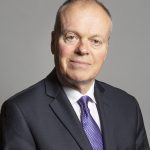
The speech made by Jeremy Hunt, the Chancellor of the Exchequer, in the House of Commons on 15 March 2023.
Madam Deputy Speaker, in the face of enormous challenges I report today on a British economy which is proving the doubters wrong.
In the autumn we took difficult decisions to deliver stability and sound money.
Since mid-October, 10-year gilt rates have fallen, debt servicing costs are down, mortgage rates are lower and inflation has peaked.
The International Monetary Fund says our approach means the UK economy is on the right track.
But we remain vigilant, and will not hesitate to take whatever steps are necessary for economic stability.
Today the Office for Budget Responsibility forecast that because of changing international factors and the measures I take, the UK will not now enter a technical recession this year.
They forecast we will meet the Prime Minister’s priorities to halve inflation, reduce debt and get the economy growing.
We are following the plan and the plan is working.
But that’s not all we’ve done.
In the face of a cost-of-living crisis we have demonstrated our values by protecting struggling families with a £2,500 Energy Price Guarantee, one-off support and the uprating of benefits with inflation.
Taken together, these measures are worth £94 bn over this year and next – one of the largest support packages in Europe.
That averages over £3,300 of cost-of-living help for every household in the country.
Today, we deliver the next part of our plan.
A budget for growth.
Not just the growth that comes when you emerge from a downturn.
But long term, sustainable, healthy growth that pays for our NHS and schools, finds jobs for young people, and provides a safety net for older people all whilst making our country one of the most prosperous in the world.
Prosperity with a purpose.
That’s why growth is one of the Prime Minister’s five priorities for our country.
I deliver that today …
…by removing obstacles that stop businesses investing;
…by tackling labour shortages that stop them recruiting;
…by breaking down barriers that stop people working;
…and by harnessing British ingenuity to make us a science and technology superpower.
Meeting the Prime Minister’s priorities
I start with the forecasts produced by Richard Hughes and his team at the independent Office for Budget Responsibility whom I thank for their diligent work.
They have looked in detail at the Prime Minister’s economic priorities.
Halving inflation
The first of those is to halve inflation.
Inflation destroys the value of hard-earned pay, deters investment and foments industrial strife.
This government remains steadfast in its support for the independent Monetary Policy Committee at the Bank of England as it takes action to return inflation to the 2% target.
Despite continuing global instability, the OBR report today that inflation in the UK will fall from 10.7% in the final quarter of last year to 2.9% by the end of 2023.
That is more than halving inflation.
High inflation is the root cause of the strikes we have seen in recent months.
We will continue to work hard to settle these disputes but only in a way that does not fuel inflation.
Part of the fall in inflation predicted by the OBR happens because of additional measures I take today.
Firstly, I recognise that even though wholesale energy prices have been falling, there is still enormous pressure on family finances.
Some people remain in real distress and we should always stand ready to help where we can.
So after listening to representations from Martin Lewis and other experts, I today confirm that the Energy Price Guarantee will remain at £2,500 for the next three months.
This means the £2,500 cap for the typical household will remain in place when energy prices remain high, ahead of an expected fall in prices from July.
This measure will save the average family a further £160 on top of the energy support measures already announced.
The second measure concerns over four million households on prepayment meters.
They are often the poorest households, but they currently pay more than comparable customers on direct debit. Ofgem has already agreed with suppliers a temporary suspension to forced installations of prepayment meters.
But today I go further, and confirm we will bring their charges in line with comparable direct debit charges. The energy premium paid by our poorest households is coming to an end.
Next I have listened to representations from the hon members for East Devon, North Cornwall, Colne Valley and Central Suffolk and North Ipswich about the risk to community facilities, especially swimming pools, caused by high costs. When times are tough, such facilities matter even more.
So today I am providing a £63m fund to keep our public leisure centres and pools afloat.
I have also heard from my RHF the charities minister and his Secretary of State about the brilliant work third sector organisations are doing to help people struggling in tough times.
They can often reach people in need that central or local government cannot, so I will give his department £100m to support thousands of local charities and community organisations do their fantastic work.
I also note the personal courage of one of my predecessors, my RHF from Bromsgrove, in talking about the tragedy of suicide and the importance of preventing it.
We already invest a lot in this area, but I will assign an extra £10m over the next two years to help the voluntary sector play an even bigger role in stopping more families experiencing such intolerable heartache.
My penultimate cost of living measure concerns one of our other most treasured community institutions, the great British pub.
In December, I extended the alcohol duty freeze until 1 August, after which duties will go up in line with inflation in the usual way.
But today, I will do something that was not possible when we were in the EU and significantly increase the generosity of Draught Relief, so that from 1 August the duty on draught products in pubs will be up to 11p lower than the duty in supermarkets, a differential we will maintain as part of a new Brexit pubs guarantee.
Madam Deputy Speaker, British ale may be warm, but the duty on a pint is frozen.
And even better, thanks to the Windsor Framework negotiated by my RHF the Prime Minister, that change will now also apply to every pub in Northern Ireland.
Finally, I have heard the representations from the Honourable Member from Stoke on Trent North, my Rt Hon Friend for Witham and my Rt Hon Friend from South Thanet and the Sun newspaper about the impact on motorists of the planned 11p rise in fuel duty.
Because inflation remains high, I have decided now is not the right time to uprate fuel duty with inflation or increase the duty.
So here’s what I am going to do: for a further 12 months I’m going to maintain the 5p cut … and I’m going to freeze fuel duty too.
That saves the average driver £100 next year and around £200 since the 5p cut was introduced.
Our Energy Price Guarantee, fuel duty and duty on a pint – all frozen in today’s budget.
Something that doesn’t just help families, it helps the economy too because their combined impact reduces CPI inflation by nearly ¾% this year, lowering inflation when it is particularly high.
Reducing debt
I now turn to the Prime Minister’s second priority, which is to reduce debt.
Here too our plan is on track.
Underlying debt is forecast to be 92.4% of GDP next year, 93.7% in 2024-25; 94.6% in 2025-26, and 94.8% in 2026-27, before falling to 94.6% in 2027-28.
We are meeting the debt priority.
And with a buffer of £6.5bn, it means we are meeting our fiscal rule to have debt falling as a percentage of GDP by the fifth year of the forecast.
As a proportion of GDP our debt remains lower than the USA, Canada, France, Italy and Japan.
And because of the decisions I take today, and the improved outlook for the public finances, underlying debt in five years’ time is now forecast to be nearly three percentage points lower than it was in the Autumn.
That means more money for our public services and a lower burden on future generations – deeply-held values which we put into practice today.
At the Autumn Statement I also announced that public sector net borrowing must be below 3% of GDP over the same period.
The OBR confirm today that we are meeting that rule with a buffer of £39.2 bn.
In fact our deficit falls in every single year of the forecast, with borrowing falling from 5.1% of GDP in 2023-24, to 3.2% in 2024-25, 2.8% in 2025-26, 2.2% in 2026-27 and 1.7% in 2027-28.
Even better in the final two years of the forecast our current budget is in surplus, meaning we only borrow for investment and not for day-to-day spending.
Day to day departmental spending will grow at 1% a year on average in real terms after 2024-25 until the end of the forecast period, and capital plans are maintained at the same level set at Autumn Statement.
We will uprate tobacco duty, and we will freeze the gross gaming duty yield bands. We are also maintaining the starting rate for savings and the ISA subscription limits, and we will bring forward a range of measures to tackle promoters of tax avoidance schemes.
But Madam Deputy Speaker, taken together today’s measures lead to a slightly lower overall tax burden for the rest of the parliament compared to the OBR’s Autumn forecast.
We are reducing borrowing and improving our public finances.
By doing so we make sure we are on track to…
… halve inflation
… get debt falling
…and grow our economy, which I turn to next.
Growth
Growth is the Prime Minister’s third priority and the focus of today’s budget.
13 years ago, we inherited an economy that had crashed.
But since 2010 we’ve grown more than major countries like France, Italy or Japan and about the same as Europe’s largest economy Germany.
We’ve halved unemployment…
… cut inequality
…and reduced the number of workless households by one million.
For the first time ever, because of the rises in tax thresholds made by successive Chancellors people in our country can earn £1,000 a month without paying a penny of tax or national insurance.
Those tax reductions have helped lift 2 million people out of absolute poverty, after housing costs, including 400,000 pensioners and 500,000 children.
That averages 80 pensioners and 100 children lifted out of poverty for every single day we’ve been in office.
Today we face the future with extraordinary potential.
The World Bank said that out of all big European countries, we are the best place to do business.
Global chief executives say that apart from America and China, we are the best country to invest in.
We became the second country in the world to have a stock of foreign direct investment worth 2 trillion dollars.
And London has just pipped New York and 53 other global cities to be the best place in the world for female entrepreneurs.
Declinists are wrong about our country for another reason, which is our newfound strength in the innovation industries that will shape this century.
Over the last 13 years we have become the world’s third trillion-dollar tech economy after the US and China.
We have built the largest life sciences sector in Europe, producing a Covid vaccine that saved six million lives and a treatment that saved a million more.
Our film and TV industry has become Europe’s largest, with our creative industries growing at twice the rate of the economy.
Our advanced manufacturing industries produce around half the world’s large civil aircraft wings.
And thanks to a clean energy miracle we have become a world leader in offshore wind.
Other parties talk about a green energy revolution, so I gently remind them that nearly 90% of our solar power was installed in the last 13 years – showing it’s this Government who fix the roof while the sun is shining.
Let’s turn now to what the OBR say about our growth prospects.
In November, they expected that the UK economy would enter recession in 2022 and contract by 1.4% in 2023.
That left many families feeling concerned about the future.
But today, the OBR forecast we will not enter a recession at all this year with a contraction of just 0.2%.
And after this year the UK economy will grow in every single year of the forecast period: by 1.8% in 2024; 2.5% in 2025; 2.1% in 2026; and 1.9% in 2027.
They also expect the unemployment rate to rise by less than one percentage point to 4.4%, with 170,000 fewer people out of work compared to their Autumn forecast.
Defence
Madam Deputy Speaker, that return to growth has direct consequences for our role on the global stage.
I am proud we are giving the brave people of Ukraine more military support than anyone else in Europe.
On Monday we were able to go further with my RHF the Prime Minister announcing a £5bn package of funding for the Ministry of Defence, an additional £2bn next year and £3bn the year after.
Today, following representations from our persuasive Defence Secretary, I confirm that we will add a total of £11 bn to our defence budget over the next five years and it will be nearly 2.25% of GDP by 2025.
We were the first large European country to commit to 2% of GDP for defence and will raise that to 2.5% as soon as fiscal and economic circumstances allow.
Following representations from my RHF the Minister for Veterans Affairs, I am today also increasing support for our brave ex-servicemen and women.
We will provide a package worth over £30m to increase the capacity of the Office for Veterans’ Affairs, support veterans with injuries returning from their service and increase the availability of veteran housing.
But to be Europe’s biggest defender of democracy, we must build Europe’s most dynamic economy.
That means tackling our longstanding productivity issues including two in particular which I address today: lower business investment and higher economic inactivity than other similar countries.
Too often companies struggle to recruit and even when they do, output per employee is lower.
So today I set out the four pillars of our industrial strategy to address these issues.
Colleagues will know from my Bloomberg speech, they all start with the letter ‘E’: Enterprise, Employment, Education and Everywhere.
I start with ‘Everywhere’, our measures to level up growth across the UK.
Everywhere
This government was elected on a mandate to level up.
We have already allocated nearly £4bn in over 200 projects across the country through the first two rounds of the Levelling Up Fund. A third round will follow.
Since we started focusing on levelling up, 70% of the growth in salaried jobs has come from outside London and the South-East.
Today we take further steps.
Investment Zones
Canary Wharf and the Liverpool Docks were two outstanding regeneration projects.
I pay tribute to Lord Heseltine for making them happen because they transformed the lives of thousands of people. They showed what’s possible when entrepreneurs, government and local communities come together.
So today I announce that we will deliver 12 new Investment Zones, 12 potential Canary Wharfs.
In England we have identified the following areas as having the potential to host one: West Midlands, Greater Manchester, the North-East, South Yorkshire, West Yorkshire, East Midlands, Teesside and, once again, Liverpool. There will also be at least one in each of Scotland, Wales and Northern Ireland.
To be chosen, each area must identify a location where they can offer a bold and imaginative partnership between local government and a university or research institute in a way that catalyses new innovation clusters.
If the application is successful, they will have access to £80m of support for a range of interventions including skills, infrastructure, tax reliefs and business rates retention.
Local investment
Working together with our formidable Levelling Up Secretary, I also want to give some further support to levelling up areas under the ‘E’ of everywhere.
First, I will invest over £200m in high quality local regeneration projects across England including the regeneration of Tipton town centre and the Marsden New Mills Redevelopment Scheme.
I am also announcing a further £161m for regeneration projects in Mayoral Combined Authorities and the Greater London Authority.
And I will make over £400m available for new Levelling Up Partnerships in areas that include Redcar and Cleveland, Blackburn, Oldham, Rochdale, Mansfield, South Tyneside, and Bassetlaw.
Having listened to the case for better local transport infrastructure from many hon members, I can announce a second round of the City Region Sustainable Transport Settlements, allocating £8.8 billion over the next five-year funding period.
And following a wet and then cold winter, I also received particularly strong representations from my hon friends from North Devon, South-West Devon and Newton Abbot as well as councillor Peter Martin from my own constituency about the curse of potholes.
The Spending Review allocated £500m every year to the Potholes Fund but today I have decided to increase that fund by a further £200m next year to help local communities tackle this problem.
For Scotland, Wales and Northern Ireland this Budget delivers not only a new Investment Zone but an additional £320m for the Scottish Government, £180m for the Welsh Government and £130m for the Northern Ireland Executive as a result of Barnett consequentials.
On top of which in Scotland, I can announce up to £8.6m of targeted funding for the Edinburgh Festivals as well as £1.5m funding to repair the Cloddach Bridge.
I will provide £20m of funding for the Welsh Government to restore the Holyhead Breakwater and, in Northern Ireland, I am allocating up to £3m to extend the Tackling Paramilitarism Programme and up to £40m to extend further and higher education participation.
Local leadership
But Madam Deputy Speaker, for levelling up to truly succeed we need to unleash the civic entrepreneurship that is only possible when elected local leaders are able to fund and deliver solutions to their own challenges.
That means giving them responsibility for local economic growth and the benefit from the upside when it happens.
So the government will consult on transferring responsibilities for local economic development currently delivered by Local Enterprise Partnerships to support local economic development to local authorities from April 2024.
I will also boost Mayors’ financial autonomy by agreeing multi-year single settlements for the West Midlands and the Greater Combined Manchester Authority at the next spending review, something I intend to roll out for all Mayoral areas over time.
I have also agreed a new long-term commitment so that they can retain 100% of their business rates, something I also hope to expand to other areas over time.
Investment zones, regeneration projects, levelling up partnerships, local transport infrastructure and business rates retention…more control for local communities over their economic destiny so we will level up wealth generation and opportunity everywhere.
Enterprise
Today’s budget is about the Prime Minister’s promise to grow the economy.
We’ve talked about making that growth happen everywhere, so I now move on to my second ‘e’. Enterprise.
We need to be Europe’s most dynamic enterprise economy.
And under this government that is exactly what’s been happening.
Since 2010 we have one million more businesses in the UK, a bigger increase than in Germany, France or Italy.
But I want another million and another million after that.
So today I bring forward enterprise measures in these threeareas: to lower business taxes, reduce energy costs and support our growth industries.
Business taxes
Let’s start with business taxation.
We know the importance of a competitive tax regime. We already have lower levels of business taxation than France, Germany, Italy or Japan.
But I want us to have the most pro-business pro-enterprise tax regime anywhere.
Even after the corporation tax rise this April, we will have the lowest headline rate in the G7.
Only 10% of companies will pay the full 25% rate.
But even at 19% our corporation tax regime did not incentivise investment as effectively as countries with higher headline rates.
The result is less capital investment and lower productivity than countries like France and Germany.
We have already taken measures to address this.
For larger businesses we have had the super deduction, introduced by my RHF the Prime Minister, which ends this month.
For smaller businesses we have increased the Annual Investment Allowance to £1m, meaning 99% of all businesses can deduct the full value of all their investment from that year’s taxable profits.
If the super deduction was allowed to end without a replacement, we would have fallen down the international league tables for tax competitiveness and damaged growth.
I could not allow that to happen.
So today, I can announce that we will introduce a new policy of “full expensing” for the next three years, with an intention to make it permanent as soon as we can responsibly do so.
That means that every single pound a company invests in IT equipment, plant or machinery can be deducted in full and immediately from taxable profits.
It is a corporation tax cut worth an average of £9 bn a year for every year it is in place.
And its impact on our economy will be huge. The OBR says it will increase business investment by 3% for every year it is in place.
This decision makes us the only major European country with full expensing…
…and gives us the joint most generous capital allowance regime of any advanced economy.
Madam Deputy Speaker, I also want to make our taxes more competitive in our life science and creative industry sectors.
In the Autumn, I said I would return with a more robust R & D tax credit scheme for smaller research-intensive companies.
So today, I am introducing an enhanced credit which means that if a qualifying small or medium-sized business spends 40% or more of their total expenditure on R & D, they will be able to claim a credit worth £27 for every £100 they spend.
That means an eligible cancer drug company spending £2 million on research and development will receive over £500,000 to help them develop breakthrough treatments.
It is a £1.8 billion package of support helping 20,000 cutting edge companies who day by day are turning Britain into a science superpower.
This government’s audio-visual tax reliefs have helped make our film and TV industry the biggest in Europe. Only last month, Pinewood announced an expansion which will bring another 8,000 jobs to the UK.
To give even more momentum to this critical sector I will introduce an expenditure credit with a rate of 34% for film, high end television and video games and 39% for the animation and children’s TV sectors. I will maintain the qualifying threshold for high-end television at £1 million.
And because our theatres, orchestras and museums do such a brilliant job at attracting tourists to London and the UK, I will also extend for another two years their current 45% and 50% reliefs.
Energy
Madam Deputy Speaker, an enterprise economy needs low taxes. But it also needs cheap and reliable energy.
We have already announced billions of support to help businesses reduce their energy bills through the Energy Bills Relief Scheme and the Energy Bills Discount Scheme.
We have appointed Dame Alison Rose, Chief Executive of NatWest, to co-Chair our national energy efficiency taskforce and help deliver our national ambition to reduce energy use by 15%.
To support her efforts, I will extend the Climate Change Agreement scheme for two years to allow eligible businesses £600 million of tax relief on energy efficiency measures.
But the long-term solution is not subsidy but security.
That means investing in domestic sources of energy that fall outside Putin or any autocrat’s control.
We are world leaders in renewable energy so today I want to develop another plank of our green economy, Carbon Capture Usage and Storage.
I am allocating up to £20 billion of support for the early development of CCUS, starting with projects from our East Coast to Merseyside to North Wales – paving the way for CCUS everywhere across the UK as we approach 2050.
This will support up to 50,000 jobs, attract private sector investment and help capture 20-30 million tonnes of CO2 per year by 2030.
We have increased the proportion of electricity generated from renewables from under 10% to nearly 40%.
But because the wind doesn’t always blow and the sun doesn’t always shine, we will need another critical source of cheap and reliable energy.
And that is nuclear.
There have been no more powerful advocates for this than the hon members for Ynys Mon, Copeland, Hartlepool and Workington.
They rightly say that increasing nuclear capacity is vital to meet our Net Zero obligations.
So to encourage the private sector investment into our nuclear programme, I today confirm that subject to consultation nuclear power will be classed as “environmentally sustainable” in our green taxonomy, giving it access to the same investment incentives as renewable energy.
Alongside that will come more public investment.
In the Autumn Statement, I announced the first state-financed investment in nuclear for a generation, a £700 million investment in Sizewell C.
Today I can announce two further commitments to deliver our nuclear ambitions.
Firstly, following representations from our energetic Energy Security Secretary I am announcing the launch of Great British Nuclear which will bring down costs and provide opportunities across the nuclear supply chain to help provide up to one quarter of our electricity by 2050.
And secondly, I am launching the first competition for Small Modular Reactors. It will be completed by the end of this year and if demonstrated as viable we will co-fund this exciting new technology.
Boosting innovation
Finally under the ‘e’ of Enterprise I come to our innovation economy, a central area of national competitive advantage for the United Kingdom.
Over the weekend, I worked night and day with the Prime Minister and the Governor of the Bank of England to protect the deposits of thousands of our most cutting-edge companies.
We successfully secured the sale of the UK arm of Silicon Valley Bank to HSBC, so the future of those companies is now safe in the hands of one of Europe’s biggest and most creditworthy banks.
But those events show that we need to build a larger, more diverse financing system, where the benefits of investment in high growth firms are available to more investors.
So I will return in the Autumn Statement with a plan to deliver that. It will include measures to unlock productive investment from defined contribution pension funds and other sources, make the London Stock Exchange a more attractive place to list, and complete our response to the challenges created by the US Inflation Reduction Act.
However when it comes to our innovation industries, there are two areas I want to make progress on today.
Nigel Lawson made the City of London one of the world’s top financial centres by competitive deregulation.
With our Brexit autonomy, we can do the same for our high growth sectors.
So today I want to reform the regulations around medicines and medical technologies.
We are lucky with the MHRA to have one of the most respected drugs regulators in the world, indeed the very first to licence a Covid vaccine.
From 2024, they will move to a different model which will allow rapid, often near automatic sign-off for medicines and technologies already approved by trusted regulators in other parts of the world such as the United States, Europe or Japan.
At the same time from next year they will set up a swift new approval process for the most cutting-edge medicines and devices to ensure the UK becomes a global centre for their development.
And with an extra £10m of funding over the next two years they will put in place the quickest, simplest, regulatory approval in the world for companies seeking rapid market access.
We are proud of our life sciences sector which received more inward investment than any in Europe last year.
Today’s change will make the UK an even more exciting place to invest – as well as speeding up access for NHS patients to the very newest drugs.
Today together with our talented Science, Innovation and Technology Secretary, I also take measures to strengthen our position in artificial intelligence, where the UK hosts one third of all European companies.
I am accepting all nine of the digital technology recommendations made by Sir Patrick Vallance in the review I asked him to do in the Autumn Statement.
That means I can report to the House that we will:
…launch an AI sandbox to trial new, faster approaches to help innovators get cutting edge products to market;
…work at pace with the Intellectual Property Office to provide clarity on IP rules so Generative AI companies can access the material they need;
……and ask Sir Patrick’s successor, Dame Professor Angela McLean, to report before the summer on options around the Growth Duty for regulators.
Because AI needs computing horsepower, I today commit around £900m of funding to implement the recommendations in the independent Future of Compute Review for an Exascale supercomputer.
The power that AI’s complex algorithms need can also be provided by quantum computing.
So today we publish a quantum strategy which will set our vision to be a world leading quantum enabled economy by 2033 with a research and innovation programme totalling £2.5 billion.
I also want to encourage the best AI research to happen in the UK so will award a prize of £1m every year, for the next ten years, to the person or team that does the most ground-breaking British AI research.
The world’s first stored-programme computer was built at the University of Manchester in 1948, and was known as the “Manchester baby”.
75 years on, the baby has grown up, so I will call this new national AI award “the Manchester Prize” in its honour.
Madam Deputy Speaker we want the UK to be the best place in Europe for companies to locate, invest and grow so today’s enterprise measures strengthen our technology and life science sectors, invest in energy security and for three years – but I hope permanently – cut corporation tax by £9 bn a year to give us the best investment incentives of any advanced economy.
Employment
An enterprise economy can only grow if it can hire the people it needs, which brings me to my third pillar after ‘Everywhere’ and ‘Enterprise’, the ‘E’ of Employment.
Brexit was a decision by the British people to change our economic model.
In that historic vote, our country decided to move from a model based on unlimited low skill migration to one based on high wages and high skills.
Today we show how we will deliver that with a major set of reforms. The OBR say it is the biggest positive supply side intervention they have ever recognised in their forecast.
We have around one million vacancies in the economy…
… but excluding students there are over seven million adults of working age who are not in work.
That is a potential pool of seven people for every vacancy. We believe work is a virtue.
We agree with the road haulage king Eddie Stobart who said: ‘the only place success comes before work is the dictionary.’
So today, I bring forward reforms to remove the barriers that stop people who want to from working. I start with over 2 million people who are inactive due to a disability or long-term sickness.
Long term sick and disabled
Thanks to the reforms courageously introduced by the Rt Hon Member for Chingford and Woodford Green, the number of disabled people in work has risen by two million since 2013.
But even after that we could fill half the vacancies in the economy with people who say they would like to work despite being inactive due to sickness or disability.
With Zoom, Teams and new working models that make it easier to work from home this is more possible than ever before.
So for that reason, the ever-diligent Work and Pensions Secretary, today takes the next step in his ground-breaking work on tackling economic inactivity.
I thank him for that, and today we publish a White Paper on disability benefits reform.
It is the biggest change to our welfare system in a decade.
His plans will abolish the Work Capability Assessment in Great Britain and separate benefit entitlement from an individual’s ability to work. As a result, disabled benefit claimants will always be able to seek work without fear of losing financial support.
Today I am going further by announcing that in England and Wales, after listening to representations from the Centre for Social Justice and others, we will fund a new programme called Universal Support.
This is a new, voluntary employment scheme for disabled people where the government will spend up to £4,000 per person to help them find appropriate jobs and put in place the support they need. It will fund 50,000 places every single year.
We also want to help those who are forced to leave work because of a health condition such as back pain or a mental health issue.
We should give them support before they end up leaving their job, so I am also announcing a £400m plan to increase the availability of mental health and musculoskeletal resources and expand the Individual Placement and Support scheme.
And because occupational health provided by employers has a key role to play, I will also bring forward two new consultations on how to improve its availability and double the funding for the small company subsidy pilot.
Young people in care
There is another group that deserves particular attention, which is children in care. They too should be given all possible help to make a normal working life possible when they reach adulthood.
Often, they depend on foster families who do a brilliant job, so I am today nearly doubling the Qualifying Care Relief threshold to £18,140 which will give a tax cut to a qualifying carer worth an average of £450 a year.
I will also increase the funding we provide to the Staying Close programme by 50% to help more care leavers into employment.
And I will support young people with Special Educational Needs and Disabilities with a £3m pilot expansion of the Department for Education’s Supported Internship programme to help them transition from education into the workplace.
Madam Deputy Speaker, no civilised society can ignore the contribution that can be made by those with challenging family circumstances, a long-term illness or a disability.
So today we remove the barriers we can with reforms that strengthen our society as well as strengthening our economy.
Welfare recipients
The next set of employment reforms affects those on Universal Credit without a health condition who are looking for work or on low earnings.
There are more than 2 million jobseekers in this group, more than enough to fill every single vacancy in the economy.
Independence is always better than dependence, which is why we believe those who can work, should.
So sanctions will be applied more rigorously to those who fail to meet strict work-search requirements or choose not to take up a reasonable job offer.
And for those working low hours, we will increase the Administrative Earnings Threshold from the equivalent of 15 hours to 18 hours at National Living Wage for an individual claimant, meaning that anyone working below this level will receive more work coach support alongside a more intensive conditionality regime.
Older workers including doctors
The next group of workers I want to support are those aged over 50.
My younger officials have termed these people “older workers”, although as a 56-year-old myself I prefer the term “experienced.”
Fully 3.5 million of pre-retirement age over 50 are not part of the labour force, an increase of 320,000 since before the pandemic.
We now have the 23rd highest inactivity rate for over 55s in the OECD.
If we matched the rate of Sweden, we would add more than one million people to our national labour force.
Madam Deputy Speaker, I say this not to flatter you, but older people are the most skilled and experienced people we have.
No country can thrive if it turns its back on such a wealth of talent and ability.
But for too many, turning 50 is a moment of anxiety about the cliff edge of retirement rather than a moment of anticipation about another two decades of fulfilment.
I know this myself from personal experience. After I turned 50, I was relegated to the backbenches and planned for a quiet life. But instead I decided to set an example by embarking on a new career in finance.
So today I take three steps to make it easier for those who wish to work longer to do so.
First, we will increase the number of people who get the best possible financial, health and career guidance ahead of retirement by enhancing the DWP’s excellent “Mid-life MOT” Strategy.
They will also increase by fivefold the number of 50+ Universal Credit claimants who receive mid-life MOTs from 8,000 to 40,000 a year.
Second with my RHF the Education Secretary, we will introduce a new kind of apprenticeship targeted at the over 50s who want to return to work.
They will be called Returnerships, and operate alongside skills boot camps and sector-based work academies.
They will bring together our existing skills programmes to make them more appealing for older workers, focussing on flexibility and previous experience to reduce training length.
Finally, I have listened to the concerns of many senior NHS clinicians who say unpredictable pension tax charges are making them leave the NHS just when they are needed most.
The NHS is our biggest employer, and we will shortly publish the long-term workforce plan I promised in the Autumn Statement.
But ahead of that I do not want any doctor to retire early because of the way pension taxes work.
As Chancellor I have realised the issue goes wider than doctors.
No one should be pushed out of the workforce for tax reasons.
So today I will increase the pensions annual tax-free allowance by 50% from £40,000 to £60,000.
Some have also asked me to increase the Lifetime Allowance from its £1 million limit.
But I have decided not to do that.
Instead I will go further and abolish the Lifetime Allowance altogether.
It’s a pension tax reform that will…
… stop over 80% of NHS doctors from receiving a tax charge.
… incentivise our most experienced and productive workers to stay in work for longer.
… and simplify our tax system, taking thousands of people out of the complexity of pension tax.
Madam Deputy Speaker, a comprehensive plan to remove the barriers to work facing those on benefits, those with health conditions and older workers. That is the ‘e’ of the employment pillar of today’s growth budget.
Education
Which brings me to the final pillar of our growth plan. After Employment, Enterprise and Everywhere I turn to the ‘e’ of Education.
Over more than a decade, this government has driven improvement in our education system.
We have risen by nearly 10 places in the international league tables for English and maths since 2015 alone.
In the Autumn Statement, I built on this progress with an extra £2.3bn annual investment to our schools.
We are reviewing our approach to skills with Sir Michael Barber.
We have set out our plans to transform lifelong learning with a new Lifelong Loan Entitlement…
…and My RHF the PM announced plans to make maths compulsory till 18.
But today I want to address an issue in our education system that is bad for children and damaging for the economy.
It’s an issue that starts even before a child enters the gates of a school.
Today I want to reform our childcare system.
We have the one of the most expensive systems in the world.
Almost half of non-working mothers said they would prefer to work if they could arrange suitable childcare.
For many women, a career break becomes a career end.
Our female participation rate is higher than average for OECD economies, but we trail top performers like Denmark and the Netherlands.
If we matched Dutch levels of participation, there would be more than one million additional women working.
So today I announce a series of reforms to start that journey.
Supply
I begin with the supply of childcare. We have seen a significant decline in childminders over recent years – down 9% in England in just one year.
But childminders are a vital way to deliver affordable and flexible care and we need more of them.
I have listened to representations from my hon friend from Stroud and decided to address this by piloting incentive payments of £600 for childminders who sign up to the profession, rising to £1,200 for those who join through an agency.
I have also heard many concerns about cost pressures facing the sector.
We know this is making it hard to hire staff and raising prices for parents, with around two thirds of childcare providers increasing fees last year alone.
So we will increase the funding paid to nurseries providing free childcare under the hours offer by £204m from this September rising to £288m next year.
This is an average of a 30% increase in the two-year-old rate this year, just as the sector has requested.
I will also offer providers more flexibility in how they operate in line with other parts of the UK. So alongside that additional funding, we will change minimum staff-to-child ratios from 1:4 to 1:5 for two-year-olds in England as happens in Scotland, although the new ratios will remain optional with no obligation on either childminders or parents to adopt them.
UC claimants
I want to help the 700,000 parents on universal credit who, until the reforms I announced today had limited requirements to look for work. Many remain out of work because they cannot afford the upfront payment necessary to access subsidised childcare.
So for any parents who are moving into work or wants to increase their hours, we will pay their childcare costs upfront.
And we will increase the maximum they can claim to £951 for one child and £1,630 for two children, an increase of almost 50%.
School age children
I turn now to parents of school age children, who often face barriers to working because of the limited availability of wraparound care.
One third of primary schools do not offer childcare at both ends of the school day, even though for many people a job requires availability throughout the working day.
To address this, we will fund schools and local authorities to increase supply of wraparound care so all school-age parents can drop their children off between 8 am and 6 pm.
Our ambition is that all schools will start to offer a wraparound offer, either on their own or in partnership with other schools, by September 2026.
Pre-school children
Madam Deputy Speaker, today’s childcare reforms will increase the availability of childcare, reduce costs and increase the number of parents able to use it.
Taken together with earlier reforms, they amount to the most significant improvements to childcare provision in a decade.
But if we really want to remove the barriers to work we need to go further for parents who have a child under 3.
For them childcare remains just too expensive.
In 2010 there was barely any free childcare for under 5s.
The government changed that with free childcare for 3- and 4-year-olds in England.
It was a landmark reform.
But not a complete one.
I don’t want any parent with a child under 5 to be prevented from working, if they want to, because it is damaging to our economy and unfair, mainly to women.
So today I announce that in eligible households where all adults are working at least 16 hours, we will introduce 30 hours of free childcare not just for 3-and-4 year-olds, but for every single child over the age of 9 months.
The 30 hours offer will now start from the moment maternity or paternity leave ends.
It’s a package worth on average £6,500 every year for a family with a two-year-old child using 35 hours of childcare every week…
… and reduces their childcare costs by nearly 60%.
Because it is such a large reform, we will introduce it in stages to ensure there is enough supply in the market.
Working parents of two-year-olds will be able to access 15 hours of free care from April 2024, helping around half a million parents.
From September 2024, that 15 hours will be extended to all children from 9 months up, meaning a total of nearly one million parents will be eligible.
And from September 2025 every single working parent of under 5s will have access to 30 hours free childcare per week.
Today we complete a landmark reform…
…we help the economy
…transform the lives of thousands of women
…and build a childcare system comparable to the best.
A major early years reform for our education system, the ‘E’ of education alongside the three other pillars of our growth plan, enterprise, employment and everywhere.
Madam Deputy Speaker in November we delivered stability.
Today it’s growth.
We tackle the two biggest barriers that stop businesses growing – investment incentives and labour supply.
The best investment incentives in Europe.
The biggest ever employment package.
For disabled people, more help.
For older people, barriers removed.
For families feeling the pinch…
…fuel duty frozen.
…beer duty cut.
…energy bills capped.
And for parents, 30 hours of free childcare for all under 5s.
Today we build for the future with…
…inflation down
…debt falling
…and growth up.
The declinists are wrong, and the optimists are right.
We stick to the plan because the plan is working.
And I commend this statement to the House.